Unsurprisingly, a who’s who of plots.
Beyond impressive—thank you, @Lars_Carlberg. By the way, your book is en route to me as we correspond.
Unsurprisingly, a who’s who of plots.
Beyond impressive—thank you, @Lars_Carlberg. By the way, your book is en route to me as we correspond.
Gessinger is such an underrated winery, I forget when it was but at one of the Mythos Mosel years I was talking with Johannes Selbach and he mentioned that we have to go up the street to taste Gessinger and it was a great recommendation.
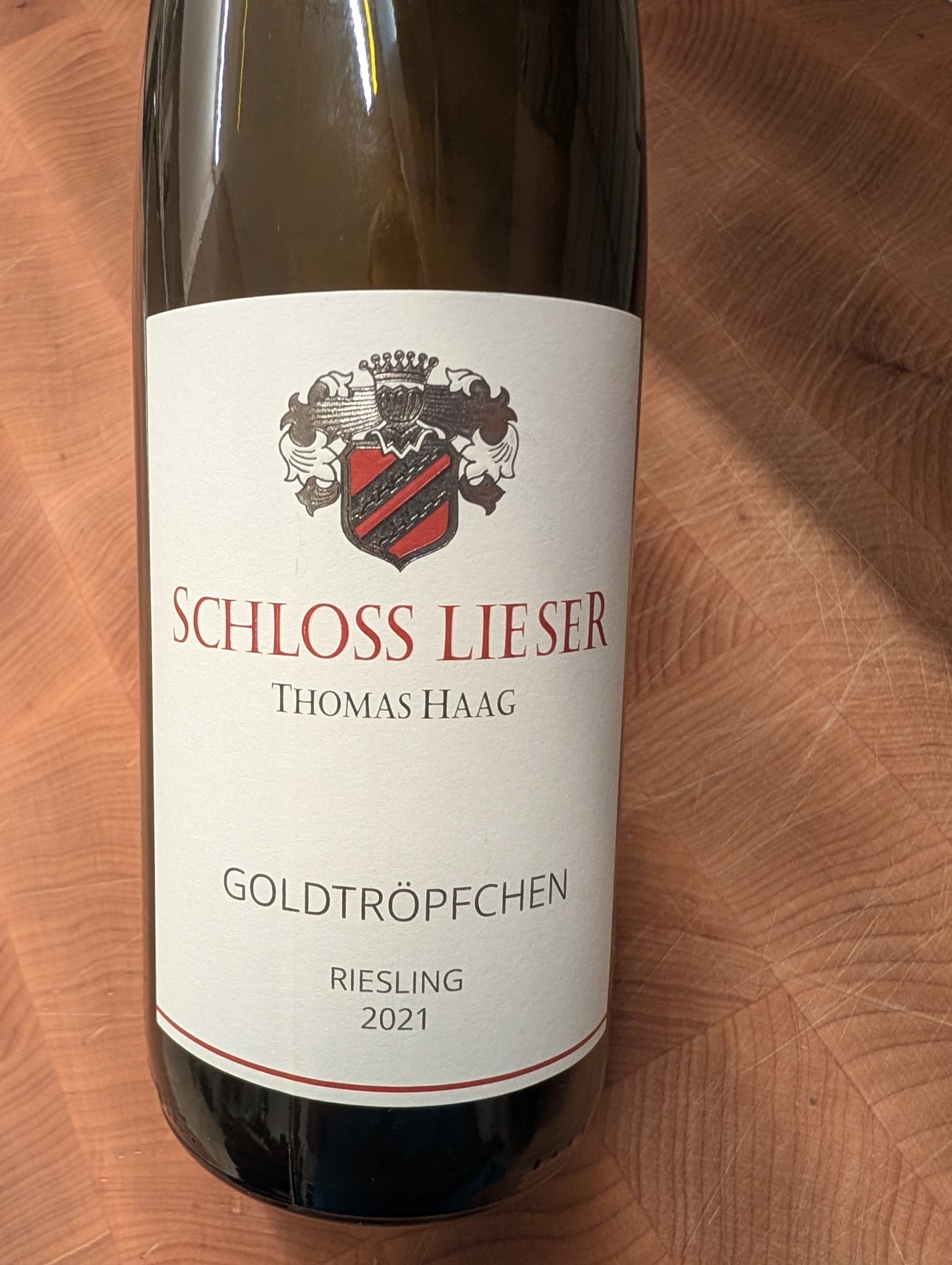
2021 Schloss Lieser Piesporter Goldtröpfchen Riesling feinherb
My notes from when I tasted this in a portfolio lineup just read “DIESEL”. That note definitely comes back after a couple hours of air. Good thing I’m a big fan of that! Add in yellow apples, savory herbs, and some baking spice with racy acidity and you got a nice, complex bottling that punches way above it’s price point.
I visited Quint in early 2020. Nice wines and made a note to return but haven’t yet found time!
My pleasure, Tess.
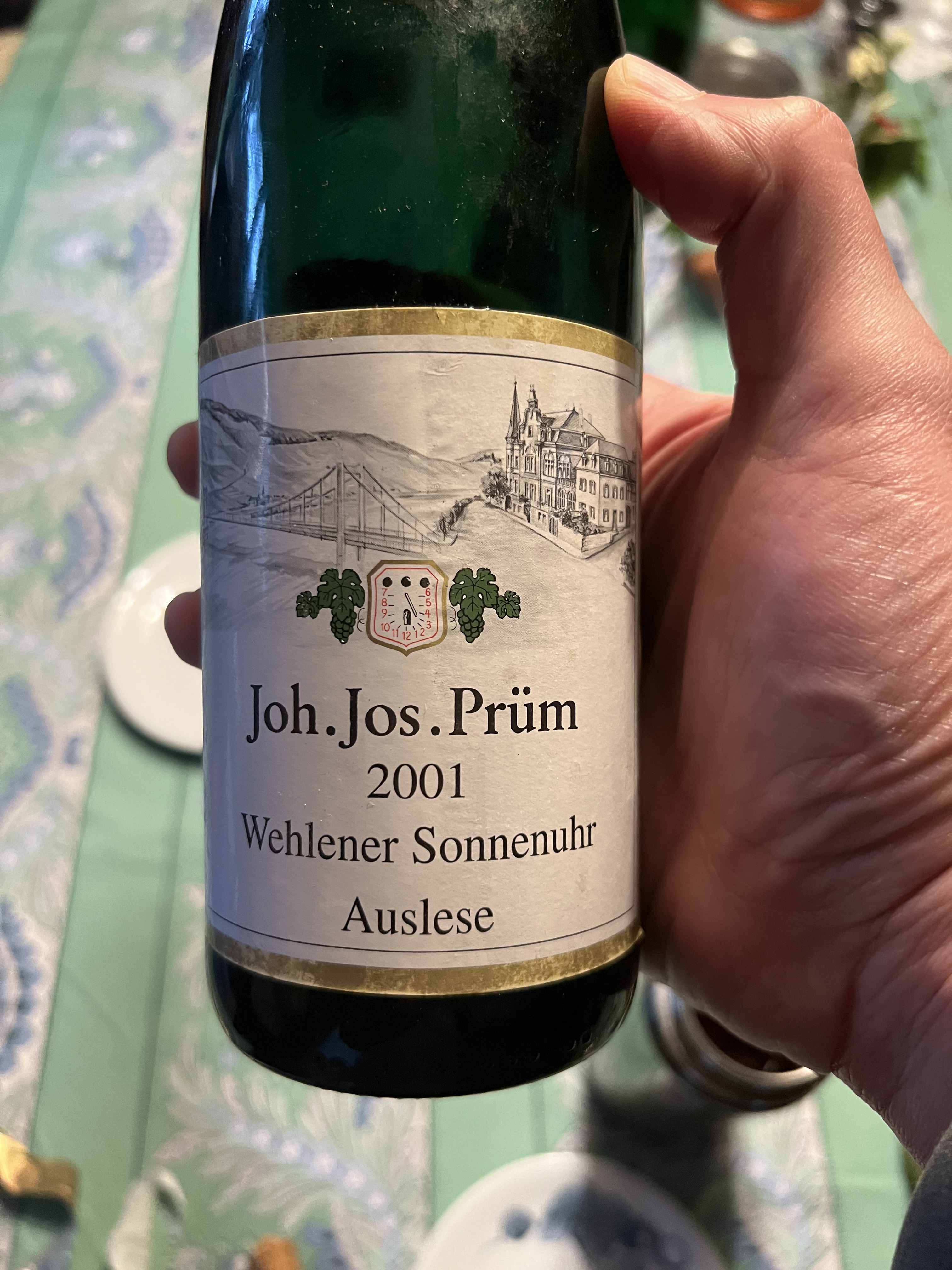
Speaking of Mosel Wine, I included a footnote on Zeltinger Sonnenuhr on page 13 (see note 17): The renowned Schlossberg (“castle hill”) vineyard in Koch’s time was the area around the ruins of the castle, or Burg (also the place-name of this location), within the present Einzellage Zeltinger Sonnenuhr.
The castle ruin is called Kunibertsburg, also named Rosenburg. The Gewann Burg is close to the sundial. The old site names, or place-names, around the castle ruin include Scherren (with the sundial), Im Mausgebände, and Hinter der Burg, all named sections that are mostly colored dark red on Clotten’s 1868 map.
Clotten’s map lists some of the top sites in today’s Zeltinger Sonnenuhr—Burg, Kirbel, Kackert, Rothlai, and Lehnschaft.
Sarah Gessinger is in charge of the winery now. I have yet to taste her wines.
That’s too bad.
Yesterday, I noticed that I misspelled “St. Michael” as “St. Michel” in a couple of comments, so I corrected the spelling.
Anyone try/order the Lauer Schonfels GG? Seems like this one will need some cellar time
A few good ones last night. Starting with something new (to us) in 2014 Pewsey Vale The Contours Museum Reserve Riesling and 2017 Pewsey Vale The Contours Museum Reserve Riesling. We were not terribly impressed. Both were crisp, taut, and certainly drinkable, with more of a golden patina in the 2014, but not much excitement in either case. Maybe we didn’t give them enough attention, because that quickly got diverted.
2023 Grünhaus Herrenberg Riesling GG was the start of the good stuff, a tiny bit of reduction but lots of juicy friendly fruit, offset perfectly with crisp bitter Grünhaus herbal notes. Evolves nicely over the evening and maybe I’ll start following these over time again.
2018 Rebholz Kastanienbusch Riesling GG led to much debate. Others enjoyed it the whole way through, but I thought it was clunky and dull upon opening. However, with air, it stretched out and began to show more Kastanienbusch definition and precision. It became a lovely wine that I was happy to drink, although I suspect 2018 will never be my favorite vintage in Germany.
On the other hand, 2002 Hirtzberger Singerriedel Riesling Smaragd was unanimously loved from the very beginning. A P-E-R-F-E-C-T bottle of wine. Aged into lovely mellowed harmony that has slimmed down the full fruit of its youth, but still plenty of palate presence and aromatic excitement, along with lively vibrancy underneath. Some may enjoy this wine with even more age, but I had no complaints on the evening. Pure joy.
2018 Clemens Busch Marienburg Raffes took us back to recent times, with a stacked layered mouthful of wine. It gains elegance with air and offers a great counterpoint to the other Rieslings in circulation.
The wind-down began with 2010 Clemens Busch Marienburg Rothenpfad Auslese injecting sugar and depth into the mouthfeel. Another example of a wine that is in an aging sweet-spot for my tastes. Others will prefer it younger or older. Everyone is correct.
Sadly 2021 Koehler-Ruprecht Saumagen Riesling Spätlese Trocken and 1989 Clemens Busch Marienburg Riesling Auslese Trocken were both corked. The latter unlikely to be seen again!
I probably started it!
And I got confused with the two Quints in Wintrich.
It’s worth noting that the enlarged single-vineyard Wintricher Ohligsberg includes prime areas that are located on other slopes than the place-name Am Ohligsberg, such as the place-name Geierskopf. Both sites are marked dark red on Clotten’s map. In our translation of Koch’s Moselwein, I noted on page 14 that the Neuberg (“new hill”) vineyard is today the Einzellage Wintricher Geierslay and that “Geierslay” (“vulture’s slate”) as a vineyard area probably included portions of today’s Einzellagen Wintricher Ohligsberg and Wintricher Großer Herrgott. (“Geierslayer” had various spellings and was used on occasion in the mid-20th century as a quasi-communal name, as in “Geierslayer Ohligsberg.”)
Changing continents, this Desire Lines Riesling is further proof that @Cody_Rasmussen knows more than a thing or two about making Riesling. It’s dry in a GG sort of way, with the fruit and palate depth mimicking sweetness that isn’t really there. I could see this tricking a few people into guessing Nahe or Rheinhessen.
I’ve had more than a few really nice Rieslings from Cole Ranch, but know nothing about the vineyard. Any idea how old the vines are?
According to the Historic Vineyards Society, the riesling vines at cole ranch vineyard were planted in 1973
Posted from CellarTracker
in Pettenthal we trust
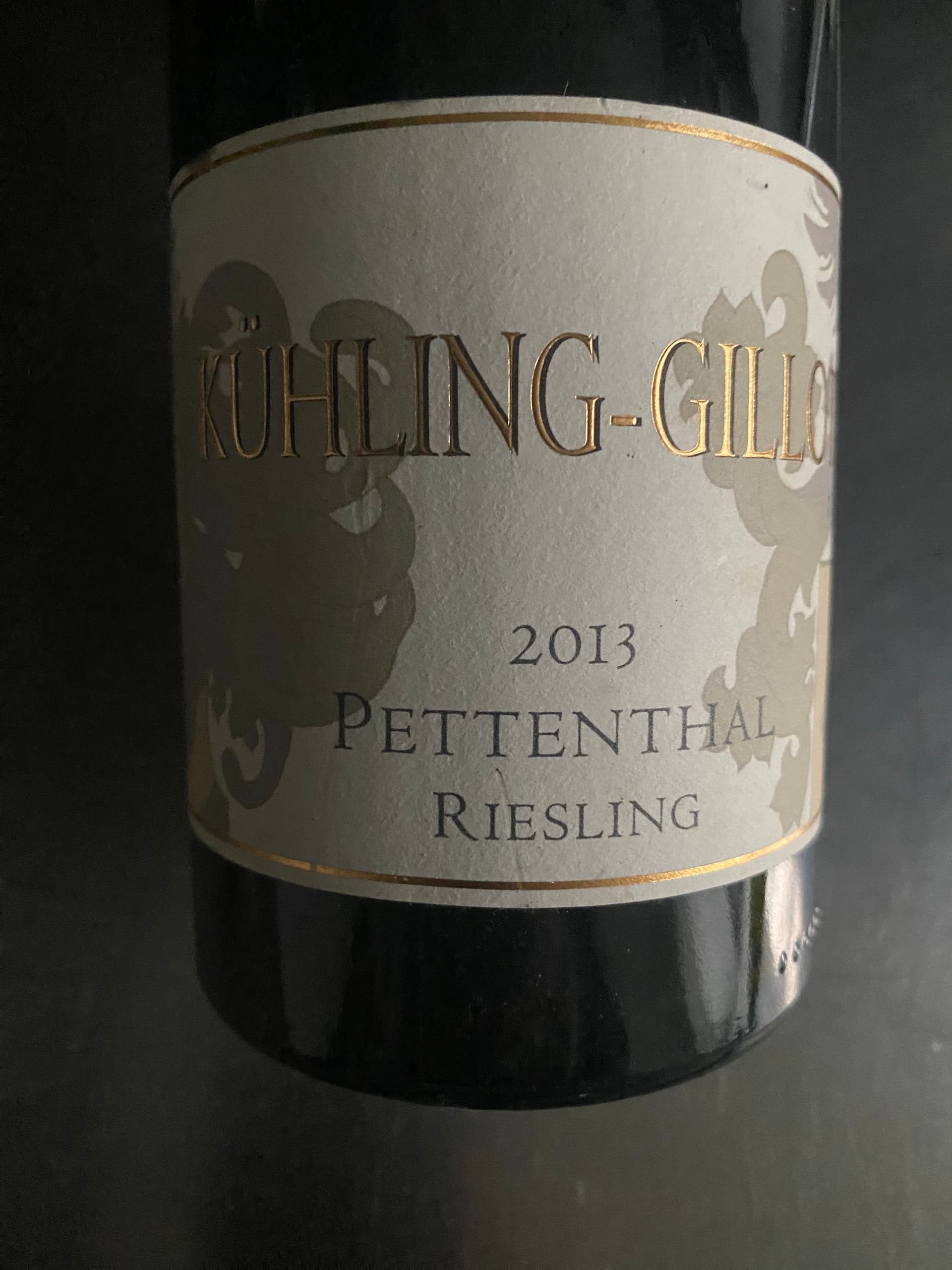
2013 Kühling-Gillot „Pettenthal“ GG
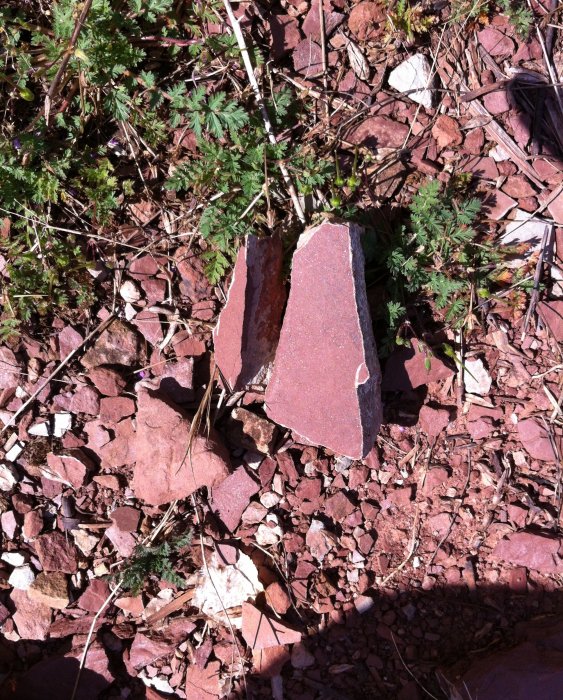
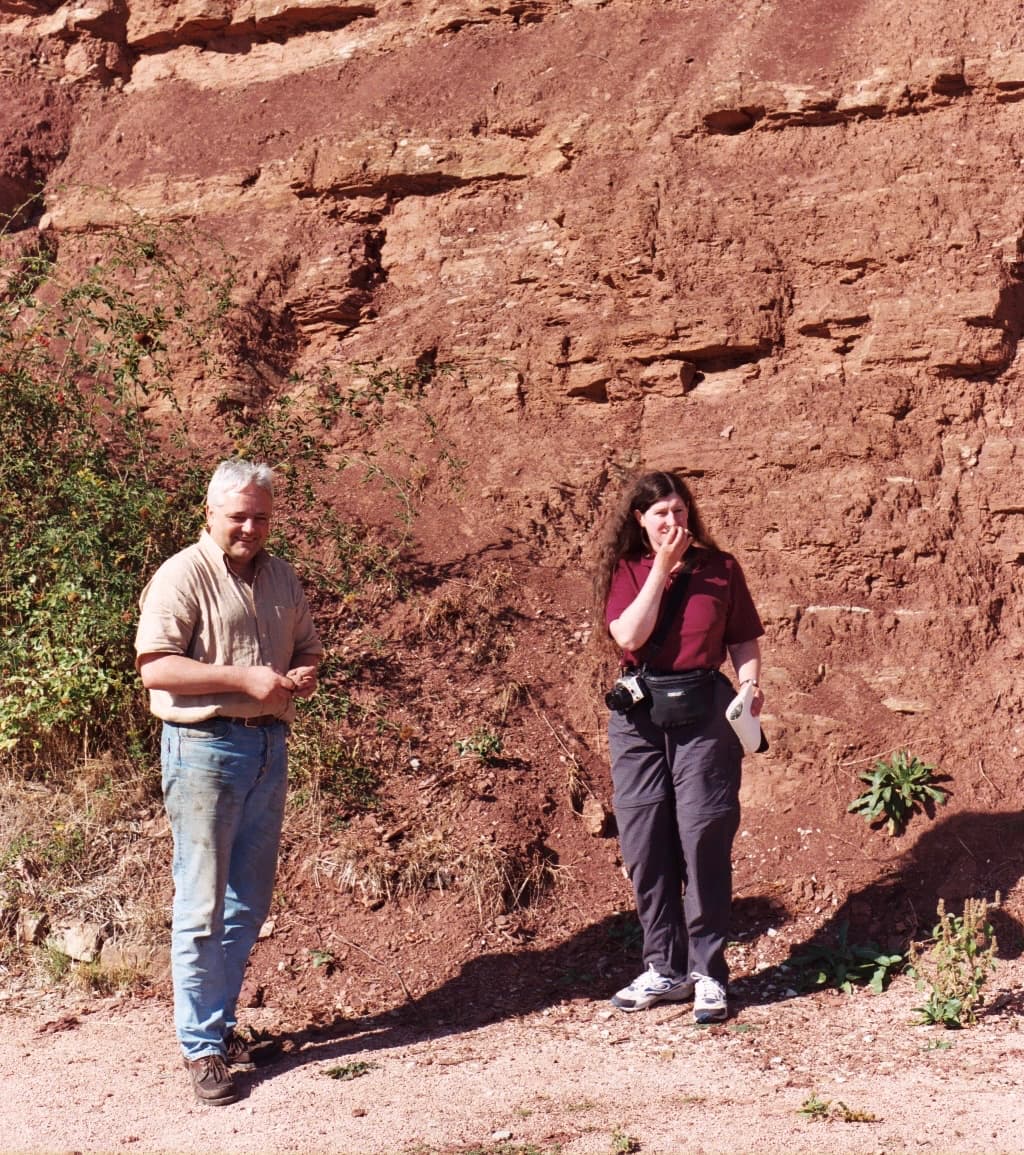
I am a big admirer of the minerality and spicy flavors by the red slope „Rotliegend“. So no surprise that you will notice a dominant minerality at first and in the background a big&dense yellow fruit. Unfortunately too overripe the fruit, also underlined by the amber colour. Lucky me, the minerality keeps the fruit in balance on Day 1, but I am skeptical for Day 2. Surprisingly also quite a low acidity for a vintage like 2013. Anyway the minerality makes me happy and I overlook the fruit for a moment on a snowy Monday night.
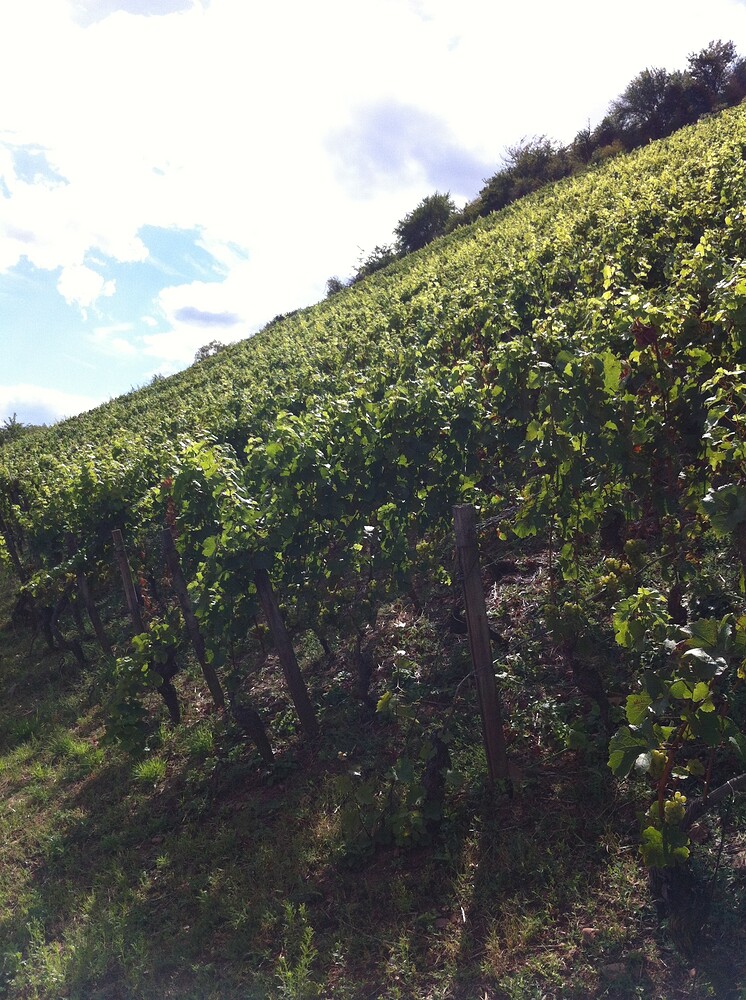
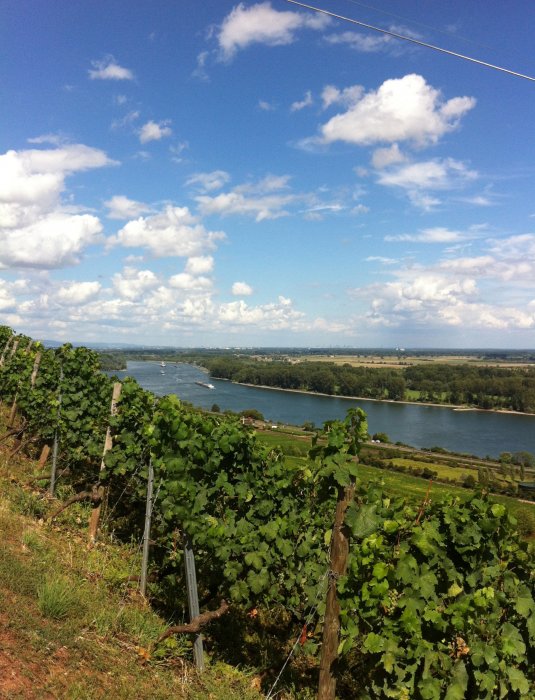
„The VDP.GROSSE LAGE® PETTENTHAL is, along with the HIPPING GL, one of the core vineyards of the Roter Hang. It is situated halfway between Nierstein and Nackenheim with an east to southeast exposition directly overlooking the Rhine. A small section even faces due south toward the sun. The PETTENTHAL GL lays up to 90 metres a.s.l. and rises above the flat foot of the slope and increases to a very steep 70 percent in the upper reaches. Particularly in the steep section, the soil is comprised of iron-rich clayey slate with a fine-grained texture – the red soil that gives the Roter Hang its name. The light reflected by the Rhine River amplifies the solar radiation and influences the microclimate here, particularly because the sunshine arrives early due to an opening toward the Upper Rhine Plain. The east aspect helps protect the site from cold winds. The main variety is Riesling. History: The cadastre name exists since 1753.“ VDP
Pettenthal vineyard
Roter Hang
Roter Hang
„the soil is comprised of iron-rich clayey slate with a fine-grained texture – the red soil that gives the Roter Hang its name.“
On second thought, I vaguely recall tasting a wine from the estate a few years ago.