I have been drinking a lot of older Molitor over the last few years. Just came back from dinner and we enjoyed a beautiful 2004 Zeltinger Sonnenuhr Spatlese Trocken. They definitely change a lot with age. I get it that stylistically they are unique.
1 Like
I haven’t had good luck with Müllen wines, but my experience is limited and I think it’s a personal preference. I’m still trying to isolate the specifics so I can describe what I like and don’t like in a wine like this.
I opened a bottle of the 2010 Kröver Paradies Riesling Spätlese * trocken over the holidays and encountered the same super rich, almost umami-like mid palate that left me a little confused and turned off. I’m not sure if this is a signature of the house, or just secondary characteristics of a powerful dry riesling burgeoning with age, but I experienced the wine for a second time as heavy and musty, albeit with some mild tartness that I did appreciate. If there was any fruit it wasn’t fresh, a little bruised instead. I’m probably doing a poor job describing it, and I didn’t take notes I’m just recalling from memory. I’m almost certain there wasn’t a flaw (though the tartrite crystals on the cork nearly scared away my in-laws), and I did appreciate the wine in small doses as a sort of contemplative sipper, just not what I’m usually after in a Riesling. Maybe it was a little long in the tooth for my preferences, but I’ve enjoyed older wines that presented fresher and more aligned with my taste.
Anyways, I have some more of this same wine and some younger Müllen kabinetts that I’ll lean on to keep exploring.
1 Like
There’s definitely an aftertaste thing I get from certain Riesling bottles that I’m trying to pin down, but it’s really off-putting. (Not referring to MM in particular, just in general.) I’m pretty certain it’s from a type of Fuder, because I don’t think I’ve ever tasted it in wines aged in stainless steel. The really frustrating thing is it seems to strike at any time, from just about any producer. Actually, now that I mention it, if you guys can help me compile a list of producers that use stainless steel exclusively, I’d really appreciate it. 
Interesting. That’s not what I assume of his wines. Perhaps the of the botrytis in that bottling is registering as umami for you?
It can be such a challenge to pin down this type of thing.
I do find they have a sort of alien quality for me. The tricky I find is that they really benefit from time open (same as Wei ku), which is not my preferences for most wines. I have often found Mullen’sbest on day 3.
Thanks for the hint, I’ll keep a better eye out for the inclusion of botrytis. I’m really not sure “umami” is the right word, I’ll think on it over the next bottle. Whatever it is, there’s definitely something a little strange to me about these wines.
No problem!
Not super confident, but I think botrytis in a dry wine is a flavor profile most people would find unusual unless they’ve experienced it a fair amount. So could be that amorphous thing.
If so, it’s definitely an acquired taste. I personally enjoy it in moderation, but many to not.
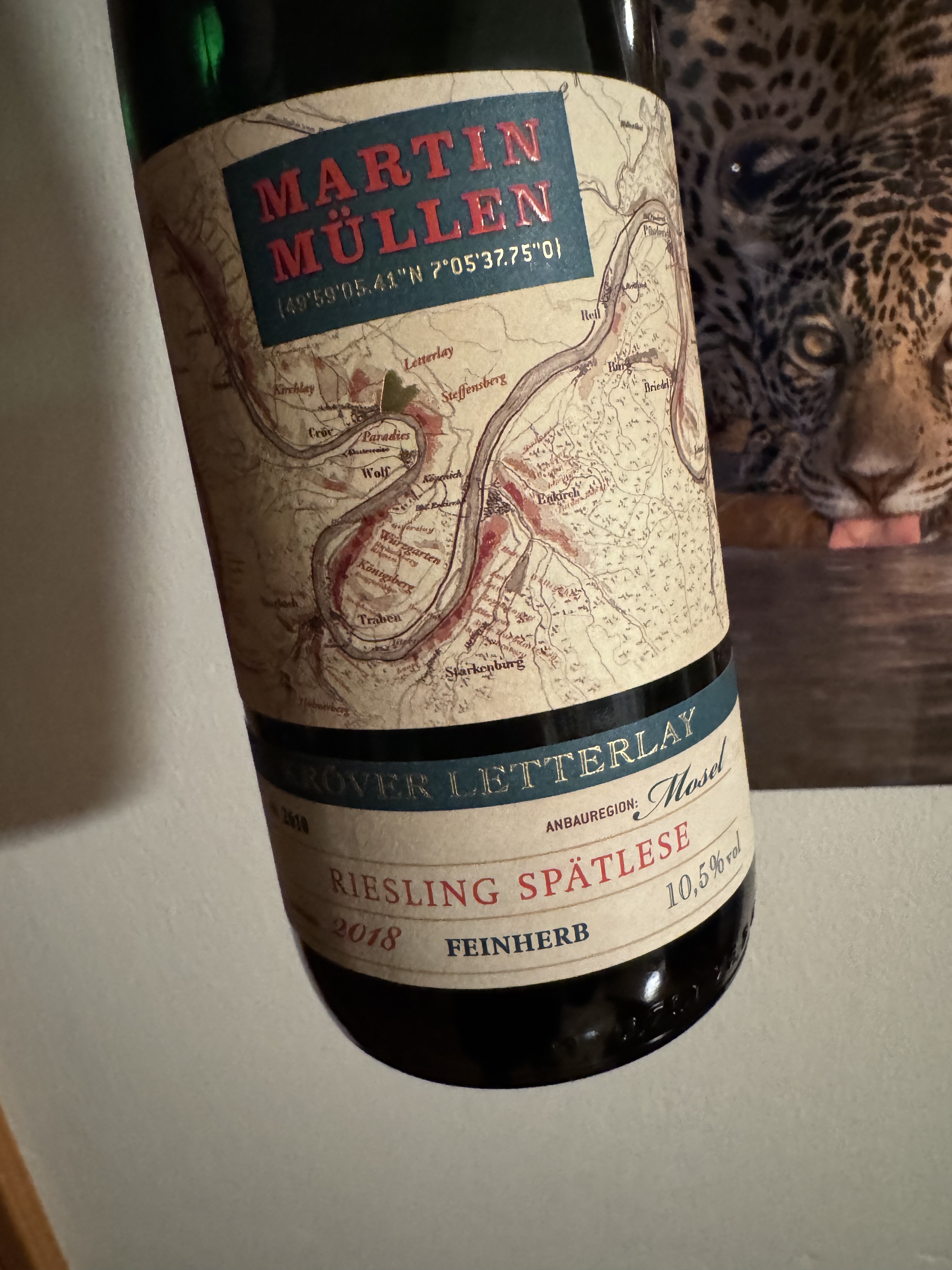
Sipping on a Martin Mullen wine with our dinner, and it’s just not working for me. Like Molitor there’s a strange flavor element that I cannot put my finger on, except in this case it is both bitter and astringent. I have run into that before with Mullen, and so stopped buying them after two small purchases.
2 Likes
Years ago, at a dinner, I asked Johannes Selbach about a flavor I was noting in German rieslings with age that appeared when the wines were first opened and went away at some point when the fruit opened up. I said to him it almost tastes like old oak with a slight vanilla element. He said he knew exactly what I was referring to as we both noticed it in the 20 year old 1990 Bernkasteler Badstube spatlese I had brought from my cellar, and he said he’d been thinking about whether the wine had ever been in fuder but no, it only saw stainless steel. He then said he didn’t know what it was. I figured if he didn’t know what it was, I was never going to learn what it was.
8 Likes
That’s quite accurate. I guess it’s just something I have to put up with. 
I also don’t think, but not sure, I’ve tasted it under screwcap. Perhaps it’s some weird TCA offshoot?
I’ve tasted it in bottles very young and old, so not an age thing.
I’ve noted a sort of musty note in old Mullen wines. Once was at Nobelhart and I discussed it with Billy Wagner who said it was common. He was a big promoter of the wines in the early 2010s.
It didn’t seem to be TCA as it didn’t get worse.
Maybe some weird byproduct of reduction perhaps?
1 Like
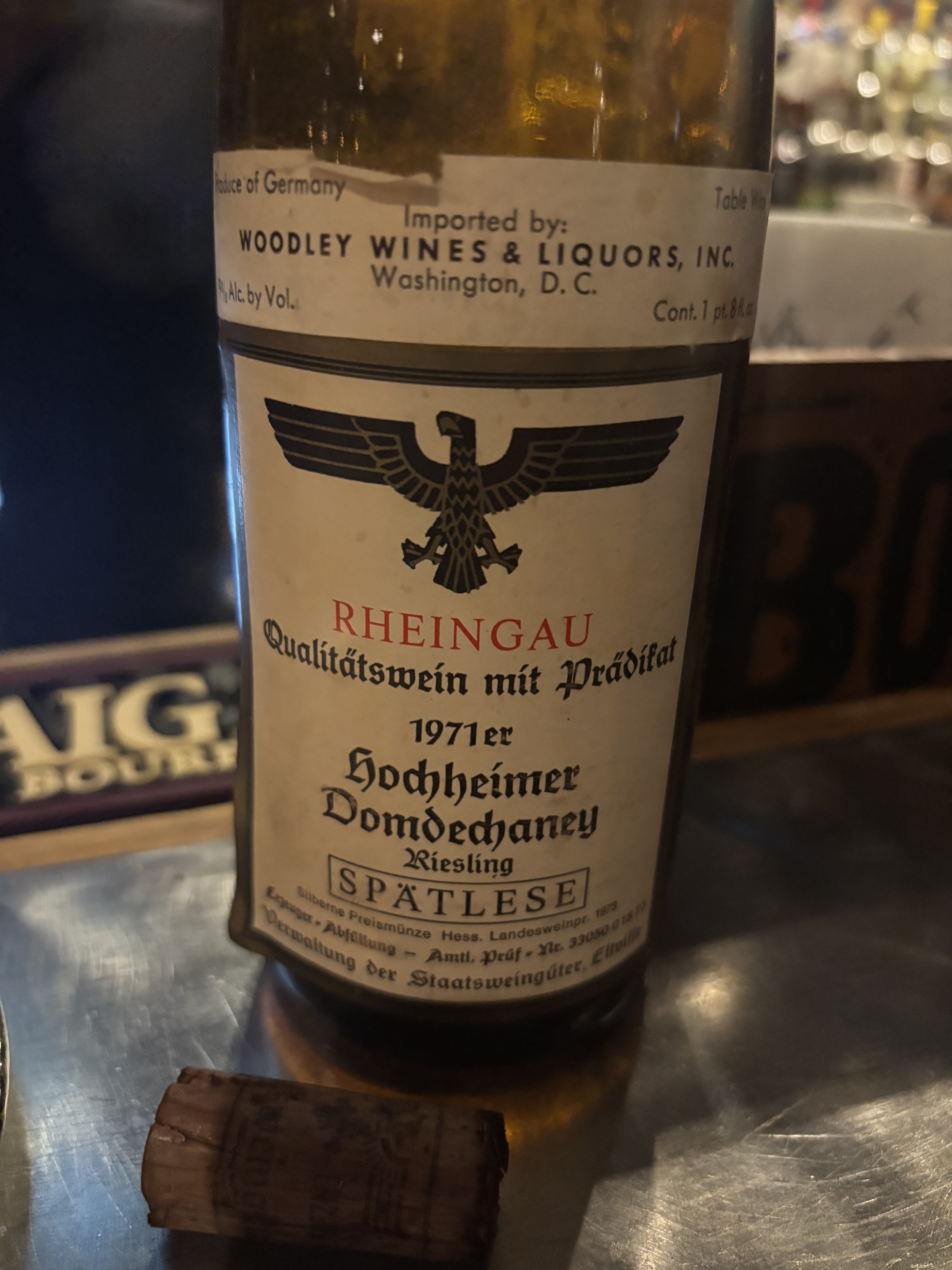
I have found that after the wine gets some air, the flavor disappears (or is perhaps overtaken by fruity flavors).
1 Like
I stopped with these a few years ago too. For the $ there are just better Rieslings out there (IMNSHO)
Agreed.
Definitely plausible. @maureen_nelson is right, it definitely becomes less noticeable with air, but it never goes away completely (that I’ve noticed).
When I first encountered it, I thought it was TCA. However, it has no (noticeable) aroma, which would indicate it’s something else. Not only that but it sneaks up on your palette right at the end. Frustrating.
My other thought was less than perfect old wooden barrels.
1 Like
list][*]2023 Stein Himmelreich Riesling Kabinett feinherb Alte Reben - Germany, Mosel Saar Ruwer (1/3/2026)
I state, with the highest level of confidence. that Dr. Stein has to be one of the greatest off-dry Riesling producers on the planet.
This Feinherb from Himmelreich is so perfect. It smells of cool, sweet limes, with jasmine and tea essence wafting, and a slate soil impression. Tasted, the sweet lime comes out and so many citrus and orchard fruit perceptions, really every color of the rainbow. They all come wrapped by this Feinherb blanket, kept sooo in control, yet trying to flee to the heavens! Balanced, so balanced, it’s mesmerizingly perfect. (96 pts.)[/list]
Posted from
CellarTracker
9 Likes
