Fair enough in that the pace of different reactions will vary in a different way with temperature. But it seems quite surprising to me that the “best” temperature just happens to be the temperature (or temperature cycle) of a European underground cellar. I wonder if, in fact, “best” is actually a trained opinion (it’s what all the “experts” tell you so you just believe it), given that the aren’t many other aging profiles widely practised. A hundred years ago your only choices were stick it in the cellar or keep it at ambient room temperature. But now many other variations of temperature and time are possible.
(Apologies for wandering off-topic. There’s nothing specific to champagne about this question - I guess it would be better in a separate thread.)
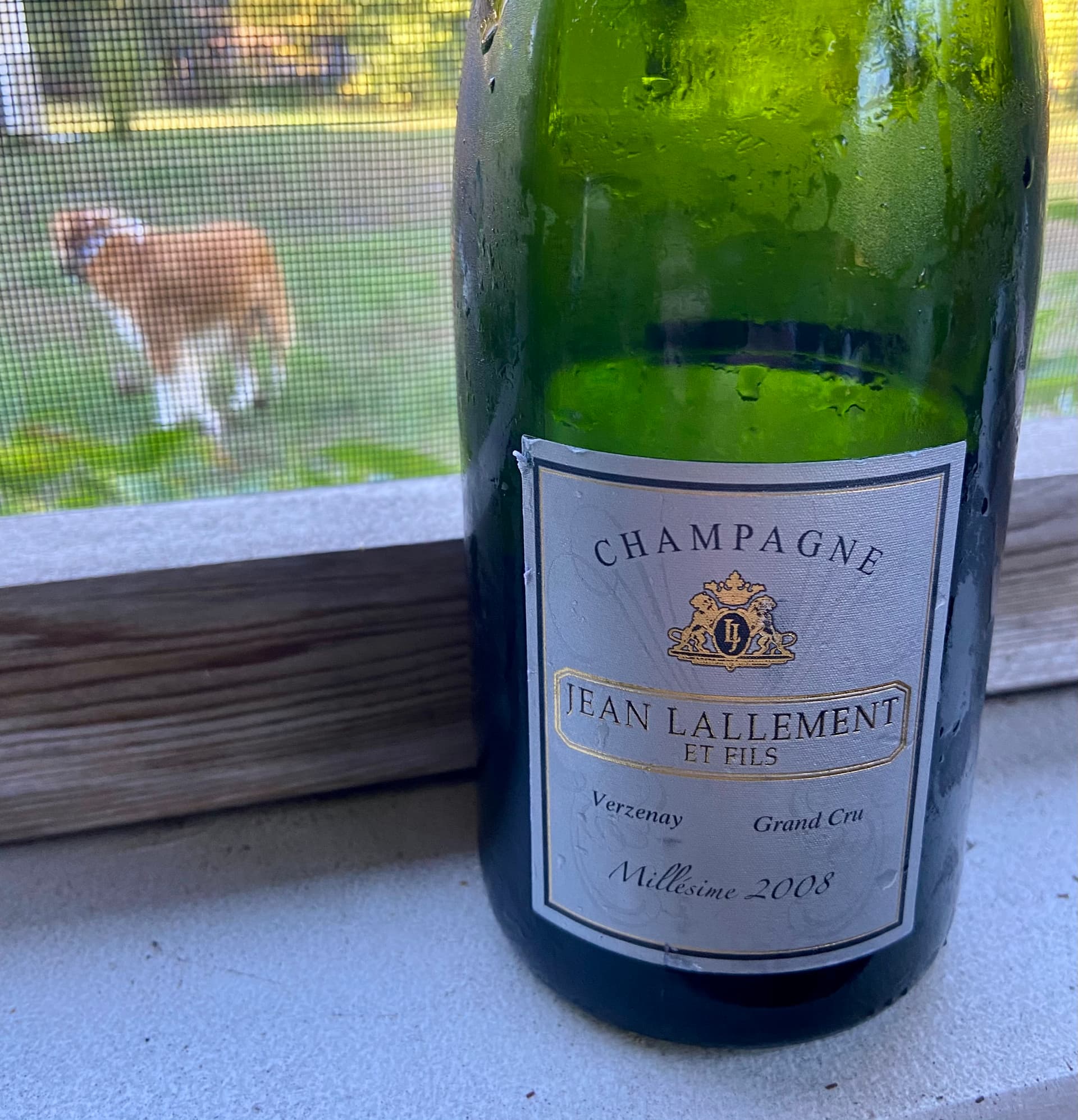
2008 Jean Lallement Champagne Grand Cru Brut Millésimé
Opened by a friend. Last had this in 2019 and it was far superior when younger. 80% Pinot Noir and 20% Chardonnay from old vines in Verzenay. Disgorged May 2014. Lallemnt’s wines have less than 3g/l dosage. Medium yellow color. This had a lower bead. Started out with some funk on the nose. On the palate it had an interesting cotton candy profile with notes of cream soda. For having a lower dosage this showed some sweetness. 86 points.
Lol I certainly can! Although probably a somewhat simplified version should suffice here.
The main answer is what Warren said above: different chemical reaction happen at a different pace.
Those qualities we treasure in aged wines take time, while we do not value the byproducts and end products of alcohol oxidation. While the reaction rates for these changes are accelerated in warmer temperatures and retarded in cooler temperatures, usually the changes that result in complex tertiary aromas take a lot of time, even in warmer temperatures. Warmer temperatures can accelerate aged characteristics like browning and the development of raisiny fruit flavors while the other, more complex, savory, nutty or caramelized flavors take much longer. That’s why a “cooked” wine kept for too long in warm temperatures might look brown and old for its age, showing diminished fruit and just pruney flavors.
However, the alcohol oxidation is one of the biggest problems. When alcohol oxidizes, the resulting acetaldehyde gets bound with free SO2. If you keep wine in warm, you accelerate alcohol oxidation, which can rapidly deplete any free SO2 you have in the wine. You don’t even have to keep the wine warm enough for it to turn brown and pruney to make it lose its SO2 way too soon in its life. That means that once the free SO2 has been gobbed up by the end products of alcohol oxidation, any additional acetaldehyde that gets produced just stays there. As the levels of unbound acetaldehyde increase, the wine starts to smell and taste stale, flat, Sherried and oxidized. The fruit flavors underneath might suggest a young wine that could still age for much longer, but without any free SO2 and acetaldehyde just building up, the wine is simply doomed.
No, it’s not the best. I’d say different wines with different levels of free SO2, different redox buffers, different pHs and whatnot can age wildly differently in different temperatures. Most likely a Riesling with pH below 3 and blasted to oblivion with SO2 can age and evolve effortlessly even close to room temperature, whereas a natural wine with no added SO2 might be to evolve with age in a cellar that is around 10°C/50°F rather than 15°C/59°F. Plus I don’t think there is a universal temperature (or temperature range) that would be constant throughout the whole of Europe…
That 13-15°C/55-59°F is just a good average that is one-size-fits-for-most. You are going to get pretty constant results and most likely you are not going to oxidize or cook your wine in that temperature, no matter what style the wine is. Temperatures even below 10°C/50°F are perfectly fine, but at that point the evolution is starting to get so slow that it’s best if the wines are saved for the next generation.
A simple example is your daily cooking. Sure, you can ‘speed up’ the cooking by blasting your ingredients with super high heat. But the result is going to be very different from going slow and low.
I this this gets at my core point. That’s what you have decided you like, but suggesting that this is the only or even the best way to consume wine seems rather presumptuous.
Different yes, better or worse - personal opinion.
I recall a bottle of fizz (Bolly as it happens) that I was given a few years ago. I knew that this bottle had been stored at ambient (Hong Kong) temperatures (so up to 35/95 degrees each summer) for several years (perhaps as long as a decade). The resulting drink was unlike any other bottle of champagne I have tasted, but it was quite pleasant and refreshing nevertheless.
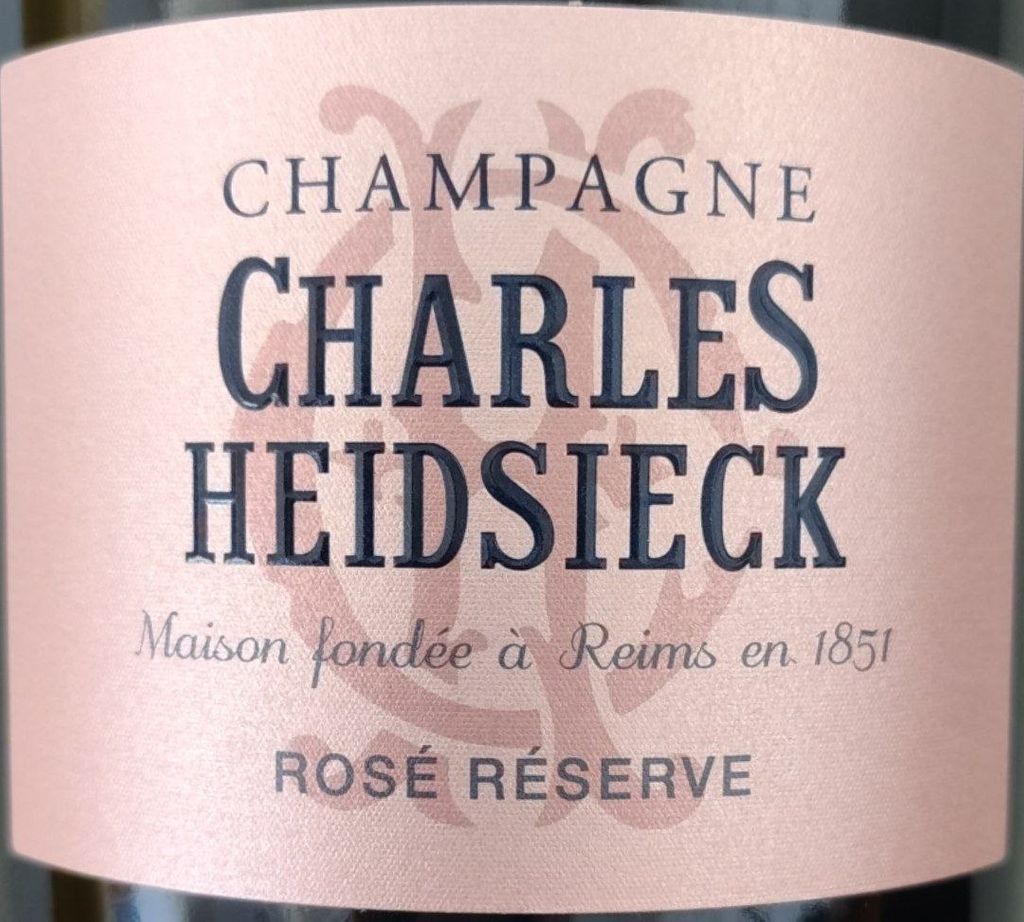
Very pale salmon in colour. A bit harsh when first opened, but smoothed out nicely in just a few minutes. The nose is a little muted - perhaps some saline freshness and a little citrus. The palate is crisp but a little fruity and also with a slightly bitter edge (in a good way). Maybe sort of pink grapefruit. Also a chalky and slightly drying note towards the finish, which is clean, crisp, fairly long and quite more-ish.
Overall for me this is best when kept quite well-chilled, and then is a nice crisp, refreshing wine - working well for me as an aperitif with some smoked salmon this evening. I'm vaccilating between 90 and 91 as a score. And at the ~ US$53 that I paid I can see this being a reasonably frequent rebuy. (90 points)
No one is preventing you from preferring wine that gets quickly cooked.
There are always ongoing areas of debate in wine and food (otherwise we wouldn’t need this board). But it doesn’t seem controversial to me to dislike wines that are exposed to too much heat. The texture gets clipped and the flavors get muddled. Not many people like that in their fine wines.
And yes, it’s all a spectrum. Most people complain about wines that never evolve in cellars that are too cold.
Indeed - but “too much” is utterly subjective. I had a bottle of Bolly that you would regard as “cooked” and for me it was different, with interesting flavours that were well defined and an enjoyable drink. The concept of some sort of “ideal” against which wine should be judged is absurd to me.
Well no. Most people never even consider the circumstances under which the wine they are drinking has been stored - they just decide whether the bottle they are drinking at this moment is pleasing to them or not. The vast majority of wine drinkers are not on WB and would regard the discussions here as absurdly arcane.
I disagree with this. Just like in cooking, there is definitely a range of acceptable doneness, but there are tails on either end which are over and under. Just because someone prefers a steak cooked to dry bootleather doesn’t mean that steak isn’t overdone. It is. He just likes it overdone.
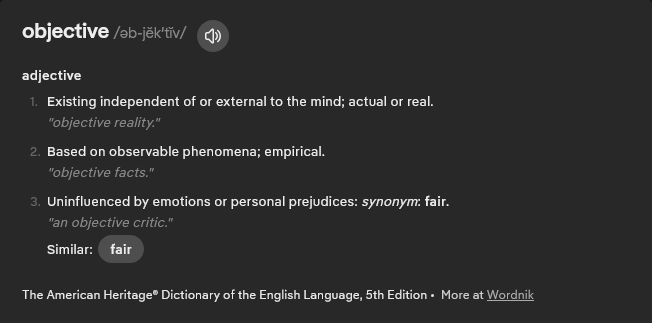
I understand the meaning of subjective. I am making the argument there are objective standards as well. You can disagree with me, but don’t treat me like an idiot.
Who are you to tell someone how much their steak should be cooked? “Acceptable doneness” is completely subjective. And there clearly isn’t a lower limit because that’s steak tartare!
But hey, can we please not have a fight here? I apologise for even raising the subject in this thread, which is one of the best for me on WB. I love reading the opinions here of the regular champagne drinkers and they inform many of my purchases.
There are plenty of chefs here in Paris (and otherwise) who will happily tell you they won’t serve an overcooked steak. I’m going to a restaurant tonight, Le Severo, that serves meat Bleu or Saignant. If you insist that your steak be cooked beyond those, you will likely be cordially asked to leave.
And that is of course their right. If their subjective opinion of how steak should be cooked is very different from mine then I can’t force them to cook it for me. (I have the reverse problem here in Hong Kong - it’s really hard in all but the most expensive places to get steak cooked less than medium.) C’est la vie. I’m sure there are plenty of places in Paris that will happily take the money of Americans to cook steak to their liking.