Ah, sorry, this is 2021.
the past two vintages(19 & 20) was like this to me, but I haven’t had before them. Seeing as '18 was very hot it could definitely show different to these. For me it’s ‘vinous’ due to the fact the mousse blows off rather quickly and they’re very structured and broadshouldered. Most BdNs I’ve had are very comfy and approachable, but this is very different.
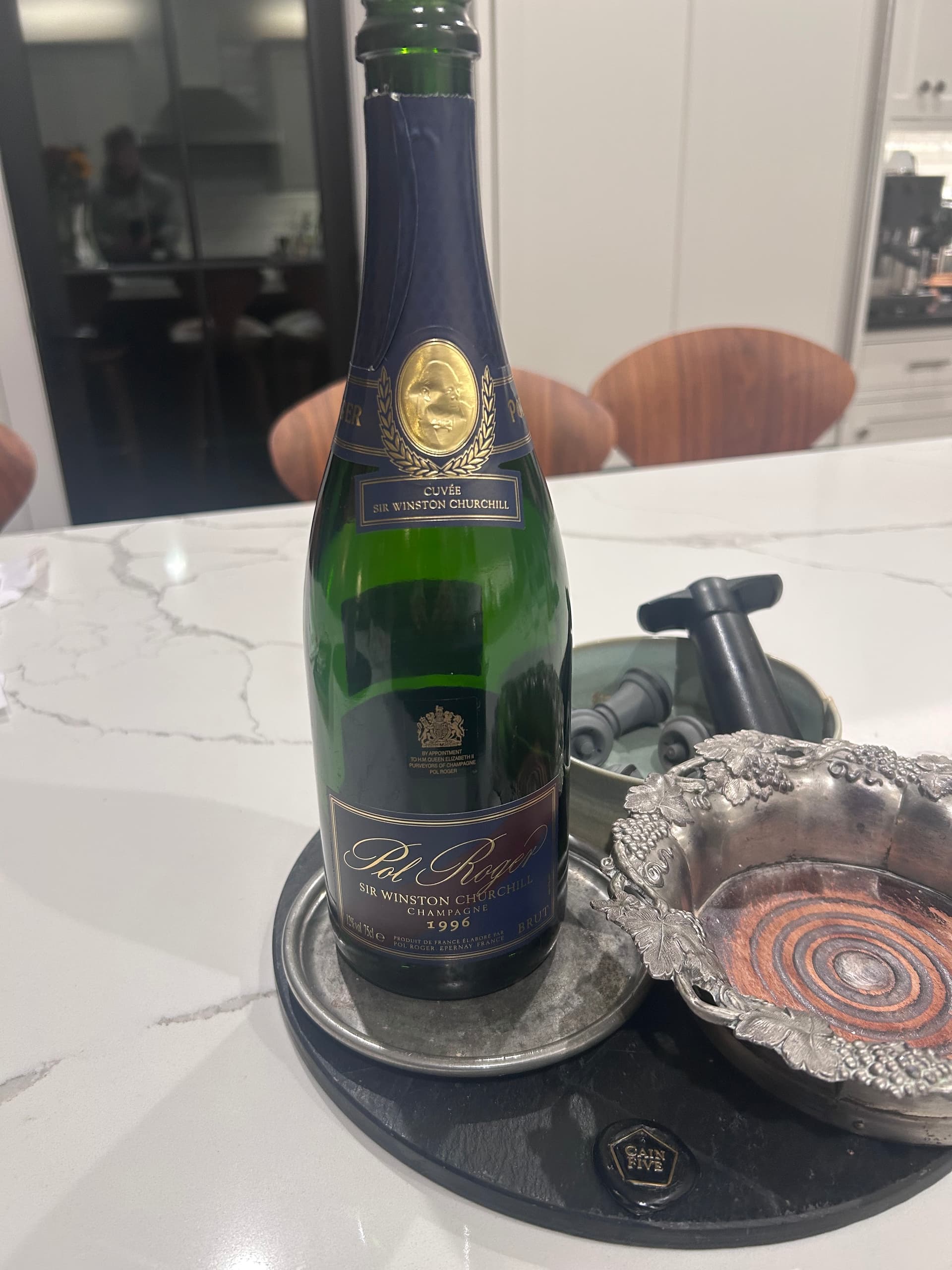
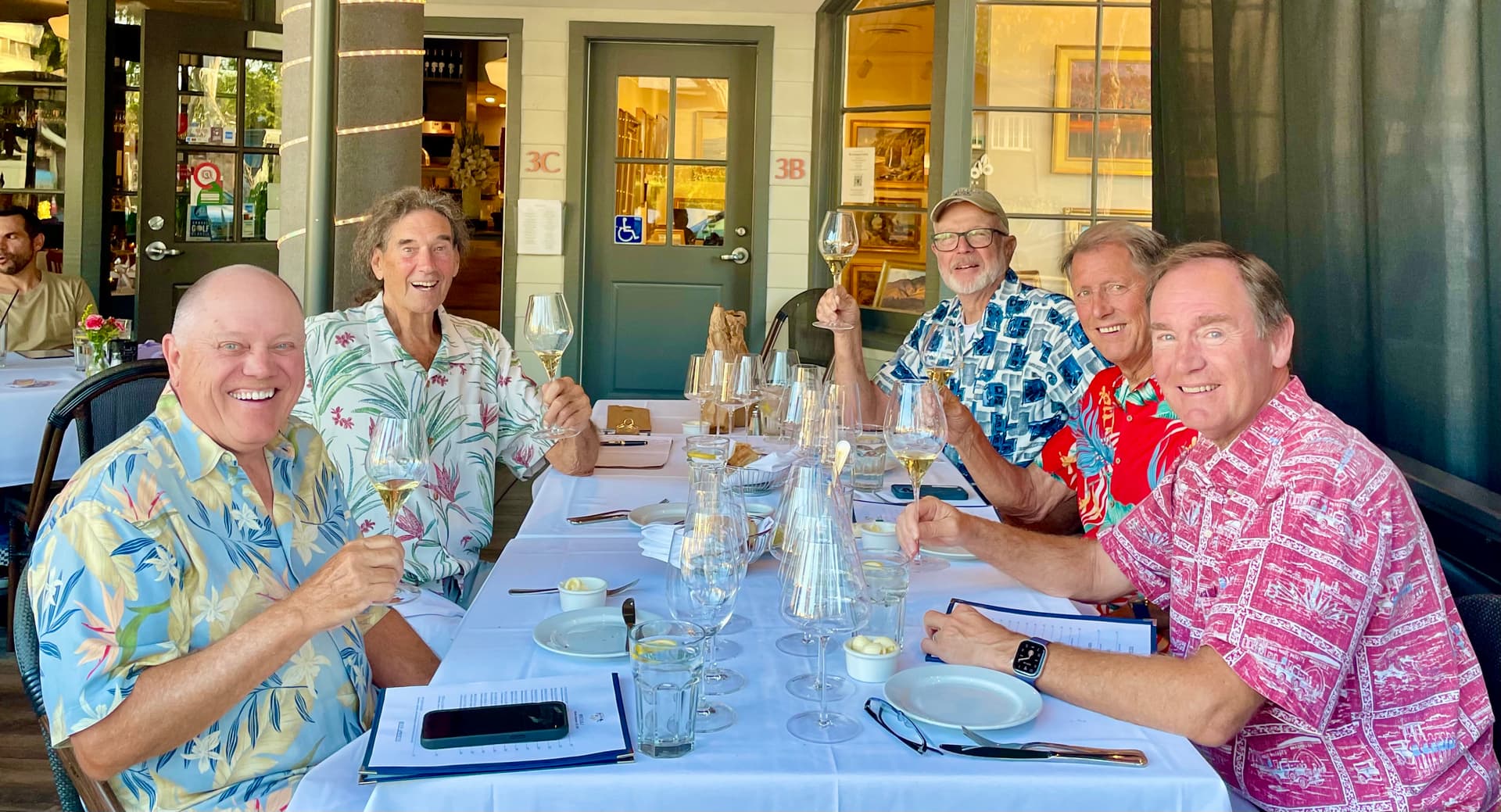
Extracted from a thread just posted: 5 wines tasted blind at dinner: 2008 Laurent Perrier, 2013 Vincent Girardin les Combettes, 2000 ABC Passant des Nuits-Blanches au Bouge XX Aniversary Chardonnay, 2007 Bouchard Chambertin-Clos de Beze. 2009 Guigal Ermitge EX Votto
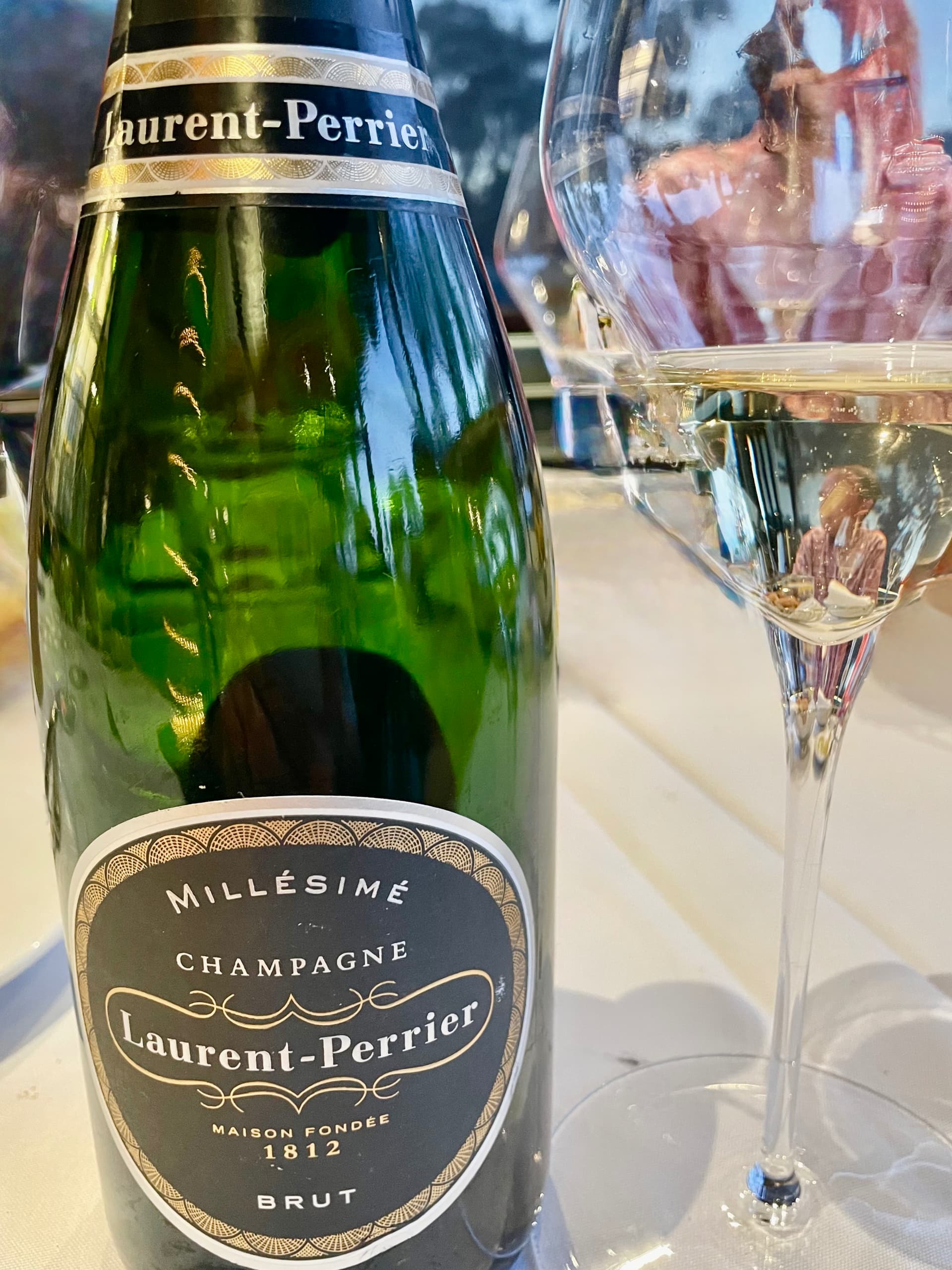
2008 LAURENT PERRIER BRUT- blind; for a champagne that I’ve had a lot more than all others except for one {2006 Taittinger Comtes}, I did not recognize this bottle and it was stupendous; in fact, it was the best of all bottles which is why is didn’t ID it besides it was missing the amazing yellow apple fruit that has been so dominant in all other bottles; this one was beautifully rich and full bodied with lovely citrus fruit, especially lemon and lime, which supported its very bright streak of acid running through; a touch of tasty brioche and hint of honeysuckle and a coat of honey embellished the aromatics and taste profile and the marvelous oily mouthfeel included a bit of weight and served to lengthen the finish nicely; and on top of all of these notes, it was in perfect balance; I immediately called it 2008 Comtes and therefore a BdB and I never wavered although the little voice within was trying to persuade me otherwise; I did eventually mention that it had some 2008 L-P likeness, but I’d never had one that was this complete {up until now}. A top 10 wine of 2026 for me.
Cheers,
Blake
3 Likes
Extracted from a thread just posted: Another wonderful dinner with my sweetie to celebrate her with 2012 Cristal and 1994 Williams Selyem Sonoma Coast Pinot Noir
2012 LOUIS ROEDERER CRISTAL BRUT- following its yellow gold color came aromas of fresh citrus fruit which on the palate translated into lemon and lime with a hint of mint and a coat of honey; it had a medium to full body, nice acidity and an oily, feel good mouthfeel; compared to other bottles I’ve had 3 years ago and before, the fruit seemed more youthful and not fully expressed; but, to be clear, this bottle provided a grand experience and we treasured it throughout the entire evening; this is comprised of 60% Pinot Noir and 40% Chardonnay sourced from Grands Crus from the Montagne de Reims, the Vallée de la Marne and the Côte des Blancs; 32% was vinified in oak casks, it sees no ML and was dosed at 7.5 gpl.
Cheers,
Blake


5 Likes
This evening a house wine from a producer new to me:
- NV Boizel Champagne Brut Réserve - France, Champagne (04/10/2026)
40/35/25 PN/C/M. 3 years on lees. Disgorged December 2025, dosage 7g/l. 40% from reserve wines, and, I infer, 60% from the 2021 vintage.
The nose has spicy citrus, a touch of dough, and an mineral/iodine note.
On first opening the wine is a little aggressively gassy, and quite tart on the palate, but it settles down with maybe 15 minutes air. Then the palate is crisp, following the nose - the citrus almost of a grapefruit nature. There's slightly bruised apple as well, and a finish that is rather crisp, a little drying somewhat more-ish. With more air the balance shifts more to the bread-y notes and less to the citrus/grapefruit. The dosage seems well-judged and not prominent.
Overall, after a little air, for me this is a rather nice and quite distinctive bottle of fizz (the grapefruit citrus particularly). It's working well for me as an aperitif with a little cheese.
This bottle was gifted to me, but at the ~US$43 that I can get it for I see this as an occasional buy for me. (89 points)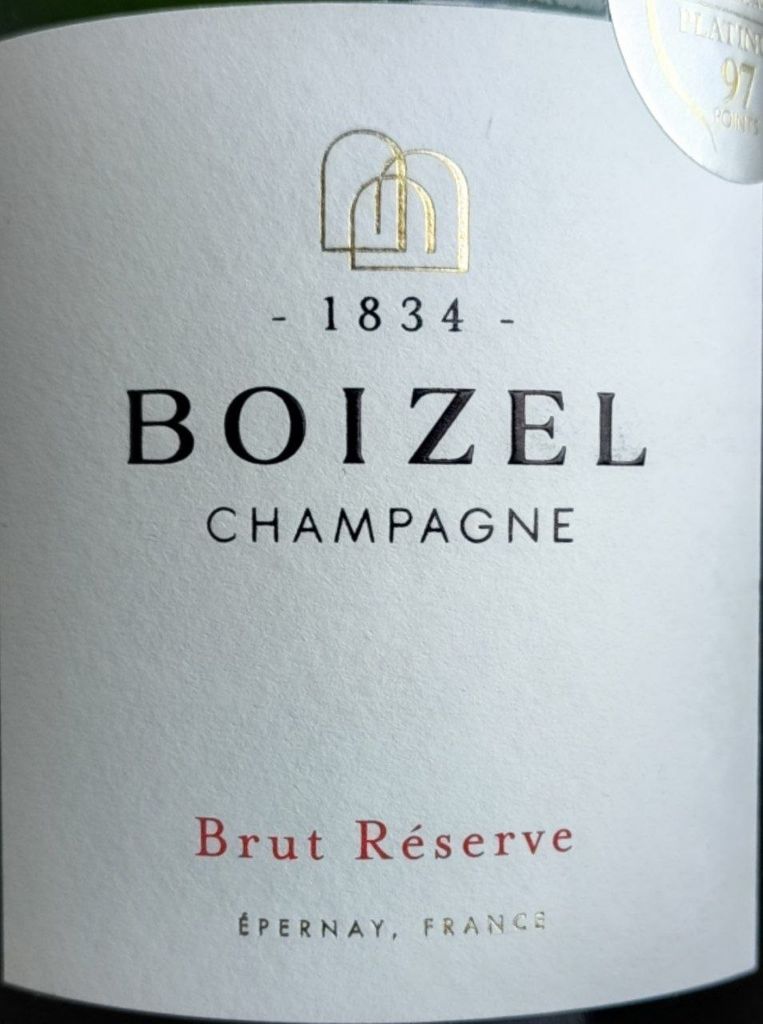
1 Like
172 last night was good, but ultimately too young for me. A touch better than 171, though I just not a big fan of 171 out of the past few releases.
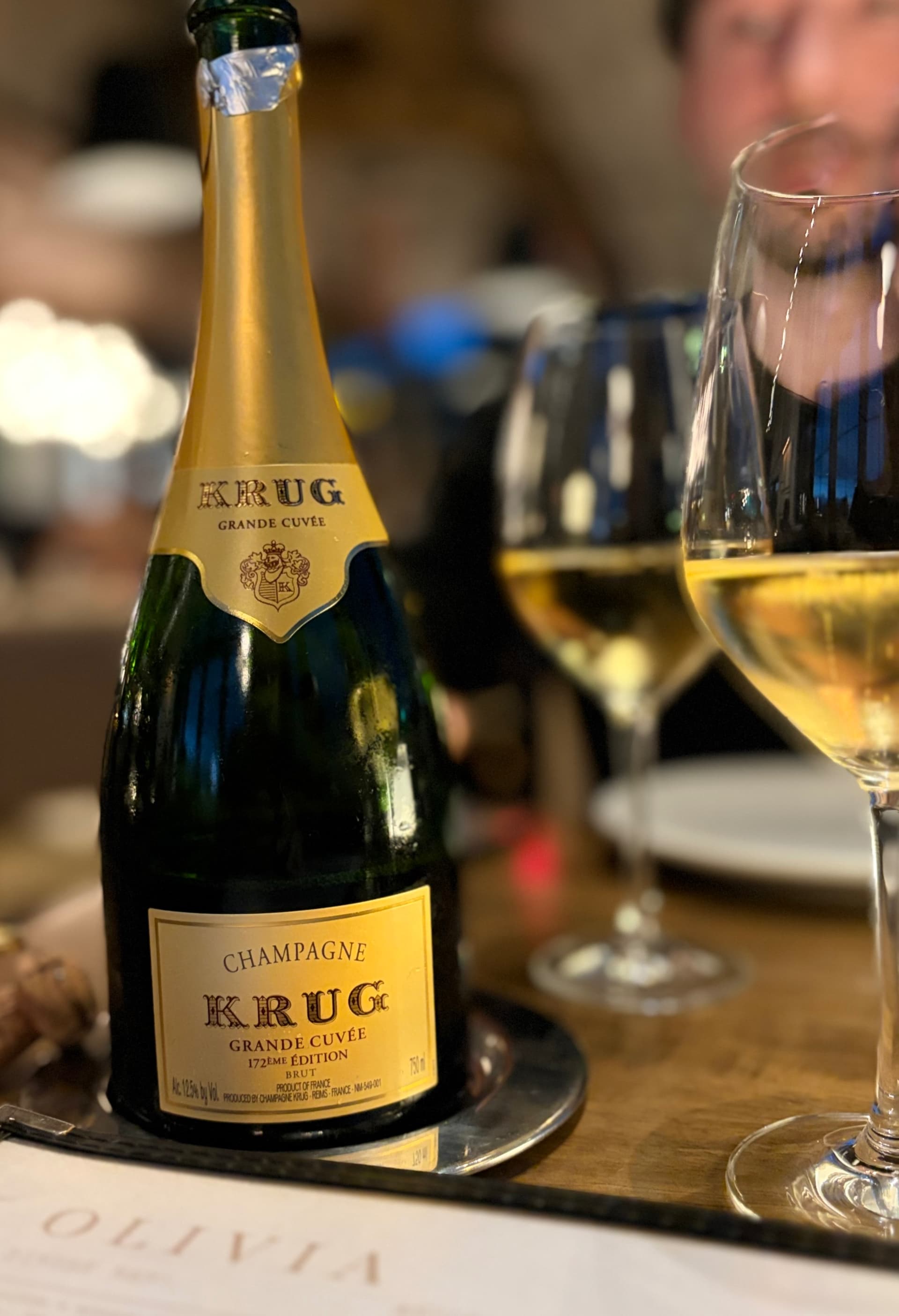
4 Likes
Totes.
For my palate, I wouldn’t reach for any Krug GC younger than 169 right now. That’s a fairly strong preference of mine at the moment.
3 Likes
 was going to say give me 168-169 and I’d be ok- increasingly I’m leaning away from Krug NV and would just rather Comtes or several EO for less $
1 Like
Which EO?
I’m not Dennis, but I like 2016 base year Grand Cru and, always, VP. 2019 base year Grand Cru needs more time in bottle. I’d avoid ‘17 and ‘18 base year Grand Cru, especially if you can find ‘16 or ‘19. E-O Rose is killer, particularly the older versions in clear bottle.
2 Likes
Thanks. I need to try more of the offerings. @Stan_Y generously shared a bottle of the Crayeres (I think that was the one) and I liked it quite a lot. Still trying to get my arms around the various bottlings
VP need a a fair amount of time?
Pretty much agree with what Mark said (he is, in fact, not me) 
2 Likes
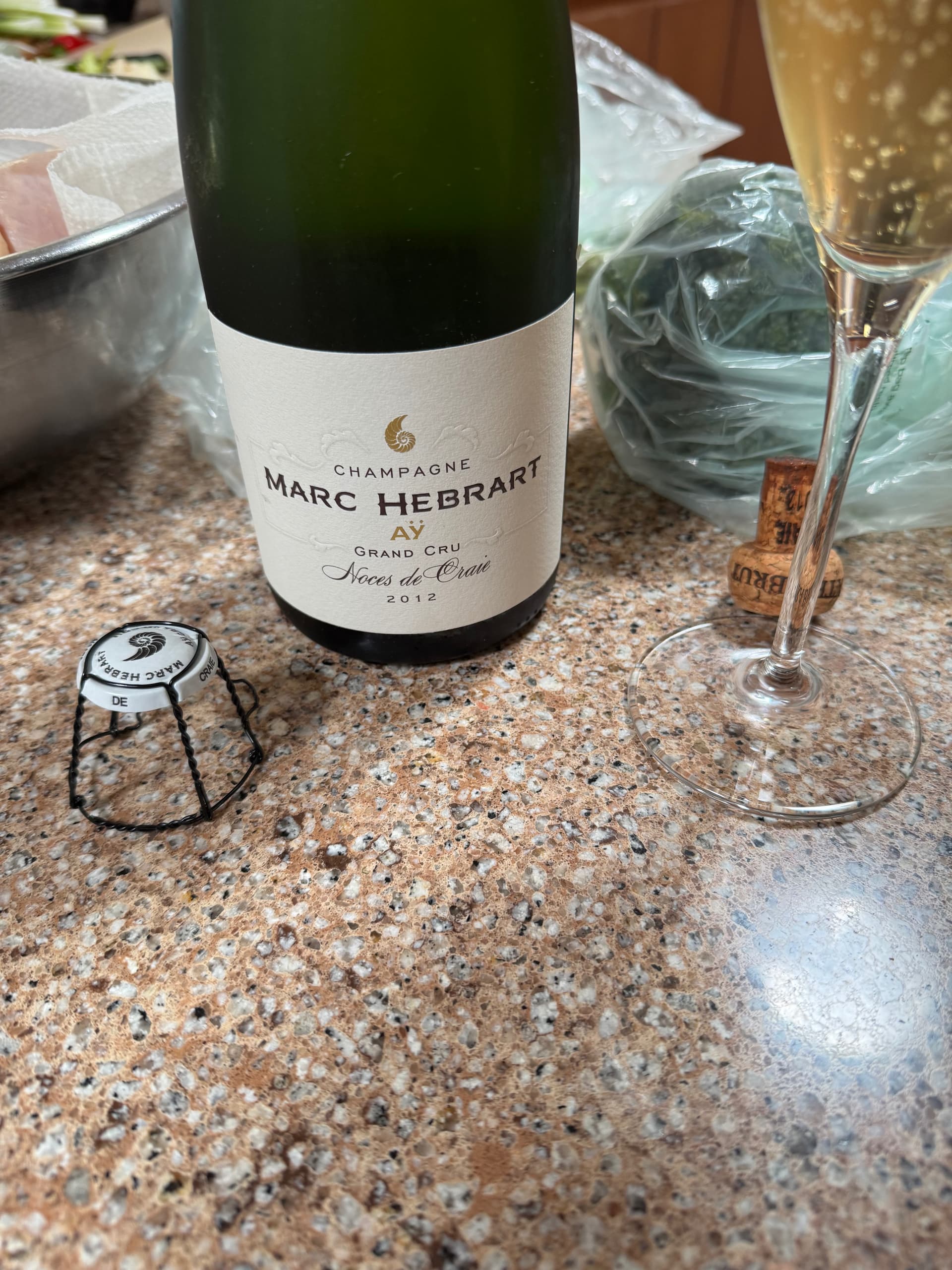
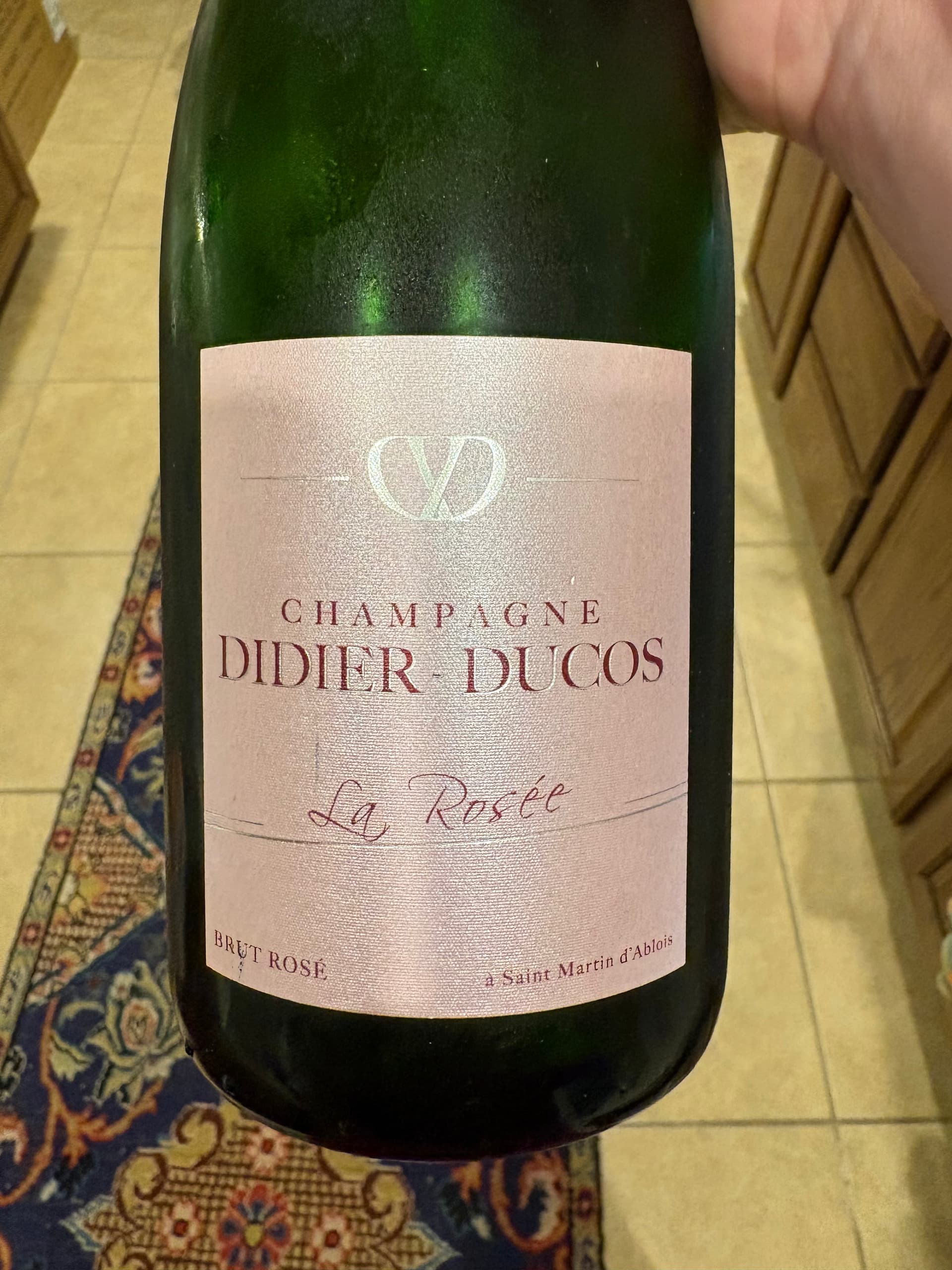
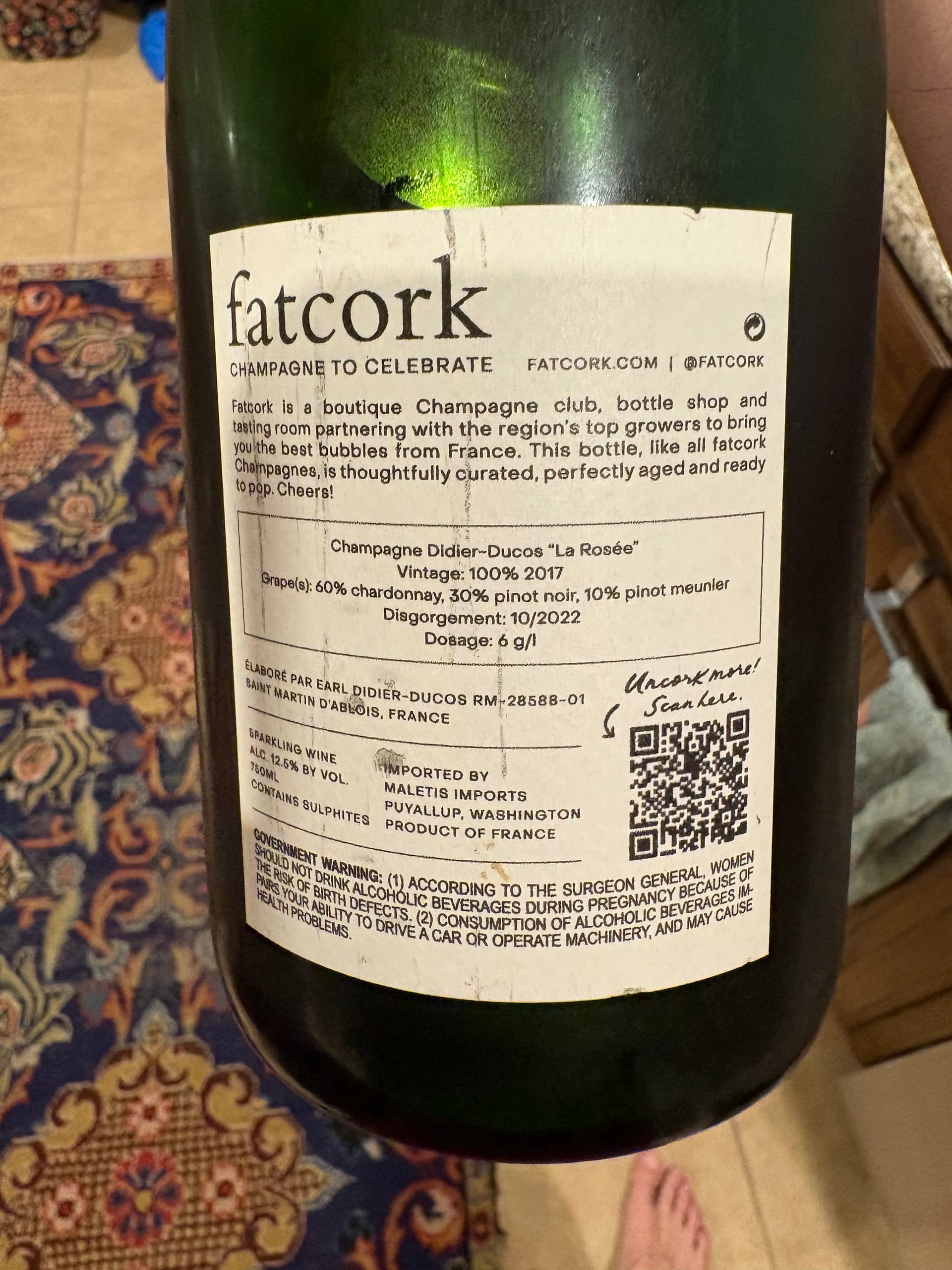
Extracted from my new Travelogue
Our first night, jet lag be damned, we walked to the bar at the InterContinental and finished the evening with some late night petites assiettes. I unfortunately know almost no French, so yes, I had to look that up.

The Roederer 246 was really nice despite its challenging base vintage.
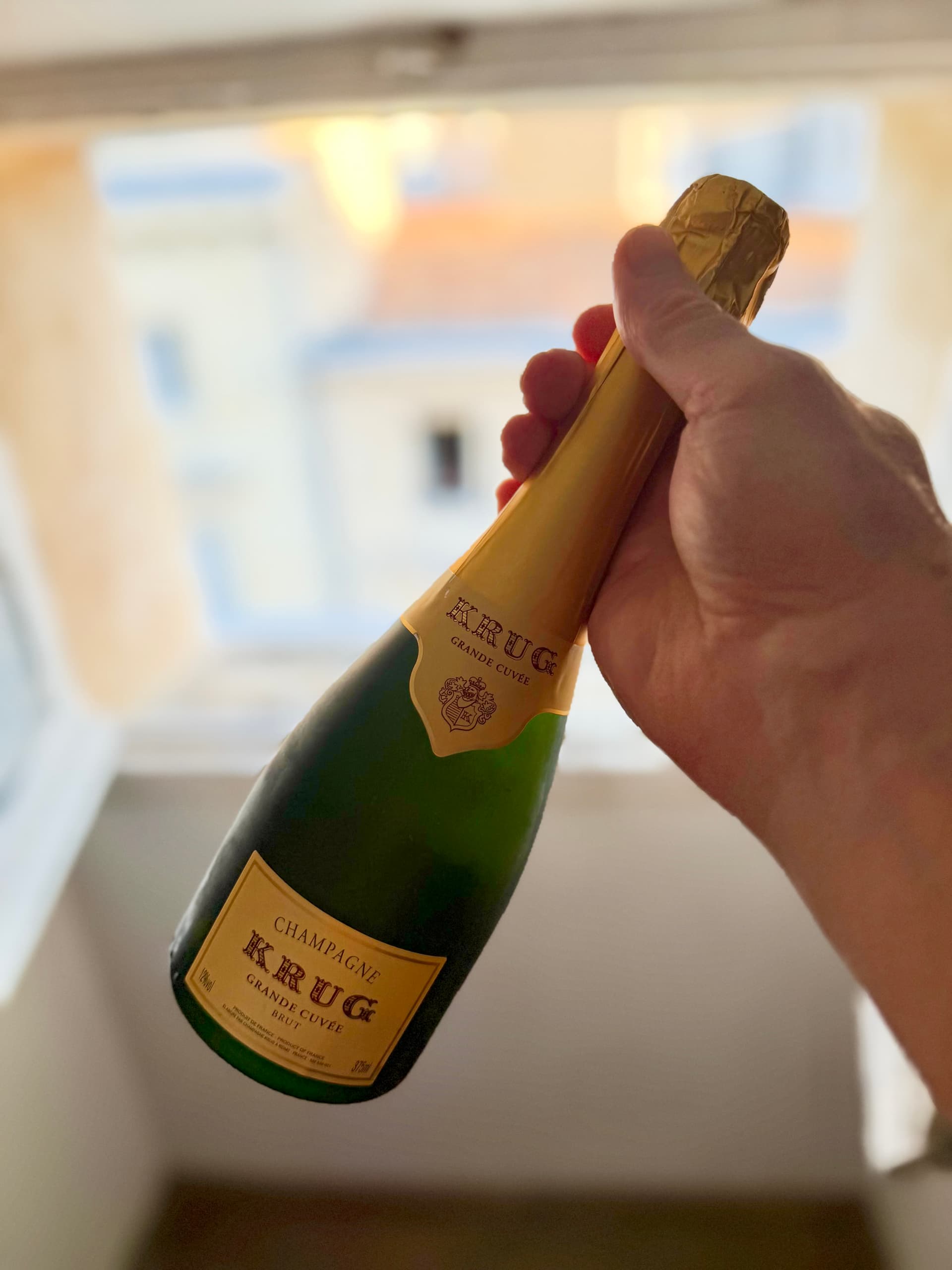
Last night, Marybeth didn’t want any wine. I’d picked up the last half bottle of Krug GC at a remarkable Champagne shop a short walk from our apartment. I hadn’t planned on having a great Champagne store that close. The gods smiled upon me.
I bought their last half bottle of Krug GC, as well as their last Egly Ouriet VP. Both were “display models,” but it didn’t look like any sunlight reached the displays, so I wasn’t too worried about light strike.
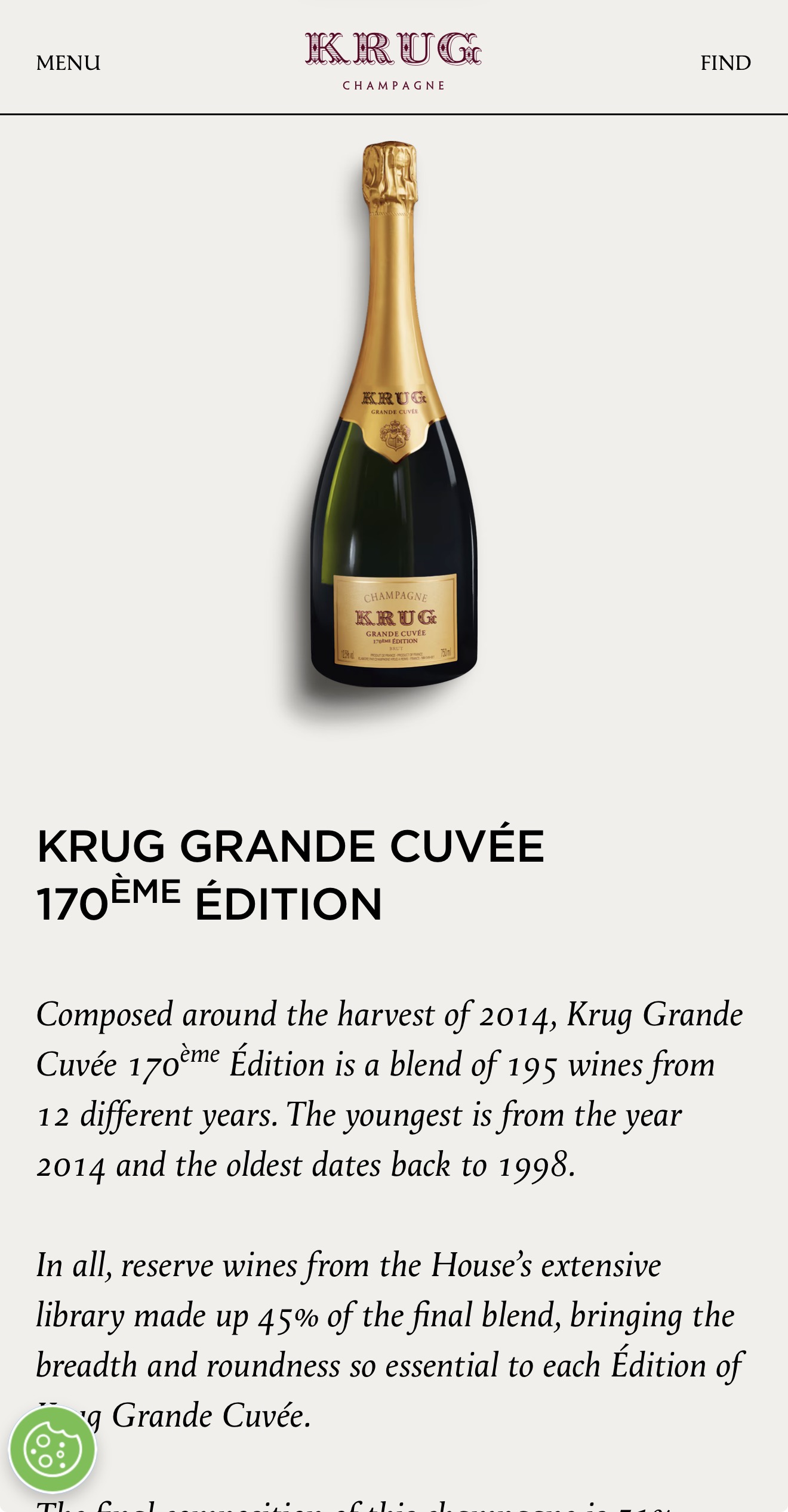
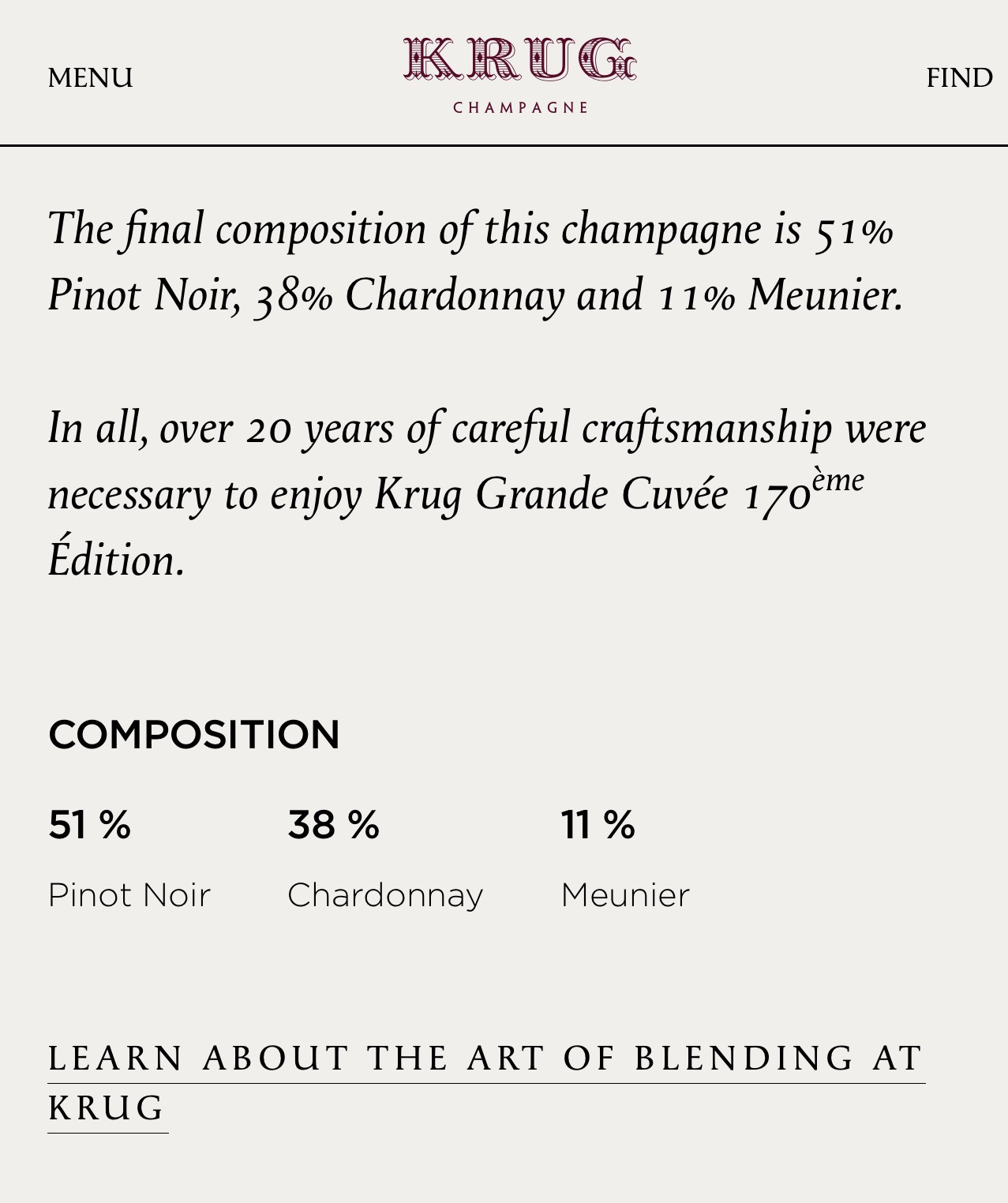
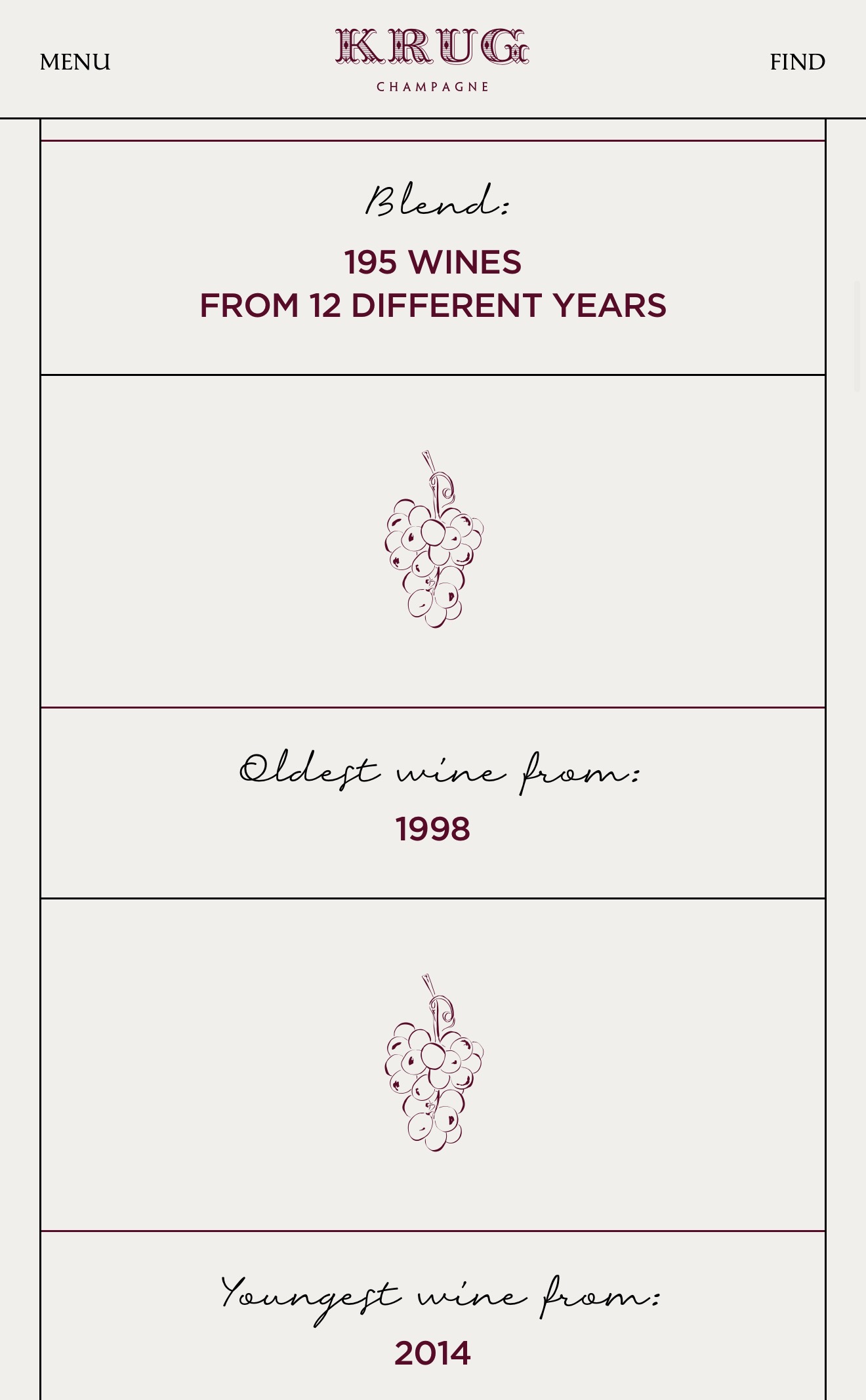
The Krug turned out to be a 170ème. I had to look it up on the Krug website because my Krug app has stopped working for Krug ID. After being a great resource for years, it now crashes every time I try to identify an iteration. Anyone else having that problem?
Dense ginger, honey, hazelnut cream, dried fruit, and intense brioche. A huge, gorgeous wine. Still, I have to admit it was more advanced than I’d expect from a 2014 based wine. It’s probably been sitting at room temperature in the shop for six years since its release.
No regrets, though.
6 Likes
This evening a new disgorgement for me of a wine that’s been mentioned here a few times previously. Curiously, for me, this bottle with 14 years sur lies showed less complexity than one I had a couple of years back with ~12 years. Still an excellent wine though.
- 2008 Thienot Champagne Cuvée Stanislas Blanc de Blancs - France, Champagne (06/10/2026)
A new batch for me: disgorged 03/2023, 4 g/l.
On the nose, slightly candied citrus, a little brioche, a little cream. The palate is well-balanced: crisp, but far from austere, some candied lemon, some bread; very clean with a slightly drying note towards the finish, which is rather more-ish.
Overall, this is an excellent bottle of fizz, but I'm finding it a bit more straightforward than the earlier batch that I drank a couple of years ago. It's going down very nicely with some smoked salmon, but even at the slightly reduced price of ~US$89 that I paid for this I see it as OK, but not great QPR. (91 points)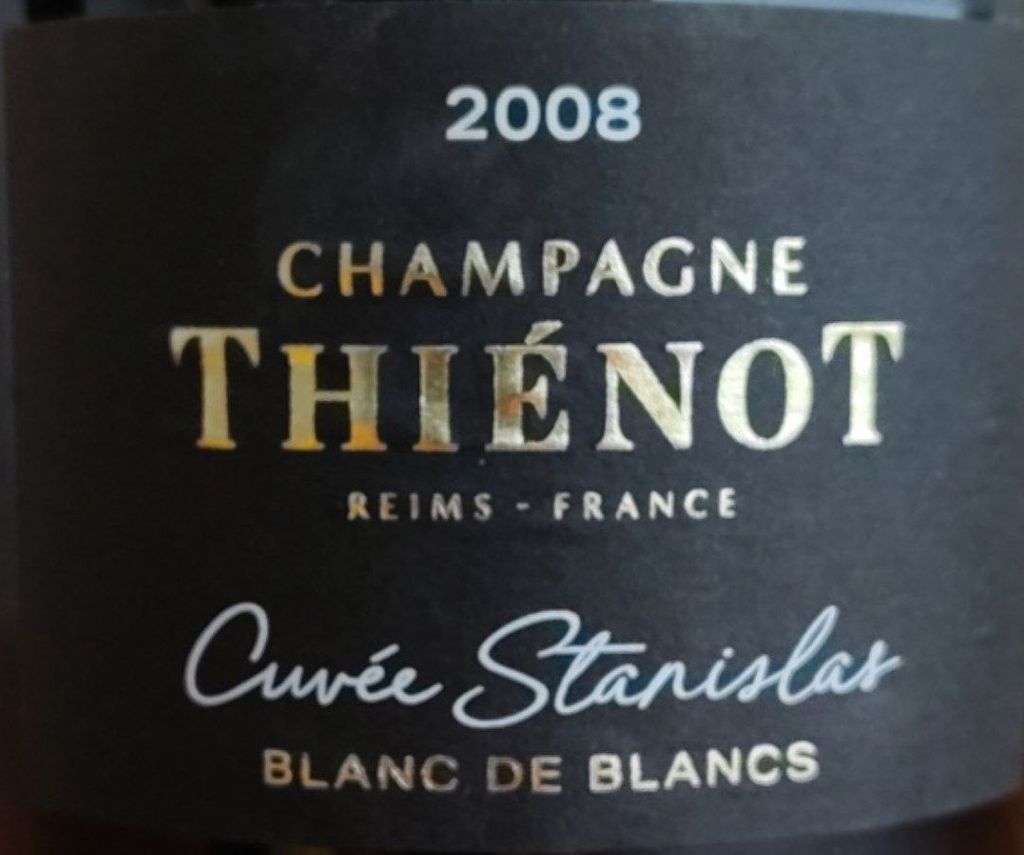
3 Likes
For me this raises a straightforward point: the characteristics that we appreciate from “aging” are essentially the result of chemical reactions that happen slowly within the bottle (plus a little oxygen permeating through the cork). High-school chemistry says that the speed at which reactions progress is a function of temperature, So it is, of course, to be expected that keeping something at 20/68 degrees will cause these reactions to happen more quickly than keeping it at 10/50 degrees. The key question is whether different chemical reactions happen when the temperature is higher. If not then surely if what you desire is the “aged” reactions to have occurred before you drink the wine then it would make sense to store it at a higher temperature to get there sooner?
Apologies if that’s obviously flawed scientifically, or just simply heresy around these parts! 
I agree that higher temperatures accelerate the chemical reactions involved in aging, but I don’t think that necessarily makes warm storage simply a faster version of cellar aging. There are so many different reactions occurring in wine, and they don’t all accelerate at the same rate as temperature increases. So warmer storage changes the relative balance of those reactions, not just their speed.
In my experience, wines stored at higher temperatures don’t simply reach the same endpoint sooner. They can develop different chemical and sensory profiles, with oxidation, browning, loss of fresh fruit and other reactions progressing at different rates.
So I think of a wine that’s spent years in a warm shop as more advanced, but not necessarily more mature in the same way as a wine that’s aged slowly at cellar temperature. My experience has certainly been that slow aging at cellar temperature ultimately produces a better wine.
I’m sure smarter people than me might have better information…
Cheers!
4 Likes
I am sure @Otto_Forsberg (among others) can explain why it doesn’t work this way. 
1 Like