From a social media post by Mr Hardy Wallace (of Dirty & Rowdy Family Wines) from a visit to Domaine de la Tour du Bon in Bandol.
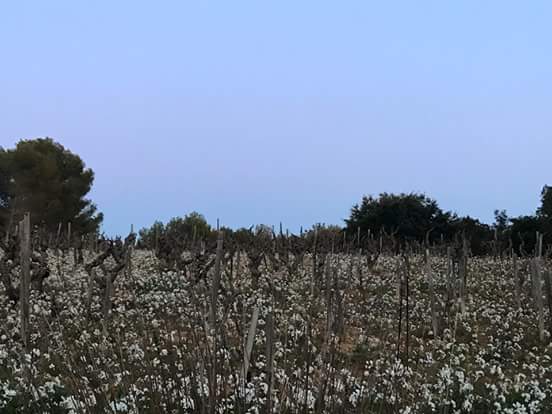
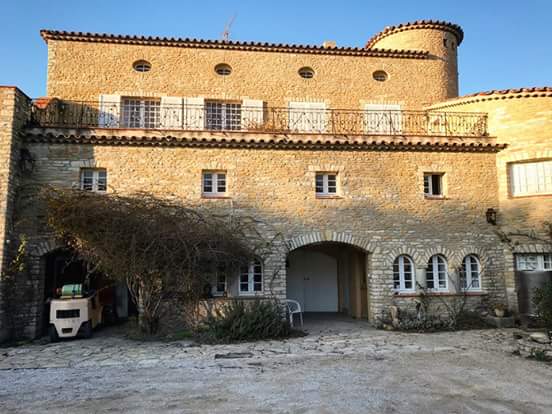
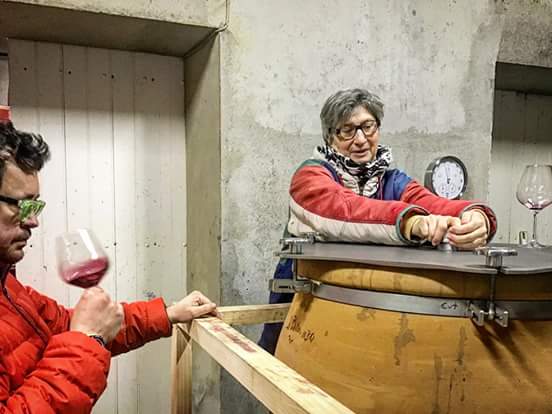
The website Wine Writing posted these explorations of the Bandol region over the years:
“France - Bandol: Mourvèdre madness! Trips & tastings 2003-2004:
‘Macho Mourvèdre’, ‘Bandol Fête du Millésime’, ‘Vendanges du Rond-Point des Mourvèdres’. Château Sainte Anne & Château Tournier Guilhem (2012)…”
“There’s a big difference between Mourvèdre on acidic and chalky soils; on chalk it gives more structure and elegance.”
- Eric de Saint Victor, Ch de Pibarnon
Wineries Highlighted in “‘Macho Mourvèdre…’ Bandol day trip April 2003”
Moulin des Costes (Domaine Bunan):
• Moulin des Costes, located in La Cadière, covers some 25 hectares (60 acres) of steep, very stoney terraces with clay-chalk soils; Moulin des Costes rests on a hill made up of “very old soils” laden with flat rectangular stones; a little further beyond here the soil contains more clay
• Château la Rouvière and Mas de la Rouvière are two neighbouring but distinct plots across the other side of the valley near the village of Le Castellet; Both are composed of limestone, sandstone and marl
• Château la Rouvière red, their top of the range, is typically enriched with over 90% Mourvèdre, which grows on old walled terraces where there are fewer stones and the soil is shallower.
Château de Pibarnon:
• Pibarnon’s vineyards lie on some of the appellation’s highest slopes at 300 metres above the town of Bandol; Up here “the climate is very Mediterranean; 20 km inland it’s much more continental.”
• The soils are composed of rocky clay and chalk but particularly chalky here (18-33%), which they believe helps to tame Mourvèdre that makes up +90% of their red wine. As Eric put it: “It’s very macho, on this soil we manage to make something quite fine.”
• In 1989-90, the Saint Victors rebuilt the terraces recreating a kind of amphitheatre facing south-east, quite sheltered from the powerful Mistral winds
• The Château is surrounded by several unique parcels; the cuvées from each are kept separate until later, while some are only used for rosé:
- 2001 ‘Bel Air’ (from cask) was tighter, less obviously fruity, quite firm but elegant too. 2001 ‘barrique’ showed spice and vanilla but concentration and firm textured tannins, in fact more so
- The 2002 ‘Gd. Haut’ (from vat) was very fruity and aromatic, actually has a lot of tannin but not aggressive displaying nice fruit v structure
- The 2002 ‘Pointes Blanches’ - the spot “at the limit” in terms of chalk content, otherwise chlorosis can be a problem (where the chalk interferes with the plant’s iron uptake leading to anaemic leaves and sometimes drastically reduced photosynthesis) - had deeper colour, less aromatic fruit, more weight and structure with power and grip (‘wow’ in fact)
- ‘Jourdan’ was more elegant with tangy fruit; and finally the 2002 press wine was pretty decent, not too tannic surprisingly
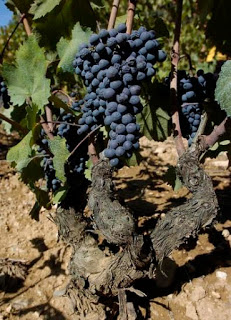
Domaine Tempier:
• A lower-lying estate located in Le Plan du Castellet; the Domaine extends to 30 ha, mostly owned but with two sites under fermage
• The 2001s: in terms of phenolic (tannin/colour) ripeness, it was one of the best of recent vintages along with 1998; Daniel Ravier recalled 2002 being the longest and hardest vintage in 15 years, and at this stage seemed pretty good and more forward
• The Domaine Tempier Bandol red (according to Ravier): “I don’t want a forceful extraction. We don’t get the finesse of Pibarnon but do keep the balance.” This blend has less Mourvèdre and is aged in used 50 hl wooden vats
• The ‘Cuvée Classique’ also originates from quite young vines but is richer and more structured; it’s aged in 16 hl new foudres
• ‘la Migoua’, a single vineyard located at over 200m higher than here to the south, comprising 50% Mourvèdre, Syrah, Cinsault and Grenache. This is typically “wilder” than ‘la Tourtine’, made up of 80% Mourvèdre and very structured & concentrated
• ‘la Tourtine’*
• ‘Cabassaou’‡
You may read more about the wines of Bandol at:
Wine Writing on Mourvedre. I may summarize/plagiarize/cut-and-paste from the other posts in the future. 
- As the article did not explore the Domaine Tempier ‘la Tourtine’ or ‘Cabassaou’ red wines, here is what the Kermit Lynch website says:
“La Tourtine sits just above Cabassaou. The soil here is more homogeneous, with rich clay. La Tourtine produces powerful, tannic wines with gorgeous fruit character.”
‡ “Since Cabassaou sits lower on this hillside, it is protected from the strength of the Mistral, enjoying temperate breezes and maximum sunshine. There is ripeness, density and power in these wines.”
According to Mr Patrick Comiskey’s American Rhone, the book Wines of the Rhone Valley: A Guide to Origins (1987) by Mr Robert Mayberry played a significant role in the development of modern American winemaking’s use of Grenache, Syrah, Mourvedre, etc.
According to Chapter 3: “Southern Climate & Cépages”:
"Mourvèdre (apparently planted in California under its Catalonian name Mataro) is the most reserved, aristocratic cépage of the south…It was the Mourvèdre, in particular, according to the judicial committee of experts appointed define the Châteauneuf du Pape appellation, that lost its former place there to overplantation of Grenache. Documents show that it was also strongly planted at Rochegude (Drôme) before phylloxera.
"Somewhat the opposite of Syrah, then, Mourvèdre is a distinctly southern cépage, the cépage of Bandol, for example. It is a late mid-season ripener, after Grenache, but its reputation as such comes partly from the early post- phylloxera era, when there was difficulty in finding the right rootstock on which to graft it. Most agree…that it does best in more southerly parts of the southern Rhone, especially with the heat of a westward exposure and when planted in clay soil with cobblestones on top to conserve the moisture below.
“A vine of low productivity when planted in infertile soil, Mourvèdre produces a wine that, when young, is dark red, firm, clean, and concentrated rather than thick…While the fragrance is at first unforthcoming, one can liberate from it a red-plum or red cherry fruit and the scent of lavender or broomflower by swirling the glass.”
Three wines recommended in the book as strong recommendations of Mourvèdre from the Rhône Valley:
• CDR-Villages St-Gervais Domaine Ste-Anne 1983 - 70% Mourvèdre 
• CDR-Villages Rasteau Château de Trignon - “Is regularly 50% Grenache and 50% Mourvèdre, by contrast to the same producer’s CDR-Villages Sablet at 50% Grenache, 40% Syrah, and 10% Cinsault.”
• Châteauneuf du Pape Château de Beaucastel - “Following the sequence of vintages here will show the effect of increasing the proportion of Mourvèdre. The composition in 1949 was 90% GR; in 1972, 75% GR, 15% SY; in 1973-74, 55% GR, 10% MR, 15% SY, 10% CS; in 1978, 50% GR, 15% MR, 15% SY, 3-4% CS; in 1980, 50% GR, 20% MR, 10% SY, 10% CS; and in 1984, 30% GR, 30% MR, 20% SY, 5% CS.”
Metrick Wines’ website has brought to my attention a method of trellising Mourvedre vines implemented by the regional superstar Mr Ron Mansfield. I have not seen this technique used in any images or literature I have previously encountered.
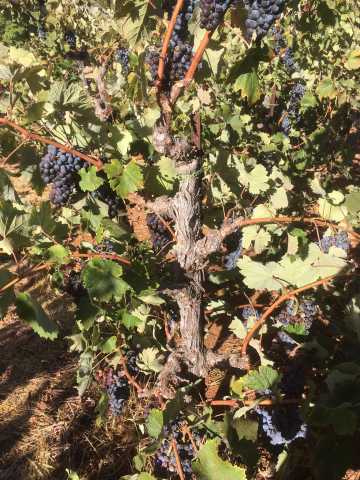
From the Metrick website details on the 2015 Mourvèdre “Futernick Vineyard” El Dorado AVA:
“The Futernick Vineyard, directly up slope from the Fenaughty Vineyard and frequented by bears, deer, coyotes and mountain lion, is managed by El Dorado’s Ron Mansfield, who has the vines trained to his own trellising system (see photo)–essentially vertical cordons that somewhat mimic head training. This creates airy, healthy canopies while providing moderate sun exposure, in this high altitude, warmer region.”
https://www.metrickwines.com/wine-shop-1/2015-Mourvèdre-Futernick-Vineyard-El-Dorado-AVA-p71649495
Has anyone else seen this method of emulating the natural bush vine appearance of Mourvedre in a trellising method?
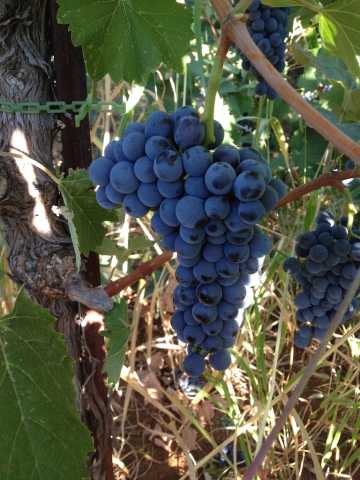
I understand the logic behind the process, but I have not heard of it being done. Wouldn’t pruning a certain way early in the growing season encourage the canopy to open up in the same manner as the year progresses?
I don’t know much about trellising methods, and I have been researching the cultivation of Mourvedre in the El Dorado AVA. I can say with confidence that Ron Mansfield plays a prominent role in the upsurge of Rhone variety plantings in the region.
Here are two interviews with Ryan and Nicole Pease of Paix Sur Terre from “The Wine Write” blog:
“Meet the Peases of Paix Sur Terre”
September 13, 2012
"The Wine Write: What’s your winemaking philosophy?
“Ryan: The focus for our label is Rhone varietals with an emphasis on Mourvedre. The first vintage of Paix Sur Terre is 2010 and we produced 2 wines. Our grapes come from 3 vineyards; Glenrose, La Vista and Alta Colina, all of which are located in the Paso Robles AVA. The intention of our label is to make the best expression of Mourvedre in Paso Robles and not necessarily to make a wine that needs a tradition or a style. This simply means purchasing the best fruit from the best vineyards and fermenting it in a way that allows for those characteristics to be expressed.
The Wine Write: Why Paso Robles/Central Coast? What makes this area special in your opinion?
Ryan: Paso Robles has the best soils for growing premium Rhone and Zinfandel grapes of any place in the United States. Most people do not realize the best wines coming out of Paso come from vineyards that are only 4-15 years old, yet we are making world class wines. It will be amazing to see what Paso does over the next 10-15 years as the average vine age creeps toward that 20 year mark. I think you will see Paso Robles really come into balance with vineyard maturity along with winemakers getting a better sense of how to achieve balance and age-ability.”

“Catching Up With Paix Sur Terre”
January 13, 2014
"Ryan: With the 2012 vintage both "The Other One’ and ‘Either Side of the Hill’ return to our lineup.
"‘The Other One’ is 100% Glenrose Vineyard Mourvedre, 85% whole cluster.
‘Either Side of the Hill’ is 70% Syrah, 30% Mourvedre…the same blend as for the 2011.
‘Songs of Its Own’ is our new baby. It’s Grenache-based and intended to be a Chateauneuf style blend…Grenache and Mourvedre, all Glenrose Vineyard fruit.

“…Nicole: 2013 is the best fruit Ryan has seen since he started in 2007. Despite the drought, it was a completely ideal growing season. The freshness, color and minerality are really impressive early on. ‘The Other One’, ‘Either Side of the Hill’ and ‘Songs of Its Own’ will all return, along with ‘Comes a Time’ which we were unable to produce from 2012. The 2013s will be blended in January, 2014 and put to sleep in all neutral oak.”
Paix Sur Terre currently offers three 100% Mourvedre wines:
• “The Other One” Glenrose Vineyard
• “Comes a Time” Alta Collina Vineyard
• “The Golden Road” Yankowski-Weeks Vineyard (Spanish Monastrell clone)
Ryan is making some really good wines at Paix Sur Terre. I’ve visited with him a couple of times in recent years.
Visit to Paix Sur Terre, January 2015
Visit to Paix Sur Terre, April 2016
Thanks for the heads up, Ken!!!
I used to buy Domaine Ste. Anne St. Gervais and one of the other CDR bottling on release as they were available at Village Corner in Ann Arbor every vintage when I was a local. I still have one 1998 and two 2004. The former is in my wine fridge at home for consumption. I’m now curious on the blend as I didn’t recall the Mourvèdre content being so high.
These are some of the last Southern Rhône wines I have left.
Any particular reason why you don’t buy Southern Rhone wines any longer? 
From the Neyers Vineyards email announcing its release of the 2016 “Evangelho Vineyard” Contra Costa Mourvedre:
"2016 Mourvèdre ‘Evangelho Vineyard’ – A Tale of Discovery"
By Bruce Neyers
"I may have known a little bit about Mourvèdre in 1980 when I first visited Domaine Tempier, but if I did it was buried pretty deep in my subconscious. Kermit Lynch had begun to import Bandol from Tempier about then – by law Bandol is from 50% to 100% Mourvèdre – and I tried it on several occasions, at the suggestion of their biggest fan, Alice Waters. I was puzzled. The wine had an unfamiliar aroma and the flavors were foreign to me. Still, I kept tasting, hoping to figure it out. I worked for Joe Phelps at the time, and for my fifth anniversary I was given a trip to France as a bonus. It was to be an equipment research and production fact-finding trip, and I’d set up an ambitious schedule, with stops in Champagne, Burgundy, and the northern Rhône. The last was to be a visit at Domaine Tempier, where Alice had arranged for us to have lunch with Lulu and Lucien Peyraud, a couple known for their great love story, and their warm hospitality.
"We arrived in Paris where we’d selected a restaurant named l’Olympe, about which there was a significant industry buzz. It was terrific and was made all the better when the manager suggested we try a bottle of 1962 Domaine Tempier Bandol. The wine was brilliant, a huge success in every way, and I began to think that my original judgments had been a bit harsh. A few days later we were in Beaune, excited about tasting great Burgundy. At our first meal, though, we were served a bottle of Domaine Tempier Bandol. Our host bought wine regularly from Tempier, and thought we might want a change from Pinot Noir. A few days later we were in Avignon, and dined at a two star restaurant named Hiély-Lucullus – another suggestion from Alice. By then we were traveling with a chef from Chez Panisse, and he insisted on buying us a rare magnum of Domaine Tempier. The list was stocked with many great old wines, but when I drank the Tempier, I was blown away by it. The classic wines on the list seemed to matter less and less.
"What’s going on, I asked myself?
"I still hadn’t answered that question when two days later we showed up for lunch at Domaine Tempier in Bandol. Alice had arranged for the Chez Panisse chef to join us, as he could serve as translator. The meal was simply extraordinary. Lulu prepared a first course of her famous Mediterranean fish soup, then followed it with a leg of spring lamb roasted over vine cuttings in her wood burning oven. The lamb was suspended above the coals on a string, and as it slowly rotated from the convection of the oven’s heat, it was basted with a mix of olive oil, garlic and lemon juice applied with a sprig of thyme. With the soup, Lucien served three magnums of Bandol Rouge – I have the vintages written down someplace. Then with the leg of lamb, three more magnums were opened and decanted. The last was the 1959 Bandol Rouge, and I don’t think I’ve ever had a finer bottle of red wine. The meal continued on into the night with friends and neighbors dropping by, each of them bringing a bottle of wine as homage to Lucien, exchanging local gossip, and meeting the Americans who made wine in California. Meanwhile, I kept looking at that empty bottle of 1959 Bandol. What a memory. As the evening drew to a close, I turned to Lucien and with the help of my translator told him I thought the wines had all been delicious. He shrugged aside the compliment. It was nothing, he said – simply the magic of Mourvèdre.
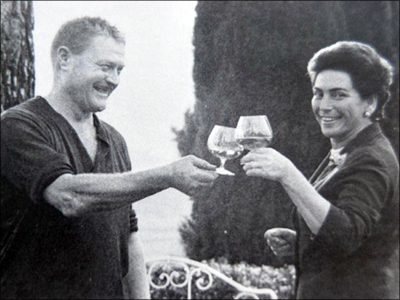
“I’ve been crazy about the magic of Mourvèdre ever since, and I’m not alone. There isn’t much Mourvèdre planted in California, but when we find some, we buy it. In 2016 we produced one of our finest bottlings of varietal Mourvèdre to date, a wine made from fruit off the 125 year-old vines at Frank Evangelho’s vineyard just outside of Oakley, in northeastern Contra Costa County. The yields from this dry, sandy soil are low, but the quality is high. The wine displays a magnificent combination of rustic earthiness coupled with exotic wild cherry flavor. Perhaps its greatest quality is the youthful exuberance that brings the wine into balance while young. Still, it’s a wine that will age with dignity for many years. We bottled 145 cases.”[/i]
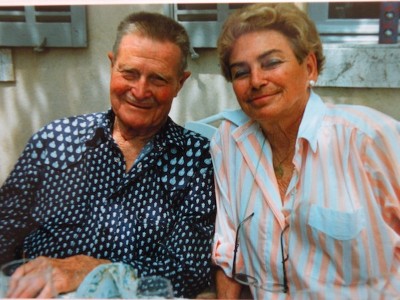
I obviously have a strong affinity for old-vine fruit sources in wine, especially since one of my top two grapes (Carignan) almost requires 50±years of vine age to produce quality juice.
The case of my personal love for older plantings of Mourvèdre, rests on a different argument.
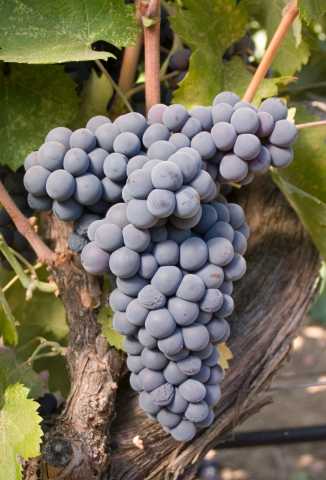
I have been told by more than one American vintner that the Mataro/Mourvèdre Clone(s) planted prior to the introduction of the Beaucastel-sourced* “Tablas” Clones are not up to par with the newer ones.
My introduction to US Mourvèdre wines involved fruit solely from old Contra Costa County (blends and 100% Mourvèdre) vines. My early experiences with the grape also included early-2000’s Tablas Creek bottlings which, at the time, did not hold a candle to my preferred wines. Of course, some of the TC wines needed cellaring, plus I loved more bombastic reds back in those days…
Over the years, I encountered more and more Mourvèdre-based wines (Zaca Mesa’s “Z” reds and Adelaida’s 2004 “Version” Rhône-style red blend, for example) that were absolutely delicious. My Dirty & Rowdy epiphany also revealed that no one needs to be dogmatic in his/her preference for one style of Mourvèdre wine.
So, as I approach a point to my diatribe, I have come to acknowledge that Washington, California, and other American Mourvèdre wines can be delightful. A wine lover does not have to pick sides in what represents the true domestic expression of the grape.
While I may still have a subconscious preference for vineyards planted decades ago from vine materials pre-dating the introduction of the newer ENTAV Clones, I must be open-minded what the winemaker has done with the grape. After all, there is a reason why I still enjoy the red wines from Antioch and Oakley.
I am of the firm belief that Mourvèdre has a tremendous capacity to express its source - be it calcareous rock, volcanic slopes, or sandy dunes.
I wish to explore the lands that my favorite grape variety thrives upon across the world. Am I going to be responsible for identifying the best foundation for Mourvèdre to show all of its glory? Nope. I am selfishly in pursuit of sensory pleasure.
I have been trying to reach out to vineyard owners/farmers, viticulturalists, and winemakers in San Luis Obispo, Santa Barbara, the Sierra Foothills, and even Mendocino for insight into the specific attributes each location offers in the production of quality Mourvèdre. Sadly, the responses have been minimal.
I appreciate any helpful information on these areas (and beyond)!!!
\
- Are ALL ENTAV Mourvèdre Clones from the Perrin Family? Second, my readings have revealed that, post-phylloxera, the Beaucastel estate used Mourvèdre vine material from Bandol’s Domaine Tempier. I wonder if anyone can provide an exception.
Entry on the Mataro (Mourvèdre) Grape in the 1885 [u]Journal: Appendix to the State and Assembly of the 26th Session of the Legislature of the State of California, Volume 5[/u]:
Whew What a title!!!
Honestly, check out the “Mataro” section (the second lung-wrenching one in blue).
Back in the 21st Century, Larry’s Tercero Wines features a new vintage of his ever-popular Rosé!

2017 Tercero Wines Mourvèdre Rosé
“My 2017 Mourvedre Rose may very well be my best yet! It’s the lightest color of any of my roses to date, and the aromatics are simply intoxicating. It’s surprisingly texture-filled and best enjoyed somewhere between cellar and a cool room temperature - not really chilled as most people tend to enjoy their roses these days. And this is a fabulous ‘food’ rose - it pairs wonderfully with earthy foods, with olives and charcuterie, with roast chicken . . . After bringing the grapes in, I foot stomped each 1/2 ton bin of fruit, allowed the juice to sit on the with the skins for about an hour, then whole cluster pressed everything. The subsequent juice was then transferred to a stainless steel tank, where it fermented at cool temperatures for about 5 weeks, ensuring that I retained some wonderful ‘tropical’ aromas. The wine was then aged for 4 months in a combination of stainless steel and 6+ year old French oak barrels for 4 months prior to bottling. Enjoy now - or over the next 2-3 years. Seriously.”
From the email:
“In addition, I still have a small supply of my 2016 Mourvedre Rose left, and I’ve gotta say that it’s drinking better now than ever before. AND I’ve lowered the price on the website for these to $25!”
2016 Tercero Wines Mourvèdre Rosé
“The grapes were hand harvested early in the morning and arrived at the winery still cold. I foot stomped the grapes, allowing about an hour of skin contact to extract just a touch of color and some tannins, etc, and then dumped the grapes, juice and stems into the press. The subsequent juice was cold fermented in stainless steel at cooler temperatures to hold onto the aromas, and then aged in a combination of stainless steel and older French oak barrels for 4 months prior to bottling in mid-March. Don’t be afraid to serve wine closer to room temperature - you’ll find the aromatics will be much more enhanced, as will the texture of this light colored wine. And don’t afraid to age a few bottles - it really is getting better with bottle age.”
Video of the 2015 vintage’s Tercero Rosé creation (for general reference):
NMqb8B8nWUs
In all honesty, I have not tasted many of the Mourvèdre wines produced in Washington. The handful that I have tried were excellent, and each offered a full-bodied, earthy red that exhibited tremendous balance - perhaps indicating great potential for the variety in the state’s different grape-growing regions.
The Herald
“Washington’s Mourvèdre: A Red Wine Worth Exploring”
By Eric Degerman & Andy Perdue
May 8, 2014
"Last year, Washington wineries crushed 800 tons of Mourvèdre, putting it on the radar of consumers and winemakers alike.
“Here are a few delicious examples worth exploring. They are made in small amounts, so ask for them at your favorite wine merchant or contact the wineries directly.
Knight Hill Winery 2011 Mourvèdre, Wahluke Slope, $28
Bunnell Family Cellar 2008 Mourvèdre, Wahluke Slope, $36
Daven Lore Winery 2011 Arthur’s Vineyard Mourvèdre, Yakima Valley, $35
Milbrandt Vineyards 2010 Vineyard Series Mourvèdre, Wahluke Slope, $28
Eleven Winery 2011 Sugarloaf Vineyard Mourvèdre, Yakima Valley, $35
Airfield Estates Winery 2012 Mourvèdre, Yakima Valley, $28
Coyote Canyon Winery 2009 H/H Estates Robert Andrews Reserve Mourvèdre, Horse Heaven Hills, $38”
I received an email from James & Poppie Mantone of Washington’s Syncline Winery. The following are their replies to my questions regarding their work with Mourvédre:
• What Mourvédre Clone/selection is used for your vineyard source, and why have you chosen that particular one?
J&P: “We use primarily the Davis heritage clones. Have used the Tablas selection but they were prone to jaminess and raisining.”
• Have you worked with different Mourvédre sites? What insights have you developed towards the ideal location for desirable Mourvédre grapes?
J&P: “We have worked with 6 Mourvédre vineyards. We have limited it down to the rockiest highest pH soils. With high calcium soils Mourvédre produces tiny intense berries with lower pH and ample color. It obviously needs to be warm, but Mourvédre can easily burn.”
• What special factors in geology, climate, etc, do you find help make Mourvédre a viable grape for your fruit source?
J&P: “Same as above. Mourvédre is not a difficult grape to grow and ripens fairly easily where you can ripen Cab.”
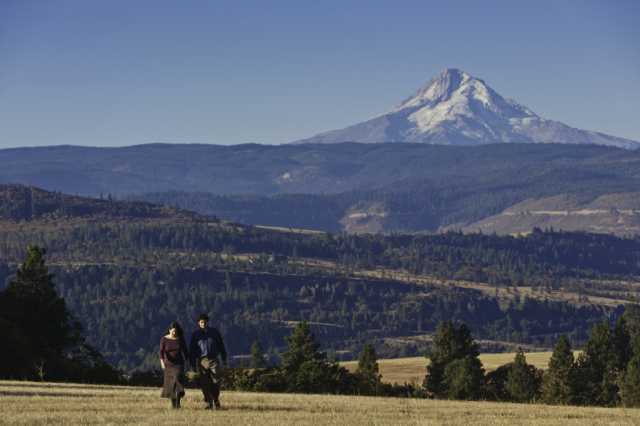
• What thoughts do you have regarding the relationship between Grenache, Syrah, and Mourvédre; what makes these three so complementary?
J&P: “Grenache provides warmth and ripe fruits while lightening the palate. Syrah is color and shoulders. Mourvédre is spice and structure, longevity and complexity.”
• Why do you think so many winegrowers have had success growing Grenache and Syrah, whereas Mourvédre has proven more challenging in getting mature fruit?
J&P: “Mourvédre has been much easier to produce high quality fruit in Washington than Grenache. Syrah as a southern Rhône blender is easy, but as a stand alone finesse wine Syrah is extremely challenging.”
• What special considerations do you think are necessary to produce a 100% (or Mourvédre-dominant) wine from this grape in the winemaking process?
J&P: “Great site. Easy to get too ripe and push into jaminess. It can be a cool chameleon grape making everything from light finesse wines to black powerhouses.”
I received an email from Matt Naumann of Newfound Wines yesterday…
"Given that the site was a vision that Boz had when he purchased his property, I can only speak to his history with the varietal and intent when planting.
“Boz and his wife, Dominque, have been close friends with Kermit Lynch, Bruce Neyers, Alice Waters and the Berkeley food and wine scene for a number of years which should explain the initial inspiration behind the varietal mix they decided to plant. Boz recently regaled in a story about a visit that Lucien Peyraud paid to the Napa Valley in the 1980’s and his proclamation that Mt Veeder offered exceptional terroir for Mourvedre after tasting Steve Edmonds’ early bottlings. That was enough to convince him to begin his vineyard project.”
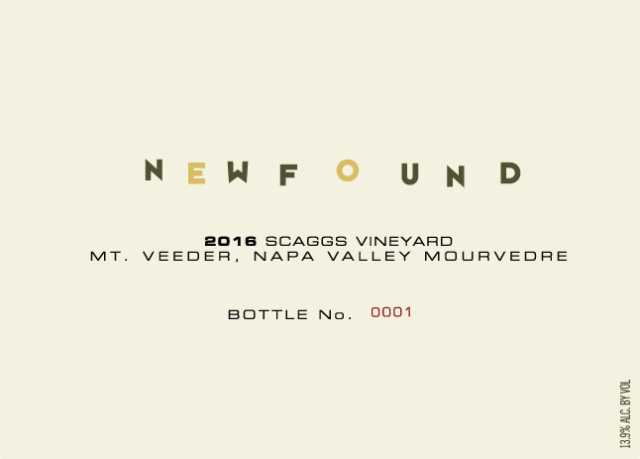
• What Mourvédre Clone/selection have you worked with, and why have you chosen that particular one?
MN: “Boz sourced vine material from his friend Robert Haas at Tablas Creek for his 1-acre planting in 1998. This was a personal decision that had much to do with Boz’s friendship with Robert and the fact the Tablas was trailblazing California at the time with new scion material recently brought to the United States.”
• What special factors in geology, climate, etc, do you find help make Mourvédre a viable grape for your Mt Veeder fruit source at the “Scaggs Vineyard”?
MN: “The ‘Scaggs’ site sits at roughly 1,250-ft above the valley floor at the northern most edge of Mt Veeder. It’s an eastern exposure and a relatively cool site that offers a tremendous amount of sunlight due to the elevation as it sits above the marine layer that typically blankets the valley floor during the early months of the growing season. Temperature swings are less extreme as the inversion layer during the summer months provides warmer nights and enough heat to ripen Mourvedre.”
• What thoughts do you have regarding the relationship between Grenache, Syrah, and Mourvédre; what makes these three so complementary?
MN: “I believe the relationship between Gr, Sy & Mv is two-fold: having much to do with the location in which they thrive AND also juice chemistry in how they naturally compensate for each other’s shortcomings in a final blend. Grenache is much more acidic than Mourvedre and blending the two together is a very natural way stabilize a final wine without having to manipulate the chemistry with synthetic products. Understanding the long history that the varietals have together blending complimentary varietals is one way to offer balance to the final wine given that the modern winemaking is a more recent phenomenon.”
• Why do you think so many winegrowers have had success growing Grenache and Syrah, whereas Mourvédre has proven more challenging in getting mature fruit?
MN: “Mourvedre is extremely late ripening and requires a site of moderate heat but plenty of sunlight and I feel that California offeres loads of potential for the varietal. Why the Napa Valley or other high profile warmer regions in CA are not planted with Mourvedre has more to do with economics and less to do with potential. Regarding vine growing, the grape can be a hog in the vineyard producing generous yields so the viticulture needs to be focused and on point in effort to obtain a solid level of ripeness before the season begins to take a turn.”
• What special considerations do you think are necessary to produce a 100% (or Mourvédre-dominant) wine from this grape in the winemaking process?
MN: “For my project, I found that each varietal carried enough distinction to warrant a mono-cepage. I can’t speak for others, but specific to my tastes, I look for structure and balance. If those two are harmony with one another, I don’t find the need to blend as I find the purity of the varietal quite captivating. I tend to harvest on the earlier side as I do not use synthetic winemaking ingredients for chem adjustments SO maintaining moderate acidity is paramount to avoid the addition of tartaric acid. ‘Scaggs’ Mv tends to be fully ripe between 23-24deg and that allows the pH to be in check at those moderate levels. That said, if there was an imbalance, I’m not opposed to blending, I’ve just found that I have been quite impressed with the varietal wines on their own in my first couple of years working with the ‘Scaggs’ fruit. Most importantly, I try to keep an open mind with my winemaking by simply following the ultimate goal of showcasing time, place and variety. A cliché for sure, but one that provides me with a compass and vision.”
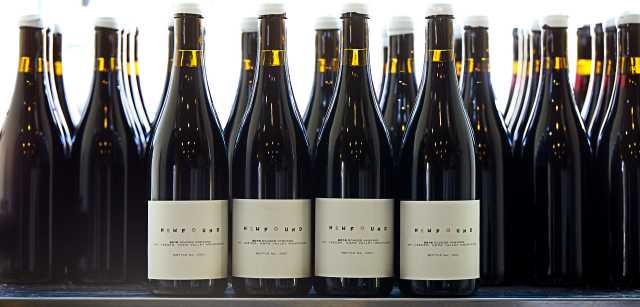
• If you have any other you have any other information, random thoughts, or photographs that you would like to share for the “Mourvèdre Appreciation Social Club” page and the Wine Berserkers forum, please feel free to share!!!
MN: "Drew, I really appreciate you reaching out and I hope that my answers are helpful for your forum. I look forward to keeping the conversation alive!
“My very best,
Matt Naumann”
Newfound Wines website
According to the winery website, a “Colombini Vineyard” Carignan from Mendocino County’s Redwood Valley, & a “Yount Mill Vineyard” Semillon from Napa Valley are in the works.
“High View Vineyard”, the future home of Newfound Wines in the Sierra Foothills, has been revitalized for new plantings.
Pl@nt Grape website
“Catalogue of Vines Grown in France: Mourvèdre”
This website’s profile for Mourvèdre includes interesting statistics like the grape’s acreage in France over the years, genetic information, ampelographic characteristics, phenology, details about each of the 13 ENTAV clonal selections, etc.
The Clone Chart is a nerd’s playground!
exportcepage.pdf (231 KB)
http://plantgrape.plantnet-project.org/en/cepage/Mourvèdre
In a ZinFest pre-event, around 60 individuals gathered to conduct a blind tasting of 4 grape varieties, each represented by 4 wines (including one bottling from the Lodi region of California): Grenache blanc, Sauvignon blanc/Fumé blanc, Tempranillo, and Mourvèdre.
In the fourth round of blind tasting sessions, a Lodi-grown/produced Mourvèdre was up for comparison against bottlings from all over the map.
Lodi Wine Grape Commission Blog
“16-Wine Blind Tasting: Exactly How Do Lodi Grown Wines Compare to the Rest of the World’s?”
by Randy Caparoso
May 23, 2018
"Exactly how do Lodi wines compare to not only those of the rest of California, but also to counterparts in France, Spain, New Zealand, or other wine regions of the world?
"This was the question addressed at our 16-wine blind tasting held last week Friday (May 18, 2018), as a ZinFest pre-event. The goal was not to find who makes the ‘best’ wines. As the classic British wine writer André Simon once put it: We can all have good taste, but not the same taste. Our purpose, rather, was to ‘discover’ sensory distinctions. What makes Lodi different – and in that sense, what makes Lodi wines worthwhile?
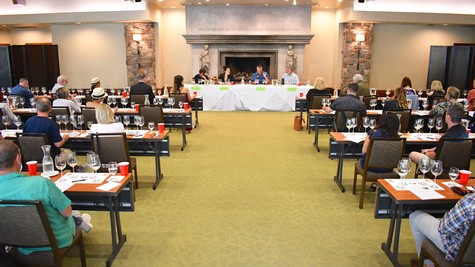
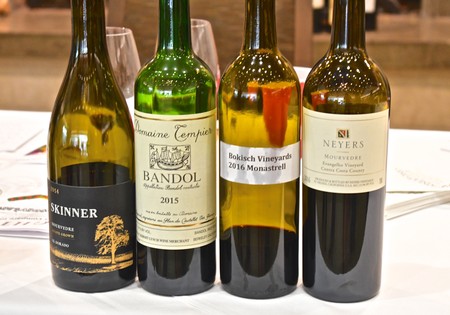
"…Round 4 – Mourvèdre
• 2014 Skinner Vineyards, El Dorado ‘Estate’ Mourvèdre
• 2015 Domaine Tempier, Bandol (Provence, France)
• 2016 Bokisch Vineyards, Sloughhouse-Lodi Monastrell (barrel sample)
• 2016 Neyers Vineyards, ‘Evangelho Vineyard’ Contra Costa County Mourvèdre
"Chad Joseph [/i][Lodi based consulting winemaker (including the acclaimed Oak Farm Vineyards and Harney Lane Winery)]: There was considerable diversity in this line-up, although all the wines had a trace, yet still distinct, notes of gaminess in the fruit, for which Mourvèdre is well known. Still, I was totally shocked and pleased by the Bokisch Monastrell: Of all the wines, showing the most density of color, tannin and fruit – all very well balanced. I did not guess that it was from Lodi – I thought it was Spanish, for sure!
"Jeff Morgan [Co-Proprietor of Covenant Winery (based in both Berkeley and Israel) as well as author of a dozen wine and culinary books, former West Coast Editor of Wine Spectator, and founding instructor at Rudd Center for Professional Wine Studies (Culinary Institute of America Napa Valley)]: This flight was the biggest surprise for me. The Bokisch barrel sample was really nice, and I preferred it over the Skinner and Neyers. Where I was really off big-time was the Domaine Tempier, which I have visited but still found to be so big, fat, ripe and luscious (I loved it) that I assumed it was from California. I even went so far as to tell the room, ‘French winemakers can only dream of getting their grapes ripe like this.’ Nothing like being loud and wrong!
"Susan Manfull [author of Provence WineZine] All the wines in this flight were exceptional; although differences in style – particularly Old World versus New World – were revealing. The Tempier expressed more personality than the others, with its terroir expression and integrated fruit and tannins, while the other three wines were more fruit forward. The Bokisch was impressive – elegant and earthy with notes of chocolate and tobacco – despite being made from very young vines. Imagine what the vines will produce as they mature!
"Keith Watts [owner/grower of Lodi’s Keith Watts Vineyards]: The Bokisch was easily my favorite in this group.
"Ryan Sherman [co-owner/winemaker, Fields Family Wines]: This was my favorite flight. Both the Bokisch and Neyers just killed it. Tempier was, well, Tempier, which is always great. But the Bokisch barrel sample was killer. The Neyers, which is in my wheelhouse, fooled several people sitting around me with its more whole-cluster Euro-leanings – super-tasty!
"Sue Tipton [owner/grower/winemaker of Acquiesce Winery]: Hard to tell these wines apart! All were very well made and great examples of the grape.
"Mark Chandler [Lodi City Councilman and former Executive Director of Lodi Winegrape Commission]: The Skinner was stunning – like a lot of Rhône reds coming out of El Dorado these days – and the Bokisch was nice and full-bodied, with a long, yummy fruity finish. There was none of the Bokisch left in my glass to dump out! The Neyers was also very nice; its lean, crisp acidity a testimony to the cooler Contra Costa climate. Although tasty, the Bandol was not quite as compelling for me.
"Scott Reesman [sommelier, Wine & Roses Hotel’s Towne House Restaurant]: Like everyone else, I was very impressed by Bokisch’s Monastrell – can’t wait to see where this wine goes from here!
"Suzanne Ledbetter [Lodi based wine and culinary journalist also known as “The Fine Foodie Philanthropist”, as well as member of the Ledbetter farming family who own Vino Farms]: The Skinner was impressive with its bright fruit, showy tannins and integrated Old World-ish brett. The Neyers was inky, and also had Old World qualities. The Bandol, with its complexity of ripe fruit, medium to heavy tannins and slight brett was another favorite. But the eye-opener was probably the Bokisch, described as having the best density of all the Mourvèdres.
"Dan Panella [owner/winemaker, Lodi’s Oak Farm Vineyards]: The Skinner was a stand-out; with a little bit of raisin-like flavor, but masterfully done. I was less excited about the Bandol – hard to find Mourvèdre qualities through the Old World character. I was not surprised to find, after the wines were unveiled, that the Bokisch was a barrel sample, since it had new barrel aromatics – a toasted graham cracker quality, still not overpowering the grape character. I identified the Neyers as New World since it reminded me of Mourvèdre from another California vineyard; very minimal oak, lower alcohol, very pleasing."
While I could state that fishing for complimentary comments across a gathering of sixty tasters (many of whom apparently live and/or work in the same area as the featured Lodi wines) allowed the author to cherry-pick the crowd for desired outcomes, I am more excited by the idea of expanded plantings of Mourvèdre vines and the production of Lodi wines that embrace an adventurous spirit.
I just tried a Chateau Ott Bandol and was blown away. Mostly Mourvedre it was lighter and fruitier than Grenache and Tempranillo but plenty of structure as evident by the tannins. Consider me a MAD convert.
Sadly, there is little Mourvedre based Bandol or even Spanish Monastrell available at the SAQ or LCBO. 
Welcome, my friend ![[snort.gif]](/uploads/db3686/original/2X/b/bdc3944606213c4dca6c1169cf0a166c8bc4f8c9.gif "snort.gif")
Yep, Mourvedre makes a very interesting and textural rose for sure - wish I could get mine up there. Maybe one of these days . . .
Cheers.