Your theory on the highly aromatic, lighter bodied wines being more subject to possible variation is interesting.
I feel you too on longer formed exposition. In my experience the phone is a difficult format through which to express such; kudos to you for your contributions.
Well that isn’t nearly my experience. While I don’t think there’s a specific formula for determining when burgs will be ready, I think the using the data points we’ve gathered here will help people in selecting wines likely to show well. As I’ve said, it’s not an exact science, but my hit rate is well over 90%, and even those bottles not showing their best were still quite good.
I agree very much with Jeremy here, though with the possible exclusion of totally shut down wines. As I have written before, one of the greatest pleasures of this wine life for me is following a wine over time. I think that we probably buy in quantities of 6-12+ more than most people on this board, largely so that we can enjoy this unique experience - open a bottle young to asses, then open them at regular or irregular intervals, speeding up or slowing down based on experience, over years. I feel that, if we’ve done it right, some will be opened a little too early, some right in the zone, and a couple perhaps later than is ideal. We are not trying to open them all at the “perfect” time.
To each her own, of course, but I will keep advocating for this wonderful arc of pleasure and learning. It also means I can fit most wines into a personal context, much of the time, when I consider what to open. I’m less often faced with a completely unknown bottle and a stressful question.
A study in darkness, what bad could I possibly say about this little bete noir? Decanted for one hour, the color is that of port — deep, dark, murky. Consumed over two hours with my wife, accompanied by a perfect baguette and soft, meaty teleggio cheese which seemed nearly perfect. Purchased from Arlequin Wine in SF, the guy there said they got it on release and have cellared ever since.
Over the two hours the nose exhibited leap out of the glass notes of smoke, black plums, prunes, raisins, licorice, stewed black cherries, graphite, leather. The palate was easily as savory as it was fruity or sweet. Like a person shook in a few dashes of Maggi sauce (the French one, Arome) for umami, black potting soil, a touch of blackberry liqueur, kirsch, stewed black fruit, smokey/toasty notes, terrific coffee bitterness on the finish. Totally open for business, completely integrated, soft tannins. One might wish for a touch more acidity, but the finish went on and on. Ultra-smooth, silky mouthfeel throughout. Not the burg I’m going to want every time, but easily one of the coolest most fascinating ones I had in 2025 - 94
Loaded with spice right out of the gate, with red berry pie jumping from the glass. There’s a sappy, rustic edge to it, but in a really beautiful way. Powerful yet elegant, with everything feeling well put together.
Boudots is right next to Vosne, so in many cases, the wines taste more like vosne than NSG.
I think the discussion with the note is more with the descriptors the OP used. Probably if he’d just said dark fruited, with some savory/earthy notes, and he really liked it, it’d be similar to other people’s experiences. I would expect a 10 grivot 1er to have some dark fruit and earthy notes as well as some spice on the nose.
there are a set of descriptors which tend to be associated with different varietals. Cedar, leather, graphite and eucalyptus tend to be used for Bordeaux, and stewed fruits tend to be used in Cabernet based wines.
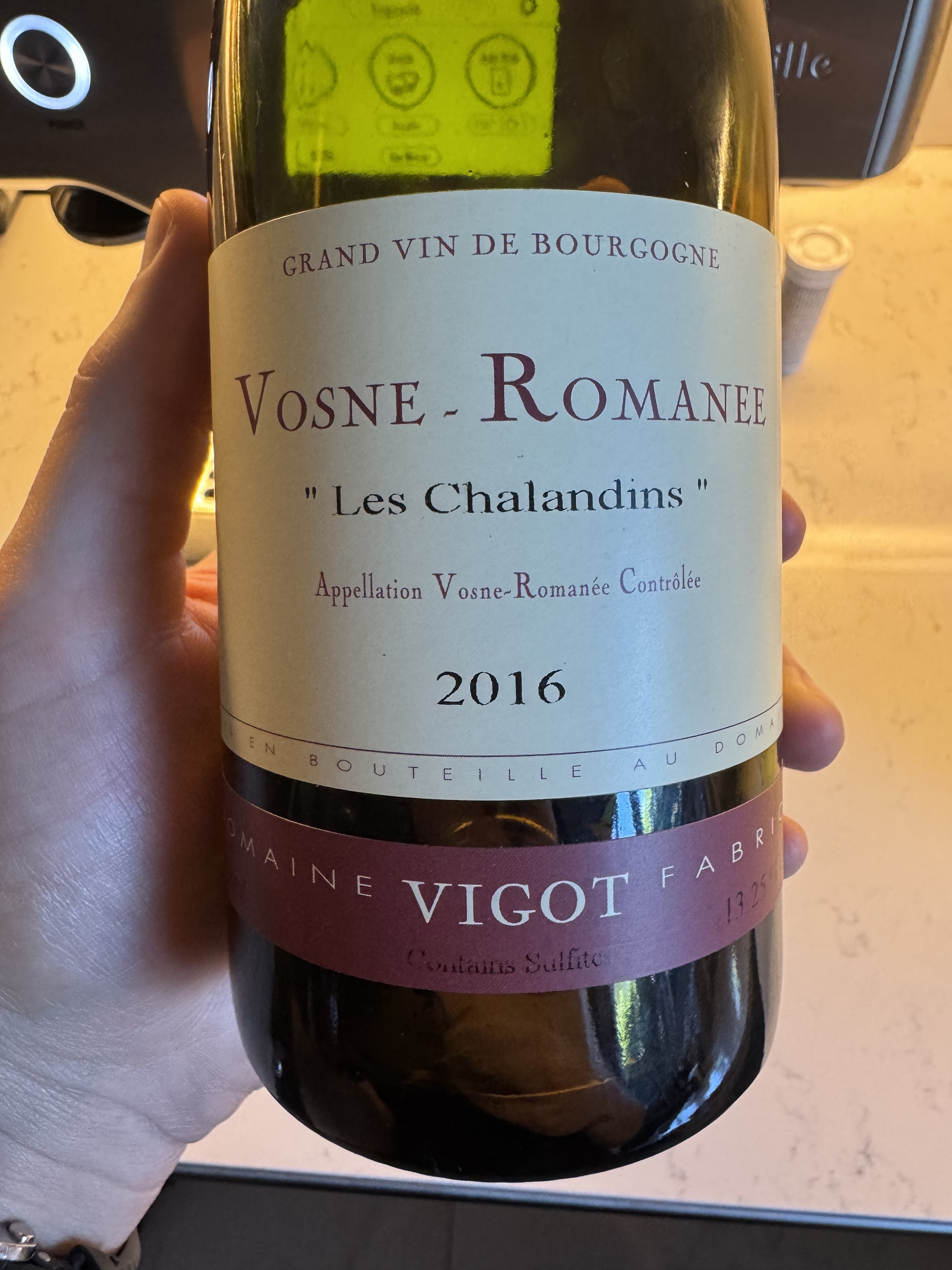
Glad you liked the wines; Vigot made a lot of the wines from vineyards that recently reverted back to Mugneret Gibourg in Vosne Romanee. I’m not sure if that specific plot did, but the Colombiere plot definitely did.
I love the wines of Chandon de Briailles. But, if one wants losts of “flesh”, I would not buy Chandon de Briailles. Much more for people who want a “vivid snap.”