Day 4 cont’d
Arriving in Tournon-sur-Rhône, our plan was to check in at our new airbnb place to stay, just ditch our luggage there and immediately continue to the next winery visit.
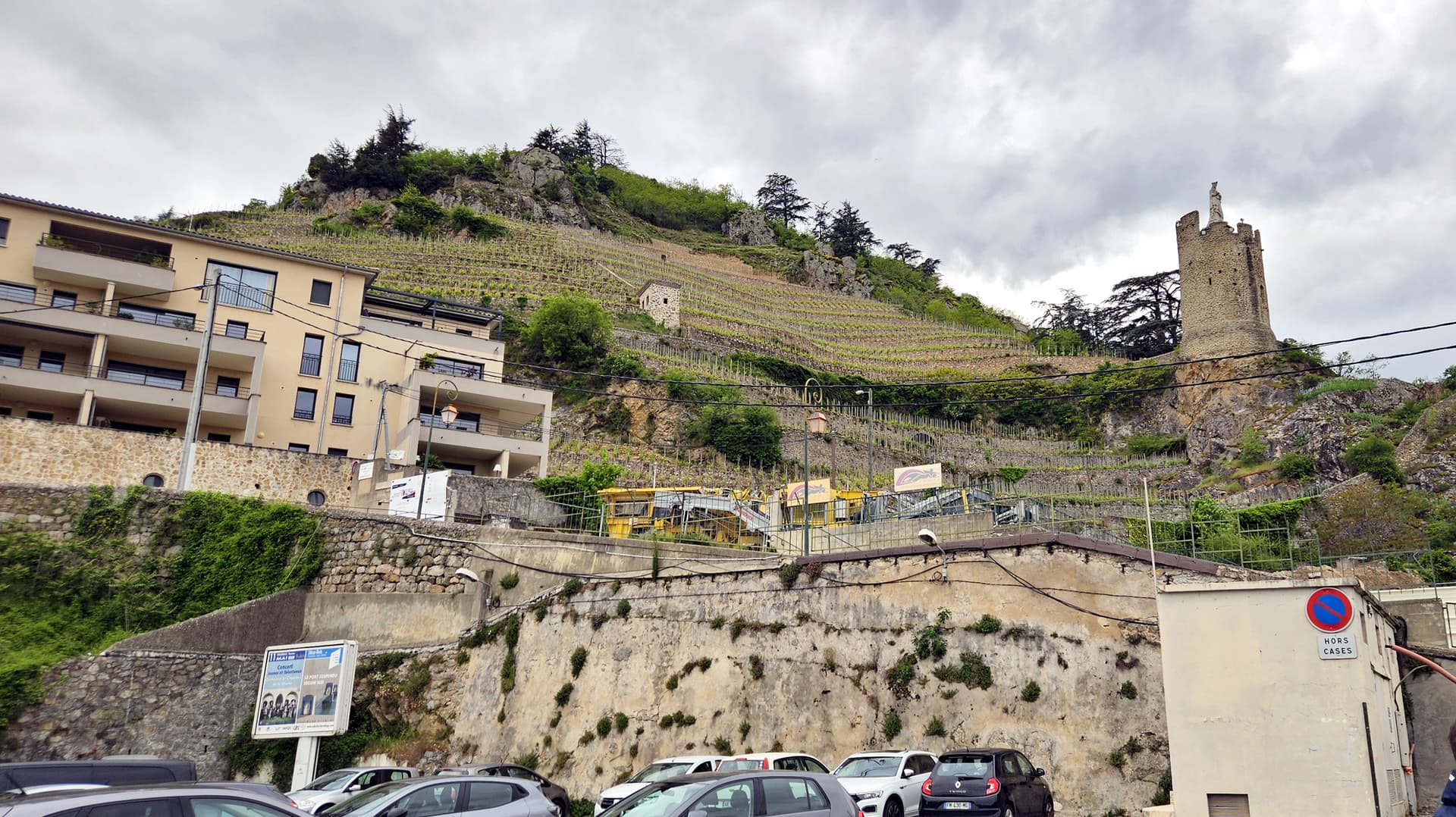
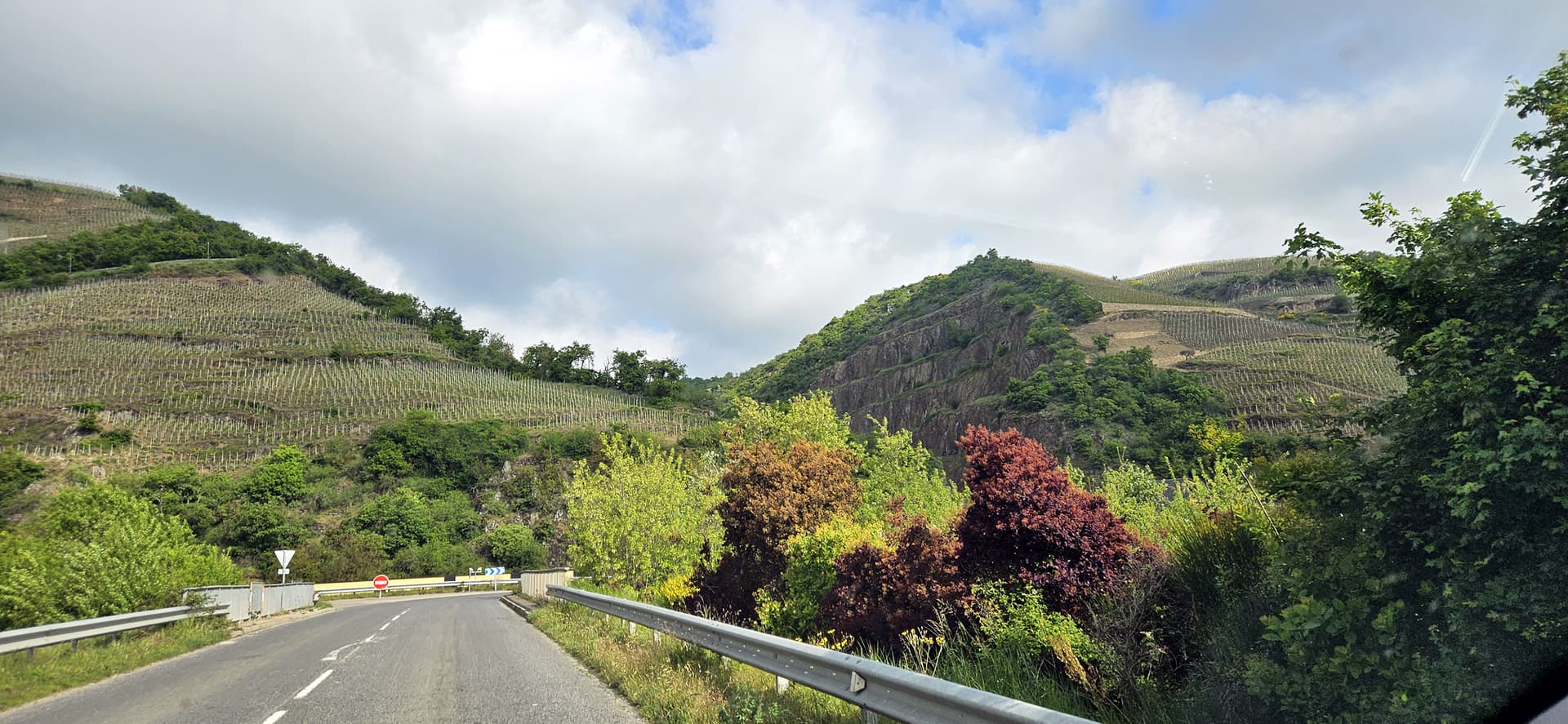
The public parking lot in Tournon under Tour de la Vierge and some Saint-Joseph vineyards.
However, once we were at the apartment door, it became apparent that our airbnb host obviously had something different in mind. We had parked our van in the somewhat nearby public parking lot, under the Tour de la Vierge, and dragged our luggage - two per person, and starting to get pretty heavy with all the wine bottles by now - down the small cobblestone streets for a few blocks. We managed to find the correct address and then - nothing. We couldn’t reach our host by any means available.
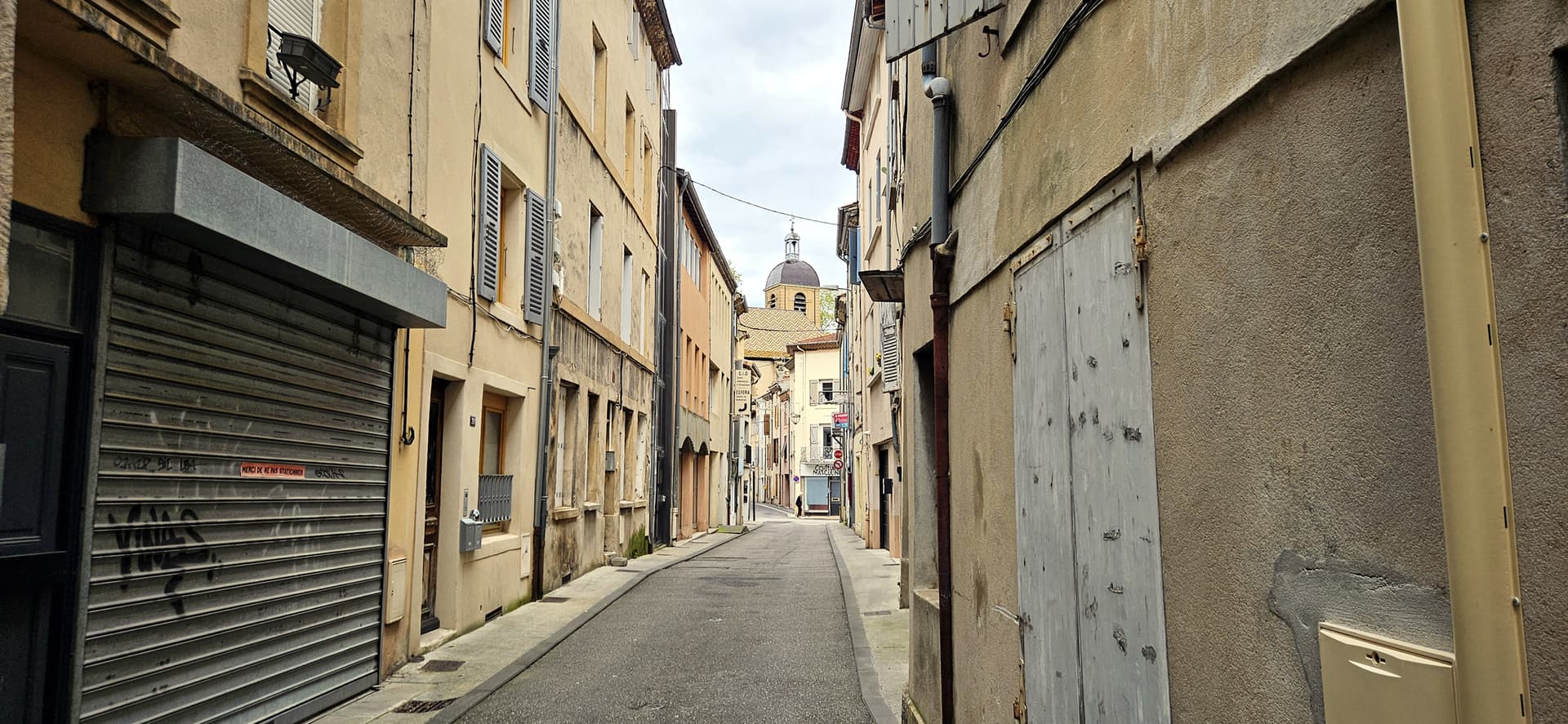
The tiny streets of Tournon.
So there we were, four Finns standing aimlessly in the middle of Tournon. Ilkka tried sending messages and calling the host, contacting the room rental service, we knocked on the door, everything. Yet: nothing. As time was beginning to run short and we were supposed to be at the next winery in less than half an hour, we had no options but to haul our luggage back to the van and set our course towards the neighboring commune of Mauves.
Pierre Gonon
It was surprisingly difficult for us to arrange most of the visits for our trip: me and Ilkka contacted probably 3 to 4 times as many producers as we ultimately visited, because most of the producers either replied that they don’t do winery visits (at least at this time of the year), or they just didn’t respond to us.
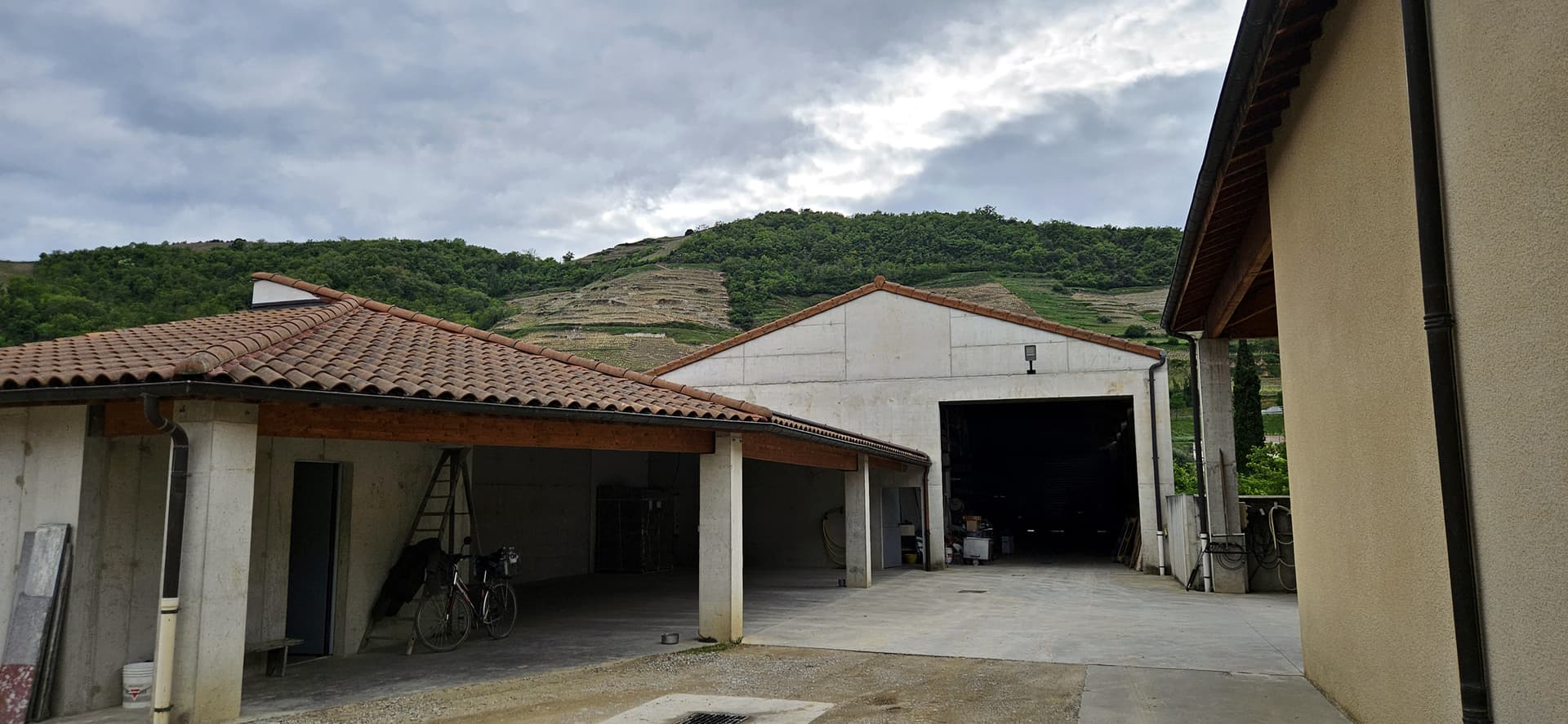
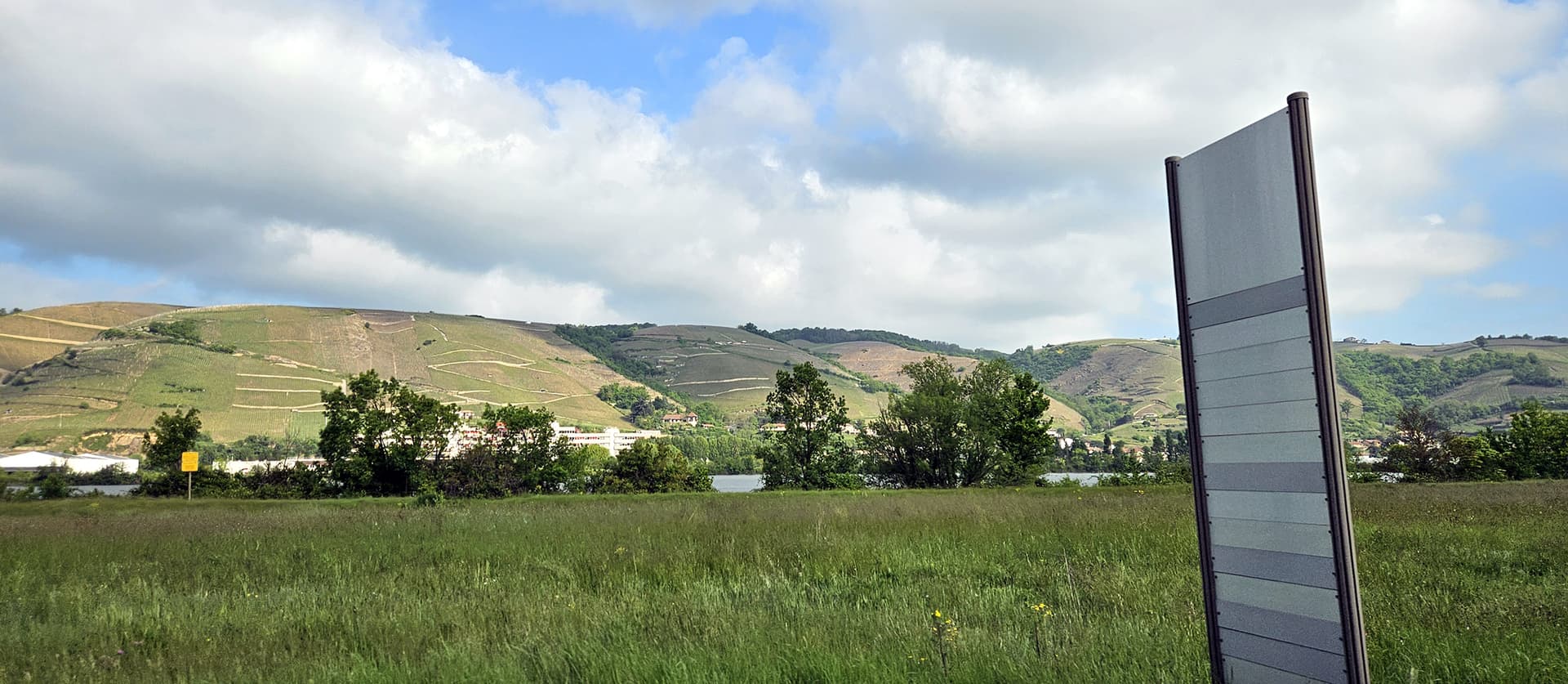
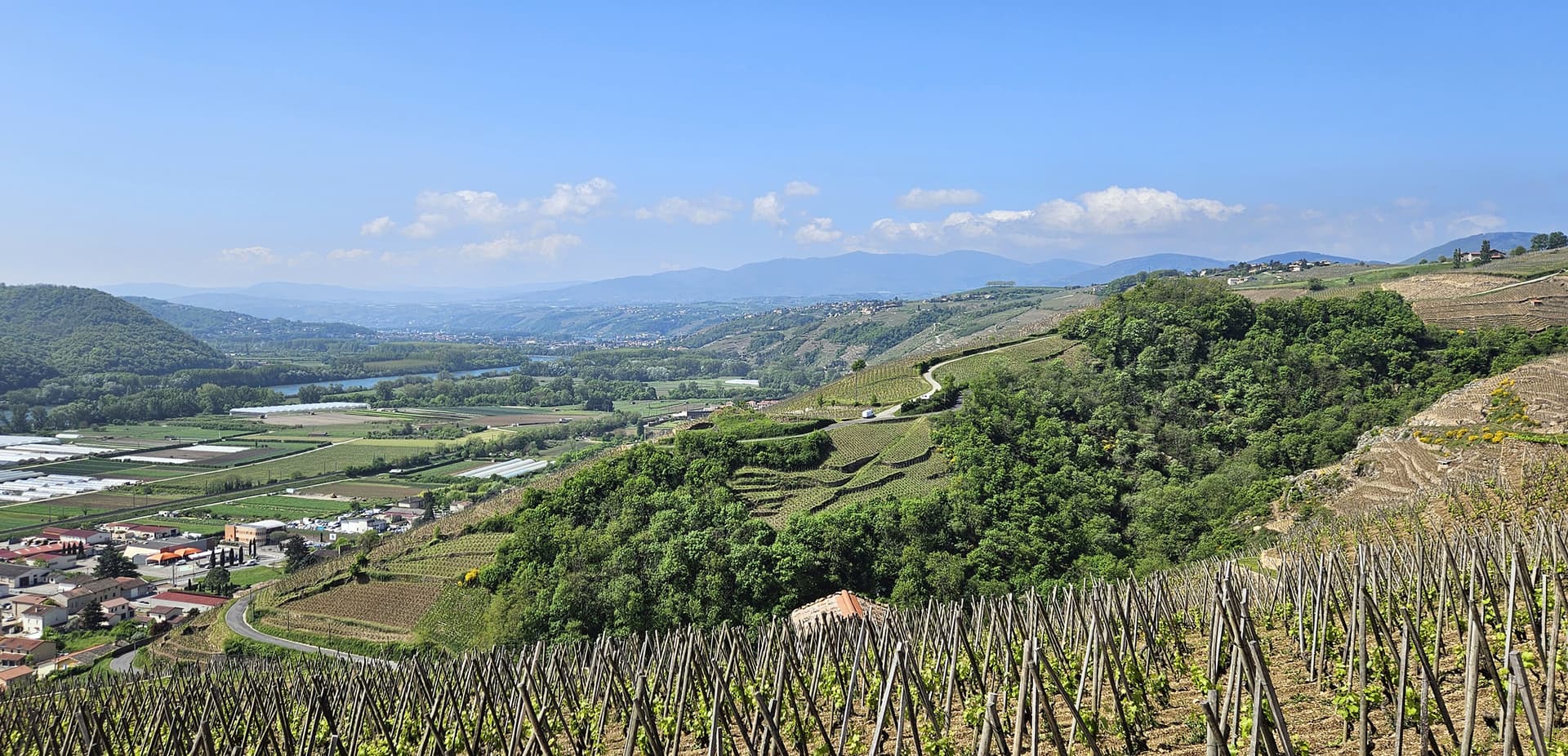
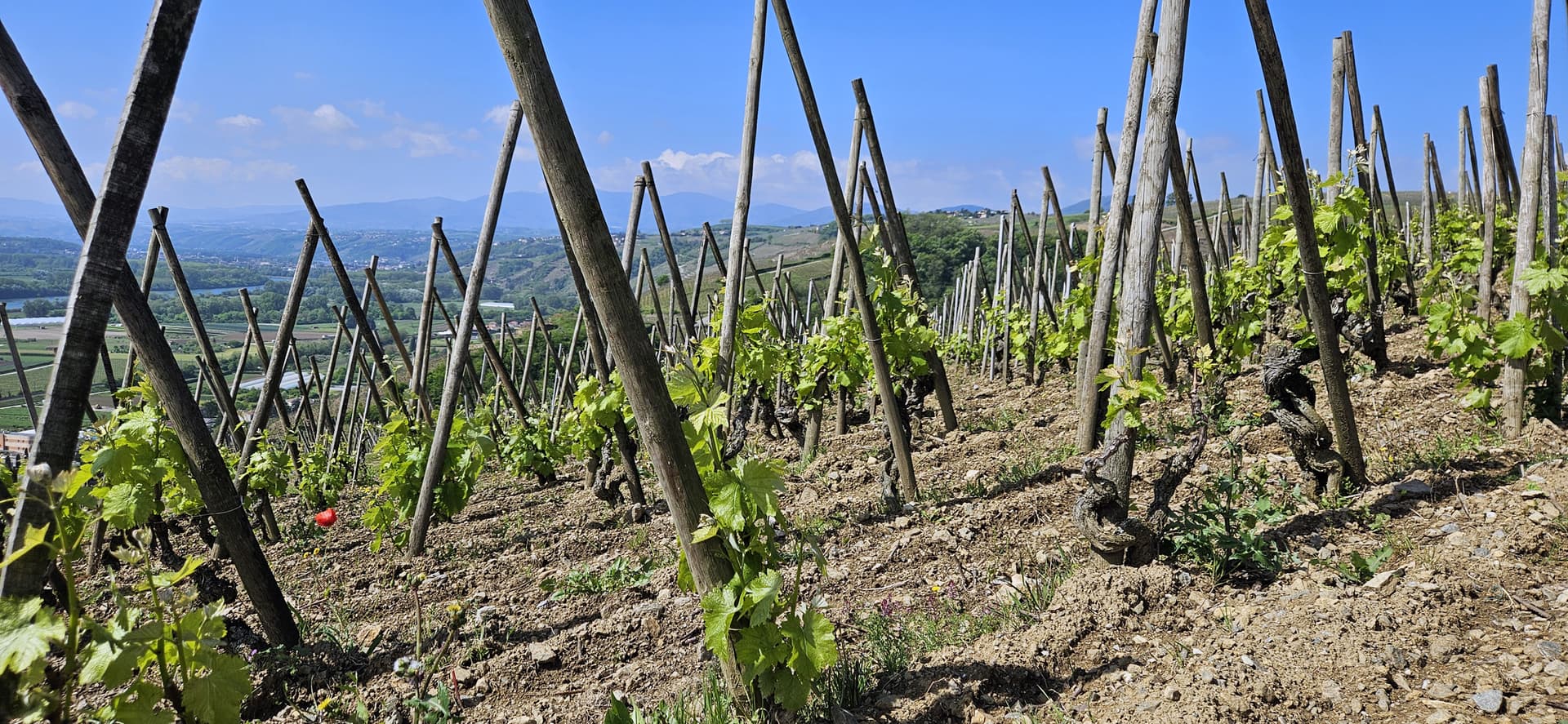
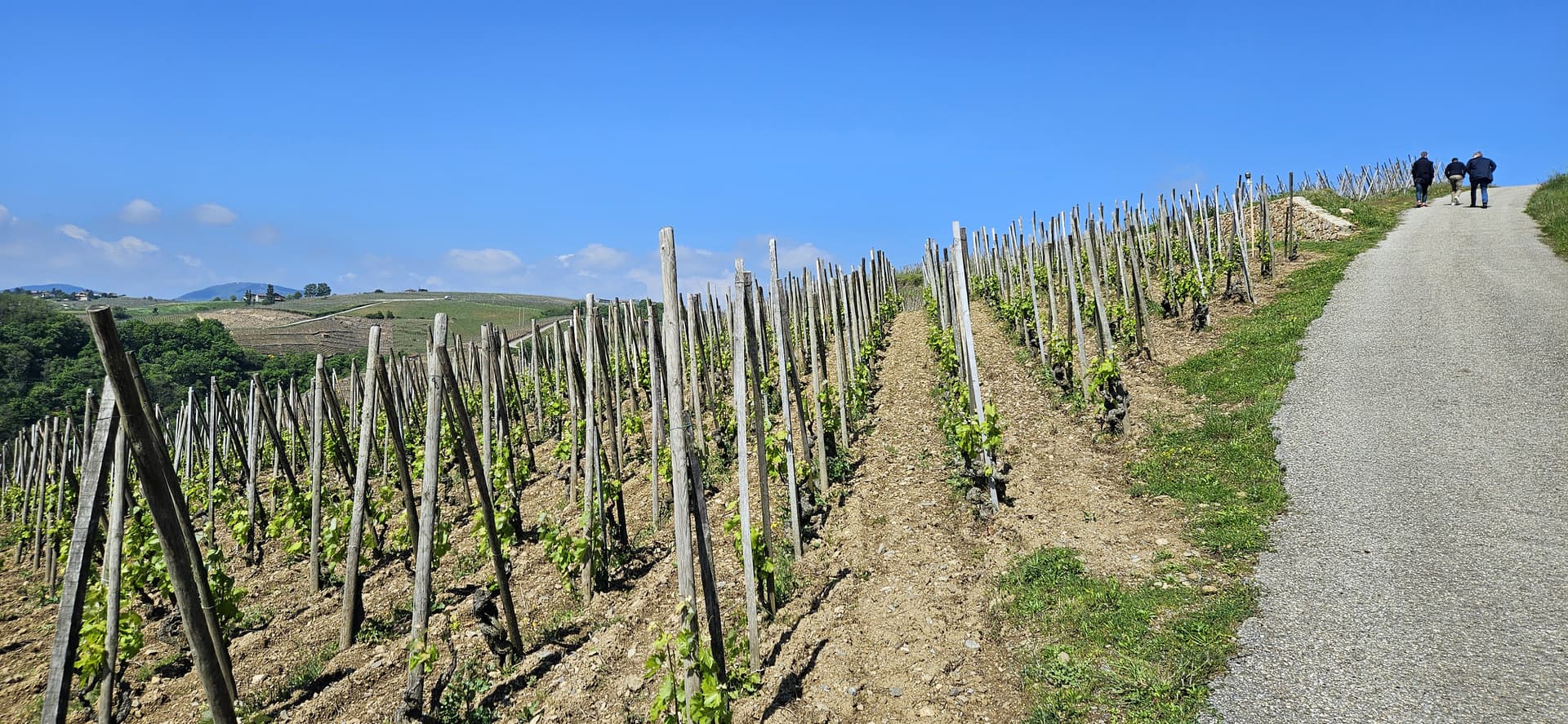
Some Saint-Joseph vineyards behind the Gonon property.
Then there was the case of Gonon. Mikko said he could take care of arranging a visit and he basically just sent an email to Jean Gonon saying “Hi Jean, we’re in Tournon at this time. Can we come?” and Jean responded “Yeah, sure, welcome!”. I wish things were this easy with all the other producers!
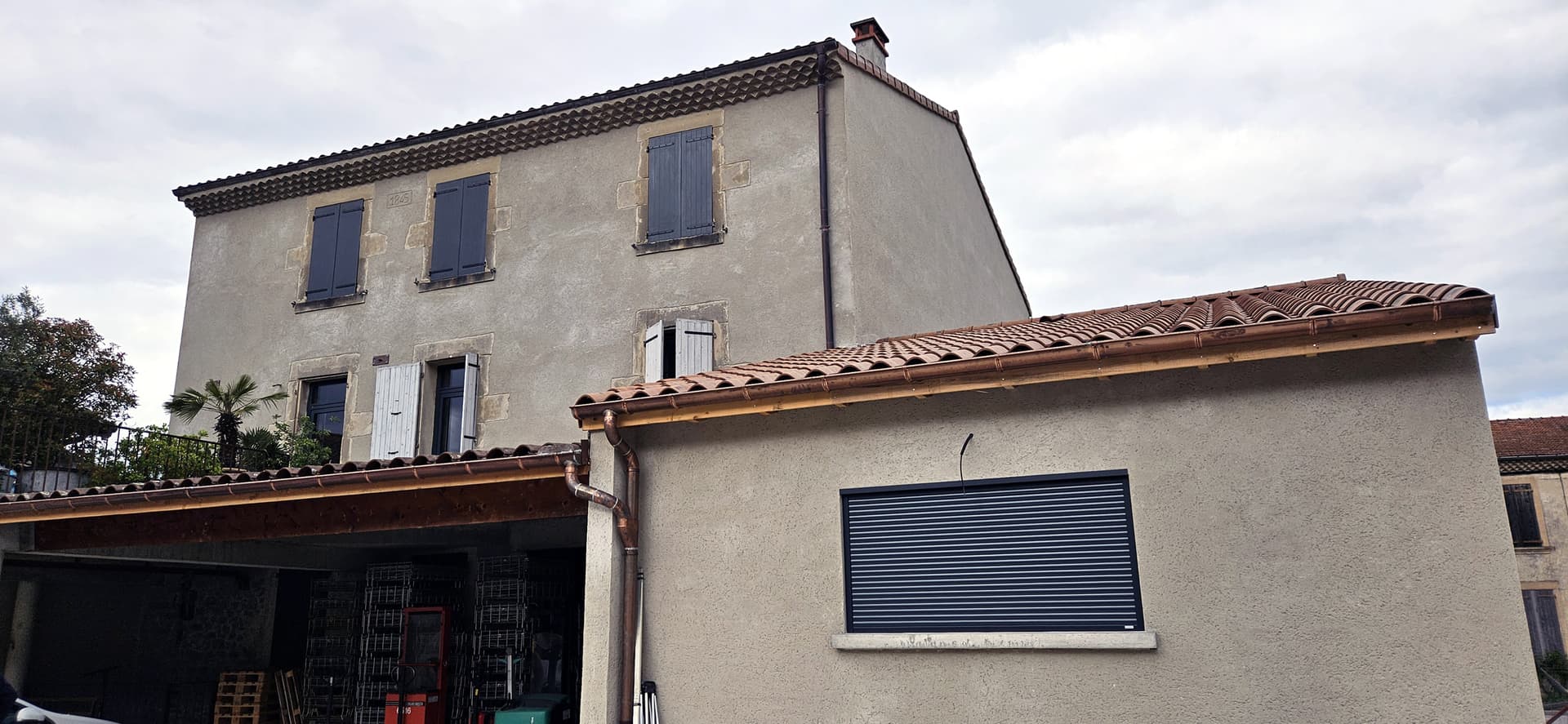
The main building, under which are the winery facilities and the barrel cellar located.
Anyways, we arrived at Gonon a few minutes early, but pretty soon it became apparent that we were not the only ones here - there were around ten or so people hanging around the Gonon winery. However, among these people there was not a single Gonon in sight! Everyone there just walked in circles, shuffled their feet, kicked some rocks, or just followed the winery dog that was hanging there with us but didn’t seem to be particularly perturbed by this crowd of strangers in their backyard.
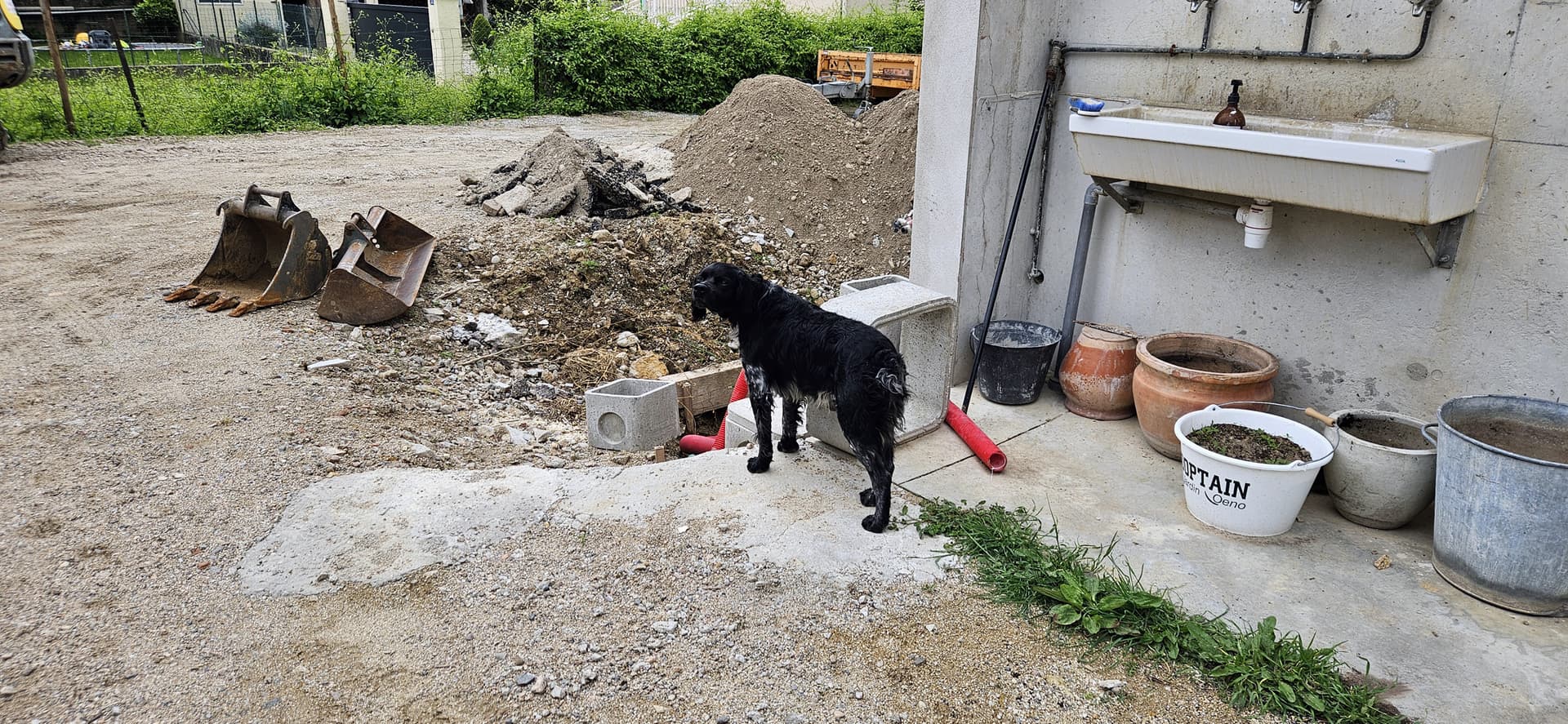
Now who’s a good boy!
After waiting a little bit more, the Gonon brothers arrived. Pierre Gonon just waved his hand at us in greeting as he passed us and went into the winery, whereas Jean Gonon came with a big wide grin to say hello and welcome personally to each and everyone in the yard. Then, after just a quick chat, he took us all down into the dim cellars of the winery to taste some wine. Jean made it pretty clear that this was not a winery tour, this was a great opportunity to taste some wine!
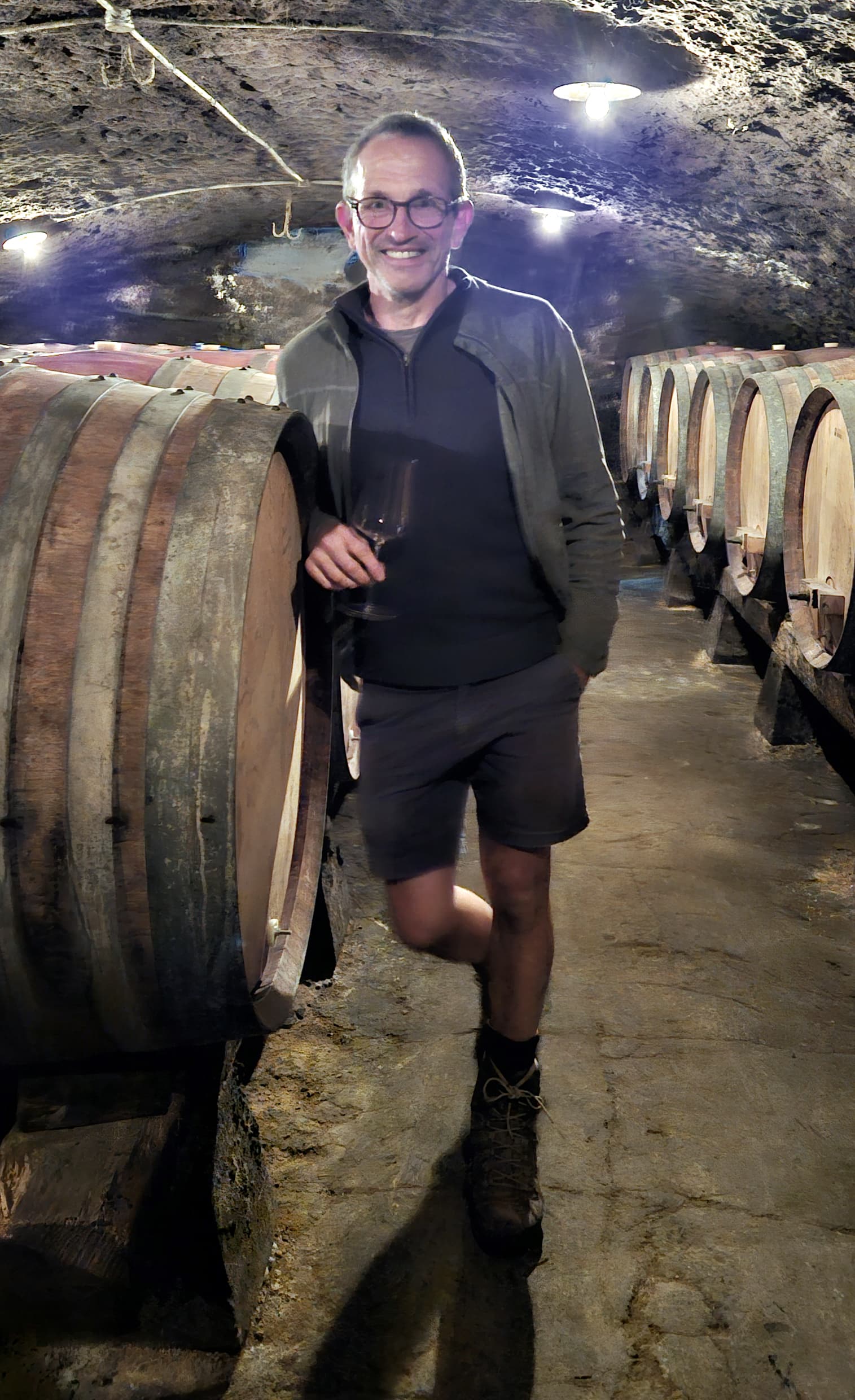
The master of ceremonies himself, mr. Jean Gonon.
One small thing before I continue: I can’t emphasize enough how ridiculously radiant a person Jean Gonon really is! This is just something you don’t realize until you’ve met the man himself in person. We had also met some very serious no-nonsense vignerons on our trip - Jean Gonon is nothing less than their polar opposite! The man just grins a lot, laughs a lot, throws in some jokes all the time - but at the same time is also an incredibly friendly and hospitable person, too. It was simply so much fun to be visiting the Gonon domaine - not because of this rare and long-awaited opportunity, but just because of Jean Gonon!
Anyways, if there are some people who don’t know what the domaine is about (is that even possible?), here are the main specs:
- The domaine as we know it began in the 1950’s when Pierre Gonon senior returned to the family domaine in Rhône. The Gonon family had some vineyards that Pierre’s parents had planted, but after the WW2, many of them were in bad shape, so ultimately Gonon kept just one 1-hectare vineyard, farming it and selling the fruit to négociants Délas and Chapoutier.
- In the mid-1960’s the Gonons stopped selling their production and instead started bottling their own wine - they were actually among the very first independent producers to bottle Saint-Joseph themselves.
- Jean Gonon quit school in 1986 to help his parents at the family domaine, and his brother, Pierre Gonon junior, joined in 1988. They took over in 1989 after their father retired from winemaking.
- Soon after the brothers took over the family domaine, they began doing away with the synthetic pesticides and fungicides. However, as they hadn’t done any viticultural studies nor had acquired experience from elsewhere, they converted to organics by trial and error. Only more than a decade later, in the early 2000’s, they had a system of organic farming that worked for them. Although the conversion was only because they thought was best for them and their wines and they originally didn’t plan to certify anything, they certified their vineyards organic in 2010.
- Today they farm approximately 10 hectares (25 acres) of vineyards in and around the appellation of Saint Joseph; most of the vineards are in Saint Joseph, but they also have some vineyards on the flat lands of Île Feray, sandwiched between Tournon, Mauves and the Rhône river. Their probably most esteemed parcel is the historic, three-hectare lieu-dit Aubert they started to rent in the early 2000’s from Raymond Trollat and which they ultimately purchased in 2006.
- A large amount of their production is Syrah, some of which come from Trollat’s very old vineyard Aubert (planted either in 1915 or in the early 1920’s depending on the source). However, they also have some white varieties as well: some Marsanne and Roussanne that Pierre Gonon sr. planted in 1958 and 1974, respectively, in the Coteau des Oliviers vineyard; and a tiny 0,1-hectare parcel of Chasselas, planted in the 1890’s in Trollat’s Aubert vineyard, that the Gonons took over in 2011.
- In the 1980’s and 1990’s the Gonons began replanting their aging vineyards with the workhorse Syrah clones of the Southern Rhône. This was because Syrah can be a rather unreliable variety, and back then, with the then-cooler climate, it was often quite difficult to ripen Syrah fully with the traditional clonal material of Northern Rhône. Thus, it made sense to replant with clones that were more productive and could ripen earlier and more reliably.
- However, the Gonons have noticed that this Southern Rhône clonal material can easily reach too high levels of ABV in the warmer climate of contemporary Saint Joseph. Furthermore, the bunch stems are often still too green when the grapes have attained sufficient ripeness and are ready to be harvested. That’s why for the past decade or two the Gonons have began replanting their vineyards again with sélection massale from their older vineyards. These historic, late-ripening clones attain good ripeness quite reliably today, but instead of producing large quantities of fruit, they produce a smaller volume of higher-quality fruit that tends to keep the levels of sugar (ie. ABV) reasonable while ripening the stems at the same pace with the grapes.
- Historically the producers in Saint Joseph didn’t destem their grapes, but when the Gonon brothers began making wine, they destemmed the fruit as their bunches often had green stems - and back then the common wisdom in Northern Rhône was to destem most or all the fruit. However, beginning in the early 2000’s, they began reducing the amount of destemmed grapes, and for the past 15 years the wines have been vinified almost entirely in whole bunches. The Gonons destem what they deem necessary: in some vintages up to half of the grapes can be destemmed; in others the wines can be made 100% from whole bunches. It all depends on the fruit quality, stem ripeness and how the bunches look like.
- The wines are made very traditionally: following the spontaneous fermentation, the wines are aged in old 600-liter demi-muids (which are normally replaced only when necessary). At some point the Gonons didn’t fine or filter their wines at all, but today the wines are lightly fined with egg whites, as they feel that this increases the wine stability. SO2 is added only in tiny amounts, usually only when the wines are racked during the élevage - not prior to bottling.
- Currently the domaine range spans four wines; two reds and two whites. They are:
- Les Iles Ferays: The earlier-drinking Syrah which is made with fruit older vineyards on the flat lands of île Feray, outside the Saint-Joseph appellation, and younger-vine fruit from their Saint-Joseph vineyards.
- Saint-Joseph: Their main product. 100% old-vine Syrah from multiple parcels in the historic part if Saint-Joseph appellation, ie. around Tournon, Mauves and St. Jean-de-Muzols. A not-insignificant portion comes from the centenarian Trollat vineyards.
- Saint-Joseph Les Oliviers: Old-vine Marsanne-Roussanne blend from the Coteau des Oliviers vineyard.
- Chasselas: A white made a tiny amount every year from the centenarian Chasselas parcel in the Trollat vineyard.
- After the Gonons purchased the Aubert vineyard from Raymond Trollat in 2006, they also made a cuvée called Vieilles Vignes that was made exclusively with old-vine Syrah from the vineyard. The last commercial release of the wine is 2010. However, some sources say that the Gonons have made a tiny amount of the wine every year - they just don’t release it. I’ve yet to verify if this is true!
In the Gonon barrel cellar we huddled into a semi-circle around Jean, who began pouring us wines; first from the barrels, then procuring one bottle after another from the bottle storage. Most of the wines he poured us while telling which cuvée it was, but some he poured us blind. When he asked what wines we were drinking, I managed to identify immediately two wines: the first one was 2016 Saint-Joseph and the second one was 2016 Les Oliviers. When Jean asked me how I identified them, I told him they were more reductive than any other cuvées we tasted that day - and the 2016 Gonons I’ve tasted have been reductive. Jean told us that for some reason the 2016 wines were indeed atypically reductive and still remain like that even today. However, he also began calling me “Mr. Reduction” after that. 
Here are the notes on the wines we tasted, in the tasting order:
- 2024 Pierre Gonon St. Joseph Blanc Les Oliviers - France, Rhône, Northern Rhône, St. Joseph (24.4.2025)
Tasted from a barrel at the domaine. A blend of organically farmed Marsanne planted in 1958 (80%) and Roussanne planted in 1974 (20%), both sourced from the famous Coteau des Oliviers vineyard. Fermented spontaneously, aged for 11 months in typically used oak barriques and demi-muids (although in some years a barrel might be replaced by a new one).
Youthful and slightly hazy yellow-green color. The relatively fresh nose is very textbook Marsanne with those herby, floral notes of lavender and chammomile, followed by sweeter cantaloupe notes, a little bit of leesy yeast, light creamy nuances and a hint of ripe Fuji apple. The wine feels rich, textural and still subtly spritzy on the palate with a medium-to-moderately full body and bright flavors of ripe red apple, some crunchy cantaloupe, a little bit of leesy yeast, light floral notes of lavender, a hint of savory spice and a touch of fresh apricot. The medium-to-moderately high acidity doesn't feel that high, but it keeps the effortlessly in balance nonetheless. The finish is juicy, firm and a bit oily with a long and rather fresh aftertaste of apricots, some floral notes of chamomile and lavender, a little bit of crunchy cantaloupe, light stony mineral notes, a herby pilsner-like hint of noble hops and a touch of ripe yellow apple.
A youthful, fresh and very promising vintage of Les Oliviers. Sure, the wine could use a bit more of acidity - as is typical of most Northern Rhône whites - but the wine still manages to come across as pretty firm and balanced all the same. There is definitely some sense of gras, but the wine doesn't come across as heavy or clumsy. As the wine is just a sample from one barrel and not fully representative of the final bottled wine, I'd rather not rate the wine. If I did, this would be somewhere around 90-91 points with a good deal of room for improvement. - 2024 Pierre Gonon St. Joseph - France, Rhône, Northern Rhône, St. Joseph (24.4.2025)
Tasted from a barrel at the domaine. Made from grapes that have been grown organically on predominantly granite soil. Fermented spontaneously in open-top oak fermenters with 2-week maceration, mostly or completely with whole bunches. Aged for 24 months in old foudres and 600-liter demi-muids.
Youthful, slightly translucent purplish color. The nose feels peppery, somewhat reduced and a bit wild with slightly closed aromas of boysenberries, some cracked black peppercorns, a little bit of savory spice, light inky tones, a hint of smoky reduction and a lifted touch of VA. The wine feels silky, supple and pretty open-knit on the palate with youthful flavors of sweet bilberries and fresh blackberries, some inky tones, a little bit of smoky reduction, light spicy notes of black pepper, a hint of sour cherry bitterness and a touch of juicy fresh forest fruits. The structure relies more on the somewhat grippy medium-plus tannins than on the somewhat soft medium acidity. The finish is juicy, rather long and moderately grippy with a very youthful aftertaste of brambly blackberries and sweet boysenberries, some peppery tones, a little bit of savory meatiness, light bitter notes of sour cherries, a hint of inky character and a touch of smoky reduction.
This seemed pretty promising and thoroughly classically styled Gonon Saint Joe, although maybe a bit modest in the acidity department. However, it was pretty painfully obvious that this was still a work in progress; although the wine felt like it had completed the primary fermentation and MLF, coming across as like a wine that could be bottled already now, it was still a bit all over the place and also quite reduced, offering relatively little at the moment. The nose felt a bit more wild and lifted than I normally associate with Gonon, but it might be because the fruit aromas were still so suppressed by the reduction. There's definitely a lot of promise here, but it is obviously going to take some more time before the wine really gets its game together. As the wine is just a sample from one barrel and not fully representative of the final bottled wine, I'd rather not rate the wine. If I did, this would be somewhere around 90 points with lots of upside. - 2023 Pierre Gonon Ardèche Les Iles Feray - France, Rhône, Northern Rhône, Ardèche (24.4.2025)
100% organically farmed Syrah blended from a combination of younger-vine fruit and older plots on both the lower parts of the Saint-Joseph appellation and outside it. 50% destemmed, 50% in whole bunches. Fruit is first lightly crushed by foot before spontaneous fermentation in open-top fermenters, then aged for at least 10 months in old demi-muids. Bottled unfiltered in March 2025.
Youthful, slightly translucent ruby-red color with a blueish hue. The nose feels quite savory and slightly reductive with aromas of ripe blackberries, some meaty tones, a little bit of earth, light smoky notes of reduction, a hint of peppery spice, a slightly odd and vaguely green-toned hint of pickle relish and a touch of fresh blueberry. The wine feels juicy, dry and rather fruit-forward on the palate with flavors of fresh blueberries and blackberries, some meaty tones, a little bit of gravelly minerality, light notes of Kalamata olives and a floral hint of elderflowers. The overall feel is quite supple and gentle with the moderately high acidity and ripe, soft medium-minus tannins. The finish is dry, juicy and slightly grippy with a moderately long aftertaste of blackberries and blueberries, some meaty tones, a little bit of olive, light peppery notes, a hint of tobacco and a floral touch of elderflowers.
A youthful, pleasant and fruit-forward but also relatively soft vintage of Les Iles Feray. The wine does show great varietal typicity, but from my experience, this label has been a bit more structure-driven in the vintages I've tasted in the past. I'm sure the wine will definitely benefit from a few years of additional aging as it is still so super-youthful and even slightly reductive at the moment, this is most likely not going to be the most long-lived vintage of Les Iles Feray. Then again, this is a wine you are supposed to drink while the St Joe ages away in the cellar, so I guess it does its job perfectly now! As a whole, this was thoroughly enjoyable, but maybe a bit too soft and fruity for my preference. While the 2023 Saint Joseph was quite similar in style, it also packed somewhat more firmness and structure - enough to make things feel just right and perfectly balanced.
(89 points) - 2023 Pierre Gonon St. Joseph - France, Rhône, Northern Rhône, St. Joseph (24.4.2025)
100% organically farmed Syrah grown on predominantly granitic soil, including some centenarian vines from Trollat's lieu-dit Aubert. Vinified mostly in whole bunches, 10% destemmed. Fermented spontaneously in open-top oak fermenters with 2-week maceration. Aged for 18 months in old foudres and 600-liter demi-muids. Bottled in March 2025. 12,5% alcohol.
Deep, dark and only slightly translucent blackish-red color with a youthful purplish hue. The nose feels quite dark-toned and a bit reticent with light yet fragrant aromas of ripe bilberries, some floral notes of violets and elderflowers, a little bit of olive, light inky tones, a spicy hint of cracked peppercorns, a touch of brambly blackberry and a whiff of smoky reduction. The wine feels somewhat ripe yet surprisingly airy and open-knit on the palate with a moderately full body and vibrant yet a bit understated flavors of fresh bilberries and brambly blackberries, some inky tones, a little bit of tobacco, light floral carbonic notes of violets and elderberries, a subtle hint of lifted VA and a touch of peppery spice. The wine feels firm yet quite gentle at first with its moderately high acidity and rather ripe and supple tannins. However, the tannins are quite ample and slow to grip, gradually piling up on the gums, making the wine feel more structured than the first impression led to believe. The finish is long, dry and moderately grippy with a bright yet slightly understated aftertaste of juicy bilberries and cherries, some elderberry tones, a little bit of brambly blackberry, light inky notes, a hint of olive and a touch of peppery spice.
A youthful and quite solar vintage of Gonon's St. Joe that feels still somewhat closed and a bit awkward, but already offering a quite good glimpse of its full potential. The tannins here seemed quite soft and mellow at first, like in 2023 Les Iles Feray, but unlike with the lesser cuvée, the tannins here turned out to be quite assertive and grippy after all - they just didn't seem so astringent at first, but did their job after enough exposure! Seeing how the wine is still somewhat reductive, it is quite obvious that the wine does need at least a few hours of aeration if opened now. However, as the wine shows good promise for future development, I'd rather let the wine age in a cellar for another 8-15 years and meanwhile concentrate on the earlier-drinking Les Iles Feray cuvée instead. Good sense of freshness despite its sunny qualities. Recommended.
(92 points) - 2022 Pierre Gonon St. Joseph - France, Rhône, Northern Rhône, St. Joseph (24.4.2025)
100% organically farmed Syrah grown on predominantly granitic soil, including some centenarian vines from Trollat's lieu-dit Aubert. Vinified mostly in whole bunches, 15% destemmed. Fermented spontaneously in open-top oak fermenters with 2 to 3-week maceration. Aged for 18-24 months in old foudres and 600-liter demi-muids. 12,5% alcohol.
Almost fully opaque black cherry color. The nose feels dry and surprisingly understated with somewhat closed aromas of brambly blackberries, some meaty tones, a little bit of tobacco, light spicy notes of crushed black pepper, some herbal stemmy hints and even a distinctive whiff of beetroot and a faint touch of olive. The wine feels rather ripe and somewhat chewy but also surprisingly reticent and understated on the palate with a rather full body and somewhat light flavors of fresh dark fruits and earth, some tobacco, light savory notes of meaty umami, a little bit of brambly blackberry, a hint of inky character and a touch of blueberry juice. The overall feel is firm and somewhat stern with the quite high acidity and rather grippy yet not aggressive tannins. The juicy finish is rich, moderately open-knit and quite grippy with a brooding, somewhat understated aftertaste with flavors of blueberries and elderberry juice, some brambly blackberries, light gravelly mineral notes, a little bit of tobacco, a hint of earth and a savory touch of meaty umami.
This was a rather brooding and somewhat shut vintage, at least after a pop'n'pour. The wine does show some ripeness, but at the same time it is wonderfully fresh with a good, sturdy frame of tannins and a nice backbone of acidity. The biggest problem was that the wine didn't really seem reductive, yet it was aromatically a bit mute with somewhat reticent flavors, too. That is, however, nothing new with Gonon wines: they seldom are super expressive after a pop'n'pour and they can be a bit sulky for several years after the vintage. I guess this wine is just in a closed phase and will open up as it ages. The overall feel is nevertheless pretty classically styled, showing good potential for aging and improvement. I'd wait for another 5 to 8 years, minimum. Or if opened now, letting the wine breathe for several hours beforehand.
(90 points) - 2021 Pierre Gonon St. Joseph - France, Rhône, Northern Rhône, St. Joseph (24.4.2025)
100% organically farmed Syrah grown on predominantly granitic soil, including some centenarian vines from Trollat's lieu-dit Aubert. 60% in whole bunches, 40% destemmed. Fermented spontaneously in open-top oak fermenters with 2 to 3-week maceration. Aged for 18-24 months in old foudres and 600-liter demi-muids. 12,4% alcohol.
Slightly translucent black cherry color. The nose feels very fresh and classically styled, albeit with a quite noticeable cool-climate influence, with expressive aromas of cracked peppercorns and brambly black raspberries, some fragrant elderflower tones, light green-toned stemmy notes, a little bit of ferrous blood, a hint of ripe blueberry and a touch of Kalamata olives and a vegetal whiff of beetroot and herby greenness. The wine feels relatively ripe but still very fresh, crunchy and quite direct on the palate with a medium body and intense, dry flavors of brambly blackberries, some olive tones, a little bit of elderflowers and elderberry juice, light vegetal notes of beetroot, spicy hints of crushed peppercorns and a savory touch of meaty umami. The overall feel is very firm with the high acidity and somewhat light yet still pretty angular tannins. The finish is dry, clean and crunchy with some tannic grip and a fresh, lengthy aftertaste of brambly blackberries and fresh raspberries, some olives, light peppery tones, a little bit of ferrous blood, a hint of tobacco and a touch of earth.
Compared to many other Gonon St. Joes, this vintage was slightly leaner and more lightweight with a tiny bit of greenness reminding of the cooler vintage. However, the wine wasn't an austere green meanie, but instead a wonderfully fresh, bright and characterful example of Northern Rhône Syrah with all the textbook qualities one wants to find in one: olives, crushed peppercorns, brambly raspberries and wonderfully fresh acidity! Seeing how the wine is obviously still just a baby, I'm sure the wine is still in a somewhat awkward phase and it needs some time to settle down and get its game better together. Even then, this was a very lovely expression of Gonon's style and my favorite of the vintages we tasted at the domaine. I'm not sure if this is going to be as long-lived as the best Gonon vintages, but this is nevertheless a delightful wine that is going to need some more years to hit its optimal drinking window and I'm sure this wine won't have problems in fitting with the rule of 15.
(94 points) - 2016 Pierre Gonon St. Joseph - France, Rhône, Northern Rhône, St. Joseph (24.4.2025)
100% organically farmed Syrah grown on predominantly granitic soil, including some centenarian vines from Trollat's lieu-dit Aubert. Vinified mostly in whole bunches, 20% destemmed. Fermented spontaneously in open-top oak fermenters with 2 to 3-week maceration. Aged for 18-24 months in old foudres and 600-liter demi-muids Bottled with ~50 mg/l SO2. 13,5% alcohol. Tasted half-blind.
Moderately opaque black cherry color. The nose feels moderately reductive and a bit closed but also still pretty fresh with aromas of ferrous blood and crunchy red plums, some smoky and farty notes of reduction, light brambly raspberry notes, a little bit of meaty character, crunchy hints of fresh blackberries and crowberries, a spicy touch of black peppercorns and a whiff of olive. The wine feels dry, crunchy and a bit closed on the palate with a medium body and fresh yet somewhat reductive flavors of tart crowberries and brambly black raspberries, some ferrous notes of blood, light inky tones, a little bit of tobacco, a hint of sour cherry bitterness and a skunky touch of flatulent reduction. The combination of high acidity and still relatively grippy medium-plus tannins make the wine feel pretty firm and structured. The finish is dry, somewhat closed and quite grippy with a long, slightly understated aftertaste of tart crowberries and brambly blackberries, some inky tones, a little bit of gravelly minerality, light smoky notes of reduction, a hint of olive and a touch of peppery spice.
Jean Gonon poured this to us blind and said "guess the vintage". I took one sniff, one sip and answered immediately: 2016. Having tasted this before - and knowing 2016 produced some heavily reductive wines in Northern Rhône - it was quite obvious that a wine this reductive and at this point of evolution had to be 2016. The wine is very firm, pretty structured and classically styled, but even at almost 9 years of age it just isn't a wine for pop'n'pour; it is just way too reductive, still. Although the wine has blown some of its reduction since my last taste (6 years ago), when it was completely shut down with a huge smack of skunky, flatulent reduction, this is still quite reduced and a bit closed upon opening. I'd say the wine needs at least 2 hours of air if opened now, but if you want to stay on the safe side, just let the wine age until its 15th birthday. The wine isn't showing much if any aged qualities now, so it is painfully obvious this is a wine for the long haul. A fine wine that needs a lot of air, age or both. Expect the score to go up as the wine ages. Highly recommended.
(93 points) - 2023 Pierre Gonon St. Joseph Blanc Les Oliviers - France, Rhône, Northern Rhône, St. Joseph (24.4.2025)
A blend of organically farmed Marsanne planted in 1958 (80%) and Roussanne planted in 1974 (20%), both sourced from the famous Coteau des Oliviers vineyard. Both the varieties are co-fermented spontaneously, then aged for 11-12 months in typically used oak barriques and 600-liter demi-muids (although in some years a barrel might be replaced by a new one). Blended together in oak vats and bottled with a modest dose of sulfites. Annual production is around 8000 bottles. Tasted half blind.
Medium-deep yellow-green color. The nose feels rich and expressive with lush aromas of honeydew melon and ripe apricot, some creamy oak tones, a little bit of exotic spices, light sweet notes of acacia honey, floral hints of lavender and chamomile and a touch of poached pear. The wine feels broad, ripe and open-knit on the palate with a full body and moderately sweetly-fruited flavors of juicy apricot and acacia honey, some almond paste tones, a little bit of creamy oak, light sweet notes of apple jam, floral hints of chamomile and noble hops and a touch of savory spice. The medium acidity feels a bit modest for such a big, ripe wine, making the overall feel quite round and a bit fat. The finish is juicy, rather soft and a bit warm with a rich aftertaste of ripe apricot and acacia honey, some sweet notes of apple jam, light creamy oak notes, a little bit of almond paste, a floral hint of chamomile and a touch of cantaloupe.
A very rich and quite substantial vintage of Les Oliviers with a lot of ripeness, body and succulent, sweet-toned fruit. Although Les Oliviers often can show quite a bit of gras, especially in its youth, this vintage feels a bit too heavy and slightly fat. It is impressive with the sense of richness, nuance and depth of flavor, but to me, it is getting a bit too much - I prefer whites showing a little bit more freshness. I hope the wine is just too young and primary at the moment, and it would drop some of its baby fat as it ages. It is definitely on the big, lush and somewhat soft side at the moment, but there's still a good chance that the wine might improve and pick up some elegance as it ages.
(89 points) - 2016 Pierre Gonon St. Joseph Blanc Les Oliviers - France, Rhône, Northern Rhône, St. Joseph (24.4.2025)
A blend of organically farmed Marsanne planted in 1958 (80%) and Roussanne planted in 1974 (20%), both sourced from the famous Coteau des Oliviers vineyard. Both the varieties are co-fermented spontaneously, then aged for 11-12 months in typically used oak barriques and 600-liter demi-muids (although in some years a barrel might be replaced by a new one). Blended together in oak vats and bottled with a modest dose of sulfites. Annual production is around 8000 bottles. 14% alcohol. Tasted half-blind.
Medium-deep and very slightly hazy yellow-green color. The nose feels ripe, yellow-toned and subtly reductive with aromas of Golden Delicious apple, some sweet apricot tones, a little bit of nutty almond, light flatulent notes of reduction, a hint of herby noble hops, a leesy touch of creaminess and a whiff of grainy character. The reduction disappears rather quickly, but it was quite present after a pop'n'pour. The wine feels textural, balanced and slightly oily with a full body and vibrant flavors of ripe Golden Delicious apples and juicy nectarine, some stony mineral tones, a little bit of honeyed richness, light herby and floral nuances, a hint of nutty wood and a touch of smoky reduction. The bright and relatively high acidity lends good sense of balance and structure to the wine and despite all the gras, keeps the wine from coming across as soft or heavy. The finish is rich, long and somewhat sweetly-fruited with a vibrant aftertaste of juicy apricot and honeyed richness, some floral notes of chamomile and noble hops, a little bit of crunchy cantaloupe, light nutty nuances of old wood, a leesy hint of creaminess and a touch of beeswax.
A broad, rich and still wonderfully harmonious vintage of Les Oliviers that is starting to show a little bit of age, but as a whole, comes across as relatively youthful for its age - this vintage is going to be on an incline for a good number of years more. When I tasted this vintage for the last time (6 years ago, almost to the date), I didn't notice any reduction - however, I had double-decanted the wine a few hours prior to the tasting, whereas this bottle was pop'n'poured. When Jean Gonon asked us which vintage this was, I guessed 2016 just because the red 2016 St. Joe was so reductive. Jean replied "Very good, mister reduction! It is 2016!", then proceeding to explain how, for some reason, 2016 produced wines that were almost invariably prone to reduction and even if the reduction blows off quite quickly, these wines tend to be quite reductive upon opening still today, almost nine years after the vintage. Nevertheless, this vintage was as wonderful as I remembered it was - it has that breadth, richness of fruit and sense of gras that are so typical in Northern Rhône whites, yet it also packs wonderful sense of freshness and structure as well. This is a lovely vintage of Les Oliviers that is on the right track; it's quite probably this will make beautiful old bones, but it will still take a good handful of years more in a cellar. Highly recommended.
(92 points) - 2023 Pierre Gonon Chasselas - France, Rhône, Vin de France (24.4.2025)
The organically farmed Chasselas is sourced from Trollat's centenarian vineyard, where is a tiny parcel of Chasselas - no more than 0,1 ha in size, over five terraces - planted in the 1890's. Fermented spontaneously with indigenous yeasts. Aged for 11 months in barriques and demi-muids.
Subtly hazy pale greenish color. The nose feels youthful and a bit simple with aromas of white peach, some primary notes of pear drops, light herby notes, a little bit of leesy character and a sweeter hint of tropical fruits. The wine feels clean, balanced and slightly oily on the palate with a moderately full body and juicy flavors of ripe Golden Delicious apple, some mineral notes of wet rocks, a little bit of sweet white peach, light leesy tones, a woody hint of savory oak spice and a primary touch of pear. The moderately high acidity lends good sense of balance and firmness to the wine. The finish is juicy, ripe and maybe a bit neutral with a rather long aftertaste of white peach, some crunchy appley tones, a little bit of leesy creaminess, light mineral notes of chalk dust and a faint hint of savory wood spice.
A nice, balanced and still super youthful old-vine Chasselas. Considering how the variety normally produces wines that tend to be quite neutral, low in acidity and lacking energy, this is an extraordinary example of the variety, exhibiting sense of freshness, concentration and structure that is extremely rarely seen in varietal Chasselas wines. The overall feel is still a bit on the primary side, making the overall feel a bit simplistic and maybe a tad candied. However, with this much old-vine concentration and sense of structure, I'm positive this wine will benefit for at least a handful of extra years in a cellar and most likely it will age gracefully for another decade or so. As a white wine, this might not be as impressive and complex as Les Oliviers, but as far as varietal Chasselas wines are concerned, this is among the best examples in the world. Fine stuff, recommended.
(91 points)
Anyways, there we were, in the dim cellar, tasting Gonon’s wines one after another, until at some point we noticed that our time was up - our table reservation at Les Mangevins was approaching at an alarming pace, so somewhat abruptly we just had to bid Jean Gonon farewell and leave for dinner. I actually have no idea if the other people who were there with us left at the same time, or if they just stayed behind and kept on drinking with Jean!
During the time we were at Gonon, Ilkka had finally received the key code to our airbnb spot in Tournon from our rather evasive host. This meant that once we parked our van in Tournon’s public parking lot, we left for our airbnb dragging our luggage in the hopes that this time we didn’t need to haul them back again to the car. And yes, we indeed managed to finally get into the flat! However, unlike promised, the flat we had rented was not a two-floor place for seven people, but instead a one-floor place for three to four people - including just a single bedroom! With four beds.
After we had spend a minute or two cursing our host to the deepest corners of hell, we freshened ourselves up a little, agreed that we’d deal with the problems concerning our airbnb place at some later time, and left for Les Mangevins, that was waiting for us in Tain l’Hermitage, ie. just a stone’s throw away across the Rhône river.
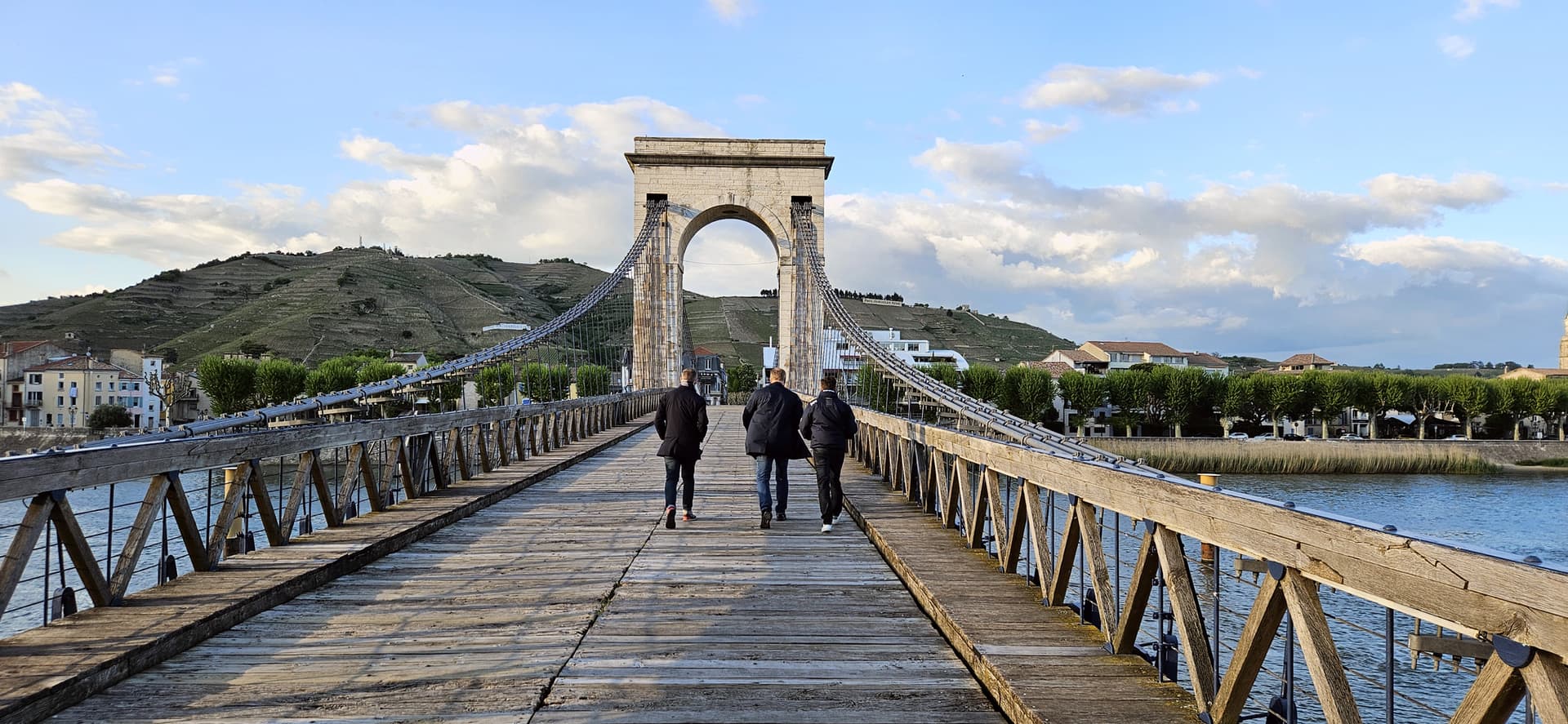
Our entourage crossing the Rhône river to Tain, the mighty Hermitage hill painting an impressive backdrop to the city.
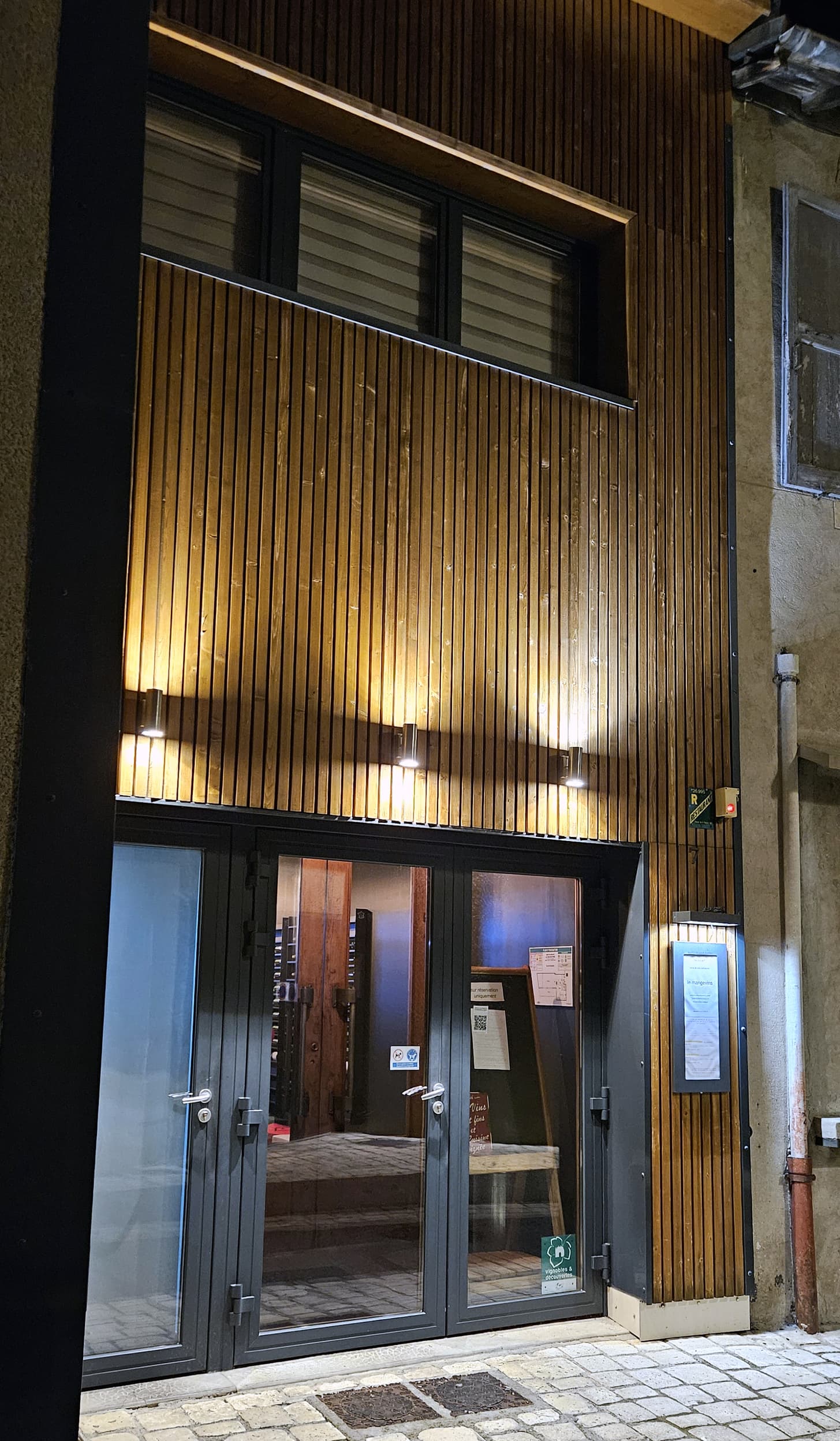
Les Mangevins, one of the best spots a wino can visit in Tain.
Les Mangevins was again one of those places Mikko and Ilkka had sung endless praises on, so admittedly the expectations for tonight’s dinner were once again quite high.
Me and Ilkka had perused the restaurant’s wine list in advance and managed to scout some serious contenders we could go with, but since the wine list that we had didn’t have the complete selection, we told the sommelier we’d be open for all kinds of suggestions. After all, Ilkka and Mikko knew the place well beforehand and had full trust of the sommelier, so we didn’t need to worry much.
In the end we went with the suggested Champagne and a bottle of 2014 Hermitage, but out of curiosity we also had to check out how Gréal 2019 - Guillaume Sorrel’s debut vintage - was shaping up.
The dishes here were quite impeccable. Quite traditionally French in style, but still often showing a tiny bit of Japanese flair as a lovely, subtle counterpoint. Utterly delicious - exactly as Mikko and Ilkka promised.
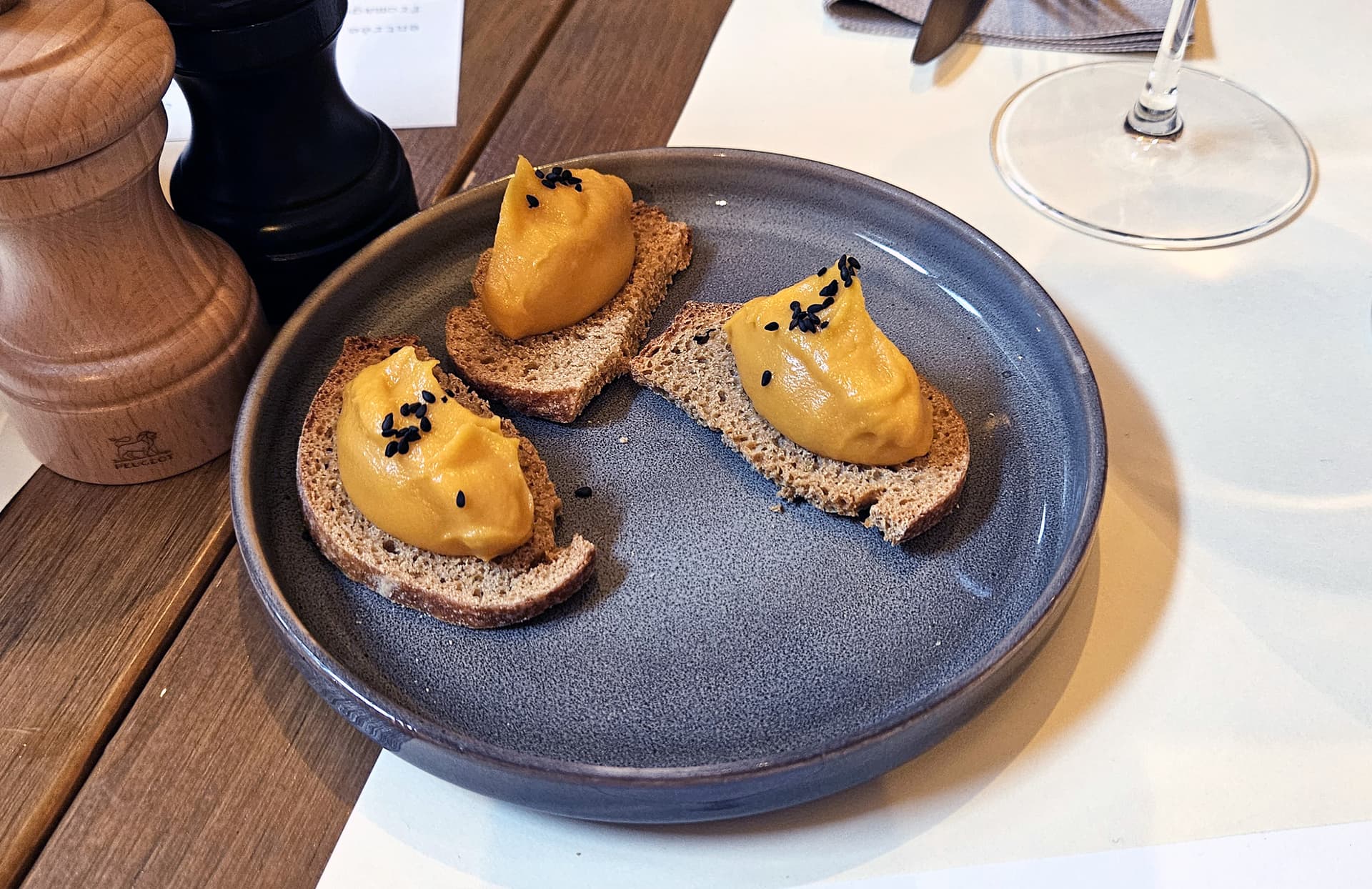
Some bread we could nibble on while waiting for our entrées.

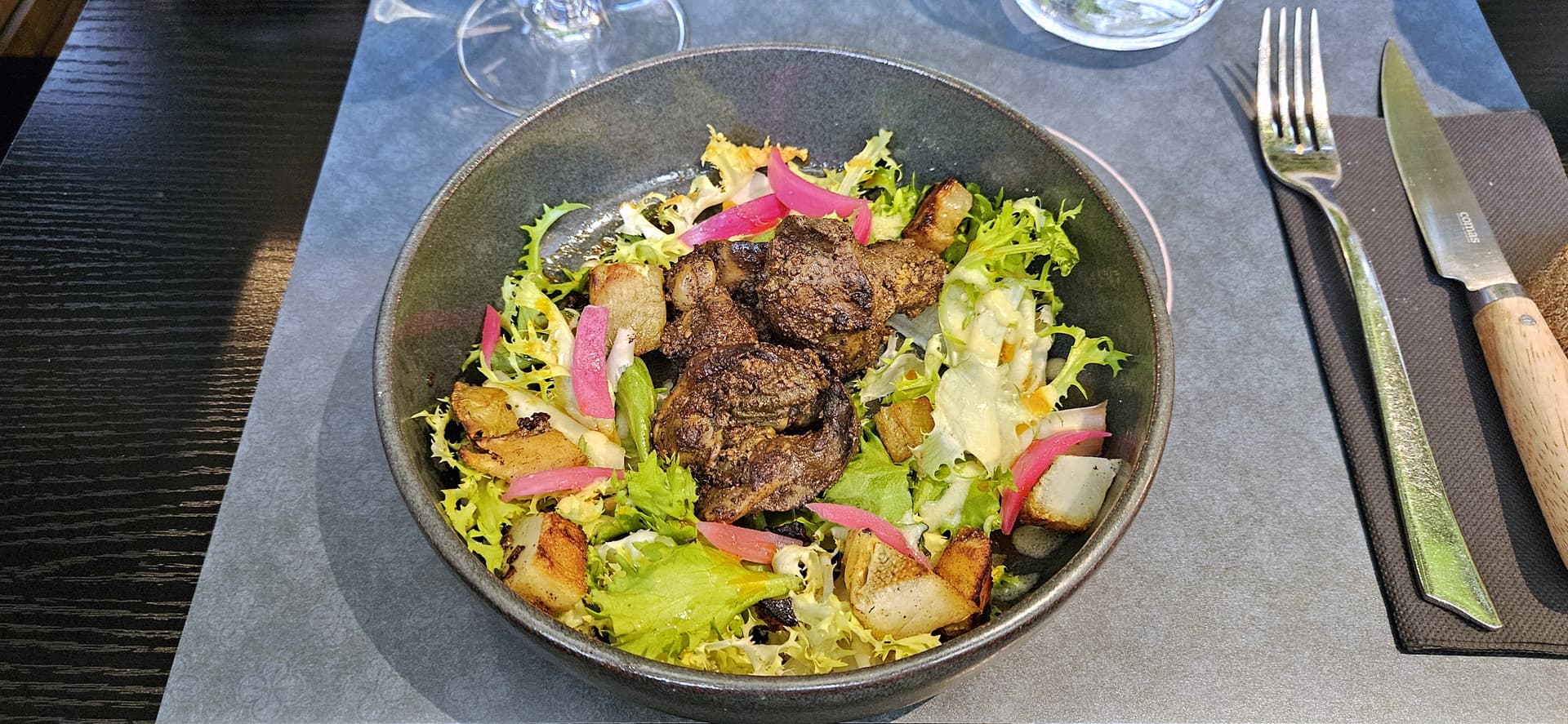
Pressé d’oreille de cochon, œuf “onsen”, pickles de moutarde, câpres et cornichons - ie. pressed pig’s ear and a hot spring egg.
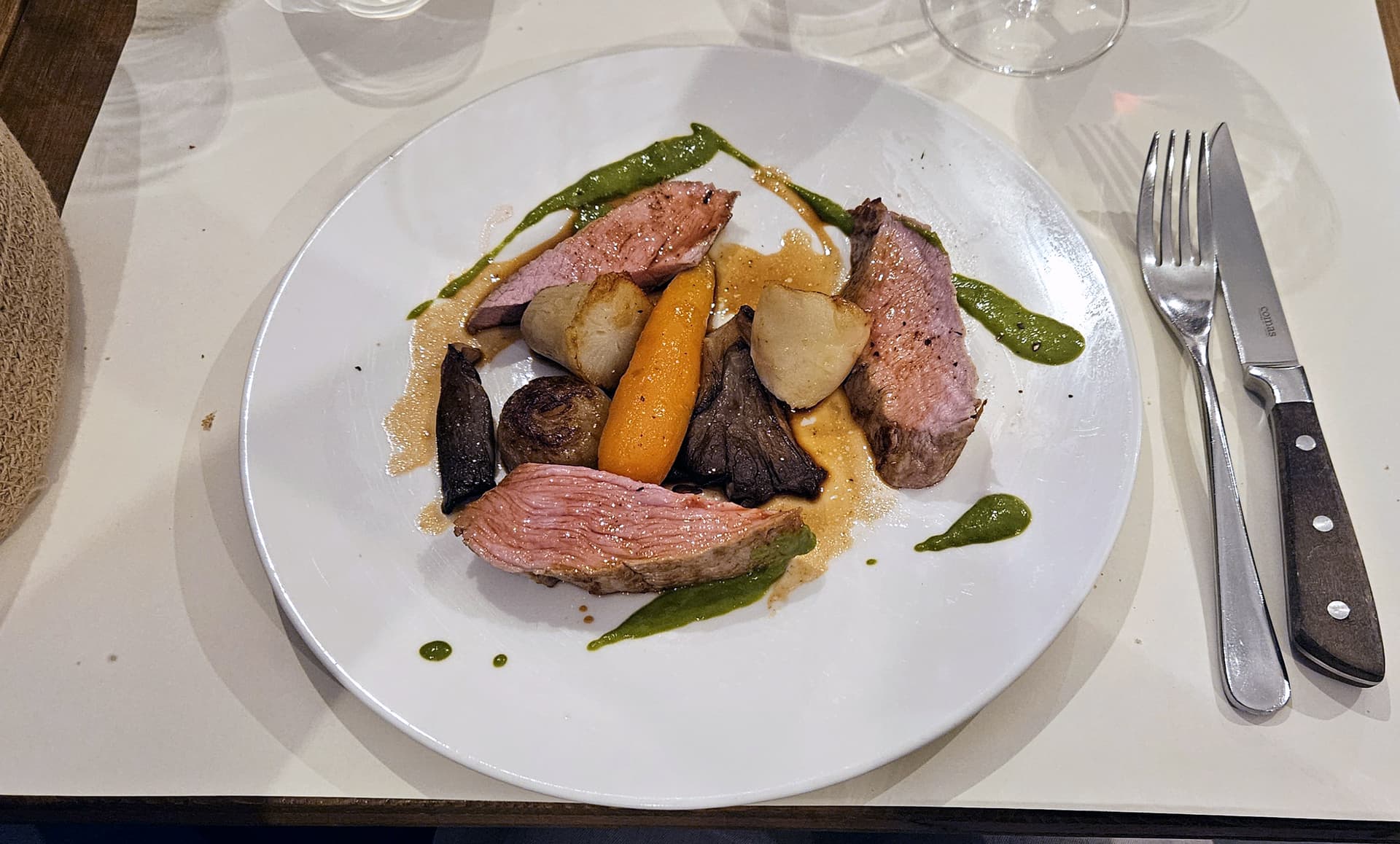
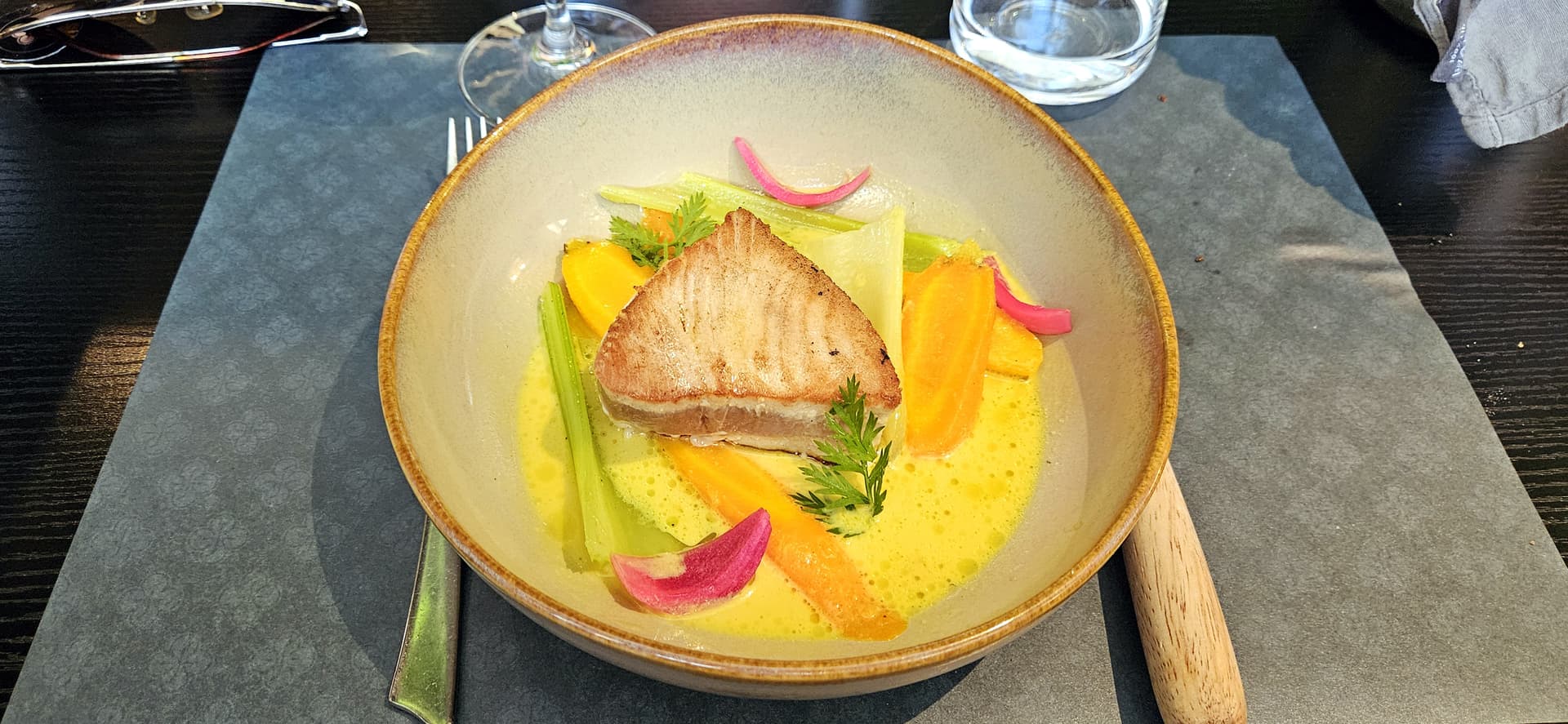
Quasi de veau rôti, jus réduit, crème douce d’ail nouveu et légumes des îles féray - ie. veal rump steak with reduction sauce and local greens.
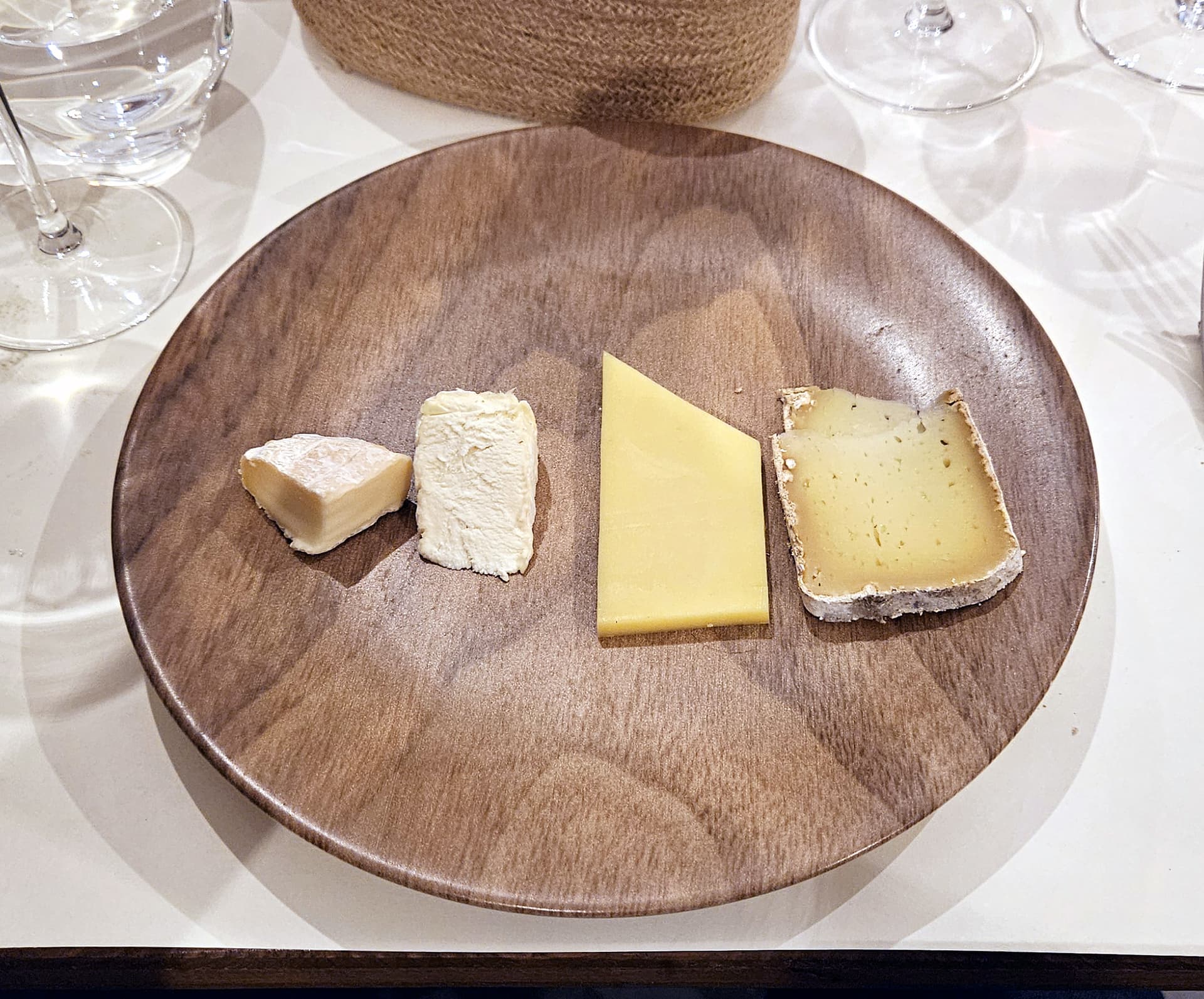
A smashing cheese platter.
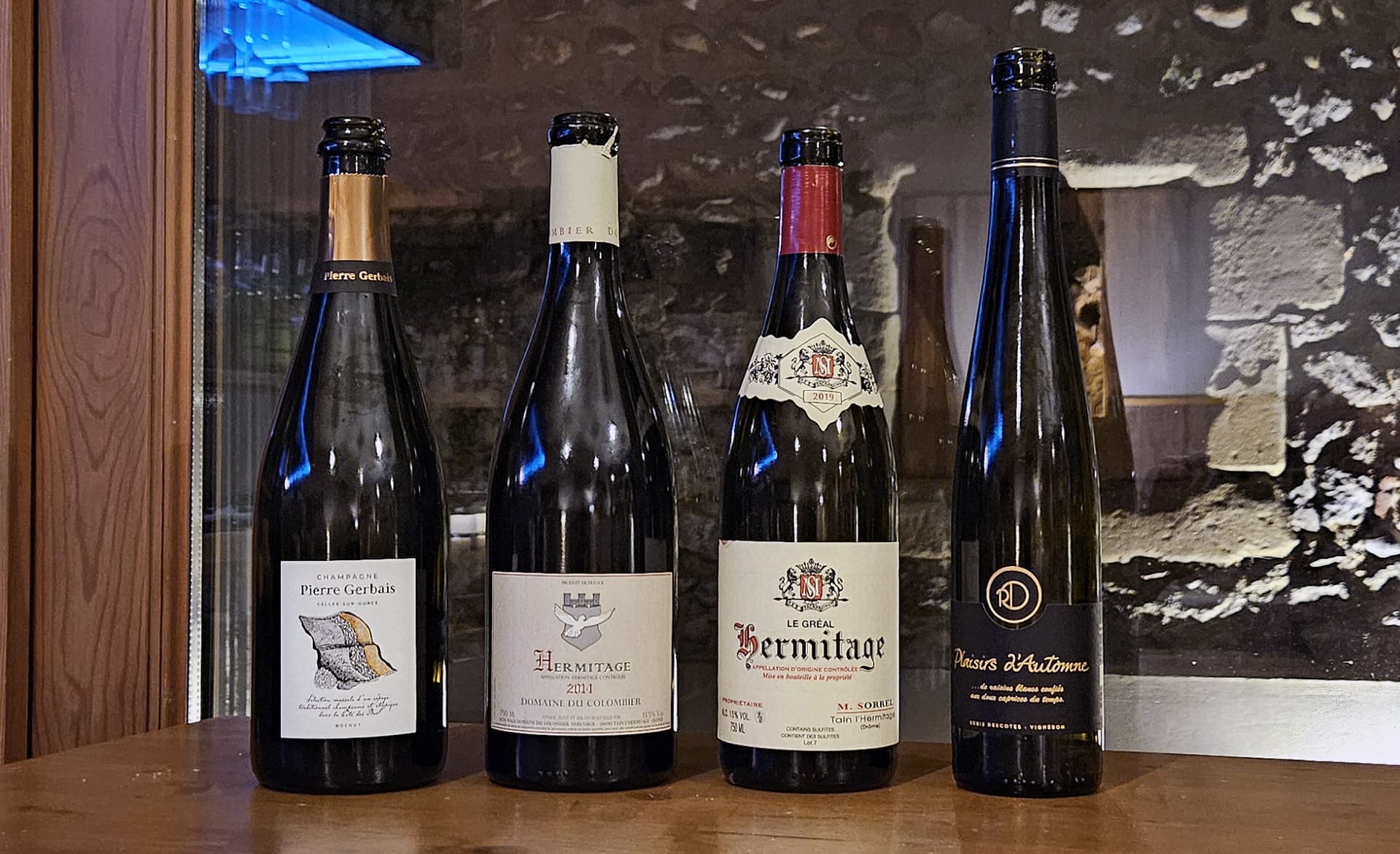
The wines we went with.
- NV Pierre Gerbais Champagne Extra Brut Bochot - France, Champagne (24.4.2025)
A rare 100% Pinot Meunier from Côtes de Bar - a region associated chiefly with Pinot Noir. Fermented spontaneously in stainless steel tanks. Assembled from a perpetual blend consisting of vintages 2016, 2017 and 2018. Bottled with a tiny addition of SO2 in June 2019, disgorged in May 2022 with a dosage of 3 g/l. Total production 2358 bottles. 12,5% alcohol.
Intense, palish golden yellow color. The open nose feels rich, characterful and moderately sweet-toned with layered aromas of peachy stone fruits and meadow honey, some roasted oat tones, a little bit of bruised quince and apple, light autolytic notes of brioche, a hint of lemon marmalade and a touch of almond flour. The wine feels crisp, complex and acid-driven on the palate with a medium body and intense, almost bone-dry yet sweet-toned flavors of bruised Golden Delicious apples and stony minerality, some browned butter tones, a little bit of bready autolysis, light savory notes of umami, oceanic hints of brackish water and a touch of ripe citrus fruits. The high acidity lends great sense of energy, structure and intensity to the wine while the ample, persistent and silky smooth mousse adds nice sense of volume and breadth to the texture. The finish is long, crisp and complex with a dry, intensely-flavored aftertaste of saline minerality and toasty notes of brioche and chopped nuts, some bruised apple tones, a little bit of ripe citrus fruits, light honeyed nuances, a hint of almond flour and a touch of peachy stone fruit.
A fantastic, wonderfully toasty and impressively structured Pinot Meunier with tons of depth and complexity. I don't know if the wine is built to age, nor if it actually calls for any aging, since it is so complex and captivating already now. This is an outstanding fizz that shows how Pinot Meunier can make some really exceptional wines in deft hands - even when grown in places where the variety is virtually unknowns, like Côte des Bar, in the case of this wine. Great value at 100€ in a restaurant.
(94 points) - 2014 Domaine du Colombier Hermitage - France, Rhône, Northern Rhône, Hermitage (24.4.2025)
100% Syrah from approximately 50 yo vineyards in lieux-dits Beaumes, Les Diognières and Péléat. Aged in 600-liter demi-muids (30% new) for 18 months. 13,5% alcohol.
Slightly translucent black cherry color that doesn't look young nor old. The nose feels quite meaty and rustic with aromas of ripe dark plums and juicy blackberries, some bretty notes of new leather and barnyard, light smoky phenolic tones, a little bit of allspice, a hint of damp pipe tobacco, a spicy touch of black pepper and a touch of Kalamata olives. The wine feels dry, firm and savory on the palate with a moderately full body and quite bold flavors of pipe tobacco and juicy blackberry, some stony mineral notes, a little bit of licorice root, light bretty notes of saddle leather and farmhouse funk, hints of sweet bilberries and crunchy blueberries and a touch of gamey meat. The structure relies both on the wonderfully high acidity and quite silky yet not soft or supple tannins that still pack a healthy amount of grip. The finish is juicy, long and quite complex with an intense aftertaste of ripe blackberries and sweet bilberries, some bretty notes of saddle leather and funky barnyard, light dark plummy tones, a little bit of gravelly minerality, a hint of licorice root and a touch of pipe tobacco.
A characterful and enjoyably rustic Hermitage that feels rather ripe - especially for a 2014 - yet not big or sweet-toned. The overall feel is wonderfully dry and structured with nuanced and savory yet at times subtly sweetish fruit and ample structure that makes the wine feel firm yet not at all tough. Very harmonious and versatile with food, but drinks immensely well on its own, too. As the wine doesn't feel particularly aged yet, I can imagine it can easily evolve and improve for at least another 5 to 10 years and most likely will just keep for even longer. Although the 2019 Sorrel Gréal we had at the same time was somewhat more impactful and impressive in its own way, I'd say I preferred Colombier's more harmonious and somewhat more rustic charm a bit more. A good purchase at 100€ in a restaurant.
(94 points) - 2019 Marc Sorrel Hermitage Le Gréal - France, Rhône, Northern Rhône, Hermitage (24.4.2025)
The first vintage of Guillaume Sorrel after the retirement of Marc Sorrel after the 2018 vintage. Typically Le Gréal is almost completely composed of organically farmed Syrah from lieu-dit Le Méal planted between 1927 and 1928 (85-90%) and lieu-dit Greffieux planted between 1984 and 1995 (5-15%), occasionally with tiny additions of Marsanne (0-8%). In this warm vintage no destemming was employed, ie. the wine is vinified 100% in whole bunches. Fermented spontaneously and macerated with the skins for three weeks. Typically the wine is aged in new (25%) and once-to-five times used (75%) oak barrels for 16-20 months. Bottled unfined and unfiltered. 15% alcohol.
Dense, very youthful and quite pitch-black color with subtly purplish highlights. The nose feels open, rich and quite heady with intense aromas of ripe blackberries and dark plummy fruits, some inky tones, a little bit of blueberry juice, light floral notes of violets, hints of anise and licorice, a spirituous touch of alcohol and a whiff of oak spice. The wine feels rich, solar and even a bit hot on the palate with a full body and bold, succulent and somewhat sweetly-fruited flavors of dark plums and juicy blueberries, some inky tones, a little bit of blackberry marmalade, light licorice tones, a sweet hint of toasty oak spice and a touch of plum pits. Despite the richness and high level of ripeness, the wine retains an impressive structure with its quite high acidity and ample, grippy tannins. The finish is rich, long and grippy with an intensely-flavored aftertaste of blackberry jam and ripe dark plums, some licorice sauce, a little bit of juicy blueberry, light toasty notes of smoke, sweet oak spice and mocha oak, a hint of pipe tobacco and a touch of extracted bitterness.
This was a very ripe and surprisingly substantial - even for a Hermitage - with tons of bold, dark-toned fruit and other non-fruit flavors. However, despite its almost monolithic size, the wine doesn't really come across as too heavy or ponderous, thanks to its remarkably firm and tightly-knit structure - an element a wine of this size calls for. Truth be told, the wine is more balanced than a wine this big and punchy has any right to be. The level of alcohol is maybe a bit too high for my preference and I'd prefer a less ripe and sweet-toned fruit profile, but this is nevertheless a very impressive effort in its own, somewhat over-the-top way. It is quite obvious that the wine is way too young for its own good at the moment, but I have no doubts this will be quite outstanding after another decade or so. Maybe not worth the price at 210€ in a restaurant, though.
(93 points) - 2020 Regis Descotes Plaisirs d'automne - France, Rhône, Vin de France (24.4.2025)
A blend of organically farmed Chenin Blanc, Gewurztraminer and Pinot Gris, harvested overripe. Fermented in oak pièces until medium-sweet to medium-dry. Lot number LPA2020. 14% alcohol.
Intense neon yellow-green color. The nose feels ripe, waxy and extracted with aromas of wild honey and wizened apricots, some pineapple tones, a little bit of apple jam and a mineral hint of wet rocks. The wine feels very ripe, somewhat oily and still quite balanced on the palate with a full body and medium-sweet flavors of wizened apricots, some honeyed tones, a little bit of fresh pineapple and light spicy nuances. The acidity feels surprisingly high for such a ripe wine, lending it good sense of balance and structure. The finish is rich and somewhat spicy with a medium-sweet aftertaste of apricot and dried pineapple, some apple jam, light nutty nuances and a hint of stony minerality.
A youthful and a bit linear little wine that is definitely somewhat sweet, but not that much. Tasty and thoroughly enjoyable, but not particularly memorable. Works nicely as a sweeter counterpoint to cheeses, but doesn't leave a lasting impression. Priced according to its quality at 26€ for a 500 ml bottle in a restaurant.
(88 points)
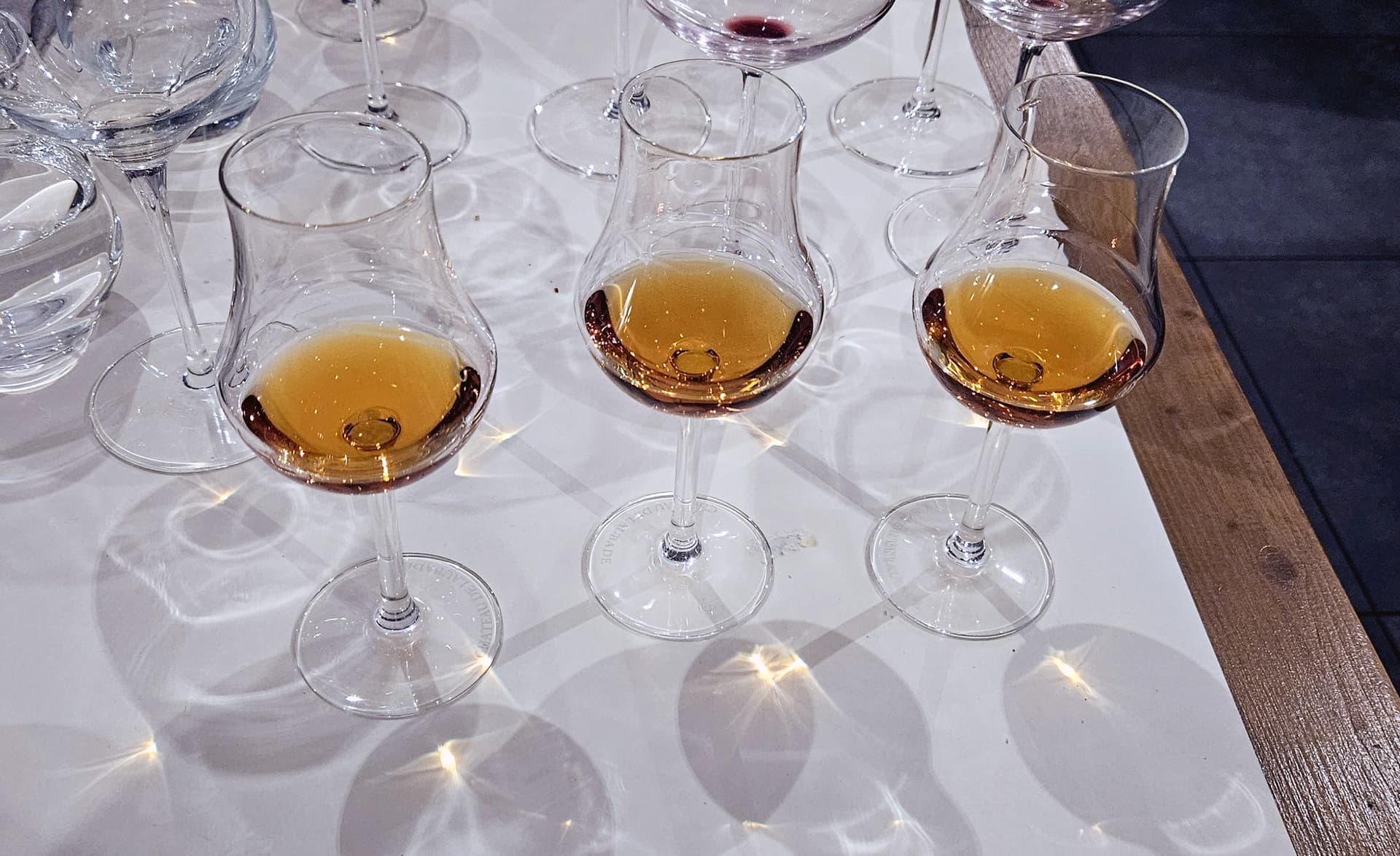
Naturally we had to close the night with a digestif, which turned out to be Armagnac this time. Since the restaurant had a rather sizeable selection of all kinds of spirits, we could go with our birthyear Armagnacs - or at least something from the neighboring year!
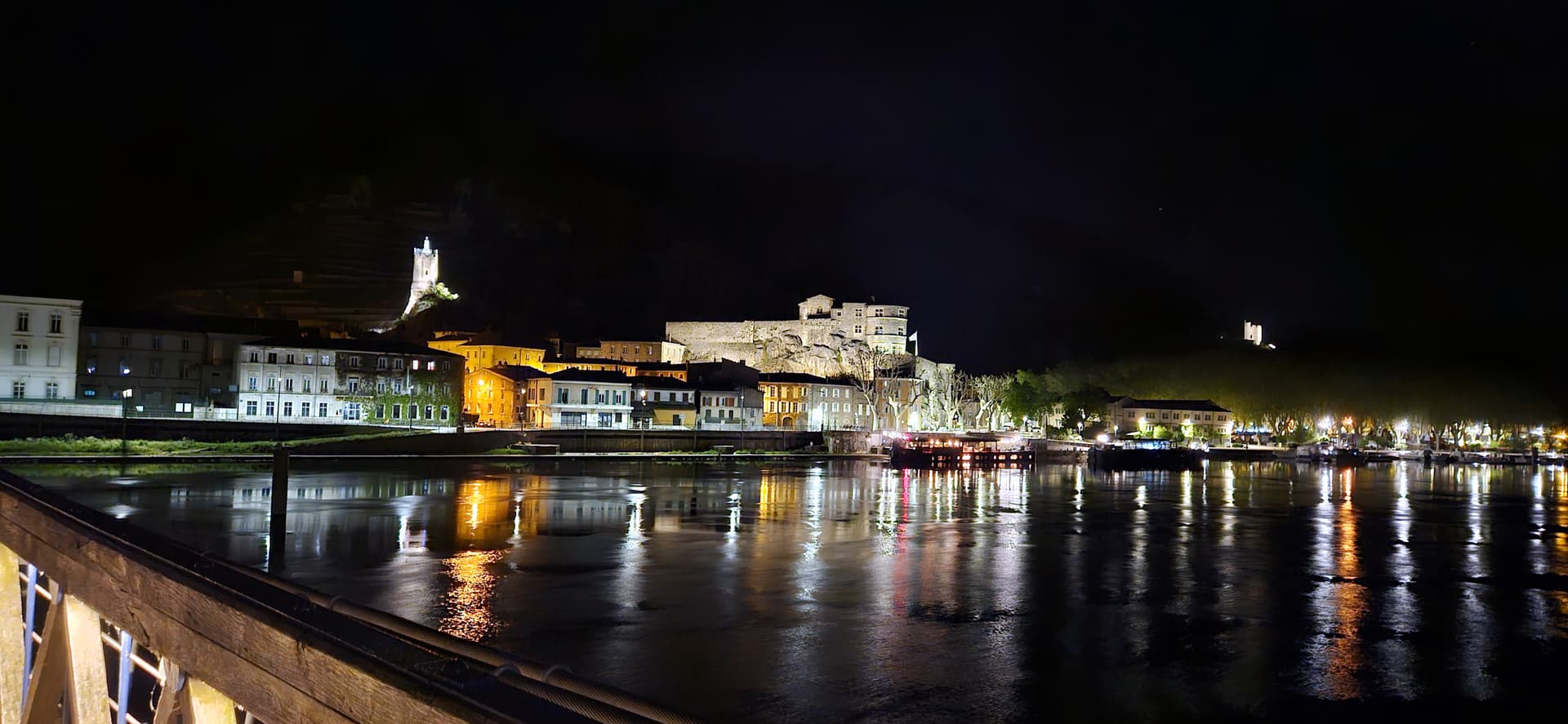
Tournon by night, as seen from the Tain side.