Otto's Burgundy & Rhône travelogue / winery visits

Day 2 cont’d

After our visit to Domaine Dujac we still had one winery visit left: Benoît Moreau.

Before our visit I had tasted a couple of Moreau’s wines; I thought they were good, but nothing particularly mindblowing. Just balanced, correct white Burgundies. However, I had also read from several different sources that Moreau is hands down one of the greatest new names in the game, so I thought there must be something I just hadn’t witnessed yet.

And when I asked @William_Kelley which producers we should try to visit on our trip, not only did he recommend visiting Moreau, but he actually helped us to make the visit by contacting Moreau directly! So a great big thanks to WK for making this happen!

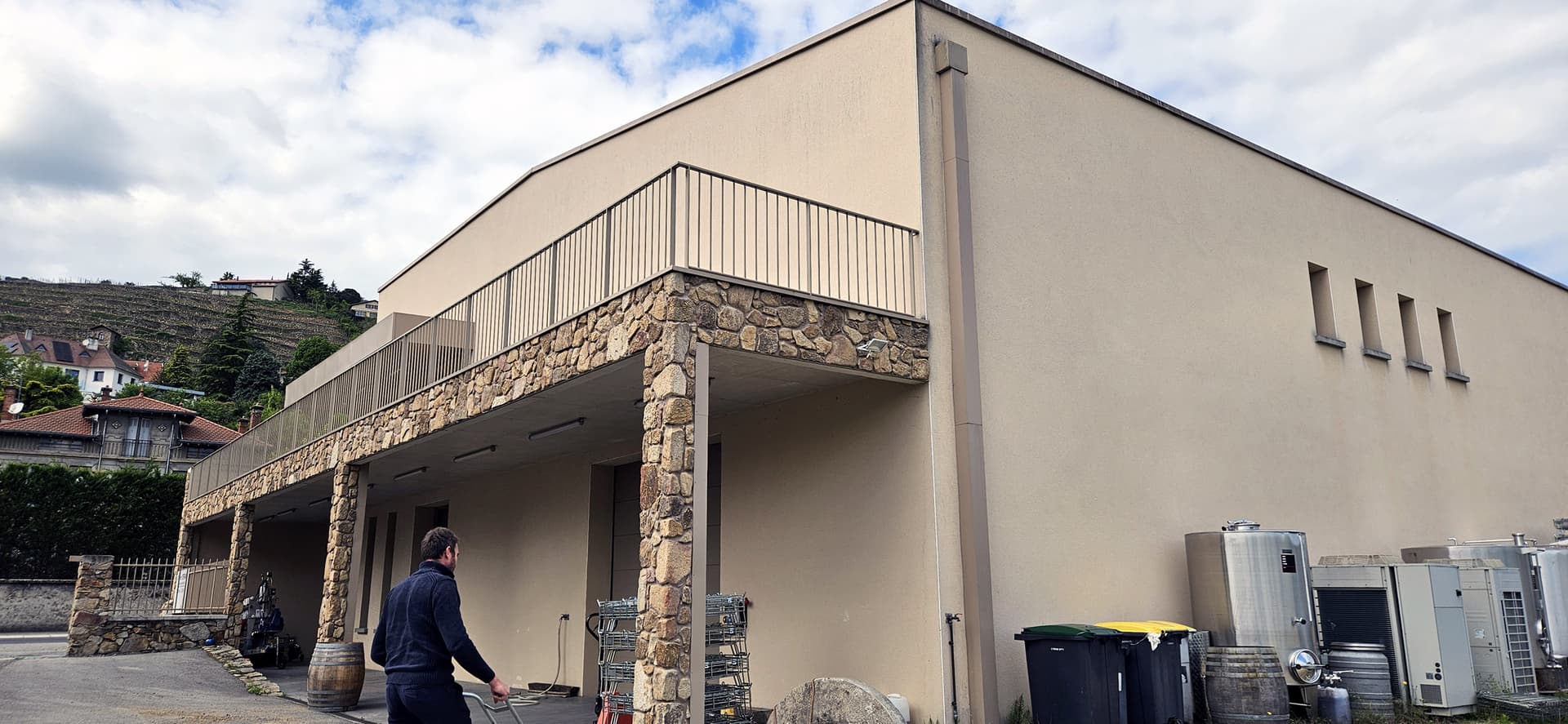
Anyways, from Morey-Saint-Denis we drove to Meursault and quickly checked in at our motel - located on the outskirts of the aforementioned village - and then continued on our way to Moreau’s winery, which is technically located in Chassagne-Montrachet, but is actually located in a rather un-sexy industrial area - along with neighbors like Pierre-Yves Colin-Morey, Caroline Morey and Domaine Bouard-Bonnefoy, plus a bunch of winemaking supply stores - sprawling just a stone’s throw away from the communes of Corpeau and Chagny and the vineyards of Chassagne-Montrachet.


After having just visited two estates where the cellars are located in old houses in the middle of historic villages, I must say that the contrast between them and the shiny, cold and rather industrial winery facilities of Moreau couldn’t be greater!

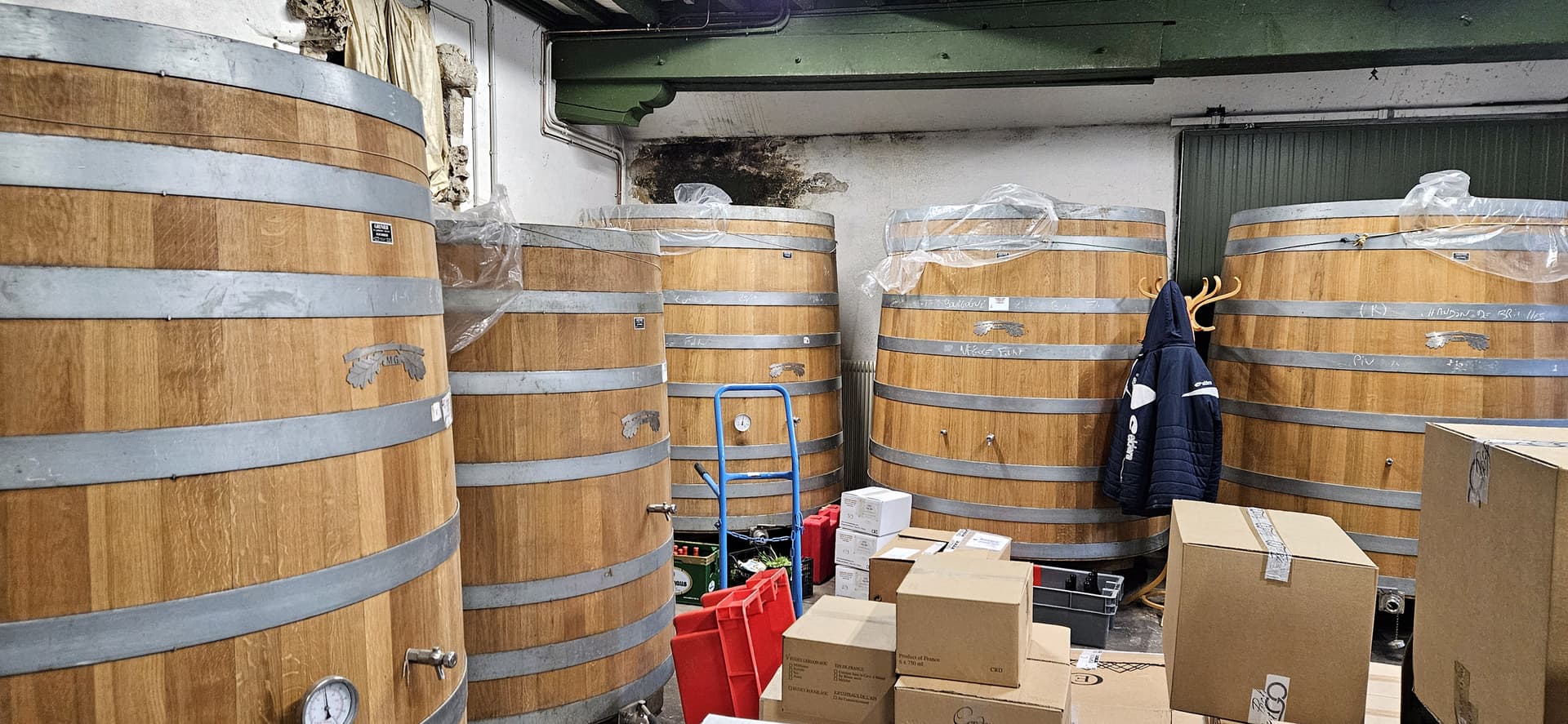
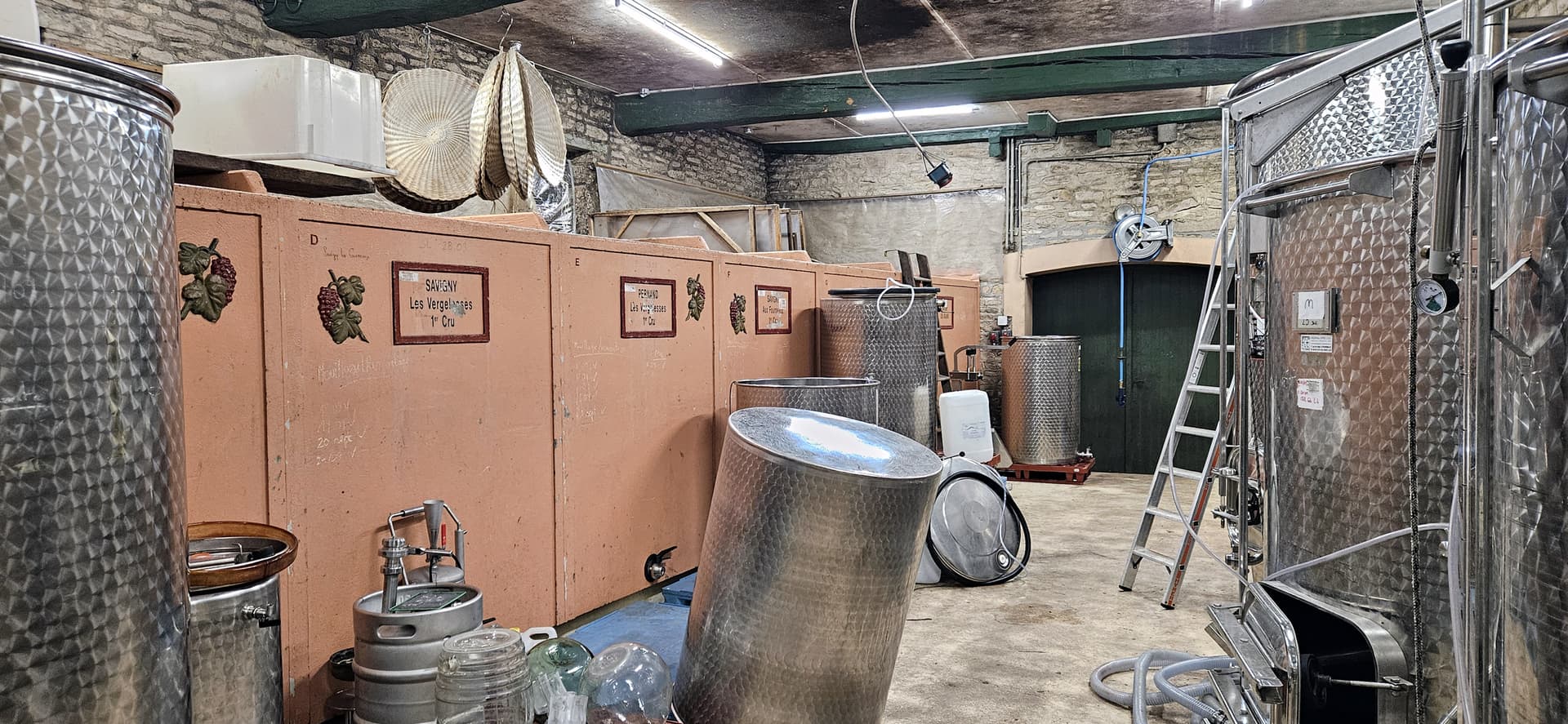
So, after we had parked our car in front of the winery, Benoît emerged from the winery and introduced himself to us. When we commented about the differences of the wineries we had seen that day, Benoît told us that his winery was finished quite recently, in 2021, and it was built according to his designs and specifications. The idea was not to make a winery that looks impressive (after all, it is located in an industrial area to begin with!), but a building that is constructed solely for the purpose of winemaking. Everything imaginable seemed to have been taken into account; the facilities are obviously designed to be optimal for handling the grapes, moving and operating all the winemaking equipment, transferring the wine into the underground cellar with the help of gravity and making sure that all the operations can be done as effectively and smoothly as possible.
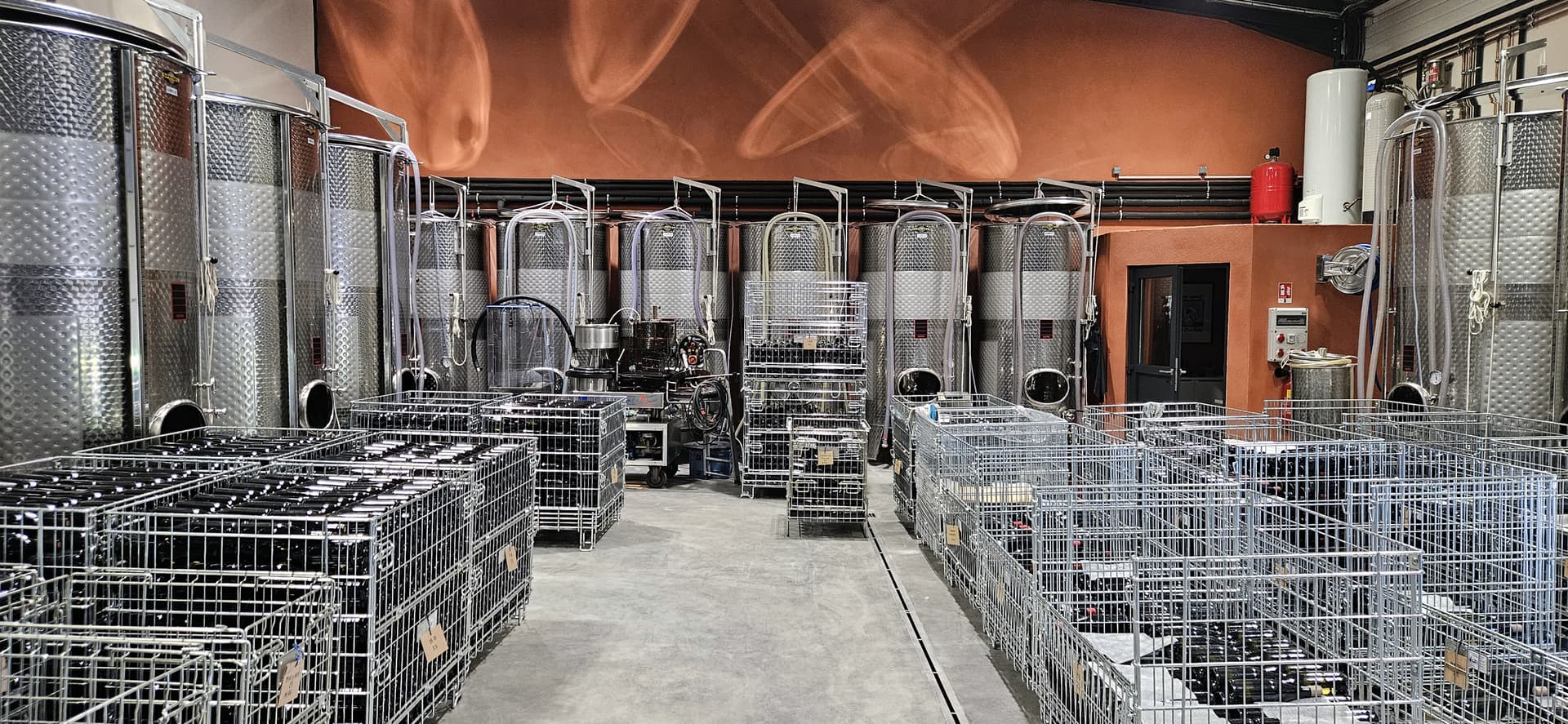

The ground floor, where the stainless steel fermentation tanks and bottled wines are located.

Since Domaine Benoît Moreau is such a new name, a small introduction might be in place for those who don’t follow Burgundy as keenly as some.

  • Domaine Bernard Moreau et Fils has been a household name for prime Chassagne-Montrachet for a very long time - the history of the estate goes back all the way to 1809. The estate as we know it today was operated by the 4th generation of Moreaus, Benoît and his older brother Alex Moreau, since 1999.
  • However, instead of continuing to work at the family domaine, Benoît had been ruminating on the idea of running a winery of his own for some time. Finally, in November 2020 the Bernard Moreau domaine was split between the brothers and Benoît received approximately four hectares of the domaine’s vineyard holdings - most of which in prime locations in and around Chassagne-Montrachet.
  • Although Benoît Moreau’s first vintage made with estate fruit from his own vineyards was the vintage following the split, 2021, his debut vintage was actually 2020; to help Moreau get things going from the very start, his friends sold him some 2020 wines that he could vinify and sell under his name.
  • Today approximately 95% of the production is from estate fruit, but Moreau supplements his production by purchasing tiny amounts of fruit from quality-conscious growers. The estate size is 4,5 hectares (11,5 acres) and while the annual production can fluctuate greatly from one year to another, the average annual production is around 25,000 bottles. Most of the production is white, but Moreau produces also two red cuvées.
  • The vines are farmed biodynamically and Moreau vinifies all his parcels separately. He also is a strong believer in terroir, choosing to produce and bottle tiny amounts of lieux-dits within certain Crus instead of blending them together and bottling them under their better-known 1er Cru vineyard name.
  • All the wines are fermented spontaneously and they go through spontaneous MLF. The red are vinified with minimal extraction, employing delicate infusion techniques instead. Moreau believes his wines benefit from extended oak aging, but to minimize the oak impact, he renews his barrels only when necessary - typically 0-10% of the capacity annually. Most of the wines age for 18 to 24 months in oak barrels ranging from traditional 228-liter pièces to 500-liter demi-muids.
  • Beginning with his very first vintage, Moreau’s wines have been very sought-after and many of them sell out quite quickly. Today approximately 50% of his production is exported and 50% sold in France.
  • In addition to his Chassagne-Montrachet wines, Benoît Moreau has also a tiny project in Beaujolais, where he makes a few red wines from some very old vineyards in Morgon and Chiroubles.
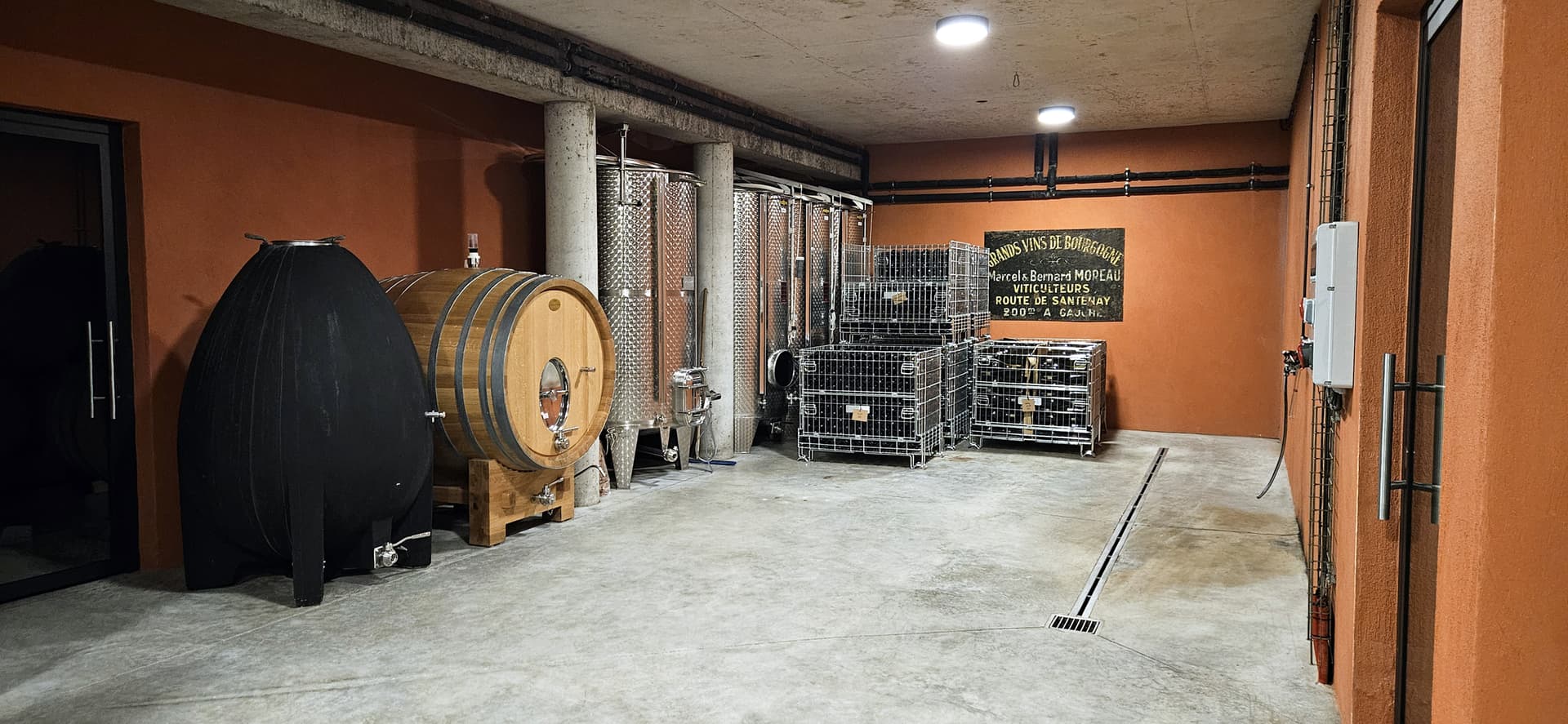

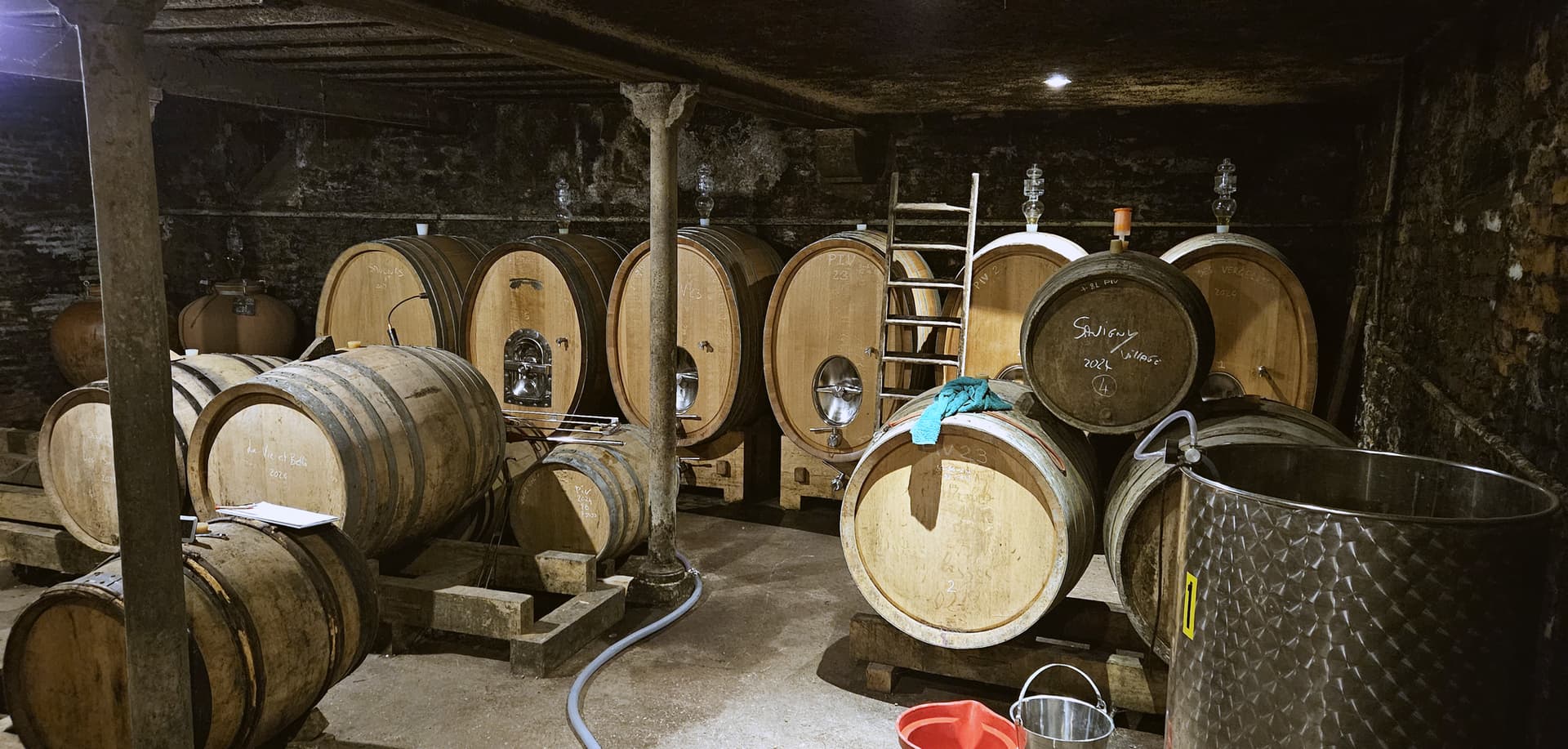
The underground floor foyer…
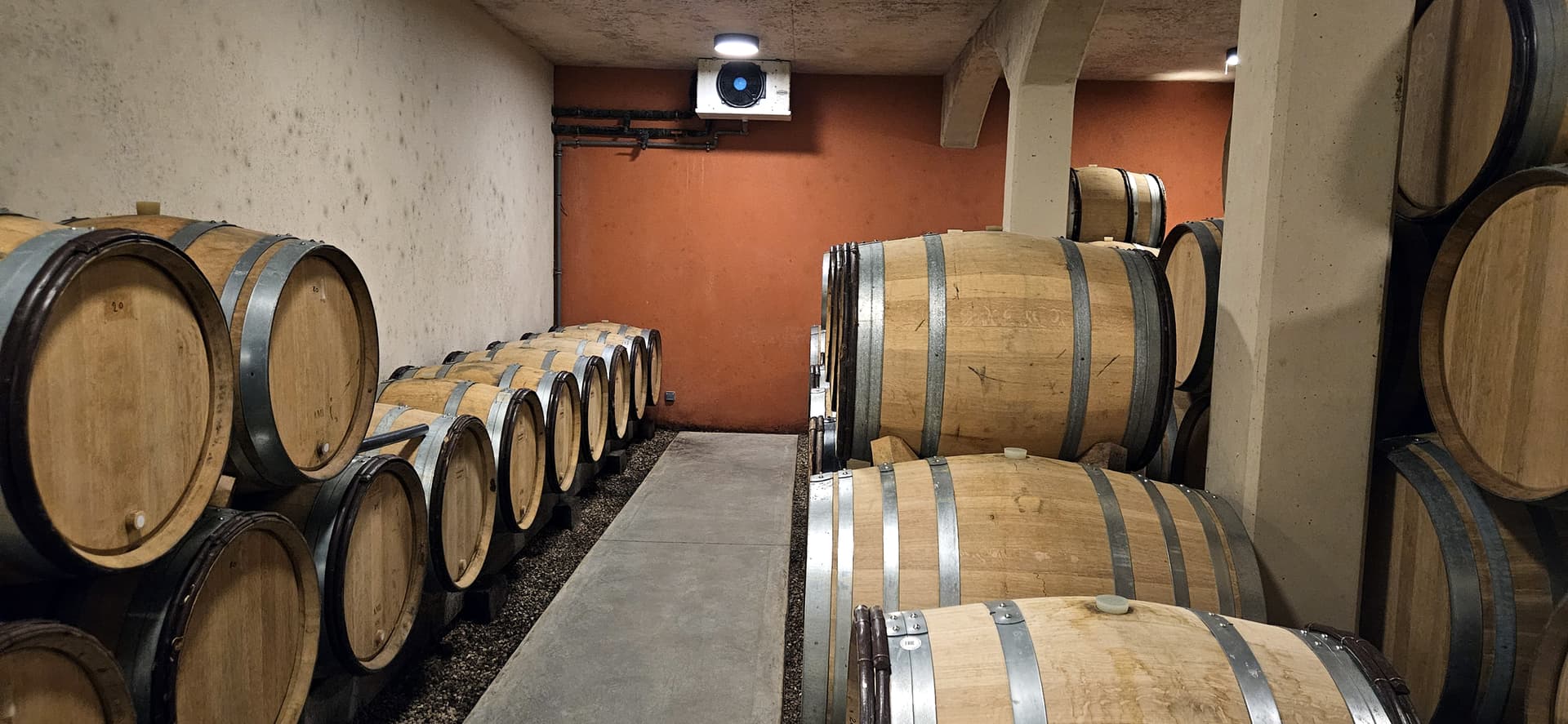

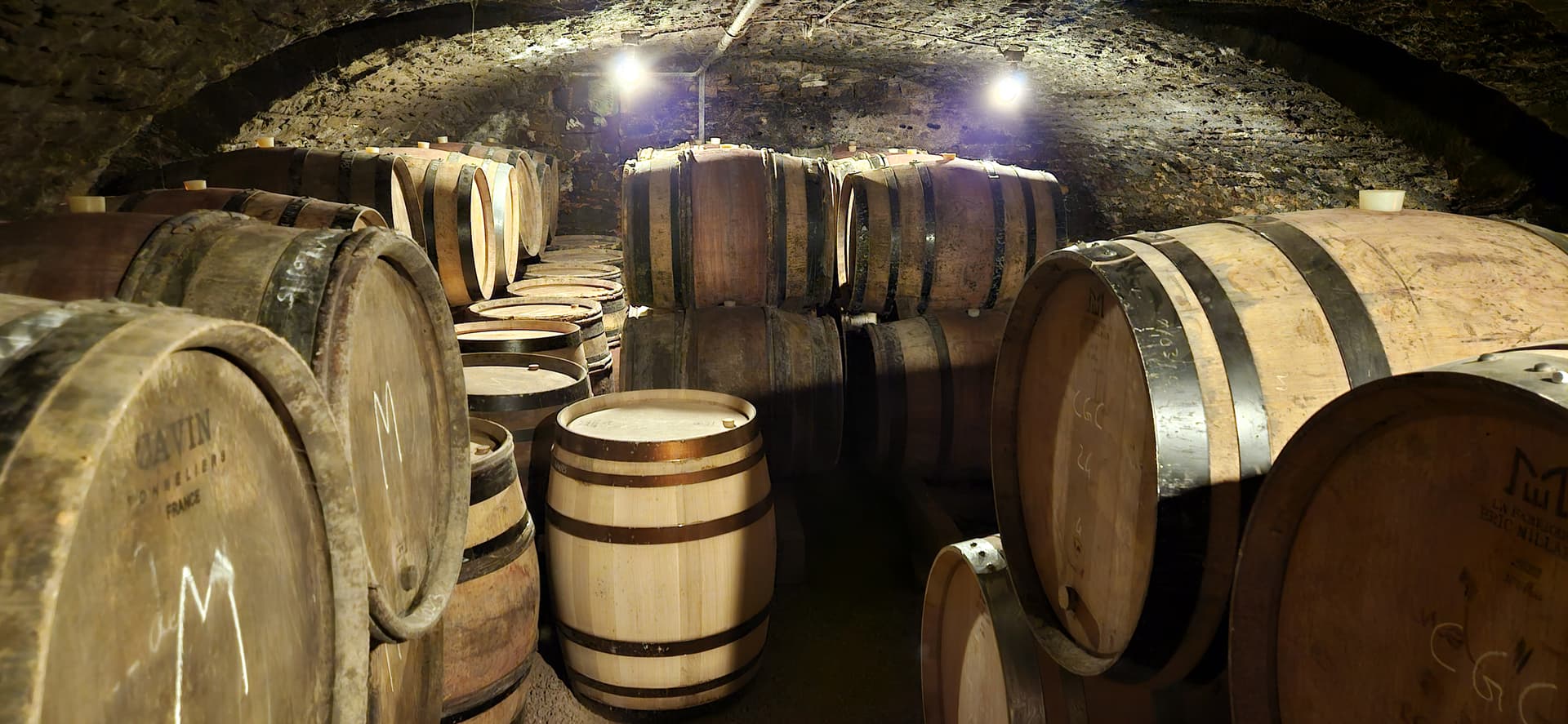
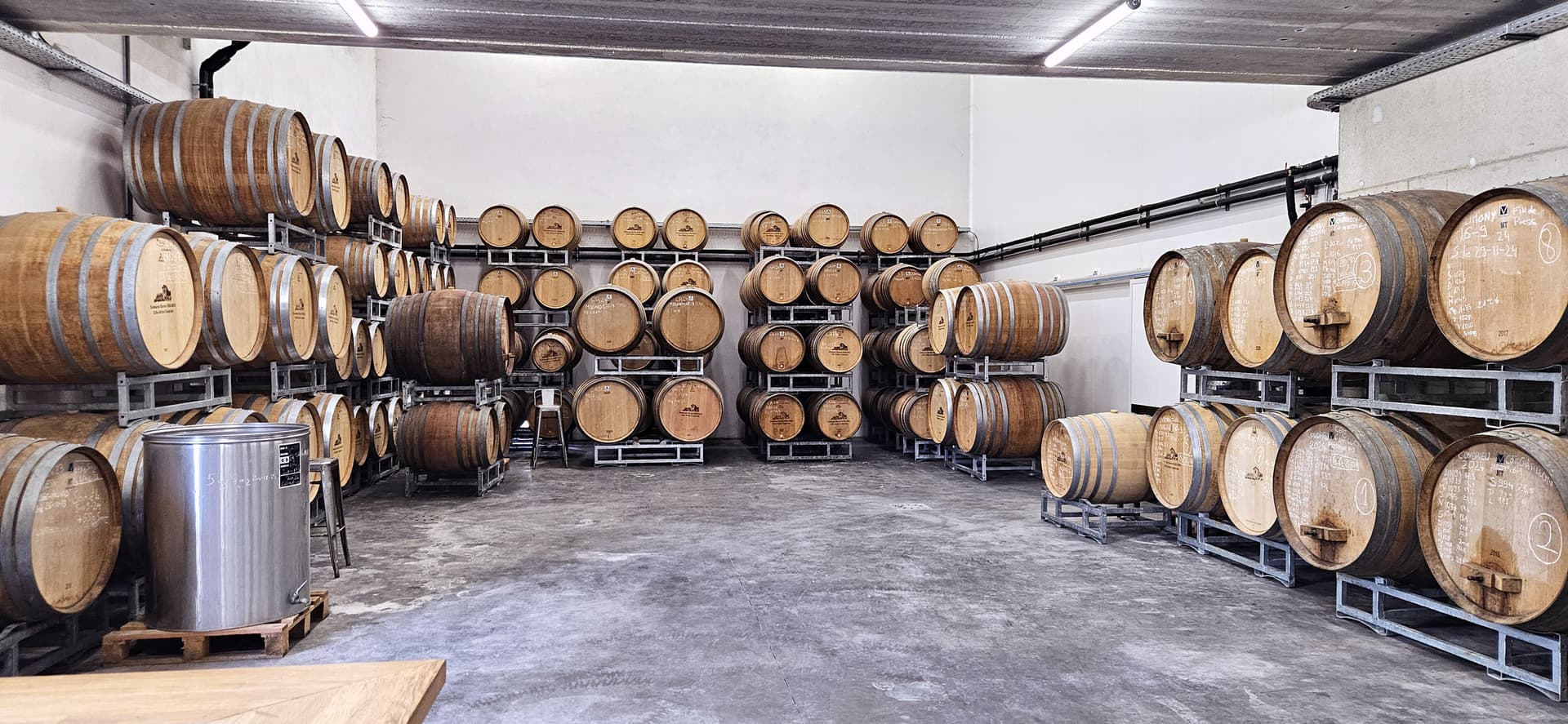
…and the barrel storage rooms.

After showing us around a little bit, explaining the functions of his winery facilities and winemaking philosophy, Benoît took us to the underground barrel storage to show us around a little bit more and to taste a selection of his freshly bottled wines. And even though the two of the first wines we tasted - Bourgogne Blanc and Chassagne-Montrachet - didn’t wow me this time either, I must admit that the single-vineyard and lieux-dits really are something. They were more or less constantly among the best young whites we tasted on this trip and some of the most thrilling young white Burgs I’ve had in a long while! While they do speak of Chassagne-Montrachet with their fruit expression, they talk more in the dialect that a Chablis fan can understand: the wines are taut, mineral and electric with almost no oak impact to speak of, and often a tremendous amount of acidity that makes the wine feel remarkably spry and structured! These wines are not about fruit, they are about everything that is around the fruit. It seemed that these wines hit one of us like a freight train because he was more or less stunned by the wines after we left the winery, exclaiming that Benoît Moreau must be the greatest white wine maker in Burgundy today. I don’t know, having tasted these wines, he might be even right with his assessment.


The maestro himself, presenting his wines to us.

If you want to read all the juicy details, here are my notes on all the wines we tasted.

  • 2023 Benoit Moreau Chardonnay Bourgogne Blanc - France, Burgundy, Bourgogne Blanc (22.4.2025)
    100% biodynamically farmed Chardonnay from three parcels in Chassagne-Montrachet, where the average vine age is 20 years. Fermented spontaneously. Aged for approximately a year in used oak.

    Yellow-green color. The nose feels very fresh and even surprisingly herby with aromas of chamomile and chopped green herbs, some lemony citrus tones, a little bit of ripe Golden Delicious apple, light leesy nuances and a herby-floral hint of noble hops. The wine feels somewhat ripe on the palate with a medium body and flavors of ripe red apple, some mineral notes of wet rocks, a little bit of zesty lemony, light herby tones, a hint of leesy creaminess and a touch of pomelo. The overall feel is quite rich and textural, but the high acidity keeps the overall feel fresh and balanced. The finish is ripe, juicy and rather long with flavors of spicy red apple, some leesy tones, light herby noble hop notes, a little bit of zesty citrus fruits, a floral hint of lavender and a touch of stony minerality.

    A pleasant and balanced but also somewhat awkward Bourgogne Blanc (well, technically a demoted Chassagne-Montrachet) where there's some rather ripe tones and then some surprisingly green-toned herby notes that contrast each other greatly. The wine isn't vegetal or under-ripe by any means, but it feels as though some of the fruit that went into the wine was barely ripe whereas some fruit had attained a generous level of ripeness. This was enjoyable, but didn't really wow me and was nowhere near the level of all the other Moreau wines we tasted at the domaine. Usually the entry-level whites are the calling cards of the domaine, but in the case of Moreau, I'd say go one notch higher from here - that's where the real sweet spot is.
    (89 points)

  • 2023 Benoit Moreau Chassagne-Montrachet - France, Burgundy, Côte de Beaune, Chassagne-Montrachet (22.4.2025)
    100% biodynamically farmed Chardonnay from eight different parcels around Chassagne-Montrachet. Fermented spontaneously, aged for 18 months in predominantly old oak barrels.

    Pale lemon-yellow color. The nose feels clean, fruit-driven and a bit linear with aromas of ripe red apple, some cantaloupe, light leesy tones and a mineral hint of wet rocks. The wine feels broad, well-delineated and very slightly spritzy on the palate - there still seems to be a tiny bit of dissolved CO2 - with a medium-to-moderately full body and juicy flavors of ripe Golden Delicious apple, some leesy tones, light mineral notes of chalk dust and wet stones, a little bit of savory and slightly salty umami, a floral hint of apple blossom and a touch of grapefruit. The rather high acidity lends good sense of balance and firmness to the wine. The finish is broad, ripe and youthful with a long, fresh aftertaste of sweet Golden Delicious apple, some leesy tones, a little bit of stony minerality, light grapefruit tones, a floral hint of apple blossom and a touch of chalk dust.

    Although still a very youthful and maybe a bit awkward Chassagne-Montrachet, this was still a noticeable step up from the 2023 Bourgogne Blanc (which is also 100% Chassagne fruit). There are no herby notes that made the Bourgogne Blanc feel a bit odd and the overall feel packs a bit more depth and substance. There's still some dissolved CO2 that helps to protect the wine from oxidation, but also makes the wine feel a bit tingly - however, this is a feature that is going to disappear with a few additional years of aging. At the moment the wine is still a little bit all over the place, but it shows good promise and it seems to be evolving in a direction I enjoy. I'd love to re-visit this wine once it is not a baby anymore!
    (91 points)

  • 2023 Benoit Moreau Chassagne-Montrachet Les Charrieres - France, Burgundy, Côte de Beaune, Chassagne-Montrachet (22.4.2025)
    100% biodynamically farmed Chardonnay from the old-vine (40-50 yo) parcel in the upper part of lieu-dit Les Charrières in Chassagne-Montrachet. Fermented spontaneously, aged for 18 months in predominantly old oak barrels.

    Pale lime-green color. The nose feels very fresh and even a bit herby with cool, nuanced aromas of Granny Smith apple, some Asian pear, a little bit of sweeter yellow fruit, light mineral notes of stone dust and a hint of creamy oak. The wine feels broad, textural and somewhat concentrated on the palate with impressive sense of breadth, moderately full body and youthful flavors of Granny Smith apple, some Asian pear tones, a little bit of chalk dust, light juicy notes of cantaloupe, a hint of creaminess and a touch of stony minerality. The high acidity lends great sense of structure and intensity to the wine. The finish is long, mineral and palate-cleansing with flavors of ripe Granny Smith apple and fresh Asian pear, some chalky mineral tones, a little bit of creamy oak, light herby nuances and a hint of cantaloupe.

    This was a minor yet still noticeably step up from Moreau's village-level Chassagne-Montrachet; a very stylish, clean and textural single-vineyard Chassagne-Montrachet that shows lovely sense of breadth and concentration without compromising its freshness and precision one little bit. There was a tiny bit of that herby character that was also present in the 2023 Bourgogne Blanc, but while it felt maybe a little bit out of place in that wine, it didn't stick out one bit in this bottling. The overall feel is still super youthful and still some ways away from its optimal drinking window, but it is obvious the wine is showing great promise already. A fine wine with lots of upside.
    (92 points)

  • 2023 Benoit Moreau Chassagne-Montrachet 1er Cru La Maltroie - France, Burgundy, Côte de Beaune, Chassagne-Montrachet 1er Cru (22.4.2025)
    100% biodynamically farmed Chardonnay from two parcels in 1er Cru La Maltroie in Chassagne-Montrachet, one with deep clay soils and one with more limestone. Fermented spontaneously, aged for 18 months in predominantly old oak barrels.

    Pale lime-green color. The nose feels fresh, maybe a little bit closed but still very bright and focused with aromas of fresh white fruits, some leesy tones, a little bit of spicy red apple, light sweeter nuances of cantaloupe and a hint of steely minerality. The wine feels textural yet remarkably fresh and very electric on the palate with a medium body and intense flavors of crunchy white fruits and creamy oak, some leesy tones, a little bit of salty liquorice powder, light smoky nuances, sharp hints of tart Granny Smith apple and lemony citrus fruit and a hint of ripe grapefruit. The racy acidity lends a tremendous amount on energy and structure to the wine. The finish is crisp, long and acid-driven with an intense aftertaste of lemony citrus fruits and chalky minerality, some smoky tones, a little bit of fresh Golden Delicious apple, light sweeter notes of cantaloupe, a hint of creamy oak and a touch of leesy richness.

    This was a Chablis lover's Chassagne if there ever was one! Although the fruit profile is maybe a bit more Côte de Beaune than Chablis, the combination of bracing acidity, cool minerality and almost complete absence of any oak notes is something that is guaranteed to speak to any fan of classic, zippy Chablis. Even though the wine seems to be all about acidity and minerality on the surface, the fruit department still packs enough intensity so that it is never relegated to play second fiddle; the balance here is just on point. With this much acidity, the wine might come across as too lean or shrill to people who want their white Burgundies with ripe fruit and buttery oak, but to me, this is an absolutely fantastic wine. Still super young and very high-strung, it is obvious that the wine is way too young at the moment, but it is nevertheless a fantastic wine in its own right and it shows a tremendous amount of potential for future development. Highly recommended.
    (94 points)

  • 2023 Benoit Moreau Chassagne-Montrachet 1er Cru Les Chenevottes - France, Burgundy, Côte de Beaune, Chassagne-Montrachet 1er Cru (22.4.2025)
    100% biodynamically farmed Chardonnay from 1er Cru Les Chenevottes in Chassagne-Montrachet. Fermented spontaneously, aged for 18 months in predominantly old oak barrels.

    Pale yellow-green color. The nose feels rich, creamy and slightly sweet-toned with aromas of ripe Golden Delicious apple, some woody oak tones, a little bit of leesy creaminess, light cantaloupe nuances and a floral hint of apple blossom. The wine feels ripe, broad and pretty textural on the palate with a medium body and dry, bold and somewhat concentrated flavors of ripe Granny Smith apple, some sweeter notes of cantaloupe, light mineral notes of chalk dust and salinity, a little bit of woody spice, a floral hint of apple blossom and a touch of ripe grapefruit. The high acidity makes the wine feel firm, balanced and pretty structured. The finish is crisp, long and lively with a somewhat concentrated aftertaste of lemony citrus fruits and cantaloupe, some leesy notes of creaminess, a little bit of smoky reduction, light woody notes of savory oak spice, a hint of saline minerality and a touch of salty liquorice powder.

    A ripe, textural and somewhat concentrated but also very firm and balanced 1er Cru Chassagne-Montrachet where the emphasis is on the vibrant fruit and chiselled minerality, not on oaky tones. The wine is still very youthful and maybe a bit linear, but with this much fruit, concentration and structure, I'm positive this wine will continue to age, evolve and improve for a very long time. A very promising and thoroughly enjoyable white Burg. Highly recommended.
    (93 points)

  • 2023 Benoit Moreau Chassagne-Montrachet 1er Cru Les Fairendes - France, Burgundy, Côte de Beaune, Chassagne-Montrachet 1er Cru (22.4.2025)
    100% biodynamically farmed Chardonnay from at least 45 yo vines in Les Fairendes, a climat in 1er Cru Morgeot in Chassagne-Montrachet with deep red clay soils and big limestones. Fermented spontaneously, aged for 18 months in predominantly old oak barrels.

    Pale greenish color. The nose feels fresh, clean and precise with aromas of assorted, freshly picked white fruits, some leesy tones, a little bit of zesty citrus fruit, light mineral notes of chalk dust, a hint of juicy stone fruits and a faint touch of creamy oak. The wine feels quite broad and textural on the palate with a fuller body than with other 2023 Benoît Moreau wines we tasted and layered flavors of zesty citrus fruits and fresh white peach, some chalky mineral tones, a little bit of juicy Fuji apple, light apricot tones, a hint of creamy oak and a touch of honeyed richness. The rather high acidity keeps the wine nicely in balance and the overall feel is suave and harmonious. The finish is long, broad and quite ripe with a juicy aftertaste of cantaloupe and honeydew melon, some spicy mineral notes, a little bit of fresh white peach and crunchy Golden Delicious apple, light creamy nuances and a hint of honeyed richness.

    To me, this bottling seemed probably the most ripe wine of the 2023s we tasted at Benoît Moreau - although not necessary bigger than the others, the wine seemed nevertheless somewhat broader and more textural in style with maybe a tiny bit less acidity along with subtly sweeter-toned fruit flavors. Yet still the wine is impressive and very serious with great depth of flavor, good sense of structure and wonderfully harmonious overall feel. Based on its quite open and expressive nature, I feel this wine might arrive in its optimal drinking window a bit earlier than the other Moreau 1er Crus, and consequently the wine might peak sooner than the others as well. While not quite at the level of the best 1er Crus, this was still a splendid and eminently delicious white Burg in its own right. Recommended.
    (93 points)

  • 2023 Benoit Moreau Chassagne-Montrachet 1er Cru La Cardeuse - France, Burgundy, Côte de Beaune, Chassagne-Montrachet 1er Cru (22.4.2025)
    100% biodynamically farmed Chardonnay from La Cardeuse, a tiny climat in 1er Cru Morgeot in Chassagne-Montrachet. This wine is sometimes called as a Monopole bottling, but that is incorrect; La Cardeuse used to be a monopole of Bernard Moreau, but today both Benoît and his brother Alex vinify grapes from the climat. However, Benoît Moreau is the only one producing white La Cardeuse, since in the past Bernard Moreau made only a red La Cardeuse and all the Chardonnay from La Cardeuse was blended with Chardonnay from Les Fairendes and bottled as 1er Cru Morgeot. Fermented spontaneously, aged for 18 months in predominantly old oak 400-liter barrels. Annual production is 1 to 2 barrels, ie. ranging from approximately 400 to 900 bottles.

    Pale and subtly hazy lime-green color. The nose feels herby, leesy and subtly reductive with zippy aromas of citrus fruits and crunchy Golden Delicious apple, some steely mineral notes, a little bit of spicy wood, light smoky nuances of reduction and a hint of creamy oak. The wine feels juicy and quite textural yet remarkably fresh and precise on the palate with a medium-to-moderately full body and intense flavors of ripe white peach and stony minerality, some fresh apricot tones, a little bit of savory spice, light sweeter nuances of honeydew melon, hints of creamy oak and woody old oak and a touch of incisive steely character. The brisk acidity makes the wine feel very precise, structured and lively. The finish is focused, lengthy and rich yet very firm with an intense aftertaste of honeydew melon, some fresh apricot tones, a little bit of steely minerality, light creamy oak notes, a hint of zesty lemon and a faint smoky touch of reduction.

    A wonderfully focused and immensely promising 1er Cru Chassagne-Montrachet. Tasting the sense of precision, minerality and intensity here - it all intermingling with the ripe and subtly sweet-toned fruit so seamlessly - I just can't help but wonder why they didn't vinify this as a single-vineyard bottling at Bernard Moreau. Well, I guess it might be too much work just to go through the process for only two barrels of wine? It's a boon that we have Benoît Moreau who is willing to do all the hard work and vinify all his climats separately instead of blending them into catch-all cuvées! This wine is still very youthful and somewhat nervous, but fortunately not too primary. With its sense of ripeness and breadth the wine is already starting to drink quite wonderfully right now, but I feel this wine is going to be a real banger once it reaches its full maturity. As this is only the 3rd vintage of white La Cardeuse ever, it is hard to say how long that will take - and how the wine is going to evolve - but I believe this wine is going to turn even more impressive as it ages. Very highly recommended.
    (94 points)

  • 2023 Benoit Moreau Chassagne-Montrachet 1er Cru Grandes Ruchottes - France, Burgundy, Côte de Beaune, Chassagne-Montrachet 1er Cru (22.4.2025)
    100% biodynamically farmed Chardonnay from parcels in Grandes Ruchottes, a climat in 1er Cru La Grande Montagne in Chassagne-Montrachet. Most of the vines are very old (planted in 1939) but some of the fruit comes from vines planted in 2019. Fermented spontaneously, aged for 18 months in predominantly old oak barrels.

    Youthful, luminous lime-green color. The nose feels very focused but also somewhat reductive and extremely youthful with aromas of PYCM-like smoky reduction, some fresh pineapple tones, a little bit of salty liquorice powder, light crunchy notes of peachy stone fruit, a hint of zesty minerality and a touch of savory wood spice. The wine feels firm, crisp and quite powerful on the palate with a moderately full body and concentrated flavors of honeydew melon and crunchy Golden Delicious apple, some stony mineral notes, a little bit of fresh pineapple, light reductive notes of gunpowder, a hint of tangy salinity and a faint woody touch of savory oak spice. The level of dry extract seems to be pretty high, lending the wine a very chewy, mineral and punchy feel. The brisk, racy acidity lends a tremendous amount of freshness and structure to the wine. The finish is crisp, long and quite concentrated with intense flavors of lemony citrus fruits and leesy creaminess, some sharp Granny Smith apple tones, a little bit of grilled pineapple, light saline mineral notes, a hint of woody oak spice and a reductive touch of flint smoke.

    An outstanding, remarkably focused and very concentrated wine that seems to be packed with power and dry extract, yet still coming across as very racy, electric and even relatively light on its feet. Floats like a butterfly, stings like a bee. Moreau himself described this as his own "Grand Cru" - and rightfully so. This might be a 1er Cru in technical terms, but this can put many a Grand Cru in its shadow. And true to the Moreau style, even if the wine is powerful and concentrated, this wine still might speak more to the fans of Chablis rather than classic Côte de Beaune - the wine is all about minerality, electric acidity and brisk fruit; not about fruit concentration and oak influence. Although the wine is almost painfully young now, at the age of less than two years, it is still an eminently delicious and thoroughly impressive by any standards. Perhaps even the best white wine we tasted on our trip to France? This is helluva banger already now and I can't see it going anywhere but up over the next decade or two. Very highly recommended.
    (95 points)

  • 2023 Benoit Moreau Chassagne-Montrachet Rouge Vieilles Vignes - France, Burgundy, Côte de Beaune, Chassagne-Montrachet (22.4.2025)
    100% biodynamically farmed Pinot Noir from 50--55 years old vines in Chassagne Montrachet. 80% of the grapes were destemmed, 20% vinified in whole bunches. Fermented spontaneously, aged for 16 months in oak barrels (15% new). Annual production is approximately 2500 bottles.

    Youthful, translucent cherry-red color. The nose feels dry, clean and spicy with aromas of cherries and crunchy cranberries, some heady floral aromas of violets and orange blossom, light brambly notes of raspberries, a little bit of savory wood spice, a hint of wild lifted character, a faint zesty touch of Campari and a whiff of licorice root. The wine feels dry, firm and pretty crunchy on the palate with a medium body and clean flavors of tart lingonberries and brambly forest fruits, some sweeter notes of black cherries, light stony mineral notes, a little bit of crunchy cranberry, savory hints of licorice root and savory wood spice and a touch of sour cherry bitterness. The wine is wonderfully high in acidity with medium-to-moderately grippy tannins. The finish is dry, moderately grippy and surprisingly robust with a long, savory aftertaste of ripe black raspberries and juicy black cherries, some crunchy notes of red plums, light gravelly mineral notes, a little bit of earthy and spicy Pinosity, a hint of sour cherry bitterness and a faint woody touch of oak spice.

    For the entry-level red of Benoît Moreau, this is a surprisingly serious effort by all accounts. The wine shows impressive sense of structure and intensity, along with a nice emphasis of freshness over power. The wine is quite similar to many other Côte de Beaune whites - especially from producers known for their white wines; they don't seem to be interested in ripeness, fruity nuances or silky textures. No, their reds quite often seem to be about freshness, minerality and firm structure. Considering how rich and textural Moreau's whites are, this red wine might come across as somewhat angular and extracted in comparison. However, that is also the key - Moreau's wines always seem to be high in dry extract! The wine is very fine-tuned and well-delineated, not aggressively extracted - Moreau's vineyards, viticulture and other winemaking choices just produce fruit high in dry extract, which results in wines that might not be silky smooth. However, I don't consider that as a negative; no, I love wines with character, depth of flavor and great sense of structure - and this wine checks all those boxes. This is a brilliant red Chassagne-Montrachet that is starting to drink marvelously right now, but I have no doubts the wine will continue to evolve and improve at least until its 10th birthday - and most likely for even longer. An outstanding wine - and IMO much better than Moreau's white 2023 Chassagne-Montrachet - highly recommended.
    (93 points)

  • 2023 Benoit Moreau Chassagne-Montrachet 1er Cru La Cardeuse Rouge - France, Burgundy, Côte de Beaune, Chassagne-Montrachet 1er Cru (22.4.2025)
    100% biodynamically farmed Pinot Noir from two parcels of 55 to 65 yo vines totaling to just 0,25 hectares (1 acre) in La Cardeuse, a tiny climat in 1er Cru Morgeot in Chassagne-Montrachet. This wine is sometimes called as a Monopole bottling, but that is incorrect; La Cardeuse used to be a monopole of Bernard Moreau, but today both Benoît and his brother Alex vinify grapes from the climat. Some of the grapes are destemmed, some vinified in whole bunches. Fermented spontaneously, aged for 16 months in oak barrels (15-20% new).

    Youthful, translucent blackish-red color. The nose feels very youthful, quite spicy and somewhat smoky with aromas of brambly black raspberries and floral violet tones, some crunchy red plums, a little bit of pipe tobacco, light ferrous notes of blood, a hint of earthy spice, a reductive touch of gunpowder smoke and a faint whiff of sauvage funk. The wine feels youthful, stern and somewhat concentrated on the palate with a medium body and intense flavors of black cherries and red plums, some licorice root tones, a little bit of stony minerality, light woody notes of savory oak spice, a brambly hint of black raspberry and a smoky touch of reduction. The wine is still rather tightly-knit with its high acidity and ample, rather grippy tannins. The finish is juicy, somewhat concentrated and pretty grippy with an intense aftertaste of sweet black cherries and tart lingonberries, some licorice root tones, a little bit of savory oak spice, light floral notes of violets, crunchy hints of red plums and redcurrants and a touch of earthy Pinosity.

    A firmly structured, tightly-knit and pretty much dead-serious 1er Cru Pinot Noir. The wine feels very similar to the 2023 Chassagne-Montrachet VV bottling, only with a bit more of everything. A very impressive effort by all accounts. I think the Chassagne VV is starting to drink nicely now, but this La Cardeuse version is still quite stern and forbidding now, calling for some additional aging. All in all, this is a terrific, delicious and thoroughly classically styled Côte de Beaune red with tons of upside. Expect the score to go up as the wine ages. Very highly recommended.
    (94 points)

Naturally, after we had tasted the wines we had to ask if there were any available for purchase. Alas, as it had been with all the producers so far, no wines were available. In Burgundy, the numbers of bottles produced are almost invariably very tiny, the wines are sought-after and almost everything is allocated, so an opportunity to buy wines from the domaines seems to a nigh impossible task in Burgundy!

As the clock was ticking and our table reservation at restaurant Au Fil du Clos was approaching, we had to make our leave. We thanked Benoît for his time and the opportunity to taste his amazing wines and left for Meursault.


The vineyards of Meursault and the hill of Le Montmellian.

We dropped off our car at our motel and made the 1,5 km walk along the beautiful vineyards and through the picturesque village of Meursault to the restaurant that was located right across the street from Domaine Roulot.
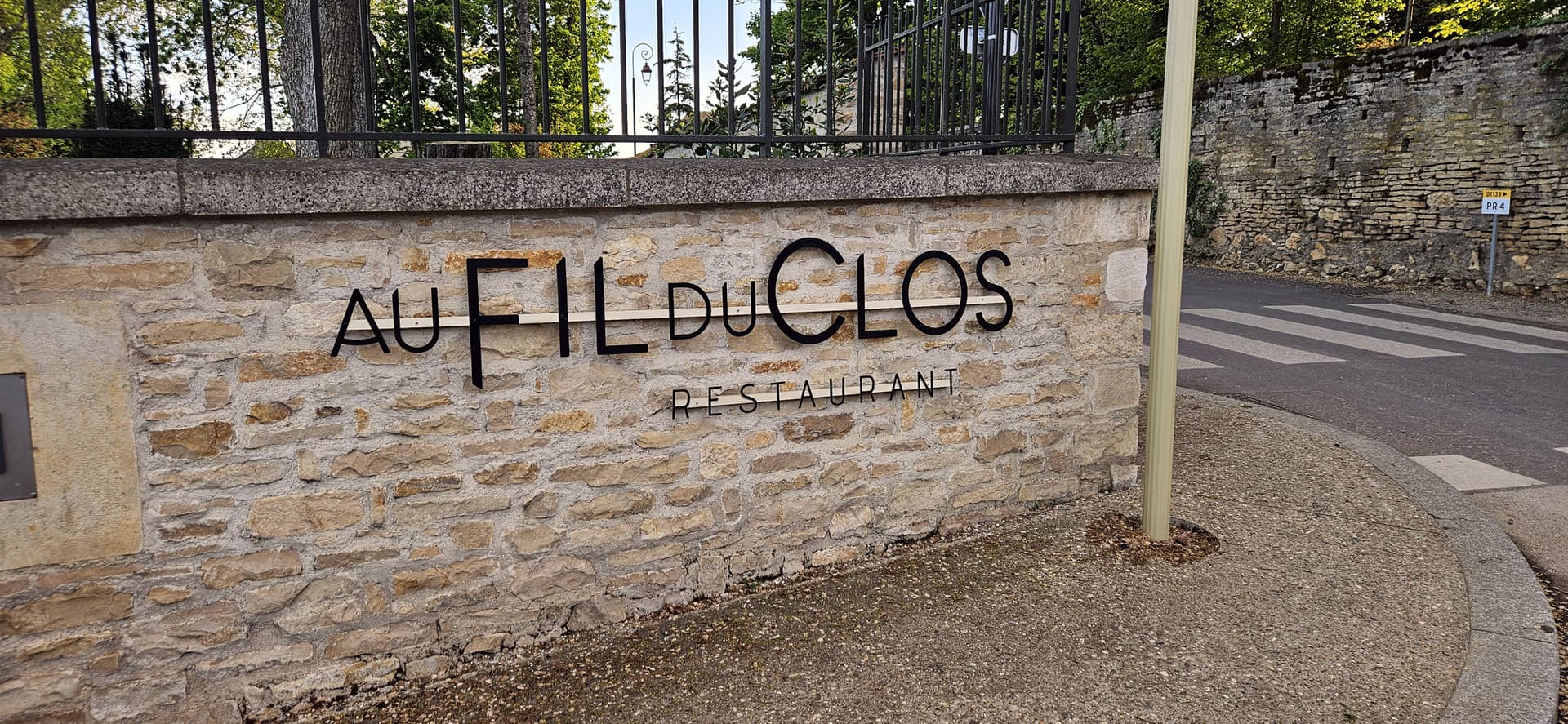
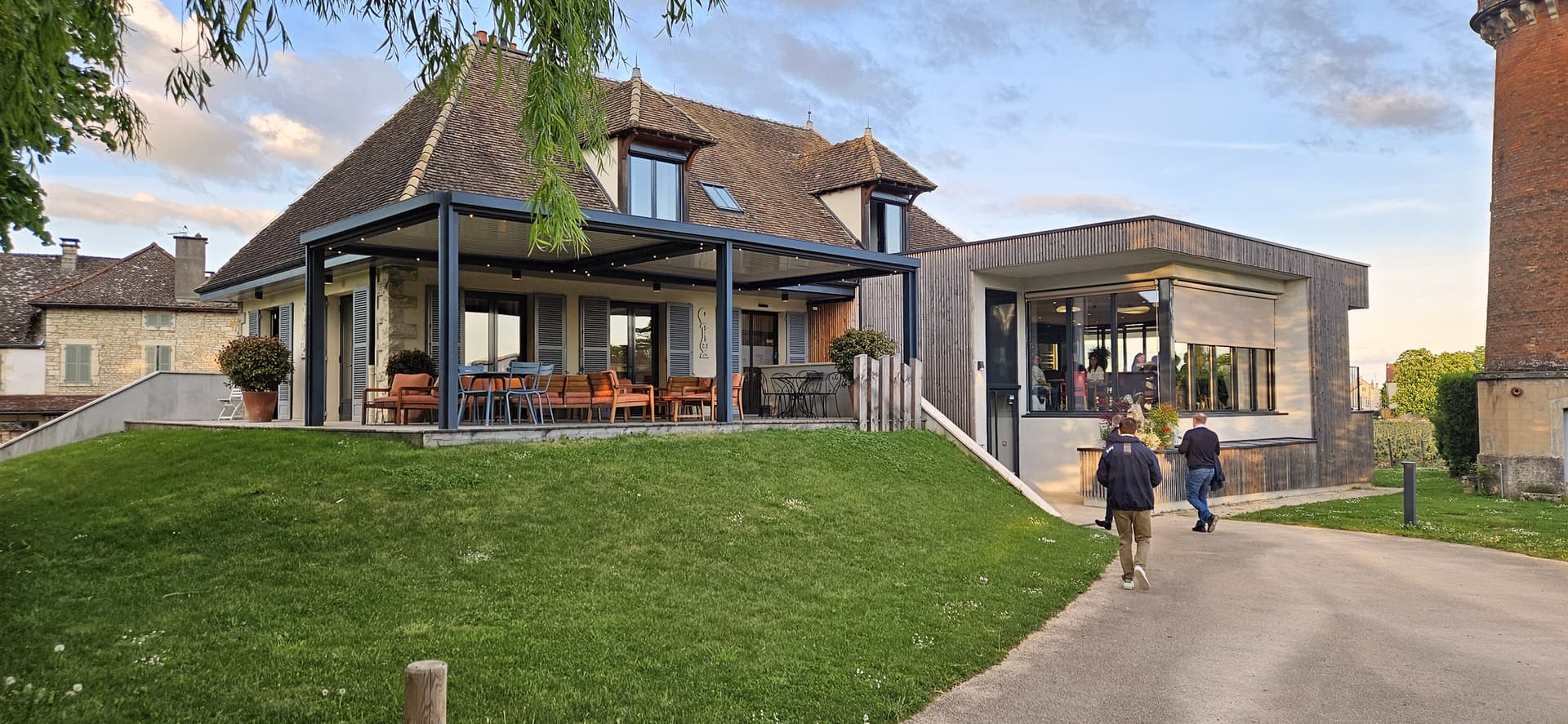
The moment of our arrival.

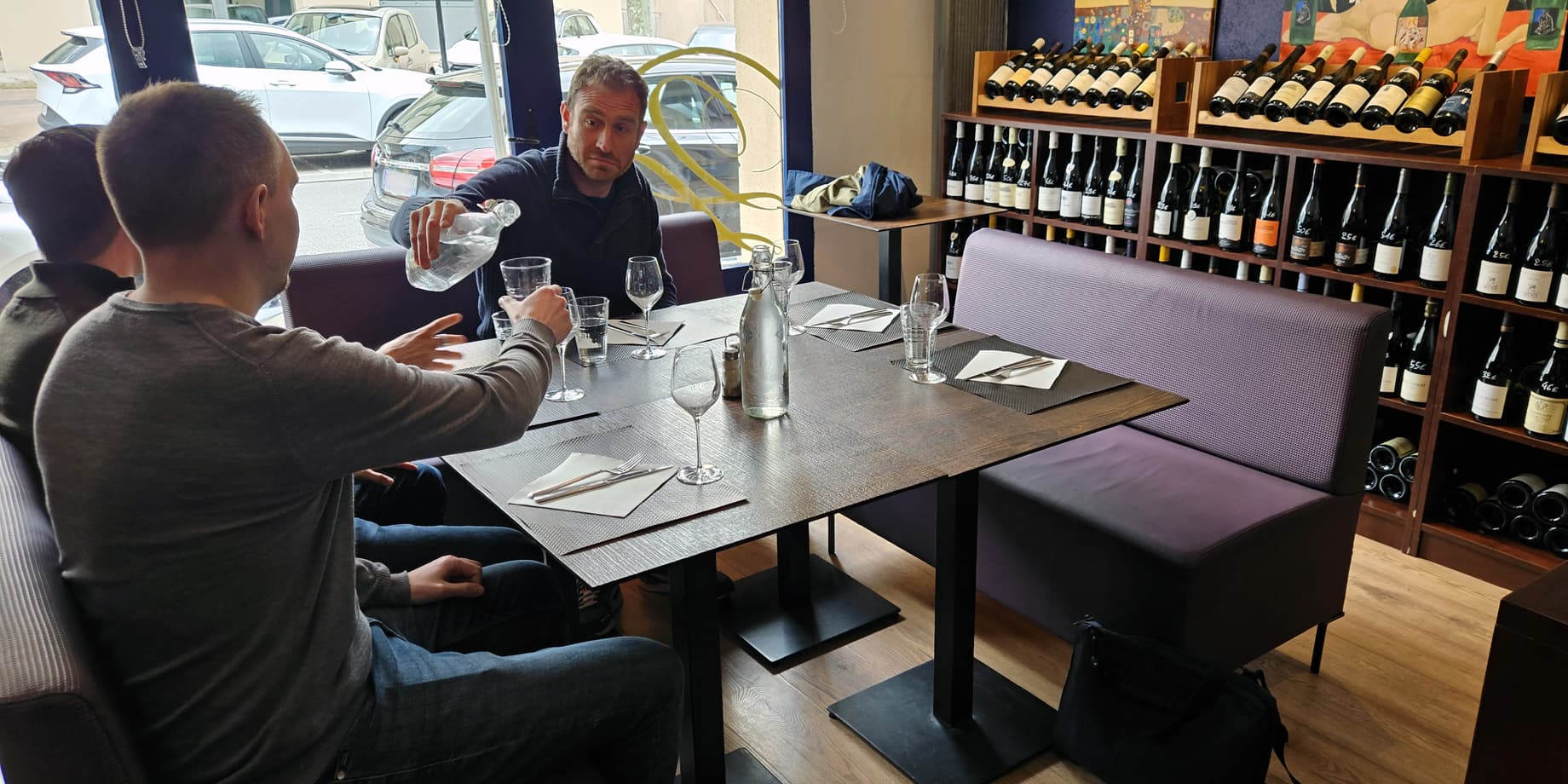
As Ilkka wrote in his report, our visit to the restaurant was not a triumphant success; the wine list was admittedly an impressively sizeable (and weighty) tome, but it seemed that almost all the wines we would’ve loved to order were either crossed over, or the waiter just told us that “unfortunately we have sold that one out”. As we didn’t receive any suggestions from the staff based on our unsuccessful queries, Ilkka and I just had to comb through the list, trying to find wines that were both something we wanted to drink now AND were still available. It turned out to be quite a task, I tell you!

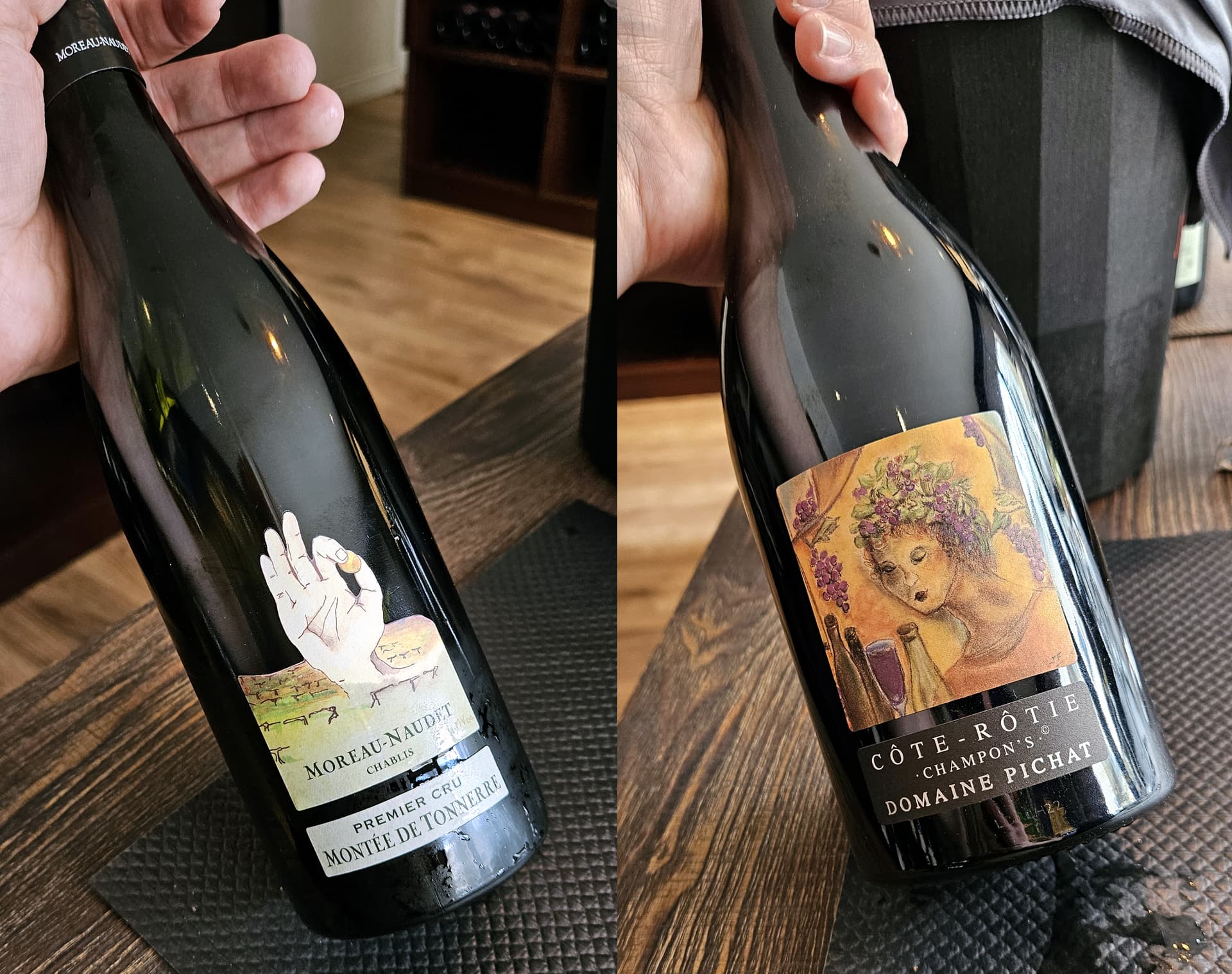
We finally managed to select a fizz to sip on while waiting for the food; a white for the entrées; and a red for the main course. While nothing catastrophic, the wines didn’t really manage to raise rounds of applause around our table: the Champagne had a subtly green streak (something me and Ilkka noticed almost immediately); the Roulot was probably the most disappointing white Burg we tasted on our trip; and while entirely correct and enjoyable, the Volnay was definitely on the ripe side of things.

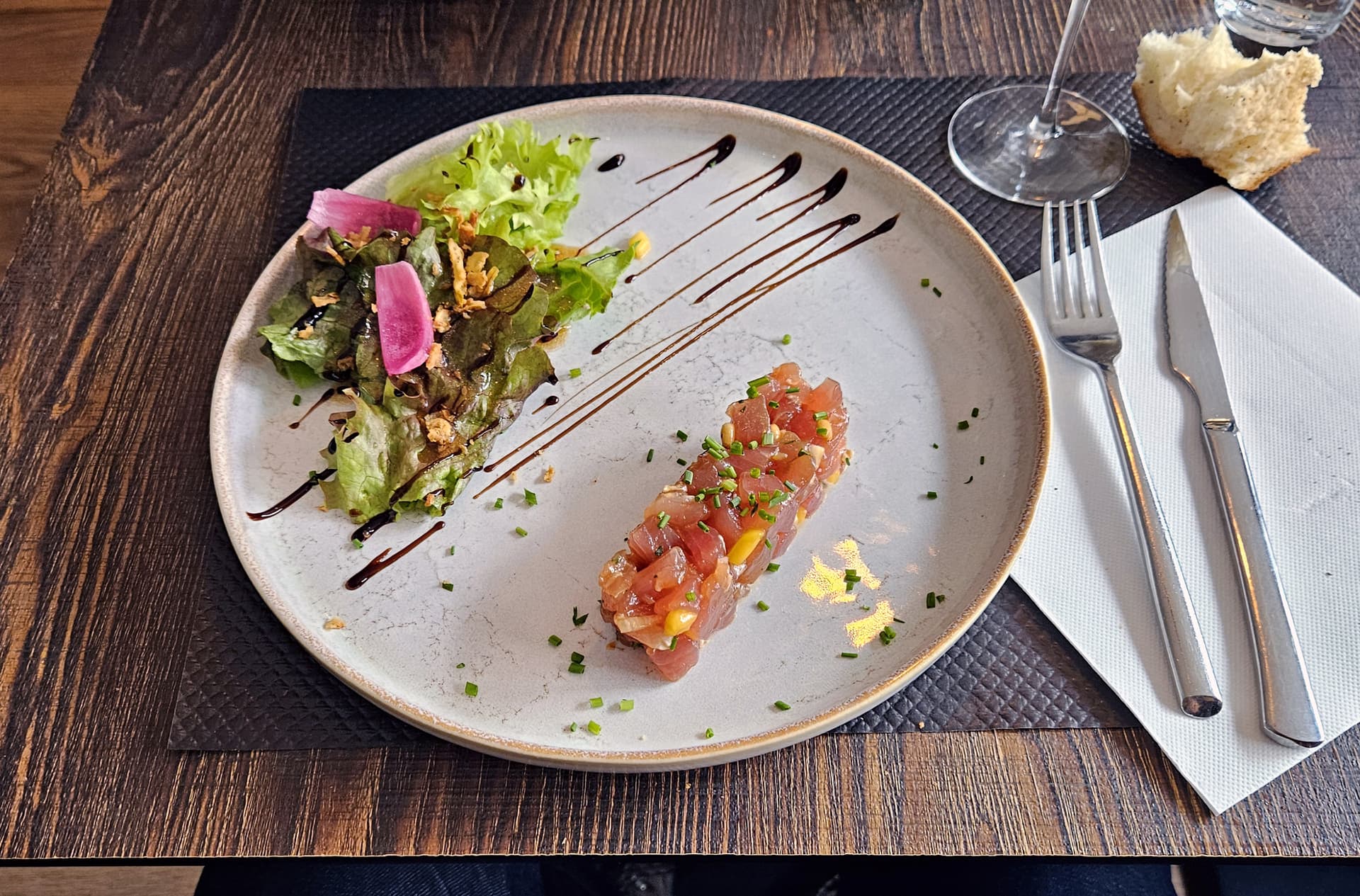
The foods were also quite something.
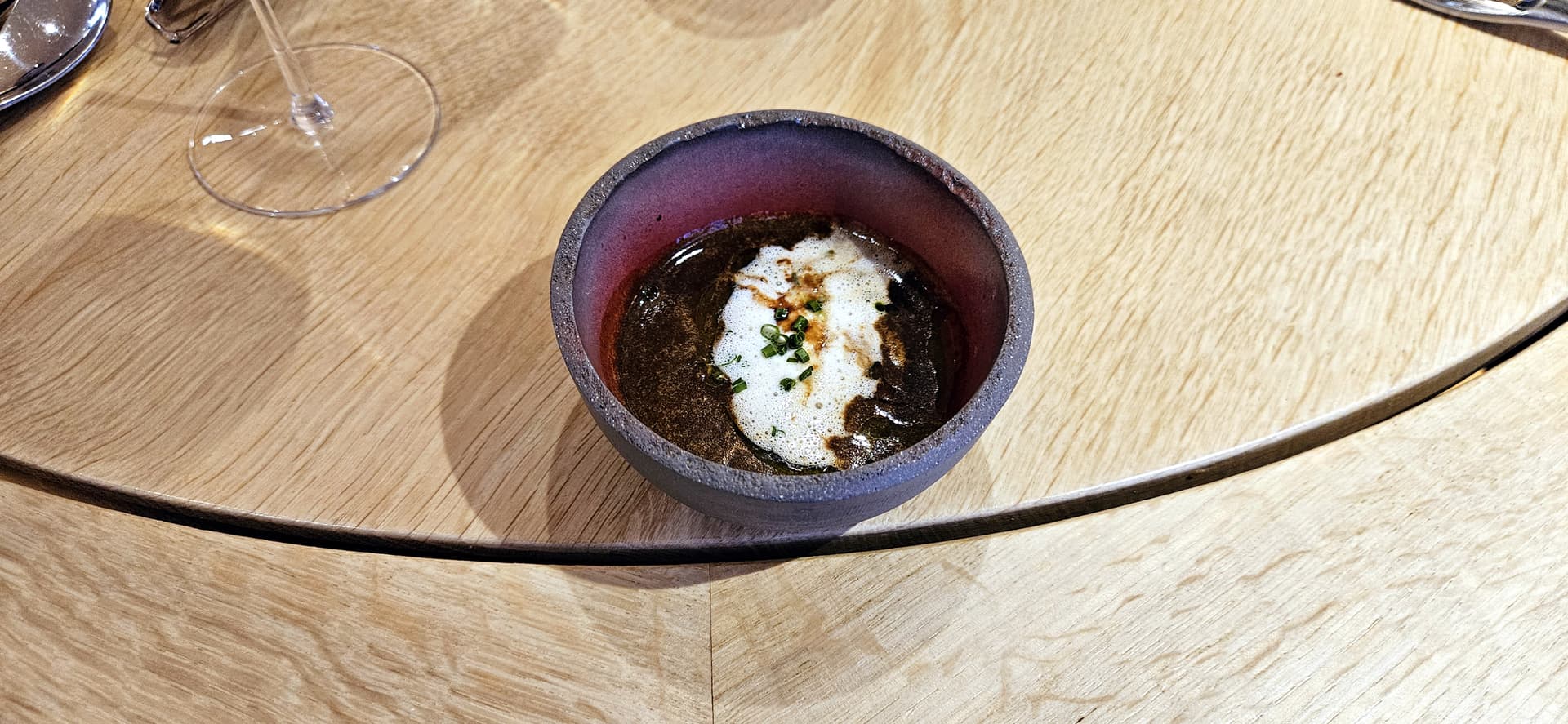

The amuse-bouche was a tiny cup of soup that was probably supposed to be an umami bomb, but honestly; it tasted just downright fishy. I managed to handle the cup with no problems, but several of us seemed to have problems going through more than one spoonful of the stuff. It seemed obvious that their bouches we definitely not amused!
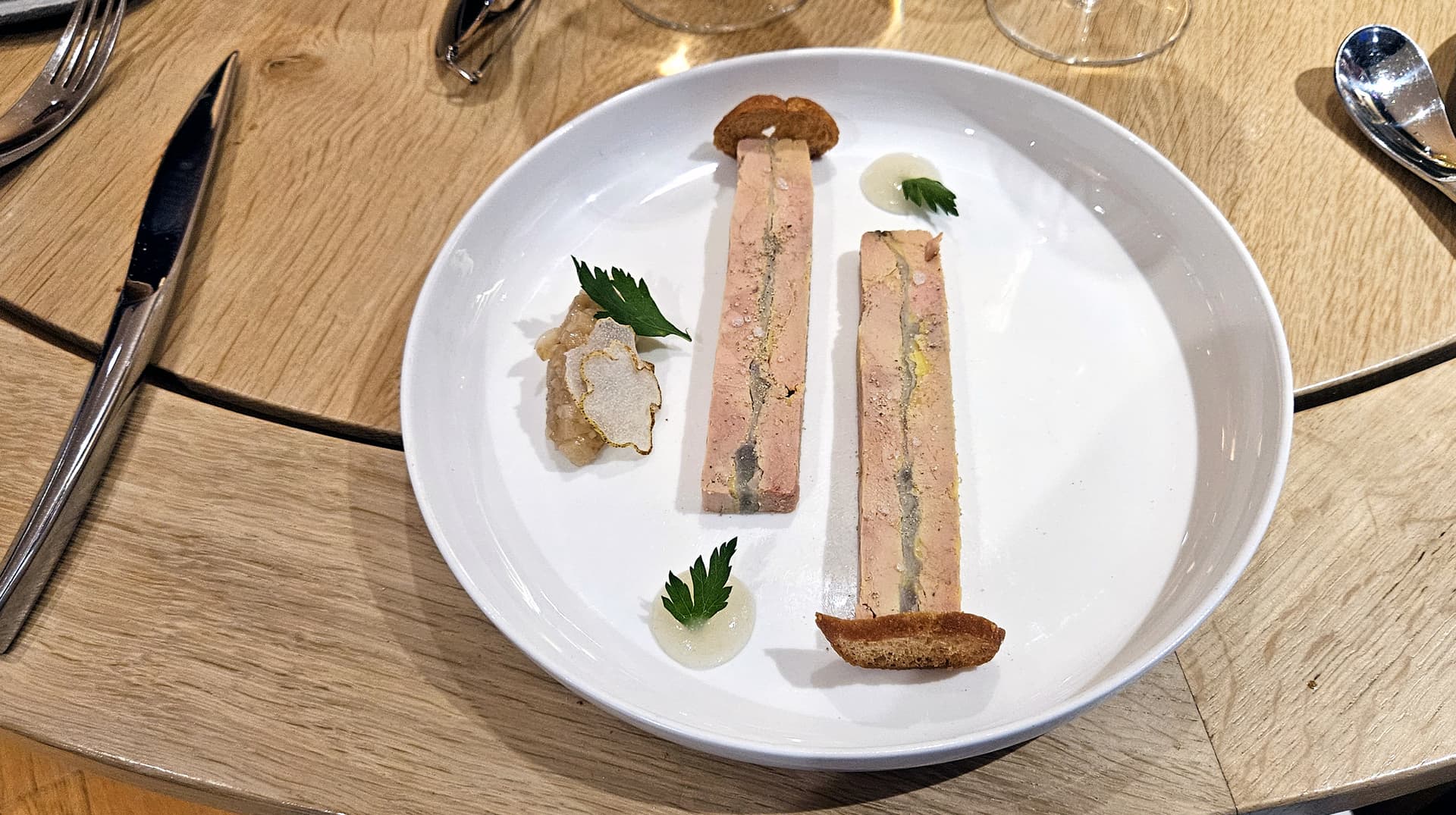

I guess I managed to avoid a bullet by being the sole diner not taking escargots (a dish Ilkka described in his report quite scathingly - and the others in our entourage seemed to comment along those same lines) but instead going with foie gras. However, these two huge sticks of foie gras with almost nothing else to go with them was getting a bit too much as well. Not really a dish I would need to re-visit.
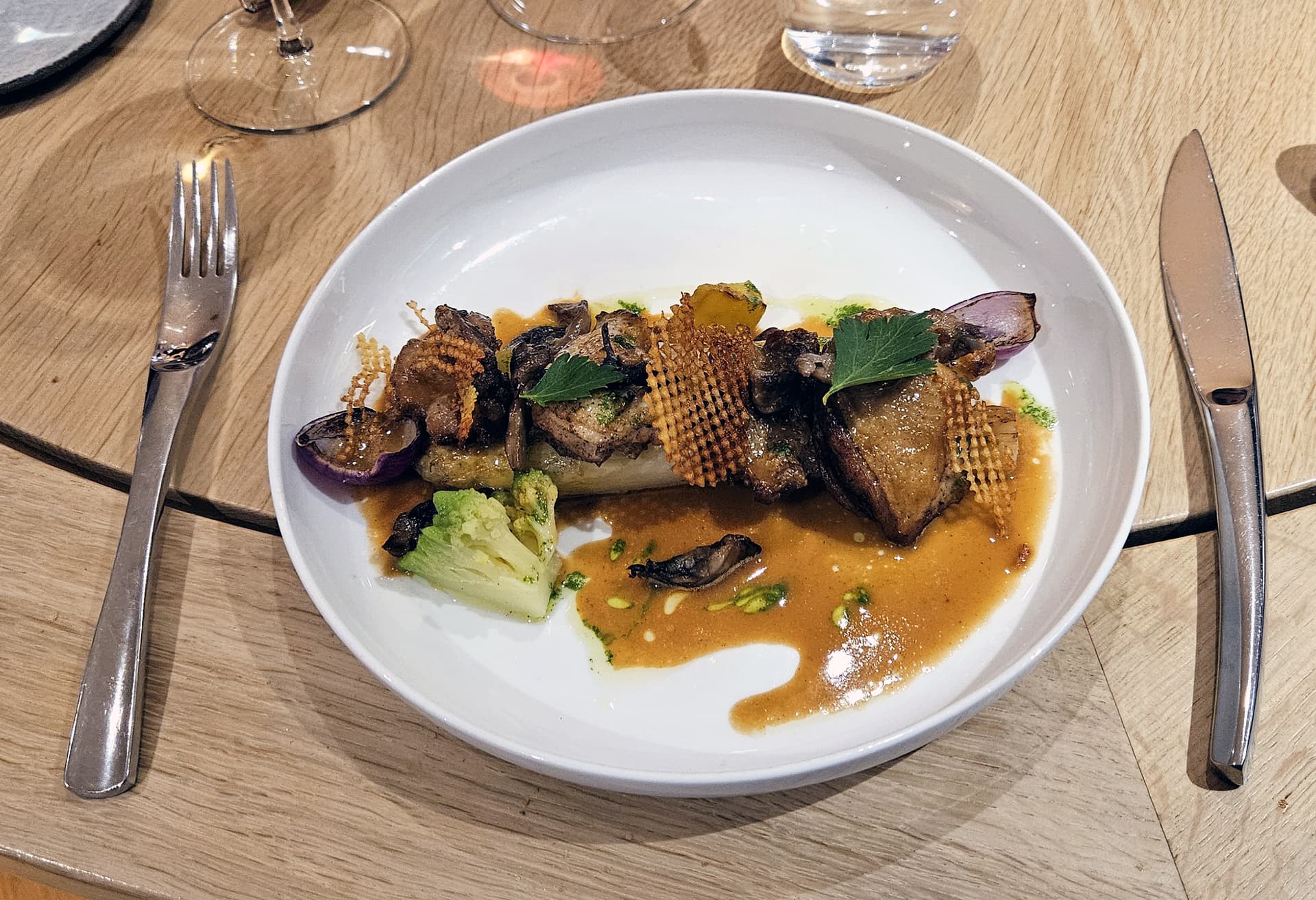

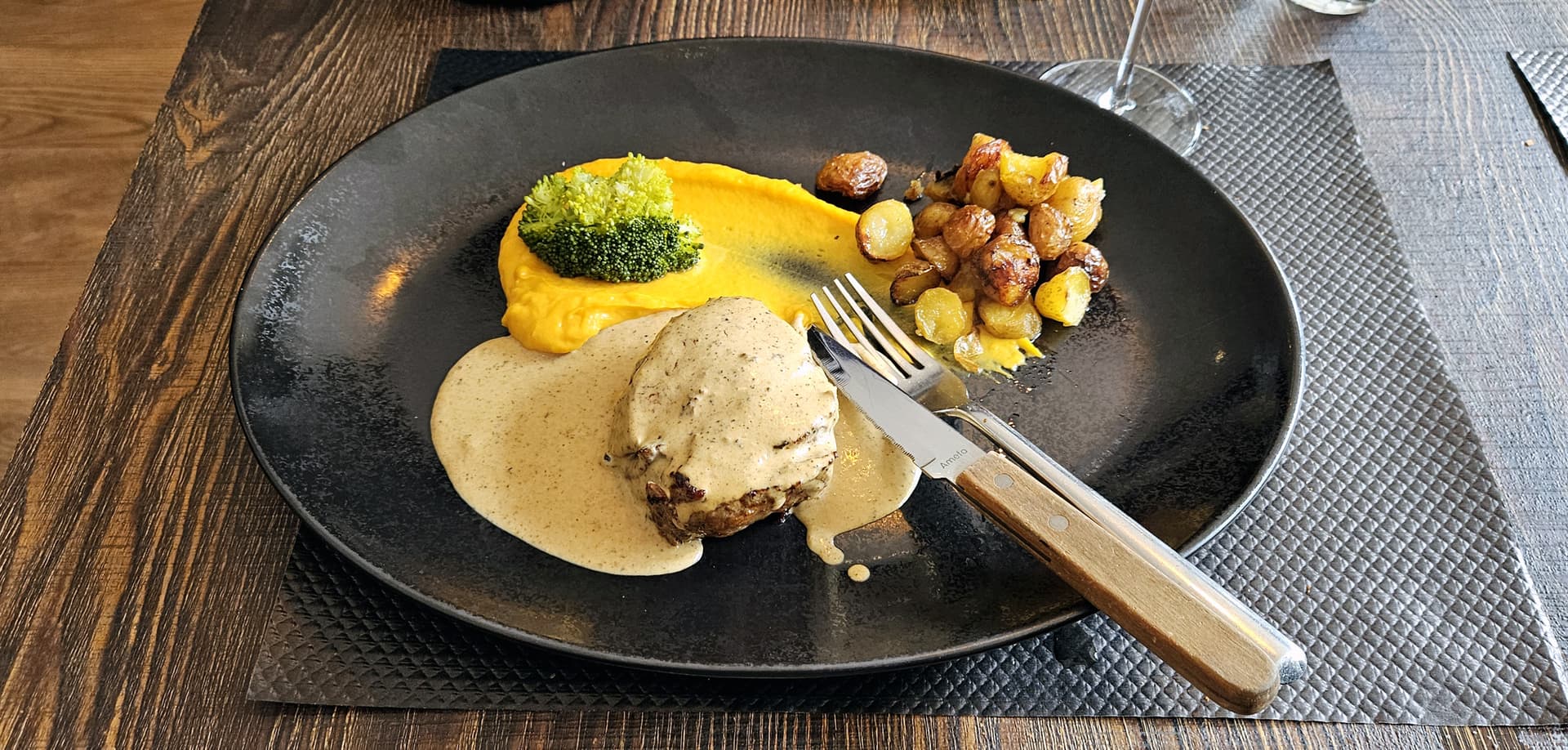
Fortunately the main course, quail, was pretty much on point. Nothing special, but after the two preceding dishes, “nothing special” was certainly a very welcome change.


Naturally we had also two desserts - one savory, one sweet. First, probably the biggest reason why we were in this restaurant in the first place; mousse tiède d’Époisses. An airy yet rich and utterly hedonistic mousse made with funky washed-rind Époisses cheese. Very over-the-top, just in the right way.
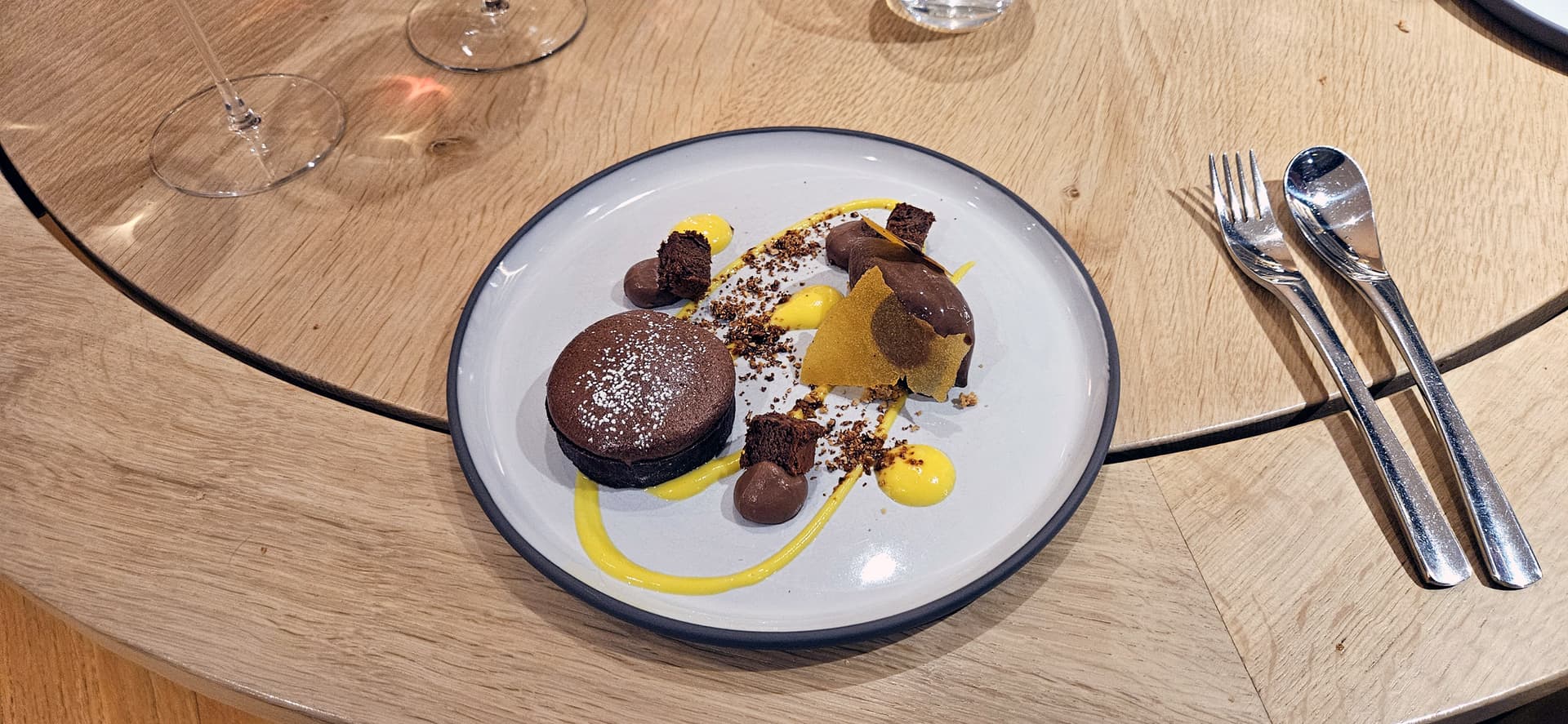

Then the sweet one. A delicious plate of chocolate three ways.
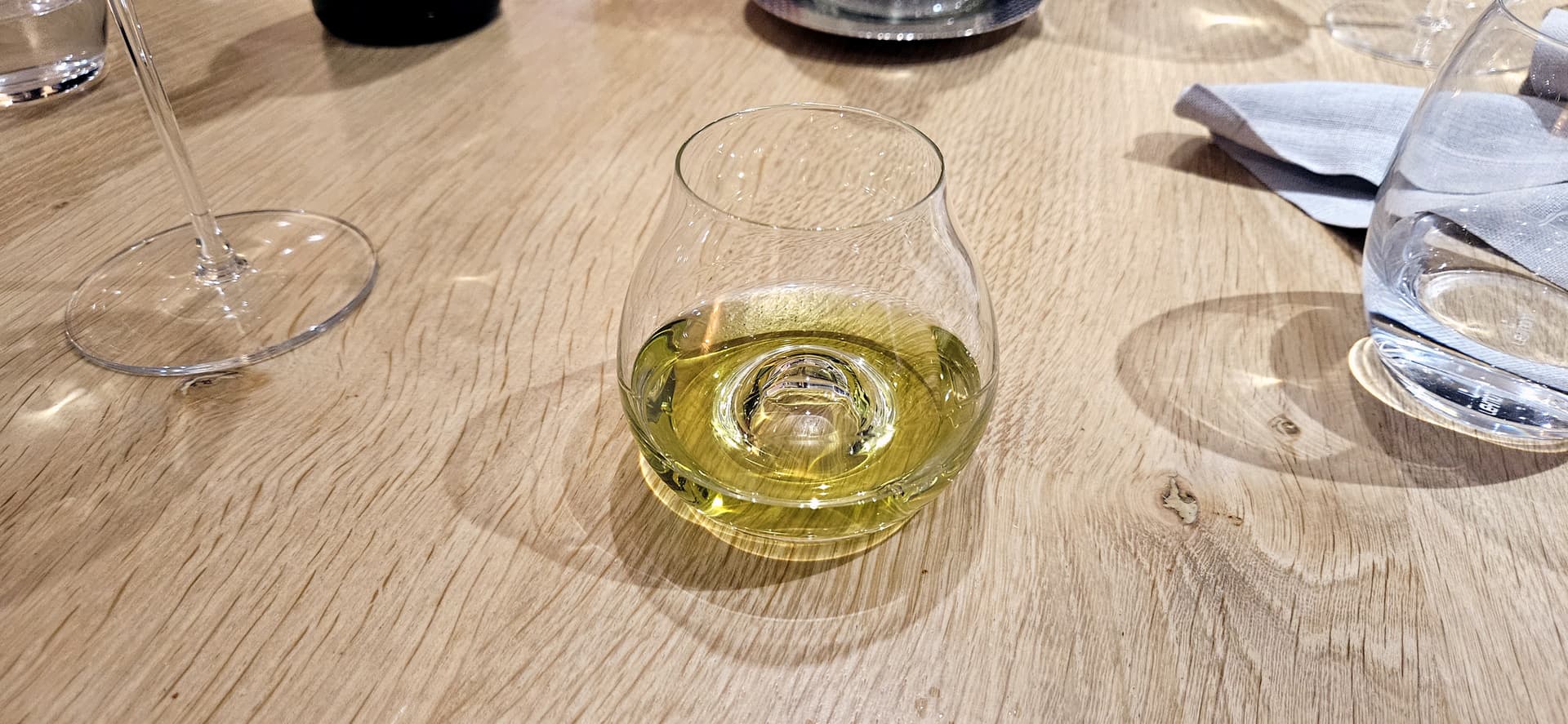

Naturally, a glass of Chartreuse as a digestif.
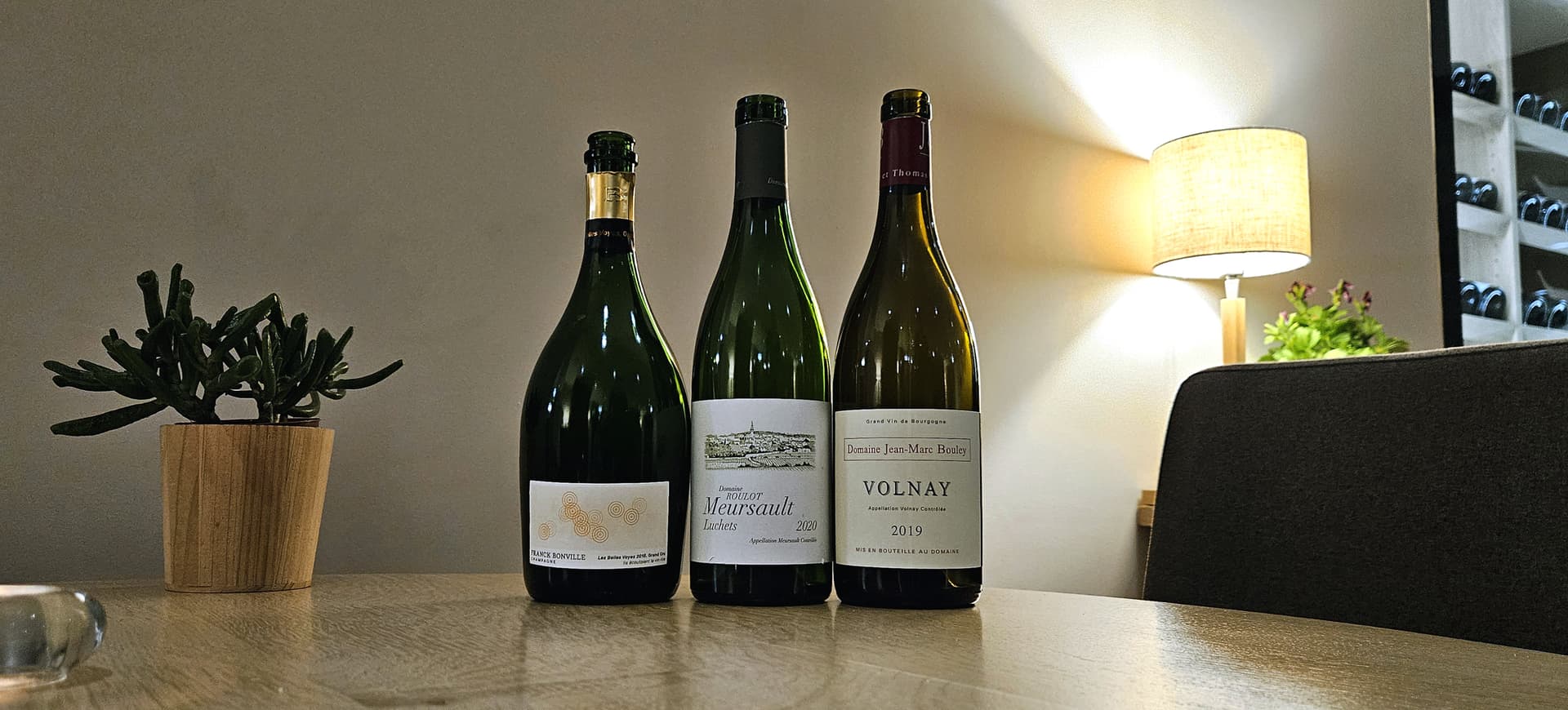

The wines and my notes on them:

  • 2015 Franck Bonville Champagne Grand Cru Cuvée Les Belles Voyes - France, Champagne, Champagne Grand Cru (22.4.2025)
    100% Chardonnay from the 0,8-hectare (2 acre) lieu-dit Les Belles Voyes planted in 1960 in the Grand Cru terroir of Oger. Fermented in oak barrels. Full MLF. Lot number L150923 (ie. disgorged on September 15th, 2023 - after aging approximately 7½ years sur lattes). 12,5% alcohol and dosage 5 g/l.

    Concentrated, medium-deep yellow-green color. The nose feels rather noticeably ripe with aromas of cantaloupe and yellow stone fruits, some leesy notes of autolysis, light nutty notes of almond, a little bit of juicy Golden Delicious apple, a creamy hint of custard, a touch of wood and - despite all the ripeness - a faint touch of vegetal greenness. The wine feels ripe, broad rather fruit-forward on the palate with a rather full body and juicy flavors of Golden Delicious apple, some ripe citrus tones, light leesy autolytic notes, a little bit of nutty almond, mineral hints of steel and stones and a faint leafy touch of vegetal greenness. The mousse feels gentle and creamy but also quite persistent. The medium acidity feels rather modest for a Champagne. The finish is dry, long and rather ripe with flavors of juicy citrus fruits and sweet Golden Delicious apple, some leesy notes, a little bit of steely minerality, light bready notes of autolysis, a nutty hint of slivered almonds and a faint vegetal touch of leafy greenness.

    A somewhat awkward combination of elevated ripeness and vegetal greenness. I wonder if the vintage 2015 was so hot that the grapes ripened but at some point the vines shut down, halting the ripening process? That would explain why the wine feels so ripe with relatively low acidity, yet still there's a tiny bit of vegetal greenness lingering in the background. In spite of all this, the wine is quite pleasant and harmonious. I'm not going to lie; the subtly green nuances do distract a little bit from the pleasure. However, the wine is still a far cry from those spritzy pickle juices produced in 2011. This is good - just not great. Although I like vinous Champagnes with rich textures and sense of breadth, this was a bit too ripe and soft for my preference. Not really worth the 137€ in a restaurant.
    (89 points)

  • 2020 Domaine Roulot Meursault Les Luchets - France, Burgundy, Côte de Beaune, Meursault (22.4.2025)
    100% biodynamically farmed Chardonnay from lieu-dit Les Luchets. Fermented spontaneously. Aged in oak barrels (about 1/3 new) for 12 months, then for another 6 months in stainless steel tanks. 12,5% alcohol.

    Intense and moderately deep yellow-green color. The nose feels ripe, rich and rather noticeably sweet-toned with aromas of juicy nectarine-driven yellow fruits, some creamy oak tones, a little bit of buttery richness, light crunchy notes of fresh pineapples, a sweet hint of toasty caramel oak, a touch of reductive funk and a whiff of savory wood spice. There are lots of things going on here, but the overall feel is a bit too unctuous for my preference. The wine feels ripe, broad and subtly sweet-toned on the palate with a full body and lush flavors of honeyed richness and juicy apricot, some sweet and subtly smoky toasty oak tones, a little bit of crunchy Fuji apple, light woody notes of savory oak spice, a mineral hint of wet rocks and a touch of ripe pineapple. The rather modest level of acidity holds the wine together just barely and the overall feel is simply lacking verve and energy. There's lots of flavors and complexity, but relatively little sense of structure. The finish is ripe, broad and concentrated with a very long aftertaste of fresh nectarine and ripe pineapple, some sweet honeyed tones, a little bit of buttery oak, light creamy vanilla custard nuances, a woody hint of savory oak spice and a touch of stony minerality.

    A very rich, broad and quite noticeably ripe vintage of Les Luchets. The overall feel is too ripe, honeyed and oaky for my preference and while coming across as somewhat balanced, to me, the wine is still lacking quite a bit in acidity. This is just very ripe, succulent and hedonistic Meursault with lots of fruit and quite a bit of oak but relatively little sense of freshness, balance or structure. I can imagine the wine will benefit from additional aging and I really do hope the wine drops quite a bit of that baby fat and integrates those oaky tones with the fruit as it ages; I'll be happy to give the wine the benefit of the doubt in the hopes that the wine would actually come across as more harmonious and balanced with age. However, if you happen to like fresh, fine-tuned and mineral white Burgundies, this wine offers relatively little enjoyment at the moment. One of the biggest disappointments on our trip to France and at 212€ (in a restaurant), this was just lousy value.
    (87 points)

  • 2019 Domaine Jean-Marc / Thomas Bouley Volnay - France, Burgundy, Côte de Beaune, Volnay (22.4.2025)
    100% Pinot Noir from five different parcels in Volnay, average vine age 25 years. Fermented and macerated with the skins in open-top vats for 15-20 days. Aged in oak barrels (25% new) for 18 months. 13% alcohol.

    Quite translucent cherry-red color with a subtly evolved pomegranate hue. The nose feels sweet, fragrant and quite nuanced with aromas of spicy Pinosity and juicy Bing cherry, some ripe raspberry tones, a little bit of earth, light floral notes of violets, a hint of toasty oak spice and a touch of strawberry. The wine feels dry, vibrant and well-delineated on the palate with a light-to-medium body and ripe yet quite savory flavors of juicy raspberries and black cherries, some tart lingonberries, a little bit of peppery spice, light sweeter notes of wild strawberries, a hint of earthy Pinosity and a touch of woody oak spice. The overall feel is firm and balanced with the moderately high acidity and ripe yet somewhat grippy medium tannins. The finish is juicy, succulent and moderately grippy with a long, vibrant aftertaste of black raspberries and black cherries, some tart lingonberries, a little bit of peppery spice, light earthy tones, a hint of tobacco and a touch of wood spice.

    A tasty, sophisticated and elegant Volnay. Quite a bit on the ripe side and perhaps a bit more darker-toned (rather than red-toned) than I expected, but a balanced and enjoyable effort all the same. Fortunately the wine was more savory than sweet-fruited on the palate, as the rather lush nose set up slightly different kinds of expectations. Anyways, the overall feel is still very youthful - and perhaps even a bit too much so; I feel the wine could really use a few additional years. Enjoyable and balanced by all accounts, but nothing too memorable. Feels pricey for the quality at 125€ (in a restaurant).
    (90 points)

So, even if the restaurant nor their wines didn’t fully live up to our expectations this time, we still returned back to our motel (through the impenetrating darkness of Meursault countryside) quite content; after all, our first day in Burgundy had been quite an experience already - and it had only just begun!
17 Likes

I had a similar underwhelming experience with a '21 Roulot Les Luchets. It was somehow more fruit-forward, duller, lower acid, and flabbier than a '22 Roulot Les Meix Chavaux (which I thought showed great in comparison). Kind of curious.

I’ve heard that Roulot has been underperforming in recent vintages, but not sure whether my experience with Les Luchets has more to do with the terroir just producing broad and ripe wines, or whether there are other issues at play.

3 Likes

Interesting experiences with Roulot by you both recently! I haven’t tried anything younger than '18 (Charmes) and that was pretty rich-fruited but very well balanced, textured and energetic. This is the first I’ve heard of them underperforming in recent vintages. Any theories?

Unfortunately I don’t have enough in-depth experience with different vintages of Roulot so I really can’t provide much insight here.

However, when we shared our experiences from this restaurant with a friend of ours who drinks quite a lot more Burgundy than us four combined, he told that he was not surprised and said he only drinks Roulot’s basic Bourgogne and Aligoté whenever he manages to find them at reasonable prices. He mentioned that Roulot’s higher-tier cuvées from the recent vintages just haven’t been at the level of quality he has grown to expect from the domaine.

However, he didn’t mention (or didn’t know) for how long this has now been going, so I really can’t help with that. This is just something I’ve been hearing more and more since our visit to this restaurant, so it seems our friend is not alone with his view!

2 Likes

Day 3

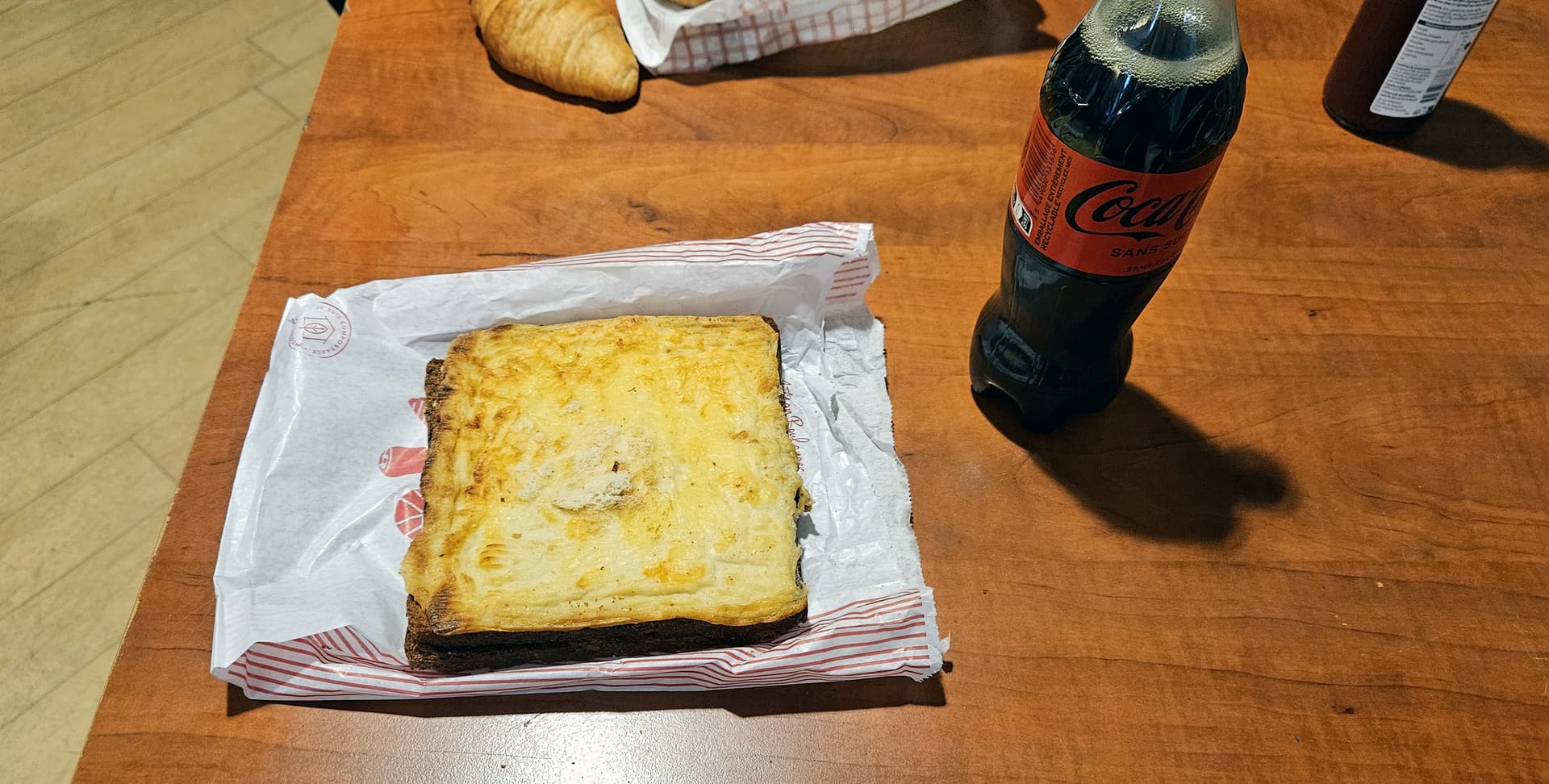
As we had our Burgundy headquarters in a motel in Meursault, we didn’t really have any proper breakfast options at hand. Hence we kicked off the day by driving to Beaune and scouting for a place where we could eat something before our first winery visit. Quickly we settled for a tiny place near the city center, next to Place Carnot.


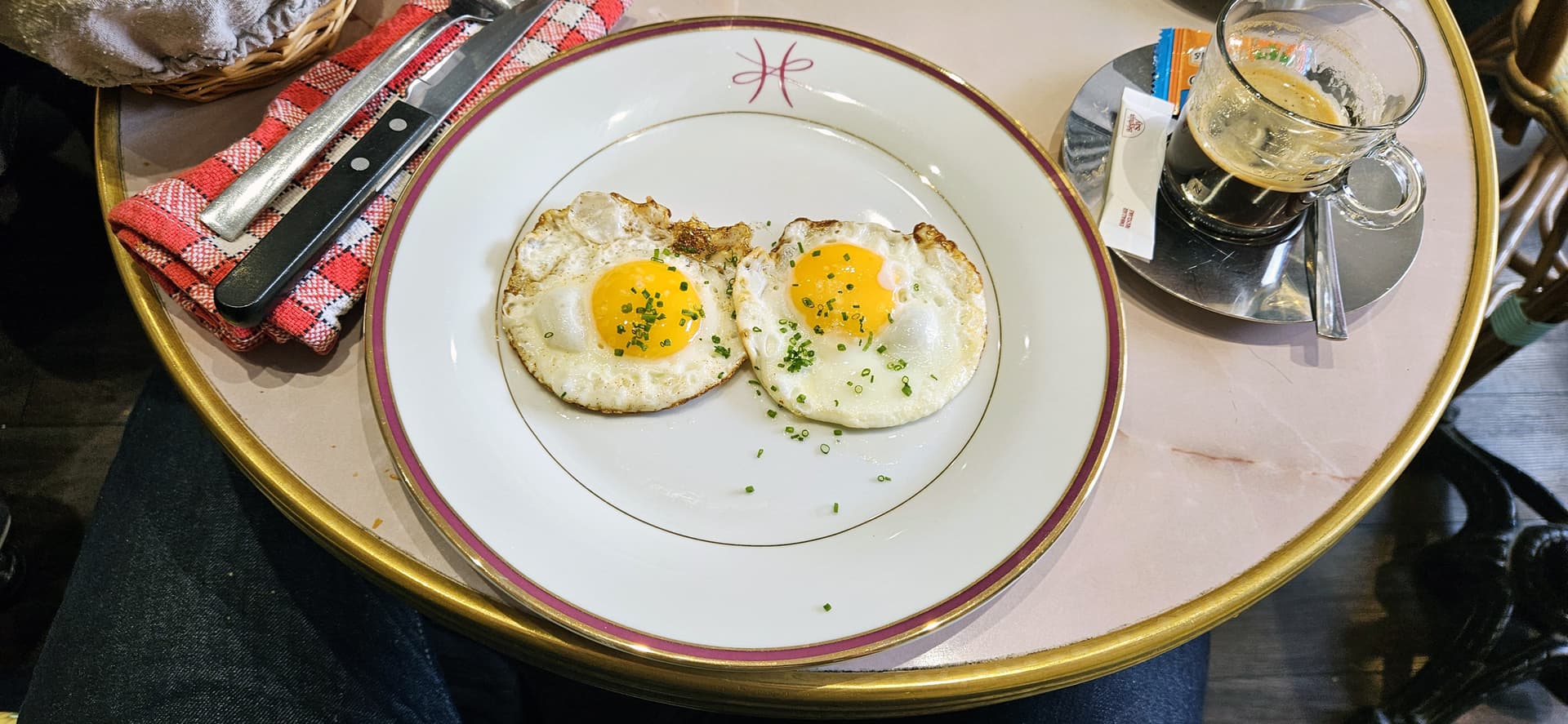
Breakfast of the champions.

After we had finished our breakfast, we backtracked to our van and set off for our first visit of the day in the neighboring hamlet of Savigny-lès-Beaune.


Some Beaune morning vibes.

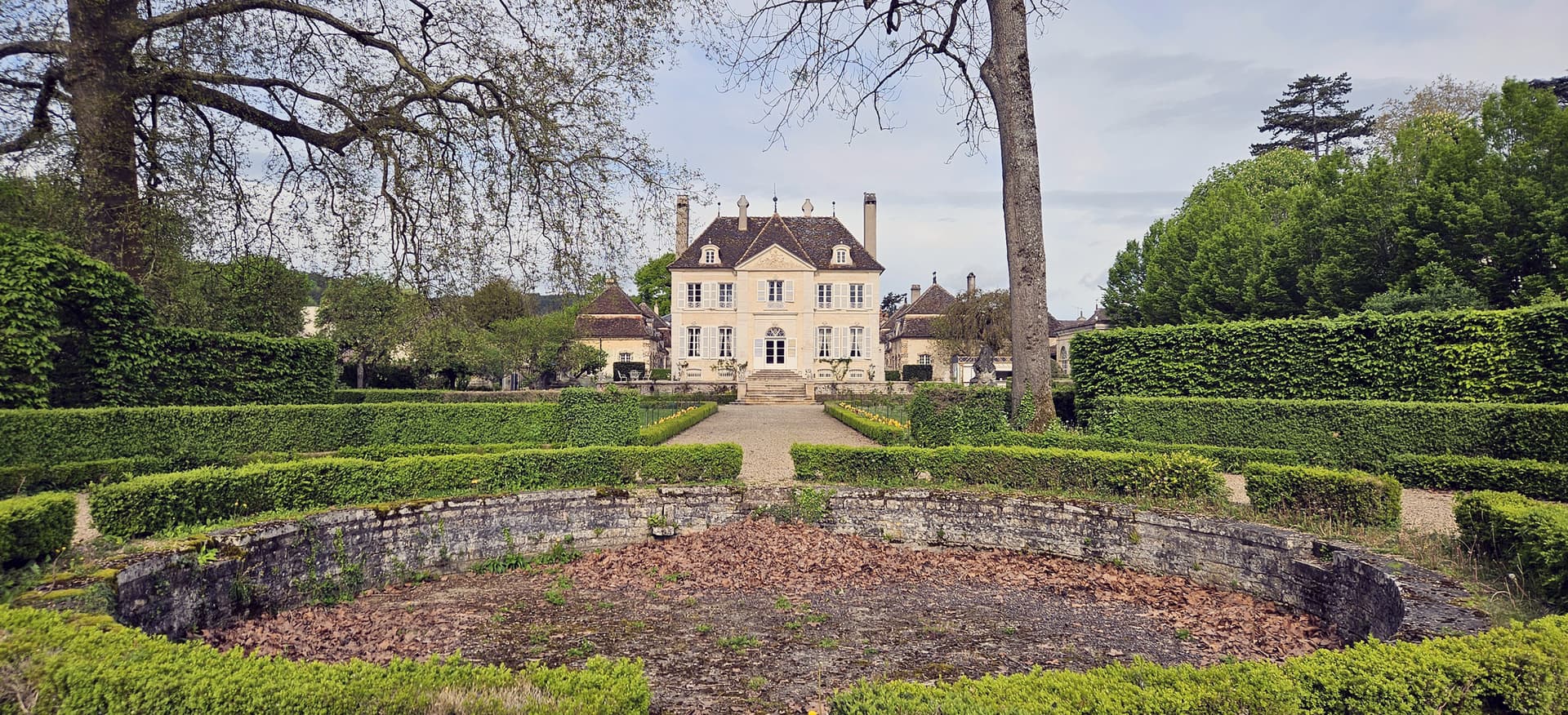
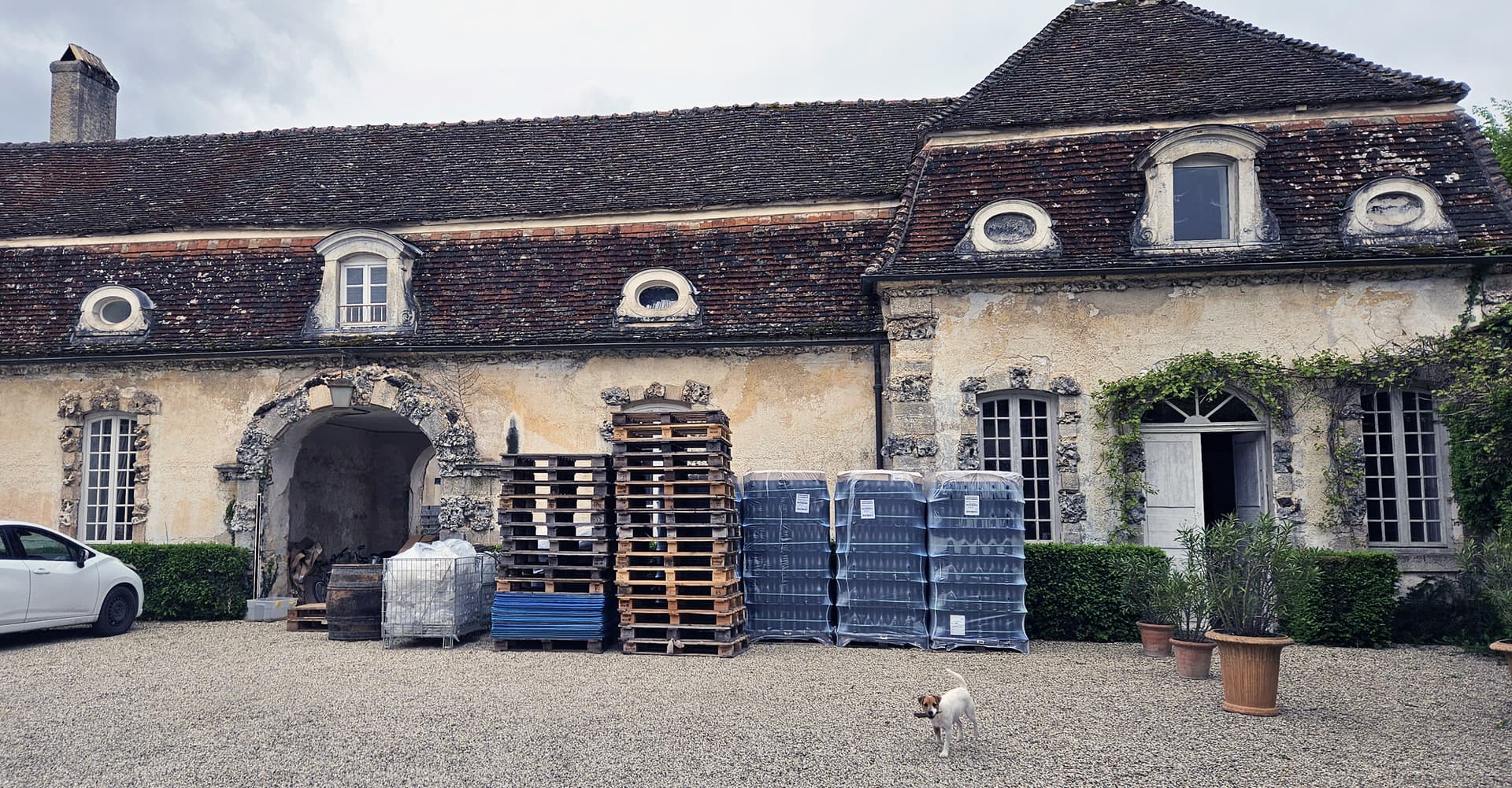
Our first winery visit was at Chandon de Briailles. Now I don’t know what I was expecting, but what I wasn’t expecting when we arrived at the winery was a stunning old manor and an astounding garden the size of a small part behind it!


The façade of the Chandon de Briailles manor.

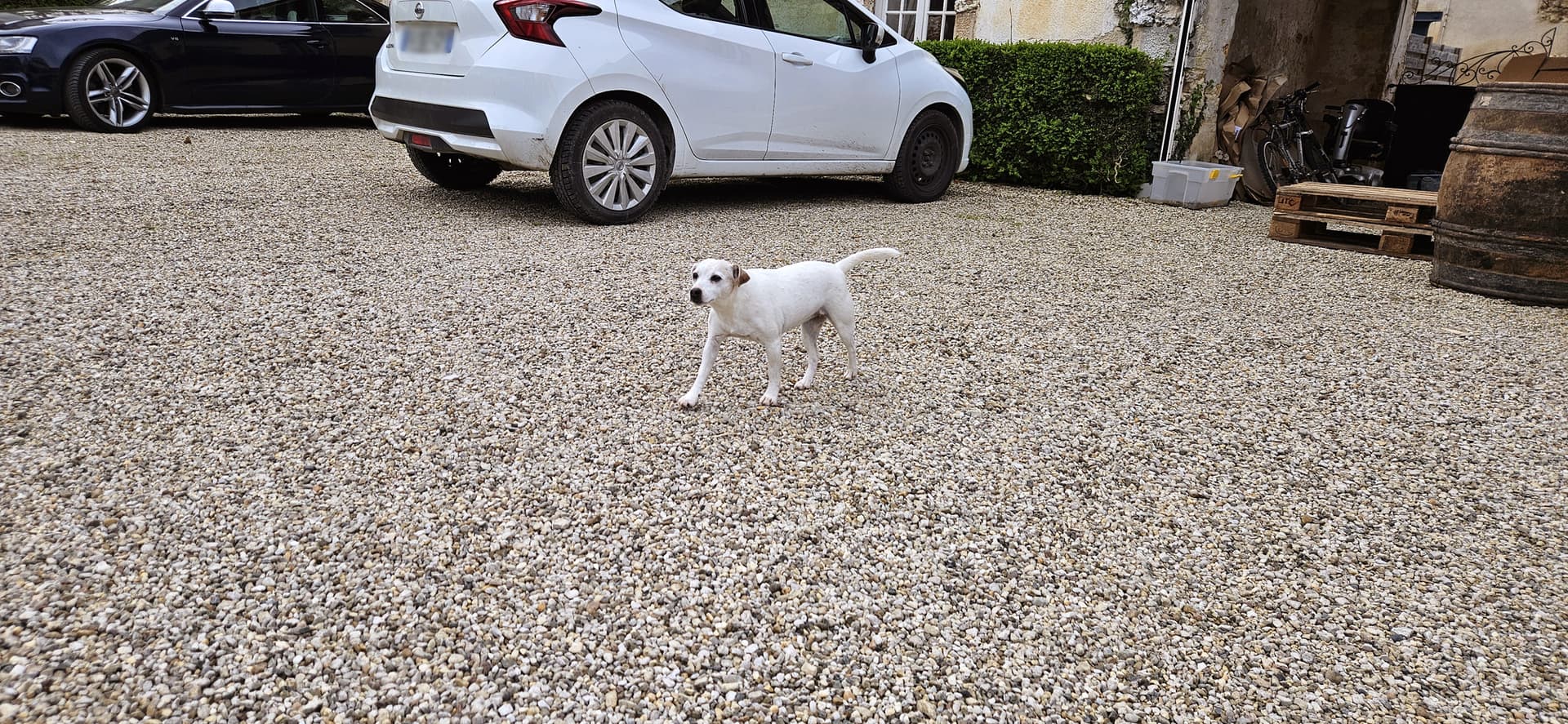
As we parked our van in front of the manor, we were first greeted by one of the estate’s dogs - the older, more timid one, who apparently liked to keep their distance from us - and then, a moment later, by Claude de Nicolay of the siblings team running the domaine.


The older doggo checking out the suspicious-looking strangers.

As de Nicolay still had some unfinished business, she encouraged us to take a quick stroll around the garden and she would come and pick us after a moment or two.


The manor as seen from the garden.

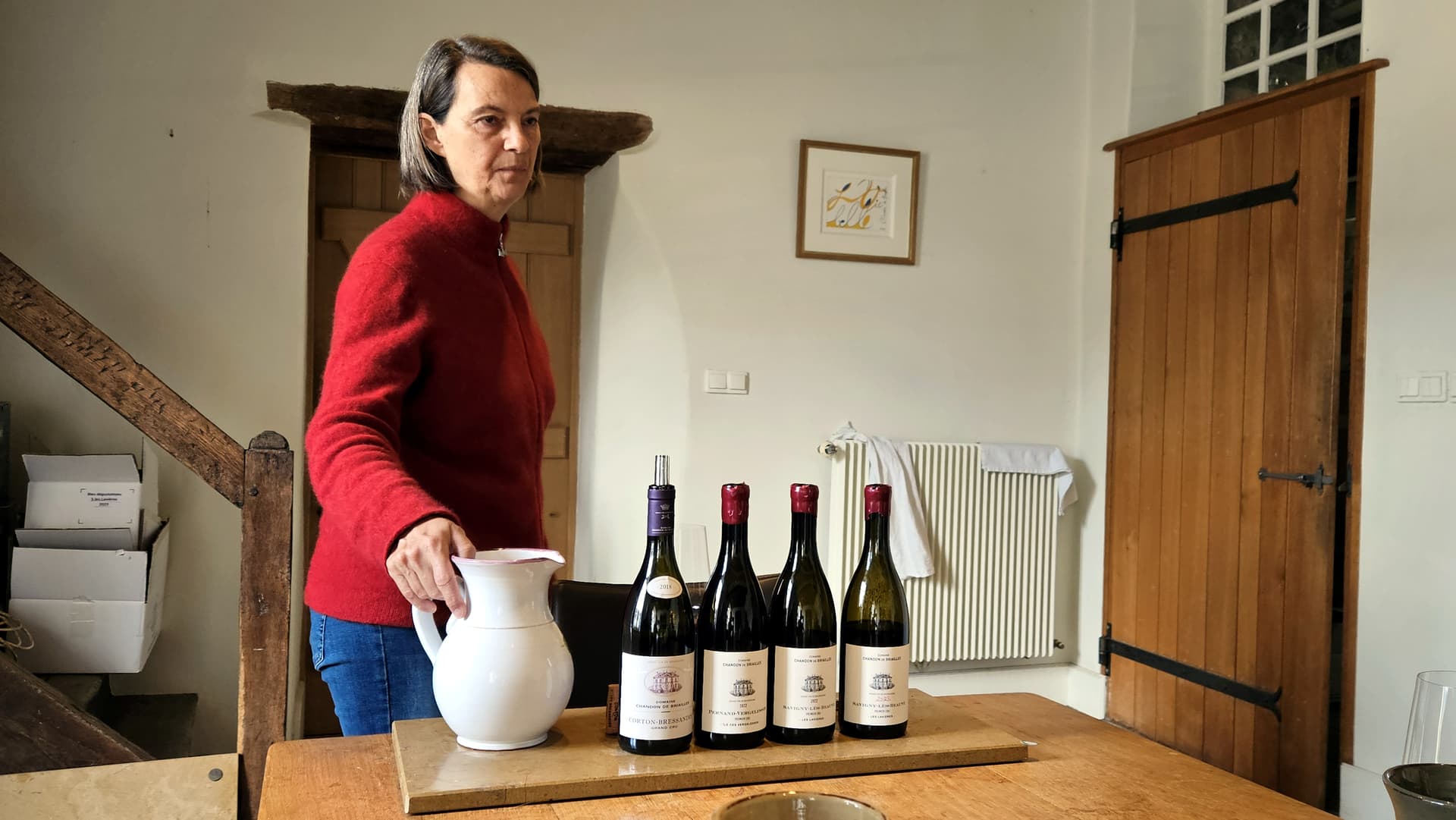
After a nice stroll through the garden, de Nicolay invited us into the winery building, presenting us not only a small selection of the domaine’s reds, but also the rather long history of the estate.


Claude de Nicolay and the wines we tasted.

  • The history of the winery is indeed tied to that of the Moët & Chandon: the famous Champagne house was originally founded as Moët et Cie in 1743, but when Remy Moët’s son-in-law, Pierre-Gabriel Chandon de Briailles joined the company as a partner in 1833, the name was changed to Moët et Chandon. The “de Briailles” part was simply dropped out from the name to keep it easy and concise for the customers.
  • The impressive manor in Savigny-lès-Beaune dates back to the 17th century and it has been in the family since 1834. It currently belongs to Comte and Comtesse Aymard-Claude de Nicolay - the Comte inherited the property from his grandmother, the Comtesse Chandon de Briailles - and their children, François and Claude de Nicolay, ie. the 7th generation, who operate the winery today.
  • The actual winery of the estate is located in one of the auxiliary buildings next to the manor - the oldest cellar parts of this building date back to the 14th century.
  • The manor was used as the family countryside house, as the de Nicolays lived in Paris back then. However, realizing how the vineyards of the estate were in very poor shape, Comtesse Aymard-Claude de Nicolay, Nadine, moved from Paris to Savigny-lès-Beaune in 1982 and took over the winery and viticultural operations of their country house.
  • Nadine de Nicolay stopped using non-organic pesticides and fungicides in the vineyards and began farming in a sustainable fashion with traditional tools and practices. In the late 1980’s Claude de Nicolay, who had studied viticulture and oenology, joined her mother in running the estate, helping the domaine first convert fully to organic farming and then, under Claude’s guidance, acquiring organic certification in 1998. Claude’s brother François, who had had a wine shop in Paris, joined the family domaine in 2001. Domaine Chandon de Briailles has been run by the sister-brother team since.
  • When François joined the family estate, they began experimenting with biodynamics and were quite happy with the results; since 2005 the vineyards have been farmed according to biodynamic principles and the winery acquired Demeter certification in 2011.
  • Today Chandon de Briailles farm 14 hectares (33,5 acres) biodynamically in Savigny-lès-Beaune and the neighboring appellations of Pernand-Vergelesses and Aloxe-Corton…
  • The wines are fermented spontaneously with indigenous yeasts. Destemming depends on the vintage, but the use of whole bunches has gradually gone up in the last 15-20 years. Today up to 50% of the grapes may be destemmed in cooler vintages, but in warmer vintages, when the rachis ripen fully, the wines can be made entirely with whole bunches.
  • The amount of new oak is kept very low; up to 10% of the barrels may be replaced annually and usually only when necessary, meaning that wines today don’t see more than 10% of new oak.
  • The wines have not been chaptalized since 2007 and since their conversion to biodynamics the domaine has tried to keep the use of sulfites as low as possible; the wines receive small doses of SO2 if the vintage or vinification calls for it, but often the wines receive only a minimal dose of SO2 upon bottling and they experiment with sans soufre bottlings every year.
  • A great majority of their production is red, but they have also small amounts of white grapes - mainly Chardonnay. but they also have a small parcel of Pinot Blanc in 1er Cru Île de Vergelesses, as Nadine de Nicolay wanted to have some white grapes planted in that particular vineyard. These Pinot Blanc grapes are not blended into any of the whites - which would be allowed according to the appellation regulations - but instead vinified like a red wine into a varietal orange wine!


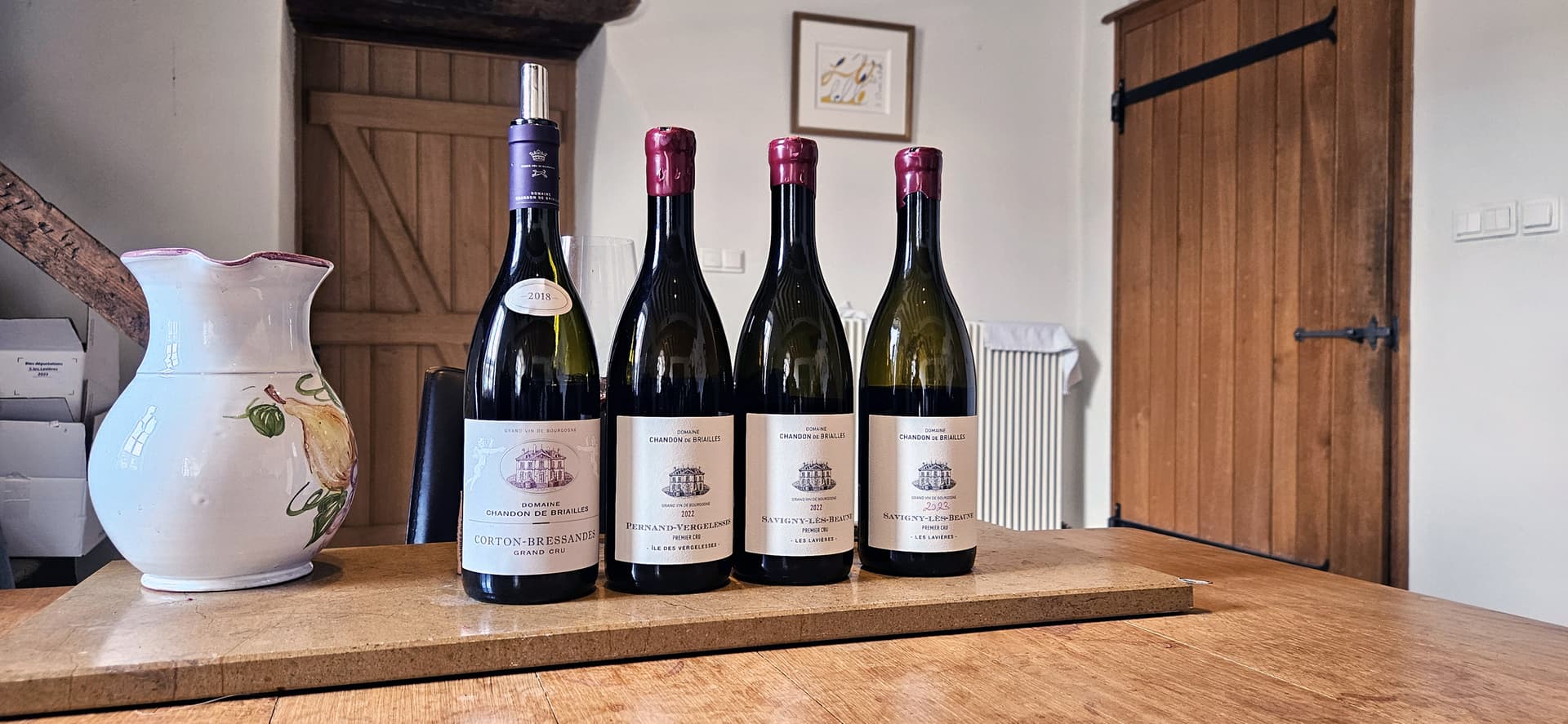
The lineup of the wines tasted.

  • 2023 Domaine Chandon de Briailles Savigny-lès-Beaune 1er Cru Les Lavières - France, Burgundy, Côte de Beaune, Savigny-lès-Beaune 1er Cru (23.4.2025)
    100% biodynamically farmed Pinot Noir from a 2,6-hectare parcel that was planted in 1956 in 1er Cru Les Lavières. Vinified in whole clusters. Fermented spontaneously, aged in predominantly old oak barrels.

    Youthful, translucent yet rather dark ruby color. The nose feels very open, juicy and fruit-driven with quite heady aromas of ripe raspberries and red cherries, some blackberry tones, a little bit of spicy Pinosity, light lifted nuances lending a subtly wild undertone to the bouquet, a hint of blueberry and a perfumed touch of violets. The wine feels juicy and sweetly-fruited yet wonderfully crunchy on the palate with a moderately full body and intense flavors of black cherries, some brambly black raspberry tones, a little bit of sweet blackberry, light stony mineral notes, a floral hint of violets and a touch of sauvage lift. Despite the ripeness and sweet-toned fruit flavors, the wine manages to come across as surprisingly serious and structured with its rather high acidity and rather grippy tannins. The finish is long, rich and quite grippy with an intensely-flavored aftertaste of blackberries, some wild strawberries, a little bit of stony minerality, light crunchy bilberry tones, a hint of earthy Pinosity and a touch of sweet cherries.

    A succulent, noticeably ripe and rather sweet-toned yet remarkably firm, serious and intensely-flavored 1er Cru Savigny-lès-Beaune with a wonderfully heady, nuanced nose and impressive depth of flavor on the palate. I usually dislike elevated sense of ripeness in Pinot Noir - and especially in Burgundies - but that is because usually Pinot Noir tends to become soft, jammy and varietally rather atypical when it reaches certain point of ripeness. This wine, however, manages to retain not only the varietal flavors of Pinot Noir, but also wonderful sense of freshness and an impressive structure despite its elevated ripeness. I hope the wine retains its vibrancy and fruit-driven charm as it ages as the wine is so immediately lovable now with its youthful and intensely fruity aromatics and flavors. A terrific wine to be drunk in its youth, but I can imagine it is also capable of evolving and improving with additional age. Recommended.
    (92 points)

  • 2022 Domaine Chandon de Briailles Savigny-lès-Beaune 1er Cru Les Lavières - France, Burgundy, Côte de Beaune, Savigny-lès-Beaune 1er Cru (23.4.2025)
    100% biodynamically farmed Pinot Noir from a 2,6-hectare parcel that was planted in 1956 in 1er Cru Les Lavières. Vinified in whole clusters. Fermented spontaneously, aged in predominantly old oak barrels.

    Youthful, quite dark and somewhat translucent blackish-red color. The nose feels open and rather ripe yet still pretty dry and fresh with expressive, dark-toned aromas of brambly black raspberries and juicy bilberries, some black cherry tones, a little bit of spicy Pinosity, light floral notes of violets and roses, a hint of blackberry and a touch of earthiness. The wine feels crunchy, dark-toned and - at first - very slightly tingly with a tiniest bit of CO2. The wine is medium-to-moderately full in body with intense flavors of juicy blueberries and brambly blackberries, some floral notes of violets, a little bit of dark plummy fruit, light stony mineral notes, a hint of sweet strawberry and a touch of earthy Pinosity. The combination of high acidity and rather grippy medium-plus tannins make the wine feel pretty stern and structured. The finish is crunchy, long and quite grippy with an intense aftertaste of bilberries and tart lingonberries, some stony mineral tones, light floral notes of violets, a little bit of brambly blackberry and raspberry, a sweeter hint of juicy dark plum and a touch of earthy spice.

    This wine felt very similar to the 2023 vintage we tasted at the same time - both the wines seemed to have quite a bit of ripeness, yet still retaining the sense of freshness, structure and - most importantly - their Pinosity remarkably well. However, tasting these side-by-side, I felt the 2023 vintage showed a tiny bit more ripeness, whereas this 2022 was slightly drier in fruit profile and showing a tad higher acidity in comparison. However, curiously, I felt the fruit profile in this 2022 vintage was remarkably dark-toned and even somewhat blueberry-driven for a Pinot Noir, compared to the more red-toned 2023 vintage. Both the wines were really lovely, but as a fan of acidity, tannins and sense of structure in wines, I preferred this vintage over the 2023. A terrific wine by all accounts.
    (93 points)

  • 2022 Domaine Chandon de Briailles Pernand-Vergelesses 1er Cru Ile des Vergelesses - France, Burgundy, Côte de Beaune, Pernand-Vergelesses 1er Cru (23.4.2025)
    100% biodynamically farmed Pinot Noir from a 1,23-hectare parcel that was planted in 1954 in 1er Cru Île des Vergelesses. Vinified mostly in whole clusters. Fermented spontaneously, aged in predominantly old oak barrels.

    Quite translucent ruby color with a youthful blueish hue. The nose feels quite fruit-driven but also somewhat cool and spicy with aromas of ripe dark berries, some floral violet tones, a little bit of juicy raspberry, light wild strawberry notes, a brambly hint of blackberries, a touch of stemmy spice and a touch of stony minerality. The wine feels silky and suave but also impressively firm on the palate with a medium body and intense flavors of black raspberries and floral notes of violets, some gravelly mineral tones, a little bit of sour cherry bitterness, light wild strawberry notes, a crunchy hint of fresh crowberries and a touch of stemmy spice. The somewhat tightly-knit structure relies on both the rather high acidity and the quite grippy tannins. The finish is silky, dark-toned and rather tannic with a brooding, somewhat reticent aftertaste of dark forest fruits and ripe bilberries, some gravelly mineral tones, a little bit of stemmy spice, light floral notes of violets, a hint of wild strawberries and a touch of brambly black raspberries.

    An elegant and fine-tuned but also surprisingly serious and tightly-knit 1er Cru Pernand-Vergelesses that seemed surprisingly stern fellow after the noticeably more open and fruit-driven 2022 Savigny-lès-Beaune 1er Cru Les Lavières. This wine feels super youthful and also quite backward, at the moment coming across as somewhat closed aromatically and very structured on the palate. The wine is not lean or austere in any way, but definitely on the sinewy, structure-driven side of things. Although the two vintages of Les Lavières were very lovely and admittedly more approachable now compared to this bottling, I must admit I enjoyed the brooding style of this île des Vergelesses even more! However, it is obvious that this wine is built for aging and it is still far away from its optimal drinking window. This is a vin de garde that really calls for at least another 7-10 years of aging. A fantastic 1er Cru with lots of upside.
    (93 points)

  • 2018 Domaine Chandon de Briailles Corton-Bressandes - France, Burgundy, Côte de Beaune, Corton Grand Cru (23.4.2025)
    100% biodynamically farmed Pinot Noir from 40-yo vines in a 1,45-hectare parcel in Grand Cru Corton-Bressandes. 100% whole cluster vinification. Fermented spontaneously in oak, aged in oak barrels (15% new) for 18 months. 13,5% alcohol.

    Quite translucent cherry red color with a youthful inky hue. The nose feels expressive and beautifully perfumed with aromas of strawberries and sweet spices, some meaty tones, light juicy cherry and red plum notes, a little bit of wild strawberry, a hint of stemmy spice and a touch of ripe raspberry. The wine feels silky, harmonious and wonderfully suave on the palate with a medium-to-moderately full body and ripe flavors of strawberries and juicy black cherries, some savory notes of meaty umami, a little bit of stony minerality, light lifted sauvage nuances, a hint of peppery spice and a floral touch of violets. The overall feel is remarkably balanced with the high acidity and supple medium tannins. The finish is ripe, long and silky with a layered aftertaste of juicy raspberries and strawberries, some cherry tones, a little bit of stony minerality, light floral notes of violets, a hint of subtly volatile lift and a touch of crunchy red plum.

    A very attractive, nuanced and so silky Grand Cru Corton. The wine is very heady, perfumed and fruit-driven - as seems to be the house style of Chandon de Briailles - but compared to the 1er Crus from 2023 and 2022 that we tasted at the same time, this Grand Cru seemed somewhat more open-knit with less assertive, more resolved tannins. However, what surprised me the most was how remarkably fresh, vibrant and relatively light on its feet this wine was, considering it is from the hot 2018 vintage! Sure, there is some sense of ripeness in the succulent fruit flavors, but very rarely I've seen such wonderful freshness and elegance in a red 2018 Burgundy! I've heard that CdB's wines typically are very high in acidity, which aids them in making successful wines even in hot vintages - but it is one thing to read this kind of stuff and another thing to actually taste and realize that this seems to be true! Unlike the more tannic vintages, this wine doesn't really call for aging to soften down the tannins, but seeing how youthful the wine still is, I can see the wine benefiting from some additional aging. I feel this might not be as long-lived vintage as some cooler and/or more structured vintages of the domaine, but conversely, tasting these wines now, this was the most impressive wine we tasted on our visit to Chandon de Briailles.
    (94 points)

After we had tasted the wines, de Nicolay took us see the winery facilities, including the ancient portion of the cellar dating back to the 14th century.


Tronconical fermentation vats in the winery.


Some concrete and stainless steel tanks.


We were being constantly watched…


The cold underground cellar beneath the winemaking facilities; we had an opportunity to taste a couple cask samples of the whites from the Stockinger foudres in the back (Savigny-lès-Beaune Les Saucours and 1er Cru Île des Vergelesses, IIRC - sorry, no tasting notes on these two!). You can also see a couple of amphorae in the corner on the left - they are used for the skin-contact Pinot Blanc.


The ancient 14th century part of the cellar seemed to be more or less at its maximum capacity.

After our tour in the cellar we asked if they happened to have anything to sell. We weren’t really expecting to get any, since virtually all the producers in Burgundy have nothing to sell. However, to our great surprise Claude told us that they allocate approximately 5% of their production to on-premise sales so that they actually have something to sell for people who make the effort to visit the winery. She guided us to the estate chapel (I mean, what kind of winery does NOT have their own personal chapel?) to check out the selection.


The estate chapel - and the younger, more playful pooch.

While the bottle prices at the domaine were from the higher end of the spectrum, we didn’t really mind one bit; the prices were still reasonable enough so that it didn’t feel anyone was getting gouged, plus they still had an impressive selection of back vintages available as well, going back to at least 6-7 years! You don’t come here for the prices, you come here to get whatever you want - and you can be sure the bottles come nowhere else but the domaine’s own cellars!

After we had made our purchases we thanked Claude for hosting us and then returned back to Beaune. It was time to do some shopping! Mikko had also heard from his pal Xavier (of Domaine Xavier Gérard) that he was coming to Beaune that same day with his cellar hand to do some business. We told him to meet us at Anthocyane - a terrific little spot in the heart of Beaune that Benoît Moreau recommended to us the day before - because we were having a lunch there at 1:30 pm.

However, before or lunch we had some time to check out some wine shops in Beaune. The second shop we came across - Le Comptoir des Tontons - seemed like a regular shop of natty wines at first. However, the more you looked around, the more great domaines you started to recognize among those funky labels. And yeah, sure, it’s entirely possible that the shop had nothing but the greatest domaines in their selection - that much I understood from Pepita, the owner of the shop. However, I admit I tend to be wary when I don’t recognize 75% of the wines in the selection and most of the labels I could see screamed “natty” to me… :sweat_smile:

Nevertheless! We did find a great big selection of terrific wines, but as our table reservation at Anthocyane was almost upon us, we asked Pepita if it was okay if we went to eat now and returned to pick up the wines and pay for them after our lunch. Of course it was.

So, off we went to Anthocyane. We met with Xavier Gérard and his cellar hand, had a terrific lunch, ordered a bottle of red Savigny-lès-Beaune and shared it with Xavier, who himself had ordered a bottle of Rully, sharing it with us. While we dined we also arranged a visit at Xavier’s winery for the next day, as we were leaving Burgundy behind the next morning.


Asparagus, a classic entrée that never fails.


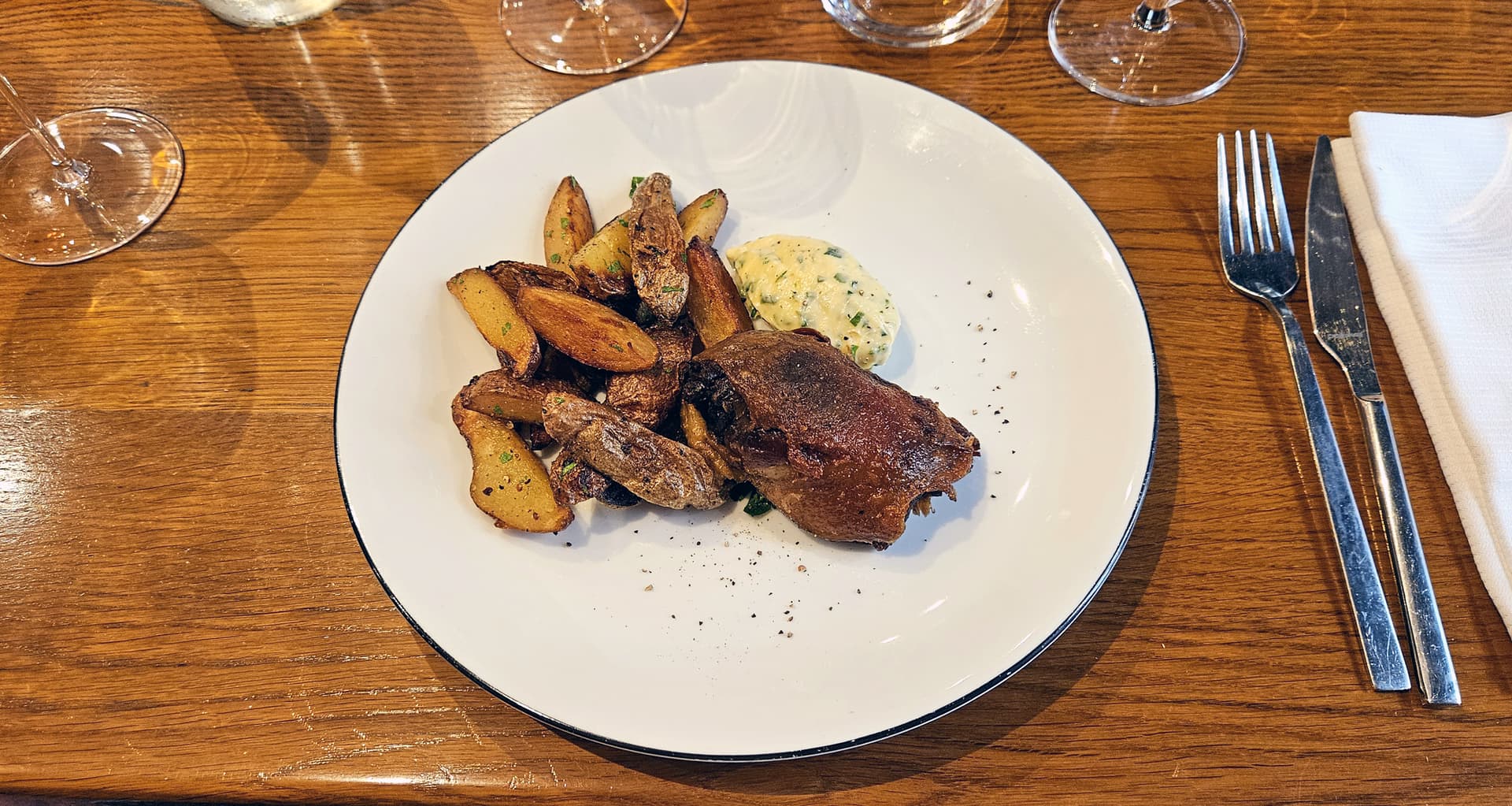
You really can’t go wrong with some duck and fries, either.


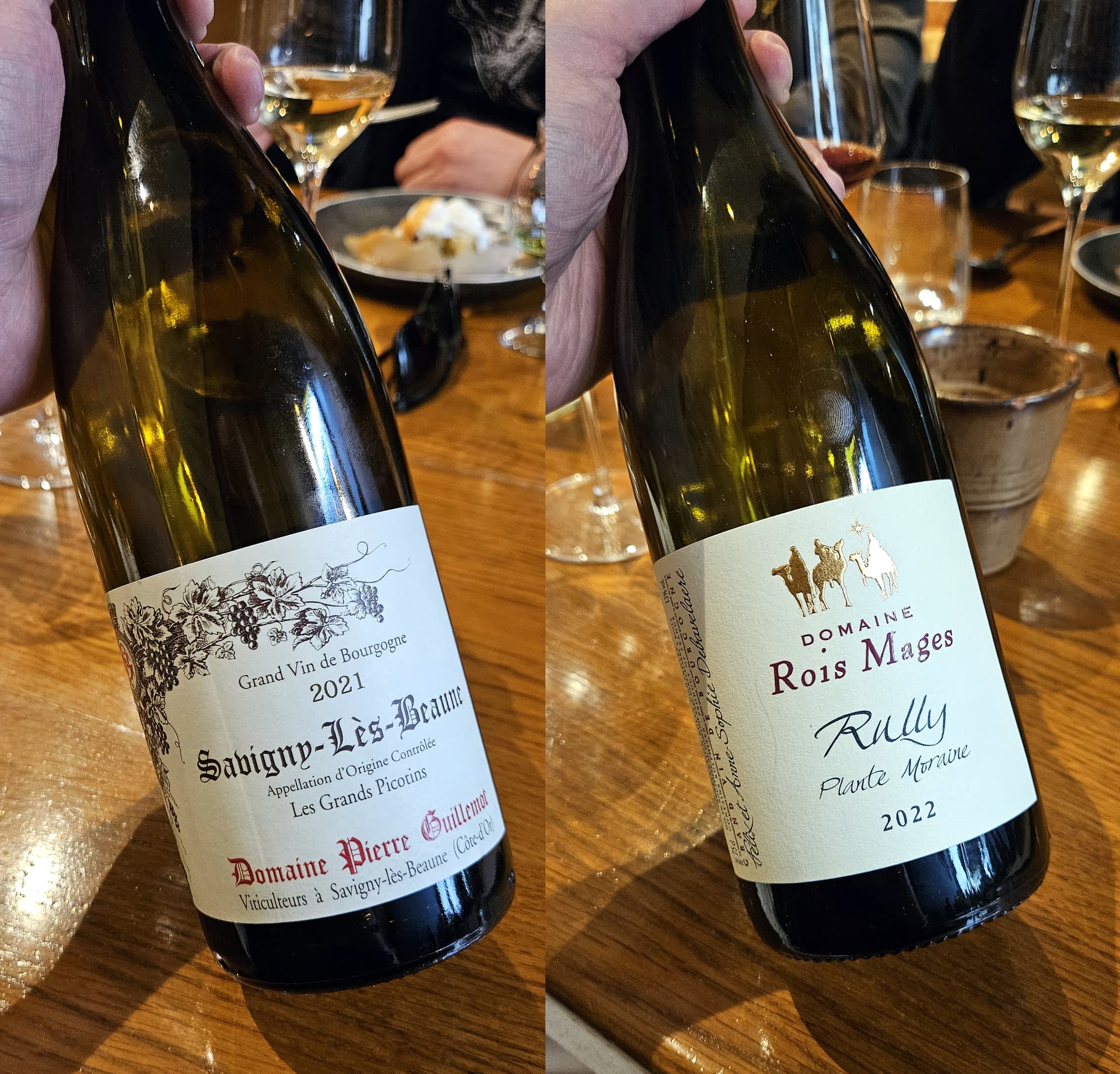
The wines.

  • 2021 Domaine Pierre Guillemot Savigny-lès-Beaune Les Grands Picotins - France, Burgundy, Côte de Beaune, Savigny-lès-Beaune (23.4.2025)
    100% organically farmed Pinot Noir from lieu-dit Les Grands Picotins in Savigny-lès-Beaune. A rather high proportion of grapes were vinified in whole bunches. Fermented and macerated with the skins for two weeks in oak vats. Aged in mostly old oak barrels for 18 months. 12,5% alcohol.

    Luminous, youthful and translucent ruby-red color. The nose feels fragrant, perfumed and expressive with aromas of brambly raspberries, some floral notes of violets, a little bit of fresh red cherry, light crunchy cranberry notes, a hint of lingonberry juice, a touch of spicy Pinosity and a faint whiff of stemmy character. In other words, very much textbook Burgundy Pinot nose. The wine feels delicate, sophisticated and crunchy on the palate with a light-to-medium body with bright flavors of fresh raspberries and tart lingonberries, some fragrant notes of violets and whole bunch spice, a little bit of stony minerality, light peppery notes, a primary sweet-yet-tart hint of cranberry jam and a touch of savory wood spice. The wine is high in acidity with supple and gentle medium-minus tannins. The finish is dry, long and spicy with a youthful aftertaste of crunchy lingonberry and cranberry, some brambly raspberry, a little bit of stony minerality, light floral notes of violets, spicy hints of stemmy character and earthy Pinosity and a touch of sour cherry bitterness.

    A very lovely, elegant and delicate Côte de Beaune red. Not a wine with much power or weight, but one that makes up the lack of oomph with its sense of finesse, layered nuances of flavors and very expressive overall nature. Even if the wine isn't big or weighty, nor hasn't got much in the way of tannic structure, the wine packs enough acidity to lend great intensity to the flavors and sense of freshness and structure to the palate. The wine might not be built for the very long haul, but as the wine is still so very youthful and still borderline primary, I can see it not just keeping but also benefiting from at least a handful of years in a cellar. A versatile food wine for lighter fare and a solid choice for the fans of delicate, perfumed Pinot Noir. 67€ in a restaurant.
    (92 points)

  • 2022 Domaine Rois Mages Rully Plante Moraine - France, Burgundy, Côte Chalonnaise, Rully (23.4.2025)
    100% Chardonnay from a parcel with approximately 35-yo vines. 13% alcohol.

    Pale-to-medium-deep yellow-green color. The nose feels ripe and youthful with aromas of sweet citrus fruits, some juicy Golden Delicious apple, light creamy oak tones, a little bit of fresh nectarine, a hint of honeydew melon and a primary touch of pear. The wine feels clean and quite broad on the palate with a medium-to-moderately full body and youthful flavors of ripe nectarine and Fuji apple, some stony mineral notes, a little bit of fresh white peach, light leesy tones, a zesty hint of citrus fruits and a touch of crunchy cantaloupe. Balanced, moderately high acidity. The finish is juicy, long and quite fruit-driven with sweetly-fruited flavors of white peach and cantaloupe, some leesy creaminess, light stony mineral notes, a little bit of savory wood spice, a hint of ripe citrus fruits and a sweet, primary touch of pear.

    A ripe and slightly sweet-toned but also enjoyably fresh and clean white Burg with a nice, balanced acid structure and almost imperceptible oak influence that only adds a little bit of creamy complexity to the flavors without obfuscating anything. Not a wine that will blow your socks off - just a nice, versatile food wine. The wine is perfectly drinkable already now, but seeing how the wine still exhibits some sweet primary fruit flavors, I can see it benefiting from 2-4 years of additional aging. 49€ in a restaurant.
    (90 points)

After the lunch we also checked out two other wine shops: Athenaeum (didn’t buy anything); and L’Arche du Vin (bought a Benoît Moreau Saint-Aubin 1er Cru to be shared with the four of us on a later date, and a Chamonard Morgon). After our tiny shopping spree we returned back to Pepita’s at Le Comptoir des Tontons, picked up our wines, and continued on our way to our next appointed visit in Vosne-Romanée.

14 Likes

At CdBrialles can they get a forklift in the 14th Century cellar?

I see some of the concrete vats have what look like permanent name tags: do they reserve those tanks just for those wines?

Your guesses are as good as mine! I didn’t ask those questions, so unfortunately I don’t have an answer for you.

But from my memory the 14th century part was so crammed with such a low ceiling that I heavily doubt they can use any kinds of forklifts there.

Sounds like a great visit. CdB was one of the Burgundies that spoke the most to me in my early days, so have always had a soft spot for them. We visited in 2018 and also had a very nice time with Claude. I left motivated to buy more, but their prices started increasing as well (more power to them).

1 Like

Great write-up on Chandon de Briailles. I am a big fan of their wines and have visited there twice - in 2007 and 2016. My first visit was at the suggestion of John Gilman. I asked John for any under the radar places that I should try to visit and he suggested there. I found the young wines tough to taste during my first visit there, but a couple of nights after visiting I had a 1999 Île des Vergelesses at a restaurant in Beaune and then I could better understand what I had tasted. Been a fan ever since.

The best values in their wines were the 2007s. The Île des Vergelesses was about $35 and the Cortons and a Volnay they used to make was about $50. These wines are drinking really well right about now.

3 Likes

Yes. We had the 07 Caillerets a few weeks ago when Maureen was in Nyc and it was glorious to my tastes.

1 Like

One with the musty smell… And don’t you dare to criticize any of the wines. In best case you will hear You are a strrrrange man …

Day 3 cont’d

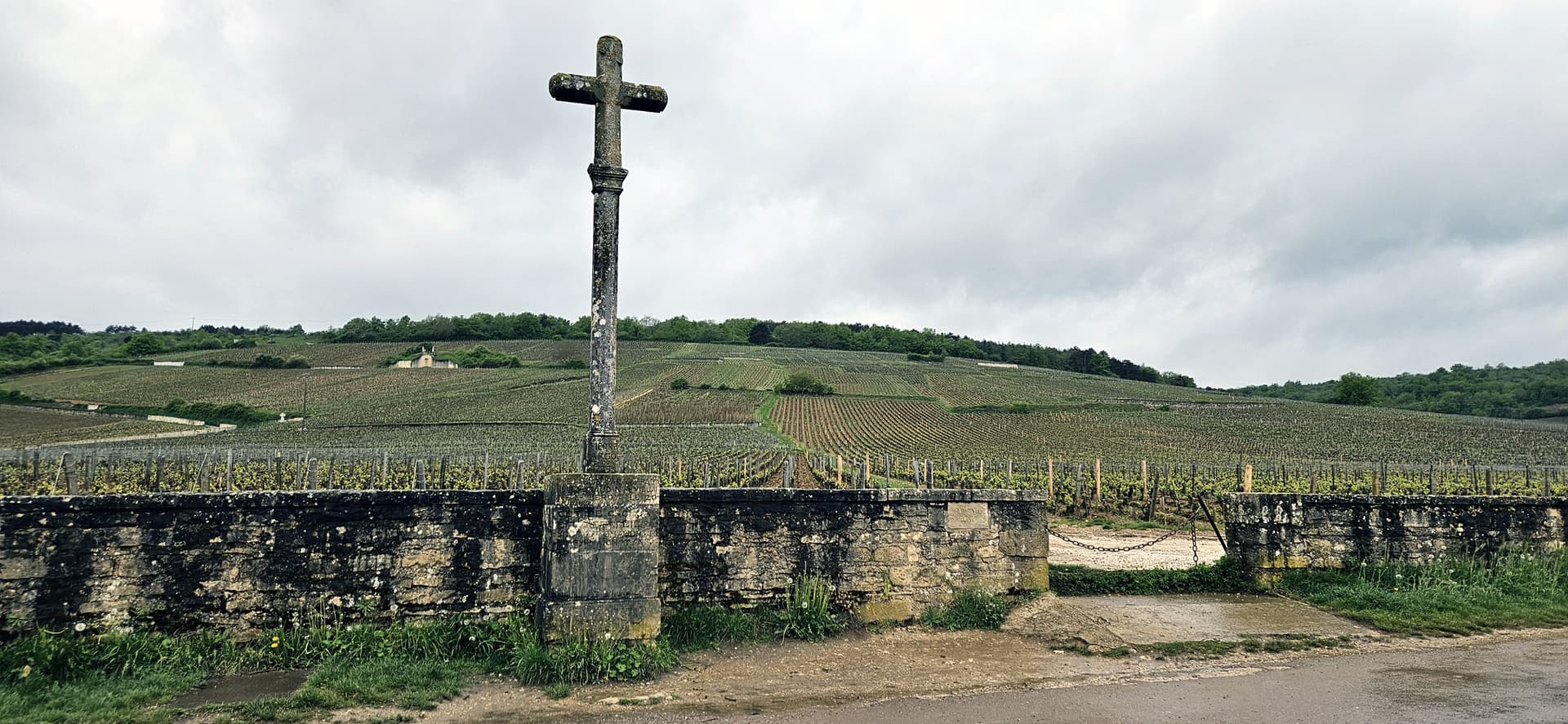
After our lunch and small shopping spree, we drove from Beaune to Vosne-Romanée further up in the north. Since we were there a little bit earlier than scheduled, we took our time to verify the existence of Domaine de la Romanée-Conti and the legendary vineyards like La Romanée-Conti, Romanée St. Vivant, Le Richebourg, Romanée Saint-Vivant and La Tâche - which were just a stone’s throw away to the west from the commune*.


Romanée Saint-Vivant (and the commune of Vosne-Romanée in the background).


Romanée-Conti (and some Richebourg to the right)…


…if I am to believe this sign here.


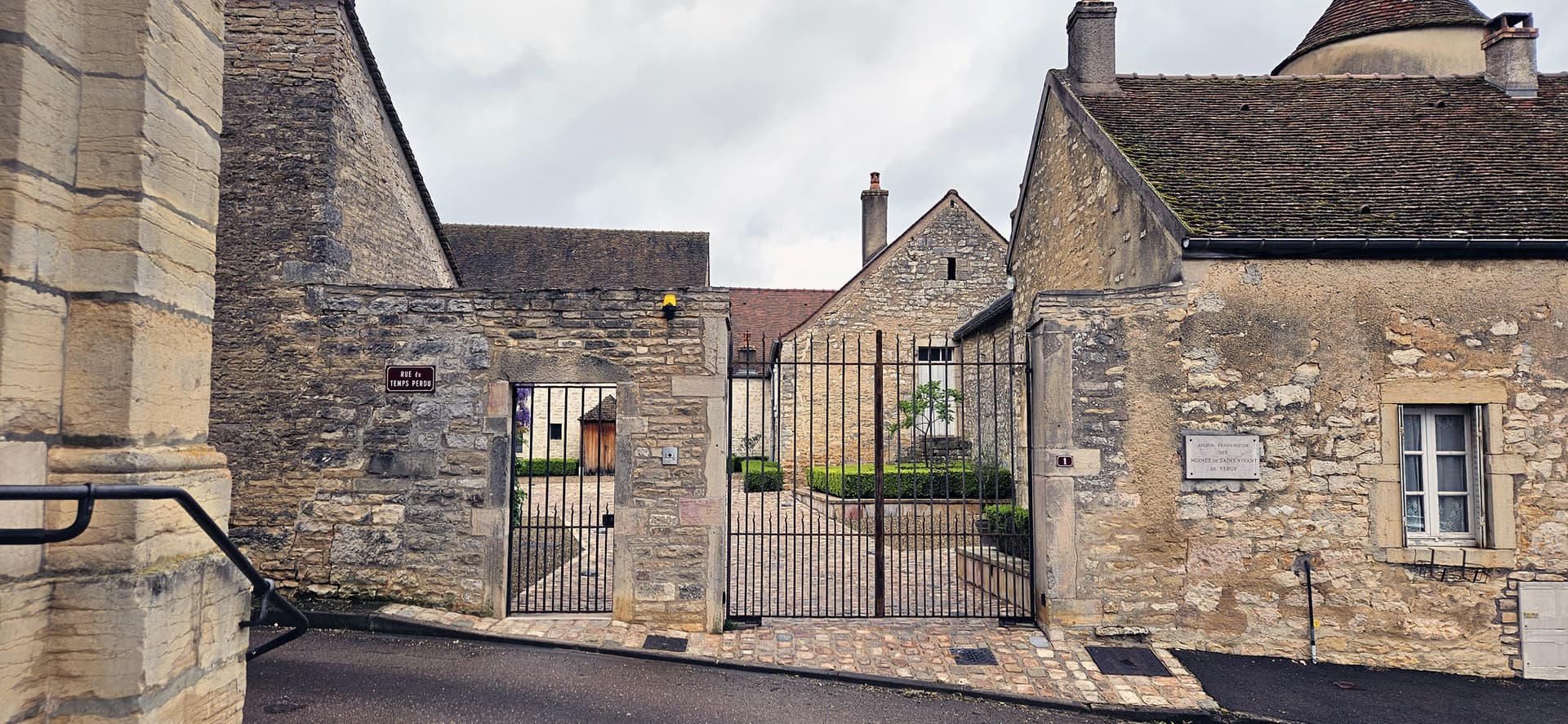
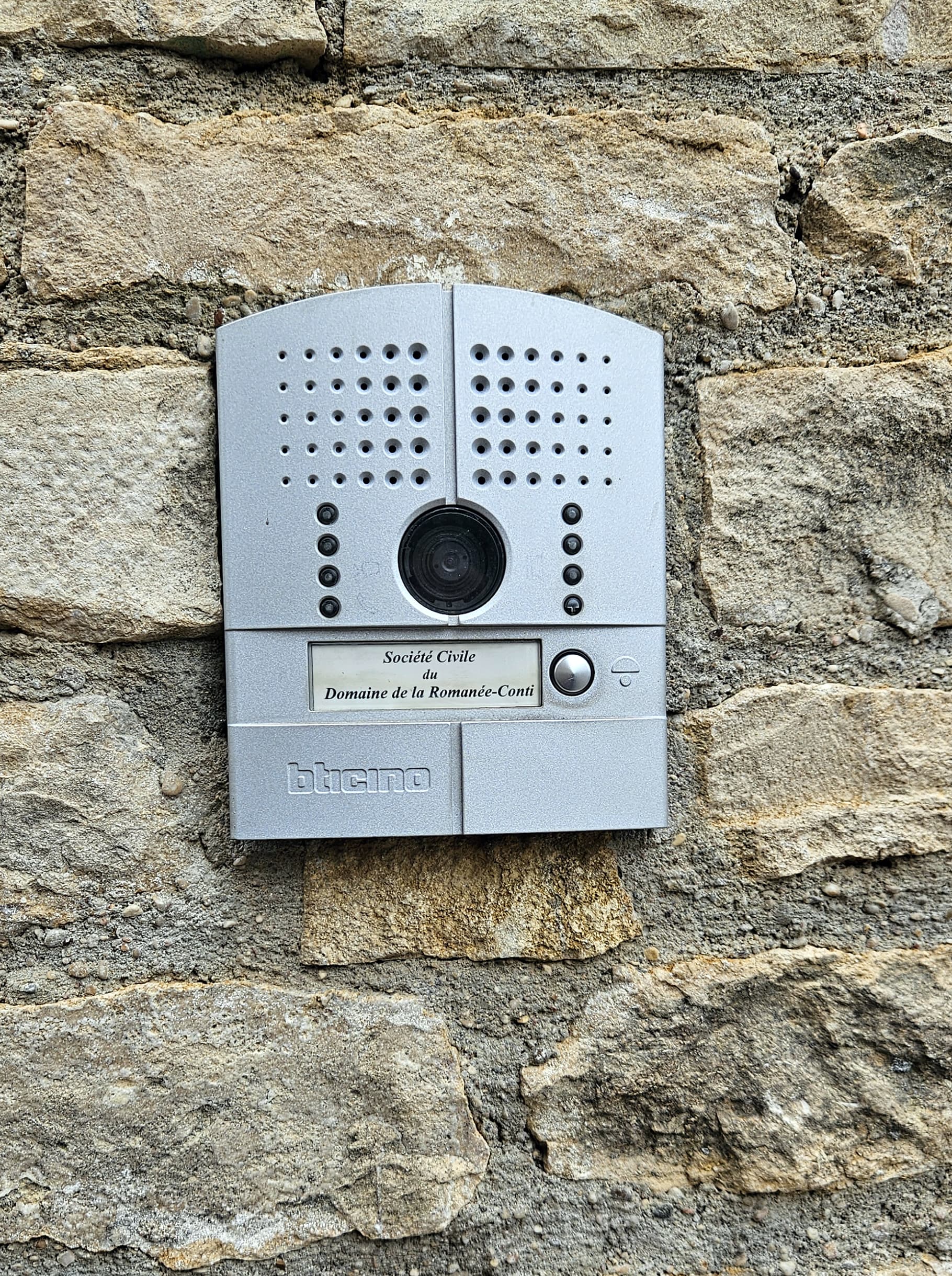
And here we have Domaine de la Romanée-Conti…


…although you have to get this close before you get any indication of what the building actually is!

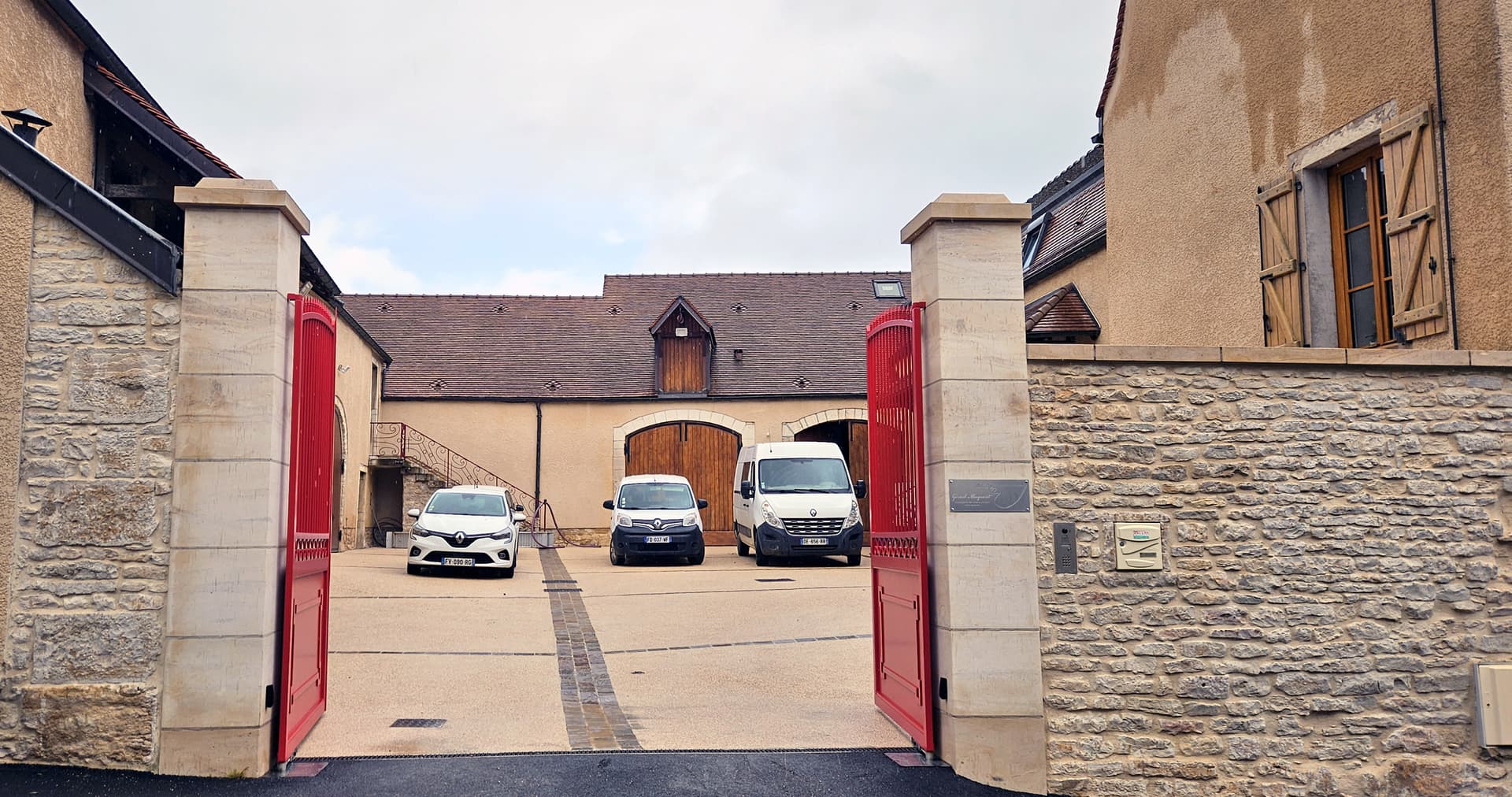
Anyways, at the time of our appointed meeting, we arrived at Domaine Gérard Mugneret, a domaine sandwiched between DRC to the west, Jean Grivot to the north, Domaine Bizot to the east and Comte Liger-Belair to the south.

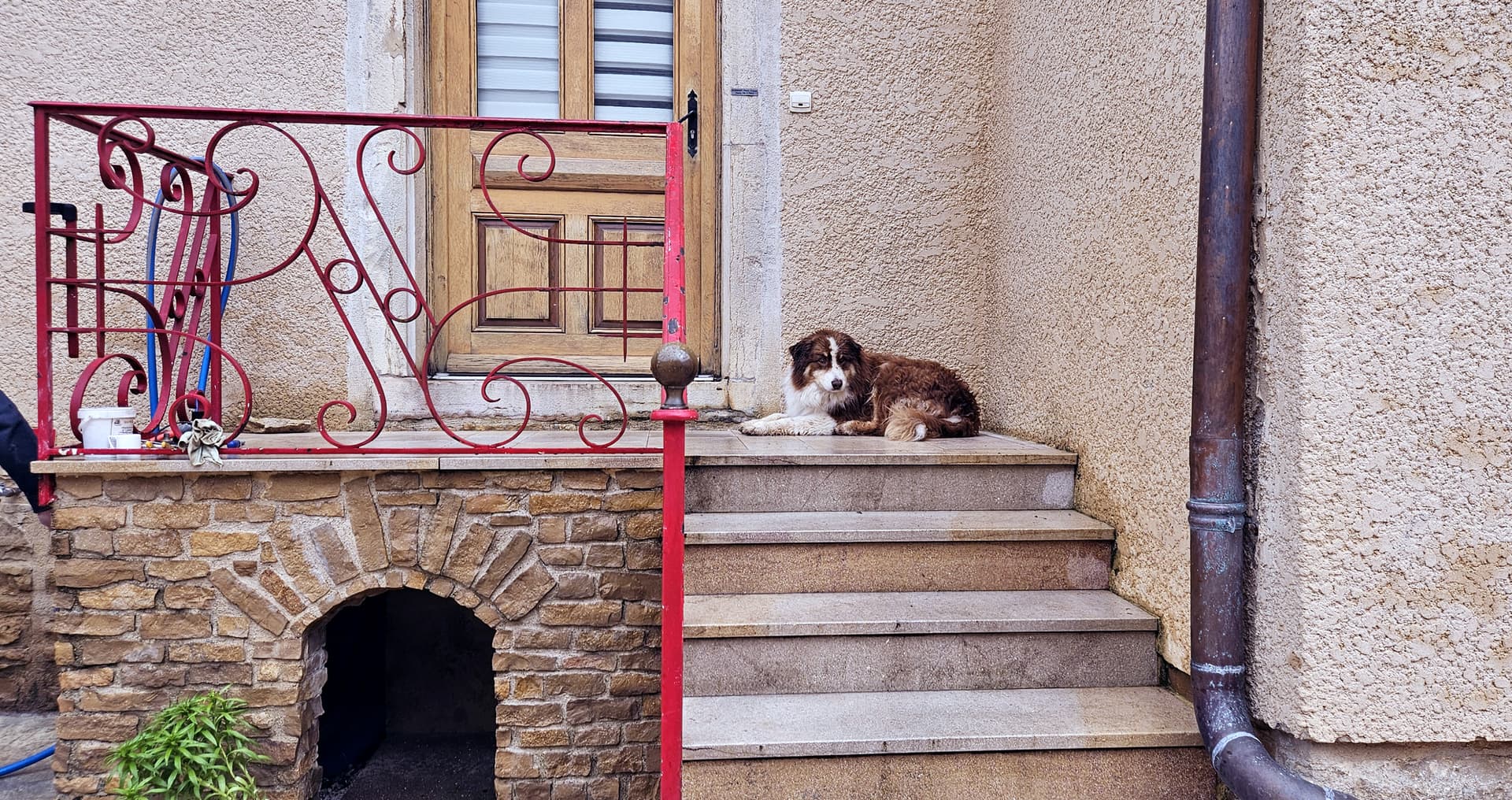
First we were greeted by the big, wet, very friendly and immensely curious dog of the domaine. However, only after a quick pet and before we could really make friends with the furry fella, Pascal Mugneret joined us in the winery courtyard and told the dog to get back to its place on the porch.


Although the doggie obviously was keen on making new friends, he reluctantly returned to the porch and just followed us from the distance.

So, Pascal Mugneret welcomed us (along with a young French winemaker who arrived to the domaine at the same time) and hurried us into the barrel cellar, as it was starting to drizzle outside.


Without much ado, Mugneret began presenting the history of the domaine, his viticultural philosophy and winemaking practices while pouring us a handful of his most recent bottlings. He seemed like a pretty no-nonsense vigneron; no superlatives or buzzwords were heard while he explained what he does and why, and with an engineer-like precision - while letting his wines do most of the talking.

  • The estate has its beginnings in the early 1900’s, when Pascal Mugneret’s great-grandfather Eugène Mugneret acquired some land in Vosne-Romanée and Eugène’s son (and Pascal’s grandfather), René Mugneret started tending to the vineyards and producing wine.
  • René’s son, Gérard, started making his wine already in 1973, but he took over the family domaine completely only 15 years later, in 1986.
  • Gérard’s son, Pascal, returned to the family domaine in 2005, taking over the operations from his father. Upon his return, the domaine stopped employing herbicides and they did away with synthetic sprays completely by 2010.
  • Today the estate covers about 15 hectares of vineyards, including approximately 0,55 hectares of Grand Cru.
  • The domaine has employed biodynamic philosophy in their viticulture and winemaking since 2011.
  • The production is almost completely Pinot Noir with a tiny bit of Gamay. Currently they produce 15 different labels of which two are Vin de France, two are regional Bourgogne rouges and the rest are Village-level appellation or higher.
  • The domaine employs indigenous yeasts in fermentations; however, they prefer to use a pied de cuve that is prepared a week ahead, rather than employing completely spontaneous fermentation. Pascal Mugneret described using pied de cuve by saying “it’s like throwing a match into gasoline”.
  • The domaine uses no cold soak; the fruit is vinified immediately. Fermentations happen without any temperature control and the fruit is normally macerated with the skins for 12 days. Pascal destems part of the fruit, depending on the vintage and fruit quality - today approximately from 50% to 100% of the fruit is vinified in whole bunches.
  • The wines age mostly in 228-liter pièces, but he also employs some 400-liter demi-muids. Pascal renews about 25% of the barrels annually. He says he is working towards a smaller proportion of new oak, but he admitted that cleaning old barrels is difficult and he’d rather replace an old barrel than gamble with it.
  • The SO2 additions are tiny, typically only 25 mg/l.
  • Due to the unpredictable weather patterns, his annual production can fluctuate considerably; it was 33000 bottles in 2023, but mere 8000 bottles in 2024!


Some wines aging away in barrels in Mugneret’s cellars.

Pascal Mugneret seemed like a vigneron who is not afraid to experiment and see what works and what doesn’t. He explained how he has increased the portion of whole-bunch fruit over the years; or how he employs less sulfites or extracts less and less every year, as he experiments year by year with his different cuvées while also following what other producers around him are doing; and which of these choices seem to result in a style of wine he finds most representative of both his work and the appellations which he works with. For example some years ago he did away with his old Vosne-Romanée cuvée, in which he used fruit from all his village-level vineyards. Today he vinifies three different cuvées instead: one with fruit only from parcels in the center of the appellation (Précolombière), perhaps best representing the village style; one made by blending fruit from the northern part and fruit from the southern part (Quatrain), as these parts don’t really seem to work on their own, but complement each other perfectly; and one lieu-dit (Aux Vigneux), because Pascal thinks the two parcels from this vineyard can easily stand on their own. This way he can present three distinctive village-level cuvées, all with individual identities, instead of just one cuvée, where all the details get evened out and lost. He seemed to be quite proud of these cuvées and also seemed quite happy when we commented how the two cuvées that we tasted were indeed stylistically rather distinct.

Here are the wines we tasted during our visit. Since the wines were very recently bottled, it was quite unsurprising that they all seemed still very youthful - primary, even - with some unintegrated oaky tones still sticking out a bit. However, the overall style was very promising, and I can expect these wines to perform beautifully as they age a bit more, losing the primary qualities and integrating those oak notes with the fruit a little bit better.

  • 2023 Gérard Mugneret Vosne-Romanée Quatrain - France, Burgundy, Côte de Nuits, Vosne-Romanée (23.4.2025)
    100% biodynamically farmed Pinot Noir from four lieux-dits in Vosne-Romanée: Ormes and Chalandins from the northern part of the appellation, bringing fruit, richness and breadth; Réas and Jaquines from the southern part, contributing to the freshness, structure and minerality. 20% of the fruit was destemmed, 80% in whole clusters. Fermented spontaneously with a pied de cuve, macerated with the skins for approximately 12 days. Aged in predominantly old oak barrels. Very tiny SO2 additions during the élevage and bottling.

    Youthful, translucent ruby red color with a purplish hue. The nose feels youthful, very fruit-forward and still a bit primary with aromas of boysenberries and blueberries, some floral violet notes, a little bit of candied primary fruit, light black cherry tones and a hint of savory spice. The wine feels youthful, vibrant and juicy on the palate with a medium body and succulent flavors of black cherries, some boysenberries and bilberries, a little bit of licorice root, light plummy tones, a floral hint of violets and a youthful candied touch of primary fruit. The moderately high acidity and supple, gently grippy medium tannins both keep the wine firm and balanced. The finish is juicy, youthful and fruit-driven with a moderately long aftertaste of boysenberries and bilberries, some dark plummy tones, a little bit of licorice, light floral notes of violets and a primary hint of raspberry jellies.

    An attractive, open and accessible Vosne-Romanée that is still way too youthful and primary to be fully enjoyed - it is hard to get a full picture of the wine as the flavors profile is still quite dominated by the sweet, candied primary fruit flavors. However, the wine shows good sense of balance and harmony and I have no doubts the wine will unfurl nicely over the next few years. With its quite exuberant nature and pretty open-knit structure, the wine doesn't really call for any additional aging, and I feel the wine is not built for the long haul, either. Most likely the wine will hit its stride after another 2-3 years and probably best drunk within 10-12 years from the vintage. A nice, fruity cuvée.
    (90 points)

  • 2023 Gérard Mugneret Savigny-lès-Beaune 1er Cru Les Gravains - France, Burgundy, Côte de Beaune, Savigny-lès-Beaune 1er Cru (23.4.2025)
    100% biodynamically farmed Pinot Noir from 1er Cru Les Gravains in Savigny-lès-Beaune. This 0,29-hectare (0,72-acre) parcel was acquired by Mugneret in 1994 and it was originally planted in 1902. It has never been pulled out altogether; only when some vines die or stop bearing fruit, they are replanted one-by-one - meaning the vine ages vary wildly throughout the parcel. 40% of the fruit was destemmed, 60% in whole clusters. Fermented spontaneously with a pied de cuve, macerated with the skins for approximately 12 days. Aged in predominantly old oak barrels. Very tiny SO2 additions during the élevage and bottling.

    Youthful, quite translucent ruby-red color with a subtly blueish hue and a rather colorless rim. The nose feels youthful, expressive and quite primary with perfumed aromas of violets and blueberry juice, some ripe boysenberry tones, a little bit of plum pit, light lactic notes of MLF, a hint of toasty wood spice and a primary touch of raspberry jellies. The wine feels firm, youthful and rather structure-driven on the palate with a medium body and intense flavors of ripe boysenberries and brambly black raspberries, some woody tones, a little bit of earthy Pinosity, light toasty oak nuances, a lactic hint of blueberry yogurt and a touch of sweet exotic spices. The combination of high acidity and moderately grippy tannins make the overall feel pretty sinewy and tightly-knit. The finish is long, youthful and pretty tannic with an intense aftertaste of blueberries and some inky tones, a little bit of ripe black cherry, light floral notes of violets, oaky hints of savory wood and sweeter toasty spices and a touch of crunchy dark plums.

    A quite firm and balanced but also way too youthful Savigny-lès-Beaune 1er Cru: the toasty new oak notes are still a little bit to the fore and as the candied primary fruit flavors and lactic MLF nuances still dominate the nose and the flavors, it is painfully obvious that the wine has been only very recently bottled. Nevertheless, seeing it is brimming with bold - and surprisingly dark-toned - old-vine fruit, and packing an impressive sense of structure with its high acidity and rather assertive tannins, it is obvious that this wine is made for the long haul. At the moment the wine might not be showing its best, but I'm quite sure this wine will make very fine old bones. Let it age for some time; I'd say the wine has lost its candied primary fruit flavors and lactic tones in 4-5 years, but most likely this wine ain't going to peak before its 15th birthday. I fine red Burg for people with enough patience; expect the score to go up as the wine ages.
    (91 points)

  • 2023 Gérard Mugneret Vosne-Romanée Cuvée Précolombière - France, Burgundy, Côte de Nuits, Vosne-Romanée (23.4.2025)
    100% biodynamically farmed Pinot Noir from three lieux-dits in the middle of the Vosne-Romanée appellation: Pré de la Folie, Colombière and Aux Communes. 30% of the fruit was destemmed, 70% in whole clusters. Fermented spontaneously with a pied de cuve, macerated with the skins for approximately 12 days. Aged in predominantly old oak barrels. Very tiny SO2 additions during the élevage and bottling, which happened mid-March, 2025.

    Somewhat translucent and quite dark ruby-red color with a youthful purplish hue. The nose feels quite big and juicy with ripe, youthful aromas of blueberries and elderberry juice, some floral notes of violets, a little bit of sweet blackberry, light cherry tones, a hint of earthy Pinosity and a touch of stemmy spice. The wine feels open, expressive and very youthful on the palate with a medium body and vibrant flavors of dark plums, black raspberries and ripe bilberries, some elderberry juice, light toasty notes of sweet oak spice, a little bit of licorice root, a floral hint of violets and a faint lactic touch of blueberry yogurt. The overall feel is very fresh and enjoyably firm with the high acidity and moderately grippy medium-plus tannins. The finish is long, juicy and rather grippy with nuanced flavors of ripe bilberries and boysenberries, some elderberry juice, light lactic notes of MLF, a little bit of gravelly minerality, a subtle hint of toasty oak spice and a touch of brambly raspberry.

    An attractive, serious and promising Vosne-Romanée that is still way too youthful for its own good. Unlike the 2023 Savigny-lès-Beaunes Aux Gravains and 2023 Vosne-Romanée Quatrain we tasted at the same time, this wine didn't really exhibit any obvious candied primary fruit flavors. Nevertheless, it still came across as very youthful due to its somewhat pronounced, unintegrated oak tones and subtly lactic nuances of MLF, reminiscent of blueberry yogurt. You can easily taste this is a serious, quite intensely flavored and wonderfully structure-driven Vosne-Romanée, but not one open for business right now. It's hard to say which wine I preferred more - maybe that Savigny-lès-Beaune due to its even more structured overall feel - but conversely, most likely this Précolombière will arrive earlier in its optimal drinking window. It was also fun to contrast the more open-knit, less burly and more open-knit Quatrain to the more brooding, darker-toned and structure-driven character of Précolombière. This is a fine wine with lots of upside; expect the score to go up as the wine ages.
    (91 points)

After we had gone through the tasting and were preparing to leave, we still had to ask whether Mugneret had any wines to sell. Alas, no luck here - nothing was available. Nevertheless, we thanked Pascal for the very interesting and informative visit and made our way out from the cellar while Pascal and the visiting French winemaker stayed behind to discuss.

A small surprise came when we exited the winery as there was a small girl crying outside the gates of the domaine, in the cool April drizzle. With our somewhat limited French (especially with bawling kiddos) we managed to understood that she was looking for his dad and we figured out that apparently the young French winemaker still talking in the cellar with Pascal was the missing parent. I guess the young father had left his daughter sleeping in the car while stealing away for the winery visit, but the little one had woken up early and gone looking for his dad. Fortunately all things went well and the kid didn’t wander away but stayed where he thought his pop was!

From Vosne-Romanée we drove back to Meursault, where we had a table booked in Le Soufflot - an eatery Ilkka had spoken of very highly I don’t even know how many times.

Yeah, what can I say? The place really lived up to the expectations Ilkka had set. The food was eminently tasty; the wine list was both impressive and afforable; and the service was just on point, being very friendly, warm and personal, and in a very naturally hospitable, not one bit overdone way. I enjoyed every second I spent there - and it seemed like everyone else did as well.


The dinner kicked off with an absolutely humongous (and delicious) gougère.


A radish antipasto.


A funky mushroom bowl antipasto.


I can’t even remember what these antipasto balls were!


Pickled herring entrée.


The main course: meat dumplings and some hedonistic, cheesy mashed potatoes (in a cup).


The “strawberry milkshake” dessert.


No Chartreuse for a digestif this time - a well-made espresso is enough tonight!


And, finally, the wines - along with the tasting notes:

  • 2020 Coche-Dury Meursault - France, Burgundy, Côte de Beaune, Meursault (23.4.2025)
    100% Chardonnay from village-level vineyards in Meursault totaling to 1 hectares (2,5 acres), planted between 1930 and 1975. Fermented spontaneously in oak. Aged for 16-18 months in oak barrels (approximately 20% new). 12,5% alcohol.

    Youthful and quite intense yellow-green color. The nose feels maybe a tiny bit closed but still very clean, vibrant and attractive at the same time, exhibiting fresh aromas of sweet lemony tones and citrus rind, some creamy oak tones, light fragrant floral nuances of apple blossom, a hint of grated ginger, a touch of Asian spices and a faint buttery undertone of oak. Contrasting the slightly subdued nose, the wine feels textural and even surprisingly intensely-flavored on the palate with a medium body and somewhat concentrated flavors of sweet lemony citrus fruits, juicy Golden Delicious apple and tangy salinity, some fresh nectarine tones, a little bit of honeydew melon, light mineral notes of wet rocks and chalk dust, a hint of creamy oak and a floral touch of apple blossom. The wine might not feel crisp and racy, but it is still very much structured and even relatively light on its feet, thanks to the high acidity along with a tiny bit of additional phenolic firmness. The mouthwatering finish is long, intensely-flavored and mineral with an aftertaste of ripe citrus fruits and fresh white peach, some saline mineral tones, a little bit of juicy tangerine, light creamy oak nuances, a hint of honeyed richness and a savory, subtly bitter touch of phenolic spice.

    A very serious, well-delineated and intensely-flavored Meursault that effortlessly combines fresh yet ripe fruit flavors, great sense of structure, cool minerality and subtle oak nuances into a pure, vibrant and beautifully fine-tuned package. Although still very young, the wine doesn't come across as particularly primary at any point, nor does it show any of that smoky reduction Coche-Dury is so known for. This is very much open for business right now. However, with this much intensity and structure, I have no doubts this wine will age wonderfully for at least a few decades. While an excellent white right now, I heartily recommend letting the wine age for at least another 15-ish years, just to realize all the potential residing here. Solid value at 140€ in a restaurant.
    (93 points)

  • 2013 Jacques-Frédéric Mugnier Nuits St. Georges 1er Cru Clos de la Maréchale - France, Burgundy, Côte de Nuits, Nuits St. Georges 1er Cru (23.4.2025)
    100% Pinot Noir from 45-50 yo vines in 1er Cru Clos de la Maréchale, a 9,8-hectare monopole of the Mugnier family. The fruit is fully destemmed. Aged in predominantly old oak barrels. Bottled unfined and unfiltered. 12,5% alcohol.

    Translucent and slightly evolved pomegranate color. The nose feels slightly evolved, slightly sweet-toned and subtly meaty with attractive, nuanced aromas of ripe cherries and stewed strawberries, some tobacco, light meaty tones, a little bit of earthy Pinosity, floral hints of violets and a faint mushroomy touch of forest floor. The wine feels silky, quite open-knit and slightly evolved on the palate with a medium-to-moderately full body and layered flavors of ripe black cherries and juicy strawberries, some evolved notes of earth and wizened red plums, light savory nuances of meaty umami, a hint of tobacco and a touch of earthy Pinosity. The moderately high acidity and somewhat grippy medium tannins contribute to the wine's overall firmness and sense of structure. The finish is juicy, somewhat grippy and subtly sweet-toned with a long, slightly evolved aftertaste of ripe strawberries and cherries, some raspberry marmalade, light savory notes of meaty umami, a little bit of pipe tobacco, fragrant hints of violets and dried flowers and a touch of earth.

    A tasty, harmonious and well-proportioned 1er Cru NSG that is in a good spot right now. The wine obviously isn't made to be a big or impressive wine, but it isn't particularly delicate either - there's definitely some sense of richness, breadth and sense of weight here. The style is pretty open-knit, yet definitely not without good sense of firmness and structure. You can start to see first signs of tertiary development, but the overall feel is still pretty youthful for a 12-yo red Burg, which makes me think this wine is going to continue on an incline for some time more. It is lovely right now, but there's still a little bit of room for further evolution, so keeping it for another dozen years can yield some pleasant results. Drink now or keep. Solid value at 130€ in a restaurant.
    (94 points)
8 Likes

The '21 Coche-Dury Meursault I had a couple of months ago was very similar to your note: lots of intensity, firm acidity, very pure fruit, cool minerality, and no smoky reduction or excessive oak. One difference was the '21 didn’t come across as textural as the '20 does in your note (or even faintly buttery). Nonetheless, the '21 was really delicious, but very different from what I was told was the Coche-Dury style (for me, that was a big bonus!).

Day 4

We woke up to a rather gray and chilly morning in Meursault. Since we were to leave Burgundy behind today, we checked out from our motel and headed to the Meursault town center in the hopes that we would find a place where we could break our fast.

Today was also Mikko’s birthday, but since he had promised to personally maim us if we were to sing him happy birthday, we just quietly acknowledged that he was now one year older than yesterday.


Gray Meursault morning.

As luck would have it, we managed to find a boulangerie and a café! Unfortunately these were two separate addresses on the opposite ends of the plaza, so we faced a problem: how we could both have our breakfast AND coffee at the same time, in one place?


La Place. If you need a place to be in Meursault in the morning, I can heartily recommend this café - just because it was apparently the town’s only place that was open this early!

Well, we imagined these French establishments would be much more flexible than our often too rigid Finnish counterparts, so we handled the situation as diplomatically as any Finns would do: we first went to the café to ask if it was ok to eat our breakfast from the boulangerie there with the coffee (the bartender said yes of course; one of the construction workers hanging at the bar also jokingly shouted after us that we should bring some breakfast for them as well); then we went to the boulangerie to get something to eat; and finally we came back to the café to eat and have our coffees. We actually bought a couple of croissants for the construction workers, too - that oughta teach 'em to fool around with Finnish people!


A nutritious morning meal of warm-ish croque-monsieur and a refreshing Coke.

Once we had finished our healthy breakfast we returned back to our van and relocated ourselves to the neighboring commune of Volnay where we had our first visit of the day at Joseph Voillot.

We were welcomed by Étienne Chaix, the current head of the winery and, once again, one of those no-nonsense vignerons who seemed to be more at home tending vines than promoting the winery. Nothing wrong with that! He truly seemed to be happy letting his terrific wines do most of the talking, although he always gladly recited all kinds of interesting tidbits regarding the winery and the wines whenever needed. I was also impressed how seriously he took all the details - no matter how trivial questions we had in mind, he had answers to all of them right off the bat! Furthermore, we were also given a breakdown of the vineyard holdings and average ages of all the important parcels the domaine farms - something we did not see at any other winery visit! As a wine geek, I can really appreciate this kind of attention given to details.


The old Voillot chai on, right next to Place de l’Eglise, the Volnay village square.

Anyways, Chaix first showed us the reception area, which is basically the courtyard that opens to the village square of Volnay. From there he took us downstairs, to the underground vinification facilities that also included an ancient barrel cellar built in the late 17th century. The cellar is passive, meaning that the temperatures range from 10°C on the coldest days of winter to 20°C in summer. Showing us around, he also pointed a few lone barrels, saying those were the whites of the domaine - in good vintages they can make up to 6 barrels of white, but in some vintages the production is just two barrels. He also showed us the personal stash of the domaine wines, reserved only for special family occasions - the oldest vintage there was from 1934!


The ancient barrel cellar - you can see the few barrels of white wine right next to the wall on the left.

  • The domaine was originally founded by Joseph Voillot - Chaix’s grandfather’s great-grandfather - in the 1840’s. This means that Chaix is currently the 6th generation in charge of the domaine. It began not as a winery, but as a mixed farm that was also sharecropping some vineyards, as it was common back then.
  • Jean-Baptiste Voillot, Joseph’s son, increased the holdings in the late 1800’s by purchasing more vineyards and emphasizing wine production more, expanding the vineyards holdings to 3 hectares (7,5 acres).
  • Gradually, generation by generation, the production moved more towards wine and before long the domaine began to also bottle their own wine - not just selling the wine by the barrel. By the 1960’s about third of the production was sold in bottle.
  • Today the domaine covers 8 hectares (20 acres) of sustainably farmed vineyards across 24 parcels in Volnay, Pommard, Beaune and Meursault. They farm mainly Pinot Noir, but they also have about 0,3 hectares of Chardonnay in Meursault, and a tiny bit of Gamay that is blended into Bourgogne Passetoutgrain. The average annual production hovers around 40,000 bottles, but this number can vary drastically depending on the vintage conditions.
  • The average vineyard age at Voillot is surprisingly old: the oldest vineyards are almost centenarian, whereas the average even in the youngest vineyards is at least 40 years. This is mainly because Chaix’s grandfather had three daughters and none of them wanted to take on the family domaine; thus he didn’t really buy or replant anything. However, at some point in the 1980’s his son-in-law and Chaix’s uncle, Jean-Pierre Charlot, joined the family domaine, working there part-time in addition to his day job. Ultimately in 1995 Charlot took over the family domaine, but since he had no successors to continue after him, no new vineyards were purchased or replanted - he continued to work with the old family holdings.
  • Étienne Chaix joined the family domaine in 2016, marking the transition period from his uncle’s ownership to him. Jean-Pierre Charlot retired in 2019 and Chaix has been at the helm since.
  • The style of the winery is utterly traditional. All the vineyards are worked the same way and the wines are all purposefully vinified in an identical fashion every year, meaning that all the fruit gets 100% destemmed; the wines are fermented spontaneously and macerated with the skins for 12 to 20 days in concrete and stainless steel tanks, depending on the vintage; and aged in oak barrels for 14-16 months, also depending on the vintage. About 10 to 20% of the barrels are renewed annually, sometimes even less so. The regional and village-level wines are aged exclusively in the old oak casks, while the few new barrels are used in aging the 1er Crus. Finally the wines are bottled unfined and usually unfiltered. All this is simply to highlight the terroir of the villages and vineyards; if all the wines are produced the same way, the only meaningful differences in the wines come from the terroir.
  • Today only 10% of the production is sold locally in France and up to 90% is exported.

After the quick tour around the winery building and the cellar, we had the opportunity to taste the domaine wines. Unlike in some places, we didn’t have a just a small, curated selection of wines, but actually all the reds (apart from Passetoutgrains) from the 2023 vintage, plus one older wine, just to show the direction in which the wines should go with age! Unfortunately the number of whites produced in 2023 was so small that it didn’t allow Chaix to open any for us this time. However, we didn’t mind one bit - the lineup was really impressive just the way it was!

It was very interesting and rewarding to go through so many different wines that were made in such an identical fashion! To me, Voillot Volnays seemed a bit darker-toned and more muscular than your typical Volnays, whereas the Pommards seemed slightly more red-toned and supple compared to the standard Pommard ideal - making the wines come closer to each other, stylistically. Even then, I felt that the Volnays seemed somewhat lighter and more delicate compared to the slightly burlier and more darker-toned Pommards. Basically the only wine that was markedly different was the surprisingly dark-fruited and still super primary and sweetish Beaune 1er Cru Aux Coucherias.
  • 2023 Domaine Joseph Voillot Bourgogne Vieilles Vignes - France, Burgundy, Bourgogne (24.4.2025)
    100% Pinot Noir from two lieux-dits: the 1,08-hectare Les Longs Bois, planted in 1953, 1965 and 1966; and the 0,28-hectare Les Grandes Terres, planted in 1965, 1966 and 1999. The average vine age is approximately 60 years. All fruit fully destemmed, then fermented spontaneously and macerated with the skins over a period of 14-18 days. Aged in old oak barrels for 14-16 months. 13% alcohol. Bottle no. 10141.

    Youthful, translucent raspberry-red color with a slightly purplish hue. The nose feels youthful, juicy and still rather primary with aromas of ripe cherries and candied raspberry jelly tones. The wine feels youthful, juicy and pretty linear with a medium body and bright flavors of raspberries, some ripe cherry tones, a little bit of wild strawberry, light gravelly mineral tones, a primary hint of fruit candies and a touch of something metallic. The high acidity and surprisingly firm, moderately grippy tannins make the overall feel rather structured and serious. The finish is clean, youthful and rather grippy with a moderately long aftertaste of ripe raspberries, some savory spice, a little bit of wild strawberry, light primary notes of cherry marmalade and a hint of something metallic.

    A surprisingly serious and structure-driven but also way too young Bourgogne where the candied fermentation flavors still dominate quite a bit. Compared to the other Voillot wines, the overall feel is a bit simple and linear here - plus there is a tiny bit of something metallic in the taste that distracts slightly from the pleasure. Nevertheless, good value at just 16€.
    (86 points)

  • 2023 Domaine Joseph Voillot Volnay Vieilles Vignes - France, Burgundy, Côte de Beaune, Volnay (24.4.2025)
    100% Pinot Noir from six lieux-dits in Volnay: the 0,15-hectare La Gigotte, planted between 1947 and 1973; the 0,09-hectare Les Serpents, planted in 1946; the 0,49-hectare Les Grands Poisots, planted between 1954 and 1973; the 0,17-hectare Les Petits Poisots, planted in 1987; the 0,33-hectare Les Pasquiers, planted between 1930 and 1957; and the 0,15-hectare Les Lurets, planted in 1982. The average vine age is approximately 60 years. All fruit fully destemmed, then fermented spontaneously and macerated with the skins over a period of 14-18 days. Aged in old oak barrels for 14-16 months. 13,5% alcohol. Bottle no. 9994.

    Youthful, somewhat translucent ruby-red color. The nose feels fragrant but also a bit timid with slightly understated aromas of brambly black raspberries and fresh blueberries, some floral violet tones, a little bit of licorice root, light sweeter notes of ripe blackberries and a hint of crunchy red forest fruits. The wine feels silky and airy on the palate, but also surprisingly intensely-flavored - in contrast to the slightly subdued nose - with a medium-to-moderately full body and bright flavors of ripe cherries and fresh, brambly raspberries, some stony mineral notes, a little bit of sweet black raspberries, light floral notes of violets and a hint of juicy bilberries. The quite high acidity and balanced medium tannins make the overall feel come across as firm and harmonious. The finish is juicy, dry and somewhat grippy with a long aftertaste of brambly raspberries and ripe cherries, some floral violet tones, a little bit of crunchy cranberry and a youthful hint of sweet blueberry.

    A still very youthful but also thoroughly enjoyable Volnay that is very true to the appellation with its relatively airy overall feel and fragrant, red-toned aromatics. I preferred the 2023 Pommard Vieilles Vignes a tiny bit over this one, but this is nevertheless a lovely everyday wine that is going to hit its optimal drinking window quite soon, but will also probably age and improve for a good handful of years; I'd wait at least another 3-5 years with this one, because there's definitely still some room to improve - even if this is not among the most ageworthy Voillot cuvées. Fine stuff, priced according to its quality at 30€.
    (90 points)

  • 2023 Domaine Joseph Voillot Pommard Vieilles Vignes - France, Burgundy, Côte de Beaune, Pommard (24.4.2025)
    100% Pinot Noir from four lieux-dits in Pommard: the 0,31-hectare Les Saussilles planted in 1966; the 0,37-hectare Les Cras, planted between 1946 and 1989; the 0,28-hectare Les Poisots, planted between 1936 and 1983; and the 0,25-hectare Les Vaumuriens, planted between 1934 and 1963. The average vine age is approximately 63 years. All fruit fully destemmed, then fermented spontaneously and macerated with the skins over a period of 14-18 days. Aged in old oak barrels for 14-16 months. 13,5% alcohol. Bottle no. 6891.

    Youthful, moderately translucent ruby-red color. The nose feels open, quite sunny and pretty fruit-forward with aromas of ripe cherries and strawberries, some brambly raspberry tones, a little bit of spicy Pinosity, light floral notes of violets and a hint of fresh red plum. The wine feels silky, juicy and somewhat richly-flavored on the palate with a moderately full body and fruit-driven flavors of strawberries and succulent red plums, some stony mineral notes, a little bit of spicy Pinosity, light primary notes of raspberry marmalade, a hint of brambly black raspberry and a touch of savory umami. The overall feel is surprisingly firm and structured with the high acidity and moderately grippy tannins. The finish is long, ripe and quite grippy with a vibrant, sweetly-fruited aftertaste of strawberries and juicy cherries, some floral notes of violets, light brambly black raspberry tones, a little bit of spicy Pinosity and a woody hint of savory oak spice.

    A ripe and sunny but also surprisingly serious and structure-driven Pommard. While maybe not as delicate as the supple, somewhat more savory 2023 Volnay VV, this wine showed more depth and flavor intensity along with an enjoyably firm, stern structure. Definitely two very different wines, but more or less of equal quality. It naturally boils down to preferences, but I preferred the firm structure and vibrant fruit of this Pommard VV compared to the more lightweight, delicate Volnay VV - still, both these wines were very lovely and thoroughly enjoyable. I can imagine some of that richness of the fruit comes from the fact that the wine is so very young; I can imagine with this much structure and flavor intensity, this wine can easily age and improve for a good number of years. Just as with the Volnay VV, I'd say it would be good to wait for another 3-5 years - if not more - with this wine. Good value at 30€.
    (91 points)

  • 2023 Domaine Joseph Voillot Beaune 1er Cru Aux Coucherias - France, Burgundy, Côte de Beaune, Beaune 1er Cru (24.4.2025)
    100% Pinot Noir from a 0,23-hectare parcel in 1er Cru Coucherias, planted between 1964 and 1981. The average vine age is approximately 53 years. All fruit fully destemmed, then fermented spontaneously and macerated with the skins over a period of 14-18 days. Aged in mostly old oak barrels for 16-18 months. 13% alcohol. Bottle no. 95.

    Youthful, moderately translucent ruby-red color. The nose feels rather sweetly-fruited, more fruity than spicy and somewhat dark-toned with aromas of ripe black cherries and black raspberries, some wild strawberry tones, a little bit of dark plummy fruit, light stony mineral notes and a primary hint of raspberry jellies. The wine feels firm, nuanced and youthful on the palate with a medium body and juicy, rather fruit-driven flavors of brambly raspberries and wild strawberries, some juicy Bing cherry tones, a little bit of ripe black raspberry, light stony mineral notes, a hint of dark plummy fruit and a candied touch of sweet primary fruit. The overall feel is quite structure-driven, thanks to the high acidity and moderately grippy medium-plus tannins. The finish is ripe, long and quite grippy with a juicy, fruit-driven aftertaste of wild strawberries and black raspberries, some dark plummy fruit, light stony mineral notes, a little bit of candied primary fruit character and a woody hint of savory oak spice.

    A tasty, firm and quite fruit-driven effort that seemed somewhat darker-toned than any other 2023 Voillot wine we tasted. Additionally, these dark-fruited qualities were further accentuated by the sweet, candied primary notes and very youthful overall feel of the wine. At the moment the wine seemed maybe a bit less serious and more fruity and accessible cuvée in the Voillot range, but seeing how the wine was surprisingly firm and structured at the same time, I have no doubts this wine will easily get better at least until its 10th birthday. From the Voillot 1er Crus, I'd say this is from the younger-drinking end - although you want to let the wine age for at least another 2-3 years, just to get rid of those candied fermentation esters. This is a solid wine that can be drunk while letting the other Voillot 1er Crus age further. Priced according to its quality at 50€.
    (91 points)

  • 2023 Domaine Joseph Voillot Volnay 1er Cru Les Fremiets - France, Burgundy, Côte de Beaune, Volnay 1er Cru (24.4.2025)
    100% Pinot Noir from a 0,62-hectare parcel in 1er Cru Les Fremiets, planted between 1932 and 1978. The average vine age is approximately 70 years. All fruit fully destemmed, then fermented spontaneously and macerated with the skins over a period of 14-18 days. Aged in mostly old oak barrels for 16-18 months. 13% alcohol. Bottle no. 3493.

    Quite dark but also rather translucent ruby-red color. The nose feels beautifully open and fragrant with perfumed aromas of violets and exotic spices, some blueberry tones, a little bit of wild strawberry, light crunchy notes of fresh red plums, a hint of brambly raspberry and a touch of savory old wood. The wine feels silky, open-knit and quite delicate on the palate with flavors of blueberries and black raspberries, some wild strawberry tones, a little bit of spicy herbs, light floral notes of violets, a hint of fresh red plum and a touch of earthy Pinosity. The overall feel is quite supple and gentle with the moderately high acidity and ripe medium tannins. The finsih is long, somewhat grippy and quite delicate with a long, fine-tuned aftertaste of bilberries and black raspberries, some floral notes of violets, a little bit of exotic spice, light crunchy notes of red plums and a hint of tart cranberry.

    A sophisticated and quite classically styled Volnay that feels pretty floral and delicate in style, true to the appellation. The overall feel was maybe a bit lighter and softer compared to the other Voillot 1er Cru Volnays, making me think that this cuvée feels more like one for earlier drinking, compared to the still other cuvées that felt still somewhat more closed and more structure-driven in comparison. I was positively surprised how the wine didn't really show any candied primary flavors, even if the wine was bottled only very recently and still very youthful in overall feel, making me think this wine is quite open for business already now - not a given with young Voillot wines! However, most likely the wine will continue to evolve and improve for another 10 years or so. Priced somewhat according to its quality at 60€.
    (92 points)

  • 2023 Domaine Joseph Voillot Volnay 1er Cru Champans - France, Burgundy, Côte de Beaune, Volnay 1er Cru (24.4.2025)
    100% Pinot Noir from a 1,07-hectare parcel in 1er Cru Les Champans, planted in 1934, 1971 and 1985. The average vine age is approximately 70 years. All fruit fully destemmed, then fermented spontaneously and macerated with the skins over a period of 14-18 days. Aged in mostly old oak barrels for 16-18 months. 13,5% alcohol. Bottle no. 4747.

    Rather deep, somewhat translucent and relatively dark ruby-red color. The nose feels very youthful and even slightly primary with sweet aromas of candied blackberry jelly tones along with vibrant aromas of fresh bilberries and ripe raspberries, some perfumed notes of violets and lilacs, a little bit of earthy Pinosity, light plummy tones and a faint touch of savory old wood spice. The wine feels firm, focused and even somewhat nervous on the palate with a medium body and fresh flavors of brambly raspberries and crunchy cranberries, some stony mineral notes, a little bit of blueberry-driven darker fruit, light primary notes of blackberry jelly, a floral hint of violets and a touch of spicy Pinosity. The wine is rather structured yet not tightly-knit with its wonderfully high acidity and ample yet ripe tannins that slowly pile up on the gums. The finish is juicy, crunchy and moderately grippy with a focused aftertaste of ripe raspberries and bilberries, some tart cranberry tones, a little bit of stony minerality, light primary notes of blackberry jellies, a floral hint of violets and a touch of earthy spice.

    A wonderfully firm and nervous yet still open and fragrant Volnay that shows great sense of balance and depth of flavor. The overall feel is still way too young as the sweet, candied primary notes dominate the nose and the flavors quite a bit. However, they will subside with time, letting the finer nuances shine through much better then - which is the reason why you really shouldn't touch the wine now but let it age for at least a handful of years more. Seeing how expressive and nuanced this wine is now, I can imagine this will be wonderful even relatively young - just after those candied fermentation esters have blown off - but with this much structure, this is really a vin de garde with lots of upside. Awesome soon, even awesomer with more age. To me, this was Voillot's best 2023 Volnay and among the best 2023 Voillot wines altogether. Great value at 60€.
    (94 points)

  • 2023 Domaine Joseph Voillot Volnay 1er Cru Caillerets - France, Burgundy, Côte de Beaune, Volnay 1er Cru (24.4.2025)
    100% Pinot Noir from a 0,14-hectare parcel in 1er Cru Les Caillerets, planted in 1984, ie. the vine age is 39 years. All fruit fully destemmed, then fermented spontaneously and macerated with the skins over a period of 14-18 days. Aged in mostly old oak barrels for 16-18 months. 13,5% alcohol. Bottle no. 258.

    Quite deep, youthful and moderately translucent cherry-red color. The nose feels youthful, attractive and quite fruit-driven with aromas of fresh cherries and ripe strawberries, some dark-toned blackberry notes, a little bit of spicy Pinosity, light floral notes of violets, a hint of stony minerality and a touch of licorice. The wine feels quite focused and intensely-flavored on the palate with a medium body and bright, dark-toned flavors of fresh dark fruits, some cherry tones, a little bit of spicy Pinosity, light gravelly mineral notes, crunchy hints of dark berries and fresh red plums and a touch of licorice roots. The moderately high acidity feels a tad lower compared to the other Voillot Volnays, but the firm and even relatively grippy tannins make up for any softness from the slightly lower level of acidity. The finish is long, dark-toned and quite grippy with an intensely-flavored aftertaste of fresh cherries and ripe dark berries, some spicy Pinosity, light floral notes of violets, a little bit of licorice root, a hint of tart red plum and a touch of loose tobacco.

    A very stern, muscular and dark-toned effort for a Volnay; this was more about power and flavor intensity than elegance. However, that is not to say the wine is big or clumsy in any way - on the contrary, this is a very lovely, nuanced effort that was also surprisingly open for business already: the wine didn't really exhibit any candied primary fruit flavors (unlike many other 2023 Voillot wines at this point) nor did it feel particularly closed at any point. This is basically open for business right now - although the firm and rather tightly-knit tannin structure really calls for some additional aging. With this much structure and fruit intensity, I feel the wine is built for the long haul - I'd let the wine wait for another 8-10 years, just to allow it realize its full potential. Lovely stuff.
    (93 points)

  • 2023 Domaine Joseph Voillot Pommard 1er Cru Clos Micault - France, Burgundy, Côte de Beaune, Pommard 1er Cru (24.4.2025)
    100% Pinot Noir from a 0,14-hectare parcel in 1er Cru Les Caillerets, planted in 1958, ie. the vine age is 64 years. All fruit fully destemmed, then fermented spontaneously and macerated with the skins over a period of 14-18 days. Aged in mostly old oak barrels for 16-18 months. 13% alcohol. Bottle no. 47.

    Deep, youthful and moderately translucent dark cherry color. Compared to the Voillot Volnays, the nose here feels less fruity and more savory and meaty with aromas of spicy Pinosity and something beefy, some black cherry tones, a little bit of earth, light dark-toned blackberry notes, a hint of ripe strawberry and a candied touch of sweet primary fruit. The wine feels very youthful, rich and somewhat concentrated with a medium body and bold, subtly sweet-toned flavors of ripe dark plums and black cherries, some tobacco, light earthy tones, a little bit of licorice root, a hint of juicy raspberry and a primary touch of strawberry jellies. Structurally the wine is very firm and more muscular than sinewy with its moderately high acidity and ample, rather grippy medium-plus tannins - yet the texture remains wonderfully silky and suave throughout. The finish is long, rich and moderately grippy with a juicy, dark-toned aftertaste of dark plummy fruit and black cherries, some notes of tobacco, a little bit of spicy Pinosity, light brambly raspberry tones, a hint of sweet strawberry and a subtle, savory touch of meaty character.

    This was a bigger, bolder and meatier Pommard in the Voillot lineup, along with the similarly rich and supple Les Epenots. The overall feel is still very youthful and even somewhat primary with those sweet, candied fermentation flavors that fortunately seem to be receding already. After all the Voillot Volnays we tasted, this was a noticeably bigger and beefier wine in comparison - but it still retains that wonderful old-school firmness and purity of fruit that is the hallmark of the domaine's style. I'm pretty sure the wine will continue to age and improve wonderfully, and even if the wine will probably never feel as fine and delicate as the Voillot Volnays, I'm positive this wine will pick up some welcome sense of finesse as it ages a little bit and drops some of that baby fat. A fine and promising wine with lots of upside - expect the score to go up as the wine ages. Still a bit pricey for the quality at 90€, but perhaps things will change as the wine ages.
    (92 points)

  • 2023 Domaine Joseph Voillot Pommard 1er Cru Les Épenots - France, Burgundy, Côte de Beaune, Pommard 1er Cru (24.4.2025)
    100% Pinot Noir from a 0,18-hectare parcel in Les Petits Épenots climat of 1er Cru Les Épenots, planted in 1961, ie. the vine age is 62 years. All fruit fully destemmed, then fermented spontaneously and macerated with the skins over a period of 14-18 days. Aged in mostly old oak barrels for 16-18 months. 13,5% alcohol. Bottle no. 236.

    Quite deep and moderately translucent dark cherry color. The nose feels fragrant and expressive with quite perfumed aromas of sweet floral tones and juicy cherries, some strawberry notes, a little bit of red licorice, light candied primary nuances, a hint of earth and a touch of boysenberries. The wine feels ripe, juicy and silky yet still relatively airy on the palate with a medium-to-moderately full body and vibrant flavors of strawberries and ripe red plums, some red licorice, light darker-toned notes of boysenberries, a hint of stony minerality and a candied primary touch of blackberry marmalade. The medium-to-moderately high acidity keeps the wine in balance while the ample and rather grippy tannins take care of the firm texture. The finish is juicy, long and moderately rich with a rich aftertaste of strawberries and ripe red plums, some red licorice, light stony mineral notes, a little bit of floral spice, a primary hint of blackberry marmalade and a touch of fresh red cherry.

    Compared to the other Voillot Pommards we tasted, this seemed to be quite ripe, fleshy and somewhat bigger in comparison. Curiously, the wine had at the same time a somewhat more red-toned flavor profile, compared to the more darker-toned overall style of Voillot Pommards. Very rich and impressive in its own right, and the firm tannic structure makes sure the wine doesn't come across as soft or flabby. However, tasted next to the other 2023 Voillot Pommards, I must say I prefer their slightly less exuberant and a bit more acid-driven style. I hope the wine develops a bit more finesse, nuance and savory complexity as it ages and drops some of that baby fat!
    (91 points)

  • 2023 Domaine Joseph Voillot Pommard 1er Cru Les Pèzerolles - France, Burgundy, Côte de Beaune, Pommard 1er Cru (24.4.2025)
    100% Pinot Noir from a 0,39-hectare parcel in 1er Cru Les Pèzerolles, planted in 1963, ie. the vine age is 60 years. All fruit fully destemmed, then fermented spontaneously and macerated with the skins over a period of 14-18 days. Aged in mostly old oak barrels for 16-18 months. 13,8% alcohol. Bottle no. 215.

    Quite deep and somewhat translucent cherry-red color. The nose feels savory, quite spicy and somewhat inky with relatively red-toned aromas of brambly raspberries and wild strawberries, some licorice root, light crunchy notes of red plums, a little bit of spicy Pinosity, a darker-toned hint of ripe black cherries and a floral touch of violets. The wine feels silky and open-knit yet still pretty firm on the palate with a medium body and dry flavors of brambly raspberries and crunchy dark forest fruits, some sweet cherry tones, a little bit of licorice root, light spicy nuances of white pepper and allspice, a hint of ripe black raspberry and a touch of pipe tobacco. The rather high acidity and ample, moderately grippy medium tannins that slowly pile up on the gums both contribute to the firm texture and sense of structure. The finish is juicy, dry and somewhat grippy with a long aftertaste of ripe red plums, some licorice root, light brambly notes of black raspberries, a little bit of ripe black cherry, a hint of tobacco and a touch of spicy Pinosity.

    Of the Voillot Pommards we tasted, this bottling seemed the most similar to Voillot Volnays: the wine is less ripe and burly, coming across as more dry and savory, with a somewhat more red-toned fruit profile and nice sense of finesse over powerful fruit. However, whereas many of the Volnays seemed a bit more fragrant and floral in character, the style here was more savory and spicy instead. All in all, this was a strong showing with no obvious primary fruit flavors and lovely sense of harmony. This was really lovely and very open for business already now, but I can see the wine benefiting from additional aging; the wine seems to be built for the long haul and still a lot of unrealized potential is still sleeping within the wine. Priced somewhat according to its quality at 90€.
    (93 points)

  • 2023 Domaine Joseph Voillot Pommard 1er Cru Les Rugiens - France, Burgundy, Côte de Beaune, Pommard 1er Cru (24.4.2025)
    100% Pinot Noir from a 0,25-hectare parcel in 1er Cru Les Rugiens, planted in 1961, ie. the vine age is 62 years. All fruit fully destemmed, then fermented spontaneously and macerated with the skins over a period of 14-18 days. Aged in mostly old oak barrels for 16-18 months. 13,5% alcohol. Bottle no. 516.

    Quite deep and somewhat translucent cherry-red color. The nose feels somewhat youthful and a bit sweet-tone with aromas of ripe red berries, some darker-toned plummy tones, a little bit of earthy Pinosity, light gravelly mineral tones, a hint of savory spices and a touch of fragrant floral character. The wine feels youthful yet dry and pretty firmly-textured on the palate with a medium body and focused flavors of brambly raspberries and ripe red plums, some wild strawberries, light stony mineral tones, a little bit of earthy Pinosity and peppery spice, a ferrous hint of blood and a touch of darker-toned fruit. The overall feel here is quite tightly-knit and sinewy, thanks to the high acidity and quite grippy medium-plus tannins. The finish is long, nuanced and pretty grippy with an intense, dry aftertaste of crunchy red fruits and brambly raspberries, some licorice tones, a little bit of earthy Pinosity, light sweeter nuances of darker berries, a candied hint of primary fruit and a touch of peppery spice.

    An excellent, complex and very harmonious 1er Cru Pommard that has the rather stern, tightly-knit overall feel and somewhat savory-spicy overall feel so typical of the appellation, yet shows a somewhat less burly, more fresh and red-toned fruit profile that is quite similar to the Volnays of Voillot. There's still a tiny bit of that candied primary fruit left in the wine that could call for additional aging, but I'm sure the wine will lose those qualities in a couple of years. However, as the wine feels pretty firm and somewhat tightly-wound, I can see it easily aging and improving over the next 10 years or even more, so I really wouldn't hurry with it - the wine will definitely benefit from additional aging. Great, classically styled stuff and probably the best cuvée we tasted during our visit to Voillot. Highly recommended.
    (94 points)

  • 2021 Domaine Joseph Voillot Volnay 1er Cru Les Fremiets - France, Burgundy, Côte de Beaune, Volnay 1er Cru (24.4.2025)
    100% Pinot Noir from a 0,62-hectare parcel in 1er Cru Les Fremiets, planted between 1932 and 1978. The average vine age is approximately 70 years. All fruit fully destemmed, then fermented spontaneously and macerated with the skins over a period of 14-18 days. Aged in mostly old oak barrels for 16-18 months. 13% alcohol. Bottle no. 687.

    Luminous and quite translucent red plum color. The nose feels attractively perfumed with fragrant aromas of violets and lilacs, some brambly raspberry tones, a little bit of pomegranate juice, light savory meaty tones, a hint of earthy Pinosity, a touch of ripe strawberry and a darker-toned whiff of juicy blueberry. The wine feels vibrant, open-knit and relatively delicate on the palate with a medium body and fresh flavors of strawberries and stony mineral notes, some licorice root, a little bit of brambly raspberry, light savory meaty and sanguine notes, tart red-toned hints of cranberries and pomegranate and a floral touch of violets. Even if the wine feel quite delicate, it is also surprisingly structured at the same time with its high acidity and rather grippy medium-plus tannins. The finish is long, crunchy and moderately grippy with a dry aftertaste of tart cranberries and pomegranate, some floral notes of violets, a little bit of ferrous blood, light savory meaty tones, a hint of stony minerality and a touch of peppery spice.

    An attractive, quite delicate and fine-tuned Volnay that is still very youthful, but has already dropped its sweetest primary nuances, making the overall feel pretty dry and crunchy. Although the wine is very true to the appellation of Volnay with its fresh acidity, quite airy texture and red-toned fruit flavors, the wine is also built like a Voillot, ie. the wine isn't a soft, gentle and silky Pinot Noir, but instead relatively firm, quite grippy and even somewhat stern for a Volnay. I guess that might be a problem for people who love their Volnays velvety soft, but I prefer wines with firm textures and good sense of structure - and this wine is right up my alley. A fine vintage that is evolving in the right direction. The wine is perfectly ready to drink right now, but I can see it evolving and improving for many years more, and I can heartily recommend for letting it age for a good handful of additional years.
    (93 points)


Étienne Chaix with his wines.

After we had tasted the wines we asked Chaix if he happened to have any bottles to sell, expecting him to turn us down like they’ve done at almost every domaine we had visited. Instead he replied “Um, yeah, sure. What do you want?” To our great surprise and delight, he had most of the 2022 wines still available, apart from the whites and a few select reds (the 2023s were not yet available, unfortunately). Rather unsurprisingly, we immediately made good use of this opportunity, buying a case or a few while thanking Chaix for the great and wonderfully thorough visit. After we managed to get back to our van and pack our purchases, we finally left Burgundy behind and began our lengthy (two hours!) transition towards Ampuis and the vignoble of Côte-Rôtie!

14 Likes

I love your posts but Coke for breakfast!?! You’ll develop a hole in your stomach by age 50!

There are already two! One for getting stuff in, the other for getting it out. :woozy_face:

6 Likes

Sounds like a good visit and a useful reminder that many of Voillot’s wines may not need the most age. I’ve held onto some too long (for my tastes) but have some 15s and 16s that I should maybe taste soon.

True, beer is better.

2 Likes

Day 4 cont’d

After a largely uneventful two-hour drive following the banks of Saône and Rhône, we arrived in Ampuis, the heart of the vignoble of Côte-Rôtie. We had scheduled the day before a lunch with Xavier Gérard in Les Epicurieux - a wonderful wine shop-bar-restaurant in the center of Ampuis - so that is where we headed for first.


Walking down the main street in Ampuis to Les Epicurieux.


Xavier and our lunch spot.


Xavier making sure we stay hydrated before our wines arrive.

In the restaurant we mainly followed Xavier’s solid recommendations with the menu. Ilkka ordered a bottle of Moreau-Naudet Chablis - after admonishing the rest of us for not being familiar with the producer name - to go with the entrées, while Xavier ordered a bottle of Pichat Côte-Rôtie to go with the main courses.


Tuna tartare.


Filet de bœuf.


Them bottles.

  • 2021 Moreau-Naudet & Fils Chablis 1er Cru Montée de Tonnerre - France, Burgundy, Chablis, Chablis 1er Cru (24.4.2025)
    100% organically farmed Chardonnay. Fermented spontaneously. Aged for 18-22 months in oak barrels (up to 1/3) and stainless steel tanks. 13% alcohol.

    Pale lemon yellow color. The nose feels quite ripe, a bit tropical and slightly reductive with aromas of sweet Golden Delicious apple, some green banana tones, a little bit of creamy oak, light zesty citrus fruit notes, a hint of greengage, a touch of honeydew melon and a smoky whiff of struck flint. The wine feels quite ripe but also very spry and focused on the palate with a relatively light body and intense flavors of cantaloupe, fresh red apple and tart lemony tones, some steely minerality, a little bit of creamy oak, light sauvage nuances of waxy funk, mineral hints of chalk dust and salinity and a touch of green banana. The high acidity lends the wine a great sense of structure, focus and energy. The palate-cleansing finish is firm, crisp and crunchy with a long, brisk aftertaste of ripe lemony citrus fruits and crunchy Fuji apple, some cantaloupe and greengage tones, a little bit of beeswax, light green banana tones, mineral hints of salinity and incisive steely character and a touch of creamy oak.

    A very attractive, promising and still almost painfully young Chablis that effortlessly combines almost tropical level of ripeness with a remarkably high level of acidity, pronounced minerality and just amazing sense of freshness. A wonderfully nuanced and layered expression of Chablis that shows tons of promise. Immensely enjoyable already now, but I can see the wine developing additional levels of nuance and complexity with further aging. Highly recommended. Great value at 53€ in a restaurant.
    (92 points)

  • 2022 Domaine Pichat Côte-Rôtie Champon's - France, Rhône, Northern Rhône, Côte-Rôtie (24.4.2025)
    100% Syrah from lieux-dits Le Champon, Plomb and Les Grandes Places. Aged for 24 months in oak barrels. 13,5% alcohol.

    Youthful, dense, blackish-red color with a purplish hue. The nose feels youthful and very fruit-driven with very open aromas of boysenberries and blueberries, some floral notes, a little bit of cherry marmalade and plum compote, light inky tones, a hint of elderberry juice, a touch of flinty smoke and a faintly green-toned whiff of raspberry leaves. The wine feels dry, quite velvety and still pretty sinewy on the palate with a rather full body and youthful flavors of boysenberries and brambly black raspberries, some fresh dark plums, light floral notes of violets, a little bit of meaty character, a sweeter hint of blueberry juice and a touch of peppery spice. The overall feel is quite tightly-knit with the high acidity and quite ample and grainy, rather grippy tannins. The finish is juicy, vibrant and pretty tannic with a long aftertaste of bilberries and dark plums, some juicy black cherries, a little bit of licorice root, light sweeter notes of ripe boysenberries, a hint of elderberry juice and a savory touch of wood spice.

    A very youthful and fruit-driven but also surprisingly sinewy and tightly-knit Côte-Rôtie with a wonderfully pure and well-delineated overall feel. The wine is still a bit too young for its own good - although the wine doesn't show any candied primary fruit flavors, it is still a bit too young and fruit-driven; plus the tannins could resolve a bit more - but it is thoroughly enjoyable already now. Great now with lots of room for additional improvement. A terrific and very serious Syrah, super value at 46€ in a restaurant.
    (92 points)


Returning back to the van - the steep vineyards of Côte-Rôtie rising above Ampuis really are quite stunning.

After the lunch we hopped back into our van and after a quick 5-minute drive we arrived in the neighboring commune of Condrieu, where Xavier Gérard’s fancy new winery was located.


Xavier and the winery; the terraced vineyards of Condrieu in the background.

Xavier didn’t have much time this day, as he was supposed to meet with his accountant in less than an hour, after which he was off for a holiday with his family. However, since we were there and he had a moment for us, he promised a quick tour around the winery.


Old demi-muids are really a thing here.


Both the bottling line and the bottled products are located in the room furthest away from the entrance; Xavier told us that break-ins happen there yearly and often the burglars steal the most expensive wines, which is why he makes sure that anything that can be swept away easily must be kept someplace where nobody can just quickly break in, grab stuff and escape before anyone notices anything.

  • Domaine Gérard was founded by François Gérard, Xavier’s father, in 1980. He operated this small family domaine of a few hectares in addition to his day job, selling most of the fruit and making only small amounts of wine. Xavier took over after the 2012 vintage and as he operates the winery as his main job, unlike his father, the domaine has grown greatly in size since he took the reins.
  • Currently the domaine farms approximately 10 hectares of vineyard, spread over Côte-Rôtie, Condrieu and the northern reaches of Saint-Joseph closest to Condrieu. Some of the vineyards are estate vineyards, others are rented.
  • There used to be a parcel of Gamay as well, located north of Côte-Rôtie, closer to Lyon, but Xavier let the parcel go as it was just too much work and effort for one wine.
  • Xavier practices organic farming and his winemaking style is rather minimalistic with spontaneous fermentations, minimal inputs of any kind and preference of larger demi-muid barrels. Most of the barrels are old and only a handful are renewed annually.
  • With the red wines, there is no strict recipe with destemming the fruit; in some vintages Xavier might use just 25 to 35% whole bunches, whereas in other vintages the vinifications might see 75% whole bunches, or even more - depending on the cuvée and the fruit quality.
  • Of his production, about 25% is sold locally and 75% is exported.


@Mikko_R inspecting Xavier’s personal bottle stash.

After a quick tour around the winery building Xavier apologized that he really had to go now, but he still procured a bunch of sample bottles, telling us to taste what he makes (and he still stuck around for a few moments more just to tell us some more details about the wines, even when he probably had to go already!) and told one of his employees to take care of the money if we wanted to buy any wines (which we naturally did!).

These are the wines we tasted after Xavier left:

  • 2023 Xavier Gerard Marsanne St. Joseph - France, Rhône, Northern Rhône, St. Joseph (24.4.2025)
    To my understanding, this is the debut vintage of this label. 100% Marsanne from a rented vineyard planted in 2020 in Saint Joseph.

    Youthful, intense neon yellow-green color. The nose is very heady with a strong, punchy streak of heather honey along with aromas of ripe peachy fruit, some herby - even vaguely Chartreuse-y - notes, a little bit of apple jam, light floral notes of violets and chamomile and a hint of savory spices. The wine feels oily and rich on the palate with a full body and intense flavors of ripe peach, some nutty or even grainy tones, a little bit of apple jam, light honeyed tones, a hint of savory spice and a touch of stony minerality. The medium acidity is quite a bit to the soft side, making the wine feel quite round, viscous and a bit heavy. The finish is rich, long and juicy with a bold, intensely flavored aftertaste of honey and peachy stone fruit, some nutty and grainy tones, a little bit of sweet apple jam and floral hints of chamomile and lavender.

    A very rich, opulent and expressive Rhône white. The nose is so huge it is almost over-the-top and the wine feels maybe a bit too lush and soft on the palate, due to the somewhat modest acidity. This is very tasty, but at least for now the wine has a bit too much of everything (except for acidity). I hope the wine gets its game better together as it ages and hopefully drops some of that baby fat.
    (88 points)

  • 2023 Xavier Gerard Viognier - France, Rhône, Northern Rhône, Vin de Pays des Collines Rhodaniennes (24.4.2025)
    100% Viognier from a 1,05-hectare vineyard in the commune of Vérin, immediately to the west of Condrieu. Fermented spontaneously, MLF blocked.

    Youthful, pale yellow-green color. The nose feels very floral and quite ridiculously perfumed with lush aromas of rosewater and jasmine, some primary grapey tones, a little bit of pear, light apple jam notes and a hint of fresh apricot. The wine feels rich, youthful and slightly oily on the palate with a moderately full body and vibrant flavors of fresh peach and ripe pear, some primary grapey tones, a little bit of apple jam, light perfumed notes of rosewater and jasmine, a hint of ripe nectarine and a touch of savory spice. The moderately high acidity manages to keep the wine balanced and relatively fresh. The finish is ripe and quite lengthy with an intense aftertaste of peachy stone fruit, some primary grapey tones, a little bit of floral spice, light apple jam tones, a hint of rosewater and a touch of ripe apricot.

    A solid, well-made everyday Viognier that could easily pass off as a Gewurztraminer. The heady floral aromatics are just way off the charts here - I really expected something a bit more low-key! Nevertheless, the wine manages to stay surprisingly balanced with its relatively high acidity. Sure, the wine is quite rich and somewhat oily, as is typical with the variety, but the wine still keeps from feeling fat or blowzy. I'd let the wine age a little bit; those grapey primary flavors and sweet pear notes rub me the wrong way, but I'm sure they will go away in a year or three. Fun stuff and a great purchase at 15€.
    (89 points)

  • 2023 Xavier Gerard Condrieu Côte Chatillon - France, Rhône, Northern Rhône, Condrieu (24.4.2025)
    100% Viognier from lieu-dit Côte Chatillon. Fermented in tanks, aged in oak barrels ranging from 225-liter barriques to 500-liter demi-muids (less than 10% renewed annually) for 18 months. 14,2% alcohol.

    Pale yellow-green color. An expressive, fine-tuned nose with aromas of fresh peach and ripe red apple, some youthful pear notes, a light floral tones, a little bit of nutty wood, a primary hint of sweet grapey fruit and a touch of creamy oak. The wine feels round, pretty big and slightly oily on the palate with a full body and rather rich flavors of apple jam and apricot marmalade, some grapey primary fruit flavors, a little bit of creamy oak, light juicy notes of ripe pear, a hint of floral character and a touch of nutty wood. The medium acidity feels a bit modest for such a big and ripe wine, making the overall feel somewhat soft. The finish is rich, juicy and somewhat sweet-toned with lush, youthful flavors of fresh peachy fruit and apricot marmalade, some youthful grapey tones, a little bit of floral character, light creamy oak tones and a hint of apple jam.

    A very typical Condrieu: big, rich and quite unctuous with a lot of fruit and relatively little acidity. The wine doesn't feel overdone as the oak use feels very judicious - only adding subtly creamy and nutty undertones - and the level of alcohol doesn't get out of hand at any point, even when the wine gets a bit warmer in the glass. However, there's no denying that the wine is quite soft, ripe and viscous - and I prefer wines with a bit more zip and freshness. This is a solid choice for a classic Condrieu, but it also comes with all the classic Viognier elements. I'd say this is a wine you don't want to age for a long time - perhaps another year or two might be for the good, so that the wine loses its sweet primary fruit flavors, but I really don't see the wine benefiting much from additional age. Priced more or less according to its quality at 39€.
    (90 points)

  • 2022 Xavier Gerard Les Autrichiens - France, Vin de France (24.4.2025)
    100% Gamay from a 40-yo vineyard in Pierre Gérard's - Xavier Gérard's grandfather's - farm on "La Montée des Autrichiens", aka. a hill where a few Austrian soldiers were buried in the 1870's. The hill is located in Givors, ie. on the banks of the Rhône river, about 20 km upstream from Côte-Rôtie. About 2/3 of the fruit is destemmed and one third vinified in whole bunches. Fermented spontaneously, aged for approximately a year in old 600-liter demi-muids. This is probably the final vintage of the wine, as Gérard pulled up the vineyard recently.

    Youthful, quite translucent and somewhat dark ruby color. The nose feels youthful, sweet and somewhat lifted with aromas of black cherries, some balsamic VA, a little bit of fresh bilberry, light stemmy nuances, a sweet hint of raspberry juice and a touch of nail polish. The wine feels surprisingly stern and structured yet wonderfully juicy on the palate with a medium body and bright flavors of fresh blackberries and cherries, some stony mineral notes, a little bit of balsamic VA, light brambly raspberry tones, a hint of earth and a sweeter touch of ripe boysenberries. The combination of high acidity and quite grippy tannins make the wine feel very structure-driven for a Gamy. The finish is juicy, grippy and quite lifted with a long, fresh aftertaste of brambly black raspberries and fresh blackberries, some sweeter boysenberry tones, a little bit of earth, light volatile notes of balsamico and acetic tang, a hint of juicy black cherry and a touch of stony minerality.

    A surprisingly stern, structured and tightly-knit Gamay that sort of tastes like the variety, but the expression is more similar to Northern Rhône Syrah than, say, a Cru Beaujolais. The wine feels a bit more lifted and volatile than the other reds in the Gérard lineup, but fortunately not excessively so. Terrific stuff with great sense of structure. The wine is ready for consumption already now, but with this much fruit and structure, I can see the wine aging and improving for a good amount of years more. At just 10€ this was a steal.
    (91 points)

  • 2023 Xavier Gerard St. Joseph Lacombe - St. Pierre - France, Rhône, Northern Rhône, St. Joseph (24.4.2025)
    100% Syrah from a 1,8-hectare lieu-dit Lacombe in the commune of Saint-Pierre-de-Bœuf. Xavier Gérard replanted the vineyard with 1,4 hectares of Syrah and 0,4 hectares of Marsanne in 2020. This is the first vintage of the wine, made with the fruit from the very first harvest. Fermented spontaneously. Aged for a year in old oak barrels.

    Youthful, almost fully opaque, inky purplish-black color. The nose feels youthful and very expressive with intense aromas of crushed peppercorns and ripe dark forest fruits, some fresh blackberry tones, a little bit of brambly raspberry, light plummy tones and a hint of olive. The wine feels juicy, expressive and pretty firm on the palate with a medium body and intense flavors of crushed black peppercorns and ripe black raspberries, some savory notes of meaty umami, a little bit of savory wood spice, light sunny blackberry marmalade tones, a youthful hint of blueberries and a touch of olive. The overall feel is balanced but maybe a bit of the round and supple side, thanks to the medium-to-moderately high acidity and ripe, somewhat grippy medium tannins. The finish is rich, round and juicy with some tannic grip and a rather long aftertaste of cracked black peppercorns, some brambly blackberry tones, light meaty tones, a little bit of savory wood spice and a sweeter hint of ripe black raspberries and blueberries.

    A tasty, expressive and wonderfully peppery Saint Joe that feels still a bit too young, but fortunately not super primary anymore. Although flavor-wise the wine is all about classic Northern Rhône Syrah typicity, I thought the wine was structurally maybe a bit too soft and mellow for my preference. The wine doesn't come across as too sunny, but there's definitely some ripeness that not only translates to sweetness of the fruit, but also to somewhat soft acidity and ripe tannins that don't really contribute to the textural firmness. This is a very good, delicious and very approachable wine that is best for early consumption. The wine offers now tons of NRS goodness, but compared to the more structured Blanchard cuvée, I feel this wine is not nearly as ageworthy in comparison. Still, pretty good value at 22€.
    (91 points)

  • 2023 Xavier Gerard St. Joseph Le Blanchard - France, Rhône, Northern Rhône, St. Joseph (24.4.2025)
    100% Syrah from four parcels planted between 1940 and 2005, totaling to 0,75 hectares in the lieu-dit Le Blanchard in the commune of Chavanay, a few kilometers south from Condrieu. Fermented spontaneously. Aged for a year in old oak barrels ranging from 228 to 600 liters.

    Quite opaque black cherry color with a youthful purplish hue. The heady nose feels very expressive and classically styled with fragrant aromas of cracked peppercorns and violets, some ripe boysenberry tones, a little bit of fresh bilberry, light ferrous notes of blood, a brambly hint of blackberry and a touch of gravelly earth. The wine feels juicy, youthful and slightly inky on the palate with a full body and intense flavors of bilberries, blackberries and peppery spice, some fresh dark plums, a little bit of gravelly minerality, light floral notes of violets, a hint of pipe tobacco and a touch of sour cherry bitterness. The wine is surprisingly stern and tightly-knit for a St. Joe with its rather high acidity and assertive, grippy tannins. The finish is juicy, powerful and rather grippy with a long, intensely-flavored aftertaste of brambly blackberries and ripe boysenberries, some spicy notes of cracked peppercorns, a little bit of fresh blueberry, light inky tones, a hint of floral lift and a touch of earth.

    A surprisingly big, robust and muscular St. Joe that is full of pure, vibrant Northern Rhône Syrah deliciousness and tons of structure. The punchy, muscular and pretty dead-serious style doesn't really make me think of any typical Saint Joseph, nor the firm yet poised Côte-Rôties - this is more like a St. Joe counterpart of the brooding wines of Cornas, or the chewy, imposing wines of Hermitage. Very impressive and immensely delicious, this was noticeably similar to the equally structured and expressive 2022 Gérard Côte-Rôtie. Still a mere baby, this wine will benefit greatly from further aging - even if the wine is very impressive already now. Outstanding value at 26€.
    (93 points)

  • 2022 Xavier Gerard Côte-Rôtie - France, Rhône, Northern Rhône, Côte-Rôtie (24.4.2025)
    100% Syrah blended from all the Gérard vineyards; mainly from Mollard, but also from La Landonne, La Brosse and some centenarian vines in Viallière. 25% to 75% of the fruit is destemmed, depending on the lot. For this cuvée, approximately 2/3 of the fruit was destemmed. Fermented spontaneously in concrete tanks. Aged for two years in used 600-liter demi-muids. 13,3% alcohol.

    Deep, dark and fully opaque blackish-red color. The nose feels rich, powerful and somewhat meaty with intense aromas of ripe raspberries and brambly blackberries, some tobacco, light perfumed notes of violets, a little bit of fresh blueberries and bilberries, a hint of cherry, a touch of gamey meat and a whiff of cracked black peppercorns. The wine feels ripe and quite bold yet firm and well-proportioned on the palate with a full body and intense flavors of licorice root and savory meaty character, some ripe blackberry tones, a little bit of peppery spice, light youthful notes of ripe blueberries and dark grapey fruit, hints of smoke and salty liquorice and a woody touch of savory oak spice. The overall feel is pretty stern and muscular, thanks to the rather high acidity and ample, moderately grippy tannins. The finish is long, savory and quite grippy with an intensely flavored aftertaste of licorice root and brambly blackberries, some crunchy blueberry tones, a little bit of dark plummy fruit, light woody notes of savory old oak, a spicy hint of cracked peppercorns and a touch of game.

    A very youthful but still already very enjoyable and thoroughly impressive Côte-Rôtie with great sense of depth and intensity of flavor and tons of structure. The wine is still a tiny bit primary, but definitely evolving in the right direction. I preferred this more savory and slightly more tightly-knit cuvée over the more fragrant and perfumed but also slightly softer and sweeter Mollard bottling; both the wines were quite fantastic, but this straight C-R was right up my alley. A fantastic wine that can be drunk in the near future, but which also holds tons of aging potential for those who like their Northern Rhône Syrah with some age. Beautiful stuff, simply screaming value at 44,50€.
    (93 points)

  • 2022 Xavier Gerard Côte-Rôtie Le Mollard - France, Rhône, Northern Rhône, Côte-Rôtie (24.4.2025)
    A blend of interplanted Syrah (94%) and Viognier (6%) from a parcel in Le Mollard planted in 1981. Half of the fruit is destemmed, half vinified in whole clusters. Aged for two years in oak barrels; five best barrels (two new, three 4-5 yo) were chosen for this bottling - the others were blended into the straight Côte-Rôtie cuvée.

    Dense, fully opaque black cherry color. The nose feels very open, fresh and expressive with aromas of crushed peppercorns and lifted floral aromatics, some smoky gunpowder notes of reduction, a little bit of brambly blackberry, light blueberry tones, a hint of sweet pouch tobacco, a ferrous touch of blood and a whiff of crushed, sweet red berries. The wine feels ripe, silky and juicy on the palate with a moderately full body and quite intense, somewhat sunny flavors of dark plums and licorice root, some inky tones, a little bit of sweet oak spice, light juicy notes of very ripe blackberries, a smoky hint of reduction and a touch of crunchy red berries. The overall feel is pretty open-knit yet still enjoyably firm and structured with the quite high acidity and moderately grippy tannins. The finish is juicy, vibrant and moderately grippy with a long and intense aftertaste of brambly black raspberries and crunchy dark plums, some gravelly mineral tones, a little bit of smoky reduction, light spicy notes of crushed peppercorns, a sweet hint of toasty oak spice and a floral touch of violets.

    A ripe and a bit chunky but also wonderfully vibrant and perfumed Côte-Rôtie with great sense of balance and beautiful flavor intensity. The overall feel is still way too young as the fruit department feels still quite primary, sweet-toned and borderline grapey (perhaps thanks to the higher proportion of whole bunches), whereas the oak impact from the new barrels feels still somewhat pronounced and unintegrated. Where the straight C-R cuvée was already pretty much open for business, I feel this Mollard cuvée could really use some more age, just to lose those primary aromatics and integrate those oaky tones a bit better with the fruit. Both the wines are very impressive and show tons of aging potential, but I feel that for immediate or near-term consumption the straight C-R is much better. For the long term it is yet impossible to tell which wine will be better as both the wines seem like they are built for the long haul. Great stuff, but starting to get a bit expensive at 80€.
    (92 points)


Lieu-dit Côte Chatillon - and the small tile shack you can see in the Gérard labels is in the middle of the picture.

After tasting the wines (and buying some bottle-shaped souvenirs), we continued our journey down the river Rhône to Tournon-sur-Rhône, where we had our headquarters for the next few days.

15 Likes

I can’t wait to find some time to really get into this thread and read it thoroughly - what a spectacular group to take these travels and share these notes!!

2 Likes