Eimer (not Eimler) is still the German word for a bucket or pail. So, yes, 1000-Bucket-Hill.
2 Likes
Still have quite a few Hirtzbergers from 1998 to 2002. They have been aging well.
1 Like
I hear that! There are other Austrian producers I’d love to have more as well, but when it comes to Wachau, 90% of Nikolaihof doesn’t sound one bit bad.
Day 3 cont’d
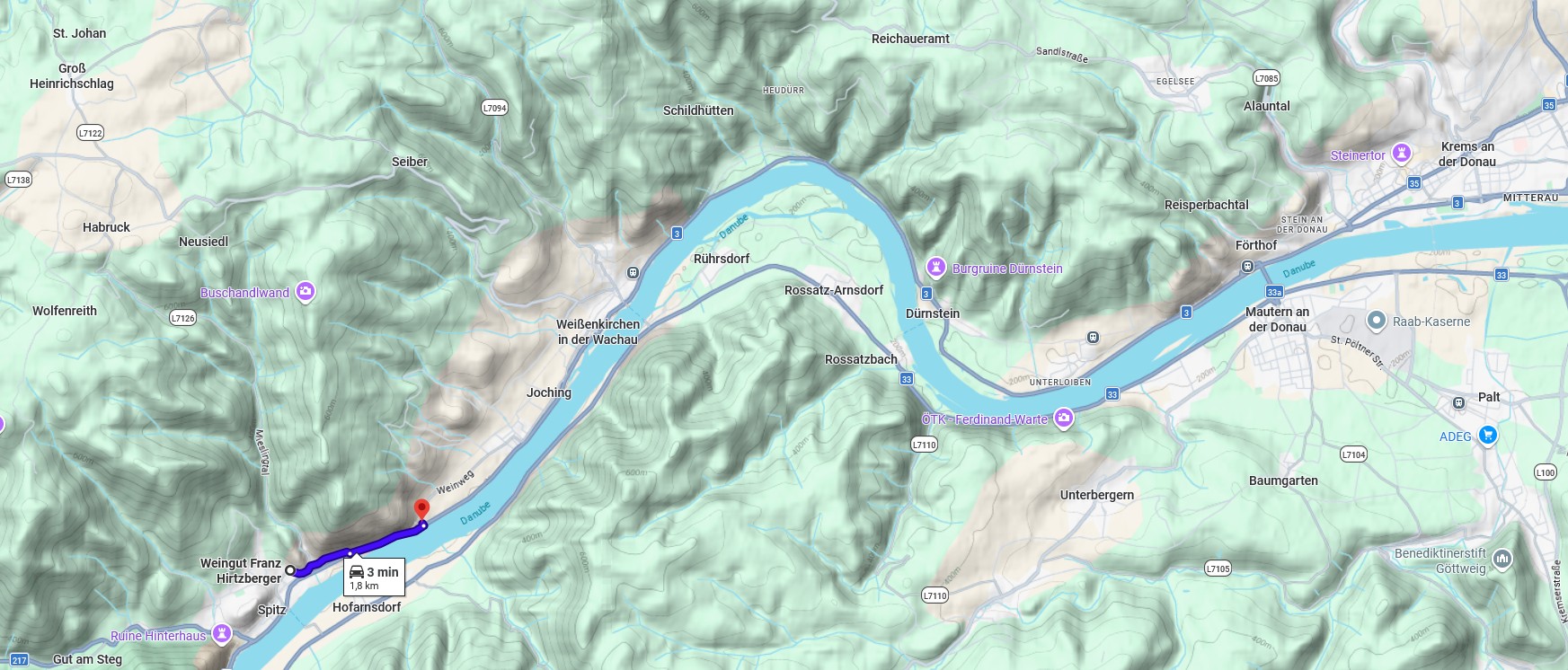
The trip to the next winery was exceptionally short. After we left Hirtzberger, I sent a message to Sabrina Skopek at Domäne Roland Chan that we’d be there in about five minutes - and that is more or less the time it took. All we had to do was walk to our cars, drive out from the village of Spitz and in a minute or two we arrived at the neighboring parish of St Michael. I wish all the transfers between wineries were this quick and easy!
Not a single person in our group had heard of Domäne Roland Chan before, but after @ChrisMyers suggested a visit to the winery after his own positive experiences, we decided to take a flier and asked for a visit. Unfortunately Roland Müksch himself was not going to be there, but a visit could nevertheless be arranged for us. This was more than fine for us!
- Domäne Roland Chan is one of the most recent newcomers in the Wachau wine scene. It was founded in 2017 by *Roland Müksch’ and his wife Dr. Sharon Chan.
- Müksch is an Austrian private banker and wine enthusiast currently based in Singapore. He had been looking for a winery for some time, which is why he and his family bought a second home in Wösendorf, Wachau in 2013.
- In 2017 Müksch finally managed to purchase the first vineyards (some old vines in Ried Höll and *Ried Bach’, totaling to just 0,5 hectares), meaning that their debut vintage was in 2018.
- The winery facilities were moved from Wösendorf to the nearby hamlet of St. Michael as the production started to grow. The winery is located next to the fortified church of St. Michael, the oldest catholic church in Wachau - the oldest parts of the church date back to the 1350’s and the current church building was built in the 1500’s.
- As Müksch and his family split their time between Singapore and Austria, they can’t run the daily operations of the winery themselves. That’s why they have hired some locals to run the winery in their stead; Christoph Donabaum (of Weingut Donabaum) makes the wines, Markus Skopek takes care of the viticulture, and Markus’ wife Sabrina handles the office work and winery visits.
- From the beginning the aim was to make only top-tier wines from the best Wachau sites. That’s why Müksch hasn’t been interested in purchasing generic plots from the low-lying plains near Danube. Instead he has purchased solely some old-vine parcels from the best and most esteemed vineyards in Wachau whenever any vineyards are put to sale. Even the most affordable entry-level wines of the domaine are blends of fruit from some of the best vineyards in the whole Wachau.
- Currently the domaine encompasses approximately 3 hectares (7,5 acres) of vineyards - a considerable increase in a span of just a handful of years, but in terms of size the winery is still pretty small. The yields are kept very low and the annual production is approximately 10,000 bottles.
- Due to the steep vineyards, all harvest is done by hand. The grapes are harvested in three tries for the three different tiers of ripeness in the Wachau quality pyramid. The aim is to keep the wines are fresh and vibrant as possible, so in addition to removing diseased fruit, also any botrytis in the grapes is always avoided.
- Typically the wines are fermented spontaneously in stainless steel tanks, aged on the lees in stainless steel or large oak casks for 10 months, then bottled unfiltered, and finally released after another 12 months of aging in bottles. This means that the wines are aged for longer than the mandated minimum time (for example Smaragd wines can be released in May following the harvest at the earliest); when most other wineries are typically selling the last year’s vintage, the Roland Chan wines are always at least one year older.
- Domaine Roland Chan joined Vinea Wachau, the association of quality-oriented wine producers, in 2019.
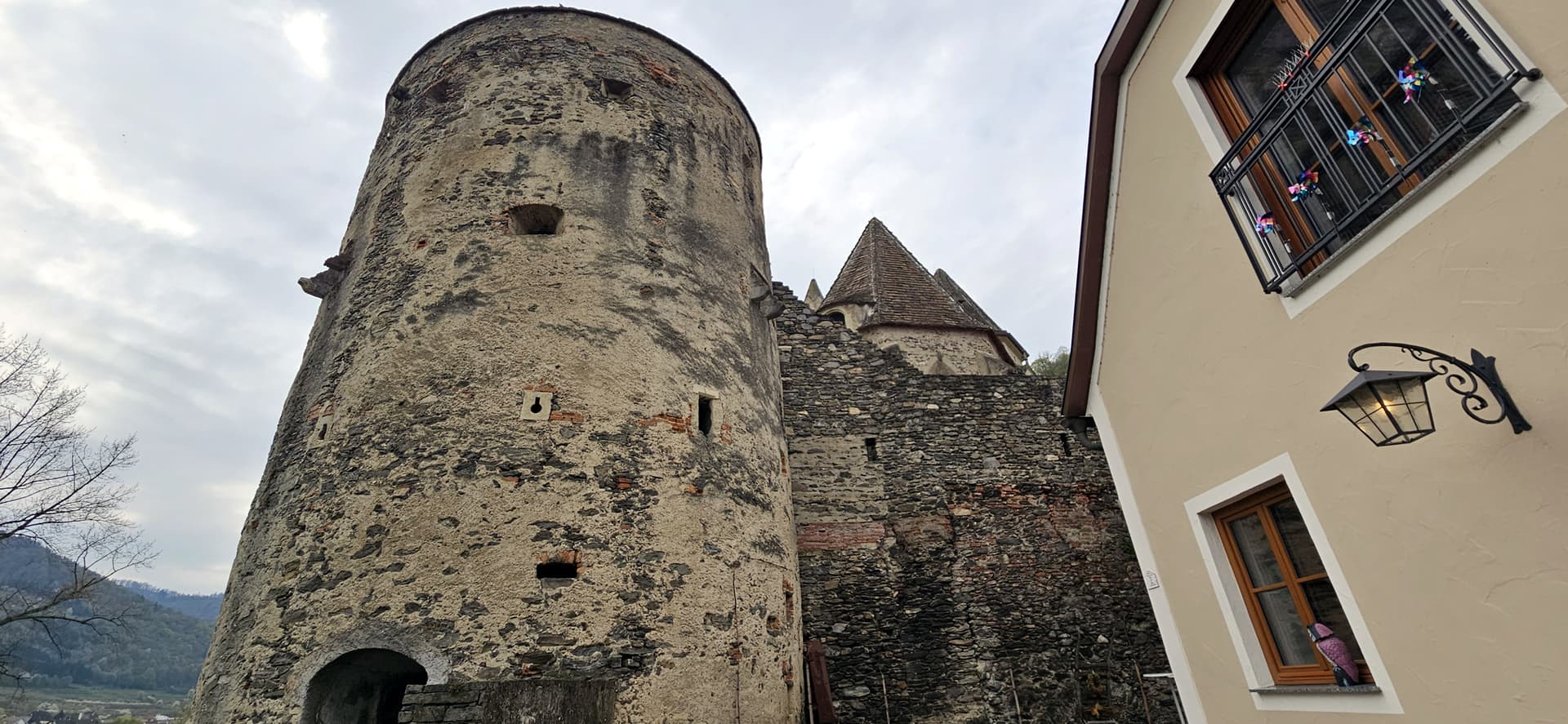
The old church next to which the winery building is located.
As it was raining more or less intermittently during our visit, we decided to skip visiting any vineyards and concentrated on tasting the wines. When Sabrina asked what we’d like to taste, our answer was “as many different wines as possible”, naturally. This request was handled with ease, as we did not only taste the most recent vintages, but also some older vintages - including one from 2019, Roland Chan’s sophomore vintage.
While tasting that 2019 vintage, it started to become into focus how young the winery was and how much had happened in such a short span of time. The younger vintages were clean, fresh and vibrant, often showing some sense of old-vine concentration and a certain air of seriousness. Pretty much as classic as you’d want your Wachau wines to be. The 2019, on the other hand, was heavy, clumsy and had a very atypical oak-heavy character, making it feel not only quite unusual for the region, but also a rather ponderous wine to drink. Although wines in that style might’ve been quite idiosyncratic and it would’ve been easy to stand apart from the other wines of Wachau, I’m more than happy that the wines made today feel very classically styled and true to the region.
While pouring us the wines, Sabrina also told us the difficulties they had faced. For example the weather patterns are becoming quite unpredictable and difficult in Wachau - for example in 2023 sudden hailstorms decimated approximately 30% of their production in an instant, which is quite a devastating loss for such a small winery.
I had read some background information on the winery before our visit, and with their background it is easy to be skeptical about the wine quality. However, all my worries were dispelled very soon after we had tasted a couple of wines - this winery didn’t turn out to be some Austrian banker’s vanity project! It seems pretty obvious that the wines are made today with the highest quality in mind - and this also really shows in how the domaine is purchasing land only from the most acclaimed vineyards, and how everything is made with estate-grown fruit, exclusively.
However, I couldn’t help but thinking if the Müksch-Chan family bet on the wrong horse. In a wine region as traditional as Wachau, it must be quite difficult being an outsider and making wines with a Chinese name and Chinese characters (“Chan”) in the label! I wonder if they had planned on entering the then-growing Chinese market, which has turned surprisingly dry in the recent years? It’s impossible to tell, but from an outsider’s perspective it does look so; with so small annual production, they shouldn’t have trouble selling everything out every vintage, yet they still have almost all the wines available from the most recent vintage, going back all the way to the 2019 vintage. However, having tasted the wines, selling them shouldn’t be a problem from the quality perspective! I guess it’s just very difficult for a new producer start making name and selling stuff so quickly. Well, I hope at least our contribution made a small impact, as most of us were so impressed by the wines that we bought about 1% of their annual production with us! 
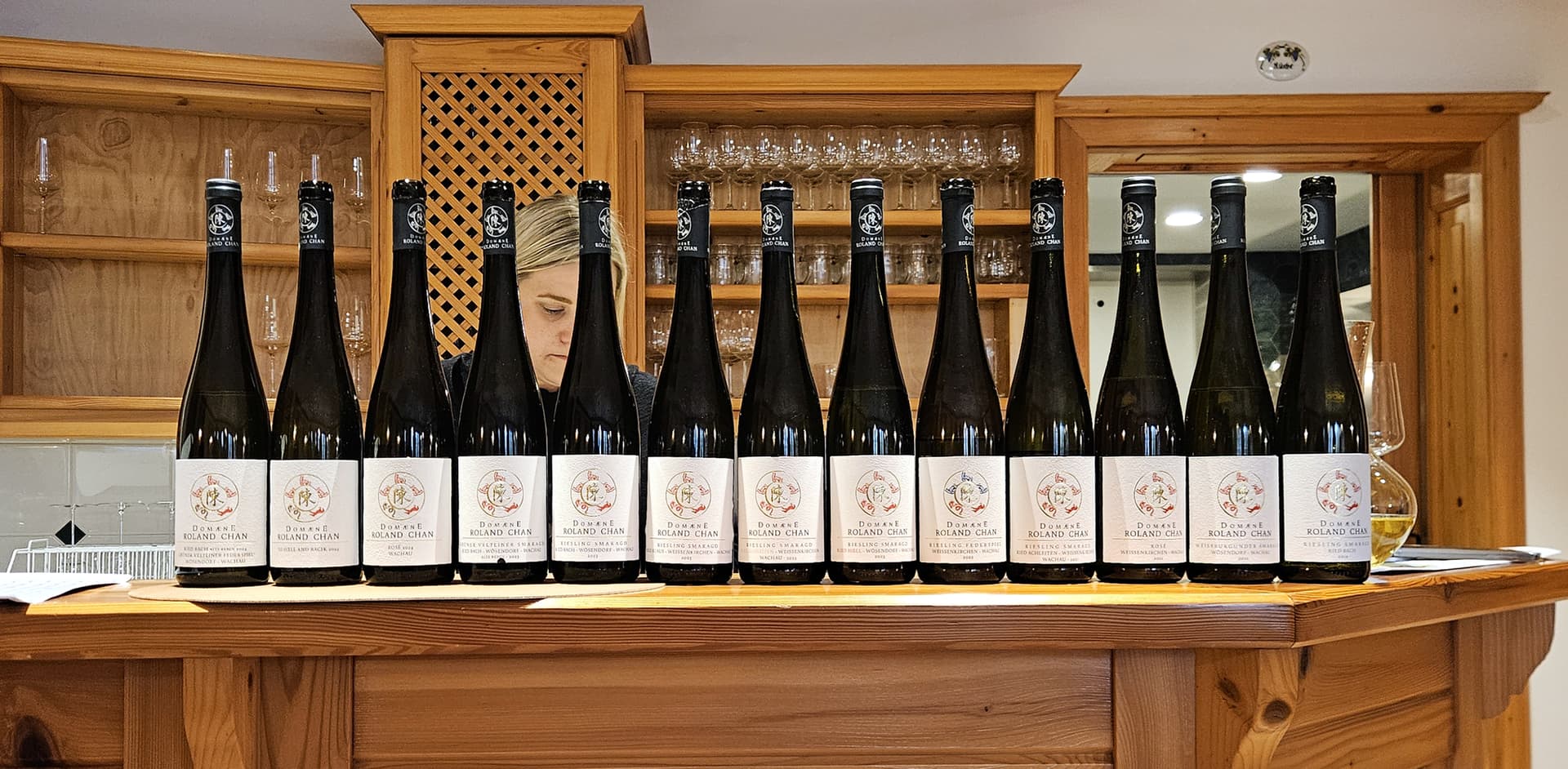
The wines we tasted and Sabrina preparing the papers for our wine order.
- 2024 Domæne Roland Chan Grüner Veltliner Federspiel Ried Bach - Austria, Niederösterreich, Wachau (14.4.2026)
100% Grüner Veltliner from 80-yo vines in Ried Bach, a steeply terraced amphitheater in Wösendorfer Gaisberg. 12,5% alcohol. Bottle #842 of total 853 bottles.
Pale whitish-green color. The nose feels a bit closed with aromas of smoky and slightly flatulent reduction, some fresh peachy tones, a little bit of ripe pear, light spicy notes and a hint of crunchy Golden Delicious apple. The wine feels clean, somewhat concentrated and ripe yet firm on the palate with a medium body and bright flavors of fresh white peach, some honeyed tones, a little bit of ripe pear, light spicy notes of white pepper, a hint of stony minerality and a touch of honeydew melon. The moderately high acidity keeps the overall feel fresh and sufficiently structured. The finish is juicy, quite ripe and slightly concentrated with a long aftertaste of honeydew melon, some sweet pear tones, a little bit of stony minerality, light spicy peppery notes and a hint of crunchy appley fruit.
A surprisingly ripe and concentrated effort for a Federspiel, yet showing great sense of freshness and firmness, coming across as quite light on its feet. I guess the old vines give the wine quite a bit of concentration and power without getting the alcohol that high, making the wine feel more like a Smaragd - only with a lower level of alcohol. A surprisingly serious effort, I actually enjoyed this more than the Smaragd version of the same vineyard! Solid value at 27€.
(92 points) - 2024 Domæne Roland Chan To Hell and Back - Austria, Niederösterreich, Wachau (14.4.2026)
100% Zweigelt from Ried Höll in Wösendorf and Ried Bach, a subparcel within Wösendorfer Gaisberg. The grapes are crushed, gently pressed and vinified as a blanc de noirs in stainless steel tanks. 13% alcohol. Bottle #691 of total 720 bottles.
Pale mirabelle-yellow color. The nose feels quite fruit-forward with aromas of ripe peaches and juicy pear, some spicy tones, a little bit of crunchy white fruit, light floral nuances and a mineral hint of wet rocks. The wine feels clean, juicy and vibrant on the palate with a medium body and dry but also somewhat atypical flavors (for a white wine) of ripe white fruits, some red-toned strawberry notes, a little bit of stony minerality, light floral nuances, a hint of juicy nectarine and a faint touch of mineral spice. The rather high acidity keeps the overall feel fresh and balanced. The finish is juicy, long and refreshing with a dry, fruit-forward aftertaste of nectarine, some stony mineral tones, a little bit of strawberry-driven red fruit, light floral notes of apple blossom, a hint of something spicy and a touch of ripe white peach.
A fun and quite distinctive little white. Usually I find still blanc de noirs either gimmicky, too soft or just bland or boring. Furthermore, I'm not the biggest fan of Zweigelt. However, this wine manages to avoid all the typical pitfalls of both blanc de noirs still wines and Zweigelts! The wine feels like a white wine, but with a twist; the flavors have a somewhat indistinct red-toned fruit component that just gets masked away by the other fruit flavors, but it definitely still is there, contributing to the depth of flavor. Furthermore, the wine shows enough minerality and freshness with the sufficiently high acidity that the wine comes across as very balanced and enjoyably structured, not too soft or round. Thoroughly enjoyable stuff, priced more or less according to its quality at 27€.
(91 points) - 2024 Domæne Roland Chan Rosé Klaus - Austria, Niederösterreich, Wachau (14.4.2026)
100% Zweigelt from 20-30 yo vines in the upper parts of Ried Klaus, one of the most famed (and steepest) vineyards in Wachau. Cold-soaked with the skins for 6 hours. Vinified in stainless steel. 12,5% alcohol. Bottle #698 of total 720 bottles.
Medium-deep salmon-red color. The nose feels juicy and youthful with aromas of melon, some leesy creaminess, light peachy tones ,a little bit of ripe cherry and a hint of savory spice. The wine feels clean, ripe and quite broad on the palate with a medium body and somewhat reticent and subtly sweetish flavors of white peach, some cantaloupe, light stony minerality, a little bit of leesy creaminess and a hint of spice. The wine is quite high in acidity with the tiniest bit of tannic tug on the gums. The finish is vibrant, quite acid-driven and subtly grippy with a rather long aftertaste of savory spice, some white peach, light strawberry-driven red-fruited notes and a hint of melon.
A nice and balanced Rosé. Maybe not that complex or particularly memorable, though. It's hard to assess whether this is a wine best drunk young, or if it might benefit from aging, but at least it seems to be drinking pretty nicely right now. Feels a tad pricey for the quality at 29€.
(89 points) - 2023 Domæne Roland Chan Grüner Veltliner Smaragd Alte Reben Ried Bach - Austria, Niederösterreich, Wachau (14.4.2026)
100% Grüner Veltliner from 80-yo vines in Ried Bach, a steeply terraced amphitheater in Wösendorfer Gaisberg. 13% alcohol. Bottle #517 of total 680 bottles.
Pale greenish color. The nose is slightly closed and reductive with aromas of white peach, some spicy notes, a little bit of flint smoke, light nuances of cantaloupe, hints of fresh pear and Fuji apple and a mineral touch of wet rocks. The wine feels youthful, a bit understated and structurally pretty open-knit on the palate with a medium body and a bit mellow flavors of ripe pear, some mineral notes of wet rocks and salinity, light cantaloupe tones, a little bit of spice, a faint smoky hint of reduction and a touch of pink grapefruit. The rather high acidity keeps the overall feel in balance and there is also a tiniest bit of phenolic grip on the gums. The finish is juicy, broad and a bit light with a long aftertaste of fresh pear, some salinity, a little bit of cantaloupe, light stony minerality, a hint of ripe grapefruit and a reductive touch of flint smoke.
A nice, youthful and balanced Grüner Veltliner, albeit a bit closed and understated one. I guess the wine might come across as a bit reticent due to the reduction that lends a little bit of smoky character to the overall feel - I'm sure it will blow off with some aeration. Most likely the wine will benefit from a handful of years of aging, but I have to admit that I found the differences between this wine and the Federspiel version of the same wine quite minuscule, and I actually preferred the slightly lighter and fresher expression of the Federspiel bottling. Priced somewhat according to its quality at 36€, but at that price I'd rather go with the Federspiel.
(90 points) - 2023 Domæne Roland Chan Riesling Smaragd Ried Bach - Austria, Niederösterreich, Wachau (14.4.2026)
100% Riesling from Ried Bach, a steeply terraced amphitheater in Wösendorfer Gaisberg. 13,5% alcohol. Bottle #858 of total 920 bottles.
Pale greenish color. The nose feels fragrant, floral and slightly primary with aromas of peachy stone fruits, some grapey tones, a little bit of rubbery reduction, light floral notes of apple blossom, a hint of pear drops and a touch of greengage. The wine feels ripe, broad and juicy on the palate with a medium-to-moderately full body and youthful flavors of white peach and stony minerality, some floral notes, a little bit of greengage, light youthful grapey tones, a hint of kiwi and a touch of creaminess - although it is difficult to tell if this is just leesy richness or if the wine has seen some oak. The moderately high acidity feels a bit modest for a Riesling, but still sufficiently high to keep the overall feel balanced and quite structured. The finish is youthful and juicy with a long aftertaste of white peach, some primary grapey tones, a little bit of greengage, light floral notes, a hint of kiwi and a faint touch of creaminess.
An attractive and sophisticated Riesling - maybe a tad on the broad and round side, but excessively so. I'd love the wine to show a bit more zip with a higher level of acidity, but this is pretty serious already now. Of Roland Chan's Smaragd wines from Ried Bach, I liked this Riesling version a bit more than the Grüner Veltilner iteration. As the wine is still very youthful and even a bit primary, I can see the wine benefiting from additional cellaring; expect the score to go up as the wine ages. Priced somewhat according to the quality at 37€.
(91 points) - 2023 Domæne Roland Chan Riesling Smaragd Ried Klaus - Austria, Niederösterreich, Wachau (14.4.2026)
100% Riesling from Ried Klaus, one of the most famed (and steepest) vineyards in Wachau. 14% alcohol. Bottle #512 of total 650 bottles.
Pale yellow-green color. The nose feels fresh, clean and fragrant with attractive aromas of youthful grapey fruit, some floral notes of apple blossom, a little bit of cantaloupe, light crunchy notes of Fuji apple, a sweeter hint of ripe greengage and a touch of stony minerality. The nose feels elegant and wonderfully focused on the palate with a sleek medium body and bright favors of steely minerality and almost primary grapey fruit, some ripe Granny Smith apple tones, a little bit of floral spice, light sharp notes of ripe key lime, a hint of ripe greengage and a touch of grapefruit zest. The brisk acidity lends a good amount of freshness and structure to the wine, but the wine also gets a tiny bit of additional firmness from the tiniest hint of tannic tug on the gums. The level of ABV might be high, but the alcohol stays wonderfully well out of the picture. The finish is crisp, fresh and lively with a long, dry aftertaste of ripe lemony citrus fruits, some floral tones, a little bit of steely minerality, light spicy notes, a hint of tart Granny Smith apple and a faint touch of alcohol warmth.
A wonderfully precise, intensely flavored and impressively structured Riesling. The wine might be a bit high in alcohol, but that definitely didn't translate to softness, sweetness of fruit or lack of precision. A terrific effort that is a joy to drink already now - however, as the wine feels so very youthful and at times even primary, I'm quite sure this wine will continue to evolve and improve for a good handful of years. One of my favorites among the dozen or so Roland Chan wines we tasted. Not maybe that affordable at 45€, but arguably delivers for the price. Highly recommended.
(93 points) - 2023 Domæne Roland Chan Riesling Smaragd Ried Achleiten - Austria, Niederösterreich, Wachau (14.4.2026)
100% Riesling from Ried Achleiten, one of the most famed and - with its imposing hillside terraces - immediately recognizable vineyards in Wachau. 13,5% alcohol. Bottle #495 of total 1250 bottles.
Youthful yellow-green color. The nose feels quite concentrated and somewhat sweet-toned with bold aromas of beeswax, some apricot, a little bit of cantaloupe, light crunchy notes of fresh Golden Delicious apple, a hint of stony minerality and a touch of herby spices. The wine feels ripe, rich and quite broad on the palate with a full body and moderately concentrated flavors of stony minerality and youthful grapey fruit, some ripe Golden Delicious apple, a little bit of apricot, light saline tones, a hint of floral spice and a touch of beeswax. The moderately high acidity keeps the wine quite nicely in balance, although as ripe and powerful Riesling as this could use a bit more acidity. The finish is juicy, slightly warm and a bit dark-toned with a long, bold aftertaste of ripe citrus fruits, some white peach, light honeyed tones, a little bit of stony minerality and a hint of savory spices.
A clean and surprisingly concentrated but also a bit round Riesling that packs quite a bit of ripeness and intensity. This Riesling is certainly bigger and more impactful than the Ried Klaus and Ried Hölle bottlings that we tasted next to it, but I have to admit that I found the sleeker and more acid-driven Ried Klaus more to my liking - even if it also showed higher alc%. This is a fine wine, but it feels like it is a better fit for people who love big and impressive Rieslings, whereas I favor freshness, precision and minerality. I hope the wine is just now in a youthful, big shape, and will drop its baby fat over the next 5 years or so. Feels a tad expensive for the quality at 43€.
(90 points) - 2023 Domæne Roland Chan Riesling Smaragd Ried Höll - Austria, Niederösterreich, Wachau (14.4.2026)
100% Riesling from Ried Höll in Wösendorf. 13,5% alcohol. Bottle #642 of total 1350 bottles.
Youthful yellow-green color. The nose feels sweet-toned, somewhat reductive and considerably primary with aromas of pear drops, some skunky flatulent notes of reduction, a little bit of cantaloupe, light crunchy Golden Delicious apple tones, a hint of stony minerality and a touch of ripe grapey fruit. The wine feels quite broad, round and open-knit on the palate with a full body and rather ripe flavors of greengage and juicy pear, some stony mineral notes, a little bit of cantaloupe, light saline undertones, a hint of white peach and a touch of crunchy appley fruit. The moderately high acidity feels a bit soft and mellow for a Riesling, but still sufficiently high to keep things in balance. The finish is youthful, juicy and quite fruit-driven with a rather long aftertaste of ripe white peach, some juicy Golden Delicious apple, light greengage notes, a little bit of saline minerality, primary hints of grapey fruit and pear drops and a perfumed touch of floral character.
A still super youthful but also somewhat unfocused Smaragd Riesling that lacks some of the focus the other Roland Chan Smaragd Rieslings showed. Pleasant, but a bit too soft and ripe for my preference. Not a bad wine in any way, but comes across as less interesting and more mundane than the other bottlings. Feels somewhat expensive for the quality at 35€.
(89 points) - 2022 Domæne Roland Chan Riesling Federspiel Weissenkirchen - Austria, Niederösterreich, Wachau (14.4.2026)
100% Riesling from multiple vineyards in the village of Weissenkirchen. 12,5% alcohol. Bottle #552 of total 700 bottles.
Youthful, light to medium-deep yellow-green color. The nose feels open, youthful and still slightly primary with aromas of sweet grapey fruit, some floral notes of apple blossom, a little bit of tinned peach, light stony mineral notes, a hint of ripe nectarine and a touch of ripe pineapple. The wine feels firm, lively and pretty steely on the palate with a medium body and focused flavors of lemony citrus fruits, some saline mineral notes, a little bit of tinned peach, light primary notes of sweet grapey fruit, a hint of pineapple and a touch of floral spice. The bright, zippy acidity lends a lovely sense of freshness and structure to the wine. The finish is crisp, lively and pretty acid-driven with a long aftertaste of lemony citrus fruits, some sharp Granny Smith apple notes, a little bit of steely minerality, light grapey notes of primary fruit character, a hint of tinned peach and a touch of tangy salinity.
A surprisingly serious, brisk and focused Federspiel that didn't suffer at all when tasted amidst the more esteemed Smaragd bottlings. The overall feel is still painfully young as the wine is still quite heavily dominated by the sweet, estery notes of grapey fruit, but even then the wine is surprisingly enjoyable and quite open for business. However, I would love to let the wine wait at least a handful of years more so that it would lose its most obvious primary qualities. A terrific effort with lots of upside. Delivers for the price at 29€.
(91 points) - 2021 Domæne Roland Chan Riesling Smaragd Ried Achleiten - Austria, Niederösterreich, Wachau (14.4.2026)
100% Riesling from Ried Achleiten, one of the most famed and - with its imposing hillside terraces - immediately recognizable vineyards in Wachau, harvested on October 31st. Cold-soaked with the skins for 24 hours, then fermented spontaneously in stainless steel. Aged on the lees for 9 months. Bottled unfined and unfiltered. 14,6% alcohol, 1,7 g/l residual sugar, 7,6 g/l acidity and total SO2 80 mg/l. Bottle #264 of total 1400 bottles.
Pale, luminous neon-green color. The nose feels very open, fragrant and attractive with aromas of ripe peach, some crunchy Golden Delicious apple, a little bit of fresh pineapple, light floral notes of apple blossom, a hint of stony minerality and a subtly primary touch of pear. The wine feels ripe, broad and lively on the palate with a rather full body and quite concentrated flavors of ripe pineapple and honeyed richness, some crunchy Golden Delicious apple tones, a little bit of extracted waxy character, light floral notes of orange blossom, a hint of poached pear and a touch of lemony citrus fruit. The high acidity lends a little bit of warmth to the palate, whereas the brisk, focused acidity lends a great amount of freshness, focus and incisive structure to the wine. The finish is ripe, broad and moderately warm with a long, bold aftertaste of lemony citrus fruits, some fresh pineapple tones, a little bit of sweet peachy fruit, light floral tones, a hint of extracted waxy character and a touch of honeyed richness.
A very impressive, structured and surprisingly complex powerhouse of a Riesling. The alcohol admittedly feels quite a bit too high in here, as it shows through both on the midpalate and in the aftertaste. However, that doesn't mean that the wine is too ripe and flabby - while the wine does show breadth and ripe fruit flavors, its acidity feels wonderfully high, making the wine surprisingly fresh and structured for such a big and concentrated Riesling. With lower ABV, this would've been easily the most impressive wine we tasted at the domaine, seeing how the wine showed remarkable sense of flavor intensity, complexity and structure. However, there's no denying that the high alcohol really takes a small toll on the drinkability. Even then, this is a great powerhouse of a Riesling. Remember to serve it sufficiently cool, just to push the sense of warmth from the alcohol down. Priced according to its quality at 45€.
(93 points) - 2021 Domæne Roland Chan Rosé Weissenkirchen - Austria, Niederösterreich, Wachau (14.4.2026)
100% Zweigelt from 20-30 yo vines in the upper parts of Ried Klaus, one of the most famed (and steepest) vineyards in Wachau. Cold-soaked with the skins for 6 hours. Vinified in stainless steel. 12,5% alcohol. Bottle #61 of total 600 bottles.
Pale salmon-pink color. The nose feels fresh and slightly spicy with aromas of peach, some ripe Golden Delicious apple, light strawberry notes, a little bit of herby spice and a hint of cantaloupe. The wine feels dry, crunchy and quite acid-driven on the palate with flavors of wild strawberries and cantaloupe, some saline notes, a little bit of tart Granny Smith apple, light stony mineral tones, a hint of ripe lemony citrus fruit and a touch of savory spices. The high acidity makes the overall feel brisk and fresh, and there's a tiny bit of tannic grip on the gums that adds to the sense of firmness. The finish is crisp, dry and subtly grippy with a long aftertaste of cantaloupe and salinity, some tart grapefruit, light sharp notes of Granny Smith apple, a little bit of strawberry-driven red fruit, a hint of stony minerality and a touch of herby spice.
A crisp, clean and quite characterful rosé that still manages to come across as surprisingly vibrant and youthful for its 4½ years of age; apparently these Roland Chan rosés can be kept for longer than your cheap run-of-the-mill rosé wines! With its good sense of freshness and cool mineral core, this is a lovely wine on its own, but can be easily paired with a wide variety of dishes that call for lighter, more acid-driven wines. It's hard to say whether the wine will only keep or actually improve with additional aging, but really don't see the wine falling apart in the near future. Good value at 29€. Recommended.
(92 points) - 2021 Domæne Roland Chan Weissburgunder Smaragd Höll - Austria, Niederösterreich, Wachau (14.4.2026)
100% Weissburgunder from very old vines in Ried Höll, Wösendorf. 13,5% alcohol. Bottle #41 of total 350 bottles.
Pale yellow-green color. The nose feels slightly reductive with aromas of fresh white peach, some sweeter notes of ripe nectarine and greengage, a little bit of stony minerality, light leesy notes of creaminess, a hint of pineapple, a touch of zesty citrus fruits and a whiff of sponti funk. The wine feels dry, balanced and quite focused with flavors of lemony citrus fruits and stony minerality, some fresh pineapple tones, a little bit of tangy salinity, light leesy notes of creaminess, tart hints of Granny Smith apple and key lime and a touch of apple peel bitterness. The high acidity lends a good deal of freshness and structure to the wine. The finish is crisp and lively with a dry and rather long aftertaste of key lime and ripe lemony citrus fruit, some leesy notes of creaminess, a little bit of apple peel bitterness, light stony mineral tones, a hint of sharp Granny Smith apple and a touch of crunchy pineapple.
A surprisingly nice, fresh and serious Pinot Blanc - most of the Wachau Weissburgunders I've tasted have not been anything particularly memorable, but this wine is a notch above them. Although not a super complex or that special wine in its own right, this is still a rather convincing effort for a Weissburgunder; I actually found the wine a tad better than even some of the Roland Chan Smaragd Rieslings and Weissburgunders we tasted. It is hard to say whether the wine will only keep, or if it also going to evolve and improve with additional aging, but at least it is drinking really well right now, at 4½ years of age. The wine might not be that affordable at 40€, but it arguably still manages to deliver for the price.
(91 points) - 2019 Domæne Roland Chan Riesling Smaragd Ried Bach - Austria, Niederösterreich, Wachau (14.4.2026)
100% Riesling from Ried Bach, a steeply terraced amphitheater in Wösendorfer Gaisberg. 13,5% alcohol, 5 g/l residual sugar, 4,5 g/l acidity and 109 mg/l SO2. Bottle #838 of total 1200 bottles.
Quite intense and moderately deep lime-green color. The nose feels quite distinctive and somewhat woody with a bit atypical aromas of creamy oak and toffee, some ripe lemony tones, a little bit of ripe Granny Smith apple, light sweeter notes of lime marmalade, a little bit of peachy stone fruit, a hint of sweet oak spice and a mineral touch of wet rocks. The wine feels surprisingly rich, broad and ponderous on the palate with a full body and bold, subtly sweet-toned flavors of creamy oak and ripe peach, some floral notes of rosewater, a little bit of saline minerality, light pineapple tones, a hint of sweet oak spice and a touch of lime marmalade. The wine is lacking freshness and coming across as somewhat heavy, thanks to the medium-plus acidity. The finish is ripe, juicy and lengthy with a round yet rather powerful aftertaste of peach and nectarine, some creamy oak, light saline notes, a little bit of pineapple, a hint of apple jam and a touch of stony minerality.
A characterful but also very atypical, heavy and ponderous Riesling that feels rather clumsy and ponderous due to the surprisingly pronounced oaky tones and relatively modest acidity that feels weirdly low for a Riesling. Seeing how this is Roland Chan's sophomore vintage, it feels quite obvious that it was still a work in progress back then; this is a blockbuster wine that feels like it is trying to make a statement, but it doesn't know how. The more recent vintages might not be as striking and idiosyncratic as this wine, but they feel considerably more sophisticated, harmonious and just simply drinkable. Seeing how ponderous the wine feels already now, I wonder if it can improve much with additional cellaring - even if aging might help the wine lose some of its more oaky notes. I have to admit I wasn't particularly enamored by this bottling. Feels somewhat expensive for its quality at 39€.
(88 points)
While we were tasting the wines, Sabrina’s husband Markus came to say hello. After we had tasted the wines and everyone had placed their orders for the wines, Markus took us downstairs to see the old, historical cellars of the building that they were restoring and renovating to increase the winery’s vinification facilities. Admittedly it was a bit hard to follow what Markus was telling us, since he didn’t speak any English, so we had to rely on the few of us who spoke some German. One of us actually spoke and understood local German quite well, having lived nearby for five years, yet even he said that he had trouble understanding what Markus was telling us due to his very thick local dialect!
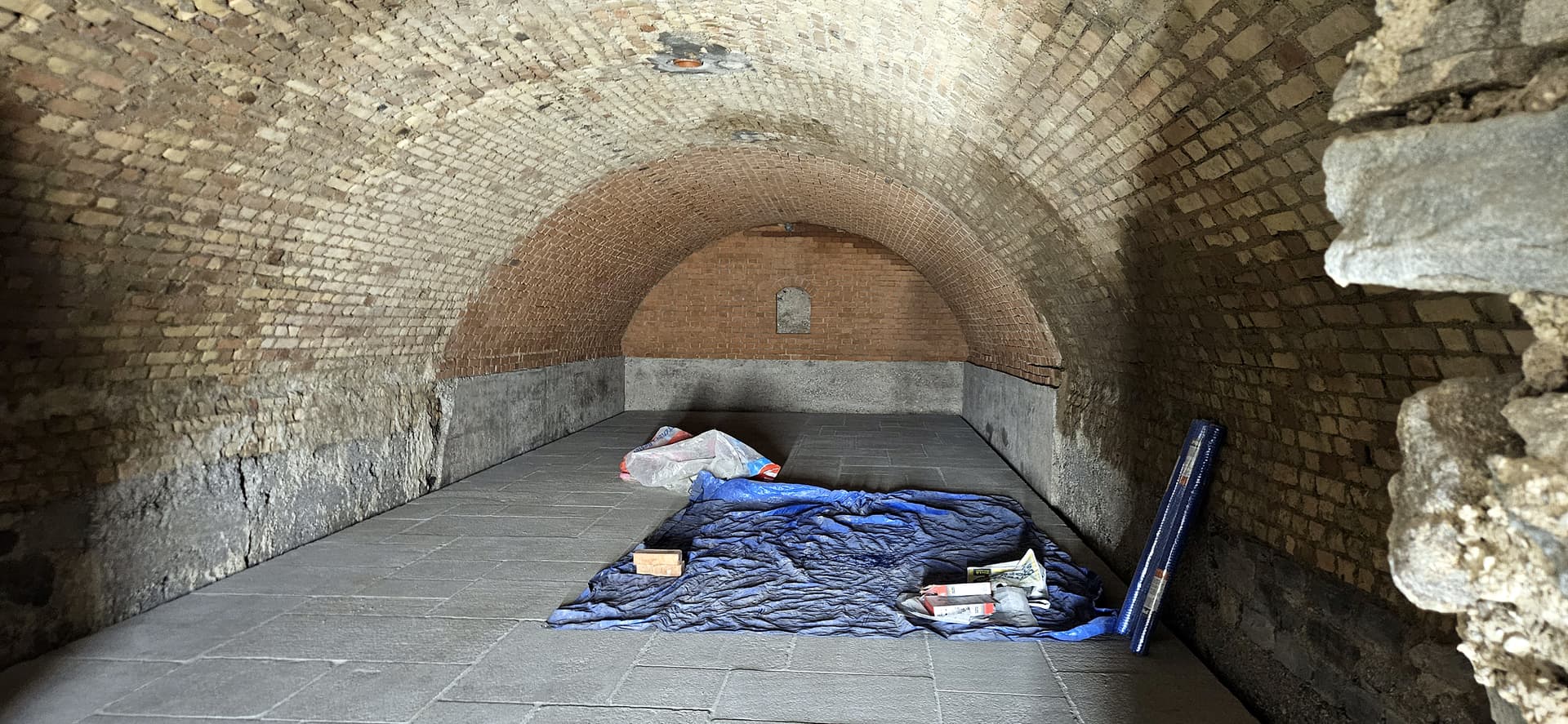
The cellars under restoration.
So that concludes our visit to Domäne Roland Chan. Next we had a table booked for lunch, so after our visit, we made a quick trip to the winery-restaurant Holzapfel in the nearby town of Joching.
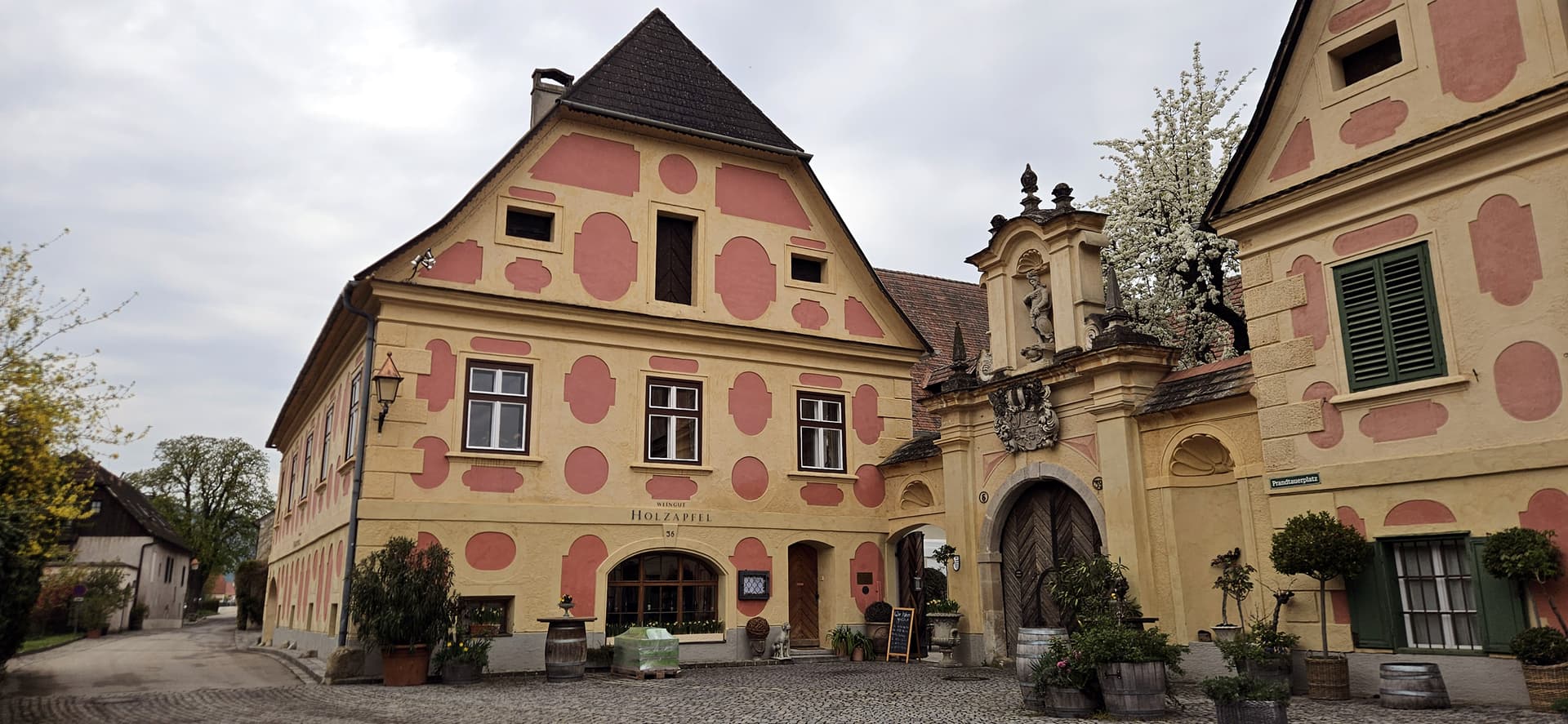
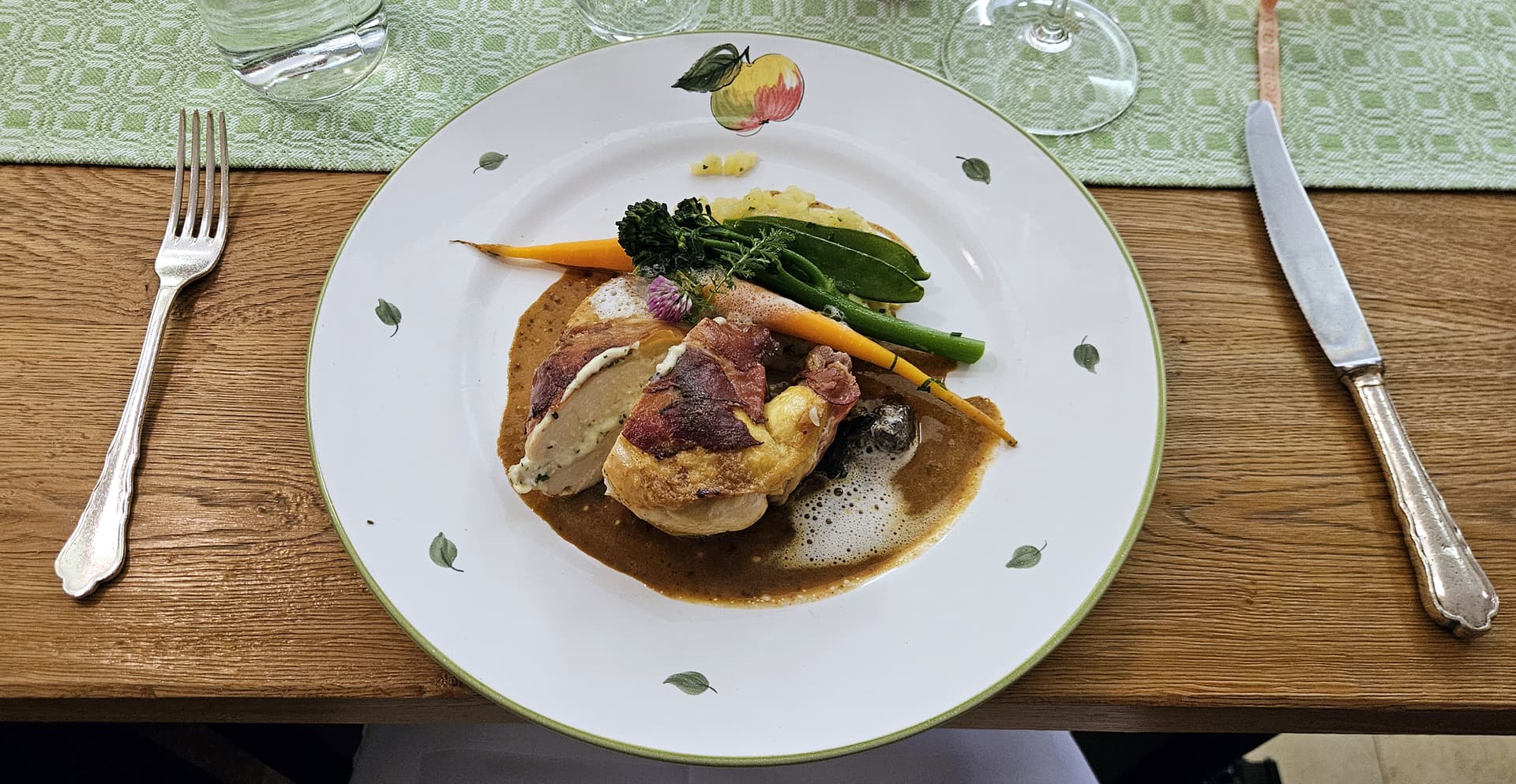
Landhendl
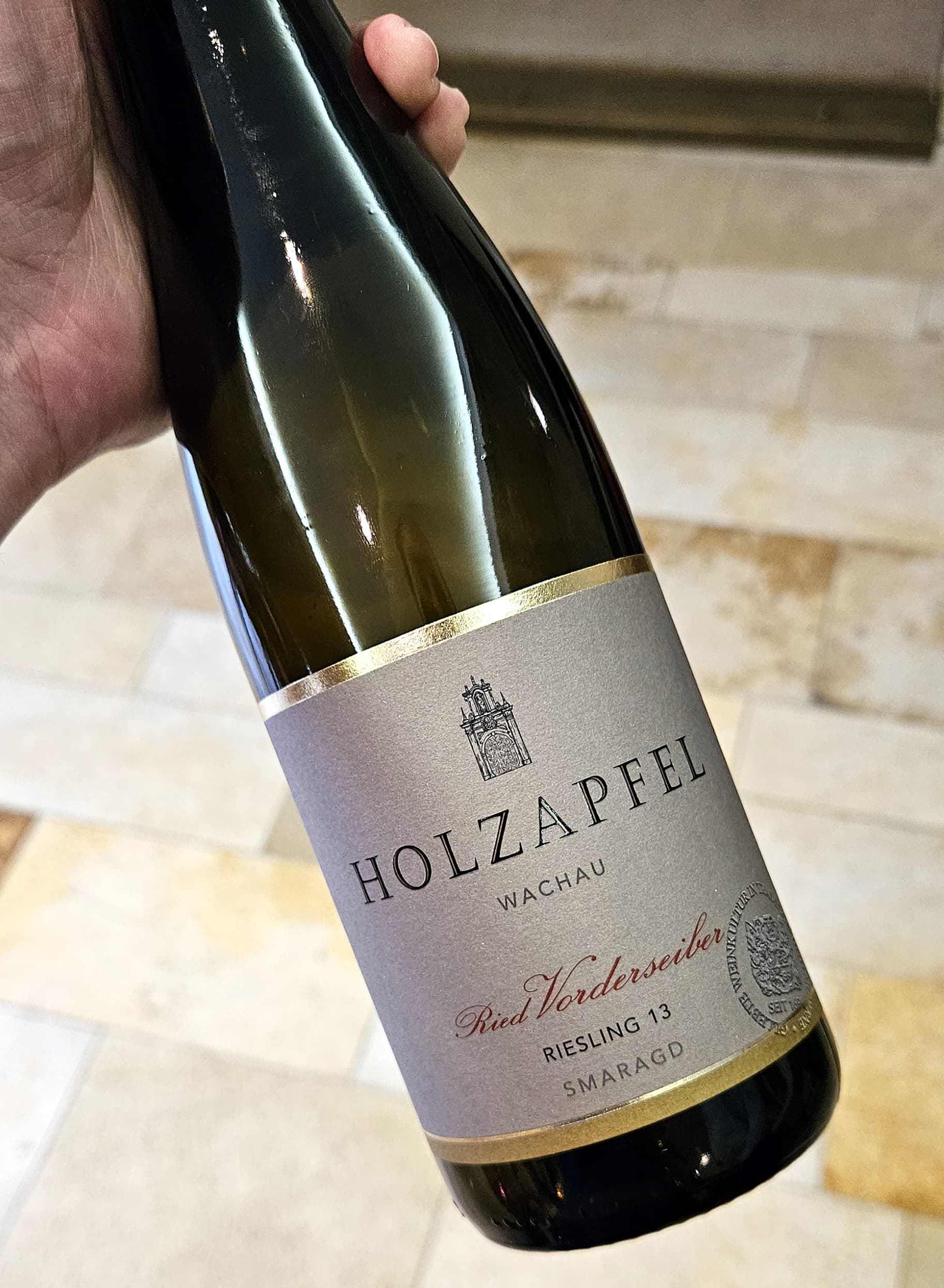
What we had with the food:
- 2013 Weingut Holzapfel Riesling Smaragd Vorderseiber - Austria, Niederösterreich, Wachau (14.4.2026)
100% Riesling from Ried Vorderseiber in Weissenkirchen. Cold-soaked with the skins for a few hours, then fermented in temperature-controlled tanks. Aged on the lees for half a year. 13% alcohol.
Medium-deep neon yellow-green color. The nose feels quite expressive and slightly evolved with aromas of ripe peach, some honeydew melon, light petrolly notes, a little bit of lemon marmalade, a hint of poached pear and a touch of stony minerality. The wine feels ripe yet dry and quite airy with a medium body and slightly evolved flavors of lemon marmalade, some petrolly notes, a little bit of honeydew melon, light crunchy notes of fresh nectarine, a hint of steely minerality and a touch of spicy red apple. The high acidity lends a good amount of freshness, balance and structure to the wine. The finish is ripe yet fresh and dry with a long, nuanced aftertaste of peachy stone fruits and beeswax, some stony mineral notes, a little bit of salinity, light petrolly tones, a hint of lemon marmalade and a touch floral spice.
A harmonious, attractive and pleasantly evolved Riesling. Not really a wine to blow your socks off, but a nice example of aged Smaragd that shows some ripeness, yet retains more than enough sense of freshness, focus and balance - something that does not seem given in the more recent - and somewhat warmer - vintages. Good stuff that is perfectly enjoyable already now, but will continue to develop and improve for at least a handful of years more. There are no hurries with this wine. Priced according to its quality at 85€ in a restaurant. (93 points)
3 Likes
Great to read that you and the group seemed to enjoy the visit and wines! I only tasted the more recent releases so the comparison with the ’19 was interesting to read. Like you, I thought the Klaus and Achleiten Rieslings in particular were very impressive. I’ll be back in the area in the Autumn so need to pick up some more…
1 Like
Nice! Any visits planned yet? And is it just a trip to visit wineries or for something else?
I’ll be working the harvest in the Kamptal this Autumn. I shall try to visit and taste as much as I can through the Niederösterreich regions just before and after that. Not sure where I’ll visit yet but shall certainly drop in at Roland Chan again.
Sounds excellent! Although Wachau was admittedly much more impressive place to see compared to the relatively flat Kamptal, I enjoyed wholeheartedly both our Kamptal visits and wished that we had had more visits there!
Birgit Eichinger is definitely worth a visit. Hands-down some of the best Grüner Veltliners on our trip, plus they make a terrific Roter Veltliner as well! Loved the visit and the vibe there.
Schloss Gobelsburg was a stunning place to see. They arrange only priced tours, but given the incredible premises and the breadth of the wines we got to taste, we all agreed it was really worth it. Easily among the best visits on our trip, if not the best. If you’re working the harvest in Kamptal, I can imagine the locals can talk you in so you don’t need to pay for the tour, though.
1 Like