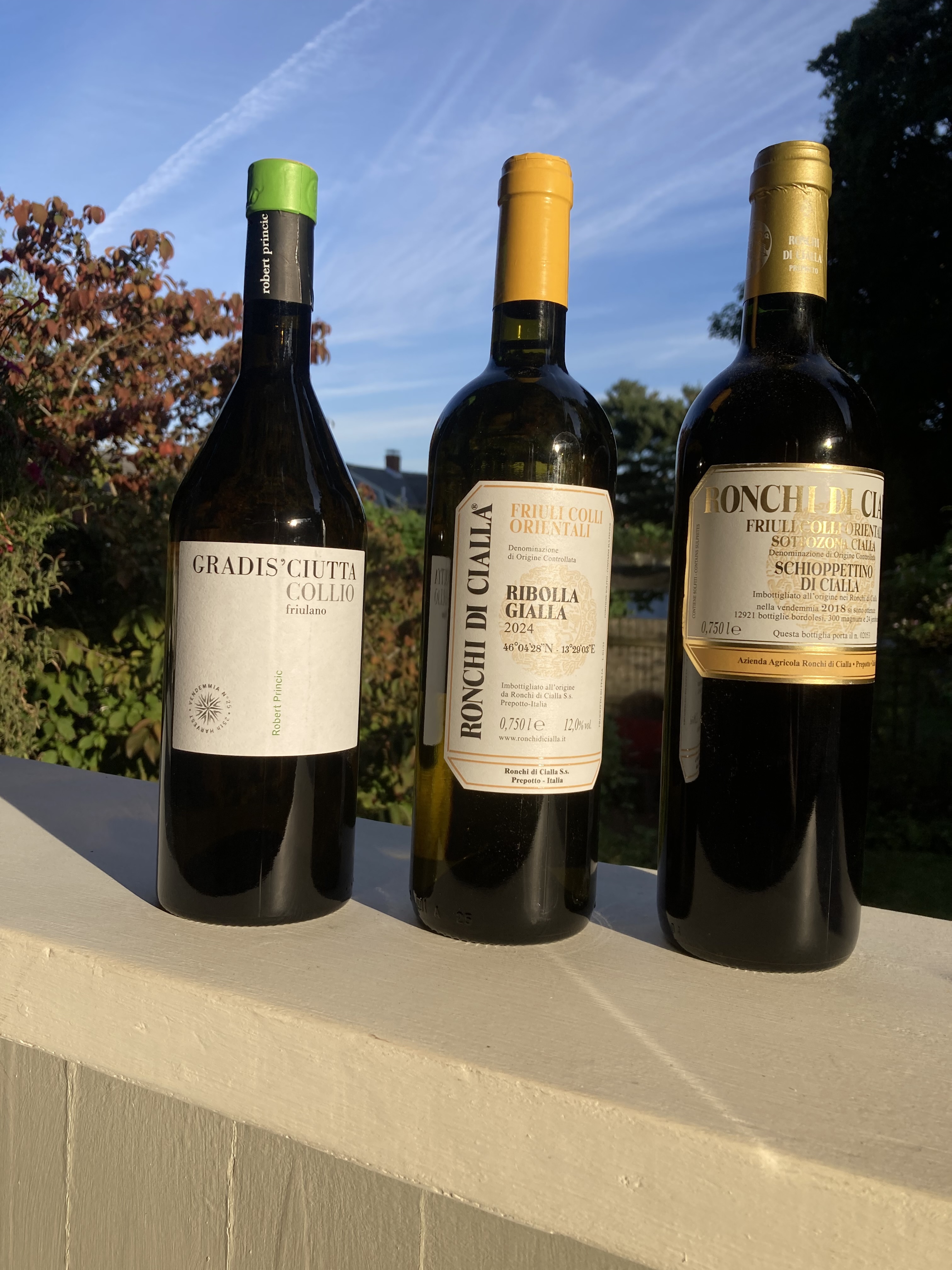
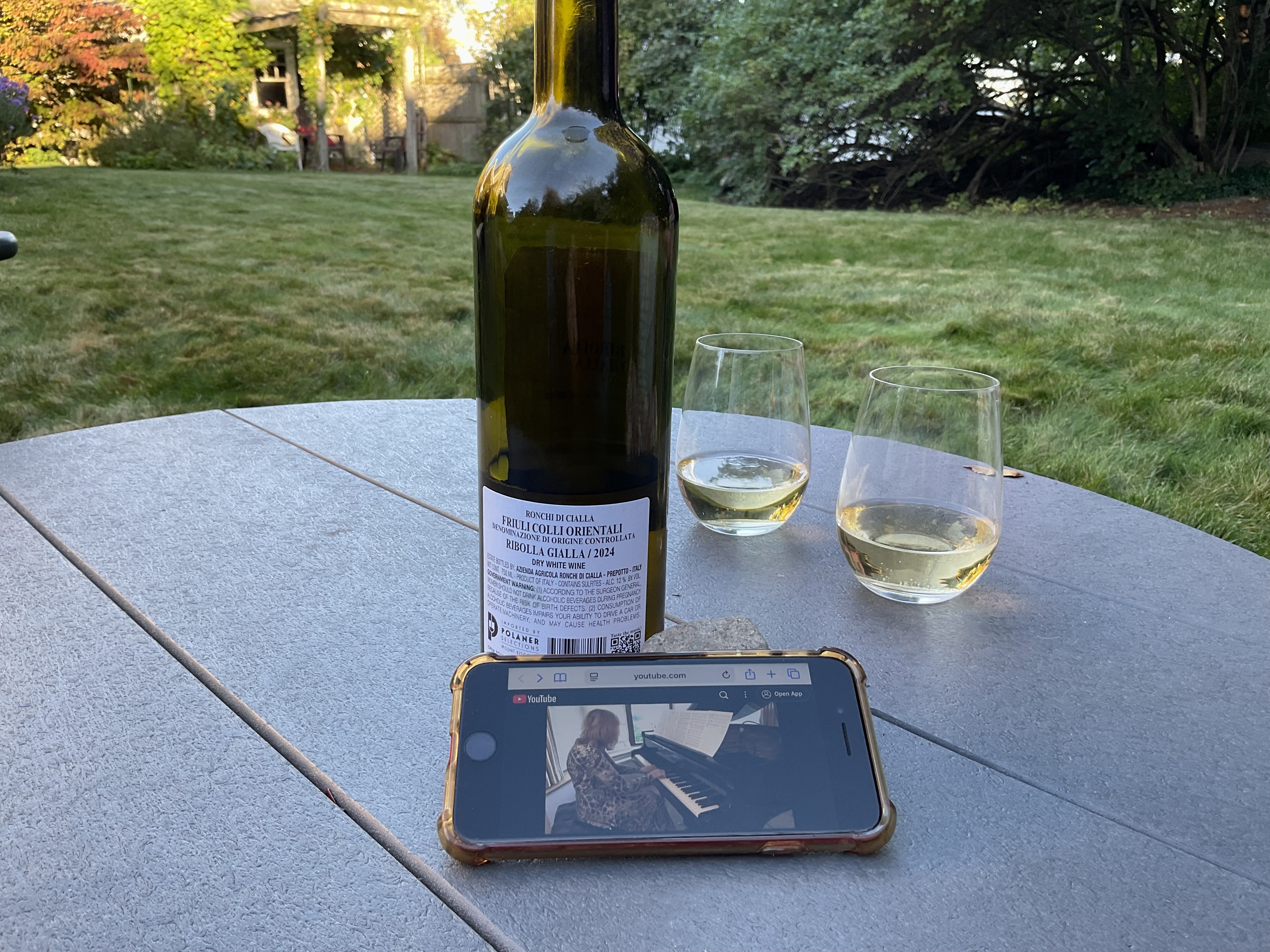
A few of days back from our first trip to the FVG region of Italy, I thought that I would put down some thoughts about the wines we tasted. And “tasted” is a key word since we had only one full bottle of wine, but we tasted probably fifty to sixty different wines either as a glassful or as a wine visit pour. No notes were taken, the emphasis was on enjoying the moment and the wine. But, impressions were made. I’ll try to not ramble too much, but I will be wordy . . .
I went into this trip with a primary wine focus on learning more about white wines made with indigenous grapes. Before the trip, I only had examples of Friulano and Ribolla Gialla, and also a white wine blend. I tried to put some flesh on these bare bones, but also to stay open to the other whites and reds made in the region.
Friulano
Overall, this was the most intriguing grape variety to me. If I simplistically look at white wine that I enjoy as a balance between energy, fruit, mineral, and herbal/savory elements , Friulano has the most happening and it usually happens in an immediately enjoyable way. Expressed in a range of styles from fairly straightforward, simple and enjoyable, to quite elevated, complex, and enjoyable.
Our first taste was a glass of a modest Gradis’Ciutta Friulano, while sitting outside a wine bar in Trieste. I could stay with that wine and be content for a long time, but taking it up a notch and more were several others during our trip, especially the Friulano offerings from Mitja Sirk, and Borgo di Tiglio. These two winemakers also enter “wow territory” with their respective single vineyard 2023 Friulano bottlings, “Ca’ Savorgnan” and “Ronco della Chiesa”. Very special wines.
Ribiolla Gialla
As a broad generalization, I found this variety to have a bit less energy, a bit less fruit, more mineral and herbal dimensions than Friulano. Maybe more subtle too. But we enjoyed every wine of this grape variety that we tasted, including Slovenian versions where it was called “Rebula”.
The most elevated and pleasing expression that we tasted was the excellent 2024 Ronchi di Cialla, which brought some delightful soft spoken fruit and energy. This wine was a real treat.
Malvasia
This grape variety was a complete unknown to us before this trip. A very pleasant discovery. Fruit, mineral and pronounced savory herbs dominate in general. We had several glasses starting with another modest Gradis’Ciutta at that same Trieste wine bar. Immediately appealing to me, and I enjoyed glasses and tastes of other Malvasia throughout our trip.
The peak expression of Malvasia for me, and by a wide margin, was Borgo del Tiglio’s 2023 Malvasia “Italo & Bruno”. Wow!
Vitovska
This white grape variety, which is a focus of several winemakers in the Carso region near Trieste, came on my radar late in my trip planning. The two wine winemakers that I targeted for potential tasting visits were Edi Kante and Paolo Vodopivec. The timing was not good because it was peak harvest, and despite personal appeals, neither winemaker could host us for a visit. I also had no luck finding BTG pours of Kante or Vodopivec Vitovska in Trieste or elsewhere on our trip, so I struck out with these two.
We did manage to taste a few examples of Vitovska. More modest ones had a prominent mineral dimension, tinged with lemon and salt that I liked a lot. I found the Vitovska at our visit to Skerk, with its two week maceration, to not be as enjoyable. This is a grape variety that I will look for more examples of.
White Blends
Many wineries in this region produce a white blend, often with three white varieties, and usually at least one of them will be an indigenous variety. This type of wine is exciting, and was a real sweet spot for my palate. The best examples were excellent.
Under the Edi Keber label, we tasted two vintages of their Collio Bianco, first a 2022 and then a couple of days later a 2018. Both impressive. The 2018 was my favorite among several different white wine blends that we tasted at a special evening event in Cormons. Edi’s son Kristian runs the show now with a bio emphasis. They use a blend of Friulano, Ribolla Gialla, and Malvasia in their Collio Bianco.
In contrast, the 2023 Borgo del Tiglio’s Collio (Bianco) blends Friulano, Sauvignon Blanc, and Riesling, and offers a taste profile that is different and interesting and delicious. Borgo del Tiglio is pushing the envelope of this white blend with their “Studio di Bianco”. I didn’t get to taste this at our wonderful visit and tasting with Mattia Manferrari, but we got to taste the 2019 Pascolo Collio Bianco “Studio di Bianco” at dinner one evening. This wine is made in collaboration with and follows the same protocol as the Borgo del Tiglio. Trying to reach new heights in the white wine of the region. Everest, baby!
Finally is the blend produced by Ronchi di Cialla, Ciallabianco A blend of Ribolla Gialla, with two other indigenous varieties, Picolit, and Verduzzo. Their 2022 bottling was so delicate and subtle and satisfying. Another highlight wine from the trip for me.
Other whites
We tasted a couple of examples of sweet Verduzzo. Very good and reminiscent of the best of Coteaux du Layon for me. The one we tasted at Ronchi Di Cialla was accompanied by some piano music that was composed for this wine and the composers impressions of the grape in the vineyard and in the bottle. What an experience!
Here and there we tasted very good examples of Pinot Grigio from the region. A deeper dive into FVG wines made from what I will call international white grape varieties is on my to do list.
Red wines
Schioppettino, Refosco, and Pignolo are all indigenous red varieties. We enjoyed all, but the highlight was Schioppettino, which was a first experience for us. Delicious glasses of a couple of modest bottlings led to the highlight example at Ronchi di Cialla. Their 2019 Schioppettino, had a delicious and fascinating taste profile of Pinot Noir like delicate fruit, with a mineral backbone and a distinct peppery accent. They say that this is a wine for aging, but this 2019 was great at the moment IMO. Ronchi di Cialla actually saved this grape variety by finding and reproducing a few vines in the 1970’s.
A couple of other eye opening red wines that stood out were at Borgo del Tiglio. Their 2020 Merlot bottled as “Rosso” was outstanding. Maybe not an indigenous variety, but Merlot has been grown for winemaking in the region for hundreds of years. Merlot was blended with Cabernet Sauvignon in their powerful 2017 “Rosso Reserve”. I need to explore the red wines of this region further.
Overall, a great introduction and more to the wines of this region!
Here is a post with more rambling details of our entire trip: