Nice. I’ve had wine from a few of those. Shofang I tended to like a lot. I’m not sure I love Marselan in general. At least a lot of these are obtainable for me, always fun exploring. Thanks for the thread.
hence the curiosity…
I was thinking more about N Rhone, but fair points. Again I am doing armchair visit whereas you’ve actually been there.
Seeing on the map that their vineyards around the Guanting Reservoir, and the elevation, it actually makes me think of the Finger Lakes first. This is a view of Dr. Konstantin Frank vineyard , high on a slope overlooking a lake, and it’s quite typical of other vineyards in the area. But what surprises me is that Huailai is much colder than the FLX, that it even requires vines burial during winter. That wouldn’t be a first conclusion just comparing their latitudes. The two are in fact closer than with N Rhone.
Nice ascii graph by Gemini
HUAILAI                          FINGER LAKES
 High Basin / High Sun              Glacial Lake Buffering

   / \      Vines buried              Slope     Deep Lake
  /   \     in topsoil               =======\  ~~~~~~~~~~~~~
 /     \    during winter                    \ ~~~~~~~~~~~~~
-------------------------           -------------------------
   [500m - 1000m Elev.]                 [150m - 350m Elev.]
How fun that we’re both playing AI vineyard ping-pong! 
Time to get up from the armchair…
1 Like
I am really surprised that you can obtain lots of these. Where are you based? (if you’d like to share)
I also like ShoFang a lot, and I got some interesting info on this trip. Their female customers account for almost 60%. And I especially like their Tempranillo. They said their Tempranillo grapes come from Cannan’s winery, which means Cannan’s Tempranillo and ShoFang’s Tempranillo are from the same vineyard.
I tried the Cannan’s Tempranillo 2014:
On the nose, dried plum flesh with great intensity, accented by subtle leather notes.
On the palate, plum flavours reminiscent of juicy dried fruit preserves; it delivers a wonderfully inviting first impression. It has medium-plus acidity, medium tannins and a medium-plus finish. I find it extremely enjoyable to drink.
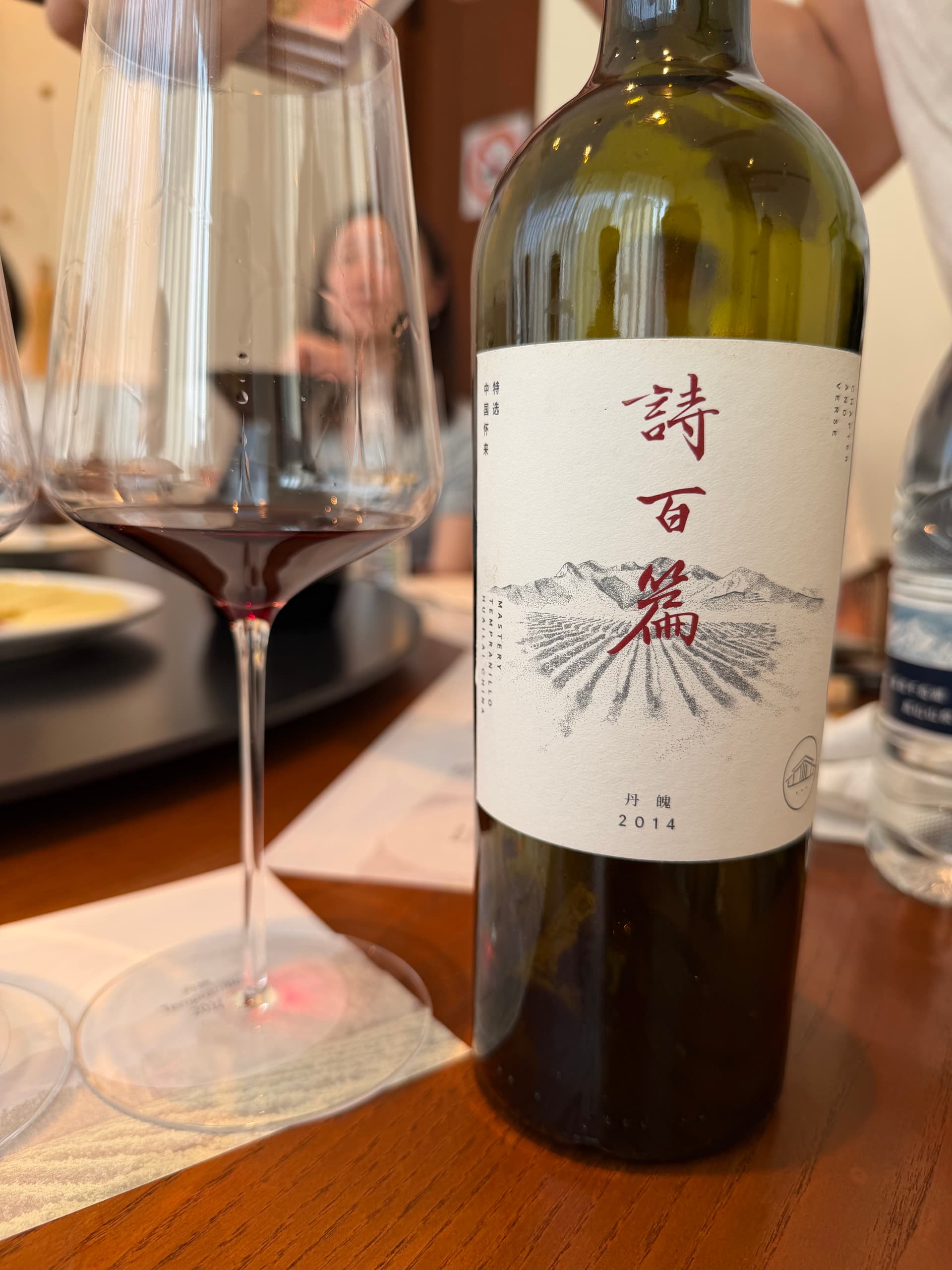
I have also tasted ShoFang’s 2022 Tempranillo and their 2025 Tempranillo still maturing in barrel, which showcase a distinct style. They also offer prominent dried damson flesh aromas, yet carry noticeable forest floor and moss undertones. The winemaker husband explained (the winery was founded by a wife-and-husband team, both of whom studied winemaking in Australia before returning home. Actually, the brand is the wife’s name) that this character stems from whole-cluster fermentation.


If I were to draw a metaphor, drinking this wine feels like encountering a charismatic man. LOL
And the price is 298 CNY, almost is 43 USD. While its price in US dollars may sound steep, within China’s premium wine pricing landscape, I consider it a price point I would be willing to pay.
I should mention that I am not naturally a big fan of Tempranillo, as I tend to avoid wines with overwhelming leather notes and overly robust bodies. Nevertheless, these two expressions have impressed me greatly, especially the ShoFang bottling. I believe this Tempranillo boasts a highly distinctive character.
Nice AI draw haha
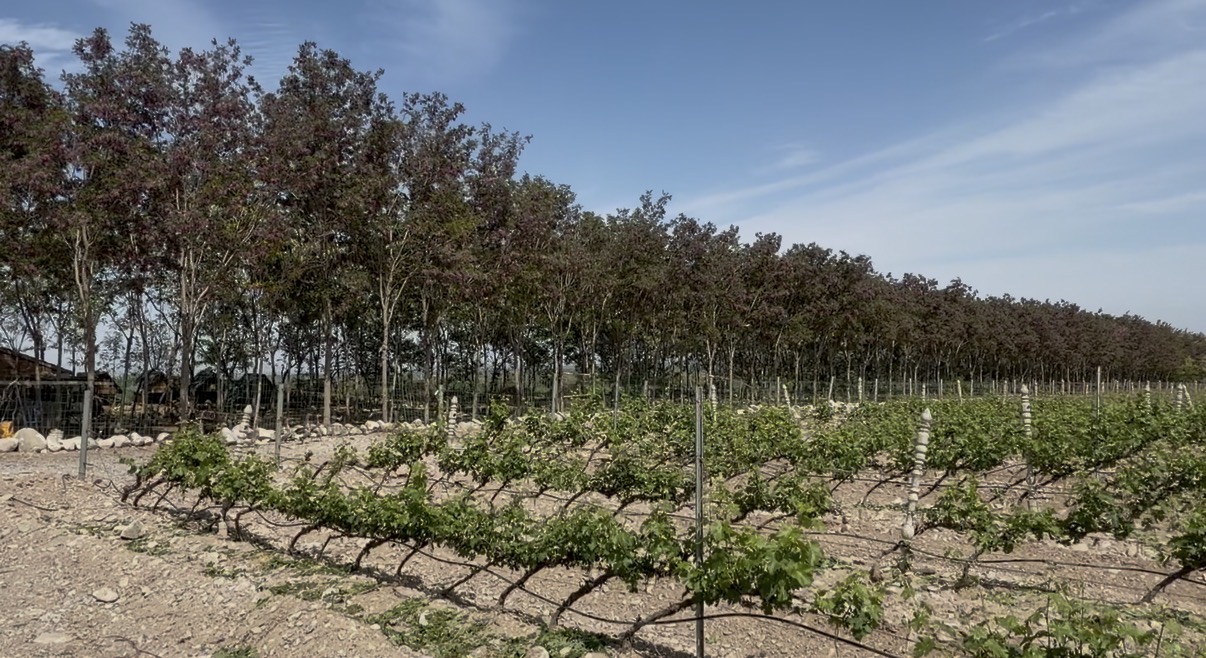
In fact, in most wine-producing regions of northern China, grapevines need to be buried in soil during winter because the minimum winter temperature drops below -20°C, a practice rarely seen in other wine-producing countries. In China, however, it is a cumbersome, arduous, time-consuming yet indispensable task. Consequently, you will find that wine regions such as Ningxia and Hebei in China adopt the an inclined-trunk, single-arm horizontal cordon training system, which facilitates burying grapevines underground in winter.( just like in the photo that I filmed in May in NingXia)
1 Like
** Beijing / Hebei Winery Trip — Part 2:
Purple Mist Winery, Beijing — and a dry Petit Manseng from China
Hi again!
A quick forum-etiquette question before the wine note: when I keep adding new Chinese wine notes to this thread, does each new reply bring the topic back into the “Latest” list, or is it mostly found through search? Also, is this format comfortable for people here? I’m more used to Chinese social media than forum-style communities, so I’m still learning the rhythm of WB.
Back to wine.
Today I want to share a winery from Beijing — yes, Beijing. More precisely, Fangshan, a suburban district in the southwest of the city.
The winery is Purple Mist Winery (紫雾酒庄). It sits near Wulan Mountain, surrounded by hills, with mountain spring water nearby. The site feels cooler than central Beijing.
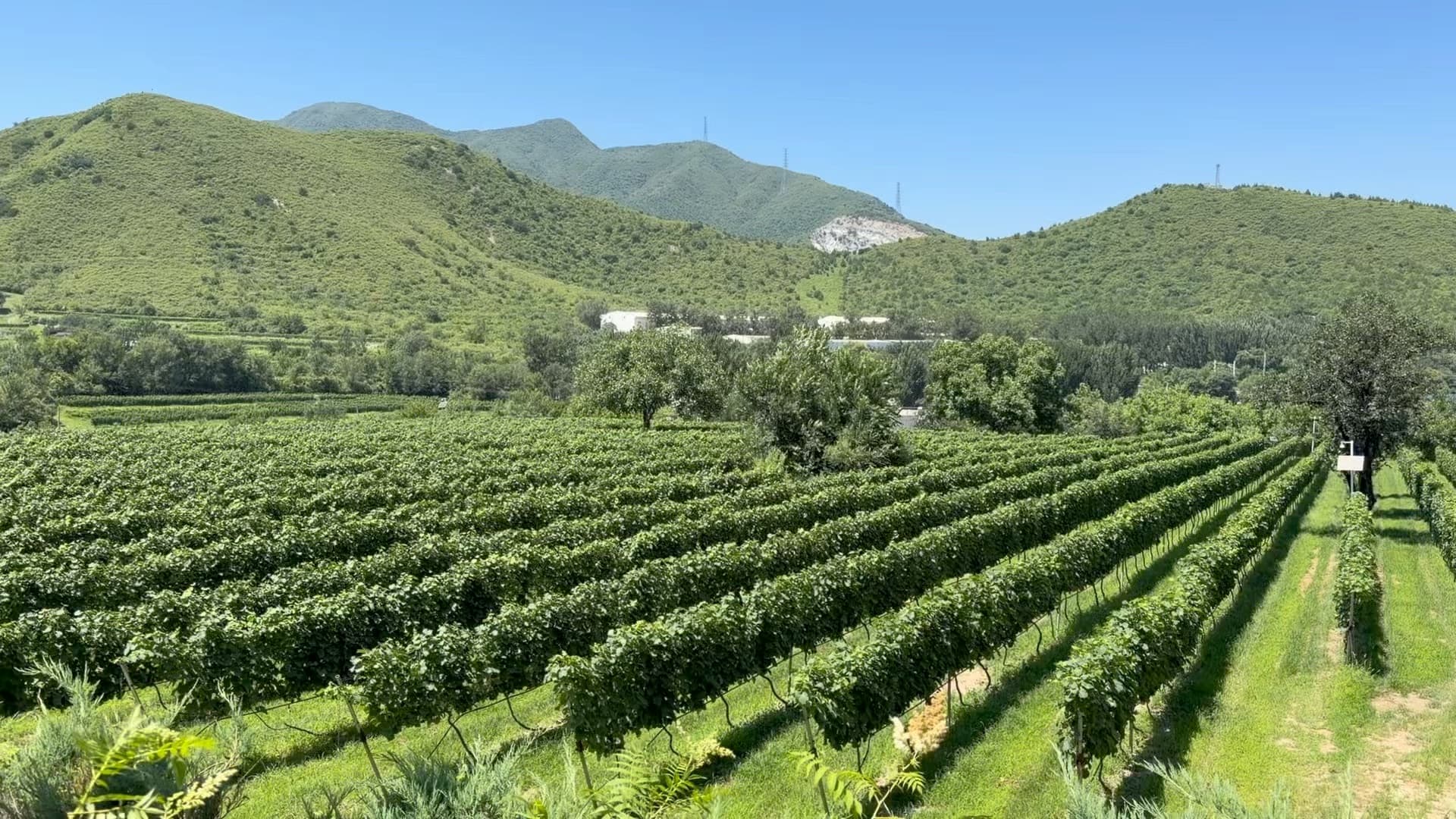
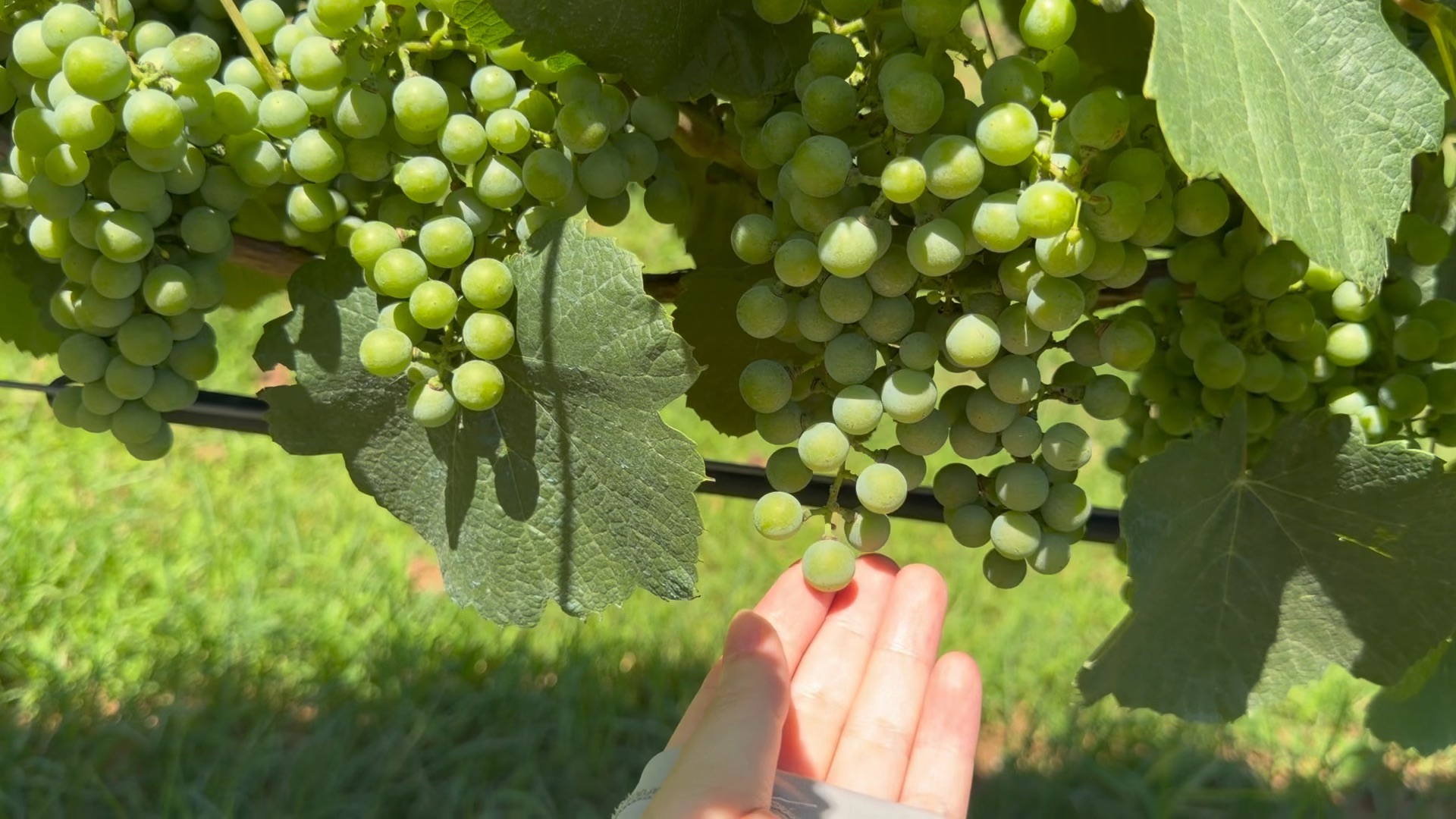
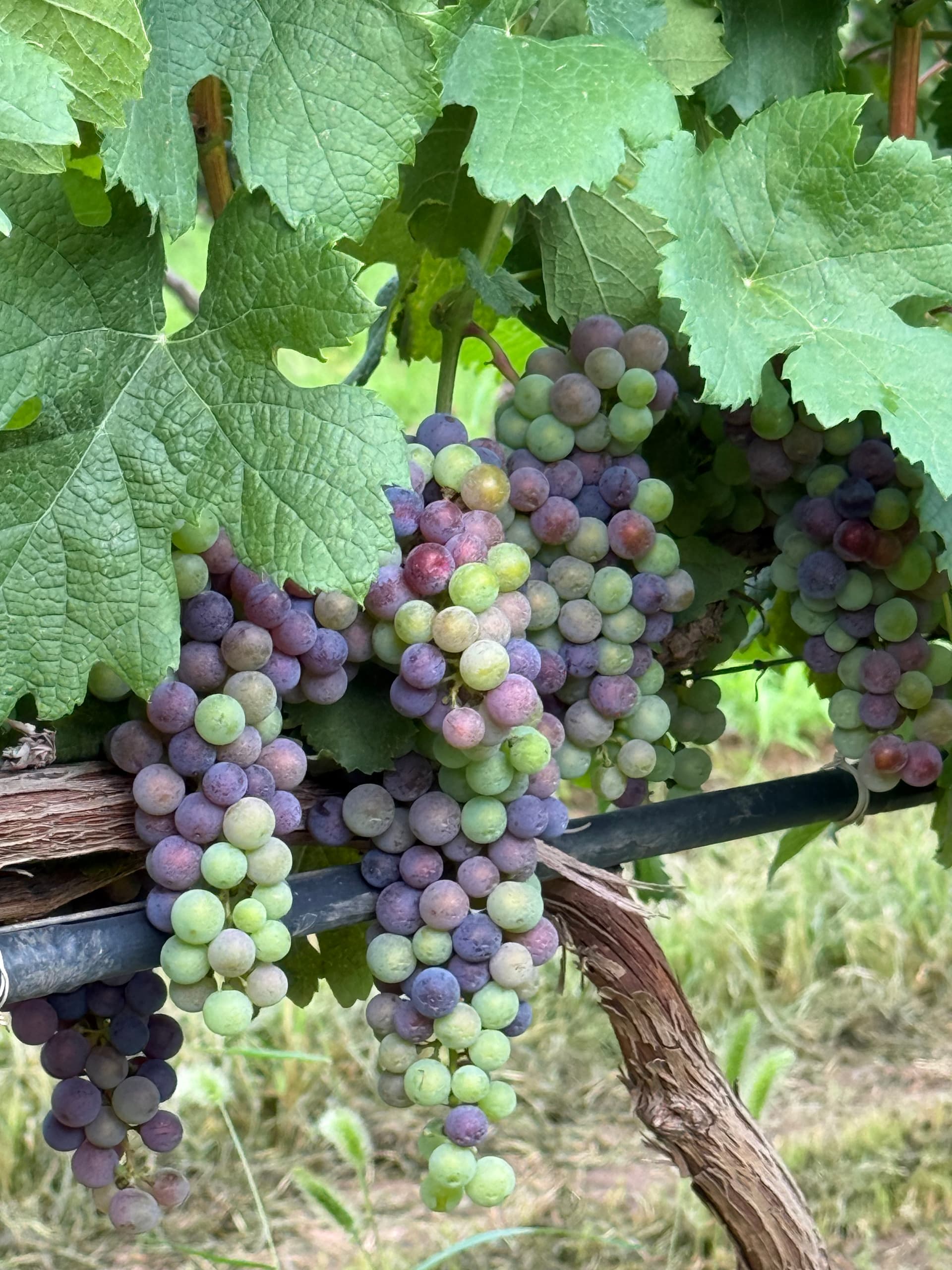
I visited in mid-July, when their Petit Manseng had not yet reached veraison. From a recent vineyard photo, it looks like the grapes have now started changing color.
I tasted their 2024 “Mang” Petit Manseng Dry White, which, according to Chinese award reports, was named one of the top Chinese Petit Manseng wines of the year by Bettane+Desseauve China.
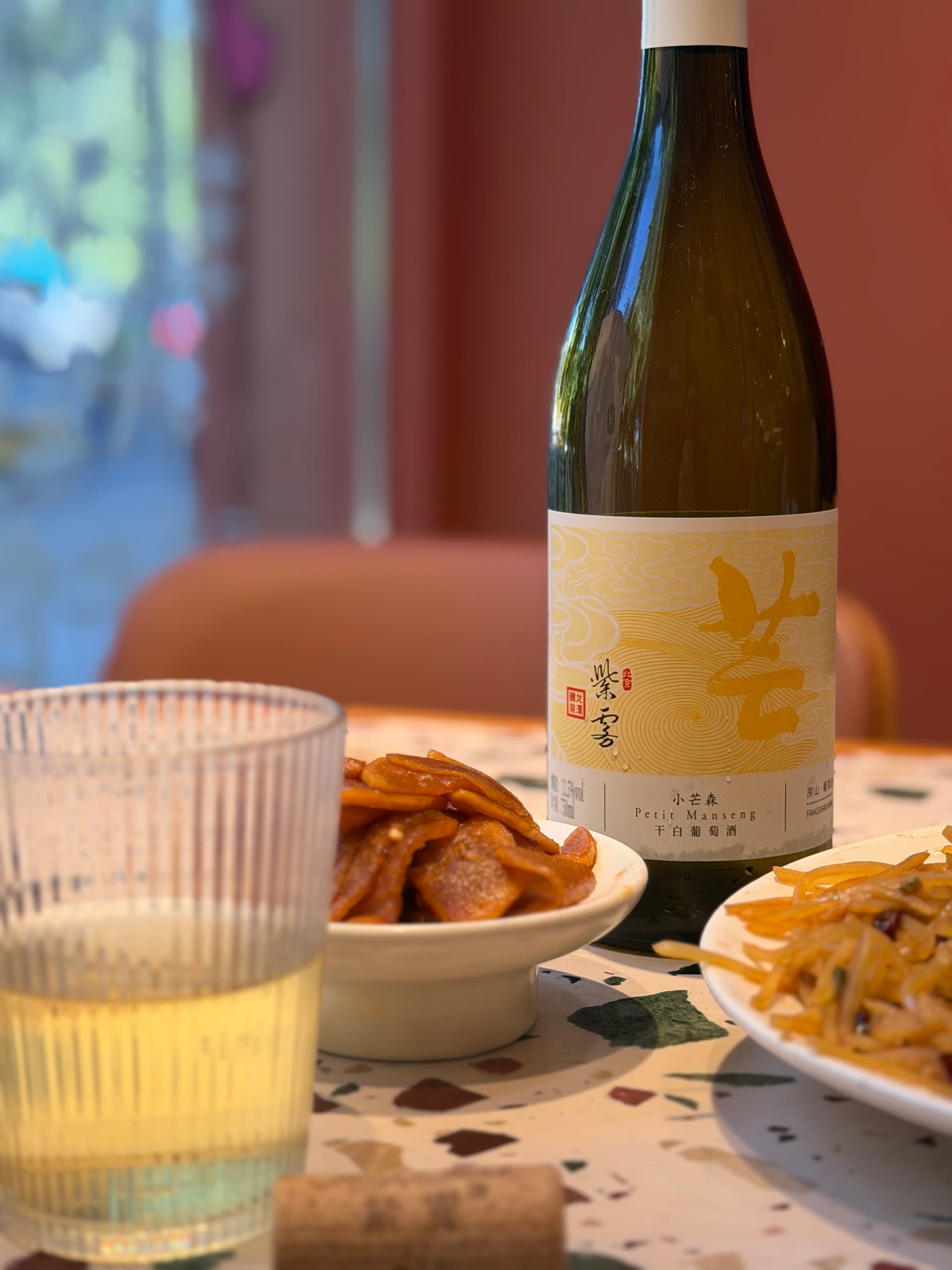
On the nose, it was quite expressive: yellow peach, nectarine, ripe yellow fruit and a light creamy note.
On the palate, the acidity was very high, with clear yellow peach, nectarine and a tart yellow-fruit edge — something that reminded me a little of Chinese emblic / yougan fruit. It was refreshing and vivid, but not perfect: I did notice the alcohol a little, which made the wine feel slightly warmer than I would ideally want. Our bottle had not been in the ice bucket for very long, so I would definitely serve this well chilled.
What made this wine interesting to me was the broader Petit Manseng question.
During this Beijing / Hebei trip, I tasted several Chinese Petit Manseng-based wines in different styles. Some were sweet or semi-sweet; this Purple Mist wine was dry.
For the sweet side, I recently compared:
2017 Les Jardins de Babylone, Jurançon Moelleux
Citrus-driven, with bright, refreshing acidity. Sweet, but the impression was still very lifted and precise rather than heavy.

2017 Domaine Franco-Chinois Sweet Petit Manseng, Huailai
I tasted this twice. Last year with food, it showed dried apricot, honey and dried orange peel — aromatic, sweet and very charming.
This month at the winery, it felt even more intense: concentrated dried apricot and almond, with an exotic floral / herbal note. On the palate, the sweetness had real density, almost a syrupy richness, followed by a lingering herbal finish that added complexity.
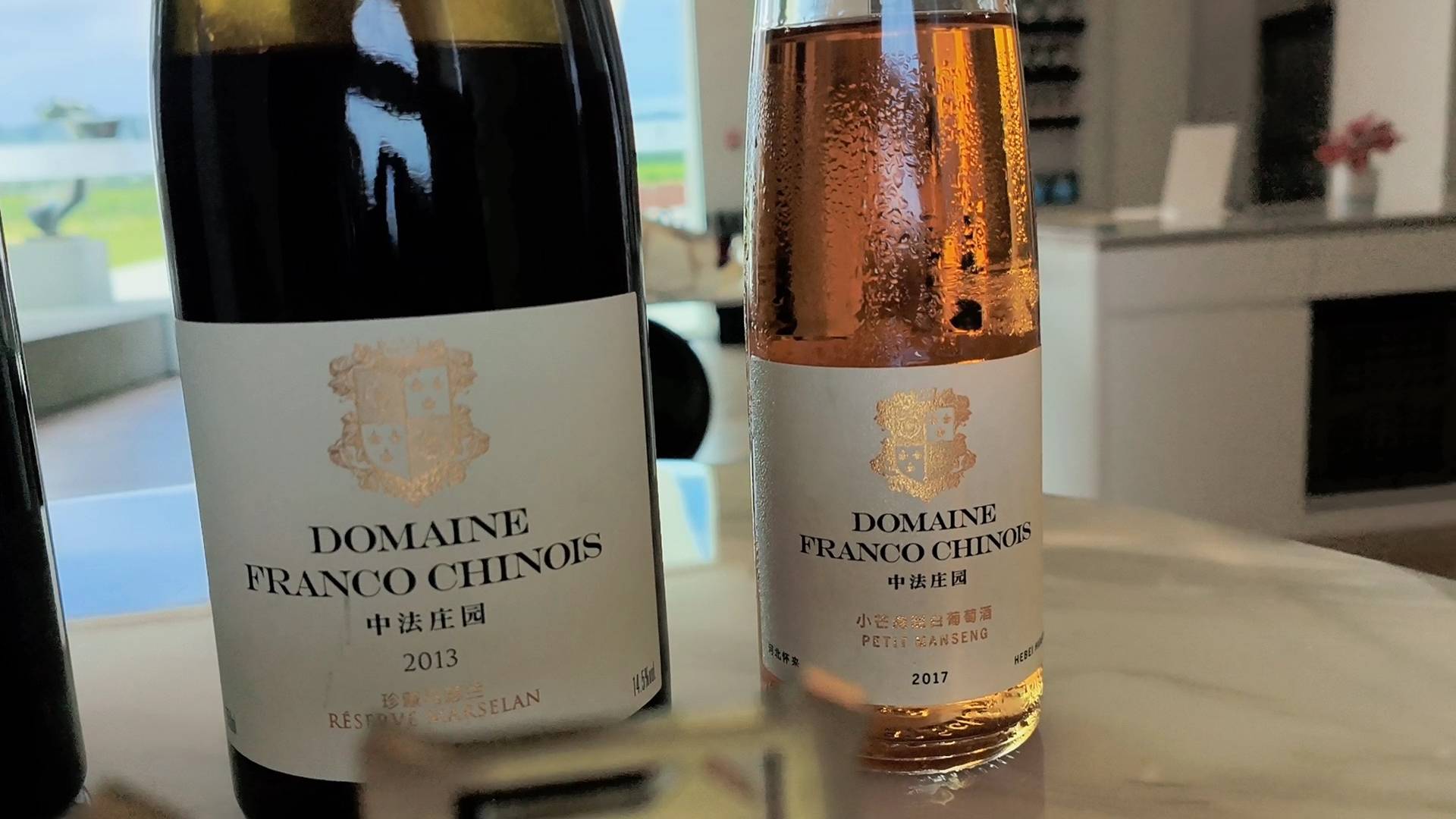
Jurançon may be the obvious historical home for Petit Manseng, and Les Jardins de Babylone is a famous reference point for the sweet style. But the Domaine Franco-Chinois version felt much more “maximalist” to me — more concentrated, more flamboyant, and very immediately seductive.
The Purple Mist wine is a different conversation because it is dry. While researching, I realized that Virginia seems to have developed a serious dry Petit Manseng scene in the U.S. I have almost no experience with Virginia Petit Manseng, so I would love recommendations from people here.
For those who know Petit Manseng better than I do: when thinking about dry Petit Manseng, would you use Virginia, Jurançon Sec, Pacherenc du Vic-Bilh Sec, or somewhere else as the most useful reference point?
I used to think of Petit Manseng mainly through Jurançon and sweetness. This trip made me realize that in China, the grape may be splitting into two interesting directions: a rich, seductive sweet style, and a high-acid dry style that still needs more refinement but has real potential.
1 Like
I love visiting and reading this thread including every lines you wrote. I moved to live in Montreal ( half Paris and half New York ), Quebec, Canada since 1964. I was born in Hong Kong and educated there. Since I moved here as all my Chinese friends are in restaurants business I started to enjoy wines very much and moved to Burgundy wines from mid-1990s completely.
I told you all the above, because I cried for China …as I read in the Newspaper that in China, the Government arrested persons who made and sale Mouton-Cadet !! Please note : no offense is intended for this message as I never live in China at all.
Thank you for sharing this — and no offense taken at all. I think you may be referring to some older counterfeit wine cases involving Mouton Cadet / Mouton Rothschild labels in the Chinese or Hong Kong market. Counterfeit imported wine was definitely a real problem in the earlier stage of China’s wine market development.
One reason I started this thread is that I want to talk about a different side of the story: not fake imported wine, but real Chinese producers making their own wines, with their own vineyards, regions and styles.
I also think many of the counterfeit-wine problems in the past were connected to a very different drinking context: business banquets and status-driven occasions, where the wine was not really chosen for the wine itself, but for what the bottle appeared to represent — prestige, formality, and a sense of high-end hospitality.
But among actual wine lovers, and among many of the better Chinese boutique wineries today, that kind of thinking is looked down upon. Many Chinese winemakers have studied or worked abroad and then returned home. What I find interesting is that more and more of them are no longer simply trying to make “something like Bordeaux” or “something like Burgundy.” Instead, the question seems to be: who are we, and what can our own vineyards express?
The terroir is different, the climate is different, and the ambitions are becoming very real — especially among younger winemakers.
Of course, Chinese wine still has some obvious problems. Good bottles can be expensive, and there is not yet a clear classification system that helps consumers quickly understand quality levels and price expectations. But I think these are problems that can be solved step by step as the market matures.
And on a personal note: I have never been to Montreal. The closest I have been to Canada is probably Seattle. Before reading your message, Montreal was almost blank in my imagination — now at least there is one line drawn there. I hope one day I can experience the city myself, just as I hope to visit more wine regions in person.
1 Like
Thanks for your well written reply and message.
Here is what I really like to read and learn from from your posts. China has a long, long civilization started around 4500 years ago..
Drinking wine ( or enjoying wine ) is one of the most important in one’s daily life as stated in the following poem by :
李白
See how the Yellow River’s waters move out of heaven.
Entering the ocean, never to return.
See how lovely locks in bright mirrors in high chambers,
Though silken-black in the morning, it has changed by night to snow.
…Oh, let a man of spirit venture where he pleases
And never tip his golden cup empty toward the moon! ****
For this point as mentioned abvoe : …more of them are no longer simply trying to make “something like Bordeaux” or “something like Burgundy.” Instead, the question seems to be: who are we, and what can our own vineyards express?..*
Here is my view. As so well stated in Chapter 3 of the book, written by Matt Kramer : Making Sense of Wine page 58. This Chapter talked about : Appellation and Authenticity.
A world of made is not a world of born.
Why should someone - living in a vineyard in China and growing PN grape there - wishes to make something taste like Burgundy* ??
To be a best interpreter ( or best wine maker )of the land, he should know and should recognize that he needs to be truthful of what knows about the terroir of his plot of land and works hard to do his best.
A world of born…should never be…a world of made !!!
1 Like
Yes it does. Though, from my observations, the Latest is also ranked by “popularity”, so a thread with hundreads or thousands posts would rank higher than one with just dozens.
I’m a bit shocked to see the pairings in this photo. Is it pickled radish (醬蘿蔔) and shredded potato with vinegar (醋溜土豆絲)? Seems crazy to my uninitiated palate (ok virtual one) to put this type of flavor power against (any) a wine.
I mean sure it’s great to have coca cola and spicy fried chicken ( the kind with real heat, not a tangy sweet hot sauce cheat). That’s a sensory orgy, I think few people (ahem meaning the foodie kind) mind that. gasp But wine tasting should be a different category of sensory experience. IMHO. Am I a prude?
2 Likes
Yes…interest comments.
I have been drinking wines - preferably Bordeaux and then lately only Burgundy - mostly red - with my friends who are ITB ( cooks, waiting staffs and/or owner of Chinese Restaurant ).
The pairing looks odd to me …also. Love to hear from Carol as to : why ???
將進酒、君莫停
前輩,晚輩敬您一杯。先飲為敬! 

Poetry and drinking is an ultimate artform, and I feel fortunate to be a member of a culture that champions this appreciation.
Quite a purist. I like it!
1 Like
Okay, hahaha.
First off, I think it might be your “virtual sense of taste” that makes you find these two dishes quite strongly‑flavored.
You can think of this cold‑marinated radish slices as less‑sour pickled cucumbers; it also works to whet the appetite and cut through greasiness.
The shredded potatoes may only look heavily seasoned from its color, but actually both dishes are fine to eat on their own.
Besides, we also have Chinese‑style wraps and sizzling beef on the table. You can roll the shredded potatoes and beef inside the wrap and eat them together, which brings out a much better balance of flavors.
Also, since summer is sweltering, I just wanted to bring a crisp white wine (like this Petit Manseng) for the meal. I didn’t really put much thought into food‑and‑wine pairing that day, hahaha. Still, I think they go well together, because this wine is really refreshing with bright acidity that cuts through richness.
@JamesMak The above reply also answers your earlier question.:)
Although it was my first time reading the English version of this poem, I recognized it at first glance.
It is also one of my favourite poems.
I wonder if the English translation can convey that heroic spirit (because upon checking, it is actually a direct translation from Chinese into English),
for the original poem was written in classical Chinese.
When recited, it sounds extraordinarily bold and unrestrained. It feels as if I am all alone between heaven and earth,
filling a large cup with wine, facing the moon and sighing aloud,
why time flies so fast, and why my ambitions remain unfulfilled.
Yet I still cherish this moment and this cup of fine wine.
1 Like
No argument from me.
Your answer reminds me the last of part of Chapter One of the classic Chinese Book : Tao.
Here is the translation ( not mine ) :
Ever desire less , one can see the mystery.
Even desiring, one can see the manifestations.
These two spring from he same source but differ in names; this appears as darkness.
Darkness within dankness.
The gate to all mystery.
1 Like
Thanks for reading the poem. The translation in not mine.
It was posted to me in the Parker Old wine board, long long ago.
Here is another old Chinese classical verse which I often posted in this wine board.
I will repeat it here…( please excuse my poor translation ) :
The rolling water of the Yangtze River flows eastward to the sea;
and it will never return;
Its crests will wash away many heroes dream;
With a turn of the head, success or failure will all disappear;
However, the green hills will always be here; and
The Sun will turn the sky, a few more time, into red in the evening.
An old white hair fish-man, is sitting at the bank of the river.
He is used to the many spring winds and the autumn moons..
Happily he meets his old acquaintance;
With a bottle of wine, they all talk about the past and the present;
but all in laughter.
Hope you will enjoy it too.
********filling a large cup with wine, facing the moon and sighing aloud,
why time flies so fast, and why my ambitions remain unfulfilled.
Yet I still cherish this moment and this cup of fine wine. *****
1 Like
Ah so that was a meal not tasting, a different ballgame. I would be open to vegetables dishes with a refreshing, acidic white.
1 Like
Thanks for the detailed report. Tried the Chapter and Verse Riesling and Pinot Noir on a recent trip to China and was the first time I was really impressed with a Chinese wine. Both were superb QPR at ~10-15 USD BTG. The wines were lively with nice acidity and would stand up on its own in a blind line up of similar priced wines from around the world.
Beyond these wines, other times I tried wines BTG this past trip, have not been impressed. Price/quality is completely all over the place with. Regardless, it’s exciting to see that the Chinese wine industry/culture growing. Excited to try more and hopefully do some visits in the future.
1 Like
I think you made a very wise choice with Chapter and Verse / Canaan.
One thing I appreciate about Canaan is that, besides having a relatively reasonable pricing structure, it is also one of the more mature winery-tourism experiences in China. The wines are well made, the tasting is organized, and the visit itself feels professional.
I agree with you that price / quality in China can still be all over the place. Some wineries are genuinely serious about wine, while others feel more built around tourism, banquets, or group visits, where the wine itself may not be the strongest part of the experience.
I guess that this probably exists in many wine countries too: wineries that are perfectly fine for casual tourists, but not necessarily the best choice for wine lovers who want to understand the region through serious bottles.
That’s why, if someone is visiting China and only has limited time, I would recommend choosing producers like Canaan first — not because every wine will be everyone’s personal favorite, but because it gives a fair and well-organized introduction to what good Chinese wine can look like today.
Beijing / Hebei Winery Trip — Part 3: Domaine Franco-Chinois
Hi again!
For the next winery from my Beijing / Hebei trip, I want to write about Domaine Franco-Chinois in Huailai, Hebei.
When talking about Domaine Franco-Chinois, it is hard not to start with its history. It began as a Sino-French viticulture and winemaking cooperation project. In 1999, the Chinese and French Ministers of Agriculture signed an agreement in Paris to establish the Sino-French Viticulture and Winemaking Demonstration Farm, and Huailai, Hebei was selected as the site. The farm was officially established in 2000 and later renamed Domaine Franco-Chinois.
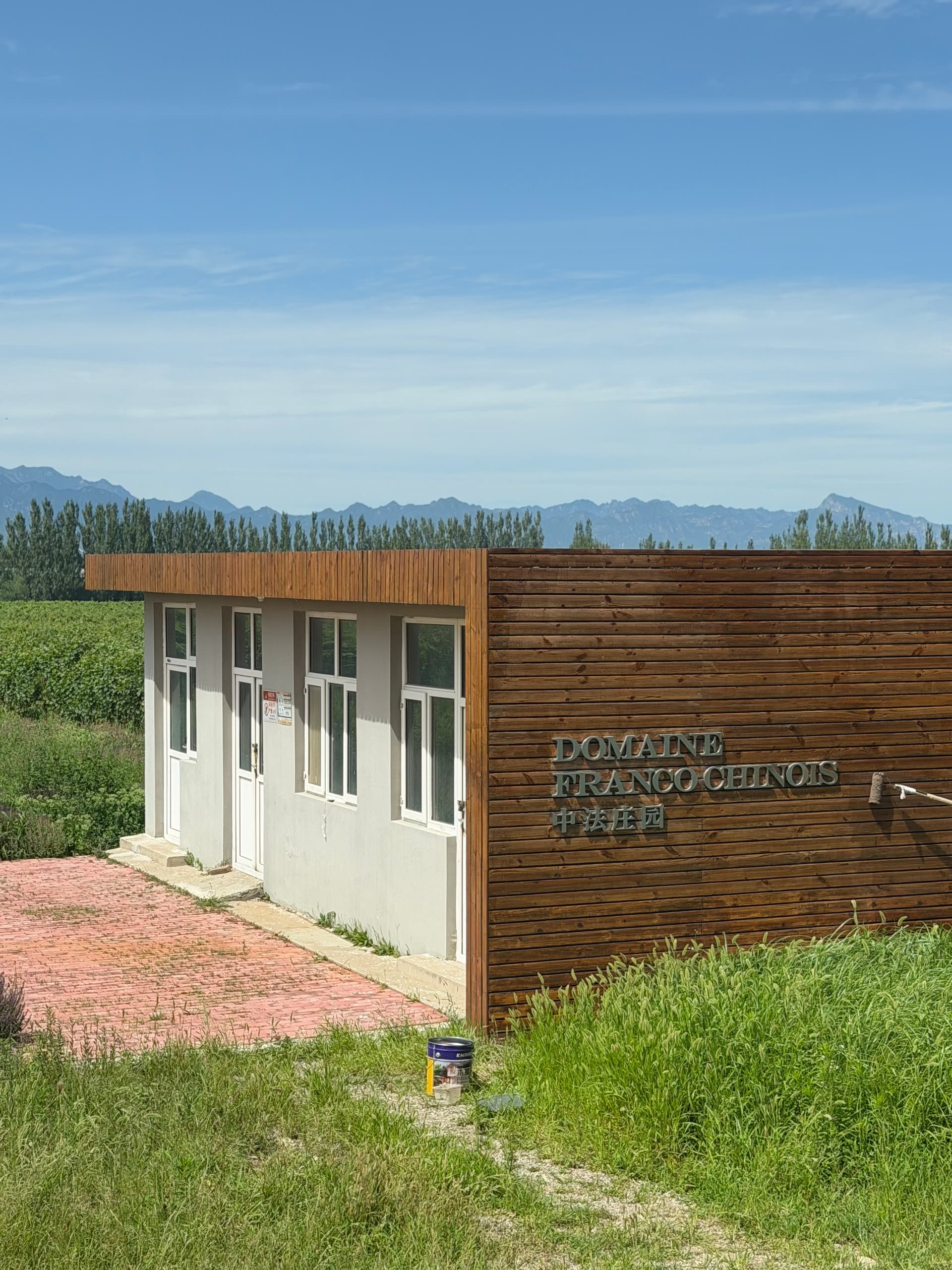
According to the winery’s own materials, Domaine Franco-Chinois was the first winery in China to import Marselan nursery vines from France. Even today, its Marselan plant material has continued to influence other Chinese wineries.
In 2010, Domaine Franco-Chinois became a sister winery to its neighboring Canaan Winery. Both now belong to Canaan Investment Group.
I wrote about Canaan earlier in this thread. To me, Canaan and Domaine Franco-Chinois feel very different, even though they are sister wineries.
Canaan has a much broader portfolio: more than twenty grape varieties, more than ten regular bottlings, and several tiers from entry-level to Reserve. My impression of Canaan is brighter and more energetic — polished, technically consistent, and full of a kind of abundant beauty.
Domaine Franco-Chinois feels much more compact and classical. Its current portfolio is much smaller, and the wines feel less flashy, more restrained, and more old-fashioned in a good way. If that sounds too abstract, here are my notes from this tasting.
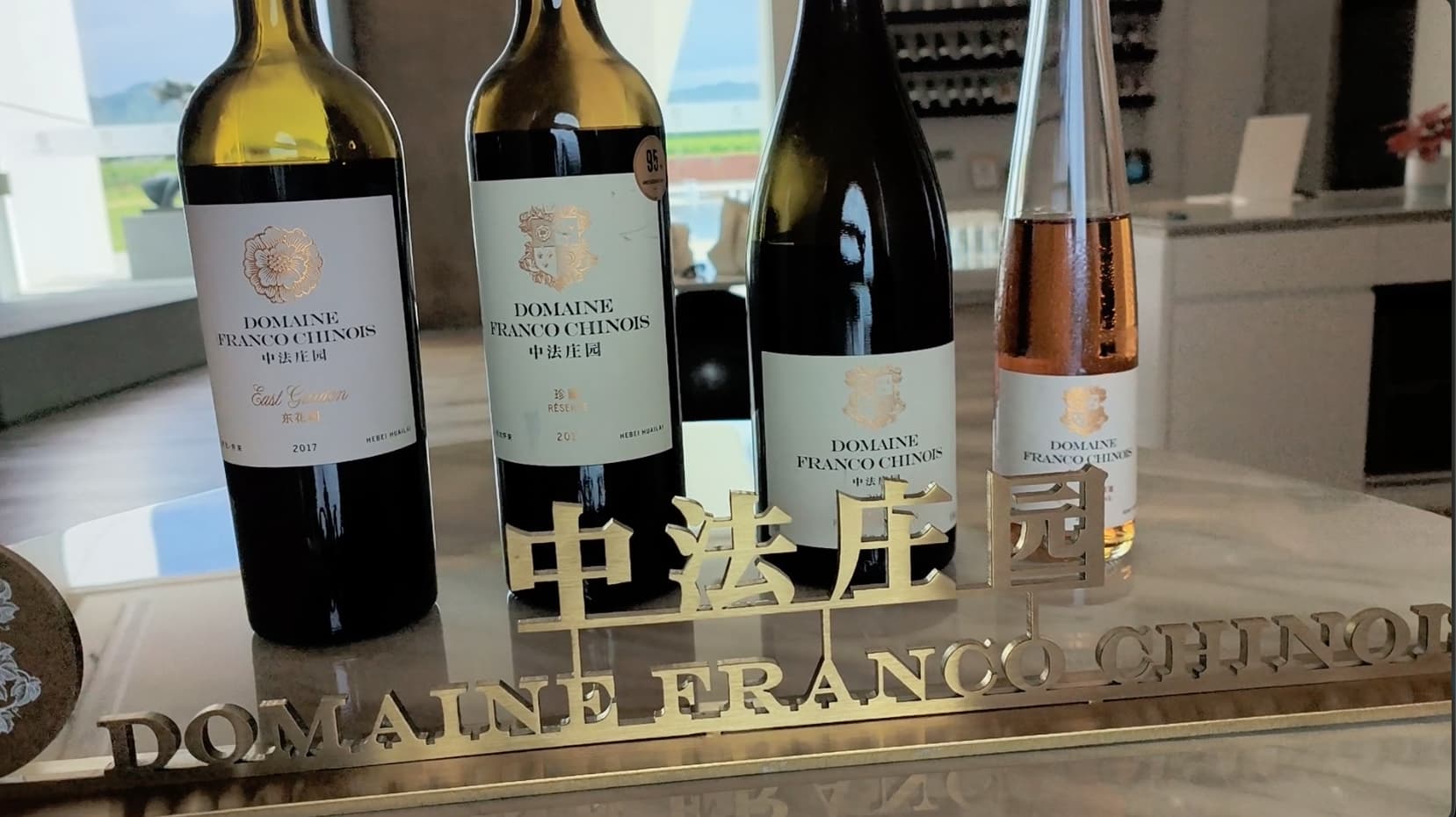
2017 Domaine Franco-Chinois East Garden
A blend of Cabernet Sauvignon, Merlot, Cabernet Franc and a small amount of Petit Verdot.
This was more floral and open than I expected: rose, dewy red berries and small raspberries. The palate was delicate, light and fine. This is the kind of wine I would open, give five to ten minutes of air, and then enjoy by itself without much ceremony. Very comfortable to drink.
2017 Domaine Franco-Chinois Réserve
Also a Bordeaux-style blend, but with more depth and structure.
Leather, red-fruit jam and a slightly heavier aromatic profile than East Garden. On the palate, medium-plus tannins, medium-plus acidity and more concentration. This felt more suitable for food. It did not leave as immediate an emotional impression on me as East Garden, but I could feel that it is the more serious and durable wine.
2013 Domaine Franco-Chinois Réserve Marselan
Aromas of red-date cake, a medicinal herbal note that reminded me of Chinese bupleurum / chaihu. After swallowing, there was still a branchy, woody impression in the mouth, with medium-plus acidity, medium tannins and some rose / fruit-jam notes on the finish.
I have to be honest: I did not love the herbal / medicinal note here. Compared with another vintage of DFC Marselan I tasted before, possibly 2014 or 2015, this 2013 was less to my taste. Still, it was interesting to taste because Marselan is such an important variety in the story of Chinese wine.
2017 Domaine Franco-Chinois Petit Manseng
This was a sweet Petit Manseng.
Very concentrated dried apricot and almond, with exotic floral and herbal notes. On the palate, the sweetness had real density, almost a syrupy richness. After swallowing, a lingering herbal note remained in the mouth and added complexity.
I recently compared this in my mind with 2017 Les Jardins de Babylone from Jurançon. Jurançon may be the historical home of Petit Manseng, but the Domaine Franco-Chinois version felt much more maximalist to me — more concentrated, more flamboyant, and very immediately seductive.
Overall impression
Canaan feels like a large, bright, well-organized modern producer. Domaine Franco-Chinois feels more like a compact, historically important winery with a classical temperament.
I would not say every wine from DFC is equally easy to love, but the winery feels important because of its history, its role in Marselan, and its older, more restrained style compared with many newer Chinese wineries.
For me, East Garden was the most immediately charming wine in this tasting, while the Petit Manseng was the most dramatic.
I’ve also attached Domaine Franco-Chinois’s official brochure, which introduces their five wines in more detail. I translated it into English with AI and gave it a quick scan myself, so hopefully there are no major mistakes 


3 Likes