Aha! 33 years ago was such a long time ago that I hadn’t even been born yet haha.
In fact, I’m travelling in Beijing right now because there are some very nice wineries in Beijing and Hebei. I will keep updating everyone.
Cheers,
2 Likes
First, I haven’t tried to post my YouTube link in my posts, I only left it in my “personal introduction”. So I suppose if you are interested, you will click into my homepage—you may find my YouTube channel or not, it’s your choice.
Second, as I mentioned earlier in this thread, when I searched for “Chinese wine” as the subject, I sadly didn’t find any discussions from this year, nor ongoing thread dedicated specifically to tasting notes. That’s why I decided to start one myself.
Third, I fully respect the WB community rules. Please let me know if I violated any rules, but why am I unable to share more rich content? I have plenty of tasting notes and more important: Chinese wine Thoughts from my perspective. I’d love to share, and they cannot be fully covered within a single post.
In shorts, I roughly know what you are opposing and defending, yet that is not what I truly intend to do.
So, cheers?
8 Likes
Second on the “Chinese wines” search observation. Literally two posts under it, one is yours.
Thanks for your hard work. I finished checking my notes and inventory. I only tried the following Chinese wine - White Dove which was released by SAQ ( Quebec, Canada where I have living since 1967)…both in red and white. I do not believe it will imitate Bourgogne blanc ). The red was cs based so I have no opinion at all …
Good luck to your idea…
I have no idea about "White Dove’ , but probably you mean “Jade Dove” series by XIGE Estate in Ningxia?
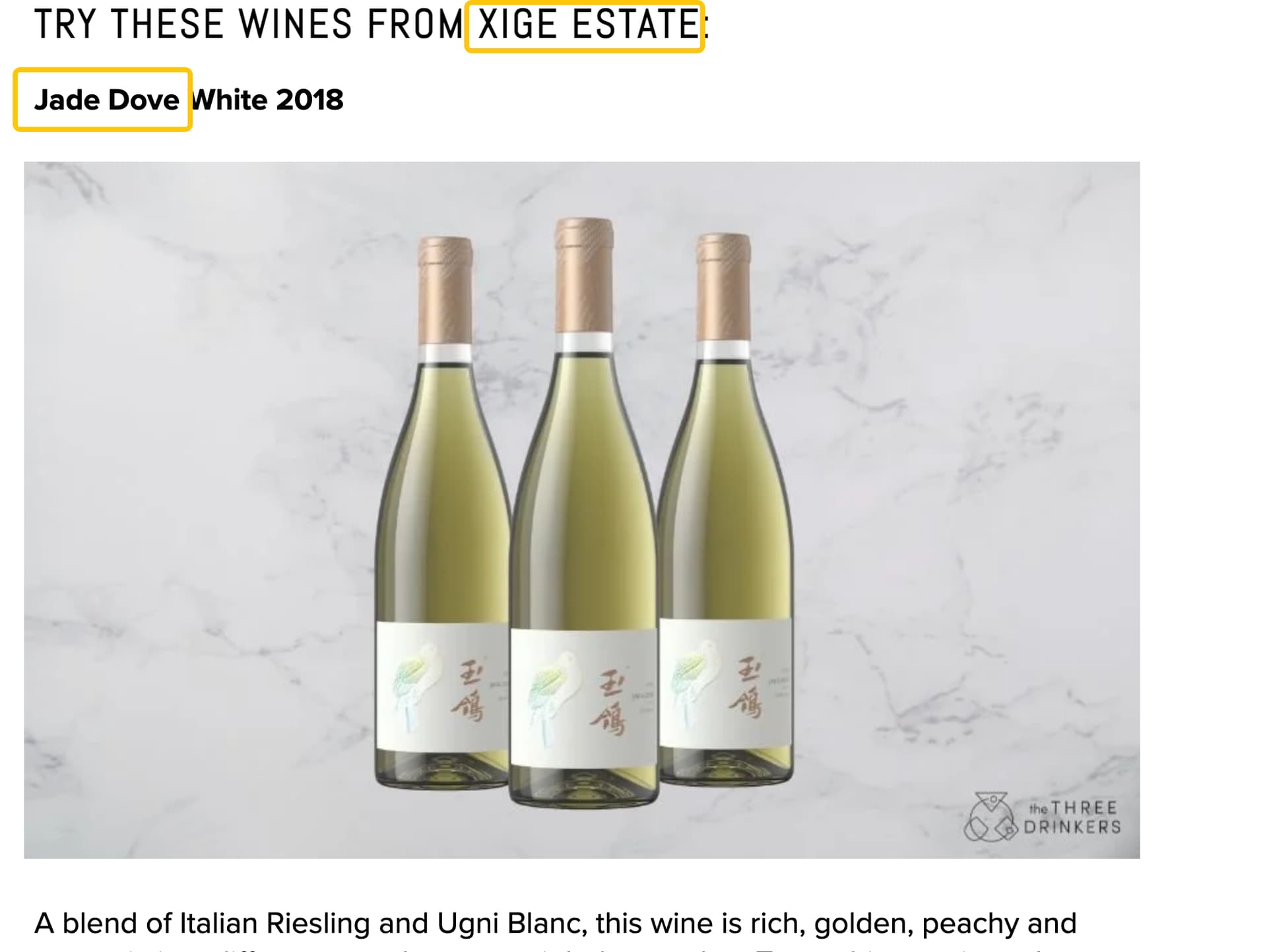
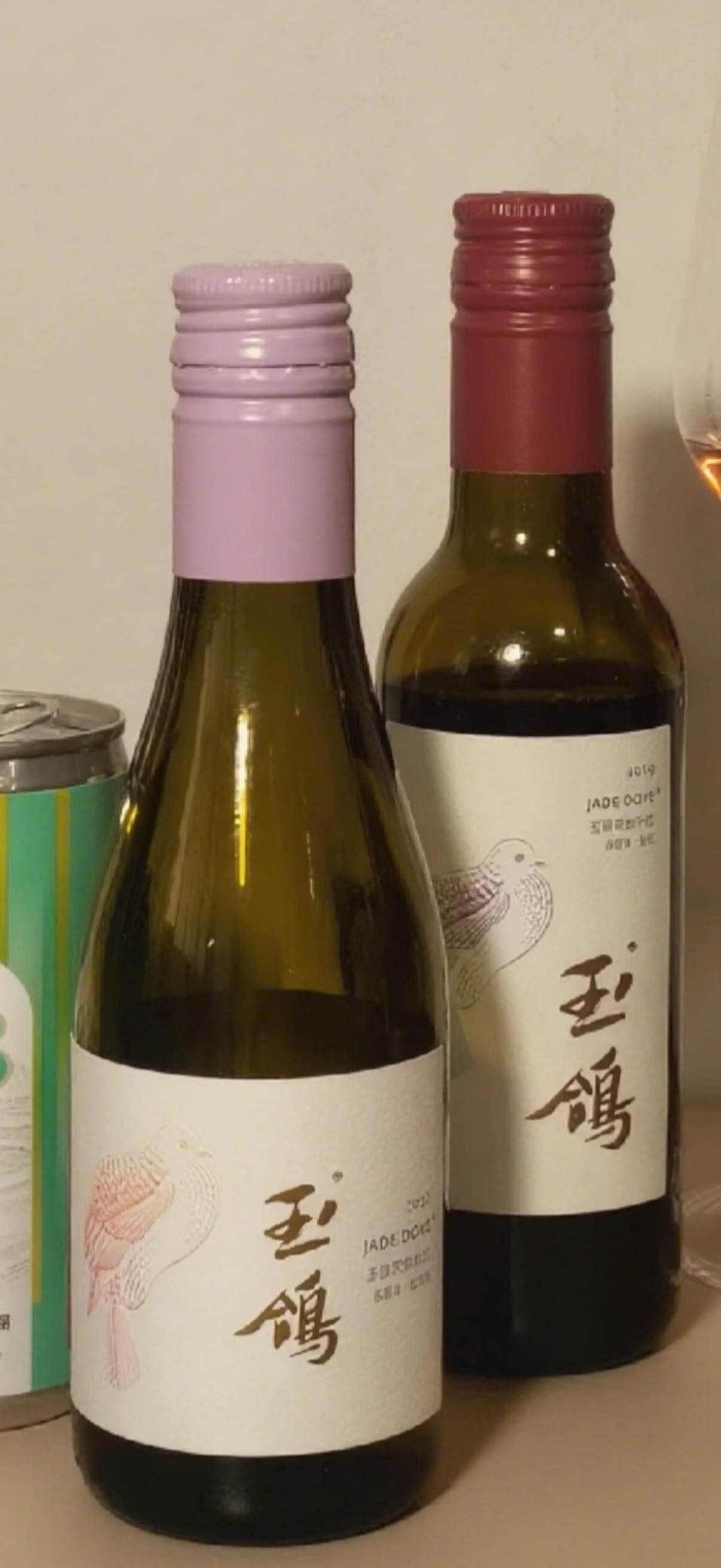
If you are referring to this series, then…I would say, from my tasting, they taste pretty mediocre. I’ve tried countless Chinese wines that taste far better and cost much less. (I really wish I could list them all for you and that you’d be able to get your hands on them, haha!)
Wow…love your quick reply and the pictures. Yes my mistake. They were Jade dove red and white. I prefer the white and it is enjoyable; but no comparison with the burgundy whites I normally enjoy.
I was not aware the grapes of the Jada Dove as I was wrong and thought it was from chardonnay…thanks for information.
Yep, white grape, and the poem is an interesting connection.
Do you know much about / know of any resources on the movement of vinifera wine grapes into China? Does it seem more likely that a Georgian grape would have found its way into China via Silk Road-era trade, versus coming over sometime between the founding of the PRC and the Sino-Soviet split? That’s what I’m especially curious about.
1 Like
This is fascinating and I want to try some of these.
For me also, but it is not possible to source them.
Stephen, thanks for the questions. Glad that I didn’t just brush them aside because the Soviet angle sounded strange. My understanding of the PRC-Soviet cooperation post the Korean war were limited to the industrial/military dimensions. Your questions made me burn more AI tokens but that was all worth it. I always want to build a global viticulture knowledge base for my platform. This exercise fills an important gap.
BTW, read your Examined Vine substack too, very nice writings!
What have I learned? Sad news first. My romantic theory of the white jade naming with a Tang connection was shattered. It’s Bai2Yu2 not Bai2Yu4 白玉. 白羽 (Rkatsiteli) has another name 白翼, white wings/feather. So an empirical description about the plant, no poetic imagery. Here is one detailed page I found about the varietal.
The research lines up the movement of v. vinifera into China falling under a few key periods:
- Han (BC 1st,2nd century) : Zhang Qian brought back wine (not wine making methods) from his journey to Xiongnu.
- Tang (AD 6th-8th century) : table grape varietals (W Asia) to Xinjiang, wine making varietals (Caucus) to modern day Turpan. A good page about wine history in this part of China.
- Qing (1892 - now) : ZhangBiShi established Zhang Yu, imported 120+ varietals from France/Italy/Spain/US. A landmark event dominating all current discussions about history, overshadowing the other periods.
- Soviet/East Europe transfer (1950’s, more below) : 白羽 (Rkatsiteli), 晚紅蜜 (Saperavi), 塔夫克維利 / 塔夫克維里 (Tavkveri) all showed up this time.
- France & new world (1980’s - now) : boring Capitalism
Specifically about the Georgian varietals, this table captures the key facts:
| 中文名(Chinese Name) | 原名(Original Name) | 原產歸屬(Region of Origin) | 入華時間 / 路徑(Introduction Path & Era) | 現在國內主栽區(Cultivation Areas in China) | 備註(Notes & Historical Context) |
|---|---|---|---|---|---|
| 白羽 (Rkatsiteli) | რქაწითელი(Rkatsiteli, 意「紅枝條」) | 格魯吉亞卡赫季[Kakheti, Georgia] | 1956,莫斯科/保加利亞 → 河北/山東/陝西/北京/黃河故道,寧夏也有引[1956, Moscow/Bulgaria → Hebei/Shandong/Shaanxi/Beijing/Former Course of the Yellow River; also introduced in Ningxia] | 華北、黃河故道、寧夏(中熟推薦種)[North China, Former Course of the Yellow River, Ningxia (recommended mid-ripening variety)] | 蘇58號,三源互證。格魯吉亞第一大白,佔該國 43%;前蘇聯時代種植面積全球第三。[Soviet No. 58, verified through three sources. Georgia’s largest white grape variety, accounting for 43% of the country’s planting; its planting area ranked third globally during the Soviet era.] |
| 晚紅蜜 (Saperavi) | საფერავი(Saperavi, 意「染料」) | 格魯吉亞卡赫季[Kakheti, Georgia] | 1957,格魯吉亞直引北京[1957, directly introduced from Georgia to Beijing] | 黃河故道、山東、北京、新疆伊犁[Former Course of the Yellow River, Shandong, Beijing, Yili in Xinjiang] | 高加索古種其三,1957 格魯吉亞直引。卡赫季原產,果肉粉紅,染色型。[The third ancient Caucasian variety, directly introduced from Georgia in 1957. Native to Kakheti, featuring pink pulp; a teinturier (dyeing) variety.] |
| 塔夫克維利 / 塔夫克維里 (Tavkveri) | თავკვერი(Tavkveri) | 格魯吉亞[Georgia] | 1950s 蘇聯進[1950s, imported from the Soviet Union] | 山東零星、北京、河南、安徽、江蘇、山西[Sporadic in Shandong, Beijing, Henan, Anhui, Jiangsu, and Shanxi] | 高加索古種其二。格魯吉亞紅,國內小眾。[The second ancient Caucasian variety. A Georgian red variety, relatively niche in China.] |
| 晚紅蜜塞佛尼 (Saperavi Severny) | Саперави северный(Saperavi Severny) | 俄羅斯/北高加索/羅斯托夫[Rostov, North Caucasus, Russia (Soviet Union)] | 蘇聯時期引[Introduced during the Soviet era] | 新疆伊犁有種,俄 Rostov/摩爾多瓦/烏克蘭主栽[Cultivated in Yili, Xinjiang; primarily cultivated in Rostov (Russia), Moldova, and Ukraine] | 晚紅蜜 × 抗寒種(如山葡萄)的雜交後代,北線版。[A hybrid offspring of Saperavi and a cold-resistant species (e.g., Vitis amurensis), representing the northern-route version.] |
| 白雅 (Baya) | Бая / Baya?(待考,蘇聯南部白) | 北高加索/克拉斯諾達爾[North Caucasus/Krasnodar] | 蘇聯時期引[Introduced during the Soviet era] | 待考 / 零星分佈[To be investigated / Sporadic distribution] | 西歐老種在蘇聯的栽培系,非高加索古種。[A Western European old variety cultivated in the Soviet Union, not an ancient Caucasian variety.] |
| 卡它庫爾干 (Katta-Kurgan) | Катта-Курган(Katta-Kurgan) | 中亞/烏茲別克(蘇聯中亞試驗站選系)[Central Asia/Uzbekistan (selected by the Soviet Central Asian Experimental Station)] | 蘇聯時期引[Introduced during the Soviet era] | 新疆及西北部分地區[Xinjiang and parts of Northwest China] | 不是高加索,是西亞–中亞支沿絲路反向進蘇聯品種網。[Not of Caucasian origin; belongs to the Western-Central Asian branch that entered the Soviet variety network in reverse along the Silk Road.] |
| 巴尔开斯基 (Balkesiyki) | Балкесийски?(保加利亞名混入嫌疑,待核) | 巴爾幹/蘇聯南部[Balkans/Southern Soviet Union] | 蘇聯時期引[Introduced during the Soviet era] | 待考 / 零星分佈[To be investigated / Sporadic distribution] | 西歐種東歐選系。[A Western European variety selected in Eastern Europe.] |
| 阿里阿基可 (Aliagiko) | Алиагико?(疑似 Aleatico 俄譯) | 意大利原產,蘇聯摩爾多瓦/克里米亞有種[Originally from Italy, cultivated in Moldova/Crimea, Soviet Union] | 蘇聯時期引[Introduced during the Soviet era] | 待考 / 零星分佈[To be investigated / Sporadic distribution] | 西歐種在黑海北岸的栽培系。[A Western European variety cultivated on the northern coast of the Black Sea.] |
4 Likes
As for research tools to dig deeper, I highly recommend DeekSeek, or YuanBao, both of them available in Google Play Store, probably Apple too but I don’t use the IPhone, (figure that you have a preferred LLM to translate the Chinese pages too).
Today, one well-known producer using the Georgian varietals is PuChang Vineyards, with Rkatsiteli/Saperavi/Tavkveri releases that have achieved low 90’s by JS and RP. One example - Saperavi 2018 | Puchang Vineyard.
And there I’ve wondered into @CarolY 's territory. Take it away Carol ! 
1 Like
Right now, the tough thing is: it’s quite difficult to find Chinese wine in the shop or bar. I also asked some Chinese wineries, but in retail channel, it’s still not easy to buy their wines.
Right now, the tough thing is not easy to find the nice and reasonable price Chinese wine in your country. However, I heard some of them attend some global and famous global wine events, like the events are organized by Decanter, Bettane+Desseauve, in Paris or London?(probably)
You can check the winery list once you attend this kind of wine events. 
Beijing / Hebei Winery Trip — Part 1: Canaan Winery, Huailai
Hi all, I just came back from another Chinese winery trip. This time I visited six wineries in Beijing and Hebei: Purple Wist Vinyard, Domaine Franco-Chinois, Canaan Winery, Amethyst, Chateau Sungod and Sho Fang (family winery).
I’ll update the notes one winery at a time. I’ll start with Canaan, because it was one of the strongest impressions from the trip.
Canaan Winery is in Huailai, Hebei, not far from Beijing. Its sister winery is Domaine Franco-Chinois, and both are under Canaan Investment Group. There is also an interesting tech connection: Canaan was founded by Cher Wang, co-founder of HTC.
The estate vineyards are located on both the north and south sides of the Guanting Reservoir, with elevations ranging roughly from 500 m to 1,050 m. During my visit, I was told that the estate now has around 270 ha of vineyard land, not all fully planted yet, and annual production is around 400,000–500,000 bottles. What impressed me most was not just the scale, but how clean and well-managed the vineyards looked.
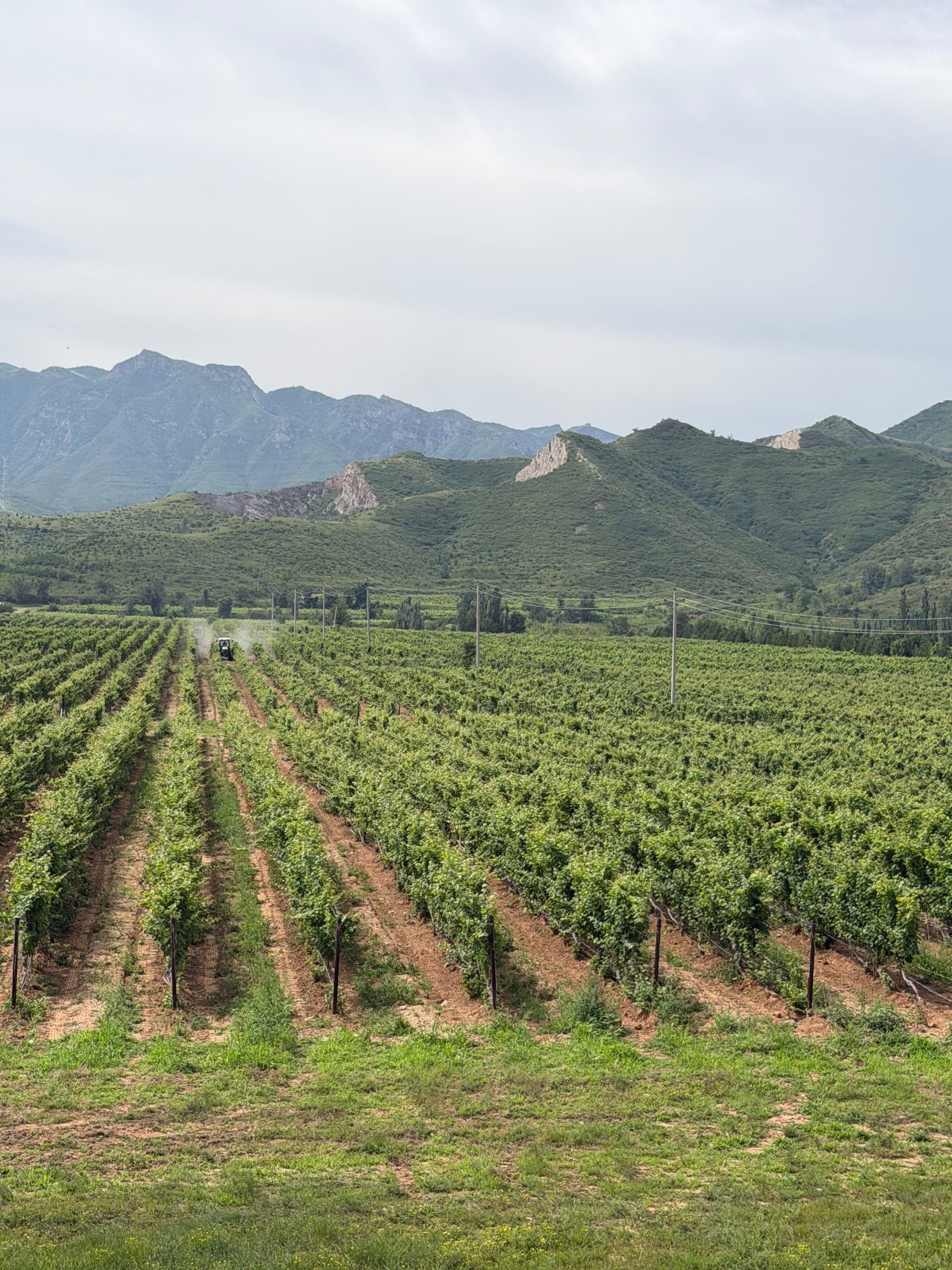
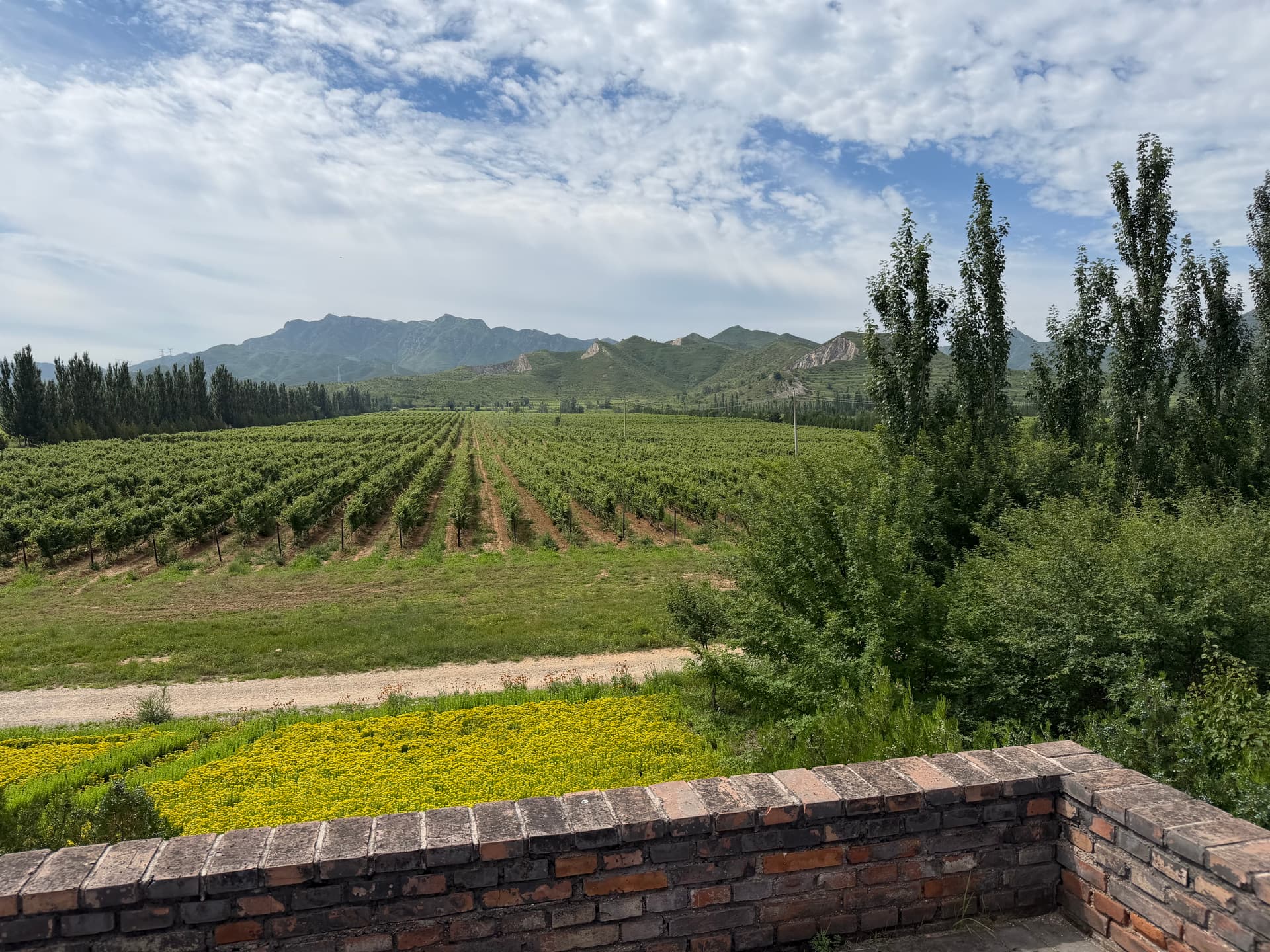
For visitors, Canaan is probably one of the easiest Chinese wineries I would recommend to someone coming to China for the first time. It is only about 30 minutes by high-speed train from Beijing, and the winery can arrange tours and tastings. I was told that tours in English, German and Japanese are also possible by appointment. They also have accommodation, but it needs to be booked in advance.
Canaan has also appeared on The World’s Best Vineyards 100 list in both 2023 and 2024, based at 77th, which is more about wine tourism experience than only wine quality.
I tasted five wines from their standard tasting set:
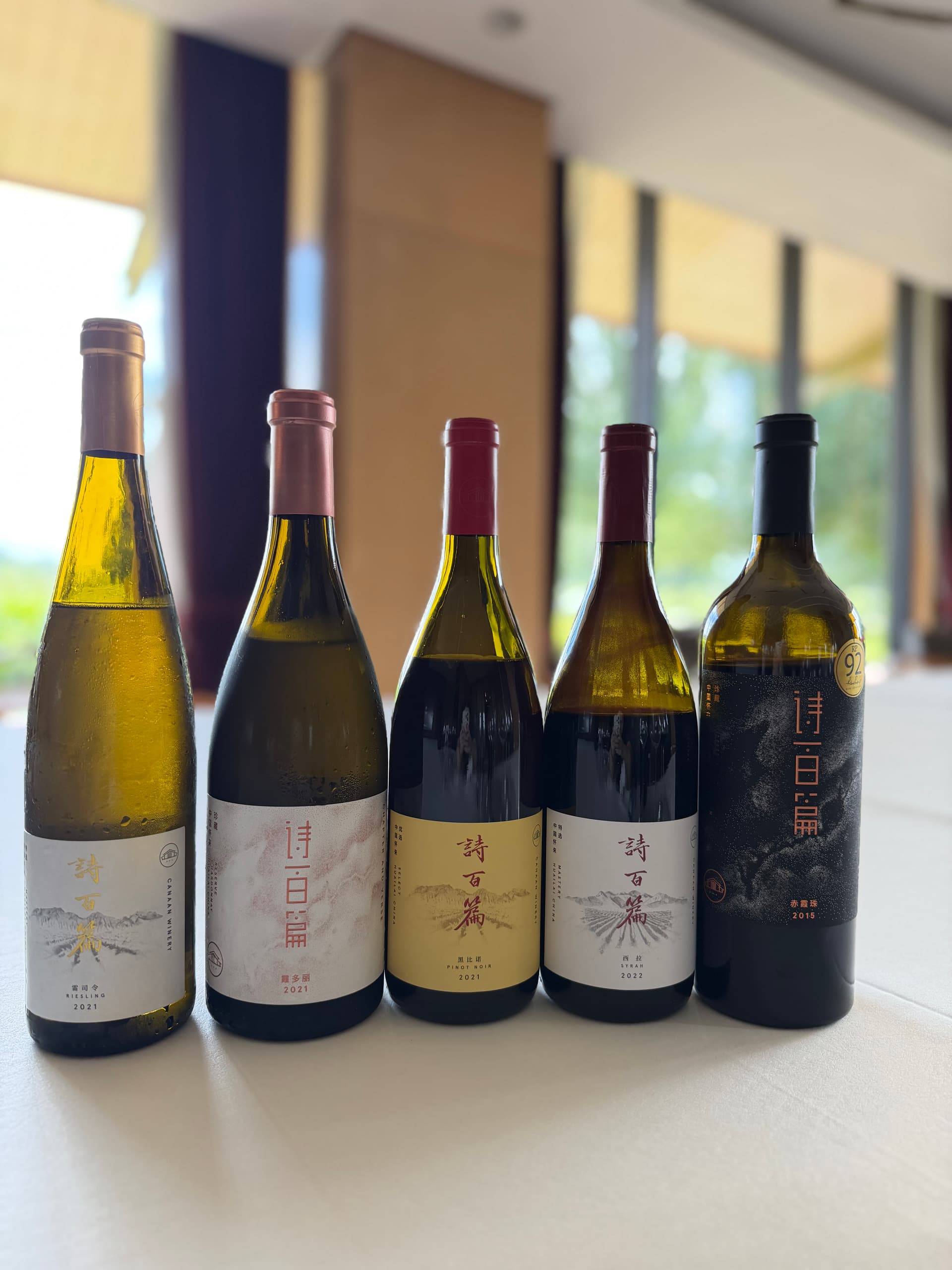
2021 Chapter and Verse Selected Riesling
Mineral, petrol and citrus notes. Comfortable acidity rather than aggressively sharp. A clean, fresh Riesling with good varietal character.
Chapter and Verse Reserve Chardonnay
100% barrel-aged for eight months. Almond, cream and a gentle oak note. Medium-plus acidity, rounded texture and a medium-long finish. Polished and well made, but not overdone.
2021 Chapter and Verse Selected Pinot Noir
Rose jam, strawberry jam, dried cranberry and a slightly warm alcohol impression on the nose. On the palate, raspberry, strawberry, some stem / twig notes and wood tannin. It leans toward a sweeter-fruited style, but still has enough structure. Retail price is around RMB 260, roughly USD 36, which I think is fair for the quality.
2022 Chapter and Verse Selected Syrah
Deep purple-red. The nose is restrained and elegant, with violet, herbs and a little dark purple fruit. High acidity, medium tannins, a touch of peppery spice and a medium finish. Not a heavy or jammy Syrah; more on the floral and savory side.
2015 Chapter and Verse Reserve Cabernet Sauvignon
This was my favorite wine of the tasting. Medium concentration for Cabernet, with herbal notes, blackberries, forest floor and a little creamy oak. It spent 18 months in oak. On the palate, high acidity and medium-plus tannins, but the tannins have become quite fine with age. The wine still feels alive and balanced. Retail price is around RMB 680, roughly USD 100, so it is not cheap, but this was genuinely delicious.
Overall impression
Canaan feels like a large, serious and technically consistent Chinese winery. The wines are not trying to be extreme or experimental; the strength is stability, precision and a relatively polished house style.
To put it less formally: Canaan is a big, well-organized producer with several quality tiers, from entry-level wines to Selected, Special Selection and Reserve bottlings, and it works with more than twenty grape varieties. I have tasted over a dozen of their wines now, and my basic feeling is that you may or may not love the house style, but it is hard to say the wines are poorly made. They are usually balanced, clean and show clear varietal character.
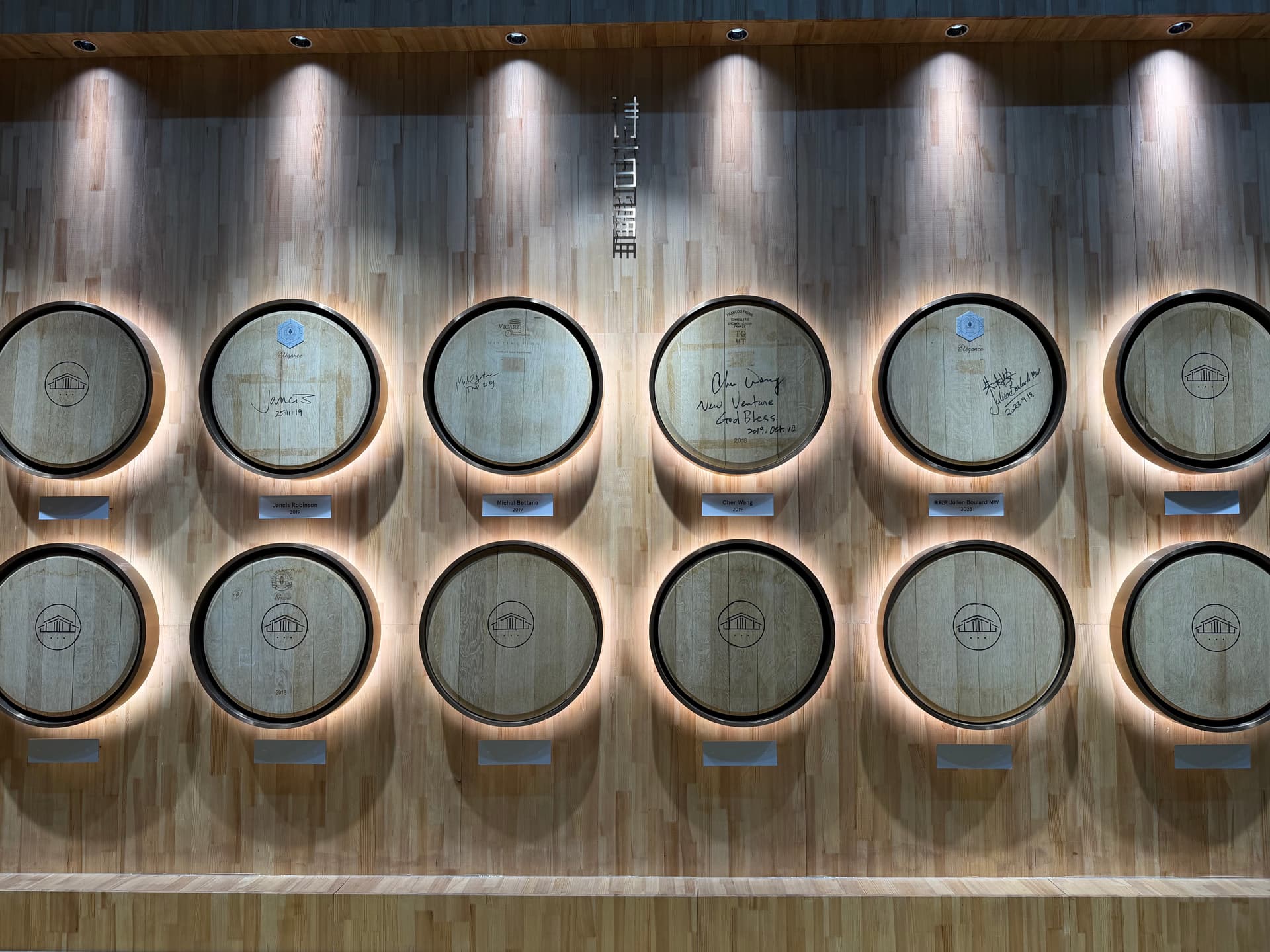
If someone is visiting Beijing and wants to see a Chinese winery without planning a full wine-region trip, I would strongly recommend spending half a day or one day at Canaan: vineyard, winery, tasting, and possibly an overnight stay if booked ahead.
I’ll continue with notes from the other Beijing / Hebei wineries in later posts.
Carol
2 Likes
The elevation-induced micro-climates doing good work here. It’s quite unique that one rather modest sized place could grow both cool and warm climate grapes.
Between the Syrah and the first three, which one is better?
From fair perspective, The Syrah is better. In one hand the Syrah is more expensive, and belong the "Selected " level, which means better quality. The online retail price is 450 CNY ≈ 64 USD.
The other hand, I think the concentrated of the Syrah is better.
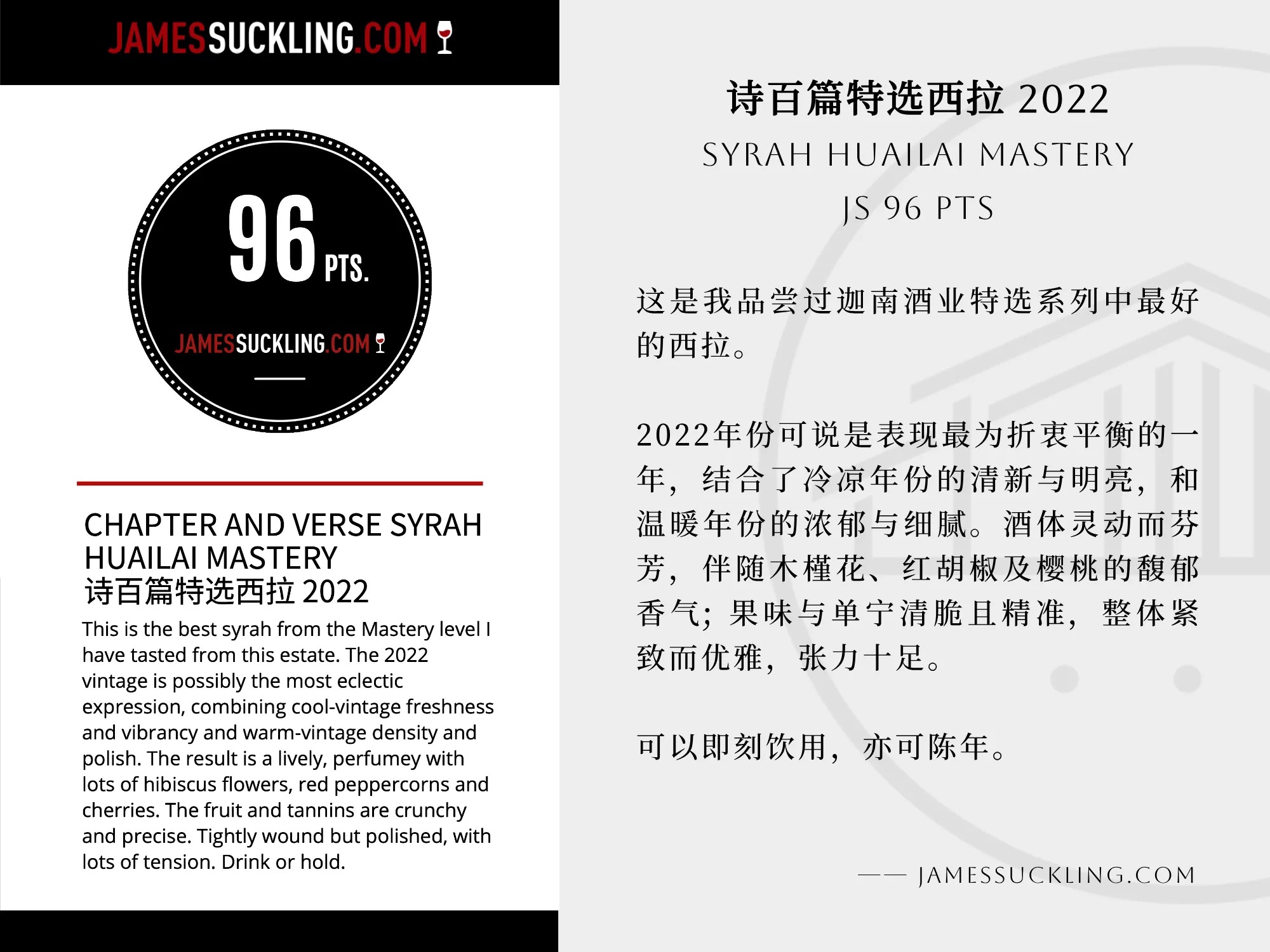
I also found the score from James Suckling for this Syrah on the winery’s online store; it is 96 points.
1 Like
James Suckling - nice score 
I love the Translation…merci !
Thanks for sharing!
I had a hunch but wanted to hear your experience to confirm it. So indeed the Rhone-style varietals fare better (based on your 5 tasting, but really the first 4 that are closer in age), than Pinot, Chard and Riesling ( surprised that they even grow it). Though I’m not surprised that they’re trying to chase the white wine trend in China.
The armchair winemaker in me would nudge them to make a GSM. What do you think about the chance for red blend in this market?
In fact, after several wine tastings, I wouldn’t say Rhône-style grape varieties perform better than Pinot, Chardonnay or Riesling, haha.
Firstly, Syrah is indeed grown in Huailai, yet I rarely hear about Grenache and Mourvèdre being planted there. I asked ChatGPT to compare the climate and terroir of these regions, and the differences are quite noticeable.
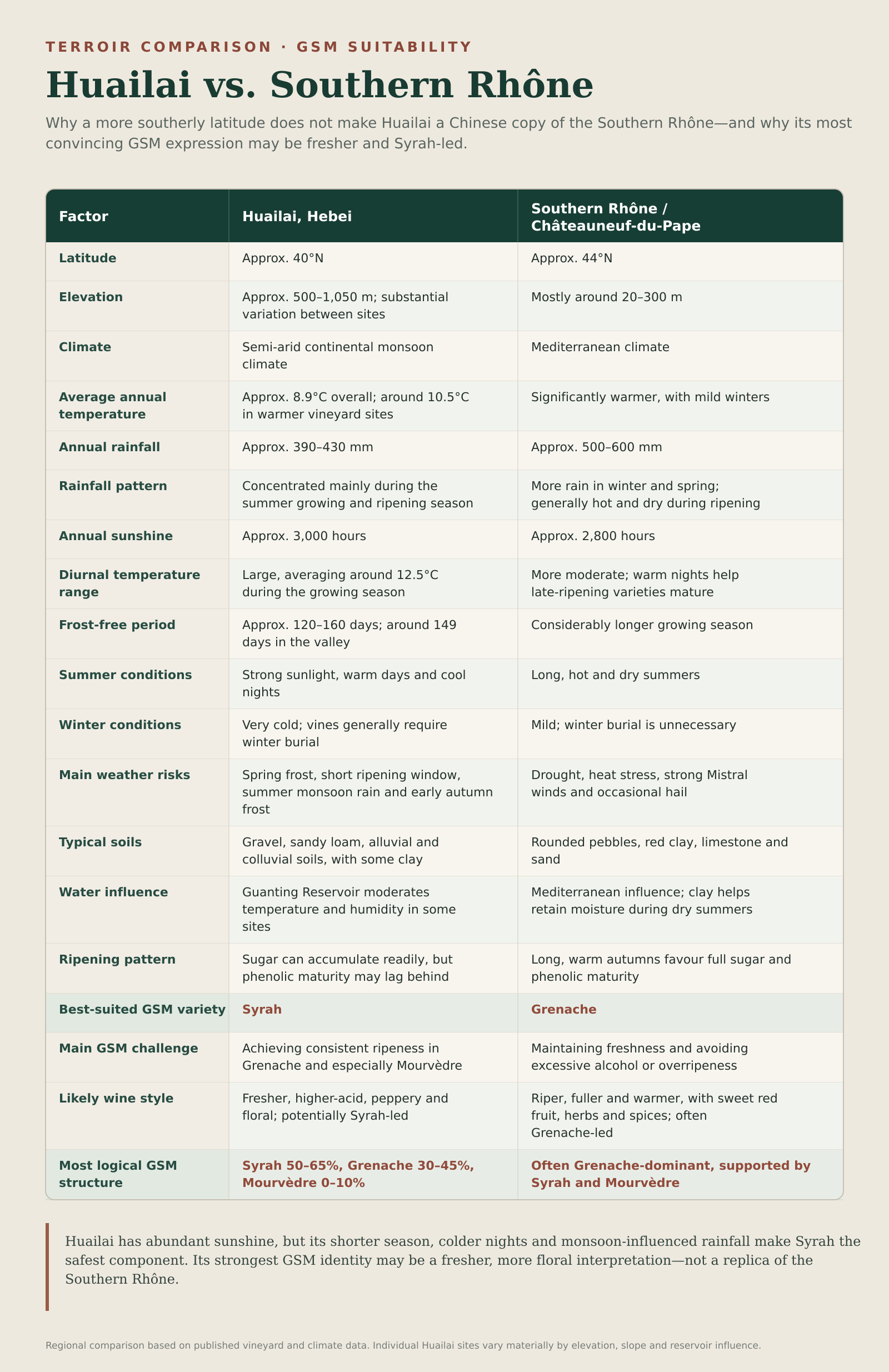
Huailai features a large temperature difference between day and night. The vineyards of Cannan’s winery, for instance, sit at an altitude of roughly 500 to 1,000 meters. So, my expectations for the wines produced here lean more toward relatively high acidity, a flavor profile I personally prefer, along with delicate and refined aromas derived from the substantial diurnal temperature variation and extended growing season, as well as prominent fresh red fruit notes and an array of other complex flavors.
In the last, what I want to convey here is that China’s wine industry, even the whole Chinese wine industry still has a very short history. More exploration and experimentation are still needed.