day 1 - visit 1
Domaine Roulot
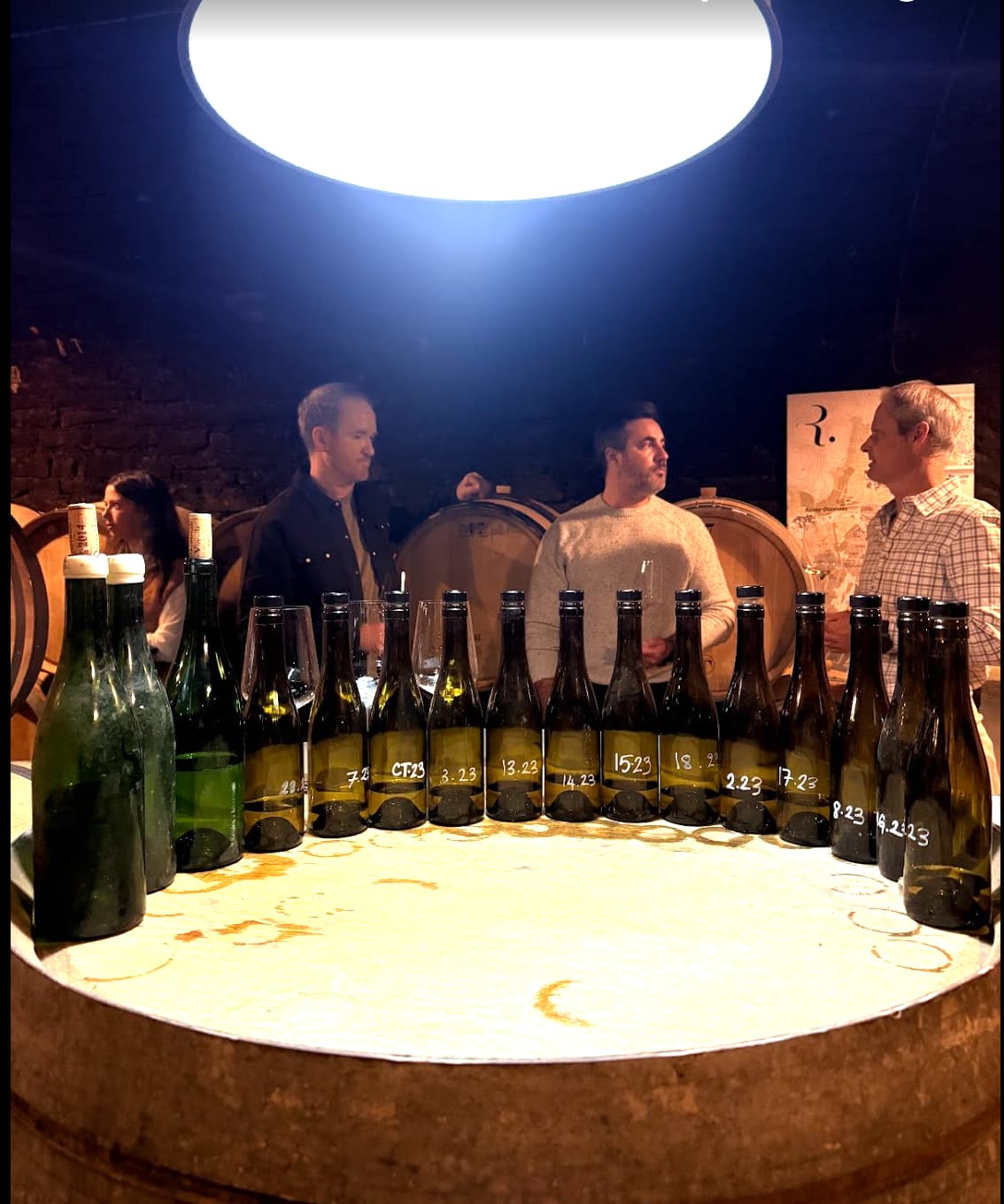
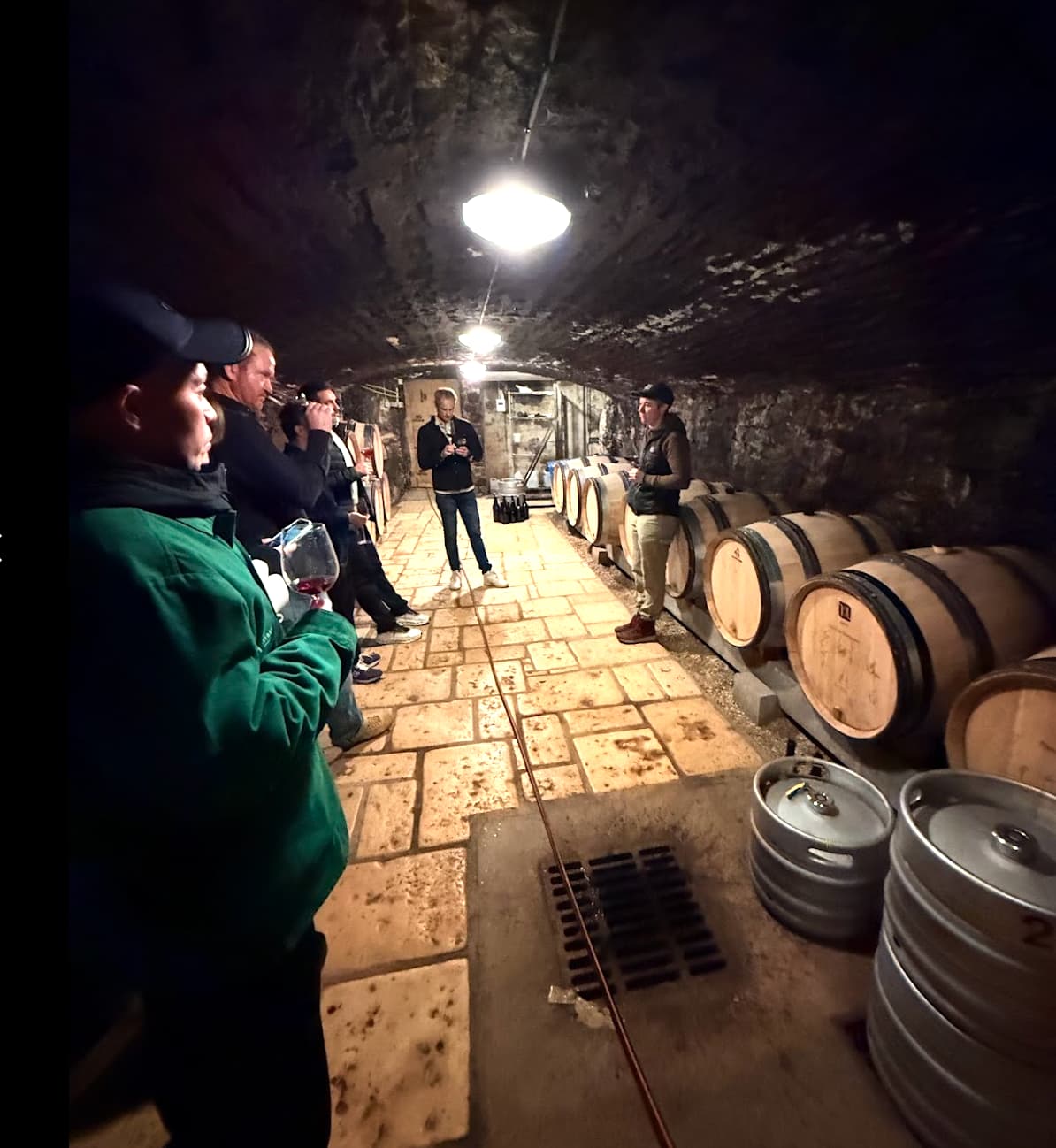
We had the treat of tasting in their cellar, guided by the always-fantastic Paul Delorme.
Quick notes - starting in 2021 they are extending time in stainless steel. So it’ll be 12-13 months in barrel then 9 months in stainless steel. They also increased their vineyard sorting team by almost 40% due to climate change, so they can pick better fruit.
Today’s visit featured the 2023 lineup. Normally by November, they’d be onto the next vintage, but this year the domaine decided to push their tasting schedule to January for the 2024s.
Which worked out perfectly—because I hadn’t had a chance to try the 2023s yet.
For Roulot, 2023 was a split harvest year. Hail forced them to pick in two separate windows, about three days apart. The vineyards hit by hail ripened earlier and were picked first. Since roughly a third of the fruit came in early, they feel it helped temper the warmth of the overall vintage.
One of the joys of tasting at Roulot is seeing how the same vintage expresses itself across their different terroirs. For example, Narvaux, which ripens fastest, showed rich, broad flavors. Meanwhile, Vireuils—despite having a similar soil type—is in the coldest part of Meursault and showed pure white fruit and a tighter, more focused mid-palate.
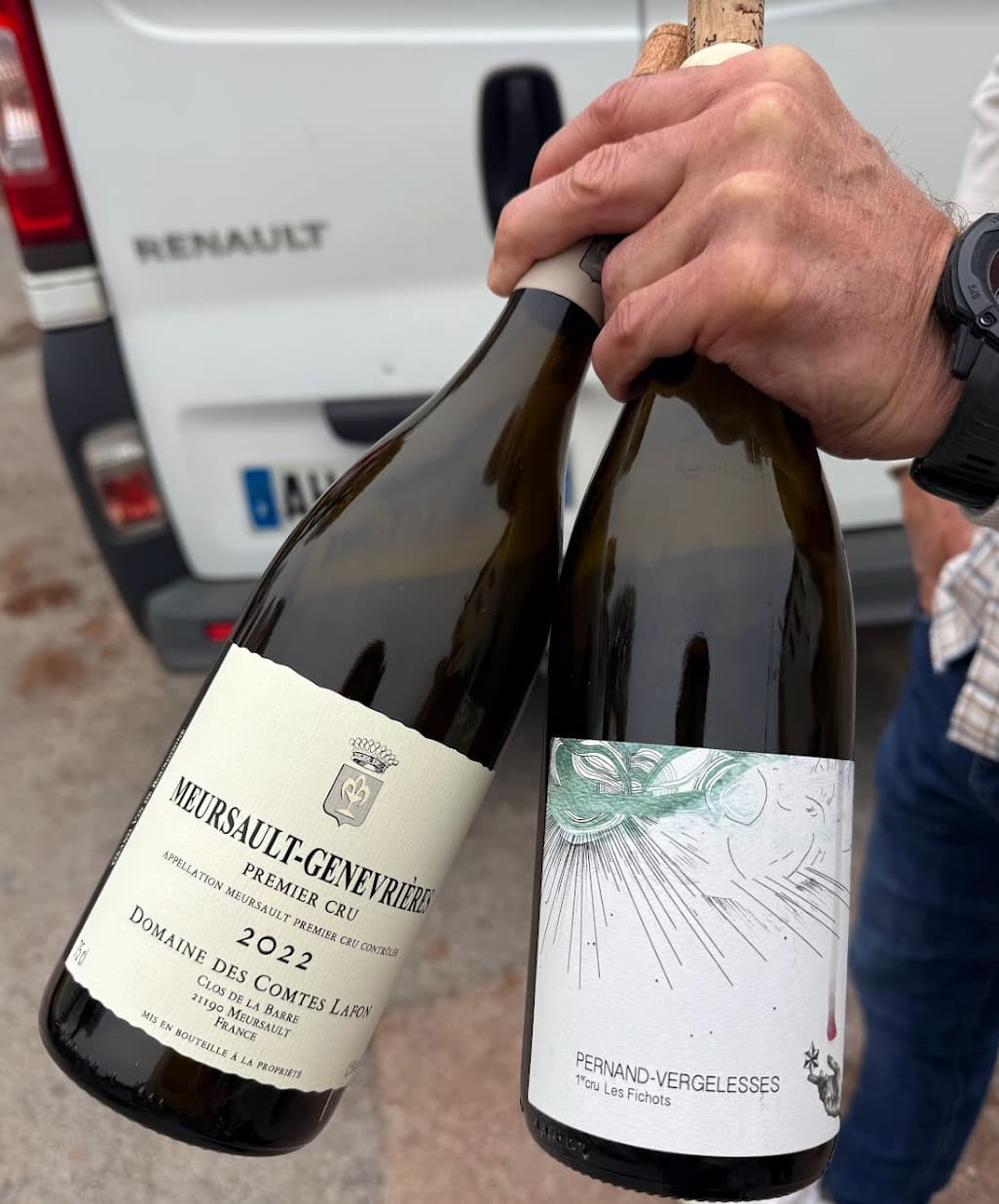
Paul surprised us with news of two new domaine bottlings: a new village lieu-dit and, most excitingly, a Premier Cru that collectors have dreamed of seeing from Roulot (non negotiant) Genevrieres. It will first appear under the négociant label in 2024 due to timing, then transition fully to the domaine label in 2025. These will be the only remaining négociant wines, as Roulot stopped buying fruit in 2022 because of the skyrocketing grape costs.
Like many top producers in Burgundy, they’re also dialing back on new oak—village wines dropping from about 15% to 10%, and premier crus from 25% down to around 17–18%.
Notes from bottle - 2023s for tastings are stored in bottles/caps that they believe represent a close approximation of wines that are newly bottled out of tank.
Narvaux was rich and filled with body.
Vireuils showed a lean, energy driven profile.
Meix Chavaux had tons of yellow fruited extract.
Luchets showed vibrant acidity with white fruit and a precise structure.
Casse Têtes was rich and energetic, similar to Narvaux but not as large in scale.
Tessons carried aggressive citrus rind and a powerful presence.
Poruzot was sappy and filled with energy.
Charmes, the biggest production wine, was rich but stayed dry with pure spicy notes.
Genevrieres was an electric wine with detailed white fruit.
Clos Bouchere was a standout for me, bright, precise, and beautifully balanced.
Perrieres felt like a clear step up from everything else, focused with multiple layers of delineated fruit.
As expected, the wines were outstanding. My favorite of the tasting was the Clos des Bouchères—bright, precise, and beautifully balanced for the vintage.
Paul also pulled a few surprises from the cellar: a 2010 Poruzot that was absolutely singing. Mild reduction on the nose and mouth with a lot of lift and citrus notes
2018 vireuils which showed little of the intense heat of the vintage, very vibrant.
A 2014 Bourgogne Blanc that was still fresh as a daisy. only wine they put under Diam. Quite a bit of reduction though on the nose.