For me, the tannins are much more supple than 2005. But I think it depends if you picked before the rain during heat stress or after when maturation was complete.
1 Like
Secondary market?
Or secondary fermentation?
Day 2
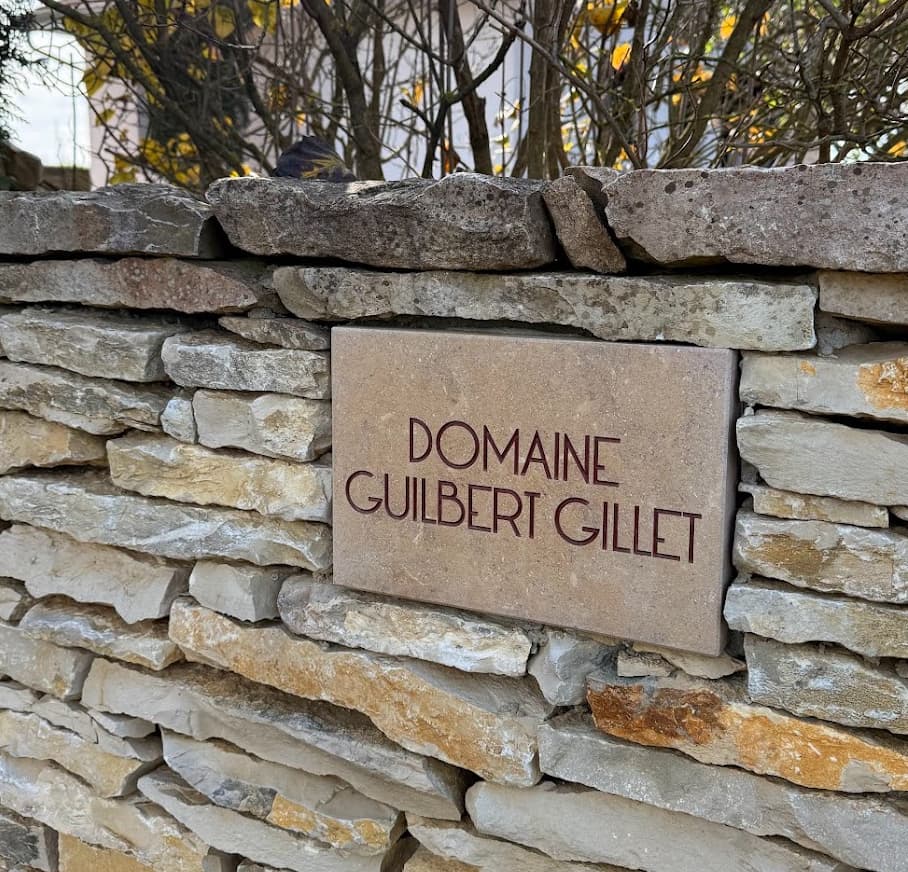
This is one of the domaines where i was looking forward to visiting the most on our trip, Guillbert Gillet. Benjamin is a student of the game. He’s making wines out of Savigny that are rivaling many of the wines out of Cote Nuits. His attention to detail in the vineyard is second to none, training each vine high on its own individual stakes, to plowing all the vineyards by horse.
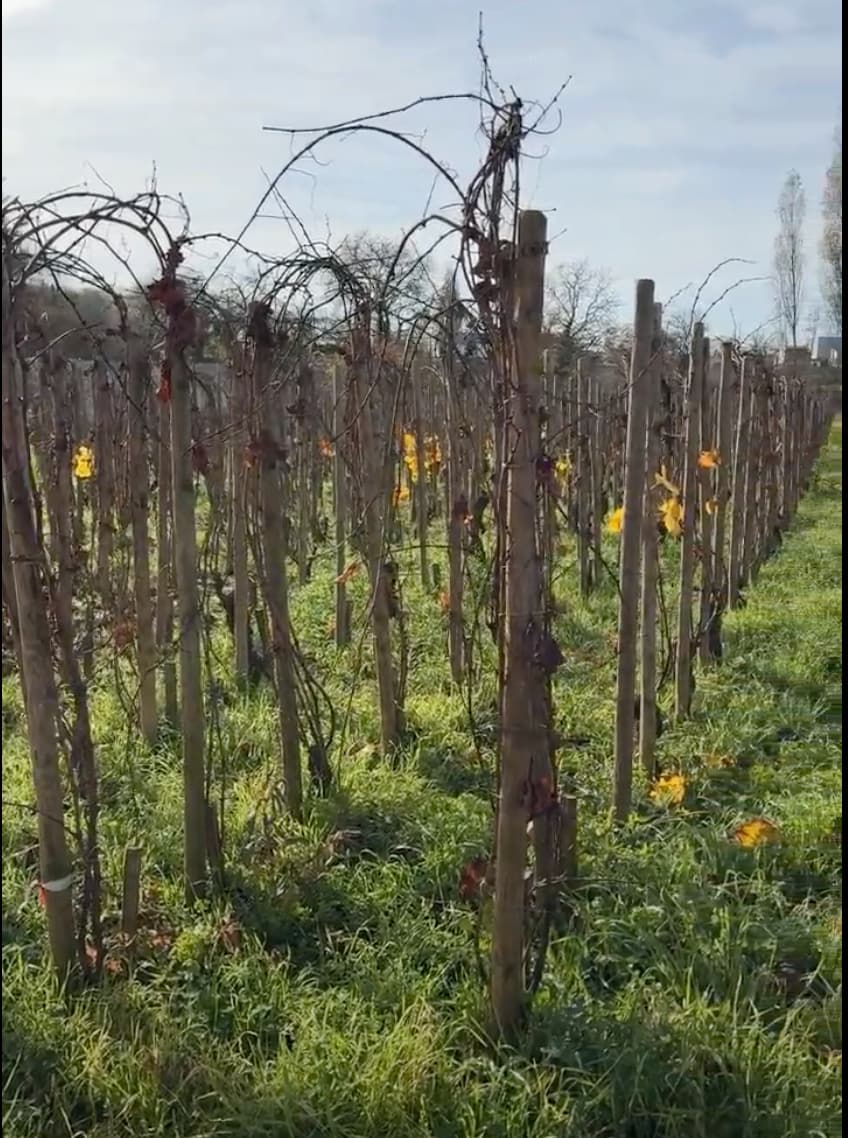
That same maniacal attention to detail in the vineyards also transfers over to inside the cellar. The wines are fully destemmed, used oak barrels that are meticulously sourced from one specific domaine to avoid contamination, and judicious use of sulfur. The wines are a counterpoint to how new producers are making wine in burgundy these days.
The domaine is currently at 3.4 hectares but is expanding in the coming years with some truly incredible plots coming online.
2024 was devastating for the domaine, with a loss of 70% of the production due to the rain and mildew for the red wines. White wines were far less impacted except for the aligote which due to the soil makeup, retained far more water than the other white wines and was crushed by mildew. He made a tiny barrel of the 2024 aligote which will just be for consumption for himself.
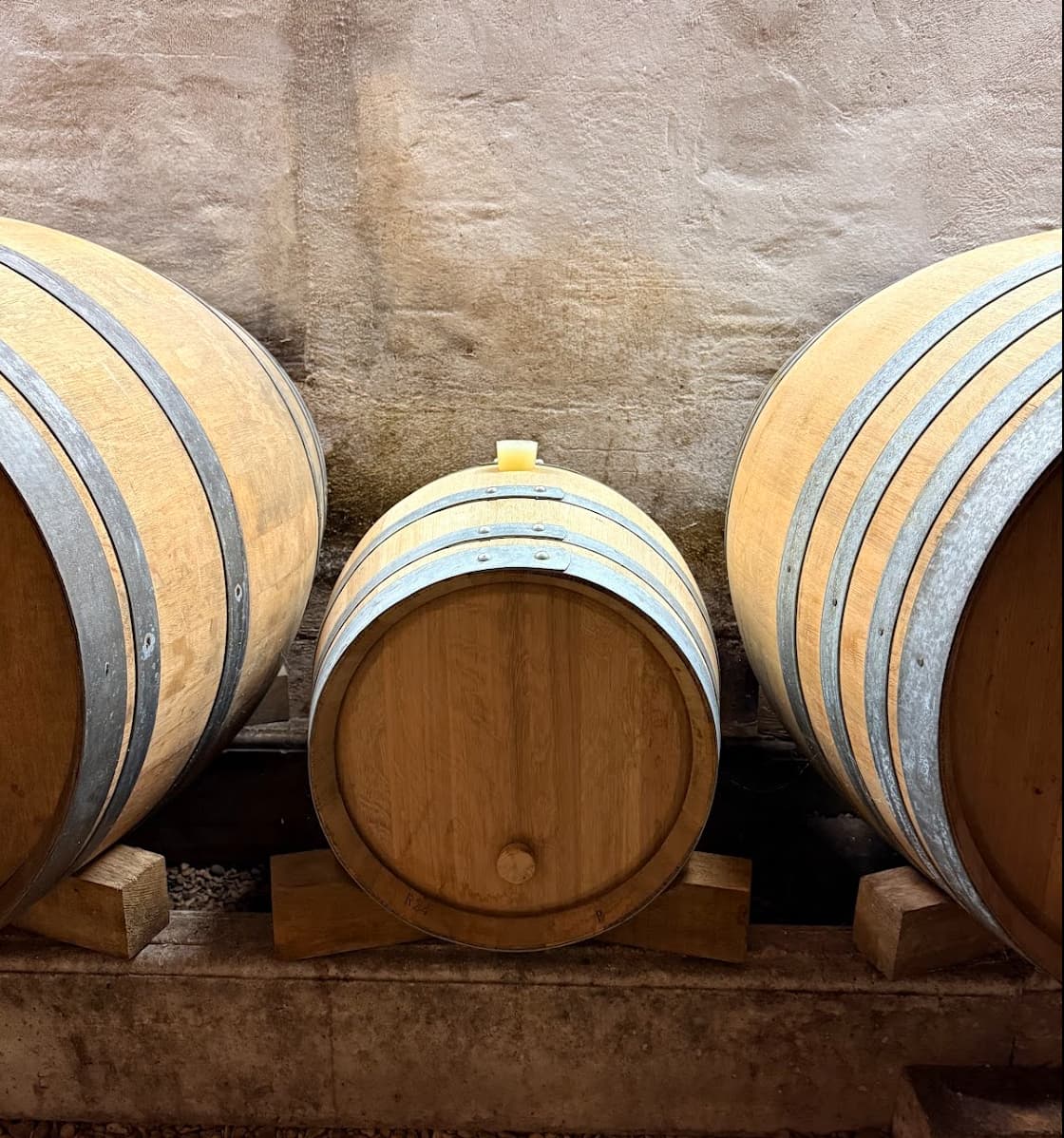
But in those small lots of wine, truly gorgeous wines were made. Extraordinary freshness of fruit in the vintage, with gentle acid and a clarity that ran through all of the barrels we tried. These are already wines that are tough to find in bountiful vintages, so in short ones like 2024 it might be next to impossible.
Standouts to me were the Planchot du Nord and Les Peuillets.
We also got to try an experimental wine on one barrel of 2023 Savigny village - it’s from the vineyard right outside of the domaine Planchots du Nord. 18 months in barrel and one year in tank prior to bottling.
He also popped the 2023 Savigny les Beaune 1er Les Peuillets Blanc for us to try - a deep rich yellow fruited chardonnay that has a mineral sparkle on the back end. He doesn’t like to decant his reds, but he is very open on decanting his whites, especially the 1ers.
6 Likes
It would be interesting to know what steps are taken, one can’t just leave the emptied barrel until it’s time to fill it again.
They clean em?
How?
tagging this to continue following. Marvelous work so far, Charlie, please do keep it up. I do always love barrel tasting and being able to see wine in its embryonic state. Matthew–very interesting observations re Roulot on Diam, thanks for sharing.
2 Likes
It’s pretty common to have to store empty barrels for some period of time–if you’re leaving wine in barrel for any quantity of months that isn’t just vintage-to-vintage (say 18 months in elevage in wood), you’ll end up with empty barrels that need to be tended (though one of the benefits of Roulot’s method of racking to stainless steel for the final period of time is that barrels don’t stay empty for much time at all, and you don’t need extra cooperage that’s gonna sit unused).
As for storage techniques…You want to make sure things are sulfured properly when they aren’t full of wine. That normally means keeping either a solution of acid+sulfur in water or burning wicks that release sulfur dioxide. You also need to refresh the sulfur every few months, and keeping the barrels cool is also useful. Steaming barrels has also become pretty standard practice to help keep microbial populations down.
Sourcing used barrels from someone contentious goes a long way–especially if they tend to bottle or rack their wines out of barrel after 10-12 months, which might be the case here. In that world, you get the benefit of the original winery’s cleanliness as well as minimal time empty.
2 Likes
Just watched Lafon doing this in the cellar when we were there. When the crop is smaller one year, they fill the empties with water and a tablet of some solution and store them like that until next harvest.
Thanks-it’s a clearly a big deal no matter where the barrels come from and nowadays when transparency and cleanliness are at more of a premium than the eventual cost of an ambitious wine some producers are finding the very highest quality new oak to be the most reliable solution; there is absolutely no need any more for that oak to impart strong flavours.
I totally agree with Mike’s comments - very interesting observation indeed.
Since the soil in the holy Kingdom Burgundy does not prefer to be treated with chemical*…so logically speaking : the juice from from the vines there…would not prefer to be closed by Diam
Mathew report the following
****… he hates the idea of the glue and chemicals with Diam getting next to his wine ****
1 Like
Which is fair enough but it’s a whole lot better than letting the wine spoil prematurely.
1 Like
Charlie - Thanks for the write up (thusfar?). Did you attend the auction?
Theo
Final tasting of day 2!
tasting the 2024 vintage from Pierre Olivier Garcia in Nuit st george - a domaine that started in 2016. We were Just in time because they were going to start bottling the day after our tasting.
I really wanted to try their wines because they have a fairly unique vinification process. Some producers destem, some producers do whole cluster, some do Baei par Baei with their grapes.
Sidenote: if you’re unfamiliar with Baei par Baei - or in english berry by berry, it’s when you trim the stem of each individual berry leaving only the very end of the stem (pedicels) so that the grapes are unbroken for vinification. This was made famous by Lalou Bize Leroy for domaine leroy. It’s incredibly time consuming and labor intensive for obvious reasons.
But at Garcia they do all 3! There’s an equally layered proportion of destemmed, whole clustered, then baei par baei in each tank. The wines are generally aged in used oak. They spend 12-13 months in barrel then 2 months in tank.
Approximately 20% of their production is domaine owned parcels located within Nuits st George
Tasting through the tank, these wines are crunchy, raw, high energy and red fruited but with substantial backbone. We also had a chance to crack into some 2023 which were deeper in their concentration compared to the 2024s.
looking forward to seeing the progression on these wines.
3 Likes