Thanks for the kind words, and I agree with everything you are saying here. I was really only talking about this process/product correlation when it comes to fermentation and long form or high effort projects. We all gotta eat!
1 Like
'ppreciate the clarification, Zach. Thanks.
And this brings to mind a saying …
A smart person learns from their own mistakes. A wise person learns from others’ mistakes.
I like to extend “mistakes” to “experiences.” And, with that in mind, I have definitely learned in this thread some of the things I will not be attempting on my own! (i.e. J&S’s pig head torchon; ramen; etc. etc. etc. …)
1 Like
You almost answered your own question, but I don’t think of home cooking as being in competition with high-end restaurants. High-end restaurants are entertainment and you wouldn’t want to eat that food on a nightly basis, because it’s not nourishing. Obviously we can blend elements of entertainment into our home cooking, especially when guests come, but you get my point.
For me, the big trade-off question is more about buying products, like sauces/breads/etc, or making them myself, as you mention. There is definitely the question of time/quality. But also whether I can get a good product without too many garbage filler ingredients, because so many of the commercial products (even ‘high-end’ ones) are loaded with things you don’t want to eat. But when I find good products that have simple basic ingredients, but save me some time and add flavor, or have gone through a process that I am not prepared to do (e.g. olive oil), I am happy to keep them in my pantry!
And I never considered making my own hot sauce, but this is opening new ideas!
1 Like
Paging @Kenny_H . Hippieslick to the white courtesy phone, please.
LOL - I didn’t even get to Sarah’s post 
1 Like
I like to grow edibles, mostly things that I can’t otherwise find—a wide selection of tomatoes, for instance (I have seed for several hundred varieties, and typically grow a couple dozen varieties each year), various herbs, different types of garlic, unusual greens, heirloom corn, etc. I usually grow a variety of chiles every couple of years and yes that’s a great reason to make hot sauce, when you have a chile that’s unlike anything used in commercial sauces. Is it worth keeping a garden? Absolutely! And eating what I grow is an essential part of the pleasure and satisfaction. I enjoy farmers’ markets and I am a long-time CSA member, but there is a special satisfaction to eating something you grew yourself.
1 Like
As @M1a_U said, I made hot sauce from fish peppers because I wanted to find out how it would be with this particular type of pepper. Not much effort involved but I wouldn’t be making any if I was just using random peppers from the store.
2 Likes
This resonates with me quite a lot. I’ve had different size home gardens at different points in my life. Right now, it is fairly minimal, although I would like to expand it. I would love to grow tomatoes, but would need an operation set up such that they won’t die when I am away from my house for a week or more. I also need to be honest with myself about how much time I have to do gardening. But it is something I enjoy. 
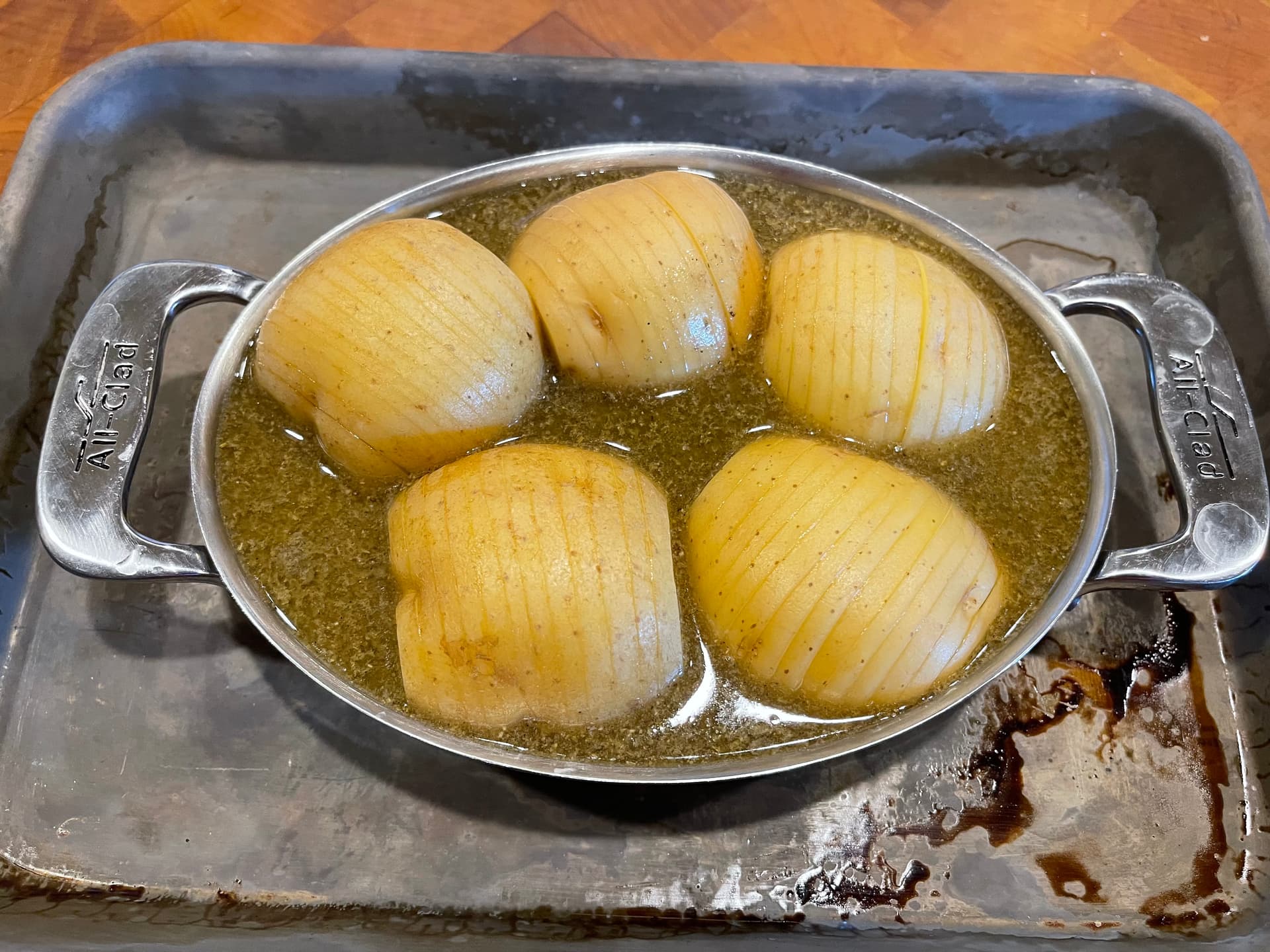
Working on hasselback potatoes boulangere. Liquid has dried lemon, rosemary, garlic, white pepper, chicken stock and chicken fat.
2 Likes
I travel frequently (at least once a month) for work, but I have nice neighbours who are happy to come over to water if needed. If you grow in containers, you could use a solar-powered automatic pump that waters on schedule.
1 Like
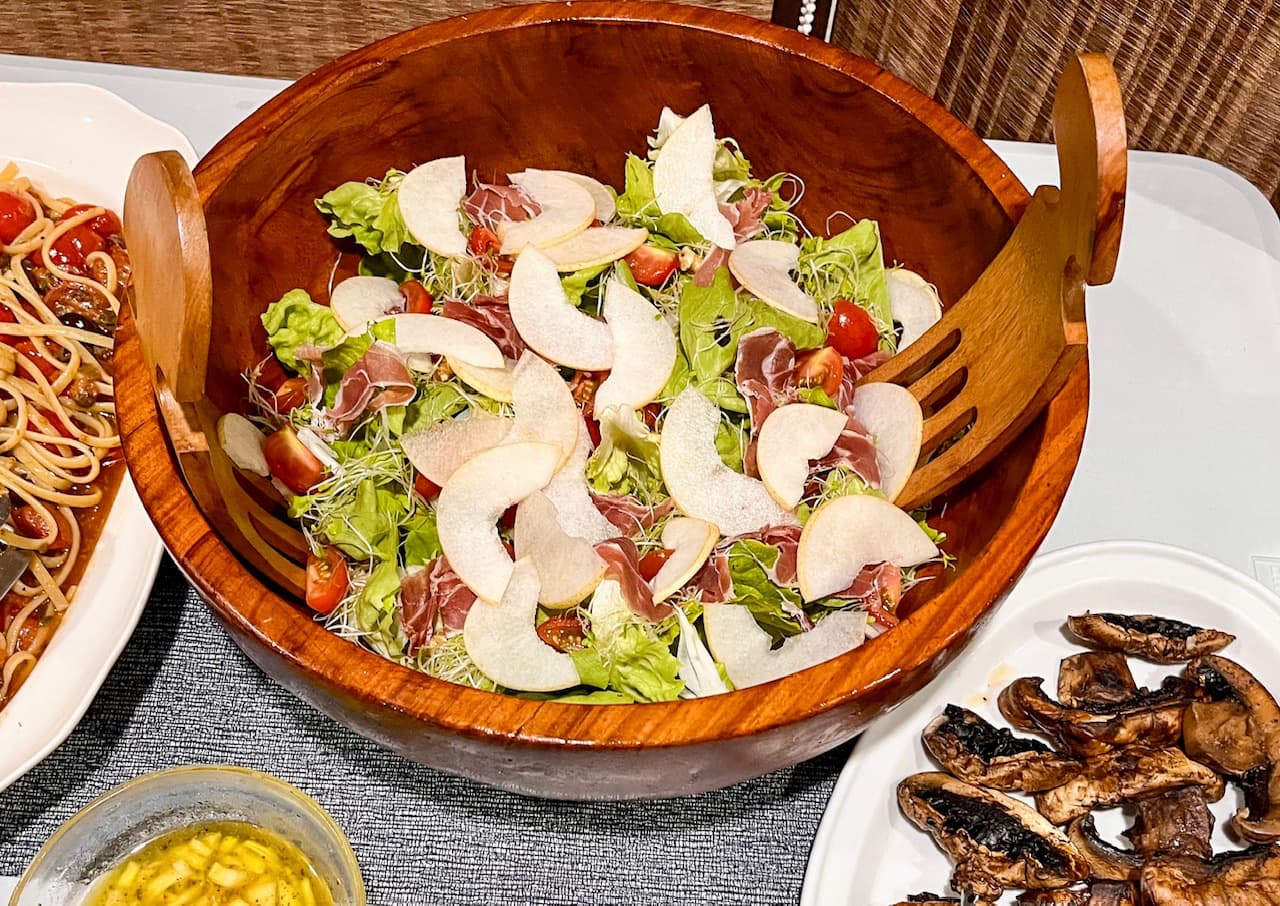
Made some Wisconsin “super prime” ribeyes, and linguine alla puttanesca last night at my father’s house. My youngest sister made the salad with a side of grilled portobellos.


5 Likes
Hi Sarah - What’s your approach to the chicken here? I am always on the hunt for new roast chicken recipes, but haven’t tried a three-day method before.
I feel the same way about Serious Eats.
2 Likes
We don’t really 3 day, just employ Chicken Fan.
Super simple - grind salt, peppercorns, dried thyme, garlic power and rub on outside of bird. Make a paste of mustard/acid of choice/some of the outside rub and put it under the skin. Stick a lemon in the cavity along with fresh thyme and rosemary. Dry chicken in front of a fan for a few hours or all day, depending on when the process started. We do two at a time, so the other chicken goes in the fridge until we want it, 2-3 days later.
We have a small oval ceramic dish that is about the size of a chicken. Preheat the dish in a 450 degree oven. When hot, put chicken in the dish and roast breast up for 30 min. Flip and roast breast down for 10 min. Flip a final time and roast breast up for 5. Rest chicken.
If you want, take the dish and pour off the fat, then add a little water and scrape up the brown bits. Put in a small pan and reduce for a nice pan jus. Add in any juices that the chicken leaks while resting.
For the second chicken, bring up from the fridge a few hours early and dry again in front of Chicken Fan.
It’s honestly perfect every time. If the chicken is particularly large or small, we might adjust by a minute or two. Skin comes out crackling, and all the meat is juicy. @Zachgoldstein can attest to the ease and results, as he’s hung out in the kitchen during prep.
3 Likes
Thanks! New to the chicken fan concept - need to give that a try.
Search this thread for “chicken fan”….Also doubles as Duck Fan, Steak Fan, Pig Fan etc.
1 Like
I assumed you would have a dedicated fan for each kind of protein!
If you love your proteins, you won’t give them anything but the best.
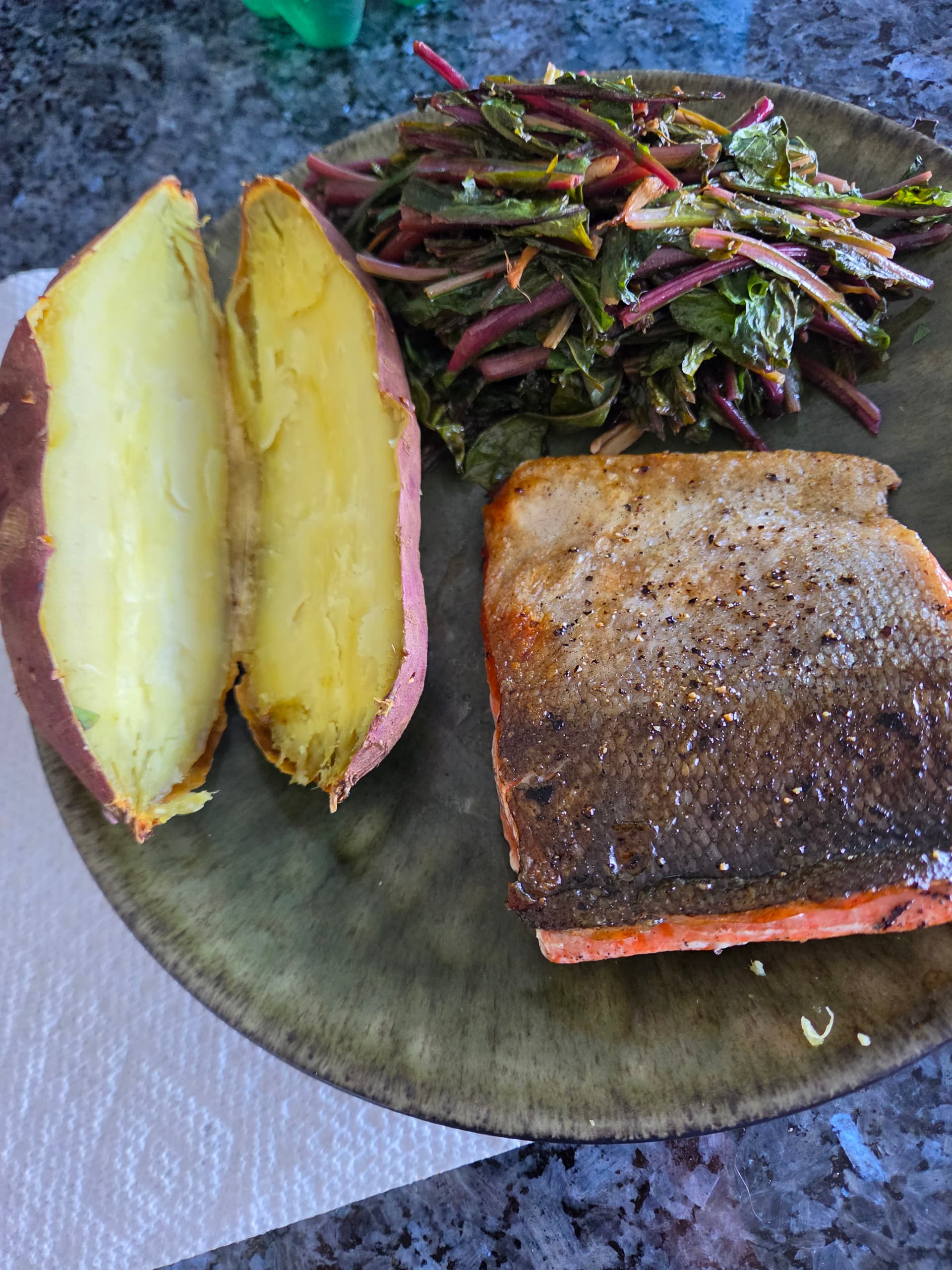
Cast Iron wild Coho, Ginger-Garlic Red Dandelions, Japanese Sweet potato. Coho is the unofficial start of the end of summer. Good fish. It crisps a bit better than Sockeye
7 Likes
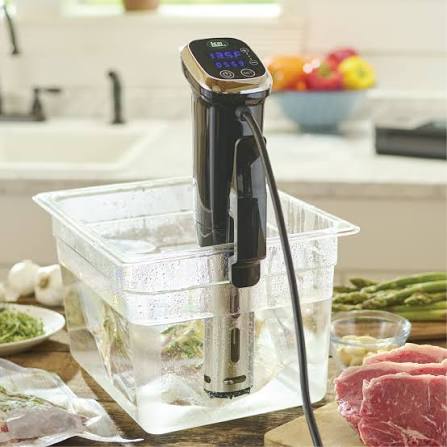
One of my earliest memories of eating at Magnolia Grill was a dish based on tomato water, ‘Chilled Tomato Essence with Tomato-Basil Jello’. Tomato water is clarified with egg whites like a consommé, and served with aspic pieces made from some of the tomato water infused with basil, slices of cherry tomatoes, basil chiffonade, and topped with basil oil. To me, this was the essence of summer with such simple ingredients and huge flavor, where the whole far exceeded the sum its parts. In his cookbook, Ben Barker additionally reveals that this was inspired by conversations with his (later) sous Scott Howell while he was still in NYC, where tomato water was the hip thing back in the late 80s.
1 Like