1. VDP.Nahe Weinversteigerung
I attended the VDP.Nahe Weinversteigerung 2026 at the Römerhalle in Bad Kreuznach on 7 November, staying for the accompanying dinners and an appointment with Wagner-Stempel.
Building on my previously published articles—forecasting Emrich-Schönleber’s Auf der Ley GG, Schäfer-Fröhlich’s Final Trocken, and Wagner-Stempel’s EMT—I placed bids through my UK merchant, who in turn submitted them to their Kommissionär (auction commissioner). I sat beside my Kommissionär, who graciously guided me through the proceedings.
The Kommissionäre, alongside the team from Pinard de Picard seated next to me, were equipped with laptops running a proprietary auction app. This software displayed their personal and client order books, aggregated and stacked by quantities and bids. The app refreshed dynamically as bids escalated, providing a forecasted hammer price ahead of the live bidding based on all submitted Kommissionäre orders. Although remote internet bids occurred during the live sale, these forecasts were remarkably accurate. They informed the Kommissionäre precisely when to intervene—such as suggesting an increase in lot sizes when producers held back unallocated stock—to maximise bottles sold, aligning the incentives of all parties involved. This also enabled seasoned Kommissionäre like Selbach to tactically outbid rivals by adding an extra €1 to secure priority for their clients around sticky price thresholds during live bidding.

The results were mixed, leaning overall towards the softer side:
Wagner-Stempel EMT: Hammered at €150, falling well short of my forecast of €255. This occurred despite a dramatic reduction in 75cl bottle supply (down from 422 to 240 bottles) and a broadly superior critic consensus, matching last year’s hammer price.
Emrich-Schönleber Auf der Ley: Hammered at €201 against my forecast of €241, though 75cl-equivalent supply increased by 80% year-on-year (from 200 bottles last year to 360 bottles this year).
Schäfer-Fröhlich Final: Represented the greatest shock of the day. It achieved €376—lower than any vintage since at least 2021. By comparison, the supposedly “inferior” 2021 and 2022 vintages hammered at €500 and €505 respectively, while last year’s 2024 vintage hammered at €400.
Dönnhoff Brücke: Performed slightly ahead of expectations, hammering at €385 against my sensible baseline of €350.
Wittmann La Borne: Held steady, essentially flatlining at €310 to match last year’s result.
The notable exception, entirely predictably, was Keller. Evidently, the cult followed through:
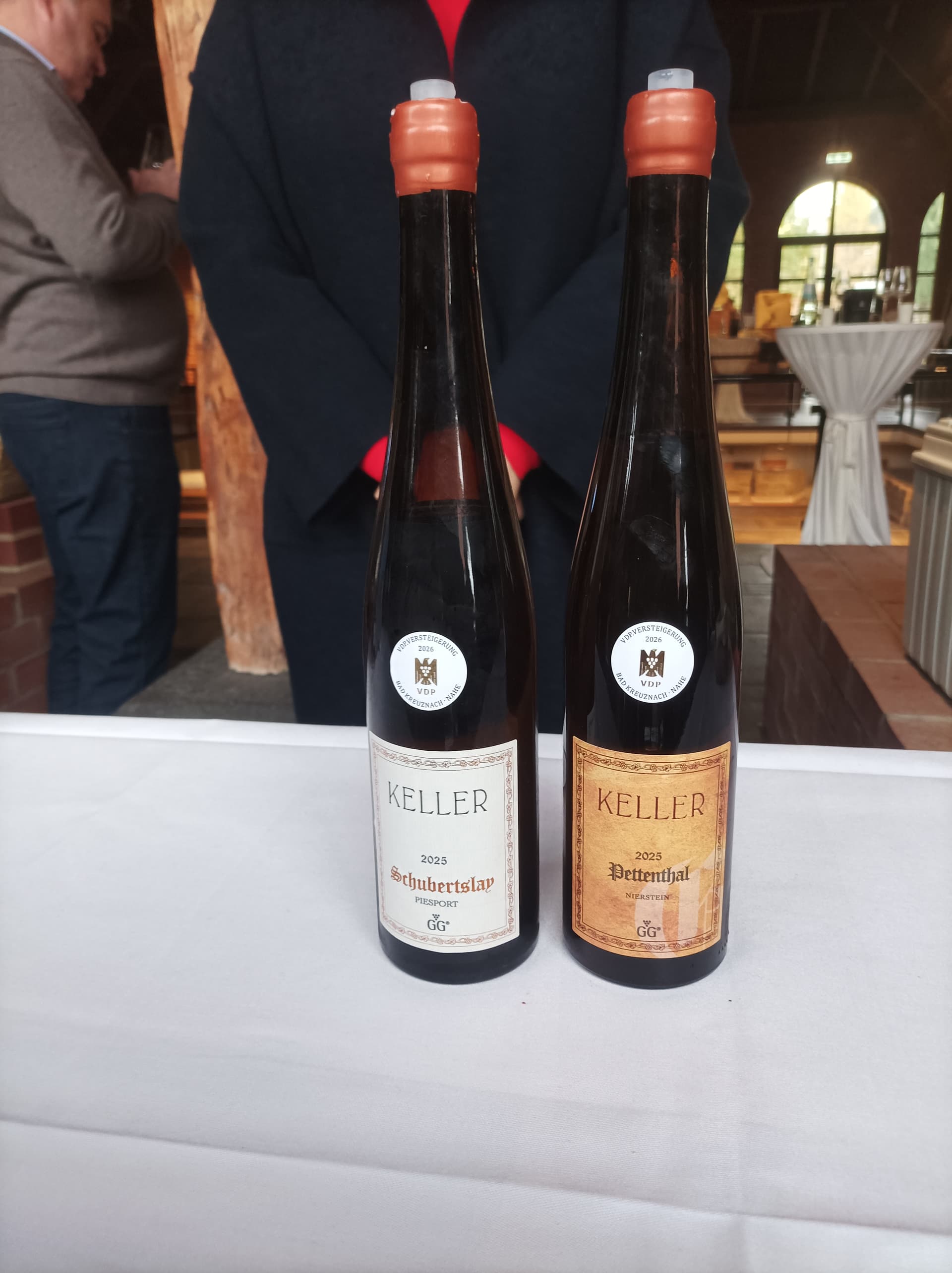
Pettenthal / Schubertslay GG (6x75cl Case): With 100 cases on offer, it hammered at €4,500 against UK merchants’ expectations of €3,750–€4,000.
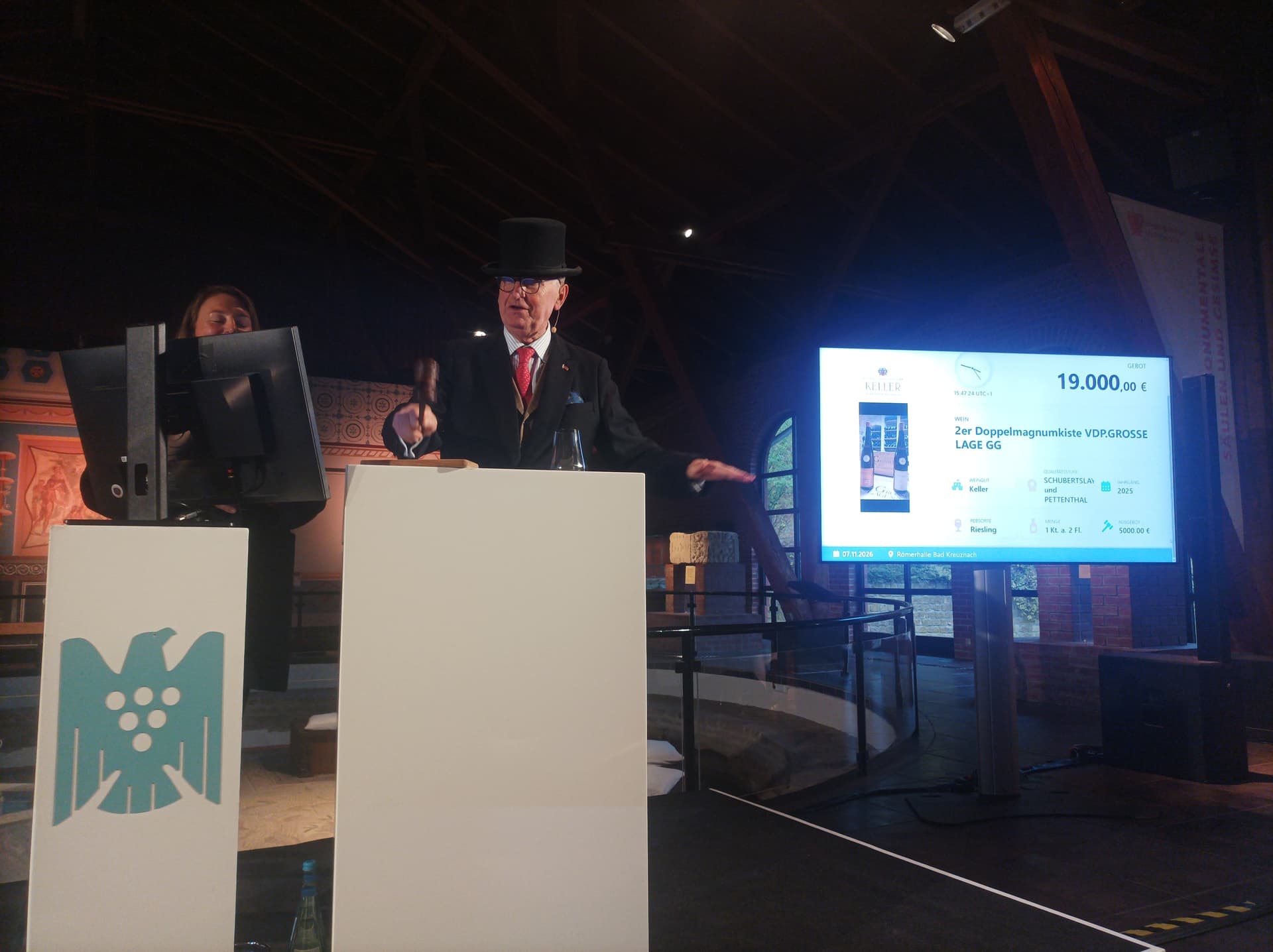
Pettenthal / Schubertslay GG (Single Double Magnum Case): In a staggering display, competitive bidding drove the price from €11,500 all the way to a €19,000 hammer—perhaps driven by a buyer convinced it remained undervalued.
2. Vorsprobe and Versteigerung
VDP.WEINVERSTEIGERUNG AN DER NAHE - Bad Kreuznach, Nahe (07/11/2026)
The strongest wines married extraordinary concentration with freshness, salinity and structural definition. Schäfer-Fröhlich’s Final was the standout: remarkably expressive, with intricate ripe fruit and exceptional length. Wagner-Stempel’s EMT, Emrich-Schönleber’s Auf der Ley and Dönnhoff’s Brücke were also compelling. Keller’s Pettenthal and Gunderloch’s Fenchelberg transformed with air, leaving me increasingly convinced by Gunderloch. My value discoveries were Gut Hermannsberg’s Kupfergrube Sekt and Groebe’s Kirchspiel Grande Réserve. Kuhn’s Philippsbrunnen was very good, but its pronounced lees creaminess is simply not my style. Others disappointed: Wittmann’s La Borne remained bitter and astringent. Similarly Bürklin-Wolf, unfortunately their debut/return to the auction. An uneven flight, but with some exceptional wines.
- 2024 Weingut Kreuzberg Devonschiefer Spätburgunder R Reserve GK Auction trocken - Germany, Ahr
Nose (Vorsprobe / Preview): Chalky, distinctly oak-driven, and still quite tight and reductive in its youth.
Nose (Auction Tasting): Retains a similar structural oak signature, opening up to reveal a plush, easy accessibility.
Palate & Finish: Supported by a vibrant backbone of fresh acidity; the fruit profile has evolved from primary tones into a clear, tart raspberry core that defines the vintage style. (90 points)
- 2018 Schlossgut Diel Pinot Noir ARA Auction - Germany, Nahe
Nose (Vorsprobe / Preview): Distinctive and striking—opens with an exotic, almost volcanic porphyry mineral signature.
Nose (Auction Tasting): Shifts significantly with air; the polished, new oaky creaminess moves firmly to the forefront, while deep nuttiness comes to dominate the aromatic profile.
Palate & Finish: Firmly structured with a muscular, assertive tannic frame; anchored by a vibrant spine of refreshing acidity and crowned by a sweet, ripe cherry top-note that carries through a long, sustained finish. (93 points)
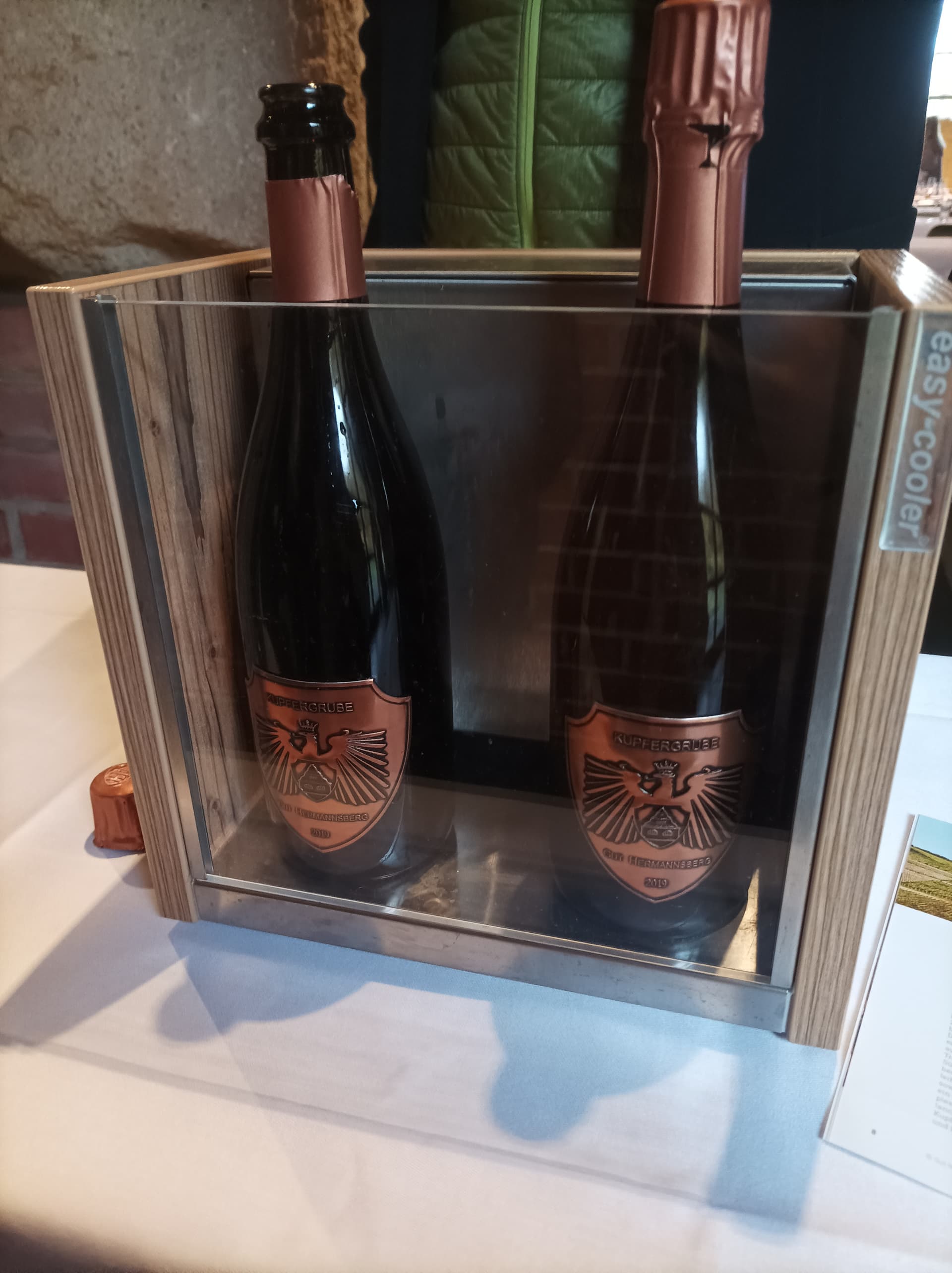
- 2019 Gut Hermannsberg Schloßböckelheimer Kupfergrube Riesling Sekt Extra Brut - Auction - Germany, Nahe
Base Vintage / Solera: 2019 base vintage with a 15% perpetual reserve spanning back to 2013.
Vinification & Aging: Fermented 50% in stainless steel and 50% in oak; aged 90 months on the lees; disgorged June 2026.
Nose (Vorsprobe / Preview): Defined by classic autolytic complexity, crushed slate minerality, and vibrant yellow tropical fruit aromatics.
Nose (Auction Tasting): Evolves significantly with air, bringing forward rich brioche, toasted almonds, and a deep nutty profile that increasingly dominates the aromatic register.
Palate & Finish: Exceptionally phenolic, primary, and structured; underpinned by a lightly acidic, high-tension spine that carries intense notes of juicy pineapple and vibrant lemon sherbet, true to its Kupfergrube terroir. (93 points)
- 2025 Dr. Bürklin-Wolf Wachenheimer Schlossberg Riesling P.C. Auction - Germany, Pfalz
Nose & Palate (Vorsprobe / Preview): Intensely mineral and terroir-driven—opens with distinct sandstone aromatics and a pungent, highly focused mineral core. Finishes somewhat embryonic in primary depth, carrying fleeting traces of exotic fruit and clean mineral water.
Nose, Palate & Finish (Auction Tasting): Takes a more austere, textural turn with air—showcasing briny, sandpaper-like aroma. Features a curious, almost medicinal sweetness on the mid-palate; noticeably low in acidity and stripped of obvious primary fruit, making for a perplexing and challenging tasting profile. (88 points)
- 2025 Philipp Kuhn Zeller Kreuzberg Philippsbrunnen Riesling Großes Gewächs Auction - Germany, Pfalz
Nose & Palate (Vorsprobe / Preview): Rich autolytic lees creaminess with a distinct custard-like texture and a flick of saline brine. Built around a powerful, commanding core, though the upfront acidity and structural frame remain somewhat astringent and tightly wound at this stage.
Nose, Palate & Finish (Auction Tasting): Amplified lees creaminess; opens up with crisp apple acids, warming spice, and a taut, dark mineral finish. Demonstrates significantly better harmony and structural integration compared to the preview. Stylistically straddles the border between Rheinhessen and the Pfalz—reflecting the producer’s philosophy that regional boundaries dissolve in top-tier winemaking. (92 points)
- 2025 Gunderloch Nackenheimer Fenchelberg Riesling GG Auction trocken - Germany, Rheinhessen
Nose & Palate (Vorsprobe / Preview): Defined by a fine powdery minerality and pervasive heated spice running throughout; finishes with a distinctive metallic edge and a cooling, after-dinner mint lift.
Nose, Palate & Finish (Auction Tasting): Transforms dramatically with air, revealing an astonishing, kaleidoscopic concentration on the palate; packed with layers of candied citrus and ripe pale fruit propelled by vibrant, spiky acidity. (94 points)
- 2001 Gunderloch Nackenheim Rothenberg Riesling Beerenauslese Auction - Germany, Rheinhessen
Nose & Palate: Deeply mature and opulent botrytis profile—opens with rich notes of dried dates, dense yellow raisins, and a heavy, viscous weight on the palate.
Structure & Finish: Shows clear signs of advanced age and evolution; noticeably lacks the structural acid backbone needed to balance its considerable weight and sweetness, resulting in a broad, unlifted finish. (91 points)
- 2025 Wagner-Stempel Riesling trocken EMT Auction - Germany, Rheinhessen
Nose & Palate (Vorsprobe / Preview): Pungent, reductive, and tightly wound with a fine, lean aromatic profile. In stark contrast, the palate is immensely concentrated—unlike anything else in the flight thus far—showcasing candied red-apple and toffee notes driven by an extraordinary, high-density acid finish.
Nose, Palate & Finish (Auction Tasting): Settles into a more harmonious, slightly less aggressive posture; feels a touch fainter compared to the striking early preview, closing with a clean, taut, steely, and mineral-driven finish. A magnificent expression. (95 points)
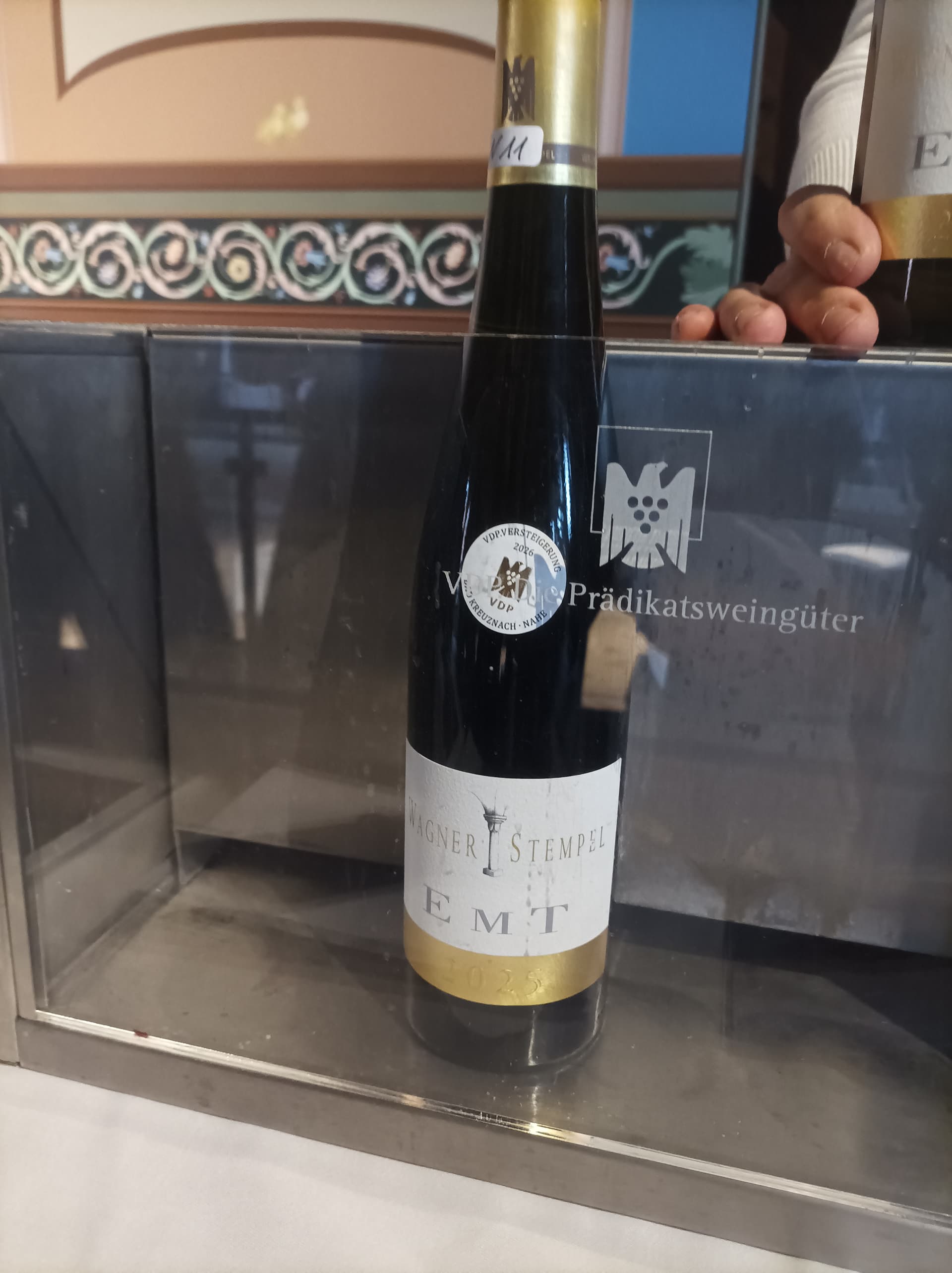
- 2025 Wittmann Westhofener Morstein La Borne Riesling Großes Gewächs Auction - Germany, Rheinhessen
Nose & Palate (Vorsprobe / Preview): Notably subdued compared to previous showings (such as at Ripley); opens with a quiet, somewhat closed nose and a bitter structural body. Evolves slowly into a more grainy, molasses-inflected aromatic profile, ending with prominent, uncompromising astringency.
Nose, Palate & Finish (Auction Tasting): Maintains a faint aromatic signature with faint traces of rubbery apple. Confirms the trajectory of the preview, presenting a firmly astringent frame with lingering phenolic bitterness on the finish. (89 points)
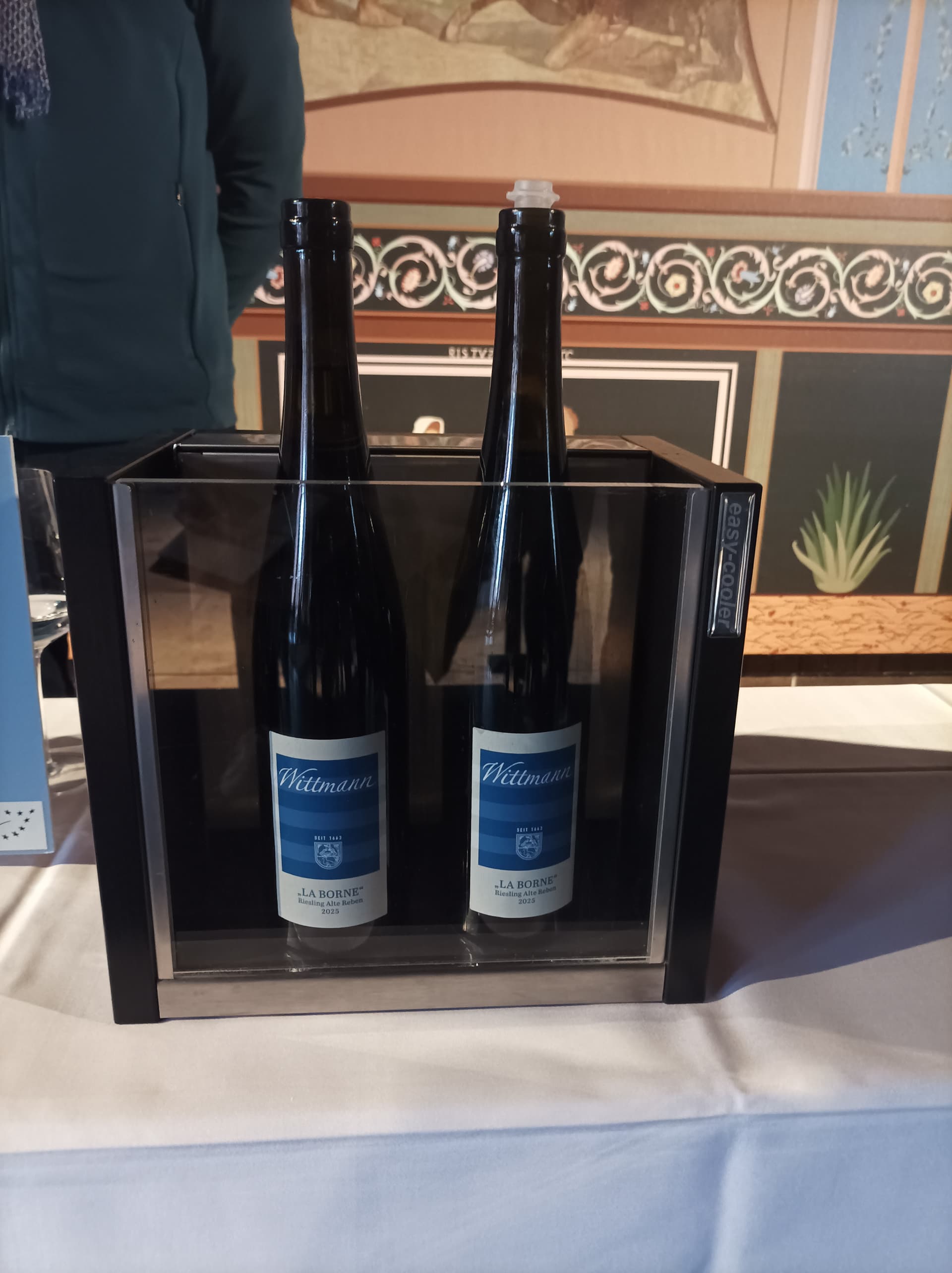
- 2025 Emrich-Schönleber Auf der Ley Riesling Großes Gewächs Auction - Germany, Nahe
Nose & Palate (Vorsprobe / Previews): Opens with a refreshing layer of cooling mint, wild herbaceousness, and creamy lees; built around a powerful, rocky, and intensely acid-driven embryonic core. A second preview pour brings forward pungent reductive fruit and hints of emerging primary sweetness, though the palate retains a tight, lean structure at this stage.
Nose, Palate & Finish (Auction Tasting): Displays an amplified, highly focused reduction and structural astringency. Closes with a distinctively peppery, reductive finish that showcases the hallmark, unmistakable fruity-saline Schönleber aromatic signature. (94 points)
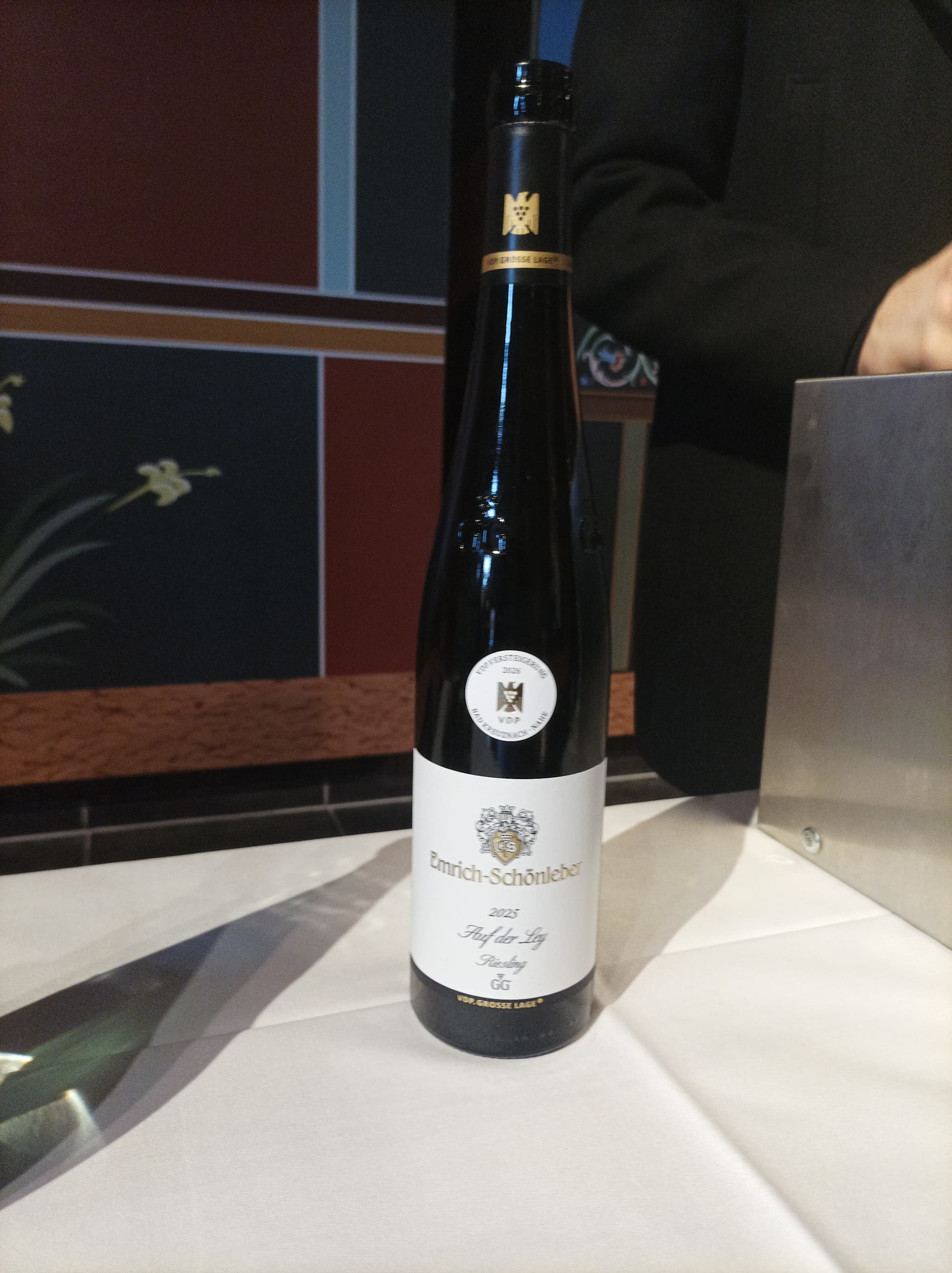
- 2025 Schäfer-Fröhlich Riesling trocken Final Auction - Germany, Nahe
Nose & Palate (Vorsprobe / Preview): Complete dissipation of initial reductive burn and spice; presents a subtle yet compact aromatic profile featuring sweet pale fruit, lees, and maple syrup. The palate mirrors this elegance, driven by an almost sparkly, high-tension acidity and an exceptionally long finish.
Nose, Palate & Finish (Auction Tasting): Exhibiting remarkable readiness; opens with extraordinarily sweet, ripe fruit intermingled with rustic fruit skins and vibrant salinity. The fruit profile is endlessly complex, constantly shifting and evolving in the glass. (98 points)
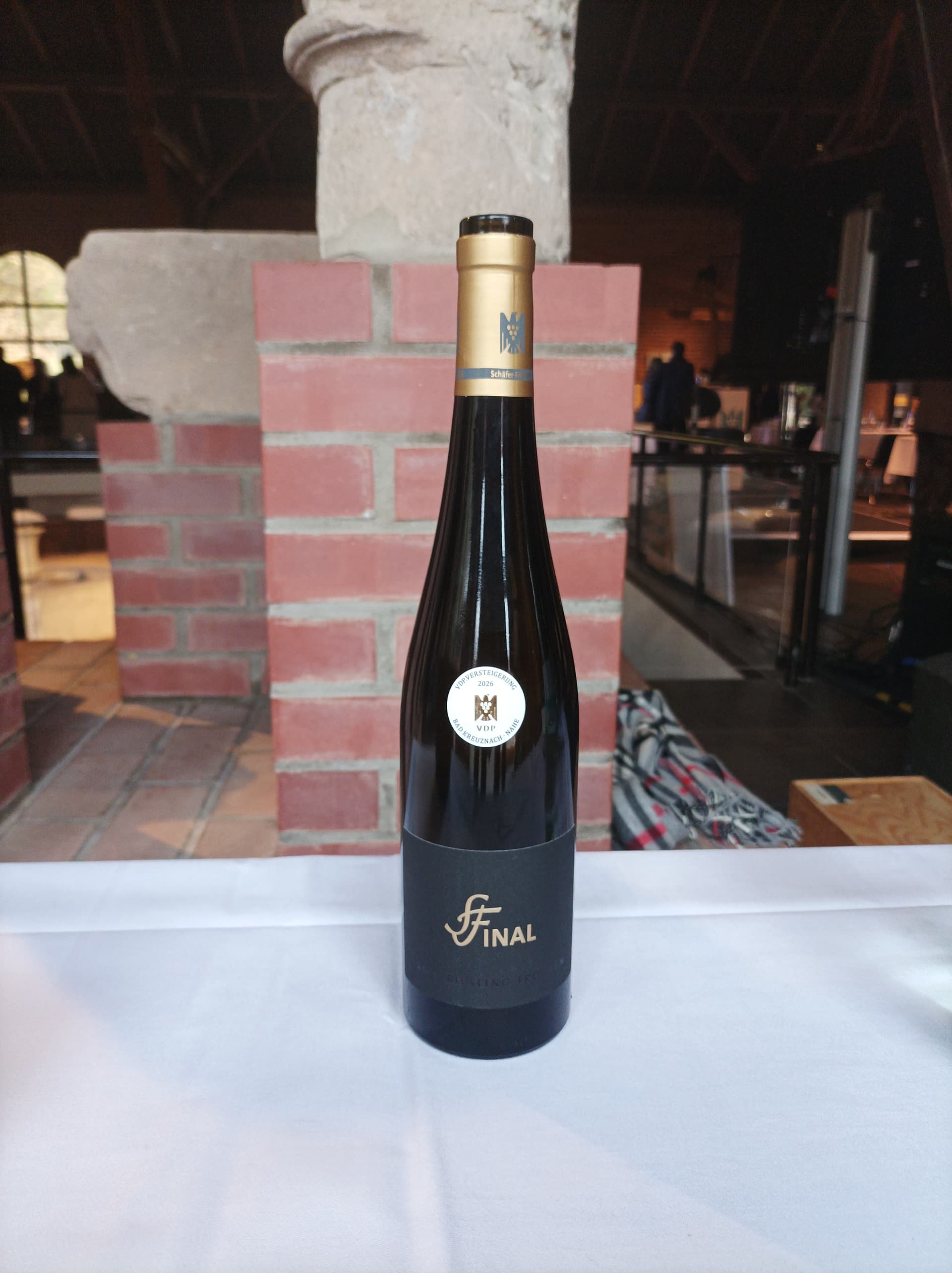
- 2025 Dönnhoff Oberhäuser Brücke Riesling Großes Gewächs Auction - Germany, Nahe
Nose & Palate (Vorsprobe / Preview): Clean mineral water character dominated by crisp red apple and luscious fruit oil aromatics. Saline, long-finishing, and showing an improved showing over previous tastings by successfully shedding any unwanted rubbery mineral nuances.
Nose, Palate & Finish (Auction Tasting): Dramatically enhanced integration; opens up with powdery dried fruit notes, offering a much more generous, opulent, and sweeter core. Hitting a peak stage of balance and harmony during this auction pour. (95 points)

- 2020 Groebe Westhofener Kirchspiel Riesling Grande Réserve Auction - Germany, Rheinhessen
Nose & Palate (Vorsprobe / Preview): Notable for marking the first distinct TDN (kerosene/petrol) signature of the tasting. Features an estimated 12 g/L of residual sugar that deftly cushions and balances a vibrant, high-tension acid spine. Aromatically complex, driven by cooling spearmint and industrial-edged liquid asphalt. A return to a traditional, German style.
Nose, Palate & Finish (Auction Tasting): Opens up significantly with air into a much more expansive, texturally creamy profile; unfurls with generous, ripe orchard fruit notes of apple, pear, and nectarine. Widely
highlighted as the ultimate quality-to-value standout of the room. (94 points)
- 2024 Joh. Bapt. Schāfer Dorsheimer Goldloch Riesling Auslese Goldkapsel Auction - Germany, Nahe
Nose & Palate (Vorsprobe / Preview): Defined by an intense, malic core of sharp green apple, evoking the sensation of a rich green apple pie. The palate features a medium-to-heavy body, yet vibrant, energetic acidity cuts right through, providing a silky, gliding texture.
Nose, Palate & Finish (Auction Tasting): Retains that distinct green apple footprint throughout, which evolves into an almost floral and highly vegetal, pungently green aromatic profile—reminiscent of green-apple-flavored shampoo. (93 points)
- 2025 Weingut Keller Piesporter Schubertslay Riesling Großes Gewächs Alte Reben Auction - Germany, Mosel Saar Ruwer
(Vorsprobe)
Nose: Profoundly driven by gunsmoke/gunpowder, crushed flint, and intense structural reduction.
Palate & Finish: Explicitly austere, intensely mineral, and bone-dry; anchored by a biting, razor-sharp saline persistence that defies conventional expectations for Mosel Riesling at this preview stage. (96 points)
- 2025 Weingut Keller Pettenthal Riesling Großes Gewächs Auction - Germany, Rheinhessen
Nose & Palate (Vorsprobe / Preview): Shut down by an intense, overpowering layer of reduction, yielding little beyond raw pungency. The palate is similarly austere and embryonic, with only the faintest fleeting traces of the site’s characteristic Roter Hang iron-bead minerality breaking through.
Nose, Palate & Finish (Auction Tasting): Blossoms dramatically with air into a generous, sweet-fruited, and delicate frame. Anchored by deep dark soil impressions, crushed ore rocks, and dense tertiary mineral complexity, all propelled by razor-sharp, electric acidity and exceptional fruit ripeness. (96 points)
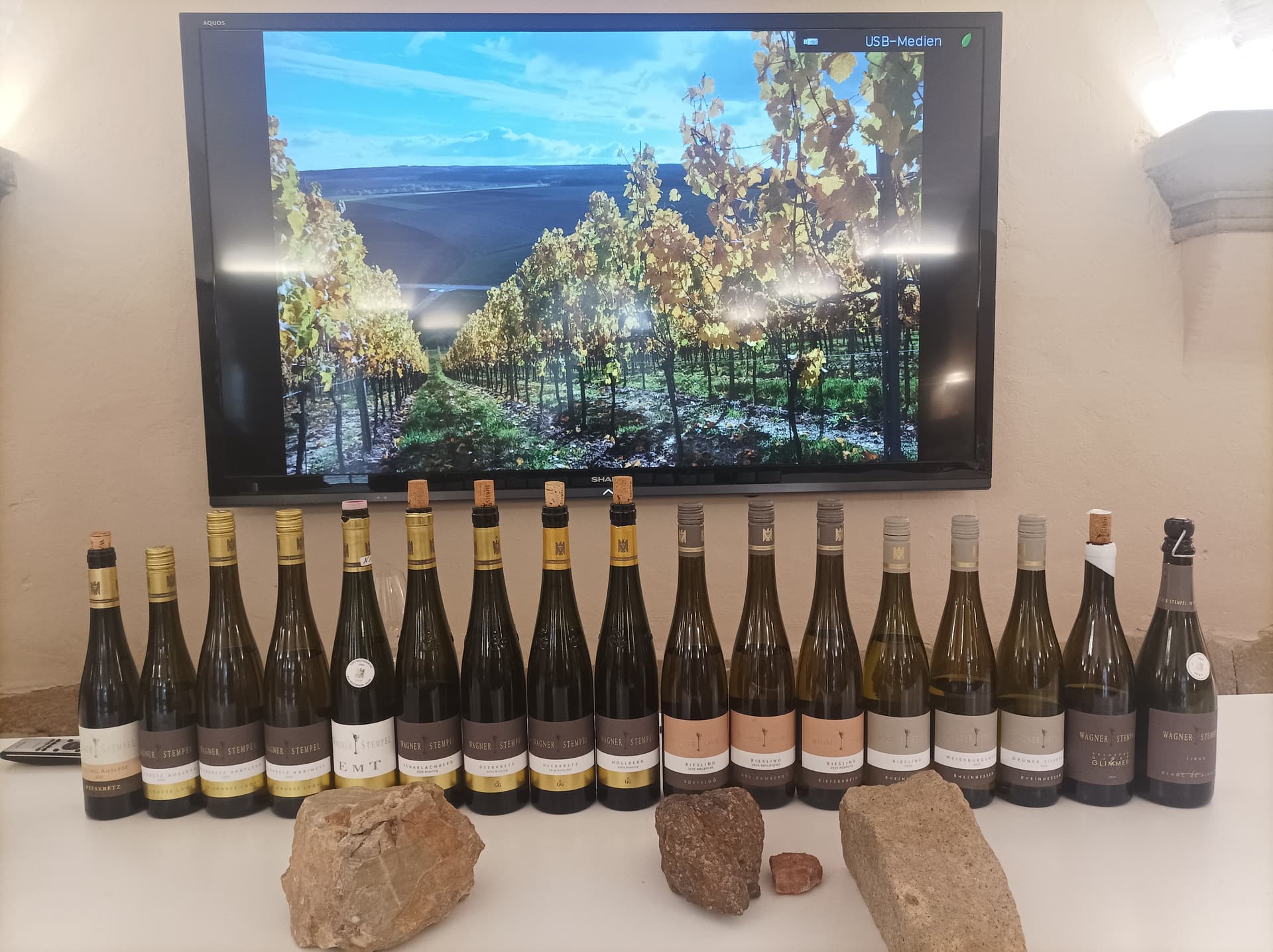
3. Wagner-Stempel
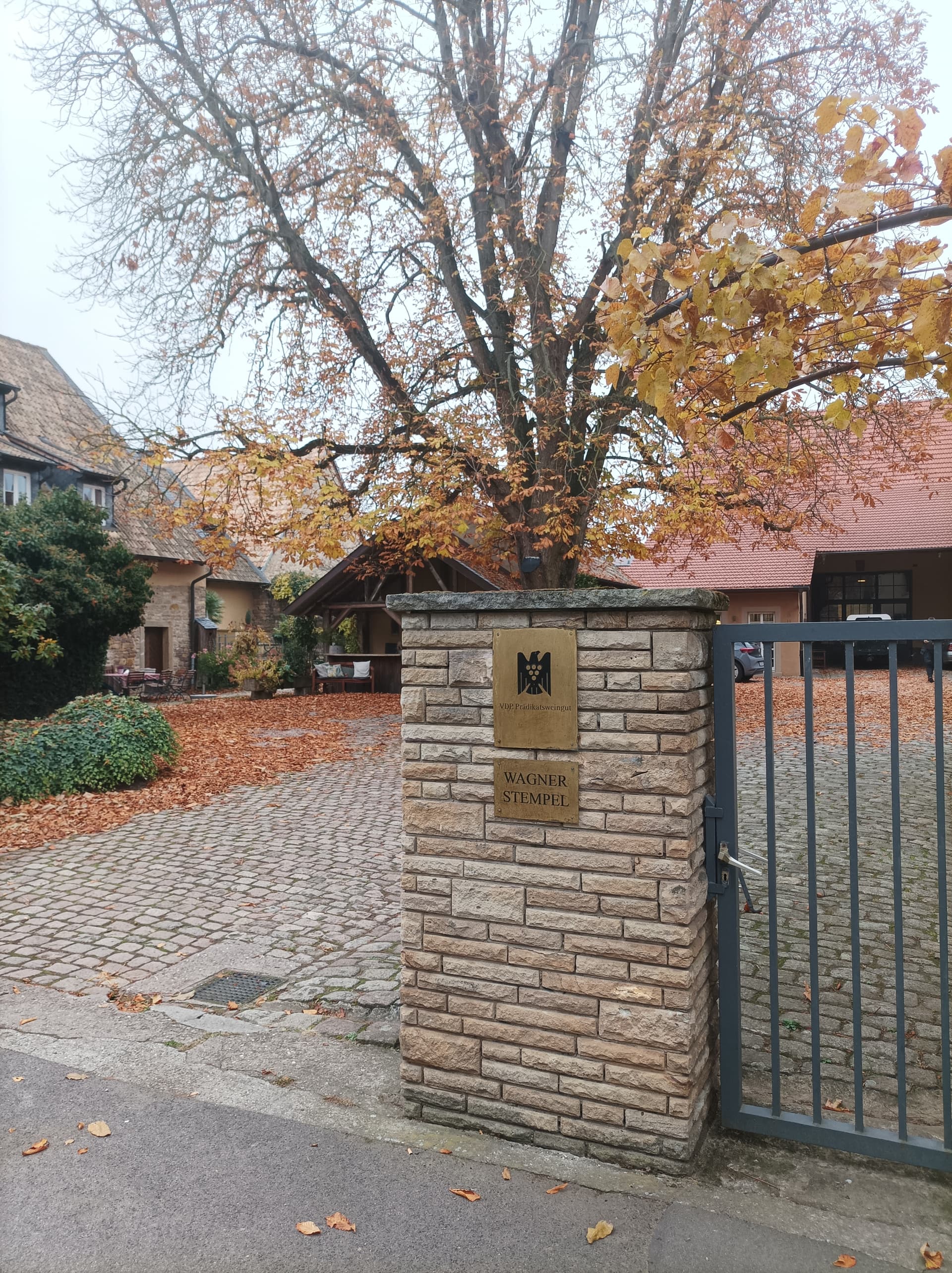
NAHE AUCTION WEEKEND: TASTING AT WAGNER-STEMPEL - Siefersheim, Rheinhessen (09/11/2026)
Hosted, driven, fed and given a lift by the generous, hospitable and highly personable “right-hand man” Oliver Müller
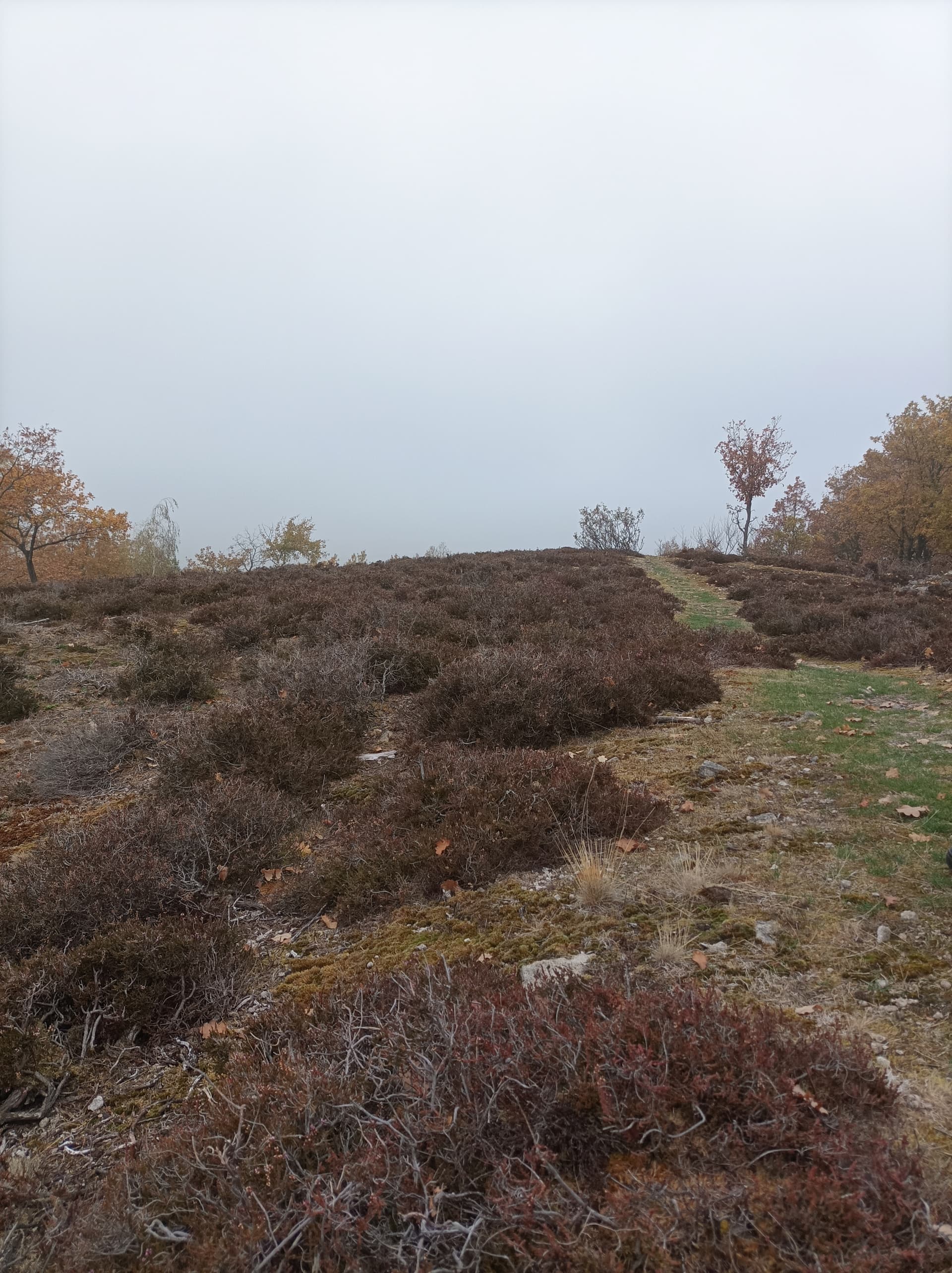
- Geological Anomaly: The Volcanic Core of Siefersheim
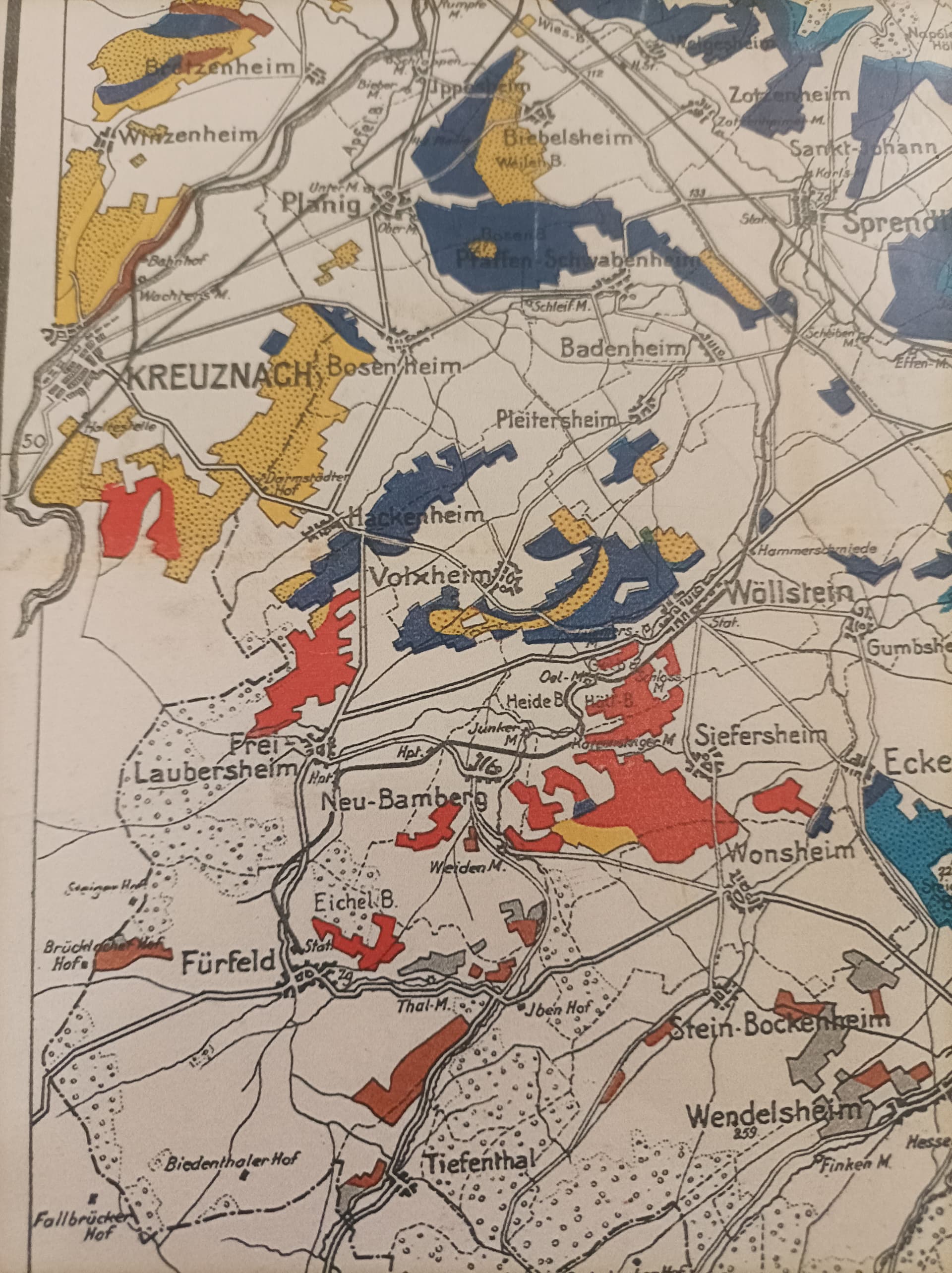
Magmatic Origin: The hills surrounding Siefersheim were formed by an ancient collapsed magma chamber. Unlike the vast majority of Rheinhessen—which is dominated by deep limestone (calcium carbonate), marl, or iron-rich clay—Siefersheim sits on an isolated volcanic outcrop.
The “Lost Son of the Nahe”: Geologically and microclimatically, Siefersheim shares the quartz-porphyry and melaphyr volcanic bedrock of the neighboring Nahe region rather than typical Rheinhessen soils. As Frank Schönleber’s father famously remarked, Wagner-Stempel is functionally the “lost son of the Nahe.
“Extreme Soil Poverty: On top of the hills, topsoil is virtually non-existent. The natural vegetation consists only of stunted oak trees and wild heather scrub. As Oliver Müller noted: “If you tried to start an orchard here, you would fail.”
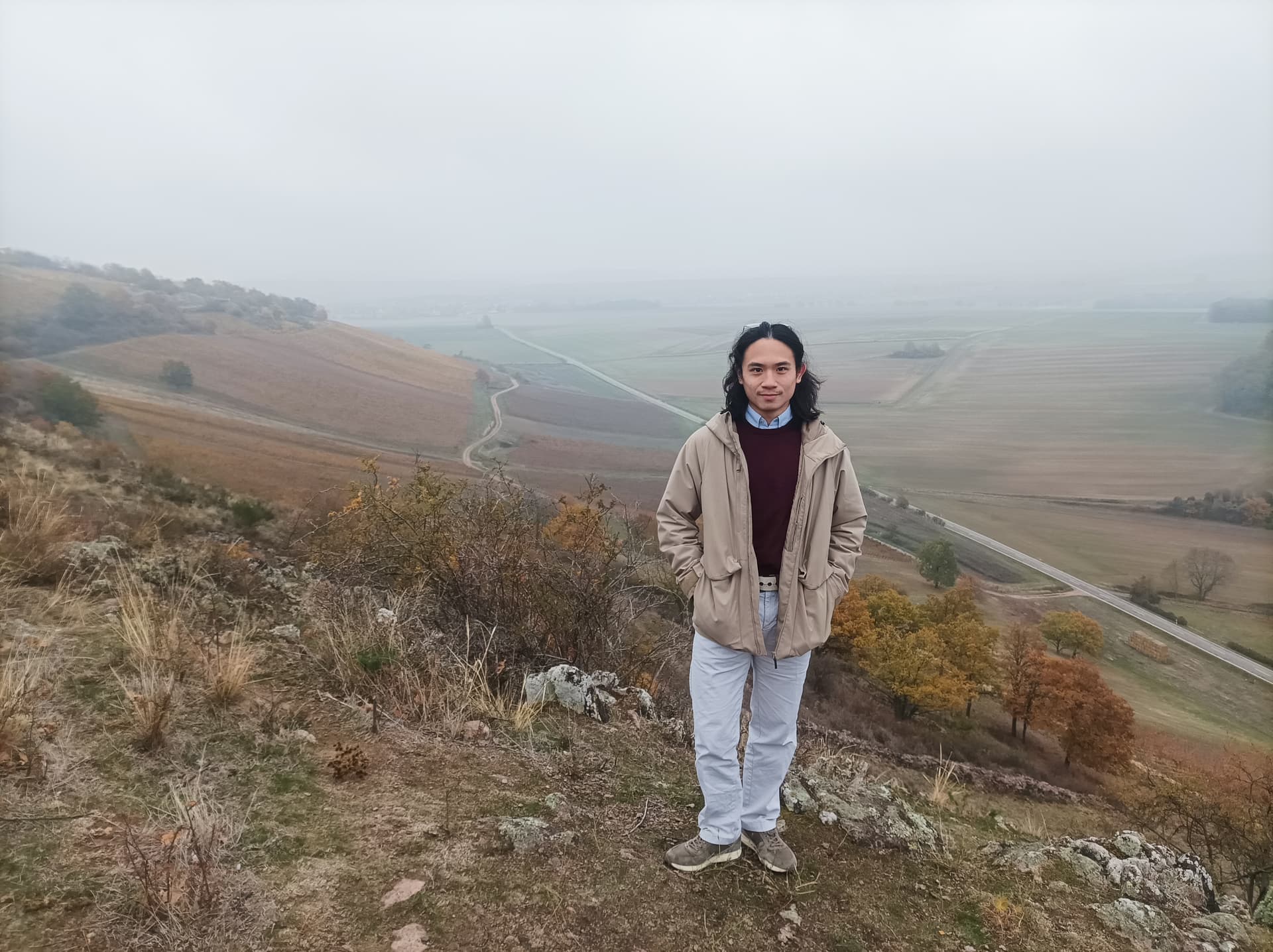
- Microclimates & Elevation Breakdown
The Horn (300m): The highest ridge point. Features a slightly thicker accumulation of loam over the volcanic bedrock, making it uniquely suited to Pinot Blanc and Chardonnay (Glimmer) rather than Riesling.
Siefersheimer Porphyr (280m): High-elevation sites with strong wind exposure and lower solar heat accumulation. Provides the energetic, high-acid base for the Vom Porphyr 1G and Gutswein bottlings.
Historical Shift in Ripeness: Historically, reaching full physiological maturity at these high, wind-swept altitudes was a struggle; today, under current climate trends, ripeness is fully guaranteed while preserving crucial acid retention.
- Heerkretz & The Heritage “EMT” Parcel Reclamation
History: 40 years ago, Heerkretz was an overgrown, abandoned hillside of trees and scrub. In 1982, Frau Emt cleared the steep south-facing slope and planted high-grade Riesling. Daniel Wagner acquired the site from her, investing over €50,000 to expand and restore the plots.
Acreage & Yields: Wagner-Stempel now farms 10ha in Heerkretz (replanted starting in 2007; added Pinot Noir in 2012). Average production is 5000-6000 bottles a year, dropping to just 3500 bottles in lower-yielding vintages like 2025.
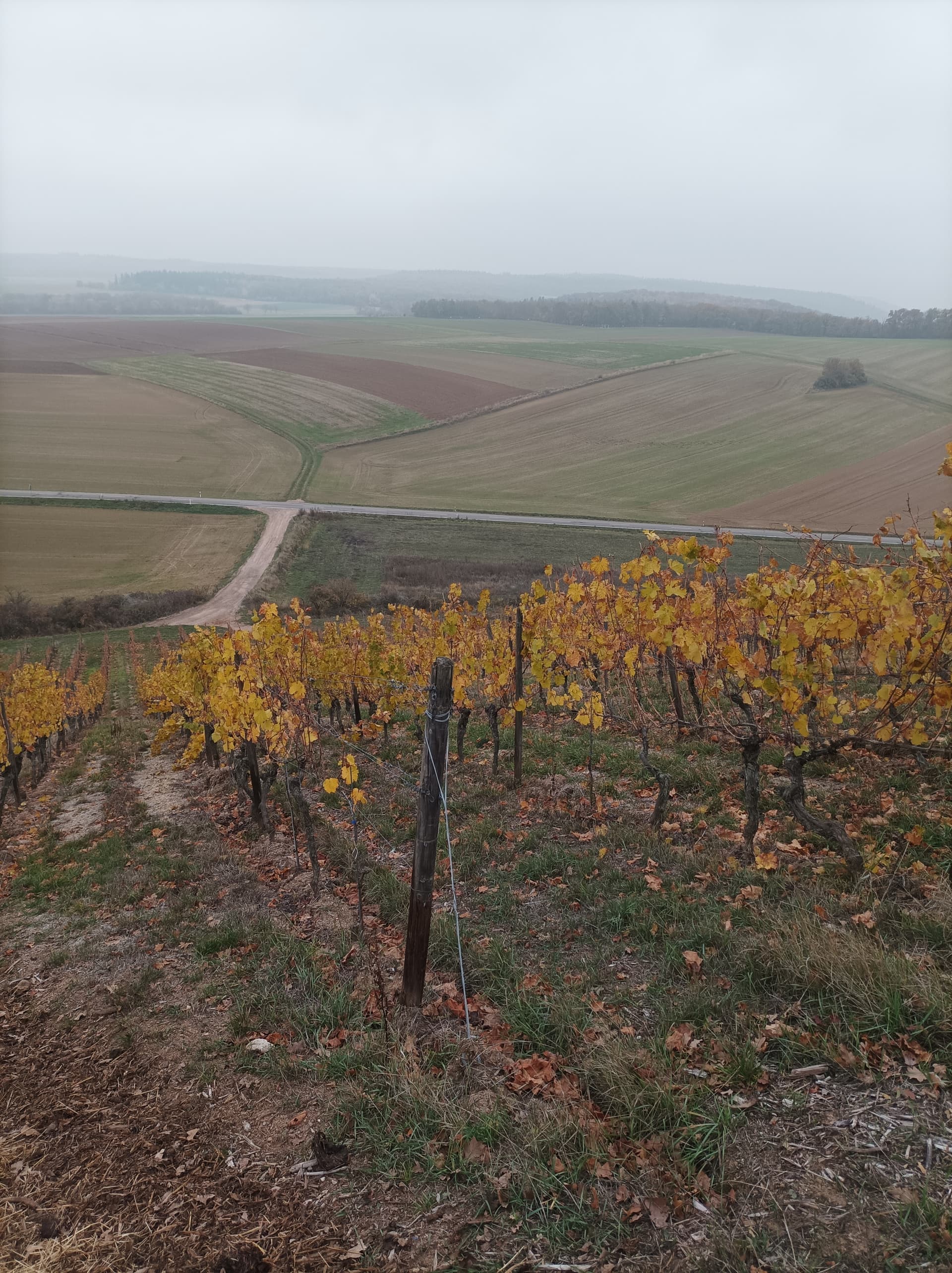
The “EMT” Micro-Lot: Located on the far left of the path overlooking Heerkretz.
Aspect & Incline: Steep 60% grade with South-East exposure.
Planting & Selection: Planted in 1982 by Frau Emt using the famed Niederhäuser DN500 Riesling clone sourced from the Nahe.
Micro-Scale Volume: Spans just 0.25ha, yielding low volumes 2500 l/ha for a total output of only 400-500l (240-360 bottles). Vinified rigorously plot-by-plot.
- 2019 Wagner-Stempel Tirus Blanc de Blancs Extra Brut - Germany, Rheinhessen
Named after the iconic tower at the Heerkretz site (and the builder’s dog depicted in sculpture). 100% Chardonnay, marking the first sparkler produced entirely in-house at the winery. Aged for 1 year in barrel (élevage) followed by 60 months on the lees; disgorged December 2025.
Nose & Palate: Opens with a chalky, mineral foundation layered with an intriguing, understated Tabasco-like pepperiness reminiscent of Oger’s chalk-driven expressions.
Structure & Finish: Bright, energetic acidity—balanced and precise without crossing into outright austerity—closing with an evocative, savory fungal complexity on the finish. (91 points)
- 2024 Wagner-Stempel Chardonnay Feldspat, Quarz & Glimmer - Germany, Rheinhessen
100% Chardonnay sourced from the due-west exposed plots of the Höllberg parcel on a highland slope where the loam soils are thicker. Originally intended for Sekt, two tonneau barrels proved too ripe, prompting the winery to produce a still Chardonnay. Produced with low intervention—aged 18 months in Halbstück and Tonneaux with natural malolactic fermentation.
Nose & Palate: Opens with an unusual, reduction-driven aromatic signature reminiscent of moldy blue cheese. The palate shows minimal oak influence save for a subtle buttery touch on the finish, though it feels slightly light on phenolic grip and backbone.
Finish: Cleans up with a bright, refreshing kiss of vibrant yellow citrus that lingers on the tail end. (87 points)
- 2025 Wagner-Stempel Grüner Silvaner - Germany, Rheinhessen
Nose: Displays mild structural reduction alongside waxy nuances and simple, primary grapefruit citrus notes.
Palate & Finish: Structurally muted and somewhat flat; constrained by low acidity and noticeable alcoholic warmth, resulting in a uncharacteristically bland profile on the palate. (86 points)
- 2025 Wagner-Stempel Weissburgunder Gutswein - Germany, Rheinhessen
Nose: Opens with coconut cream, reductive urea notes, and a streak of freshly cut grass.
Palate & Finish: Acidity arrives in an initial wave before washing out quickly; smooth overall. (86 points)
- 2025 Wagner-Stempel Riesling Gutswein - Germany, Rheinhessen
Context & Terroir: 100% sourced from Siefersheim vineyards.
Nose: Displays an inviting, acid-driven mesh layered over a distinct grey rocky mineral foundation.
Palate & Finish: Shows subtle apple fruit notes on the palate, concluding with a perceptibly sweet sensation on the finish. (86 points)
- 2025 Wagner-Stempel Siefersheimer Riesling Vom Porphyr Trocken - Germany, Rheinhessen
Sourced from the upper section of the Höllberg (”the Horn”) and plots on the opposite side of the valley.
Nose: Unfurls with complex lees influence, ground flint, crushed oyster shell, and a touch of warm brown sugar.
Palate & Finish: Shows a creamy texture with slightly toned-down acidity, rounded out on the backend by warming alcoholic heft and weight. (90 points)
- 2025 Wagner-Stempel Riesling Neu Bamberg “Rotliegend” - Germany, Rheinhessen
Sourced from Neu-Bamberg, located further west from Heerkretz. The site features a warmer microclimate with direct southern sun exposure and iron-rich clay soils.
Nose: Opens with a rich, intense aromatic profile dominated by coconut cream and lush warmth.
Palate & Finish: Displays deep structural richness; closes with fantastic, high-wire acidity on the finish that avoids feeling overly metallic or iron-heavy, leaving a long, vibrant acidic ruddiness on the palate. (91 points)
- 2025 Wagner-Stempel Riesling Fürfeld Melaphyr trocken - Germany, Rheinhessen
Sourced from Fürfeld, defined by melaphyr soil (dark, oxidized volcanic magma).
Nose: Displays a vividly colorful, dark mineral profile that completely eschews simple primary fruit; struck granite mineral drive dominates directly on the nose.
Palate & Finish: Shows greater primary maturity than its site peers, delivering spiced stone fruit (spiced apple and pear); closes with a spicy, high-tension acidic grip that resonates across the cheeks. (93 points)
- 2024 Wagner-Stempel Siefersheimer Höllberg Riesling Großes Gewächs - Germany, Rheinhessen
Situated across the valley from Heerkretz at an elevation of 180–200m with south to southeast exposure. Shares the same underlying porphyry rock substrate as Heerkretz, though with a thinner loam topsoil layer (making wet vintages more favourable for the site).
Nose: Unfurls with a distinct white wax signature alongside a sweet, airy white icing note.
Palate & Finish: Delivers ripe pale fruit across the palate; culminates in an explosive, peppery, and intensely acidic finish. Lacks the extreme, razor-sharp acidic tension of Heerkretz, but makes up for it in immediate fruit expression and explosive drive. (92 points)
- 2024 Wagner-Stempel Siefersheimer Heerkretz Riesling Großes Gewächs - Germany, Rheinhessen
Nose: Opens with a soft, creamy bouquet of fresh orchard fruit supported by a subtle chalky mineral baseline.
Palate & Finish: Surprisingly muted and watery across the mid-palate, showing noticeable phenolic astringency. Uncharacteristically lacks acidic drive and tension for a cooler-vintage Heerkretz, resulting in a somewhat flat, bland impression on the finish. (91 points)
- 2018 Wagner-Stempel Siefersheimer Heerkretz Riesling Großes Gewächs - Germany, Rheinhessen
Nose: Opens with subtle, maturing TDN (petrol) notes balanced by a clean foundation of ground white rock minerality.
Palate & Finish: Delivers an initial explosive fruit-bomb on the palate that shuts down abruptly. True to the warm 2018 vintage profile (1.4 g/l residual sugar), it lacks the high-wire acidic persistence seen in cooler years; closes with a somewhat astringent, undefined bitter fruit-skin texture that lingers 5 to 10 seconds post-swallow. (91 points)
- 2025 Wagner-Stempel Binger Scharlachberg Riesling Großes Gewächs - Germany, Rheinhessen
Sourced from Bingen on the Rhine River (located significantly closer to the river than Wagner-Stempel’s inland Siefersheim estate plots, where a portion is rented). Defined by lean, mineral-rich quartzite soils.
Nose & Palate: Requires aeration to unwind; initially tight, gradually revealing a faint, subtle quartzite mineral impression beneath the primary surface.
Finish: Subdued and linear, driven by fine quartzite minerality that remains reserved even with extended glass time. (91 points)
- 2025 Wagner-Stempel Riesling trocken EMT Auction - Germany, Rheinhessen
Lower yielding micro-lot in 2025, producing just 240 bottles (down from 360 bottles in prior releases).
Nose: Opens with delicate, faint white mineral salinity and refined stone minerality.
Palate: Crisp, precise, and defined by a vivid, distinctly red apple (malus / manzana) fruit core backed by underlying porphyry tension.
Finish: Possesses unparalleled length and focus, finishing with that same crystalline red apple persistence that echoing across the palate. (95 points)
- 2025 Wagner-Stempel Siefersheimer Heerkretz Riesling Kabinett - Germany, Rheinhessen
Specs: Residual sugar at 50 g/l
Nose: Displays a clean, persistent layer of white minerality directly on the nose.
Palate & Finish: Unfurls with a vivid, red-apple sweetness across the palate. Vibrant acidity provides the necessary structural engine to make the wine work, though the residual sweetness remains dominant and perceptible through to the sweet-toned finish. (91 points)
- 2025 Wagner-Stempel Siefersheimer Heerkretz Riesling Spätlese - Germany, Rheinhessen
Early-onset botrytis necessitated routing this parcel into the Prädikatswein trajectory rather than dry GG production.
Specs: Residual sugar reaches 85 g/l, though it feels far less obvious on the palate due to a proportional spike in natural acidity.
Nose & Palate: Mirrors the vibrant red apple and white mineral fruitiness of the Heerkretz site, balanced by a rising acid spine that counteracts the elevated sugar levels.
Finish: Surprisingly nimble and fresh for 85 g/l, closing with harmonious tension rather than heavy sweetness. (91 points)
- 2017 Wagner-Stempel Siefersheimer Heerkretz Riesling Auslese - Germany, Rheinhessen
Nose: Opens with an exotic, complex bouquet of botrytis characterized by intense incense-like perfume and a distinct rubbery mineral edge.
Palate & Finish: Rich and layered with candied honey and raw cane sugar sweetness; anchored by impressive structural depth that carries through to an extraordinarily long, resonant finish. (93 points)
- 2025 Wagner-Stempel Siefersheimer Heerkretz Riesling Auslese - Germany, Rheinhessen
Nose: Displays an unusual, slightly twisted botrytis character alongside classic Prädikat aromas of wild honey and ripe dried apricots.
Palate & Finish: Rich and broad on the palate, but lacks the high-wire acidic engine required to fully lift and counterbalance the dense noble rot and sugar load, falling behind the vibrant tension seen in the Spätlese. (89 points)