One strategy would be to not drink until you’re 80, then drink like a fish. Might cause other ailments but unlikely to develop cancer during your remaining years.
-Al
One strategy would be to not drink until you’re 80, then drink like a fish. Might cause other ailments but unlikely to develop cancer during your remaining years.
-Al
Each of the seven cancers listed by TSG in this call for warning labels just sucks to fall victim to. None are mild, easy to manage malignancies.
Number one piece of advice I’d give is if you drink with enough regularity to read a wine forum I’d definitely not smoke or accept being exposed to second hand smoke.
As Michael says, these things are not the same.
This entire argument is dumb. Health research, outside basic toxicology, is hard. You can pretty easily establish that benzene is bad for you. It’s not so easy to determine what kind of diet is better for long term health, or has less risk of cancer, or heart disease, etc. That requires large scale data, over decades of observation. And the results might actually be confounding, with some dietary practices positive for one health aspect, but negative for another. Industry doesn’t do that kind of work, and if they did they sure aren’t going to publish that eating beef is bad for you. Or drinking alcohol is bad for you. If you have the same level of skepticism for data published by government funded research as you do for propaganda published by industry, that’s irrational.
I like Milton Friedman, I think he had a lot of good arguments. For a perfect world, where everyone is educated and behaves rationally. And, strictly speaking, his words you quoted are accurate. The difference is, the self interest of an industry researcher is to promote that industry, do no damage, and get paid. While the self interest of independent government funded researchers is to be first to discover or elucidate something, get it published, and become well known in the scientific community so you can get more funding. Yes, there can be fraud in science. Look at autism and vaccines, the origins of the entire conspiracy theory was a fraudulent paper. But it was pretty quickly debunked.
All those tests and medical procedure that keep you alive when you end up in the hospital came largely from work funded by NIH, FDA, and other entities. The distrust being stirred up against those agencies is extremely dangerous, and will cause long term damage to everyone’s health.
I echo Sarah and Chris again - variously throughout my life absolute government decrees have now been proven wrong. I’ll remain as skeptical of government absolutes as I am of corporate.
Sorry, I aimed this at Glenn by mistake and can’t change it.
Lots of great comments. Big thanks to @MChang and others. I have been listening and learning about how to reduce cancer risk in the last few years since I refuse to give up wine : )
After searching around for credible sources, Dr. Patrick seems pretty decent (Dr Attia also but his podcasts are really intended for medical professionals and I get lost easily). She never mentions anything that isn’t backed by research, which I appreciate. Here’s a summary podcast episode as an example with her top recommendations, many of which specifically have been shown to reduce cancer risk (highlights would be: exercise (notably HIIT/vigorous exercise after meals if you can— can be very short intervals); Diet/weight/metabolic health— especially reducing visceral fat, importance of Vitamin D, Magnesium and Omega-3s via diet and/or supplements; and Sleep (7-9 hours) (If you go to her podcast feed you can dive in deeper on a specific topic)
I am particularly interested in exercise and Omega-3s (fish 3 times a week + supplements) with research showing O-3 can dramatically reduce cancer risk from smoking, sleep deprivation and more (no direct studies on reducing alcohol related cancer but fingers crossed). I had no clue.
#083 How Vitamin D, Omega-3s, & Exercise May Increase Longevity | Dr. Rhonda Patrick
FoundMyFitness Podcast or YouTube
This episode features Rhonda Patrick, Ph.D., and was originally recorded for the Institute for Functional Medicine’s podcast, ‘Pathways to Wellbeing.’ This episode outlines a series of fundamental tactics you can start applying immediately to enhance cellular health, protect the nervous system, elevate mood, reduce inflammation, promote muscle and bone function, and help prevent chronic disease.
(01:04) Vitamin D deficiency — risks, why it’s so common, & correcting with supplementation
(08:20) Magnesium’s critical role in DNA repair & synthesis (11:49) The best dietary sources of magnesium (13:05) Magnesium supplements: Glycinate, malate, dioxide, & citrate
(14:14) Exercise staves off age-related disease
(14:52) How genetic SNPs can affect vitamin D deficiency risk
(20:09) Low omega-3 intake from seafood is a top-6 preventable cause of death (22:22) Why ALA’s conversion into EPA & DHA is inefficient (25:15) Omega-3 index: Optimal levels & ties to increased life expectancy (28:27) How omega-3s reduce inflammation, a key driver of aging (30:39) Omega-3s protect against muscle disuse atrophy (31:38) Why avoiding fish during pregnancy is a huge mistake (34:02) Omega-3s are a low-hanging fruit for improving cardiovascular & brain health (35:46) What to look for when choosing an omega-3 supplement
(39:57) Hormesis: Why intermittent stressors are beneficial
(46:14) How to choose an exercise regimen (47:09) “Exercise snacks” reduce all-cause & cancer-related mortality (49:24) Brain benefits of lactate from vigorous exercise (52:23) How blood flow generated from aerobic exercise kills circulating tumor cells (54:30) Rhonda’s workout regimen (55:38) HIIT ameliorates adverse effects of sleep deprivation (58:32) Exercise is the best longevity “drug”
I mean you can do what you want, the data on this is very solid and is based on 23 different trials dating back to the 90s, but believe what you want.
I’m not saying people shouldn’t drink; I’m certainly not quitting, and the risk is relatively small if you’re keeping things in the low/moderate category; but that they should at least understand the risks before doing so.
One possible confounding variable with the data is that it’s very unlikely the amount of alcohol consumption reported by study participants is understated, which may magnify the effect, to some degree, but that’s purely speculation.
Living in California, we see cancer warnings everywhere and usually ignore them. I just opened a gift box containing binoculars and it had a Prop 65 warning attached. Prop 65 was passed in 1986 and requires businesses to let people know when they’re exposed to chemicals that may cause cancer, birth defects or reproductive harm. Buying a new HDMI cable? Buying a seaweed snack? Visiting a parking garage? All have Prop 65 warnings.
I do agree that stuff is just annoying, and does add cost, even if small.
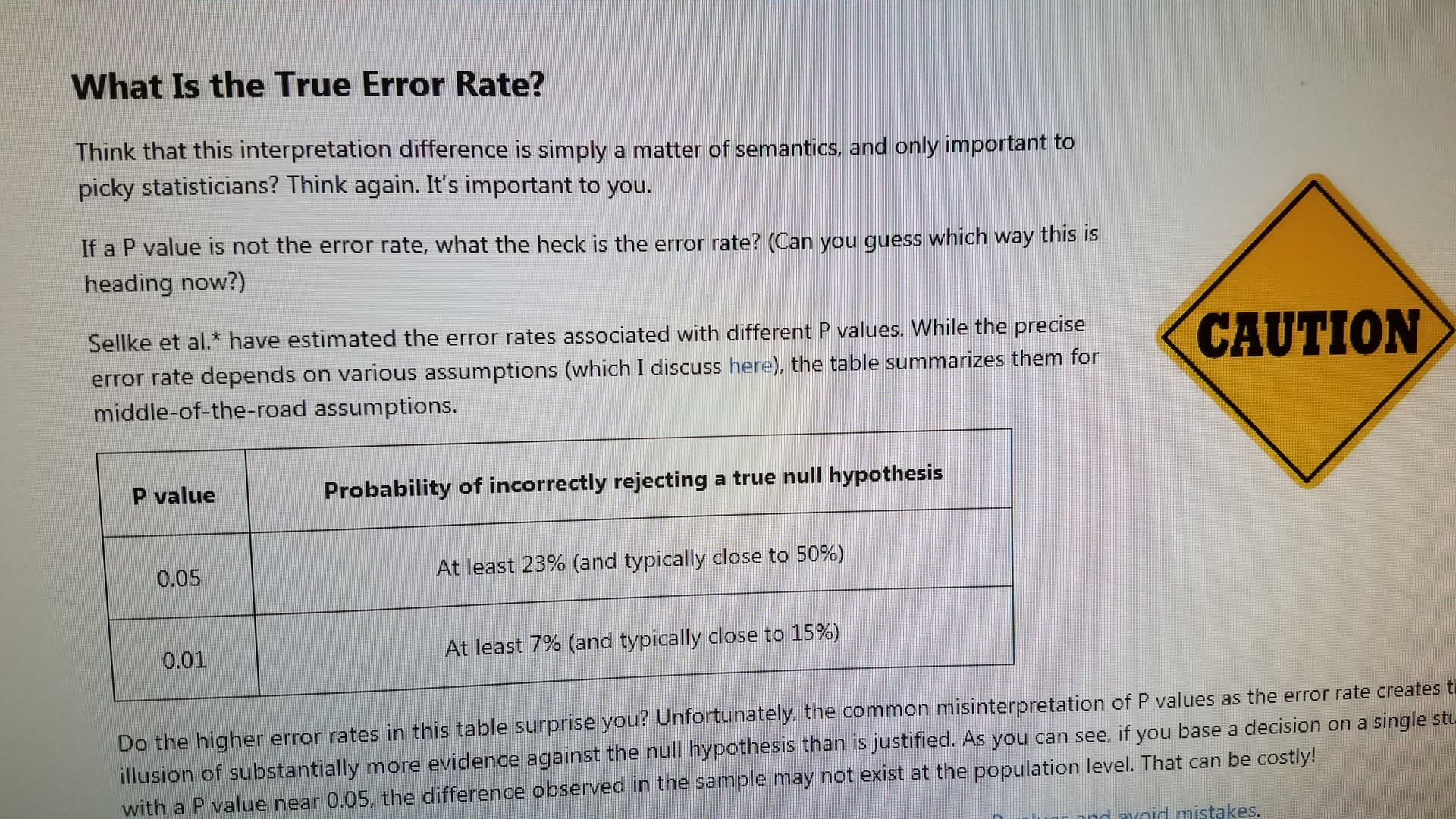
Statistics are hard - and even those of us that took a formal statistics class years ago probably don’t really remember or understand them well. P value of less than .05 is typically considered adequate “proof”, so that must mean the error rate is less than 5%, right? nope.
Taleb responds:
Debunking BS
Surgeon General declared ALL drinking=cancer. They can’t read their own data!
Heavy drinkers, 7.2%, cause 75% of cancers.
Allora: Risk ratios are TINY for LIGHT drinkers
So many confounding factors. My uncle tragically died of esophageal cancer right after retiring at age 65 in France-- he loved Pinot and Champagne in particular, but also smoked cigarettes (pack per day), and didn’t exercise. The risks have to go up dramatically I would think if they are stacked.
On the bad news side in regards to the research, apparently most studies treat abstainers as the control group, but many may have been previous drinkers (which could even include heavy and/or binge drinkers) instead of “never drinkers.” Therefore I hear a lot about studies underrepresenting the risk and some researchers are advocating for better study design/methodology moving forward.
That’s actually the reason why the studies initially found a positive effect for alcohol. They’re now more set up as never drinkers vs drinkers.
One huge set of factors that complicates studies even beyond the things Michael mentioned is genetics. We aren’t all the same genetically and can have huge impacts on cancer risks.
-Al
I said that quite a few posts above.
Agreed-- I have been thinking of getting a test (father with colon cancer, grandfather with prostate). Anyone done this? Apparently you can order a basic genetic test from 23andMe or Ancestry DNA (only the raw data is necessary, so you can get the cheaper one). Then find a service to analyze it such as this one for $25
What I have read is that they are reliable for certain genetic factors, less so for others. A journalist submitted DNA samples to multiple labs and they differed by a distressing amount (at least, at the time).
-Al
Those inexpensive services aren’t getting you a complete genetic sequence, which is what you really need for comprehensive medical genetic evaluation. The Ancestry type testing you get for $50 or $100 is intended more for finding and tracing family roots, origins, lost relatives, etc. You may get a few specific results for some of the most common genetic markers of interest, but it’s not something a genetic counselor could use to advise you on treatment, potential traits and conditions in offspring, etc.
Sand, you forgot to mention sand.
You don’t heed a test with your family history, you need surveillance.
I realize I’m not the target but there’s no reason to be skeptical about TSG’s statement. Alcohol use raises the risk of those seven cancers. It’s a fact, not up for discussion.
You can discuss how much alcohol raises the risk, that’s fair.