Yes, Turkish wines.
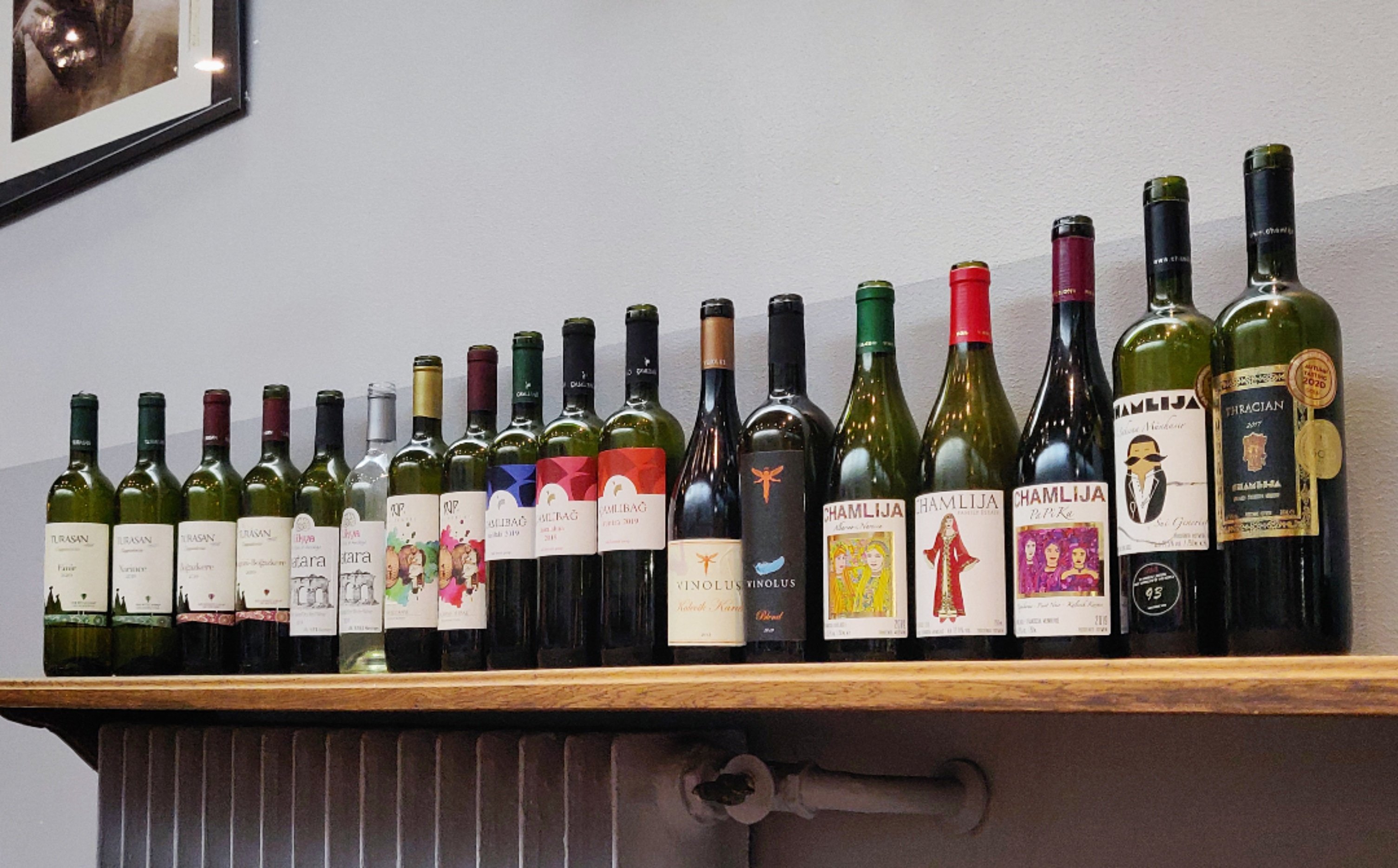
A Turkish friend of mine has been importing some European wines on a small scale for a little while now. Last summer he requested some sample bottles from Turkish wine producers just in order to see if there was anything worthwhile that he could add to their roster.
I don’t know if these were the bottles he got or if he acquired some extra bottles, but in any case, he decided to invite a bunch of wine geeks over to taste these wines along with some ridiculously delicious, hand-made Turkish meze he prepared himself right before the tasting.
So, yeah. Lots of Turkish wines. I had already some experience on Turkish wines wines before this tasting - having tasted one wine here, another one there - so I had some kind of picture what to expect, but this was the first real opportunity to actually taste so many Turkish wines at one go which made this so interesting. And sure, at the end of the day, there were some unimpressive examples and most wines sat in the lukewarm region between mediocre and moderately good. But fortunately there were a few really terrific wines as well!
Oh, and the prices are what my friend gave as approximate retail prices in Finland. To me, they seemed rather pricey, seeing how most of these were like 5-10€ wines in the Turkish market and even the most expensive ones retailed at around 25-30€. I understand that due to excise duties on alcohol, wines that come here from outside the EU are more expensive than those that come from within, but still, at these prices I predict these wines are facing quite an uphill battle…
.
.
-
2019 Turasan Emir - Turkey, Central Anatolia, Cappadocia (8.9.2021)
100% Emir from Cappadocia, grown on volcanic tuff. Fermented and aged in stainless steel. 14,5% alcohol.
Pale, thin whitish-green color. Quite sweet, primary and moderately tropical nose with ripe aromas of papaya and juicy pear, some floral spice, light sappy notes of aromatic herbs and a touch of honeydew melon. The wine is lively, fresh and playful on the palate with a medium body and bright flavors of cantaloupe, some mango, light sappy notes of herbal spice, a little bit of chalky mineral bitterness and a hint of fresh, grapey fruit. The rather high acidity lends the wine good sense of freshness, keeping it nicely in balance. The high alcohol remains remarkably well hidden - I was astounded to learn the wine was so high in alcohol, as it doesn’t taste like it one little bit! The finish is crisp, dry and fresh with quite long flavors of sappy herbal spice, some red apple, light grapey notes, a little bit of chalky mineral bitterness, a hint of mango and a touch of ripe pear.
A nice, crisp and fresh little white. Nothing too remarkable in character, but shows great freshness and nice balance between the sweeter, tropical fruit flavors and leaner, sappy, mineral and herbal tones. Despite the high alcohol, the wine doesn’t taste heavy or too ripe at all. The overall charm seems to rely on the youthful fruit and despite the good balance and high acidity, I really don’t get a feeling that this wine was built to age - I’d say drink the wine now or within a few years. Most likely the wine will keep, but won’t evolve much. All in all, this was noticeably better than the rather modest and underwhelming 2013 vintage. Perhaps a bit pricey for the quality at approx. 25€, but not forbiddingly so. (88 pts.)
.
-
2019 Turasan Narince - Turkey, Central Anatolia, Cappadocia (8.9.2021)
100% Narince. Fermented and aged in stainless steel. 14% alcohol.
Medium-deep yellow-green color. Big, ripe and quite sweetish nose with lush aromas of banana, some pineapple, light citrus fruit notes of ripe orange, light spicy notes and a hint of cantaloupe. The wine is very ripe, broad and juicy on the palate with a full body and tropical flavors of banana, some ripe orange, light fresh pineapple tones, a little bit of apple peel bitterness, a hint of stony minerality and a touch of persimmon. The wine seems to have quite high acidity, but it feels that the big body of the wine overwhelms most of the acidity - the wine stays balanced, but shows quite a bit of Viognier-like gras. The high alcohol remains surprisingly well-hidden. The finish is long, juicy and somewhat concentrated with quite ripe flavors of banana, some fresh pineapple, light stony mineral tones, a little bit of apple peel bitterness, a hint of sweet exotic fruits and a touch of sweet, aromatic spices.
A big, youthful and quite exotic white wine with a very distinctive character. Although the wine isn’t a fresh or delicate little white, it is surprisingly balanced for its size, coming across as let ponderous and blowzy as many modern Viogniers that can be similarly big and tropical. All in all, this is a nice and juicy white wine that drinks nicely right now and might even continue to improve for a handful of years. Priced according to its quality at approx. 25€. (89 pts.)
.
-
2019 Turasan Boğazkere - Turkey, Central Anatolia, Cappadocia (8.9.2021)
100% Boğazkere. 13,5% alcohol.
Youthful, almost fully opaque ruby red color with a dark, almost inky hue, that permits rather little light through. Dark-toned and rather sweetish nose with aromas of blueberries and juicy dark plums, some inky tones, light boysenberry tones and a rich hint of blackberry jam. The wine is juicy, ripe and sweet-toned on the palate with a rather full body and quite primary flavors of blackberries and bilberries, some succulent plummy tones, light inky notes and a little bit of jammy boysenberry. The mouthfeel is silky smooth, but a bit on the soft side, thanks to the rather modest medium acidity. Fortunately the quite ample tannins bring in some welcome firmness and grip to the mouthfeel. The finish is long dark-toned and juicy with moderately grippy tannins and rich flavors of sweet plums and blackberries, some boysenberry tones, a little bit of blueberry jam and light inky tones. The alcohol shows a little towards the end of the aftertaste.
A nice, fruity and easy red, a bit from the sweeter and sunnier side of the spectrum. I think the wine could’ve used a bit more acidity, but at least the ample tannins kept the wine firm and structured enough. Most likely the wine will perform better once it loses its sweetish primary fruit notes, but I doubt it will lose its soft and fruity overall character, no matter how long one ages it. An enjoyable weekday red for dishes that call for fruit and tannins, not finesse or acidity. Feels a bit pricey for the quality at approx. 26€. (86 pts.)
.
-
2019 Turasan Öküzgözü Boğazkere - Turkey, Central Anatolia, Cappadocia (8.9.2021)
This wine is - as the name implies - a blend of Öküzgözü and Boğazkere. 14% alcohol.
Youthful, moderately translucent and quite deep ruby red color. Ripe yet somewhat savory nose with clean aromas of blueberries and boysenberries, some inky tones, a little bit of kirsch, light plummy nuances and a boozy hint of alcohol. The wine is ripe, juicy and full-bodied on the palate with sweetish primary flavors of candied boysenberry tones and dark plums, some black cherry notes and a little bit of blackberry marmalade. The acidity feels surprisingly high for the ripeness, making the wine come across pretty fresh and lively, whereas the medium tannins are quite supple and mellow. The finish is juicy, round and gently grippy with a moderately long aftertaste of sweet black cherries, some licorice, a little bit of jammy boysenberry, light inky tones, a little bit of succulent dark plums and a hint of blackberry marmalade.
A ripe, juicy and very sunny Turkish red with lots of sweet-toned fruit. The relatively high acidity lends good sense of freshness and balance to the wine, but the somewhat candied primary fruit character makes the wine come across as pretty anonymous and simple. Not a bad wine, just a bit too ripe and sweet for my taste - and perhaps could use a bit more tannic grip to bring some firmness to the soft, round body. I can imagine that with correct food pairings this can be a pretty nice little drop. Feels a bit pricey for its quality at approx. 26€, though. (87 pts.)
.
-
2018 Likya Patara - Turkey, Antalya (12.9.2021)
A blend of Chardonnay and - depending on the source - Çalıbağ or Sultaniye or Sauvignon Blanc. Who knows. 10,5% alcohol.
Pale, rather neutral whitish-green color. Dull, somewhat dusty and quite underwhelming nose with aromas of damp wool. No fruit to speak of. The wine is lean, light-bodied and somewhat unripe on the palate with a rather flavorless taste of vague woolly notes and a hint of dusty earth. No fruit flavors. The wine is high in acidity, yet still comes across as somewhat dull and lacking in freshness. The finish is short, dusty and acid-driven with underwhelming flavors of wool and unripe white fruits.
Dull and rather unpleasant bottle. We wondered whether the wine was an off bottle, even perhaps so slightly corked you don’t really notice any TCA aromas but still corked enough to kill all the fruit, or just poorly made. Based on how the wine was only 10,5% in alcohol, yet very dry in taste, it was obvious the wine couldn’t have been particularly ripe - which would explain the total absence of fruit flavors. All in all, the wine left a rather disappointing impression. At approx. 27€ this would be a complete rip-off. Because we wondered if this was a corked bottle, I abstain from scoring the wine, but if the wine really is supposed to be like this, I’d rate it mid-to-high 50’s.
.
-
2019 Likya Patara Red - Turkey, Antalya (8.9.2021)
A blend of Kalecik Karasi, Syrah and Öküzgözü. 13% alcohol.
Deep, youthful and moderately translucent blackish-red color with a purple hue. Somewhat funky, slightly restrained and a bit dull nose with some waxy tones, a little bit of inky character, light plastic-like nuances and very little in the way of fruit. The wine is juicy, inky and moderately ripe on the palate with a moderately full body and quite understated taste of vague dark fruits, some waxy tones and a little bit of sappy herbal bitterness. Light in tannins and medium in acidity. The finish is short, ripe and moderately juicy with light subtly sweet-toned flavors of dark fruits and a hint of inky character. The alcohol starts to show quite a bit, as the light fruit department really doesn’t try to mask it in any way.
A wine that could be described as “mediocre” if one was willing to say something positive about it. Very underwhelming, soft and simple wine that is lacking in every department imaginable. It doesn’t feel like faulty, just poorly made. At approx. 27€ this would be a complete rip-off. Avoid. (62 pts.)
.
-
2019 Küp Emir-Sultaniye - Turkey, Western Anatolia, Denizli (8.9.2021)
A blend of Emir and Sultana. 13% alcohol.
Intense, medium-deep and quite youthful yellow-green color. Somewhat restrained, slight waxy and perhaps a bit off nose with vague aromas of tropical fruits and a hint of something plastic-like. The overall impression is rather underwhelming. The wine is broad, moderately full-bodied and rather round on the palate with ripe flavors of quince, some juicy white fruit and a little bit of something waxy. Overall the wine feels like its fruit department is rather understated for the full body of the wine. The medium-to-moderately high acidity keeps the wine in balance but doesn’t lend it enough freshness. The finish is juicy, ripe and somewhat short with juicy and sweet-toned yet rather light flavors of some exotic fruits, a little bit of white peach and a hint of grapey fruit.
A rather simple and underwhelming little white with a somewhat plastic feel to its flavors. Drinkable, but doesn’t leave a lasting impression. Expensive for the quality approx. 22€. (81 pts.)
.
-
2020 Küp Çal Karasi - Shiraz - Turkey, Western Anatolia, Denizli (8.9.2021)
The Küp winery is located in the town of Çal and this wine is a blend of a local grape variety Çal Karasi and Syrah. 12,5% alcohol.
Youthful, slightly translucent and quite deep ruby red color. Youthful, ripe and fruit-forward nose with aromas of boysenberries and blueberries, some blackberry marmalade, light dark fruit notes and a hint of peppery spice. The overall impression is that of a young warm-vintage Cru Beaujolais. The wine is youthful, clean and moderately full-bodied on the palate with rather primary flavors of blueberries, very ripe blackberries, some boysenberry tones, light sappy notes of crowberries and a hint of peppery spice. The overall feel is very balanced, thanks to the high acidity and gently grippy medium tannins. The finish is long, clean and lively with a little bit of tannic grip and fresh flavors of brambly raspberries, sappy herbal notes, a little bit of crunchy crowberry, light inky tones, a hint of ripe blackberry and a touch of peppery spice.
A nice, fresh and still very primary little red wine that is stylistically somewhere between a warmer-vintage Cru Beaujolais and a freshly released Crozes-Hermitage. There are some classic Syrah notes of blackberries and peppery spice, but the overall feel is more fruit-forward, towards the more dark-toned aromatic spectrum of a ripe Gamay. However, the wine retains good sense of freshness, thanks to its high acidity and low alcohol, so even though it is obvious it comes from a relatively warm place, it isn’t too ripe, fat or blowzy in any way. Pretty lovely stuff, I can imagine this will perform even better after a few years, once it loses its most obvious primary fruit qualities. Priced according to its quality at approx. 22€. (89 pts.)
.
-
2019 Çamlıbağ Vasilaki - Turkey, Bozcaada (8.9.2021)
100% organically farmed Vasilaki, a white variety from Tenedos aka. Bozcaada, an island in the Aegean Sea, off the western coast of Turkey. Fermented spontaneously. 12,5% alcohol.
Youthful, grassy green color. Spicy and slightly rubbery nose with slightly reductive aromas of yellow tropical fruits, some passion fruit, a little bit of herbal grassy character, light nutty notes of almond and a hint of earthy spice. The wine is ripe, slightly oily and subtly dull on the palate with a moderately full body and a bit smutty flavors of rubbery reductions, some paint thinner notes, a little bit of overripe white fruit, light plastic notes and - especially after some aeration - a bretty hint of leathery funk. Medium acidity. The finish is moderately lively but also somewhat mellow and slightly oily with rather short flavors of something plastic and slightly thinner-like, a little bit of ripe yellow fruits, light herbal tones and a funky hint of bretty leather.
Meh. A somewhat underwhelming and slightly unclean Turkish white with surprisingly little in the way of fruit. There are just some reductive notes, a little bit of bretty funk and light off flavors that lie somewhere in-between. Although the wine is only 12,5% in alcohol, it lacks the freshness and acidity that would make it feel balanced. Color me unimpressed. At approx. 25€ this would be ridiculously overpriced for its quality. (68 pts.)
.
-
2019 Çamlıbağ Karalahna - Turkey, Bozcaada (8.9.2021)
We were introduced to this wine by learning that Karalahna - “Black Pumpkin”, a variety grown in the island of Bozcaada - is a Turkish synonym for Xinomavro. However, with some googling I found only few similar claims and for example Wine Grapes currently considers Karalahna to be a distinct variety altogether. So the jury’s still out whether this is Xinomavro or not. Fermented spontaneously in concrete open-top fermentors. 13% alcohol.
Luminous, quite translucent brick-red color with a thing, colorless rim. Fragrant, sweet nose with aromas of wild strawberries, some licorice root, light floral notes of dried roses, a little bit of earth and a hint of ripe Morello cherries. The wine is ripe yet dry and very firm on the palate with a light-to-medium body and bright, crunchy flavors of tart lingonberries, some sour cherry bitterness, a little bit of earth, light plummy tones and a sweeter hint of wild strawberries. Good sense of structure, thanks to the high acidity and ample, moderately grippy tannins. The finish is quite long, juicy and moderately tannic with dry flavors of sour cherries, some wild strawberries, light ferrous notes of blood, a little bit of sweet red plums and a hint of earth.
A balanced, clean and sophisticated little red with impressive structure. With its light color and ample tannins, I don’t wonder why some people think the variety is identical to Xinomavro. However, aromatically the wine didn’t remind me that much of the Greek Xinomavros I’ve tasted. Nevertheless, this was a very lovely and quite impressive wine that drinks pretty well right now - at least with correct food pairings - but most likely will improve for years more. Very enjoyable, tasty and well-made effort with good purity of fruit, counterpointed with nice, unpolished rusticity. Solid value at approx. 25€. (91 pts.)
.
-
2019 Çamlıbağ Kuntra - Turkey, Bozcaada (8.9.2021)
Fermented spontaneously in concrete open-top fermentors. 13% alcohol.
Pale, fully translucent blood-red color - getting close to a Cerasuolo or a deep rosé than a red wine. Especially after opening the nose feels somewhat dull and moderately reductive with some rubbery swimming pool toy aromas, followed by notes of blueberries and licorice root, some crunchy cranberry notes, a little bit of meaty character and light raspberry tones. The wine is dry, somewhat lean and subtly reductive on the palate with a medium body and clean flavors of fresh, brambly raspberries, some sanguine meaty tones, a little bit of gravelly minerality, light wild strawberry tones and a hint of rubbery reduction which fortunately blows off with air. The wine is moderately high in acidity with balanced medium tannins. The finish is dry and savory with medium-to-moderately long aftertaste of stony minerality, some ferrous notes of blood, a little bit of tart cranberry character, light licorice tones, a hint of brambly raspberry and a sweeter touch of wild strawberry. The alcohol shows a little bit and the tannins make the wine end on a gently grippy note.
A nice, balanced and tasty little red. Perhaps a bit on the light and underwhelming side, but that might be just reduction, making the wine feel now a bit mute. I can imagine the wine would perform better after a few years, if it blew some of those reductive notes, letting the fruitier notes come more into fore - at least the wine seemed to benefit from aeration, which would support this theory. Nothing too complex though, which is why the wine feels a bit pricey at approx. 25€. (85 pts.)
.
-
2019 Vinolus Kalecik Karası - Turkey, Central Anatolia (8.9.2021)
100% organic Kalecik Karası. Cold-soaked for a day or two, then fermented and macerated for 20 days in stainless steel. Aged in new French oak barriques (50%) and stainless steel (50%). 15% alcohol.
Moderately translucent black cherry color with a pale ruby rim. Fragrant, perfumed and rather forest fruit-driven nose with aromas of blueberry juice, some sweet floral notes of lavender and violets, a little bit of boysenberry, light savory spicy notes of cumin and a hint of brambly raspberry. The wine is quite concentrated and silky smooth on the palate with a medium body and somewhat sweetish flavors of black cherries, some bilberry tones, a little bit of plum compote, light floral notes of lavender, a hint of wild strawberry and an earthy touch of forest floor. The structure relies mostly on the high acidity, as the ample tannins feel very ripe and supple, contributing mainly to the texture, not to the structure. The high alcohol lends some obvious heat to the palate. The finish is ripe, sweet-toned and moderately warm with juicy flavors of sweet dark plums and boysenberries, some bilberry tones, light floral notes of lavender, a little bit of brambly raspberry and a hint of autumnal forest floor.
A very rich, ripe and juicy Turkish red with lots of ripe, sweet-toned fruit and enough acidity to back it all up. Even though the wine sees some new oak, the fruit manages to conceal it very well, making the wine feel just vibrant and fruity, not oaky. However, the wine feels a bit too ripe for my taste, coming across as rather sweet-toned in taste and high in alcohol. There’s certain charm to this wine and it has a somewhat new world Pinot Noir or hot-vintage Beaujolais feel to it - I just wish the ripeness was dialed a little bit back so the wine would show also some finesse, not just overt, juicy fruit. Feels very expensive for the quality at 46€. (89 pts.)
.
-
2019 Vinolus Blend - Turkey, Central Anatolia (8.9.2021)
A blend of organically farmed Kalecik Karası and Syrah from vineyards located at the altitude of 1150 m above sea level. 13,5% alcohol.
Very deep, dark and rather concentrated black cherry color with a youthful inky hue. Very fragrant and characterful nose with floral aromas of violets and elderflowers, some blueberry tones, light boysenberry notes, a little bit of crème de cassis and a hint of savory wood spice. The wine is ripe, very juicy and quite concentrated on the palate with a medium-to-moderately full body and rather sweet-toned, primary flavors of cassis and bilberries, some vanilla oak, light floral notes of elderflower and violets, a little bit of wild strawberry and a hint of tart lingonberry. The overall impression is pretty structured, thanks to the high acidity and moderately stern and grippy tannins. The finish is sweet-toned, moderately grippy and quite lengthy with rather primary flavors of bilberries, some elderberries, light marmaladey blackcurrant notes of crème de cassis, a little bit of wild strawberry, a hint of tart lingonberry and a touch of vanilla.
A serious, pretty structured and surprisingly perfumed Turkish red with a lot of ripeness, concentration and sense of intensity. The fruit department feels still very youthful and perhaps a bit too much so, as it lends a somewhat candied and marmaladey feel to the wine, which really doesn’t suit it that well. However, seeing how structured the wine is, I have no doubts it will continue to improve for years more. Pretty nice stuff already now, but expect the score to go up as the wine ages. Feels slightly pricey for the quality at approx. 50€, but not forbiddingly so. (92 pts.)
.
-
2019 Chamlıja Albarino & Narince - Turkey, Thrace (8.9.2021)
A blend of Albariño (68%) and Narince (32%). Made according to a minimum-intervention philosophy. 13,7% alcohol.
Yellow-green color. Somewhat restrained yet enjoyably fragrant nose with a bit light aromas of quince, some floral notes of white flowers, a little bit of waxy funk, light apple tones and a hint of stony minerality. The wine is bright, clean and moderately complex on the palate with a medium body with some nice sense of concentration and subtly funky flavors of quince, some ripe red apples, a little bit of herbal spice, light stony mineral tones, a hint of waxy funk and a touch of cantaloupe. Nice, balanced and quite structured high acidity. The finish is clean, long and quite acid-driven with bright, fresh flavors of quince and red apple, some waxy funk, a little bit of savory spice, light stony mineral tones and a sweeter hint of exotic fruits.
A nice, balanced and quite characterful white where the leaner, mineral-driven flavors and higher acidity of Albariño and the sweeter, more tropical fruit flavors of Narince play nicely to each others’ strengths. Although the wine is clean and harmonious, there’s a subtly funky undercurrent to the flavors reminding that this is a rather natural wine, even though it might not be that obvious from the start. All in all, a nice and thoroughly enjoyable little white with good sense of structure and harmony. Perhaps a bit on the pricey side for the quality at approx. 32€, but not forbiddingly so. (90 pts.)
.
-
2018 Chamlıja Papaskarası - Turkey, Thrace (8.9.2021)
100% organically farmed Papaskarası, vinified according to a hands-off philosophy. 12,8% alcohol.
Translucent cranberry red color with a rusty hue and a pale brick-orange rim. Wild but also surprisingly green and vegetal nose with aromas of raw beet, some fragrant notes of Campari, a little bit of medicinal herbs, light sweet nuances of strawberry jam and a hint of wild flowers. The overall impression is rather odd. The wine is lively and quite acid-driven on the palate with a medium body and somewhat green-toned flavors of tart lingonberries, zesty chinotto notes of Campari, some vegetal notes of raw beet and tilled earth (geosmin?), a little bit of brambly black raspberry, light peppery tones and a slightly bitter hint of chopped medicinal herbs. The overall feel is pretty crunchy and moderately structured, thanks to the high acidity and somewhat grippy medium-plus tannins. The finish is spicy, somewhat grippy and slightly vegetal with a quite long aftertaste of peppery spice, some crunchy cranberry, a little bit of wild strawberry, light zesty notes of Campari, a juicy hint of sweet white fruits and a green, vegetal touch of tilled earth.
I was honestly surprised by this wine; the 2013 vintage of Chamlija’s Papaskarası that I’ve had some years ago was outstanding - one of the best natural wines I’ve had in a while - whereas this wine was just off, surprisingly green-toned and vegetal, having nothing in common with the 2013 vintage. I wonder whether this was just an off bottle or if this vintage is actually like this? Although the wine showed wonderfully crunchy qualities and impressive structure, aromatically the wine wasn’t particularly enjoyable. It wasn’t really attractively herbaceous like a classic Loire Cabernet Franc would be, but instead unpleasantly vegetal, smelling pretty similar to a freshly unearthed beetroot. Until I get to taste a bottle that performs better than this, I must assume this vintage is sub-par. Feels overpriced for the quality at approx. 32€. (83 pts.)
.
-
2019 Chamlıja PaPiKa - Turkey, Thrace (8.9.2021)
A blend of Papaskarası, Pinot Noir and Kalecik Karası, about a third of each - hence the name. Vinified according to a hands-off philosophy, aged for 12 months in oak barrels. 14% alcohol, 7,5 g/l acidity, pH 3,4.
Luminous, deep and moderately translucent black cherry color. Very juicy, fragrant and somewhat sweet-toned nose with clean, youthful aromas of ripe blackberries and blueberries, some sweet plummy tones, a little bit of fresh cranberry, light vanilla pod tones, a floral hint of elderflower and a touch of jammy dark berries. The wine is very ripe yet noticeably fresh, lively and acid-driven on the palate with a medium body and bright flavors of sweet dark plums and black cherries, tart lingonberries, some brambly black raspberry notes, a little bit of peppery spice, light sweet spicy notes of vanilla and cloves, a floral hint of elderberries and a sweet touch of blackberry jam. Despite its richness, the wine is surprisingly firm and structured, thanks to the noticeably high acidity and moderately grippy medium-plus tannins. The finish is rich, juicy and quite tannic with a lengthy aftertaste of ripe black cherries and dark plums, some sweet blackberry jam tones, a little bit of vanilla oak, light floral notes of elderflowers, a hint of peppery spice and a touch of tart lingonberry.
An excellent, fresh and precise Turkish red that combines wonderfully the freshness and fragrance of Papaskarası, the brightness and finesse of Pinot Noir and the sweetness and structure of Kalecik Karası. The overall feel here is somewhat sweet-toned - at least partially thanks to the very youthful, almost primary fruit character and still slightly noticeable vanilla oak - but I can imagine these qualities will subside into the background as the wine ages. At least it feels like it is built to age with its vibrant fruit, high acidity and firm tannic backbone, so there is no reason for me not say this wine will get better with age. It might be a bit clumsy at the moment with its candied primary fruit notes and vanilla nuances, but it nevertheless very rewarding already. Priced somewhat according to its quality at approx. 40€. (93 pts.)
.
-
2017 Chamlıja Sui Generis - Turkey, Thrace (8.9.2021)
A blend of mainly Cabernet Sauvignon with some Merlot, Cabernet Franc and Petit Verdot. Aged for 18 months in French oak barrels. 14,5% alcohol, 6,08 g/l acidity and pH 3,69.
Very dark cherry red color that permits some light through. Very big, toasty and quite voluptuous nose with sweet, extracted aromas of chocolatey mocha oak, some dark plummy tones, a little bit of wizened black cherry, light vanilla tones, a hint of blueberry juice and a touch of cassis. I guess this is supposed to be a left bank-inspired Bordeaux blend, but at least the smell reminds me more of a polished, modern Napa Cab. The wine is ripe, juicy and extracted on the palate with a full body and concentrated flavors of sweet blackcurrants, some oaky notes of vanilla and milk chocolate, light toasty notes of smoky wood spice, a little bit of dark plummy fruit, a hint of cocoa and a touch of blueberry juice. Although the wine feels pretty opulent on the palate, it never comes across as too soft or heavy, thanks to the moderately high acidity and firm, assertive tannins. The finish is ripe, sweet-toned and quite grippy with powerful and very persistent flavors of juicy dark berries, some sweet cassis tones, a little bit of milk chocolate, light toasty notes of savory wood spice, a hint of vanilla and a touch of toffee. The high alcohol starts to get quite evident towards the end of the aftertaste.
A big, powerful and quite noticeably woody Napa Cab-wannabe. Like I said earlier, I think this wine is an attempt to emulate left bank Bordeaux, but this feels very modern, glossy and ripe, having no markers whatsoever that would point me to the direction of Bordeaux (I’m not saying Bordeaux itself wouldn’t be full of such wines), but instead coming across like an archetypal new world Cab with emphasis on very ripe, dark-toned fruit, extraction and excessive new oak (which some people might describe as “luxurious oak”). While the wine doesn’t really speak in a language I understand, I still have to admit the wine is technically very well made and despite the overwhelming (i.e. obfuscating) new oak, the wine is impressively structured and very balanced. I really do hope the wine integrates the oak with age, but fortunately the wine feels like it is built to age, so I guess with enough cellaring it might be possible. However, I suspect that is going to take something like 20 years before this wine is in a place I’m going to enjoy it. If you are a fan of big, powerful Napa Cabs and the like, add 5 points to my score. Although impressive, the wine feels too expensive for its quality at approx. 57€. (87 pts.)
.
-
2017 Chamlıja Thracian Istranca Bağları - Turkey, Thrace (8.9.2021)
A blend of Merlot (47%), Cabernet Sauvignon (31%) and Cabernet Franc (22%). Aged for approximately 20 months in predominantly new oak barrels. 15% alcohol, 6,10 g/l acidity and pH 3,65.
Deep and slightly translucent cherry red with a youthful, subtly inky hue. Complex, fragrant nose with quite powerful aromas of bilberry-driven forest fruits, black cherries, some blackcurrant marmalade, light oaky notes of caramel and toasted wood spice, a little bit of ripe black raspberries, a boozy hint of alcohol and a leafy touch of herbaceous Cab character. The wine is dense, powerful and quite extracted on the palate with a full body and concentrated flavors of sweet cassis, some extracted woody bitterness, light cherry marmalade tones, a little bit of chocolatey mocha oak, a hint of blueberry jam and a touch of caramel. The overall feel is quite chewy and muscular, but the structure relies more on the assertive, grippy tannins than on the medium acidity. The high alcohol lends some obvious heat to the palate. The finish is extremely long, powerful and quite tannic with juicy flavors of chocolatey mocha oak, ripe blackcurrants, some cherry marmalade tones, light minty notes of herbal greenness, a little bit of sweet bilberry, a hint of caramel and a touch of jammy dark fruit. The high alcohol makes the wine end on a moderately warm note.
A very big, modern and quite extracted bruiser of a wine that is quite impressively built and relatively balanced for its size. Although I find the ample tannins to be perfectly in balance with the big, concentrated fruit, the overall feel is a tad too much on the ripe side, making the wine feel a bit too sweet, too high in alcohol and too low in acidity. Furthermore, the oak influence is just too much for my taste, even if the fruit can carry it all surprisingly well. At least the wine shows a bit less oak influence than the other Chamlıja Bordeaux-blend, Sui Generis, which I found even more oaky. Perhaps the wine will gain more finesse as it ages and integrates the oak with the fruit - at least the wine feels like it is built to age. However, even though the wine is supposed to be a Turkish take on the right bank Bordeaux, I’d say the wine will suit palates that prefer Napa Cabs rather than old-school Bordeaux wines. Feels a bit overpriced for the quality at approx. 68€. (89 pts.)
Posted from CellarTracker