Some of you might remember my previous “Toppling X” tasting report from a few years back. The idea in these tastings has been quite simple: somebody has a famous dry Riesling from a vintage that was at least 10 years ago, and the attendees pool together a blind tasting of dry Rieslings from the same vintage. All the wines are brought to the tasting fully blind and then poured in a randomized order, so nobody knows anything about the producers (apart from the wines they’ve brought, plus the wine that is to be challenged) nor even the order in which the wines come.
Although the idea is to challenge the named wine, usually we are limited to wines that we have; it’s hard to bring a “better” wine if you have only one or two wines from the vintage. Or, as it was in my case, I didn’t have a single bottle to contribute to the lineup! I was just an attendee in this tasting.
Anyways, this was the third iteration of this concept. Originally the idea was to have these tastings at 10 years from the vintage, but COVID messed up these plans for a bit, so now we’ve done some catching up - and also skipped some vintages we haven’t been that keen on. The tastings that we’ve had before have been:
- Toppling 2009 Clos Ste Hune
- Toppling 2010 Keller Hubacker
If you are interested to read more about these tastings, I explained some additional details in that Keller tasting report.
Anyways, on to this tasting. As I said in the title, toppling FX Pichler was an easy task this time. The reason for this is pretty simple: the wine was corked. As was one other challenger as well. And yet another was already quite oxidized. 3 duds out of 12 bottles, including the one that was to be challenged - that was a rather lousy streak of bad luck!
As for how we scored the wines: everybody had to rate six best wines in a descending order; the first one would receive 6 points and the 6th one would receive 1 point. That means every attendee had 21 points to give, and at 16 attendees, the total amount of points was 336. Had one wine received 1st position (ie. 6 points from every attendee), it would’ve gotten a total of 96 points.
Here is the final scoreboard of the wines we had in the tasting (my personal score in parentheses):
#1, 64 pts: 2012 Weingut Keller Hubacker Riesling Großes Gewächs (94 - my no.1)
#2, 59 pts: 2012 Georg Breuer Rüdesheimer Berg Rottland Riesling (93 - my no. 2)
#3, 50 pts: 2012 Künstler Rüdesheimer Berg Rottland Riesling Großes Gewächs (92 - my no. 5)
#4. 40 pts: 2012 Wittmann Westhofener Kirchspiel Riesling Großes Gewächs (90)
#5, 38 pts: 2012 Weingut Baron Knyphausen Riesling Imperial Yellow (91 - my no. 6)
#6, 28 pts: 2012 Dönnhoff Höllenpfad Riesling Trocken (93 . my no. 3)
#7, 25 pts: 2012 Wegeler Rothenberg Riesling Großes Gewächs (89)
#8, 24 pts: 2012 Dönnhoff Felsenberg Riesling Großes Gewächs (90)
#9, 8 pts: 2012 Knipser Riesling *** (92 - my no. 4)
flawed: 2012 Schloss Sommerhausen Sommerhäuser Steinbach Riesling Großes Gewächs (-)
flawed: 2012 Georg Mosbacher Ungeheuer Riesling Großes Gewächs (-)
flawed: 2012 F.X. Pichler Smaragd Ried kellerberg (-)
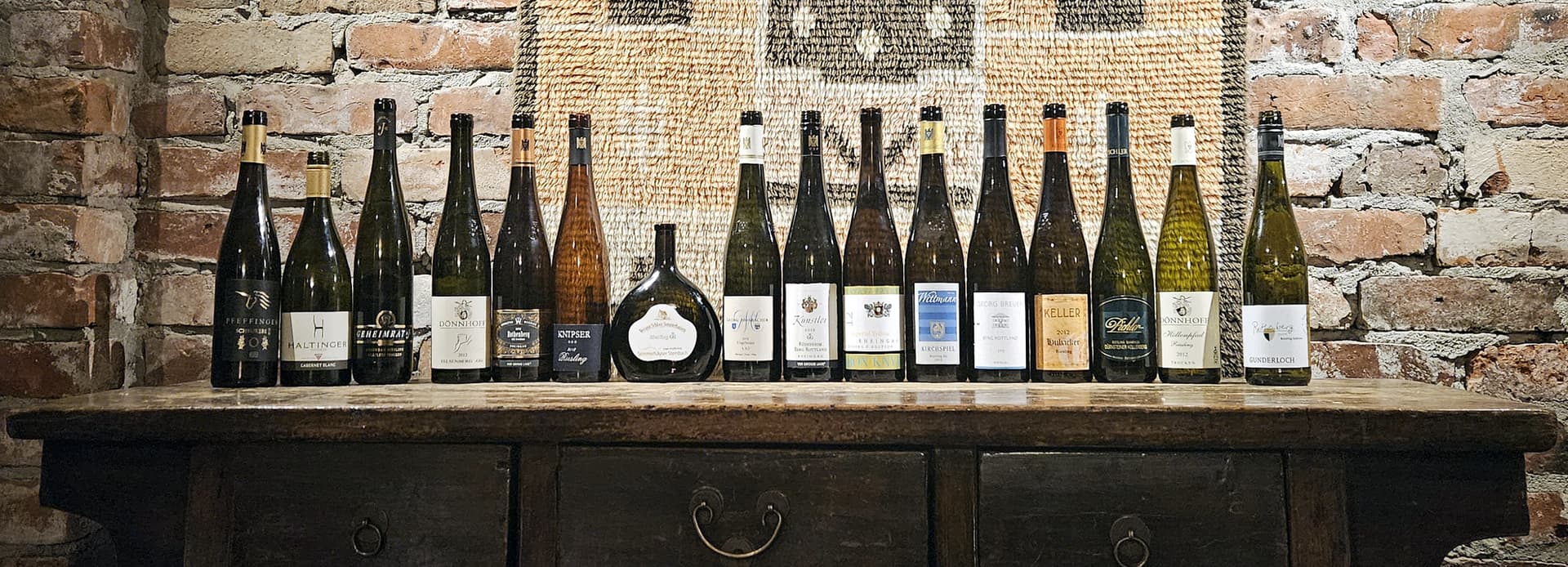
In addition to the main theme, we had three blinds first, just to calibrate our tastebuds, and a magnum of Loosen Dry Riesling for the food. Finally, after the tasting proper, we had a sweeter Gunderloch (blind, too) to end the show.
- 2022 Weingut Pfeffingen Scheurebe O - Germany, Pfalz (22.1.2025)
100% Scheurebe. Macerated with the skins, aged in oak casks. 13,5% alcohol. Tasted blind.
Medium-deep yellow-green color. The nose feels very perfumed and ridiculously floral with youthful and noticeably heady aromas of exotic flowers and lychee, some primary grapey tones, a little bit of ripe pear, light honeyed notes, a pungent hint of sweat, a candied touch of yellow fruit jellies and a whiff of green currants. The wine feels dry, youthful and crisp on the palate with a light-to-medium body and surprisingly thin flavors of key lime, some steely mineral notes, a little bit of lychee, light floral notes of rosewater, a green hint of crushed nettles and a touch of honeyed character. The racy acidity lends quite a bit of zip and firmness to the overall feel. The finish is dry, lean and acid-driven with a crunchy but also somewhat thin aftertaste of lemony citrus fruits, some currant leaves, light floral notes of rosewater and granny perfume, a little bit of saline minerality, a primary hint of grapey fruit and a touch of honeycomb.
This was a very weird wine; the nose was ridiculously heady and expressive, whereas on the palate the wine felt thin, flat and lean with very little body and fruit to offset the brisk, incisive acidity. Honestly, it felt like the nose and the taste were from two completely different wines. I was pretty sure that the wine was made with a hybrid variety, as the nose was so atypically exuberant whereas the wine was so thin, lean and acid-driven on the palate - all the tell-tale signs of cool-climate hybrid white wines. Well, turns out this was not a hybrid, but instead a skin-contact Scheurebe from a producer known for their Scheurebes. Live and learn. Honestly, this wine only managed to bolster my distaste for Scheurebe. Not recommended. Very overpriced for the quality at 45€.
(75 points) - 2019 Haltinger Cabernet Blanc - Germany, Baden (22.1.2025)
100% organically farmed Cabernet Blanc - a Cabernet Sauvignon x Regent crossing - from co-op growers in Haltingen. Bottled with light filtration. 12,5% alcohol. Tasted blind.
Youthful pale greenish color. The nose feels dull and somewhat reductive with aromas of smoky reduction, some skunky notes of hard-boiled eggs, a little bit of something spicy, light sweeter notes of ripe yellow fruits and a hint of banana. The wine feels somewhat reductive and a bit weird on the palate with a medium-to-moderately full body and atypical flavors of ripe appley fruit and fermenting peach, some cantaloupe, light reductive notes of smoke and hard-boiled eggs, a little bit of stony minerality, a hint of fresh white fruits and a touch of tangy salinity. The high acidity lends quite a bit of freshness and structure to the wine. The finish is dry, saline and a bit dull with flavors of stony minerality, some fresh appley fruit, a little bit of smoky reduction, light cantaloupe notes, a hint of banana and a touch of rubber.
This wine was quite weird and pretty much all over the place. Curiously we tasted this blind next to Pfeffingen Scheurebe O, and I thought that one was a hybrid, while this wine didn't raise any suspicion! However, as the wine was somewhat closed and reductive with somewhat skunky undertones, the overall feel wasn't particularly attractive. Furthermore, the fruit profile didn't feel particularly complex or interesting. I must say that this wine didn't manage to convince me that the German PiWi wines made from these disease-resistant hybrid varieties is the future of European wines. At 12€ - the price at which the co-op sells the wine - the wine is priced somewhat according to its quality, but at 39,98€ - the price at which the wine retails around here - the price is just bonkers. I can't imagine why anyone would pay that money for this wine.
(78 points) - 2011 Wegeler Riesling Geheimrat "J" Spätlese Trocken - Germany, Rheingau (22.1.2025)
100% Riesling from the best sites (up to 16 different vineyards) of Wegeler. 12,5% alcohol, 8 g/l residual sugar and 7,3 g/l acidity. This bottling was released on February 10th, 2023. Tasted blind.
Intense and quite concentrated neon yellow-green color. The nose feels concentrated and quite immediately identifiable for a Riesling with its aromas of ripe peachy fruit, some beeswax, light evolved creamy notes, a little bit of apple jam, a hint of fresh nectarine and a touch of petrol. The wine feels ripe, broad and slightly off-dry on the palate with a full body and quite lush flavors of honey and beeswax, some apricot, light lemon marmalade tones, a little bit of stony minerality, a floral hint of apple blossom and a petrolly touch of diesel. The moderately high acidity keeps the wine pretty nicely in balance, but the overall feel is lacking a bit freshness and verve. The finish is ripe, juicy and somewhat concentrated with flavors of honey and almost overripe peach, some floral notes of apple blossom, a little bit of petrol, light evolved creamy tones, a hint of beeswax and a touch of mineral spice.
A big and concentrated Riesling that is a bit too ripe and heavy for my preference. The overall feel is nuanced and concentrated, showing some lovely sense of maturity and evolved complexity, but there's a bit too much ripeness that makes the fruit department come across as rather ponderous. Add in acidity that feels a tad too low to make the wine feel fresh and precise, and you get a wine that is big and impressive, but not in a way you'd like your Riesling to be. I feel this wine can be superb in cooler, more acid-driven vintages. However, the German wines from the 2011 vintage have rather systematically failed to make an impression on me, and this wine is not an exception. This is a drinkable - maybe even an enjoyable - Riesling, but not one I'd love to have in my cellar. At 56,99€, this feels expensive for the quality.
(87 points) - 2022 Loosen Bros. Riesling Dry Dr. L - Germany, Mosel Saar Ruwer (22.1.2025)
100% Riesling. 12% alcohol. Tasted from a magnum.
Pale, youthful and rather neutral lime-green color. The nose feels youthful and rather simple with quite linear aromas of ripe lemony citrus fruits, some key lime juice and a hint of smoky reduction. The wine feels ripe, fruity and straightforward on the palate with a medium body and a tiniest bit of CO2 tingle on the tongue. The wine is medium in body with quite simple flavors of ripe Granny Smith apple, some lemony citrus fruits, a little bit of stony minerality and a hint of fresh white peach. The moderately high acidity keeps the wine balanced and sufficiently structured. The finish is quite long and pretty dry with a linear aftertaste of steely minerality, some ripe citrus fruit notes, a little bit of white peach and a crunchy hint of Fuji apple.
A pleasant and rather simple little weekday Riesling. Doesn't offer much depth or complexity, but shows enough balance and structure to make it a versatile food wine for lighter dishes. Nothing special to write home about. Priced somewhat according to its quality at 34€ for a magnum.
(84 points)
The tasting proper:
- 2012 Dönnhoff Felsenberg Riesling Großes Gewächs - Germany, Nahe (22.1.2025)
100% Riesling. Fermented spontaneously and aged in stainless steel tanks and old 1000-liter stück casks made from German oak. 13,5% alcohol. Tasted blind in a tasting of twelve dry 2012 Rieslings.
Pale whitish-green color. The nose feels somewhat sweetish and a bit restrained with aromas of white peach and ripe red apple, some floral notes of apple blossom, light lemon marmalade tones and a hint of petrol. The wine feels firm, dry and acid-driven on the palate with flavors of ripe citrus fruits, some fresh white peach, light lemon marmalade tones, a little bit of stony minerality, a floral hint of orange blossom and a touch of sweet Fuji apple. The high acidity makes the wine come across as fresh, precise and structured. The finish is long and zippy with a crunchy, dry aftertaste of ripe Fuji apple, some mineral notes of wet rocks, a little bit of fresh white peach, light lemon marmalade tones and a hint of petrol.
A sophisticated, attractive and balanced dry Riesling. Not perhaps that big on character or complexity, but then again, as the wine feels still remarkably youthful at dozen years under its belt, I can imagine the wine will continue to age and evolve gracefully for many more years. Although the wine is drinking nicely at the moment, I'd let it age for some more. The wine received 24 points from the 16 participants, making it finish on 8th place.
(90 points) - 2012 Wegeler Geisenheimer Rothenberg Riesling Großes Gewächs - Germany, Rheingau (22.1.2025)
100% Riesling. 13% alcohol. Tasted blind in a tasting of twelve dry 2012 Rieslings.
Pale-to-medium deep yellow-green color. The nose feels ripe and sweet-toned with expressive aromas of peachy stone fruits, some fresh pineapple, a little bit of mineral spice and a hint of apple sauce. The wine feels broad, quite ripe and even a bit oily on the palate with a full body and pretty opulent flavors of fresh nectarine and lemon marmalade, some cantaloupe, a little bit of ripe pineapple, light saline mineral notes, a hint of apple sauce and a touch of beeswax. The moderately high acidity manages to keep the wine in balance, but still the overall feel is a bit on the round and mellow side. The finish is ripe, broad and juicy with a dry and rather long aftertaste of Golden Delicious apple, some saline mineral notes, a little bit of fresh pineapple, light beeswax tones and a hint of crunchy white peach.
A quite balanced and tasty GG Riesling that feels a bit too ripe and round for my preference. The wine is thoroughly enjoyable and comes across as pretty harmonious; however, with its somewhat opulent body and a bit modest acidity (well, it's still quite high - I just want my Rieslings to show more acidity!) the wine lacks the zip and verve I look for in Rieslings. Nevertheless, as the wine is still pretty youthful at 12 years of age, I can see it evolving and improving with additional aging - there is no hurry whatsoever to pop any remaining bottles open. The wine received 25 points from the 16 participants, making it finish on 7th place.
(89 points) - 2012 Knipser Riesling *** - Germany, Pfalz (22.1.2025)
A wine made only in the optimal vintages; this is a blend of Riesling grapes harvested from several GG-level vineyards. Aged in 225-liter oak barriques. 13,5% alcohol. Tasted blind in a tasting of twelve dry 2012 Rieslings.
Moderately intense and somewhat concentrated greenish color. The nose feels somewhat pungent and slightly Burgundian with aromas grilled pineapple, some smoky notes of struck flint, a little bit of spicy red apple, light honeyed notes, a woody hint of savory oak spice and a touch of zesty citrus fruits. The wine feels dry, firm and crunchy with a medium body and somewhat concentrated flavors of grilled pineapple, some apple peel bitterness, light woody notes of savory oak spice, a little bit of lemony citrus fruit, a smoky hint of struck flint and a touch of spicy red apple. The brisk and focused acidity makes the wine feel wonderfully firm, fresh and structured. The palate-cleansing finish if dry and zippy with a long, acid-driven aftertaste of stony minerality, some grilled pineapple, light smoky notes of struck flint, a little bit of woody oak spice, a hint of apple peel bitterness and a touch of ripe lemon.
A delightful, characterful and quite atypical Riesling that feels more like a Chardonnay from Western Australia than a Riesling - the oak impact is quite noticeable here. However, even though the oak influence is definitely quite perceptible, the wine isn't dominated by oak, but instead those brisk, acid-driven fruit flavors - which do turn into quite Burgundian in the presence of oak and those smoky reductive elements. I was pretty sure this was a Von Winning GG Riesling, since so very few producers make Rieslings with so obvious oak influence. Well, not this time. Nevertheless, this was a terrific example of oak-aged Riesling, if one is looking for something a bit atypical in the genre. Although the wine was among my favorites in the tasting (#4 of 12 wines), it wasn't a crowd favorite; the wine received only 8 points from the 16 participants, making it finish on 9th place.
(92 points) - 2012 Weingut Schloss Sommerhausen Sommerhäuser Steinbach Riesling Großes Gewächs - Germany, Franken (22.1.2025)
100% Riesling. 13,5% alcohol. Tasted blind in a tasting of twelve dry 2012 Rieslings.
Luminous, medium-deep golden yellow color. The nose feels very evolved with aromas of wizened apricots, some malty oxidative notes, a little bit of nuttiness, light sweeter lemon marmalade tones, a hint of caramel, a touch of apple jam and a whiff of candied orange zest. The wine feels very old and tertiary but also quite structured on the palate with a medium body and dry, evolved flavors of bruised apple, some lemony citrus notes, a little bit of malty oxidation, light stony minerality, a hint of roasted nuts and a touch of beeswax. The firm, focused acidity makes the overall feel precise and structure-driven. The finish is crisp, old and tired with a long, oxidative aftertaste of bruised apple, some steely mineral notes, a little bit of malty character, light lemony citrus notes, a hint of salinity and a touch of honeycomb.
The wine felt pretty tired and old at first, but with air the wine only got worse and turned fully oxidative in a half an hour or so. This bottle was completely dead and gone, offering no real pleasure. I don't know if we just had a dud bottle, or if the wine was never built to age for 12 years - although in the latter case I'd be very surprised. Unsurprisingly, the wine received 0 points from the 16 participants, making it finish on shared last place.
(NR/flawed) - 2012 Georg Mosbacher Forster Ungeheuer Riesling Großes Gewächs - Germany, Pfalz (22.1.2025)
100% Riesling. 13,5% alcohol. Tasted blind in a tasting of twelve dry 2012 Rieslings.
Medium-deep yellow-green color. The nose feels dry, vaguely dusty and a bit dull with subtly mildewy TCA notes lingering in the background. The wine feels ripe, somewhat sweet-toned and a bit mild on the palate with a medium body, light flavors of honeyed richness, some lemon marmalade and a hint of dusty attic. Moderately high acidity.
Corked. As was expected, the wine received 0 points from the 16 participants, making it finish on shared last place.
(NR/flawed) - 2012 Künstler Rüdesheimer Berg Rottland Riesling Großes Gewächs - Germany, Rheingau (22.1.2025)
100% Riesling. 13,5% alcohol. Tasted blind in a tasting of twelve dry 2012 Rieslings.
Intense key lime green color. The nose feels quite intense with expressive, varietally correct aromas of key lime, some mineral notes of wet rocks, light floral notes of citrus blossoms, a little bit of fresh green apple, a youthful hint of fruit cocktail and a slightly evolved touch of petrol. Contrasting the rather brisk and zippy nose, the wine feels surprisingly ripe, tropical and sweetly-fruited on the palate - despite being technically dry - with a medium body and intense flavors of apricot and honeydew melon, some exotic fruits, light lemon marmalade tones, a little bit of petrol, a floral hint of apple blossom and a touch of beeswax. The rather high acidity keeps the wine in balance and offsets a good deal of the tropical richness. The finish is ripe, broad and juicy with a long and vibrant aftertaste of peachy stone fruits and beeswax, some lemon marmalade tones, a little bit of apple jam, light petrolly nuances, a hint of pineapple and a touch of steely minerality.
A rather ripe and concentrated yet also enjoyably tasty and balanced Rheingau Riesling. Lots of depth and nuance, along with enough acidity to keep the wine from coming across as heavy or too tropical. Starting to show some age, but I can imagine the wine will continue to at least keep, if not evolve and improve for another handful of years. The wine was among my favorites in the tasting (#5 of 12 wines), but a good portion of the attendees liked the wine as well, as it received 50 points from the 16 participants, making it finish on 3rd place.
(92 points) - 2012 Weingut Baron Knyphausen Riesling Imperial Yellow - Germany, Rheingau (22.1.2025)
100% Riesling from Erbacher Michelmark. 13% alcohol. Tasted blind in a tasting of twelve dry 2012 Rieslings.
Luminous, quite pale yellow-green color. The nose feels quite ripe and even somewhat extracted with bold aromas of honey and peachy stone fruit, some apple jam, light cantaloupe notes, a little bit of honeysuckle, hints of extracted spicy and waxy character and a touch of creaminess. The wine feels ripe, moderately concentrated and quite powerful on the palate with a rather full body and bold flavors of ripe lemony citrus fruits, some sweet appley tones, a little bit of honeyed richness, light extracted spicy notes, a hint of stony minerality and a touch of apricot. The high acidity keeps the wine surprisingly balanced and structured despite the elevated ripeness and the quite hefty body. The finish is ripe, broad and quite concentrated with a long aftertaste of sweet Fuji apple, some honeyed notes, a little bit of crunchy pineapple, light stony mineral tones, a hint of ripe citrus fruits and a touch of apricot.
A broad, ripe and powerful Riesling that manages to be surprisingly firm, balanced and mineral for its size. The wine shows more sense of concentration and dry extract than your typical German Riesling, making the overall feel quite big and chewy, despite the bright, high acidity. A fine wine in its own right, but it is undeniably more about power, size and concentration than elegance and finesse - that firm acidic backbone does really a ton of work to make the wine come across so surprisingly harmonious and structure-driven. In the tasting, the wine was quite mid-tier: it was my #6 of 12 wines and it received 38 points from the 16 participants, making it finish on 5th place.
(91 points) - 2012 Wittmann Westhofener Kirchspiel Riesling Großes Gewächs - Germany, Rheinhessen (22.1.2025)
100% Riesling. 13% alcohol. Tasted blind in a tasting of twelve dry 2012 Rieslings.
Pale yellow-green color. The nose feels somewhat subdued with light and subtly reductive aromas of stony minerality, some ripe red apple, light spicy tones, a little bit of salty liquorice, a hint of fresh pineapple and a touch of smoke. The wine feels silky, airy and surprisingly weightless on the palate with a medium body and clean, somewhat reticent and almost off-dry flavors of crunchy Golden Delicious apple, some cantaloupe, light mineral notes of wet rocks, a little bit of sweet white peach and a touch of tangy salinity. Surprisingly gentle medium-to-moderately high acidity. The finish is quite ripe, rather long and silky smooth with a dry-ish aftertaste of honeyed richness, some floral spice, a little bit of ripe Fuji apple, light cantaloupe notes, a hint of stony minerality and a touch of white peach.
A clean, attractive and very elegant GG Riesling that is surprisingly delicate and airy for the genre. However, the wine is also relatively light in taste, lacking the drive and intensity typically found in Wittmann GGs. I guess the slightly modest level of acidity might contribute to the lightness and lack of flavor intensity? The wine doesn't show much flavor maturity despite its 12 years of age, but I'm not sure if the wine is going to improve noticeably with additional aging. Many people enjoyed the finesse and accessibility of the wine, but it felt rather underwhelming for me. The wine received 40 points from the 16 participants, making it finish on 4th place.
(90 points) - 2012 Georg Breuer Rüdesheimer Berg Rottland Riesling - Germany, Rheingau (22.1.2025)
100% Riesling. 12% alcohol. Tasted blind in a tasting of twelve dry 2012 Rieslings.
Quite pale and still remarkably youthful whitish-green color. The nose feels somewhat restrained but also quite attractive and nuanced with slightly evolved aromas of ripe Golden Delicious apple, some fresh white peach, a little bit of developed beeswaxy character, light zesty lemony tones and a floral hint of apple blossom. The wine feels dry, firm and rather ripe on the palate with a medium body and clean and quite intense flavors of juicy greengage, some crunchy red apple, light stony mineral notes, a little bit of fresh white peach, a fragrant hint of apple blossom and a touch of tangy salinity. The racy acidity lends a good deal of focus and structure to the wine. The finish is crisp, lively and refreshing with a lengthy aftertaste of ripe lemony citrus fruit, some crunchy red apple, light stony minerality, a little bit of tangy salinity, a sweeter hint of juicy greengage and a touch of lime juice.
A very sophisticated, zippy and focused Rheingau Riesling. Not perhaps the most complex or memorable - probably because the wine is still so youthful despite its 12 years of age - but showing remarkably sense of freshness, structure and flavor intensity without coming across as too lean or aggressive. The only thing that was missing here was aroma intensity; the nose felt somewhat understated, especially contrasting to the rather intensely-flavored taste. This was not only my #2 of the 12 wines we tasted, but also a crowd favorite; the wine received 59 points from the 16 participants, making it finish on second place. Additionally, this wine had the most WotN votes (4 out of 12), so in that sense it was sort of a winner in its own right!
(93 points) - 2012 Weingut Keller Hubacker Riesling Großes Gewächs - Germany, Rheinhessen (22.1.2025)
100% Riesling from the 4-hectare Oberer Hubacker, a monopole parcel within the famed Dalsheimer Hubacker vineyard, planted to very old vines. 12,5% alcohol. Tasted blind in a tasting of twelve dry 2012 Rieslings.
Quite pale yellow-green color. The nose feels rather ripe with aromas of sweet yellow fruits and juicy peachy fruit, some steely mineral notes, a little bit of crunchy pineapple, light zesty citrus tones, a hint of spicy red apple and a touch of chalk dust. The wine feels quite noticeably ripe but also wonderfully lively, firm and balanced on the palate with a moderately full body and very focused flavors of ripe peachy fruit and Fuji apple, some steely mineral notes, a little bit of crunchy pineapple, light bitter chalky tones, a hint of quince jam and a touch of floral spice. The intense, almost piercing acidity lends a great amount of structure and drive to the wine. The lengthy finish is ripe, dry-ish and juicy with an intense aftertaste of fresh peach, some apple jam, light stony mineral notes, a little bit of pineapple, a hint of tangy salinity and a touch of zesty citrus fruit.
A very impressive, nuanced and intensely-flavored Riesling that is still quite youthful for its age, yet still drinking wonderfully already now. With its vibrant, quite ripe and focused fruit and great acidic backbone, I can see the wine evolving and improving for many, many years more. To me, this was easily the best wine in the tasting, but I wasn't the only one who thought so; the wine received 64 points from the 16 participants, making it finish on first place.
(94 points) - 2012 F.X. Pichler Riesling Smaragd Ried Kellerberg - Austria, Niederösterreich, Wachau (22.1.2025)
100% Riesling. 13,5% alcohol. Tasted blind in a tasting of twelve dry 2012 Rieslings.
Quite pale lemon-yellow color with faint greenish highlights. The nose feels somewhat sweet and tropical but also a bit dull and dusty with some musty mildew notes and a hint of exotic spice. The wine feels broad, concentrated and somewhat oily on the palate with a full body and dull, dusty flavors of TCA. Soft medium-plus acidity.
A corked bottle. Unsurprisingly, the wine received 0 points from the 16 participants, making it finish on shared last place.
(NR/flawed) - 2012 Dönnhoff Roxheimer Höllenpfad Riesling trocken - Germany, Nahe (22.1.2025)
100% Riesling. 12,5% alcohol. Tasted blind in a tasting of twelve dry 2012 Rieslings.
Youthful, quite pale greenish color with faint lemon-yellow highlights. The nose feels open, rich and quite fragrant with aromas of pineapple and nectarine, some mineral spice, light floral notes of orange blossom, a little bit of sweet appley fruit, a hint of cantaloupe, a touch of heather honey and a whiff of pear jam. The wine feels firm, airy and elegant on the palate with a medium body and lively flavors of stony minerality and ripe citrus fruits, some apple peel bitterness, a little bit of fresh Golden Delicious apple, light crunchy notes of quince, a hint of chalk dust and a developed touch of honeyed richness. The bright, incisive acidity lends good sense of freshness, structure and energy to the wine. The high-strung finish is dry, crisp and palate-cleansing with a long aftertaste of fresh red apple and grapefruit, some steely mineral notes, a little bit of ripe lemony citrus fruit, light crunchy notes of quince, a hint of apple peel bitterness and a sweet touch of honeyed richness.
A lovely, attractive and very classically styled Dönnhoff with great sense of minerality, structure and wonderful purity of fruit. Feels superficially very similar to the 2012 GG Felsenberg that we tasted at the same time, but this Höllenpfad comes across as somewhat more expressive, precise and mineral in every way, making it feel much better and more balanced in overall feel. Although the wine is starting to show a little bit of developed character, it is still relatively youthful for its age, and I can see the wine continuing to evolve and improve for a good number of years more. This was among my favorites in the tasting (#3 of 12 wines), but it failed to make a bigger impact among the other attendees; the wine received 28 points from the 16 participants, making it finish on 6th place.
(93 points) - 2017 Gunderloch Nackenheim Rothenberg Riesling Spätlese - Germany, Rheinhessen (22.1.2025)
8,5% alcohol, 85 g/l residual sugar and 9,5 g/l acidity. Tasted blind.
Quite intense and moderately deep lemon marmalade color with luminous neon greenish highlights. The nose feels sweet and quite ripe with aromas of lemon marmalade and pear juice, some cantaloupe, light honeyed tones, a little bit of apple jam, a fragrant hints of orange blossom and sweet herbs and a touch of candied ginger. The wine feels lively, focused and subtly viscous on the palate with a medium body and intense, sweet flavors of lemon marmalade and pear juice, some mineral notes of wet rocks, a little bit of honeyed richness, light zesty notes of tangerine and yuzu, a hint of freshly pressed apple juice and a touch of kiwifruit. The incisive and quite bracing acidity lends a great amount of freshness and structure to the wine while offsetting a little bit of the sweetness. The finish is crisp, fresh and lively with a long, sweet aftertaste of ripe Golden Delicious apple and kiwifruit, some mineral notes of wet rocks, a little bit of honeyed sweetness, light notes of yuzu and a hint of candied ginger.
This continues to be a darn lovely Spätlese that drinks more like an Auslese, but that brisk acid core makes the wine feel fresh and zippy enough to pass for a Spätlese. The overall feel is still quite youthful and high-strung, but even if the wine is more about aging potential, it still drinks mighty nicely right now. Lovely if opened now, but will get even better with enough patience. Highly recommended. Great value at 25€.
(92 points)
After the tasting, some attendees stayed behind for a bit longer, popping open some Italian reds (that Burello came from my cellar).
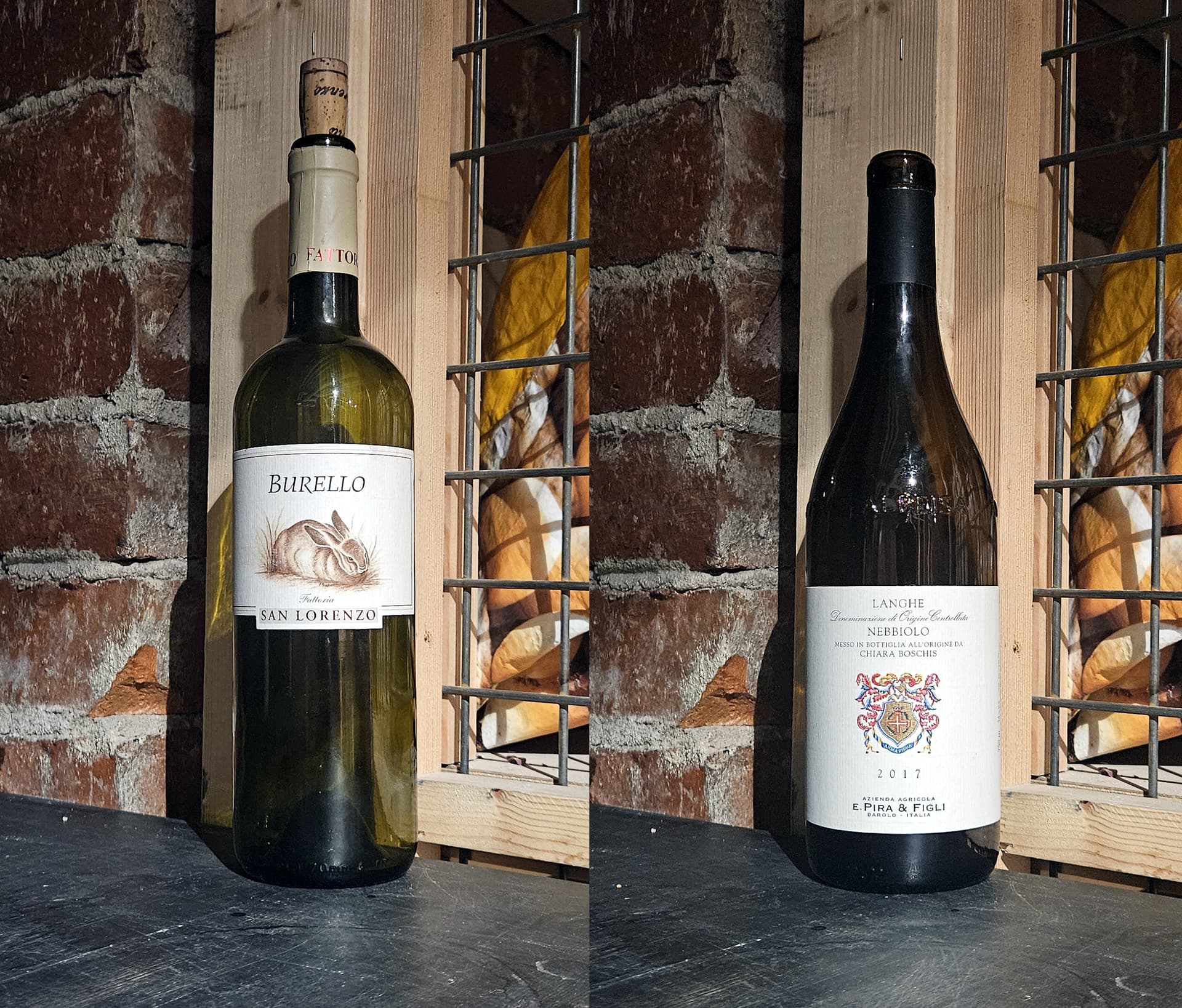
- 2019 Fattoria San Lorenzo Rosso Piceno Vigna Burello - Italy, Marche, Rosso Piceno (22.1.2025)
A blend of biodynamically farmed Montepulciano (60%) and Sangiovese (40%) from the old Burello vineyard. Fermented spontaneously in stainless steel tanks, macerated with the skins for 25 days. Aged in old oak casks (Montepulciano) and stainless steel tanks (Sangiovese) for 24 months. Bottled unfiltered. 14% alcohol.
Quite dense and rather opaque blackish-red color. The nose feels intense, inky and moderately ripe with somewhat sweetly-fruited aromas of wizened black cherries and juicy blackcurrants, some saddle leather, light blueberry jam tones, a little bit of pipe tobacco, a hint of blood pudding, a touch of phenolic spice and a whiff of dark plummy fruit. Lots of things going on here. The wine feels surprisingly dense, chewy and concentrated on the palate with a full body and bold flavors of dark plums and sour cherry bitterness, some blueberry tones, a little bit of ripe blackcurrant, light funky notes of leather and barnyard, a hint of tobacco and a touch of smoky phenolics. The overall feel is surprisingly stern and muscular, thanks to the high acidity and ample, grippy tannins. The finish is ripe yet dry and tannic with a long, intensely-flavored aftertaste of blackcurrants and ripe black cherries, some tobacco, a little bit of tart lingonberry, light bretty notes of leather and barnyardy funk, a hint of crunchy red plum and a touch of sour cherry bitterness.
I was very surprised by this wine: I was expecting it to be a nice yet easy little Montepulciano-driven weekday sipper. Instead it turned out to be a stout, stern and dead-serious effort, punching way above its weight. The elements of Montepulciano and Sangiovese are both there, more or less in equal amounts, but the wine packs quite a bit of what I believe old-vine concentration, as the wine shows so much flavor intensity, vibrancy and sense of structure. I can imagine the wine will continue to evolve and improve for another 5-10 years more, and probably keep for even longer, but this is pretty terrific stuff already now. Ridiculous value at just 15,90€. Very highly recommended.
(93 points) - 2017 E. Pira & Figli (Chiara Boschis) Langhe Nebbiolo - Italy, Piedmont, Langhe, Langhe DOC (22.1.2025)
Made with organically farmed estate fruit. After the fermentation and maceration on the skins, the wine is aged for 12 months in 2nd use French oak barrels. 14% alcohol. Tasted blind.
Deep and moderately translucent cherry-red color with a somewhat evolved dried-blood hue. The nose feels ripe, dark-toned and sweetly-fruited with aromas of dark forest fruits and juicy cherries, some developed meaty tones, a little bit of ferrous blood, light woody notes of savory oak spice, a hint of dark plummy fruit, a touch of licorice and a whiff of wild strawberries. The wine feels somewhat sunny and quite stern on the palate with a medium body and focused flavors of sour cherries and crunchy redcurrants, some tobacco, light sweeter notes of bilberries and other dark berries, a little bit of licorice root, a developed hint of licorice and a touch of earth. The wine comes across as quite firm and muscular with its moderately high acidity and quite ample and assertive tannins. The finish is ripe, somewhat sweetly-fruited and pretty tannic with a long, intense aftertaste of wizened black cherries and ripe figs, some licorice, a little bit of earth, light crunchy redcurrant tones, a hint of sour cherry bitterness and a touch of woody oak spice.
A very stern, serious and sinewy Langhe Nebbiolo that packs more structure and flavor intensity than the average representatives of the genre. The hot and dry vintage shows a little bit through in the quite ripe and somewhat sweetly-fruited - at times even dried-fruited - flavor profile, but the wine still manages to retain good sense of balance and harmony. Pretty terrific stuff for the appellation. The wine will probably age and improve for a handful of years more, but most likely the fruit will start to give in at some point; I suspect the tannins will outlive the fruit if the wine is aged for too long, which is why I recommend drinking the wine sooner than later. Drink now or within the next handful of years.
(91 points)
