About a year ago I threw a tasting titled “Rhône for dummies” for my non-wino friends. Some knew maybe a little bit of wine, others barely drank the stuff, let alone knew anything about it.
My idea was to give a sort of full picture of what the region was all about; the different styles of wines they made there; maybe even how different vintages might affect the wines. All this while at the same time explaining basic things like grape varieties, winemaking choices and regional differences to those who were complete newbies; and having good enough wines to keep also those who knew something about wine entertained.
Long story short: it was a success and everyone seemed to enjoy both the educational aspect of the event, and the wines. Well, maybe mostly the wines. Anyways!
I had only cursory tastes of these wines when I was throwing the tasting, but I also took small sample flasks of the wines, so I could assess them more thoroughly the next day at home. So take this into account: these wines had been open for something like 30 hours before I wrote these notes (but they had only minimal oxygen exposure after the bottles were opened).
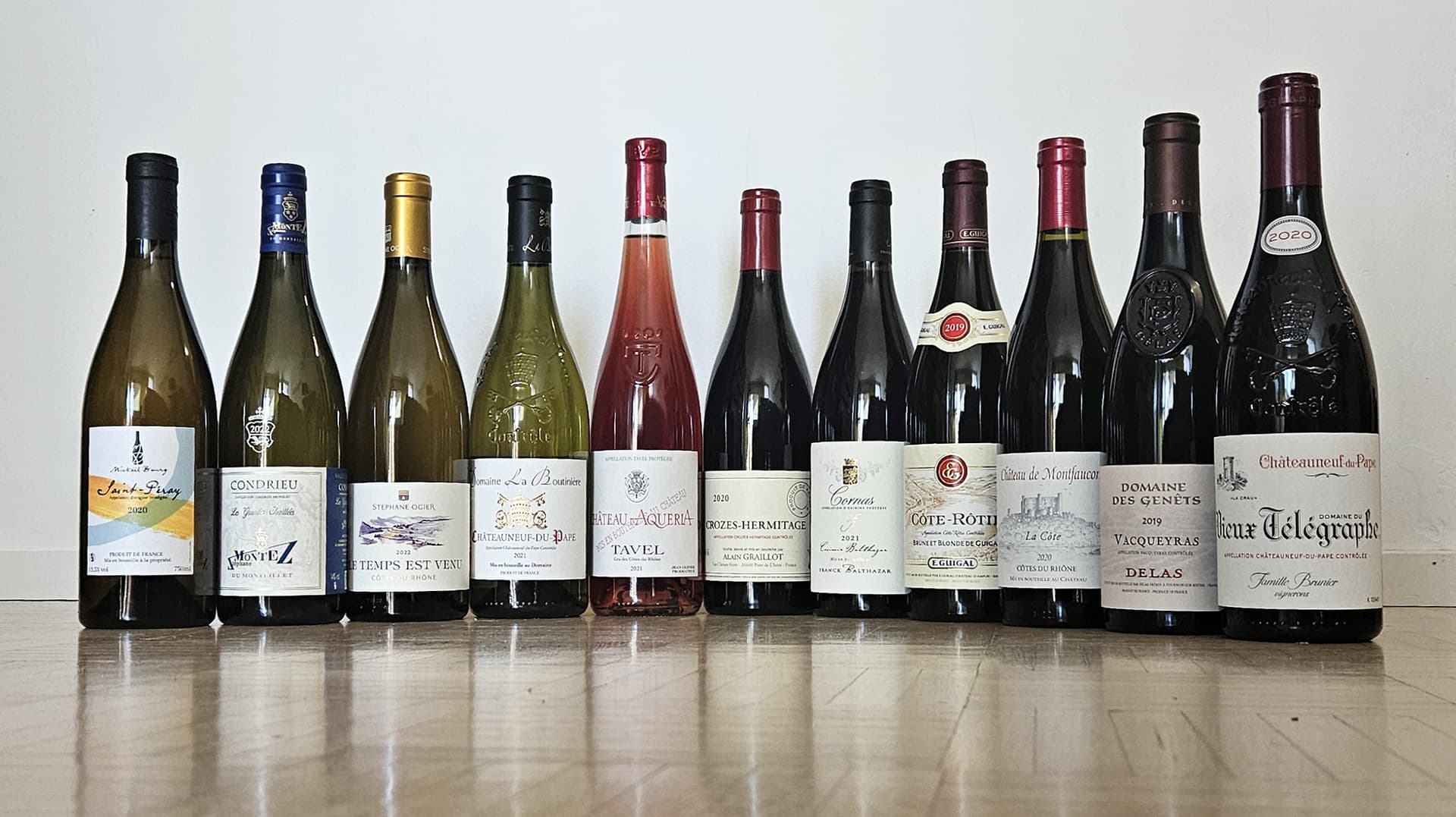
I also bottled another set of sample flasks for @AskoKassinen to taste - here are his observations.
- 2020 Mickaël Bourg St. Péray - France, Rhône, Northern Rhône, St. Péray (7.9.2024)
100% organically farmed Marsanne from a 0,5-hectare plot in St. Péray. Whole bunch pressed. Fermented spontaneously in stainless steel tanks. Aged in old 400-liter demi-muids for 12 months. Bottled with a minimal amount of SO2. 13,5% alcohol.
Pale and slightly hazy straw-yellow color. The nose feels quite open, somewhat savory and subtly wild with aromas of hay and dried aromatic herbs, some ripe Golden Delicious apple, light bretty notes of leathery funk, a little bit of lifted VA and a hint of floral spice. The wine feels dry, slightly oily and subtly funky on the palate with a rather full body and nuanced flavors of floral spice, some mineral notes of wet rocks, a little bit of honeydew melon, light sauvage nuances of leathery funk and volatile lift, a hint of dried herbs and a touch of nutty wood. The moderately high acidity keeps the wine more or less in balance, lending a little bit of structure to the palate. The long finish is pretty firm, a bit funky and slightly warm with a ripe yet not sweet-toned aftertaste of juicy Golden Delicious apple and honeydew melon, some herby spice, light notes of hay, a little bit of stony minerality, spicy and slightly smoky hints of phenolic character and a bretty touch of Band-Aid.
A characterful, balanced and enjoyably funky white, that might not be that much about freshness or precision, but it doesn't matter that much. The overall feel doesn't really scream "Rhône", but I guess it's hard to imagine such a rich, spicy and slightly floral white with quite a bit of body, a somewhat oily texture and not particularly high acidity coming from anywhere else. Not really a wine that would blow your socks off, but there's nothing amiss, either. It's hard to assess if the wine can actually evolve and improve from here, but for immediate enjoyment the wine is perfectly ready. Priced more or less according to its quality at 24,80€.
(90 points) - 2022 Stéphane Montez / Domaine de Monteillet Condrieu Les Grandes Chaillées - France, Rhône, Northern Rhône, Condrieu (7.9.2024)
100% Viognier from parcels in the communes of Chavanay, Saint-Michel-sur-Rhône, Condrieu and Vérin. The destemmed grapes are first macerated with the skins for 9 hours, then fermented in oak barrels. Full MLF. Aged in used barriques (75%) and new demi-muids (25%) for 11 months. 14% alcohol.
Youthful, pale yellow-green color. The nose feels ridiculously heady, open and expressive with potent aromas of ripe apricot, some perfumed floral tones, a little bit of fresh pear, light candied primary notes of fruit jellies, a hint of honeydew melon and a touch of stony minerality. The wine feels very youthful, concentrated and slightly oily on the palate with a full body and intense, dry flavors of fresh apricots and borderline under-ripe pear, some stony mineral notes, light perfumed notes of apple blossom and rosewater, a little bit of exotic spice, a hint of creamy oak and a primary touch of peach candies. The medium-to-moderately high acidity doesn't really lend much sense of freshness or structure to the wine, but it manages to keep the overall feel still balanced and not blowzy. The finish is rich, long and nuanced with an intense, expressive aftertaste of ripe apricot, some almost under-ripe pear notes, a little bit of apple jam, light floral notes of roses and apple blossom, a hint of stony minerality and a touch of white currants.
A very heady, expressive and intensely aromatic Condrieu that has those textbook Viognier aromas - which are just cranked up to 11 here. The potent, lush and very rich aromas fool you to expect that the wine is very ripe, juicy and sweet-toned on the palate as well, but the wine feels surprisingly dry, firm and spicy instead. True to the variety, the acidity isn't particularly high here, contributing to the quite rich, oily texture of the wine. The overall feel is still remarkably balanced and the stays thoroughly enjoyable as long as it stays cool enough - once the wine starts to get too warm, it does get a bit heavy and ponderous. Nevertheless, even if I'm not the biggest fan of Condrieu, I enjoyed this wine quite a bit. Priced according to its quality at 36,17€.
(92 points) - 2022 Stéphane Ogier Côtes du Rhône Le temps est venu Blanc - France, Rhône, Southern Rhône, Côtes du Rhône (7.9.2024)
A blend of Grenache Blanc (30%), Roussanne (30%), Viognier (20%), Marsanne (10%), Bourboulenc (5%) and Clairette (5%). Fermented spontaneously and aged in concrete tanks for 6 months. 13% alcohol.
Pale lemon-yellow color. The nose feels youthful, slightly primary and maybe a bit indistinct with aromas of vague white fruits, some almost unripe pear notes, a little bit of fresh nectarine, light appley tones and a hint of floral aromatics. The wine feels youthful and quite balanced on the palate with a moderately full body and somewhat ripe but also a bit reticent flavors of juicy white peach, some cantaloupe notes, a little bit of under-ripe pear, light sweeter apple jam tones and a hint of leesy creaminess. The medium-to-moderately high acidity lends pretty good sense of balance, although the overall feel is quite broad and waxy, not fresh or precise. The finish is rather long and quite juicy with a rich yet slightly understated aftertaste of white fruits, some stony mineral notes, a little bit of savory spice, light cantaloupe notes and a sweeter hint of juicy red apple.
A decent Southern Rhône white. The wine comes across as balanced, but somehow the overall feel is a bit mild and reticent. A solid choice when you need an enjoyable and affordable everyday wine over something more fancy and interesting. Priced according to its quality at 10,33€.
(88 points) - 2021 Domaine la Boutinière Châteauneuf-du-Pape Blanc - France, Rhône, Southern Rhône, Châteauneuf-du-Pape (7.9.2024)
A blend of Clairette (1/3), Grenache Blanc (1/3) and Roussanne (1/3) from vineyards averaging 50 years in age. Fermented and aged in egg-shaped concrete tanks (80%) and oak barrels (20%) for 6 months. MLF blocked. 13,5% alcohol. Annual production 3000 bottles.
Pale whitish-yellow color. The nose is remarkably reticent - borderline mute - with very vague aromas of sweet white fruits, some waxy richness, light alcohol nuances and a hint of nuttiness. The wine feels similarly understated on the palate, although the fruit intensity feels a bit more intense compared to the nose. The wine is full in body with somewhat restrained flavors of ripe greengage and white peach, some vague nutty tones and a hint of sun-baked earth. The medium acidity feels very modest for such a big, full-bodied wine. The level of alcohol is surprisingly modest for a white Châteauneuf-du-Pape, but due to the understated fruit flavors and aromas, it gets to stay in the spotlight anyway. The finish is juicy, somewhat ripe and a bit warm with a relatively short, dry-ish aftertaste of indistinct white fruits, some mushy pear notes, a little bit of nuttiness, light waxy tones and a paint thinner-like hint of alcohol.
I just don't get white CdPs. In warm vintages they are hot, sweet and flabby. In cooler vintages they are mute, underwhelming and still flabby. There are a few positive exceptions to this rule, but unfortunately this wine isn't among them. Although the wine feels youthful, I really don't see it benefiting much from further aging - it is lacking freshness and sense of balance already now, and I don't see the wine gaining either with additional age. Horrendously overpriced for the quality at 39,91€.
(80 points) - 2021 Château d'Aqueria Tavel - France, Rhône, Southern Rhône, Tavel (7.9.2024)
Typically a blend of Grenache (45%), Clairette (20%), Cinsault (15%), Mourvèdre (8%), Syrah (6%), Bourboulenc (4%) and Picpoul (2%) from parcels up to 70 years old. The grapes are destemmed, then macerated with the skins for 12 to 24 hours. Fermented and aged for 6 months in concrete and stainless steel tanks. 14% alcohol.
Quite deep, luminous and fully translucent strawberry-red color. The nose feels youthful, open and quite punchy with very ripe - borderline overripe - aromas of strawberries and raspberry jam, some spicy tones and a hint of black cherries. The overall impression is quite linear, lacking depth and nuance. The wine feels rich, juicy and quite sweetly-fruited on the palate with a full body and linear flavors of overripe strawberries and raspberry jam, some black cherry tones, a little bit of savory spice and a hint of blackcurrant juice. The medium acidity feels a bit too low to keep such a big and ripe rosé in balance, and the high alcohol lends some obvious warmth to the palate. The finish is very ripe, quite sweet-toned and somewhat warm with a rich, medium-long aftertaste of strawberry jam, some extracted waxy tones, a little bit of raspberry juice concentrate, light spicy nuances and a hint of ripe watermelon.
I kind of expected the wine to be somewhat fresh and balanced as it came from the slightly cooler 2021 vintage, but no - this is just way too ripe and heavy for my preference. The nose and the taste feel just too jammy, clumsy and even a bit unpleasant to me - there is very little sense of balance and no freshness of any kind here. Tavel should be a style of rosé that can not only keep, but actually evolve with age. However, I doubt the wine has benefited much from these couple years of aging and most likely it won't get any better with further aging. Pretty much waste of money at 19,46€.
(78 points) - 2020 Alain Graillot Crozes-Hermitage - France, Rhône, Northern Rhône, Crozes-Hermitage (7.9.2024)
100% organically farmed Syrah. Vinified in whole bunches. Fermented spontaneously and macerated for 15-16 days in concrete tanks. Aged in used oak barrels. Bottled unfined and unfiltered. 13% alcohol.
Youthful, almost fully opaque blackish-red color with a blueish hue. At first the nose feels very closed and understated, but it slowly opens to reveal pretty attractive aromas of ripe dark forest fruits, some peppery tones, a little bit of fresh bilberry, light inky notes, hints of Mediterranean herbs and a touch of earth. No obvious olive tones or pronounced notes of blackberries, though! The wine feels dry, crunchy and pretty acid-driven on the palate with a medium body and bright flavors of tart lingonberries and crunchy cranberries, some brambly blackberry and raspberry tones, a little bit of peppery spice, light stony mineral notes, a hint of sour cherry bitterness and a touch of old leather. The structure relies more on the bright, high acidity than on the quite supple medium tannins that don't pack much grip. The finish is dry, crunchy and gently grippy with a long aftertaste of tart lingonberries and brambly blackberries, some sour cherry bitterness, light gravelly mineral tones, a little bit of peppery spice, a hint of inky character and a touch of phenolic funk.
A very youthful and a bit closed but also quite promising vintage of Graillot's Crozes-Hermitage. If opened now, the wine needs a lot of air: at first it feels very closed and a bit reductive - which seems to be quite typical of Graillot - but with some aeration the wine slowly opens up. This is enjoyably dry, fresh and acid-driven effort for the solar vintage. Although the wine is at the moment a bit closed and backward, I'm pretty sure this will be a very balanced and very classically styled Northern Rhône Syrah in 10 years or so. Great value at 26,87€.
(91 points) - 2021 Franck Balthazar Cornas Cuvée Casimir Balthazar - France, Rhône, Northern Rhône, Cornas (7.9.2024)
The young-vine bottling of Franck Balthazar, the grapes sourced mainly from vines planted in the early 2000's in lieu-dit La Légre (70%) with some old-vine (averaging 50 yo) fruit from Les Mazards (30%). The grapes are vinified in whole clusters, fermented spontaneously in concrete vats, after which the wine is aged for 14-18 months in old 600-liter demi-muids. The wine is bottled unfined, unfiltered and with a tiny addition of sulfites. 13% alcohol.
Subtly translucent, dark cherry-red color with a youthful purplish hue. The nose feels very youthful and wonderfully expressive with characterful and attractive aromas of ripe blackberries and blueberries, some cracked peppercorns, light plummy tones, a little bit of gravelly minerality, fragrant hints of violets and zesty Campari character, a funky touch of phenolic spice and a whiff of VA. The wine feels dry, fresh and quite acid-driven on the palate with a medium body and intense flavors of bilberries and brambly blackberries, some crunchy chokeberry and lingonberry tones, a little bit of stony minerality, light floral nuances of violets, a lifted hint of VA and a touch of Campari. This vintage doesn't seem to be much about ripeness, weight or concentration, but fresh and quite intense fruit flavors and good sense of structure. The overall feel is still pretty tightly-knit, thanks to the high acidity and moderately grippy medium-plus tannins. The finish is long, dry and quite grippy with a crunchy aftertaste of tart lingonberries and brambly blackberries, some chokeberry tones, a little bit of lifted VA, light inky notes, a floral hint of violets and a zesty touch of Campari.
A somewhat wild and natural - yet not particularly funky or natty - Northern Rhône Syrah. Thanks to the cooler vintage, this is a surprisingly light, crunchy and acid-driven effort for a Cornas; not unlike a very serious Crozes-Hermitage or a lighter-end Saint-Joseph. Despite its somewhat tightly-knit overall feel, the wine still feels more like it will show its best in its youth - I can imagine the wine will get better over the next few years as the structure slowly resolves, but even then this doesn't feel as stern and ageworthy as Balthazar's Chaillot cuvées normally do. Perfectly enjoyable already now, as long as you pair the wine with something hearty enough to tame those tannins. A fine and thoroughly enjoyable Cornas from the lighter end of the spectrum. Priced according to its quality at 50,63€.
(92 points) - 2019 E. Guigal Côte-Rôtie Brune et Blonde - France, Rhône, Northern Rhône, Côte-Rôtie (7.9.2024)
A blend of Syrah (96%) and Viognier (4%). Fermented and macerated in stainless steel tanks for approximately three weeks. Aged in oak barrels (50% new, 50% used) for 3 years. 14% alcohol.
Luminous, very deep and slightly translucent dark ruby color. The nose feels noticeably ripe and sunny yet also somewhat brooding and not that obviously Syrah - more like a generic Big Red with aromas of juicy dark fruits, some sweet oak spice, a little bit of dried dark plummy fruit, light chocolatey and caramelly notes of toasted oak, a hint of blackberry juice, a touch of smoke and a whiff of vanilla. Lots of everything, but the overall feel is very glossy and polished, without any of the roughness one might expect from a Northern Rhône Syrah. The wine feels sunny, rather oaky and somewhat sweet-toned on the palate with a full body and quite lush flavors of ripe blackberries and juicy cherries, some vanilla and chocolatey mocha oak notes, a little bit of peppery spice, light smoky notes of charred bacon, a hint of extracted woody bitterness and a touch of wizened dark fruits. The overall feel is quite firm and muscular with the rather high acidity and moderately grippy medium-plus tannins. The finish is big, long and quite concentrated with a rather dry aftertaste of blackberries and juicy cherries, some chocolatey mocha oak tones, a little bit of extracted woody bitterness, light toasty notes of vanilla and caramel oak, a sweeter hint of wizened dark berries and a touch of smoke.
I have to admit that this is a rather big and impressive wine in its own right. However, the combination of elevated ripeness and rather pronounced new oak make the overall feel quite glossy and anonymous. There's nothing that would guide me in the direction of Côte-Rôtie - if someone would tell me this is a California Syrah, I wouldn't doubt them for a second. Sure, this is less heavy and more balanced than your textbook Barossa Shiraz, but not much - I'd say this wine is stylistically closer to an Australian Shiraz than a classically styled Côte-Rôtie. Fortunately the wine seems to be built for the long haul, so maybe after another 15-20 years the wine has evolved into something less generic, not as overtly oaky and more sophisticated? I sure hope so. At 82€ the wine feels way overpriced for the quality.
(87 points) - 2020 Château de Montfaucon Côtes du Rhône La Côte - France, Rhône, Southern Rhône, Côtes du Rhône (7.9.2024)
A blend of organically farmed Grenache (50%), Syrah (20%), Carignan (15%), Cinsault (10%) and Counoise (5%). Fermented spontaneously. Aged in concrete tanks for approximately 30 months. 14,5% alcohol.
Deep and somewhat translucent dark cherry color. The nose feels dark-toned and a bit restrained with brooding aromas of ripe dark plums and strawberries, some blackberry tones, a little bit of savory spice, light licorice notes, a hint of alcohol, a touch of funky character and a fruity touch of fresh bilberries. The wine feels quite ripe but also surprisingly intense on the palate with a rather full body and juicy flavors of sweet blackberries and dark plummy fruit, some wild strawberries, a little bit of stony minerality, light licorice root notes, a hint of earthy garrigue and a touch of fresh bilberry. The high alcohol lends some warmth to the palate and the combination of the moderately high acidity and balanced medium tannins make the wine feel structurally enjoyably firm. The finish is long, somewhat grippy and a bit warm with a dry-ish aftertaste of juicy dark berries and dark plummy fruit, some stony mineral notes, a little bit of licorice root, light blueberry tones, a hint of earthy garrigue and a touch of phenolic funk.
A surprisingly firm, balanced and sophisticated Côtes-du-Rhône that combines balanced structure and good fruit intensity in a way that the wine doesn't come across as sweet and soft as so many Côtes-du-Rhône reds do. The overall feel is clean yet not polished. This is not a grand vin in any way, but much better than most red CdR reds. Youthful, but very enjoyable now; however, I can imagine the wine could benefit from a few additional years of aging. Priced somewhat according to its quality at 21,90€.
(90 points) - 2019 Delas Frères Vacqueyras Domaine des Genêts - France, Rhône, Southern Rhône, Vacqueyras (7.9.2024)
A blend of Syrah, Grenache and Mourvèdre from Domaine des Genêts, located in Vacqueyras. The grapes are fully destemmed, then fermented and macerated with the skins in tanks over 15 days. Aged in tanks. 13,5% alcohol and 5,1 g/l acidity. Average annual production 30,000 bottles.
Almost fully opaque blackish-red color. The nose feels open, moderately ripe and pretty attractive with intense, nuanced aromas of black cherries, blackberries and wild strawberries, some licorice root, light floral notes of violets and elderflowers, a little bit of fresh plummy fruit, a hint of peppery spice, a touch of sun-baked earth and a whiff of sweet incense smoke. The wine feels clean, intensely flavored and surprisingly juicy on the palate with a full body and succulent flavors of fresh blackberries and blueberries, some dark plummy fruit, light boysenberry tones, a little bit of stony minerality, a hint of licorice root and a savory touch of meaty umami. The overall feel is pretty firm and muscular, thanks to the surprisingly high acidity and assertive, grippy tannins. The finish is long, juicy and tannic with a dry, intensely-flavored aftertaste of ripe blackberries and fresh blueberries, some boysenberry tones, a little bit of dark plummy fruit, light licorice tones, hints of blackcurrant juice and elderberry juice and a floral touch of violets.
A surprisingly firm, juicy and intensely-flavored Southern Rhône that drinks more like how great Châteauneuf-du-Papes drank 15 years ago! The wine shows classic Southern Rhône GSM fruit profile, but without the excessive alcohol, sweet and jammy fruit or low acidity! Furthermore, thanks to the wine not seeing any oak at all, the flavor profile is wonderfully clean, well-delineated and so vibrant. I'm certain the wine will continue to age, evolve and improve over the years, but this is pretty superb already now. Terrific stuff with lots of upside. Good value at 32,96€.
(93 points) - 2020 Domaine du Vieux Télégraphe Châteauneuf-du-Pape La Crau - France, Rhône, Southern Rhône, Châteauneuf-du-Pape (7.9.2024)
A blend of Grenache (65%), Mourvèdre (15%), Syrah (15%) and other permitted varieties (5%; mainly Cinsaut and Clairette), sourced from vineyards in Plateau de la Crau, where the average vine age is 70 years, ranging from 35 yo to centenarian vines. Fermented and macerated with the skins for 30-40 days in stainless steel tanks and oak vats. Aged in old 6000-liter oak foudres for 22 months. Bottled unfined and unfiltered. 15% alcohol and 5,4 g/l acidity. Annual production up to 200,000 bottles.
Beautiful, luminous and moderately translucent ruby-red color with a lighter pomegranate rim. The nose feels ripe, fruit-forward and youthful - but not primary - with rich aromas of strawberries and raspberry juice, some spirituous notes of alcohol, a little bit of earth, light sunny notes of sweet plummy fruit, a hint of earthy garrigue, a touch of savory spices and a whiff of kirsch. The wine feels big, rich and sweetly-fruited on the palate with a very full body and juicy flavors of strawberries and soft red plums, some raspberry jam, light warm and spirituous notes of alcohol, a little bit of garrigue, a hint of cherry marmalade and a touch of sun-baked earth. The combination of medium-to-moderately high acidity and soft, ripe tannins feels a bit too modest for such a big and ripe wine, making the overall feel pretty soft and fat. The finish is juicy, somewhat grippy and a bit hot with a rich, round and sweetly-fruited aftertaste of ripe strawberries and soft red plums, some black raspberry tones, a little bit of cherry marmalade, light notes of garrigue, a hint of black cherry marmalade and a touch of savory spices.
This was a rather typical of contemporary Châteauneuf-du-Pape: not a particularly bad wine per se, but way too much alcohol and all too little acidity for my preference. The fruit profile comes across as too sweet and sunny for my taste and the tannic structure feels too soft and gentle, making the lack in firmness and sense of structure. I feel the wine is only going to get softer and sweeter as it ages and resolves, so most likely it is pretty much as balanced as it is going to get - I doubt no amount of tertiary complexity is going to make the wine feel any better, even if the flavor profile might get more interesting. I just prefer wines with more freshness and better sense of balance and harmony; while a decent effort in its own right, it just doesn't make the cut. It feels pretty ridiculous that a bottle of this costs 90€, since I really can't see a difference between this wine and a CdP you could buy at just one third of the price.
(89 points)
Posted from CellarTracker