A few pals of mine realized that they had a decent bunch of Bordeaux reds from the 1994 and 1996 vintages laying in their cellars, so they decided to do what every sane Bordeaux drinker would do: pool them into a big vintage battle tasting lineup and invite people to witness. I was happy to oblige.
As 1996 was one of the best (Left Bank) vintages of the 1990’s, whereas 1994 was a lesser, leaner and more tannic vintage, everybody expected the 1996’s to perform much better than the 1994’s - and in this sense the prediction did not disappoint; the winner was a 1996. As a whole, the 1996’s were truly great wines - but admittedly 1994 put up a good fight - most of the crowd favorites were actually from 1994 - and I thought some heavy hitters from the 1994 vintage, like Haut-Brion and Latour, did perform extremely well.
The biggest surprise was 1996 Cos d’Estournel. I’ve had that vintage bunch of times, and it has been consistently one of the greatest vintages of Cos I’ve tasted. However, in this tasting this vintage seemed a bit lackluster, not showing the exuberance and intensity it has normally shown. It was still an outstanding wine - basically I was disappointed only because I knew from a sound bottle the wine could’ve been a lot better.
However, I’m very partial to these more classically-styled wines from before the millennium, and it shows in my scores. It was very hard to really rate the wines at times; they were quite distinctive from each other, but the overall level of quality of the wines was remarkably even, resulting in a slew of 93 and 94 scores.
Finally, the attendees had 5 points they could dish out any way they wanted. Quite unsurprisingly, most of the points went to the 1996 Latour - and quite deservedly, if I may add. Anyways, here is the final scoreboard (my points in parentheses).
1. 1996 Château Latour, 26 pts. (97)
2. 1994 Château Haut-Brion, 7 pts. (94)
3. 1994 Château Margaux, 5 pts. (84)
4. 1994 Château Latour, 4 pts. (95)
4. 1994 Château Léoville Las Cases, 4 pts. (93)
5. 1996 Château La Lagune, 2 pts. (93)
5. 1996 Château Pape Clément, 2 pts. (94)
6. 1996 Château Calon-Ségur, 0 pts. (93)
6. 1996 Château Clerc Milon, 0 pts. (89)
6. 1996 Château Cos d'Estournel, 0 pts. (94)
6. 1996 Château Grand Mayne, 0 pts. (-)
6. 1996 Château Lagrange, 0 pts. (-)
We naturally had a bunch of blind wines as well. The first wine of the night, 2009 St. Töppö, commissioned by our fellow forumite @AskoKassinen, performed remarkably well - I thought that apart from its younger age, it could arguably match up with these more venerable names we had in this tasting!
That Babica Stafileo came from my cellar, so naturally I did not taste it blind - the other attendees did, though.
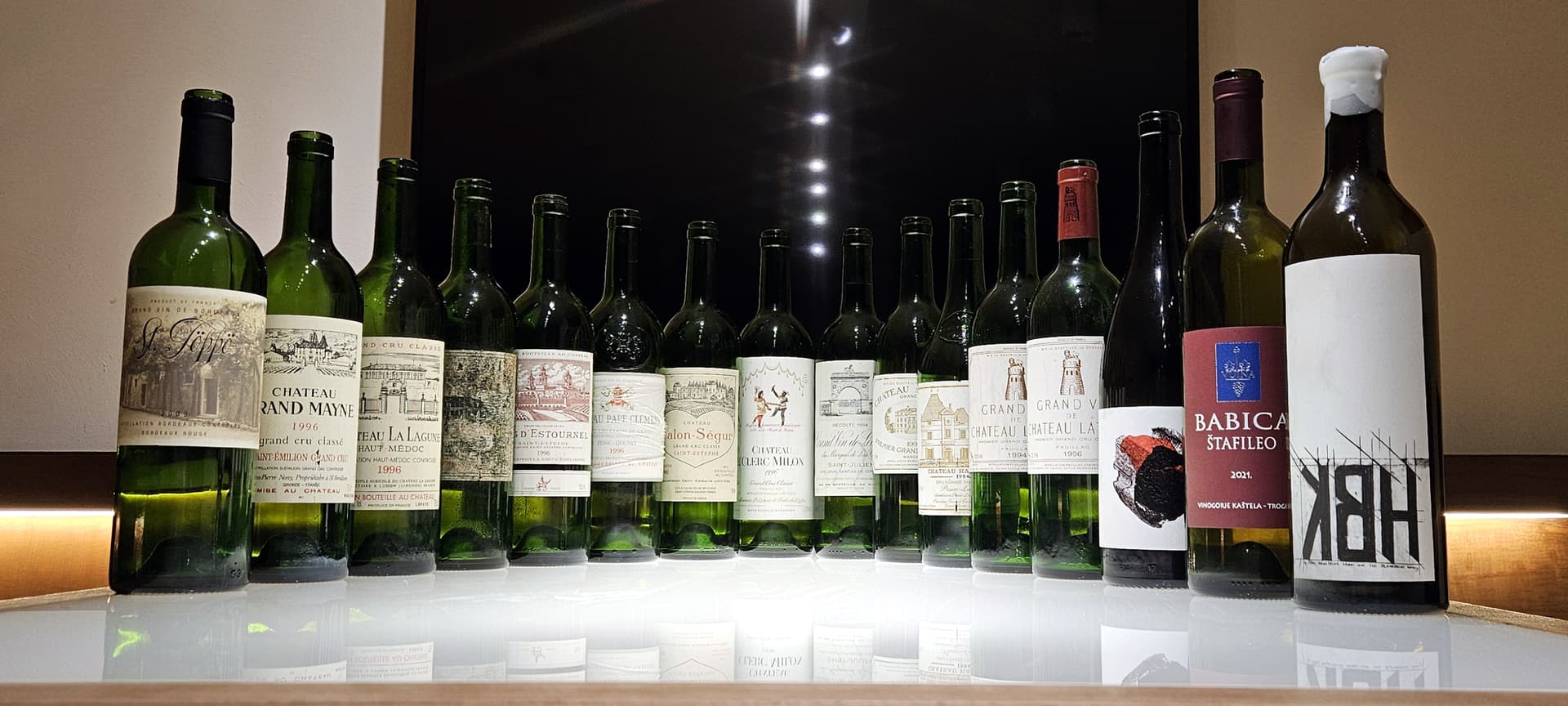
- 2009 Crushpad St Töppö Quarante-Deux - France, Bordeaux (8.2.2025)
A "right bank" blend of Merlot from lieux-dits Pey-Labrie in Canon-Fronsac (50%) and Le Ruisseau in Côtes-de-Castillon (20%) along with Cabernet Franc (30%) from lieu-dit Côte Sud in St. Émilion. Aged in a used barrique for 18 months. 14% alcohol. Tasted blind.
Medium-deep blackish-red color that permits some light through. The nose feels rich and quite expressive with somewhat sweet-toned aromas of ripe black cherries, some woody notes of pencil shavings, a little bit of dark plummy fruit, light toasty oak nuances, a hint of exotic spices, a touch of wizened red fruits and a whiff of old leather. The wine feels ripe, silky and a bit chewy on the palate with a quite full body and rather intense flavors of juicy blackcurrants and sour cherries, some toasty oak spice, a little bit of crunchy cranberry, light savory notes of meaty umami, a hint of exotic spices and a woody touch of pencil shavings. The high acidity and ample, fine-grained yet still moderately grippy medium-plus tannins make the overall feel enjoyably firm and balanced. The finish is long, dark-toned and quite grippy with a vibrant aftertaste of ripe blackcurrants, some juicy black cherries, a little bit of fresh bilberry, light notes of toasty mocha oak, a hint of leafy forest floor and a faint touch of gravelly minerality.
A very balanced, harmonious and enjoyably intensely-flavored Bordeaux that comes across as quite structure-driven and surprisingly Left-Bank-esque for a Merlot-driven Right-Banker. Although the wine is starting to show subtle signs of age, the overall feel is still very youthful and I expect the wine to evolve and improve for a good number of years more. This was more or less as good as the bottle I had about a year earlier and this continues to be probably the best St Töppö red I've tasted. Good stuff and a great example how Merlot can make pretty serious stuff in correct hands. Highly recommended.
(93 points) - 1996 Château Grand Mayne - France, Bordeaux, Libournais, Saint-Émilion Grand Cru (8.2.2025)
Typically a blend of Merlot (4/5), Cabernet Franc (1/5) and occasionally a little bit of Cabernet Sauvignon. Vinified in oak vats, aged for 18 months in predominantly new oak barriques. 13% alcohol.
Somewhat evolved maroon color with a subtly syrupy brown hue. The nose feels quite dull and earthy at first, not showing much if any fruit, only autumnal leaves and sour-bois, some pipe tobacco and a little bit of bell pepper. However, with some air, the wine starts to show subtle nuances of wizened dark berries. The wine feels dry, lean and a bit hollow on the palate with a medium body and quite cold flavors of licorice root and leafy forest floor, some crunchy notes of blackcurrants and crowberries, a little bit of tobacco, light sanguine notes of iron and a hint of gravelly minerality. The overall feel is a bit thin, but the high acidity lends at least some sense of intensity to the flavors. The medium tannins are starting to get quite resolved by now. The finish is dry, long and gently grippy with an acid-driven aftertaste of crunchy crowberries, some forest floor, a little bit of iron, light bitter notes of sour cherries, a hint of licorice root and a touch of gravelly minerality.
A surprisingly lean and hollow St. Émilion. I wonder if the wine was so subtly corked that it didn't exhibit any musty TCA notes, only conspicuous lack of fruit, or if the wine was just getting too old and the fruit department was fading away, leaving behind only earthy tertiary notes? There weren't any obvious oxidative qualities, so judging by that, the wine didn't seem like it would be falling apart anytime soon. It was very hard to say whether the wine was just disappointing or defective, but as I can't be sure, I'm leaving the wine unrated. Unsurprisingly, the wine received 0 points from the 10 participants, making it finish on shared last place in our tasting of twelve '94 and '96 clarets. At least this bottle wasn't worth the 50€. - 1996 Château La Lagune - France, Bordeaux, Médoc, Haut-Médoc (8.2.2025)
The indicative blend if Cabernet Sauvignon (60%), Merlot (30%) and Petit Verdot (10%), but the proportions can vary depending on the vintage. 13% alcohol.
Slightly translucent, somewhat maroon-hued black cherry color with a deep brick-red rim. The nose feels pretty savory and quite classically styled with proper claret aromas of ripe blackcurrants, some leafy tones, a little bit of leathery funk, light sweeter notes of wizened dark berries, a hint of roasted bell pepper and a woody touch of pencil shavings. The wine feels dry, quite lean and surprisingly tough on the palate with a medium body and savory flavors of crunchy redcurrants and blackcurrants, some herbaceous notes of chopped chilies and roasted bell pepper, a little bit iron and blood, light autumnal notes of leafy forest floor, a subtly bretty hint of leathery funk and a woody touch of savory oak spice. The wine is high in acidity with ample, assertive and grippy tannins. The finish is dry, grippy and quite classically styled with a long aftertaste of sour cherry bitterness and ferrous blood, some herbaceous notes of bell pepper, light sweeter nuances of wizened blackcurrants, a little bit of woody oak, bretty hints of leather and barnyard and a touch of leafy greenness.
A very nice, lean and thoroughly old-school Left-Bank Bordeaux. I guess the wine might have been oakier and more polished in its youth, but age has done its thing and now there are no obvious oaky notes left, apart from some woody undertones. The fruit profile is dry and crunchy, the structure is still remarkably firm and unresolved and there are even some herbaceous notes and subtly bretty funky tones that add nice sense of savory complexity and rustic charm. From the fruit perspective, the wine doesn't call for any additional aging, but I guess the tannins could easily handle another decade or two before they start to get resolved. Good stuff that is more or less on its plateau of maturity now. The wine received 2 points from the 10 participants, making it finish on shared fifth place in our tasting of twelve '94 and '96 clarets. Priced according to its quality at 70€.
(93 points) - 1996 Château Lagrange (St. Julien) - France, Bordeaux, Médoc, Saint-Julien (8.2.2025)
A blend of Cabernet Sauvignon (57%), Merlot (36%) Petit Verdot (7%). Aged for approximately 20 months in oak barriques (approx. 50% new). 13% alcohol.
Quite deep and moderately opaque blackish-red color with a slightly evolved brick-red hue. The nose feels massively corked with a huge, revolting smack of damp, mildewy cellar and dusty attic notes with a faint hint of moldy green apple.
Can't remember when I smelled a wine as horribly corked. This smelled more like TCA concentrate than wine. Ugh. The wine naturally received 0 points from the 10 participants, making it finish on shared last place in our tasting of twelve '94 and '96 clarets. 75€ down the drain.
(NR/flawed) - 1996 Château Cos d'Estournel - France, Bordeaux, Médoc, Saint-Estèphe (8.2.2025)
A blend of Cabernet Sauvignon (65%) and Merlot (35%). 13% alcohol.
Very deep, slightly translucent and still surprisingly youthful black cherry color with a subtly evolved dried-blood hue. The nose feels somewhat sweet-toned but also surprisingly closed and understated with subtle yet attractive aromas of pipe tobacco, some wizened blackcurrants, light bretty barnyard notes, a little bit of juicy dark plum, herbaceous hints of roasted bell pepper and currant leaves and a touch of cedary oak. The wine feels quite ripe, juicy and silky-textured on the palate with a moderately full body and layered flavors of juicy blackcurrants, some pipe tobacco, light evolved notes of ripe figs and wizened dark berries, a little bit of exotic spices, a woody hint of cedary oak and a faint bretty touch of leathery funk. The wine is high in acidity with quite assertive and rather grippy tannins that make the overall feel pretty firm and muscular. The finish is long, rich and quite grippy with a complex and rather intense aftertaste of ripe blackcurrants and wizened dark plums, some pipe tobacco, light woody notes of savory oak, a little bit of exotic spices, herbaceous hints of bell pepper and smoky chipotle and a touch of earthy sous-bois.
This continues to be a superb vintage of Cos d'Estournel, but normally this vintage of this wine has been a stupendous wine that is easily among the best wines of the evening, if not WotN. However, I - and several others - wondered how this bottle seemed a bit restrained and understated compared to our previous experiences. You could taste that the wine was definitely '96 aromatically - only a somewhat less expressive, more restrained expression of the wine. Normally this has been a very bold and expressive wine, but this time the overall feel didn't manage to wow me as much as before. However, even then, this was a very impressive wine and among some of the better wines of the evening - the only disappointing thing here was that many people knew this could've been even better! I guess for this reason the wine received 0 points from the 10 participants, making it finish on shared last place in our tasting of twelve '94 and '96 clarets.
(94 points) - 1996 Château Pape Clément - France, Bordeaux, Graves, Pessac-Léognan (8.2.2025)
A blend of Cabernet Sauvignon (60%) and Merlot (40%). Aged for approximately 18 months in oak barriques, of which a large proportion was new. 13% alcohol.
Dark, slightly translucent and somewhat evolved maroon color with a pale brick-orange rim. The nose feels fragrant and even quite heady with rather intense aromas of exotic spices and juicy red plums, some green notes of Sichuan pepper and tea tree, light crunchy blackcurrant tones, a little bit of tar, woody hints of pencil shavings and cigar box, a touch of dried flowers and a whiff of black cherry. The wine feels ripe, juicy and even a bit brash on the palate with a rather full body and quite concentrated flavors of juicy blackcurrants and blueberries, some extracted sour cherry bitterness, light notes of tobacco, a little bit of cigar box and exotic spices, subtly bretty hints of smoky phenolics and leathery funk and a touch of ripe plummy fruit. The overall feel quite firmly-structured, thanks to the quite high acidity and still rather grippy and relatively unresolved tannins. The finish is long, robust and quite tannic with an intense and somewhat extracted aftertaste of blackcurrants and red plummy fruit, some blueberry tones, a little bit of sweet toasty oak and exotic spices, light green-toned nuances of mint and tea tree, a hint of sour cherry bitterness and a touch of wood tar.
A surprisingly powerful and extracted - almost overdone - Pessac-Léognan that shows tons of everything, yet manages to pull everything off remarkably well. You can taste that the wine must've been quite extracted and rather oaky upon release, because ghosts of those characteristics still linger on here. However, the wine has picked up tons of finesse and sense of balance over the years, so it doesn't come across as too heavy or over-extracted, but instead surprisingly harmonious, letting the structure even take the lead at times. Even the oaky tones stay nicely in check and the emphasis is on the still surprisingly youthful and vibrant fruit department. Add in a tiny bit of those classic herbaceous Cabernet nuances and voilà! This is a good example that even powerful, extracted and oaky blockbusters can evolve into very delightful, classically styled wines - at least those well-made ones that can actually age. Although this wine was among my favorites, other attendees didn't appreciate it as much; it received 2 points from the 10 participants (one from me), making it finish on shared fifth place in our tasting of twelve '94 and '96 clarets. Priced more or less according to its quality at 85€.
(94 points) - 1996 Château Calon-Ségur - France, Bordeaux, Médoc, Saint-Estèphe (8.2.2025)
A blend of Cabernet Sauvignon (65%), Merlot (25%), Cabernet Franc (7%) and Petit Verdot (3%). Aged in French oak barriques (30-50% new) for 18 months. 12,5% alcohol.
Luminous, somewhat translucent black cherry color with a slightly evolved maroon hue. The nose feels quite fragrant with aromas of blackcurrants and bilberries, some licorice tones, a little bit of rolling tobacco, light woody notes of pencil shavings, sweet hints of dark plummy fruit and crème de cassis, a touch of toasty oak spice and a herbal whiff of minty greenness. The wine feels silky, airy and quite open-knit on the palate with a moderately full body and dry flavors of ripe redcurrants, some loose tobacco, a little bit of toasty oak spice, light crunchy notes of blackcurrants and bilberries, a woody hint of pencil shavings and a herbaceous touch of leafy greenness. The structure relies mostly on the high acidity and the fine-grained tannins are getting quite resolved and pretty mellow. The finish is long, harmonious and gently grippy with a dry aftertaste of ripe redcurrants, some fresh blackcurrants, light savory notes of tobacco and old leather, a little bit of savory wood spice, a hint of minty greenness and a touch of toasty oak spice.
A tasty, classically styled and harmonious Saint-Estèphe that is showing surprisingly little age considering it is approaching its 30th birthday. The overall feel is quite airy and sophisticated for a 1996 Bordeaux, coming across as a bit less punchy and muscular as the 1996 Left-Banks usually do. Maybe not that impactful as some of its peers, this is nevertheless a lovely example of '96 Bordeaux from the more elegant end of the spectrum that is slowly inching up towards its peak. Definitely no hurries with this one - although the wine is drinking really well right now and doesn't call for any additional aging. Recommended (even if the wine didn't receive any points from the 10 participants, making it finish on shared last place in our tasting of twelve '94 and '96 clarets). Priced somewhat according to its quality at 75€.
(93 points) - 1996 Château Clerc Milon - France, Bordeaux, Médoc, Pauillac (8.2.2025)
A blend of Cabernet Sauvignon (51%), Merlot (37%) and Cabernet Franc (12%) harvested between 30th of September and 9th of October. 12,5% alcohol.
Deep, somewhat translucent and moderately dark plummy color with a faint evolved maroon hue. The nose feels dry, somewhat evolved and a bit underwhelming with slightly reticent aromas of ripe blackcurrants, some ferrous notes of blood, a little bit of soot, light leafy herbaceous notes, a hint of farmhouse funk and a touch of inky character. The wine feels dry, airy and a bit restrained on the palate with a medium body and slightly understated flavors of wizened blackcurrants, some old saddle leather, a little bit of loose tobacco, light inky tones, spicy hints of savory wood and smoky phenolics and a touch of leafy greenness. The wine feels quite supple and gentle at first, but slowly the rather resolved tannins pile up on the gums, making the wine ultimately feel quite grippy. Balanced high acidity. The finish is dry, savory and moderately grippy with a rather light aftertaste of blackcurrants and leafy herbaceous notes, some fresh blueberry tones, a little bit of wizened red plum, light woody notes of pencil shavings, a ferrous hint of blood and a touch of phenolic spice.
A balanced and pleasant but also rather restrained and understated vintage of Clerc Milon that offers relatively little at the moment. People were wondering whether the wine was in a slump, somewhat off, or just fading away with age. Although showing some aged qualities, the overall feel wasn't particularly tertiary nor oxidative in any way, so at least to me, the wine didn't feel like it was going to fall apart anytime soon - but that doesn't mean that it fruit flavors couldn't fade away while letting the other notes stay behind. While an enjoyable wine, this didn't really manage to leave a memorable impression among so many impressive old clarets, and it didn't feel like it was worth the price at 85€. The wine didn't receive any points from the 10 participants, making it finish on shared last place in our tasting of twelve '94 and '96 clarets
(89 points) - 1994 Château Léoville Las Cases - France, Bordeaux, Médoc, Saint-Julien (8.2.2025)
A blend of Cabernet Sauvignon (60%), Merlot (24%), Cabernet Franc (12%) and Petit Verdot (4%) harvested between September 15th and 27th. Aged in oak barriques for 18-20 months. 12,7% alcohol and 5,25 g/l acidity.
Deep yet somewhat translucent color with a dried-blood maroon hue. The savory nose feels harmonious, attractive and classically styled with aromas of ripe blackcurrants and leafy herbaceous notes, some inky tones, a little bit of cigar wrapper, light minty green nuances, a hint of elderberry juice and a touch of fresh blueberry. The wine feels savory, moderately evolved and quite classically styled with a medium body and quite intense flavors of ripe blackcurrants and fresh redcurrants, some sour cherries, light herbaceous leafy notes, a little bit of moist pipe tobacco, a woody hint of savory oak spice and a touch of elderberry juice. The overall feel is still very firm and quite tightly-knit, thanks to the high acidity and comparatively unresolved tannins that grip quite tightly. The finish is long, dry and pretty tannic with a savory aftertaste of tobacco and ripe blackcurrants, some crunchy redcurrant tones, a little bit of fresh bilberry, light leafy green tones, a hint of old leather and a woody touch of pencil shavings.
An attractive, tasty and very classically styled old claret. Fruit-wise the wine doesn't really call for any additional aging, but from the structure perspective, it is quite obvious that this wine is going to keep just fine for many more years - perhaps even decades. Although at times the wine felt a bit less expressive than some of the more impressive '96 wines we had in the tasting, this was still a great, proper old claret in its own right. The wine received 4 points from the 10 participants, making it finish on shared fourth place in our tasting of twelve '94 and '96 clarets.
(93 points) - 1994 Château Margaux - France, Bordeaux, Médoc, Margaux (8.2.2025)
1994 Margaux was one of the last wines to be bottled, as the château aged the wine for almost two years in order two soften down its tough tannins. Bottled in September 1996. 12,5% alcohol.
Dark, slightly translucent maroon color. The nose feels restrained, quite tertiary and slightly dull with autumnal aromas of damp leaves, some forest floor, a little bit of ripe dark berries, light notes of pipe tobacco and old leather, a sweeter hint of wizened dark fruits and a fragrant touch of wilted flowers. The wine feels dry, restrained and quite tough on the palate with a medium body and slightly dull flavors of crunchy blackcurrants, some loose tobacco, a little bit of damp wood, light sweeter notes of wizened redcurrants and dried damsons, a hint of earthy spice and an autumnal touch of leafy forest floor. The combination of high acidity and ample, assertive and quite tough tannins make the wine feel rather aloof and tightly-knit. The finish is somewhat restrained, a bit dull and considerably tannic with a long aftertaste of tobacco, some leafy forest floor, a little bit of wizened dark fruit, light woody notes of pencil shavings and old dusty oak, a hint of dried blackcurrant and a touch of damp earth.
I usually love old, mature Bordeaux exhibiting those layered, autumnal nuances. However, while coming across as moderately tertiary and autumnal, I wasn't particularly wowed by this wine; it felt somewhat restrained and dull in its expression. Add in those tough, unyielding 1994 tannins, and the combination definitely isn't a winning one. There was some discussion if the wine was corked, but several people actually liked the wine and thought it was in fine condition, so I guess the ultimate verdict was that the wine was sound. I just don't know if the wine was representative, or if this is just the style of '94 - normally I would leave a wine like this unrated, but since several attendees considered the wine to be among the best wines of the evening, I'm going to treat the wine accordingly and score it. Whatever the case, this wasn't for me - and at 375€, this was complete waste of money. However, the wine received 5 points from the 10 participants, making it finish on third place in our tasting of twelve '94 and '96 clarets.
(84 points) - 1994 Château Haut-Brion - France, Bordeaux, Graves, Pessac-Léognan (8.2.2025)
A blend of Merlot (52%), Cabernet Sauvignon (44%) and Cabernet Franc (4%) harvested between 12th and 24th of September. Bottled in the summer of 1996. 12,5% alcohol.
Somewhat translucent, medium-deep brick-red color with a somewhat evolved maroon hue. The nose feels savory, complex and enormously attractive with layered aromas of ripe dark fruits and licorice root, some sweet pipe tobacco, a little bit of leathery funk and spicy phenolics, light ripe raspberry tones, a rustic hint of horse stables, a touch of pine tar and a whiff of coffee. The wine feels juicy, savory and complex on the palate with a medium-to-moderately full body and intense flavors of juicy blackcurrants, some funky notes of saddle leather and stable floor, a little bit of tobacco, light smoky notes of wood tar, a hint of crunchy redcurrant and a sweeter touch of dried cranberries. The overall feel is firm and impressively structured yet not tough with the high acidity and ample, rather grippy tannins. The finish is long, dry and grippy with an intense aftertaste of crunchy redcurrants and sour cherry bitterness, some sweeter notes of wizened blackcurrants, a little bit of tobacco, light floral nuances of dried flowers, funky hints of leather and barnyard and a touch of pine tar.
A beautiful, complex and harmonious vintage of Haut-Brion that is starting to show some age, yet still feels like a wine on an incline. There is undeniably a bretty undertone here that adds a lovely counterpoint of rustic complexity to the remarkably intensely-flavored and vibrant fruit notes and savory, at times even smoky overtones. A very impressive claret now, but I feel there is still enough room for further improvement - I wouldn't be surprised if this wine continued to evolve and improve even further for another few decades. This would've been easily my WotN, hadn't there been couple of vintages of Latour - but even then I think this wine was way too expensive at 350€.. The wine received 7 points from the 10 participants - including 1 from me - making it finish on second place in our tasting of twelve '94 and '96 clarets.
(94 points) - 1994 Château Latour Grand Vin - France, Bordeaux, Médoc, Pauillac (8.2.2025)
A blend of Cabernet Sauvignon (68%), Merlot (27%), Cabernet Franc (4%) and Petit Verdot (1%) harvested between 19th and 29th of September. Aged in oak barriques for 18 months. 12,5% alcohol.
Very deep, almost fully opaque black cherry color with a subtly evolved maroon hue. The wine has a quite dark-toned yet very classic claret bouquet of ripe blackcurrants, some herbaceous notes of blackcurrant leaves and autumnal nuances of leafy forest floor, a little bit of old leather, light cherry tones, woody hints of pencil shavings, a touch of smoke and a whiff of cigar tobacco. The wine feels dry, sinewy and quite tightly-knit on the palate with a medium-to-moderately full body and intense flavors of ripe blackcurrants, red plums and sour cherry bitterness, some tobacco, light phenolic notes of smoky spices and leather, a little bit of ferrous blood, earthy hints of gravel and leafy forest floor and a touch of fresh black cherry. Both the high acidity and ample, grippy tannins make the wine come across as pretty stern and structure-driven. The finish is very long, savory and noticeably grippy with a dry, intense aftertaste of tobacco and phenolic spice, some ripe blackcurrant tones, a little bit of gravelly minerality, light crunchy notes of tart cranberries and fresh redcurrants, a hint of smoke and an earthy touch of sous-bois.
A very stern, impressive and still surprisingly youthful 1er Cru Bordeaux that comes across as impressively firm, structure-driven and intensely-flavored. There are some subtly phenolic nuances that make me think there's a tiniest bit of brett here, but that only adds a lovely, quite subtle layer of rustic complexity to this otherwise quite regal (and dead-serious) wine. Many attendees said that while an impressive wine in its own right, this was too tough and aggressive to be a truly fine wine - which is weird, since many people said 1994 Château Margaux was a very fine wine indeed; yet to me, that wine came across as muted, tough and unbalanced. However, what we all could agree on was that no matter if people liked this 1994 Latour or not, it couldn't hold a candle to the exceptional 1996 Latour that we tasted at the same time. To me, this 1994 Latour was easily among the best wines of the evening, but even then, it was no match for the 1996 vintage. Nevertheless, in my books, this is an outstanding example of '90s Bordeaux that is still on its way up. Most likely the wine won't reach its peak in a decade or two, so there are no hurries with this vintage. The wine received 4 points from the 10 participants (including 1 from me), making it finish on shared fourth place in our tasting of twelve '94 and '96 clarets. Although a very fine wine, I don't think that the wine is really worth its price at 340€.
(95 points) - 1996 Château Latour Grand Vin - France, Bordeaux, Médoc, Pauillac (8.2.2025)
A blend of Cabernet Sauvignon (78%), Merlot (17%), Cabernet Franc (4%) and Petit Verdot (1%) harvested between 17th of September and 2nd of October. Aged in oak barriques for 18 months. 12,5% alcohol.
Quite deep and somewhat translucent dark cherry color with a slightly evolved plummy hue. The nose feels quite ripe, complex and beautifully nuanced with layered aromas of juicy blackcurrants and crunchy forest fruits, some floral notes of violets, a little bit of ferrous blood, light woody nuances of pencil shavings, rustic hints of barnyard and leather saddle, a touch of sweet black cherry and a whiff of inky character. The wine feels firm, focused and sinewy on the palate with a medium-to-moderately full body and intense flavors of juicy blackcurrants and tart dark plums, some leathery tones, a little bit of rustic funky character, light bitter notes of sour cherries, woody hints of cedar and pencil shavings and a touch of pipe tobacco. The overall feel is wonderfully firm and structured yet not tough, thanks to the high acidity and ample, slightly resolved and still quite grippy tannins. The finish is dry, long and grippy with an intense and moderately ripe aftertaste of crunchy blackcurrants and fresh red plums, some ferrous notes of blood, a little bit of tobacco, light woody notes of pencil shavings, a hint of leathery funk and a subtly evolved touch of wizened black cherries.
A fantastic, complex and still remarkably youthful Bordeaux that shows very little age for a wine clocking almost 30 years old. The depth of flavor and taste intensity here is simply exceptional, but there is also enough structure to keep it all firm and perfectly framed so that the wine never comes across as either particularly soft, nor excessively angular or tough. It was very illuminating to taste this next to the 1994 vintage - both the wines were super impressive, and the 1994 would've been my WotN, had there not been this 1996 vintage of the same wine. You could easily tell that the wines were cut from the same cloth - they even both exhibited those very subtle, somewhat rustic phenolic nuances suggestive of brett - but tasting side-by-side, it became obvious rather quickly that the 1996 was just a better wine. Not by a lot, mind you - but the sense of harmony and balance of the 1996 combined its with even greater flavor intensity and fruit vibrancy was just undeniable. Although the wine is more or less excellent right now, it is still so youthful that I wouldn't be surprised if the wine continued to evolve and improve for decades more - there is still a little bit of headroom for this wine to get even better. This wine was not only my WotN, but also the unanimous winner of the evening, receiving 26 points from the 10 participants (including 2 from me), making it finish on first place in our tasting of twelve '94 and '96 clarets. At 180€, this was a pretty pricey wine, but it arguably delivered for the price. Especially if you take today's market price into consideration!
(97 points) - 2022 Ignios Orígenes Vijariego Negro - Spain, Canary Islands, Tenerife, Ycoden Daute Isora (8.2.2025)
100% Vijariego Negro (aka. Sumoll) from ungrafted vines in Ycoden-Daute-Isora, an appellation on the warm western coast of Tenerife. Fermented spontaneously and macerated for 2-3 weeks in concrete, aged for 12-13 months in used 228-liter French oak barrels. 13% alcohol. Bottle #1395 of total 2701 bottles. Tasted blind.
Youthful, translucent ruby-red color with a subtly blueish hue. The nose feels ridiculously reductive at first, showing just sulfurous aromas of struck match, gunpowder smoke and hard-boiled eggs. However, the wine opens a bit with air, starting to show gentle nuances of brambly raspberries, some cherry juice, light smoky notes of struck flint, a little bit of rustic funk and a touch of flatulent reduction. The wine feels lively, fresh and crunchy on the palate with a medium body and intense, dry flavors of tart lingonberries and cranberries, some smoky gunpowder notes of reduction, a little bit of saline minerality, light ferrous notes of blood, a hint of raspberry juice and a faint sharp touch of acetic VA. The structure relies on the high acidity for the most part as the rather light tannins provide only a little bit of texture but no meaningful sense of structure. The finish is dry, lively and crunchy with a long aftertaste of tart lingonberries and cranberries, some smoky reductive notes, a little bit of gravelly minerality, light acetic notes of VA, a hint of crunchy red plum and a touch of tangy salinity.
A fun, crisp and crunchy Canarian red. Maybe a bit too reductive, especially if p'n'p'd. Although the wine doesn't feel like it is built for the long haul, I'd let it age for at least a few years in the hopes it would lose its most overt sense of reduction. An enjoyable and tasty little wine that definitely calls for some air if opened now.
(87 points) - 2021 Vuina Babica Štafileo - Croatia, Dalmatia, Srednja i južna Dalmacija, Kaštela-Trogir (8.2.2025)
100% Babica from the family vineyards in Kaštela-Trogir. 13% alcohol.
Slightly translucent plummy-red color. The nose feels juicy, quite youthful and somewhat peculiar with aromas of boysenberries and dark plums, some lactic notes of blueberry yogurt, a little bit of ripe blackberry, light lifted notes of ethery VA, a hint of dried figs, a floral touch of violets and a whiff of something vaguely funky. The wine feels lively, dry and vibrant on the palate with a medium body and dry flavors of boysenberries and elderberry juice, some perfumed notes of sweet florals, a little bit of dark plummy fruit, light fragrant notes of rosemary, a hint of fresh bilberries and a sweeter touch of raspberry marmalade. The overall feel is enjoyably firm and balanced with the moderately high acidity and powdery, sufficiently grippy medium tannins. The finish is long, juicy and somewhat grippy with a dry, vibrant aftertaste of boysenberry jam and elderberry juice, some plummy tones, a little bit of gravelly minerality, light bilberry tones, a lifted hint of sweet VA and a touch of wild strawberries.
A tasty and balanced Croatian red that has a flavor profile that reminds me very much of Plavac Mali, but where a Plavac Mali would be stern, chewy and tannic like a Bordeaux, this Babica feels like a delicate Burgundy version of Plavac Mali - if that makes any sense. This wine doesn't taste or feel Burgundian in any way, but the difference between a Plavac Mali and this wine is similar to the difference between a Bordeaux and a Burg. I found the wine very balanced, harmonious and enjoyable with a vibrant, clean flavor profile that was very true to the place. Terrific stuff that drinks really well right now, but will probably stay fine at least until its 10th birthday, if not even longer. Solid value at 19,50€.
(92 points) - 2019 BLANKbottle HBK - South Africa, Coastal Region, Stellenbosch (8.2.2025)
100% Cabernet Sauvignon from Stellenbosch. 15% alcohol, 1 g/l residual sugar, 5,95 g/l acidity and pH 3,79. Tasted blind.
Dense, fully opaque blackish-red color with a slightly evolved rusty hue. The nose feels huge, almost cloyingly sweet and somewhat evolved with bold aromas of vanilla and cassis, some blueberry jam, a little bit of elderberry juice, light inky tones, a hint of savory wood spice, a pruney touch of dried dark fruits and a whiff of alcohol. The wine feels ripe, warm and moderately evolved on the palate with a full body and bold flavors of ripe blackcurrants and licorice, some tobacco, a little bit of blueberry juice, light dried-fruit notes of wizened black cherries and raisiny fruit, an oxidative hint of meat stew and a touch of vanilla. The overall feel is quite firm and muscular with the rather high acidity and ample, quite grippy tannins. The finish is powerful, quite grippy and moderately hot with a rich aftertaste of blueberry jucie, some blackcurrant marmalade, light raisiny tones, a little bit of oxidative meat stew, a hint of vanilla and a fragrant touch of elderflowers.
I was baffled when the blind wine bottles were revealed - I had tasted this wine only a few months ago, and it had been very impressive with its dry, savory and subtly funky overall character. Sure, the wine was big and a bit high in alcohol even back then, but those elements didn't distract from the pleasure. This wine, on the other hand, felt noticeably sweeter and clumsier, but also quite a bit more evolved - and it is entirely possible that this quality had such a big impact on the overall feel of the wine! This wine wasn't savory and vibrant, but quite monolithic with rather developed flavors of meat stew and sweet dried fruits, of which the latter qualities seemed also to accentuate those sweet vanilla oak notes that weren't noticeable a few months ago. I'm honestly very perplexed how two bottles of the same wine can perform so very differently only a few months apart - the first one very impressive and enjoyable, the latter a bit tired and rather tiring.
(84 points)
Posted from CellarTracker