So, our dear fellow berserker, Finnish expat @Mikko_Tuomi came to visit us once again in September!
Fortunately he had warned me in advance that he was going to bring some wines with him, so I had enough time to arrange a tasting space and some common winos to share some bottles.
All the wines were tasted fully blind - and everybody was having some difficulties in identifying most of the wines correctly. However, Mikko told that his bottles weren’t any oddballs that were impossible to identify - he just wanted us to drink them blind so that there was going to be no label bias. We were fine with that, since we drink most of our wines blind, anyway.
The three wines Mikko brought were Bollinger and two Napa Cabs. Mikko also wanted that we tasted the two Cabs at the same time, gave our honest opinions on the wines, also telling which wine we preferred more.
We had an almost unanimous agreement that the wine in glass #2 seemed much more “premium” in style - it just seemed to have more ripeness, weight, richness and oak. The wine in glass #1 seemed maybe a bit more pedestrian in comparison, but at the same time showing more freshness, vibrancy and sense of balance with its better sense of acidity, tannins and less sweet fruit. Mikko wasn’t giving his vote, because he naturally knew what his own wines were, but from the seven other attendees, six (me included) said that they preferred the wine in glass #1. Only one person said he liked both the wines as much, but if push came to shove, he said he preferred 51% the wine in glass #2 and 49% the wine in glass #1. Actually the last person to give his vote said that the wine is glass #2 tasted like Harlan Estate, but even then he preferred the wine in glass #1.
The wines were 2019 de Négoce OG Lot 300 in glass #1 and 2019 Harlan Estate in glass #2.
And this is why we prefer to drink our wines blind!
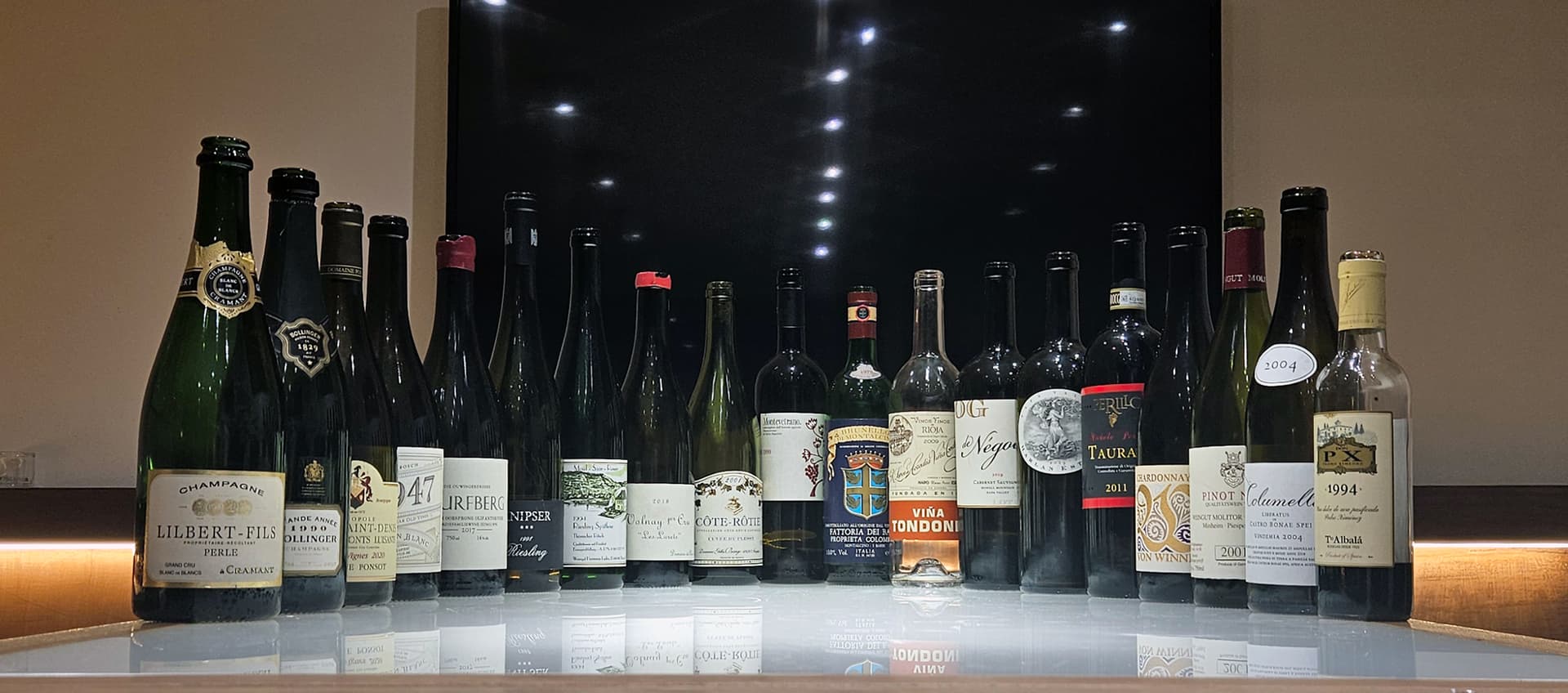
- NV Lilbert-Fils Champagne Grand Cru Perle Blanc de Blancs - France, Champagne, Champagne Grand Cru (5.9.2024)
100% Chardonnay from 2017 (75%) and 2016 (25%). All fruit sourced from Grand Cru vineyards in Cramant, Chouilly and Oiry. Disgorged in autumn 2022, 3 g/l dosage. Lot 23-02-498. 12% alcohol.
Youthful, pale yellow-green color. The nose feels youthful, crisp and very slightly reductive with aromas of lemony citrus fruits and mealy red apple, some leesy autolytic notes, a little bit of salty sea air and a hint of white bread. The wine feels very dry, crisp and precise on the palate with a creamy, gentle and rather persistent mousse, a medium body and youthful flavors of ripe citrus fruits, some red apple tones, a little bit of leesy autolysis, light saline mineral tones, a hint of white bread and a mineral touch of wet rocks. Brisk, high acidity. The finish is crisp, dry and quite palate-cleansing with a long aftertaste of crunchy red apple, some leesy autolytic notes, a little bit of French bread, light lemony citrus nuances, a mineral hint of chalk dust and a touch of fresh white currant.
This is a wonderfully crisp and precise Blanc de Blancs, but also one that is all too youthful, lean and nervous at the moment. Lilbert's style is very neutral and austere, but in their youth the cuvées can be almost forbiddingly high-strung - and this wine is no exception. Even if Perle is vinified at a lower pressure than the other two Lilbert cuvées, resulting in a softer, gentler mousse, the style is nevertheless still pretty lean and tightly-wound for quite some time after release. I love the freshness and crystalline purity here, but the wine really calls for additional aging that will not only open up the fruit department better, but will also grant the wine with additional depth and tertiary complexity. For low long it will take - I don't know. Another ten years? This is a lovely wine if you want a brisk palate-cleanser or need to pair a dish with something very lean, mineral and acid-driven. Otherwise, I'd let the wine age for some more. Good value at 36€.
(90 points) - 1990 Bollinger Champagne La Grande Année - France, Champagne (5.9.2024)
A blend of Pinot Noir and Chardonnay, fermented and aged in oak. Bottled sur lattes for a minimum of 5 years. 12% alcohol. Tasted blind.
Medium-deep golden-yellow color with a subtle apricot-orange hue. The nose feels moderately oxidative with a complex, rather vinous bouquet of Tawny Port-like caramel, some bruised apple tones, a little bit of acacia honey, light nutty nuances, a hint of toasty autolysis and a touch of orange marmalade. The wine feels dry, evolved and very complex on the palate with a rather full body and layered flavors of caramel and bruised apple, some orange marmalade, light honeyed nuances, a little bit of roasted nuts, a hint of saline minerality and a toasty touch of custard pastry. The mousse feels still surprisingly ample and the dosage shows through a little bit as a subtle nuance of syrupy richness. Bright, structured acidity. The finish is long, crisp and complex with a layered aftertaste of saline minerality and evolved caramel character, some bruised apple tones, a little bit of orange marmalade, light oxidative notes of roasted nuts, a hint of custard pastry and a touch of ripe lemony citrus fruits.
The is a gorgeous, attractive and eminently delicious vintage of Bollinger LGA and in an amazing spot right now. The wine is getting moderately tertiary with its evolved, somewhat oxidative notes, but the combination of still quite vibrant fruit flavors and surprisingly great, voluminous mousse help the wine stay fully alive and energetic despite its age. Seeing how the overall feel is getting rather aged, I really don't see much benefit in aging the wine further; perhaps the wine might've been a bit more balanced and slightly more energetic a handful of years ago, but as the wine is still so captivating and most likely isn't falling apart anytime soon, there's no great hurry in emptying any remaining bottles. Although people who like their sparkling wines crisp, youthful and racy might feel this wine is getting too old and tired, to me this is a textbook example why you want to age your Champagnes. Drink or keep some additional years, but don't sit for too long on these.
(96 points) - 2020 Domaine Ponsot Morey St. Denis 1er Cru Clos des Monts Luisants Vieilles Vignes - France, Burgundy, Côte de Nuits, Morey St. Denis 1er Cru (5.9.2024)
Not only is this a rare white in that it is a white 1er Cru Burgundy from Côte des Nuits, known for their red wines, but especially because it is the sole 1er Cru Burgundy made entirely of Aligoté, originally planted in 1er Cru Monts Luisants in 1911. 85% of the fruit for this wine comes from centenarian vines, 5% from a parcel planted in 1930 and 10% from a parcel planted in 2006. Fermented spontaneously. MLF is not encouraged and the wine seldom undergoes malo. The wine is aged for 16 months in old oak barrels. 13,5% alcohol. Tasted blind.
Pale and quite youthful yellow-green color. The nose feels quite restrained and understated with relatively light aromas of peach, some ripe red apple, light creamy oak tones, a little bit of honeyed richness, a sweeter hint of lemon marmalade and a mineral touch of wet rocks. The wine feels fresh but also a bit understated on the palate with a medium body and light yet bright flavors of zesty citrus fruits and honeydew melon, some creamy oak character, light stony mineral notes, a little bit of spicy red apple, a hint of savory wood spice and a touch of fresh white fruit. The high acidity lends good sense of freshness and structure to the wine. The finish is clean, dry and brisk with a rather long aftertaste of lemony citrus fruits and some herby tones, a little bit of creamy oak, light stony mineral notes, a hint of savory wood spice and a touch of sweeter honeyed character.
A wonderfully fresh and precise Aligoté that feels way too young for its own good. The overall feel is still not only very youthful - although not primary - but also quite closed and understated, as if the wine is coiled around itself. The wine seems to hold a lot of promise, but offers relatively little at the moment. This is a promising wine, but I'd say it calls for another 5-8 years before it really starts to open up. While a lovely wine in its own right, I think the price (approx. 135€) is starting to get a bit ridiculous. This is good, but not that good.
(91 points) - 2020 Kaapzicht Estate Chenin Blanc The 1947 - South Africa, Coastal Region, Stellenbosch, Bottelary (5.9.2024)
100% Chenin Blanc from an old bush vine parcel planted in 1947 - the second oldest Chenin block in South Africa. Originally the parcel was six hectares, but now only 1,1 hectares of the original vines remain. Half of the grapes are destemmed, half is pressed in whole clusters. Fermented spontaneously in 500-liter oak barrels. Aged in oak for 10 months, bottled unfined and unfiltered. 13,5% alcohol. Tasted blind.
Intense, medium-deep yellow-green color. The nose feels rich, open and quite punchy with bold aromas of honeydew melon and creamy oak, some woody oak tones, a little bit of ripe nectarine, light apple jam tones, a reductive hint of flinty smoke and a touch of grilled pineapple. The wine feels ripe, broad and quite voluminous on the palate with a rather full body and bold flavors of sweet, creamy oak, some honeyed tones, a little bit of savory wood spice and smoky toasted character, light saline notes of brackish water, sweet hints of apricot and apple jam and a crunchy touch of fresh pineapple. The relatively high acidity helps the wine retain great sense of balance and harmony. The finish is rich, long and juicy with a rather powerful aftertaste of apricot, some acacia honey, a little bit of creamy oak and savory wood spice, light grilled pineapple notes, a sweet hint of apple jam and a flinty touch of smoky reduction.
A broad, quite substantial and rather impactful Chenin Blanc that still manages to come across as surprisingly balanced and harmonious. This is not a shy wallflower, far from it - I'd rather describe the wine as "enjoyably over-the-top". It is not an overdone blockbuster with too much of everything, but despite being a bigger and more ripe white wine than I normally enjoy, I find the wine quite impressive in its own right. All the pieces are in correct places and despite its big size, the wine is not without good sense of freshness. I really hope the wine doesn't get softer and sweeter with age, but instead loses some of that baby fat and integrates those still a bit pronounced oak notes better with the fruit. Good stuff.
(90 points) - 2017 Sadie Family Chenin Blanc Skurfberg - South Africa, Olifants River, Citrusdal (5.9.2024)
From three Chenin Blanc vineyards in Olifants River, planted between 1940 and 1955. All vineyards vinified separately, fermented spontaneously and aged on the lees in oak foudres and concrete tanks. The lots are blended after 12 months of aging, after which they are left to marry for another 6 months. Bottled unfined and unfiltered. 14% alcohol. Tasted blind.
Quite youthful yellow-green color. The nose feels ripe and quite expressive with attractive aromas of peachy stone fruit, some creamy oak tones, a little bit of pineapple, light sweeter notes of apple jam, a perfumed hint of apple blossom and a touch of beeswax. The wine feels ripe, rich and very slightly viscous on the palate with a full body and nuanced flavors of honeydew melon, some juicy Golden Delicious apple tones, a little bit of fresh pineapple, light creamy oak notes, a mineral hint of wet rocks and a touch of beeswax. The high acidity lends great sense of balance and structure to the wine. The finish is firm, expansive and quite bold with a long, rich aftertaste of honeydew melon, some floral tones, a little bit of fresh pineapple, light creamy oak nuances, a hint of ripe Golden Delicious apple and a touch of stony minerality.
A beautiful, harmonious and thoroughly impressive Chenin Blanc that combines the freshness and minerality typical of the variety with the oomph and gravitas of the best South African whites. A bold, nuanced white that has a lot to love. It's hard to say how much longer the wine will age, but as it still seems to be on an upward trajectory, I'd have no hurries with this wine - although it is drinking mightily well right now! I had no idea where we were with this wine, nor did anyone else - I guess we went through about 80% of the world's wine producing countries before someone suggested South Africa. Heh.
(94 points) - 1998 Knipser Riesling *** - Germany, Pfalz (5.9.2024)
A blend of Riesling from several GG-level vineyards. Aged in oak. 13% alcohol. Tasted blind.
Quite deep and intense golden-yellow color. The nose feels fragrant but also quite aged and slightly oxidative with aromas of beeswax, some wilted tropical fruits, a little bit of nutty oxidation, light caramel nuances, a hint of dried apricot, a touch of honeysuckle and a vague whiff of something smoky. The wine feels broad, dry and waxy on the palate with a medium body and somewhat tired flavors of steely minerality, some wizened apples, a little bit of oxidative nuttiness, light beeswax nuances, a hint of tangy salinity and a touch of dried exotic fruits. The rather high acidity keeps the wine firm and structured, but as the wine is starting to get tired, it doesn't manage to help with the lack of freshness. The finish is complex, evolved and quite savory with an intense, tertiary aftertaste of bruised apple, some honeyed tones, a little bit of oxidative nuttiness, light dried-fruit notes, a hint of tangy salinity and a touch of malty character.
A drinkable Riesling, but one that has already passed its peak. There is still quite a bit of fruit left in the wine and the overall feel is quite complex, but it has lost a great amount of freshness and precision due to the oxidation that has started to creep in - the nutty, malty and heavily waxy notes do add some tertiary complexity, but also make the wine feel quite a tiring drink. I wouldn't mark the wine as "faulty/oxidized", but I'm leaving it unrated, as it feels the wine isn't showing as good anymore as it should. - 1994 Weingut Hermann Ludes Thörnicher Ritsch Riesling Spätlese - Germany, Mosel Saar Ruwer (5.9.2024)
AP 3 560 027 5 97, ie. "AP 5" submitted in 1997 - not to be confused with the other 1994 Ritsch Spätlese bottlings in the market, including 3 97 (AP 3 submitted in 1997) and 3 96 (AP 3 submitted in 1996). 9% alcohol. Tasted blind.
Somewhat evolved and rather deep yellow-green color. The nose feels sweet and evolved with aromas of lemon marmalade, some petrolly diesel notes, a little bit of honeyed richness, light apple jam tones, a hint of dried peach, a mineral touch of wet rocks and a whiff of beeswax. The wine feels evolved, quite mature and still rather lively on the palate with a medium body and medium-dry to medium-sweet flavors of lemony citrus fruits, some petrolly diesel notes, a little bit of apple jam, light dried pineapple tones, a hint of tangy salinity and an evolved touch of cooked cream. The high acidity lends good sense of energy and structure to the wine. The finish is long, crisp and lively with a nuanced, mature aftertaste of lemony citrus fruits, some developed creamy notes, a little bit of diesel, light saline mineral nuances, a hint of dried pineapple and a touch of apple jam.
An evolved and rather noticeably petrol-driven yet still pretty enjoyable Riesling at full maturity. The wine was so obviously an aged Mosel Riesling that we didn't even need to discuss where the wine came from - it was more or less agreed upon with the first sniff and taste. Some people thought the wine was too old for its own good (and some thought whether or not the wine was too old, it was too petrolly), but I found the wine pretty enjoyable. Perhaps a bit tertiary in style, losing the best freshness, energy and nuance, but nothing too old or unenjoyable. Although I agreed that the wine must've been better some years ago, I found the wine completely agreeable and pleasant in its current state.
(89 points) - 2018 Domaine de Chassorney Volnay 1er Cru Les Lurets - France, Burgundy, Côte de Beaune, Volnay 1er Cru (5.9.2024)
Pinot Noir from a 40-yo parcel in Volnay. Vinified and bottled completely without SO2. Fermented and macerated in whole bunches for 5-6 weeks in open-top fermentors. Aged for 10 months in oak barrels (1/3 new). 13,5% alcohol. Tasted blind.
Surprisingly deep, dark and moderately opaque black cherry color with a pale ruby-red rim. The nose feels perfumed, fragrant and somewhat lifted with slightly wild aromas of brambly raspberries, some sappy herbal notes, a little bit crunchy cranberry and crowberry, light wild strawberry tones, hints of Campari and orange rind and a funky touch of phenolic spice. The wine feels ripe and sapid yet lively and crunchy on the palate with a medium body and slightly wild flavors of brambly raspberries, some funky notes of Campari and lifted VA, a little bit of fresh Bing cherry, light juicy notes of ripe cranberries, a hint of wild herbs and a touch of wild strawberry. The high acidity and surprisingly ample and somewhat grippy medium-plus tannins lend good sense of firmness and structure to the wine. The finish is wild, juicy and crunchy with moderate tannic grip and a long aftertaste of brambly raspberries and fresh wild strawberries, some stony mineral notes, a little bit of sweeter black cherry, light crunchy notes of red plums, a hint of tart cranberry and a lifted touch of zesty Campari funk.
A rather wild or even slightly natty 1er Cru Volnay, but one that is also very balanced, harmonious and complex at the same time - although the wine is quite sauvage with its obviously minimal-interventionist overall style, these funkier notes don't overwhelm the overall fruit profile, but instead just add a slightly wild dimension to the aromatics and taste. Compared to the excessively natty and rather anonymous 2019 vintage of this same wine, this 2018 is miles better - to my surprise, really, since so many 2018 Burgundies have been so much heavier and sweeter compared to most 2019 Burgundies! Despite its deep and dark color and somewhat noticeable tannic presence, this was a surprisingly fresh, harmonious and balanced effort for a 2018 red Burgundy! While I might've enjoyed the wine a bit more if it had been slightly less sauvage in style, this was still a terrific wine in its own rihgt.
(92 points) - 2001 Domaine Barge Côte-Rôtie Cuvée du Plessy - France, Rhône, Northern Rhône, Côte-Rôtie (5.9.2024)
A blend of fruit from Boucharey, Lancement and Joseph du Plessy's former parcel in Côte Blonde. Typically a blend of Syrah (95%) and Viognier (5%). 12,5% alcohol. Tasted blind.
Evolved, quite translucent and moderately tertiary cherry-red color with a mature maroon hue. The nose feels aged, savory and quite meaty with quite tertiary aromas of wizened red plums, some crunchy red currants, a little bit of crisp bacon and some smoky speck tones, light notes of dried blackberry, a hint of peppery spice and an autumnal touch of dried leaves. The wine feels savory, meaty and fully mature on the palate with a medium body and evolved flavors of meaty umami, greasy bacon and some smoky tones, a little bit of wizened blackberry, light crunchy notes of red plums, a hint of gravelly minerality and a touch of peppered beef. The wine still retains quite a bit of structure with its high acidity and moderately resolved yet still somewhat grippy medium tannins. The finish is aged, savory and moderately grippy with a complex, tertiary aftertaste of crunchy red plums, some smoky notes of bacon, a little bit of gravelly minerality, light meaty umami tones, a hint of dried dark berries and a touch of tart lingonberry.
Back in 2016 I felt the wine was more or less at its peak and wouldn't evolve any further - tasting it now, I feel my assessment was pretty much correct. The wine is still very wonderful, complex and impressive, but I felt it was noticeably more tertiary and a bit more tired than it was 8 years ago. The wine has began its descent and is starting to fade away, but fortunately at such a slow pace that any remaining bottles can be easily drunk for a good number of years more. However, the wine won't benefit from any additional aging and should be drunk sooner rather than later. Fortunately the wine wasn't as aggressively leafy and vegetal as the previous bottle we tasted two years ago! I guess that one was just off, because this was still in an enjoyable condition, not showing any overtly vegetal green tones. Good stuff, time to drink up.
(93 points) - 1999 Montevetrano Montevetrano Colli di Salerno IGT - Italy, Campania, Colli di Salerno IGT (5.9.2024)
Normally this is a blend of Cabernet Sauvignon (60%), Merlot (30%) and Aglianico (10%), but I don't know whether the proportions are different this year or not. Fermented and macerated for three weeks in stainless steel. Aged for 12 months in new and second use French barriques. Alcohol 13%, acidity 5 g/l, pH 3,55. Tasted blind.
Quite dense, somewhat translucent blackish-red color with an evolved maroon hue. The nose feels evolved, savory and slightly oxidative with aromas of tobacco, some leathery funk, a little bit of wizened blackcurrant, light gravelly mineral notes, herbaceous hints of minty greenness and bell pepper and a sweeter touch of prunes. The wine feels dry, savory and fully mature on the palate with a full body and developed flavors of tobacco and meaty umami, some bretty notes of leathery funk, a little bit of gravelly minerality, light wizened cherry tones, a hint of ripe blackcurrant and a touch of minty greenness. The overall feel is pretty firm and structure-driven, thanks to the moderately high acidity and ample, moderately grippy and somewhat resolved tannins. The finish long, savory and moderately grippy with a dry, evolved aftertaste of tobacco, some ferrous notes of blood, a little bit of wizened blackcurrants and prunes, light funky notes of leather, a savory hint of meaty umami and a touch of gravelly minerality.
I tasted this wine seven years ago and even though some people said that the wine was peaking then, I thought there still was some room for further development. Well, as I haven't tasted any wines between that bottle and this, I can't say for certain how the wine has evolved, but I feel this wine has gone both better and worse - it has developed some additional depth and richness without losing its firm structure, but it has also developed some oxidative qualities that make the overall feel a bit tired and more tertiary than I'd like it to be. This is still a superb wine, but ultimately not maybe quite as good as the wine we tasted back then. It might be that the wine has both improved and then started to decline in the meantime, or then there is just bottle variation and this wine is more evolved than the previous bottle would've been at this stage. Whatever the case, it feels like the wine isn't going to get any better with further aging now. Time to drink up!
(94 points) - 1979 Fattoria dei Barbi Brunello di Montalcino - Italy, Tuscany, Montalcino, Brunello di Montalcino (5.9.2024)
13% alcohol. Tasted blind.
Old, tertiary and somewhat translucent mahogany-maroon color. The nose fees old, savory and quite oxidative with rather tired, tertiary aromas of wizened cherries, some soy sauce, light woody notes of cigar box, a little bit of beef jerky and a hint of earth. The wine feels somewhat thin and quite oxidative on the palate with a medium body and tired flavors of soy sauce, some cigar and old leather tones, light salty notes of beef jerky and nutty rancio, a little bit of wizened cranberry, a hint of sour cherry bitterness and a touch of rusty metallic character. The wine retains quite a bit of structure with its rather high acidity and still moderately grippy tannins. The finish is old, long and tertiary with a rather oxidative aftertaste of raisiny dark fruit, some soy sauce, light cigar and leather tones, a little bit of sour cherry bitterness, a hint of tart lingonberry and a touch of gamey meat.
Way past its peak. Still somewhat drinkable, but if one would've wanted to catch this wine at its plateau of maturity, this should've been drunk a decade - or decades - ago. This is just a generic old Italian wine with no true complexity, just lots of different kind of oxidative flavors. Nice sense of structure, though.
(NR/flawed) - 2009 R. López de Heredia Rioja Rosado Gran Reserva Viña Tondonia - Spain, La Rioja, La Rioja Alta, Rioja (5.9.2024)
A blend of Garnacha (60%), Tempranillo (30%) and Viura (10%). Aged for 4 years in oak barriques and for further 6 years in bottles before release. 13% alcohol, 6,5 g/l acidity. Total production 14,000 bottles.
Deep, luminous and somewhat evolved onion skin-to-orange color. The nose feels sweet, complex and attractive with somewhat evolved and slightly oxidative aromas of caramel, ripe strawberry, some bruised apple tones, a little bit of savory wood spice, light zesty orange notes, a hint of raspberry jam and a creamy touch of developed custard character. The wine feels complex, textural and developed yet not tertiary on the palate with a moderately full body and dry, layered flavors of ripe strawberries, some caramel, light cherry tones, a little bit of oxidative nuttiness, hints of apple jam and bruised red apple and a touch of tangy salinity. The brisk acidity lends great sense of structure and energy to the wine. The finish is long, rich and evolved with a complex aftertaste of strawberries and ripe orange, some caramel tones, a little bit of fresh red cherry, light saline mineral notes, an oxidative hint of nuttiness and a woody touch of old oak.
A beautiful, complex and so idiosyncratic rosé. Compared to the bottle we tasted about a week ago, this wine didn't feel as evolved and tertiary, coming across as younger and more energetic - more in line with the previous bottles I've tasted. That previous bottle felt like the wine had reached its plateau of maturity and wouldn't evolve much further (something I found hard to believe, knowing how these wines can age effortlessly for multiple decades), but this wine was performing exactly how I expected a 15-yo Tondonia Rosado to perform. A fantastic wine and only a tiny bit behind the amazing 2008 and 2010 vintages. At 27,50€ this has been an outright steal.
(95 points) - 2019 de Négoce Cabernet Sauvignon OG N.300 - USA, California, Napa Valley, Howell Mountain (5.9.2024)
100% Cabernet Sauvignon from Howell Mountain. Aged in medium-toast French oak barriques (60% new). Bottled in summer 2022. 14,9% alcohol. Aerated in a decanter for a couple of hours. Tasted blind.
Deep, almost fully opaque blackish-red with a faint purplish hue. The nose feels ripe, open and fragrant with bold aromas of sweet blackcurrant and dark plummy fruit, some vanilla, light blueberry juice tones, a little bit of toasty mocha oak, a hint of cherry marmalade, a touch of floral lift and a whiff of balsamic VA. The overall feel is quite lush and crowdpleaser-ish. The wine feels juicy, dense and sweet-toned on the palate with a full body and very fruit-forward flavors of blueberry juice and almost overripe blackcurrant, some strawberry tones, light toasty notes of mocha oak, a little bit of dark plummy fruit, oaky hints of vanilla and cloves and a touch of cherry marmalade. The overall feel is quite round and somewhat soft with the rather modest acidity - although the medium-plus tannins that slowly pile up on the gums bring some welcome firmness to the wine. The finish is rich, juicy and a bit warm with a long, sweetish aftertaste of cherry marmalade, some strawberry tones, a little bit of dark plummy fruit, light toasty notes of mocha oak and chocolate milkshake, a hint of jammy blackcurrant and a touch of blueberry juice. The ample tannins make the wine end on a somewhat grippy note.
This is a big, ripe and soft blockbuster Cab. Well, not a super-in-your-face blockbuster wine, but definitely one made to be very voluminous, voluptuous and impactful. Unfortunately that translates to excessively high alcohol, rather overt oak, too sweet - even borderline jammy - fruit flavors and way too low acidity. A wine this big needs a lot of acidity to stay balanced, but this wine has anything but. Yet still this wine tastes more balanced, enjoyable and more ageworthy than the 2019 Harlan Estate Cab that was in the neighboring glass! All in all, this is definitely not my kind of wine: lush, soft, sweet and jammy. I find it hard to think of a dish this wine would complement - and with this much alcohol and sweet fruit, the wine is rather tiring to drink alone. I guess the wine is reasonably priced at $39 if you happen like these kinds of soft, saccharine fruit bombs, but I wouldn't buy the wine at half the price.
(85 points) - 2019 Harlan Estate - USA, California, Napa Valley, Oakville (5.9.2024)
Some sources say this is a 100% Cabernet Sauvignon, others say the wine is a Bordeaux blend composed mainly of Cab but also having some Merlot, Cabernet Franc and Petit Verdot. First the destemmed grapes are cold-soaked with the skins for 5-7 days, then the wine gets fermented in oak and stainless steel tanks. Aged for at least 18 months in predominantly new French oak barriques. 14,5% alcohol and 5,4 g/l acidity. Aerated in a decanter for a couple of hours. Tasted blind.
Dense, fully opaque blackish-red color. The nose feels huge, complex and quite over-the-top with a somewhat potent smack of spirituous alcohol and lush, sweet-toned - almost thick - aromas of almost raisiny dark fruit and toasty oak spice, some rich notes of blueberry-and-blackberry jam, a little bit of cherry marmalade, light mocha oak tones, a hint of crème de cassis, a touch of dark chocolate and a whiff of vanilla. The wine feels rich, noticeably - borderline excessively ripe - and juicy on the palate with a very full body and rather sweet-toned flavors of blueberry-and-blackberry jam and toasty mocha oak, some milk chocolate notes, a little bit of crème de cassis, light vanilla nuances, a hint of extracted bitterness and a touch of raisiny dark fruit. The high alcohol makes the overall feel somewhat hot whereas the ripe, polished tannins and very modest acidity lend very little to the structure, making the wine feel very soft, plush and almost flabby on the palate. The finish is rich, rather hot and quite over-the-top with a long, unctuous aftertaste of blackberry jam and blueberry juice, some cherry marmalade, light toasty notes of chocolatey mocha oak, light vanilla nuances, a roasted hint of carob chips and a touch of crème de cassis.
Tasting this wine side-by-side with 2019 de Négoce OG Lot 300 Cab, this Harlan came across as a bigger, heftier and more opulent wine. However, despite its superlative richness, I found the de Négoce Cab much more enjoyable - despite its higher alcohol (at least according to the label), it came across as less hot than the Harlan, which had somewhat noticeable heat already in the nose and quite a bit on the palate, too. Furthermore, this Harlan also came across as somewhat more evolved and less vibrant as the de Négoce Cab - in addition to the noticeably high alcohol, the lack of purplish hues despite the young age of the wine and somewhat raisiny dried-fruit aromatics both point out to fruit overripeness and aging the wine for too long in new oak barriques. Although not obviously oxidative in any way, the wine was lacking the fruit vibrancy one might look for in a young Napa Cab, instead coming just across as a huge, clumsy and ponderous caricature of Napa Cab. Many people say this wine needs another 5-10 years to show its best, but I really fail to see how such a big, soft and jammy wine can evolve into something truly great with additional aging - especially if it is starting to show some first aged signs already now, at 5 years of age? I really hope someone could point out how wrong I was in 10-15 years of time. Of the seven blind tasters only one preferred this wine over de Négoce OG Lot 300 - even if everyone in the tasting agreed that the wine that turned out to be Harlan seemed like a wine that would cost a lot more - one even correctly identified the wine as Harlan Estate with his first guess (so I guess the wine was pretty much on point, if it was so identifiable)! I really have no idea what can justify the price tag of $1500, if a sub-$40 Cab can beat it effortlessly in a blind tasting?
(82 points) - 2011 Perillo Taurasi - Italy, Campania, Taurasi DOCG (5.9.2024)
100% Aglianico sourced mainly from vineyards planted in the 1930's with a smaller part of the fruit is sourced from vineyards planted in the 1980's. All fruit is destemmed and crushed, fermented spontaneously and macerated with the skins for three to four weeks in stainless steel. Aged for 12 months in old, neutral barriques, then blended and aged for another 12 months in large (+2000-liter) botti casks. Finally blended in a stainless steel tanks, left to marry for some time and bottled. 14% alcohol. Tasted blind.
Slightly translucent and somewhat evolved blackish-red color with a deep maroon core and a pale pomegranate rim. The nose feels sweetish, somewhat evolved and quite nuanced with aromas of ripe black cherries and wizened dark fruits, some licorice tones, a little bit of earth and leather, light raisiny tones, a hint of allspice, a touch of pipe tobacco and a green-toned whiff of minty character. The wine feels somewhat developed and quite ripe yet firm and sinewy on the palate with a medium-to-moderately full body and nuanced flavors of sour cherries and sweet raisiny dark fruit, some loose pouch tobacco, a little bit of tart cranberry, light earthy notes, a ferrous hint of blood and a touch of juicy black cherry. The wine is quite high in acidity with rather assertive and moderately grippy tannins. The finish is evolved, quite dry and rather tannic with a moderately long aftertaste of sweet raisiny fruit and dried sour cherries, some notes of old leather, a little bit of loose pouch tobacco, light ferrous notes of blood, a hint of ripe yet crunchy cranberry and a touch of earth.
A nice and tasty but also quite evolved and rather tertiary Taurasi that is already starting to turn rather earthy yet sweet with those developed dried-fruit flavors. While intensely-flavored and enjoyably structured, I can't shake the feeling that this must've been more vibrant and interesting some years ago - I guess these Perillo wines just don't really age that gracefully. Only the 2006 Riserva has been very youthful and almost backward despite the age, whereas all the other Perillos I've tasted have felt much more evolved than I have anticipated. All in all, this was quite enjoyable, but nothing much beyond that.
(89 points) - 2019 von Winning Chardonnay 500 - Germany, Pfalz (5.9.2024)
A barrel selection of the best Von Winning Chardonnays sourced from multiple vineyards and aged in 500-liter oak barrels. 13,5% alcohol. Tasted blind.
Youthful, medium-deep yellow-green color. The nose feels fragrant, open and slightly toasty with aromas of grilled pineapple, some peachy tones, a little bit of crunchy red apple, light honeydew melon notes, a hint of ripe citrus fruits and a touch of chalky minerality. The wine feels rich yet firm and structured on the palate with a rather full body and intense flavors of ripe yellow apple, some grilled pineapple tones, a little bit of creamy oak and toasty wood, light mineral notes of wet rocks and tangy salinity, sweeter hints of apple jam and a touch of peachy stone fruit. The brisk, high acidity lends crunchy freshness and good sense of structure to the wine. The finish is lively, long and crunchy with an intense aftertaste of smoky toasted character and grilled pineapple, some ripe citrus fruits, a little bit of creamy oak, light peachy tones, sweeter hints of honeydew melon and apple jam and a touch of tangy salinity.
Although the wine is somewhat oaky and punchy in overall character, the toasty wood notes do not overwhelm the finer nuances at any point and the wine comes across as very balanced and intensely flavored - maybe a bit unintegrated and too youthful, if anything. However, the wine shows great promise and I can imagine this wine will continue to evolve and improve for many years more. As the style here was immediately identifiable to be that of von Winning, my guess was that this must be a von Winning Chardonnay. Correctomundo. Only the vintage I guessed (2017) was a few years off).
(92 points) - 2001 Molitor-Rosenkreuz Pinot Noir trocken - Germany, Mosel Saar Ruwer (5.9.2024)
13% alcohol. Tasted blind.
Evolved, fully translucent maroon color with a pale orange rim. The nose feels fragrant, expressive and somewhat floral with aromas of ripe cranberries, some peppery spice, a little bit of wizened raspberry, light tertiary meaty tones, a sweet hint of black cherry, a woody touch of savory oak spice and a whiff of earth. The wine feels ripe, juicy yet crunchy and enjoyably structure-driven on the palate with a medium body and quite intense flavors of ripe cranberries and tart lingonberries, some earthy tones, a little bit of stony minerality, light woody notes of savory oak spice, a hint of sour cherry bitterness and an evolved touch of wizened red fruits. The wine is both high in acidity and rather grippy with its firm, stern tannic structure. The finish is long, aged and grippy with a dry, savory aftertaste of sour cherries, some earth, a little bit of tobacco, light ferrous notes of blood, tart hints of cranberries and lingonberries and an evolved touch of gamey meat.
A surprisingly stern, serious and structure-driven effort for a Pinot Noir. Many German Pinot Noirs from this period were often quite extracted, but also made in a very ripe, big and often rather oaky style. This wine shows more extracted, tannin-driven feel that Pinot Noir usually does, but it actually suits the wine's dry, crunchy and savory overall style surprisingly well, lending the wine a rather Italian feel - this feels more like an aged Barolo that tastes like a Pinot Noir, not Nebbiolo, rather than your classic aged Burgundy. The wine might not get full points on varietal typicity, but I love it all the same. Fruit-wise the wine is starting to feel quite mature and most likely it won't evolve any further from here, but the tannic structure is really built for aging and there's still a lot of room for additional resolution - I'm just not sure if the tannins will outlast the fruit. Whatever the case, if you are not afraid of crunchy, dry and structure-driven German reds, this is quite a banger.
(93 points) - 2004 Sadie Family Columella - South Africa, Coastal Region, Swartland (5.9.2024)
Supposedly 2004 was both cool and one of the greatest vintages in Swartland in some time, producing excellent-quality fruit. Some sources say this is a blend of Syrah (80%) and Mourvèdre (20%), others say there's some Grenache, Carignan and other varieties in the blend as well, but I've understood these cultivars were introduced later on. Fermented spontaneously in 2000-liter open-top fermentors. Fermented with the skins for three weeks, followed by another three weeks of post-fermentation skin maceration. Aged for 18 months in French oak barrels, racked once and aged for another 6 months. 14,5% alcohol. Total production 7888 bottles, 45 magnums and 25 double mags. Tasted blind.
Moderately translucent dark cherry red color with a somewhat evolved maroon hue. The nose feels evolved, nuanced and attractive with aromas of wizened cherries, some leafy notes of autumnal forest floor, light brambly notes of black raspberries, a little bit of wild strawberry, a hint of gravelly minerality, a touch of earth and a green whiff of birch leaves. The wine feels dry, savory and evolved yet not old on the palate with a somewhat full body and complex flavors of sweet black cherries, some leafy forest floor tones, a little bit of dried black raspberry, light sweeter notes of ripe strawberries and pruney dark fruits, a herbaceous hint of leafy greenness and a woody touch of cigar box. The overall feel is pretty firm and still moderately structure-driven, thanks to the rather high acidity and somewhat grippy medium-plus tannins. The finish is long, juicy and moderately grippy with an evolved, slightly sweet-toned aftertaste of ripe blackberries and wizened dark fruits, some forest floor, a little bit of gravelly minerality, light green-toned nuances of birch leaves, a hint of fresh boysenberry and a woody touch of savory oak spice.
A harmonious, distinctive and wonderfully balanced vintage of Columella at its peak. True to the cooler vintage, the wine does show a tiny bit of that herbaceous leafy character, but it really doesn't distract in any way - instead it complements those mature, savory notes in a wonderful way. From the flavor perspective, the wine is at its peak - has been there for a while, I gather - but structurally the wine is still very firm and surprisingly tightly-knit. A distinctive and very rewarding wine with lots of depth, character and surprising freshness for such a mature wine. Although no-one had a single idea where this wine came from, many seemed to enjoy it immensely. Great stuff, highly recommended.
(94 points) - 1994 Bodegas Toro Albala Don PX - Spain, Andalucía, Montilla-Moriles (5.9.2024)
100% Pedro Ximénez, first sun-dried, then pressed and finally fortified. Aged unblended in oak casks. 17% alcohol, 390 g/l residual sugar. Lot number L-94200151220. Tasted blind.
Dense, immensely dark and fully opaque syrupy-brown color that stains the glass as you spin it around. The nose feels incredibly concentrated and ridiculously intense with a blast of dried dates and grappa-like fusel alcohol, some raisiny tones, a little bit of coffee liqueur, light milk chocolate notes, a hint of medicinal herbs along with a faint, minty green whiff, and a touch of fig jam. The high alcohol makes the wine feel quite hot in the nose already. The wine feels incredibly thick, sweet and viscous on the palate with a full body and extremely intense flavors of raisins and dried dates, some grappa-like fusel alcohol notes, a little bit of carob chips, light milk chocolate nuances, a hint of malt syrup and a touch of subtly bitter medicinal herbs. The modest acidity only accentuate the sticky, viscous syrupy feel of the wine and the high alcohol lends quite a bit of heat to the palate. The finish is hot, thick and extremely sweet with a very long and potent aftertaste of raisins and dried dates, some syrupy notes of molasses, a little bit of fig jam, light milk chocolate nuances, a grappa-ish hint of fusel alcohol and a touch of carob.
A ridiculously sweet, punchy and very much over-the-top wine. Never before has the word "sticky wine" has been more appropriate than with this one! While a very impressive effort in its own right, I really don't understand these PX wines. They are just too sweet to be of any real use. You really can't pair anything with a wine this sweet and intensely concentrated, and on its own even a small tasting glass gets quite tiring rather quickly. To me, these are exercises in excess and I always love to taste them in the name of academic curiosity, but these are never wines I'd buy for myself. They are just way too much in every respect. Yet still I think this was worth its price at 239 SEK (approx. 21€) for a half bottle.
(89 points)
Posted from CellarTracker