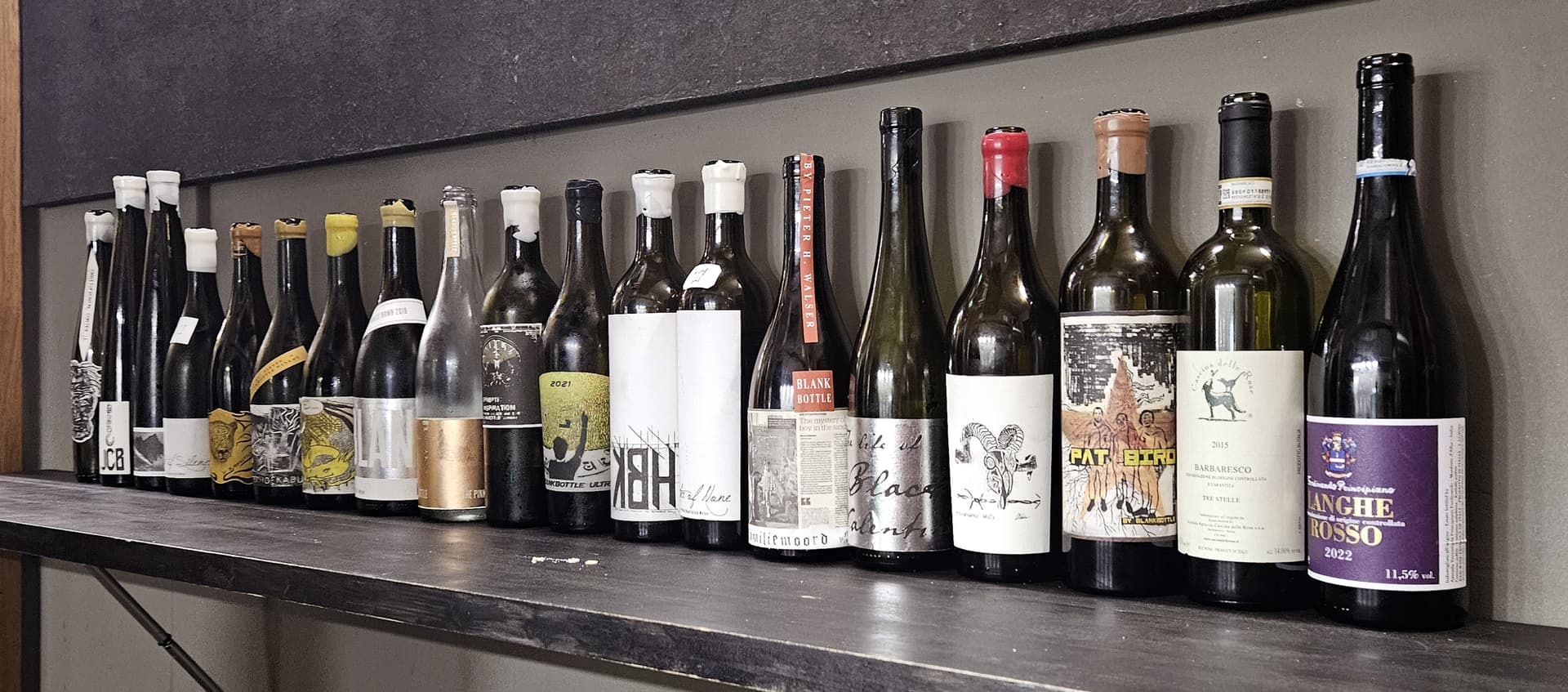
Some years ago we had a blind tasting where most of the wines came from South Africa. There were a handful of wines by BlankBottle and one of the attendees was so impressed by them that he started collecting these wines; fast-forward a few years and we have a quite extensive tasting exclusively on BlankBottle wines!
As BlankBottle wants people to drink the wines as they are, without any preconceived notions (hence the name), they don’t tell anything about the grape variety on the bottle labels - if one wants to know more about the wine, they have to go to the BlankBottle website, where they have a list of most of the wines they’ve made, including all their specifications. We honored this approach, so we first tasted the wines and only afterwards checked out which wine was made with which variety - some with quite surprising results! For example I expected the relatively herbaceous Sémillon to be a Sauvignon Blanc.
After the tasting we also had some extra blind bottles - that Principiano Slarina came from my stash, so it wasn’t a blind for me.
- 2016 BLANKbottle Orbitofrontal cortex - South Africa, Coastal Region (18.10.2024)
A blend of Grenache Blanc, Fernão Pires, Chenin Blanc, Verdelho, Sémillon and Clairette. 12,5% alcohol.
Medium-deep lemon-yellow color with a faint lime-green hue. The nose feels somewhat dull and indistinct at first. It picks up some fruitier notes of red apples and greengage as it opens up, but still retains somewhat dusty and earthy overall feel. The wine feels dry, dull and understated on the palate with a medium-to-moderately full body and mute flavors of vague white fruits and some dusty earth. Moderately high acidity.
A slightly corked bottle.
(NR/flawed) - 2021 BLANKbottle JCB - South Africa, Cape South Coast, Elgin (18.10.2024)
100% Sauvignon Blanc from Elgin. Named after a JCB digger that helped to pull the winemaker's truck that got stuck while he was hauling the Sauvignon Blanc grapes. 75% of the fruit was pressed in whole bunches and fermented spontaneously in old French oak barrels; 25% of the fruit was destemmed and fermented spontaneously with the skins for 2 weeks, then pressed into old French oak barrels. Aged for 10 months on the lees in old French oak, then blended and bottled. 13% alcohol.
Pale straw-yellow color. The nose feels sweetish and characterful with rather fruit-forward aromas of cantaloupe and peachy stone fruit, some ripe pear tones, a little bit of arctic bramble, light passionfruit-driven exotic fruit character, a hint of crunchy golden currant and a touch of creamy oak. The wine feels lively, youthful and pretty focused on the palate with a medium body and vibrant flavors of ripe golden currants and grapefruit, some crunchy notes of red apples, light steely mineral tones, a little bit of ripe pear, a hint of cantaloupe and a touch of steely minerality. The high acidity lends good sense of freshness and structure to the wine. The finish is crisp, lively and youthful with a rather long aftertaste of golden currants and stony minerality, some lemony citrus fruit notes, a little bit of cantaloupe, light creamy oak tones, a hint of passion fruit and a touch of pithy grapefruit bitterness.
A tasty and characterful Sauvignon Blanc that feels a bit more ripe and substantial than your typical Sauvignon Blanc - I guess the somewhat non-insignificant portion that has seen some skin maceration adds nice sense of richness, texture and firmness without making the wine feel particularly similar to an orange wine. A well-crafted and enjoyable Sauvignon Blanc that is drinking nicely right now, but seeing how the wine is still so youthful, I can imagine it will continue to evolve and improve for at least a handful of years more. Recommended.
(90 points) - 2021 BLANKbottle Chardonnay Luuks - South Africa, Coastal Region, Stellenbosch (18.10.2024)
100% Chardonnay from a single vineyard in Helderberg, Stellenbosch. 12,5% alcohol, 2,5 g/l residual sugar, 4,8 g/l acidity, 0,5 g/l VA and pH 3,67. Total SO2 85 mg/l.
Pale yellow-green color. The nose feels youthful and savory with aromas of smoky reduction, some zesty citrus fruits, a little bit of popcorn, light spicy red apple tones, a candied hint of youthful primary fruit and a touch of stony minerality. Contrasting the bright, zippy and slightly reductive nose, the wine feels surprisingly broad, round and even a bit fat on the palate with a full body and rich flavors of banana, some apple jam, light creamy oak tones, a little bit of smoky reduction, a hint of honeydew melon and a touch of ripe pear. The wine is lacking focus, structure and definition due to its rather modest and soft acidity. The finish is round, juicy and subtly sweet-toned with a medium-long aftertaste of honeyed richness, some ripe apricot, light buttery nuances, a little bit of sweet apple jam, a hint of creamy oak and a touch of banana marshmallows.
Although the nose opened the game with great expectations, the wine turned out to be quite fat, soft and sweet-toned on the palate - a style of Chardonnay I really dislike. I like freshness, focus and brisk, zippy fruit flavors; this wine was rich, tropical and showing almost candied primary fruit flavors while there was not nearly enough acidity to keep things together. Not really my cuppa.
(83 points) - 2022 BLANKbottle Moment of Silence - South Africa, Coastal Region, Wellington (18.10.2024)
A blend of Chenin Blanc (75%), Grenache Blanc (20%) and Viognier (5%). Chenin Blanc is sourced from two vineyards in Wellington: Boberg is an organically farmed parcel on top of the Groenberg mountain; Hangbal a super old bush vine parcel on the slopes of the northern side of Groenberg. Grenache Blanc comes from two organically farmed parcels (Kleinplasie) on the lower slopes of Groenberg. Viognier comes from the conventionally farmed Taaiboslaagte vineyard. The Grenache Blanc component sees some skin contact for additional texture and structure. Fermented spontaneously and aged on the lees for 8 months in egg-shaped concrete tanks, clay amphorae and old French oak casks. 13,5% alcohol, 3,5 g/l residual sugar, 5,5 g/l acidity, 0,72 g/l VA, pH 3,55 and total SO2 82 mg/l.
Pale yellow-green color. The nose feels still very youthful and primary with candied aromas of fruit jellies and peachy rock candies along with brighter aromas of nectarine, light mango tones, a hint of pear drops and a touch of crunchy quince. The wine feels youthful, balanced and surprisingly concentrated on the palate with a full body and vibrant flavors of peachy stone fruits, some spicy floral notes, a little bit of creamy oak, light sweeter notes of ripe pineapple and apple jam, a hint of honeyed richness and a touch of stony minerality. The moderately high acidity keeps the sense of sweetness and richness in control, making the overall feel quite fresh and pretty harmonious. The finish is long, rich and somewhat concentrated with a bold aftertaste of peachy stone fruits, some creamy oak tones, a little bit of savory wood, light pineapple notes, a hint of herbal spice and a candied touch of sweet primary fruit.
A ripe and broad but also enjoyably fresh and balanced South African white. The wine is still quite youthful and a bit too primary for my preference, but fortunately the wine shows good potential and sense of balance from the aging perspective, so most likely it will show much better in a year or two. At the moment the wine feels a bit too sweetly-fruited and dominated by candied primary flavors, but there's definitely a lot of stuffing underneath. Don't drink; wait. Now the wine is just good, not great, but there's promise that it will get better than this if you are patient.
(89 points) - NV BLANKbottle TBC - South Africa, Coastal Region, Stellenbosch (18.10.2024)
100% Viognier from a single vineyard on the slopes of Helderberg mountain, Stellenbosch. Half of the wine is composed of 2021 vintage, which was harvested in two tries: the first one relatively early, at low potential alcohol and high acidity; the second one quite late with good sense of fruit ripeness. Another half is from the 2022 vintage that was harvested early. The 2021 component was aged for two years in old French oak barrels; the 2022 component was aged for a year in old French oak barrels; then blended together. 13,5% alcohol, 2,5 g/l residual sugar, 5,2 g/l acidity, VA 0,62 g/l, pH 3,64 and total SO2 74 mg/l. Lot number LTBC1022 / A1061.
Youthful and very pale greenish color. The nose feels cool, fresh and subtly fragrant with aromas of crunchy white peach, some greengage, light cantaloupe notes, a little bit of primary pear-driven fruit, a hint of chopped herbs and a floral touch of crushed rose petals. The wine feels broad, dry and somewhat oily on the palate with a full body and rather ripe flavors of peach, some fragrant notes of roses, a little bit of stony minerality, light primary notes of ear drops and grapey fruit, a hint of waxy funk and a touch of creaminess. The moderately high acidity keeps the wine enjoyably in balance and lends it nice sense of freshness and structure despite the ripeness and rich texture. The finish is long, juicy and balanced with a quite fresh aftertaste of crunchy apricot, some floral tones, a little bit of stony minerality, light youthful notes of ripe pear and a hint of creaminess.
A sophisticated, balanced and well-crafted Viognier that shows good varietal typicity - stone fruit flavors, floral overtones and a rich, oily texture - but also great sense of freshness and balance, thanks to the sufficiently high acidity. Had I tasted this wine fully blind, there would've been a strong likelihood of me guessing the wine to be a Condrieu! This is a surprisingly harmonious and enjoyable effort with good potential for additional aging. At the moment the wine is still a bit dominated by the candied primary flavors, which I am not a fan of, but I'm sure they will disappear with another year or two of bottle aging. Good stuff for now, but expect the score to go up as the wine ages. Recommended.
(91 points) - 2021 BLANKbottle Im Hinterhofkabuff - South Africa, Cape South Coast, Elgin (18.10.2024)
100% Riesling from a vineyard on Elgin Valley Road. The fruit is fully destemmed, crushed and macerated with the skins for a few hours, then pressed and fermented spontaneously in old oak barrels and clay vessels. Aged on the lees in these same barrels and vessels for 10 months. 12,5% alcohol, 1,8 g/l residual sugar, 6,5 g/l acidity, 0,58 g/l VA, pH 3,14 and total SO2 84 mg/l.
Medium-deep lime-green color. The nose feels quite zesty with aromas of ripe lemony citrus fruits, some grapefruit tones, a little bit of peachy stone fruit, light petrolly notes, a hint of key lime, a touch of honeyed richness and a dull whiff of sawdusty wood or woolly lanolin. The wine feels dry, firm and crunchy with a light-to-medium body and somewhat understated flavors of crunchy red apple, some mineral notes of wet rocks, a little bit of woolly lanolin, light honeyed nuances and a hint of fresh white fruit. The firm, high acidity lends a great amount of freshness, focus and structure to the wine, but the rather understated fruit department makes the wine come across as a bit lean and mute. The finish is fresh, dry and quite acid-driven with a medium-long aftertaste of key lime, some lemony citrus fruit, light pomelo tones, a little bit of mealy red apple and a mineral hint of wet rocks.
An enjoyably fresh and structured but otherwise a surprisingly understated and lean effort for the variety. Riesling is known to be a rather aromatic variety, so I was surprised how relatively little the wine offered - it felt probably the least expressive of the Blankbottle wines we tasted in this tasting. Normally I love dry Riesling, but this wine left me a bit cold. I wonder if this is the wine's style, or if we just caught it in a slump? It's hard to assess whether the wine will open up and become more expressive with additional age, or if this is as open as the wine gets.
(86 points) - 2021 BLANKbottle Smaug the Magnificent - South Africa, Coastal Region, Paarl, Voor Paardeberg (18.10.2024)
A blend of Roussanne, Grenache Blanc, Marsanne, Verdelho and Grenache Gris from Paardeberg. 13,5% alcohol, 4,85 g/l acidity, 0,59 g/l VA, pH 3,52 and total SO 65 mg/l.
Medium-deep straw-yellow color with faint greenish highlights. The nose feels subtly fragrant with aromas of chopped herbs, some ripe Golden Delicious apple, a little bit of floral spice, light crunchy notes of white currants, a mineral hint of wet rocks and a touch of fresh white peach. The wine feels youthful, somewhat viscous and quite ripe yet dry rather than sweetly-fruited on the palate with a full body and vibrant flavors of honeydew melon and Golden Delicious apple, some herbal spice, a little bit of ripe nectarine, light cantaloupe notes, a mineral hint of wet rocks and a floral touch of lavender. The medium-to-moderately high acidity is a bit on the modest side for such a ripe and textural wine, but it is high enough to keep things in balance. The finish is juicy, rich and slightly sweet-fruited with flavors of ripe apricot and youthful pear character, some floral spice, a little bit of cantaloupe, light stony mineral nuances, a hint of fresh white currants and a sweeter touch of honeydew melon.
A rather ripe and very fruit-driven white that is still enjoyably fresh, dry and balanced despite all the ripeness and richness. With its mélange of fruit flavors, the wine is quite a fruit cocktail, yet it never feels too rich or excessively tropical - even with its somewhat modest acidity, it retains surprisingly nice sense of freshness. There's still a little bit of that sweet, candied primary fruit character, but I'm quite sure it will disappear in a year of a few. As for longer aging - it is quite hard to tell. The wine doesn't feel like it is built to age, but then again, the original 2011 was supposedly drinking so wonderfully 5 years after bottling that the UK agents wanted to start importing that particular vintage. So I guess this wine might even start to hit its stride at the age of 5 years and go for much longer after that! Anyways, I'd love the wine to show a bit more acidic zip, but I'm sure the it will perform better anyway as it loses the sweet primary fruit qualities.
(88 points) - 2019 BLANKbottle the WHITE BOMB - South Africa, Western Cape (18.10.2024)
A blend of Sauvignon Blanc and Viognier from Stellenbosch, Fernão Pires from Swartland and Grenache Blanc from Voor Paardeberg. Fermented and aged in oak (25% new). 14,5% alcohol, 2,2 g/l residual sugar, 5,0 g/l acidity, 0,71 g/l VA, pH 3,47 and total SO2 108 mg/l.
Medium-deep and moderately intense yellow-green color. The nose feels rather sweet-toned with aromas of ripe peach, some honeyed tones, a little bit of fresh exotic fruit, light creamy oak notes, a hint of sweet Fuji apple and a touch of juicy mango. The wine feels rich and textural yet surprisingly balanced on the palate with a full body and quite intense flavors of pineapple and ripe Fuji apple, some savory wood spice, a little bit of stony minerality, light fruity nectarine and mango tones, hints of creamy oak and sweet toasty oak spice and a touch of acacia honey. The moderately high acidity keeps the overall feel fresh and sufficiently structured. The finish is broad, ripe and textural with a long aftertaste of apricot, some fresh pineapple, light woody notes of savory oak spice, a little bit of creamy oak and toasty wood, a hint of mango and a touch of tangy salinity.
A surprisingly big and substantial wine in the Blankbottle lineup, yet showing more sense of freshness and balance than most of the producer's not-as-impactful whites. The new oak use feels quite judicious - it shows, but mainly adds some sense of richness and subtly sweet accents than overwhelms the fruit flavors or turns the wine into a generic oaky white. The overall feel is still quite youthful and the oak could use a bit of additional aging to integrate better with the fruit, but the wine is pretty nice already now. I can imagine the wine will evolve and improve over the next handful of years and is going to drink wonderfully over the next decade or so. All in all, a pretty lovely effort from the bold, impactful and subtly oaky end of the spectrum. Recommended.
(92 points) - 2021 BLANKbottle The Pink Bomb - South Africa, Olifants River, Citrusdal, Piekenierskloof (18.10.2024)
100% late-harvested old bush-vine Grenache from a high-altitude vineyard (685 m above sea level) in Paleisheuwel Road, Piekenierskloof. 15% alcohol, 2,6 g/l residual sugar, 5,0 g/l acidity, 0,49 VA, pH 3,34 and total SO2 99 mg/l.
Pale and fully translucent seared salmon color. The nose feels quite noticeably ripe but also surprisingly understated with vague, sweet-toned aromas of strawberry cream and alcohol. The wine feels broad, sweetish and quite heavy on the palate with a full body and rather heavy flavors of overripe peach, some strawberry, light melon tones and a little bit of heat from the high alcohol. The medium acidity feels too modest for such a big and ripe wine. The finish is juicy, sweetly-fruited and somewhat hot with a medium-long aftertaste of ripe peachy fruit, some strawberry tones, a little bit of honeydew melon and a hint of salinity.
Ugh, this was pretty horrible. Definitely a bomb in terms of weight and ripeness. Lacks finesse and freshness completely. Not particularly enjoyable, even when served cool - and gets even worse as the wine warms up. Avoid.
(74 points) - 2021 BLANKbottle Epileptic Inspiration - South Africa, Cape South Coast, Elgin (18.10.2024)
100% Sémillon from Elgin. Whole bunch pressed, fermented spontaneously and aged on the lees for 10 months in a combination of amphorae and oak barrels, both old and new. 12,5% alcohol, 1,8 g/l residual sugar, 5,8 g/l acidity, 0,57 g/l VA, pH 3,35 and total SO2 93 mg/l.
Pale whitish-green color. The nose feels intense and quite green-toned with herbaceous aromas of chopped green chili, some fresh peach, light cantaloupe notes, a little bit of oregano and herby greenness, a hint of stony minerality and a touch of crunchy yellow apple. The wine feels ripe yet dry and crunchy on the palate with a medium body and vibrant flavors of fresh white peach, some herbaceous notes of green chili, a little bit of creamy oak, light mineral notes of wet rocks, a hint of savory wood spice and a touch of crunchy red apple. While the wine doesn't come across as particularly brisk or zippy, the rather high acidity still keeps the wine balanced and enjoyably structured. The finish is ripe and juicy yet dry and fresh with a long aftertaste of white peach, some chopped green bell pepper, a little bit of savory wood spice, light leesy tones, a hint of creamy oak and a touch of green herbs.
A very nice, youthful and balanced Sémillon that combines a somewhat ripe and tropical fruit expression with those subtly green, herbaceous (even slightly Sauvignon Blanc-like) overtones more typical of early-harvested new world Sémillons from New Zealand and Hunter Valley. Very enjoyable and sophisticated effort already now, but I can see the wine benefiting from additional bottle age. Serious stuff with good upside. Recommended.
(92 points) - 2021 BLANKbottle Ultra - South Africa, Coastal Region, Swartland (18.10.2024)
100% Chenin Blanc from an old bushvine parcel in Swartland. 13% alcohol, 1,9 g/l residual sugar, 5,04 g/l acidity, 0,68 VA, pH 3,58 and total SO2 93 mg/l.
Youthful, pale lime green color. The nose youthful and fragrant with aromas of ripe yellow fruits, some floral tones, a little bit of exotic spices, light primary grapey tones, a hint of white asparagus, a touch of creamy oak and a whiff of honeysuckle. The wine feels quite ripe yet still fresh and lively on the palate with a medium body and intense, somewhat concentrated flavors of sweet Golden Delicious apple, some grapey tones, a little bit of leesy character, light floral nuances, a hint of creamy oak and a touch of spicy extracted character. The high quite acidity lends a good sense of balance and structure to the wine. The finish is crisp, clean and quite broad with a long aftertaste of ripe Golden Delicious apple, some leesy tones, a little bit of crunchy white currant, light mineral notes of wet rocks, a hint of creamy oak and a touch of floral spice.
A lovely, harmonious and balanced South African white that combines somewhat concentrated old-vine fruit flavors with floral overtones, subtly oaky undertones and a great acidic backbone. The wine is drinking really well right now, but I can see it evolving and improving here with additional aging. The most impressive Blankbottle white I've tasted thus far.
(93 points) - 2019 BLANKbottle HBK - South Africa, Coastal Region, Stellenbosch (18.10.2024)
100% Cabernet Sauvignon from Stellenbosch. 15% alcohol, 1 g/l residual sugar, 5,95 g/l acidity and pH 3,79.
Dense, inky and fully opaque plummy color with a youthful purplish hue. The nose feels quite ripe yet still pretty dry and savory with aromas of assorted dark fruits like blackberries and blackcurrants, some leathery funk, light earthy tones, a little bit of gamey meat, a woody hint of savory oak spice, a touch of strawberry and a fragrant whiff of dried flowers. The wine feels dense, chewy and rather ripe yet still not heavy or clumsy on the palate with a full body and intense flavors of ripe blackcurrants, some woody notes of pencil shavings, a little bit of boysenberry, light inky tones, a sweeter hint of plum jam and a touch of gamey meat. The high alcohol lends a little bit of warmth to the palate, and the combination or the high acidity and quite grippy tannins make the wine feel very firm, muscular and structure-driven. The finish is ripe, grippy and slightly warm with a long, powerful aftertaste of dark fruits, some inky tones, a little bit of ripe blackcurrant, light woody notes of pencil shavings, a hint of gravelly minerality and a touch of fresh bilberries.
A relatively big and ripe but also surprisingly firm, dry and serious Cab that doesn't feel one bit heavy, clumsy or excessively ripe despite the rather high level of ABV. The wine has a somewhat meaty and subtly funky undertone - especially in the nose - but what I love here is how the emphasis is very much on the dark-toned Cab fruit and any oak impact feels very subtle and understated, staying well in the background. A well-crafted and impressive effort; better than any other Blankbottle red we tasted from the punchier end of the spectrum. The wine drinks wonderfully now, but I can see it evolving and improving for another decade or so. Highly recommended.
(93 points) - 2021 BLANKbottle Master of None - South Africa, Western Cape (18.10.2024)
A blend of Grenache from Swartland and Wellington (57), Cinsaut from Breedekloof (23%), Fernão Pires from Swartland (10%), Chardonnay from Stellenbosch (3%), Chenin Blanc from Swartland (3%), Pinot Noir from Elgin (2%) and Pinotage from Stellenbosch (2%). The red varieties were partly destemmed, partly vinified in whole bunches in open-top fermentors where they were fermented spontaneously and macerated with the skins for 3 weeks. The white grapes were whole bunch pressed and fermented in French oak barrels. Aged in oak for 10 months, then blended together and bottled. 13,5% alcohol, 2 g/l residual sugar, 4,8 g/l acidity, 0,53 g/l VA, pH 3,57 and total SO2 78 mg/l.
Quite pale and fully translucent ruby-red color. The nose eels somewhat smoky and reductive with aromas of struck match, some flatulent reduction, a little bit of phenolic funk, light red-toned notes of wild strawberries and fresh cherries, a woody hint of savory oak spice, a touch of forest floor and a whiff of loose tobacco. The wine feels silky, vibrant and quite fruity on the palate with a medium body and dry flavors of ripe cherries and wild strawberries, some brambly raspberry tones, a little bit of pouch tobacco, light phenolic funky notes, a hint of forest floor and a touch of smoky reduction. The overall feel is enjoyably firm and balanced with the moderately high acidity and somewhat grippy medium tannins. The finish is juicy, dark-toned and somewhat grippy with a savory, moderately long aftertaste of dark forest fruits and ripe black raspberries, some woody notes of savory old oak, light wild strawberry tones, a little bit of smoky reduction, a hint of forest floor and a touch of fresh cherry.
A nice, harmonious and pleasant little red from the lighter end of the spectrum. Nothing too serious or ambitious - this is just a quite simple yet enjoyably nuanced weekday red for situations that call for some structure and freshness. This feels like a solid all-rounder - it drinks really nicely on its own, yet has enough firmness and structure to go effortlessly with all kinds of dishes, especially from the lighter end. I'm not sure if the wine is going to improve much from additional bottle age, but at least it is reductive enough to hold just fine for many more years. Drink or keep for a good handful of years.
(89 points) - NV BLANKbottle Familiemoord - South Africa, Olifants River, Citrusdal, Piekenierskloof (18.10.2024)
A blend of mainly Grenache with some Cinsaut and Pinot Noir, all mostly from the 2019 vintage. The organically farmed Grenache came from an old bushvine vineyard in Wellington; the Pinot Noir component was sourced from Elgin, half of the fruit destemmed and half vinified in whole bunches; the Cinsaut component came from Darling and was vinified completely in whole bunches. As the 2019 Grenache yielded a rather light and pale wine, some darker and punchier Grenache from the 2018 vintage that had been aging for a year in an oak barrel was blended into the wine to add some muscle. 13,5% alcohol (according to the back label) or 14% alcohol (according to the producer website), 4,8 g/l acidity, 0,71 g/l VA, pH 3,67 and total SO2 64 mg/l. Lot number FAM1119.
Quite translucent, medium-deep to moderately dark brick-red color. The nose feels smoky, savory and a bit wild with aromas of phenolic spice, some sweet volatile lift, a little bit of ripe red cherry, light brambly notes of black raspberries, a hint of chopped herbs, a touch of forest floor and a whiff of developed meaty character. The wine feels dry, balanced and even somewhat crunchy on the palate with a medium body and savory flavors of ripe cranberries and brambly black raspberries, some phenolic spice, a little bit of gravelly minerality, light peppery tones, a hint of fresh cherry and a touch of tobacco. The overall feel is enjoyably firm with its moderately high acidity and powdery medium tannins that slowly pile up on the gums. The finish is dry, fresh and somewhat grippy with a quite long aftertaste of black raspberries and red cherries, some tobacco, light gravelly mineral tones, a little bit of smoky phenolic character, a hint of forest floor and a faint touch of farmhouse funk.
An enjoyable, quite characterful and harmonious red. Not a big or impressive wine, but a simple or wimpy wine, either. Even though the wine is not that high in acidity, there's still good sense of freshness and structure. Furthermore, the subtly funky phenolic undertones add a nice layer of rustic complexity to the fresh fruit flavors. The wine doesn't feel that young anymore, but it doesn't come across as fully mature either, so I can imagine it could not just keep but also improve for at least a handful of years more. Fun stuff, nice.
(90 points) - 2015 BLANKbottle The Life of a Black Valentine - South Africa, Western Cape (18.10.2024)
Mainly Syrah from Swartland, but including also some Cinsaut from Darling and small additions of Grenache from Robertson and Mourvèdre from Swartland. 14% alcohol.
Deep, dark and luminous black ruby color that permits a little bit of light through. The nose feels brooding, dark-toned and still slightly perfumed with aromas of blueberries and black cherries, some sweet oak spice, a little bit of wild strawberry, light floral notes of violets, a hint of brambly blackberry, an evolved touch of gamey meat and a whiff of peppery spice. The wine feels ripe, dense and chewy on the palate with a full body and dark-toned flavors of soft plummy fruit and ripe bilberries, some chokeberry jam, light licorice tones, a little bit of wizened black cherry, a savory hint of meaty umami and a touch of damp wood. The overall feel is pretty firm with the moderately high acidity and still quite grippy medium-plus tannins. The finish is dense, chewy and moderately grippy with a long, quite ripe aftertaste of juicy bilberries and dark plums, some chokeberry jam, light woody notes of savory oak spice, a little bit of wild strawberry, a hint of licorice and a touch of gamey meat.
A rather big but also pretty serious and balanced red from the rather ripe end. Stylistically maybe a bit bigger and more ripe wine that I'd care for, but the wine shows enough character and sense of balance to keep things interesting. Furthermore, the wine is still wonderfully vibrant for one almost 10 years old - we had many younger reds that seemed older and more evolved in our Blankbottle tasting! I'm not sure how much further the wine is going to develop and improve with additional aging, but I'm quite sure the wine won't be falling apart anytime soon. Drink or keep.
(91 points) - 2017 BLANKbottle Retirement @65 - South Africa, Coastal Region, Darling (18.10.2024)
The sophomore vintage of this label. Made with Cinsaut sourced from a vineyard in Darling planted 66 years prior to the harvest - with a tiny bit of Shiraz from Darling added for color and structure. 13% alcohol.
Medium-deep and moderately dark pomegranate color. The nose feels sappy, fragrant and moderately wild with expressive aromas of crunchy cranberries and stewed herbs, some pipe tobacco, light funky farmhouse tones, a little bit of wild strawberry, a subtly floral hint of wilted flowers and a touch of lifted VA. The wine feels fresh, crunchy and moderately wild on the palate with characterful flavors of brambly raspberries and wizened strawberries, some evolved meaty tones, a little bit of balsamic VA, light funky nuances, a hint of stewed herbs and a faint touch of vinegary tang. The structure relies more on the high acidity than on the supple, ripe medium tannins. The finish is crunchy, moderately evolved and a bit sauvage with a long, savory aftertaste of tart cranberries, some evolved meaty tones, a little bit of fresh redcurrant, light sweeter notes of wizened strawberries, a lifted hint of acetic VA and a touch of farmhouse funk.
A moderately evolved but also enjoyable characterful and delightfully crunchy Cinsaut. I think this wine showed even more depth and complexity than the tasty 2020 vintage we tasted a couple years ago, and this might've been my favorite red of our Blankbottle tasting, hadn't the wine been so high in VA. I can tolerate some volatile qualities without problems, but this wine was already starting to get a bit vinegary at times, which certainly affected the final rating a bit. While still holding up quite nicely, I'd say the wine is at the end of its life and is not going to improve from here with additional aging. Despite the somewhat elevated level of VA, this is still a fun and tasty wine.
(92 points) - 2020 BLANKbottle Pat Bird - South Africa, Coastal Region, Stellenbosch (18.10.2024)
100% Petit Verdot from a vineyard in Blaauwklippen Road, Stellenbosch. Fully destemmed, fermented spontaneously in open-top fermentors. Aged in oak barrels for 18 months. 14,5% alcohol, 1,5 g/l residual sugar, 5,6 g/l acidity, 0,79 g/l VA, pH 3,76 and total SO2 78 mg/l.
Deep, slightly hazy plummy color. The nose feels spicy and somewhat savory whith aromas of forest fruits and dark plummy fruit, some leathery tones, a little bit of fresh blueberry, light woody notes of pencil shavings, a hint of garrigue and a touch of dried herbs. The wine feels ripe, rich and juicy on the palate with a full body and quite lush flavors of soft dark plums, some savory notes of meaty umami, a little bit of garrigue, light woody pencil shaving tones, a hint of stewed herbs and a touch of sweet black cherry. The wine is surprisingly soft, round and gentle for a Petit Verdot with its medium acidity and ripe, mellow tannins. The finish is dark-toned, rich and gently grippy with a medium-long aftertaste of black cherries, some plummy tones, a little bit of ripe strawberry, light notes of garrigue, a hint of toasty oak spice and a touch of meaty character. The wine ends on a slightly warm note from the rather high alcohol.
A pleasant and juicy but also somewhat soft and a bit anonymous red. Not bad in any way - just surprisingly mid effort for a Blankbottle red. Lacking the depth, firmness and sense of harmony the Blankbottle reds usually show. While enjoyable, this is a pretty lukewarm effort to me.
(87 points) - 2015 Cascina delle Rose Barbaresco Tre Stelle - Italy, Piedmont, Langhe, Barbaresco (18.10.2024)
An organic Barbaresco from the Tre Stelle Cru. Macerated with the skins for three weeks. Aged in large (1000-2000 liters) Slavonian oak botti casks of for 18 months. Bottled unfined and unfiltered. 14% alcohol. Tasted blind.
Translucent cherry-red color with a dark brick-red hue. The nose feels savory, red-toned and a bit meaty with slightly evolved aromas of red cherries, some tar, light meaty tones, a little bit of sun-baked earth, a hint of pipe tobacco, a touch of ripe lingonberry and a whiff of licorice root. The wine feels quite ripe and sunny yet firm on the palate with a full body and bold flavors of sour cherries and licorice root, some savory notes of meaty umami, a little bit of juicy dark fruit, light perfumed nuances of roses, a hint of earth and a touch of tart lingonberry. The structure relies more on the assertive and noticeably grippy tannins than on the medium-to-moderately high acidity. The finish is bold, grippy and a bit evolved with an intense aftertaste of tart lingonberries and sour cherry bitterness, some earthy tones, a little bit of licorice root, light savory notes of meaty umami, red-toned hints of ripe cranberries and wild strawberries and a touch of game.
This was quite immediately identifiable as a Nebbiolo - only guessing the correct vintage and appellation took a little bit more time. In a nutshell, this is a rather ripe yet still quite dead-serious Barbaresco that carries its ripeness surprisingly well. Even if the acidity feels a bit modest for a Nebbiolo, the overall feel doesn't come across as soft or clumsy, thanks to the sturdy tannic backbone and how the fruit flavors come across as dry and crunchy rather than dark-toned and sweet. Even the somewhat high alcohol stays off the picture. Although I like somewhat less ripe and more acid-driven Barbarescos more, this is still a relatively fine example of 2015 Nebbiolo from the Langhe region. The only thing that worries me a bit is how the wine has started to come across already somewhat evolved and meaty in character at less than 10 years of age. Although the wine feels like it is still on an upward curve, I worry if the fruit can hold long enough for the structure to unwind a bit more - the sturdy tannins feel like they could use another decade or two of additional aging, but I'm not sure if the fruit is built to last as long. Anyways, I'd say it would be good to wait until the wine is at least 12-15 years old - it is quite lovely already now, but there is still some room for additional development and improvement.
(92 points) - 2022 Ferdinando Principiano Langhe Rosso - Italy, Piedmont, Langhe, Langhe DOC (18.10.2024)
100% Slarina (although the bottle just says "Langhe Rosso" with no mention of the grape variety). 11,5% alcohol.
Youthful, pale and very translucent ruby-red color. The nose feels youthful, a bit restrained and somewhat reductive with aromas of brambly raspberries and wild strawberries, some smoky notes of reduction, a little bit of cherry, light gravelly mineral tones, a hint of red plum, a green-toned touch of coniferous forest and a whiff of ripe blueberries. The wine feels youthful, crunchy and somewhat delicate on the palate with a light body and dry flavors of tart cranberries and brambly black raspberries, some gravelly mineral tones, a little bit of earth, light crunchy crowberry tones, a ferrous hint of blood and a touch of sour cherry bitterness. The wine is high in acidity with tannins that feel quite gentle at first, but slowly make the wine feel pretty stern and grippy. The finish is dry, crunchy and quite grippy with a medium-long aftertaste of tart lingonberry, some gravelly mineral tones, a little bit of brambly raspberry, light crowberry notes, a hint of sour cherry bitterness and a sappy touch of herbal greenness.
A fresh, delicate and tasty little Piedmontese red that is surprisingly light-bodied - slightly thin, even - for a wine from the solar 2022 vintage. But then again, this is my first ever Slarina, so I have no idea what kind of wines to expect from this elusive variety. I sure didn't expect a dry, zippy and quite acid-driven little red clocking in at just 11,5% ABV. Enormously drinkable stuff with good sense of firmness and structure. It's hard to assess if the wine is going to evolve or improve at all with further aging, but I guess the wine is not going to fall apart anytime soon. I guess the wine might gain one point more from me, if it blew its reduction off and turned more expressive with additional age. Drink now or within the next handful of years. This would've been a good buy at the normal price of 20,20€, but at the discounted price of just 12,90€, this was a bargain.
(89 points)
Posted from CellarTracker
