All right, this was the third part of our four-part tasting series on the Grands Crus of Alsace. We went through a bunch of Gewurztraminers in our first tasting, and another bunch of Pinot Gris in our second one. This time our theme was “the rest” aka. red wines, Muscats, Sylvaners and the blends. We weren’t particularly dogmatic whether the wine was officially Grand Cru or not - we were just interested to “taste the terroir”, aka. it was enough for us if we just knew the fruit came from the Grand Cru vineyard.
I’m not going to re-write the background story to our tasting series again here, so if you are interested why and how we are doing these, go read the introduction in that Gewurztraminer tasting!
Anyways, here is the list of all the Grand Crus of Alsace, and I've bolded the names of which we have tasted so far after this tasting (click the arrow to show the list).
Altenberg de Bergbieten
Altenberg de Bergheim
Altenberg de Wolxheim
Brand
Bruderthal
Eichberg
Engelberg
Florimont
Frankstein
Froehn
Furstentum
Geisberg
Gloeckelberg
Goldert
Hatschbourg
Hengst
Kaefferkopf
Kanzlerberg
Kastelberg
Kessler
Kirchberg de Barr
Kirchberg de Ribeauvillé
Kitterlé
Mambourg
Mandelberg
Marckrain
Moenchberg
Muenchberg
Ollwiller
Osterberg
Pfersigberg
Pfingstberg
Praelatenberg
Rangen
Rosacker
Saering
Schlossberg
Schoenenbourg
Sommerberg
Sonnenglanz
Spiegel
Sporen
Steinert
Steingrubler
Steinklotz
Vorbourg
Wiebelsberg
Wineck-Schlossberg
Winzenberg
Zinnkoepflé
Zotzenberg
And, as always, we had a couple of extra bottles in addition to these wines. All included in the tasting notes.
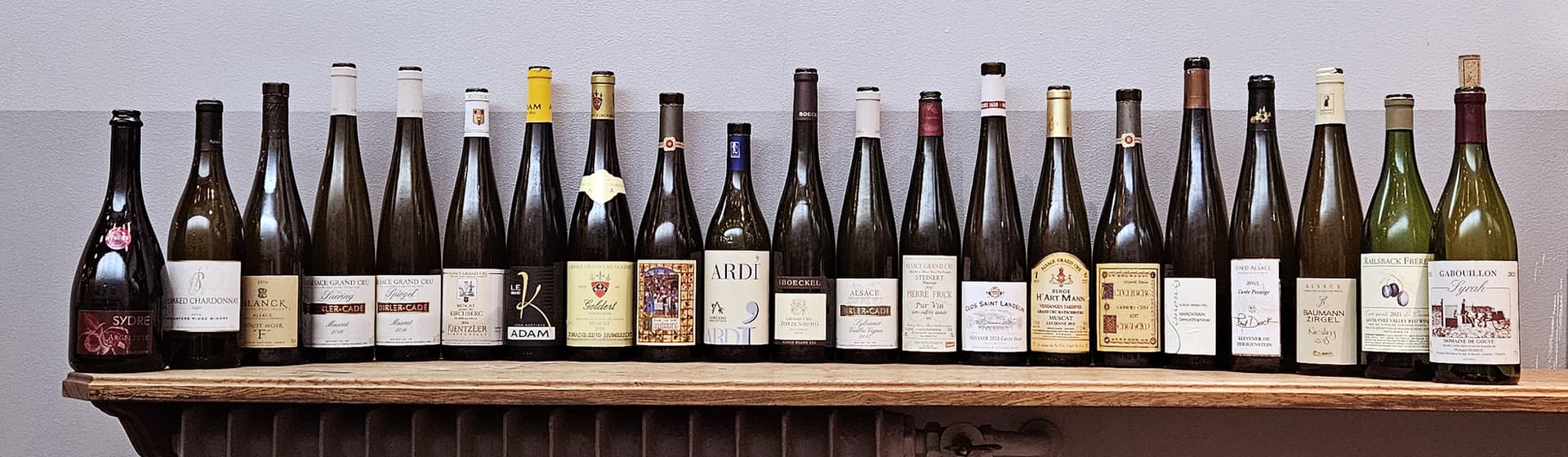
The blind starters:
- 2021 Eric Bordelet Sydre Argelette - France, Normandy (16.8.2024)
Bordelet's special cuvée for apple cider, blended from over 50 different apple varieties sourced from 150 to 300 yo apple trees. The blend typically consists of bitter / tannic (40%), sweet (40%) and tart / acidic (20%) varieties. Fermented spontaneously in concrete and wood tanks. 5,5% alcohol. Lot number L21.02.
Deep golden yellow color. The nose feels rich and sweetly-fruited with quite vinous aromas of ripe cider apples, some honeyed tones, a little bit of leathery funk, light bruised apple nuances, a hint of baking spices and a touch of caramel. The cider feels savory, somewhat funky and off-cry on the palate with a medium body and complex flavors of ripe, sweet apples and phenolic spice, some leathery funk, a little bit of honeyed richness, light bruised apple tones, a hint of apple peel bitterness and a touch of earth. The mousse feels gentle and creamy and the overall feel is pretty firm with the moderately high acidity and light, slightly grippy tannins. The finish is rich, long and somewhat funky with a layered aftertaste of bruised apple, some bretty notes of leather, a little bit of apple peel bitterness, light honeyed nuances and a hint of overripe Granny Smith apple.
A very serious, attractive and sophisticated cider. Tons of depth and complexity here - this is definitely an overachiever for a cider. While the flavor profile is obviously that of a Normandy apple cider, the overall feel is still relatively vinous, thanks to the sense of concentration, slightly tannic backbone and those funky notes of brett. An absolute delight.
(94 points) - 2022 Planters Ridge Unoaked Chardonnay - Canada, Nova Scotia, Annapolis Valley (16.8.2024)
100% Chardonnay, fermented and aged in stainless steel tanks. 11% alcohol. Tasted blind.
Pale, almost colorless whitish-green color. The nose feels youthful, fruity and sweet-toned with aromas of white peach, some sweet appley tones, a little bit of cool herby character, light primary notes of pear drops and a hint of grapey fruit. The wine feels quite ripe, pretty textural and a bit round yet still somewhat acerb and lean on the palate with a medium-to-moderately full body and a bit understated flavors of chalky bitterness, some herby tones, a little bit of fresh white peach, light stony mineral notes, a primary hint of pear drops and a touch of tangy salinity. The moderately high acidity makes the overall feel quite crisp and fresh - maybe even a bit too much, as the fruit department is a bit on the thin side, albeit somewhat sweetish in character as well. The finish is crisp, lean and a bit thin with a medium-long aftertaste of tangy salinity and sharp Granny Smith apple, some lemony citrus fruit notes, a little bit of chalky bitterness, light primary notes of pear drops and a sweeter hint of white peach.
A clean and quite refreshing but also maybe a bit too much cool-climate Chardonnay - I love the zippy energy here, but the fruit department feels a bit thin and lacking in depth and intensity. As the wine is a bit dilute, yet has a slightly sweetly-fruited edge, I wonder if the wine is vinified just off-dry, just to balance out the lack of fruit and somewhat lean overall character? This is not a bad wine in any way, just a bit underwhelming. Probably the biggest problem here for me was the candied pear drop character, but fortunately it is something that will disappear with age. All in all, a decent weekday white. Priced somewhat according to its quality at 23 CAD (approx. 14,5€).
(84 points)
Les Grands Crus
- 2016 Paul Blanck Pinot Noir Cuvée F - France, Alsace (16.8.2024)
100% Pinot Noir from Grand Cru Furstentum, hence Cuvée "F". Fermented spontaneously and macerated for 10-15 days in stainless steel tanks. Aged in French oak barriques (1/3 new, 2/3 once or twice used) for 10-12 months. 13,5% alcohol.
Youthful, luminous and rather translucent dark ruby color. The nose feels fragrant, rather dark-toned and quite ripe with aromas of cherries and spicy Pinosity, some juicy raspberry tones, a little bit of wild strawberry, light earthy notes, a hint of licorice root and a faint developed touch of meaty character. The wine feels ripe, dry and quite harmonious on the palate with a medium body and youthful flavors of juicy raspberries and fresh cherries, some gravelly minerality, a little bit of sweet strawberry, light woody notes of savory oak spice, a hint of sour cherry bitterness and a touch of peppery spice. The wine is moderately high in acidity with supple, gently grippy medium tannins. The finish is dry, juicy and slightly grippy with a rather long and quite intense aftertaste of ripe raspberries, some cherry tones, a little bit of sour cherry bitterness, light sweeter strawberry notes, a hint of spicy Pinosity and a touch of oak spice.
For the longest time, Alsatian red wines were either thin and limpid wines one could confuse with a rosé; or unbalanced, heavily oaked and excessively extracted monstrosities that tried to make up for the lack of ripeness and fruit with heavy-handed winemaking. However, for the past 10-15 years the Alsatian reds have been improving in strides - and I guess one of the key reasons for this is global warming and how Alsace has become a relatively hot place for such a northerly appellation. This wine is a textbook example of where Alsace is now with their red wines: it is very Burgundian in style, and actually quite ripe at that - I think the wine would have no problems passing as a warmer-vintage red Burg. A serious and thoroughly enjoyable effort that is still surprisingly youthful and vibrant for an eight-years old Alsatian red - although I'm pretty sure age has helped the wine in integrating any new oak flavors. An enjoyable wine with still some upside.
(91 points) - 2016 Dirler-Cade Muscat Saering - France, Alsace, Alsace Grand Cru (16.8.2024)
A blend of biodynamically grown Muscat Ottonel (80%) and Muscat Blanc (20%) from Grand Cru Saering. Fermented spontaneously. 13% alcohol, 0,4 g/l residual sugar and 3,9 g/l acidity.
Intense neon yellow-green color. The nose feels surprisingly extracted, heavy and not particularly pleasant with dull aromas of waxy extraction and hay, some paint thinner notes, a little bit of peanut skin, light floral notes, a perfumed hint of hand cream and a touch of alcohol. The wine feels dull, ripe and extracted on the palate with a rather full body and relatively non-fruity flavors of savory spices and waxy extraction, some notes of hay, a little bit of nuttiness, light floral notes, a hints of paint thinner and medicinal ether and a touch of alcohol warmth. The medium acidity feels quite modest, making the wine feel soft and lack in freshness. The finish is dull, warm and quite ripe with a medium-long aftertaste of waxy extraction, some paint thinner notes, a little bit of savory spice and a hint of nuttiness.
There seemed to be something badly wrong here. The wine didn't feel oxidized in any way, nor did it show any obvious corked aromas; it was just lacking completely in the fruit department and coming across as very dull, waxy and spicy with very few redeeming qualities. Even the atypically low acidity didn't help one bit. I don't know if the wine was just too ripe, too old, or just off in some other way. As the wine didn't feel like it should be this way, I was thinking of leaving it unrated, but since Dirler-Cadé's 2016 Muscat Spiegel that we tasted at the same time was so similar in style, I'm just going to think the wine still in sound condition. Needless to say, I was not impressed.
(68 points) - 2016 Dirler-Cade Muscat Spiegel - France, Alsace, Alsace Grand Cru (16.8.2024)
A blend of biodynamically grown Muscat Ottonel (97%) and Muscat Blanc (3%) from Grand Cru Spiegel. Fermented spontaneously. 12,9% alcohol, 1 g/l residual sugar and 4,1 g/l acidity.
Quite pale and slightly evolved yellow-green color. The nose feels quite sweet, floral and varietally correct, but also relatively reticent and somehow a bit greasy with heady yet slightly restrained aromas of lemon marmalade, some beeswax, light apricot tones, a a little bit of rosewater and a hint of fresh nectarine. The wine feels dry, somewhat understated and a bit dull on the palate with a medium-to-moderately full body and rather reticent flavors of lemon-scented hand soap, some stony mineral notes, a little bit of grapefruit, light floral nuances, crunchy hints of red apples and fresh apricot and a touch of beeswax. The medium acidity feels quite modest, not contributing much to the freshness or the sense of structure. The finish is quite short and somewhat dull with light flavors of stony minerality, some beeswax, light floral notes of roses, a little bit of mealy red apple, a hint of lemon-scented hand soap and a touch of fresh stone fruits.
Unlike Dirler-Cadé's 2016 Muscat Saering, which was just very dull and unpleasant, this was only slightly dull with vague floral tones and quite understated fruit department. I have no idea what is going on with these wines, but they are very reticent, showing quite little varietal that would be typical of a variety normally so expressive, instead just feeling very reticent, dull and vaguely waxy and mineral. With the modest acidity that doesn't really contribute to the freshness or the structure of the wine, there are very redeeming qualities here. Normally I would say this wine was flawed in some way, but as this wine was so similar to the 2016 Muscat Saering, it seems this is a stylistic feature, not a bug. I'm not particularly enamored.
(72 points) - 2016 Kientzler Kirchberg de Ribeauvillé Muscat - France, Alsace, Alsace Grand Cru (16.8.2024)
Supposedly this is a rare 100% Muscat Ottonel (normally the wines are either 100% Muscat Blanc, or blends of Muscat Blanc and Muscat Ottonel) from parcels planted in 1971 and 1978 in Grand Cru Kirchberg de Ribeauvillé. 12,9% alcohol, 0,8 g/l residual sugar and 5,5 g/l acidity.
Pale, quite youthful and rather limpid greenish color. The nose feels fragrant and quite floral but also a bit reticent with perfumed aromas of orange blossom and roses, some grapefruit, light appley tones, a little bit of sweet red-toned fruit (raspberries, perhaps?), a hint of beeswax, a touch of stony minerality and a whiff of sweet grapey fruit. The wine feels firm and medium-bodied on the palate with slightly restrained flavors of tart Granny Smith apple and floral notes of orange blossom and rosewater, some stony mineral notes, a little bit of pithy grapefruit bitterness, light evolved beeswax nuances, a hint of grapey fruit and a touch of tangy salinity. The rather high acidity lends good sense of freshness and balance to the wine. The finish is crisp, perfumed and moderately long with a somewhat light aftertaste of floral spice and stony minerality, some beeswaxy tones, a little bit of sharp Granny Smith apple, light pithy notes of grapefruit bitterness, a hint of grapey fruit and a touch of salinity.
A nice but relatively light and understated Muscat. The wine is varietally correct with a nice mineral overall feel and a good backbone of structured acidity. However, the flavors lack intensity and the wine comes across as somewhat subdued - something you really don't expect from a variety as exuberant as Muscat. This is a solid, balanced Muscat, but perhaps more like a simple and pleasant weekday white rather than something bottled under the name of a Grand Cru vineyard. This is good but nothing exceptional or particularly memorable.
(88 points) - 2018 J.B. Adam Kaefferkopf Le Grand K - France, Alsace, Alsace Grand Cru (16.8.2024)
A blend of biodynamically farmed Gewurztraminer (70%) and Riesling (30%) from the domaine's oldest parcels (60 to 70 yo) in Grand Cru Kaefferkopf. 12,5% alcohol.
Intense, medium-deep neon yellow-green color. The nose feels a bit subdued yet pretty fragrant with aromas of peachy stone fruits, some stony mineral notes, a little bit of apple jam, light zesty lemon tones, a flinty hint of smoke and a touch of ripe cantaloupe. The wine feels broad, clean and somewhat oily on the palate with a rather full body and quite youthful, medium-sweet flavors of honeydew melon, some peachy stone fruit notes, a little bit of apple jam, light crunchy notes of fresh Fuji apple, a hint of lychee and a touch of extracted waxy character. The medium-to-moderately high acidity lends some sense of balance, but it doesn't contribute much freshness to the overall feel, which leans into a rather lush and slightly sticky direction. The finish is rich, youthful and juicy with a nuanced, medium-sweet aftertaste of acacia honey and overripe peach, some apple jam tones, a little bit fresh pineapple, light crunchy red apple tones and a hint of stony minerality and a touch of floral spice.
A youthful, rich and quite sweet Grand Cru white that is quite lush and hedonistic in overall feel, yet relatively balanced for such. Even though the wine is mostly Gewurztraminer, the wine isn't nearly as perfumed and exuberant as one would expect - the aromatics are as much Riesling as they are Gewurztraminer, and only the lush, slightly viscous texture and a bit modest level of acidity make it obvious that the wine is based on Gewurztraminer. The overall feel is still very youthful and doesn't really show any signs of age even if the wine is already 6 years old. It might be a bit hard to find a suitable pairing for such a rich and noticeably sweet wine that isn't yet a full-blown dessert wine. I'd let the wine age some more, just to let it develop some tertiary complexity; then I'd pair it with some pungent cheeses or rich, savory desserts that call for some sweetness and sense of richness, but not necessarily those of a dessert wine.
(92 points) - 2018 Zind-Humbrecht Muscat Goldert - France, Alsace, Alsace Grand Cru (16.8.2024)
100% biodynamically farmed Muscat from vineyards in Grand Cru Goldert, averaging 31 years in age. The spontaneous fermentation was exceptionally long, taking more than a year to attain full dryness. Bottled in January 2020. 12,8% alcohol, 2,9 g/l residual sugar, 5,8 g/l acidity and pH 3,2.
Youthful, limpid and quite pale whitish-green color. The nose feels a bit reticent but also true to the variety with fragrant aromas of orange blossom and roses, some zesty citrus fruits, light juicy notes of ripe pear and nashi, a little bit of stony minerality, a hint of sweet grapey fruit, a touch of exotic spice and a whiff of sweet aromatic herbs. The wine feels dry, crunchy and quite structure-driven on the palate with a medium body and intense flavors of lemony citrus fruits and tart Granny Smith apples, some fragrant floral tones, a little bit of grapefruity bitterness, light sweeter notes of honeydew melon, hints of ripe pear and nashi and a touch of stony minerality. The high acidity lends a great sense of structure, freshness and intensity to the wine. The finish is fresh, dry and crunchy with a long, focused aftertaste of sharp Granny Smith apples, some mineral notes of wet rocks, a little bit of floral spice, light saline nuances, a hint of zesty citrus fruits and a touch of honeyed sweetness.
A wonderfully mineral, fresh and structured effort for an Alsatian Muscat, showing much more focus and intensity that the variety typically does. The overall feel isn't as explosively aromatic as Muscat normally is, substituting almost Riesling-like minerality and zesty citrus notes in lieu of the perfumed floral notes and grapey tones. Nevertheless, this is still perfumed enough to be recognizable for a Muscat. The wine is also remarkably youthful for its age, not showing any signs of evolution at the moment. This is very stylish right now, but I'm sure the wine will continue to age, evolve and improve effortlessly for many, many years more. A Riesling lover's Muscat if there ever was one. Highly recommended.
(93 points) - 2019 Marcel Deiss Mambourg - France, Alsace, Alsace Grand Cru (16.8.2024)
A blend of biodynamically farmed Pinot Noir, Pinot Meunier, Pinot Gris, Pinot Blanc and Pinot Beurot (a Burgundian clone of Pinot Gris) from Grand Cru Mambourg, all vinified white. Fermented spontaneously. 14% alcohol.
Youthful, luminous and quite deep yellow-green color; tiny bubbles start slowly developing on the inside of the glass. The wine nose feels rich, sweet and rather tropical with bold aromas of mango, some creamy oak tones, a little bit of peachy stone fruit, light mineral notes of chalk dust, a hint of honeydew melon, a floral touch of apple blossom and a woody whiff of savory oak spice. The wine feels ripe, concentrated and slightly oily on the palate with a full body and intense flavors of peachy stone fruit, some apple jam, light creamy and subtly toasty notes of oak, a little bit of acacia honey, a floral hint of apple blossom and a touch of stony minerality. There's a faint touch of smoke lingering in the background, perhaps either flinty reduction or some toasted oak nuances. The overall feel is very substantial and maybe a bit heavy, but still pretty balanced, thanks to the medium-plus acidity. The finish is long, rich and powerful with an intense aftertaste of ripe apricot and creamy oak tones, some floral spice, a little bit of honeyed richness, light apple jam notes, a hint of sweet oak spice and a touch of honeydew melon. The high alcohol makes the wine end on a slightly warm note.
A very rich, substantial and impressive powerhouse of an Alsatian white. The wine is maybe a tiny bit too low in acidity and too high in alcohol to be truly exceptional, but this is a very stirring effort all the same. Since the wine feels still so very youthful, I think it is entirely possible that the wine is just way too young at the moment; I'd let the wine age for at least another 5 years more, expecting the oak tones to integrate with the powerful fruit flavors a little bit more seamlessly, and hopefully the wine to drop some of its baby fat as well. All in all, this is quite a formidable wine, but its use cases might be quite limited - I guess it will fare best if treated like a very ripe Pinot Gris, or even like a bigger non-Alsatian white, eg. Condrieu.
(94 points) - 2019 Boeckel Sylvaner Zotzenberg - France, Alsace, Alsace Grand Cru (16.8.2024)
100% organically farmed Sylvaner from 50 yo vines in Grand Cru Zotzenberg. Fermented and aged in ancient oak vats. 14% alcohol.
Quite pale lime-green color. The nose feels fresh, youthful and a bit reductive with aromas of fresh pear, some mineral notes of wet rocks, a little bit of leesy creaminess, light smoky and rubbery notes of reduction, a salty hint of oceanic air and a touch of crunchy red apple. The wine feels lively, crisp and fresh on the palate with a medium body and dry-ish flavors of white peach and crunchy red apple, some white currant tones, a little bit of leesy creaminess, light mineral notes of wet rocks and a hint of ripe pear. The high acidity lends good sense of freshness and structure to the wine. The finish is crisp and lively with a rather long aftertaste of fresh Fuji apple, some saline tones, a little bit of crunchy white currant, light leesy notes, a mineral hint of wet rocks and a touch of pear.
A sophisticated, clean and refreshing take on Sylvaner; this really punches above your typical run-of-the-mill Alsatian Sylvaner (that are all too often quite bland, even neutral, and a bit too soft for my preference). While not a particularly flashy wine - as is typical for the variety - the wine nevertheless shows good sense of freshness, structure and balance along with nice flavor intensity. As the overall feel is still pretty youthful, I imagine the wine could not only keep, but also evolve and improve a little bit further from here. Nice stuff, recommended.
(91 points) - 2017 Pierre Frick Muscat Steinert Pur Vin - France, Alsace, Alsace Grand Cru (16.8.2024)
100% biodynamically farmed Muscat from Grand Cru Steinert. Fermented spontaneously and aged in old oak foudres. Vinified completely without added sulfites. Bottled unfined and unfiltered. 13,5% alcohol and 0,5 g/l residual sugar.
Hazy medium-deep yellow-to-slightly orange color with faint lime-green highlights. The nose feels dull, evolved and rather nutty with a bit tired aromas of honeyed richness, some bruised apple tones, a little bit of hay, a hint of nutty rancio and a touch of balsamic VA. The wine feels oily, dull and rather volatile on the palate with a medium body and quite tertiary flavors of bruised apple, some alcohol and paint thinner, light sweeter notes of apple jam, a little bit of extracted bitterness, a hint of white balsamico and a touch of nutty oxidation. The medium acidity doesn't lend much freshness or sense of structure to the wine. The finish is dry, dull and somewhat tired with a medium-long aftertaste of lemony citrus fruit, some sweeter notes of apple jam and white balsamico, light bruised apple tones, a little bit of hay, a hint of nutty rancio and a touch of alcohol.
Ugh, this was a rather mediocre effort for an Alsatian Grand Cru. The overall feel is way too ripe - the wine feels dull, heavy, extracted, somewhat bitter and too low in acidity. Furthermore, the wine has more or less fallen apart due to the lack of added SO2. The wine isn't completely dead, but it is obviously on a decline now - and has been for some time. I didn't see any point in finishing a small sample glass. A big disappointment.
(65 points) - 2020 Domaine Muré Sylvaner Clos Saint Landelin Cuvée Oscar - France, Alsace (16.8.2024)
A late-harvest Sylvaner from the biodynamically farmed Clos Saint Landelin, a Muré monopole on the southern part of Grand Cru Vorbourg, where the average vine age is 49 years. Fermented spontaneously and aged on the fine lees. 12% alcohol, 54 g/l residual sugar and 7,1 g/l acidity.
Youthful, intense lime-green color. The nose feels ripe, somewhat spicy and slightly wild with aromas of juicy Golden Delicious apple, some honeyecomb notes, a little bit of chopped green herbs, light sharp notes of key lime, a hint of fresh nectarine, a touch of kiwifruit and a whiff of waxy funk. The wine feels rich and quite intense on the palate with a rather full body and medium-sweet flavors of white peach, some fresh nectarine, a little bit of honeycomb, light stony mineral notes, a hint of apple jam and a touch of waxy funk. The wine is impressively fresh and structured for such a rich wine, thanks to its high acidity. The finish is long, rich and focused with an intense aftertaste of white peach, some apple jam, light stony mineral notes, a little bit of honeycomb, a hint of ripe pear and a touch of waxy funk.
A rich, youthful and quite concentrated - but also wonderfully balanced and precise - Alsatian Sylvaner from the sweeter end of the spectrum. All too often Alsatian Sylvaners are quite simple, bland and soft wines, but I guess one of the reasons to this is how Sylvaner is normally planted to less suitable sites? After all, most of these Sylvaners that are planted to Grand Cru vineyards tend to perform so much better in comparison. This 2020 Cuvée Oscar was a very impressive effort in its own right and with its rather brisk acidic backbone, it was probably the best iteration of this cuvée I've tasted - it can be rather round and too sweet in vintages when the grapes don't manage to hold on to higher levels of acidity. Great stuff with lots of upside. Recommended.
(92 points) - 2017 Marcel Deiss Altenberg de Bergheim - France, Alsace, Alsace Grand Cru (16.8.2024)
A field blend of 13 different biodynamically farmed varieties (Chasselas, Chasselas Rose, Gewurztraminer, Muscat Ottonel, Muscat Rosé, Muscat Blanc, Pinot Blanc, Pinot Gris, Pinot Noir, Riesling, Savagnin, Sylvaner). Fermented spontaneously. Aged on the lees in oak vats for 12 months. 12,5% alcohol.
Medium-deep golden yellow color with faint greenish highlights. The nose feels very big, concentrated and noticeably ripe with rich aromas of honey, some developed caramel tones, a little bit of bruised apple, light extracted spicy tones, a hint of ripe nectarine, a touch of nuttiness and a whiff of something smoky. The wine feels very ripe, quite extracted and off-dry to medium-sweet on the palate with a full body and bold flavors of lemon marmalade and ripe apricot, some spicy tones, a little bit of apple jam, light evolved notes of nuttiness and bruised apple, a hint of sweet white peach and a touch of caramel. The rather high acidity manages to keep the wine relatively balanced and somewhat structured despite the rather substantial overall feel. The finish is long, juicy and quite powerful with a complex aftertaste of white peach, some honeyed tones, a little bit of beeswax, light evolved nutty and bruised apple notes, a hint of caramel and a touch of exotic spices.
A very ripe, extracted and rather heavy blockbuster white that comes across as a bit too weighty and ponderous for my preference. Even then, the wine is admittedly impressively concentrated, complex and relatively balanced for its huge size. I'd like the wine more if it weren't so massive and showed more freshness and elegance instead, but there's no denying that this is a great wine in its own right. It's just relatively hard to find a suitable use case for such a big, ripe and relatively sweet white wine.
(91 points)
The extra blinds, sampled in the middle or after the tasting:
- 2021 Adriano Marco e Vittorio Ardì Vino Bianco - Italy (16.8.2024)
100% Moscato Bianco from vineyards on the outskirts of Alba. Carefully pressed, only free-run juice is used. Fermented and aged on the lees for 6 months in stainless steel tanks. As the wine is just table wine, there is no vintage designation in the label; just the lot number L21202, which might mean that the wine is from the 2021 vintage. 13% alcohol. Tasted blind.
Youthful, pale and rather neutral whitish-green color. The nose feels a bit understated but varietally correct with floral aromas of orange blossom and apple blossom, some exotic spices, light lemony citrus fruit notes, a little bit of sweet grapey fruit, a hint of crunchy red apple and a touch of something waxy. The wine feels dry, youthful and crunchy on the palate with a medium body and lively flavors of fresh Golden Delicious apple and grapefruit, some floral spices, a little bit of something waxy, light mineral notes of wet rocks, a hint of tangy salinity and a touch of crunchy white currants. The high acidity lends good sense of freshness to the wine. The finish is crisp, dry and crunchy with a rather long aftertaste of Granny Smith apple, some mineral notes of wet rocks, a little bit of salinity, light floral Muscat tones and a hint of grapefruit.
A nice but also somewhat simple and quite straightforward little weekday white. Quite easily identifiable as a dry Muscat, but lacking the depth and intensity of the best Muscat wines. Enjoyable, but ultimately somewhat pedestrian. I doubt the wine is going to benefit much from further cellaring, so I really don't see any point aging these wines beyond five years from the vintage.
(89 points) - 2017 Dirler-Cade Sylvaner Vieilles Vignes - France, Alsace (16.8.2024)
100% biodynamically farmed Sylvaner sourced from lieu-dit Heisse Wanne ("hot tub"), a parcel planted in 1958 in Grand Cru Kessler, and a parcel planted in 1970 right next to Grand Cru Saering. Fermented spontaneously. 13% alcohol.
Quite pale, limpid greenish color. The nose feels open, ripe and quite expressive with aromas of juicy white peach, some mineral notes of wet rocks, a little bit of crunchy Golden Delicious apple, light zesty citrus tones and a hint of honeydew melon. The wine feels ripe, crunchy and pretty structured on the palate with a medium body and slightly understated flavors of sweet white fruit, some appley tones, a little bit of tangy salinity, light leesy notes, a mineral hint of wet rocks and a touch of cantaloupe. The high acidity lends good sense of freshness and structure to the wine. The finish is ripe, crisp and lively with a somewhat light and moderately long aftertaste of tart lemony citrus fruit, some stony and saline mineral notes, a little bit of leesy creaminess, light crunchy appley tones and a hint of juicy white peach.
A nice, youthful and pretty balanced Sylvaner that shows wonderfully expressive and nuanced aromatics, but somewhat comes across as a bit subdued and more linear on the palate. I loved the great sense of minerality and acidity here (that felt almost atypical for Sylvaner in their intensity), but with its somewhat understated overall taste profile, the wine didn't really reach the highs that the nose promised. However, as the wine felt still so very youthful, it is entirely possible we just caught the wine in a slump and it might show better with a bit more age on it. While the wine doesn't blow your socks off, it's a very nice and also pretty serious effort for an Alsatian Sylvaner.
(89 points) - 2018 Serge & Gerard Hartmann Muscat Hatschbourg Vendanges Tardives Lucienne - France, Alsace, Alsace Grand Cru (16.8.2024)
Labeled "Serge H'Art Mann". 100% Muscat from Grand Cru Hatschbourg. 11,5% alcohol.
Youthful, subtly hazy lime-green color. The nose feels ridiculously heady with characterful, fragrant aromas of lemon-scented hand soap and bubble bath along with expressive aromas of lychee and Sichuan pepper, some honeydew melon, light steely mineral notes, a little bit of lemon curd, a zesty hint of pomelo and a floral touch of lavender. The wine feels rich, concentrated and quite oily on the palate with a rather full body and sweet flavors of acacia honey, some floral notes of lavender and rosewater, a little bit of pear marmalade, light lemon curd tones, a hint of citrus bubble bath and a touch of pineapple jam. The wine feels quite over-the-top both aromatically and on the palate. The texture is a bit fat and blowzy due to the somewhat modest medium-minus acidity. The finish is rich, juicy and quite complex with a sweet, expressive aftertaste of overripe apricot and acacia honey, some pear jam, light floral notes of roses and lavender, a little bit of grapefruit marmalade, a raisiny hint of Sultanas and a green-toned, spicy touch of Sichuan pepper.
A characterful and fun sweet Muscat with a very distinctive, positively soapy aroma and an extremely expressive taste. Unfortunately the overall feel is also a bit on the overripe side - not just because the wine is a late-harvested wine, but because it comes across as pretty fat and flabby with a rather modest level of acidity. With more freshness and structure, this could've been an excellent dessert wine, but now the wine comes across as a bit too heavy and ponderous, taking a small toll on the final score. Yet still, this was a very enjoyable and memorable wine all the same. A solid choice for occasions that call for a sweet wine that is not that high in acidity. I recommend serving the wine quite cool, just to give boost to what little acidity the wine has.
(90 points) - 2018 Etienne Simonis Gewurztraminer Marckrain - France, Alsace, Alsace Grand Cru (16.8.2024)
100% biodynamically farmed Gewurztraminer from Grand Cru Marckrain. Fermented spontaneously and aged in stainless steel tanks for 4-5 months. 12,5% alcohol, 102 g/l residual sugar and 4,0 g/l acidity.
Luminous, intense neon-yellow color with a subtly greenish hue. The huge, heady nose feels very expressive and sweet with aromas of beeswax and ripe pear, some apricot, light floral notes of rose petals, light grapey nuances, a hint of apple jam, a touch of honeycomb and a whiff of lychee. The wine feels concentrated, rich and expressive with a full body and intense, sweet flavors of lychee and ripe apricot, some honeyed tones, a little bit of apple jam, light floral notes of rosewater and Asian spices, a hint of beeswax and a touch of pear marmalade. The medium-to-moderately high acidity lends enough balance to the texture so that the wine doesn't appear too heavy or ponderous. The long finish is rich, oily and expressive with a sweet aftertaste of lychee and rosewater, some apple jam, light spicy tones, a little bit of pear marmalade, a hint of beeswax and a faint touch of developed nutty character.
A very rich, expressive and varietally correct Gewurztraminer from the sweet and rather unctuous end of the spectrum. True to the variety, the wine is a bit modest in the acidity department, but fortunately there is enough acidity to keep the wine from coming across as fat or blowzy. A tasty and well-crafted wine that's an excellent choice for pungent and funky cheeses. Can be kept for another 5-10 years, but is drinking mighty well right now. Starting to get a tad pricey at 39,50€, but not forbiddingly so.
(92 points) - 2015 Paul Dock Klevener de Heiligenstein Cuvée Prestige - France, Alsace, Klevener de Heiligenstein (16.8.2024)
100% Savagnin Rosé from the commune of Heiligenstein. 13,6% alcohol. Tasted blind.
Still remarkably youthful neon yellow-green color. The nose feels sweet, nuanced and fragrant with aromas of heather honey and ripe peach, some spicy tones, a little bit of apple jam, light raisiny notes of Sultanas, a hint of overripe pineapple, a touch of beeswax and a perfumed whiff of sweet meadow flowers. The wine feels rich, very ripe and quite intense with a full body and sweet flavors of honey and apricot, some apple jam tones, a little bit of beeswax, light stony mineral notes, a hint of overripe pineapple and a raisiny touch of Sultanas. The rather high acidity offsets some of the sweetness from the residual sugar and lends a good deal of freshness and structure to the wine. The finish is long, sweet and nuanced with a rather intense aftertaste of honey and overripe pineapple, some zesty lemony notes, a little bit of perfumed floral character, light stony mineral tones, a hint of apple jam and a touch of Sultanas.
A sophisticated, balanced and delicious late-harvest Klevener de Heiligenstein. My previous experiences (almost all of them good) have been from the dry or off-dry end of the spectrum, so it was nice to see this variety performs pretty well in a sweeter style as well. I was surprised to learn that the wine was almost 10 years old, because I guessed it must be 4-5 years old, tops. I was immediately in Alsace with this one, but I first guessed that the wine was Pinot Gris, then Sylvaner. Although the wine showed some floral qualities, it didn't really feel like a Muscat or a Gewurztraminer (which actually is an aromatic clone of Savagnin Rosé!), so I guessed Klevener de Heiligenstein. Bingo!
(93 points) - 2018 Baumann-Zirgel Riesling - France, Alsace (16.8.2024)
100% biodynamically farmed Riesling. 12,5% alcohol. Tasted blind.
Yellow-green color. The nose feels ripe and quite youthful with a bit closed aromas of zesty citrus fruits, some Golden Delicious apple tones, a little bit of damp wool, light mineral notes of wet rocks and a floral hint of apple blossom. The wine feels moderately ripe yet dry and linear on the palate with a medium body and youthful flavors of sweet citrus fruits, some sharp lemony tones, a little bit of stony minerality, light woolly nuances and a hint of yellow apple. The moderately high acidity keeps the wine in balance, but the overall feel is not maybe as firm and precise one would expect from a Riesling. The finish is fresh and dry with a medium-long aftertaste of ripe citrus fruits, some crunchy appley tones, a little bit of steely minerality and a hint of wool.
A linear, youthful and maybe a bit closed Alsatian Riesling that is slightly lacking in the acidity department. For a generic white wine, this might've had enough acidity, but for a Riesling, this was an underperformer. Furthermore, there was this dull, woolly undertone that didn't really fit the aromatic profile of the wine. All in all, this left a rather lukewarm impression - this was not a bad wine, but nothing I'd buy for myself.
(86 points) - 2021 Railsback Frères Counoise - USA, California, Central Coast, Santa Ynez Valley (16.8.2024)
100% Counoise from a vineyard planted to cuttings from Château de Beaucastel. Vinified in whole bunches. Aged in neutral French oak barriques for 10 months. Bottled unfined and unfiltered. 12,5% alcohol. Tasted blind.
Youthful, luminous and very translucent ruby-red color with faint blueish highlights and an almost colorless rim. The nose feels sweet, fragrant and remarkably similar to a Cali Pinot with aromas of wild strawberries, some sweet black cherries, light aromatic notes of dried herbs, a little bit of savory spice, a ferrous hint of blood and a touch of something meaty. The wine feels vibrant and ripe yet also wonderfully dry and crunchy on the palate with a light-to-medium body and intense flavors of ripe cranberries and brambly black raspberries, some crowberry tones, a little bit of savory spice, light notes of meaty umami, a hint of tart red plum and a touch of something inky. The structure relies almost solely on the high acidity, not on the soft, supple and almost nonexistent tannins. The finish is lively and crunchy with a bright, dry aftertaste of tart lingonberries and red plums, some brambly raspberry tones, a little bit of ripe cranberry, light wild strawberry notes, a savory hint of meaty umami and a touch of crunchy crowberry.
A wonderfully fresh, bright and tasty little red that feels very much like a Cali Pinot from cooler terroirs - my first guess right off the bat was Pinot Noir from California. When told that it was not it, my second guess was a Cinsaut. So in essence, this wine is like a love child between a Cinsaut and a California Pinot. It's hard to assess whether this wine is capable of aging and improving from here or if it is best while it is still young, but seeing how wonderfully the wine drinks now, it is obvious that the wine doesn't really call for any additional aging. Fun stuff, highly recommended.
(92 points) - 2021 Domaine de Gouye Syrah Gabouillon - France, Vin de France (16.8.2024)
100% Syrah from a vineyard near the hamlet of Gabouillon, on the plateau just outside the Saint-Joseph appellation, above the town of Saint-Jean-de-Muzols. Vinified in whole clusters, crushed by foot, fermented spontaneously and aged in tanks and old oak barrels for 7 months. Bottled unfined and unfiltered. 12% alcohol.
Youthful, quite translucent blood-red color with a pale, almost colorless rim. The nose feels fresh and slightly reductive with pretty cool-climate aromas of cracked peppercorns and brambly blackberries, some herby green notes, a little bit of borderline under-ripe raspberry, light green olive tones, a dank hint of pot and a sweet, a touch of rubbery reduction and a candied whiff of primary fruit. The wine feels youthful, clean and rather primary on the palate with a light-to-medium body and dry, crunchy flavors of tart lingonberries and brambly raspberries, some sweeter blackberry tones, a little bit of herby character, light primary notes of strawberry jellies, a hint of something vaguely funky and a rubbery touch of reduction. The overall feel is quite airy but also rather firm and tightly-knit, thanks to the high acidity and moderately grippy medium-plus tannins. The finish is dry, lively and somewhat grippy with a rather long and crunchy aftertaste of tart lingonberries and cranberries, some sour cherries, light brambly raspberry tones, a little bit of crowberry, green hints of chopped herbs and green olives and a sweet touch of candied primary fruit.
A fresh and enjoyably structure-driven little weekday Syrah. As 2021 was a relatively cool vintage in Northern Rhône, I think the grapes high up on the plateau might've struggled to ripen, as the overall feel here was a bit on the green and slightly vegetal side. I enjoyed the fresh, clean and positively unpretentious style here, all backed up with good, firm structure. I guess the wine might've benefited from a few additional years of aging as it came across as not only rather candied with its primary fruit flavors, but still a bit reductive as well. Most likely this wasn't the best vintage of the label and it was opened a bit too early, but the overall feel was promising enough to make me feel like re-visiting the wine with another vintage. Priced somewhat according to its quality at 17€.
(88 points)
Posted from CellarTracker


