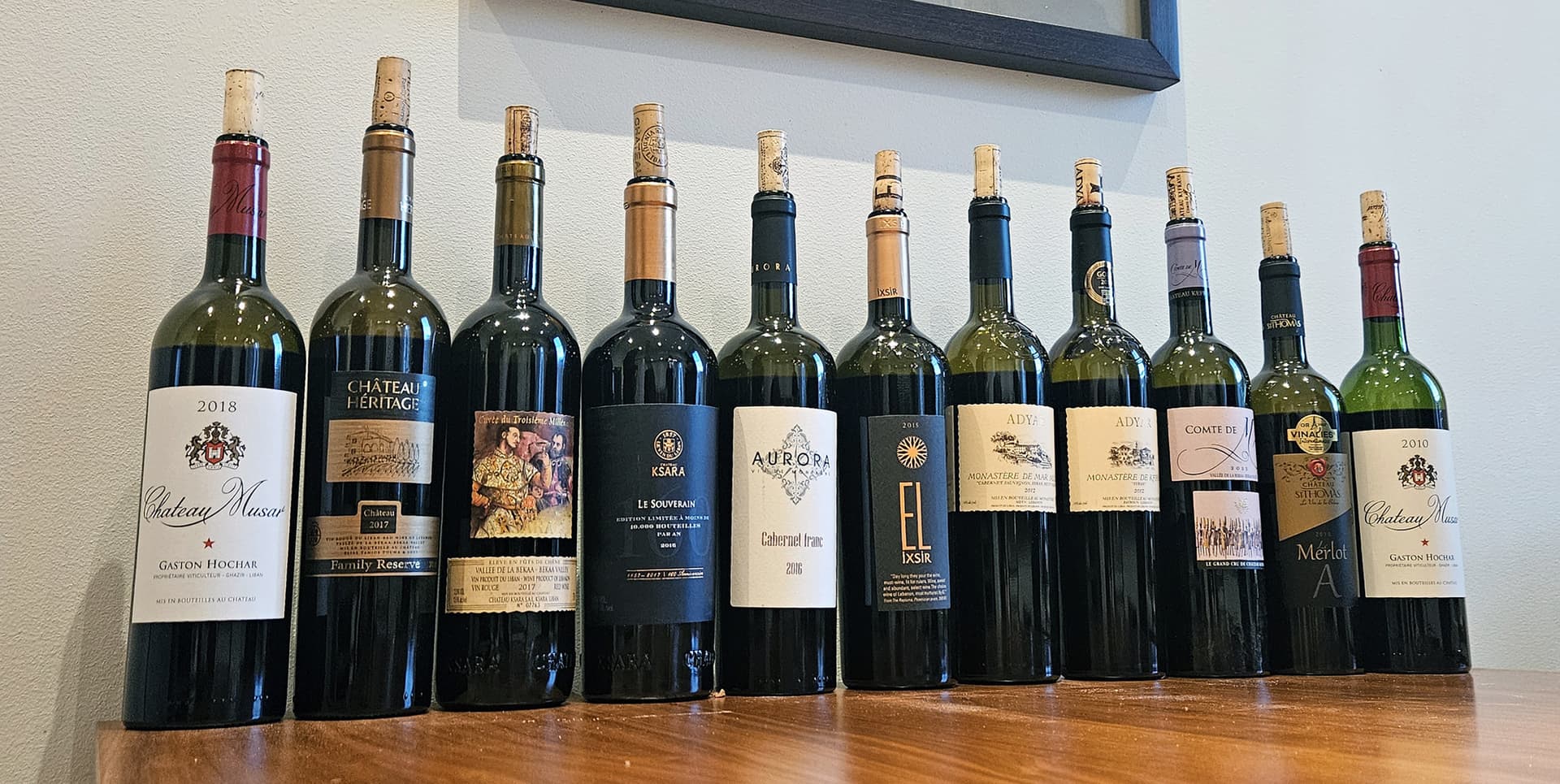
About a year ago we had a bunch of Lebanese wines with some Lebanese food (which I forgot to document, so you have to just take my word for it!).
Now I’ve had a ton of Musar in my life, so I know Lebanese wines from that - rather myopic - perspective. However, I’ve had only a handful of other Lebanese wines, so this was a welcome opportunity to taste them more extensively and comparatively.
However, the overall style didn’t really impress. There were some rather nice and quite “old school” wines, but most seemed either quite modern with impactful, heavy-handed winemaking, or just going downhill due to age. I guess I still need to research the Lebanese wines a bit more before I can really muster up some courage and expand my zone of comfort outside of Musar (even if the new 2018 we tasted here was a rather disappointing effort).
Our appetizer fizz (which I forgot to document as well) was served blind and it took a little bit of time before we finally managed to identify it as a bubbly Bairrada.
- 2015 Luis Pato Bairrada Vinha Formal - Portugal, Beiras, Bairrada (28.9.2024)
A méthode traditionnelle Bairrada Espumante, composed of a blend of Bical and Cerceal from the Vinha Formal vineyard. Fermented and aged for a month in once-used oak barrels. Aged sur lattes for at least 9 months, but in some cases for many years. 11,5% alcohol. Tasted blind.
Pale lemon yellow color. The nose feels savory and somewhat autolytic with aromas of leesy yeast and nutty notes of chopped almonds, some white bread notes, a little bit of fresh white fruit, light sweeter honeyed nuances, a hint of creamy custard and a touch of stony minerality. The wine feels dry and pretty crisp on the palate with a medium body and flavors of stony minerality and leesy yeast, some fresh red apple notes, light salty mineral tones, a little bit of zesty citrus fruit, a hint of honeyed richness and a touch of chalk dust. The mousse feels long, crisp and quite voluminous and the overall feel is nicely supported by the brisk, high acidity. The finish is crisp, fresh and lively with a long aftertaste of lemony citrus fruits, some saline mineral tones, a little bit of leesy creaminess, light honeyed nuances, a mineral hint of wet rocks and an autolytic touch of white bread.
A tasty, lively and pretty sophisticated Bairrada Espumante with quite a bit of emphasis on the leesy autolytic nuances. Lovely sense of finesse and freshness here. It's hard to say if the wine can actually continue to evolve and improve from here, but at least for now this is a lovely drop. Serious stuff that punches above its weight and gives certain Champagnes run for their money. A solid purchase at 25€.
(91 points) - 2018 Chateau Musar - Lebanon, Bekaa Valley (28.9.2024)
A blend of Cabernet Sauvignon, Carignan and Cinsaut, one third of each. The vintage 2018 in Beqaa started with abundant rain and snow, followed by still somewhat rainy early April, which suddenly changed into a warm late April, promoting opening of the buds. The slightly rainy months of May and June were followed by a dry July and finally a three-day heatwave in August. Harvest began in September 4th and Cinsaut was noticeably affected by the heatwave, as these grape varieties were shriveled with very high levels of sugar. The wine was fermented spontaneously, all varieties separately in concrete tanks; Cabernet Sauvignon fermented effortlessly, whereas Carignan and Cinsaut fermented with less ease - MLF was yet to begin even 3 months after the harvest. The fermented varietal wines were then aged in oak barrels for a year, blended in January 2021, then left to marry for a few months and bottled unfined and unfiltered in the summer of 2021. 14% alcohol.
Youthful, luminous and slightly translucent cherry-red color. The nose feels sweet and fragrant with solar aromas of strawberries and dried dark fruits, some ethery notes of VA, a little bit of raisiny fruit, light earthy nuances and a hint of cassis. Surprisingly sweet and raisiny for a Musar, but still identifiable for one, due to the classic combination of richness and volatile lift. The wine feels youthful, ripe and surprisingly sweet-toned on the palate with a full body and juicy flavors of cherry marmalade, some raisiny tones, a little bit of sweet, ethery VA, light plummy notes, a hint of dried figs and a touch of strawberry jam. The overall feel is very rich and mellow with medium acidity and soft, gently grippy medium tannins. The finish is textural, sweet-toned and slightly grippy with a rich, moderately long aftertaste of raisiny dark fruits, some strawberry jam, light dark plummy tones, a little bit of wizened black cherry, a sweet hint of ethery VA and a touch of ripe figs.
After a streak of fine, firm and nuanced vintages, this was a throwback to the lush, jammy style of the 2012 vintage I'm not a fan of. The fruit profile is atypically rich and raisiny for a Musar, and the wine is lacking the firm structure that this kind of richness really calls for. I love Musar due to its combination of unadulterated, sunny yet fresh and nuanced fruit profile that is counterpointed with a good, firm structure - often even with a surprisingly high level of acidity for such a sunny wine. This wine, while easily identifiable for a Musar with its solar fruit profile and distinctively sweet, ethery VA, is way too sweet, soft and jammy for my preference. Not really a bad wine in any way, but not really a classic Musar, and with its rather soft structure and fruit profile verging on pruney already in its youth, I am doubting if this wine has the stuffing to age gracefully. My expectation is that this is not going to be the longest-lived vintage, unfortunately. Maybe a bit pricey for its quality at 45€.
(88 points) - 2017 Chateau Heritage Family Reserve - Lebanon, Bekaa Valley (28.9.2024)
A blend of Cabernet Sauvignon (50%) and Syrah (50%). Fermented and macerated for 2 weeks in stainless steel tanks. Aged for 12 months in new oak barriques. 14% alcohol.
Dark, quite deep and rather opaque blackish-red color with a purplish hue. The nose is ridiculously oaky with thick, unctuous aromas of toffee and caramel, some smoky notes of toasted oak, light woody tones, a little bit of dill, a sweet hint of dark plummy fruit, a touch of blackberry jam and a whiff of milk chocolate-coated cherries. To me, the nose is anything but attractive. The wine feels ripe, sunny and noticeably oaky on the palate with a full body and bold flavors of toasty mocha oak and milk chocolate, some charred woody tones, a little bit caramel, light blackberry jam nuances, a hint of vanilla and a touch of dark plummy fruit. The soft acidity feels pretty modest, so the structure relies mostly on the quite extracted and pretty grippy tannins. The finish is heavily oaky, powerful and rather grippy with a long aftertaste of chocolatey mocha oak and smoky notes of toasted wood, some extracted woody bitterness, a little bit of dark plummy fruit, light caramel nuances, a hint of vanilla and a touch of jammy blackberries.
Ugh, this was pretty repugnant stuff. I honestly can't remember when was the last time I had a wine as badly over-oaked as this. I mean, this felt more oaky than a typical straight Bourbon! Then add in all that sweet, jammy fruit and soft, modest acidity and voilà! Although the oak might integrate a bit more with the fruit with additional aging, I doubt that the wine can be aged for long enough to integrate all that oak. And I can't picture a world where any amount of aging would make this wine come across as elegant, harmonious or even particularly enjoyable. Steer clear of this wine. At 34€ this has been a daylight robbery.
(68 points) - 2017 Château Ksara Cuvée 3eme Millenaire - Lebanon, Bekaa Valley (28.9.2024)
A blend of Petit Verdot (40%), Cabernet Franc (30%) and Syrah (30%). Fermented and macerated with the skins in tanks for 20-30 day. Aged for 14 months in French oak barrels (50% new). 13,5% alcohol. Bottle #7763.
Dense, fully opaque blackish-red color with a youthful, subtly purple hue. The nose feels dark-toned and pretty savory with aromas of ripe red plums, some loose tobacco notes, a little bit of herbaceous bell pepper along with some leafy Cab Franc tones, light blueberry and blackcurrant nuances, a hint of earth, a touch of black cherry and a whiff of meaty or even gamey character. The wine feels chewy and somewhat extracted yet still at the same time a bit airy on the palate with a full body and quite intense flavors of ripe red plums, some funky leathery and gamey tones, a little bit of loose tobacco, light herbaceous leafy notes, a woody hint of savory oak spice and a touch of ripe redcurrant. The overall feel is moderately stern and structure-driven, thanks to the ample, grippy tannins and high acidity. The finish is juicy, long and grippy with a savory aftertaste of crunchy redcurrants and fresh blueberries, some ripe red plum tones, a little bit of tobacco, light woody notes of savory oak spice, hints of leather and gravel and a touch of extracted bitterness.
A serious, tough and quite structure-driven effort. Very old world and very old school at that. Despite the relatively high proportion of new wood, the wine carries it well, not exhibiting any obvious toasty new oak aromas or flavors. At the moment the wine is still a bit stolid and maybe a tad grumpy, lacking finesse and nuance, it feels like it is yet to show its best side. However, as the wine feels like it is built to age - like an old-school claret from a cool, tannic vintage - I think this wine might evolve into something interesting with enough age. Priced according to its quality at 33€.
(90 points) - 2016 Château Ksara Le Souverain - Lebanon, Bekaa Valley (28.9.2024)
A blend of Arinarnoa (50%) and Marselan (50%). Aged in new oak barriques for 24 months. Bottled unfiltered. 14% alcohol. Total production 8805 bottles.
Dense, fully opaque red-black color. The nose feels dark-toned and sunny yet pretty savory with aromas of blackcurrant juice concentrate, some pipe tobacco, a little bit of blueberry, light oaky notes of savory wood toasted new oak spice, a hint of fresh boysenberry and a perfumed touch of floral lift. The wine feels ridiculously concentrated, extracted and chewy on the palate with a very full body and opulent flavors of dark plums and blackberries, some sweet boysenberry tones, a little bit of savory wood spice, light sweeter notes of wizened dark berries, hints of ripe blackcurrant and blueberries and a toasty touch chocolatey mocha oak. The mellow medium acidity does fairly little to the sense of firmness, so the structure relies almost entirely on the ample, firm and very grippy tannins. The finish is very warm, powerful and noticeably grippy with a long, dark-toned aftertaste of boysenberries and blueberries, some toasty mocha oak tones, a little bit of pipe tobacco, light juicy notes of elderberries and cassis, a hint of savory wood spice and a sweeter touch of pruney dark fruit.
This was a rather clumsy, monolithic and overdone blockbuster wine with a huge body and ripe, opulent flavors but no sense of finesse, freshness or nuance to speak of. I guess this wine is crafted to impress people who equate wine's sense of concentration and level of extraction with quality. After Ksara's enjoyably firm and quite "traditional" Cuvée 3eme Millenaire, this Le Souverain was a major disappointment. A modernist lump of a wine. I don't really expect a wine as ripe, fat and heavy as this to develop into anything particularly interesting with any amount of aging. Definitely not worth the 45€.
(83 points) - 2016 Aurora Cabernet Franc - Lebanon, Batroun (28.9.2024)
100% Cabernet Franc from two parcels, planted in 2009 and 2012 at the altitude of 900 m. All grapes destemmed, then fermented in stainless steel tanks. Aged in oak barriques (approximately 1/3 new) for 12 months. 13,5% alcohol.
Dark and somewhat translucent raspberry red color with a subtle blueish hue. The nose feels very Cab Franc with herbaceous aromas of bell pepper and leafy greenness, some ripe redcurrant tones, a little bit of toasty new oak spice, light nuances of tobacco, a hint of fresh red plum and a woody touch of pencil shavings. The wine feels ripe yet pretty fresh on the palate with a full body and vibrant flavors of dark plums, some leafy herbaceous notes, a little bit of sweet red fruit, light bell pepper tones, a hint of sour cherry bitterness and a toasty touch of sweet new oak spice. The overall feel is enjoyably firm and balanced with the high acidity and gently grippy medium tannins. The finish is ripe, dark-toned and gently grippy with a long aftertaste of dark plummy fruit, some green leafy notes, a little bit of sour cherry bitterness, light tobacco tones, a herbaceous hint of chopped bell pepper and a touch of crunchy red currant.
A nice, balanced and enjoyably herbaceous yet not aggressively vegetal Cab Franc. The wine shows a bit more body and ripeness than its Loire counterparts, but due to its herbaceous overtones, the overall feel reminds me more of a 1980's Bordeaux rather than a typical, dark-fruited new world Cab Franc. Only the somewhat toasty - yet not overdone - oak influence is something that might be a bit out of place in a 1980's Bordeaux. But maybe not in a contemporary Bordeaux. So in effect, this wine might not be a dead ringer for a Loire Cab Franc, but it instead feels like a wine I wish modern Bordeaux reds were more like! An enjoyable and well-crafted effort that drinks nicely now and probably will get even better as the toasty oak nuances integrate with the developing dark fruit flavors. Priced according to its quality at 38€.
(91 points) - 2015 Ixsir El - Lebanon, Batroun (28.9.2024)
A blend of Cabernet Sauvignon (45%), Syrah (45%) and Merlot (10%). Aged in oak barrels (50% new, 50% once used) for 24 months. 15% alcohol.
Dense, fully opaque reddish-black color with a faint evolved maroon hue. The nose feels ripe, fragrant and fruit-forward with aromas of dark plummy fruit, some boysenberry tones, a little bit of ripe blackberry, light fragrant notes of elderberry juice and cherry pits, a toasty hint of sweet oak spice and a touch of new leather. The wine feels dense, chewy and pretty hot on the palate with a very full body and vibrant, fruit-driven flavors of blueberries and dark plums, some elderberry tones, light notes of damsons, a little bit of cherry pits, sweeter hints of Maraschino cherries and boysenberries and a touch of toasty wood spice. The overall feel is very structured with the rather high acidity and assertive, noticeably grippy tannins. The finish is juicy, powerful and very grippy with a long aftertaste of juicy dark berries and elderberry juice, some fresh bilberry tones, a little bit of damson, light notes of cherry pits and black cherry marmalade, a hint of new leather and a touch of savory wood spice.
A very big, powerful and noticeably ripe powerhouse of a wine. The nose is beautifully vibrant with fragrant, fruit-driven aromas but on the palate the wine comes across as too heavy and hot. Fortunately the impressive structure manages to keep the wine quite nicely in balance - without this much acidity and all the mouth-drying tannins, the wine would come across as clumsy, listless and flabby. However, despite its commendable structure, the wine is just too big and ripe for my palate. It's a well-made wine, but in a style I don't enjoy. I hope the wine could improve with additional aging - at least it seemed surprisingly vibrant and youthful for its 9 years of age and the overall feel is that of a ageworthy wine. At 77,60€, the wine feels very overpriced for its quality.
(87 points) - 2012 Adyar Monastère de Mar Moussa - Lebanon, Batroun, Adyar (28.9.2024)
A blend of organically farmed Cabernet Sauvignon, Syrah and Petit Verdot. Aged for 24 months in new oak barrels. 14% alcohol.
Quite deep and rather opaque blackish-red color. At first the nose feels sweetish, sunny and a bit of a crowdpleaser, but opens up with some enjoyably funky tones that add quite a bit of depth and complexity. The overall feel is somewhat evolved with nuances aromas of pipe tobacco and ripe blackcurrant, some funky notes of old leather, light perfumed floral nuances, a little bit of blueberry, a bretty hint of barnyard and a touch of smoky phenolic spice. The wine feels dense, ripe and chewy yet not big or heavy on the palate with a full body and intense flavors of ripe black cherries, some funky leather tones, a little bit of juicy blackcurrant, light bilberry tones, a hint of cherry marmalade and a bretty touch of barnyard. The overall feel is firm and structured yet not tough with the rather high acidity and quite ample, moderately grippy tannins. The finish is long, a bit rustic and rather grippy with an intense aftertaste of dark fruits, some leathery tones, a little bit of sweet blueberry, light funky notes of barnyard and phenolic spice, hints of cherry pits and cherry marmalade and a touch of sweet oak spice.
At first I wasn't particularly thrilled by the wine as it just seemed like a rather fruit-forward crowdpleaser. However, with a little bit of air, the wine opened up beautifully, developing more savory and rustic nuances along with some bretty notes of barnyard and leathery funk - all these in moderation, of course. Just a little bit of funky spice that worked as a terrific counterpoint to the fruitier aspects. I wouldn't say the wine was particularly evolved now, at 12 years of age, but it wasn't young in any way, either. I'd say the wine is still on an upward trajectory, but slowly approaching its plateau of maturity. Most likely the wine will reach its peak within the next 10 years or so, and stay there for another decade or a bit more. Priced according to its quality at 41€.
(92 points) - 2012 Adyar Syrah Monastere de Kfifane - Lebanon, Batroun, Adyar (28.9.2024)
100% organically farmed Syrah from a vineyard planted at the altitude of 400 m above sea level. Aged for 24 months in new oak barrels. 14% alcohol.
Slightly translucent and moderately evolved reddish-maroon color with an aged brownish hue. The nose feels savory, somewhat restrained and quite evolved with aromas of wizened dark berries, some leathery funk, a little bit of peppery spice, light balsamic notes of VA, a hint of gamey meat and a touch of blackberry marmalade. The wine feels evolved, savory and slightly funky on the palate with a moderately full body and rather developed flavors of game and raisiny dark fruit, some ripe dark fruit notes, a little bit of balsamic VA, light funky notes of old leather saddle and horse stables, a hint of tobacco and a touch of dried-fruit sweetness. The structure relies more on the firm and quite grippy tannins than on the somewhat mellow medium-plus acidity. The finish is juicy, somewhat sweetly-fruited and quite grippy with a ripe and evolved aftertaste of tobacco and raisiny dark fruit, some balsamic notes of VA, a little bit of juicy blackberry, light savory meaty tones, a hint of leathery funk and a touch of game.
A very sunny and rather tertiary Syrah with a lot of ripeness and extraction and relatively little freshness. There's also some funky tones that don't really overwhelm anything but complement the evolved, meaty notes. I'd say the wine is either on its plateau of maturity - and has been there for some time - or it has already started going a bit downhill. The overall feel is still pretty enjoyable, but maybe a tad too evolved for my preference. I guess it might be because of the elevated level of ripeness as the overall feel is a bit too raisiny and solar. A good - but not great - evolved Syrah. Maybe a bit pricey for the quality at 30€.
(88 points) - 2011 Château Kefraya Comte De M - Lebanon, Bekaa Valley (28.9.2024)
A blend of Cabernet Sauvignon and Syrah from vineyards planted at the altitude of 1100 m above sea level. Aged in French oak barrels for 18 months. 14% alcohol.
Deep and rather opaque blackish-red with a slightly matured maroon hue. The nose feels dark-toned and pretty savory with aromas of licorice root, some ripe dark plummy tones, a little bit of old leather, light sweeter nuances of blackcurrant jellies, a hint of pipe tobacco and a touch of sun-baked earth. The wine feels quite ripe yet also savory, firm and crunchy on the palate with a full body and quite intense flavors of juicy red plums, some tobacco, a little bit of ripe redcurrant, light sweeter notes of blackcurrant jellies, a hint of old leather and a woody touch of pencil shavings. The overall feel is quite stern and structured with the high acidity and rather grippy tannins. The finish is savory and pretty grippy with a savory aftertaste of tobacco and ripe redcurrants, some earthy tones, a little bit of cassis, light jammy blackberry nuances, a hint of wood and a touch of old leather.
An enjoyable but also a bit anonymous Lebanese red. Good sense of structure, but lacks depth and distinction - the overall feel is that of a generic warmer-region red with very little of anything that would make it stand out. This is a nice food wine, but doesn't really leave a lasting impression. Perhaps a bit on the pricey side at 41€.
(89 points) - 2010 Château St. Thomas Le Merlot A - Lebanon, Bekaa Valley (28.9.2024)
100% Merlot. Aged for 10 months in French oak barriques. 14% alcohol.
Quite deep, rather opaque and moderately evolved maroon color. The nose feels pretty odd with aromas of old grappa-like notes of fusel alcohols, some elderberry tones, a little bit of rubber, light sweeter notes of ripe red plums and wizened dark berries, a hint of red licorice and a touch of green peppercorns. Lots of quite weird elements here. The wine feels old and pretty dull on the palate with a rather full body and pretty atypical flavors of pronounced meaty umami along with gamey notes, some earthiness, light grappa-like fusel alcohol notes, a little bit of savory wood spice, sweeter hints of wizened dark berries and ripe red plums and a touch of red licorice. The combination of rather high acidity and moderately grippy medium tannins make the wine feel enjoyably firm and structured. The finish is dull, savory and rather grippy with a long aftertaste of game, some earthy tones, a little bit of tobacco, light savory notes of meaty umami, a hint of wood and a sweeter touch of dried dark fruit.
This was a rather weird and not particularly pleasant experience. The wine smelled more like a fruity grappa than a red wine and its taste was dominated by a pronounced gamey flavor along with rather noticeable streak of meaty umami. I guess the wine might've been a lot better and more vibrant in its youth, and now its fruit flavors have started to fade, revealing a rather odd, somewhat evolved - yet not old - wine underneath. I don't know if we had an off bottle or if the wine is just past its prime. At 50€, this was waste of money.
(76 points) - 2010 Chateau Musar - Lebanon, Bekaa Valley (28.9.2024)
A blend of Cabernet Sauvignon, Carignan and Cinsaut, one third of each. The vintage 2010 in Beqaa was very dry to boot with very little snow or rain during January and February. Very promising spring was followed by a 3-week heat wave starting in mid-July, reaching peak temperatures of 48,5°C, causing the vines to shut and drying the grapes on the vine. Carignan and Cinsaut survived the heat wave quite well, but Cabernet Sauvignon was badly affected, making the harvest very small in part of very limited quantities of high-quality Cabernet grapes. Fermented spontaneously in concrete, aged in oak barrels for a year. Blended together in 2012, left to marry for a year and bottled in 2013. 2010 Musar was made in very limited quantity due to the small amount of Cabernet Sauvignon available. 13,5% alcohol, 2 g/l residual sugar and 6,3 g/l acidity.
Slightly translucent cherry-red color with a subtly evolved pale maroon rim. The nose feels ripe, fragrant and rather sweetly-fruited with expressive aromas of sunny dark berries and juicy dark plums, some cherry pits, light blackberry tones, a little bit of ripe figgy fruit, a lifted hint of sweet, ethery VA and a touch of exotic spices. The wine feels juicy and silky yet pretty firm on the palate with a medium-to-moderately full body and vibrant flavors of ripe figs and sweet red plums, some blackcurrant gummies, a little bit of juicy boysenberry, light ferrous notes of blood, a hint of old leather and a lifted touch of nail polish VA. The overall feel is wonderfully structure-driven and pretty tightly-knit yet not tough or aggressive with the high acidity and moderately grippy tannins. The finish is long, savory and rather grippy with a long and quite intensely-flavored aftertaste of boysenberries and blueberries, some sweeter blackcurrant jelly tones, a little bit of old leather, light ferrous notes of blood, a lifted hint of sweet nail polish VA and a touch of earth.
After the surprisingly evolved and even somewhat oxidative 2010 Musar we had earlier this year, this bottle was a welcome return to the form. I've considered 2010 to be one of the great and promising vintages of Musar, but every now and then I come across a bottle that is somewhat subpar in relation to my expectations, which makes me question my initial assessment. But this wine returned my faith in this vintage - there is just quite a bit of bottle variation. But when the wine is good, it is good. This will continue to age and evolve for many more years. A terrific purchase at 41,95€.
(94 points)
Posted from CellarTracker
