Around these parts, when it comes to off-dry to sweet Riesling, Kabinett is our go-to style. That’s why a friend of mine arranged this tasting about a year ago - just to remind people that while typically a sweeter and bolder wine, a great Spätlese is also nothing short of amazing. We all knew that, of course, but it never hurts to study a little bit more!
So, plowed through a very serious bunch of Riesling Spätlesen, followed by a somewhat random bunch of blind extra bottles that the attendees brought with them - including some additional Rieslings!
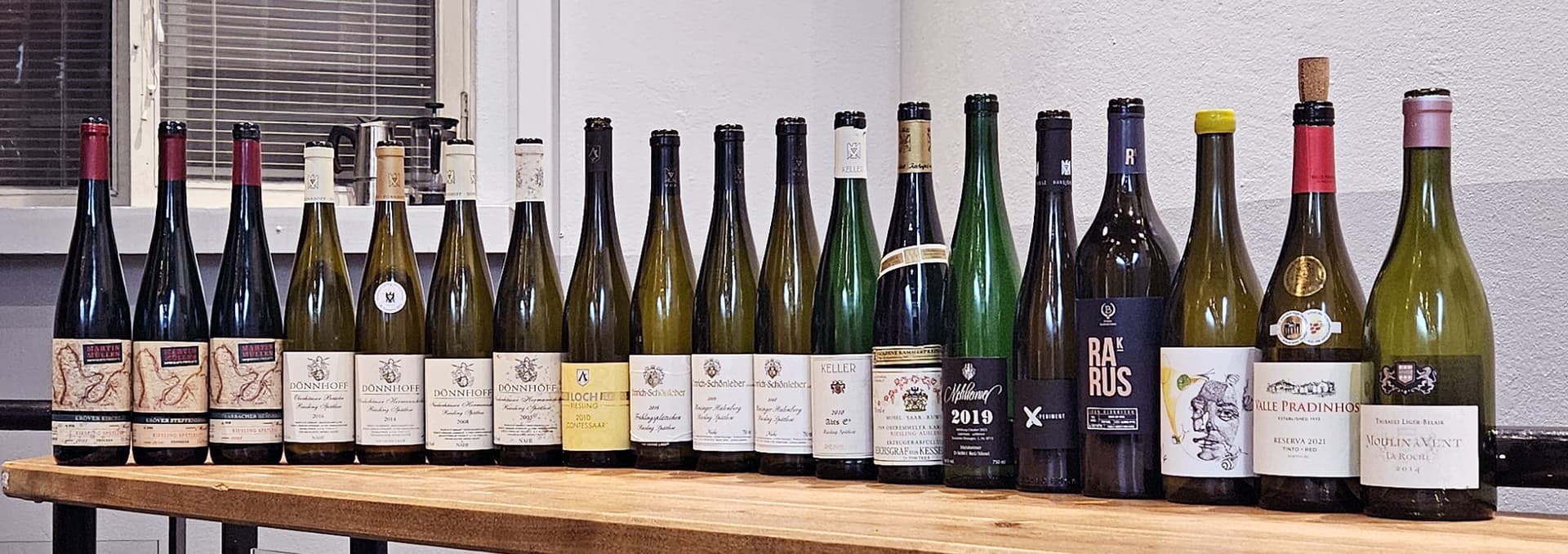
(That Contessaar LochRiesling wasn’t part of the official tasting, but we had it as a food wine midway through the tasting, which is why it is there in the middle of all the Spätlesen).
- 2015 Martin Müllen Kröver Kirchlay Riesling Spätlese ** trocken - Germany, Mosel Saar Ruwer (23.8.2024)
12% alcohol and 11,3 g/l acidity.
Quite intense and somewhat concentrated neon yellow-green color. The nose feels ripe and attractive with rather sweet-toned aromas of pineapple and peach jam, some candied ginger tones, a little bit of lemon marmalade, light floral notes of orange blossom, mineral hints of wet rocks and a touch of appley fruit. The wine feels quite ripe yet also brisk, rather high-strung and even a bit austere on the palate with a light-to-medium body and quite dry flavors of wet rocks and chalky bitterness, some citrus notes of pomelo and key lime, light crunchy notes of fresh red apples, light steely mineral tones, a little bit of tangy salinity, floral hints of orange blossom and a touch of honeyed richness. The bracing acidity lends the wine a tremendous amount of freshness, energy and structure. The finish is crisp, crunchy and high-strung with a long, slightly austere aftertaste of apple peel bitterness, some pomelo, light steely mineral notes, a little bit of ripe red apple, a hint of tangy salinity and a touch of honeyed richness.
As I wrote in my tasting note earlier this year: this is a "nice but also quite lean and rather unapologetic dry Mosel Riesling that is just barely on this side of austerity." At nine years of age, this is still incredibly youthful and tightly-knit, only starting to leave its unapproachable baby phase behind. While not fully open for business yet, this is still an enjoyable wine in its own right now. However, as Müllens wines often need tons of age before they really start to hit their stride, I think this wine is still at least a decade away from its peak. Let this one age - this is going to be so much better with proper age. Great value at approx. 20€.
(91 points) - 2010 Martin Müllen Kröver Steffensberg Riesling Spätlese ** feinherb - Germany, Mosel Saar Ruwer (23.8.2024)
12% alcohol.
Luminous and quite intense neon golden yellow with faint lime-green highlights. The nose feels a bit restrained and somewhat savory for a Riesling with aromas of grated ginger, some developed creamy tones, a little bit of ripe lemony citrus fruit, light mineral notes of stone dust and a sweeter hint of apple jam. The wine feels balanced, airy and nuanced on the palate with a rather light body and off-dry flavors of steely minerality and lemon marmalade, some developed notes of cooked cream, light sharp Granny Smith apple notes, a little bit of apple peel bitterness, sweeter hints of honey and ripe nectarine and a touch of candied ginger. The high acidity makes the wine feel focused with good sense of incisive structure. The finish is crisp, fresh and lively with a long, intense aftertaste of tart Granny Smith apple and steely minerality, some candied ginger tones, a little bit of apple jam, light angular notes of rocks and chalk, an evolved hint of cooked cream and a touch of apple peel bitterness.
A tasty and harmonious off-dry Spätlese that is starting to exhibit the first signs of age - yet even then the wine feels still very youthful and maybe not austere, but still somewhat leaner and more angular than you'd expect. Yet another great example of why you should age these Müllen wines - they can be very austere and not particularly approachable in their youth, but they turn quite lovely with enough aging. It is obvious that the wine is still on an upward trajectory, but it coming from its shell and can be enjoyed already now. A fine wine from a difficult, very acid-driven vintage. Priced according to its quality at approx. 35€.
(92 points) - 2015 Martin Müllen Trarbacher Hühnerberg Riesling Spätlese - Germany, Mosel Saar Ruwer (23.8.2024)
8% alcohol.
Youthful neon green-ish Mountain Dew appearance. The nose feels sweet with somewhat light yet attractive aromas of lemon marmalade, some fragrant notes of apple blossom, light stony mineral nuances, a little bit of something vaguely spicy, a hint of ripe stone fruits and a touch of wild honey. The wine feels firm, youthful and structured on the palate with a medium body and sweet flavors of freshly pressed apple juice and acacia honey, some lemon marmalade tones, a little bit of ripe apricot, light mineral notes of wet rocks, a hint of tart key lime and a touch of floral spice. The high acidity keeps most of the sweetness at bay, making the overall feel fresh, precise and structured. The finish is firm, long and quite sweet with an intense aftertaste of lemon marmalade, some honeyed tones, a little bit of stony and steely minerality, light apple juice notes and a hint of floral spice.
A youthful, balanced and tasty Spätlese from the ripe and sweet end of the spectrum when it comes to Müllen wines. However, despite its sweetness and ripeness, the wine is still remarkably fresh, structured and precise; basically the ripeness here just has made the wine more approachable and less austere in its youth - after all, Müllen's wines can be quite lean and aggressive for quite some time and it's quite common for many of the Rieslings to call for more than a decade of aging before they begin to unwind. At less than 10 years of age, this wine is drinking mighty well already, but seeing how the wine is still very youthful and not showing any obvious signs of age, I can imagine it will continue to evolve and improve for at least another decade, if not several. Pretty good value at approx. 30€.
(92 points) - 2016 Dönnhoff Oberhäuser Brücke Riesling Spätlese - Germany, Nahe (23.8.2024)
AP 11-17. 8,5% alcohol.
Luminous, youthful and quite intense lime-green color. The nose feels remarkably youthful - primary, even - with aromas of pear drops and grapey fruit, ripe greengage, some sour apple candies, light lemony citrus fruits and a little bit of honeyed richness. The wine feels youthful, structured and quite intense on the palate with a medium body and medium-sweet flavors of apple jam, some pear juice, light steely mineral notes, a little bit of lemon marmalade, light crunchy notes of quince and a hint of tangy salinity. The brisk, racy acidity lends a great amount of freshness, structure and energy to the wine, offsetting some of the residual sugar sweetness. The finish is precise, quite mineral and rather long with a medium-sweet aftertaste of lemon marmalade and steely minerality, some youthful notes of sour apple candies, light floral notes of apple blossom, a little bit of tangy salinity, a hint of wet rocks and a primary touch of pear drops.
I was baffled: how a Riesling that was already eight years old could be this primary? Unlike the other Dönnhoff wines that we tasted, this was still dominated by very youthful and more or less primary aromas and flavors, making the wine come across as years younger than it actually was! I enjoyed the brisk acidity, lovely sense of structure and great flavors intensity here, but the overall flavor profile was still somewhat generic and even somewhat banal to me, due to its primary qualities. This felt like a very promising effort that was just way too young at the moment. Seeing how youthful, structured and intense the wine was, I have no doubts it will continue to evolve and improve for many, many years more - it just isn't particularly impressive as of yet. Terrific value at 22€, though.
(89 points) - 2014 Dönnhoff Niederhäuser Hermannshöhle Riesling Spätlese Goldkapsel - Germany, Nahe (23.8.2024)
AP 23-15; bottled under a golden capsule, unlike the normal Niederhäuser Hermannshöhle Spätlese. 8% alcohol.
Deep and intense neon yellow-green color. The nose feels sweet, concentrated and quite powerful with intense aromas of lemon marmalade and candied ginger, some ripe nectarine tones, a little bit of developed creamy character, light caramel nuances, a hint of stony minerality and a touch of tangerine. The wine feels crisp, harmonious and airy on the palate - not as concentrated as the bold nose led to expect - with a medium body and intense, medium-sweet flavors of lemon marmalade and fresh nectarine, some candied ginger tones, a little bit of steely minerality, light floral notes of orange blossom, a developed hint of cooked cream and a touch of spicy red apple. The bracing acidity lends a tremendous amount of energy, structure and freshness to the wine. The finish is crisp and lively with a very long, medium-sweet-ish aftertaste of lemon marmalade, some candied ginger notes, a little bit of floral spice, light stony mineral tones, a hint of ripe nectarine and a developed touch of creaminess.
A fantastic, harmonious and tasty Spätlese that is brimming with intense, precise fruit, cool minerality and brisk acidity. The deep color and powerful nose make one expect a rather concentrated wine, but it turns out to be relatively lithe and weightless on the palate. However, thanks to the racy acidity, the wine is not lacking in intensity one bit. Although starting to show some evolved signs, the overall feel is still pretty youthful and tightly-knit, and I expect the wine to continue on aging and improving for at least another decade or two. Superb stuff, priced somewhat according to its quality at approx. 60€.
(94 points) - 2008 Dönnhoff Niederhäuser Hermannshöhle Riesling Spätlese - Germany, Nahe (23.8.2024)
AP 12-09. 8,5% alcohol.
Medium-deep lime-green color with a neon-yellow hue. The nose feels attractive and somewhat evolved with nuanced aromas of beeswax and exotic spices, some lemon marmalade, light honeyed tones, a little bit of butterscotch, a hint of apple jam and a touch of cooked cream. The wine feels rich, rather concentrated and quite structured on the palate with a medium body and quite sweet but also a bit understated flavors of apple jam, some lemon marmalade, light evolved notes of butterscotch and beeswax, light stony mineral notes, a hint of exotic spices and a touch of browned butter. The high acidity makes the wine feel firm and precise despite the rather noticeable residual sugar sweetness. The finish is long, linear and intense with a rather sweet aftertaste of lemon marmalade, some honeyed sweetness, a little bit of candied ginger, light mineral notes of wet rocks, developed hints of cooked cream and caramel and a touch of apple jam.
A rich but also wonderfully balanced and impressively structured Spätlese with great sense of freshness and structure. The overall feel was a bit less expressive and also slightly more evolved compared to the other two Dönnhoff Hermannshöhle Spätlesen we tasted (2005 and 2014 Goldkapsel). Although not at full maturity yet, I feel the wine is much closer to its peak compared to the other two. However, even if the wine might reach its plateau of maturity relatively soon, I doubt the wine is going to fall apart anytime soon - these wines are normally built to last and I doubt this is any different. A terrific Riesling that can be drunk now or kept for many, many more years. Good value at approx. 30€.
(93 points) - 2005 Dönnhoff Niederhäuser Hermannshöhle Riesling Spätlese - Germany, Nahe (23.8.2024)
AP 10-06. 8,5% alcohol.
Quite intense and relatively youthful neon yellow-green color. The nose feels quite noticeably ripe but also very attractive and surprisingly youthful with layered aromas of lemon marmalade and apple jam, some floral notes of orange blossom, light apricot tones, a little bit of honeyed richness, a hint of candied ginger, a touch of exotic spices and a developed whiff of cooked cream. The wine feels broad, ripe and somewhat oily on the palate with a full body and rich, sweet flavors of apricot marmalade and apple jam, some mineral spice, light honeyed tones, a little bit of juicy tangerine, a hint of tangy salinity and a touch of developed creaminess. The rather high acidity keeps the wine balanced and quite structured, even if it doesn't really offset much of that residual sugar sweetness. The finish is rich, long and complex with a sweet aftertaste of overripe apricot and lemon marmalade, some apple jam tones, a little bit of honey, light mineral notes of wet rocks, an evolved hint of creaminess and a touch of salinity.
A rich, sweet and harmonious Spätlese. Perhaps a tad sweeter and weightier than this label normally is, but still showing great sense of depth, balance and structure - there is more than enough of acidity to keep things structured, even if the wine doesn't come across as brisk and zippy as most vintages. Furthermore, the wine is remarkably youthful for its age, showing relatively little tertiary qualities at 19 years of age, speaking volumes of its aging potential. This is fully open for business right now, but I feel there is still a lot of room for further evolution and improvement. Drink now or whenever - I wouldn't be surprised if this wine continued to age gracefully for another two decades or even more. This has been an excellent purchase at approx. 30€.
(94 points) - 2010 Weinhof Herrenberg LochRiesling "Contessaar" - Germany, Mosel Saar Ruwer (23.8.2024)
100% organically farmed Riesling from the best parcels in the core of Schodener Herrenberg, Saar. Harvested at Auslese-level of ripeness, with 20% grapes botrytized. 9,5% alcohol. AP 07.
Still a remarkably youthful, neon yellow-green color. The nose feels somewhat oddly vegetal for a Riesling with aromas of mulch and grass, some Granny Smith apple, light honeyed tones, a little bit of beeswax, a hint of crunchy quince, a touch of steely minerality and a sweet whiff of dried yellow fruits. the wine feels lively, fresh and quite crunchy on the palate with a light-to-medium body and medium-sweet flavors of ripe Granny Smith apple and stony minerality, some green vegetal tones, a little bit of fresh peach, light crunchy quince notes and a hint of wet rocks. Balanced high acidity. The finish is crisp, long and subtly green-toned with a medium-sweet aftertaste of stony minerality, some ripe nectarine tones, a little bit of apple jam, light vegetal notes of grassy greenness, a hint of beeswax and a touch of quince marmalade.
A nice, fresh and crisp Saar Riesling that would otherwise be a very lovely, zippy wine - if it weren't for that weird herby or grassy greenness that feels quite out of place in a Riesling. It is not a bad element per se, but as I don't associate greenness with Riesling - let alone a ripe and sweet Mosel Riesling - it does stick out a bit, taking its toll on the score. But even with all these things considered, this is a nice wine. You just have to be prepared to deal with a sweet, fresh and harmonious yet still slightly vegetal take on Saar Riesling. Good value at 15€.
(90 points) - 2016 Emrich-Schönleber Monzinger Frühlingsplätzchen Riesling Spätlese - Germany, Nahe (23.8.2024)
8% alcohol.
Pale, rather neutral whitish-green color. The nose feels youthful and fruit-driven but also somewhat dull and dusty with a vague, somewhat unpleasant mildewy undertone. The wine feels sweet, crisp and even very slightly fizzy on the palate with a light-to-medium body and lean, understated flavors of youthful grapey fruit and vaguely dusty, dull tones. The bracingly high acidity lends a tremendous amount of incisive energy and structure to the wine, but the lack of fruit makes the wine feel quite austere and aggressive.
A mildly corked bottle. The TCA influence was subtle enough not to kill all the fruit, but you could easily taste there was something wrong here. Unfortunately this bottle was 15€ down the drain, but it still managed to come across as quite impressive with its seemingly youthful and wonderfully acid-driven overall style.
(NR/flawed) - 2009 Emrich-Schönleber Monzinger Halenberg Riesling Spätlese - Germany, Nahe (23.8.2024)
9% alcohol.
Intense, concentrated neon golden yellow color with subtle greenish highlights. The nose feels sweet, somewhat evolved and quite complex with layered aromas of beeswax and ripe apricots, some apple jam, light honeyed tones, a little bit of savory spices, floral hints of orange blossom and a touch of developed creaminess. The wine feels crisp, somewhat concentrated and rather sweet on the palate with a light-to-medium body and intense flavors of nectarine, apple jam and tangy salinity, some honeyed tones, a little bit of developed creamy character, light floral notes of apple blossom and orange blossom, a hint of beeswax and a youthful touch of grapey fruit. The high acidity lends a great amount of freshness, structure and balance to the wine. The finish is long, sweet and somewhat concentrated with a rich aftertaste of apricot and heather honey, some apple jam tones, a little bit of ripe pineapple, light saline notes, a hint of beeswax and a touch of stony minerality.
A very impressive, harmonious and tasty Spätlese with quite a lot of sweetness and enough freshness and acidity to stand up to all that sweetness. You can see that the 2009 vintage was pretty sunny and warm even in Nahe, resulting in wines with considerable sense of ripeness and concentration, yet the wine is not lacking one bit in freshness or structure. Although I like wines with brisk, zippy freshness and precision, I must admit that this 2009 came across as a tiny bit more impressive than the 2008 Halenberg Spätlese that we tasted at the same time, even though on the paper I would've said that the 2008 would be more up my alley. It's just that even though this wine is sweeter and more ripe with a somewhat concentrated overall feel, it is still remarkably fresh, structured and light on its feet. Remarkably youthful, too - I can imagine this wine will easily continue to evolve and improve for at least a decade more. Maybe even many. At just 17€, this has been a steal.
(94 points) - 2008 Emrich-Schönleber Monzinger Halenberg Riesling Spätlese - Germany, Nahe (23.8.2024)
9% alcohol.
Quite intense, somewhat deep and relatively youthful neon yellow-green color. The nose feels sweet, rich and expressive with heady aromas of orange marmalade, some honeyed tones, a little bit of pear jam, light apricot notes, a hint of pineapple, a floral touch of apple blossom and a whiff of sweet aromatic herbs. The wine feels crisp, lean and precise on the palate with a light-to-medium body and off-dry to medium-sweet flavors of steely minerality and tart Granny Smith apple, some lemon marmalade notes, a little bit of spicy wild honey, light youthful grapey notes, sweet hints of ripe nectarine and pineapple and a touch of wet rocks. The brisk, incisive acidity lends a great amount of freshness and structure to the wine. The finish is fresh, crisp and lengthy with an off-dry aftertaste of crunchy apricot, some ripe Golden Delicious apple, light pineapple tones, a little bit of wild honey, a mineral hint of wet rocks and a touch of lemon marmalade.
A wonderfully brisk, refreshing and nuanced Spätlese that is remarkably youthful for its age, not showing any tertiary signs even at +15 years of age. While a beautifully expressive Riesling that is very true to the variety, I must admit this vintage was slightly overshadowed by the 2009 vintage that we tasted at the same time - it showed more richness, intensity and depth of flavor, and despite its considerably more pronounced ripeness and higher level of residual sugar, the wine didn't come across as one bit weightier or showing less freshness. However, seeing that this 2008 vintage felt more youthful now, it is still possible that this wine will not only outlast the 2009 vintage, but also has the potential to evolve into something even more complex with enough aging. At just 15€ this has been a steal.
(93 points) - 2010 Weingut Keller Abts E® Riesling Spätlese - Germany, Rheinhessen (23.8.2024)
8% alcohol. AP 16.
Luminous, pale-to-medium deep golden yellow color with a neon-greenish hue. The nose feels youthful, slightly sweet and wonderfully nuanced with aromas of honey and ripe grapey fruit, some lemon marmalade, light nectarine tones, a little bit of beeswax, a hint of apple jam, a perfumed touch of fragrant wild flowers and a whiff of candied ginger. The wine feels crisp, lively and just ridiculously intense on the palate with a medium body and concentrated, medium sweet-to-sweetish flavors of honey and lemony citrus fruits, some tangy saline notes, a little bit of apple jam, light evolved notes of dried peaches and orange marmalade, a hint of candied ginger and a touch of beeswax. There's some noticeable sense of density or chewiness, but the absolutely piercing, electric acidity makes the wine feel immensely fresh, precise and structured while offsetting a good deal of sweetness from the residual sugar. The finish is long, concentrated and incisive with an intense, complex and rather sweet aftertaste of honeyed richness, some pineapple tones, a little bit of orange marmalade, light beeswaxy nuances, a hint of apple jam and a touch of tangy salinity.
An absolutely magnificent vintage of a wonderful Spätlese. The wine is remarkably youthful for its age - even more so than the bottle we tasted four years ago - and the acid-driven 2010 vintage has granted the wine an unprecedented level of acidity, making it feel immensely fresh, structured and precise. You can taste that there's a ton of ripeness, sweetness and sense of concentration here, but that bracing acidity makes them all feel much less in-your-face and the overall feel is like a supercharged, tightly-knit ball of Spätlese Riesling energy that goes up to eleven, yet doesn't come across as big, weighty or overdone in any way. This is just a wine of extremes. Even at 14 years of age, the wine is still brimming with unrealized potential - as the overall feel is still so remarkably youthful, I can see this wine benefiting from another 10-20 years of additional aging. An absolute unit of Spätlese. At 45€ this has been a bargain. Very highly recommended.
(96 points)
The blind extras:
- 1989 Reichsgraf von Kesselstatt Oberemmeler Karlsberg Riesling Auslese Goldkapsel - Germany, Mosel Saar Ruwer (23.8.2024)
AP 16-90. 8,5% alcohol.
Deep, luminous and intense golden yellow color with faint greenish highlights. The nose feels sweet, complex and quite evolved with layered aromas of lemon marmalade and acacia honey, some candied ginger tones, a little bit of beeswax, light tertiary notes of caramel and bruised apple, an aged hint of raw potato, a touch of exotic spices and a whiff of minty greenness. The wine feels sweet, complex and somewhat oily on the palate with a full body and intense flavors of honey and beeswax, some evolved notes of caramel and Sultana raisins, light candied ginger notes, a little bit of bruised apple, faint green-toned hints of dill and cool minty character and a touch of overripe pineapple. The high acidity lends good sense of freshness and structure to the wine. The finish is rich, sweet and complex with a long, layered aftertaste of wizened apricots and tinned pineapple, some honeyed tones, a little bit of bruised apple, light caramel notes, a hint of minty greenness and a touch of stony minerality.
A fantastic, tasty and wonderfully complex Riesling Auslese at full maturity. Most likely the wine has been on its plateau of maturity for some time and I have no doubts it will stay there for awhile - the wine isn't showing any signs of decline yet. A textbook example why one should age these sweet Rieslings - they turn absolutely gorgeous with enough age. Highly recommended.
(94 points) - 2019 Melsheimer Likörwein - Germany, Mosel Saar Ruwer (23.8.2024)
100% biodynamically farmed Riesling. Fortified with neutral spirits midway through the fermentation. Aged for four years, bottled unfiltered in October 2023. 18% alcohol. Lot Nr. 0715. Tasted blind.
Quite youthful and rather intense lemon yellow color with faint greenish highlights. The nose feels rich, somewhat high in alcohol and very distinctive with aromas of lemon marmalade, some spirituous notes of alcohol, light woody notes of oak spice, a little bit of grappa-ish fusel alcohol, a youthful hint of ripe grapey fruit, a touch of wizened yellow fruits and a faint Fino-like aldehydic whiff of green almond. The wine feels rich, sweet and slightly viscous on the palate with a full body and bold flavors of lemon marmalade and Sultana raisins, some woody notes of savory oak spice, light grappa tones, a little bit of wizened apricot, sweet hints of white peach and grapey fruit and a touch of nuttiness. The high level of alcohol lends some obvious warmth to the palate and the medium-to-moderately high acidity keeps the wine pretty much in balance. The finish is juicy, sweet and somewhat warm with a somewhat unctuous aftertaste of ripe white peach and Sultana raisins, some caramel oak tones, a little bit of wizened apricot, light nutty tones, a grappa-like hint of fusel alcohol and a touch of lemon marmalade. The wine finishes on a rather warm and somewhat sticky note.
A fun and very distinctive but also maybe a bit heavy effort. Well, I guess this is not heavy if you compare this to, say, a Tawny Port or Cream Sherry. However, the overall feel is a bit on the ponderous side - especially if you remember this is a sweet Riesling. Nevertheless, I do appreciate Melsheimer's willingness to experiment with all kinds of crazy ideas - like let's make a Tawny Port / Madeira version of Riesling! As the wine doesn't seem to be made in a particularly oxidative style, I can imagine it can actually evolve and improve from here with additional aging. At least those fusel alcohol notes could use some integration with the fruit! All in all, this was a fun and tasty experiment. Priced more or less according to its quality at approximately 30€.
(90 points) - 2018 Weingut Ökonomierat Rebholz X-periment - Germany, Pfalz (23.8.2024)
100% Pinot Noir. Fortified with neutral spirits midway through the fermentation. Aged for three years in oak barrels. Bottled unfiltered. 17% alcohol, 86 residual sugar and 4,6 g/l acidity. Lot Nr. 1899. Tasted blind.
Hazy to slightly cloudy, quite dull and rather opaque murky figgy color. The nose feels somewhat hot and spirituous along with sweet aromas of raisins and ripe dark plums, some earthy spices, a little bit of wizened fig, light tobacco notes, a hint of dried blackberry and a grappa-like whiff of fusel alcohol. The wine feels warm, rich and quite intense on the palate with a full body and sweet flavors of raisiny dark fruits and plum jam, some dried figs, light tobacco notes, a little bit of gravelly minerality, a hint of boysenberry jam and a touch of blueberry juice. The medium acidity doesn't lend much freshness to the palate, but at least the ample, moderately grippy tannins bring good sense of firmness and muscle to the texture. The finish is sweet, rather hot and rather grippy with a long, intense aftertaste of boysenberries, some blueberry jam, light raisiny tones, a little bit of plum jam, a hint of dried figs and a spirituous touch of grappa funk.
A surprisingly serious and quite enjoyable, Porty take on Spätburgunder. The overall feel is definitely quite Port, but I'd say this is stylistically closer to an LBV Port rather than a true Vintage Port, but it's a surprisingly well-made effort all the same. The wine feels still a bit awkward and unbalanced - especially the spirituous notes are still quite unintegrated and could use a little bit of additional aging. Nevertheless, this is pretty enjoyable already now, and I can see the wine evolving and improving just fine for another 5-10 years. While stylistically quite similar to the fortified AHR 6 Spätburgunder, I feel that the AHR 6 is a better, more serious wine - more comparable to a true Vintage Port - but it is also a wine that needs a lot more time. This wine, on the other hand, is more accessible now, but I feel it doesn't show as much potential for greatness as the AHR 6 Spätburgunder. All in all, this was a fun experiment, priced according to its quality at 30€.
(90 points) - 2021 Ktima Bairaktaris Kydonitsa Rarus K Nemea - Greece, Peloponnisos, Nemea (23.8.2024)
100% Kidonitsa from 20 yo vineyards, located at the altitude of 600 m above sea level. After a brief cold soak, the grapes are fermented spontaneously. Bottled lightly filtered. Bottle #1978. 13% alcohol. Tasted blind.
Pale whitish-green color. The nose feels somewhat herby with aromas of green gooseberries and Granny Smith apple, some fresh white peach, light grassy nuances, a hint of crunchy white currant and a touch of leesy creaminess. The wine feels lively, crunchy and youthful with a light-to-medium body and somewhat linear flavors of green currants and stony minerality, some saline notes, a little bit of rubbery reduction, light sharp Granny Smith apple notes, a hint of leesy creaminess and a touch of pomelo. The high acidity makes the overall feel pretty brisk and refreshing. The finish is crisp and lovely with a light yet moderately long aftertaste of white currants, some herby tones, a little bit of tart Granny Smith apple, light notes of pomelo, a hint of green gooseberry and a touch of tangy salinity.
A pleasant but also pretty simple, linear and generic little white from the less ripe end of the spectrum. I enjoyed the refreshing acidity here, but the overall fruit profile, not quite vegetal but not particularly ripe either, didn't manage to arouse much thrill. With its somewhat scant body and relatively light flavors, I feel the wine isn't going to benefit much from additional aging. This is a nice, brisk weekday white, but nothing special to write home about.
(85 points) - 2022 Iliana Malihin Thrapsathiri - Greece, Crete, Rethymno (23.8.2024)
100% Thrapsathiri from Rethymno. Fermented spontaneously. 12,5% alcohol. Bottle #479 of total 1300 bottles. Tasted blind.
Pale, youthful and very slightly hazy lime-green color. The nose feels youthful, quite reductive and thus rather closed with aromas of flint-smoky reduction, some herby tones, a little bit of lemony citrus fruit and key lime, light ripe green currant tones, a fragrant hint of honeysuckle, a touch of salty ocean air and a flatulent whiff of hard-boiled eggs. The wine feels dry, juicy and a bit round on the palate with a somewhat full body and slightly concentrated flavors of white peach and ripe lemony citrus fruits, some bretty notes of Band-Aid funk, a little bit of fresh nectarine, light smoky notes of flinty reduction and phenolic spice, a hint of stony minerality and a sweeter touch of apple jam. The sense of concentration and substance paired with medium-to-moderately high acidity make the wine feel a mellow, yet not heavy, flabby or unbalanced. The finish is ripe, long and slightly sweet-toned with a nuanced aftertaste of juicy apricots and saline minerality, some smoky notes of flinty reduction, a little bit of apple peel bitterness, light bretty notes of Band-Aid and leathery funk, a hint of lemony citrus fruit and a reductive touch of farty sulfurous character.
This was quite similar to the 2020 vintage I had tasted more or less exactly two years earlier - the only difference here was that this vintage seemed a bit more ripe with a slightly more concentrated overall feel and a bit lower level of acidity. Aromatically and flavor-wise the wines were pretty identical: the combination of nectarines, green currants and citrus fruits along with saline minerality, bretty funk and reductive notes of smoke and hard-boiled eggs. At least the house style remains pretty consistent! Although I liked the zippy freshness of the 2020 vintage a bit more, I'd say both these wines were at the same level of quality and their biggest problem was that the bottles were just opened way too early - these wines really call for some additional aging just so they can shed that rather pronounced reductive overall character. A friendly reminder: if you are opening these wines soon after they are released, remember to aerate them for a long time! This kind of reduction usually takes hours to blow off, if it ever disappears fully.
(91 points) - 2021 Valle Pradinhos Reserva - Portugal, Trás-os-Montes, Vinho Regional Trás-os-Montes (23.8.2024)
A blend of Touriga Nacional, Cabernet Sauvignon, Cabernet Franc, Tinta Amarela, Alicante Boushet and Tempranillo from the sub-region of Macedo de Cavaleiros. Fully destemmed. Aged in French and American oak barrels. Bottled unfiltered in November 2022. 14% alcohol, 0,6 g/l residual sugar, 5,9 g/l acidity and pH 3,5. Total production 140,858 bottles, 500 magnums, 112 double magnums and 84 5-liter bottles. Tasted blind.
Youthful, deep and almost fully opaque purplish color. The nose feels inky and quite primary with heady aromas of boysenberries and blueberries, some cassis tones, a little bit of peppery spice, light leafy herbaceous nuances, a hint of dark plums and a candied touch of blackberry jelly. The wine feels youthful, linear and quite primary on the palate with a medium body and intense, dry flavors of crunchy cranberries and tart lingonberries, some candied primary fruit flavors and grapey tones, a little bit of crunchy red plum, light inky tones, a hint of savory wood spice and a touch of earth. The wine is pretty high in acidity with quite ample and moderately grippy tannins. The finish is dry, crunchy and somewhat grippy with a long aftertaste of tart lingonberries, ripe cranberries, some blueberry tones, a little bit of fresh red plum, light inky notes, primary hints of grapey fruit and boysenberry jelly and a herbaceous touch of leafy character.
A surprisingly fresh, firm and serious wine that feels just way, way too young for my preference. I enjoy the crunchy and acid-driven overall feel, the leafy herbaceous undertones, and the firm tannic structure here. However, the main focus here is on the sweet, candied primary fruit flavors that make the wine feel so simple and banal. Even when you try to focus on the subtleties underneath, the grapey fermentation esters grab your attention. At the moment the wine doesn't manage to impress, but with its structure and intensity, I wouldn't be surprised if this wine turned out amazing after 10 years in a bottle. There's definitely promise.
(88 points) - 2014 Thibault Liger-Belair Moulin-à-Vent La Roche - France, Burgundy, Beaujolais, Moulin-à-Vent (23.8.2024)
100% Gamay from lieu-dit La Roche, a 2,25-hectare parcel planted between 1920 and 1945. About 70% of the fruit is destemmed, the rest vinified in whole bunches. Fermented and macerated with the skins for 3 weeks. Aged in oak barrels (20% new) for 15 months. 13% alcohol. Total production 3172 bottles and 30 magnums. Tasted blind.
Very dark, somewhat evolved and quite opaque plummy-maroon color. Some silty deposit in suspension. The nose feels characterful, somewhat sweetish and moderately evolved with aromas of wizened black cherries and ripe dark berries, some funky notes of leather, light balsamic notes of VA, a little bit of ripe strawberry, a hint of blackberry and a touch of meaty character. The wine feels dry, juicy and slightly sweetly-fruited with a medium-to-moderately full body and nuanced flavors of wizened dark plums and succulent blackberries, some strawberry tones, a little bit of gravelly minerality, light savory notes of meaty umami, funky hints of leather, phenolic spice and balsamic VA and a touch of licorice root. The overall feel is relatively stern and structured, thanks to the high acidity and moderately grippy tannins. The finish is evolved, savory and pretty grippy with a long and quite intense aftertaste of strawberries and wizened blackberries, some leathery funk, a little bit of tobacco, light balsamic notes of VA, a hint of phenolic spice and a touch of gravelly minerality.
A surprisingly stern and serious Moulin-à-Vent at full maturity. This is definitely not a playful and fruity Bojo, but instead a rather Burgundian take on Gamay - evident already in how the wine is made mostly from destemmed fruit and aged in partly new oak barrels. Fortunately, after a decade of aging, any new oak characteristics have integrated wonderfully with the fruit and the wine is all about structure and lovely tertiary complexity. The wine has reached its peak and won't evolve any further, but I don't see it falling apart in the near future. Drink now or within the next handful of years. A fine wine, recommended.
(92 points)
Posted from CellarTracker