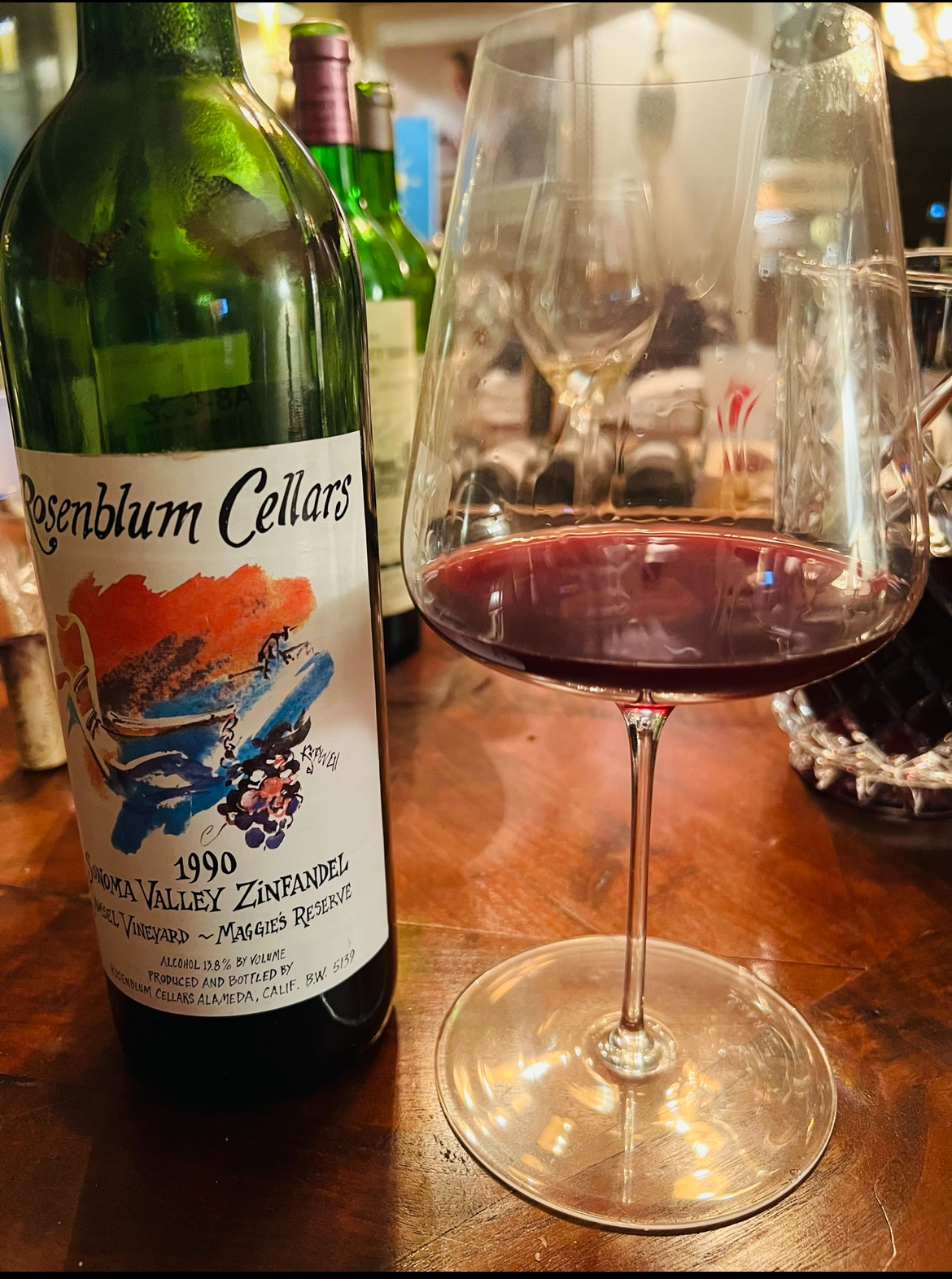
Originally this was supposed to be a normal Bordeaux tasting with a bunch of 2001’s, 1996’s, 1995’s and 1990’s.
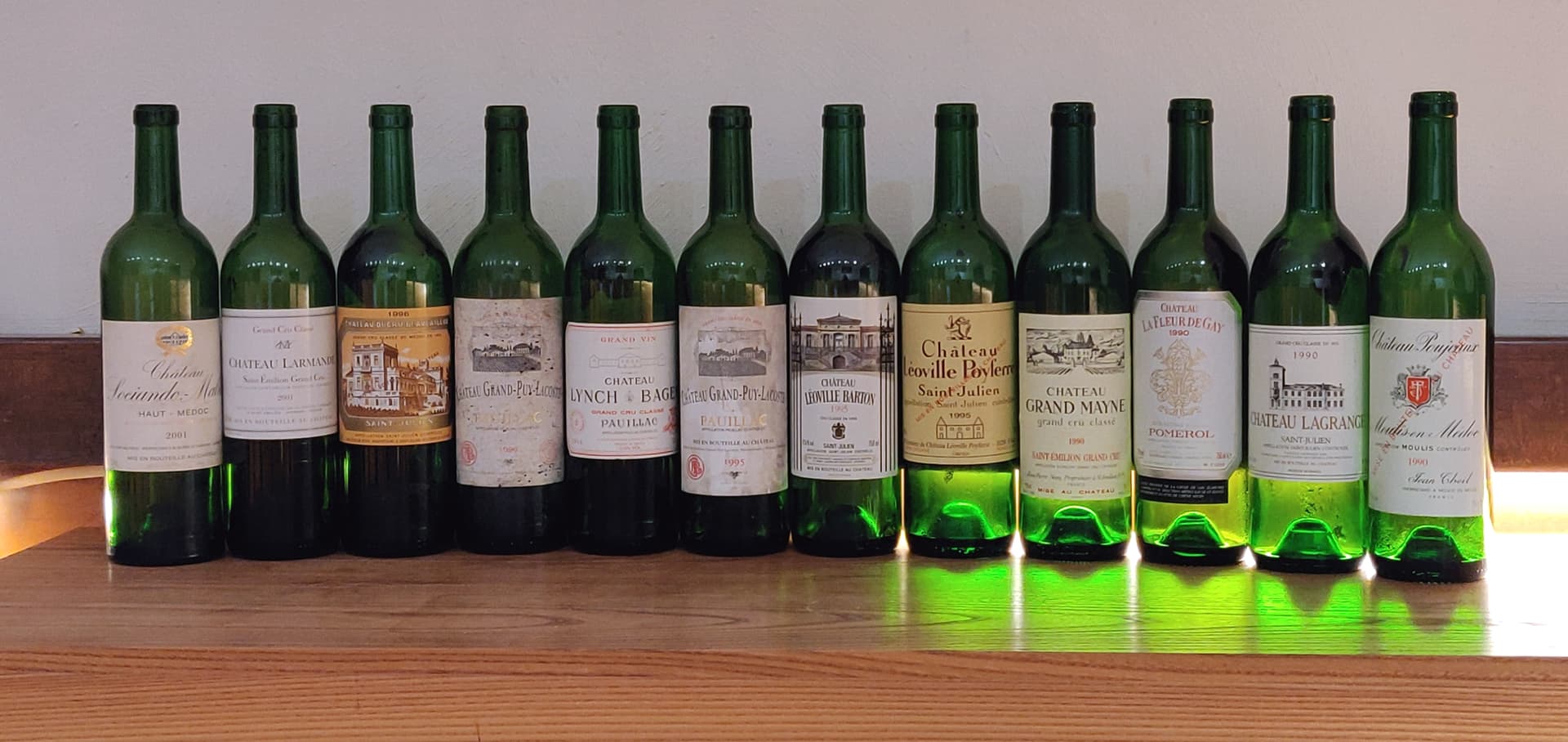
This is what we started with.
However, after the tasting was over, we decided we weren’t ready yet, so a set of 2000’s appeared out of nowhere, along with a random bunch of other wines (for example that Ravenswood came from my cellar).
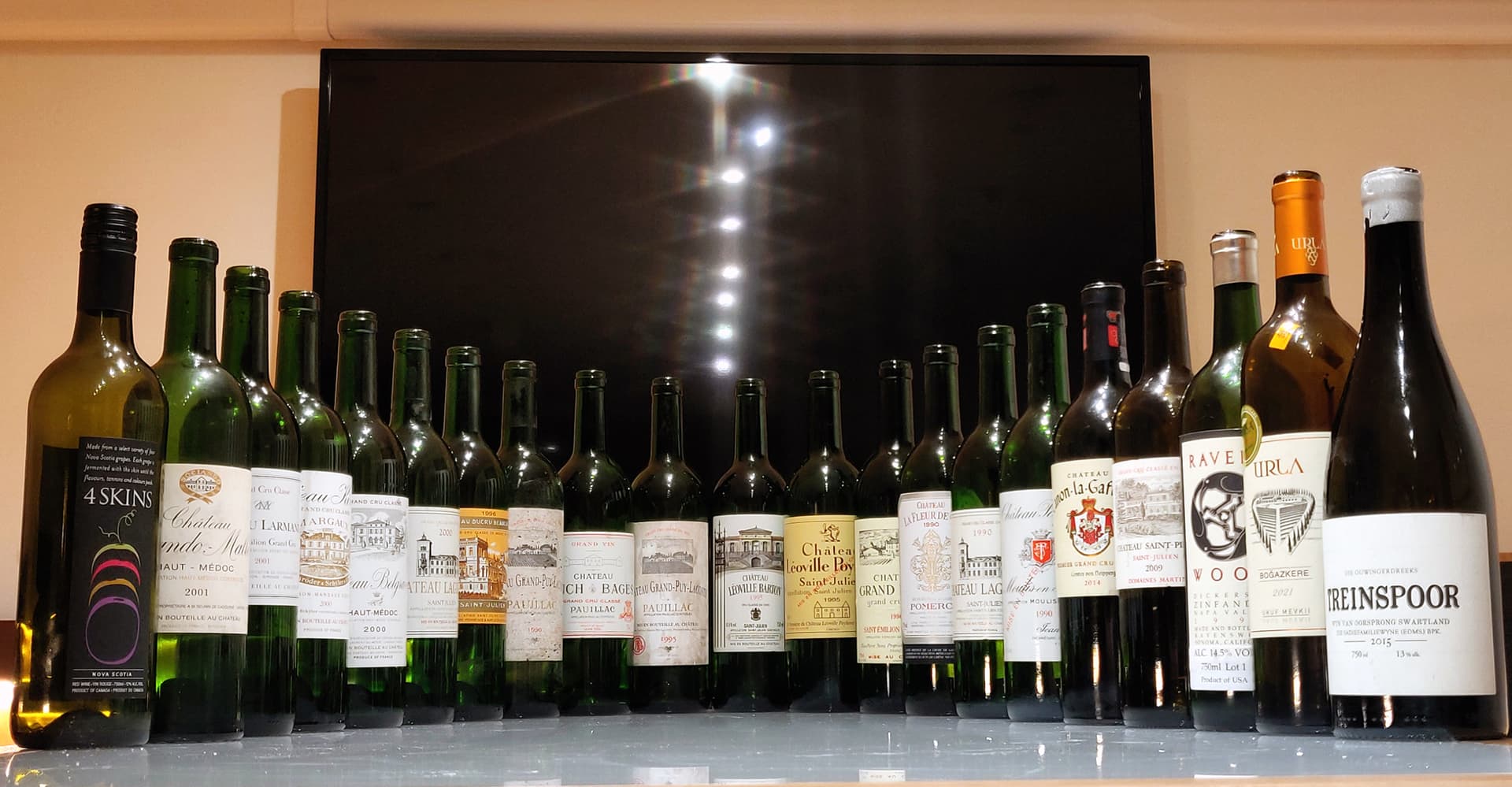
So this is what we ended up with.
So, prepare for another lengthy post of tasting notes!
- NV Jost Vineyards 4 Skins - Canada, Nova Scotia (28.10.2023)
A blend of Castel, Lucie Kuhlmann, Marechal Foch and Leon Millot. Lot 31/01/22. 12% alcohol. Tasted blind.
Youthful, somewhat translucent and slightly purplish Burgundy hue. The nose feels youthful, ripe and quite dark-toned with sweet aromas of dark forest fruits, some cherry tones, light primary notes of blueberry candies, a little bit of blood and a hint of ripe strawberry. The wine feels youthful, crunchy and surprisingly lean on the palate with a medium body and dry flavors of tart lingonberries, some blueberries and black raspberries, a little bit of strawberry, light sweet'n'sour notes of cranberry juice, a hint of fresh red apple and a touch of apple peel bitterness. There are no tannins to speak of, but the acidity feels very tart, austere and green with an almost quinine-like bitter edge, making the wine feel rather tough. The finish is juicy and crunchy but also rather lean and tough with medium-long flavors of tart cranberries and lingonberries, some sour cherry bitterness, light appley tones, a little bit of brambly raspberry and a sweeter hint of candied primary fruit.
Taking into account how this wine was made entirely from hybrid varieties, the wine was surprisingly clean and non-foxy in nature. There were no "hybrid flavors" at all here. Sure, the wine had a sweet, candied quality to it, but that felt like just primary fruit from the fermentation esters, not something from hybrids. However, I immediately identified the wine as a hybrid red wine (with an additional guess that it might be from Canada, knowing the person who brought the wine), due to its lean, incisive and even slightly greenish-bitter acidity that was just so out of place in a red wine. I have seen such aggressive acid quality very rarely even in a white wine, let alone red wine, which made me immediately think a wine that must be both a) from a cool climate; b) made with hybrid varieties. Both correct this time. Despite its clean fruit, un-foxy fruit profile, I found the wine rather unpleasant due to its way too primary fruit flavors and quite unbalanced due to its lean, aggressive acidity. Feels overpriced for the quality at 22,91 CAD (approx. 15€).
(64 points) - 2001 Château Sociando-Mallet - France, Bordeaux, Médoc, Haut-Médoc (28.10.2023)
A blend of Cabernet Sauvignon (55%), Merlot (40%) and Cabernet Franc (5%). Aged for 12 months 100% in new oak barriques, then blended together and aged for another six months in tanks. 12,5% alcohol.
Somewhat evolved and slightly translucent dark red color with a light maroon hue. A classic, savory claret nose with aromas of fresh blackcurrants, some smoky tones, a little bit of exotic spices, light cedary nuances of cigar box, a hint of leather and an evolved touch of wizened cherries. The wine feels dry, firm and somewhat evolved on the palate with a rather full body and savory, slightly thin flavors of tertiary dark fruits, some ripe blackcurrant tones, a little bit of old leather, light woody notes of pencil shavings, a hint of crunchy redcurrants and a touch of toasty oak spice. The acidity feels high whereas the tannins come across as somewhat lighter and quite resolved. The finish is dry, savory and gently grippy with a moderately long aftertaste of leather and tobacco, some wizened blackcurrants, light woody notes of pencil shavings and cedary oak spice, a little bit of crunchy redcurrant, a hint of exotic spices and a leafy touch of herbaceous character.
A nice, balanced and quite resolved vintage of Sociando-Mallet that feels like it is more or less at its peak. The fruit department seems like it has never been particularly ripe or opulent and it feels like it is slowly starting to fade away now. The overall feel is still pretty vibrant and the wine hasn't started to get too tertiary or oxidative yet, so most likely the wine will continue to keep just fine for many more years. However, I get a feel that the aging potential is pretty limited here and the wine isn't going to improve much by any further aging. Good stuff, drink or keep for some more years - not for decades. Solid value at 48€.
(91 points) - 2001 Château Larmande - France, Bordeaux, Libournais, St. Émilion Grand Cru (28.10.2023)
Mainly Merlot with some old-vine Cabernet Franc in the blend. Typically aged in French oak barriques (approx. 50% new) for 16-18 months. 13,5% alcohol.
Rather opaque blackish-red color with a somewhat evolved brick-red hue. The nose feels slightly restrained and somewhat evolved with sweetish aromas of wizened dark fruits, some tobacco, a little bit of leafy sous-bois, light licorice nuances, a hint of ripe red plum and a touch of woody oak spice. The wine feels dry, textural and a bit soft on the palate with a rather full body and savory flavors of ripe red plums, some cedary notes of cigar box, a little bit of licorice, light earthy notes of sous-bois, a hint of gravelly minerality and a sweeter touch of wizened cherries. The acidity is a bit on the modest side, which contributes to the somewhat soft overall feel, but fortunately the rather grippy tannins bring in some welcome firmness to the palate. The finish is long, quite grippy and moderately evolved with a savory aftertaste of tobacco and old leather, some sweeter notes of wizened dark plums, a little bit of crunchy redcurrant, light woody notes of pencil shavings and old oak spice, a hint of coffee and a touch of licorice root.
A tasty, savory and evolved St. Émilion that suffers a bit from its modest acidity. Fortunately the firm tannic backbone is there to give the wine structure so that it doesn't come across as flabby. Although the wine is starting to show some evolved signs, I feel there is still some mileage left in the tank - while perfectly enjoyable now, the wine will continue to evolve for some years more. Although a fine wine, ultimately this wasn't anything particularly memorable - just a nice +20 yo St. Ém. Priced more or less according to its quality at 50€.
(90 points) - 2000 Château Kirwan - France, Bordeaux, Médoc, Margaux (28.10.2023)
A blend of Cabernet Sauvignon (44%), Merlot (32%), Cabernet Franc (14%) and Petit Verdot (10%) harvested on the first half of October. Fermented spontaneously in stainless steel tanks (60%) and new barriques (40%). Aged for 20 months in oak barriques (30% new). Bottled on 5th of July 2002. Total production 7600 cases. 13% alcohol. Tasted blind
Quite deep, dark and only slightly translucent garnet color with an evolved brick-red hue. The nose feels quite evolved and even a bit oxidative with aromas of beef jerky and loose tobacco, some sweeter notes of wizened blackcurrants, a little bit of minty greenness, light soy sauce nuances, a woody hint of savory oak spice, a touch of dark plummy fruit and a whiff of pencil shavings. The wine feels dense, evolved and somewhat austere on the palate with a medium body and dry flavors of tart red berries, some woody notes of pencil shavings, light oxidative notes of game and soy sauce, a little bit of red plummy fruit, a hint of earth and a touch of wizened blackcurrants. The wine is high in acidity and as the fruit department seems a bit thinned-out, the ample, ripe tannins are quite much to the fore, making the wine feel pretty grippy. The finish is long, evolved and moderately grippy with a dry, dark-toned aftertaste of game and tart dark plums, some earthy tones, a little bit of wizened blackcurrant, light oxidative notes of beef jerky and soy sauce, a woody hint of savory oak spice and a touch of tobacco.
This wine was quite unlike the bottle I had a year ago - that one was still relatively youthful for its age, whereas this was surprisingly aged and even somewhat oxidative for a 2000 Margaux. While an enjoyable wine, this seemed much more mature than I anticipated. I doubt the wine could've fallen apart so much in only a year, so most likely there must be just some bottle variation. Priced somewhat according to its quality at 38,25€.
(88 points) - 2000 Château Belgrave - France, Bordeaux, Médoc, Haut-Médoc (28.10.2023)
A blend of Cabernet Sauvignon (58%), Merlot (36%), Cabernet Franc (3%) and Petit Verdot (3%). 13% alcohol. Aged for 15 months in French oak barriques (approx. 50% new). Tasted blind.
Deep, rather opaque blackish-red color with an evolved dried-blood hue. The nose feels attractive with its rather old-school aromatics of herbaceous leafy tones and roasted bell pepper, some leathery tones, a little bit of sous-bois, light juicy notes of ripe blackcurrants, a hint of roasted meat and a touch of sweet smoke. The rather full-bodied wine feels dense, chewy and quite a bit more ripe on the palate than the somewhat vegetal nose led to believe. There are flavors of juicy dark fruits and fresh blackcurrants, some leafy notes of sous-bois, a little bit of old leather, light woody notes of savory oak spice, a hint of ripe redcurrant and an evolved touch of meaty umami. The overall feel is firm, textural and pretty structured, thanks to the rather high acidity and still quite assertive and moderately grippy tannins. The savory finish is dense, long and grippy with an intense, dark-toned aftertaste of ripe blackcurrants and loose tobacco, some sweeter notes of wizened dark fruits, a little bit of old leather, herbaceous hints of bell pepper and leafy greenness and a cedary touch of oak.
A lovely, tasty and wonderfully classically styled Bordeaux that feels dry, sinewy and enjoyably herbaceous, like a proper old claret, yet at the same time retains the ripeness, intensity and impressive density that seems to be the hallmark of the 2000 vintage. Although the wine is starting to show the first signs of aged complexity, the wine is still quite youthful for its age - the wine is perfectly enjoyable now, but I can see it benefiting from additional aging. As it is rather lean and structure-driven in style, I heartily recommend pairing it with something hearty enough, just to tone down that structure a bit. All in all, a very lovely effort with some upside. Highly recommended.
(93 points) - 2000 Château Lagrange (St. Julien) - France, Bordeaux, Médoc, St. Julien (28.10.2023)
A blend of Cabernet Sauvignon (76%) and Merlot (24%). Aged for approx. 18 months in oak barriques (approx. 50% new). Annual production 250,000 bottles. 13% alcohol. Tasted blind.
Quite deep, dark and somewhat translucent ruby-red color with a pale brick-red rim. The nose feels dark-toned and quite expressive with aromas of sweet dark plums, some leathery tones, a little bit of pipe tobacco, light evolved notes of wizened blackcurrants and other dark berries, a hint of sun-baked earth, woody touch of cedary oak and a whiff of licorice root. The wine feels juicy, somewhat resolved and pretty airy on the palate with a medium body and intense, rather ripe and still pretty savory flavors of crunchy dark berries and ripe dark plums, some old leather tones, a little bit of earthy spice, light woody notes of pencil shavings and cedar, a hint of tobacco and a touch of gravelly minerality. The overall feel is firm and balanced in structured, thanks to the moderately high acidity and ripe, textural medium-plus tannins. The finish is long, dark-toned and moderately grippy with an intense and still relatively youthful aftertaste of ripe blackcurrants and other dark berries, some leathery tones, a little bit of tobacco, light crunchy notes of tart dark plums, woody hints of cigar box and pencil shavings and a touch of gravelly minerality.
A balanced, harmonious and textural vintage of Lagrange that is in a quite good spot right now. True to the 2000 vintage, the wine is surprisingly youthful for its age, but it is starting to show some age and resolution, too. Although the wine is perfectly enjoyable right now, it hasn't really developed much tertiary complexity and I'm sure the wine will continue to evolve and improve with additional aging. Most likely the wine will continue to develop beneficially for another 10-15 years and keep for much longer. Recommended.
(91 points) - 1996 Château Ducru-Beaucaillou - France, Bordeaux, Médoc, St. Julien (28.10.2023)
A blend of Cabernet Sauvignon (75%) and Merlot (25%). Aged for 18 months in French oak barriques (60% new). 13% alcohol.
Aged, opaque syrupy-brown color. Very tertiary and sweet-toned nose with pronounced raisiny tones, some pruney notes, a little bit of balsamico, light herbaceous leafy tones, a hint of old leather and an oxidative touch of beef jerky. The beer feels dry, tired and raisiny on the palate with a rather full body and aged flavors of pruned and dried blackcurrants, some earthy notes, light woody notes of pencil shavings, a hint of balsamic VA and a touch of blueberry jam. the tannins feel fully resolved and silky, so the structure relies more or less entirely on the rather high acidity. The finish is dry, tired and gently grippy with a medium-long aftertaste of raisins, some earthy tones, a little bit of leafy herbaceous character, light woody notes of pencil shavings, a hint of balsamico and a touch of soy sauce.
I tasted this wine seven years ago and back then I thought the wine was at its peak and wouldn't benefit from any additional aging. Well, based on this wine, my assessment was quite correct, since this wine seems to have gone quite badly downhill since. However, so many other TNs here in CT say this wine should still be in a fantastic condition, so perhaps we had a dud bottle after all. Maybe a failure with the cork? Whatever the case, this was too pruney, raisiny and oxidized for pleasure.
(NR/flawed) - 1996 Château Grand-Puy-Lacoste - France, Bordeaux, Médoc, Pauillac (28.10.2023)
A blend of Cabernet Sauvignon (75%) and Merlot (25%). Aged in French oak barriques (50% new) for 16-18 months. 13% alcohol.
Deep, dark and rather opaque blood-red color. The nose feels a bit reticent but also quite nuanced and attractive with aromas of sweet dark fruits, some old leather notes, a little bit of loose tobacco, light leafy notes of sous-bois, a hint of ripe cherry and a savory touch of evolved meaty complexity. The wine feels sinewy, a bit restrained and silky on the palate with a full body and dry flavors of wizened blackcurrants, some ripe dark plums, a little bit of old leather, light crunchy notes of chokeberries, a hint of toasty wood spice and a herbaceous touch of leafy Cab character. The ripe medium tannins are starting to feel fully resolved and quite gentle, so the structure relies on the high acidity. The finish is dry, savory and gently grippy with a long aftertaste of tobacco and ripe blackcurrant, some leathery notes, a little bit of tart red plum, light sweeter nuances of dried dark fruits, herbaceous hints of bell pepper and autumnal leaves and a cedary touch of oak.
A harmonious, sophisticated and surprisingly a bit reticent '96 Pauillac. As is typical of the vintage, the wine shows quite a bit of ripeness - coming across as somewhat more ripe than the '95 vintage we tasted at the same time - yet still retaining those classic, herbaceous Cab nuances. Although the wine isn't particularly expressive, it is wonderfully nuanced and attractive all the same. Seeing how the tannic structure is starting to feel fully resolved and the fruit department is slowly developing those tertiary nuances, I feel the wine is more or less at its peak now. It will most likely keep just fine for many more years - maybe even decades - but I feel any additional improvement is going to be pretty limited. Drink or keep. This is a lovely wine.
(92 points) - 1996 Château Lynch-Bages - France, Bordeaux, Médoc, Pauillac (28.10.2023)
A blend of Cabernet Sauvignon (73%), Merlot (15%), Cabernet Franc (10%) and Petit Verdot (2%). Aged for 15 months in French oak barriques (70% new). 13% alcohol, 5,2 g/l acidity.
Quite opaque and moderately evolved dark red color with an aged dried-blood hue. The nose feels moderately reticent with rather evolved aromas of ripe blackcurrants and dark plums, some wizened cherries, light cedary notes of cigar box, a little bit of sous-bois, a woody hint of pencil shavings and a touch of roasted bell pepper or red chili. The wine feels ripe, silky and so elegant on the palate with a full body and dry flavors of juicy dark berries and wizened blackcurrants, some old leather notes, a little bit of gravelly minerality, light earthy notes of leafy sous-bois, a ferrous hint of blood and a touch of licorice. The overall feel is wonderfully suave and textural yet very firm at the same time, thanks to the high acidity and somewhat sparse yet still moderately grippy tannins. The finish is dry, suave and somewhat grippy with a long, silky aftertaste of ripe dark fruits, some woody notes of pencil shavings, light herbaceous notes of roasted bell pepper and green leafy nuances, a little bit of sous-bois, a hint of crunchy redcurrant and a touch of pipe tobacco.
I tasted this vintage of Lynch-Bages earlier this year for the first time in a while, and while I thought the wine had evolved, I questioned whether the wine had evolved in the right direction. While it was a delightful wine in its own right, it didn't feel qualitatively as good as the bottle I had many years ago, when the wine was still relatively youthful and calling for further aging. Well, based on this bottle I can say that there must be some bottle variation now that the wine is approaching 30 years of age - this bottle was much more classy and elegant compared to the bottle tasted earlier this year. Just like that wine, I'd say this wine is starting to reach its plateau of maturity as well, but this has evolved into a more attractive direction, showing the same qualities the wine showed when it was younger, only with additional tertiary complexity and a wonderfully suave, silky texture - which is beautifully counterpointed by the still quite virile tannins. Although the wine might not evolve that much with additional aging, I'd say there is no hurries with this wine - drink it now or keep it for a decade or two. This is a very complete wine - highly recommended.
(94 points) - 1995 Château Grand-Puy-Lacoste - France, Bordeaux, Médoc, Pauillac (28.10.2023)
A blend of Cabernet Sauvignon (75%), Merlot (22%) and Cabernet Franc (3%). Aged in French oak barriques (50% new) for 16-18 months. 13% alcohol.
Luminous, somewhat opaque and slightly evolved dark ruby color. The nose feels ripe, dark-toned and somewhat sweetly-fruited with slightly evolved aromas of juicy black cherries and wild strawberries, some leathery notes, a little bit of cedary wood, light developed nuances of wizened red fruits, a hint of pipe tobacco and a touch of cassis. The wine feels somewhat chewy yet still surprisingly airy on the palate with a medium body and intense, dry flavors of crunchy redcurrants, some wizened red plums, light cedary notes of savory oak spice, a little bit of ferrous blood, evolved hints of leather and pipe tobacco and a green touch of peppermint. The overall feel is quite sinewy and structured, thanks to the high acidity and still moderately grippy tannins. The finish is dry, long and rather grippy with an intense aftertaste of tart red plums and crunchy redcurrants, some leathery tones, a little bit of wizened blackcurrant, light sanguine notes of iron, a hint of earth and a cedary touch of oak.
A terrific, still quite vibrant and relatively tightly-knit Pauillac that has started to show some tertiary qualities but the overall feel is pretty youthful for the age, prompting me to think that this wine will not only keep, but even improve for many, many more years. Although the 1996 vintage - which we sampled at the same time - seemed a bit bigger and more ripe, it was also somewhat more evolved and much closer to its plateau of maturity. Furthermore, I think that even if this 1995 felt slightly lighter and maybe a bit less fruity in nature, it still showed a bit more depth, complexity and harmony than the 1996. Both the wines were great, but I thought the 1995 was slightly better now - and might get even better with additional age. A terrific, classically styled Pauillac.
(93 points) - 1995 Château Léoville Barton - France, Bordeaux, Médoc, St. Julien (28.10.2023)
A blend of Cabernet Sauvignon (78%), Merlot (19%) and Cabernet Franc (3%). Aged for 16-18 months in French oak barriques (60% new). 12,5% alcohol.
Dark, somewhat evolved and slightly evolved dark plummy color with a moderately wide translucent rim. The nose feels old, tired and a bit odd with some weird chemical overtones, a some wizened dark berries, a little bit of blueberry jam, light dusty wood notes and a hint of wet dog. This doesn't really smell like an old Bordeaux! The wine feels tough, austere and somewhat understated on the palate with a moderately full body and dry flavors of tart forest fruits, some evolved pruney tones, a little bit of crunchy redcurrant, light stony mineral notes, a hint of earth and a woody touch of savory old oak. The wine is high in acidity with rather grippy tannins. The finish is dry, closed and grippy with a rather short aftertaste of forest fruits, some earthy notes, a little bit of dusty old wood, light sweeter nuances of prunes and a hint of something vaguely chemical.
This bottle felt just off. Nobody detected anything reminiscent of TCA, so the wine probably wasn't corked, but it didn't seem to be sound, either. A very understated and underwhelming effort with light off notes. A pity.
(NR/flawed) - 1995 Château Léoville Poyferré - France, Bordeaux, Médoc, St. Julien (28.10.2023)
A blend of Cabernet Sauvignon (65%), Merlot (25%), Petit Verdot (8%) and Cabernet Franc (2%). Aged for 18 months in French oak barriques (50-75% new). 13% alcohol.
Luminous, quite opaque and somewhat evolved dark reddish maroon color. The nose feels nuanced, attractive and slightly rustic with layered aromas of wizened blackcurrants and woody notes of cigar box and pencil shavings, some ferrous notes of blood, light autumnal notes of leafy forest floor, a little bit of leather, a hint of ripe black cherry, a touch of licorice root and a whiff of barnyard. The wine feels dry, savory and quite tightly-knit on the palate with a rather full body and somewhat lean flavors of tobacco and autumnal leafy tones, some crunchy dark berries, a little bit of lingonberry, light gravelly mineral tones, woody hints of cedar and pencil shavings and a touch of old leather. The overall feel is quite sinewy with the high acidity and quite grippy tannins. The finish is dry, tannic and a bit restrained with a long but also a bit light aftertaste of crunchy forest fruits and tart lingonberries, some leathery tones, a little bit of fresh redcurrant, light gravelly mineral tones, an evolved and slightly sweeter hint of wizened blackcurrants and a woody touch of pencil shavings.
A tasty and classically styled St. Julien that shows some of that 1995 austerity. Although the wine is starting to look quite evolved, the overall feel is still relatively youthful for the age, and also structurally quite tightly-knit as well. The nose is as beautiful as an old Bordeaux can get, but on the palate the fruit department of the wine is found wanting a little bit - tasting the wine between a bunch of 1996, 1995 and 1990 Bordeaux wines, the overall feel is a bit lighter and leaner. Maybe lacking a bit in depth or complexity as well, although the wine is still wonderfully nuanced with lots of intermingling layers. I do also love the rather tightly-knit structure here - I just wish it was better balanced with the fruit and the body. As the wine doesn't feel that tertiary, I think some additional aging might help the wine to resolve a bit more and develop a bit more of that developed complexity - something I don't say that often with wines almost 30 years old!
(92 points) - 1990 Château Grand Mayne - France, Bordeaux, Libournais, St. Émilion Grand Cru (28.10.2023)
Typically a blend of Merlot (4/5), Cabernet Franc (1/5) and occasionally a little bit of Cabernet Sauvignon. Vinified in oak vats, aged for 18 months in predominantly new oak barriques. 13% alcohol.
Dense, rather opaque and quite evolved blackish-red color with a brick-orange rim. The nose feels classically styled old-school Bordeaux with layered aromas of tobacco, some herbaceous leafy tones, a little bit of ripe blackcurrant, light wizened black berry tones, a hint of forest floor, a touch of smoke and a whiff of cedary wood. The wine feels firm, classically styled and even somewhat concentrated on the palate with a full body and intense flavors of ripe dark fruits, some crunchy crowberries, a little bit of gravelly minerality, light autumnal notes of leafy forest floor, an evolved hint of wizened dark berries and a woody touch of pencil shavings. The wine is high in acidity with ample yet ripe and moderately resolved tannins that slowly pile up on the gums, making the wine gradually feel quite grippy. The finish is long, complex and quite grippy with a dry, nuanced aftertaste of wizened blackcurrants and herbaceous leafy tones, some gravelly mineral notes, a little bit of blackcurrant, light sweeter notes of dried dark berries, a hint of ripe red plum and a woody touch of pencil shavings.
This was the third time I tasted this particular vintage with a span of less than a year, and while this was still a wonderful wine (one of the most impressive bottles in our tasting of 20-30 Bordeaux reds), I felt this was marginally less impressive than the two previous bottles. Perhaps a bit tired? Less vibrant? Yet even then this was one of the most intense and complex wines of the evening! I guess when a wine gets this old, you can't avoid bottle variation. Nevertheless, this is a fantastic, classically styled and impressively built Saint-Émilion that is more or less at its plateau of maturity. The wine will keep for many more years; the best bottles might even improve further from here. Highly recommended.
(94 points) - 1990 Château La Fleur de Gay - France, Bordeaux, Libournais, Pomerol (28.10.2023)
100% Merlot from a 2-hectare vineyard. Vinified in concrete tanks, aged in new French oak barriques. 13% alcohol.
Moderately translucent and somewhat evolved brick-red color with a pale orange rim. The nose feels quite brooding and dark-toned with aromas of sweet dark fruits, some meaty tones, a little bit of forest floor, light evolved notes of wizened strawberries and dried dark berries, a hint of fresh red plum and a touch of pipe tobacco. The wine feels silky, a bit plus and quite resolved on the palate with a medium body and slightly reticent flavors of sweet red plums and ripe strawberries, some meaty notes of umami, a little bit of dried red berries, light sweet toasty oak tones, a hint of exotic spices and a touch of wizened black cherry. The overall feel is resolved and a bit soft with the rather high acidity and supple, gentle tannins. The finish is rich, juicy and somewhat dark-toned with a plus, silky aftertaste of dark berries and sweet black cherries, some wizened dark plummy tones, a little bit of strawberry, light meaty notes of umami, a hint of toasty oak spice and a touch of earth. The tannins make the wine end on a gently grippy note.
A rich, harmonious and gentle Pomerol. After a bunch of similarly aged Left-Bank reds (and an impressive Grand Mayne from St. Ém), this felt stylistically somewhat different: softer, gentler and sweeter. The wine was very attractive and harmonious in its own, fruitier and more approachable style, but I have to admit that I prefer more savory and more structure-driven style. Even then, there's no denying that this is a fine, balanced and thoroughly enjoyable wine. The wine is now in a very good spot: the fruit has developed some tertiary dried-fruit flavors of savory complexity and the structure has resolved quite a bit, but the wine still retains some youthful vibrancy and good sense of firmness. I'm sure the wine will continue to evolve and develop with additional aging, but I feel that qualitatively this wine is at its plateau of maturity - even if it might change, I'm not sure if it's going to get any better from here. Better to drink now or on the next handful of years. Good stuff.
(92 points) - 1990 Château Lagrange (St. Julien) - France, Bordeaux, Médoc, St. Julien (28.10.2023)
A blend of Cabernet Sauvignon (44%), Merlot (44%) and Petit Verdot (12%). Aged for 18-20 months in French oak barriques (50-60% new). 13% alcohol.
Slightly evolved and somewhat translucent dark pomegranate red color. The nose feels savory, somewhat evolved and quite classically styled with aromas of leafy Cab character and woody notes of pencil shavings, some roasted bell pepper tones, a little bit of ripe blackcurrant, light sweeter nuances of wizened red cherries, a hint of dark plummy fruit, a touch of sous-bois and a whiff of dried figs. The wine feels nuanced, silky and wonderfully elegant on the palate with a full body and layered flavors of ripe blackcurrants and other dark fruits, some fresh black cherry tones, a little bit of pencil shavings, light toasty oak notes of exotic spices, a hint of juicy red plum and a touch of gravelly minerality. The overall feel is firm but also beautifully textural and harmonious, thanks to the high acidity and ample yet ripe and resolved tannins that contribute more to the rich texture than to the structure. The finish is ripe, long and textural with tannins that slowly pile up on the gums and a rich, complex aftertaste of evolved dark-toned fruit flavors, some fresh cherry tones, a little bit of leafy sous-bois, light plummy nuances, a hint of old leather and a toasty touch of sweet, exotic spices.
A beautiful, harmonious and thoroughly delicious Bordeaux that has reached its apogee and is more or less peaking now. Unlike many other old Bordeaux wines we tasted at this tasting, this didn't feel like an impressive, tightly-knit effort that is still on an upward trajectory, or an aged, savory and quite tertiary wine that has been sitting on its plateau of maturity for some while. This felt like a wine that has reached its peak of evolution only recently, effortlessly blending its evolved fruit notes with its still surprisingly vibrant and fresh fruit flavors. You can taste the wine has been both somewhat more oaky and more tannic in its youth, but now both elements have stepped out from the picture, yet still retaining their presence in the most sophisticated fashion, adding to the firmness and complexity without sticking out one bit. An excellent example of why one should age their Bordeaux wines and not drink them too young. A very complete wine, very highly recommended.
(96 points) - 1990 Château Poujeaux - France, Bordeaux, Médoc, Moulis en Médoc (28.10.2023)
A blend of Cabernet Sauvignon (48%), Merlot (41%), Cabernet Franc (6%) and Petit Verdot (5%) harvested between the second half of September and the first half of October from vineyards averaging 30 years in age. Aged in french oak barriques (30% new). Total production 290,000 liters (93% of all wine produced at the estate). 12,5% alcohol.
Rather translucent and moderately aged maroon color. The nose feels evolved and quite tertiary with aromas of autumnal leaves and woody notes of pencil shavings, some mushroomy fried porcini nuances, a little bit of ripe blackcurrant, light pruney tones, a hint of gamey meat, an earthy touch of sous-bois and a vague whiff of smoke. The wine feels dry, evolved and rather tertiary on the palate with a medium body and developed flavors of ripe blackcurrants and wizened dark forest fruits, tart lingonberry tones, some tobacco, a little bit of gravelly minerality, light ferrous notes of blood, a oxidative hint of beef jerky and a herbaceous touch of leafy greenness. The wine is high in acidity with ripe yet still quite grippy medium-plus tannins. The finish is long, dry and gently yet firmly grippy with a savory, evolved aftertaste of tart lingonberries and crunchy dark berries, some gravelly mineral notes, a little bit of tobacco, light ferrous notes of blood, red-toned hints of red plums and crunchy redcurrants and a touch of beef jerky.
A classically styled, serious and wonderfully crunchy old school Bordeaux that is getting a tiny bit past its highest peak. The wine is still thoroughly enjoyable and retains great sense of structure, but I feel the wine has lost a little bit of its brightness and youthful intensity over the years. Now the wine is more about tertiary complexity and the first oxidative notes of mushrooms, beef jerky and earth have begun to creep in. Although I found the wine thoroughly enjoyable and stylistically quite much to my liking, it felt a little bit tired and less impressive next to some more youthful and vibrant 1990 Bordeaux wines we tasted at the same time.
(91 points) - 2021 Rivetto Langhe Nascetta Vigna Lirano - Italy, Piedmont, Langhe, Langhe DOC (28.10.2023)
100% Nascetta from a biodynamically farmed vineyard in Sinio. Fermented spontaneously in stainless steel tanks (80%) while a small portion of the wine is macerated on the skins for a few months in terracotta amphorae (20%). Aged for 16 months in concrete tanks and terracotta amphorae. 13,5% alcohol. Tasted blind.
Youthful, luminous medium-deep lemon-yellow color. The nose feels ripe, sweet-toned and fruity with expressive aromas of apricots and greengage, some pineapple tones, a little bit of leesy creaminess, light fragrant notes of exotic spices and phenolic spice, a hint of waxy funk and a touch of beeswax. The wine feels rich, complex and waxy on the palate with a full body and layered flavors of apricots and greengages, some beeswax, a little bit of fresh pineapple, light stony mineral notes, a hint of leesy creaminess and a touch of sauvage funk. Bright, structured acidity. The finish is ripe, rather long and quite complex with an intense aftertaste of apricots and fresh pineapple, some beeswax tones, a little bit of sauvage funk, light stony mineral notes, a hint of phenolic spice and a touch of macerated herbs.
I was surprised by this wine when its name was revealed - I had tasted 2013 Rivetto Nascetta some years ago, and that was a markedly different in style! Nascetta is not a particularly aromatic or expressive variety, so the earlier iteration I had tasted (3 days of skin contact, vinified in stainless steel) was a somewhat voluminous yet quite neutral white that relied mostly on its freshness and minerality. Well, this wine retains that sense of freshness and minerality, but the additional skin-contact portion and lack of aging in stainless steel tanks has resulted in a wine that is also quite expressive, richly-fruited and complex in aromatics and taste - now the wine has a flavor profile to match the body and structure! Although I was a fan of the old Rivetto Nascetta, I must admit that this is an even more interesting wine. It's not a full-blown skin-contact white wine, but it does have some orange wine overtones in addition to its vibrant white wine base. There's also some funky stuff going on here, which I don't mind a bit, but people who like their wines squeaky clean might object to it. Anyways, this is a very interesting and thoroughly lovely expression of Nascetta; highly recommended.
(92 points) - 2014 Château Canon-la-Gaffelière - France, Bordeaux, Libournais, St. Émilion Grand Cru (28.10.2023)
A blend of Merlot (55%), Cabernet Franc (37%) and Cabernet Sauvignon (8%). Fermented and macerated with the skins for 35 day in oak vats. Aged in French oak barriques (70% new) for 17 months. 13,5% alcohol. Total production 4000 cases. Tasted blind.
Deep, dark and quite opaque blackish-red color with a slightly evolved brick-red hue. The nose feels dark-toned, sweetly-fruited and moderately oak with aromas of juicy dark plums, some toasty mocha oak and notes of sweet spices, a little bit of cedar, light black cherry nuances, a hint of tobacco, a touch of blueberry and a whiff of licorice. The wine feels ripe, rich and chewy on the palate with a full body and intense, dark-toned flavors of sweet plummy fruits, some woody notes of cedar and pencil shavings, a little bit of chocolatey mocha oak, light bittersweet nuances of dark chocolate, a hint of blueberry and a touch of roasted spices. Despite the ripeness and somewhat sweet-toned overall flavor profile, the wine still feels firm and structured, thanks to the high acidity and ample, grippy tannins. The finish is dense, chewy and quite grippy with a long, ripe and sweet-toned aftertaste of ripe dark berries, some toasty mocha oak, light cedary wood notes, a little bit of tobacco, a juicy hint of plummy red fruit and a bittersweet touch of dark chocolate.
An impressively dense, chewy and powerful St. Émilion that shows quite a bit of ripeness and sweetness, despite 2014 wasn't a particularly solar vintage - I guess the rather pronounced new oak notes of chocolatey mocha character and sweet spices accentuate the sweetness in the fruit flavors? I enjoyed the chewy, structured overall feel, but I wish the wine didn't feel so polished and oaky otherwise - to me it makes the wine feel a bit too anonymous and gloopy. However, considering this is a wine built for the long haul, I'm pretty sure it will perform wonderfully once the oaky end of the flavor spectrum integrates with the fruit and the wine starts to develop some tertiary complexity. At least it shows great promise, if anything. Most likely this will need another 15-20 years before it really starts to sing. Expect the score to go up as the wine ages.
(91 points) - 2009 Château Saint-Pierre - France, Bordeaux, Médoc, St. Julien (28.10.2023)
A blend of Cabernet Sauvignon (81%) and Merlot (19%). Vinified at Château Gloria. Fermented in stainless steel, aged for approximately 15 months in French oak barriques (60% new). 13,5% alcohol. Tasted blind.
Vibrant, somewhat translucent cherry-red color that doesn't really look particularly aged, nor that young, either. Conversely, the nose feels very youthful and vibrant with sweet aromas of black raspberries and wild strawberries, some plummy tones, a little bit of ripe blackcurrant, light earthy notes of autumnal leaves and damp forest floor, a hint of graphite dust, a woody touch of oak spice and a whiff of red licorice. The wine feels ripe and juicy yet pretty dry on the palate with a quite full body and intense, somewhat sunny flavors of sweet raspberries and ripe blackcurrants, some crunchy red plum tones, a little bit of gravelly minerality, light woody notes of pencil shavings, a hint of tobacco and a sanguine touch of iron. The overall feel is still pretty muscular and tightly-knit, thanks to the rather high acidity and quite assertive and moderately grippy yet well-managed, ripe tannins. The finish is rich, ripe and quite grippy with a long, savory aftertaste of dark berries and tart red plums, some brambly raspberry tones, a little bit of blood, light woody notes of savory oak spice, a hint of fresh blackcurrant and a touch of gravelly minerality.
A ripe and sunny but also very balanced and impressively structured effort. After a bunch of older Bordeaux reds, this seemed noticeably younger, fruitier and sweeter-toned in comparison. Although the wine sees quite a bit of new oak, the overall feel is surprisingly savory and harmonious with relatively little new oak impact in the flavor profile. Furthermore, despite the rather warm vintage and somewhat ripe fruit flavors, the wine has managed to keep good sense of freshness with its bright acidity, and the overall taste doesn't feel too sweetly-fruited at any point. I really don't understand the raving reviews and high scores many wine critics gave to this vintage, I still think this is an enjoyable and well-crafted wine in its own right with tons of upside. Most likely this wine needs another 15-20 years before it hits its stride; expect the score to go up as the wine ages. Recommended.
(91 points) - 1997 Ravenswood Zinfandel Dickerson - USA, California, Napa Valley (28.10.2023)
100% Zinfandel from the Dickerson vineyard in Napa Valley, harvested on September 9th, 1997. Aged for approximately 15 months in oak barrels, bottled on April 22nd, 1999. 14,5% alcohol and 8,3 g/l acidity. Total production 1330 cases.
Somewhat evolved and moderately translucent blood-red color. The nose feels fragrant and quite dark-toned with sweet, juicy aromas of black raspberries and boysenberries, some minty green tones, a little bit of toasty spice, light strawberry nuances, a hint of savory wood spice, a spirituous touch of alcohol and a lifted, cooling whiff of peppermint toothpaste. The wine feels dry, chewy and somewhat evolved with a medium-to-moderately full body and vibrant flavors of ripe raspberries and red plums, some ferrous notes of blood, a little bit of juicy strawberries and wizened red berries, light woody notes of savory oak spice, an evolved hint of beef jerky and a touch of tart forest fruits. Although the overall feel is quite ripe and sunny, the wine is wonderfully fresh, precise and sinewy, thanks to the bright, high acidity and still rather grippy yet not aggressive tannins. The high alcohol shows a tiny bit. The finish is long, dry and grippy with a complex and quite intensely-flavored aftertaste of tart red plums and ripe strawberries, some ferrous notes of blood, a little bit of savory wood spice, light sweet notes of boysenberries and juicy black raspberries, a hint of brambly blackberry and a touch of minty greenness.
A very attractive, harmonious and beautifully old school Zinfandel with great sense of freshness, structure and intensity. I poured this wine blind after a bunch of similarly aged Bordeaux wines and while people noticed that the wine seemed to exhibit more ripeness and solar fruit, people never thought the wine was a) Zinfandel; b) as old as it was! Basically all the guesses were new world Cabs and Bordeaux blends, the age ranging from 2010's to mid 2000's. And no wonder! With this much acidity and tannins, along with those minty green nuances and complex fruit flavors, it's not hard to confuse this for a Cab or a Bordeaux blend! People were both surprised and impressed when this wine turned out to be a +25 yo Zinfandel. And I must admit, this wine did exceed my expectations as well! A terrific, classically styled and surprisingly acid-driven 1990's Zinfandel. An excellent purchase at 36€.
(94 points) - 2021 Urla Şarapçılık Boğazkere - Turkey, Ege Bölgesi (28.10.2023)
100% Boğazkere from the Karaburun peninsula, on the western end of Turkey. 13,5% alcohol.
Youthful, luminous and quite opaque carmine color with a purplish hue. The nose feels surprisingly dull, yeasty and primary with youthful aromas of sweet dark berries and blackberry jam, some fermenting bread dough tones, a little bit of blueberry juice, light plummy tones, a hint of earthy spices and an oaky touch of cloves and vanilla. Overall the nose feels gloopy and not particularly attractive. The wine feels ripe and youthful on the palate with a medium body and flavors of sweet bilberries and juicy plums, some woody notes of oak, a little bit of fresh blackberry, light yeasty notes, a candied hint of primary fruit and a touch of cloves. Structurally the wine feels pretty stern and tightly-knit, thanks to the moderately high acidity and rather grippy tannins. The finish is dry, juicy and grippy with a rather long aftertaste of youthful blueberry and candied fruit drop tones, some crunchy dark berry notes, a little bit of juicy plummy fruit, light yeasty notes and a hint of sweet oak spice.
I didn't find the wine particularly enjoyable. The structure here was quite impressive, making the wine feel like it could either pair with some heartier dishes or call for some additional aging. However, the taste was somewhat all over the place with relatively few redeeming qualities. First of all, there was this odd, yeasty note, which was reminiscent of fermenting bread dough - nothing that would make a wine feel more enjoyable. Then there were those somewhat overt, sweet oak flavors that obfuscated most of the fruit flavors quite effectively. Basically anything that managed to cut through, was that candied primary fruit, which I'm not a fan of. I guess you might get rid of those primary fruit flavors with some aging, and seeing how the wine feels like it is built to age, perhaps those oaky notes could integrate with the fruit at some point, too? I don't know what happens to those dull, yeasty notes as the wine ages, but one can always hope for the best.
(80 points) - 2015 Sadie Family Treinspoor - South Africa, Coastal Region, Swartland, Malmesbury (28.10.2023)
A single-vineyard Tinta Barroca, fruit sourced from a plot planted in 1974 in Malmesbury. Fermented spontaneously with indigenous yeasts, aged for a year in concrete tanks. Bottled unfined and unfiltered. 13% alcohol, 2 g/l residual sugar and 5,7 g/l acidity.
Deep, rather opaque and somewhat evolved blackish-red color with a somewhat maroon hue. The nose feels fragrant, somewhat evolved and a bit sauvage with aromas of brambly raspberries and red cherries, some developed meaty tones, a little bit of animale, light earthy notes, a hint of leathery funk and a touch of blueberry juice. The wine feels dry, firm and quite tightly-knit on the palate with a medium body and intense, somewhat evolved flavors of tart dark plums and brambly black raspberries, some ripe red-toned fruit notes, a little bit of earth, light funky nuances of leather, a hint of meaty umami and a touch of peppery spice. The overall feel is pretty touch and structured, thanks to the high acidity and surprisingly assertive and grippy tannins. The finish is long, dry and grippy with a savory aftertaste of dark berries and meaty umami, some brambly notes of black raspberries, a little bit of earth, light gamey nuances, a hint of tart dark plum and a touch of savory spices.
A tasty but also quite tough and stern vintage of Treinspoor. Typical of this label, the wine is yet again a somewhat rustic, slightly sauvage and a very structure-driven effort. Definitely not a crowdpleaser by any standards, but this time the wine is not as stern and unyielding as in some vintages. Based on the somewhat evolved qualities, I think the fruit won't survive as long as it would take for the structure to resolve fully, but perhaps a few additional years wouldn't hurt. Can be drunk now, will probably peak after another 3-5 years. A fine, robust yet sophisticated wine made in an enjoyably serious, structure-driven style.
(92 points)
Posted from CellarTracker