The first flight: Swiss whites and oddities
-
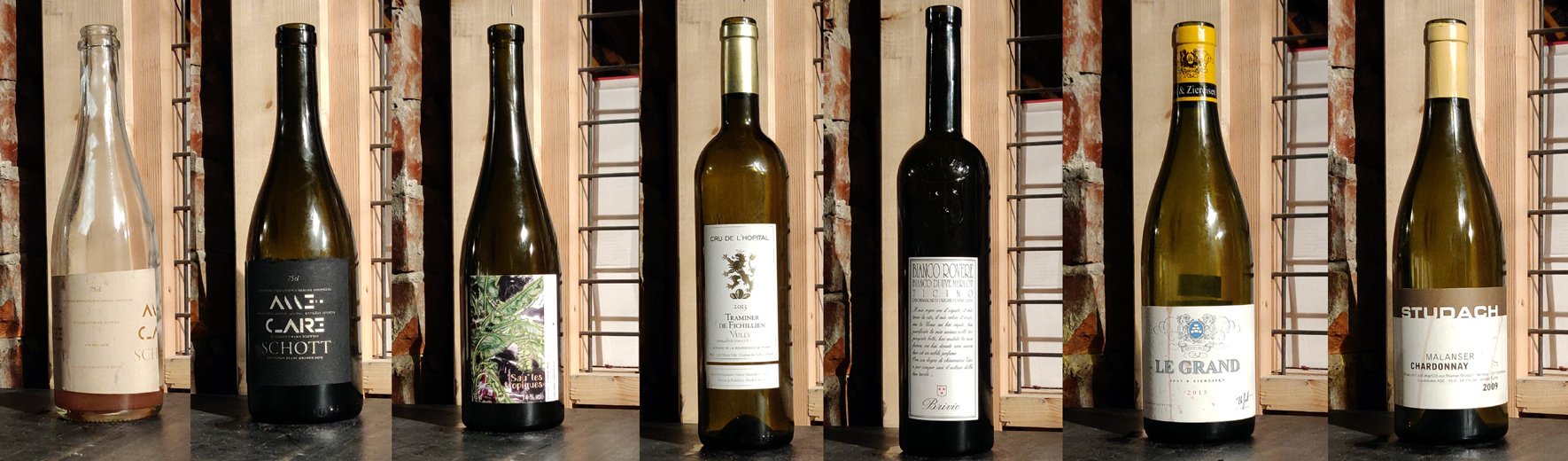
2018 Anne-Claire Schott Pét-Nat Rosé - Switzerland, Three Lakes, Bielersee (14.6.2021)
A blend of biodynamically farmed Chasselas, Pinot Gris and Pinot Noir. Fermented spontaneously with brief skin contact. Vinified without any sulfites, bottled unfiltered before the wine is fully fermented dry. 12,1% alcohol.
Cloudy, almost fully opaque peachy orange color. Restrained and somewhat wild nose showing some restrained fruit notes of ripe red apple and some peach, light leesy notes and a hint of herbal spice. Contrasting the murky appearance and somewhat wild nose, the wine turns out to be quite lovely on the palate with flavors of fresh red apples, some herbal spice, a little bit of leesy yeast and peppery spice, light notes of rose hips, juicy hints of peach and quince and a touch of ripe, zesty citrus fruits. Although there’s a wild edge to the flavors, the wine is remarkably clean and vibrant on the palate. Soft, smooth mousse and bright, high acidity. The finish is fresh, clean and quite fruity with medium-long flavors of fresh red apple, some crunchy quince, light leesy notes of yeast, a hint of herbal spice and a touch of rose hips.
A very nice little summer fizz! When the wine was poured to the glass, I was expecting it to be a heavily volatile, badly mousy funk bomb, but instead it turned out to be a very lovely and vibrant effort with good depth of flavor and purity of fruit. Although these naturalist pét-nats normally seem to be wines that need to be drunk quite soon after bottling, this wine is alive and kicking still at the age of 3 years and I wouldn’t be surprised if the wine continued to improve from here. Terrific stuff. Not affordable for a pét-nat at 35 CHF (~32€) but delivers for the price. (89 pts.)
-
2019 Anne-Claire Schott Orange Sauvignon Blanc - Switzerland, Three Lakes, Bielersee (14.6.2021)
Biodynamically farmed Sauvignon Blanc, fermented spontaneously with prolonged skin contact. Vinified without any sulfites, bottled unfiltered. 14% alcohol.
Very hazy to somewhat cloudy lemon-yellow color. Restrained, subtly sweetish nose with aromas of unripe banana, some juicy gooseberry, a little bit of white currant, light leesy notes and a hint of creaminess. The wine is ripe, quite intense and somewhat oily on the palate with a moderately full body and mellow flavors of peppery spice, some banana or plantain notes, a little bit of leesy character, light pineapple tones, a hint of stony minerality and a sweeter touch of ripe red gooseberry. The overall feel is somewhat soft and quite round, thanks to the medium acidity and nonexistent tannins. The finish is soft, juicy and slightly sweet-toned with moderately long flavors of banana and gooseberry, some leesy notes, a little bit of pineapple, light herbal notes of cut grass, a hint of apple jam and a touch of green currant.
A nice, characterful and tasty little orange wine that is unfortunately lacking a bit in the acid department. Even though the wine is pretty much as natural as these wines come and the cloudy appearance might be a turn-off to some, the wine is remarkably pure, clean and fruity on the palate. When served very cool, the wine has enough freshness to come across not only very pleasant but also enjoyably balanced, but as soon as the wine warms up in the glass, it gets quite soft and flabby. All in all, a nice and skillfully made effort, but lacks the necessary zip and verve to come across as truly balanced. Perhaps a bit on the pricey side at 45 CHF (~42€). (88 pts.)
Cloudy and rather murky peach-orange color. Intensely fragrant, fruity and quite tropical nose with exotic aromas of pineapple, ripe red gooseberries, some leathery funk, a little bit of nectarine, light notes of guava, a lifted hint of nail polish VA and a touch of lychee. The wine is concentrated, somewhat oily and slightly wild on the palate with a full body and bright flavors of tart green apples, some pineapple, light stony mineral notes, a little bit of acetic tang, a hint of nectarine and a touch of lychee. The acidity feels high here, lending surprising firmness and freshness to this heady, exotic and quite rich wine. The finish is lively, long and slightly volatile with layered flavors of nectarines, some lychee, a little bit of guava, light leesy notes of yeast, a sharp hint of acetic VA and a touch of pineapple.
A very characterful, distinctive and surprisingly harmonious orange wine with a very fragrant, perfumed overall character, making me think more of Gewürztraminer than Sauvignon Blanc. At times the wine comes even a bit over-the-top as it is full-bodied, quite rich despite being pretty dry technically and very heady aromatically. Although the level of VA feels a bit elevated here, I really didn’t mind - the volatile nuances didn’t feel overwhelming at any point and for the most part they played quite well to the tropical fruit flavors. All in all, a very singular wine. Perhaps a bit “too much” to be shared by only two people, and perhaps a bit hard to pair with food, but definitely a wine that will grab attention in a tasting setting. Good value at 28 CHF (26€). (91 pts.)
-
2011 Cru de l’Hôpital Traminer de Fichillien Vieilles Vignes Vully - Switzerland, Vaud/Fribourg, Vully (14.6.2021)
The Gewürztraminer grapes are sourced from a biodynamically farmed 40-yo vineyard. A small part of the wine is macerated with the skins for 3 months, the remaining portion is vinified as a dry white wine. 13% alcohol.
Palish golden yellow color. Developed, waxy and somewhat wizened nose with moderately aromatic notes of nectarine, some woolly lanolin, a little bit of acacia honey, light floral notes of apple blossom and a hint of ripe white fruits. The wine is full-bodied, somewhat mellow and slightly oily on the palate with resolved flavors of beeswax, some ripe apricot, a little bit of woolly lanolin, light notes of lychee, a floral hint of apple blossom and a touch of stony minerality. The medium-to-moderately high acidity brings some welcome firmness to the rather full body of the wine, but doesn’t contribute that much to freshness or structure. The finish is gentle and moderately long with ripe, mellow flavors of ripe nectarine, some perfumed floral tones, a little bit of honey, light woolly tones, a hint of stony minerality and a touch of wizened white fruits.
An elegant and pleasantly developed Gewürztraminer that is surprisingly restrained and non-aromatic for the variety (although the winery website takes care to point out that this really is Gewürztraminer and not Savagnin, which might be known as “Traminer” in France but “Païen” or “Heida” in Switzerland). Although the wine lacks a bit in acidity - which is typical for the variety - the overall feel is still nicely balanced and the flavors show good sense of depth and complexity. Although I’m not missing the exuberant varietal aromatics Gewürztraminer is known for, I still think that with a bit higher acidity this could’ve been a very lovely wine indeed. Now it’s just nice, but doesn’t manage to hit the bullseye. Perhaps a tad pricey at 36 CHF (33€) but not prohibitively so. (88 pts.)
Pale, neutral whitish-green color. At first the nose feels very striking with quite toasty and rather odd aromas of sausage, roasted sunflower seeds and tuna. However, with some aeration the nose opens up and the weird notes blow off, revealing notes of white peach, some creamy oak, light savory wood tones, a little bit of ripe red apple, primary hints of fruit candies and a touch of pear. The wine is ripe, juicy and moderately full-bodied with sweet-toned flavors of peach, creamy oak, some vanilla, a little bit of woody sawdust character, light primary notes of pear and marmalade candies, a hint of buttery oak and a nutty touch of toasty oak. Quite high acidity. The finish is ripe, round and somewhat sweet-toned with medium-long flavors of creaminess, some pear, a little bit of melting butter, light pineapple tones, a hint of vanilla and a toasty touch of nutty oak.
At first the wine was just very odd. I mean wine-that-smells-like-tuna-and-sausage-odd. However, after 10 minutes or so, the wine had transformed into a very normal - albeit rather oaky - white. Structurally the wine feels quite harmonious and balanced, but flavor-wise the wine is a bit too oak-heavy for my taste, coming across not just toasty, but rather woody and buttery as well. The overall feel is almost like a 1990’s new world Chardonnay, but the white Merlot fruit definitely lends a unique twist to the overall taste. Perhaps the wine is just way too young for its own good and it will turn something very different if given enough age? At least it feels like the wine could take on some cellaring. Not really my stuff for now, but perhaps the wine is a different kind of beast after another 5-7 years? Feels a tad expensive at 29 CHF (27€). (86 pts.)
Pale lemon-yellow color. Intense, cool and somewhat sappy nose that reminds me quite a bit of Chardonnays of Jura. Aromas of creamy spice, some sweet apple notes, a little bit of savory wood, light woody notes of oak, a hint of wet stones and a sweeter touch of honeydew melon. The wine is broad, balanced and quite focused on the palate with a medium-to-moderately full body and quite intense flavors of creamy oak, sweet Golden Delicious apple, some tangy saline minerality, a little bit of sappy herbal character, light savory wood tones, a hint of wet stones and a touch of juicy stone fruit. The bright, high acidity lends great sense of freshness and intensity to the wine. The finish is long, intense and pretty youthful with fresh, dry flavors of creamy oak, tangy salinity, fresh red apples, some zesty lemony tones, a little bit of savory wood spice, light vanilla tones and a hint of ripe yellow fruit.
A wonderfully fresh, focused and harmonious Chardonnay with quite noticeable yet not overdone oak influence and ripe yet very mineral-driven fruit department. Overall the wine feels like it is crafted in a style that lies somewhere between the rich, somewhat oak-driven style of Meursault of Montrachet and the tangy, mineral ouillé Jura Chardonnays of Ganevat. Still very youthful, this wine shows tons of potential for future development, even though it is drinking wonderfully at the moment. Not the most affordable wine at 69 CHF (~63€), but seeing at what prices white Burgundies and Ganevat Chardonnays sell for today, I’d say the wine is priced according to its quality. Expect the score to go up as the wine ages. (91 pts.)
-
2009 Thomas Studach Chardonnay - Switzerland, Eastern Switzerland, Bündner Herrschaft, Malans (14.6.2021)
Aged for 11 months in new French oak barriques. 14,5% alcohol.
Deep, concentrated golden yellow color. Big, intense and somewhat evolved nose with rich, sweet-toned aromas of pineapple, vanilla, some nutty oxidative notes, a little bit of toasty toffee and licorice character, light creamy tones, a hint of browned butter and a touch of honeydew melon. The overall impression is attention-grabbing in its complexity, but perhaps also a bit over-the-top in its richness and intensity. The wine is oily, moderately concentrated and somewhat round on the palate with a full body and rich flavors of apple jam and pineapple, honey, some vanilla oak, light marzipan notes, a little bit of oxidative nuttiness, a hint of chalky mineral bitterness and a touch of buttery oak. The rather high acidity feels adequately high to keep the wine in balance and somewhat structured, yet the wine still feels quite big and weighty. The rather lengthy finish is juicy and somewhat oxidative with powerful flavors of buttery oak, some pineapple, a little bit of oxidative nuttiness, light sweet nuances of apple jam and honeydew melon, a hint of stony minerality and a touch of browned butter.
A huge, powerful and somewhat evolved Chardonnay made in a bold, in-your-face style. I must say that this kind of super-Chardonnay really isn’t up my alley, as I prefer freshness and nuance over power and oak, but this is still an impressive wine. There’s a lot in common with this wine and the heavily oaked Chardonnays of the new world, but this wine shows more sense of balance, structure and minerality than its new world counterparts. If you like big, powerful and complex blockbuster Chardonnays, this might be a wine for you. It’s moderately developed, but I can see it still improving from here over short-to-medium term. Drink or keep. The wine is a bit on the pricey side at 75 CHF (~69€), but at that price one is normally expecting a big and impressive wine, and at least that’s where this wine doesn’t disappoint in. (92 pts.)
.
The second flight: Swiss reds
-
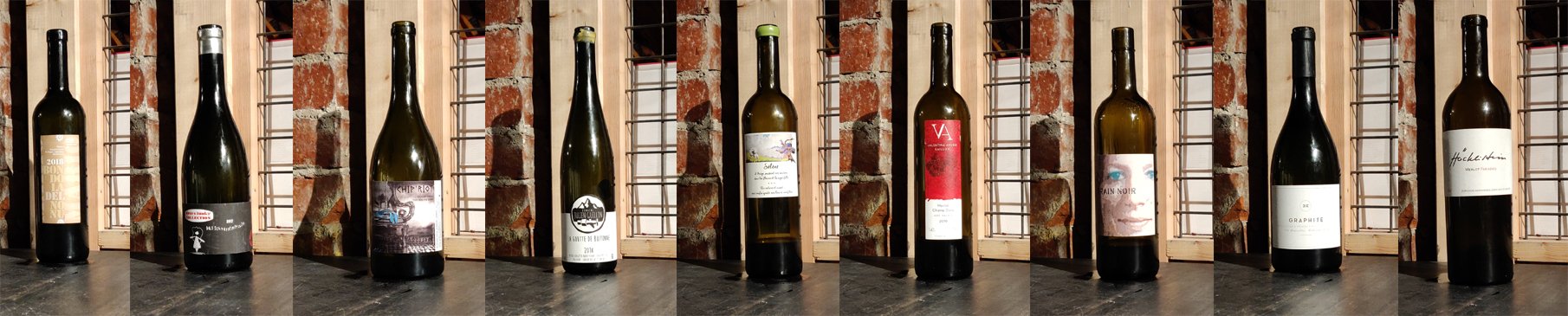
2018 Azienda Mondo Bondola del Nonu Mario - Switzerland, Ticino (14.6.2021)
100% Bondola, a tannic, high-acid variety of Ticino. Fermented in stainless steel with very gentle maceration so that the extraction of tannins is kept at minimum. Aged for 12 months in 400-liter oak barrels. 12,5% alcohol.
Very slightly translucent blackish-red cherry color with a youthful blueish hue. Very youthful, primary and subtly lactic nose with vibrant aromas of berry marmalade, some boysenberry, light blueberry yogurt notes, a little bit of inky character and a hint of cool, stony minerality. Overall the nose reminds me of a young Cru Beaujolais. The wine is lively, fresh and crunchy on the palate with a medium body and flavors of ripe forest fruits, some primary boysenberry notes, a little bit of tart lingonberry, light inky notes, a toasty hint of oak spice and a bittersweet touch of dark chocolate. The wine is very fresh and balanced with its high acidity and gently grippy medium-minus tannins. The rather primary finish is fresh, juicy and quite crunchy with rather long flavors of sweet boysenberry and cherry juice, some inky tones, a little bit of toasty oak spice, light tart notes of lingonberries, a hint of ripe bilberries and a touch of sweet, toasty oak.
A very nice, fresh and super-youthful little red, not unlike a cooler-vintage Cru Beaujolais opened a bit too young. The wine shows a bit of toasty oak character that sticks out a bit, but I can imagine that’s a characteristic that will integrate with the fruit as the wine ages. At the moment the wine feels a bit too young for its own good, but I can imagine this will improve greatly if aged for a handful of years more. Promising stuff with bright, mouthwatering acidity. Great value at 20 CHF (~18€). (90 pts.)
Pale, translucent blood-red color with an almost colorless rim. Youthful, sappy and crunchy nose with red-toned and slightly funky notes of raspberries and redcurrants, some savory wood spice, a little bit bretty spice and barnyard, light leafy green notes and a hint of ripe red plum. Overall the nose has somewhat Loire feel to it, if that makes any sense (for a Merlot). The wine is lively, crunchy and quite acid-driven on the palate with a medium body and fresh, subtly wild flavors of tart lingonberries, sour cherry bitterness, some sweet dark plum notes, a little bit of bretty leather, light astringent notes of chokeberries, a hint of something vaguely cardboard-y and a touch of acetic VA. The structure relies mainly on the high acidity, not on the very friendly and well-behaved, light tannins. The finish is juicy fresh and subtly grippy with long flavors of fresh red plums, some bretty funk, light blueberry notes, a little bit of tart lingonberry, a hint of sweet blackcurrant and a touch of acetic VA.
A tasty, fresh and vivacious little Merlot that really doesn’t taste that much like Merlot. Although the wine is a bit sauvage with its understated notes of bretty funk and acetic hints of VA, the overall feel is still quite pure and conventional - only perhaps a bit AFWE, thanks to its dry and crunchy fruit, high acidity and slightly bitter undercurrent. All in all, this is a pretty and eminently drinkable little wine. Priced according to its quality at 27 CHF (25€). (89 pts.)
Youthful, moderately translucent raspberry red color with subtly purplish highlights. The nose is heavily volatile with a pronounced streak of ether followed by aromas of vinegary VA, light fruity notes of red plums and a hint of crunchy redcurrant. Doesn’t seem to hold much promise. The wine is wild and heavily acetic on the palate with a medium body and lifted flavors of ethery VA, some acetic roughness, a little bit of astringent lingonberry, light spicy notes of sappy herbs and a hint of bretty funk. The structure relies on the high acidity, the tannins feel almost nonexistent. The finish is lively, long and acid-driven with flavors of tart lingonberries and bitter sour cherries, some acetic VA, a little bit of sappy herbal spice and a hint of crunchy redcurrant. The wine ends on a coarse feeling of vinegary roughness in the throat.
Meh. Way too volatile a wine for my taste. There’s very little of interest here beyond the elevated levels of volatile acidity. The wine doesn’t drink particularly well at the moment and I doubt it will get any better with age. Waste of money at 30 CHF (~28€). (63 pts.)
-
2018 Julien Guillon La Goutte de Buitonne - Switzerland, Vin de Pays Suisse (14.6.2021)
100% biodynamically farmed Merlot from vineyards located at the altitude of 900 meters above sea level in Valais. Vinified without any SO2. 13,5% alcohol.
Slightly hazy cherry red color with a subtly maroon hue. Somewhat reticent and a bit funky nose with root vegetable aromas of rutabaga and grated beet, some inky tones, a little bit of ferrous blood, light cherry tones and a lifted hint of sweet VA. The wine is lively, crunchy and slightly thin on the palate with a light body and sappy flavors of redcurrants, sappy herbal tones, some acetic notes of VA, a little bit of sweet raspberry, light nuances of beet root and a hint of tart lingonberry. The structure relies on the focused, racy acidity as the tannins are almost nonexistent. The finish is sappy, acid-driven and somewhat short with light flavors of tart lingonberrie and crunchy cranberries, some pickled beet root, a little bit of sappy herbal spice, light notes of crowberries and a hint of acetic VA.
A pleasantly fresh but otherwise a bit too acetic and underwhelming Merlot that feels like it was made in climate not entirely suitable for Merlot. From the ripe, sweet-toned raspberry notes it seems obvious that at least some grapes have attained full ripeness, but the overall feel is quite thin and underwhelming, making this wine feel quite dilute. Furthermore, the wine could use a little bit of SO2; although the level of VA isn’t super high here, the fruit is so delicate and the body so light that even modest levels of VA feel pretty obvious here. All in all, this is a drinkable and enjoyably refreshing little Merlot, but nothing particularly memorable or interesting. Feels rather overpriced for the style at 30 CHF (~28€). (81 pts.)
-
2019 Cave Caloz Selene - Switzerland, Valais (14.6.2021)
100% biodynamic Cabernet Franc. Aged for 7 months in oak barrels. Vinified completely without SO2. Bottled unfiltered. 13,8% alcohol.
Youthful, almost fully opaque inky blackish-red color with a blueish hue. Youthful, primary and somewhat inky nose with a slightest hint of flatulent reduction that blows off quite quickly. Aromas of sweet dark berries, some leafy green notes, a little bit of juicy blackcurrant and a hint of savory wood spice. The wine is young, lively and crunchy on the palate with a light-to-medium body and quite primary flavors of blueberries, some ripe blackcurrants and black cherries, fresh redcurrants, light notes of savory wood, a little bit of lactic blackcurrant yogurt character, a hint of pipe tobacco and a touch of licorice root. The wine is enjoyably balanced with its rather high acidity and firm, manicured medium-minus tannins. The finish is juicy and quite long with flavors of ripe blackcurrants, some tart lingonberries, a little bit of tobacco, light inky notes, a hint of bitter dark chocolate and a touch of licorice root.
A very nice, fresh and balanced Cabernet Franc with wonderful purity of fruit here. The overall impression is a bit too youthful and primary at the moment; the wine could use at least another 2-4 years to make its lactic notes disappear. Based on its subtly reductive nature, I have no doubts this wine can age very nicely over mid-term if kept in correct cellaring temperatures, despite its complete lack of SO2. An enjoyable, well-made and promising Cabernet Franc. Priced according to its quality at 29 CHF (~27€). (91 pts.)
-
2019 Valentina Andrei Merlot Champ-Dury - Switzerland, Valais, Saillon (14.6.2021)
100% Merlot from three old vineyards planted 42-64 years ago. Fermented spontaneously in stainless steel tanks, aged in oak barriques. 14% alcohol.
Youthful, somewhat translucent blackish-red color with a hint of blue hue. Youthful, somewhat restrained and slightly primary nose with slightly reticent yet vibrant aromas of raspberries, some cherry juice, light lactic notes of blueberry yogurt, a little bit of marmaladey fruit candy, a hint of boysenberry and a touch of sappy herbal character. The wine feels ripe, youthful and juicy on the palate with a medium-to-moderately full body and surprisingly concentrated flavors of tart lingonberries, some ripe bilberries, a little bit of sour cherry, light sappy notes of herbal bitterness, a hint of crunchy bilberry and a touch of savory, earthy spices. Overall the wine shows good sense of intensity and structure, thanks to its high acidity and firm medium-plus tannins that slowly pile up on the gums. The finish is long and super-juicy yet surprisingly dry with flavors of cherries and fresh wild strawberries, some tart lingonberries, a little bit of candied primary fruit, light sappy notes of herbal spice, a hint of blueberry and a touch of savory wood spice.
A very serious, harmonious and eminently very tasty Merlot that is still super-fruity and juicy, thanks to its primary overall character. While some might enjoy such fruit bomb nature, I find the wine a bit too in-your-face at the moment. However, the wine is nevertheless very enjoyable, balanced and showing magnificent purity of fruit; I can expect the wine to turn out just superb once it loses its exuberant baby fat and those subtly lactic notes from the nose. With this much fruit, concentration and sense of structure, this wine has tons of potential to make wonderful old bones. Definitely a wine that can be left to improve in a cellar. Good value at 35 CHF (~32€). (92 pts.)
-
2018 Marie-Thérèse Chappaz Grain Noir - Switzerland, Valais, Fully (14.6.2021)
A blend of Merlot (70%), Cabernet Franc (15%) and Cabernet Sauvignon (15%) from the biodynamically farmed La Liaudisaz parcel. Fermented spontaneously with indigenous yeasts, macerated for 28 days with the skins, aged for 18 months in a combination of new and old oak barriques. Bottled unfiltered. 14,4% alcohol.
Dark, deep and moderately concentrated blackish-red color that permits relatively little light through. The brooding nose feels ripe and quite dark-toned with savory and somewhat restrained aromas of juicy dark fruits, some tobacco, a little bit of licorice root, light smoky notes of toasted oak, a hint of gamey meat and a touch of fresh blackcurrant. The wine feels clean, silky and somewhat concentrated on the palate with a medium-to-moderately full body and quite fresh flavors of juicy blackcurrants, sweet black cherries, some pipe tobacco, a little bit of meaty umami, light notes of toasty oak spice, a hint of fresh dark plum and a touch of licorice root. The overall feel is firm and textural, thanks to the high acidity and powdery, gently grippy tannins. The finish is ripe, juicy and subtly sweet-toned with gentle tannic grip and lengthy flavors of dark plums and blackcurrants, some cherry tones, a little bit of toasty oak spice, light notes of tobacco, a hint of meaty umami and a touch of mocha.
A beautiful, harmonious and wonderfully silky Bordeaux blend that shows balanced ripeness and nice, firm structure. There’s a bit of toasty new oak character here, but since the wine is still so very youthful and it feels like it is built to last, I have no doubts the oakier nuances will fade into background as the wine ages. Even if the wine isn’t as ridiculously stunning as the best Chappaz wines can be, it still shows great sense of finesse, depth and balance. Perhaps a bit too young for now - at least if you don’t like new oak characteristics - but most likely the wine will be in a beautiful spot after another 8-12 years. Priced according to its quality at 49 CHF (~45€). (93 pts.)
-
2016 La Maison du Moulin Graphite - Switzerland, Vaud, La Côte (14.6.2021)
A blend of Merlot (60%) and Cabernet Franc (40%). Fermented spontaneously with indigenous yeasts, aged for 24 months in oak barrels. 13,5% alcohol, 35 mg/l SO2.
Slightly evolved, maroon-hued black cherry color that permits quite little light through. The nose feels lively, clean and sappy with aromas that feel more youthful than I expected from the somewhat evolved appearance. There’s a hint of flatulent reduction at first, which quickly blows off to reveal subtly sauvage aromas of blueberries, some leafy green notes of Cabernet Franc, light plummy tones, a little bit of leathery funk, a hint of sappy herbal character and a touch of savory old wood spice. The wine is dry, crunchy and medium-to-moderately full-bodied on the palate with relatively ripe flavors of juicy dark plums and blueberry juice, some herbaceous leafy notes, a little bit of sweet, toasty oak spice, light coffee tones, a hint of tobacco and a touch of bretty funk. The overall feel is firm and quite structured, thanks to the high acidity and slightly grippy medium-plus tannins. The finish is dry, youthful and juicy with a little bit of tannic grip and lengthy flavors of sweet black cherries, succulent notes of dark plums, a little bit of toasty oak spice, light skunky notes of reduction, a hint of mocha coffee and a touch of ripe blackcurrant.
A very juicy, balanced and vibrant Bordeaux blend that feels surprisingly dry despite its youthful, lush and fruity notes. All in all, the wine is a bit all over the place and definitely could use some aging: the fruit here has a slightly sweet primary edge which probably fades away after a few years and the toasty oak notes still peek through the fruit, lending the wine a bit polished, modernist feel - even though at the same time the wine has a slightly naturalist sauvage feel to it. I believe the wine is just in a somewhat awkward phase at the moment and will perform so much better at 10 years of age - at least it shows good promise. This is a fine wine that has yet to show its full potential. Perhaps a bit pricey side at 45 CHF (~41€), but not prohibitively so. (90 pts.)
.
The third flight: Ticinese Merlot (with one Merlot from Genève)
-
2014 Höcklistein Merlot Paradies - Switzerland, Eastern Switzerland, St. Gallen (14.6.2021)
The flagship single-vineyard Merlot of Höcklistein. Fermented in stainless steel tanks, aged for 18 months in new oak barriques, followed by another 12 months in stainless steel tanks. 14% alcohol.
Slightly translucent blackish red color with a hint of rusty dried-blood hue. The nose feels very rich, sweet-toned and somewhat gloopy with lush aromas of vanilla, mulled wine, some warm spicy notes of cloves and cinnamon, light bilberry tones, a little bit of fresh red plums, a hint of cigar wrapper and a somewhat vegetal note of tilled earth or dirty beetroot (I wonder if there’s a hint of geosmin here?). The wine is juicy, quite extracted and somewhat chewy on the palate with a dense medium body and quite polished flavors of blueberry juice, some mulled wine, a little bit of ripe black cherry, light sweet spicy notes of vanilla and clove, a hint of toasty mocha oak and a vegetal touch of perhaps geosmin. The overall feel is quite fat and somewhat blowzy, thanks to the modest, medium acidity and very mellow, easy tannins. The finish is round, juicy and rather sweetish with dark-toned flavors of blueberries and ripe dark plums, some vanilla, a little bit of cedary cigar box, light aromatic notes of cloves, a hint of cherry juice and a touch of extracted woody bitterness.
Although the wine wasn’t particularly big or full-bodied, it was still built like a polished modernist blockbuster: tons of ripe fruit, heaps of new oak and very little in the way of structure. Furthermore, there lingers a hint of obtrusive vegetal greenness that reminds me of freshly tilled soil and still dirty root vegetables and which I associate with geosmin. I don’t know whether the wine has any geosmin or not, but the greenness here doesn’t feel particularly pleasant. All in all, I really don’t see what kind of market segment this kind of wine is aiming at, but it’s perhaps because I’m so far away from the intended target audience that I just don’t see it. Feels ridiculously overpriced for its quality at 68 CHF (~62€). (75 pts.)
-
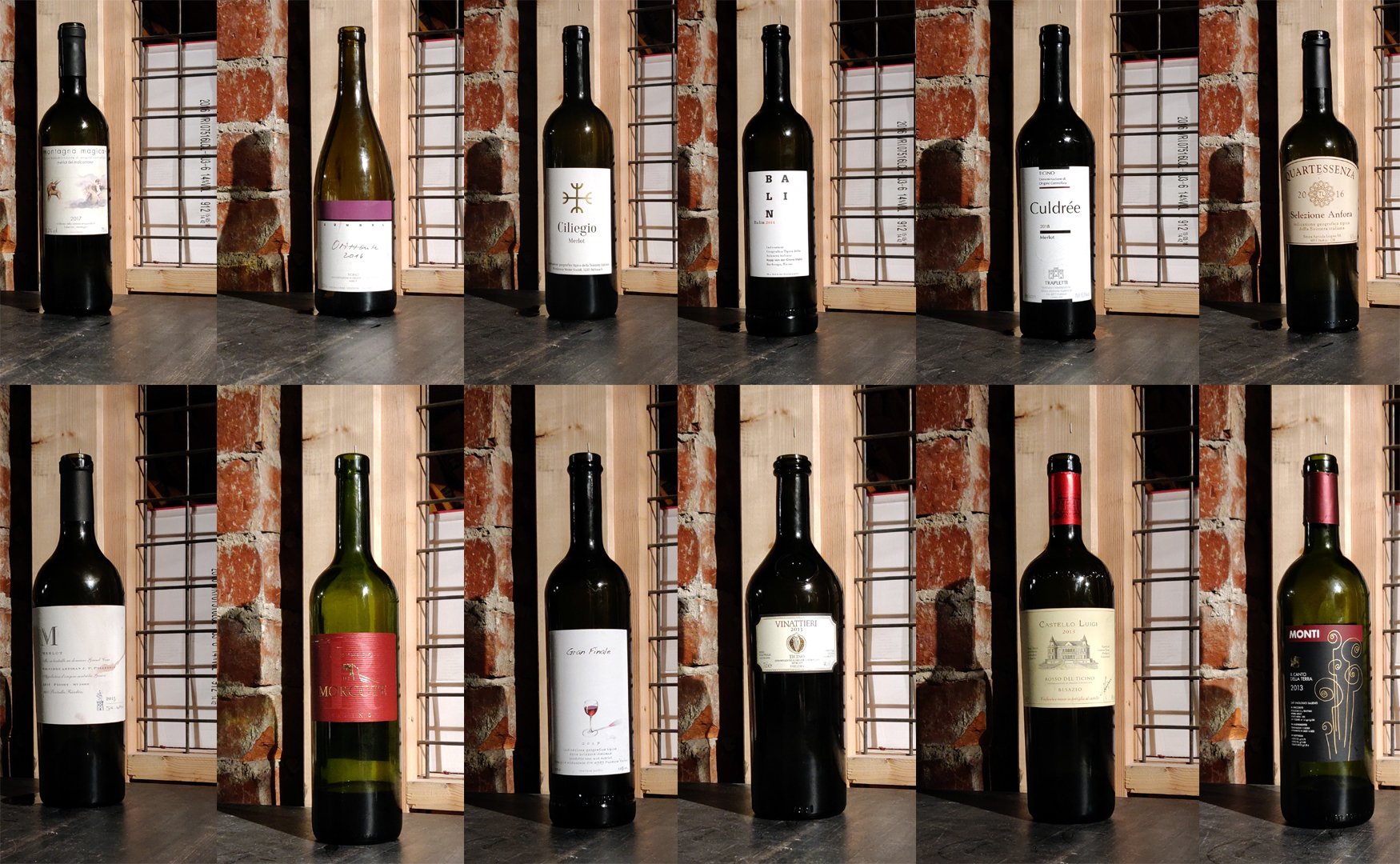
2017 Daniel Huber Merlot Montagna Magica - Switzerland, Ticino, Malcantone (14.6.2021)
The flagship Merlot of the house. Macerated with the skins for 25 days, then aged for 18 months in oak barriques. 13,2% alcohol.
Dark, slightly translucent blackish-red color with a pale cherry-red rim. Bold, somewhat pungent and slightly smoky nose with aromas of cigar smoke, some dried dark fruits, a little bit of charred game, light cranberry sauce notes and a hint of ripe red plums. The wine is dry, lively and enjoyably acid-driven on the palate with a firm medium body and quite focused flavors of juicy black cherries, some blackberries, a little bit of ripe red plums, light tart notes of tart lingonberries, smoky hints of charred game and cigar and a ferrous touch of blood. The structure relies mostly on the rather high acidity, not on the quite friendly tannins that slowly pile up on the gums. The finish is dry, quite long and gently grippy with flavors of tart lingonberries, some sour cherry bitterness, light cigar tones, a little bit of tart red plums and a hint of gamey meat.
Although the wine feels quite good, it doesn’t leave a lasting impression - it has a strangely smoky overall quality and despite the vibrant fruit, it lacks the intensity I’d expect from a flagship wine. I wonder if the wine is aged in so toasted barriques that they are behind the smoky nuances? The wine really doesn’t have obvious oak notes, but the smoky and charry notes feel a bit out of place. All in all, this is a relatively good effort, but not really worth the 52 CHF (~48€). (87 pts.)
-
2016 Christian Zundel Orizzonte - Switzerland, Ticino (14.6.2021)
Mainly Merlot with some Cabernet Sauvignon. Fermented in stainless steel, aged in oak barriques. 12,5% alcohol.
Moderately translucent dark plummy red color. Somewhat wild and slightly acetic nose with aromas of burnt hair, some dried old leather, a little bit of cherry marmalade and an acetic balsamico hint of VA. The wine is bright, light-to-medium-bodied and somewhat volatile on the palate with flavors of crunchy cranberries, some acetic and nail polish notes of VA, a little bit of leathery funk, light sweet notes of ripe forest fruits, a hint of sour cherry bitterness and a sappy touch of raspberry leaves. The finish is dry, funky and slightly volatile with medium-to-moderately long flavors of leathery funk, crunchy cranberry and tart lingonberry, some acetic notes of VA, a little bit of bretty funk and gamey character, light brambly notes of raspberries, a hint of burnt hair and a sweet, lifted touch of nail polish.
A wine that would be pleasantly bright, fresh and crunchy, if it weren’t for the elevated levels of volatile acidity and somewhat odd notes of burnt hair. You can taste there’s some undeniable quality here underneath, but unfortunately the hands-off methods in the winery have resulted in a wine that is a bit too volatile and funky for pleasure - and that’s from a person who loves natural wines and doesn’t shy away from a bit of funk or VA! I hope other vintages of this wine show less acetic action and more purity. At this quality I wouldn’t say the wine is worth the 48 CHF (~44€). (84 pts.)
-
2017 Hauksson Weine Merlot Ciliegio - Switzerland, Ticino, Vino da Tavola della Svizzera italiana (14.6.2021)
A biodynamic Ticino Merlot from Hoss Hauksson, an Icelandic winemaker who makes wines in Aargau, northern Switzerland. Aged for 18 months in chestnut and French oak barriques. 14% alcohol.
Somewhat translucent and slightly evolved black cherry color. Thick, fragrant and meaty nose with aromas of allspice, meat stew, some perfumed elderflower notes, a little bit of bilberry, light black cherry tones, a hint of gamey meat and a sweet touch of cloves. The wine is dry, lively and medium-bodied on the palate with complex flavors of tart red plums, some sour cherry bitterness, a little bit of ripe blackcurrant, light oak notes of mocha and toasted wood, a hint of sweet baking spices and a touch of savory wood. The overall feel is quite structured, thanks to the high acidity and moderately grippy medium-plus tannins. The finish is youthful, vibrant and rather grippy with bold flavors of ripe blackcurrants and bilberries, some savory wood spice, a little bit of ferrous blood, light mocha notes, a hint of red cherry and a touch of sweet, toasty wood spice.
A quite nice, dry, enjoyably firm and balanced Merlot that still feels a bit too youthful and woody. The wine is definitely quite characterful and enjoyably perfumed in style and it lacks the softness I dislike in many Merlot wines, but it also shows quite a bit of wood influence as well; overall this would be a pretty lovely wine, if it weren’t for the notes of cloves, mocha and savory wood that compete for attention and seem to overwhelm the finer nuances. This is a promising wine, it doesn’t hit the jackpot yet. I hope some additional aging would do the wine good and integrate those oak notes a bit better with the fruit. The wine is perhaps a bit on the pricey side at 43 CHF (~39€), but things might change for the better if the wine continues to improve with age. (89 pts.)
-
2018 Cantina Kopp von der Crone Visini Merlot Balin - Switzerland, Ticino, Vino da Tavola della Svizzera italiana (14.6.2021)
A blend composed mainly of Merlot with a little bit of Arinarnoa (a Tannat x Cabernet Sauvignon cross). Fermented and macerated with the skins in stainless steel tanks. Aged for 18 months in barriques (new and 2nd use) and ceramic amphorae. 13,5% alcohol.
Youthful, deep and rather opaque dark cherry red color with a hint of blueish hue. The nose feels sweet-toned, expressive and somewhat oaky with aromas of vanilla, licorice root, some blueberry tones, a little bit of elderflower, light smoky notes of toasty oak, a hint of crunchy crowberry and a touch of chocolatey oak. The wine is firm, silky and moderately ripe on the palate with a medium body and quite juicy flavors of sweet dark plums, some ripe bilberry and boysenberry tones, a little bit of fresh and crunchy crowberries, light earthy notes of sous-bois, a hint of toasty mocha oak and a touch of peppery spice. The overall feel is a bit soft, thanks to the medium-to-moderately high acidity and quite ripe medium-minus tannins, although the tannins slowly pile up on the gums, making the wine feel a bit more grippy after awhile. The finish is juicy, somewhat grippy and slightly warm with rather sweet-toned flavors of ripe dark plums and blackberries, some vanilla oak, a little bit of blueberry, light notes of sous-bois, a hint of tart lingonberry and a touch of toasty oak spice.
An enjoyable but also somewhat polished and glossy Ticino red. The wine has a nicely fresh and crunchy undertone to its fruit, but the overall feel suffers a bit from the sweeter notes of new oak, juicy ripe-fruited flavors bordering on almost overripe and a bit too modest acidity. It feels like there’s a nice and balanced wine underneath, but it is drowned out by slightly too heavy-handed winemaking and fruit picked a bit too late and ripe for its own good. I guess the wine might get better with age if its drop its baby fat and integrates the oak better with the fruit, but I have a hunch this isn’t going to turn out to be a stunner even with lots of age. Feels rather expensive for the quality at 58 CHF (~53€). (87 pts.)
-
2018 Enrico Trapletti Merlot Culdrée - Switzerland, Ticino (14.6.2021)
100% Merlot from a selection of the best vines in different vineyards. Macerated with the skins for 30-40 days. Aged for 18 months in predominantly new oak barrels ranging from 300 to 400 liters in size. 13,3% alcohol.
Youthful and moderately translucent cherry red color. Clean, fragrant and somewhat sweet-toned nose with vibrant aromas of ripe red plums, some inky tones, a little bit of juicy blackcurrant, light sappy notes of raspberry leaves, a hint of gravelly minerality and a touch of savory wood spice. If the wine sees lots of new oak, it carries it remarkably well! The wine is fresh, lively and quite youthful on the palate with a medium body and somewhat primary flavors of red plums, some lactic notes of blueberry yogurt, light blackcurrant notes, a little bit of gravelly minerality, a sweeter hint of raspberry and a touch of sappy raspberry leaf. The overall feel is quite structured, thanks to the high acidity and firm medium-plus tannins that pile up quite quickly on the gums. The finish is juicy, moderately grippy and quite long with flavors of blueberries, some ripe red plums, a little bit of sanguine iron, light lactic notes of blueberry yogurt and a hint of fresh blackcurrant.
A very nice, fresh and youthful Merlot that handles its élevage in new oak remarkably well - the wine is wonderfully pure, fruity and vibrant with very little in the way of obvious oak influence. The bigger problem here is the very youthful - almost primary - nature of the wine: it still retains quite a bit of lactic notes from the MLF and most likely will keep on doing that for at least a few years. I’d say this is a good wine, but it will need at least a few more years before it really starts to glide into its drinking window. Most likely the wine is still another 10 years away from its peak. Good stuff, but definitely in need of further aging - expect the score to go up with age. Perhaps a bit pricey for the quality at 54 CHF (49€), but not prohibitively so. (90 pts.)
-
2016 Tenuta Agricola Luigina SA Quartessenza Selezione Anfora - Switzerland, Ticino, Vino da Tavola della Svizzera italiana (14.6.2021)
100% Merlot fermented and macerated for 3 months in amphorae. After the maceration, the wine is pressed and aged for another 18 months in amphorae. 14,5% alcohol. Total production 600 bottles.
Quite dark blood-red color with an evolved figgy core that turns brick-red towards the rim. The nose feels surprisingly closed and inexpressive with understated aromas of dark forest fruits, some brambly black raspberries, a little bit of wet stone minerality, light earthy notes and a sappy hint of leafy greenness. The wine is dry, savory and somewhat austere on the palate with slightly understated flavors of tart redcurrants and fresh red plums, some gamey meat, light stony mineral notes, a little bit of earthy spice and a hint of crunchy crowberry. The overall impression is moderately structured, thanks to the high acidity and moderately grippy medium-plus tannins that slowly pile up on the gums. The finish is lively, crunchy and moderately grippy with clean and rather lengthy flavors of crunchy crowberries and red plums, some tart cranberry notes, a little bit of sanguine iron, light stony mineral notes, a hint of earth and a touch of brambly black raspberry.
A tasty and balanced Merlot that seems to be also surprisingly closed and inexpressive. I wonder if the wine is just caught in a slump or if the wine is just actually this restrained in style - at least it didn’t seem to open much with air during the tasting. However, the style here is wonderfully fresh and clean with a firm acid structure and tannic backbone. There’s good potential for future development, in the hopes that the wine would start to open up with bottle age. However, at 100 CHF (~91€) the wine feels way overpriced for the quality. I understand it’s a very limited production wine, but even its rarity doesn’t really justify the steep price. (91 pts.)
Almost fully opaque black cherry color with a slightly evolved figgy hue. Juicy, somewhat wizened and slightly oxidative nose with relatively evolved aromas of dried dates and prunes, some raisiny tones, a little bit of liqueur-ish VA, light meaty notes, a hint of mushroomy sous-bois and a sweet touch of vanilla oak. The wine is ripe, full-bodied and chewy on the palate with juicy flavors of wizened red plums and black cherries, some sweet raisiny notes, a little bit of blueberry jam, light peppery notes, an oaky hint of milk chocolate and a touch of vanilla. The high alcohol lends some obvious warmth to the palate. The flavor profile reminds me more of Amarone than Merlot, but I have no idea if that is intended or if the wine has just evolved prematurely. The overall impression is quite muscular, thanks to the moderately high acidity and quite ample and grippy tannins. The finish is ripe, juicy and quite warm with moderate tannic grip and lengthy flavors of dried dates and raisins, some blackcurrant jam, light vanilla tones, a little bit of cherry marmalade, a sweet hint of mocha oak and a touch of prune. The high alcohol makes the wine end on a rather hot note.
A quite huge and surprisingly evolved Merlot made in a seemingly impressive blockbuster style: lots of fruit, ripeness, oak and extraction here. I have no idea if the wine is made into this kind of style, or if it has evolved just so much that the fruit has developed into this sweet, pruney and raisiny taste. Whatever the case, the overall feel here is that of an Amarone, not of a Merlot. The oak notes could use some additional aging so that they’d integrate better with the lush fruit, but seeing how very evolved the wine is already now, I really don’t think that the wine will continue to improve in a cellar - at least not for long. At approx. 60 CHF (~55€) the wine feels quite expensive for the style. (83 pts.)
-
2016 Castello di Morcote Riserva - Switzerland, Ticino (14.6.2021)
A blend of Merlot (90%) and Cabernet Franc (10%). Macerated for 25 days on the skins. Aged for 18 months in new French oak barriques and 350-liter Tonneaux. 13,5% alcohol.
Quite deep and dark-toned black cherry color that permits rather little light through. Fragrant, somewhat oaky and slightly sweet-toned nose with aromas of brambly forest fruits, some elderflower tones, a little bit of vanilla pod, light toasty notes of mocha oak and milk chocolate, a sweeter hint of ripe dark fruits and an evolved touch of prunes. The wine is ripe, juicy and quite intense on the palate with a rather full body and dry flavors of ripe blackcurrants, some vanilla oak, a little bit of tart lingonberry, light floral notes of elderflower, crunchy hints of cranberries and fresh red plums and an oaky touch of coffee. The overall feel is quite structured with the rather high acidity, although the ripe, medium-minus tannins could pack a bit more grip, as they come across pretty soft and powdery. The finish is long, tart and crunchy with a little bit of tannic grip and a dry aftertaste of tart lingonberries and cranberries, some elderflower tones, a little bit of fresh crowberry, light notes of savory wood spice, a hint of redcurrant and a touch of vanilla.
A quite fresh and balanced Merlot from the more serious end - although suffers a bit from the liberal use of new oak. The toasty oak notes of coffee, mocha and vanilla lend a somewhat glossy, anonymous feel to the wine that is otherwise all about wonderfully fresh and crunchy red-toned fruit and bright acidity. Fortunately the wine shows good potential for future development, so hopefully with patient cellaring the oakier notes will recede into the background. Keeping my fingers crossed that the score would go up as the wine ages. For now the price feels a bit steep at 75 CHF (69€). (88 pts.)
-
2017 Eric Klausener Merlot Gran Finale - Switzerland, Ticino, Vino da Tavola della Svizzera italiana (14.6.2021)
The last wine to be produced at the Klausener winery, before they closed the doors. 100% Merlot, aged in barriques. 13% alcohol.
Youthful, deep and almost fully opaque black cherry color. Fragrant, clean and characterful nose with seductive aromas of fresh forest fruits, ripe blackberries, some fresh dark plums, a little bit of juicy blueberry, light floral notes of apple blossom, a perfumed hint of summer meadow and a touch of savory wood spice. The wine is lively, fresh and intense with a light-to-medium body, making the wine feel almost thin without appearing watery or underwhelming. Focused, very youthful yet still dry flavors of redcurrants and tart lingonberries, some stony mineral notes, a little bit of fresh red plum, light floral notes of apple blossom, a smoky hint of cigar and a touch of exotic spices. The overall feel is very firm and sinewy, thanks to the high acidity and very firm and moderately grippy tannins. The finish is lively, fresh and rather grippy with a long, dry aftertaste of tart lingonberries and sour cherry bitterness, some brambly raspberry, light licorice root notes, a little bit of marmaladey primary fruit, a fragrant herbal hint of rosemary and an oaky touch of sweet, exotic spices.
An excellent, dead-serious and very ageworthy Merlot that can easily hold a candle to the great Pomerol Merlots. I have no idea whether the barriques in which the wine was aged were new or not, but any woody notes here are in the background and the focus is on the fresh, pure and wonderfully dry fruit. Seeing how the wine is still very firm and structured, this will make beautiful old bones in due time. It’s sad to hear that the winery is no longer in operation. This wasn’t a cheap wine at 55 CHF (~50€), but it delivers for the price. (94 pts.)
-
2013 Vinattieri Ticinesi Merlot Vinattieri - Switzerland, Ticino (14.6.2021)
It was pretty hard to get the name of the wine correctly: apparently the winery name is Vinattieri Ticinesi, it is run by Luigi Zanini, operated at Az. Agr. Belvedere, and the wine name is Vinattieri - so it seems to go at least under names “Vinattieri Ticinesi Merlot Vinattieri”, “Luigi Zanini Merlot Vinattieri” and “Belvedere Merlot Vinattieri”. Not easy! Anyhow, it’s a 100% Merlot, aged in barriques. 14% alcohol.
Deep, somewhat translucent blackish-red color with an evolved dried-blood hue. Brooding, subtly sweet-toned and very restrained nose with aromas of fresh blackberries and black raspberries, some ripe red plum tones, a little bit of stony minerality and light woody notes of toasty oak spice. The wine feels slightly more expressive on the palate with ripe and juicy yet still somewhat reticent flavors of ripe red plums and succulent boysenberries, some crunchy crowberries and redcurrants, a little bit of ferrous blood, light stony mineral tones, a hint of licorice and a touch of tart lingonberry. The structure relies more on the fresh and precise acidity, although the somewhat grippy medium tannins bring some welcome firmness and sense of structure as well. The finish is quite long and somewhat grippy with a slightly austere aftertaste of tart lingonberries and cranberries, some crunchy crowberries, a little bit of stony minerality, light sanguine notes of iron, a hint of redcurrant and a touch of savory wood spice.
A tasty and sophisticated Merlot that is either made in a very low-key style, or then is just in a slump at the moment. However, even though the wine wasn’t as flashy and impressive as its peers in out tasting of Swiss reds, it still managed to shine with its wonderfully fresh, pure and precise expression. Although the wine might’ve been a bit austere, it was also surprisingly youthful and vibrant for its age, showing great potential for future development. However, at 138 CHF (~126€) I really wouldn’t say the wine was worth its price. (91 pts.)
Surprisingly translucent and moderately evolved blood-red color with a thin, almost colorless rim. Lush, sweet-toned nose with aromas of ripe forest fruits, juicy blackberries, some vanilla oak, a little bit of raspberry marmalade, light cherry notes, a sanguine hint of raw meat and a touch of red licorice. The wine is juicy, ripe and quite full-bodied on the palate with moderately sweet flavors of licorice, some meaty umami, a little bit of brambly raspberry, light sanguine notes of iron, a hint of stony minerality and a touch of vanilla oak. Despite the somewhat evolved appearance, the wine still tastes quite youthful, although the sweetness of the fruit and the vanilla notes make the wine feel a bit of a crowdpleaser. Fortunately the overall feel is quite structured, thanks to the medium-to-rather high acidity and quite firm and grippy tannins. The finish is long, ripe and rather grippy with somewhat sweet-toned flavors of juicy black cherries, brambly black raspberries, some ferrous notes of blood, a little bit of stony minerality, light tart and slightly bitter notes of lingonberry, a hint of vanilla and a touch of licorice.
A quite lush, ripe and sweet-toned but still enjoyably firm and structured Merlot that looks relatively evolved, but comes across as surprisingly youthful, focused and vibrant. The overall feel is a bit too ripe and sweet for my taste, but fortunately the wine doesn’t come across as too soft, although the acidity could still be a bit higher. Overall this feels like a well-made St. Émilion red that is just way too young for its own good; even though the wine is drinking quite nicely right now, it most likely needs another 7-12 years before it really hits its apogee. Although the wine is obviously of high quality, it still feels heavily overpriced at 155 CHF (~142€). (89 pts.)
-
2013 Cantina Monti Merlot Il Canto della Terra - Switzerland, Ticino (14.6.2021)
100% Merlot from 45-yo vines in planted to very steep hillside in Ronchi di Cademario. Fermented and macerated with the skins for 13 days. 14,7% alcohol, 5,7 g/l acidity, 0,80 g/l VA, 29,4 g/l dry extract and 50 mg/l SO2. Bottled unfiltered.
Dense, almost fully opaque blackish-red color with an evolved dried-blood hue. Restrained, somewhat sweet and slightly concentrated nose with layered aromas of boysenberries and black cherries, some herbal spice, light blackcurrant notes, a little bit of juicy blackcurrant and plummy fruit, a lifted hint of sweet VA and an evolved touch of roasted meat character. The wine is dense, dry and chewy on the palate with a medium body and intense, moderately evolved flavors of wizened dark fruits, gamey meat, some dried figs and black cherries, a little bit of peppery spice, light earthy notes, a hint of fresh and crunchy blackcurrant and a sweet touch of balsamic VA. The overall impression is quite complex and impressive, in part thanks to the high acidity and quite grippy tannins. The alcohol shows a little bit. The finish is long, powerful and quite grippy with a complex, evolved aftertaste of dried dark fruits, some earth, a little bit of savory meat, light sweet notes of wizened black cherries, a hint of umami and a touch of balsamic VA. The high alcohol lends quite a bit of warmth to the aftertaste.
A very impressive, complex and harmonious Merlot with lots of intensity and structure, yet the overall impression isn’t particularly weighty or heavy. The only blemish here is the high alcohol, which shows quite a bit through at times. Nevertheless, this is a very complete wine that bears very little resemblance to the soft, fruity and accessible Merlot wines that are so popular all over the world nowadays. This is more like a classic Pomerol Merlot with its own, slightly wild and rustic Swiss nature. Drinking wonderfully right now, but most likely will continue to improve for a handful of years. Priced more or less according to its quality at 75 CHF (~69€). (94 pts.)
Posted from CellarTracker
![[snort.gif]](/uploads/db3686/original/2X/b/bdc3944606213c4dca6c1169cf0a166c8bc4f8c9.gif "snort.gif")
![[wink.gif]](/uploads/db3686/original/2X/0/04707e6a7bbb03e0153e349d8a9270d30e1e9525.gif "wink")
![[cheers.gif]](/uploads/db3686/original/2X/0/0ff9bfcdb0964982cd3240b6159868fbdf215b1a.gif "cheers")
