Reporting from a blind tasting I attended a year ago. The person who arranged the tasting had a lineup of wines including some rather pricey culty wines and some more affordable, less culty wines. We didn’t really have any idea what wines we were tasting, because the tasting was advertised only as “blind tasting” without any further elaborations on which kinds of wines we were going to taste.
We had an introductory bubbly and a white, plus a sweet Port in the end - these we left outside of our final scoring. All the dry red wines we scored by each of us having three points, which we could award to the wines whichever way we wanted (although, if I counted our scores correctly, somebody must’ve given four points, since we were 11 people and the total score of all the wines combined is 34 points…).
Apparently my tastes diverged noticeably from the other attendees’, since I found most of the wines we tasted to be quite heavy, clumsy “winemaker wines” with way too high levels of ripeness, alcohol and oak. However, most of the attendees found the worst offenders to be the most impressive wines in the tasting instead. The weirdest moment was when one wine actually got one point from one attendee, while almost all the other attendees thought this wine was slightly corked.
However, one thing we all agreed with: that Armand Rousseau Clos des Ruchottes was quite disappointing - especially when you take into account it was easily the most expensive wine in the tasting! Almost everybody guessed it was a Pinot Noir, but some people just didn’t really care for Pinot, and those who did, thought the wine was way too ripe, soft and oaky. Almost all the people guessed it was a new world Pinot Noir (and conversely, most people thought the Australian Gamay was a Burgundy Pinot Noir!).
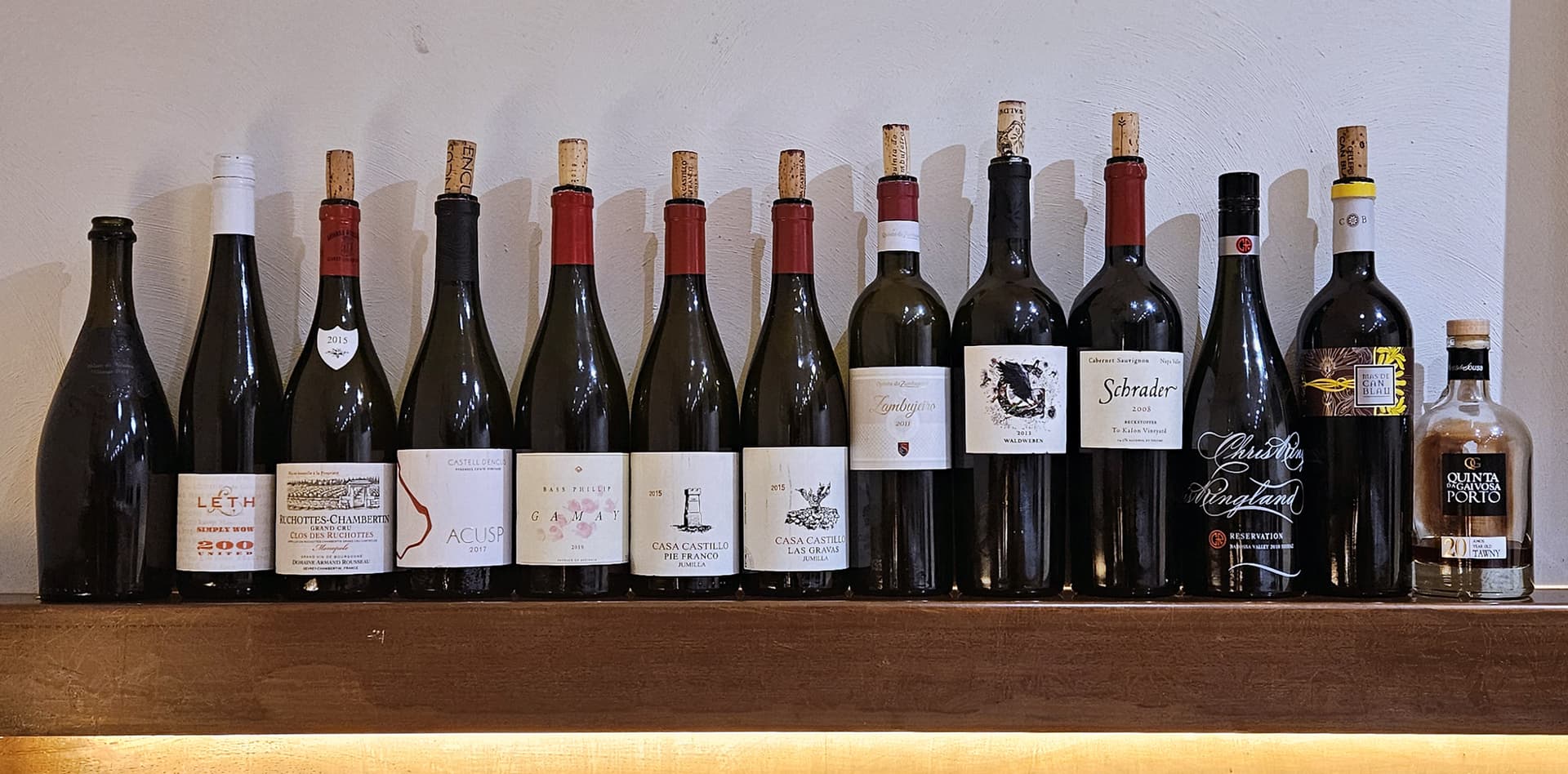
Many people seemed to be very happy with the quality and style of the wines we tasted, whereas I think I left the tasting muttering something about the emperor and his new clothes…
Anyways, here’s the final ranking of the wines we scored (and my personal scores in parentheses).
#1 - 2010 Chris Ringland Shiraz Reservation, 9 pts. (85)
#2 - 2011 Quinta do Zambujeiro Zambujeiro, 7 pts. (72)
#3 - 2019 Bass Phillip Gamay, 6 pts. (93)
#3 - 2008 Schrader Cellars Cabernet Sauvignon Beckstoffer To Kalon Vineyard, 6 pts. (92)
#4 - 2013 4G Wines Waldweben G., 5 pts. (93)
#5 - 2015 Casa Castillo Las Gravas, 1 pt. (NR)
#6 - 2015 Armand Rousseau Grand Cru Ruchottes-Chambertin Clos des Ruchottes, 0 pts. (89)
#6 - 2015 Casa Castillo Pie Franco, 0 pts. (91)
#6 - 2017 Castell d'Encüs Acusp, 0 pts. (86)
#6 - 2017 Cellers Can Blau Mas de Can Blau, 0 pts. (90)
- 2008 Ebner-Ebenauer Blanc de Blancs - Austria, Niederösterreich, Weinviertel (31.7.2024)
100% Chardonnay. Vinified without any SO2. No dosage. 13% alcohol. Tasted blind.
Deep golden yellow color. Rich, deep and noticeably toasty nose with complex aromas of lemon curd, some chopped and roasted nuts, light honeyed tones, a little bit of bruised Granny Smith apple, a hint of quince jam and a touch of leesy yeast. The wine feels broad, nuanced and quite round on the palate with a medium-to-moderately full body and quite idiosyncratic flavors of brioche and toasty autolysis, some quince jam, light bruised apple tones, a little bit of honey-and-oats, a sweet hint of Mirabelle plums and a touch of plum pits or damson liqueur. The modest acidity is on the somewhat low side for a sparkling wine and the mousse feels silky smooth, gentle and mellow. The finish is long, velvety and gentle with a dry aftertaste of nutty autolysis and toasty brioche, some bruised apple tones, a little bit of overripe quince, light Mirabelle plum tones, a hint of plum pits and a touch of leesy yeast.
A tasty and impressively complex but also a bit too soft and even somewhat odd bubbly - those quince jam, Mirabelle and plum pit tones were very idiosyncratic and definitely something I've never picked up before in a sparkling wine. Based on this one bottle, I can understand the cult-ish status of this sparkling wine, as I've never seen an Australian sparkling wine show similar levels of complexity and depth of flavor. However, I'm not sure if I enjoyed that much those sweet, atypical and quite noticeably ripe flavors as they felt quite alien to me in a sparkling wine context. Furthermore, the wine really could've used a bit more acidity - no matter how big or vinous a sparkling wine is, I always need them to show great sense of freshness and acidity. That this wine didn't, which made it feel a bit too soft, round and gentle to my preference. An impressive wine in its own right, but feels somewhat expensive for the quality at approx. 85€.
(91 points) - 2019 Leth Simply Wow 200 United - Austria, Niederösterreich, Wagram (31.7.2024)
Leth has a "vine library" vineyard of more than 250 different grape varieties - some very well-known, some relatively unknown, some borderline extinct, some never even been in commercial wine production, some even lacking a name - and this wine is a field blend of some 200 different white varieties grown in this vineyard. All the varieties are harvested at the same time, selecting only the ripest bunches of each variety, and vinified together. Fermented and matured for 6 months on the lees in stainless steel. 13,5% alcohol. Tasted blind.
Intense and quite youthful yellow-green color. The nose feels youthful, tropical and a bit reductive with aromas of pear jam and white peach, some candied notes of gummi bears, a little bit of smoky reduction, light herby nuances, a hint of apple sauce and a touch of honeyed richness. The wine feels quite dry yet still pretty rich with a moderately full body and layered flavors of ripe pear and apple sauce, some herby tones, a little bit of greengage and sweet tropical fruits, light candied notes of gummi bear, a hint of saline minerality and a reductive touch of smoke. The moderately high acidity keeps the overall feel pretty nicely in balance, although it isn't high enough to offset that sense of tropical richness. The finish is ripe, rich and somewhat sweetly-fruited with a moderately long aftertaste of exotic fruits and ripe pear, some stony mineral notes, a little bit of savory spices, light nutty notes of slivered almonds, a hint of salinity and a touch of acacia honey.
A tropical and exuberant take on Gemischter Satz that feels a bit too much and all over the place. Although vinified (technically) dry, the overall feel is a tad too rich, exotic and sweet-toned for my preference. The acidity could also be a little bit higher - while not particularly low in acidity, a wine this ripe and exotic could really use a bit more freshness and zip. An academic curiosity, but not really my cuppa.
(87 points) - 2015 Domaine Armand Rousseau Père et Fils Ruchottes-Chambertin Clos des Ruchottes - France, Burgundy, Côte de Nuits, Ruchottes-Chambertin Grand Cru (31.7.2024)
100% Pinot Noir from the Clos des Ruchottes monopole within the Grand Cru Ruchottes Chambertin vineyard. Approximately 80% of the fruit was destemmed, 20% vinified in whole bunches. Aged in French oak barrels (1/3 new) for approximately 18 months. 13,5% alcohol. Tasted blind.
Moderately translucent and slightly evolved pomegranate red color with a wide, clear rime. The nose feels sweet, open and expressive with rich and quite hedonistic aromas of wizened red cherries and evolved notes of savory meaty character, some earthy tones, a little bit of exotic spices and toasty wood, light wild strawberry tones, a hint of sweet and juicy raspberry, a touch of spicy Pinosity and a whiff of perfumed floral character. The wine feels silky, ripe and very open-knit on the palate with a medium body and slightly sweet-toned flavors of ripe raspberries and sweet, slightly toasty oak notes of chocolatey mocha character, light evolved nuances of wizened red cherries, a little bit of sweet exotic spices, a hint of juicy black raspberry and a touch of spicy Pinosity. The medium acidity feels quite modest for a Pinot Noir, contributing to the rather mellow and even a bit flabby overall feel - although the gentle medium tannins contribute a little bit of firmness to the texture. The finish is juicy, rich and slightly grippy with a dark-toned and quite sweetly-fruited aftertaste of succulent strawberries and black raspberries, some toasty oak tones, light evolved notes of wizened cherries and dark pruney fruits, a little bit of earthy spice, a hint of savory wood and a touch of alcohol warmth.
A very rich, hedonistic and somewhat sweet-toned Grand Cru Burg with a very sunny overall feel; the warm and solar vintage has made this wine into a soft and silky-textured wine with lots of juicy, sweet fruit and relatively little in the way of structure. Most people in the blind tasting guessed that this was a Pinot Noir, but several people also mentioned that most likely isn't a Burgundy - the biggest irony here was that this was the only Burg in the tasting. Based on the sunny, sweet-toned fruit and still somewhat pronounced toasty oak notes, many people - me included - guessed new world Pinot Noir. My guess was a premium-tier Central Otago Pinot Noir; several others guessed California Pinot. The wine got 0 points from the eleven attendees, finishing on shared last place. Once the bottles were revealed, many people commented how atypically ripe the wine was, not at all representative of the region - let alone the vineyard. It was good and enjoyable, but not at all memorable. This might be among the most expensive wines I've tasted, but this time it wasn't even among the best wines of the tasting in which was tasted. At +1000€ per bottle, there is no QPR to speak of.
(89 points) - 2017 Castell d'Encús Costers del Segre Acusp - Spain, Catalunya, Costers del Segre (31.7.2024)
100% Pinot Noir from vineyards at 1000 meters (3300 ft) above sea level in the Pyrenees. Fermented in stainless steel tanks and ancient stone vats from the 12th century. Aged in French oak barrels. 12,5% alcohol and 5,8 g/l acidity. Tasted blind.
Youthful, pale and fully translucent ruby-red color with a faint purplish hue and a thin, colorless rim. The nose feels youthful and a bit reticent with dry, understated aromas of brambly raspberries and crunchy crowberries, some candied notes of sweet primary fruit, light smoky nuances, a little bit of herby spice, a hint of sweet blueberry, a touch of chokeberry juice and a whiff of red licorice. The wine feels delicate, supple and a bit mellow on the palate with a rather light body and youthful flavors of wild strawberries, some black cherry tones, a little bit of blueberry, light smoky tones, primary hints of raspberry jellies and a touch of gravelly minerality. The wine feels pretty soft and gentle on the palate with its medium-to-moderately high acidity and modest, supple tannins. The finish is juicy, somewhat long and subtly grippy with a slightly sweet-toned aftertaste of ripe cherries and herby spice, some smoky tones, a little bit of gravelly minerality, light sweet primary notes of raspberry jellies, a hint of blueberry juice and a touch of tart crowberry.
A pleasant and tasty but also quite linear little red. My guess was a Jura Poulsard. I was surprised to learn that the wine was already 7 years old, since I would've guessed the wine was just maybe 2 years old, based on the sweet primary fruit flavors. Although the wine is still quite youthful, I really don't see the wine evolving into an interesting direction with further aging. It might get a tiny bit better if it were to drop those primary fruit notes, but otherwise I doubt this is going to go anywhere interesting. Feels heavily overpriced for the quality at 43,90€. The wine got 0 points from the eleven attendees, finishing on shared last place.
(86 points) - 2019 Bass Phillip Gamay - Australia, Victoria, Gippsland (31.7.2024)
100% Gamay, all destemmed. Fermented spontaneously in open-top oak fermentors. Fermented and macerated with the skins for 10-14 days, then pressed into old French oak barrels. Aged in oak barrels for 14 months. Bottled unfined and unfiltered. 14,8% alcohol. Tasted blind.
Translucent, slightly evolved and subtly hazy brick-red color with an aged orange hue and a thin, almost colorless rim. The nose feels savory, fragrant and very attractive with aromas of ripe dark berries, some cherry tones, a little bit of forest floor, light perfumed floral nuances, a hint of arctic bramble and a touch of cranberry sauce. The wine feels moderately ripe yet still wonderfully crunchy, firm and balanced on the palate with a medium body and intense flavors of brambly raspberries and ripe cranberries, some gravelly mineral tones, a little bit of rowanberry jam, light woody nuances, a hint of sweet spices and a touch of fresh boysenberry. The structure relies mostly on the high acidity, although the firm yet silky medium tannins bring some welcome firmness to the texture as well. The finish is fresh, savory and gently grippy with a long and quite intense aftertaste of brambly raspberries and fresh rowanberries, some gravelly mineral tones, a little bit of ripe cranberry, light woody nuances, a hint of forest floor and a touch of exotic spices.
A very classy, harmonious and surprisingly Burgundian effort - even more so, when you take into account that this is an Australian Gamay! Several people commented that the wine must be Pinot Noir (ironically it was the only wine in the flight that wasn't a Pinot Noir) and most likely from Burgundy. There was some sense of ripeness that made people think that this might've been a warmer-vintage Burgundy, but nobody noticed anything about the alcohol - I was floored when I read from the label that the wine clocks in at 14,8% ABV! - and while a few guessed some other varieties than Pinot Noir, Gamay was never once mentioned. So I don't know if the wine is particularly true to the variety, but whatever it is, it is darn tasty and impressive. At 5 years old it is starting to show the first signs of age, but I doubt the wine is still on its plateau of maturity; most likely it will continue to evolve and further develop those earthy Pinot Noir-like nuances if left in a cellar. Drink now or within the next 4-7 years. Great stuff, highly recommended. This was my favorite of the evening and it got 6 points from the eleven attendees (2 from me), making it finish on shared third place.
(93 points) - 2015 Casa Castillo Jumilla Piè Franco - Spain, Murcia, Jumilla (31.7.2024)
100% Monastrell from an ungrafted vineyard planted in 1941. All fruit destemmed, then fermented spontaneously and macerated with the skins in concrete tanks for 12 days. Aged in 500-liter French oak demi-muids for 22 months. 15% alcohol. Tasted blind.
Quite deep and opaque blackish-red color with a somewhat evolved pomegranate hue. The nose feels a bit restrained, somewhat sweetly-fruited and quite dark-toned with bold, slightly evolved aromas of wizened black cherries and ripe dark plums, some licorice tones, a little bit of Bassett's black wine gums, light fragrant notes of dried flowers, a hint of sun-baked earth and a sweet, lifted whiff of nail polish VA. The wine feels ripe, sunny and rather chewy on the palate with a full body and bold flavors of dark plummy fruit, some marmaladey notes of sweet red fruits, light gravelly mineral notes, a little bit of licorice root and leather, a hint of sweet strawberry and a savory touch of meaty umami. The structure relies a bit more on the ample and rather grippy tannins than on the medium-to-moderately high acidity. The finish is juicy, sunny and somewhat grippy with a long, dry-ish aftertaste of dark plummy fruit, some licorice root, light savory notes of meaty umami, a little bit of leather, a hint of alcohol warmth and a touch of marmaladey red fruit.
A rich, very sunny and quite bold red with a ripe and somewhat odd, marmaladey fruit feel. With its solar fruit profile and faint sweet volatile nuances, the wine had a vaguely Musar-ish feel to it, yet with a rather distinct fruit profile that made me think that the wine can't be a Musar. Although the wine was a bit too big and ripe for my preference, I was happy that the wine didn't feel too polished or excessively oaky; the emphasis was on the pure and well-delineated - albeit quite ripe - Mourvèdre fruit. I'm still not a fan of the region, but this was perhaps the best Jumilla Monastrell I've tasted. Even then, the wine got 0 points from the eleven attendees, finishing on shared last place.
(91 points) - 2015 Casa Castillo Jumilla Las Gravas - Spain, Murcia, Jumilla (31.7.2024)
A blend of Monastrell (70%), Garnacha (15%) and Syrah (15%). Aged for 18 months in French oak foudres. 15,5% alcohol. Tasted blind.
Dark and slightly translucent blood-red color with a subtly evolved brick-red hue. The nose feels surprisingly closed, dull and a bit dusty with vague aromas of licorice root, a little bit of sun-baked earth and a hint of sweet, dark plummy fruit. The wine feels ripe, juicy and understated on the palate with a very full body and relatively un-fruity flavors of earth and licorice root, some sweet red plums, a little bit of dried black cherries, light meaty tones and a hint of savory wood. The high alcohol makes the wine feel quite hot and the structure relies mostly on the ample and quite grippy tannins than on the soft medium acidity. The finish is juicy, quite grippy and rather hot with a light, somewhat dark-toned aftertaste of dark plummy fruit, some earthy tones, a little bit of licorice root, light dusty nuances and a hint of dried figs.
I thought the wine was mildly corked, based on its rather muted fruit flavors and rather dull overall feel. However, some people were impressed by the wine - I don't know why, because to me, it felt dusty, hot and flabby with no fruit or acidity. But I guess some people just think a wine with a big body and lots of alcohol is great, so that must be it. Since some people thought the wine wasn't faulty, I'm not marking it as flawed/corked; however, as I personally felt the wine was not in proper shape, I'm leaving it without a score. The wine got 1 point from the eleven attendees, making it finish on fifth place. - 2011 Quinta do Zambujeiro Vinho Regional Alentejano Zambujeiro - Portugal, Alentejano, Vinho Regional Alentejano (31.7.2024)
Typically a blend of Touriga Nacional (50%), Alicante Bouschet (35%) and Petit Verdot (15%). Fermented in oak vats and stainless steel tanks. Aged in French oak barriques (80-100% new, depending on the vintage) for two years. Bottled unfined and unfiltered. 16% alcohol. Tasted blind.
Dense, fully opaque blackish-red color with an evolved maroon he. The brooding nose feels dark-toned, oaky and extracted with aromas of toasty mocha oak and chocolate milk shake, some licorice tones, light smoky notes, a little bit of ripe dark fruit, a hint of prunes and dried figs, a touch of leather and a spirituous whiff of alcohol. The wine feels ripe, juicy and extracted on the palate with a very full body and somewhat evolved flavors of chocolatey mocha oak and sweet, toasty oak spice, some pruney notes of dried dark fruits, light boysenberry tones, a little bit of blueberry jam, a volatile hint of nail polish and a developed touch of gamey character. The wine is medium-to-moderately high in acidity, but the structure relies almost solely on the ample, assertive and noticeably grippy tannins. The overall feel is very clumsy and monolithic. The finish is chewy, dark-toned and noticeably grippy with a long, extracted aftertaste of toasty mocha oak, some bittersweet dark chocolate tones, a little bit of plum jam, light licorice notes, a hint of blueberry jam and a lifted touch of sweet VA.
Ugh, this was a rather horrible monstrosity of a wine. An excessively over-extracted, over-oaked and over-alcoholic bruised dominated by sweet oak flavors and pruney fruit - I have no idea whether the wine is already starting to fall apart, or if it just made in such an over-ripe style that the fruit has been pruney to begin with. Maybe both? I found it hard to go through just even a small tasting pour, so I have no idea how anyone could go through a bottle. however, I seemed to be a minority in this respect, as the wine got 7 points from the eleven attendees in our tasting, making it finish on second place.
(72 points) - 2013 4G Wines Waldweben G. - South Africa, Western Cape (31.7.2024)
A blend of Petit Verdot (40%), Syrah (40%) and Cabernet Sauvignon (20%). Fermented in stainless steel tanks and new French oak barriques. Aged in French oak barriques for 18 months. Bottled into ridiculously heavy bottles. 14,5% alcohol. Bottle #2348 of total 4488 bottles. Tasted blind.
Dense, fully opaque blackish-red color with a slightly evolved maroon hue. The nose feels characterful, complex and subtly funky with aromas of new leather and sun-baked earth, some ripe cherry tones, a little bit of salty liquorice, light woody notes of savory oak spice, bretty hints of phenolic spice and barnyard, a touch of pipe tobacco and a whiff of toasty oak spice. The wine feels ripe and silky yet still remarkably firm and surprisingly well-delineated on the palate with a medium body and savory flavors of juicy red plums, some leathery funk, light savory notes of meaty umami, a little bit of tobacco, sweeter hints of red cherries and blackberry jam and a woody touch of savory oak spice. The overall feel is quite structured and rather muscular with the high acidity and quite grippy tannins. The finish is long, harmonious and quite grippy with a long and rather intense aftertaste of ripe red plums and savory woody tones, some leathery funk, light notes of tobacco, a little bit of sour cherry bitterness, a hint of fresh red cherry and a touch of smoky phenolic spice.
On the paper this looks like an overdone monstrosity of a wine - something that the ridiculously heavy wanker bottle only underlines - but this turned out to be a surprisingly serious, harmonious and impressive effort! Although the wine does show quite a bit of ripeness, that really doesn't translate into a heavy body, modest acidity or too sweet-toned fruit department. On the contrary, the wine is remarkably "old world" in style - always down to the subtly funky overtones of brett that add a tiny bit of rustic charm to the savory fruit and non-fruit flavors. The wine is starting to show the first signs of age, but I can see this being capable of evolving and improving even further from here with additional aging. A positive surprise. This was among my favorites of the evening and it got 5 points from the eleven attendees (1 from me), making it finish on fourth place.
(93 points) - 2008 Schrader Cellars Cabernet Sauvignon Beckstoffer To Kalon Vineyard - USA, California, Napa Valley, Oakville (31.7.2024)
100% Cabernet Sauvignon from the Beckstoffer part of the To Kalon Vineyard. Aged for 18-24 months in new French oak barrels. 14,5% alcohol. Tasted blind.
Deep, quite opaque and slightly evolved blood-red color. The nose feels dark-toned, nuanced and somewhat evolved with layered aromas of pipe tobacco, ripe dark plums and wizened figs, some toasty oak tones, light woody notes of pencil shavings, light blackcurrant nuances, sweet hints of blueberry juice and boysenberry jam, a savory touch of gamey meat and a whiff of orange rind. The wine feels very ripe, juicy and fruit-forward on the palate with a full body and lush flavors of boysenberry jam and ripe black raspberry, some cassis tones, a little bit of cherry marmalade, light oaky notes of toasty mocha character and savory wood spice, an aged hint of meaty umami and a touch of strawberry. Despite its elevated ripeness and rather sweet-toned fruit flavors, the wine retains great sense of structure with its high acidity and ample, still rather grippy tannins. The finish is long, dark-toned and quite savory with flavors of tobacco and dark plums, some blackberry juice, light cherry marmalade tones, a little bit of crème de cassis, woody hints of savory oak spice and a bittersweet touch of dark chocolate.
A very ripe and fruit-driven yet still surprisingly harmonious and balanced Napa Cab - that actually didn't feel like a very obvious Napa Cab when tasted blind. Sure, the wine was ripe and sunny with quite a bit of oak impact and relatively high alcohol, but it had also some other elements - like nuanced of orange zest or pronounced blackberry tones - that took me to completely different places. I expected there was some Cab in the blend, but I was quite surprised to learn this was a Napa Cab - especially one from such an acclaimed site. Although the wine was a bit too ripe, sweetly-fruited and oaky for my preference (even at +15 years of age!), the overall feel was still remarkably balanced and hence pretty enjoyable for such a blockbuster wine, and I want my score to highlight this side of the wine above all. I hope the wine will continue to age and evolve; it isn't going to help with the elevated level of ripeness or high alcohol, but hopefully the toasty oak tones will further integrate with the fruit as the wine ages. The wine got 6 points from the eleven attendees, making it finish on shared third place.
(92 points) - 2010 Chris Ringland Shiraz Reservation - Australia, South Australia, Barossa, Barossa Valley (31.7.2024)
100% Shiraz sourced from 12 growers in the northwestern part of Barossa. Aged for a minimum of 40 months in new and used French oak barrel. 16% alcohol. Tasted blind.
Deep, dark and quite opaque blackish-red color. The nose feels dark-toned, savory and quite hot with bold aromas of ripe dark fruits and developed meaty tones, some peppery spice, light smoky rôtie notes, a little bit of tobacco, sweet hints of overripe blackberries and stewed strawberries, a touch of juicy dark plum and a whiff of toasty oak spice. The wine feels chewy, dense and velvety soft on the palate with a very full body and juicy, ripe flavors of overripe plums and peppery spice, some tobacco, light toasty notes of mocha oak, a little bit of strawberry, a hint of jammy blackberry and a touch of ripe boysenberry. The high alcohol lends quite a bit of heat to the palate and the combination of medium-to-moderately high acidity and somewhat grippy medium-plus tannins don't really manage to make the wine feel particularly firm or structured, even if they keep the overall feel somewhat balanced. The juicy finish is rich, somewhat grippy and very hot with a dark-toned aftertaste of plum jam and boysenberry marmalade, some sweet strawberry tones, a little bit of tobacco, light overripe blackberry nuances, a hint of toasty mocha oak and a touch of peppery spice.
Ugh, this Syrah was just too monoli-thick. Almost porty with its quite pronounced alcohol heat and sweet-toned, jammy fruit profile (even if the wine was technically dry!) but with way too much oak. It's a sort of feat you can have that much oak that it hasn't really integrated with this much fruit even in almost 15 years. Although the oaky tones might integrate with the fruit at some point, I really feel the wine isn't really going to get any better from here with additional aging. This is just a thick, spoofy and voluptuous monster of a Shiraz. However, I seemed to be quite alone with my assessment, since the wine got 9 points from the eleven attendees in our tasting, making it finish on first place. I can't really understand why.
(85 points) - 2017 Cellers Can Blau Montsant Mas de Can Blau - Spain, Catalunya, Tarragona, Montsant (31.7.2024)
A blend of Grenache, Syrah and Carignan from 35-40 yo vines. Fermented and macerated in stainless steel tanks. Aged in new oak barrels for 18 months. 15% alcohol. Tasted blind.
Quite dense and rather opaque dark ruby-red color with a subtly evolved pomegranate hue. The nose feels ripe, dark-toned and somewhat polished with aromas of blackcurrants and sweet cherries, some chocolatey mocha oak tones, a little bit of wizened blackberry, light pruney tones, a hint of leather and a woody touch of cedar. The wine feels dense, concentrated and chewy on the palate with a full body and savory flavors of tart dark plums and tobacco, some sweeter notes of blackberry marmalade, light woody notes of savory oak spice, a little bit of vanilla and other sweet baking spices, a toasty hint of chocolatey mocha oak and a touch of blueberry juice. The overall feel is surprisingly stern and tightly-knit with the high acidity and quite assertive and rather grippy tannins. The dark-toned finish is powerful, warm and grippy with a long aftertaste of ripe dark plums and wizened dark berries, some woody notes of savory oak spice, light vanilla nuances, a hint of fresh bilberry and a toasty touch of chocolatey mocha oak.
A big blockbuster Montsant built that feels like it is attempting to be a Priorat. Although the nose is quite rich, sweet and sunny, the wine turned out to be surprisingly dry and serious on the palate with good sense of intensity and structure - even if this is a big wine, there's definitely good sense of balance and harmony here. The only parts that feel a bit overdone here are the new oak tones and alcohol - both elements stick out a bit too much at times and I'd be much happier if the wine had a lower level of alcohol and no obvious oaky notes. I guess the wine wouldn't appeal to the fans of Priorat fans, then. This is a surprisingly good wine, but it could be a lot better if it weren't so glossy and showed a bit more restraint.
(90 points) - NV Alves de Sousa Porto 20 Year Old Tawny Quinta da Gaivosa - Portugal, Douro, Porto (31.7.2024)
A blend of Touriga Nacional, Tinto Cão, Tinta Barroca and other red varieties from +60 yo vineyards. Most wines in the blend are aged at least for 20 years in old, neutral French oak casks. 19,5% alcohol. Tasted blind.
Luminous, quite pale and fully translucent nutty brown color with a burnished golden rim. The nose feels open, sweet and fragrant with rich, complex and vaguely Madeira-ish aromas of caramel, some arrack, light maple syrup tones, a little bit of baking spices, oxidative hints of chopped nuts, a touch of Sultanas and dried exotic fruits and a whiff of candied pineapple. The wine feels sweet, hot and oily yet surprisingly balanced on the palate with a full body and complex flavors of caramel and dried apricots, some arrack tones, a little bit of oxidative nuttiness, light maple syrup tones, a hint of woody bitterness and a touch of overripe pineapple. The moderately high acidity lends good sense of balance to the viscous texture and sweetness of the residual sugar. The finish is rich, long and a bit hot with a complex aftertaste of caramel and dried apricot, some caramel tones, a little bit of arrack, light oxidative nutty nuances, a hint of candied pineapple and a touch of nutty wood.
A surprisingly serious and complex effort for a 20 yo Tawny, showing a bit more evolved - almost Frasqueira Madeira-like complexity than your typical 20 yo Tawny. It also feels like the wine showed a bit more freshness and balance with a slightly higher sense of acidity than with the bottle I tasted 9 years ago - although it's entirely possible that the cool service temperature was now enough to boost the sense of acidity. All in all, a terrific example of 20 yo Tawny and my wine of the night. Delicious stuff.
(94 points)