My first experience with Cantina Terlano’s legendary Pinot Bianco Vorberg - arguably the world’s best Pinot Blanc - was a wee bit over 10 years ago, when a friend arranged a two-night tasting of aged Vorbergs covering almost every single vintage over some two decades.
I had heard of Cantina Terlano before, and had also had their regular Terlaner Cuvée a few times - a wine which is a nice weekday white, but nothing too memorable. Thoroughly enjoyable, but doesn’t have anything that would make you think that this co-operative is anything special. When I received invites to these tastings, I did not know anything about this Vorberg, and wondered why anyone would age Italian whites for multiple decades - let alone those made from Pinot Blanc. However, as I am a person with a healthy amount of curiosity, I naturally signed up for these events. A choice I’ve never regretted!
It turned out that these Pinot Bianco Vorbergs not only could be kept for years on end - they also got only better with additional age! Of course there were a few duds, but most of these wines were absolutely singing all the way to the oldest vintages, which were from the early 1990’s! Not only were these wines thoroughly impressive for Italian whites, but also for world-class wines. Even though Cantina Terlano makes some terrific wines throughout their range, I think their Pinot Bianco is the variety that reaches the highest highs in their hands, and even after 10 years I’m not sure if there is any other bottling that can top or even match their outstanding Vorberg.
So, when this friend had a slightly smaller Cantina Terlano tasting, as a semi-official 10th anniversary follow-up tasting, I jumped at the opportunity the very instant I received the invite.
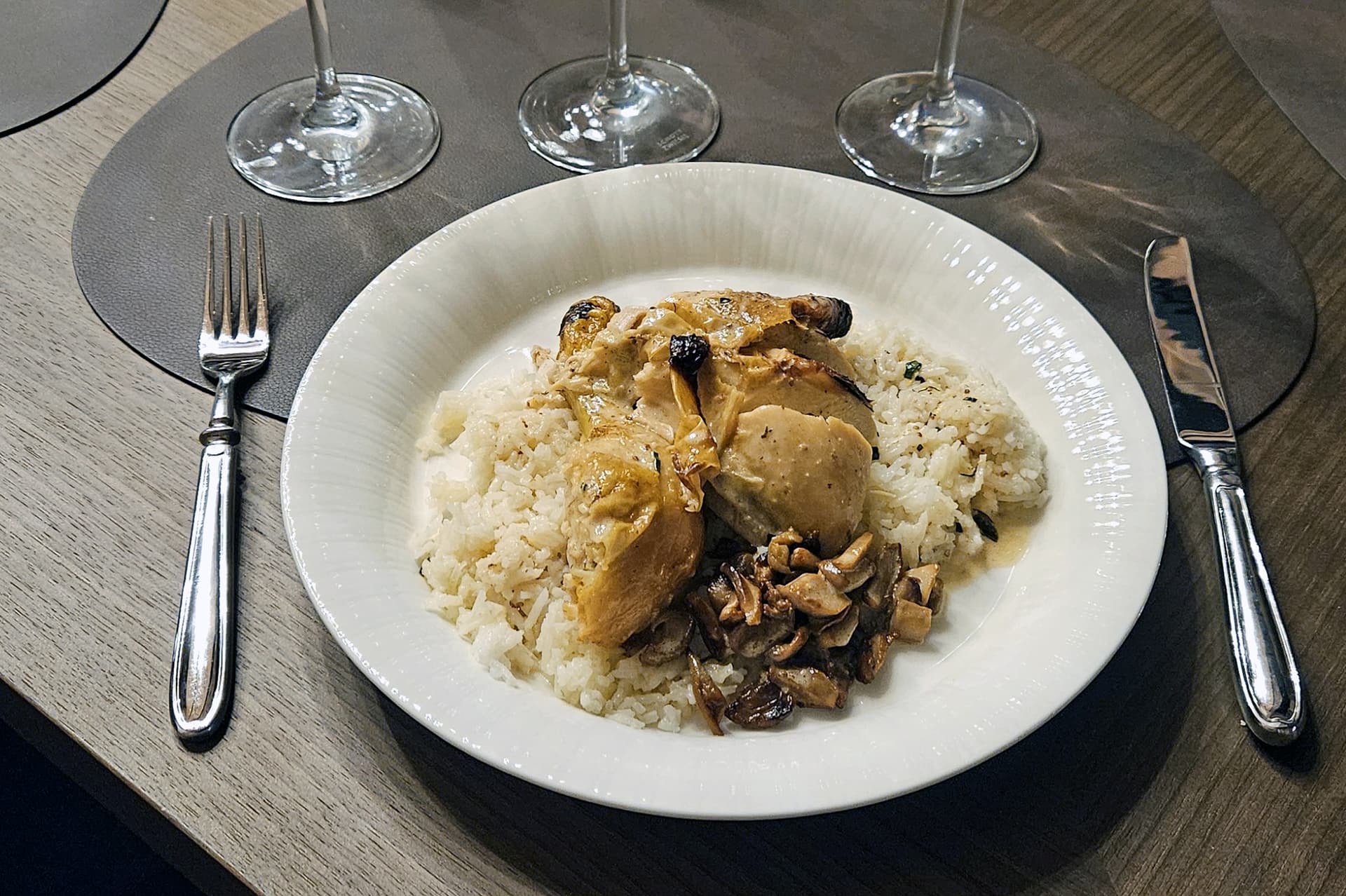
My friend also cooked some chicken and creamy morel sauce to go with the wines.
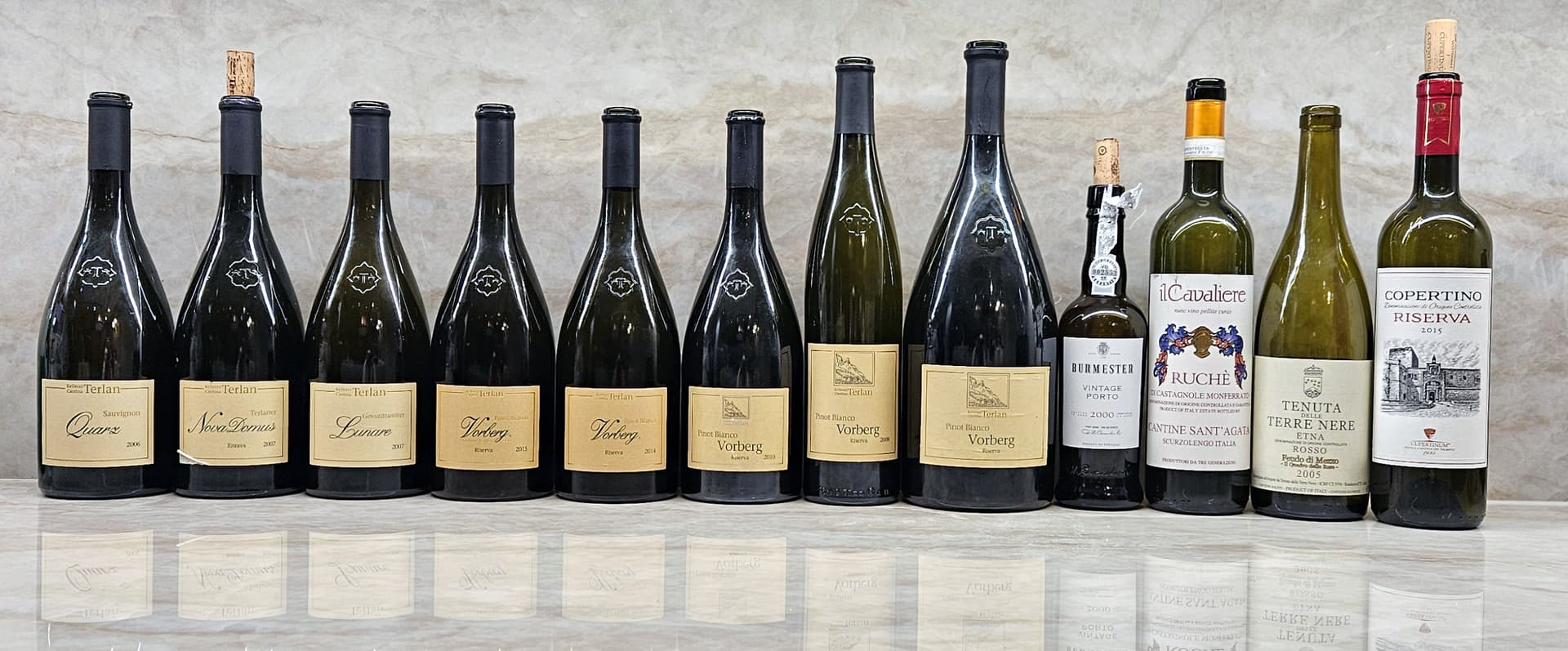
- 2006 Cantina Terlan Sauvignon Terlano Quarz - Italy, Trentino-Alto Adige, Alto Adige, Terlano (31.1.2025)
100% Sauvignon Blanc from vineyards around 300 to 550 m ASL. Aged on the lees in old 1200-liter botti (50%) and stainless steel tanks (50%) for 9 months. Blended together and left to marry for another 3 months prior to bottling. 13,5% alcohol.
Rather deep and quite evolved burnished golden-yellow color. The nose feels cool, dry and moderately tertiary with layered aromas of bruised apples and ripe nectarines, some oxidative nuttiness, light creamy notes of panna cotta, a little bit of quince jam and a hint of red gooseberry. The wine feels evolved, complex and slightly oily on the palate with a medium-to-moderately full body and rich flavors of apple jam, some peanut butter, a little bit of ripe passion fruit, light developed creamy notes of panna cotta, a hint of stony minerality and a touch of bruised quince. The high acidity lends a good amount of structure and intensity to the wine. The finish is evolved, complex and slightly oily with a long and rather tertiary aftertaste of apple jam, some oxidative notes of roasted nuts, a little bit of stony minerality, light sweeter nuances of honeyed richness, tropical hints of mango and passion fruit and a touch of cooked cream.
An evolved, balanced and tasty Sauvignon Blanc at full maturity, showing quite a bit of richness, aged complexity and also firm structure. While coming across as quite developed, the wine doesn't feel too old or tired, and most likely it isn't going to fall apart anytime soon - although I doubt the wine is going to benefit from any additional aging, either. A delightful example of how Sauvignon Blanc can age, when vinified in skilled hands. Although the wine doesn't manage to reach the heights of Cantina Terlan's Pinot Blancs Vorberg, this bottle still shows that the co-op is capable of producing fine wines that can age gracefully for many, many years. Recommended.
(92 points) - 2007 Cantina Terlan Terlano Nova Domus Riserva - Italy, Trentino-Alto Adige, Alto Adige, Terlano (31.1.2025)
A classic blend of Pinot Blanc (60%), Chardonnay (30%) and Sauvignon Blanc (10%). Pinot Blanc and Chardonnay undergo MLF, while it is blocked for Sauvignon Blanc. Fermented and aged on the lees in large 3000-liter botti for 12 months. Released after a minimum of 2 years of aging. 14% alcohol.
Rather deep, luminous and somewhat dark honey-yellow color. The nose feels rich, sweet-toned and quite evolved with aromas of apple jam and ripe apricot, some fragrant floral tones, a little bit of peanut butter, light honeyed nuances, a hint of exotic spices, a creamy touch of panna cotta and a whiff of tamarind paste. The wine feels firm, complex and evolved on the palate with a full body and moderately tertiary flavors of bruised apple and oxidative nuttiness, some caramel, light toasty notes of brioche, a little bit of stony minerality, sweet hints of ripe mirabelle plums and honeyed richness and an aged touch of mushroomy funk. The high acidity makes the wine feel firm and balanced. The finish is rich, dry and evolved with a rather tertiary aftertaste of bruised apple, some oxidative notes of roasted nuts, a little bit of caramel, light developed notes of cooked cream, a hint of Sultanas and a touch of mushroomy funk.
A quite tasty and balanced but still maybe a bit too evolved Terlaner white that is slowly gliding downhill. The wine shows good sense of structure and fresh acidity, but the fruit profile is lacking verve and getting dull with advanced age. I guess this wine might've been a lot better some +5 years ago, although it still offers some nice tertiary complexity. High time to drink up any remaining bottles.
(89 points) - 2007 Cantina Terlan Gewürztraminer Lunare - Italy, Trentino-Alto Adige, Alto Adige, Alto Adige - Südtirol (31.1.2025)
100% Gewürztraminer. Aged in 1200-liter botti (50%) and stainless steel tanks (50%). 14,5% alcohol.
Quite deep, evolved and moderately dark golden yellow color. The nose feels evolved and sweet-toned with nuanced aromas of clover honey and oxidative nuttiness, some mirabelle plums, a little bit of caramel, light perfumed notes of rosewater and floral spice, a hint of lychee and a touch of toasted exotic spices. The wine feels broad, oily and viscous on the palate with a very full body and dry, quite tertiary flavors of oxidative nuttiness and dried peach, some apple jam, light floral notes of wild meadow flowers and rosewater, a little bit of caramel, a hint of extracted bitterness and a touch of clover honey. The overall feel is rather heavy, and the soft medium acidity does very little to help things. The finish is heavy, concentrated and moderately warm with a long, evolved aftertaste of oxidative nuttiness, some honeyed richness, a little bit of extracted waxy character, light sweet notes of apple jam, a floral hint of rosewater and a touch of lychee.
A rather heavy and ponderous Gewürztraminer that must have been pretty beefy already in its youth. Although age has conferred some delightful tertiary complexity on the wine, I feel the wine has already passed the point where age has been beneficial to it - now the combination of rather modest acidity, quite high alcohol, pretty full body and tertiary flavors bordering on oxidative make the wine feel a bit too heavy and tiring. I guess this might've been a pretty impressive wine before it started to get oxidative, but at the moment the wine feels more like an academic curiosity than a wine that could offer any serious pleasure. It's high time to drink up any remaining bottles.
(88 points) - 2015 Cantina Terlan Pinot Bianco Riserva Vorberg - Italy, Trentino-Alto Adige, Alto Adige, Terlano (31.1.2025)
100% Pinot Blanc from the Cru Vorberg. Fermented in old 3000 to 7000-liter oak casks, full MLF, aged for 12 months in oak casks. Lot number L17284, so most likely bottled in October 2017. 14% alcohol, 2,3 g/l residual sugar and 6,0 g/l acidity.
Pale yellow-green color. The nose feels fresh, intense and moderately ripe with concentrated aromas of sweet greengage, some fresh Golden Delicious apple tones, a little bit of cantaloupe, light stony mineral notes, a hint of lime marmalade, a touch of floral spice and an extracted whiff of waxy richness. The wine feels firm, moderately extracted and quite intense with a full body and stern, concentrated flavors of honeydew melon and greengage, some extracted bitterness, a little bit of stony minerality, light zesty pomelo tones, a hint of candied ginger and a touch of ripe Golden Delicious apple. The high acidity lends the wine an impressive sense of structure and intensity. The finish feels rich, concentrated and a bit extracted with an intense aftertaste of honeyed richness, some cantaloupe, light candied ginger tones, a little bit of extracted bitterness, a hint of greengage and a touch of lime marmalade.
Six years ago, when I last tasted this wine, it felt impressively structured and concentrated, but obviously considerably ripe and even rather ponderous and heavy, due to its bold, somewhat extracted overall style. Although the wine still obviously a very 2015 wine, ie. a product of a warm year, it has come together surprisingly nicely, shedding some of that heaviness without losing any of its wonderfully structured feel, or impressive sense of concentration. Although the wine has evolved to some degree, it still doesn't show much aged qualities, and I can see it developing and improving for another decade - if not two - quite effortlessly. An extraordinary example of world-class Pinot Blanc that is superb right now and will get even better with additional aging. Highly recommended.
(93 points) - 2014 Cantina Terlan Pinot Bianco Riserva Vorberg - Italy, Trentino-Alto Adige, Alto Adige, Terlano (31.1.2025)
100% Pinot Blanc from the Cru Vorberg. Fermented in old 3000 to 7000-liter oak casks, full MLF, aged for 12 months in oak casks. Lot number L16324, so most likely bottled in November 2016. 14% alcohol.
Pale to medium-deep yellow color with faint neon-green highlights. The nose feels ripe, fruit-forward and somewhat concentrated with aromas of apricot and mirabelle plums, some juicy Golden Delicious apple tones, a little bit of floral spice, light honeyed notes, a mineral hint of wet rocks and a touch of macerated sweet herbs. The wine feels firm, silky and somewhat extracted on the palate with a full body and quite intense flavors of apple jam and honeyed richness, some cantaloupe, light stony mineral notes, a little bit of ripe quince, a developed hint of beeswax and a touch of floral spice. The overall feel is moderately chewy and concentrated, but with its high acidity the wine comes across as a bit more airy and elegant than Vorbergs usually do. The finish is long, fresh and quite powerful with an intense, dry aftertaste of cantaloupe and liquid honey, some stony mineral notes, a little bit of apple jam, light developed nuances of beeswax, a hint of tangy salinity and a touch of ripe citrus fruits.
A promising and quite elegant vintage of Vorberg that is still surprisingly youthful in overall feel, considering how the wine is already +10 years old. When I tasted the wine back in 2017, it was still super youthful - borderline primary - offering a less nuanced and more direct, in-your-face expression of Pinot Blanc. Now, almost a decade later, the wine is starting to show that it is heading in the right direction, developing more finer-tuned overtones and additional complexity, without losing its sense of gravity and impressive structure. Although starting to show some evolved qualities, I'd say this is still miles away from its peak - most likely the wine will reach its apogee after another 10-15 years of aging. A terrific vintage of Vorberg with tons of future ahead. This has been good value at 29,90€.
(92 points) - 2010 Cantina Terlan Pinot Bianco Riserva Vorberg - Italy, Trentino-Alto Adige, Alto Adige, Terlano (31.1.2025)
100% Pinot Blanc from the Cru Vorberg. Fermented in old 3000 to 7000-liter oak casks, full MLF, aged for 12 months in oak casks. Lot number L12329, so most likely bottled in November 2012. 13,5% alcohol.
Somewhat concentrated, pale-to-medium deep golden yellow color. The nose feels rich, complex and slightly evolved with layered aromas of clover honey and apple jam, some apricot and mirabelle jam tones, a little bit of poached pear, light developed creamy notes, a hint of honeysuckle, a touch of ripe pineapple and a whiff of browned butter. The wine feels firm, concentrated and somewhat evolved on the palate with a medium body and very intense flavors of spicy wildhoney and stony minerality, some poached pear tones, a little bit of bruised quince, light honeysuckle tones, a hint of apple peel bitterness and a developed touch of cooked cream. The brisk, focused acidity lends a tremendous amount of drive and structure to the wine. The finish is long, concentrated and quite robust with a dry, intense aftertaste of ripe lemony citrus fruits, some honeyed richness, a little bit of quince jam, light cantaloupe notes, developed hints of beeswax and lemon curd and a touch of apple peel bitterness.
This was already an immensely impressive wine when I tasted this previously some five years ago. However, it seems the wine has only picked up depth and complexity with age, without compromising any of its freshness, structure or flavor intensity. Although I've had some truly spectacular vintages of Vorberg from the 1990's, this wine can nevertheless hold a candle to them, effortlessly. This remains one of the best vintages of Pinot Bianco Vorberg on this side of millennium and it is easily a world-class white by any standards. Despite being a stunning wine now, I have no doubts this vintage will continue to evolve and improve for many, many years more. So very highly recommended - although this vintage is starting to get expensive at approx. 95€.
(95 points) - 2008 Cantina Terlan Pinot Bianco Riserva Vorberg - Italy, Trentino-Alto Adige, Alto Adige, Terlano (31.1.2025)
100% Pinot Blanc from the Cru Vorberg. Fermented in old 3000 to 7000-liter oak casks, full MLF, aged for 12 months in oak casks. Lot number L10327, so most likely bottled in November 2010. 13,5% alcohol.
Pale amber-orange color. The nose feels old, tertiary and a bit tired with slightly dull aromas of oxidative nuttiness, some bruised apple tones, a little bit of quince jam, light notes of dried pineapple and a hint of tinned peaches. The wine feels old, tired and oxidative on the palate with a full body and quite robust flavors of roasted nuts, some honeyed richness, light sweet notes of dried pineapple, a little bit of bruised apple, a hint of hay and a touch of tinned peaches. The high acidity makes the overall feel quite firm and structured. The finish is ripe, juicy and quite oxidative with a long and rather tired aftertaste of nuttiness, some honeyed tones, a little bit of apple jam, light notes of tinned peaches, a hint of bruised quince and a touch of hay.
10 years ago this was one of the most impressive vintages of young Vorberg we had in our vertical tasting. Now, however, things are noticeably different: the wine still comes across as impressively big with a good dose of firm, zippy acidity, but the flavor department has aged considerably, and now the wine is getting very tertiary, oxidative and even rather tired. The nose feels dull and on the palate the wine feels quite flat and ponderous. I don't know if this bottle was just a dud, or if this vintage wasn't just built to age as gracefully as the best vintages of Vorberg. Leaving the wine unrated, as it was already so far past its peak. - 2007 Cantina Terlan Pinot Bianco Riserva Vorberg - Italy, Trentino-Alto Adige, Alto Adige, Terlano (31.1.2025)
100% Pinot Blanc from the Cru Vorberg. Fermented in old 3000 to 7000-liter oak casks, full MLF, aged for 12 months in oak casks. 13,5% alcohol. Tasted from a magnum.
Medium-deep golden-yellow color. The nose feels ripe, sweet-toned and moderately concentrated with bold aromas of juicy stone fruits like mirabelles and apricots, some pineapple tones, a little bit of acacia honey, light stony mineral notes, a hint of dried peaches, a touch of developed creaminess and a whiff of floral spice. The wine feels firm, concentrated and slightly viscous on the palate with a moderately full body and intense flavors of ripe pineapple and wizened apricots, some stony mineral notes, a little bit of acacia honey and floral spice, light beeswaxy tones, a hint of warm and slightly bitter exotic spice and a touch of lemon curd. The high acidity makes the wine come across as quite muscular and structured. The finish is long, concentrated and slightly oily with a dry and powerful aftertaste of cantaloupe and honeyed richness, some stony mineral notes, a little bit of mirabelle, light nutty almond tones, a hint of dried pineapple and a touch of extracted bitterness.
About 10 years ago, in a Vorberg vertical, this vintage seemed lighter and more restrained but also surprisingly evolved and tertiary in overall feel when compared to the surrounding Vorberg vintages. I guess we must've had a bottle that was not in an optimal condition, since this bottle - 10 years later - was not old or tertiary, even if it wasn't particularly youthful, either. However, the wine had developed quite a bit of weight and concentration over the years! Back in 2015, this wine felt a bit lightweight for a Vorberg, but also wonderfully fresh and precise with its fresh, focused acidity. Well, the wine still retained its impressive sense of acidity, but after a good handful of Vorbergs, this was not a lighter-weight vintage in any way anymore! Furthermore, this was a very impressive effort indeed and only slightly below the superb 2010 vintage. Seeing how the wine didn't exhibit any overt tertiary or oxidative qualities yet, I can re-assess my previous evaluation of this vintage and predict that this wine will still continue to evolve and improve from here. Fine stuff, very highly recommended.
(94 points)
Some extra blinds after the tasting proper:
- 2000 J.W. Burmester Porto Vintage - Portugal, Douro, Porto (31.1.2025)
Bottled in 2002. 20% alcohol. Tasted blind.
Fully opaque and slightly evolved dark cherry red color with a somewhat maroon hue. The nose feels weird with a strong and very atypical greenness with a pronounced streak of leafy vegetal character followed by notes of plum jam, some ripe boysenberry tones, a little bit of licorice, light mineral notes of stone dust, a hint of fresh forest fruits and a touch of juicy black cherry. The wine feels sweet, hot and vibrant on the palate with a full body and bold flavors of sweet black cherries along with a pronounced streak of licorice, some stony mineral notes, a little bit of vegetal greenness - I wonder if this is geosmin or something similar? - light boysenberry tones, a hint of tannic bitterness and a touch of blueberry jam. The wine feels quite youthful for its almost 25 years with age and the combination of rather high acidity and quite assertive, moderately grippy tannins keep the overall feel rather firm and structured. The finish is sweet, long and quite grippy with a rich aftertaste of boysenberries, some cherry marmalade, a little bit of licorice, light vegetal notes of leafy greenness, a hint of licorice and a touch of raspberry jam.
This was a weird experience. The wine felt still remarkably youthful, vibrant and impressively structure-driven, but at the same time the weird, rather dominant vegetal greenness constantly distracted from the pleasure. As the other CT notes do not mention any obvious green qualities, I'm starting to suspect we had an off bottle. However, without a control bottle, I can't say for sure. Without the greenness, this might've been a very lovely and impressive Vintage Port with a lot of life still ahead, but what we tasted left a lot to be desired. A perplexing experience.
(84 points) - 2019 Cantine Sant'Agata Ruchè di Castagnole Monferrato Il Cavaliere - Italy, Piedmont, Monferrato, Ruchè di Castagnole Monferrato (31.1.2025)
100% Ruchè from the 2,1-hectare Il Cavaliere vineyard, planted in 1997. Fermented and macerated for 10 days with the skins in stainless steel tanks. Aged in stainless steel tanks. 13,5% alcohol and 5,4 g/l acidity. Lot number L20 219. Tasted blind.
Youthful, moderately dark and rather translucent cherry-red color. The nose feels youthful and quite sweet with aromas of ripe cherries, some licorice tones, a little bit of wild strawberry, light brambly black raspberry notes, a hint of sweet red plum and a touch of fragrant pipe tobacco. The wine feels dry, youthful and crunchy on the palate with a medium body and quite intense flavors of sour cherries and tart lingonberries, some strawberry tones, a little bit of licorice root, light gravelly mineral tones, a hint of arctic bramble and a touch of loose tobacco. The wine is wonderfully high in acidity with somewhat grippy medium tannins. The finish is crunchy, acid-driven and somewhat grippy with a long aftertaste of sour cherries, some brambly raspberry tones, a little bit of wild strawberry, light gravelly mineral notes,a hint of licorice root and a ferrous touch of blood.
A fun, youthful and tasty little Ruchè. Not that obviously fragrant and floral example of the variety - which can get very heady and perfumed - this wine was more on the crunchy, fruit-driven department with lots of emphasis on quite ripe yet still fresh and crunchy red fruits. Had the wine been obviously floral, it would've been child's play to identify the wine immediately as a Ruchè, but as the wine wasn't particularly perfumed, we simply identified as Italian (and Piedmontese) almost immediately, but nailing the correct variety took some time. Even after it was revealed as a Ruchè, some of us had hard time accepting it as the variety, due to its rather non-aromatic quality. Nevertheless, the wine was still very tasty and delightful. A lovely food wine, if anything. Priced more or less according to its quality at 19,99€.
(90 points) - 2005 Tenuta delle Terre Nere Etna Rosso Feudo di Mezzo Il Quadro delle Rose - Italy, Sicily, Etna DOC (31.1.2025)
Feudo di Mezzo is the biggest "1er Cru-level" contrada in Etna and Il Quadro delle Rose is considered to be one of the best sub-parcels within the contrada (think of it like the best plots within the large Grand Cru Vougeot). The grapes are sourced from 40-140 yo vines. Fermented spontaneously with indigenous yeasts. Aged for 16-18 months in barriques and tonneaux, followed by a 1-month maturation period in stainless steel. 14% alcohol. Tasted blind.
Quite translucent and moderately evolved maroon-ish pomegranate-red color. The nose feels rather sweet, quite lifted and a bit funky with layered aromas of cherry marmalade, some nail polish VA, a little bit of leathery brett and spicy phenolics, light evolved notes of wizened dark berries and ripe figs, a hint of cherry pits of bitter almond oil and a touch of juicy red fruits. The overall feel reminds me a little bit of a funky Kriek Lambic, to be honest! The wine feels rather wild and a bit funky but also surprisingly playful on the palate with a medium-to-moderately full body and quite intense flavors of sweet black cherries, some lifted notes of nail polish VA, a little bit of cherry pits, light developed notes of dried figs, a hint of bretty funk and a touch of crunchy forest fruits. The high alcohol lends a tiny bit of warmth to the palate, but otherwise the wine comes across as pretty stern with its high acidity and ample, moderately grippy tannins. The finish is long, crunchy and quite grippy with an intense aftertaste of cherry marmalade, some balsamic notes of VA, a little bit of sweet nail polish character, light stony mineral notes, a hint of wizened figs and a touch of cherry pits.
An attractive, moderately funky and still quite stylish Etna Rosso more or less at full maturity. I don't see the wine falling apart anytime soon, but I'd say the fruit department is pretty much peaking now, and I don't see the wine evolving that much into any direction - perhaps the ample tannins can resolve and soften a bit more from here, but that's about it. All in all a very lovely, tasty and serious effort that will probably stay good for another decade or so. Fine stuff, highly recommended.
(93 points) - 2015 Cupertinum Copertino Riserva - Italy, Puglia, Copertino (31.1.2025)
100% Negroamaro from old bush vines in the flat Copertino plains between 30 and 60 m above sea level. Fermented and macerated with the skins for a week in stainless steel tanks. Aged in stainless steel and concrete tanks. 13% alcohol.
Luminous, translucent medium-deep cherry-red color. The nose feels quite youthful and a bit funky with aromas of sweet red cherries and ripe strawberries, some leathery funk, a little bit of lifted VA, light smoky phenolic notes and a hint of raspberry jam. The wine feels dry, crunchy and slightly wild on the palate with a moderately full body and nuanced flavors of ripe strawberries and raspberry jam, some earthy tones, light bretty notes of saddle leather, light spicy and smoky phenolic notes, a lifted hint of balsamic VA and a darker-toned touch of plummy fruit. The wine shows good sense of balance with its rather high acidity and moderately grippy medium tannins. The finish is ripe, juicy and somewhat grippy with a long, slightly sweetly-fruited aftertaste of strawberries, some cherry tones, a little bit of leathery funk, light raspberry jam notes, a lifted hint of balsamic VA and a touch of earth.
A firm, fun and slightly funky little red. Not a grand vin, but definitely punching way above its weight in its price class. This is a superb weekday red that is very tasty already now, but I can see the wine not only keeping, but also evolving and improving for a good number of years more. A surprisingly serious effort that restored a little bit of my faith in Puglian reds. Outrageous value at just 99 SEK (or, 8,90€).
(91 points) - 2022 Gueuzerie Tilquin Oude Pêche Jaune Tilquin à l'Ancienne - Belgium, Wallonie, Rebecq (31.1.2025)
A peach lambic made with mirabelle plums, using 230 g of fruit per one liter of beer. I have no idea how this beer is different from Oude Mirabelle - apart from the name in the label. Bottled unfiltered and unpasteurized. 7% alcohol. Best before December 22nd, 2032, so the bottle was brewed in late 2022.
Rather cloudy and murky yellow-orange color with a very modest and short-lived white head. The nose feels funky and quite pungent with aromas of lemon juice, some sharp appley tones, a little bit of grassy greenness, light sweeter peachy nuances and a hint of ammonia. The beer feels dry, tart and quite funky on the palate with a medium body and rather intense flavors of leathery funk, some sharp notes of unripe peaches, a little bit of sharp Granny Smith apple, light lemony notes of citrus fruits and a hint of herby character. The carbonation feels quite mellow and there is no hop bitterness to speak of. High, incisive acidity. The finish is crisp, tart and funky with acid-driven flavors of lemony citrus fruits and Granny Smith apple, some leathery notes of brett, a little bit of tart peachy stone fruit and a hint of barnyard.
A fun and pretty classic lambic, albeit one with surprisingly little impact from the fruit. I imagined peaches would've flavored a lambic quite nicely, but compared to some other fruit lambics, the peachy flavors were quite understated here and the overall feel was that of a just mildly peach-flavored lambic. Nothing wrong in that - I love Gueuzes as well, and the lean and sharp yet funky style of Tilquin has always been one that speaks to me. While not wildly characterful, this was nevertheless a fun and tasty brew in its own right.
(92 points)
Posted from CellarTracker