It has been exactly a year to this date since we had our Brosé Bronanza 2024, so this means I’ve now a year behind by backlog. At some point I was only a few months behind, but it seems things have gotten a bit out of hand since. I try my best to catch up, though!
Anyways, back to the topic! A year ago me, @IlkkaL, @Mikko_R and a small handful of our wino friends had our third iteration of our sometimes-annual Brosé Bronanza. The idea is this event is very simple: we cook a lot of food and people bring lots of rosés with them. That’s about it. Eating and drinking rosé from the early afternoon until people give up - that’s usually closer to the next morning than midnight.
FWIW, “brosé” here means a proper, vinous rosé. We don’t want light, wimpy rosés that look like white wines with a drop of strawberry juice and don’t really taste of anything. We want sturdy rosé wines with real sense of substance! If you are interested in what we’ve had before, here is a link to my report on our vol. 2 of the same event!
We had also extended special invites to @LenFox and @Robert_Dentice to join us, as we knew Robert was going to be in Finland that weekend. However, we really weren’t sure if the guys were going to coming or not.
However, not long after we started with our vinous extravaganza, Ilkka confirmed that our special guests were going to join us a bit later and he added that they were also going to bring some bottles with them, just so that we wouldn’t run out of wine. Since we already had more than enough bottles at our hand, we weren’t really afraid of running out of wine, but hey, more is always more. Couldn’t hurt, eh?
When Len, Robert and his wife arrived, we learned that this “some bottles” actually meant a full 12-box case of different rosés! This meant that our lineup almost doubled that instant! Oh boyo.
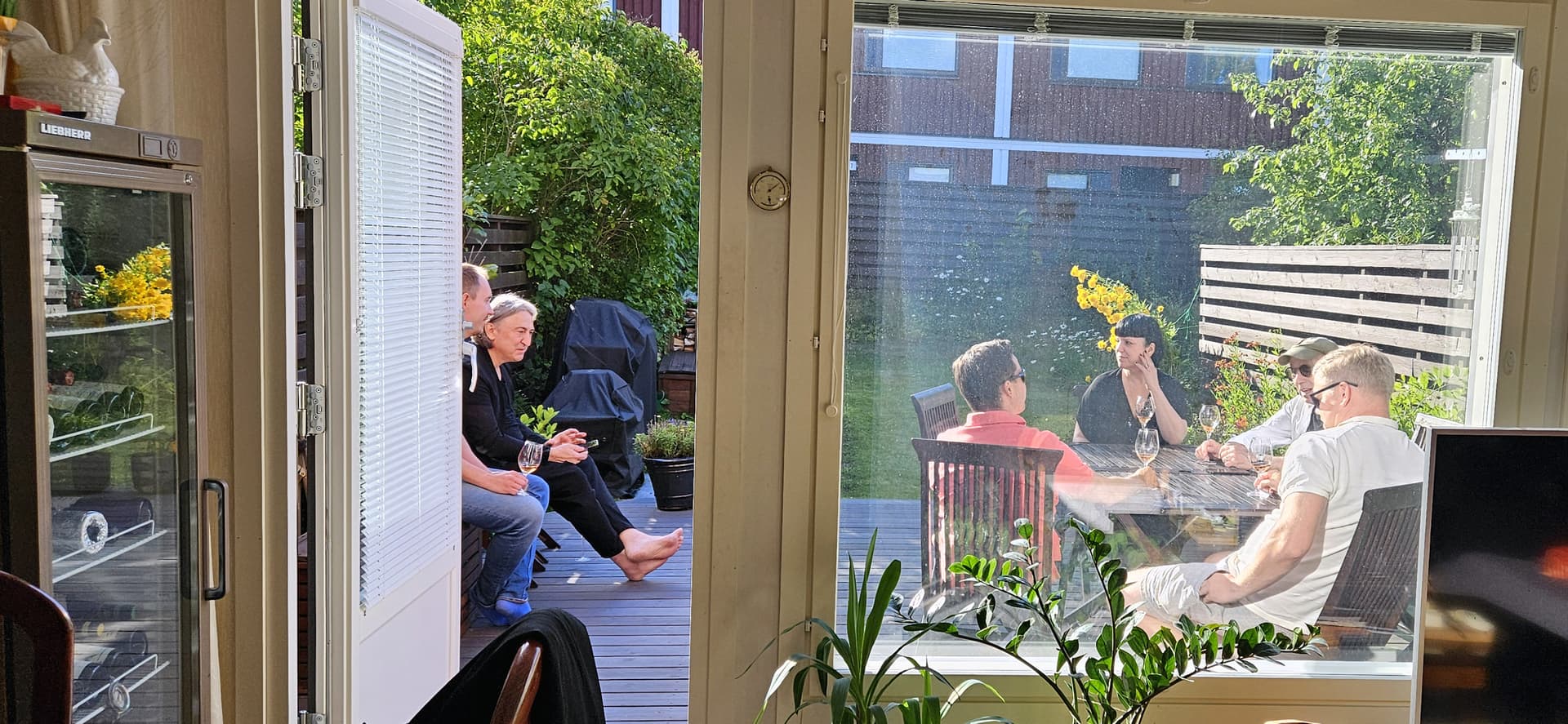
People enjoying some glasses of rosé and having good time.
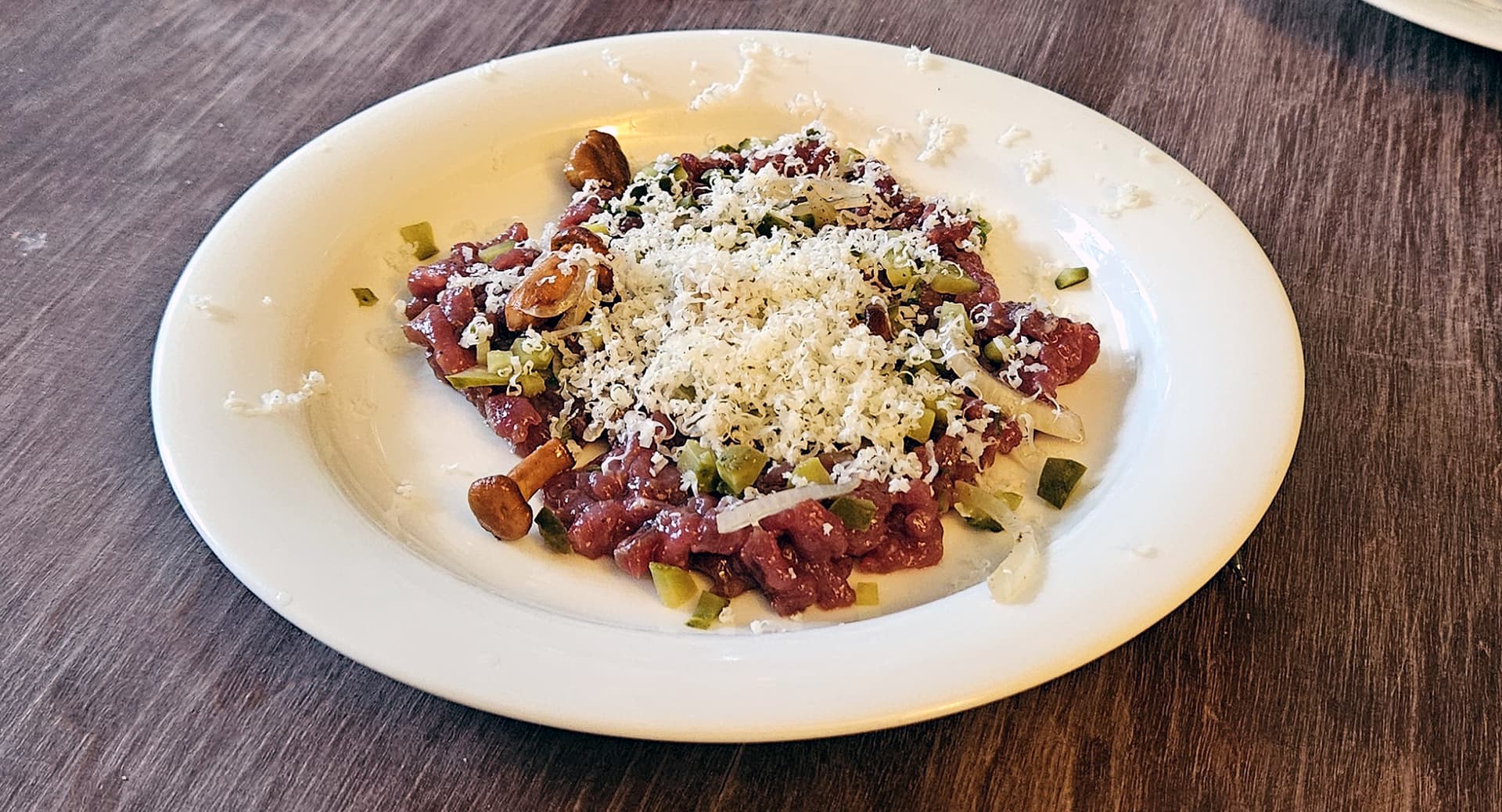
Entrée - a cheesy steak tartare with mushrooms.
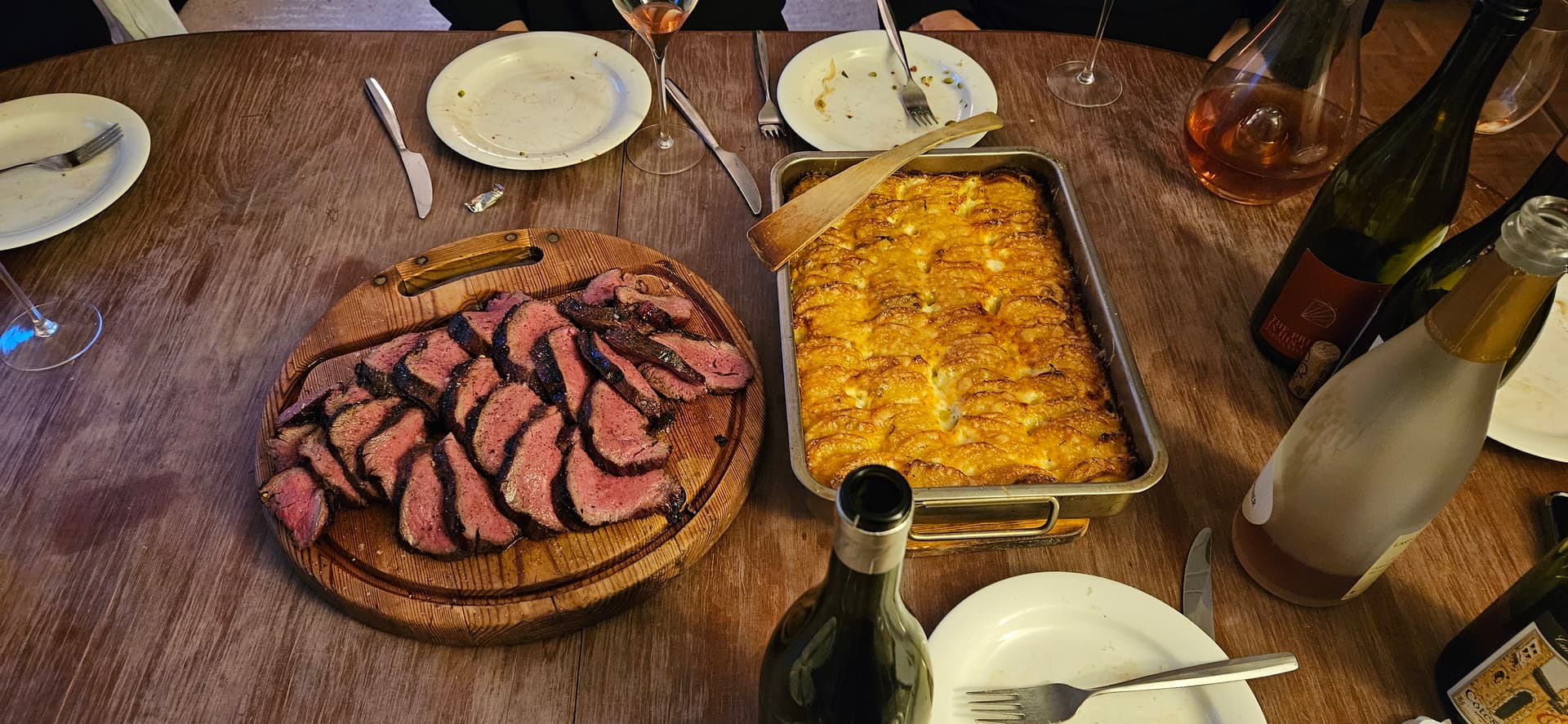
The meaty main course with some gratin potatoes that were way more cheesy and delicious than they had any right to be. Yes, we like cheese.
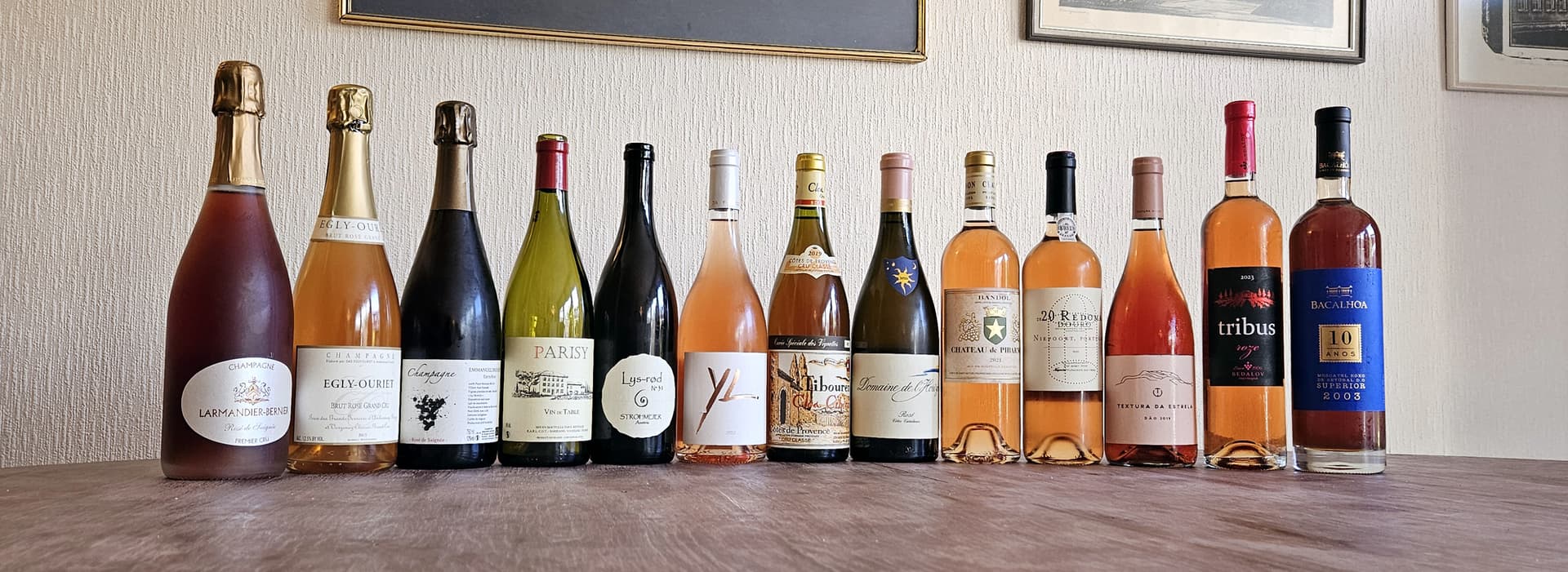
Our initial lineup that doesn’t really reflect the amount of bottles we demolished over the evening.
In the end we even had some additional extra bottles, so I guess that it doesn’t come as a surprise that when we were calling it a day and I was documenting the bottles we emptied as the last thing before I left back home, I came across one or two bottles I never even tasted! 
So, here are the bottles we tasted, in a rather random order. Be prepared for a lot of tasting notes.
- 2021 Domaine de l'Anglore Sels d'argent - France, Vin de France (10.8.2024)
Some sources say this is 100% biodynamically farmed Grenache Blanc, others say there is a little bit of Bourboulenc in the blend as well. Fermented spontaneously. Aged in old oak casks according to some sources, in stainless steel tanks according to others. Bottled unfined and unfiltered. 12,5% alcohol. Tasted blind.
Slightly hazy pale yellow color. The nose feels quite wild and rather waxy with aromas of peachy stone fruit, some sweet volatile notes, a little bit of creamy oak, light notes of dill, a funky hint of phenolic spice and a sweeter touch of apple jam. The wine feels wild, rather ripe and moderately lifted yet still relatively fresh on the palate with a medium body and layered flavors of apricots and apple jam, some volatile nuances of nail polish, a little bit of creamy oak, light bretty notes of leathery funk, a hint of earth and a touch of cantaloupe. The texture is slightly oily, but the relatively high acidity keeps the overall feel still pretty fresh and balanced. The finish is quite wild and lifted with a moderately long aftertaste of phenolic spice and beeswax, some sweet volatile notes of nail polish, a little bit of apple jam, light cantaloupe tones, a hint of bretty funk and a touch of acetic VA. It feels the wine will probably turn mousy if just given enough time (=oxygen).
A rather pleasant and balanced but also a bit simple and ultimately a tad too natty white. The wine is relatively high in acidity for a Southern Rhône white, but that doesn't translate to a wine particularly high in acidity. When you add in the sweet volatile notes of nail polish, you get a wine that is more about academic curiosity than drinkability. This was a thoroughly drinkable effort, but it didn't leave me with a feeling that I should pour myself another glass. Feels somewhat pricey for the quality at approx. 30€.
(86 points) - 2019 Domaine des Tours Parisy - France, Vin de Table Français (10.8.2024)
A blend of Grenache and Cinsaut. Fermented spontaneously. Lot number L9102, ie. vintage 2019. 14% alcohol. Aerated in a decanter for an hour or so.
Very deep, luminous rose hip red color with a subtly evolved brick-red hue. The nose feels very ripe and sunny with rich aromas of Grenache's sweet strawberry and even strawberry jam, some raspberry juice tones, a little bit of melon, light peppery nuances, a hint of something smoky, a touch of Bing cherry and a lifted whiff of sweet VA. The wine feels ripe, broad and intensely flavored on the palate with a full body and quite solar flavors of strawberry jam and peppery spice, some juicy black cherries, a little bit of cantaloupe, light stony mineral notes, a hint of brambly black raspberry and a crunchy yet sweet touch of ripe red plum. The medium-plus acidity manages to keep the wine pretty nicely in balance, although the overall feel is a bit on the plush side. The high alcohol lends some sense of warmth to the palate. The finish is long, juicy and somewhat warm with a slightly sweet-toned aftertaste of strawberry jam, some spicy tones, a little bit of ripe black cherry, light peppery nuances, a hint of melon and a touch of something smoky.
A big, rich and quite intensely-flavored Rhône rosé that drinks more like a rather light yet very ripe red than a rosé - something quite similar to a typical Tavel. There is nothing subtle or graceful about this wine. However, it does its job as a ripe, hefty and voluminous really well and even if I like wines of freshness and precision, this is a rather delicious effort all the same. Although the wine is starting to show a tiny bit of age, I think this might be one of those few rosés that can still age and improve even further from here - at least for a handful of years more. Nice stuff. Drink now or in the next five-ish years. Priced more or less according to its quality at approx. 40€.
(92 points) - NV Larmandier-Bernier Champagne Premier Cru Rosé de Saignée Extra Brut - France, Champagne, Champagne Premier Cru (10.8.2024)
Typically a blend of Pinot Noir (90%) and Pinot Gris (10%). Fermented spontaneously and macerated with the skins for 2-3 days in tanks. Aged on the lees for 9-10 months and bottled just prior to the next harvest. Aged sur lattes for approximately two years. The base vintage for this bottle was 2008. 12,5% alcohol, dosage 2 g/l.
Very deep, dark and quite luminous raspberry-red color. The nose feels dully, dusty and earthy with vague aromas of cherries, some zesty citrus fruits and mildewy TCA. The wine feels crisp, ripe and moderately complex on the palate with a medium body and rather dull flavors of dusty attic, some toasty autolytic tones, a little bit of mildew and light stony mineral notes. The wine is high in acidity with and ample, silky smooth mousse. The finish is short, dull and dusty.
A corked bottle. 45€ down the drain.
(NR/flawed) - NV Egly-Ouriet Champagne Grand Cru Brut Rosé - France, Champagne, Champagne Grand Cru (10.8.2024)
Typically the wine is a blend of Pinot Noir (2/3) and Chardonnay (1/3) aged in oak casks. The color comes from a small (5%) addition of red Bouzy Coteaux Champenois Pinot Noir. Bottled unfiltered. Aged for a minimum of 48 months on the lees, disgorged in July 2015 - so most likely the base vintage is 2010 with reserve wines from 2009 and 2008. 12,5% alcohol.
Quite pale and slightly hazy orange-peachy color. The nose feels surprisingly wild, somewhat hefty and even subtly cheesy with characterful aromas of crunchy white fruits, some nutty autolytic notes, a little bit of something funky, light strawberry notes, a hint of bruised apple, a touch of zesty citrus fruit and a whiff of Brie or something. The wine feels dry, somewhat funky and quite vinous on the palate with a rather full body and complex flavors of bruised red apple and nutty autolysis, some toasty tones, a little bit of funky leather, light zesty citrus fruit nuances, a hint of ripe cranberry and a touch of creamy oak. The overall feel is pretty firm and impressively structured with the high acidity, whereas the gentle and silky yet persistent mousse adds some lovely sense of breadth and volume to the mouthfeel. The finish is long, crisp and subtly wild with a complex aftertaste of toasty autolysis and spicy Pinosity, some bruised apple tones, a little bit of saline minerality, light funky nuances, a hint of creamy oak and a developed touch of roasted nuts.
A beautiful, complex and wonderfully toasty - but not too toasty! - rosé Champ. The slightly odd cheesy note in the nose was a bit weird, but fortunately nothing too overbearing and nothing that would really distract from the pleasure. The wine was now in a great shape and while it will most likely continue to evolve and improve for a good number of years more, wine can be enjoyed right now without any further aging. Maybe not the most affordable fizz at 150€, but arguably delivers for the price.
(94 points) - 2019 Emmanuel Brochet Champagne Rosé de Saignée - France, Champagne (10.8.2024)
100% organically farmed Pinot Meunier from the La Motelle vineyard, planted in 1965. Fermented spontaneously, macerated with the skins for 24 hours. Aged for 11 months in oak casks. Bottled unfined and unfiltered. Disgorged after 48 months of aging sur lattes. 12% alcohol, dosage 5 g/l. As the wine isn't aged for the full three years, it isn't officially a single-vintage wine, but the lot number LR019 tells the wine is from the 2019 harvest. Total production 5176 bottles.
Remarkably deep, dark and still surprisingly youthful raspberry-red color. The nose feels dark-toned, complex and quite fruit-forward with aromas of ripe cherries, some blackberries, a little bit of toasty oak spice, light strawberry tones, a hint of bretty funk, a touch of phenolic spice and a whiff of leesy yeast or creaminess. The wine feels ripe, dry and beautifully textural on the palate with a full body and youthful, complex flavors of strawberries and cherries, some earthy tones, a little bit of coffee, light toasty oak nuances, a hint of stony minerality and a savory touch of umami. The ample, voluminous mousse adds nice sense of breadth to the palate and the firm high acidity makes the overall feel pretty stern and structured - yet not too tightly-knit or aggressive. The finish is powerful, lively and textural with an intense, complex aftertaste of cherries and tart cranberries, some sweeter strawberry tones, a little bit of toasty oak spice, light leathery nuances of bretty funk, a hint of earth and a touch of stony minerality.
A very impressive, complex and remarkably vinous rosé Champagne. There's tons of depth, weight and structure behind this wine - yet it doesn't come across as particularly big or clumsy at any point. However, this is not your classic light and delicate rosé Champagne, but more like a burly Rosé des Riceys - only with bubbles. The somewhat noticeable - yet not overdone - oaky notes and subtly bretty undertones are something you might not expect to find in a rosé Champagne, but at least to me, they managed to add something rather than to obfuscate anything. Compared to the excessively funky and aggressively bretty 2018 vintage, this 2019 was simply on point. One of the most thrilling rosé Champagnes I've had in a while. Not particularly affordable at 95€, but if you are not afraid of rustic, idiosyncratic fizzy wines, this delivers for the price, effortlessly. Very highly recommended.
(96 points) - 2020 Franz Strohmeier Blauer Wildbacher Lys-Rod 31 - Austria, Styria, Weststeiermark (10.8.2024)
100% biodynamically farmed Blauer Wildbacher. Macerated for 4 hours with the skins. Fermented spontaneously. Aged in old oak barrels for 3 months. Bottled unfined and unfiltered. 11,5% alcohol.
Hazy to somewhat cloudy pale orange color. The nose feels somewhat closed and rather odd with aromas of fresh red apples, some ripe orange, light wild notes of phenolic funk and volatile lift, a little bit of beeswax, a hint of beetroot, a touch of wild strawberry and a bretty whiff of leather. The wine feels wild, dry and tangy on the palate with a light-to-medium body and intense but also rather sauvage flavors of tart lingonberries and sharp Granny Smith apple, some acetic notes of VA, a little bit of lemony citrus fruit, light bretty notes of leather and waxy funk, a hint of salinity and a touch of bergamot. The very high acidity lends great sense of freshness and almost electric intensity to the wine. The finish is wild, salty and crunchy with a rather long aftertaste of leathery funk, some acetic notes of VA, a little bit of tart lingonberry, light sharp notes of Granny Smith apple, a hint of wild strawberry and a touch of nail polish.
A wonderfully crisp and refreshing "rosé" - it's hard to say based on the appearance alone - that is just a bit too funky for pleasure. I love how the wine is so crisp and tangy, more like a dry acid-driven white than anything made with red grape varieties (that's Blauer Wildbacher for you!), but unfortunately the more sauvage qualities - especially the elevated level of VA - do take a toll on the drinkability. I could still manage with the level of bretty funk, but at times the volatile notes of vinegar and nail polish just get a bit excessive. Not the best Strohmeier I've had.
(88 points) - 2022 Domaine d'E Croce (Yves Leccia) Rosé Cuvée YL - France, Corsica, Île de Beauté (10.8.2024)
100% organically farmed Nielluccio (aka. Sangiovese). Fermented and aged in stainless steel. 13,5% alcohol.
Luminous pale-to-medium deep seared salmon color. The nose feels open and quite fresh with aromas of cherries, some strawberries, light oceanic notes of salty sea breeze, a little bit of leesy creaminess, a hint of carrot purée and a floral touch of apple blossom. The wine feels bright, fresh and crunchy on the palate with a medium body and intense, dry flavors of cherries and wild strawberries, some leesy creaminess, a little bit of stony minerality, light tart cranberry tones, a hint of tangy salinity and a touch of appley fruit. The high acidity lends great sense of freshness and structure, but there also seems to be a tiniest bit of tannic grip for added sense of firmness. The finish is dry and crunchy with a long, clean aftertaste of tart cranberries and leesy creaminess, some salty mineral tones, a little bit of wild strawberries, light floral nuances and a hint of sour cherry bitterness.
A wonderfully fresh, lively and characterful Sangiovese rosé from the light and crunchy end of the spectrum. Unlike many Italian Sangiovese rosés, which tend to come across as somewhat simple, soft and fruity, this wine has a noticeably cooler and more precise overall character with a great, almost white wine-like sense of freshness, thanks to its bright acidity and cool mineral core. I don't see the wine benefiting much from additional aging, but most likely the wine won't fall apart anytime soon, either. Drink now or within the next handful of years. Nice stuff. Priced according to its quality at 28€.
(91 points) - 2019 Clos Cibonne Tibouren Côtes de Provence Cuvée Spéciale des Vignettes - France, Provence, Côtes de Provence (10.8.2024)
A rosé wine made either entirely or mostly (+90%) from organically farmed Tibouren (aka. Rossese di Dolceacqua) with a little bit of Grenache in the blend, vintage permitting. The wine is fermented spontaneously in temperature-controlled stainless steel tanks, after which the lots are blended and moved to age in very old (100-120 yo) 1000-liter oak casks, in which the wine is aged under a thin yeast voile called fleurette for a minimum of 12 months. 13,5% alcohol. Bottle #10335.
Translucent salmon-red color. The nose feels ripe, fruit-forward and rather sweet-toned with aromas of strawberries, some cherries, light smoky tones, a little bit of peppery spice, a hint of ripe cranberry and a touch of juicy white fruit. The wine feels ripe yet fresh and lively on the palate with a medium body and intense, juicy flavors of strawberries, some cherries, light stony mineral notes, a little bit of salinity, a hint of savory umami and a touch of fresh red fruit. The overall feel is a bit round and slightly soft, yet not without good sense of firmness, as the wine is pretty high in acidity with a tiniest bit of tannic tug on the gums. The finish is long, dry and juicy with a fresh aftertaste of brambly raspberries and saline mineral notes, some peachy tones, a little bit of tart cranberry, light wild strawberry notes, a savory hint of umami and a crunchy touch of appley fruit.
A nuanced, quite characterful and wonderfully balanced Provençal rosé. The wine packs a surprising amount of depth and intensity, considering how light and delicate wines Tibouren aka. Rossese di Dolceacqua usually makes. I guess that must be the combination of old-vine fruit and a rather warm vintage. While this sense of concentration makes the overall feel a bit round, the wine is fortunately lacking in structure in any way. Considering how many people think rosés should be drunk within a year or two, this wine is going very strong - and still pretty youthful - at 5 years of age. This is delicious now, but the wine will easily keep for many more years - and probably will also evolve and improve as well. An excellent purchase at 25€.
(93 points) - 2021 Domaine de l'Horizon Rosé - France, Languedoc Roussillon, Roussillon, Côtes Catalanes (10.8.2024)
100% organically farmed Grenache from very old (80 yo) vineyards. Macerated briefly with the skins, then fermented in old 600-liter demi-muids with indigenous yeasts. Aged in oak on the lees for 9 months. 13,5% alcohol.
Pale, limpid peachy-orange color. The nose feels fragrant, open and wonderfully nuanced with characterful aromas of strawberries, some stony mineral notes, a little bit of creamy oak, light woody and vaguely spicy nuances, a hint of ripe cherry and a touch of crunchy Fuji apple. The wine feels lively, firm and juicy on the palate with a medium body and bright flavors of wild strawberries and stony mineral notes, some creamy oak tones, a little bit of ripe raspberry, light appley nuances, a hint of fresh red cherry and a touch of chalky bitterness. The high acidity lends great sense of structure and energy to the wine. The finish is firm, fresh and nuanced with a long, dry aftertaste of ripe cranberries and fresh red cherries, some stony mineral notes, a little bit of creamy oak, light saline nuances, a hint of savory spices and a touch of wild strawberry.
This is consistently one of the most nuanced and harmonious still French rosés I know. Always a delight. Great sense of freshness, structure and minerality; everything counterpointed by a subtle creaminess from the barrel aging. This is superb stuff in its youth and even more so as it ages and develops additional tertiary complexity - indeed, this is one of the small handful of rosés that really benefit from aging. Drink now or over the next 8-12 years. Worth the price at 45€.
(93 points) - 2018 Ultramarine Sparkling Rosé Heintz Vineyard - USA, California, Sonoma County, Sonoma Coast (10.8.2024)
I forgot to take note which vineyard this bottling was, but I believe it was Heintz Vineyard. A blend of Pinot Noir (51%) and Chardonnay (49%). The red color comes from the 10% addition of Pinot Noir red wine. Aged for four years sur lattes. Disgorged on 18th of November, 2022. 12,5% alcohol, dosage 6 g/l.
Luminous, medium-deep and somewhat concentrated seared salmon color. The nose feels somewhat odd and a bit vegetal with aromas of carrots and beet, some cherry tones, a little bit of crunchy cranberry, light green notes of chopped herbs and pea shoots, a hint of leesy creaminess and a touch of autolytic toast. The wine feels dry and brisk on the palate with a medium body and intense flavors of stony minerality and tangy salinity, some wild strawberries, light vegetal notes of beet roots, a little bit of herby greenness, autolytic hints of toast and leesy creaminess and a touch of nuttiness. The mousse feels silky and persistent and the high acidity lends good sense of balance and structure to the wine. The finish is long, crisp and quite complex but also somewhat green with an intense aftertaste of herby greenness and beet root, some cherry tones, a little bit of stony minerality, light tart cranberry notes, a hint of wild strawberry and a touch of spicy Pinosity.
A crisp, complex and balanced but also somewhat weirdly green-toned and vegetal rosé bubbly. On the one hand, this is a very serious and enjoyably structured Cali fizz with a lovely interplay of fresh red-toned fruits, zippy acidity and autolytic complexity; on the other hand, this wine is vegetal. There is no way around it: there are some conspicuous green tones that do stick out some, distracting from pleasure. Fortunately this is not a 2011 Champagne in terms of greenness, but a much more enjoyable wine. However, those vegetal notes do take a toll on the score. I think the wine was more impressive straight out of the gates, but the longer the wine was in the glass, the more herbaceous it became. An interesting effort for sure, but not entirely a convincing one.
(87 points) - 2018 Weingut Keller Spätburgunder Rosé trocken - Germany, Rheinhessen (10.8.2024)
12% alcohol.
Pale and rather neutral peachy-orange color. The nose feels fresh, cool and fragrant with aromas of crunchy red apple, some citrus tones, a little bit of stony minerality, light herby nuances, a hint of funky reduction and a touch of fresh strawberry. The wine feels quite crisp, firm and crunchy yet still surprisingly broad on the palate with a full body and intense flavors of citrus fruits, some saline and stony mineral tones, a little bit of spicy Pinosity, light strawberry nuances, crunchy hints of fresh red apples and redcurrants and a touch of reductive funk. The bright high acidity lends good sense of structure and precision to the wine. The finish is crisp, lively and steely with a long, dry aftertaste of zesty citrus fruits and sharp Granny Smith apple, some stony mineral notes, a little bit of grapefruit, light tart cranberry notes, a hint of salinity and a touch of spicy Pinosity.
A very crisp, nice and refreshing rosé that is remarkably brisk and crunchy for a German wine from the 2018. Not particularly fruity nor overtly complex; this is not a big or impressive wine, it's just a wonderfully fresh palate-cleanser. A somewhat simple but still thoroughly enjoyable effort that pairs effortlessly with all kinds of lighter dishes - and naturally on its own on a hot summer's day.
(89 points) - 2020 Lukas Hammelmann Spätburgunder Roter Berg Rosé - Germany, Pfalz (10.8.2024)
The front label says just "Spätburgunder Roter Berg" but the back label is more verbose: "Spätburgunder Rosé Hochstadt Roter Berg trocken". Fermented spontaneously, bottled unfiltered. 12,5% alcohol. AP number -02 22.
Pale, youthful, slightly hazy raspberry red color. The nose feels fragrant and rather toasty with aromas of strawberries, some sweet oak spice, light juicy raspberry tones, a little bit of stony minerality, a hint of herby character and a touch of fresh redcurrant. Contrasting the big and rather sweet nose, the wine feels dry and crunchy on the palate with a light-to-medium body and somewhat sauvage flavors but also quite substantial flavors of cherry marmalade, some ripe raspberries, light volatile notes of acetic VA, a little bit of crunchy redcurrant, a hint of nail polish and a touch of toasty oak spice. The overall feel is pretty structured with the high acidity and the slightest touch of tannic tug on the gums. The finish is dry, lively and crunchy with flavors of ripe raspberries, some toasty oak tones, a little bit of sweet strawberry, light lifted notes of VA, a hint of wood spice and a touch of herby character.
A characterful rosé that is a bit all over the place. It is balanced and enjoyable, but as it combines fresh and crunchy fruit flavors with somewhat ripe and even slightly marmalade fruit tones, quite wild and lifted volatile nuances and surprisingly toasty oak flavors, it is a bit hard to see what style the wine is really trying to represent. I'm maybe a bit confused by the wine, but since none of its somewhat distinctive elements stick out too much, the overall feel is thoroughly enjoyable. Nice stuff.
(91 points) - 2021 Lukas Hammelmann Haschdott Rosé trocken - Germany, Pfalz (10.8.2024)
The front label says just "Spätburgunder", but the back label is more verbose: "Spätburgunder Haschdott Rosé trocken". Fermented spontaneously, bottled unfiltered. 11,5% alcohol. As the wine is not a Qualitätswein but a Pfälzer Landwein, it doesn't have an AP number but instead a lot number (L 06/22).
Pale, youthful and slightly hazy raspberry-red color. The nose feels dry, fresh and a bit earthy with aromas of cherries and brambly raspberries, some crunchy redcurrants, a little bit of spicy Pinosity, light lifted notes of VA, a hint of balsamico and a touch of wild strawberry. The wine feels crisp, fresh and lively on the palate with a light-to-medium body and bright flavors of crunchy redcurrants and brambly raspberries, some saline mineral notes, a little bit of balsamic VA, light malic notes of tart red apples and lemony citrus fruits, a hint of wild strawberry and a wild touch of something funky. The brisk, racy acidity lends great sense of freshness and intensity to the wine. The finish is long, tart and crunchy with a dry aftertaste of wild strawberries and brambly raspberries, some crunchy redcurrants, a little bit of saline minerality, light sauvage notes of funk, a hint of appley character and a lifted touch of VA.
A somewhat wild but still relatively clean and wonderfully crunchy little rosé with great sense of intensity and freshness. The wine tiptoes a fine line of showing some of those lifted volatile nuances and funky overtones without coming across as particularly natty at any point. I found this dry, acid-driven style more interesting and balanced compared to the somewhat more ripe and relatively oaky 2020 Hochstact Roter Berg Rosé that we tasted at the same time. A fun and thoroughly enjoyable rosé.
(92 points) - 2021 Château de Pibarnon Bandol Rosé - France, Provence, Bandol (10.8.2024)
A blend of biodynamically farmed Mourvèdre (65%) and Cinsaut (35%). Fermented and aged in stainless steel tanks for 6 months. 13,5% alcohol.
Pale seared salmon or peachy orange color. The nose feels fragrant, spicy and surprisingly fresh (or not that ripe) nose with aromas of crunchy red apples, some smoky notes of reduction, a little bit of apple jam, light peppery tones, a hint of cantaloupe, a touch of phenolic spice and a sweeter whiff of juicy white fruit. Contrasting the bright and crunchy nose, the wine feels relatively ripe and hefty on the palate with a full body and quite bold flavors of sweet white peach, some spicy tones, a little bit of cantaloupe, light sweeter honeyed nuances, a hint of peppery spice and a touch of saline minerality. The overall feel is quite concentrated and slightly viscous - even surprisingly chewy for a rosé - but with great sense of structure, thanks to the surprisingly high acidity and also even a tiniest bit of phenolic grip on the gums. The finish is long, spicy and quite powerful with a layered, slightly sweet-toned aftertaste of ripe white peach, some apple jam, light honeyed tones, a little bit of fresh cantaloupe, mineral hints of salinity and wet rocks and a touch of phenolic spice.
A rather powerful and hefty yet still surprisingly fresh and balanced effort for a Bandol rosé. Usually the rosés of Bandol tend to be either big and hefty, or (relatively) fresh and crunchy - rarely both. However, this wine manages to pull the improbable trick by being them both at the same time. At three years of age, the wine doesn't really seem particularly evolved in any way, but fortunately it doesn't show any of those candied primary flavors, either. Although the pale, limpid appearance might suggest otherwise, this is a wonderfully balanced and vinous rosé with a lot of depth and substance. Drink now or within the next handful of years. Solid value at 32€.
(93 points) - 2020 Niepoort Douro Redoma Rosé - Portugal, Douro (10.8.2024)
The fruit is sourced from and around the Quinta de Nápoles vineyards in Cima Corgo, averaging 50 to 80 years in age, interplanted mainly with Tinta Amarela, Touriga Franca and, to lesser extent, other local varieties. Fermented spontaneously and aged for about 5 months in French oak barriques. The wine has undergone MLF. Bottled in March 2021. 12% alcohol, 2,6 g/l residual sugar, 4,8 g/l acidity, VA 0,6 g/l, pH 3,44 and total SO2 95 mg/l. Total production 9,000 bottles.
Medium-deep peach-pinkish color. The nose feels somewhat creamy and a bit dull with aromas of ripe apricot, light dusty attic notes, a hint of earth and a touch of spice. The wine feels dry and somewhat concentrated on the palate with a full body and rather dull, understated flavors of dusty earth, some creamy tones and a hint of ripe strawberry.
Corked.
(NR/flawed) - 2012 Scholium Project The Prince In His Caves Farina - USA, California, Sonoma County, Sonoma Mountain (10.8.2024)
100% Sauvignon Blanc from the Farina vineyard. The first vintage of The Prince vinified entirely with whole bunches in oak puncheons. Fermented spontaneously, macerated with the skins for 3 weeks. The grapes were not pressed; the wine is made using only free-run juice. 14,69% alcohol.
Deep coppery color. At first there is quite a lot of particles in suspension, but they slowly float down and after a careful decant the wine looks quite clear. The nose feels sweet, open and quite fragrant with somewhat evolved aromas of passion fruit and apple jam, some orange marmalade tones, a little bit of golden currant, light mineral notes of sun-baked rocks, a hint of beeswax, a touch of rowanberries and a perfumed whiff of floral and exotic spices. The wine feels savory, nuanced and somewhat evolved with a full body and complex flavors of bruised apples and waxy funk, some stony mineral notes, a little bit of passion fruit, light sweeter notes of orange marmalade and apple jam, a hint of exotic spices and a touch of earth. The overall feel is enjoyably firm and balanced with the high acidity and supple, gently grippy tannins. The finish is long, savory and slightly grippy with a complex, somewhat evolved aftertaste of tart cranberries, some sweeter orange marmalade tones, a little bit of stony minerality, light honeyed nuances, a hint of passion fruit and a savory touch of meaty umami.
A fantastic, wonderfully complex and beautifully evolved orange wine that is all about classic, savory amber wine aromatics and not about any weird or funky tones. The overall feel is starting to show some age and the wine isn't young anymore, but there is still a good deal of fruit left and most likely the wine will continue to keep just fine for a good handful of years more. This is either on its plateau of maturity now, or going to be there in the near future; while I don't think the wine isn't going to fall apart anytime soon, I believe it isn't benefit much from any additional aging. Drink now or keep for some years. All in all, a superb skin-contact white and probably the best of its kind I've had from California. I was really positively surprised. Very highly recommended.
(95 points) - 2001 Torbreck Juveniles - Australia, South Australia, Barossa, Barossa Valley (10.8.2024)
An unoaked GSM blend from old-vine (40-150 yo) fruit. Aged in stainless steel tanks, lot by lot, bottled unfined and unfiltered. Named after a wine bar in Paris. There is a lot of very fine, silty sediment in the bottle; which is why I set the wine up for a few days and decanted it carefully so it didn't appear too cloudy. 14,5% alcohol.
Evolved, slightly translucent and somewhat hazy maroon color. The nose feels sweet, evolved and beautifully fragrant with aromas of wizened dark fruits and figgy tones, some meaty nuances, a little bit of dark raisiny and pruney fruit, light balsamic nuances, a hint of blackberry jam, a touch of peppery spice and a minty whiff of herby greenness. The wine feels ripe, harmonious and textural on the palate with a full body and intense, complex flavors of ripe black cherries and juicy blackberries, some figgy and raisiny tones, a little bit of boysenberry jam, light green minty and eucalyptus nuances, a savory hint of meaty umami and an oxidative touch of beef jerky. The wine still retains nice sense of structure with its surprisingly high acidity and quite resolved yet still somewhat firm and gently grippy tannins. The finish is long, complex and somewhat grippy with a ripe aftertaste of strawberry jam and juicy blackberry, some stony minerality, light savory notes of meaty umami, a little bit of wizened dark fruit and dried fig, hints of tobacco and old leather and a touch of peppery spice.
This was my third bottle of this wine over the past four years or so, and it still remains wonderfully nuanced and vibrant effort for a simple entry-level wine that is soon going to be 25 years old! I have no idea how the wine just keeps on going, but it does it with effortless ease. It just sits firmly on its plateau of maturity and probably will stay there for a good handful of years more. Drink or keep for a little while longer. A superb example of a well-made Australian GSM. A steal at 18€ (12€ + auction fees).
(93 points) - 2019 Textura Wines Dão Textura da Estrela Rosé - Portugal, Beiras, Dão (10.8.2024)
A blend of Tempranillo (50%) and Touriga Nacional (50%) from 25-30 yo vineyards planted at the altitude of 480 m a.s.l in Vila Nova de Azem. Fermented and aged for 11 months in used French oak barrels. 13% alcohol.
Medium-deep strawberry red color with a slightly evolved brick-red hue. The nose feels fragrant, sweetish and nuanced with layered aromas of ripe strawberries, some warm, savory spices, a little bit of creamy oak, light crunchy notes of redcurrants, a hint of herby spice, an evolved touch of wizened cherries and a whiff of phenolic funk. The wine feels lively, vibrant and nuanced on the palate with a medium-to-moderately full body and quite intense flavors of fresh cherries and wild strawberries, some stony mineral notes, a little bit of woody spice, light creamy oak tones, crunchy hints of redcurrants and tart lingonberries and a touch of stony minerality. The high acidity lends great sense of balance and structure to the wine. The finish is juicy, ripe and quite complex with a long, intense aftertaste of wild strawberries and redcurrants, some woody spice, light stony and saline mineral tones, a little bit of creamy oak, a hint of sour cherry bitterness and an evolved touch of toffee.
A wonderfully harmonious, complex and surprisingly serious rosé that does show a little bit of evolution at 5 years of age, but still comes across as pretty youthful and wonderfully vibrant as a whole. A wonderful mélange of ripe, sweet-toned red fruits, some tart and acid-driven berry flavors, light mineral undertones and a subtle hint of oak influence. Definitely punches above its weight. Although the wine drinks really well right now, I can actually see it evolving and improving from here. Excellent value at 18€.
(92 points) - 2023 Bedalov Tribus Roze - Croatia, Dalmatia, Srednja i južna Dalmacija, Kaštela-Trogir (10.8.2024)
A traditional "Opol" style rosé, ie. the skins are macerated in a fermenting wine, not cold-soaked and removed from the must prior to the fermentation. The wine is a blend of Crljenak (aka. Zinfandel), Plavac Mali and Dobričić, meaning that the wine is a blend of Plavac Mali and both its parents. After the fermentation starts spontaneously, the skins are macerated in the must for couple of hours. Vinified and aged in stainless steel tanks. Bottled unfined and unfiltered with a tiny addition of SO2. 14% alcohol.
Medium-deep salmon-red color. The nose feels youthful, rich and sunny with somewhat sweet-toned aromas of wild strawberries and boysenberries, some plummy tones, a little bit of savory spices, light black raspberry notes, a hint of phenolic funk, a touch of juicy nectarine and a whiff of pipe tobacco. The wine feels ripe firm and concentrated on the palate with a full body and intense flavors of strawberries and earthy spices, some crunchy notes of red plums, a little bit of waxy funk and smoky phenolic spice, light boysenberry nuances, a hint of nectarine and a touch of raspberry jam. The structure relies not only on the surprisingly acidity, but also on the subtle tannic grip that firms up the texture of the wine nicely. The finish is long, somewhat concentrated and subtly grippy with an intense aftertaste of strawberries and earthy spices, some boysenberry jam, a little bit of juicy nectarine, light saline mineral nuances, a hint of tobacco and a savory touch of meaty umami. The alcohol brings in a tiny bit of warmth towards the end of the aftertaste.
A hefty, vinous and quite complex rosé from the rather sunny end of the spectrum - although the wine is surprisingly fresh, balanced and structured for such. This is definitely a rosé version of the muscular Dalmatian reds, no doubt about it. However, unlike many of those solar Dalmatian reds, this wine doesn't really come across as heavy or clumsy at any point. Truly a brosé if there ever was one. I'd love to see if this wine is actually capable of aging and improving from here - not just staying there, or fading away. Absolutely amazing value at 15€ from the winery cellar door.
(92 points) - 2022 Thymiopoulos Rosé de Xinomavro - Greece, Macedonia (10.8.2024)
100% Xinomavro from young dry-farmed vineyards around the village of Fytia. Macerated with the skins for 12 hours, fermented spontaneously in stainless steel tanks. Aged in old 500-liter demi-muids for 4 months. 12,5% alcohol.
Medium-deep salmon-red color. The nose feels ripe and sweet-toned with juicy aromas of strawberries and black raspberries, some creamy oak tones, a little bit of sweet spice, light vegetal yet sweet notes of tomato paste, a hint of sour cherry marmalade, a touch of chopped herbs and a candied whiff of sweet primary fruit. The wine feels ripe, youthful and sweetly-fruited on the palate with a moderately full body and quite intense flavors of juicy raspberries and strawberries, some stony mineral notes, a little bit of creamy oak and savory wood spice, light candied notes of sweet primary fruit, a hint of stewed redcurrants and a touch of puréed tomato. The overall feel is enjoyably firm with the high acidity and a tiniest hint of tannic grip. The finish is long, crunchy and subtly tannic with an intense, vibrant aftertaste of wild strawberries and juicy raspberries, some saline tones, a little bit of creamy oak, light crunchy redcurrant tones, a hint of gravelly minerality and a faint touch of tomato paste.
A very youthful but also wonderfully firm, balanced and nuanced rosé. Although moderately ripe and quite intensely-flavored, the wine still doesn't come across as a big in-your-face wine, but instead one of subtlety and sense of nuance - and structure, of course. Seeing how the wine still shows some candied primary fruit flavors, I'd let the wine wait a little bit longer; those sweet, estery notes make the wine feel a bit banal, distracting from the sense of finesse here. Even if the wine can't hold a candle to its Late-Release version, it is still a fine and eminently tasty rosé with some upside. Recommended.
(91 points) - 2020 Weingut Beurer Rosé trocken - Germany, Württemberg (10.8.2024)
A blend of biodynamically farmed Portugieser, Trollinger, Zweigelt and Spätburgunder. Fermented spontaneously. 12% alcohol.
Youthful, luminous and fully translucent cherry-red color. The nose feels sweet-toned and fragrant with fruit-forward aromas of strawberry jam, some sweet spices, a little bit of lifted VA, light juicy appley tones, a hint of cherry and a touch of crunchy red berries,. The wine feels lively, crunchy and playful on the palate with a medium body and intense flavors of wild strawberries and brambly raspberries, some sweeter cherry marmalade tones, a little bit of lifted Va, light saline nuances, a hint of stony minerality and a touch of tart redcurrants. The high acidity lends good sense of energy, structure and freshness to the wine. The finish is ripe yet fresh and lively with a savory, acid-driven aftertaste of saline minerality, some crunchy notes of redcurrants and fresh apples, a little bit of wild strawberry, light mineral notes of wet rocks, a brambly hint of raspberry and a touch of volatile lift.
A fun, fresh and lively little rosé with great sense of freshness. Sort of exceeds expectations as one doesn't really expect much from a multivarietal rosé blend from Württemberg - especially one with a label with such ugly colors - but this is admittedly pretty nice and serious stuff. There's a little bit of VA that sort of emphasizes the rather non-interventionist background of the wine without being too distracting. I really don't see much benefit from additional aging - drink now or quite soon.
(90 points) - 2021 Stein Rosé trocken - Germany, Mosel Saar Ruwer (10.8.2024)
A blend of mainly Pinot Noir but also a little bit of Cabernet Sauvignon and Merlot. vinified in stainless steel. 10,5% alcohol.
Pale and rather neutral seared salmon color. The nose feels savory, quite mineral and subtly sweet-toned with aromas of stone dust, some wild strawberries, light floral notes, a little bit of apricot and ripe yellow apple, a hint of something woolly and a touch of raspberry juice. The wine feels lively, mineral and crunchy on the palate with a medium body and bright flavors of cherries, some strawberries, light brambly raspberry tones, a little bit of stony minerality, a hint of peachy fruit and a touch of fresh redcurrant. The high acidity lends good sense of freshness and structure to the wine. The finish is fresh, lively and crunchy with a long, clean aftertaste of brambly raspberries, some appley tones, a little bit of salinity, light ripe cherry notes, tart hints of lingonberries and redcurrants and an incisive touch of steely minerality.
A nice, fresh and precise rosé. Nothing special or groundbreaking - just a great combination of pure, ripe red-toned fruit notes, some tart and acid-driven fruit flavors, cool lean minerality and a great acid structure. A perfect weekday rosé that is wonderfully refreshing on its own and very versatile with all kinds of lighter dishes. Probably won't evolve much from here; I'd drink sooner rather than later, although I really don't expect the wine to fall apart anytime soon.
(91 points) - 2022 Domaine Dandelion Rosie Red - France, Burgundy, Bourgogne Hautes-Côtes de Beaune (10.8.2024)
100% organically farmed Pinot Noir from the Vigne de Rose parcel, planted in the 1950's. Vinified in whole bunches, fermented spontaneously, delicate infusion preferred over more extractive methods. After a week, the wine is pressed off the skins into old oak barrels in which it is left to age for a year. Bottled unfined, unfiltered and without any added SO2. 12% alcohol.
Youthful, murky purplish burgundy color. The nose feels wild and funky with quite natty aromas of raspberry juice, some zesty Campari notes, a little bit of leathery funk, light crunchy cranberry tones, a hint of wild strawberry, a touch of spicy Pinosity and a whiff of animale. The wine feels lively, crunchy and rather natty on the palate with a medium body and flavors of balsamic VA and tangy salinity, some stony mineral notes, a little bit of cranberry sauce, light sweeter notes of cherry marmalade, an acetic hint of sharp, vinegary VA and a touch of tart cranberry. The wine is high in acidity, whereas the tannins are almost nonexistent. The finish is savory, natty and subtly grippy with a rather long and quite natty aftertaste of acetic VA, some crunchy cranberry tones, a little bit of raspberry juice, light stony mineral notes, a hint of tangy salinity and a touch of bretty funk.
I sort of get the idea that the producer wanted to make a wine that is sort of too red to be a rosé, yet too rosé to be red. This does straddle the fine line the same way many great Rosés des Riceys do. However, the wine is just way too natty, funky and especially way too volatile for me. When the wine doesn't feel just slightly lifted, but is starting to feel acetic - even downright vinegary - it is just too much for me. I love the freshness and bright, acid-driven crunch here, so I guess the wine would've been lovely, if it just weren't so darn natty. Definitely a hit-or-miss wine.
(84 points) - 2003 Bacalhoa Moscatel Roxo Moscatel de Setúbal 10 Anos Superior - Portugal, Península de Setúbal, Moscatel de Setúbal (10.8.2024)
100% Moscatel Roxo from the Quinta dos Frades vineyard in the Arrábida mountain range. The crushed grapes are fermented until the wine reaches the level of approximately 170-200 g/l residual sugar, at which point the fermentation is halted by fortifying the wine with grape brandy. The wine is left in the tanks to macerate with the skins for 5-6 months, after which the wine is racked off the skins and the grapes are pressed. The obtained wine is moved into 200-liter ex-whisky oak casks and aged for a minimum of 10 years, often several years more. 19,5% alcohol, approximately 190 g/l residual sugar and 6 g/l acidity, pH 3,1 to 3,3.
Clear, deep and beautifully luminous coppery-bronze color. The nose feels very rich, sweet and concentrated with quite Tawny Port-ish nose of caramel and toffee, some nutty oxidative tones, a little bit of maple syrup, light balsamico tones, a curry-like hint of sotolon, a touch of strawberry jam and a faint whiff of grainy whisky character. The wine feels sweet, concentrated and slightly sticky yet still surprisingly fresh and not one bit heavy on the palate with a full body and intense flavors of strawberry jam and maple syrup, some oxidative nutty tones, a little bit of Bourbon-like caramel, light notes of apple sauce, dried-fruit hints of raisins and prunes and a touch of curry spices. Although the wine is very sweet with a somewhat viscous texture, it sports a wonderful sense of bright, structured acidity, making the overall feel surprisingly firm and balanced for such a rich and hedonistic wine. The high alcohol lends some heat to the palate. The finish is long, powerful and slightly sticky with an intense, sweet aftertaste of syrupy molasses, some dried-fruit notes of raisins and dried dates, a little bit of Bourbon caramel, light apple jam tones, a hint of orange marmalade and an oxidative touch of roasted nuts. The high alcohol makes the wine end on a rather warm note.
An absolutely fantastic, wonderfully complex and surprisingly fresh fortified wine. The overall feel is quite similar to a 20 yo Tawny or Colheita, but with a bit more freshness and intensity, and a distinctive, slightly more red-toned flavor profile. Even if the wine is 100% Moscatel, the wine doesn't really come across as particularly heady or floral in any way - this is just a classic, well-crafted and eminently delicious oxidative sweet wine. In some weird way the wine is very classically styled yet somehow quite distinctive, both at the same time. Outstanding stuff. I doubt the wine is going to benefit from any additional aging, but it isn't going to fall apart anytime soon - thanks to its prolonged oxidative aging. Drink now or whenever. At just 22,09€, this has been an absolute steal.
(95 points)
Posted from CellarTracker
Anyways, this was an amazing evening in every respect. Great people, great wines, great food. At the same time I’m glad we don’t have these Bronanzas more than once a year, since I’m quite sure not a single one of us could survive this kind of vinous madness if we arranged this event several times a year…


