I have been part of a monthly tasting group for two years now. This group is Burgundy-centric, but anything old world is fair game and it is blind. I’m the youngest and most recent addition to the group, and over the past two years, the other members have been incredibly generous — effectively giving me a crash course in top-tier Burgundy and other old world gems. It’s been a rapid-fire education that’s incredibly hard to come by these days—something I could never afford on my own, and something I’m deeply grateful for.
Every December our tasting group gets together to taste “wines that hurt” - as in hurt the bank account. Many of these folks have been collecting Burgundy since the 80’s so they have deep impressive cellars.
As the evening progressed my sobriety regressed, so I’m definitely missing some incredible wines, but maybe @Chuck_Miller can fill in some of my gaps.  Unfortunately we did not do a lineup bottle shot, but I’ve included a few pics that I took because who doesn’t like looking at some pretty gothic labels?
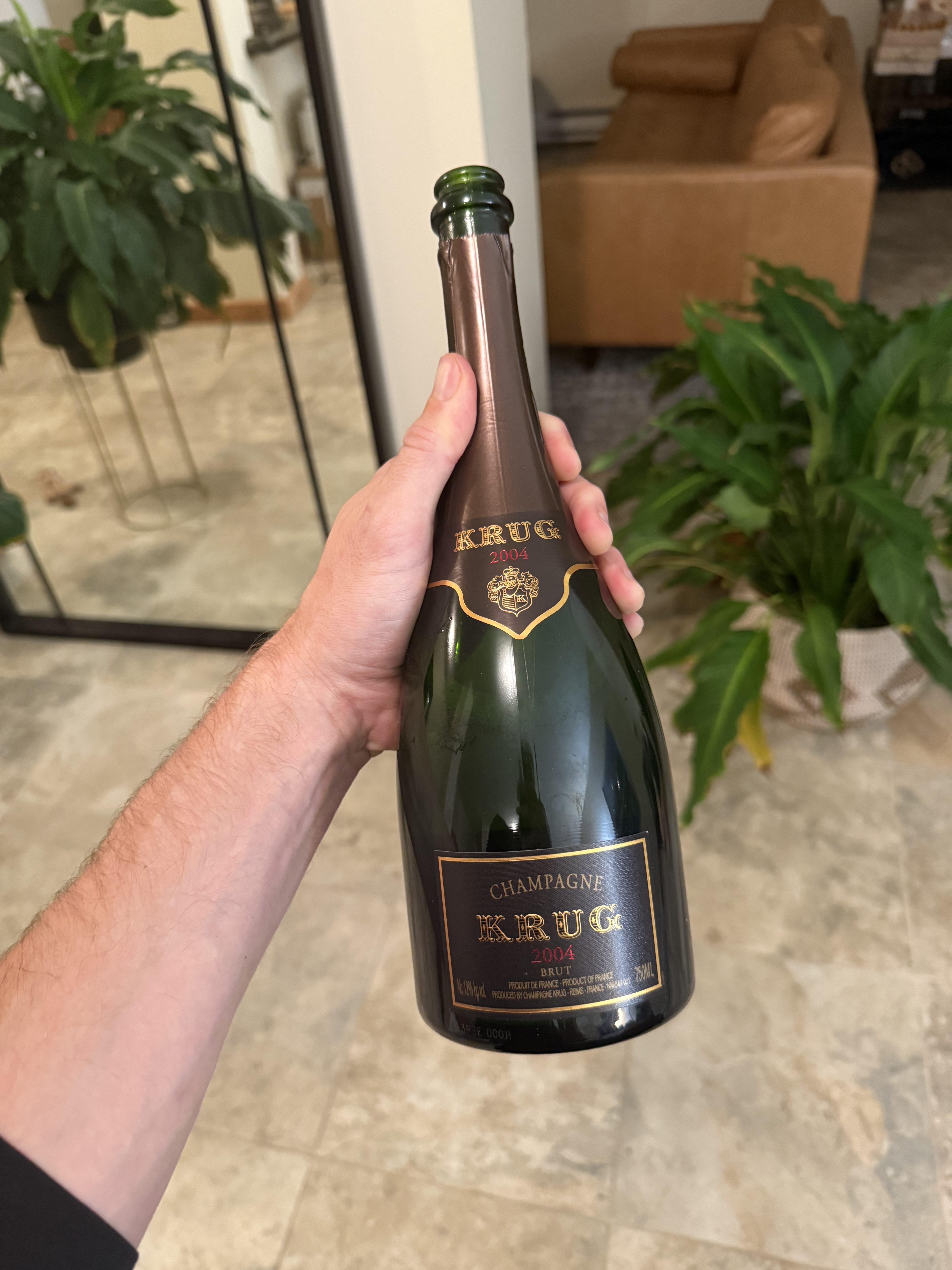
2004 Vintage Krug –
Chuck kicked us off with this beauty. Classic Krug – oxidative and leasy on the nose, but at that stage where it is still incredibly fresh and bright on the palate with a powerful and driving finish. This is about as good as Champagne gets for my palate.
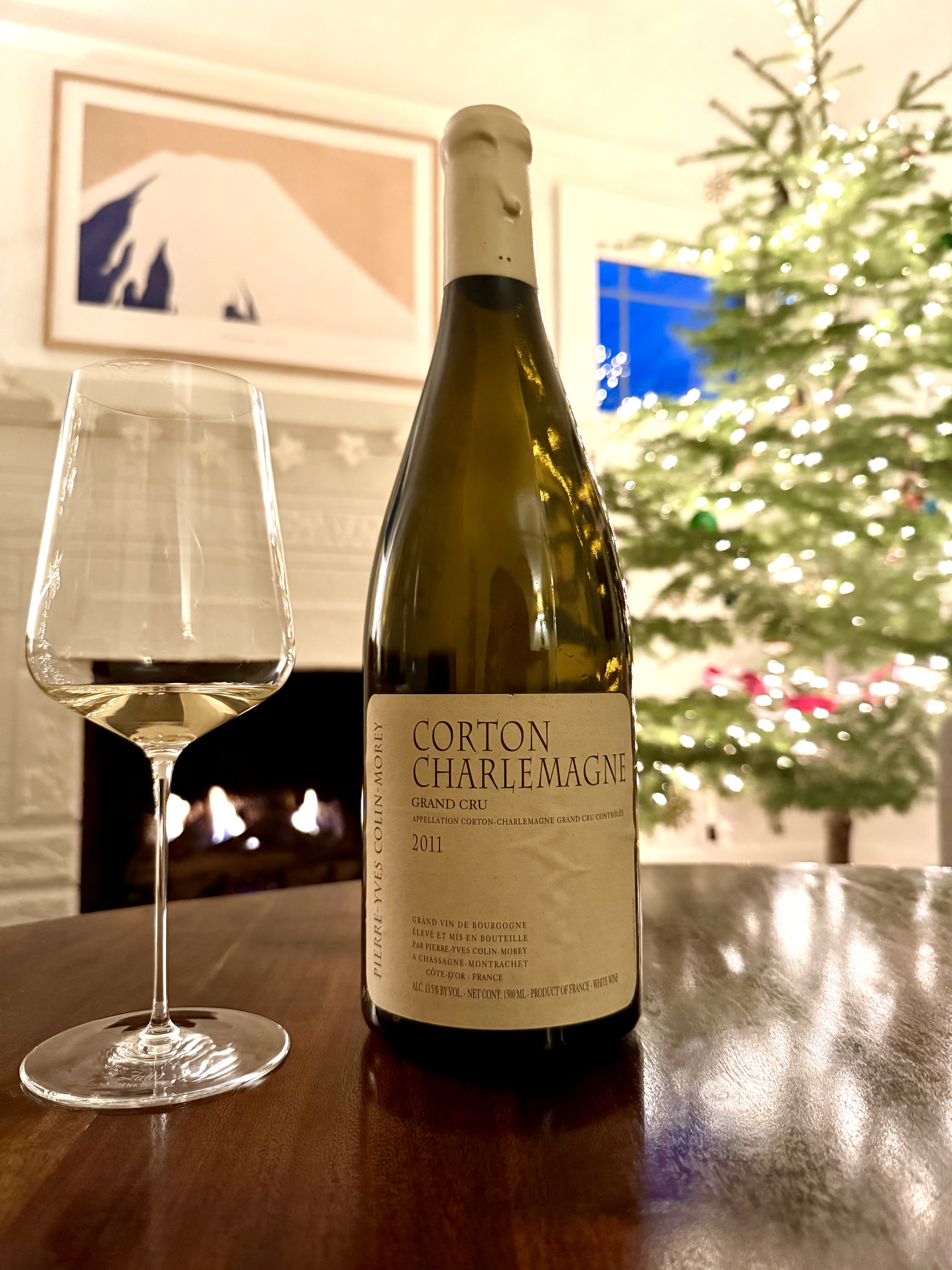
2011 PYCM Corton-Charlemagne (Magnum) –
This was my bottle. I decanted it about two hours in advance. On opening, it had that beautiful reductive nose. On the palate, you got beautiful front-end acidity, but the mid-palate was strangely hollow—almost watery (“Where is the fruit?” I thought). Then it all came rushing back with an incredibly spicy, mineral finale that hinted at what was to come. And come it did: the fruit kept building and building throughout the evening until the wine was exploding with power. It continued to get younger and more intense in the glass, becoming so rocky and spicy—a masterclass in what PYCM can achieve. This ended up as one of my top whites of the year because the evolution was breathtaking.
2005 Château Rayas –
This was brought by @Chuck_Miller , who has generously shared a number of these wines with me over the years, and this was an exceptional specimen—just a floral, alpine, blueberry-spice bomb on the nose. Blind, this could easily be mistaken for GC Burgundy, but the beautiful blueberry note is, for me, uniquely Rayas. Knowing Chuck’s cellar—and given the context that we recently lost Emmanuel Reynaud, one of the wine world’s giants—we all knew Chuck would pull out a Rayas. This showed a mix of high-toned red fruit and dark berries with a long, complex finish that was slightly drying but wonderfully balanced by the depth of fruit. I trust Chuck when he says he’s seen this show even better; still, this was just stunning and one of my top wines of the evening.
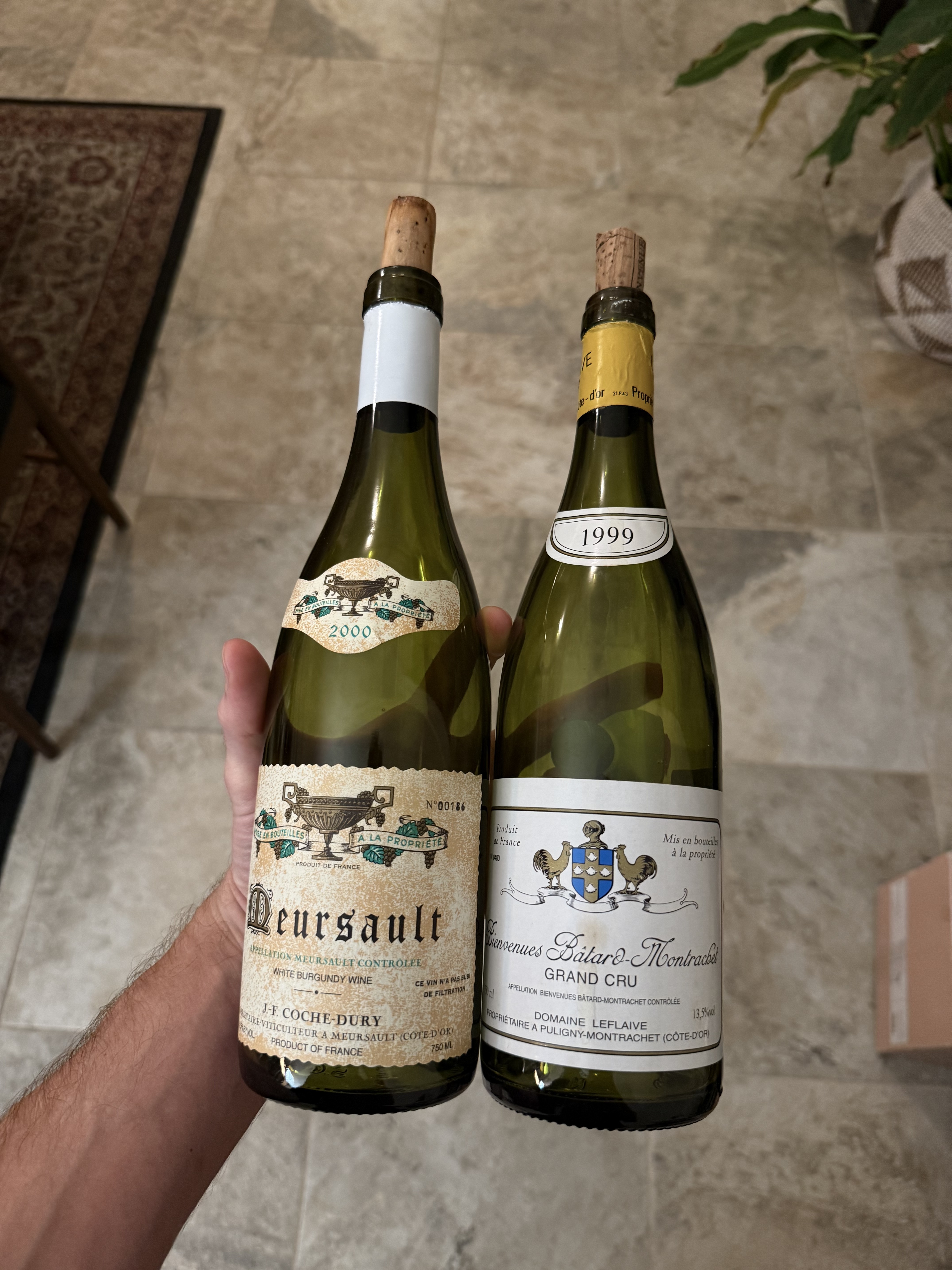
1999 Leflaive Bienvenues-Bâtard-Montrachet –
As we were blinding these, Sid asked if I thought it was Coche. I said, “DEFINITELY,” so he used that as his guess—ehhh… next person. The ’99 Leflaives are wonderfully reductive. I imagine it was a little over the top in youth, as there’s a hint of burnt rubber on the nose, but that blew off throughout the evening. The nose became much more floral and mineral, with that wonderful sesame note that appears when reduction integrates with oak over two decades. This was at the perfect stage of development for my palate: still showing impressive acidity, some primary fruit, and a mineral edge, all intermingled with tertiary notes like cereal dust and a medley of umami tones that fan out across a long, mineral finish. White of the night for me.
2000 Coche-Dury Meursault –
This was sent right after the Leflaive, and when it got to Sid, he again asked if I thought it was Coche. I said, “Not a chance.” Giggling, Sid guessed Coche—correct! A discussion then ensued about how Coche can be reductive in certain vintages (’05, ’07, ’09, ’13), but it’s not necessarily part of the signature. As the wine evolved, it became very Coche—super savory on both nose and palate. You could taste white smoke, and the finish just drove on and on. This was slightly past its apogee for me, but still a wonderful wine.
2001 Dujac CSD vs 2001 Dujac Bonnes-Mares (Pair)–
These had more commonalities than differences, and I have always wanted to try these side by side - A.k.A. the more “Morey” Chambolle Grand Cru next to the more “Chambolle” Morey Grand Cru, if you will. These wines were lightly colored in the glass. The nose showed commonalities: they were both mineral and slightly wild with perfectly integrated whole cluster that provided tons of lift, but had no hard edges. Both wines had beautiful dark blue fruit that was impossibly light and mineral. The Bonnes-Mares was more wild on the nose and had a stronger tannic profile on the palate that slightly compressed the finish, suggesting the best is yet to come for this wine. The CSD was the prettier more overtly floral wine doing that sexy rose petal dance Dujac van do so well, and it showed a silkier more integrated tannic profile that made way for a longer finish. These were just gorgeous and some of the best examples of Dujac I’ve had the privilege of tasting. Interesting note: I believe 2001 was the last year Dujac used 100% whole cluster and did not purposefully delay malo. For me, this solidified my general preference for the earlier style, but I also think that gap in quality is exaggerated by people who enjoy the older wines more. A 2010 Dujac CSD that @Chuck_Miller poured for me @robertl and @Nick_Christie in July was probably my best Dujac experience to date showing that although the older style is possibly more consistent, Dujac can still hits the highest highs. Christophe Roumier said best when he said “Clos Saint Denis is total emotion.”
2000 Rousseau Chambertin –
This was my top Rousseau experience to date. The nose was obviously Gevrey Grand Cru— iron meaty and wild, but intermingled with red berries and beautiful florals. There was an insane amount of lift; it just kept rising. The fruit was so powerful, completely wrapping the silky tannins and sitting perfectly on the cusp between red and black. The fruit was almost thick— to the point that you’d expect the wine to be syrupy—but it was inexplicably light, dancing across the palate and teasing you with the impossibility of its existence as it just simmers for minutes melting into you palate. I think I finally get Rousseau and understand the reverence @MChang and others hold for this producer.
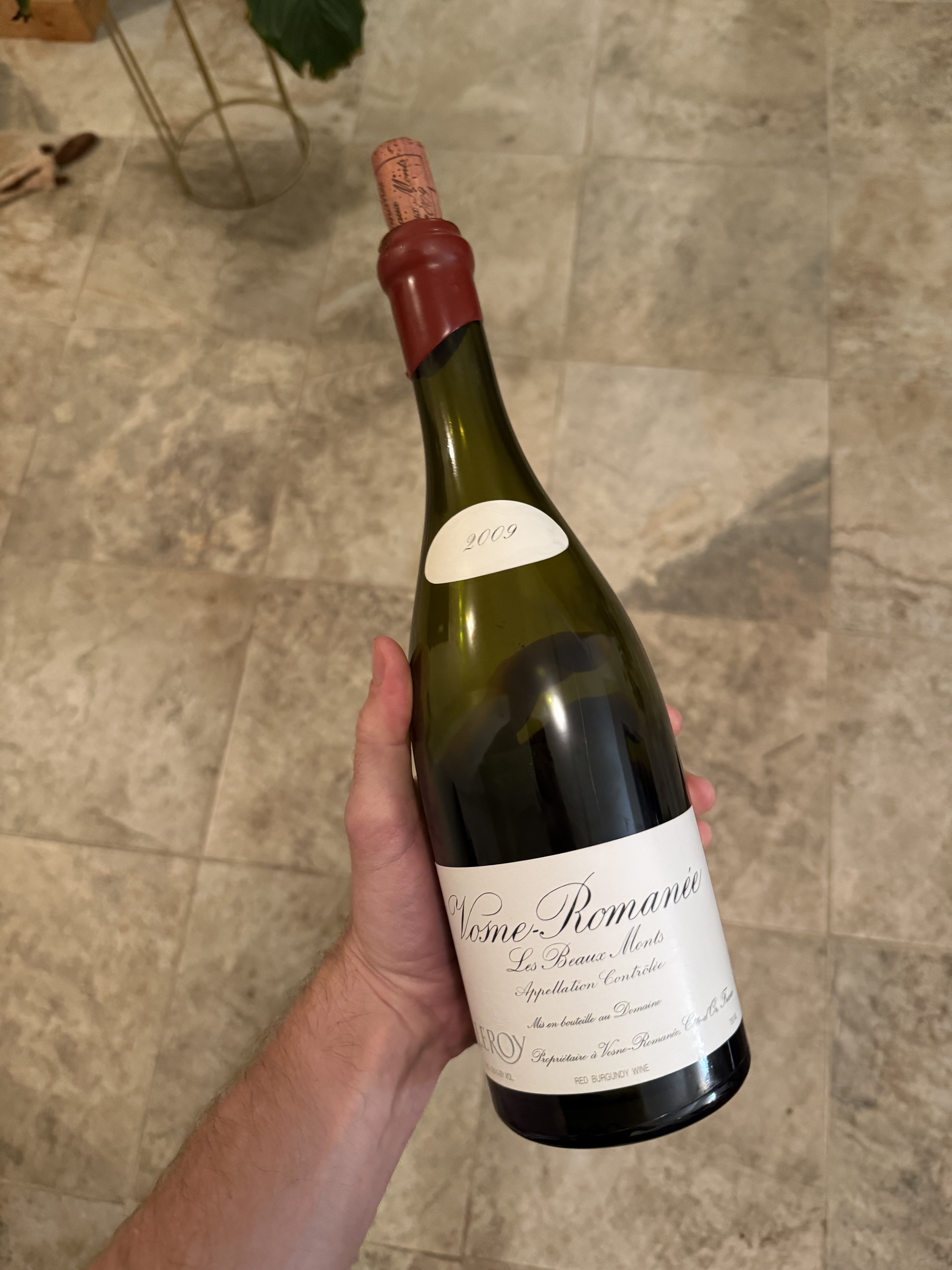
2009 Leroy Vosne-Romanée 1er Cru, Les Beaux Monts –
Generously shared by an individual who had the foresight to buy these by the case when they were still obtainable. The nose is perfect… Smoke, exotic chai spice, cherries, mineral water, a hint of mocha—this is sexy. I can’t begin to explain how suave this wine is… Almost like it’s giving you the finger - completely confident that you still want it. On the palate, the wine is weightless. The acidity is so well integrated that you almost don’t notice it at first sip. It presents as impossibly lush red fruit—almost new world—but then the acidity arrives, carrying the fruit toward the finish for what seems like 5 minutes. As the wine fans out across the palate it distinctly transitions to black tea followed by exotic spices that match the nose as they melt down to powdery tannins that are physically pleasurable. It sounds weird, but this wine literally feels good to drink in a tactile sense. This is a wine that hits all of the correct buttons - it knows the password. WOTN.


 . I’ve been this close to emailing him this week to harass him for these very thoughts!
