This was a tasting I arranged in early 2025. I had a bunch of Huets, but not enough for a full tasting, so I supplemented the lineup with a few other Chenin Blancs - along with a Coulée de Serrant from one other attendee.
I’ve seen many people say Huet is the posterchild for premox today - however, I’ve yet to experience such a wine. Among the wines we tasted, only one could’ve probably fit the bill somewhat: it seemed complex and evolved, but at only 9 years old it probably should’ve been much younger, considering how Huet wines can normally evolve for decades. I guess if it had been any a wine from any other producer, people would’ve been happy how wonderfully the wine had evolved. Well I guess people were still happy, because the wine was nevertheless delightfully complex and eminently delicious in every way!
To me, the sweet spot (heh) in Huet wines seems to lie in the Demi-Sec range. I love the wines from all the different levels of sweetness as the Sec wines are wonderfully pure and precise, while the Moelleux wines can be both beautifully complex and capable of aging gracefully, often at a glacial pace. However, the Demi-Sec wines seem to combine both the qualities wonderfully, and especially with enough age, they can attain a level of complexity that is a synthesis of both aged Sec and aged Moelleux with something even more on top. They are simply extraordinary when they are at their best.
However, I have to admit I was floored by that Joly bottle. I haven’t always loved the Coulée de Serrant bottlings as they all too often can get way too heavy, clumsy and overtly ripe - I normally prefer the somewhat lighter and less burly Clos de la Bergerie. However, this wine didn’t suffer from the excesses of Clos de la Coulée de Serrant; it definitely had lots of everything, but there was not too much of anything.
And finally, as always, we had some extra blinds (including one extra Huet Demi-Sec!) before and after the tasting proper.
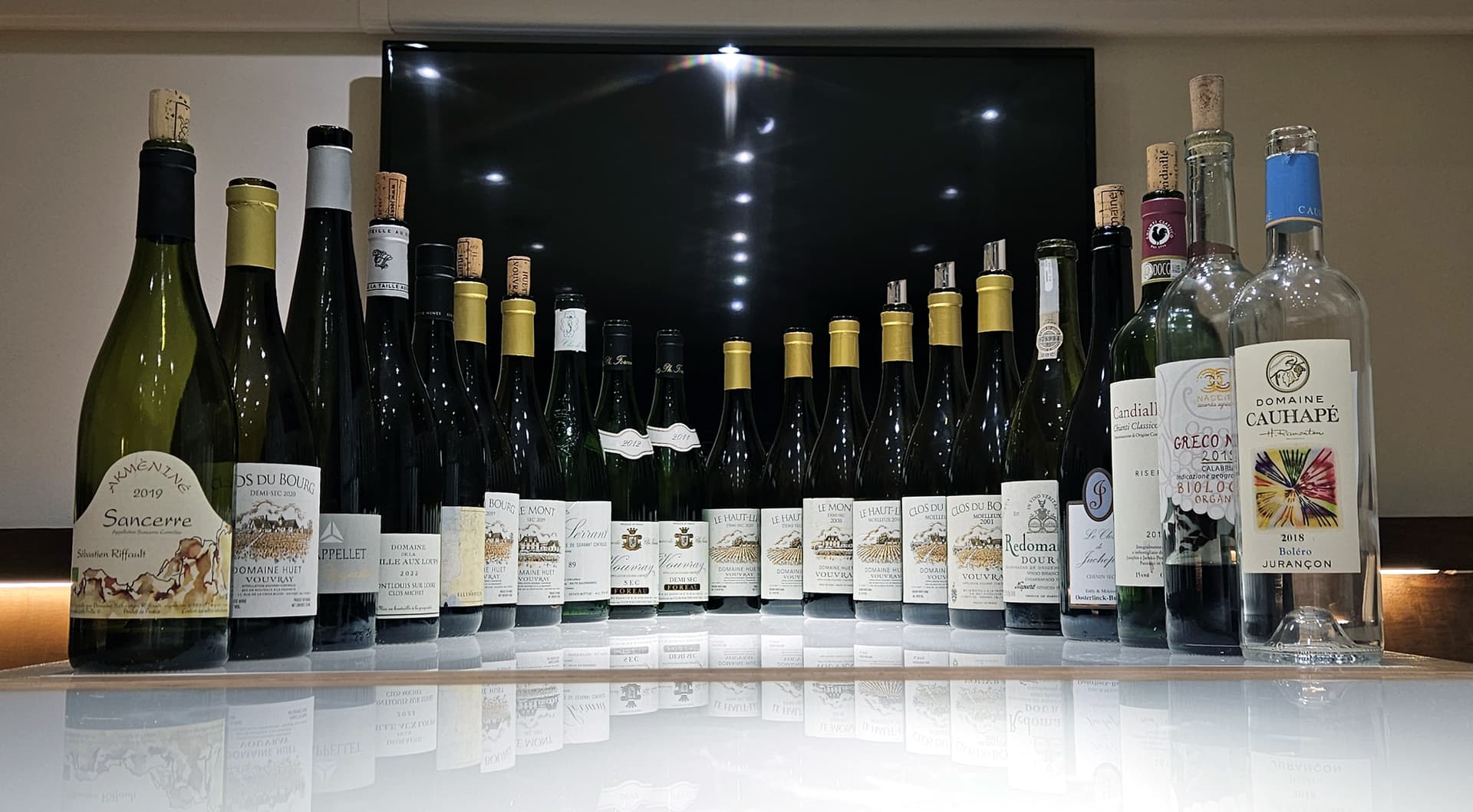
- 2019 Sebastien Riffault Sancerre Akméniné - France, Loire Valley, Upper Loire, Sancerre (25.1.2025)
100% organically farmed late-harvest Sauvignon Blanc from a 40-yo vineyard, made with grapes of which approx. 30% have contracted botrytis. The wine is fermented spontaneously to full dryness, aged for 36 months in old, neutral oak pièces of 228 liters, bottled unfiltered and then aged for another 12 months in bottles before release. No sulfites employed at any point. 13% alcohol. Tasted blind.
Hazy and quite pale amber color. The nose feels weird, wild and quite idiosyncratic with somewhat natty aromas of honeyed richness and bruised apple, some chopped almonds, light herby notes, a little bit of bretty funk, a cidery hint of freshly-pressed apple juice and a touch of nuttiness. The wine feels dry, wild and surprisingly a bit understated on the palate with a medium body and quite sauvage flavors of bruised apples and beeswax, some stony mineral notes, a little bit of grapefruit and apple peel bitterness, light funky notes of brett and tangy acetic sharpness, a greenish hint of coniferous forest and a touch of something that feels a bit grainy or malty yet not mousiness. The high acidity makes the overall feel pretty firm and tangy. The finish is funky and somewhat oxidative with flavors of bruised apple, some nuttiness, light stony mineral notes, a little bit of phenolic spice, a hint of tart lemony citrus fruit and a touch of malty character.
A weird but somewhat balanced bottle of Riffault's very idiosyncratic Sancerre. I've had some Akméninés that have been better, but also some that have been less drinkable. I think this bottle felt a bit more evolved than a 5-yo Sancerre should be, but I think Riffault's more botrytis-influenced cuvées seem to be even more susceptible to oxidation than the cleaner ones, so I'm not surprised about the shape the wine was in. At first I was pretty confused by the wine, but slowly I started to put the pieces together and I managed to identify the wine as a Riffault Sauvignon Blanc after a little while. All in all, not bad, but not my favorite style of wine.
(88 points) - 2020 Domaine Huet Vouvray Demi-Sec Clos du Bourg - France, Loire Valley, Touraine, Vouvray (25.1.2025)
A semi-dry white made with biodynamically farmed Chenin Blanc grapes from the Clos du Bourg vineyard. Fermented spontaneously in old oak barrels and stainless steel. The fermentation is halted before the wine reaches dryness with racking and application of SO2. The MLF is blocked. Bottled in the spring following the harvest. 13,5% alcohol, 22,5 g/l residual sugar and 5,1 g/l acidity. Tasted blind.
Pale whitish-green color. The nose feels ripe, fresh and somewhat sweetish with aromas of juicy red apples, some honeyed tones, a little bit of stony minerality, light smoky undertones, distinctive hints of biscuits and even pickles, a floral touch of sweet citrus blossom and a whiff of beeswax. The wine feels juicy, harmonious and slightly sweet on the palate with a rich texture, a medium body and medium-dry flavors of ripe Golden Delicious apple, some honeyed tones, a little bit of stony minerality, light floral overtones, a hint of beeswax and a touch of exotic spices. The rather high acidity keeps the overall feel fresh and balanced, although not offsetting much sweetness from the residual sugar. The finish is ripe, long and quite mineral with a medium-dry aftertaste of ripe Golden Delicious apple, some stony mineral notes, a little bit of honeyed richness, light floral nuances, a hint of herby spice and an autolytic touch of nuttiness or even a tiniest bit of bread crust.
A rich and somewhat concentrated yet very sophisticated and attractively styled Demi-Sec Clos du Bourg. The overall feel is a bit sweeter and more concentrated compared to the leaner and less expressive Demi-Sec Haut-Lieu 2020, and at least for the time being, this wine comes across as more impressive and enjoyable. However, it's possible that things will change as the wines age, evolve and open up. Despite its rather ripe overall feel and richly-textured - even a bit big-boned -expression, this is still a lovely, classically styled Huet that doesn't come across as heavy or clumsy, but instead shows great promise for future potential. A lovely wine. Pretty good value at 38,23€.
(92 points) - 2013 Chappellet Chenin Blanc - USA, California, Napa Valley (25.1.2025)
This bottle - also known as Signature Chenin Blanc and Molly Chappellet Chenin Blanc - is a 100% Chenin Blanc from Napa Valley, fermented in used French oak barrels, stainless steel tanks and a Nomblot concrete egg tank. 14,5% alcohol.
Medium-deep yellow-green color. The nose feels ripe, somewhat concentrated and slightly evolved with fine-tuned yet nuanced aromas of waxy Chenin character, some nutty wood, a little bit of ripe yellow stone fruits, light creamy oak tones, a hint of apple jam and a mineral touch of stone dust. The wine feels broad, ripe and a bit oily on the palate with a full body and juicy, somewhat sweet-toned flavors of peachy fruit, some apple jam, light woody notes, a little bit of creamy oak, a hint of beeswax and a touch of wool. Although the moderately high acidity keeps the wine pretty nicely in balance, the overall feel is starting get a bit heavy and lack focus, while the high alcohol lends somewhat noticeable warmth to the palate. The finish is rich, long and somewhat warm with an intense aftertaste of ripe peach and sweet red apple, some creamy oak tones, a little bit of nutty wood, light stony mineral notes, a hint of beeswax and a dull touch of damp wool.
A quite sophisticated and moderately evolved Napa Chenin that seems to have passed its apogee. Three years earlier, the wine was very impressive and wonderfully nuanced with great sense of balance and developed complexity. Now, on the other hand, the wine seems a bit heavier and more loose-knit with a somewhat fatter overall feel and more prominent alcohol. Also, the tertiary woolly notes typical of Chenin Blanc seem to have become more pronounced, somewhat muddling the clarity of fruit. While this wine wasn't as impressive and harmonious as the bottle we had three years ago, this was still an impressive and delightful wine from the somewhat ripe and weighty end of the spectrum. Based on the trajectory between this bottle and the one we had earlier, I wouldn't keep the wine any longer - it is time to drink up! Priced somewhat according to its quality at 34,50€.
(91 points) - 2022 Domaine de la Taille aux Loups Montlouis-sur-Loire Clos Michet - France, Loire Valley, Touraine, Montlouis-sur-Loire (25.1.2025)
100% organically farmed Chenin Blanc from the 50-yo Clos Michet vineyard. Fermented spontaneously, aged in small oak barrels (normally 1/4 new, 3/4 used) for 12 months. 12,5% alcohol.
Youthful, quite pale greenish color. The nose feels youthful, very floral and quite expressive with aromas of freshly pressed apple juice, floral citrus blossom tones, some primary notes of ripe grapey fruit and pear jelly, a little bit of sweet greengage, light stony mineral notes, a hint of crunchy green currant, a touch of herby spice and a toasty whiff of sweet oak. The wine feels fresh, clean and attractive with a rather light body and youthful flavors of ripe greengage, some primary notes of pear drops, a little bit of stony minerality, light crunchy notes of green currants, oaky hints of nutty wood and sweeter oak spice and a floral touch of orange blossom. The rather high acidity keeps the wine quite nicely in balance while lending in good sense of focus. The finish is youthful, lively and crunchy with a long, nuanced aftertaste of primary grapey fruit, some crunchy green currants, light candied notes of pear jellies, a little bit of ripe greengage, hints of creamy oak and toasty spice and a touch of stony minerality.
A lovely, balanced and quite attractive Chenin Blanc showing pretty judicious use of oak. Although subtly toasty oak nuances peek through, I don't really mind them - my bigger beef is with the candied primary aromas that still linger on, making the wine appear a bit sweeter and more anonymous than it actually is. Fortunately the wine shows enough focus and balance that I have no worries about the aging potential of the wine. At the moment the wine is still a bit awkward, but nevertheless pretty tasty as well, and I have no doubts the wine will be in a great spot with another 5-8 years of aging. Pretty solid value at 27,90€.
(90 points) - 2019 Ken Forrester Chenin Blanc The FMC - South Africa, Coastal Region, Stellenbosch (25.1.2025)
The name stands for "Forrester Meinert Chenin". From a low-yielding vineyard planted in 1974. Fermented spontaneously with indigenous yeasts. Aged for 12 months in new 400-liter French oak barrels. 13% alcohol, 8,9 g/l residual sugar, 6,5 g/l acidity, pH 3,3.
Intense, medium-deep and somewhat concentrated neon yellow-green color. The nose is surprisingly youthful and primary with aromas of hard pineapple candies and pear drops, some creamy oak tones, a little bit of vanillin, light floral notes of orange blossom, a hint of sweet oak spice, a touch of crunchy appley fruit and a whiff of lemon zest. With some aeration the nose loses its most obvious sweet and candied nuances, fortunately. The wine feels lively, crisp and firm on the palate with a light-to-medium body and dry-ish flavors of stony minerality and sweet oak spice, some waxy tones, a little bit of lemony citrus fruit, light candied notes of sweet, grapey primary fruit, a hint of nutty wood and a touch of vanillin. The high acidity lends quite a bit of freshness, energy and structure to the wine. The finish is crisp and lively with a long, dry-ish aftertaste of lemony citrus fruits and sharp Granny Smith apple, some stony mineral notes, a little bit of sweet oak spice, light candied notes of pear drops, a hint of tangy salinity and a touch of vanillin.
I was surprised how youthful - primary, even - the wine was at 6 years of age. I guess the Stelvin closure is to blame here - we've began calling these wines that are way too primary for their age as suffering from screwcap taint; they don't seem to evolve at all, but instead taste like they were bottled yesterday, no matter how old they are. I've loved FMC, but this bottle seemed to show no evolution whatsoever, which irks me a bit; why had I aged the wine for years in my cellar, if it hadn't changed one bit with age, but instead was stylistically quite identical to a freshly released vintage of FMC? The more I drink these wines bottled with a screwcap closure, the more I just want to avoid buying them. I don't mind drinking them, but I really don't want to give any of my limited cellar space if aging them is pretty much pointless! Anyways, I guess this would've been a lovely wine, had it been capable of aging and evolving. Now the overall feel was pretty much dominated by candied primary aromas of rather overbearing streak of sweet vanillin oak, so I wasn't particularly keen on this wine. Fortunately it lost some of those sweetest, candied nuances with air, so the wine got better over the course of the evening. My final score is based on how the wine was performing after about 6 hours of aeration. Feels expensive for the quality at 39,90€.
(88 points) - 2019 Domaine Huet Vouvray Sec Clos du Bourg - France, Loire Valley, Touraine, Vouvray (25.1.2025)
A dry white made with biodynamically farmed Chenin Blanc grapes from the Clos du Bourg vineyard. Fermented spontaneously in old oak barrels and stainless steel. The MLF is blocked. Bottled in the spring following the harvest. 13,5% alcohol, 4 to 5 g/l residual sugar and 7,6 g/l acidity.
Youthful pale green color. The nose feels rich and fruit-forward with vibrant aromas of ripe Golden Delicious apple, some zesty citrus notes, a little bit of juicy white peach, light chalky notes of crushed sea shells, a floral hint of apple blossom and a faint touch of herby spice. The wine feels firm, broad and subtly sweet-toned on the palate with a medium body and ripe flavors of crunchy whitecurrants, some mineral notes of wet rocks and tangy salinity, a little bit of sweet Fuji apple, light sweet notes of ripe citrus fruits, a hint of crushed sea shells and a touch of floral spice. The high acidity lends a good deal of freshness, structure and precision to the wine. The palate-cleansing finish is fresh and mineral with a long, dry-to-dry-ish aftertaste of ripe red apple, some lemony citrus fruits, a little bit of tangy salinity, light mineral notes of wet rocks, a hint of crushed sea shells and a sweeter touch of white peach.
An attractive, tasty and surprisingly concentrated vintage of Clos du Bourg. Tasting this next to 2019 Le Mont Sec, I feel this Clos du Bourg seems more impactful, fruit-forward and open-knit in overall style, whereas Le Mont feels more precise, mineral and quite high-strung. Both more or less equal in quality, but I feel this Clos du Bourg is going to be ready sooner, while Le Mont is built for the longer haul. Both the wine still feel quite youthful and tightly-wound at the moment, showing more potential than immediate pleasure; however, if one needs to open a bottle now, I'd go for Clos du Bourg, and leave Le Mont to age for longer. I must admit that I was surprised to see how many notes mention how the wine is surprisingly advanced and even showing some oxidative qualities, because this wine was beautifully pristine and vibrant, showing no obvious signs of any kind of evolution yet. Great value at 31,90€.
(92 points) - 2019 Domaine Huet Vouvray Sec Le Mont - France, Loire Valley, Touraine, Vouvray (15.4.2026)
A dry white made with biodynamically farmed Chenin Blanc grapes from Le Mont vineyard. Fermented spontaneously in old oak barrels and stainless steel. The MLF is blocked. Bottled in the spring following the harvest. 13,5% alcohol, 4 to 5 g/l residual sugar and 7,9 g/l acidity.
Youthful, pale greenish color. The nose feels cool, fresh and a bit subdued with light aromas of crunchy Granny Smith apple, some mineral notes of wet rocks, a little bit of white currant, light salty notes of oceanic air, a hint of fresh pear and a zesty touch of lemon. The wine feels firm, precise and somewhat linear on the palate with a medium body and clean, crunchy flavors of ripe citrus fruits and sharp Granny Smith apple, some mineral notes of wet rocks, a little bit of white currant, light floral nuances, a hint of beeswax and a touch of fresh white peach. The wine feels brisk and structured, thanks to the high - almost racy - acidity that offsets most if not all sweetness from the subtle residual sugar. The finish is firm, fresh and pretty lengthy with a long, dry-ish aftertaste of ripe citrus fruits, some crunchy white currant notes, a little bit of sharp Granny Smith apple, light mineral notes of chalk dust, a floral hint of apple blossom and a touch of salinity.
A wonderfully brisk, lean and precise Chenin Blanc, although still very youthful and thus somewhat tightly-wound in overall feel - especially when compared to the somewhat more generous and slightly richer 2019 Clos du Bourg. At the moment the wine is a bit muted and linear, but nevertheless showing great promise for future development. I'd let the wine wait for another 5-10 years more, just to let the wine unwind and open up some more - and if I wanted to open a bottle of 2019 Huet Sec now, I'd go for Clos du Bourg instead. All in all, a fine vintage of dry Le Mont showing good potential. Great value at 29,90€.
(92 points) - 1989 Nicolas Joly Clos de la Coulée de Serrant - France, Loire Valley, Anjou-Saumur, Savennières-Coulée de Serrant (25.1.2025)
100% biodynamically farmed Chenin Blanc, harvested in several tries over multiple weeks. Fermented spontaneously, aged in predominantly old (0 to 5% new) 500-liter demi-muids for 6-8 months. Bottled with a minimal dose of SO2. 13% alcohol.
Quite deep burnished gold color with a luminous amber core. The nose feels evolved, captivating and enormously complex with sweet, layered aromas of caramel, some toasty notes of baking spices, a little bit of bruised apple, light raisiny notes of Sultanas, sweet hints of acacia honey and orange marmalade, a touch of macerated herbs and a whiff of licorice extract. The wine is dry, evolved and concentrated on the palate with a medium-to-moderately full body and intense, complex flavors of caramel and orange marmalade, some smoky tones, a little bit of toasty baking spice character, light raisiny notes of Sultanas, a hint of bruised apple and a touch of stony minerality. The high acidity makes the overall feel surprisingly firm, precise and structured, despite the concentrated and somewhat extracted overall feel. The evolved finish is long, crisp and lively with a dry, concentrated and quite intense aftertaste of caramel and honeyed richness, some raisiny notes of Sultanas, a little bit of orange marmalade, light smoky tones, a hint of apple core and a touch of macerated herbs.
A fantastic, remarkably intense and so impressively complex vintage of Coulée de Serrant. Unlike some more recent vintages, which have been quite massive - in terms of body, ripeness and ABV - this vintage was surprisingly lean, firm and precise for a Coulée de Serrant. Sure, you could taste the ripeness and concentration here, and the bottle age had bestowed some rich nuances of caramel, honey, orange marmalade and raisiny fruit to the wine as well, but at no point did it feel heavy, clumsy or ponderous. No, on the contrary: the wine was remarkably fresh and lively for a 35-yo Chenin Blanc, while showing extraordinary tertiary complexity and depth of flavor. I doubt the wine is going to improve with any additional aging, but it didn't feel like the wine is going to fall apart anytime soon. Drink now or within the next decade or two. Not particularly affordable at 95€, but well worth the price. Although I usually like the lighter Joly cuvées (Bergerie and Les Clos Sacrés / Vieux Clos / Becherelle) over the heavier Coulée de Serrant, this still has been probably the best Joly wine I've ever had. Also probably the best dry Chenin Blanc I've tasted, too. Very highly recommended.
(99 points) - 2012 Foreau Domaine du Clos Naudin Vouvray Sec - France, Loire Valley, Touraine, Vouvray (25.1.2025)
100% Chenin Blanc. Fermented spontaneously, MLF blocked, aged in predominantly old (0 to 5% new) 300-liter casks. 12,7% alcohol.
Medium-deep golden yellow color. The nose feels slightly spicy and somewhat evolved with aromas of bruised apples, some ripe lemony tones, a little bit of honeyed richness, light mineral notes of wet rocks, a woolly hint of lanolin, a touch of caramel and a whiff of sweet orange. The wine feels dry, evolved and waxy on the palate with a medium body and layered flavors of bruised apples and caramel, some mineral notes of wet rocks, a little bit of woolly lanolin, light honeyed nuances, a hint of wizened stone fruits and a developed touch cooked cream or custard character. The high acidity keeps the wine fresh and structured, yet not too lean or austere. The finish is long, firm and mineral with a dry aftertaste of zesty citrus fruits, some bruised apple tones, a little bit of woolly lanolin, light honeyed notes, a hint of caramel and a touch of tangerine.
A harmonious, balanced and pleasantly evolved Chenin Blanc. Showing good depth of flavor with lovely tertiary complexity. Seeing how quite developed the wine feels now, at 12 years of age, I suspect it is not going to evolve much further from here; only keep. Most likely the wine is not going to fall apart anytime soon, however, so drink now or whenever within the next 10 years or so. All in all, a delightful example of aged dry Vouvray at full maturity. At just 18,35€, this has been a bargain.
(93 points) - 2011 Foreau Domaine du Clos Naudin Vouvray Demi-Sec - France, Loire Valley, Touraine, Vouvray (25.1.2025)
100% Chenin Blanc. Fermented spontaneously but fermentation halted before full dryness, MLF blocked, aged in predominantly old (0 to 5% new) 300-liter casks. 13% alcohol.
Pale golden yellow color. The nose feels horribly vegetal and quite off-putting with a huge smack of geosmin, making the wine smell like freshly tilled soil and dirty beets and carrots along with some grassy green tones, a little bit of ripe yellow apples and a hint of green currants. The wine feels firm and noticeably vegetal on the palate with a medium body and medium-dry to medium-sweet flavors of dirty beets and grassy vegetal character, some sweeter notes of apple jam, light honeyed tones, a little bit of green currants and a mineral hint of wet rocks. The wine is high in acidity. The finish is firm, lively and very green-toned with a somewhat sweet-toned and noticeably vegetal aftertaste of dirty carrots and tilled soil, some honeyed notes, a little bit of grassy greenness, light stony mineral tones, a hint of ripe Golden Delicious apple and a touch of gooseberry compote.
Yet another 2011 Chenin Blanc ruined by geosmin. I can't help but wonder how many tasting notes in CT fail to notice anything is wrong with the wine, whereas in the tasting where this bottle was drunk, most attendees were asking each other "what is wrong with the wine?". Just like most 2011 Chenin Blancs from Loire and many Champagnes, the wine is badly dominated by geosmin - the same compound that lends that distinctive green, earthy smell to tilled wet soil. This wine basically smells and tastes like that earthy smell. You can sort of taste that there is a fine, balanced and enjoyably developed wine somewhere underneath, but to me, that geosmin makes the wine basically undrinkable. This was 15€ down the drain.
(64 points) - 2020 Domaine Huet Vouvray Demi-Sec Le Haut-Lieu - France, Loire Valley, Touraine, Vouvray (25.1.2025)
A semi-dry wine with biodynamically farmed Chenin Blanc grapes from the original Le Haut-Lieu vineyard of Domaine Huet. Fermented spontaneously in old oak barrels and stainless steel. The fermentation is halted before the wine reaches dryness with racking and application of SO2. The MLF is blocked. Bottled in the spring following the harvest. 13,5% alcohol, 19 g/l residual sugar, 6,7 g/l acidity and pH 3,16.
Youthful, luminous yet quite pale yellow-green color. The nose feels a bit reticent with somewhat muted aromas of crunchy Grany Smith apple, some ripe citrus fruit tones, a little bit of flinty smoke, light mineral notes of wet rocks, a hint of quince, a touch of rubbery reduction and a grassy whiff of herby spice. The wine feels youthful and moderately ripe but also somewhat mild on the palate with a medium body and off-dry to medium-sweet-ish flavors of Golden Delicious apple and ripe citrus fruits, some mineral notes of wet rocks, light honeyed tones, a little bit of quince marmalade, a hint of cloudberry jam and a touch of almost under-ripe white peach. The rather high acidity makes the wine feel fresh and precise while offsetting some of the residual sugar sweetness. The finish is firm and lively with a rather long aftertaste of ripe citrus fruits, some incisive steely mineral notes, a little bit of quince compote, light crunchy notes of fresh red apples, a hint of cloudberry jam and a touch of flint smoke.
A very youthful, still quite closed and pretty high-strung vintage of off-dry Le Haut-Lieu. There's good sense of freshness, but compared to the 2020 Demi-Sec Clos du Bourg, this was somewhat light and underwhelming effort. Lively and classically styled, yes, but lacking the drive and intensity one could expect from this vintage. I assume the wine was still just too young for its own good and it was caught in a slump - most likely the wine will gradually evolve, open up and improve with additional age. Let it wait for another 6-10 years or more. Priced somewhat according to its quality at 33,07€.
(89 points) - 2016 Domaine Huet Vouvray Demi-Sec Le Haut-Lieu - France, Loire Valley, Touraine, Vouvray (25.1.2025)
A semi-dry wine with biodynamically farmed Chenin Blanc grapes from the original Le Haut-Lieu vineyard of Domaine Huet. Fermented spontaneously in old oak barrels and stainless steel. The fermentation is halted before the wine reaches dryness with racking and application of SO2. The MLF is blocked. Bottled in the spring following the harvest. 13% alcohol and 17 g/l residual sugar.
Luminous, medium-deep yellow-green color. The nose feels somewhat evolved and wonderfully complex with punchy, intense aromas of browned butter and panna cotta, some ripe peach, light stony mineral notes, a little bit of apple jam, a hint of beeswax, a nutty touch of chopped almonds and a whiff of diacetyl. The wine feels off-dry and juicy yet sinewy on the palate with a medium body and complex, intense flavors of lemon marmalade and apple jam, some beeswax, light evolved notes of browned butter and cooked cream, a little bit of stony minerality, a floral hint of apple blossom and a touch of ripe stone fruits. There's lots of everything, yet nothing in excess. The high acidity lends a great amount of energy and structure to the wine. The off-dry finish is firm, long and juicy with a complex aftertaste of sweet Fuji apple and quince jam, some honeyed tones, a little bit of ripe greengage, light buttery notes of diacetyl, a hint of cantaloupe and a mineral touch of wet rocks.
A wonderfully evolved, complex and utterly delicious off-dry Huet that would've been probably my WotN, if we hadn't had even more impressive 2008 Demi-Sec Le Mont right after this. Anyways, at this point it is hard to say whether the wine is suffering from a mild case of premox or not, since the overall feel here is quite evolved and even a bit oxidative, and Huet wines are supposed to be very long-lived - from that perspective it might be a bit surprising if a wine less than 10 years old is starting to get this evolved. Then again, at almost 10 years of age, the wine isn't young anymore. It's very hard to tell if the wine is where it should be at now, and if it is able to continue evolving even further from here, or if the wine is going to fall apart with additional age. Whatever the case, this was a very impressive wine right now and an excellent reminder why one should age their Huets and not drink them too young; this was simply miles better than any of the young vintages of Huet we had in the tasting. At 34€, this has been a screaming bargain.
(95 points) - 2008 Domaine Huet Vouvray Demi-Sec Le Mont - France, Loire Valley, Touraine, Vouvray (25.1.2025)
A semi-dry wine with biodynamically farmed Chenin Blanc grapes from Le Mont vineyard. Fermented spontaneously in old oak barrels and stainless steel. The fermentation is halted before the wine reaches dryness with racking and application of SO2. The MLF is blocked. Bottled in the spring following the harvest. 13,5% alcohol and 27,1 g/l residual sugar.
Luminous, medium-deep burnished golden color. The sweet nose feels evolved and gloriously complex with layered aromas of apple jam and ripe tangerine, some orange marmalade, light caramel tones, a little bit of acacia honey, a hint of bruised quince, a touch of cloudberry jam and a herby whiff of lovage or basil. The wine feels broad, concentrated and very complex on the palate with a medium-to-moderately full body and intense, medium-dry to medium-sweet flavors of acacia honey and apple jam, some browned butter, light orange marmalade tones, a little bit of oxidative nuttiness and caramel, dried-fruit hints of Sultanas and wizened stone fruits and a touch of roasted smoky character. The high acidity brings a lot in balance, structure and intensity to the wine. The finish is juicy, rich and complex with a long, medium-sweet aftertaste of acacia honey and quince jam, some orange marmalade tones, a little bit of caramel, light oxidative notes of bruised apples and roasted nuts, hints of diacetyl and butterscotch and a touch of rowanberry jam.
An extraordinary, beautifully evolved and so remarkably complex off-dry Huet at full maturity. Hands-down the best Huet we had in our tasting and among the best Chenin Blancs I've tasted. Although showing some oxidative qualities, I really don't see the wine showing any premox - only perfectly age-appropriate tertiary qualities. Although more or less fully mature, I feel the wine is not going to fall apart anytime soon. It might even develop a bit further from here - although I feel that qualitatively the wine is peaking now and won't get any better with any further aging. Drink now or within the next 10 to 15 years. This has been a screaming bargain at 35€.
(96 points) - 2016 Domaine Huet Vouvray Moelleux Le Haut-Lieu - France, Loire Valley, Touraine, Vouvray (25.1.2025)
A sweet wine with biodynamically farmed Chenin Blanc grapes from the original Le Haut-Lieu vineyard of Domaine Huet. Fermented spontaneously in old oak barrels and stainless steel. The fermentation is halted before the wine reaches dryness with racking and application of SO2. The MLF is blocked. Bottled in the spring following the harvest. 12% alcohol, 51 g/l residual sugar and 6,5 g/l acidity.
Pale golden-yellow color. The nose feels rich and sweet-toned with aromas of liquid honey and cloudberry jam, some bruised apple tones, a little bit of ripe quince and lemony citrus fruit, light mineral notes of wet rocks, a hint of fresh white peach, a floral touch of apple blossom and a youthful, candied whiff of sour apple candies. The wine feels vibrant and medium-sweet to sweet on the palate with a medium body and intense flavors of cloudberry jam and apple sauce, some peachy stone fruit, light zesty notes of ripe lemony citrus fruits and lemon custard, a little bit of stony minerality, a hint of sour apple candies and a touch of ripe gooseberries. The high acidity keeps the wine effortlessly in balance while lending it great sense of focus and freshness. The finish is rich and quite sweet with a long, intense aftertaste of liquid honey and applesauce, some peachy tones, a little bit of lemon marmalade, light cloudberry jam, a hint of fresh white fruits and a mineral touch of wet rocks.
A rich and rather sweet but also wonderfully firm, harmonious and very promising sweet Huet. Contrasting this to the 2016 Demi-Sec Le Haut Lieu, the wine comes across as noticeably more youthful and less evolved. In one hand, that translates to less complexity, but in the other hand, the wine feels like it could age and evolve wonderfully for many, many more years. This is still definitely on an upward curve, and probably will remain so for a few decades. Tasting this next to the 2016 Moelleux Clos du Bourg, this wine feels a bit less sweet and also less complex, but at the same time showing more focus and potential for future development. Although the Clos du Bourg iteration might be the more impressive wine at the moment, I suspect this Haut-Lieu bottling might develop into something even more impressive with enough age. Terrific value at 36€.
(93 points) - 2016 Domaine Huet Vouvray Moelleux Clos du Bourg - France, Loire Valley, Touraine, Vouvray (25.1.2025)
A sweet wine with biodynamically farmed Chenin Blanc grapes from the Clos du Bourg vineyard. Fermented spontaneously in old oak barrels and stainless steel. The fermentation is halted before the wine reaches dryness with racking and application of SO2. The MLF is blocked. Bottled in the spring following the harvest. 12% alcohol, 57 g/l residual sugar and 6,6 g/l acidity.
Pale lemon-yellow color. The nose feels rich, open and slightly evolved with complex, sweet aromas of liquid honey and browned butter, some dried-fruit notes of wizened peaches, a little bit of stony minerality, light lemon custard tones, a hint of freshly-pressed apple juice, a touch of pineapple and a whiff of cooked cream. The wine feels surprisingly rich, sweet and even a bit oily on the palate with a full body and bold flavors of wizened peach and acacia honey, some freshly-pressed apple juice notes, a little bit of ripe pineapple, light chalky mineral notes, a hint of lemon custard and a buttery touch of diacetyl. The rather high acidity keeps the wine pretty nicely in balance, lending it enough firmness so as not to let the residual sugar take the lead. The finish is rich, sweet and a bit oily with a long and complex aftertaste of acacia honey and ripe pineapple, some wizened apricot tones, a little bit of freshly-pressed apple juice, light notes of quince jam, a hint of apple peel bitterness and a touch of browned butter.
A surprisingly rich, weighty and hedonistic effort for a Huet Moelleux - unlike the normally quite fresh and mineral Huet Moelleux wines that feel more like sweet white wines, this was already pushing a bit to the sweeter dessert wine territory. While not a concentrated, fully-blown dessert wine like Huet's 1ère Tries, this was getting closer to them. The overall feel is very impressive, and as the wine is starting to show a bit of age, wonderfully complex and so delicious as well. Compared to the slightly leaner and a bit more closed 2016 Moelleux Le Haut-Lieu, this Clos du Bourg was obviously a richer and more hedonistic wine that is slowly approaching its peak, while that Haut-Lieu still seemed to be miles away from its apogee. I'd say this Clos du Bourg was more the impressive effort of the two at the moment, but with its wonderful sense of focus and freshness, Le Haut-Lieu might get even better, given enough age. Both the wines were still outstanding and immensely delicious. This bottle was an excellent purchase at 40€.
(94 points) - 2001 Domaine Huet Vouvray Moelleux Clos du Bourg - France, Loire Valley, Touraine, Vouvray (25.1.2025)
A sweet wine with biodynamically farmed Chenin Blanc grapes from the Clos du Bourg vineyard. Fermented spontaneously in old oak barrels and stainless steel. The fermentation is halted before the wine reaches dryness with racking and application of SO2. The MLF is blocked. Bottled in the spring following the harvest. 12% alcohol and 42 g/l residual sugar.
Quite deep and rather concentrated burnished golden-yellow color with a subtly bronze core. The nose feels deep, evolved and attractive with complex aromas of caramel and bruised apple, some oxidative nuttiness, light cloudberry jam tones, a little bit of rowanberry marmalade, a hint of overripe apricot, a touch of orange custard and a whiff of almond paste. The wine feels evolved, somewhat oxidative and medium-sweet on the palate with a medium-to-moderately full body and somewhat understated flavors of toffee and roasted almonds, some cloudberry jam, light browned butter tones, a little bit of ripe apricot, oxidative hints of bruised apples and chopped nuts and a touch of saline minerality. The quite high acidity keeps the wine pretty much in balance and offsets a little bit of that residual sugar sweetness. The finish is rich, long and moderately sweet but also rather closed with a pretty light aftertaste of apricot, some cloudberry jam, light oxidative notes of roasted nuts and bruised apple, a little bit of rowanberry marmalade, a hint of apple sauce and a touch of caramel.
After two very impressive 2016 Huet Moelleux and a stunning 2008 Demi-sec, I had quite expectations of this wine as it was the oldest Huet in our tasting - and usually these sweeter Huet bottlings respond really well to extended cellaring. However, apparently Huet didn't succeed that well in this less-than idea, rainy vintage; the wine is not only somewhat drier than many Huet Moelleux I've had, but also surprisingly light and understated in character, lacking in drive and flavor intensity. There is quite a bit of tertiary complexity that saves quite a bit, making the wine pretty tasty and rewarding in its own right, but even then this is a somewhat thin and underwhelming effort for an aged sweet Huet. It's good, but nowhere near as great as I hoped. Priced more or less according to its quality at 39€.
(91 points) - 1995 Niepoort Douro Redoma Branco Reserva - Portugal, Douro (25.1.2025)
The first vintage ever of this wine. A blend of old-vine white grapes sourced from vineyards at least 80 years old. Aged in oak barrels for 9 months. 13,5% alcohol. Tasted blind.
Evolved, somewhat hazy golden-yellow color. The nose feels sweet, very tertiary and slightly oxidative with aromas of chopped nuts and ripe pineapple, some floral spice and cool herby notes, light caramel tones, a little bit of dried apricot, a hint of fireworks smoke, a touch of bruised apple and a touch of stale puddle water. The wine feels evolved, tertiary and a bit tired on the palate with a full body and complex flavors of toffee and caramel, some bruised apple, a little bit of browned butter, light smoky notes of fireworks, a hint of roasted nuts and a touch of vanilla custard. The moderately high acidity keeps the wine quite nicely in balance. The finish is long, savory and quite aged with a complex and slightly sweet-toned aftertaste of oxidative nuttiness, some bruised Granny Smith apple tones, a little bit of caramel, light browned butter notes, a hint of dried yellow fruits and a touch of diacetyl.
A very old and tertiary but still pretty drinkable and enjoyable white Douro. There is no denying that the wine has reached its peak some time ago and is now going downhill and getting slightly tired. However, there is still enough freshness, depth and complexity to keep things interesting - the wine isn't completely shot and the oxidative notes have not overwhelmed the fruit completely. This is maybe not great anymore, but still definitely good. Although the wine must've been better some time ago, it still manages to bring pleasure for the fans of tertiary whites. This has been a good purchase at 15,70€.
(89 points) - 2015 Domaine de Juchepie Anjou Le Sec de Juchepie Le Clos - France, Loire Valley, Anjou-Saumur, Anjou (25.1.2025)
100% biodynamically farmed Chenin Blanc harvested in two tries on September 21st and October 12th. Fermented spontaneously in oak casks. Aged in oak barrels for 12 months. Bottled unfiltered. 13,5% alcohol. Tasted blind.
Pale straw-yellow color. The nose feels open, ripe and somewhat honeyed with slightly sweet-toned aromas of juicy Golden Delicious apples, some creamy oak tones, a little bit of nutty wood, light woolly notes of lanolin, fragrant hints of turmeric and floral spice, a touch of crunchy golden currants and a mineral whiff of stone dust. The wine feels broad, ripe and somewhat evolved on the palate with a rather full body and clean, quite intense flavors of sweet Golden Delicious apple, some saline mineral tones, a little bit of creamy oak and nutty wood, light woolly notes of lanolin, a hint of honeyed richness and a mineral touch of wet rocks. The rather high acidity lends good sense of freshness, structure and intensity to the wine. The finish is dry yet quite ripe and rich with a long and slightly sweet-toned aftertaste of juicy Golden Delicious apple, some nutty notes of savory oak spice, a little bit of quince jam, light creamy oak tones, a hint of saline minerality and a touch of white peach.
A bit woody yet still enjoyably sophisticated and fine-tuned white Anjou. Although the wine is starting to show some age at nigh 10 years of age, I feel the wine is going to continue on aging and evolving even further from here. It is now on a good track. A tasty and harmonious Chenin Blanc, priced according to its quality at 23€.
(91 points) - 2016 Candialle Chianti Classico Riserva - Italy, Tuscany, Chianti, Chianti Classico DOCG (25.1.2025)
100% organically farmed Sangiovese. Aged in predominantly old French oak barrels for 18 months. 15% alcohol. Tasted blind.
Luminous, deep and moderately opaque black cherry color. The nose feels rich, rather sweet-toned and somewhat evolved with aromas of ripe cherries, some wizened figs, light woody tones, a little bit of dark plummy fruit, a hint of balsamic VA, a touch of earth and a whiff of dried sour cherries. The wine feels dry, rather ripe and moderately evolved on the palate with a quite full body and intense flavors of wizened sour cherries and ripe figs, some woody tones, a little bit of dark plummy fruit, light balsamic notes of VA, a hint of earth and a distinctive touch of dill. The overall feel is pretty stern and tightly-knit, thanks to the high acidity and assertive, grippy tannins. The finish is stern, grippy and somewhat warm with a long aftertaste of sour cherries, some figgy tones, a little bit of woody oak spice, light earthy notes, a hint of balsamic VA and a faint touch of dill.
From the get-go, my initial impression was that "this is quite Toscana". Those subtle dill notes tried to fool me - and they almost did - but as the wine was otherwise screaming "Toscana" with textbook Sangiovese qualities, I really couldn't go anywhere else. I was surprised to learn that the wine was "only" 2016 - I know Candialle makes some very serious and ageworthy wines, whereas this wine felt more evolved in my books. I would've imagined the wine to be 10-15 years older than it was. However, the atypically high alcohol (15%!) came as a quite big surprise to me, too. The wine certainly felt quite ripe and somewhat warm, but I never expected it to be so high in ABV! I wonder if that was the reason why the wine was so evolved now? Nevertheless, this was a terrific CCR at full maturity. Priced according to its quality at 33,50€.
(93 points) - 2019 Azienda Agricola Nasciri Greco Nero Calabria IGT - Italy, Calabria, Calabria IGT (25.1.2025)
100% biodynamically farmed Greco Nero. Fermented spontaneously, vinified with minimal SO2. 12,5% alcohol.
Somewhat evolved and slightly translucent maroon color. The nose feels sweetish and pretty lifted with moderately wild aromas of balsamic VA and cherry marmalade, some herbaceous notes of roasted bell peppers, a little bit of strawberry, light darker-toned notes of blueberries and crowberries, a hint of medicinal ether and a touch of dried dark fruit. The wine feels lively, wild and pretty crunchy on the palate with a medium body and pretty savory flavors of gunpowder, some bretty notes of phenolic spice, a little bit of wood tar, light crunchy notes of fresh blueberries and tart lingonberries, a sharp hint of acetic VA and a touch of tobacco. The wine is high in acidity with moderately grippy tannins. The finish is wild, somewhat lifted and quite grippy with a rather long aftertaste of ripe strawberries and crunchy crowberries, some reductive notes of gunpowder smoke, a little bit of phenolic spice, light acetic volatile tones, a hint of tart lingonberry and a touch of pine tar.
A rather wild and somewhat acetic Italian red. I enjoyed the good sense of freshness and nice, structure-driven overall style here, but the rather elevated levels of VA took a moderate toll on the pleasure. The bretty nuances didn't bother me that much, but I would've been happier if the wine wasn't so acetic and ethery. As the wine felt a bit evolved - more so by its appearance than by its nose or taste - it's hard to say whether the wine will benefit from any additional aging or not. All in all, I wasn't particularly won over, but the wine was still thoroughly drinkable and, in its own way, enjoyably crunchy. Priced somewhat according to its quality at 15,70€.
(86 points) - 2018 Domaine Cauhapé Jurançon Bolero - France, Southwest France, Jurançon (25.1.2025)
This wine is an assemblage of two tries of Petit Manseng: the first part is harvested in mid-October, relatively fresh, and the destemmed grapes see 12 hours of skin maceration; the second part is harvested in mid-November, almost overripe, and pressed directly. The wines are aged for 8 months in oak barrels of 3rd and 4th use and then blended. 13,5% alcohol.
Youthful, luminous and quite pale golden yellow color. The nose feels sweet, focused and even a bit luscious with intense aromas of tinned peach and ripe pineapple some honeysuckle, light apple jam tones, a little bit of floral spice, a hint of panna cotta and a touch of extracted spicy character. The wine feels sweet, firm and quite structured on the palate with a quite full body and intense flavors of ripe pineapple and tinned peach, some creamy oak tones, a little bit of floral spice, light mineral notes of wet rocks, a hint of lemon marmalade and a touch of pear jam. The high acidity makes the wine feel fresh, lean and structured despite the pronounced sweetness. The finish is rich, long and intense with a sweet aftertaste of tinned peach, some ripe pineapple tones, a little bit of honeysuckle, light creamy oak notes, a hint of liquid honey and a touch of ripe persimmon.
A delicious, classically styled and still very youthful Jurançon. The oaky undertones still show a bit, so the wine could use some additional aging to integrate them fully, but otherwise the wine is gliding into its drinking window. An eminently tasty effort that sort of straddles the fine line between a very sweet white wine and a somewhat sweet dessert wine - along with remarkable sense of concentration, structure and flavor intensity. Terrific stuff that can be drunk now, but will continue to evolve and improve with further aging. Highly recommended.
(94 points)
Posted from CellarTracker

