I had such a good time on this trip, I just wanted to share my experience with a wider audience… time for my 6th post here.
A DAY TASTING IN TOKAJI, HUNGARY - Tokaj, Hungary (7/24/2011)
In the US I’ve had fairly limited exposure to Tokaji wines. It seems not much is imported these days, and we certainly don’t get many of the newly emerging dry wines from the region. I’ve always enjoyed what I’ve had, and on my last business trip to Budapest in December of 2010, my interest was piqued by some of the dry Furmint wines I was able to explore. When a Hungarian co-worker, Tamas, was visiting Portland this winter I mentioned my desire to visit Tokaj to explore the wines in greater detail. Tamas had been there before, but it was some years ago and he hadn’t spent too much time seeking out the top producers. He mentioned that on my next trip to Budapest he’d be willing to visit the area with me. When that trip was scheduled, Tamas was expecting an email from me and sure enough, I asked if he’d still be up for showing me the area. He was, and I began researching some places to visit. My typical strategy of researching the top community wines on CellarTracker paid off yet again. Unfortunately some of the main places I wanted to visit were unavailable. Though worth pointing out is that since CellarTracker still has a primarily American user base, it only has 200 producers noted and 14,000 bottles tracked; quite small figures compared to the literally thousands of producers in the area. Tamas did a fantastic job contacting and coordinating a whole itinerary for our trip, and we had 5 planned winery visits, expecting each to take an hour including travel time between. My expectation was that this would be like tasting in the US, where you usually just walk into a tasting room, drink a lineup of 5 wines, and carry on your way… turns out it was quite a bit more involved (and enjoyable) than that.
Árvay
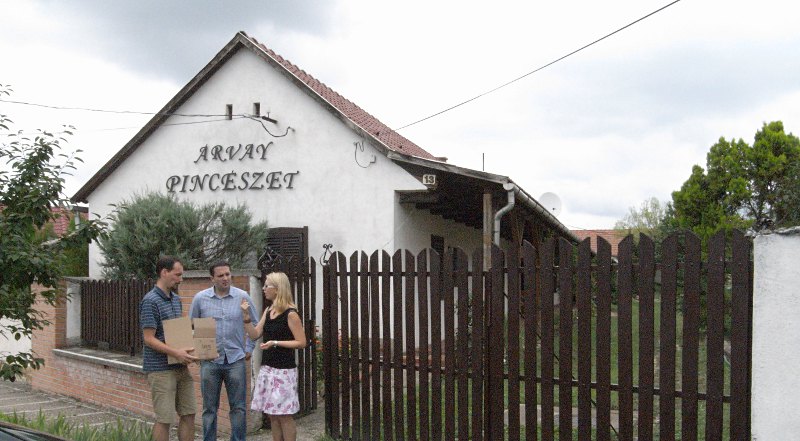
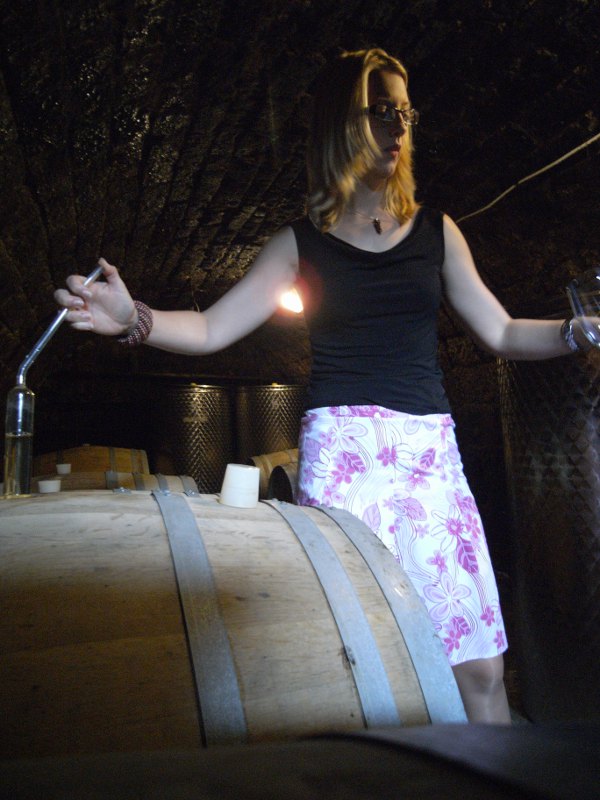
Our first stop. This producers was found on CellarTracker, with one particular bottle (their 2000 Aszu 6 Puttonyos) having quite a bit of recent activity and a community average of 93.6. We were greeted at the gate by the daughter of the owner/winemaker, Angelika Árvay. I could tell right away this would be a little different than your standard tasting experience… we entered a room of the building where a table was set with glasses, and we sat down across from each other as Angelika began talking about the winery and its history. Angelika studied in London and California, speaking very good English and she was able to describe the wines quite well in English. She asked if I wanted to start right into the bottles, or if I’d prefer to visit the cellar and try a barrel sample. I of course jumped at the chance to visit the cellar. It was just outside the main house, with an above ground entrance, with a small little door you had to hunch over to get through, followed by steep steps that went down at least 10 feet. Here was a relatively small cellar. We chatted a bit more as she pulled a sample of the 2010 dry Furmint from barrel.
-
2010 Árvay János Furmint Tokaji Száraz - Hungary, Hegyalja, Tokaji
Barrel sample, to be bottled in the next few months. This was living in a 300 liter, new Hungarian oak barrel. This had really impressive, interesting aromas that were a bit smokey, with dancing minerality on a crisp and light aromatic texture. The palate is crisp and very beautiful. Impressive acids, though it maintains a very impressive softness despite that acid. The finish is crisp and cutting, almost spicy. Very nice stuff. Probably my favorite (non single vineyard) dry Furmint on this trip; wish it was available for purchase at the time! (90 pts.)
After this, we headed back upstairs to sample the finished wines, and Angelika told us a bit more about the winery history and her impressive wine education and experience. Her father, Janos, was working at the state run winery in 1975. He’s now been running the winery with his family name for over 10 years. Current holdings are 22.5 hectars, producing 30 different wines and 20,000+ bottles.
A formal menu of wines was written up, noting, “Tasting sheet, 24th of July, 2011”. We had the following wines, which Angelika tasted along with me:
-
2010 Árvay János Sárga Muskotály Tokaji Angi - Hungary, Hegyalja, Tokaji
This is yellow Muscat, named after Angelika, the daughter of the regular winemaker. She likes muscat and her father does not really, so he allowed her to make this wine. It was bottled just one month ago. The dry Sárgamuskotály offers crisp and fruity aromas that are quite nice. The aromas are almost sweet, but not in a sugary way; it’s simply due to the fruit forward nature. The palate shows intense tropical fruits, which are very pretty and crisp. The tropical fruits are almost candied (but again, without any sugariness). The finish shows a bit of squash and crisp acid, though there’s something a little harsh that dulls some of the excitement that was on the palate. Definitely tastes a bit steely. An enjoyable effort that’s held back by a slightly awkward finish.
Sugar: 1.4 g/l Alcohol: 12.5% Acidity: 6.7 g/l Extract: 24.4 g (87 pts.) -
2009 Árvay János Furmint Tokaji Száraz - Hungary, Hegyalja, Tokaji
After really loving the barrel sample of the 2010 version of this wine I was really hoping I enjoyed this one as much so I could bring a few bottles back. This aged 20% in barrel and 80% in tank, and it was all whole cluster! Light aromas, though pleasing. Smells soft and smooth, with some strange chemicals. The palate shows some funk, crisp acid, and pumpkin tones. There’s other funky fruits present, but it’s all quite interesting. The finish is spicy, tart, showing pleasing acids. It really coats the mouth. Didn’t enjoy quite as much as the 2010 barrel sample, though looking at it now, I wonder if that’s due to the 2010 I tried obviously being 100% new oak, and this finished wine only having 20% of it done in oak.
Sugar: 1.3 g/l Alcohol: 13.50% Acidity: 6.0 g/l Extract: 18.8 g (89 pts.) -
2009 Árvay János Chardonnay Zempléni - Hungary, Hegyalja, Tokaji
I think this is the first Chardonnay I’ve had from Tokaji. This was done in 50% stainless and 50% a combination of used french and new 500 liter Hungarian oak barrels. I wasn’t getting much on the nose, only some mild funk. The palate feels creamy and light. Impressive, rich fruit throughout the mouth. Delicious and incredibly tasty, though not what I typically expect when I drink a Chardonnay. Very pure mouth feel with no excessive oak influence. The finish shows impressive acid, which is the dominant play. Reading back on this note, I really wish I had purchased a bottle to explore with friends back in Oregon.
Sugar: 0.5 g/l Alcohol: 13.5% Acidity: 5.0 g/l Extract: 20.3 g/l (90 pts.) -
2009 Árvay János Furmint Tokaji Padihegy - Hungary, Hegyalja, Tokaji
This is a single vineyard, from a “special mountain.” The aromas are very pure and crisp, pleasing and soft, showing pear and pleasing minerality. The palate is beautiful, full, and complex. Delicious floral display with rocks, minerals, and all in a soft package. Crisp acids on the finish, with only slight barrel notes. Light minerality. Very impressive material here. This would have been a true home run for me with slightly more acid. Still, very impressive stuff. Again, wish I bought a bottle.
Sugar: 1.2 g/l Alcohol: 13.5% Acidity: 5.7 g/l Extract: 19.9 g/l (91 pts.) -
2010 Árvay János Furmint Tokaji Késői Édes - Hungary, Hegyalja, Tokaji
Késői Édes means late harvest, sweet. Later in our day in Tokaji we ran into some other Late Harvest wines that were at sugar levels that would have qualified them for 6 Puttonyos had they followed the other regulations for that designation, but this one showed a moderate sugar level, a “mere” 75grams per liter. The aromas are pretty exuberant, and quite pretty. The palate is creamy and lush, with delicious fruit and great balance. The texture is a little chunky, but the flavors are of kiwi, sweet papaya, and some minerality balancing that fruit out. The finish is spicy, fruity, and showing nice acids again. Very well balanced going into the finish and only showing a slight bit of that sugar. It’s really felt more in the texture of the wine than the perceived sweetness. The 7.8grams/liter acid surely contribute heavily to this balance despite the pretty high sugar levels. Fine stuff, and quite a value.
Sugars: 75 g/l Alcohol: 12.5% Acidity: 7.8 g/l Extract: 38.0 g/l (90 pts.) -
1997 Árvay János Tokaji Aszú 6 Puttonyos - Hungary, Hegyalja, Tokaji
This was bottled in 2001, with a mere 600 bottles produced (2 barrels), and less than 80 are left at the winery (and one found its way into my suit case). 1997 was a very difficult vintage, but what was not said was whether or not the belief was that this added to or took away from the quality of this wine. Whatever the case, this was magnificent. The aromas here were massively complex, showing some green fruits, figs, dried apricots, and a smoke character. The palate is rich and complex. Thick caramel, deliciously ripe fruit, pipe smoke and richness, but throughout is maintained a ripping acidity. 200 grams per liter of sugar and the acid is still cutting right through it! The finish is an explosion of rich acids, spice, and minerality. It is sooo good. Acid and spice to die for. I am honestly generally not that huge of a fan of wines at this sweetness level, but this was impressive. According to CT, the second highest rated sweet white wine I’ve ever had. Sweet wines need acid, and this delivers in a big way. The best wine on the trip.
Sugar: 199 g/l Alcohol: 9.0% Acidity: 14.0 g/l Extract: 55.9 g/l (94 pts.)
At the end of the tasting I was torn as to what to do with the purchasing. This was our first stop of the day and all of the wines were fantastic. I wanted to buy 4 bottles. Were ALL of our stops going to be this good? If so I’d have 20 bottles at the end of it! I figured I could fit a maximum of 8 bottles in my suitcase, and that’d be really pushing it. I decided to err on the low side of things, and bought only two bottles. Of course looking back I wish I had still bought those 4. Out of all the stops we wound up making, I will definitely be back to Arvay on my next visit to Tokaji, hopefully to try some new wines. Not only were the wines fantastic, but Angelika was a gracious, knowledgeable hostess and really had an impressive amount of knowledge about the wines to share. These are the type of tasting experiences that I yearn for in my travels.
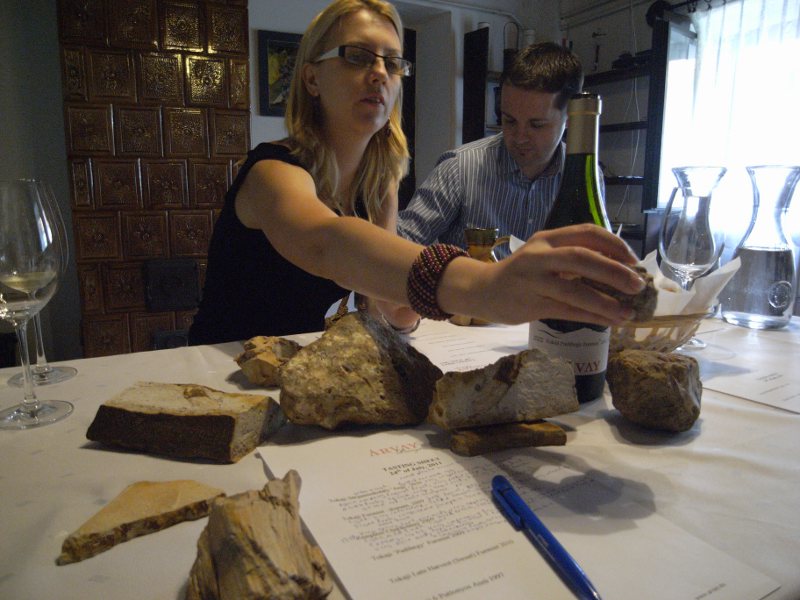
At the end of our visit, Angelika pulled out a box of volcanic rock from some of the vineyards. Included were all kinds of fossilized plants and animals, and even some petrofied wood. Really cool stuff. She even gave me a little 1 cubic inch “rock” that I brought back with me. And I just now realized that I guess that I checked the wrong box on the customs sheet when I re-entered the us asking me if I brought back any “soil samples!” Whoops.
Hudácskó Pincészet
We spent over an hour and a half at Árvay, so despite being 15 minutes early, we were over a half hour behind schedule by the time we arrived at the next stop, Hudácskó Pincészet. This was a place I did not find on CellarTracker… it was amongst the list of wineries that one of the large Hungarian wine Tour companies often visits. I can see why! This was another highly enjoyable, surprise experience. The whole tasting was conducted down in the wine cellar, where tables were set up. This is the first spot where I saw this intense black mould on all the cellar walls, and EVERYTHING in the cellar. I previously had never heard of its existance, but I guess this particular strand only exists in this microclimate, and it’s in every cellar in the area. Surely it has an impact to the taste character of the wines, as everything is aging with it around. Apparently it likes alcohol and dislikes light. I was told that without the presence of alcohol it would not exist here. It got pretty intense in this particular cellar…
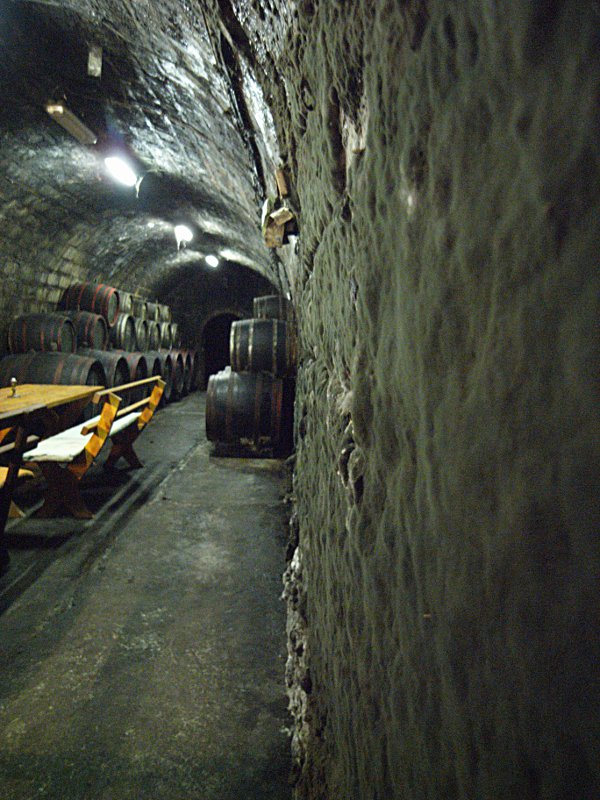
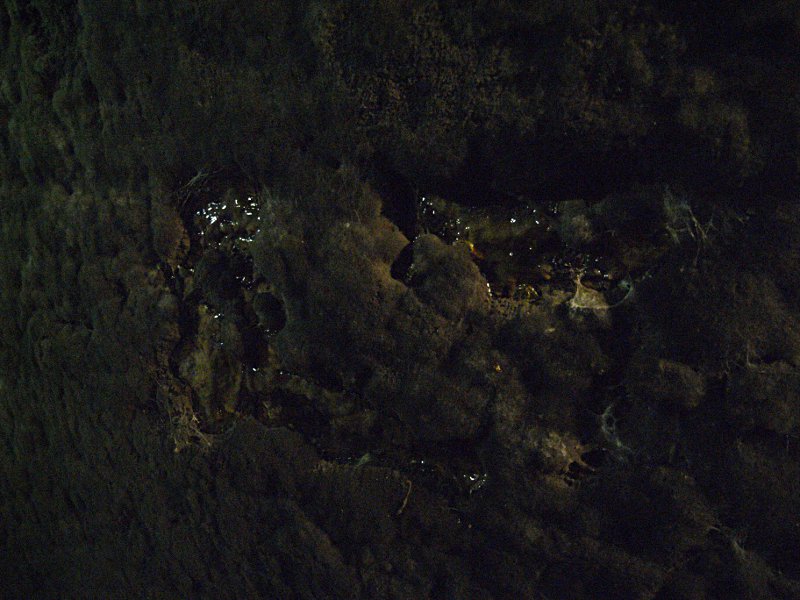
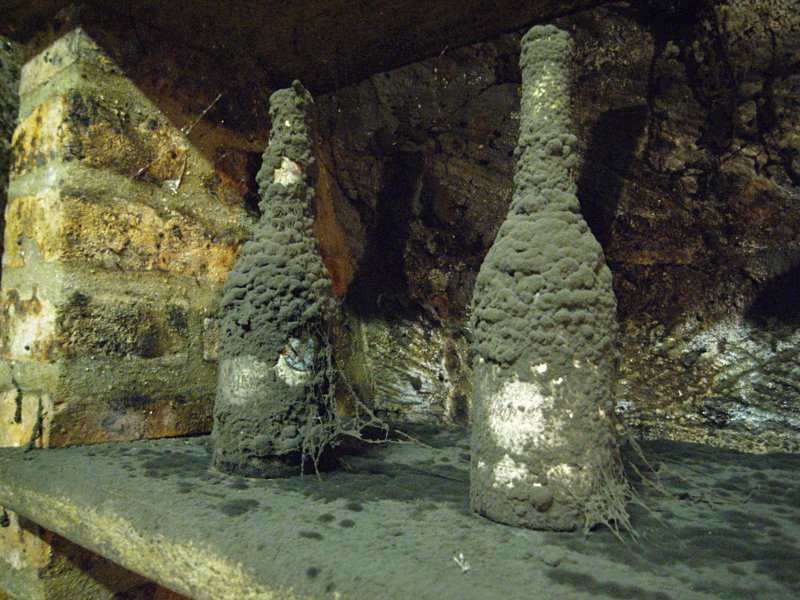
Really neat stuff. Everyone we seemed to talk to likes this organism living in their presence.
Here too our hostess spoke perfectly understandable English and was able to clearly communicate the details of all the wines I got to try. It was quite a rich diversity of stuff, and all very enjoyable and interesting to try. Hudácskó Pincészet currently has a production of roughly 40,000 bottles a year, and everything is done with natural, native yeasts and no inoculation. Considering the relatively large production, you can again see the CT base in the US, as these wines aren’t imported; before my entries, there was only one Hudácskó wine in the CellarTracker database.
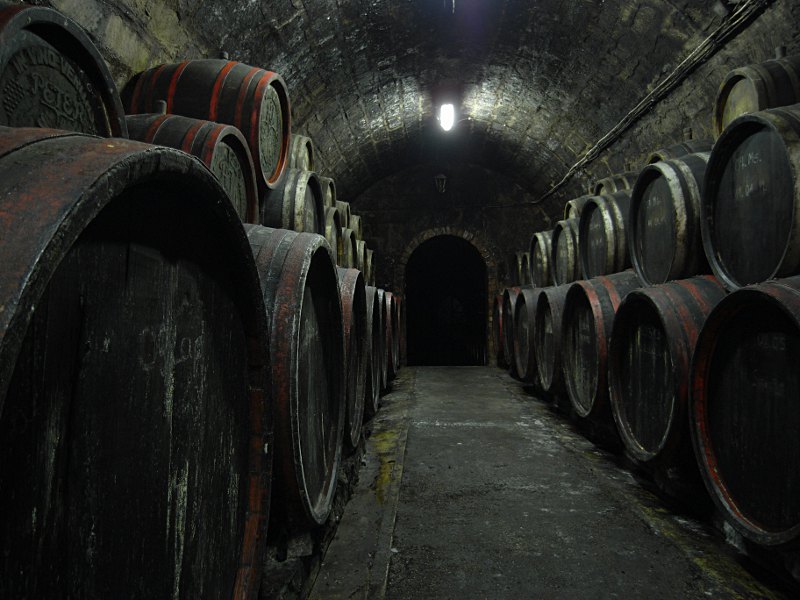
These barrels are 15-20 years old! They are of course cleaned out, but they use barrels for quite some time here.
-
2009 Hudacsko Pinceszet Hárslevelu Tokaji Száraz - Hungary, Hegyalja, Tokaji
Hárslevelu accounts for 30% of the plantings in Tokaji. This wine spent 8 months in 2 and 3 year old oak barrels. It offered aromas of stewed fruits, spicy raisins, and green peppers. A really interesting, odd combination of aromas. The palate has some interesting flavors. It’s like a tree, coupled with some spree candy. Chunky texture, and really wild flavor profile. The finish shows nice spice, and still some good acid here. Pleasant. (89 pts.) -
2010 Hangavari Furmint Tokaji - Hungary, Hegyalja, Tokaji
Hangavari is apparently a second label of Hudácskó Pincészet… only two of the bottles had the Hangavari name on them. This offered a very light nose, though crisp, if a bit thin. The palate was chunky in texture, and light at first. There was some lemon, but the really interesting and pleasing part is a tangerine notion. It builds as it warms up on my tongue. The finish offers good spice and acid, but it’s a bit odd textually on the finish. (86 pts.) -
2006 Hudacsko Pinceszet Tokaji Szamarodni Száraz - Hungary, Hegyalja, Tokaji
This sounded very interesting: a dry Szamarodni. Well, they call it dry, but there’s still 33 g/l of sugar. Not a lot considering the decent acid and alcohol. It did come across as fairly dry, however it didn’t come across all that well. This was made from partially botrytized grapes, 80% Furmint and 20% Hárslevelu, and aged in barrel for 3 years. The aromas were very harsh, expressing not much besides heavy alcohol fumes. The palate was a little more interesting, and pretty clean, though an odd thin yet chunky texture. Definitely some spice noticed from the alcohol. The finish is very spicy, and this time it comes across quite hot from the alcohol, which burns a bit. Really not much character at all besides the alcohol.
Sugar: 33.4 g/l Alcohol: 15.5% Acidity: 6.3 g/l (82 pts.) -
2010 Hangavari Furmint Tokaji feledes - Hungary, Hegyalja, Tokaji
This aged for 4 months in 2hL barrels, and finished with 28 grams residual sugar. The aromas were light, offering some spice and pine notes. Nice textually on the palate, as it was very soft and pleasing. The sweetness is barely noticeable, with flavors of tangerine and squash. Mild and tart finish with some sweetness, and good acidity coating my mouth. (87 pts.) -
2008 Hudacsko Pinceszet Hárslevelu Tokaji feledes - Hungary, Hegyalja, Tokaji
This fruit showed some botrytis, and was picked in November. Aging was done in 4hL barrels for 1 year, and it finished with 50 g/l RS. The aromas here were mildly tart and green. The palate was tart, sweeter than the previous few wines, offering some woody flavors coupled with a latex note. Chunky texture. Not too interesting. Mildly tart finish, and again noticeably sweet, offering some squash flavors. (85 pts.)
About midway through my tasting, our hostess saw Tamas and I peaking around some corners, and offered to turn the lights on in other areas of the cellar. She then gave us a brief tour of this incredibly interesting cellar. Having primarily tasted in new world areas, I had never seen anything quite like this before:
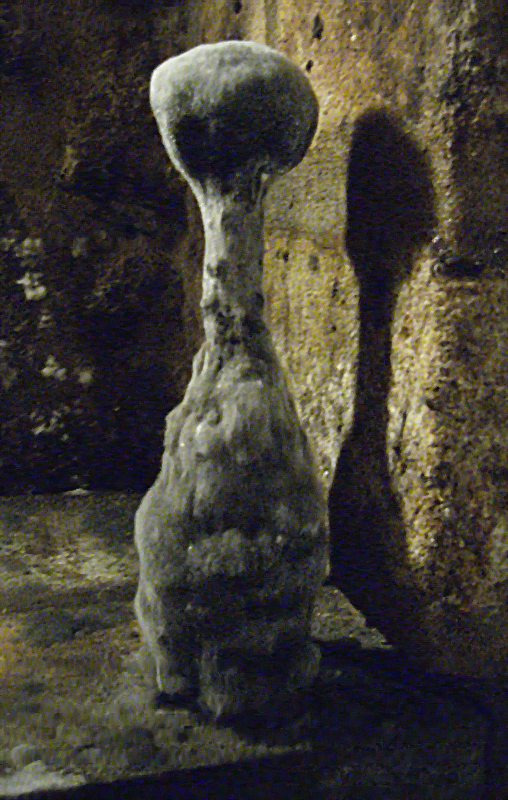
A totally gnarly bottle of Tokaji covered in this black mould. She used this bottle to show how the mould likes the alcohol… this cork probably had some extra permeability, so it grew like a mushroom here.
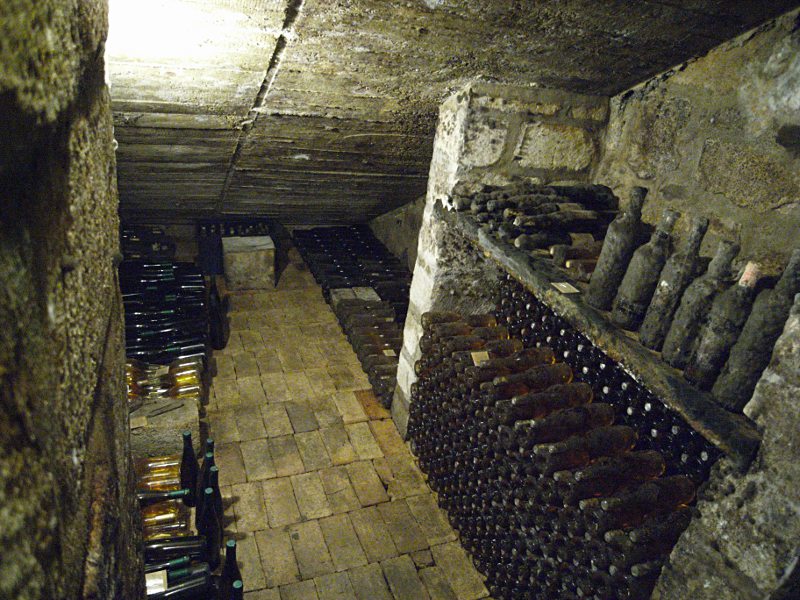
A random assortment of older, lower quantity remaining treasures in the cellar.
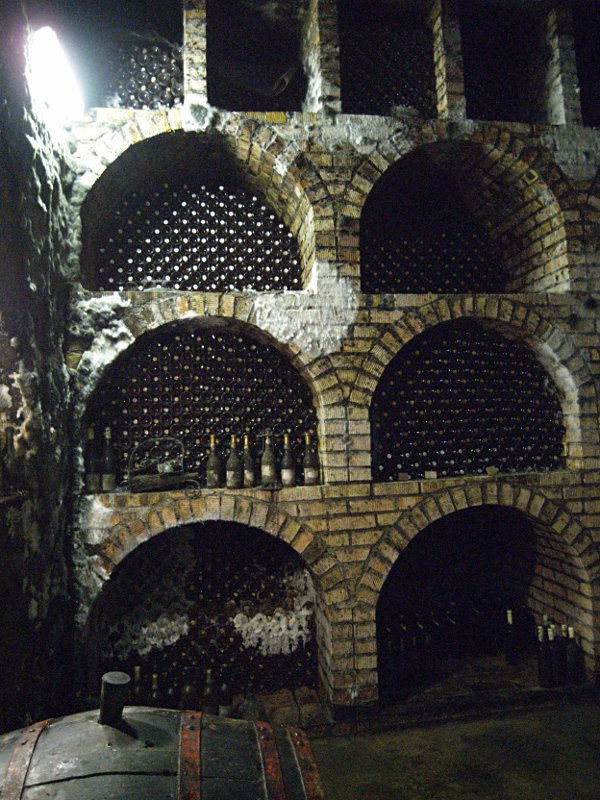
A larger assortment of more recently bottled stuff. Notice the lower left compartment is being invaded by some of that young mould (it starts white when it’s young).
As I walked around I began to think, “Wow, this place must be ancient!”, so I inquired on the cellar’s age. She said the section with the crazy looking bottle is “3 years old, but the cellar as a whole is about 16 years old.” WOW! Quite a shocker at its youth.
After our tour, I got into some of the more intensely sweet wines, which were showing quite well.
-
2007 Hudacsko Pinceszet Tokaji Forditas - Hungary, Hegyalja, Tokaji
This is made from the second pressing of the botrytized berries. It’s aged in barrel for 24 months. This offers mildly spicy aromas and very interesting berries, coupled with a bit of briar. Nice mild palate, with nice acid and sweetnes, but it’s overall quite mild. You can definitely taste the botrytis berries, and there’s the flavor of the center of a kiwi spread on a wheat cracker. Spice and acid kick up on the finish, with a mild bitterness at the end. Decent stuff.
Sugar: 102 g/l Alcohol: 13% (89 pts.) -
2006 Hudacsko Pinceszet Tokaji Szamorodni Édes - Hungary, Hegyalja, Tokaji
This is made from whole clusters that had botrytis effecting approximately 30-40% of the cluster. It aged for 2 years in barrel. Killer, more elegant aromas here, with a distinct interesting note of a spicy tangerine. Nice. Very pleasant palate, with nice complex fruit flavor, complete with solid acid throughout. The fruit develops and evolves on the long finish. Really pleasing. The best Szamorodni of my trip. A wine that if I could easily transport I’d have bought a case of, at a mere $14.40 a bottle (2700Huf).
Sugar: 113.4 g/l Alcohol: 12.3% Acidity: 7.9 g/l (91 pts.) -
2009 Hudacsko Pinceszet Tokaji Katalin Cuvée - Hungary, Hegyalja, Tokaji
Made up of 50% Muscat, 25% Furmint, and 25% Hárslevelu, aged for 12 months in barrel, this dials in at 130 g/l residual sugar. Here the sugar is immediately apparent on the nose, and that is the dominant aroma. The palate shows that sweetness, coupled with big delicious fruits, including apricots. It’s certainly sweet, but not overly rich. Thick and creamy on the finish, with some spice though not all that much acid. Still enjoyable. (90 pts.) -
2007 Hudacsko Pinceszet Furmint Tokaji Késöi Szüretelésü-Late Harvest - Hungary, Hegyalja, Tokaji
2007 was a very good year here. Late harvest, so this has partially botrytized clusters. Dials in at 10% alcohol and 155 grams RS. The aromas are light, with some spice. Tart palate entry, with some funkified apricots and apples. Really interesting feeling and taste, as this tastes like fermentation. There’s this crazy intense acidic apple streak running through the palate that’s enjoyable. Lots of acid and spice on the finish, tasting of a charcoal covered apple. Impressive acid with rich apple fruit is the play here. (91 pts.) -
2000 Hudacsko Pinceszet Tokaji Aszú 6 Puttonyos - Hungary, Hegyalja, Tokaji
This spent 42 months in barrel, and this year was 100% Furmint. 2000 was said to be an amazing year in Tokaji. The aromas here are fairly intense, and a little woody. The palate is full, rich and thick. Tastes like frosted mini wheats cereal coupled with pickled plums and a slightly fermenting meat flavor. Really meaty, in fact, and slightly smokey. The finish is rich and thick, coating the mouth. Quite a bit lower acid than the 1997 6 Puttonyos from Árvay, and the lacking is definitely noticed. Still, good stuff! 91+
Sugars: 203 g/l Alcohol: 10.5% Acidity: 9.2 g/l (91 pts.) -
2003 Hudacsko Pinceszet Tokaji Eszencia - Hungary, Hegyalja, Tokaji
Made from the free run juice of the Aszú berries, in 2003 this dialed in at a massive 500 grams / liter residual sugar, and a mere 5% alcohol! Technically not even a wine at that percentage. This aged in barrel for 5 years, and much of that time it spent in the incredibly slow fermentation process. Pours like wet honey. The aromas are very intense, rich, and sweet, but really not much in the way of interesting complexities. The palate is the most crazy viscous wine I’ve ever had on my tongue, as one would imagine. Definitely intense flavors, while nothing is particularly standing out, there’s mild spice and mild acids. The finish is impressive, like a spicy maple syrup. The back of my mouth burns from the acid, but it’s also so intensely sweet. Crazy rich. The acid being able to slice through 50% sugar by volume is very impressive, but the intensity of everything is over the top for me. I could understand how this would be pure love nectar to many people. A real pleasure to be offered a taste of this. As a frame of reference, this was 31,000 HUF ($160 USD). (91 pts.)
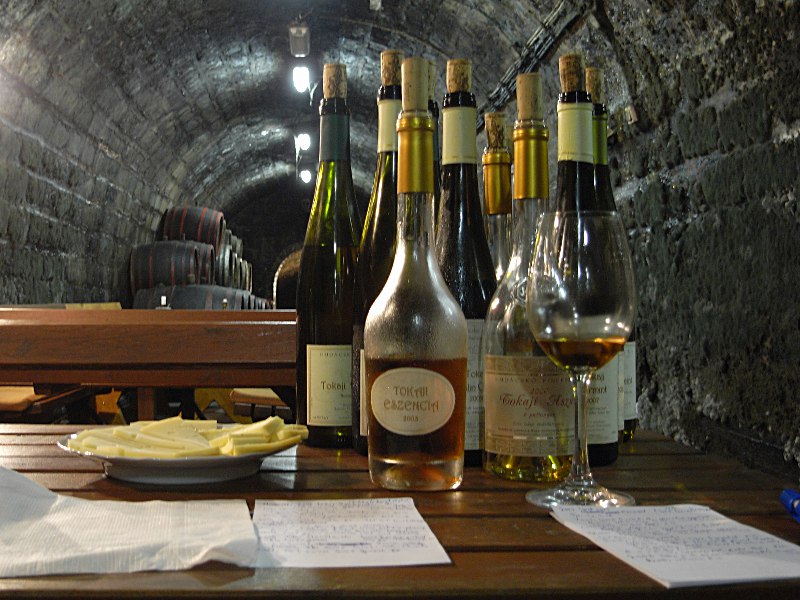
This was a wonderful experience. We spent over two hours in the cellars, and I got to try quite an assortment of wine. She said there were even more that she’d allow me to try if I wanted, but Tamas had actually setup appointments at all the places so we wanted to be sure to make it to other visits. We were now running nearly two hours behind schedule, but it had been completely worth it.
Chateau Dereszla
Chateau Dereszla was one of the producers that I found on CellarTracker. There are quite a few of their wines here. After arriving and talking to our hostess it was quite apparent as to why. More of that in a moment. Obviously running a little bit behind schedule, when we arrived Tamas spoke with the various people in Hungarian so I had no idea what was said, but it didn’t seem to be the most friendly greetings. Perhaps letting us know that we were late. What’s strange was that it appeared to be an open tasting room, so I’m not quite sure why it mattered. After being instructed to take a seat, about 5 minutes later we were greeted by someone who spoke English quite well. She first brought us outside and gave us a brief history of the producer, before walking us into the cellar from an outside entrance.
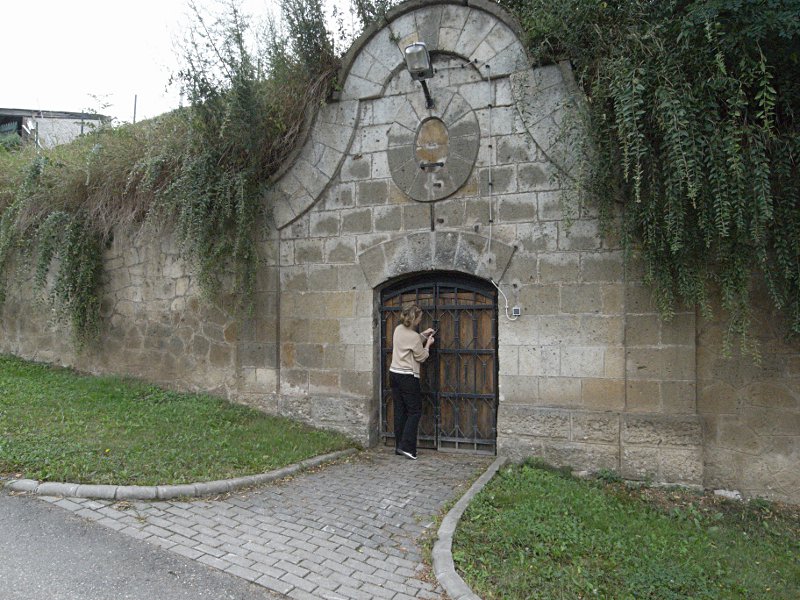
While this location has tons of history, Chateau Dereszla was founded in 2000 when the D’Aulan family from Champagne purchased the estate. The cellars are under a hill, so they are particularly deep. The new owners connected 5 different cellars in this hill to form one massive underground maze, in total over 1 kilometer long, and at their deepest, 70 meters! The cellars were in a state of disrepair when the French family purchased the estate, as it was used to store all kinds of other farm material. A complete overhaul and cleaning of the cellar system was done. The present day Chateau Dereszla was completed in 2007, though the building itself is over 300 years old and includes a Cannon Ball lodged in its wall from a famous battle in 1849. Chateau Dereszla’s holdings are 60 hectares at 16 locations. They produce 450,000 bottles a year, for which 70% is targeted for export. This is why the large (percentage wise) number of CT tracked bottles. Also, with that production, they are an order of magnitude larger than the second largest producer we visited this day, and TWO orders of magnitude larger than the smallest producer visited!
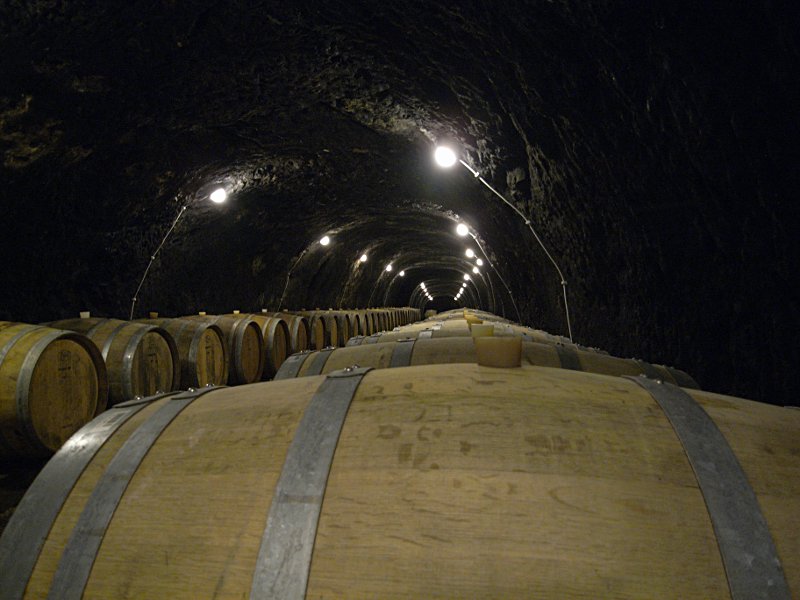
One of the longer straight stretches of cellar, the walls black with mould.
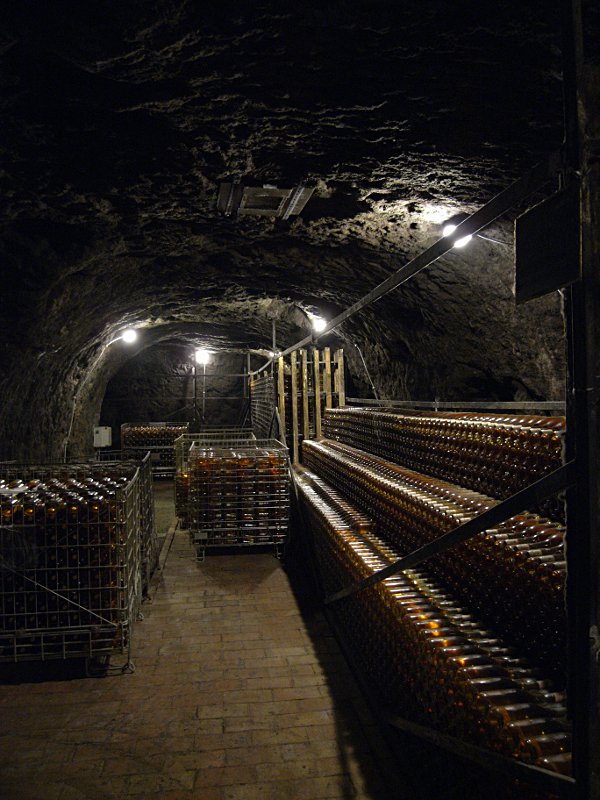
Freshly minted bottles of Aszú. As we walked deeper into the cellar you could tell it get noticeably colder, in some spots as good as 7-8 degrees C!
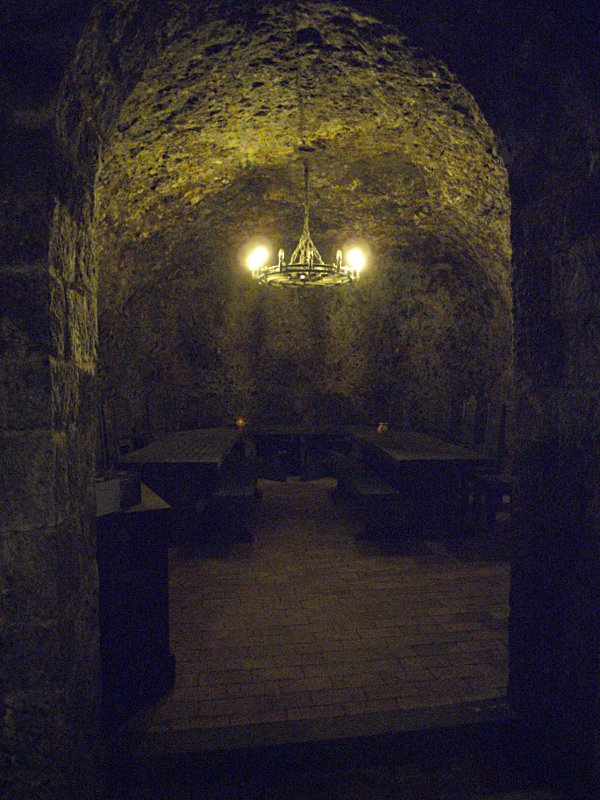
An awesome, ancient room 60 meters underground! They do tasting and events in here at times. They have documentation back to the 15th century, before Columbus, detailing this area of the cellar. They keep the lights on here all the time because the black mould doesn’t like light, so this is one of the only areas of the cellar where it can’t be found.
After an incredible walk in this ancient cellar, we went back up to the tasting room and I picked my own random assortment of wines to have. All tastes were billed individually by the pour. These were definitely across the board my least favorite wines of my Tokaji journey. I suppose with the larger production, and the international brand and distribution, perhaps they’re just can’t apply the attention to the detail that the smaller producers are doing? Just a guess. These definitely tasted more international, and like something you’d find in any mass wine store. The wines didn’t have much a sense of place (terroir) to me. Perhaps that’s just the intentional style they’re going for.
-
2010 Chateau Dereszla Tokaji Dry - Hungary, Hegyalja, Tokaji
Very nice green apple note on the nose, with the acid noticeable. There’s a slight medicinal note, like a band aid soaked in alcohol.The palate shows nice cutting acid, with soft voluptuous notes of spice and fruit. Quite soft. Spice into the finish, with cutting acid, but it’s also a little volatile and chunky feeling. Not a very good effort. (84 pts.) -
2004 Chateau Dereszla Hárslevelu Tokaji Zsadany - Hungary, Hegyalja, Tokaji
Our hostess was seemingly trying to talk me out of tasting this, but considering it had quite a bit of age on it for a dry Tokaji, I wanted to give it a whirl just to see how these age. This was fermented in new oak for 6 months. It offered aromas of spicy, chunky fruit. On the palate it was soft, creamy, and showing some volatile, funky acidity. The finish shows big acidic fermenting apples with a huge metallic and mineral streak. It’s spicy, but kind of out of whack, with this strange burnt pineapple flavor and the strange acids. While it may not have been that great of wine, I don’t think that had anything to due with its age… it seemed to be showing just fine structurally. (84 pts.) -
2009 Chateau Dereszla Furmint Lapis - Hungary, Hegyalja, Tokaji
This is 100% Furmint aged for 6 months in new medium toast oak barrels. It came in at 14.5% alcohol and 13 grams RS. The aromas express soft, candied fruit. Like Mike and Ikes candy. It doesn’t smell sweet, but definitely the essence of candy is there. The palate is pleasingly soft and lush, with quite mild acid. More acid comes in on the finish, but like everything here thus far, it comes across as slightly volatile. (85 pts.) -
2007 Chateau Dereszla Furmint Tokaji Késői Édes - Hungary, Hegyalja, Tokaji
This is made from partially botrytized clusters. It was finished in a combination of stainless and 12 months in 2 year old oak. It dials in at 121grams RS. The aromas are quite nice, showing some pleasing tropical fruits and spice. Nice pure palate, soft and elegant, though just a touch light on the acid. Very smooth though. The finish kicks up a bit on the acid front. It finishes quite nice, and develops some more interesting candied lychee flavors, coupled with spice. Quite coating textually. (90 pts.) -
2003 Chateau Dereszla Tokaji Szamarodni - Hungary, Hegyalja, Tokaji
This smells exactly like fermenting apple cider. Seriously. If you put this product in front of my face completely blind there’s no way I’d say it’s wine. The palate is creamy, but a little chunky for something this thick and sweet. More of the apple is on the finish, with some slightly cutting, but again what comes across as volatile acidity. (84 pts.) -
2005 Chateau Dereszla Tokaji Aszú 6 Puttonyos - Hungary, Hegyalja, Tokaji
Fermented in stainless steel and aged for 2 years in barrel, this 70% Furmint blend comes in at 180 grams residual sugar. I really don’t get much at all on the nose; it’s quite mild. The palate expresses some nice tart spice and decent acidity. Similar finish, with good tart acids, spice, and tart fruit. Not much complexity, but a good textural experience. (91 pts.) -
2000 Chateau Dereszla Furmint Tokaji Reserve - Hungary, Hegyalja, Tokaji
The sweetest wine of the bunch dials in at 230 g/l residual sugar. Interesting aromas of funky wet wood and mild, mushy fruit. The palate is softer, and thinner than the Aszu wine, with some spice, but it’s pretty light on complexity. Tart and approaching cloying on the finish. Definitely a bit too sweet and mouth coating for me here, without the requisite acid to balance it out. Still, it’s undeniably yummy. (89 pts.)
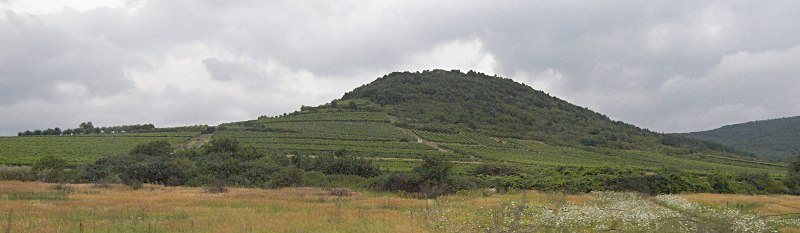
On the drive between Chateau Dereszla and Karádi - Berger.
Karádi - Berger
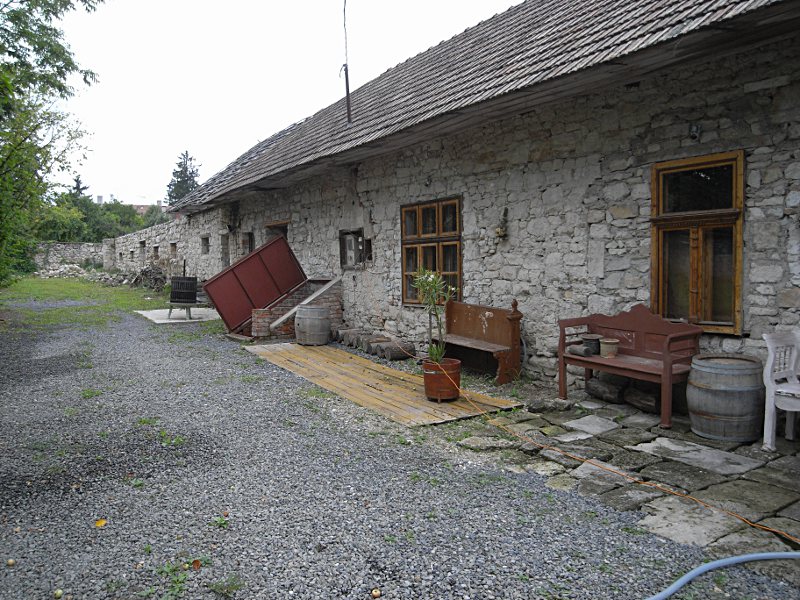
Our last stop of the day, we were now over two and a half hours later than we said we would be. The owner, Zolt Berger, was waiting for us when we arrived. This cellar was in the middle of the town of Erdőbénye. This was basically in a neighborhood of quite old homes, some of them looking to be in a state of disrepair. Zolt mentioned that he would think about 80-90% of the homes in the area have underground cellars! Once we got into the cellar it was clear that the cellar would go beneath other homes in the neighborhood. I inquired about this and I gather that Hungarian law states wherever the entrance of the cellar is, that’s who owns the space, even if the above ground properly line would bisect the cellar. This particular location was purchased by Karádi - Berger in 2005, and they’re in the middle of restoring it to its original condition. The winery moved here in 2009.
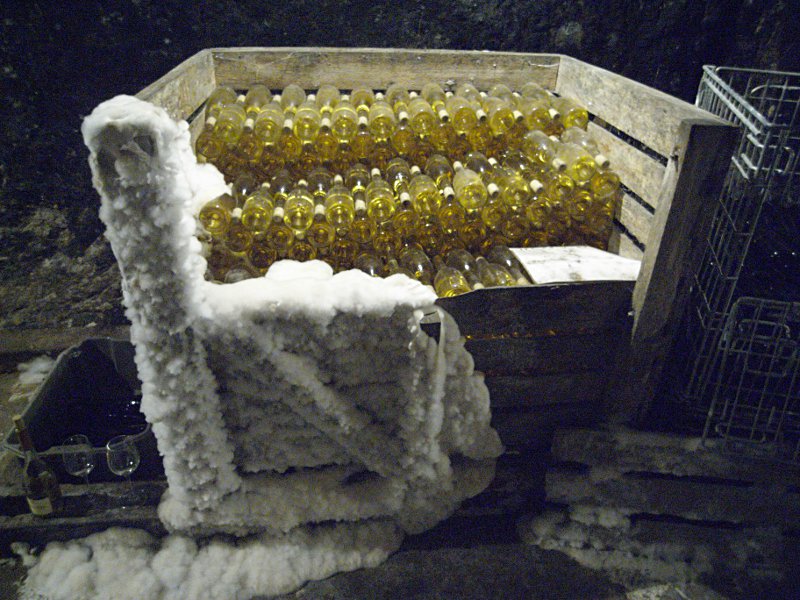
Having just been at the massive Chateau Dereszla, it was nice to arrive at a nice, small family estate. Karádi - Berger’s production is between 4000-8000 bottles a year. They’re farming almost 4 hectares at two different vineyard sites. Zolt also spoke English very well, and was able to answer all my questions. We conducted the whole tasting in the cellar. Zolt asked us if we wanted to go upstairs after the first taste, but I much like being in the cellars of Toakji, so we stayed… mostly in front of this box of sweet wine, with some of the young mould beginning to take it over:
-
2008 Karádi és Berger Furmint Tokaji Narancsi - Hungary, Hegyalja, Tokaji
This was 90% Furmint. Aromas are interesting, but I can’t quite pinpoint it. There’s some volatile acid on the palate, spice, and interesting funky fruit. It’s pretty intense, but strange. The finish is a little bit alcoholic (label says only 13.5%), some spice, and nice mild fruity pebbles cereal tones. Pretty nice and clean finish other than that first tinge of alcohol. (87 pts.) -
2007 Karádi és Berger Tokaji - Hungary, Hegyalja, Tokaji
Intense nose, showing some cucumbers and spices. Some noticeable alcohol on the palate, spice, and more heat. There’s moderate fruit as well, so it keeps some interest. The finish is moderate in length, with big spice and alcohol. Mild fruit. (85 pts.) -
2006 Karádi és Berger Furmint Tokaji Dry - Hungary, Hegyalja, Tokaji
Totally different in character from the 2007. The aromas here are of very interesting, intense fruit, spice, and pickles. It all adds up to a ton of interest and deliciousness. Soft palate, with spice, and earthy soil tones and very pleasing ash. Nice finish, with sushi flavors (like seaweed). Very different, but very good. A wild experience. Brought one of these back to the US. (89 pts.) -
2008 Karádi és Berger Tokaji Selectio - Hungary, Hegyalja, Tokaji
This was made from two selections: the first was done in an Aszú style (berry selection + barrel aging), the second being done like Szamorodni, with 50% botrytis effected clusters. It dialed in at 130 g/l residual sugar. The aromas are quite intense. Tart palate, though mild, without too intense sweetness. It’s pleasing, but there’s not much complexity of flavors other than the interesting palate feel. A bit too cloying on the finish, without enough acid or intensity to be balanced. (86 pts.) -
2004 Karádi és Berger Tokaji Aszú 3 Puttonyos - Hungary, Hegyalja, Tokaji
This comes in at 100 g/l residual sugar. The aromas are very spicy, and showing intense ash, with almost meaty aromas. Chunky palate texture, though nice, with moderate sweetness and good tartness. Finish really shows nice acidity. Decent stuff, if not too much complexity. (90 pts.)
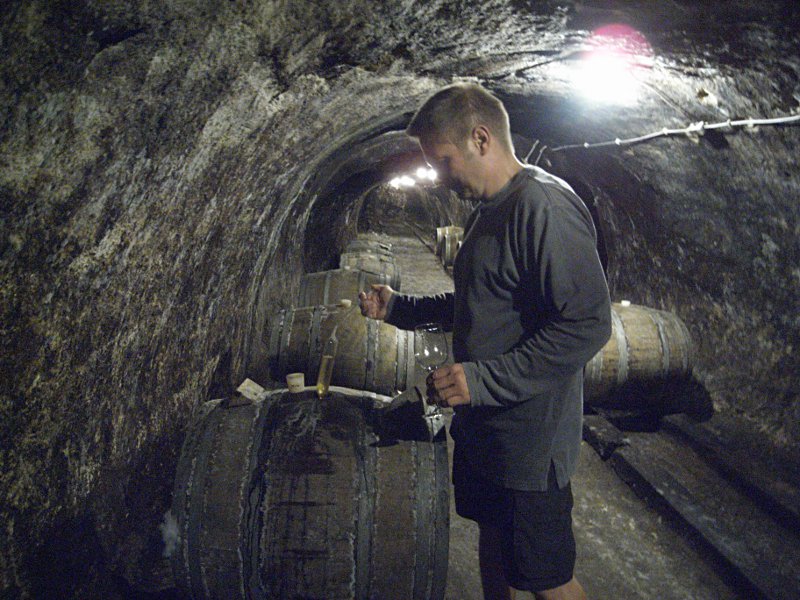
To finish things off, we did a barrel tasting of what will go into the 2009 Selectio and it was definitely my favorite wine of the bunch. At the price of the 2008 (3600Huf, or $18), I’d have bought a couple for sure had it been in bottle.
-
2009 Karádi és Berger Tokaji Selectio - Hungary, Hegyalja, Tokaji
This was pulled from barrel. The plan is for this barrel to go into a 2009 Selectio, which in previous years included an aszú barrel and a Szamorodni barrel. This is the aszú barrel… therefore, if he kept this in barrel for another 6 months, he could bottle it as an Aszú 6 Puttonyos, as thus far it’s been the identical process and comes in at 160 g/l residual sugar. Whether he waits or not, I think this deserves to be bottled alone, and I much preferred this to the 2008 Selectio. I didn’t take formal notes for this one, other than the fact that it was showing absolutely perfectly. It had incredible tension and balance, with a massive explosion of minerality and acid on the finish. One of the best wines of the trip. (92 pts.)
Originally we had talked about visiting a few wineries at Eger on the drive back, but that was when we thought we’d finish at 4pm. We cut one winery out of our visit and we still did not finish until past 6:30pm! This was definitely one of my most enjoyable days out tasting ever, anywhere. The wines as a whole were far better than expected (no wine scored in the 70s, which is certainly rare for me with this many consumed), and the experience was totally new and unique for me. This really reinvigorated me on Tokaji wines as a whole… when done well, the acid and minerality of the dry wines is totally refreshing and delicious, but when you even more of that perfect acid to the sweet wines, you get incredibly deep, balanced wines like no other region can do with this much residual sugar (okay, Germany is up there too). I can only hope that my return visit to Tokaji will be soon, and that I can convince Tamas, or another colleague, to visit there with me again!
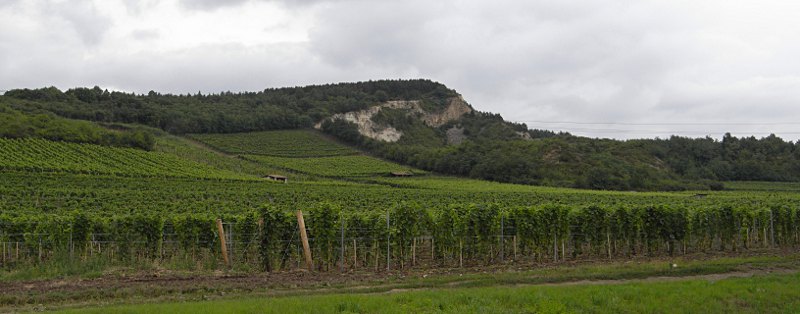
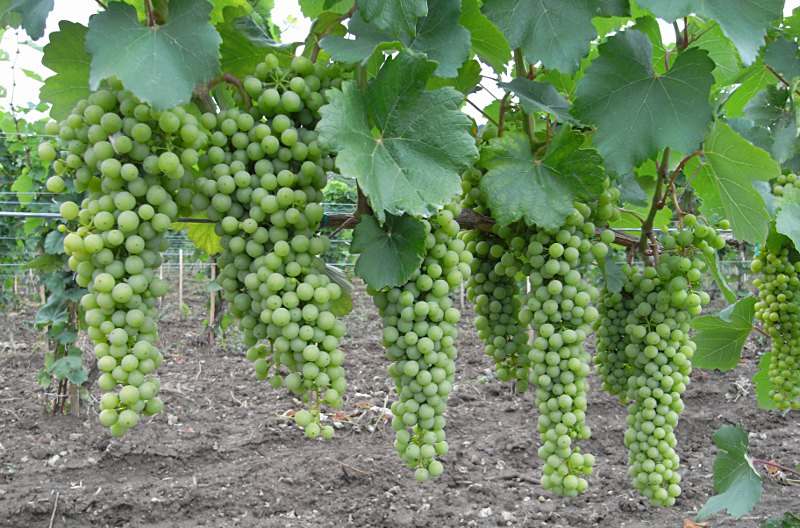
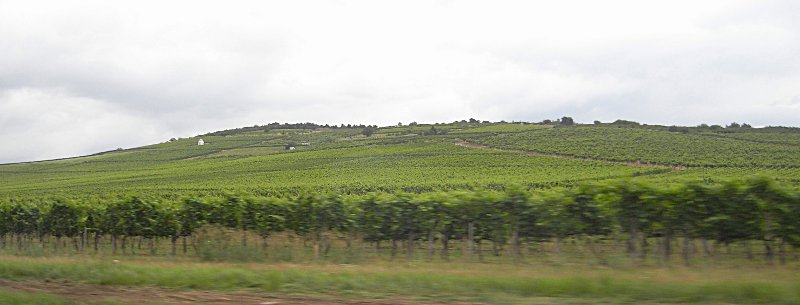
The only thing slightly lacking from the experience here was the lack of visits to actual vineyards, as it seems no cellars are actually at the vineyard sites. I’m sure there are some, but we just didn’t find them. So I’ll close with a few roadside stop for some gratuitous vineyard photos.
Posted from CellarTracker
![[stirthepothal.gif]](/uploads/db3686/original/2X/f/f40faec63ca1018898a40805efbf9f0066a3d205.gif "[stirthepothal.gif]")
