A friend of mine arranges some very random blind tastings every now and then; this thread is a report from one of them, arranged last August. This time we had a selection of reds aged 16 to 43 years old. As always, a few were quite easy to guess correctly, others were almost impossible. Even though some were past their prime or otherwise not showing their best, it was fun and enlightening all the same!
.
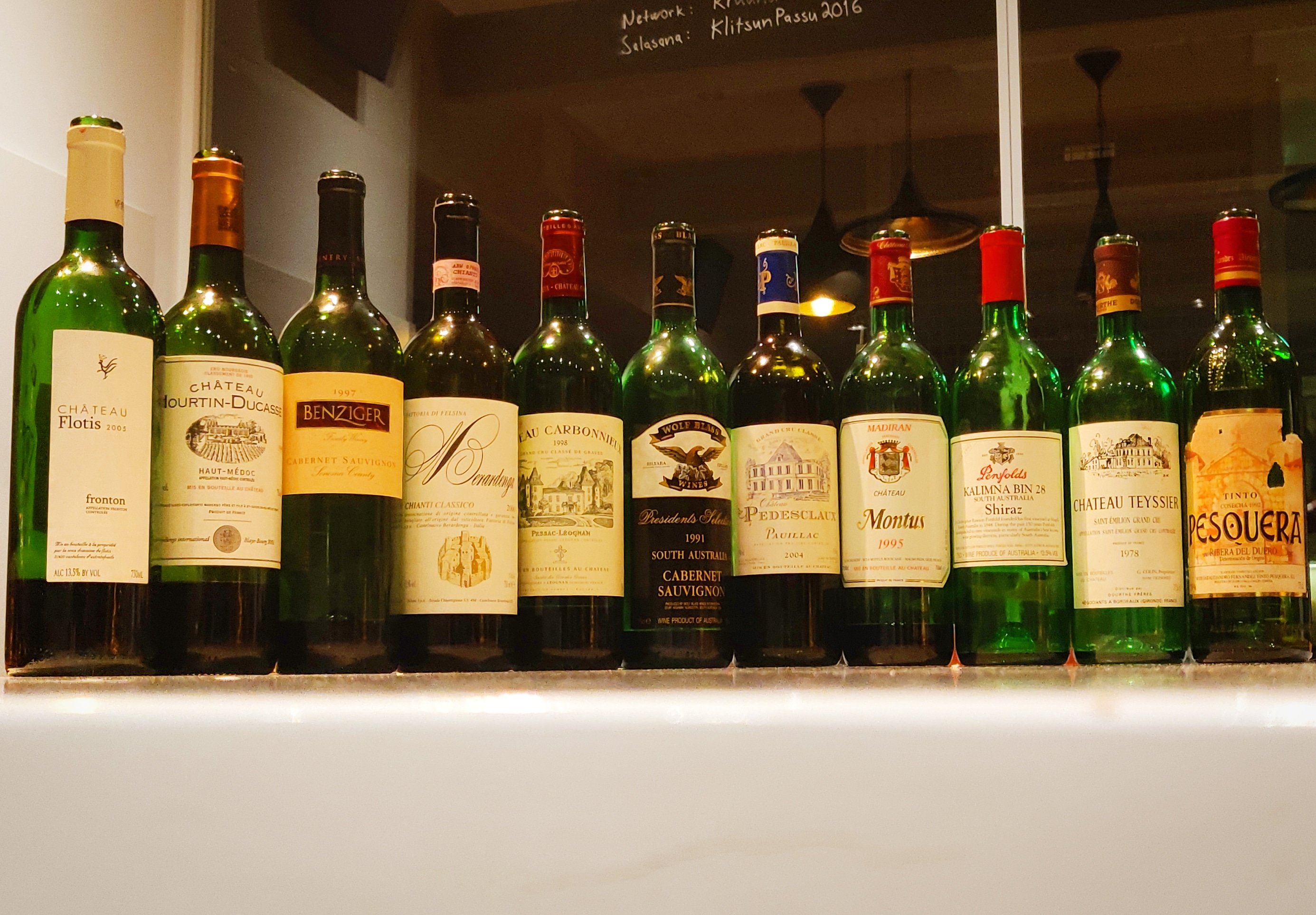
.
-
2005 Château Flotis Fronton - France, Southwest France, Fronton (4.8.2021)
A blend of Négrette (70%) and Syrah (30%). 13,5% alcohol. Double-decanted a few hours before tasting the wine. Tasted blind.
Very deep and almost completely opaque blackish-red color with a hint of evolved figgy hue. Sweet, dark-toned and somewhat rustic nose with with aromas of marmaladey cherry, some bretty barnyard notes, a little bit of evolved figgy character, light lifted notes of sweet, ethery VA and a hint of dark forest fruits. The wine is dry, silky and moderately evolved on the palate with a medium body and somewhat angular flavors of wizened blackberries, some rusty metallic notes, a little bit of peppery spice, light bitter notes of sour cherries, a somewhat unclean, earthy hint of brett and a touch of tobacco. Structurally the wine is balanced, albeit a bit on the soft side with its medium-to-moderate acidity and rather resolved tannins that grip quite friendly on the gums. Instead the bitterness seems to increase slightly towards the aftertaste. The finish is dry, subtly grippy and quite juicy with medium-long flavors of ripe dark forest fruits, some phenolic bitterness, light metallic notes of rusted iron, a little bit of plummy fruit, bretty hints of leather and stable floor and an acetic touch of VA.
My third encounter with the wine and quite different from my previous two experiences, although stylistically this wine seemed more similar to my first bottle (drunk in Nov 2019). The wine seems to benefit greatly from aeration, since it wasn’t as closed or skunky as the other two bottles that were pretty much popped and poured. However, this wine seemed slightly more evolved than the previous two bottles and also showed more funky notes of brett. Although every bottle I’ve had has been slightly funky with bretty notes, this bottle wasn’t only farmyardy, but also showed some less pleasant characteristics like metallic taste and at times quite pronounced phenolic bitterness. Without these characteristics this would’ve been probably the best showing of this wine yet, but I must admit that especially the metallic taste took its toll on the score. This is a nice, rustic wine that calls for a few hours of breathing just to blow the reduction off, but is also somewhat unreliable, based on three quite different bottles. Nevertheless, I’d still say the wine is good value at only 10€. (87 pts.)
-
1999 Château Hourtin-Ducasse - France, Bordeaux, Médoc, Haut-Médoc (4.8.2021)
Aged for 16 months in oak barrels, approximately half of which were new. 12,5% alcohol. Tasted blind.
Luminous, moderately translucent dark ruby red color. Aromas of dusty sun-baked earth, dark cherries, some leather, a little bit of ripe dark plums, light woody notes of oak, a hint of dried herbs and a touch of sweet strawberry. The wine is dry, medium-bodied and quite velvety on the palate with crunchy flavors of cranberries and redcurrants, some woody notes of oak spice, a little bit of stony minerality, light earthy notes, a hint of dark plummy fruit and a touch of something vaguely metallic in the background. The acidity feels high, whereas the medium tannins quite resolved at first, but they slowly pile up on the gums, turning the wine a bit more grippy than it initially came across as. The finish is dry, somewhat grippy and slightly bitter with medium-long flavors of sour cherries, some crunchy notes of tart cranberries, a little bit of ripe redcurrant, light woody notes of oak, a hint of dried aromatic herbs and a sweeter touch of dark plums.
A nice, balanced and pleasant Haut-Médoc. Overall the wine feels a bit medium-in-everything, not making anything stick out, but at the same time making the wine a bit anonymous. Overall the wine has a somewhat Italian feel with its quite high acidity, dusty earthy tones and cherry notes, so I guessed Chianti Classico at approx 20 years of age. One of the attendees guessed Right-Bank Bordeaux, so I guess there’s something Bordelais here. Most likely the wine will keep for many years more as it shows relatively little maturity, but I don’t feel the wine would improve much from here, so no further aging is necessary. A good - but not great - Cru Bourgeois. Priced according to its quality at 18€. (89 pts.)
-
1997 Benziger Family Winery Cabernet Sauvignon - USA, California, Sonoma County (4.8.2021)
A blend of Cabernet Sauvignon, Cabernet Franc, Merlot, Petit Verdot and Malbec. Aged for 17 months in oak. Tasted blind.
Deep and dark yet moderately translucent cherry red color, surprisingly youthful for the age. The nose feels sweetish, rather polished and moderately oaky with rather Ribera del Duero aromas of blackcurrant-driven sunny dark fruits, chocolatey oak, some minty herbal tones, a little bit of wizened dark plummy fruit, light notes of savory wood spice and a hint of coffee. The wine is ripe, sunny and quite concentrated on the palate with a full body and intense flavors of ripe blackcurrants, some chocolatey mocha oak, a little bit of sweet, slightly wizened fig, light woody notes of toasty oak spice, a hint of sweet minty character and a touch of alcohol warmth. The tannins feel quite ample, but also fully resolved, contributing to the very textural mouthfeel without making the wine feel grippy one little bit. Medium acidity. The finish is rich, juicy and ever-so-slightly grippy with moderately long flavors of toasty oak spice, ripe blackcurrant, some chocolatey notes of mocha oak, a little bit of pruney dark fruit, a sweet hint of mint jelly and a touch of sun-baked earth.
A remarkably youthful for a Sonoma Cab clocking at +20 years of age - my guess was a Ribera del Duero from the early 2010’s, perhaps 2012 - meaning that I thought the wine was full 15 years younger than it really was! However, the style was markedly modern, sunny and rather heavily oaked, so not really up my alley. There’s great sense of purity and concentration to the fruit here, but the overall feel is just a bit too overdone and - thanks to the relatively modest acidity and very soft, textural tannins - lacking a bit in structure as well. The wine isn’t out of balance in any way, but this feels more like a super-hedonistic Cab that drinks well on its own but feels clumsy if paired with food. An interesting experience - and contrary to the other notes in CT, not past its peak, far from it - but I prefer something less sweet and higher in acidity. (88 pts.)
-
2000 Fattoria di Fèlsina Berardenga Chianti Classico - Italy, Tuscany, Chianti, Chianti Classico DOCG (4.8.2021)
100% Sangiovese from vineyards located in Castelnuovo Berardenga. Macerated with the skins for approximately 2 weeks, aged for 12 months in large oak botti and tonneaux with a small portion aged in used barriques. 13,5% alcohol. Tasted blind.
Deep, quite dark and relatively little translucent garnet color with a slightly evolved pomegranate hue. Classically styled and quite attractive nose with aromas of wizened red plums, some tobacco, a little bit of old leather, light meaty notes, a sweet hint of ripe black cherries and a woody touch of savory old oak spice. The wine feels dry, medium-bodied and firm yet quite silky on the palate with savory flavors of ripe red cherries along with some sour cherry bitterness, a little bit of meaty umami, light sweet notes of wizened dark fruits, a woody hint of old oak and a touch of tobacco. The bright, moderately acidity and still moderately grippy medium-plus tannins lend good sense of structure to the wine. The finish is long, crunchy and moderately grippy with dry flavors of sour cherries, old leather, some tobacco, a little bit of ferrous blood, light sweet notes of wizened red plums, a hint of tart cranberry and a touch of pouch tobacco. The sour cherry bitterness gains a small boost towards the end of the aftertaste.
A very sophisticated, balanced and classically styled Chianti Classico - although the guesses ranged from my late 2000’s/early 2010’s Etna Rosso (although I first wondered whether the wine was Tuscan) to young Saint Émilion. However, the general consensus seemed to be that the wine was Italian, so I’d say it spoke of the place quite well. Great stuff and quite gastronomic in its structure-driven yet well-proportioned expression. Everybody was surprised of the wine’s age; even though it showed a bit of evolution, in no way it seemed +20 years old. Lovely stuff, expect the score to rise even higher as the wine ages and gains some tertiary complexity. (93 pts.)
-
1998 Château Carbonnieux - France, Bordeaux, Graves, Pessac-Léognan (4.8.2021)
The indicative blend is about 2/3 Cabernet Sauvignon, 1/3 Merlot and a little bit of Cabernet Franc, in some vintages a dash of Petit Verdot and Carmenère as well. Aged for 18 months in oak barriques (1/3 new). 12,5% alcohol. Tasted blind.
Very deep, dark and quite opaque blackish red with a slightly brownish hue and a moderately translucent rim. The nose feels dull, pungent and quite oxidative with aromas of soy sauce, some meat stew, a little bit of borsch, light leafy notes and a hint of damp earth. The wine is dry, silky and very tertiary on the palate with a medium-to-moderately full body and dull flavors of soy sauce, beef jerky and some old leather. No fruit to speak of. High in acidity with very soft, fully resolved tannins. The finish is short, dull and oxidative with saline flavors of soy sauce, some beef jerky, a little bit of earth and light autumnal notes of dried leaves.
By complete coincidence I had this bottle - in a blind tasting, no less - only three days after I had the same wine at home with food. However, the wines couldn’t have been any further from each other! My bottle was simple exceptionally youthful with still remarkably vibrant flavors of crème de cassis and blueberries, while this wine was completely shot and in pieces. Talk about bottle variation! NR (flawed)
-
1991 Wolf Blass Cabernet Sauvignon President’s Selection - Australia, South Australia (4.8.2021)
A multiregional Cabernet Sauvignon from McLaren Vale, Barossa and Clare Valley. Aged for 18 months in new oak barrels. 13,5% alcohol. Tasted blind.
Moderately translucent, luminous maroon color with a pale brick-orange rim. Very rich, noticeably sweet and oaky nose with powerful, quite Bourbon-like aromas of vanilla and caramel, some minty notes, a little bit of ripe blackcurrant, light notes of cigar, a hint of butterscotch and an evolved touch of wizened dark fruits. The wine is broad, ripe and full-bodied on the palate with rich flavors of caramel, tart lingonberries, some vanilla, a little bit of pruney dark fruit, light minty notes, a savory hint of meaty umami and a touch of raisin. The structure relies mostly on the very high, almost piercing acidity - which feels quite out of place for a wine this ripe and hefty - whereas the tannins are mellow and silky smooth. The finish is long, powerful and moderately sweet-toned with oak-driven flavors of Bourbon caramel and vanilla, some raisiny dark fruits, a little bit of tart lingonberry, light minty herbal tones, a hint of meaty umami and a touch of dried dates.
My first reaction to this wine was “I can’t believe it’s not Bourbon!” - I mean, this really smells and tastes like Bourbon with its very pronounced new American oak characteristics that haven’t gone anywhere in 30 years. I find it commendable that Wolf Blass has made a modernist blockbuster wine that hasn’t only stayed alive for 30 years, but was actually surprisingly youthful for its age (people were guessing Californian Cab and Australian Shiraz from the early 2000’s), but I find it also a bit disappointing that even three decades hasn’t been anywhere near enough to integrate all that oak with the fruit. Most likely this wine has been oaked to oblivion in the first place and no amount of aging will make that oak integrate and disappear - this wine will taste like Bourbon until the end of its days. Furthermore, the high acidity really struck out here - the fruit feels very ripe and sunny, but the acidity juts out like a sore thumb. I love high-acid wines and the acidity here lends good sense of structure and freshness to the mouthfeel, but unfortunately it doesn’t fit at all in the overall style of the wine, making me feel that there must’ve been some acid “corrections” done here has well. All in all, this is a huge, spoofy wine that is remarkably young for its age, and in all likelihood will continue to drink well for years, if not decades. A good purchase at approx. 15€. (85 pts.)
-
2004 Château Pedesclaux - France, Bordeaux, Médoc, Pauillac (4.8.2021)
A blend of Cabernet Sauvignon (50%), Merlot (45%) and Cabernet Franc (5%). 13% alcohol. Tasted blind.
Somewhat evolved, very dark and almost fully opaque black cherry color with a faint maroon hue and a brick-orange rim. Ripe yet not sweet nose of blackcurrants, some savory woody notes of oak spice and pencil shavings, a little bit of fresh red cherry, light evolved notes of damp leather and sous-bois, a hint of something inky and a sweeter touch of toasty oak. The wine is savory, attractively resolved and velvety smooth on the palate with a medium body and quite dry flavors of ripe dark forest fruits, some tart cranberries, light woody notes of pencil shavings, a little bit of developed leathery character, a sweeter hint of dried dark fruits and a touch of licorice. The wine still retains good sense of structure, thanks to the rather high acidity and still rather ample and grippy - yet not aggressive - tannins. The finish is dry, subtly bitter and moderately grippy with quite long, savory flavors of old leather, some wizened blackcurrants, a little bit of tobacco, light woody notes of oak spice and pencil shavings, a hint of licorice and a touch of gravelly minerality.
A nice, tasty and quite classically styled Pauillac showing good sense of structure. There are some woody notes here and there that suggest that the wine might’ve been more polished and oaky in its youth, but the wine is definitely developing in the right direction and came across as quite harmonious now. There is still quite a bit of fruit and tannic structure left here, so most likely the wine will continue to improve for a good number of years more. Not the most impressive or memorable Cru Classé out there, but a nice and thoroughly enjoyable drop all the same. Drink or keep. (91 pts.)
-
1995 Château Montus Madiran - France, Southwest France, Madiran (4.8.2021)
12,5% alcohol.
Very deep and dark, slightly translucent blackish-red color with an evolved maroon hue. Complex, savory and moderately evolved nose with layered aromas of wizened blackcurrants, old wood, some pruney notes, a little bit of oxidative beef jerky and bouillon, light sanguine notes of iron and gamey meat, juicy hints of ripe figs and a touch of tobacco. The wine is dry, dense and chewy on the palate with a medium body and quite bold flavors of ripe chokeberries and crunchy crowberries, some gamey meat, light evolved notes of wizened blackcurrants and prunes, a little bit of leather, a lifted hint of balsamico and a touch of savory old wood. The overall feel is still remarkably muscular, thanks to the high acidity and ample tannins that have resolved only to some degree, still retaining quite a bit of grip. The finish is long, powerful and savory with moderately pronounced tannic grip and complex flavors of crunchy crowberries, some dried chokeberries that taper into sweeter chokeberry jam notes, a little bit of leather, light ferrous notes of blood and gamey meat, a hint of balsamic VA and an oxidative touch of soy sauce.
A beautiful, complex and wonderfully evolved Madiran that has glided into its drinking window. Structurally the wine is still impressively young, drinking more like a young Bordeaux than a 25-yo red, but the fruit department is getting fully mature by now: there are some evolved dried-fruit notes and the first signs of oxidation have added subtle nuances of beef jerky, soy sauce and bouillon, yet the wine retains a good deal of fresh and crunchy fruit notes to keep its youthful edge. Most likely the wine doesn’t require any further cellaring, as it is drinking mighty well right now, but it will easily keep for many, many years more. A very complete wine and a bargain at 24€. (94 pts.)
-
1992 Penfolds Shiraz Bin 28 Kalimna - Australia, South Australia (4.8.2021)
13,5% alcohol. Tasted blind.
Somewhat evolved, slightly translucent pomegranate color with a maroon hue. The nose feels quite expressive and rather sweetish but also surprisingly fresh with quite concentrated aromas of blackcurrants and ripe blackberries, some green notes of eucalyptus, light smoky notes of toasty wood, light inky notes, a hint of savory wood spice and an evolved touch of dried fruits. The overall feel is bold but also enjoyably developed. The wine feels ripe, slightly sweet-toned and textural on the palate with a full body and concentrated flavors of ripe blackberries and wizened blackcurrants, some sweet oak spice, a little bit of licorice, light cocoa notes of mocha oak, a hint of peppery spice and a touch of salty liquorice. The structure relies mostly on the surprisingly high acidity, whereas the ample but fully resolved tannins contribute mainly to the rich, chewy texture, not to the structure. The long finish is ripe yet quite dry with complex flavors of juicy blackberries, some sweet notes of toasted oak, a little bit of licorice, light chocolatey notes of mocha oak, a savory hint of meaty umami and a touch of peppery spice. The tannins lend a very gentle grippy feel to the gums.
A wonderfully harmonious, textural and still relatively youthful Aussie Shiraz. My initial thought was that this must be a new world Cabernet Sauvignon, based on the combination of ripe blackcurrant-driven fruit and subtle green notes. Once I noticed the green notes were eucalyptus and not particularly minty, I went for Australia. Based on the somewhat evolved yet still relatively youthful overall feel I guessed late 1990’s to early 2000’s. Well, at least I got the country right. Overall the wine is in a wonderful spot right not, but I can imagine it will continue to improve for some years more and keep for much longer. Although the wine is quite ripe and the oak use feels quite liberal, the oak has integrated quite well with the fruit and the overall impression is not too oaky or gloopy, but instead quite nuanced and sophisticated. A lovely example of mature Shiraz. (93 pts.)
-
1978 Château Teyssier St. Émilion Grand Cru - France, Bordeaux, Libournais, St. Émilion Grand Cru (4.8.2021)
This was a St. Émilion Grand Cru Teyssier from the time before Jonathan Maltus purchased the property. Tasted blind.
Deep, moderately translucent syrupy-brown color with a brick-red hue. Aged, pungent and slightly oxidative nose with tertiary aromas of beef jerky, some smoke, a little bit of fresh blackcurrant, light sweeter notes of dried dark berries, a hint of damp leaves and a touch of soy sauce. The wine is medium-bodied, evolved and very tertiary on the palate with a silky mouthfeel and very evolved flavors of dried forest fruits, some metallic notes of rusted iron, a little bit of beef jerky, light tart notes of lingonberries, a hint of sweet raisiny fruit and a touch of pouch tobacco. High in acidity with fully resolved and borderline nonexistent tannins. The finish is dry, long and slightly salty with tertiary flavors of savory beef jerky, some metallic notes of iron, a little bit of crunchy red currants, light autumnal notes of damp leaves, a hint of ferrous blood and a touch of tobacco.
Already past its peak. However, the wine is not fully oxidized as it is still fully drinkable and does offer some enjoyable old-wine complexity. Nevertheless, the wine was so tertiary already that it was practically impossible to correctly guess where it came from or how old it was. Seeing how the wine was too old for its own good, I’m leaving it unrated.
-
1992 Bodegas Alejandro Fernández Ribera del Duero Tinto Pesquera - Spain, Castilla y León, Ribera del Duero (4.8.2021)
13% alcohol. Tasted blind.
Deep, evolved and quite translucent brick-red color with a thin, pale brick-orange rim. Dry, evolved and somewhat leafy nose with tertiary aromas of meat stew, some Marsala tones, a little bit of raisiny fruit, light smoky tones, a hint of beef jerky and a touch of damp earth. No fruit to speak of. The wine is dry, dull and somewhat tough on the palate with a medium body and a taste that feels subtly sweet-toned yet still rather lean with quite thin flavors of oxidative beef jerky, some vegetal leafy notes, a little bit of wizened sour cherry, light gamey tones, a hint of dried fruits and a touch of earth. Medium-to-moderately high in acidity with quite ample and still somewhat grippy tannins. The finish is medium-long, quite grippy and somewhat leafy with flavors of sour cherries, some wizened forest fruits, a little bit of earth, light autumnal notes of damp leaves, an almost unripe hint of sappy red fruit and a touch of pouch tobacco.
Even though I’ve tasted this very same vintage twice before, I still didn’t manage to guess this wine correctly. I guess it’s because the wine is so atypical for a Ribera del Duero that you just don’t think of the region automatically. The poor, cool and rainy vintage really shows here: the fruit feels thin and dilute and the wine is surprisingly vegetal and leafy for a Tempranillo. Although the wine really isn’t past its peak yet, it doesn’t offer much pleasure anymore - although I think this has never been a particularly charming vintage. Barely worth the price at 23€. (82 pts.)
Posted from CellarTracker


![[snort.gif]](/uploads/db3686/original/2X/b/bdc3944606213c4dca6c1169cf0a166c8bc4f8c9.gif "snort.gif")