This was a blind tasting a year ago to which I was invited. The description was “just blind wines”, so there was no theme whatsoever. The wines could’ve been anything, from anywhere. And sure enough, some were. However, the highs here were really high!
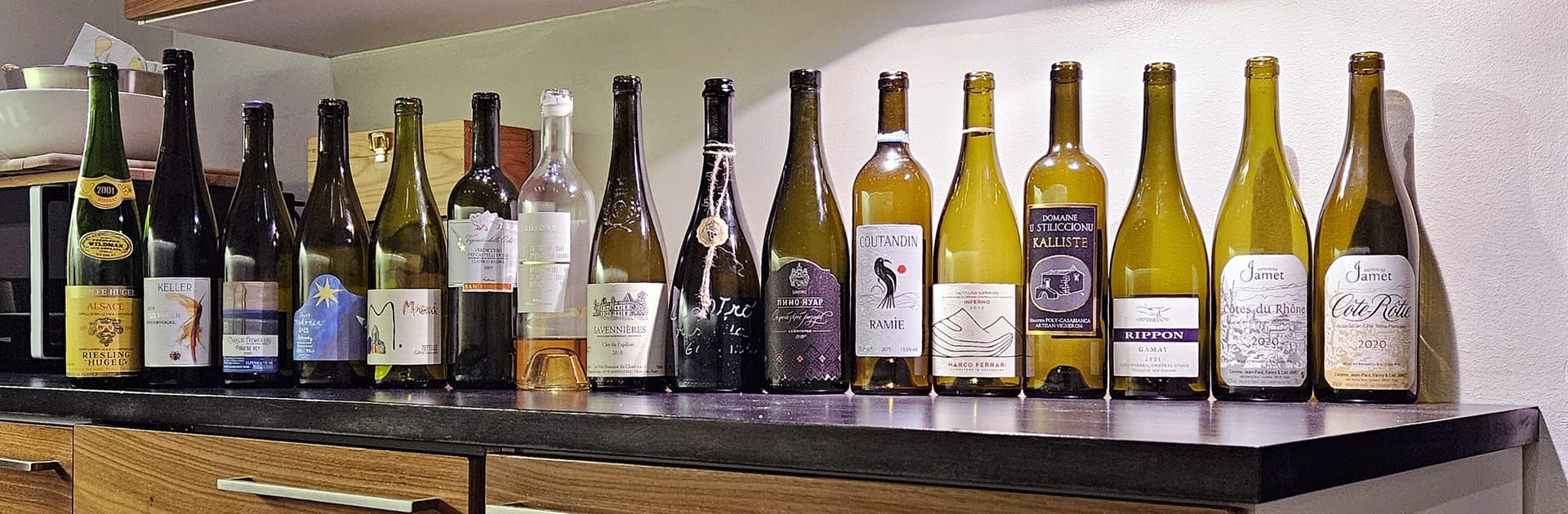
- 2001 Hugel Riesling Jubilee - France, Alsace (27.8.2024)
100% Riesling sourced from 25 yo vines in GC Schoenenbourg. 12,6% alcohol, 9 g/l residual sugar, 7,8 g/l acidity and pH 3,1. Tasted blind.
Evolved, medium-deep golden yellow color. The nose feels waxy and somewhat evolved with complex aromas of ripe peach and beeswax, some honeyed tones, a little bit of juicy red apple, light tertiary caramel notes, a hint of candied ginger and a touch of stony minerality. The wine feels dry, evolved and quite structure-driven on the palate with a medium body and complex flavors of honey and stony minerality, some evolved notes of cooked cream, light candied ginger notes, a little bit of baked apple, a hint of apple peel bitterness and a touch of fresh nectarine. The high acidity lends a great amount of freshness, structure and intensity to the wine. The finish is long, fresh and quite intense with a dry, complex aftertaste of lemony citrus fruits, some evolved notes of cooked cream, light peachy tones, a little bit of honeyed richness, a hint of apple peel bitterness and a touch of stony minerality.
A wonderfully evolved, harmonious and impressively structured Grand Cru Riesling at full maturity. There might be a little bit room for further development, but I feel the wine has now reached its peak and won't get qualitatively any better - just different - with additional aging. The overall feel here was very textbook Riesling, as my first guess was Alsatian Riesling. When pushed to name a producer, my guess was Trimbach - I imagined the wine was CFE - but it turned out to be Hugel instead. All in all, a fantastic example of evolved Riesling. Highly recommended.
(95 points) - 2019 Weingut Keller Silvaner Feuervogel - Germany, Rheinhessen (27.8.2024)
100% Silvaner from vineyards approximately 70 years old. 13% alcohol. Tasted blind.
Pale lime-green color. The nose feels a bit restrained with light aromas of crunchy whitecurrants, some herby tones, a little bit of fresh appley fruit, light leesy tones and a floral hint of apple blossom. The wine feels youthful, crunchy and rather tightly-knit on the palate with a medium body and intense flavors of crunchy whitecurrants, some sharp Granny Smith apple tones, a little bit of stony minerality, light tart lemony notes, a hint of tangy salinity and a touch of herby spice. The high acidity lends a great amount of freshness and energy to the wine. The finish is lively, long and crunchy with a rather intense aftertaste of sharp Granny Smith apple, some crunch whitecurrant tones, a little bit of wet rock minerality, light salty notes, a hint of leesy character and a touch of herby spice.
A crisp, intense and still extremely youthful vintage of Feuervogel. I had no idea about the wine; all my guesses were complete misses. However, I guess it made sense when the wine was revealed: I never thought of Silvaner because I didn't think it could be this tightly-knit, lean and mineral. Even at 5 years of age, the wine is way too young for its own good; the nose is still somewhat closed and the tightly-wound overall feel is still pretty nervous, calling for additional aging. This wine is pretty much what you can expect from a Silvaner by Klaus Keller - something almost atypically mineral and high-strung for the variety! Very impressive, but I feel this wine is not going to show its best at least before its 10th birthday.
(91 points) - 2020 Alice et Olivier De Moor Chablis 1er Cru Vau de Vey - France, Burgundy, Chablis, Chablis 1er Cru (27.8.2024)
100% biodynamically farmed Chardonnay from a parcel in 1er Cru vineyard Vay de Vey, planted in 1957. Fermented spontaneously and aged in 500-liter demi-muids for 12-15 months. Bottled unfiltered. 13,5% alcohol. Tasted blind.
Pale-to-medium-deep yellow-green color. The nose feels rather ripe with somewhat sweet-toned aromas of juicy white fruits, some green apple tones, a little bit of sauvage funk, light green currant notes, a salty hint of sea air and a faint vegetal whiff of leafy greenness. The wine feels broad yet firm and steely on the palate with a medium body and slightly wild flavors of sharp Granny Smith apple, some saline mineral tones, light zesty lemon notes, a little bit of volatile lift and white balsamico, a hint of ripe nectarine and a faint touch of vegetal greenness. The racy acidity lends a great amount of freshness and energy to the wine. The finish is long, tangy and slightly wild with sharp flavors of Granny Smith apple and green currants, some salty notes, a little bit of steely minerality, light zesty lemon tones, a hint of leafy greenness and a touch of chalk.
This would've been a very impressive - albeit still a super youthful - 1er Cru Chablis, if it weren't for the green notes. Those were very subtle here - some didn't even seem to notice them - but my guess was right on point, since those vegetal nuances made me guess immediately 2020 white Burgundy, perhaps even Chablis. Bingo. Unfortunately aging doesn't seem to do anything for those green notes - they might even start to get more pronounced with age as the other aromas and flavors slowly fade - so I guess no amount of cellar time is going to save this wine. You just have to hope you are not as sensitive to the green notes as I am! Even then, this was a pretty good wine. Just not as good as it would've been without those subtly vegetal overtones.
(90 points) - 2022 Lucas Madonia Lormey Valais - Switzerland, Valais (27.8.2024)
100% Chasselas. The label says "1958 Saint-Léonard", so I'm not sure if that is a reference to a vineyard. Fermented spontaneously, aged in an old 400-liter demi-muid for a year. Bottled unfiltered and without SO2. 10,3% alcohol. Tasted blind.
Hazy golden-yellow color with a faint caramel-brown hue. The nose feels wild and quite cidery with aromas of ripe cider apples, some apple compote, light bretty notes of leather and a hint of honeyed richness. The wine feels thin, wild and quite crunchy on the palate with a light body and dry flavors of sharp Granny Smith apple, some saline mineral tones, a little bit of freshly pressed apple juice or Breton cider, light lifted notes of VA, a hint of lemon juice and a touch of leathery funk. The rather brisk acidity feels surprisingly high for a Chasselas. The finish is dry, crisp and medium in length with a somewhat wild aftertaste of salty minerality and tart Granny Smith apple, some bruised cider apple tones, a little bit of freshly pressed apple juice, light lifted notes of VA and a hint of honeyed richness.
A thin, linear and rather cidery naturalista. I had no idea where to be with this wine - and to be frank, I never would've guessed Swiss Chasselas! Typically Swiss Chasselas tends to be dull, ponderous and low in acidity, and I admit, this wine was anything but! However, as the wine was pretty thin and underwhelming, both smelling and tasting more like a farmhouse cider than a white wine, I guess I can't say this was a particularly successful wine. At least it wasn't faulty in the sense that it wasn't mousy, nor the VA or bretty notes were excessive in any way! At approximately 60€ this has been daylight robbery.
(81 points) - 2015 Miani Sauvignon Zitelle Cava - Italy, Friuli-Venezia Giulia, Venezia Giulia IGT (27.8.2024)
100% Sauvignon Blanc from a parcel within the 4-hectare Zitelle vineyard, where the vines struggle to grow, producing tiny amounts of very concentrated grapes. Fermented spontaneously in partly new oak barrels. Aged in predominantly new oak barrels for 12 months. 14% alcohol. Tasted blind.
Concentrated lime-green color. The nose feels quite exuberant with over-the-top aromas of passion fruit, sweat and sweet oak spice, some rich apple jam tones, a little bit of crushed nettles, light grassy notes, a hint of overripe mango, a touch of buttery oak and a whiff of honeydew melon. The wine feels rich, concentrated and slightly viscous on the palate with a full body and somewhat sweetly-fruited flavors of apple jam and honeyed richness, some grassy green tones, a little bit of overripe mango, light passion fruit notes, pungent hints of sweat and cat's pee and a touch of creamy oak. The moderately high acidity manages to keep the wine somewhat in balance, lending it some sense of freshness and structure. The finish is long and rich with an intensely-flavored aftertaste of passion fruit, some honeyed tones, a little bit of cat's pee, light notes of overripe mango, hints of toasty oak spice and creamy oak and a touch of crushed nettles.
This must've been among the most over-the-top Sauvignon Blanc's I've ever tasted. The sense of richness, concentration and oak here is just ridiculous. However, somehow the wine manages to keep some sense of finesse and harmony, so it isn't just a lumbering beast, but a quite balanced and relatively enjoyable effort for its size. Furthermore, even with all the in-your-face aromatics, the wine is still pretty much true to the variety and it was pretty obvious from the first sniff that this was a Sauvignon Blanc. However, it took us some time to identify also the region and the producer correctly. It's hard to assess whether the wine is at its peak now or if it is going to evolve further from here, but if you like huge over-the-top blockbuster whites, this is in the zone right now. Conversely, if you like your Sauvignons fresh, brisk and zippy, you'd better steer clear of this wine - this is pretty monolithic stuff. Drink or keep for some years more.
(93 points) - 2007 Fattoria San Lorenzo Verdicchio dei Castelli di Jesi Classico Riserva Vigna delle Oche - Italy, Marche, Verdicchio dei Castelli di Jesi Classico (27.8.2024)
100% organically farmed Verdicchio, harvested between 20th and 30th of October. First aged for 21 months in oak botte to finish the fermentation fully, then racked into stainless steel tanks and aged for another 6 months before bottled unfiltered. 14% alcohol. Tasted blind.
Haze, pale bronze color. The nose feels sharp with pungent, nutty notes of oxidation, some browned butter tones, a little bit of bruised apple and a hint of wilted flowers. The wine feels ripe, broad and a bit oily on the palate with a full body and tertiary flavors of roasted nuts, some bruised apple tones, a little bit of ripe apricot, light raisiny notes of Sultanas, a hint of cardboard and a touch of alcohol warmth. The medium-plus acidity feels a bit low for such a big and ripe white. The finish is rich, tired and oxidative with flavors of nutty rancio, some honeyed richness, a little bit of bruised apple, light dull notes of dry cardboard and a raisiny hint of Sultanas.
This was a stunning wine nine years ago - easily among the most impressive Verdicchios I've ever tasted - but now the wine seems to be past its peak, tired and almost dead. It might be that this bottle was not the best one out there, but it is also possible that this wine was just not built to last for this long.
(NR/flawed) - NV 220 Cántaras Rioja Añadas Edición Limitada - Spain, La Rioja, Rioja (27.8.2024)
The wine - previously known as Honorio Rubio Añadas - is made mainly with Viura from Cordovín in Rioja Alta, with a little bit of Malvasia Riojana in the blend. However, I'm not entirely sure how the wine is made. I know it is a multi-vintage blend, inspired by both the traditional style of making barrel-aged whites in Rioja and the Solera system of Sherry. Even still, I really don't know if the wine is made by blending multiple lots of barrel-aged wine (AFAIK the oldest lots are from 2007) or if the wine comes from a perpetual blend, into which new wine is added after a batch has been bottled. What I do know is that 220 Cántaras usually releases 1500-bottle lots of this wine and it is made with white wines aged in 225-liter barriques (a combination of new and old barrels made from American oak, French oak and Bulgarian acacia). The wine is said to be anything between 7 and 10 years old, depending on the source, but I don't know if that means the age of the oldest wine in the blend? The average age? The wine is composed with several vintages that are then blended and aged in oak for 10 years? Are the blends equal or if there is a base wine into which reserve wines are added? Who knows - at least the back label doesn't really tell anything! The lot number here is L2205183CVC, the bottle is #378 of total 1500 bottles and it is 13,5% in alcohol. Tasted blind.
Deep, luminous golden yellow color. The nose feels fragrant, evolved and eminently attractive with complex aromas of bruised apple, some caramel tones, a little bit of woody oak spice, light vanilla notes, a hint of cooked cream and a faint petrolly touch of diesel. The wine feels firm, structure-driven and intensely-flavored on the palate with a medium body and complex flavors of caramel and bruised apple, some toasty notes of creamy oak and nuttiness, light floral nuances, a little bit of saline minerality, a woody hint of savory oak spice and a touch of honeydew melon. The bright, high acidity lends a great amount of freshness and structure to the wine. The finish is long, crisp and complex with an intense, slightly oxidative aftertaste of stony minerality, vanilla and caramel, some woody notes of savory oak spice, a little bit of bruised apple, light evolved creamy tones, a hint of tangy salinity and a touch of apple peel bitterness.
A beautifully complex, intensely flavored and wonderfully structure-driven Rioja white. My immediate guess was an older Viña Tondonia Blanco and I was quite confused when told that the wine wasn't it - to me the wine was very much Viña Tondonia. My second guess was, naturally, Viña Gravonia, but it wasn't that, either. For some reason I never thought of Añadas - even though I've tasted the wine before (back when it was still bottled under the name of Honorio Rubio)! Anyways, the oxidative, complex and even then remarkably fresh style is very much Rioja white and that is where I was all the time with my guesses. I'd say the style here is a bit burlier, slightly less evolved and somewhat more oak-driven compared to that of López de Heredia, but otherwise very much in the same vein. This is immensely delicious stuff for people who love oxidative yet acid-driven whites. I have no idea whether the wine will just stay like this, or if it is capable of evolving and improving from here. Whatever the case, this is really a banger. Truly a poor man's Viña Tondonia Blanco. Highly recommended.
(93 points) - 2010 Domaine du Closel-Château des Vaults Savennières Clos du Papillon - France, Loire Valley, Anjou-Saumur, Savennières (27.4.2025)
100% Chenin Blanc. The grapes are harvested at full maturity in multiple tries. Aged on the lees in oak barrels for a year. 14,5% alcohol. Tasted blind.
Medium-deep and quite evolved burnished gold color. The nose feels quite evolved with aromas of honey and bruised yellow apple, some floral tones, a little bit of caramel, light nutty notes of chopped almonds, a hint of apple juice concentrate and a touch of mineral spice. The wine feels broad, rich and moderately tertiary on the palate with a full body and dry yet very ripe flavors of chopped almonds, some bruised apple tones, a little bit of steely minerality, light honeyed nuances and a hint of tangy salinity. The medium-plus acidity is a bit on the modest side. The finish is rich, ripe and slightly sweetly-fruited with a very evolved aftertaste of oxidative nuttiness, some honeyed tones, a little bit of bruised apple, light saline nuances, a mineral hint of wet rocks and a touch of caramel.
It feels this wine wasn't an old-school Savennières made in a somewhat oxidative style, but instead just a normal, dry Savennières that is starting to get too old and tired. It was quite impossible to identify the wine correctly when tasting it blind as it was so advanced with rather dominating flavors of nutty oxidation, bruised apple and caramel. Even then, this was a pretty enjoyable effort - I can imagine this might've been a lovely wine some years ago. While going downhill, I'd say the wine still offers some pleasure. It is just obvious that it is not going to benefit from any additional aging, ie. it's high time to drink up!
(89 points) - 2018 Vitivinicola Fangareggi L'Altro Metodo Classico Pas Dosè - Italy, Emilia-Romagna, Vino da Tavola (27.8.2024)
100% Lambursco di Sorbara. Aged sur lattes for 60 months, disgorged in March 2024. Lot number 0818. 11,5% alcohol. Tasted blind.
Pale greenish color. The nose feels quite neutral with light aromas of ripe whitecurrants, some vague fruit wine tones, a little bit of leesy autolysis, a hint of herby character and a touch of rubbery reduction. The wine feels quite neutral and understated on the palate with a light-to-medium body and dry flavors of Granny Smith apple, some whitecurrants, light zesty citrus notes, a little bit of salinity, a hint of steely minerality and a touch of leesy autolysis. The acidity feels high and the creamy mousse feels quite voluminous and persistent. The finish is crisp and somewhat neutral with a medium-long aftertaste of lemony citrus fruits, some saline tones, a little bit of sharp Granny Smith apple, light steely mineral notes and a hint of leesy character.
A quite pleasant palate-refresher, but shows very little depth or character. I was told the wine might've suffered from high temperatures during the transportation, which might or might not explain the rather neutral and understated overall feel. Enjoyable, but nothing particularly interesting.
(85 points) - 2020 Sikory Estate Pinot Noir - Russia, Kuban, Novorossiysk, Semigorye (27.8.2024)
100% Pinot Noir from two vineyards planted in 2013 and 2020. Macerated with the skins for 16-18 days weeks. Aged for 8 months on the lees in stainless steel (80%) and French oak barrels of different sizes (20%), ranging from 225-liter barriques to 2000-liter bottes. Bottled fined and filtered on August 24th, 2023 - I have no idea where the wine has been kept after the 8 months of aging and before the bottling. 14% alcohol. Tasted blind.
Luminous, translucent and quite pale ruby-red color. The nose feels ripe, dark-toned and fragrant with aromas of juicy dark berries and spicy Pinosity, some woody tones, a little bit of sweet oak spice, light brambly notes of black raspberries, a hint of allspice and a touch of sweet black cherry. The wine feels dry, juicy and silky on the palate with a medium body and clean flavors of ripe black cherries, some peppery spice, a little bit of stony minerality, light saline mineral tones, a hint of spicy Pinosity and a touch of wood. The medium-plus acidity feels a tad modest for a Pinot Noir, but at the structured gets some support from the somewhat grippy medium tannins that lend some sense of firmness to the palate. The finish is long, pretty crunchy and somewhat grippy with an aftertaste of red plums and brambly black raspberries, some spicy Pinosity, a little bit of stony minerality, light woody notes of savory oak spice and hints of ripe dark berries.
A surprisingly serious and harmonious Pinot Noir; maybe not that complex and a also a bit modest in the acid department, but nevertheless surpassing what my preconceptions would've been for this label - I'm happy I got to taste the wine fully blind. We homed in on Pinot Noir very quickly, but unsurprisingly nobody had Russia in mind at any point. I guess the wine could continue to age for many more years, but I'm not entirely sure if the wine would get qualitatively any better with additional aging. Drink now or within the next 5-ish years.
(90 points) - 2019 Coutandin Pinerolese Ramìe - Italy, Piedmont, Pinerolese (27.8.2024)
A blend of organically farmed Avanà (30%), Chatus (20%), Bequet (20%), Avarengo (15%) and Barbera (15%). Fermented spontaneously in stainless steel tanks. Aged for two years in vats. Bottled unfiltered on September 4th, 2021. 13,5% alcohol. Tasted blind.
Dark, slightly translucent blood-red color. The nose feels youthful, somewhat fragrant but also a bit dull and earthy with aromas of blueberries, some brambly black raspberries, light dusty attic tones, a little bit of fresh red plum, a hint of ripe dark forest fruits and a touch of damp earth. The wine feels dry, crunchy and lively with a medium body and somewhat understated flavors tart lingonberries and crowberries, some dull earthy tones, a little bit of chokeberry and a hint of gravelly minerality. The overall feel is pretty stern and sinewy with the high acidity and moderately grippy tannins. The finish is dry, crunchy and rather grippy with a somewhat dull aftertaste of crowberries and chokeberries, some brambly black raspberry notes, a little bit of dusty earth, light gravelly mineral tones and a hint of fresh red plum.
A somewhat tough and austere yet still enjoyably fresh and quite drinkable Piedmontese red. However, the somewhat understated fruit flavors and somewhat dull, earthy overtones made us wonder whether the wine was in sound condition or perhaps mildly corked? It would've been odd if the wine was suffering from TCA, because it was still showing some fruit flavors and aromas as well. Whatever the case, this definitely isn't a crowdpleaser. It was quite easy to identify it correctly as an Italian red, but after that things became pretty difficult. Maybe a bit pricey for the quality at approx. 30€.
(86 points) - 2019 Marco Ferrari Valtellina Superiore - Inferno - Italy, Lombardia, Valtellina, Valtellina Superiore - Inferno (27.8.2024)
100% Nebbiolo sourced from multiple parcels in the Inferno sub-zone of Valtellina. The whole clusters are vinified in stainless steel vats by fermenting them spontaneously for about three weeks, then aging the wines in old demi-muids for approximately 18 months. 14% alcohol. Tasted blind.
Fully translucent, pale-to-medium-deep ruby red color with a colorless rim. The nose feels very attractive, somewhat sweet-toned and immediately identifiable for a Nebbiolo with aromas of ripe raspberries, some floral notes of roses, a little bit of sweet black cherry, light licorice tones, a hint of pipe tobacco, a touch of gravelly earth and a whiff of sour cherry. The wine feels dry, textural and surprisingly ripe on the palate with a medium body and vibrant flavors of sour cherries and sweet raspberries, some gravelly mineral tones, a little bit of wild strawberry, light floral notes of roses, a hint of licorice and a touch of juicy black cherry. The overall feel is quite firm and sinewy with its rather high acidity and moderately grippy tannins. The finish is clean, lively and grippy with a long, crunchy aftertaste of sour cherries and ripe cranberries, some wild strawberry tones, a little bit of brambly black raspberry, light floral notes of roses, a hint of gravelly earth and a touch of sour cherry bitterness.
A harmonious, vibrant and very delicious Nebbiolo. The wine was definitely very true to the variety as it was immediately identifiable for a Nebbiolo - although due to its somewhat ripe overall feel I was pretty sure it was from Langhe! I've normally found Valtellina reds somewhat leaner, less ripe, lighter in weight and often not that accessible in their youth. This wine, on the other hand, was stylistically more similar to, say, a Barbaresco or a Nebbiolo d'Alba. Terrific stuff all the same - the wine is drinking quite nicely already now, but I'm sure this wine will continue to evolve and improve for at least another decade, if not two. Lovely stuff with a good deal of upside.
(92 points) - 2018 Domaine U Stiliccionu Ajaccio Kalliste - France, Corsica, Ajaccio (27.8.2024)
A blend of biodynamically farmed Sciaccarello (80%) and Nielluccio (20%). Fermented spontaneously, macerated with the skins for approximately 45 days. Aged in egg-shaped concrete tanks (80%) and old demi-muids (20%). 13,5% alcohol. Tasted blind.
Somewhat translucent ruby-red color. The nose feels fragrant with aromas of ripe raspberries, wild strawberries and bloody meaty tones, some wild floral lift, a little bit of gravelly earth, light brambly notes of fresh black raspberries, hints of redcurrants and sour cherries, a touch of appley fruit and a whiff of balsamic VA. Lots of nuance here. The wine feels dry, lively and crunchy on the palate with a medium body and flavors of ripe cranberries and sour cherries, some wild strawberries, light funky notes of leather and balsamic VA, a little bit of licorice root, a hint of stony minerality and a touch of brambly raspberry. The texture feels silky and open-knit. The structure relies mostly on the high acidity, not that much on the ripe medium tannins that slowly pile up on the gums. The finish is dry, fresh and somewhat grippy with a moderately long aftertaste of brambly raspberries and sour cherry bitterness, some wild strawberries, a little bit of licorice, light balsamic notes of VA, a hint of floral lift and a touch of leathery funk.
A tasty, harmonious and subtly wild Corsican red that is obviously made according to a somewhat hands-off philosophy, yet it doesn't come across as natty or anonymous in any way. Good sense of freshness, balance and structure with a lovely, open-knit and silky texture. Not really a grand vin, just a very pleasant weekday red with some depth and character. I honestly had no idea where we were with this wine - even though I've had some U Stiliccionu wines before! It's hard to assess if the wine is going to evolve and improve from here, but based on how enjoyably it is drinking right now, I don't see additional aging necessary in any way.
(91 points) - 2021 Rippon Gamay - New Zealand, South Island, Otago, Lake Wanaka (27.8.2024)
100% Pinot Noir from ungrafted 30-yo vineyards (until 2024 the people at Rippon believed this vineyard was Gamay that was just producing atypically structured wines, but then DNA analysis revealed that the vines were actually of an unidentified clone of Pinot Noir). The grapes are fermented with semi-carbonic maceration, followed by spontaneous fermentation. Aged in oak barrels for 10 months. Bottled unfined, unfiltered and without any SO2. 13% alcohol. Tasted blind.
Deep, somewhat translucent and subtly hazy ruby-red color with a slightly blueish hue. The nose feels fragrant, expressive and slightly wild with heady aromas of brambly raspberries and crunchy cranberries, some wild lifted tones, a little bit of earth, light perfumed floral tones, a hint of phenolic funk and a touch of spicy Pinosity. The wine feels dry, crunchy and pretty clean on the palate with a medium body and intense flavors of brambly raspberries and ripe cranberries, some gravelly mineral notes, a little bit of sour cherry bitterness, light funky nuances, a hint of floral lift and a ferrous touch of blood. The overall feel is impressively firm and muscular with its high acidity and moderately grippy medium-plus tannins. The finish is long, rather grippy and quite acid-driven with a dry, intense aftertaste of crunchy cranberries and brambly raspberries, some leathery funk, light earthy tones, a little bit of floral lift, a hint of gravelly minerality and a touch of smoky phenolic character.
A very impressive, serious and eminently attractive Gamay (or Pinot Noir) - I thought I detected some nuances of Pinosity on the nose, but as the wine was otherwise so very Cru Beaujolais style, I went immediately to Beaujolais Gamay with my guesses. I mean I didn't even think this could be anything other than Cru Beaujolais, so my guesses were in the vein of Lapierre or Foillard - which is why I was very surprised (not to mention impressed) when the wine was revealed to be a Kiwi Gamay (or, as we would later learn, Kiwi Pinot Noir!). All in all, this was a very lovely wine in all respects and it's sad news this wine is discontinued - or at least I don't know if they make the wine similarly as a Pinot Noir today. Terrific stuff, worth the price at approx. 40€.
(93 points) - 2020 Domaine Jamet Côtes du Rhône - France, Rhône, Northern Rhône, Côtes du Rhône (27.8.2024)
100% Syrah from the Côte-Rôtie lieux-dits Champrond, Cognet, Lézardes, Plomb and Tartaras. Unlike with the Côte-Rôtie, the grapes are fully destemmed, then fermented spontaneously and macerated with the skins for 2 weeks. Aged in old oak barrels for 12 months. 13,5% alcohol.
Fully opaque blackish-red color. The nose is very Northern Rhône Syrah, but also quite weird with a very pronounced streak of tapenade and Kalamata olives, some canned tuna tones, a little bit of fresh blackberry, light spicy notes of cracked peppercorns, hints of smoke-cured meat and charred bacon, a touch of fresh blackcurrant and a whiff of fresh red plum. The wine feels dry, open-knit and rather ripe on the palate with a moderately full body and vibrant flavors of juicy blackberries and blackcurrants, some olive tones, a little bit of smoky game, light gravelly mineral tones, a spicy hint of cracked peppercorns and a weird touch of canned tuna. The overall feel is maybe a bit on the soft side with the medium-plus acidity and quite mellow medium tannins. The finish is dry, slightly warm and gently grippy with a long, crunchy aftertaste of fresh dark berries, some ferrous notes of blood, light salty notes of olives, a little bit of brambly blackberry, a hint of smoke-cured meat and a touch of peppery spice.
A fun but also a bit weird Syrah where you have these textbook Northern Rhône Syrah aromatics - but also a weird smack of canned tuna, which felt even rather pronounced in the nose! While otherwise a thoroughly enjoyable wine, I must admit that the canned tuna notes did distract a bit. Furthermore, the wine felt a bit soft and supple for a Jamet Syrah, coming across as a bit easy and mellow for NRS - although I've understood that this is supposed to be their early-drinking cuvée, so I guess that is understandable. All in all, an enjoyable and a fun wine - despite its somewhat unique aromatics - but a mere shadow of the 2020 Jamet Côte-Rôtie that we tasted at the same time.
(89 points) - 2020 Domaine Jamet Côte-Rôtie - France, Rhône, Northern Rhône, Côte-Rôtie (27.8.2024)
100% Syrah sourced from 20 parcels in 15 different vineyards. The fruit is vinified in whole bunches and macerated with the skins for three weeks. Aged for 22 months in oak barrels (about 15% new). 14% alcohol. Tasted blind.
Quite dense and almost fully opaque blackish-red color with a subtly purplish inky hue. The nose feels immediately identifiable as a young Northern Rhône Syrah with heady aromas of crushed peppercorns and sharp olive tones along with layered notes of ripe blackberries, some sun-baked earth, light lingonberry tones, a little bit of old leather, hints of juicy bilberries and blueberries, a floral touch of violets and a whiff of smoke. The wine feels ripe, juicy and more fine-tuned than punchy with a medium-to-moderately full body and intense flavors of brambly blackberries and ripe blueberries, some olive notes of tapenade, a little bit of tart lingonberry, light stony mineral tones, a peppery hint of cracked black pepper and a touch of earthy garrigue. The structure feels firm and sinewy with the high acidity and moderately grippy tannins. The finish is rich, juicy and somewhat grippy with a long, vibrant aftertaste of brambly blackberries and briny kalamata olives, some tart lingonberry tones, a little bit of crunchy crowberry and red plum, light peppery notes, a hint of sweet blueberry and a touch of licorice root.
With just the first sniff, I told immediately that this can't be anything but Northern Rhône Syrah. Tasting the wine immediately afterwards, not only was I even more sure of my stance, but I also had to add that this is a fantastic Syrah indeed. It is as textbook NRS as a wine can be, but even though the wine comes across as pretty ripe, it is also remarkably fresh, dry and poised in overall style - it isn't about oomph and punchy structure, but instead of almost Burgundian finesse and intermingling flavors that are more or less impossible to replicate anywhere else than in Northern Rhône. I should've said Jamet Côte-Rôtie, because I had tasted this same wine only half a year earlier, but didn't manage to guess the producer correctly before the bottles were revealed. All in all, this continues to be a fantastic vintage of Jamet's straight C-R. I hope it continues to evolve and improve with its age, although I have to admit that the wine is pretty darn outstanding already now, in its youth. This wasn't particularly affordable at 80,60€, but the wine still manages to over-deliver for the price, effortlessly. Very highly recommended.
(95 points)
Posted from CellarTracker
