TN: 1985 Caves São João Dão Porta dos Cavaleiros

I should start by noting the incredible opportunity this wine provides. Made from a mixture of unusual native varieties, cellared in perfect conditions at the domaine for 30+ yrs, released to the public for less than $50. What an opportunity for those hoping to get a taste of an interesting aged wine at a reasonable price!

That being said, the wine is good, but not great. The cork is in fantastic shape; it must have been recorked. Quite a bit of well-behaved sediment. To me, it smells like an old Bordeaux; dark fruits, pencil lead, damp earth, and a leatheriness that is unfortunately a bit too long in the tooth for my taste (and I’m someone who likes old wine). There’s some of that indefinable, too-old-wine smell that’s kind of like saddle soap, kind of like soy sauce, kind of like an old leather boot.

In the mouth, surprisingly, the initial impression is a wonderful core of sweet dark cherry fruit that is just lovely. The flavors are much more fruit forward than I would have expected. The tannins are completely gone. The acidity is medium. But the longer it’s in your mouth, the older it seems. Not in a good way. The finish has a distinct flavor of soy sauce unfortunately.

Interestingly, I poured half the bottle into a 375mL, popped it in the fridge, and it kept very nicely. If anything, a bit more fruit forward the following day. So although I think this wine is a bit on the downslope, the slope is a gentle one and it will persist in a nice drinking window for quite a few yrs longer. 5 at least. Overall, an okay drink, but a wonderful cost effective opportunity to drink something interesting, aged, and unique. I’d buy it again.

2 Likes

These old Caves Sao Joao need lots of decant time. I’ve had this numerous times out of magnum. When decanted 5+ hours, they were fantastic.

Yes! Mirrors my experience of improvement the following day. Interesting bc the wine didn’t taste especially tight on opening, but if I ever get another bottle I’ll decant it for sure. Hard to know how oxygen-loving it’ll be given that it’s made with a mixture of unusual native varieties.

I’ve had this wine a few times. They are definitely tired. All tertiary and pretty boring. Caves st Jaoa does put out some pretty great aged offerings but this isnt one of them.

Which are the “pretty great aged offerings” do you think?

I would dispute the fact that these are unusual varieties! :stuck_out_tongue_closed_eyes: however, I do believe the typical Dão red blend back in those days was different, as vintages were seen as good depending on yields (the bigger, the better) and Touriga Nacional, being low on the productivity scale, was close to extinction in its native Dão.
These Caves São João wines, like the vast majority of Portuguese table wines before the late 1980s, were vins de garde without being grand vins. Oak was unheard of, the first barrels being introduced in the Dão at Quinta dos Carvalhais in the early 90s. Wines were aged in stone vats sprayed with tartaric acid. There were indeed no oenologists: agricultural engineers were Portugal’s winemakers at the time, and they knew little if anything about the nooks and crannies of winemaking. The quality oriented path this country has treated these past thirty years is pretty much miraculous, and luckily or unluckily depending on your perspective, the fame and the prices haven’t caught up with the quality.

4 Likes

They did this pure Cabernet Sauvignon under the Quinta do Poco do Lobo. Bairrada i believe and the vintage was either 1993 or 1995. The wines were so vivacious.

I went on a trip to Portugal with the local supplier and I had to sell a ton of this wine and that 1985 Dao mess of a wine. Overall Caves St Jaoa are a tremendous mother-daughter team that kill at what they do.

1 Like

@ Tomas_Costa, True, I guess these aren’t considered rare grape varieties for the region. For the grand scheme of things though, I meant that they are rare as part of my everyday drinking experience, especially as it pertains to air. If it’s an aged Pinot or Nebbiolo, I have a little bit of what to expect, can anticipate decant time, etc. But with this, I’m flying blind! Thanks for all the info.

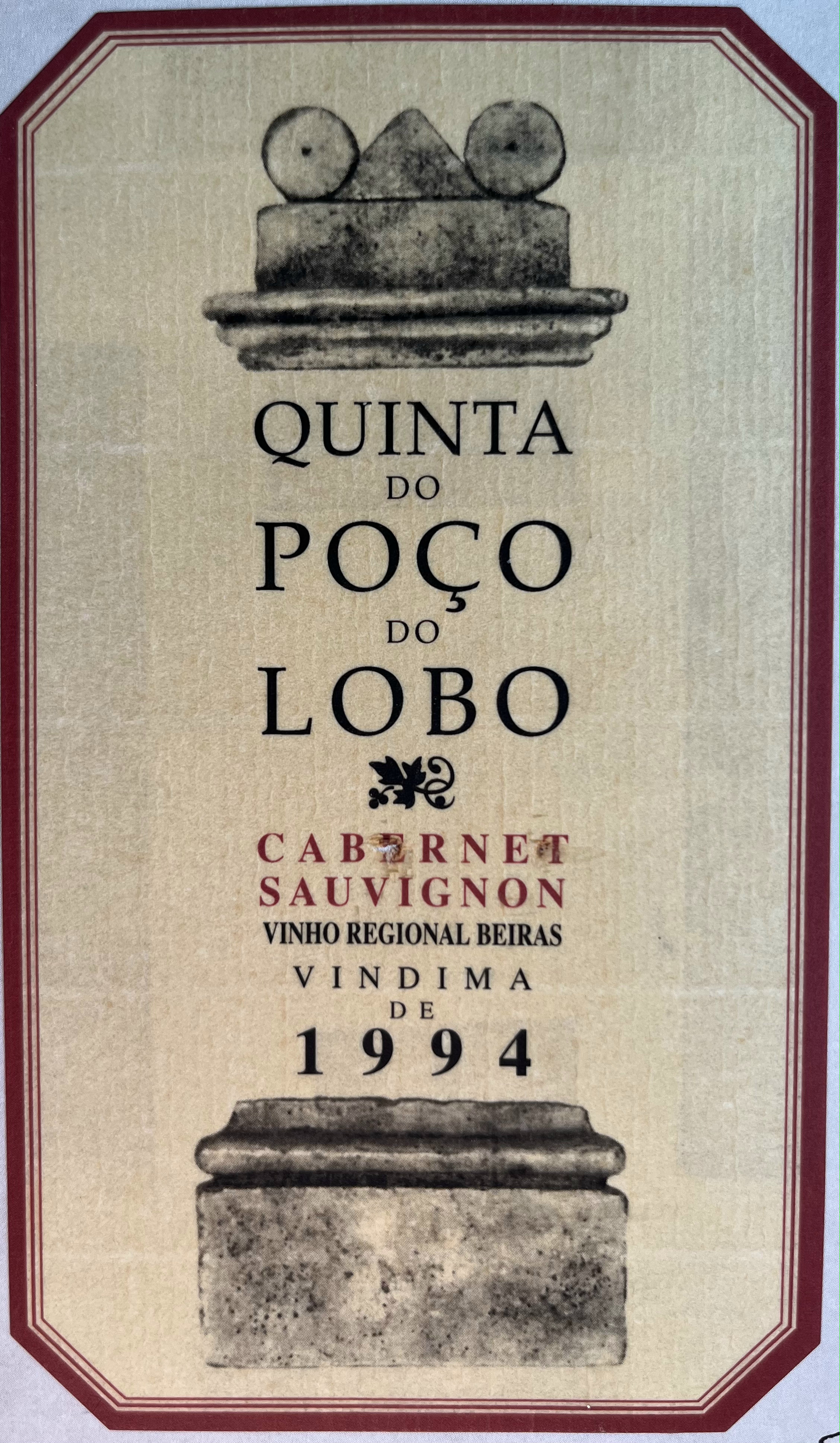
@Joe_V1 , I think I’ve had what you’re talking about. I actually saved the label, pic attached, though the vintage is 1994. I have a tasting note, dated Feb 2021. You are right that it was better than the wine in question, but to me at least, it didn’t blow it out of the water.

The TN from 2021:
"Wine in very good shape, though it probably saw its best days about 5 years ago. The color is ruby with just a hint of bricking. The (fading) fruit profile, earthiness, cedar, dried tobacco, and graphite smells/flavors make this wine very Bordeaux-ish to me. In fact, without reading the label, I don’t think I would have been able to tell that this was anything else.

This wine is nice and enjoyable, though I can’t help but wish one of two things: 1- I was drinking Bordeaux, or 2, I was drinking something with its own identity. This brings up a much larger debate of when “international”, aka French, varietals are preferable over native varietals. In the case of this wine, it is well made, very tasty, and well worth drinking. So, if Cab Sauv does this well in this particular area of Portugal, why not? On the other hand, I think I’d prefer a Baga from the Dao. That, or a Bordeaux. One or the other. For me, this is in a middle ground that doesn’t even save me any money; plenty of well aged Bordeaux out there for the $65 this costs."

The label:

Thats the one! Lovely and completely agree that it was reminiscent of left band Bordeaux.

After rereading my initial comment, i apologize, Noah. I sounded ultra douchey. I got stuck with 10, 6 packs of the 1985 Dao wine and it moved painfully slow. I guess it conjured up old feelings.

That Poco do Lobo is also a hell of a bargain! If i recall correctly it was also sub $50. I wish i squirelled some away.

All Portuguese wine regions work for the most part with native varietals nowadays, but the Dão is decisively one region where this bet has been most far reaching and profound. The Touriga Nacional/Tinta Roriz/Jaen/Alfrocheiro blend is firmly established as the standard for reds, with many interesting wines displaying more rare varieties via field blends. Baga, which some claim was born here, is now found almost exclusively in Bairrada.

What makes the Dão interesting is its phoenix-like transformation. During the heyday of the Caves São João it was synonymous with Portuguese table wine, on which it had a virtual monopoly - the kind of unrefined, rustic wines I was describing earlier. These were mass produced, inexpensive and not especially elegant or complex, although they had real character. As EU funds rolled in and the Douro and Alentejo established themselves as the dominant wine regions - with help from the manuals of flying winemakers which happened to work well with the hot climate of these regions - the Dão was forced to reinvent itself. People like Álvaro Castro, and major investors like Sogrape, made the Dão a quality based region, with wines of great finesse and old world character, where small producers abound. It’s the complete inversion of what made the region famous and successful in its old heydays, and that makes today’s Dão wines, in both colors, all that more exciting. And of course, they’re still fantastic values for the most part.

Alvaro Castro and his daughter were simlly wonderful people. I loved his dog too!

We were having a lunch at his place and he told us a funny story about one of his blends that he makes having like 12 different varietals. The governing body that regulates the wineries of Dao approached Alvaro questioning one of his blends. He had submitted the blend to the body but he had no listing in his vineyards of the varietal actually being planted there.

Alvaro said something to the extent of oh yeah, must be something else then sorry!!! Alvaros a bad motherf******** and a hell of a winemaker!

1 Like

He’s quite the character. He once said he appreciated the fact that neighboring Roma people from a camp went into his vineyards to eat grapes, because they helped with green harvesting.

2 Likes

An interesting thread. Thanks for the insights about the Dao, Tomas.

I haven’t seen the Sao Joao wines around New York in recent years. I remember enjoying them very much 15 years ago, when I first discovered them. They weren’t profound, but they had character.

Was this the Muleta or Dente d’Ouro? These are a couple old vine field blends that he vinifies and bottles separately.

Glad I picked up a 1983 of this bottle in Lisbon, looking forward to giving it a go!

Let me dig around a bit. I know i saved all my materials from that trip. Im curious to know too.

I’ve had a few of these. Earlier this year the 1982 Caves São João Dão Porta dos Cavaleiros. My impression mirrors yours. Enjoyable, a little tired, not super exciting, but good value. I may not have given enough air time, but in the few hours I drank it the fruit did come alive toward the end. 91 pts to my palate.

I really have enjoyed those cabernets. Loved the 1990, which yes tasted like a fully mature bordeaux, full of tobacco. Sure you could wish for more authentic character instead of tasting like Bordeaux, but the complexity was high. Crazy value. I think I paid 16 euros or something stupidly low.

But an eye opening experience for me was the 1984 Caves São João Dão Porta dos Cavaleiros Branco. Whoa baby, this was insane. If you like LdH whites, this had elements of those, minus any American oak. Crazy complexity and totally alive. 93 points for me.

Yeah, their whites can be outstanding. Some are tired though. Better luck with magnums.