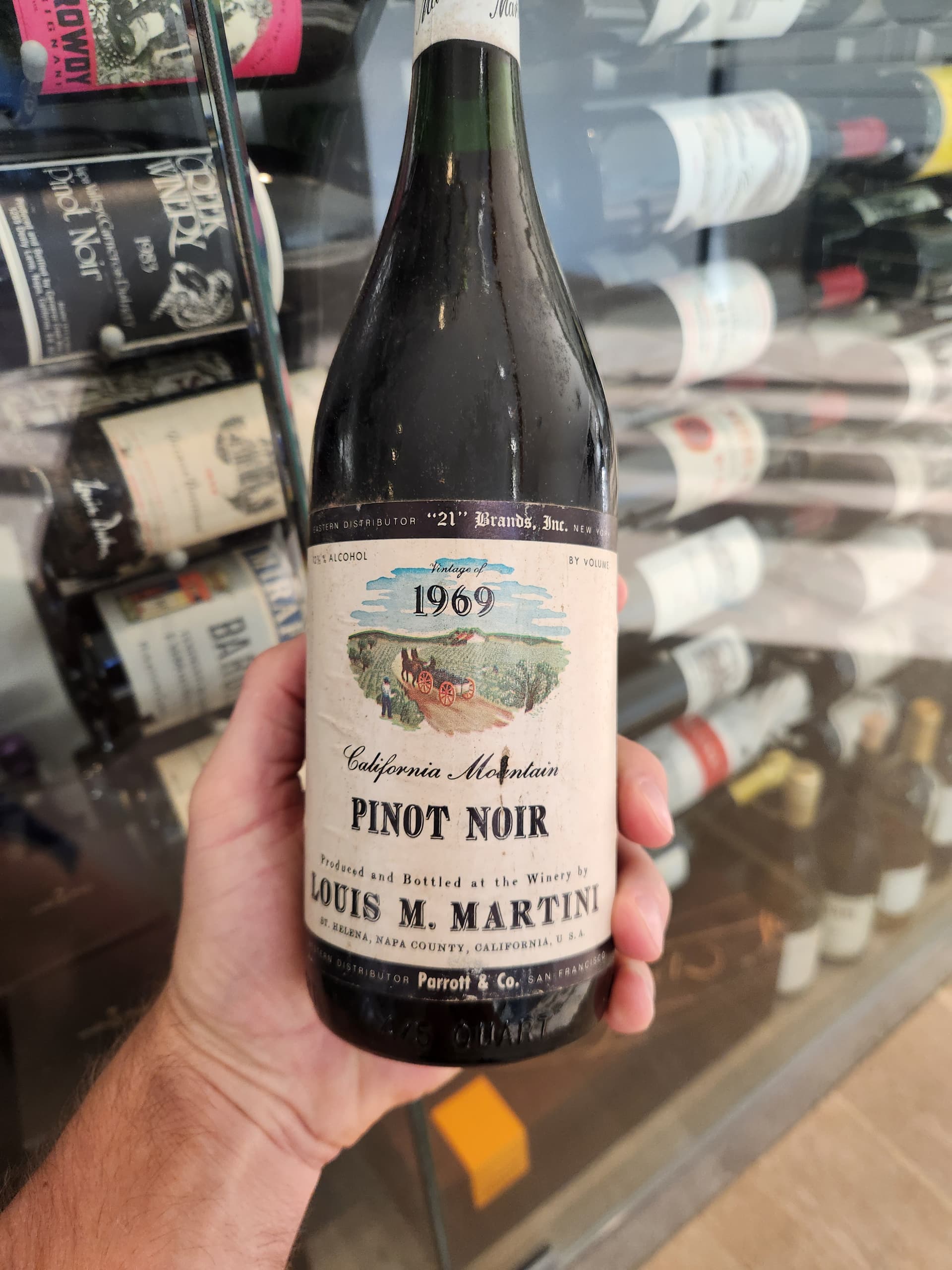
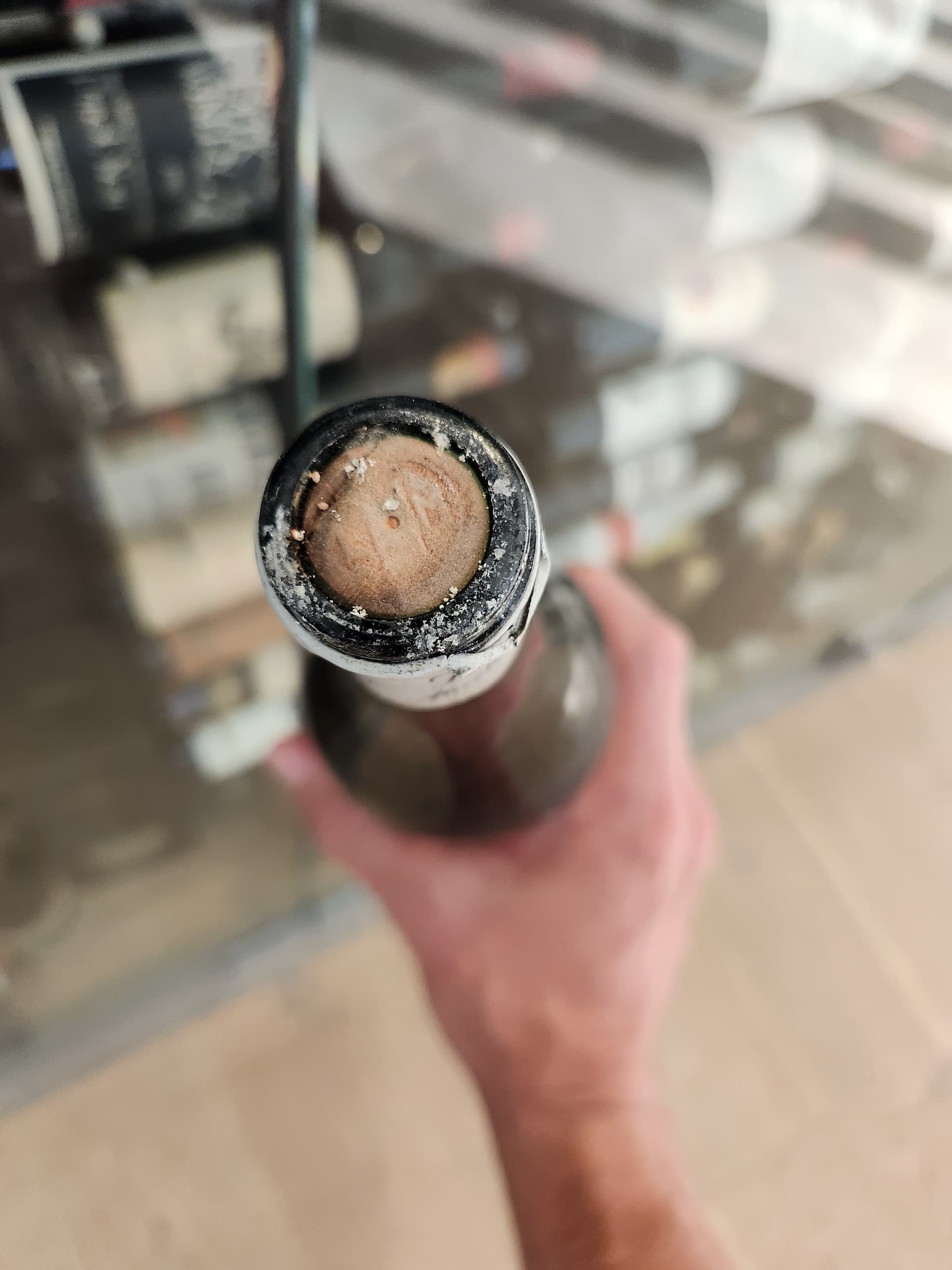
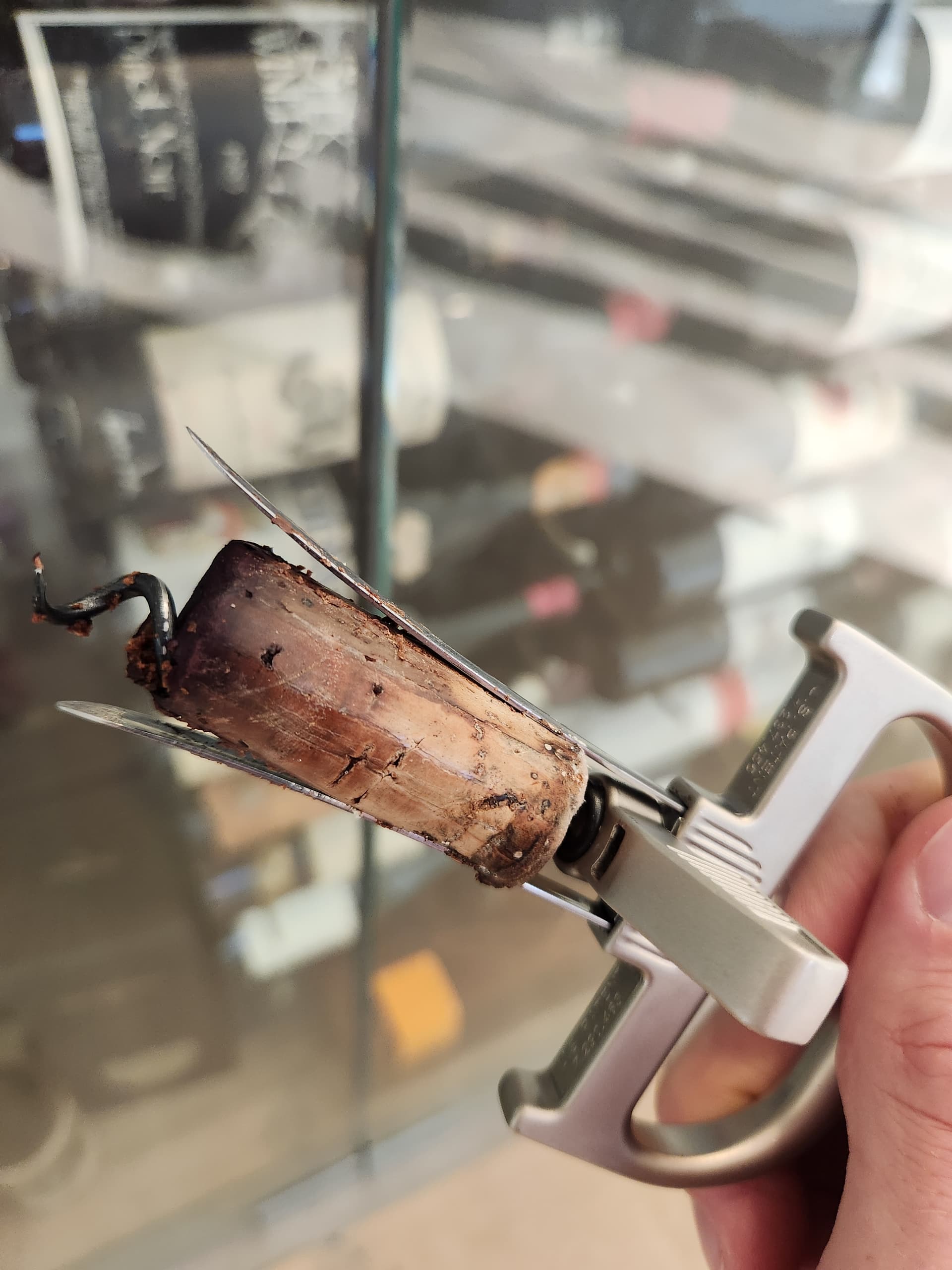
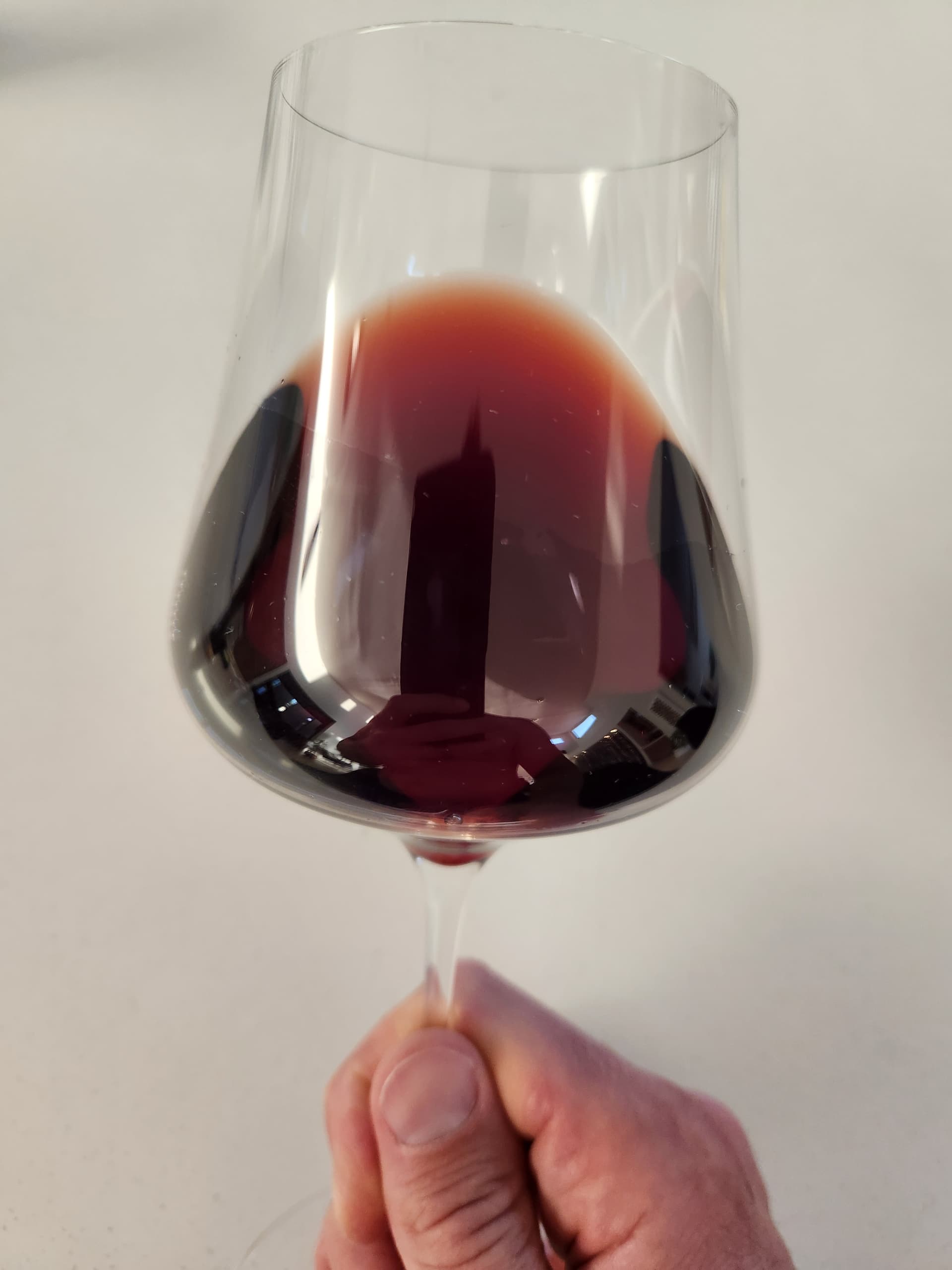
The cork was in perfect shape and it poured a beautiful ruby red color with a killer nose of roses, cinnamon, and autumn leaves. In the mouth this was just lovely with notes of florals, earthy red fruits, and a long, acid-filled finish. Medium bodied and just an absolute pleasure to drink. Feels good to totally redeem myself from yesterday (insert Step Brothers quotes here )
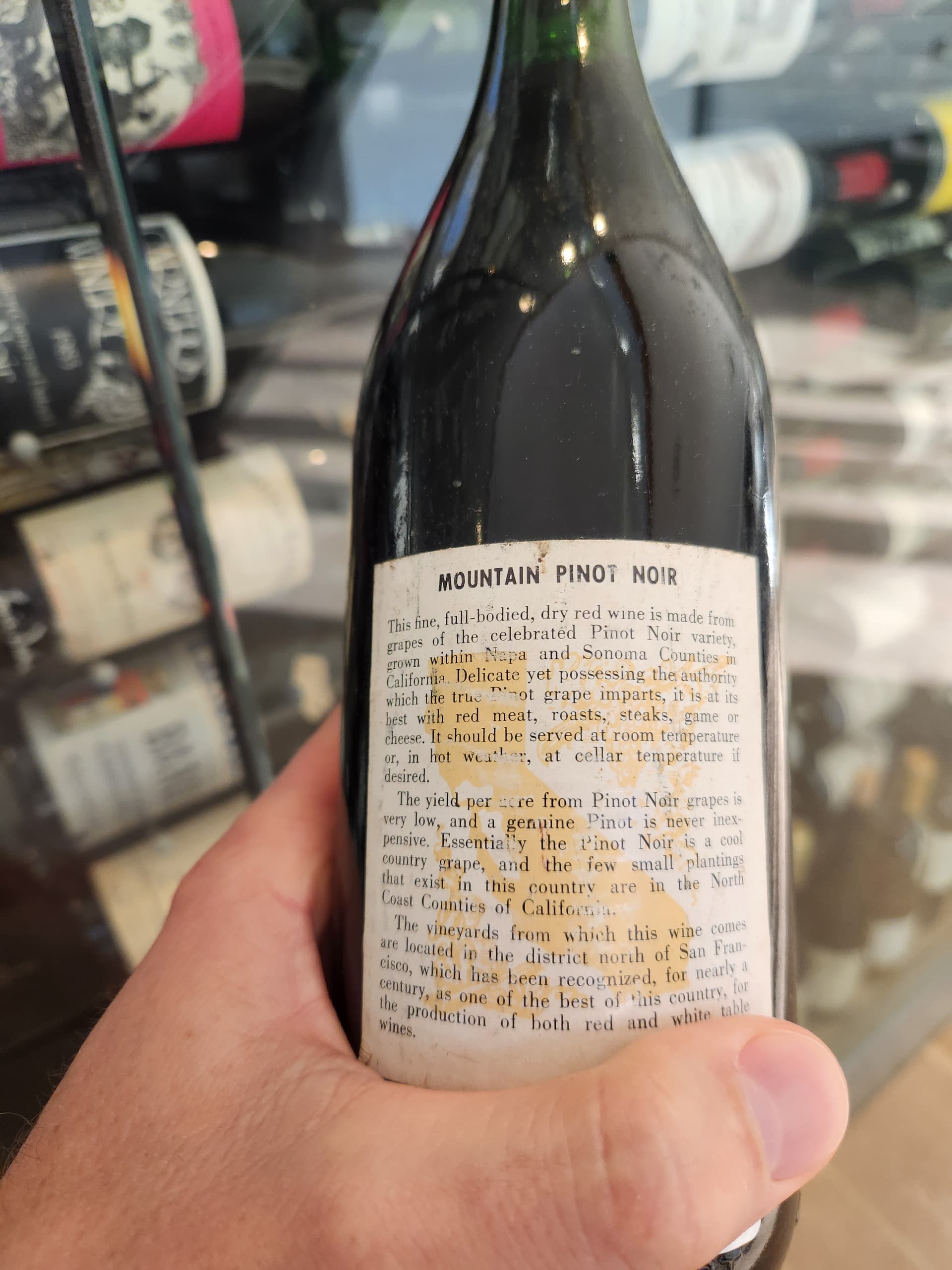
Beauty! The back label says vineyards “north of San Francisco”. That covers a lot of territory. Have to wonder where it was grown. I don’t think there was a lot of Pinot Noir anywhere in California back then.
John Winthrop Haeger’s North American Pinot Noir says that Martini’s PN plantings (1946-) were originally on the Stanly Ranch property in Carneros, which seems to have been just west of the Napa River and north of the marshes. Not much of a “mountain,” so maybe they’d expanded west or north by the 60s?
In 1962 I learned from Louis Martini Mountain Red that wine was my beverage of choice. I think that Louis Martini might have been using the term ‘Mountain’ loosely. But hopefully if other vineyards were involved somebody can let us know.
Louis P has a quote something like - that they generally consider the north counties “Mountainous” but he does’t know what the word truly means because some of those grapes are from higher elevation valleys etc.
Louis Martini pioneered both the Monte Rosso Vineyard which straddles Sonoma and Napa and also the Carneros district. Easier for them to just print “North of San Francisco” back then when they were just backwater places.
Along with probably many others here, I cut my wine baby teeth on Louis Martini wines of that era. Thanks for the writeup and bringing back some memories, Rich.
A few notes from the Martinis I found about those Pinot Vineyards -
LOUIS M- In 1943 we bought about 250 acres in Napa, near Carneros,* and my son has bought 140 acres, all Pinot,** about four miles from there on Los Amigos Road. We have approximately 110 acres of Pinot there, 100 acres of Zinfandel, 90 acres of Cabernet, and the balance Chardonnay, Traminer, some white (Johannisberg) Riesling and Chenin blanc. The grapes are good.
LOUIS P - The rest is just mountain pasture. Then just last year I guess, '72, we bought an additional 80 acres next to the original 60 in the Carneros district so we now have 140 acres down there. That’s going to be all Pinot noir.
LOUIS P - Well, we make it as heavy as we can make Pinot noir; it’s never going to turn out as heavy as some of the other varieties, but we do try to make it medium- to heavy-bodied. We really don’t make any wines with these exceptionally heavy, inky characters; we try and keep away from that.
Wow! I am gobsmacked!! I would love to read more if you can share the source of these notes.
Such big holdings in such fabulous sites.
The comments about “as heavy as we can make Pinot noir” bring back memories.
Decades ago, I put together a tasting and dinner for Jim Pedroncelli and Robert Parker. The tasting was focused on Cabernet, but after we went through them, Jim opened a range of Pinot Noir vintages. They were all inky black, tannic as hell and completely devoid of Pinot character. Bob said essentially “WTF?”. Jim explained that the law required 51% of the varietal, and to make the wine suitable for their clientele, the other 49% was Petite Sirah.
 )
)