Finally used my Combustion predictive thermometer. Cooked a 9 pound rib roast at 200 degrees taken out at 122 degrees core Then put back in at 550 degrees for 10 minutes. Took 5 hours. It turned out great So easy to use At the 2 1/2 hr mark predicted time for finished cook showed up and was very accurate
3 Likes
Santa brought me one of these thermometers and the display.
Look forward to using it. Any recommendations for a first cook?
I’m primarily using a pellet smoker for longer cooks. But, fiddle around with Sous Vide, outdoor griddle, kettle grill, open fire plus the boring oven.
I’d just go with a basic reverse sear, pork chops or steak, boring oven, rest, and finish on cast iron or grill. It’s a good way to see how foolproof it can be.
1 Like
I picked up a 5 lb prime rib on discount that I will likely cook tomorrow.
2 Likes
Same!
$150 normally, dropped to $90 on the 26th 
Completed multiple cooks with the thermometer.
Prime rib. NY strip several times. Filet several times. Chicken breast. Short ribs.
Other than the wireless aspect I’m not finding much special about the setup. The predictive hasn’t been very accurate for me. I’ve ended up cooking beef beyond what I preferred a couple times.
Any tips?
Also, I think it’s weird you can’t save cooks. Seems like that would help their AI.
Any other early adopters had thermometers die? I bought mine in pre-order and received the dual thermometer set in the first batch.
They replaced the first thermometer last year and now the second original one died (not the replacement). I assume they will replace this one also, so I’m not complaining about the product or their customer service. I’m just curious if they might have had some early product issues that others have also experienced or I just had bad luck.
I watch the graphs and use that to determine when to pull. I also pull it a lot lower than “recommended” for whatever doneness I’m looking for. At high heat there’s a lot more carryover than people realize.
1 Like
It’s hard to give tips without knowing what went wrong a bit more specifically. The Reddit threads are the best source of tips right now for me, and the Combustion team will respond to most questions.
1 Like
Deleted.
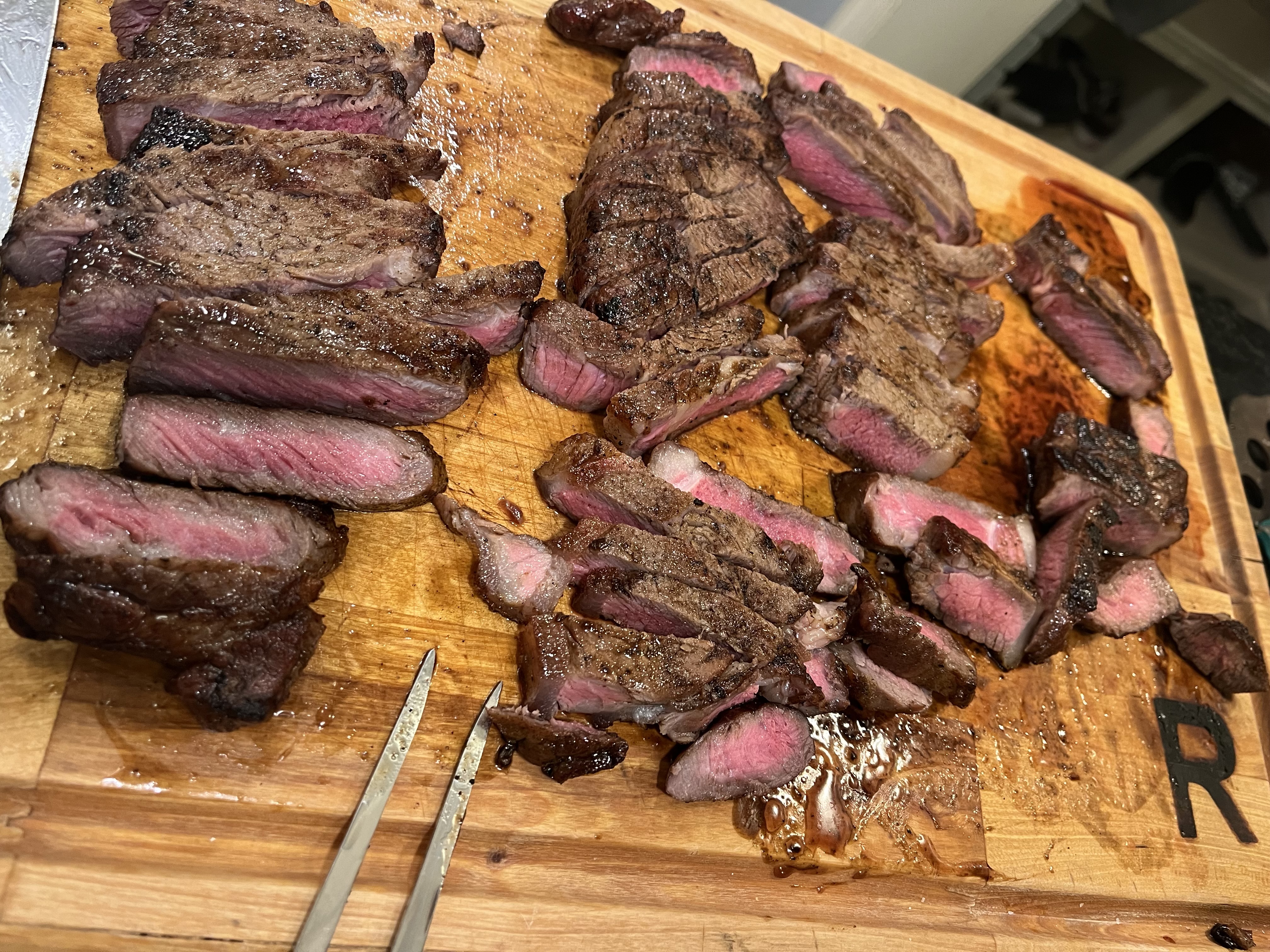
Meet was just overcooked. In the case of steaks the sear went too long as a result.
Steak was still good, I just prefer a wider pink center.
Did you reverse sear (on what surface, and what temp prior to searing)? What temp did you set the combustion device to prior to searing? Did you let it rest between initial cook and sear, and if so, for how long?
This probably says more about my own shortcomings as a cook than anything else, but for me the main game-changer about this thermometer is not the prediction stuff (which I mostly ignore). It’s the multiple sensors that (mostly) foolproof placement, so I no longer miss the center of the food and cook it based on a false reading.
2 Likes
Exactly. Deep fried a turkey once and missed the center and thought it was done early, put it on the table and we were eating around a red center.
Reverse sear. 250*. On a wire rack. Middle of oven. Cooked to 110*. Sear in cast iron skillet with beef tallow. I normally do 45ish seconds each side and then finish the sides of the steak as needed.
This time I decided to sear, flipping every 30 seconds or so until the ultimate thermometer read 130. That was taking lover than my normal 1:30-1:45 total. I pulled it at 125.
I wasn’t watching the app. I was watching the display. Possibly that makes a difference?
I was not disappointed in the flavor or really the steak itself. Was just surprised it had that much of a grey ring given the temps.
I’m still a novice with reverse sear, so take this with a grain of salt. I think you’re definitely going to overcook if you let the meat get to 130 during the sear, but that probably also depends on a number of factors, like how long or if it was rested. The carryover temp will keep climbing quite a bit, and Chris has a number of videos that discuss.
Initial phase seems fine, but I’ve heard you want to rest in between initial cook and sear. My guess is most any searing approach should be fine after that provided the pan is hot enough. I use the display almost exclusively for this method also, but it’s not necessary to consult with the thermometer readings during the sear.
Someone check my math or provide other experiences?
I never leave the thermometer in there during the sear. No real reason. It’s super useful for the low and slow process, but once you get to the temp you want, you pull the thermo and then you just sear for 45 sec each side like you said and get a perfect crust.
I have never used a thermometer in my steak during sear. Was under impression that was one of the benefits of this thermometer so was giving it a run.
You absolutely can, but I wouldn’t use the temp reading to gage how long to sear. Chris has only recommended removal for people who are cooking on extremely hot surfaces (above 550 degrees) and who are worried they will break the thermometer. In 99% of use cases, you can probably leave in to track the internal temp. He’s also noted that above that 550°, you get a more bitter flavor to the sear. Resting between the initial cook and letting the carryover do its thing seems to be the key prior to searing.
1 Like
I didn’t mention in my steps, but the steaks rested. Anywhere from 5-15 minutes.