was curious to learn the opinion of the board about the pricing, and quality of Tuscan Merlot wines. I have tried some of the lessor priced bottlings (i.e. galatrona) and contemplate splurging on the more expensive producers to try a few. Most of them are above my average spend pr bottle, but i am willing to try a few to explore.
I am only considering 100% Merlot, e.g Messorio, Masseto, Redigaffi, Galatrona, L’Apparita, Ricolma, etc.
How do they perform? are they worth the pricetags?
Mattias, search my site for “Italian Merlot”. Or, in short, I buy Galatrona every vintage. Redigaffi is worth it, if you can afford it. Ricolma is ok. But only about $30 here. Two you left out that I typically love: Montiano - almost always great. And Lamaione. The two M’s and L’Apparita are just stupid expensive.
John, Thanks. Very glad to see the glowing review of the 09 Galatrona, as i have a six-pack of these tucked far away. Was not planning to open one before late 2014 at the earliest, but i might.
EDIT: the way you describe good italian merlot, is exactly why i have adored the few bottlings i have tried. That mind-bending aromatic profile combined with the silky fruit and the fullbodied moutfeel, still retaining great minerality yet never beeing heavy. It is very hedonistic in my mind! i have a feeling i will like your recommendations.
From your descriptions, i understand that if i should splurge on a bottle, i should go with Redigaffi. Which vintage would you recommend for trying in the near future? I am not averse to young wines, but would prefer a vintage that has some atleast some evolvement.
I am quite fond of the 2001 Avignonesi Cortona Desiderio which is just coming into its prime. It is Cortona Merlot with a small amount of Cab Franc added. It seems that the 2008 is the most available vintage at retail now.
I really like Ricolma in most vintages but the star of the show is imo Masseto and that is the bench-mark of Tuscan merlot I you ask me so I would save that one for the big bang and try the others first before falling in love with the Masseto which is expensive as hell:-)
I agree with Jim - I forgot Desiderio and have reviewed that a few times on my site as well. I am holding a 1999 Redigaffi until 2014. I’m not sure what’s on the market. If I were buyin that wine now, I’d look for 2009 if drinking soon. 2006 or 2004 too. To wait? 2010.
Its probably gonna be the 2009 if i should try one then. I can get that for aprox 210$. The 04 and 06 are way more expensive. The 1999 sounds really special, but in todays market certainly also out of my reach
I had the chance to taste Messorio '03, '07, and '08.
They are one of the greatest wines I have tried, especially if you can find them below $200.
I rarely chase anything at that level, but there are worse wines out there for the price.
I am generally a fan of Tuscan merlot, whether from Bolgheri or various Chianti regions, along with nearby Umbria. Unfortunately, this 2010 Barone Ricasoli ‘Casalferro’ [Toscana] was a disappointment given that it was bought on release, at full price, with accompanying high reviews. It’s been in a cool cellar since, and was popped and poured without decanting last night, in a ‘matchy’ but inappropriate Riedel more suited to sangiovese. I would note that this wine is now 100% merlot, when in a prior era it might have been a blend of sangiovese and merlot. Current releases seem to be not just from Casalferro vineyard merlot, but have added other merlot plantings from estate vineyards. For my tastes/nose, the problem is that this has developed a medicinal nose, which I doubt was present in its youth, since CT (and professional) reviews are generally positive. The former are more restrained than the latter, which is always concerning. The nose is not VA, bretty, or really any of the normal common flaws, so I don’t think this is an off/flawed bottle. And in a lot of cases, weird funk typically blows off, so switching to a big bowl glass helped a touch, but at the end, even on the second day, there is still a medicine cabinet note to the nose. The palate has fine rich, dense fruit, on the plummy side of the spectrum, and it’s full bodied, with a label promising 14.5%. The cork is natural, and the bottle feels like a Pavie (with the weird / old shape) with little sediment. My belief is the wine is sound, but just needed to be drunk young at say 5 years or so, rather than cellared like the typical merlot based wine I consume (aged St Emilion, Pomerol, satellites etc.). Tannin is resolved, acid is balanced, fruit is rich but the nose is medicinal, and I’m going to give this a B- score.
Current releases run $70, and if this bottle is indicative, they are NOT worth the premium. There is an ocean of great merlot driven right bank wines at that price (or less) which will delight for decades. And if one does look at the triple digit dollar altitude (look up Mark or Robert’s posts!) it can be stunning. I had hoped to insert this into a blind panel of right bank wines at some point, but am glad I didn’t since it would have been embarrassing. I like this legendary producer’s sangiovese more, and will stick to their core competence in the future.
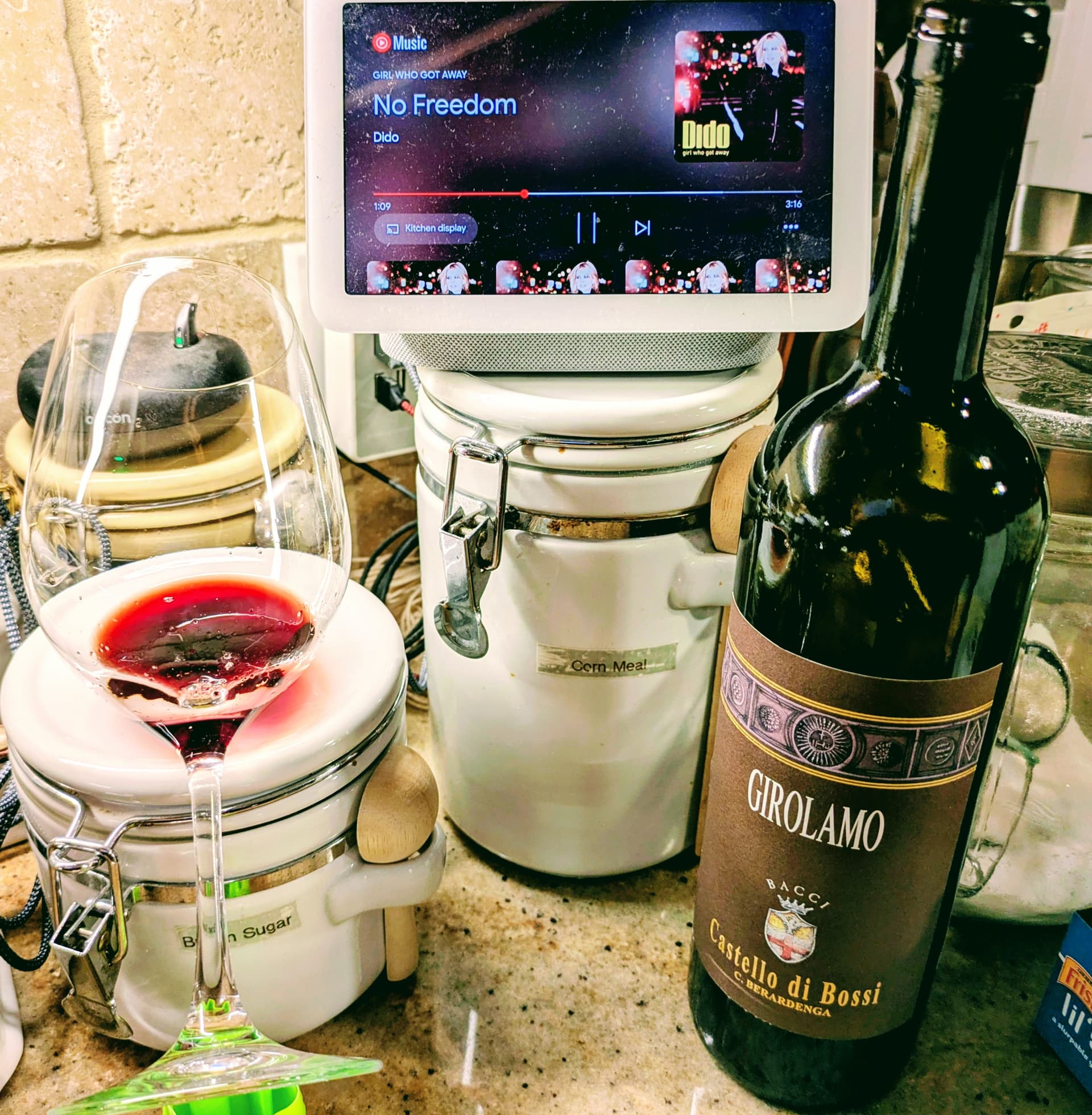
The last few evenings I have been trying to figure out the 2010 Castello di Bossi ‘Girolama’ [Toscana] which is a premium Tuscan merlot. At first it has a very tannic grip, with a chemical/creosote nose, and a flavor profile where the wood has outran the fruit. This is barrel fermented and then raised in new French high toast Allier oak for two years…and it tastes like that was too much for my palate. I don’t think I’m overly sensitive to the compound guaiacol, but the char/tar/creosote character is not something I pick up from conventional expressions/elevage of merlot (i.e. Pomerol, St Emilion) but seems to be an issue with certain moderniste Tuscan houses. [I’d note that Cotarella - of the Montiano mentioned upthread - seems to manage this balance better in his projects as I don’t recall this unpleasantry at Falesco, Fobiano, Sportoletti, Fidelia etc.] That flavor does moderate over 24 hours, but I don’t think this is a function of aeration counteracting reductive vinification which could lead to flinty/matchsticky notes upon opening, but rather the heavy oak treatment. And I say all this as someone who is generally accepting/appreciate of Bacci’s international style at Castello di Bossi. Bottom line, I think this is drying out and should be consumed – on my scorecard it would get a disappointing B- given the rackslot and capital it ‘consumed’ over a decade plus.
Going forward, I’m going to be more circumspect about Italian merlot, unless it’s a name I’ve tasted with some bottle age. Historically, I was more accepting. I was going to append this to Kirk’s TN upon release, but I think that comment was earlier in the evolution, and I suspect I’m more sensitive to the compounds bottle aging results in.
Reading this kind of made me consider just how is Merlot doing in Tuscany. Obviously in Cali production has gone way down. But even in Tuscany Merlot plantings are off by roughly 1/3! And then of course climate change may play a role. Anyhow interesting article here:
2 yrs after the fact but …. Had a similar experience with a 2018 Casalferro — all plum and pepper and way too much alcohol apparent for my tastes. FWIW.
![[cheers.gif]](/uploads/db3686/original/2X/0/0ff9bfcdb0964982cd3240b6159868fbdf215b1a.gif "cheers")
![[soap.gif]](/uploads/db3686/original/2X/a/a7ea1fffd3ef237e8f19d17a83270ad8452218ca.gif "soap")