I really like Riedel’s water glass, but I bet you could drink many, many things out of it.
Oliver:
“…to the degree that taste and aroma are related, my understanding of the situation is that it’s the volatiles that glass shape sets into (or out of) motion.”
Does one need a different glass for Coke and Diet Coke? Where does each hit my palate.
In light of the popular iced coffee thread in Epicurean Exploits, I think Riedel is really missing a great opportunity in not creating an iced coffee glass set.
I do accept (and have experienced) that different glass shapes can influence aroma. Though I think it’s less about glass shape itself, and more simply the ratios of the liquid surface area, area of the opening, volume above the liquid, and probably height above the liquid (which I would guess is more important than volume). In fact, I could argue that all these things probably depend on how big your pour is, and change as you drink from the glass, lowering the level of the liquid.
As for the glass shape influencing taste, I’ve tried that experiment, and the results (for me) match my expectations: zero impact.
Alan at the seminar attended, they poured the same wine into four glasses only one of which was an appropriate one, they did this four times if I recall. You could taste the difference.
There’s a lot of suggestive power in a non-blind, group setup like this 
Ken V. posted an amazing demonstration of the power of suggestion yesterday. Try playing this, just listen while turned away. Then play again and read the suggested lyrics. As they say, “trust but verify”

Alan,
All of the proportions of the glass you mention constitute what one might call the shape of the glass, I don’t understand the distinction.
Well, what I’m saying is that I (personally) don’t think there is much difference to drinking any wine out of a Burgundy glass, vs. a “Cabernet” glass (to make it as obvious as I can). What may matter is the height of the bowl, and the diameters of the opening and perhaps the liquid surface. But even then, when most people swirl and move the glass around while drinking (thus rendering these metrics relatively useless) I’m dubious that glass shape or size makes much difference. Show me the truly blind (literally) study that demonstrates otherwise with statistical significance, and I’ll turn into a believer. Anecdotal observations from people trapped in a room with a group of people, and a slick salesman suggesting to them what they taste and don’t taste don’t mean a lot to me…
Alan,
The first time this came up was when Decanter did a ‘glass tasting’ more than 20 years ago. The UK merchants in the panel all started by saying ‘we’re professionals, we can taste wine out of a coffee-mug’ and ended up in effect conceding Riedel’s point. I did the tasting a little later with Marjorie Lumm, a wonderful woman who was a glass merchant, and we both thought that it did indeed make a difference, and not just to the aroma. Marjorie and I then did a tasting at the Culinary Academy in SF with Riedel and a bunch of invited guests, and I think that most people there thought that it worked, at least to some extent.
Even if it only changes the aroma, and it seems hardly disputable that it does that, IMO it would certainly be worth it.
I suppose in theory one could make an ideal glass for any given wine type, ‘ideal’ defined as ‘most flattering to that type of wine,’ but there’s also an obvious marketing angle too. I mostly use the Overture Red Wine as my tasting glass, and I haul out the larger glasses when I’m opening something older for dinner, either the Burgundy or Bordeaux shape.
We do exactly the same. For me, it’s more about the practicality of the Overture Red for daily drinking (low profile, more stable, easy to wash, etc.), and bringing something “fancier” out for a nice dinner or party. Forgive me for taking a tangent: I look at it the same way I look at golf clubs - if you like the look and feel of a club, that’s a big part of making you feel good about playing. Same with wine glasses 
Have you tried the O series? Talk about low profile. Plus they go in the dishwasher. Riedel just changed distributors in CA, I bought boxes of them.
Of course, they do have a flat bottom, it might change the tasting experience…
Sure, convenient for being outside, or a picnic. But for some reason I don’t “enjoy” the wine as much from these stemless glasses. That’s really what I mean, all kinds of things enter into our perception, and very few of them are measurable 
Cheers!
The decline started sometime in the early 1980’s, mostly centered around LA and Orange counties
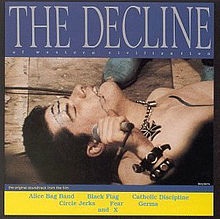
Manimal!
I was skeptical of Riedel glasses as well until I attended a tasting at Inniskillin where we tried some Vidal icewine in a generic wine event tasting glass (the 4 oz max. kind that vaguely resembles a Port glass and is marked with 1 and 2 oz gradients on the side and sometimes 4 oz at the top) and the Riedel diamond-bowl shaped icewine glass.
Without any kind of power of suggestion pre-prompting or sell job, we were simply asked to smell the icewine in both glasses and then sip them from both. The icewine in the Riedel glass was far more aromatic which in turn made it far more flavorful.
Coincidentally, not long after this was the Al Stewart Toronto Berserker offline at Fat Cat restaurant and I believe it was either John Richards or Mike Grammer who generously brought some Riedel Sauternes glasses to share. Exact same principle in the diamond-shaped glass with the sole exception that the diamond shape had a round curve off instead of a sharp straight edge in the middle of the glass where the “triangles” in the diamond shape meet.
Again, the Sauternes was much more aromatic and a lot more flavorful out of the specially shaped glass. This finally turned me from a complete skeptic into an absolute believer.
And most recently at our top-secret high-end wine get-togethers that Mike Grammer, Jay Shampur, and I attend, the restaurant owner refuses to serve us our sparkling wine in flutes. He uses diamond-shaped COGNAC glasses (not snifters, actual Cognac glasses) without fail for any sparkler we bring.
Here’s what I personally believe in general regarding glasses:
-
The diamond-shaped principle makes for the best glasses. It doesn’t have to be an exact diamond to me, but the bowl has to be wide enough to expose a wide surface area of the wine to oxygen but then switch directions and narrow off at the top to concentrate the aromas instead of allowing them to drift off out of the glass like a wide open rim does.
-
Never overfill the glass. If you pass the middle point of the bowl and start filling up the “top triangle” of the diamond shape with liquid, you kill the point of what the glass is trying to accomplish.
-
In contrast, I have come to seriously hate wine glasses with large rim openings or, worse still, glasses that start out narrow but curve into a rim that’s wider than the body of the glass itself.
-
I will never drink anything out of traditional Port, icewine (non-diamond shape), Sherry copita, Cognac balloon snifter (which I find totally ridiculous as they take the diamond-shape principle too far and negate any benefits of it due to their sheer size) or champagne flute glasses if I can avoid it. Especially that last one. I think too many people forget champagne is a wine and should be treated as such despite the bubbles. I also believe many traditional glasses were created more for appearance than actual practicality.
-
My favorite Riedel glasses that I’ve tried are their Rioja, icewine, Sauternes, and Burgundy/Pinot glasses. The Rioja and Burgundy/Pinot glasses work amazing well with whites and sweets as well.
Oddly enough, the glasses I do own are actually just generic Bordeaux/Cabernet glasses which I barely find acceptable and those aforementioned generic tasting glasses I mentioned above. I should really do something about that.
The few times that we’ve dined together you never mentioned your knowledge of Darby Crash or The Germs.
A change in aroma SHOULD cause a change in our perception of the taste. The two are tightly linked. Some believe that without aroma you can’t taste…hold your nose and compare Riedel with the same wine in another glass; then, do it again without holding your nose. The wine probably will taste the same from each glass the first time and different from each glass the next time. At least that’s the hypothesis.
Now that I think of it, the same should happen with any two glasses that are differently shaped and of different composition.
Awwwright, guys…this thread is supposed to be all about making fun of GeorgRiedel…not a serious discussion!!! ![[snort.gif]](/uploads/db3686/original/2X/b/bdc3944606213c4dca6c1169cf0a166c8bc4f8c9.gif "snort.gif")
Certainly the taste is seriously impacted by the aroma. But in one case, when you’re sniffing the wine, it’s delivered directly to the
nostrils. When it’s in the mouth, it’s delivered thru the inner nasal passages. Once you have it in your mouth & slosh it around, it beats heck
out of me how the shape of the glass impacts what you taste.
Tom
Thank you, Tom ![[cheers.gif]](/uploads/db3686/original/2X/0/0ff9bfcdb0964982cd3240b6159868fbdf215b1a.gif "cheers")