Lunch today was at La Tienda, organized by Miguel - one more wine-filled meal before he heads to Spain anew…for even more wine-filled meals, I expect. Just 4 of us for lunch: Miguel, Keiichi, Jean d’Orival and I.
We’ve missed eating at La Tienda since Javi went on his annual vacation back home to San Sebastián, so, now that he’s finally back, we were raring to go. We started off with several appetizers and Javi had a few different ones for us today:
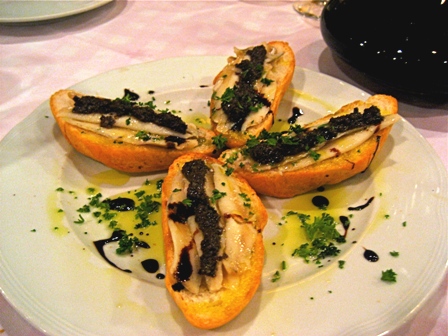
Pan con Anchoas y Olivada
(a slice of toasted baguette drizzled with olive oil and topped with fresh anchovies and tapenade)
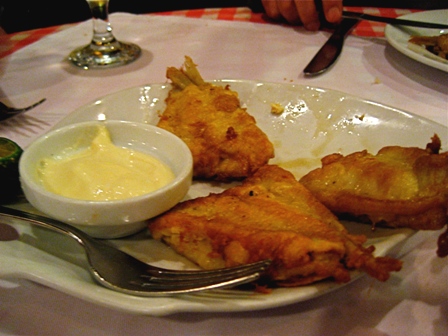
Sardinas Fritas
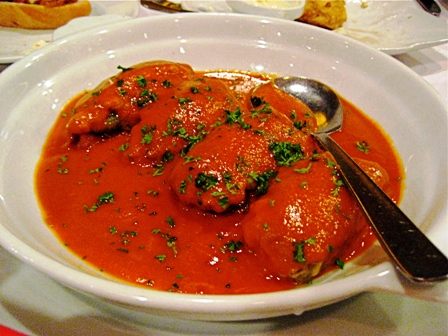
Pimientos Rellenos de Bacalao
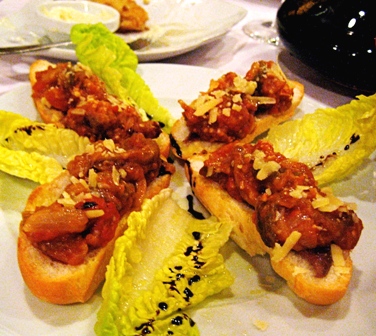
Escalivadas (of course we had to have this, no meal is complete in La Tienda without it)
With all these, we had a bottle of:
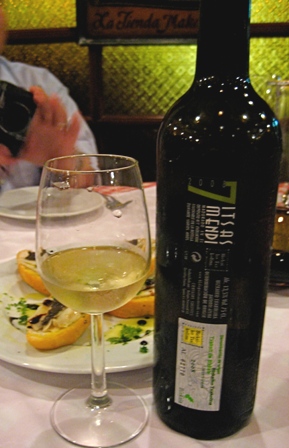
2008 Itsas Mendi 7 Txakolí - My bottle, from a batch that Miguel brought in for me from Spain. Txakolí is a traditional Basque wine (made of hondarrabi zuri grapes) from the D.O. Bizkaiko Txakolina, particularly from Guernica (or “Gernika” as the Basques spell it). The only other txakolí I’ve tried was the 2008 Txomin Etxaniz(24 June 2009, lunch at La Tienda). Of the 2008 Itsas Mendi 7, this is the second bottle I’ve opened, the first one very recently at Miguel A’s (why are so many Spanish-mestizo friends named “Miguel”?) 12 September 2009 dinner at Elbert’s Steak Room. My notes of that bottle, still applicable, are as follows:
Txakolí is a very dry, light, vaguely spritzy white wine that is meant to be enjoyed casually and young. This particular one was not as spritzy as the Txomin Etxaniz of the same vintage and was notably fruitier, with a more pronounced and rounded middle. The dominant flavors are bone dry ripe grapefruit, green apple, bit of citrus with nuances of fresh grass and white seashell. There is a lip-smacking faint bitterness towards the back and in the somewhat abrupt, dry finish that makes me want to take the next sip as fast as possible. Very recommendable as an apéritif with, I imagine, fresh shellfish.
Probably due to its fruitier and rounder character, Javi opined that it resembled an albariño and, noting that Itsas Mendi is located in inland Guernica, explained that txakolí is traditionally made in areas closer to the sea - such as in the case of the aforementioned Txomin Etxaniz (located in seaside Getaria, D.O. Getariako Txakolina, which, incidentally, is a mere 30-35 kilometers west of Javi’s hometown of San Sebastián). I could easily be wrong, but perhaps the inland terroir of Guernica gives less stress to the vines and, hence, makes the Itsas Mendi fruitier and rounder? I’ll have to consult PhD in Oenology JC de Terry (expert in all edible/drinkable things Spanish) about this.
Well, Javi obviously favored the Txomin Etxaniz over the Itsas Mendi. I thought it was maybe because the Getariako Txakolina wines are “closer to home”? Well, I know Jancis Robinson thinks Txomin Etxaniz is the best producer of its area, for whatever that is worth. Personally, I agree with Javi in that the fruitier Itsas Mendi 7 resembles an albariño, but think that it is more easily approachable for it. I do like both, though. Problem is, Miguel and I have no more of the Txomin Etxaniz.
The table was then cleared for the:
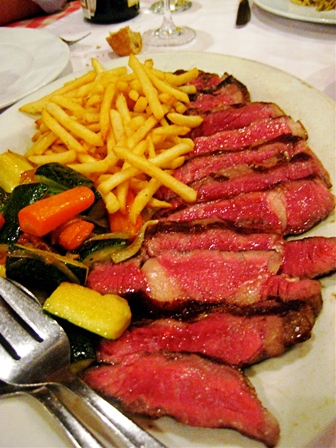
Chuleton with a small order of Paella de Verduras with basmati rice (no picture) and…
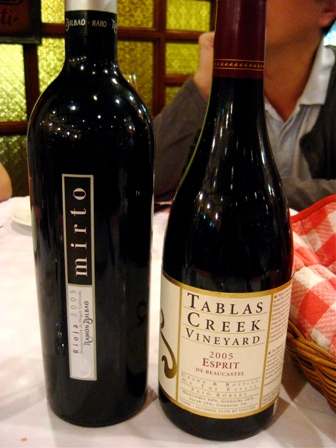
The Reds.
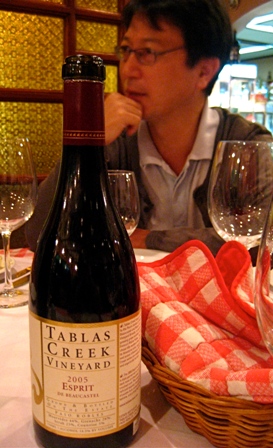
2005 Tablas Creek Vineyard Esprit de Beaucastel - Keiichi’s bottle. From the name, it was obvious that this wine is a product of some sort of American tie-up with the Rhône heavyweight, Château de Beaucastel. A quick check reveals that Tablas Creek Vineyard is, indeed, a joint venture between Beaucastel and Vineyard Brands’ Joseph Haas. Interestingly, Tablas Creek is located in Paso Robles where I visited once to attend the annual pre-Hospices de Rhône dinner of Augie Hug (Hug Cellars) in early May 2006. Had I known about this tie-up, I would have tried to arrange a visit to Tablas Creek.
In any event, this wine is made up of mourvèdre (44%), 26% grenache, syrah (25%) and counoise (5%), the vines of which were grown from cuttings which came from Beaucastel’s estate, the grapes fermented in stainless steel tanks, crushed, blended and aged in huge 1200-gallon French oak foudres until bottled in May 2007 (info from Tablas Creek’s website).
Though initially apprehensive about this young Central Coast Rhône blend, (yes, because of my admitted Franco-centricity), from the initial sniff, I found its lightly musky, slightly gamey/meaty/sauvage black cherry, blueberry and olive scents did call to mind Beaucastel’s Châteauneuf-du-Pape (note that this wasn’t tasted blind though). Quite fragrant, actually, and I did not find it at all hot on the nose despite its 14.5% abv. In the mouth, it was easily approachable, its warm fruit (some underlying dark plum in there) surprisingly soft and pliant on a quietly full body. The wood is also surprisingly well in check and seems better-integrated than its youth would make one expect.
Still a bit primary at this young age, I found it drinking very well already, with a good chance of added complexity with a few more years in bottle (maybe 3-5 years). At a modest/reasonable P2375/bottle full retail at Premium Wine Exchange (approximately US$49.50), I recommend it with confidence.
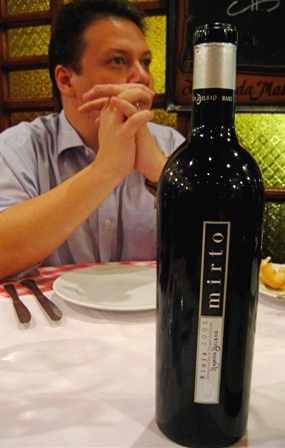
2005 Bodegas Ramón Bilbao Rioja Mirto - Miguel’s bottle, decanted for around 45 minutes to an hour before we got to it. I am aware of the maker, an old name, but am not familiar with their wines. It does, however, seem to cast a French shadow in that I did not detect any American oak (traditionally used in Rioja). Deeply-veined, earthy fruit (black cherry and blackberry with a whisper of violets) suggest old vines. Not overly ripe or extracted (a good thing for me), there is a good amount of submerged leather and toasty oak, the wood very smoothly blended in and not obtrusive. Fairly firmly structured, bordering on full-bodied, rich but not at all over-bearing, I like this style of Rioja - it makes me think of a young 1996 Beronia Gran Reserva which I really liked. Nice.
Unfortunately, this is not locally available. Miguel brought this back with him from Spain. Oh well, it was good while it lasted.
After a few more stories and cigarettes, we parted ways. Lovely lunch, enjoyed the food as usual. It was great to get to eat Javi’s food again. We’ll surely be back.

![[cheers.gif]](/uploads/db3686/original/2X/0/0ff9bfcdb0964982cd3240b6159868fbdf215b1a.gif "cheers")