My usual soy is the Kikkoman Maroyaka. My local store hasn’t had it for awhile, and I’m getting close to needing a new bottle. I know I could order it online, but I like trying new things, too.
Does anyone have a suggestion on which soy sauces I could seek out as a substitute? I’m looking for something that is as similar as possible; if there’s nothing similar out there, then I’ll just order online.
Ha! I didn’t know what mine was called, maybe because I removed the paper wrapping and it’s all written in Japanese on the bottle(?), but a quick search shows it’s Kishibori.
+1 on Kishibori - I think I’m on my 3rd bottle and one easily lasts over a year
I haven’t had kikkoman in decades. Assume this taste nothing like it but so enamored with it that posting anyway. The Haku Black Garlic Shoyu has become my new favorite after having been gifted a bottle two years ago.
You can’t get this in grocery stores and I am almost loathe to tell anyone about it, lest demand starts to outpace supply, but if you want literally the best soy sauce in the world (IMHO)… the DRC of Soy Sauce, if you will… then you will seek out some WuWanWo “Harmonius” soy sauce.
Is it a touch expensive? Yes, but we’re talking about the DRC of Soy Sauce, folks.
dipping of various things: fresh spring rolls; deep-fried/baked spring rolls; sushi; gyoza/pot stickers. Used in other ways, too, but I’d bet about 80% of what we consume is for dipping.
Got it. In addition to the premium options above, if you don’t want to try another Kikkoman, and would like to stick to Japanese brands, perhaps consider one of the Yamasa? It would probably go well with the sushi and gyoza.
For the deep fried spring rolls, I’d prefer a darker soy sauce mixed with sriracha. For the fresh spring rolls (summer rolls), I’d probably use hoisin sauce (Lee Kum Kee has a popular one). But rather than getting all of these different sauces, it probably makes more sense to start with a Yamasa and see if it suits your needs.
I’m no expert but I would imagine that most soy sauce, if kept in the refrigerator, would last at least a couple of years. I think it has to do with the high salt content and natural fermentation. Some traditional soy sauces are kept outdoors in large earthenware jars for generations without going bad.
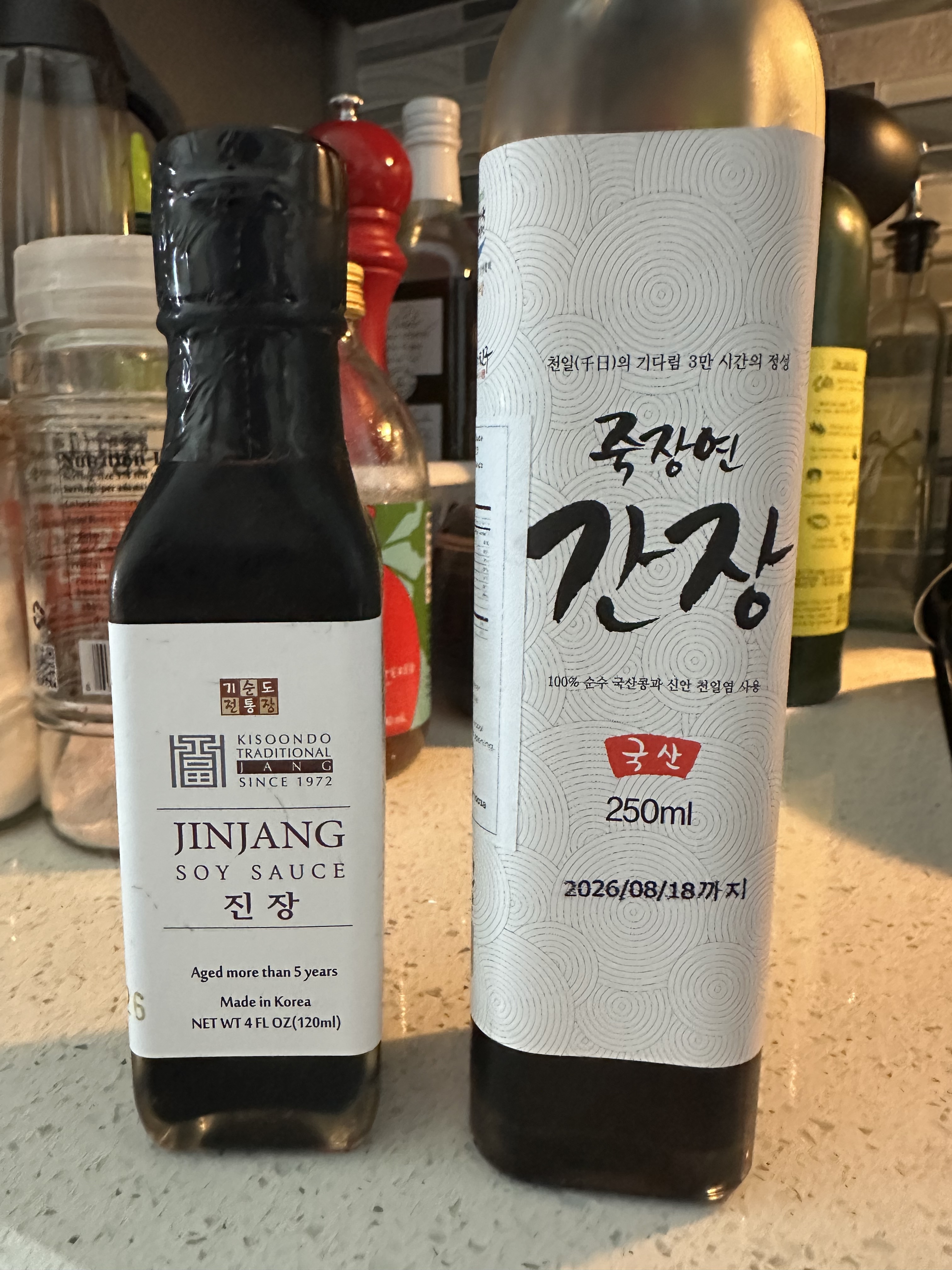
At home, my wife cooks mostly Korean food and we have a mix of different soy sauces.
The Trader Joe’s one we use for udon.
The big bottle is a darker soy that we use more for dipping or marinading.
The one on the right, we use more for broths and vegetables.
In the second picture, those are our more premium soy sauce—we used the one on the right for bulgogi last night.
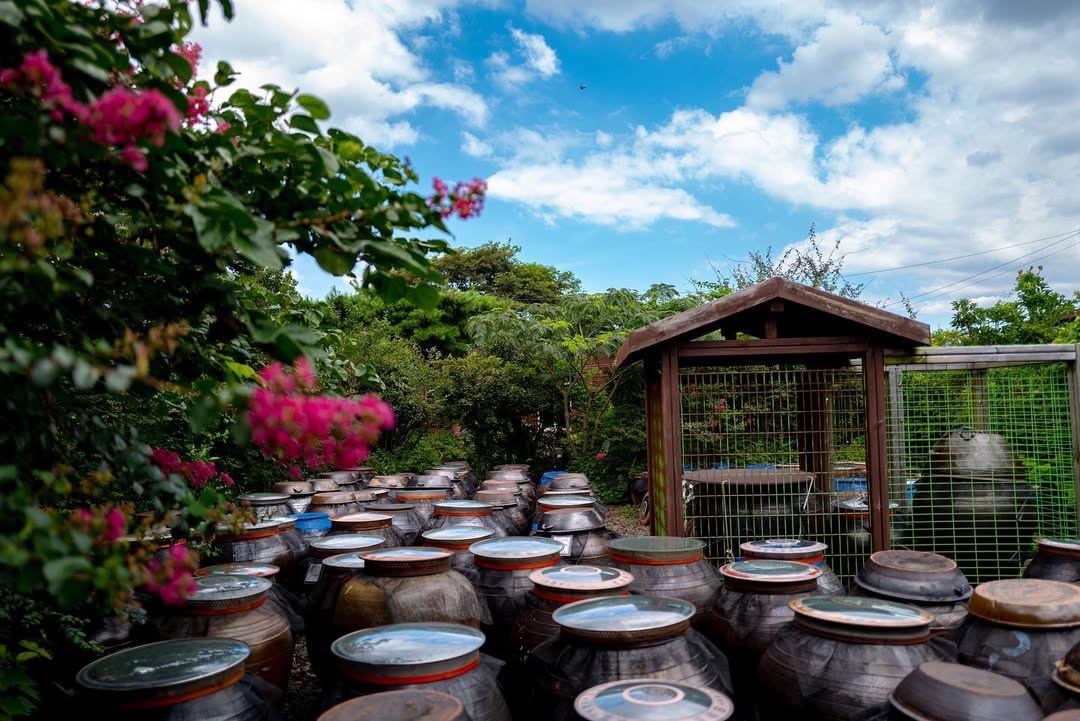
Last May, we had dinner at a restaurant called Ojina on Jeju Island, where @MadsW lives, in Korea. They literally lock their heritage soy sauce behind a gate. It’s in the wood and metal structure on the right. The soy sauce is over 100 years old (I can’t remember how old exactly).
All of these pots have different sauces, mostly soy sauce, doenjang (soy bean paste, similar to miso), and gochujang (hot pepper paste). They are left outside year round.
Amazing stuff. had a 7 year old doenjjang at a temple next to Jirisan last autumn.
I don’t know much of soy sauce TBH, but we use two at home— a darker and a lighter. Just standard local supermarket stuff.
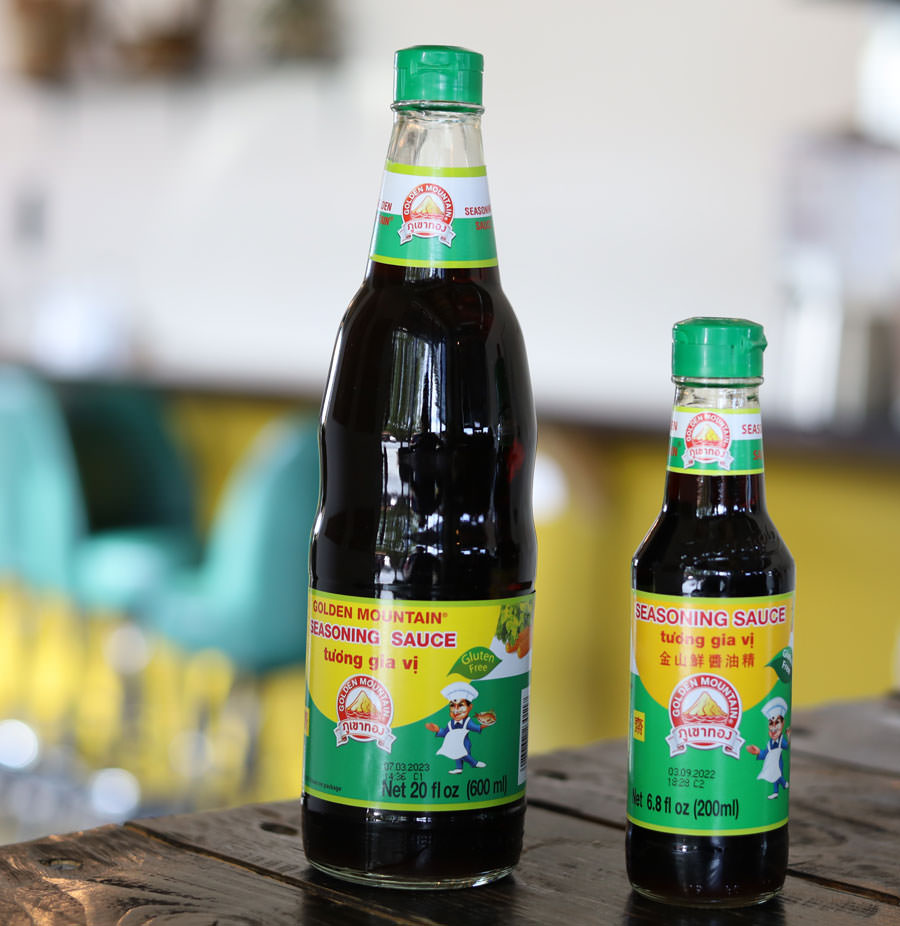
And now for something completely different…my southeast Asian family almost exclusively uses a Thai product called Golden Mountain Seasoning Sauce, a lighter and sweeter soy sauce that works well in Thai and Vietnamese cooking. I’ve often wanted to experiment with Japanese and Korean products though and will check out a bottle of Kishibori (thanks), and for folks who normally use something like that, maybe this would be something to experiment with.
Did you get to taste it? Asking because I took a balsamic vinegar tour in Modena, and the very long-aged vinegars were not as good. There was too much wood influence; much like a long-aged whisky.