Prices of top red Burgundies - is this insanity, or just supply and demand?

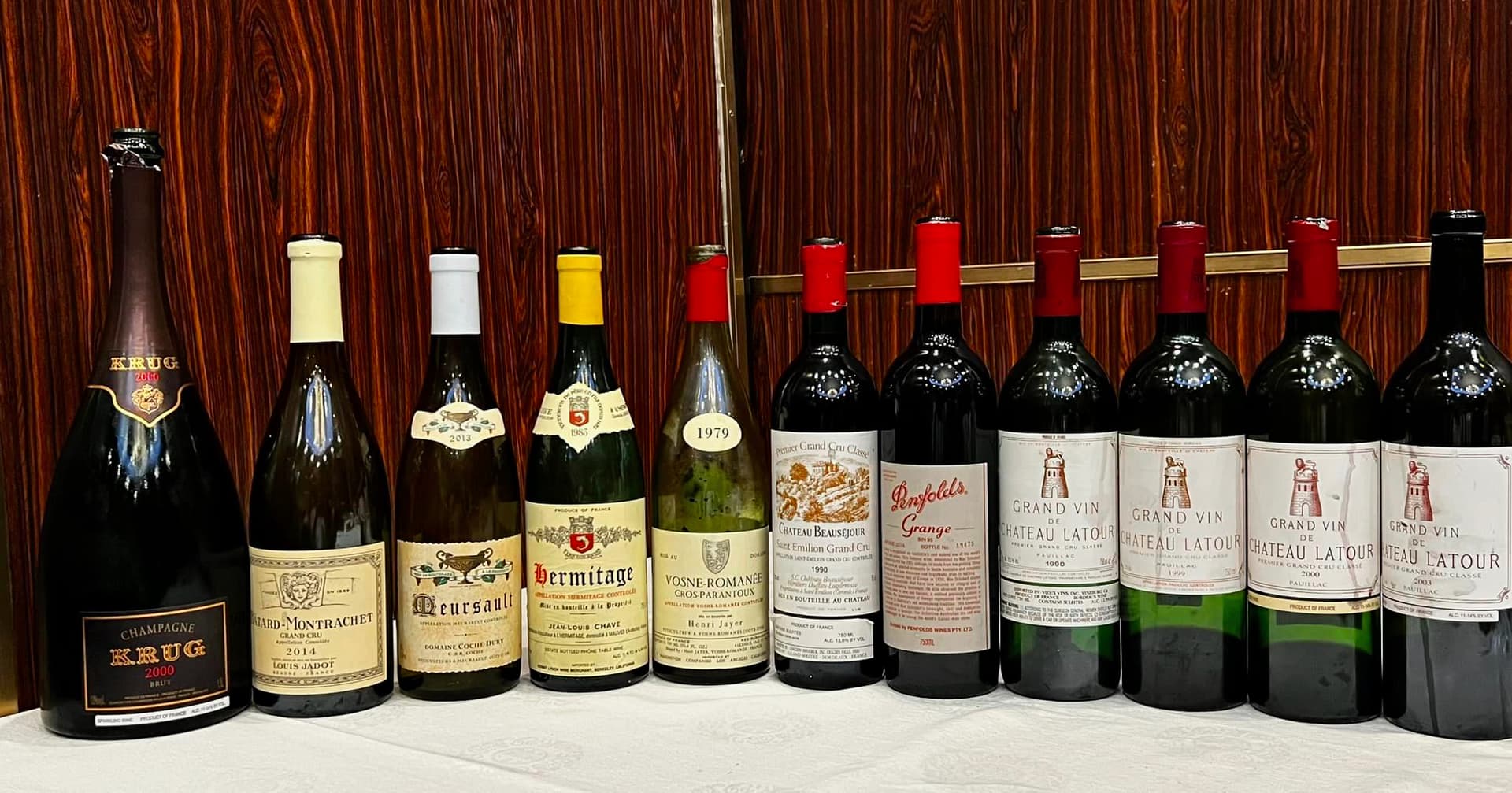
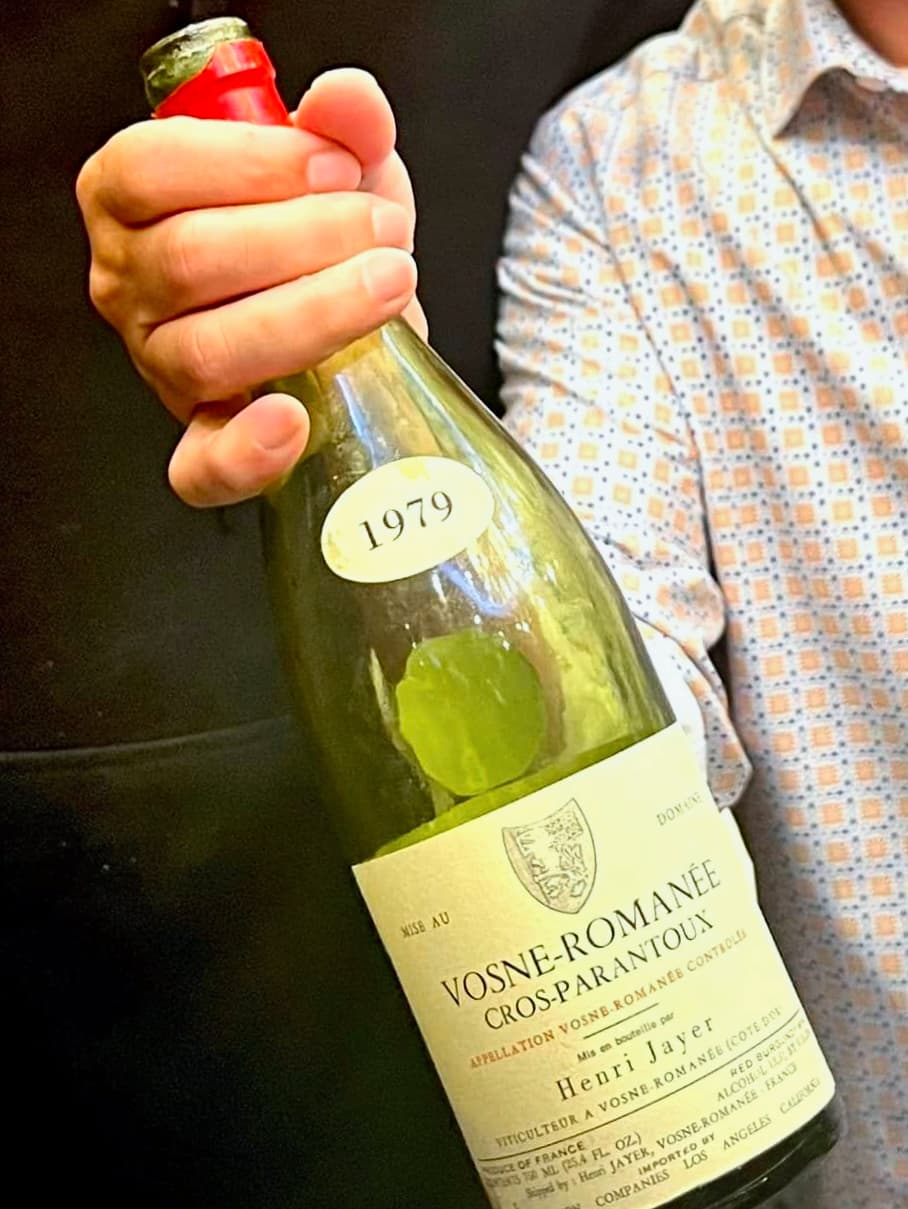
Some of my friends had the foresight to start collecting Burgundy 20-30 years ago. One brought this bottle of 1979 Henri Jayer Vosne-Romanee Cros-Parantoux to dinner. It was a very good bottle. I looked online, and the prices of this bottle range from $6,000 to $14,000! After all, it is only rated 93 by Burghound.

These guys have deep pockets, buy smart, and very few of them pay current prices. But, as you can see by the lineup for dinner, they drink very well and are very generous with their wine.

Is that kind of pricing a form of insanity, just too much fuck you money in the world, or just a ridiculously short supply of wine by top Burgundy producers? Any thoughts on top Burgundy prices?


All of the above?

5 Likes

Jayer has been dead for a number of years and even before that had retired for a long time. Certainly, Burgundy is expensive, but Jayer wines are very highly prized and there are not much of them anymore.

Outside of the extremes quite a few very much alive producers seem to trade at similar prices on the secondary market, no?

You can call it crazyness, too much money, a desire to get only the best (most hyped) etc …
Jayer died in 2006 and made not much wine after 2000, so it’s rare, but the prices for producers like Bizot, Arnoux etc for relatively “simple” wines are really foolish

Very foolish. Money to burn. When wines are getting these kinds of prices, something is upside down.
Domaine Leroy Musigny Grand Cru 1999: $32,848.
Domaine Leroy Chambertin Grand Cru 2013: $14,758.
Domaine Leroy Corton-Charlemagne Grand Cru 2011: $6,017.
Domaine Leroy Le Montrachet Grand Cru 1978: $4,192.
Domaine Leflaive Montrachet Grand Cru 2007: $18,500
Domaine d’Auvenay Bâtard-Montrachet Grand Cru 2012: $25,451

1 Like

A few, yes. Quite a few, NO.

All of those you mentioned are made in very tiny quantities and all but one are made by one woman. Any wine made by her commands a 10x premium. Leflaive Monty is supremely tiny, like half a barrel a year, so it’s simply supply and demand.

But those prices you quoted are not the actual trading value of those wines in most cases.

2 Likes

It’s not insanity. It’s wealth, and limited supply. There are enough/many very wealthy people that want these wines, and will pay what they must to get them. There’s a very healthy competition (indirect mostly - through the markets) that drives prices up.

The worst thing about this to me is that escalating prices are not just about those ultra rare bottles discussed above. Instead it’s bled over into much of what makes up Burgundy and surrounding wine production regions. Small producers, large producers, old school, new school are all seeing demand drive up pricing and many are re-setting their books higher. Of course there are exceptions, but they’re getting rarer.

2 Likes

If you want to pay for those extraordinary wines, good luck to you. Several years ago, I realized that I would never drink $1000+ wines regularly, and sold my DRCs and Rousseaus, maybe at half their current prices.

I came down to second tier wines, mainly Trapet and Rossignol Trapet. The Trapets doubled after 2016, so I went down another tier, buying Jouan and Glantenay. Quite happy drinking them, and drink the few remaining first tier wines maybe once a year. For whites, I can enjoy Carillon and Niellon premier crus, although I did go a little nuts, and bought the 2020 Niellon Chevalier. And let’s not forget the non Raveneau Chablis.

There is absolutely no reason to pay the stupid prices. The chances of getting a life changing grail experience is slight, and besides, I have hit those stunning wines at around the same rate with Bordeaux at a fraction of the cost.

8 Likes

I feel the same way about CDP and Barolo. Some absolute stunners, for $75 to $200 a bottle. I enjoy those amazing Burgs when my friends pop them, but could never spend anywhere near what they are asking. But, since I am not a centimillionaire, it does not apply!

To address these two in particular,

Domaine Leflaive makes one barrel of Montrachet each year, which is absolutely tiny compared to their production of everything else. With any top producer, there is always going to be a select group of clients who get a good portion of the top production wines- which can make allocations for importation and distribution to the rest of us even more difficult.

For a very long time, courtesy of several stores that did high volume, Texas got one of the largest allocations of Leflaive in the entire world- I am talking double digit numbers of six packs of each of their traditional grand cru lineup for a start. With all that came 1 bottle of Montrachet- and it went to Houston.

I bought at release (for the staggering at the time price of $375 and $425, respectively) the first widely released vintages of Auvenay Criots and Chevalier- 1995. MacArthur called me a few weeks later asking me if I wanted more since noone was buying them at that price.

I do not recall exact figures, but the back of the Criots label indicated there were about 120 bottles produced. I believe there was just shy of a barrel (300 bottles) of the Chevalier. I have no idea the Batard production- but the other two sell for similar prices, so…

Rarity always matters, and while I would have argued to you for much of the past 20 years that burgundy prices were “rational” because of the scarcity factor, it is very clear that in recent years the pricing in many cases is driven by far more than what the wines are worth for their original intended purpose (ie. drinking.)

The three main points of evidence for that- IMHO- are,

  1. The large number of so-so producers or brand new producers that are suddenly selling for prices equal to or far greater than excellent to top of the line producers with an established track record.

  2. The great many wines that continue to go up in price despite being past their prime. 1980 La Tache is a great example. Glorious wine- or at least it was back in the late 1990s when I thought it was starting to fade. Back then you could get it for $500ish, give or take. These days the going rate is $5K-$10K a bottle and I would not even think of buying it again to consume unless it was in a pristine magnum.

2a. #2 is partially explained by the fact when someone gets deep into wine, they become aware of the legendary bottles- the bucket list wines- and that list gets permanently in our heads. Unfortunately, the wines eventually fade. 1945 is still a relatively safe bet for the good examples, but you still see strong prices for 1959, 1969 and 1978, despite the fact those wines have their peaks behind them. Same issue in jewelry- most people know the Big 4 stones- diamond, sapphire, ruby and emerald. Their fame is timeless, but all gem deposits eventually run dry. Your average jewelry store these days will sell synthetic ruby (honestly advertised) or stones that are not even transparent rather than other newer finds of similarly colored gems because people want “ruby”.

2b. There is something of a Rudi effect here as well I think. He presented so many fake and refreshed bottles at tastings that it gave a very false impression to many of how long great burgundies are at their peak.

  1. The rarest wines of them all are often the most available. In 2016, Rousseau’s Chambertin production was down 60%. And yet to this day, it is hard to find an auction including lots of top burgundy that does not have at least one lot of this wine for sale. If people had bought that to drink, it would be nearly impossible to find- and yet it is one of the easiest things to buy these days. Just wait a few weeks and someone will have some for sale. On the other hand, try to find a few bottles of a really great Bourgogne Rouge from someone like Roumier or Rouget a year or two after the vintage. Much different story because those are far more often being purchased to drink.
14 Likes

Thanks for your perspectives Tom. I had no idea the 1995 d’Auvenay Chevalier was the first widely released one. It is likely to remain the ONLY bottle of that wine I will ever see, let alone taste :slight_smile:

From a recent Bloomberg article:

But luxury goods, whether they’re handbags or supercars or fine wine, don’t straightforwardly adhere to the pricing rules that govern most consumer products. When the thrill of buying something expensive is fundamental to the pitch to customers, the price itself becomes part of the product.
In economic terms, what we’re talking about are Veblen goods, named after Thorstein Veblen, the Gilded Age economist who first described the consumer phenomenon of products for which demand increases in tandem with price. That ran counter to the conventional wisdom at the time, which was that high prices suppress demand and low prices stoke it. Veblen goods are a type of status symbol, intended specifically to signal one’s economic status; their high prices are essential to the products’ consumer appeal. Handbags, which offer a lot of opportunities for distinctive design or logo adornment (and, therefore, recognizability), are among the most effective Veblen goods in consumer history.

I think this really captures the situation better than anything else. I never saw 79 Cros Parantoux when I was in wine business in the late 80’s and early 90’s but I saw the 1985 and 1990. I wish I could remember pricing better, but I want to say the 1985 was still less than $75. That 85 Chave Hermitage was likely $30-35 on release, and I remember 1990 Latour was $90 on release (cheaper if you bought futures).

So having the foresight to be born earlier when the wines were cheaper was, and continues to be, a major advantage.

3 Likes

I had the good fortune a couple of years ago to assist in the consumption of a late release bottle of the Leflaive Montrachet 2000. It was absolutely lovely in exactly the way of an old Remoissenet bottle but in all honesty not worth the price of a fairly decent motor car or violin.

I think Mark’s approach here is a good one, and I think it would be helpful to have others start naming alternatives to very highly priced producers.

While I have no Rousseau and little Trapet, I have a good bit of Rossignol-Trapet and like the wines very much.

In another thread on Meursault, I recently mentioned Bouchard as a good alternative for higher priced Meursaults.

I was recently at a tasting of wines from MSD. We had a couple of wines from Dujac and they were quite good. But, they really were not in a different universe from wines we had from Jouan and Arlaud from comparable appellations.

A few other producers whose wines I have bought over the past several years as excellent alternatives to more expensive producers include Hudelot-Noellat, Bernard Moreau, Chandon de Briailles, and Domaine Amiot et Fils - although the prices of some of these have risen a lot over the past several years as they are getting more discovered.

2 Likes

Really interest, counterintuitive point.