Otto's Portugal travelogue / winery visits

Day 4

After a quick breakfast at our apartment, we packed our luggage and went on to perform our daily routine: the van tetris!


We’re starting to be pretty good at this by now.


All we had to do was navigate these teeny tiny streets of the old town and we’d finally be on our way to Douro!

Our first stop for the day was at Quinta do Noval at 11:30. However, we left early enough so we had enough time to do some quick photo stops at any picturesque spots that might come our way. Fortunately we were prepared!
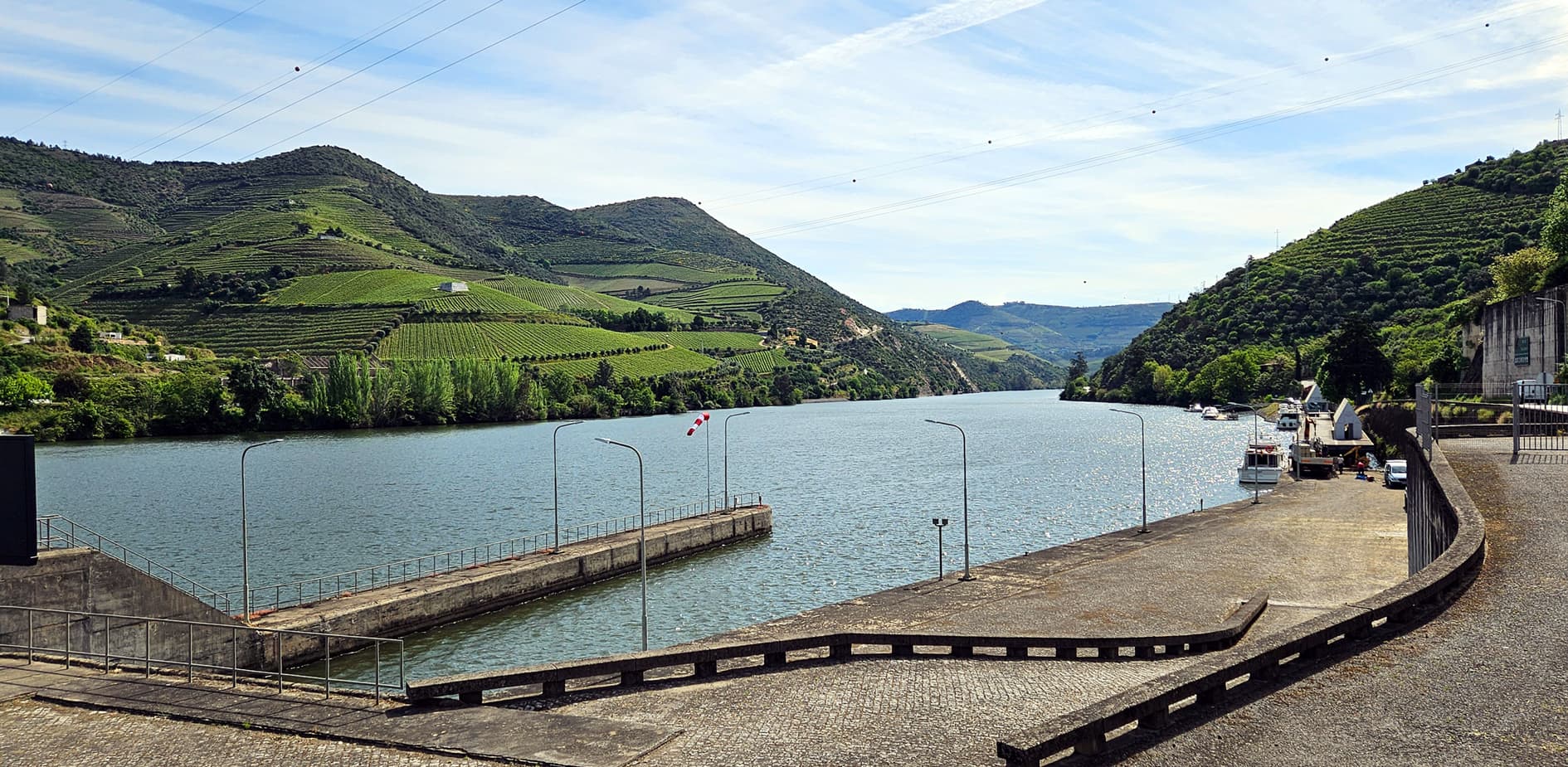

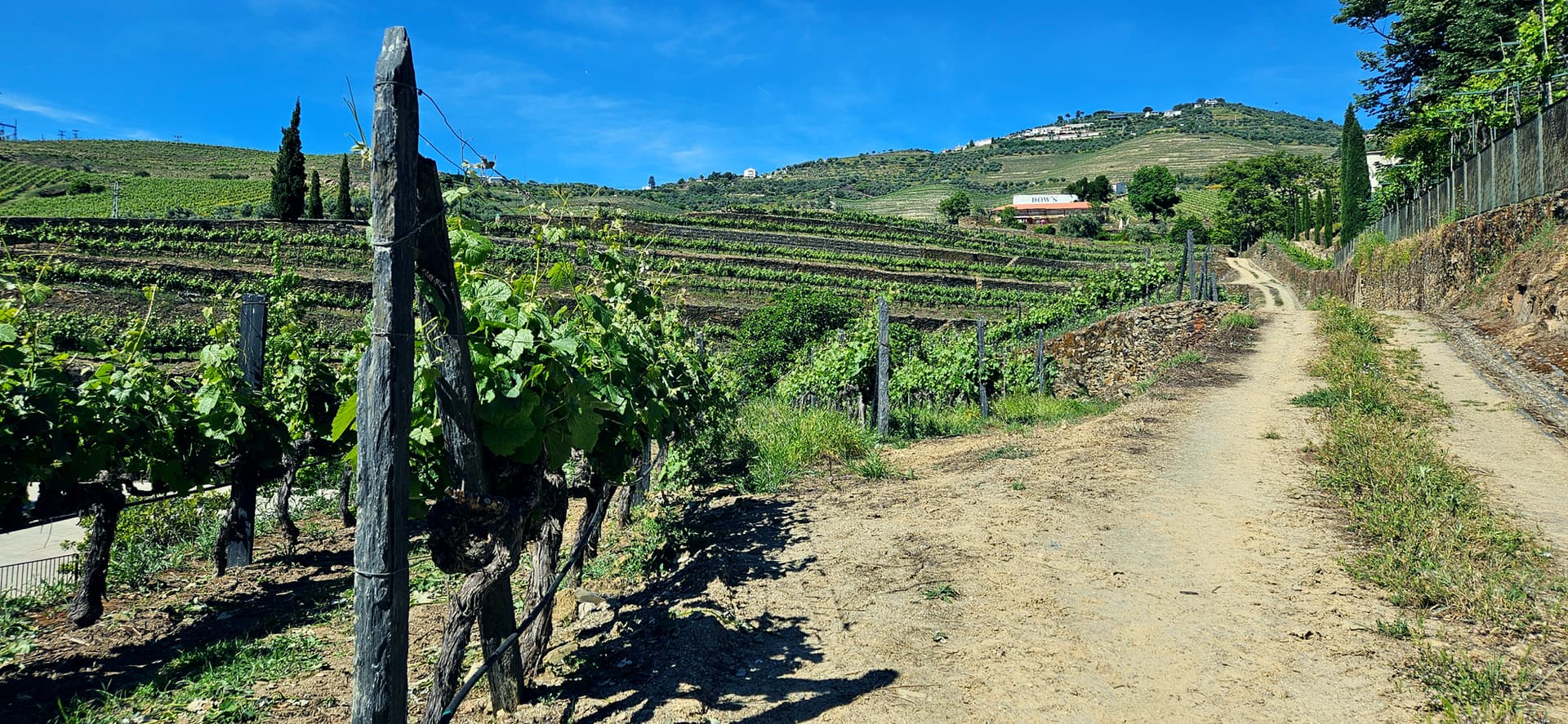
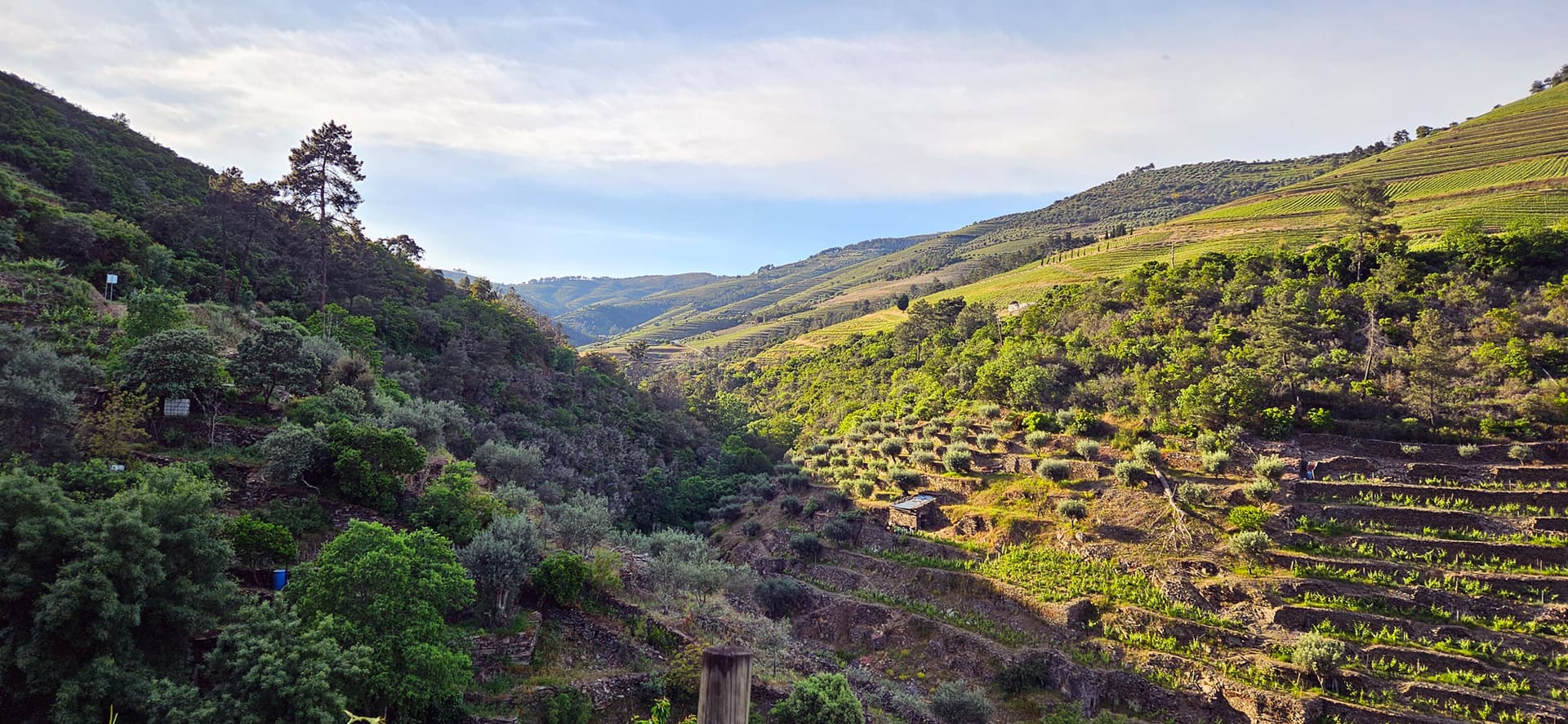
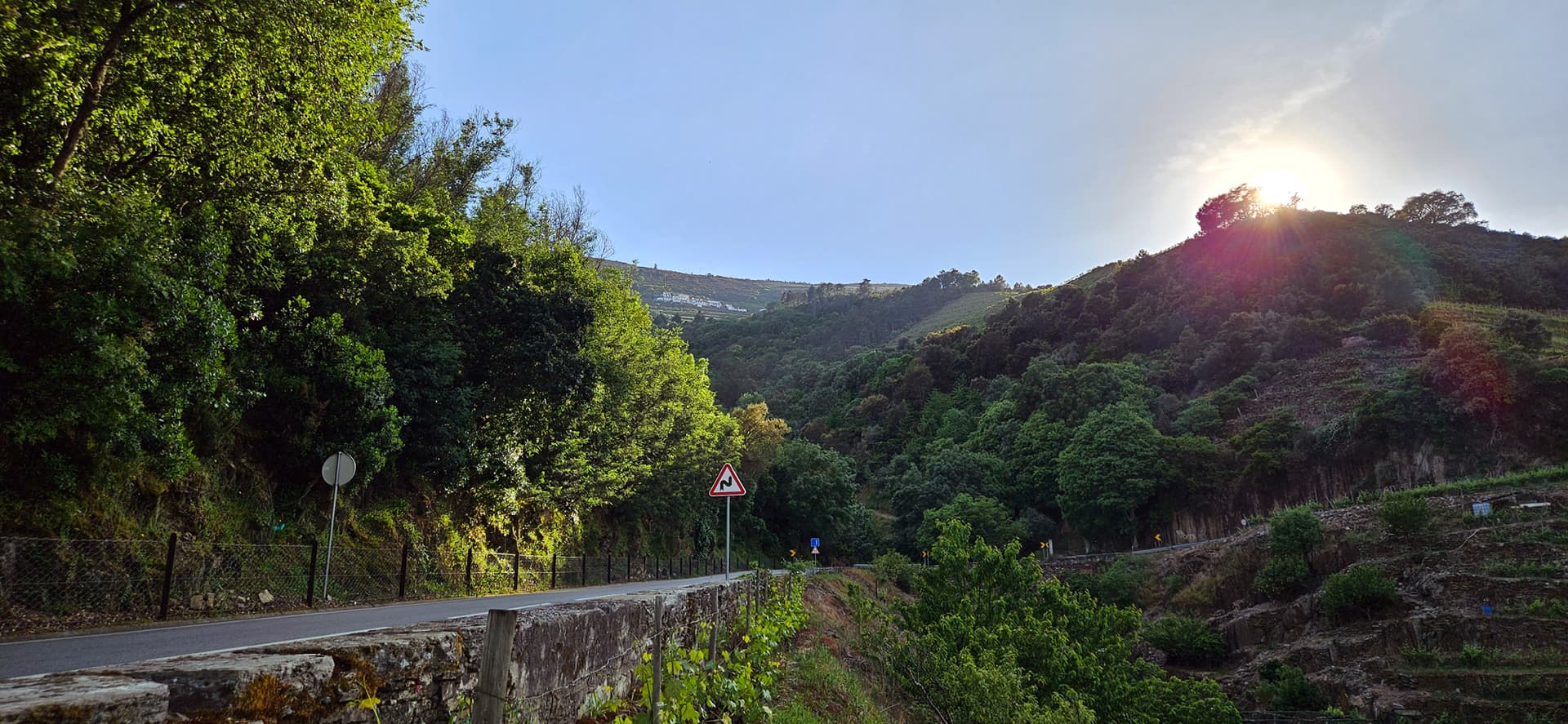
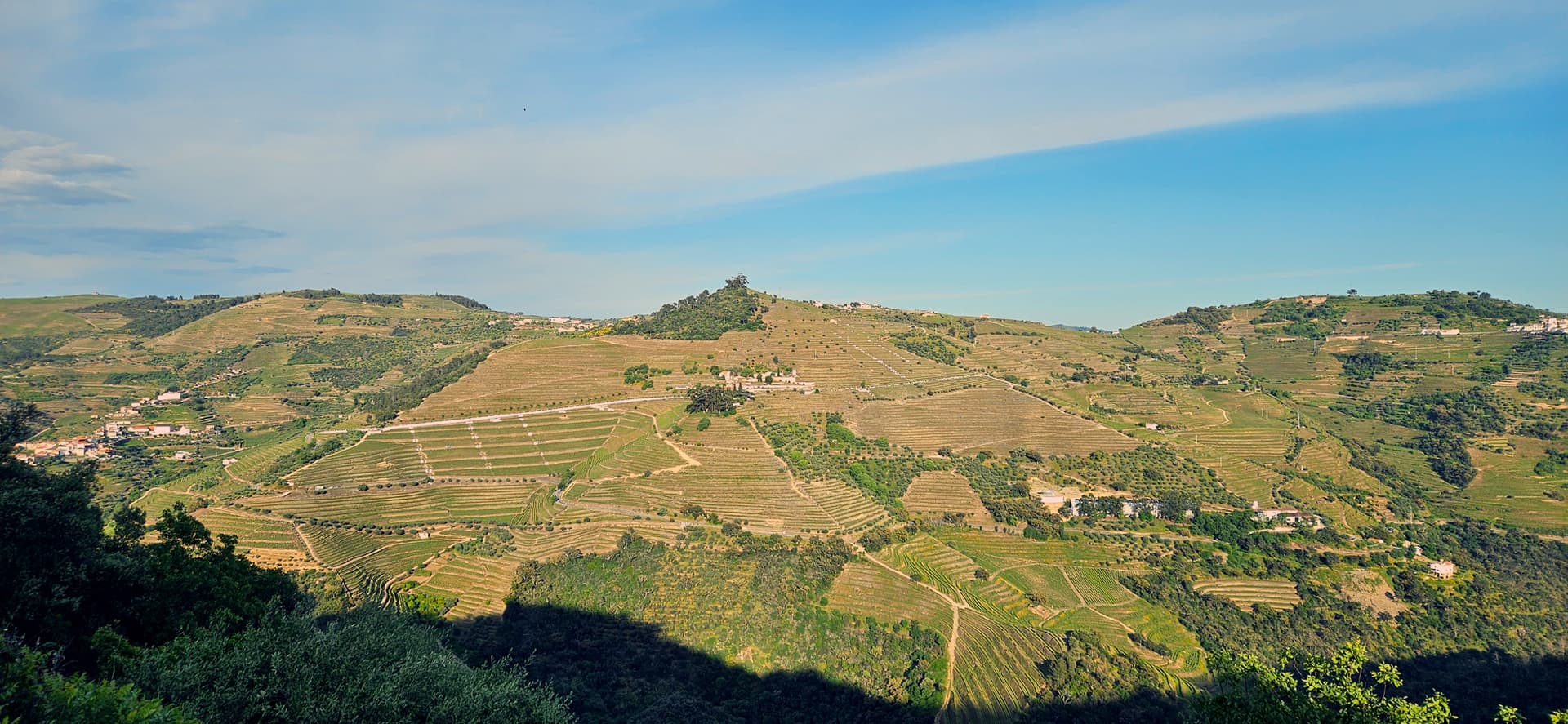
These terraced vineyards that rise on both sides of the Douro river are mighty impressive.
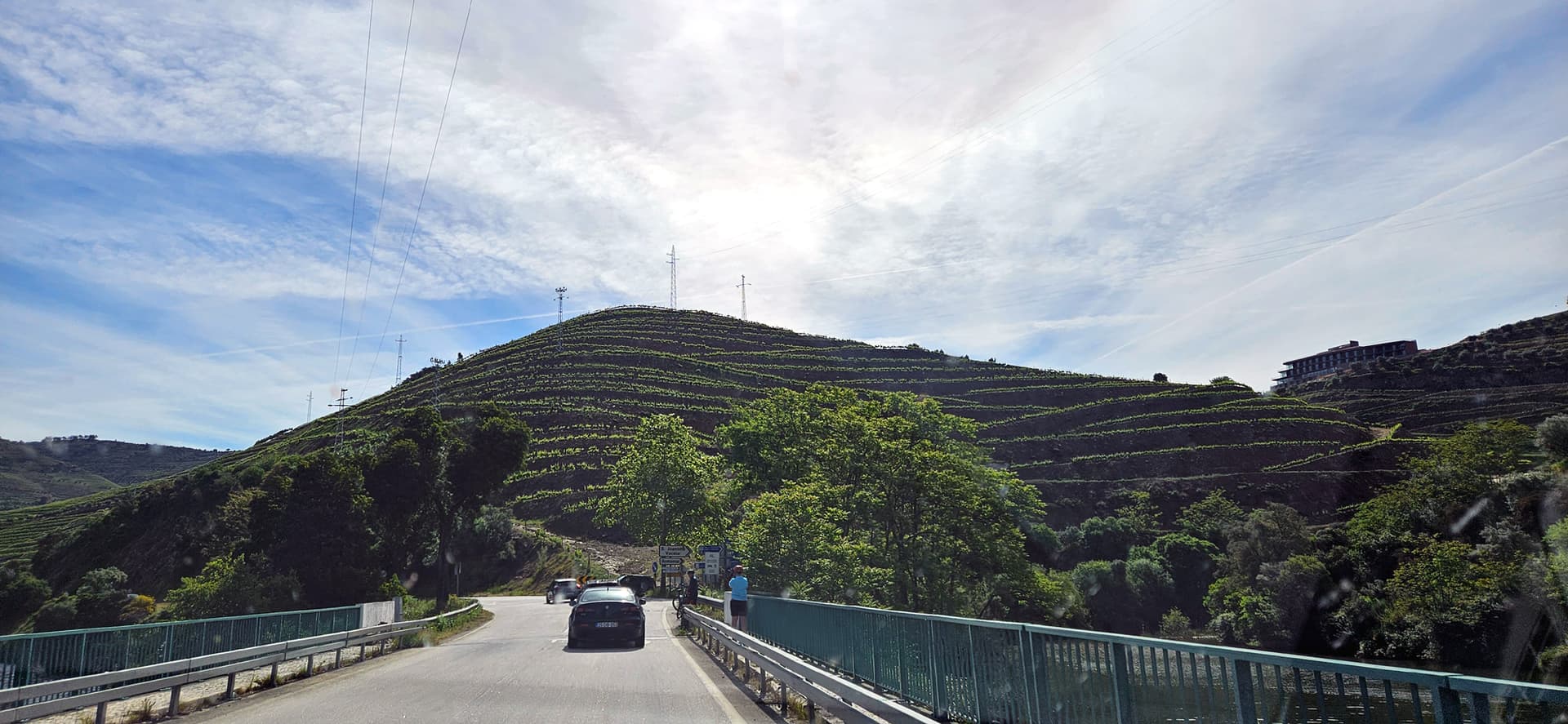

I mean just come on.
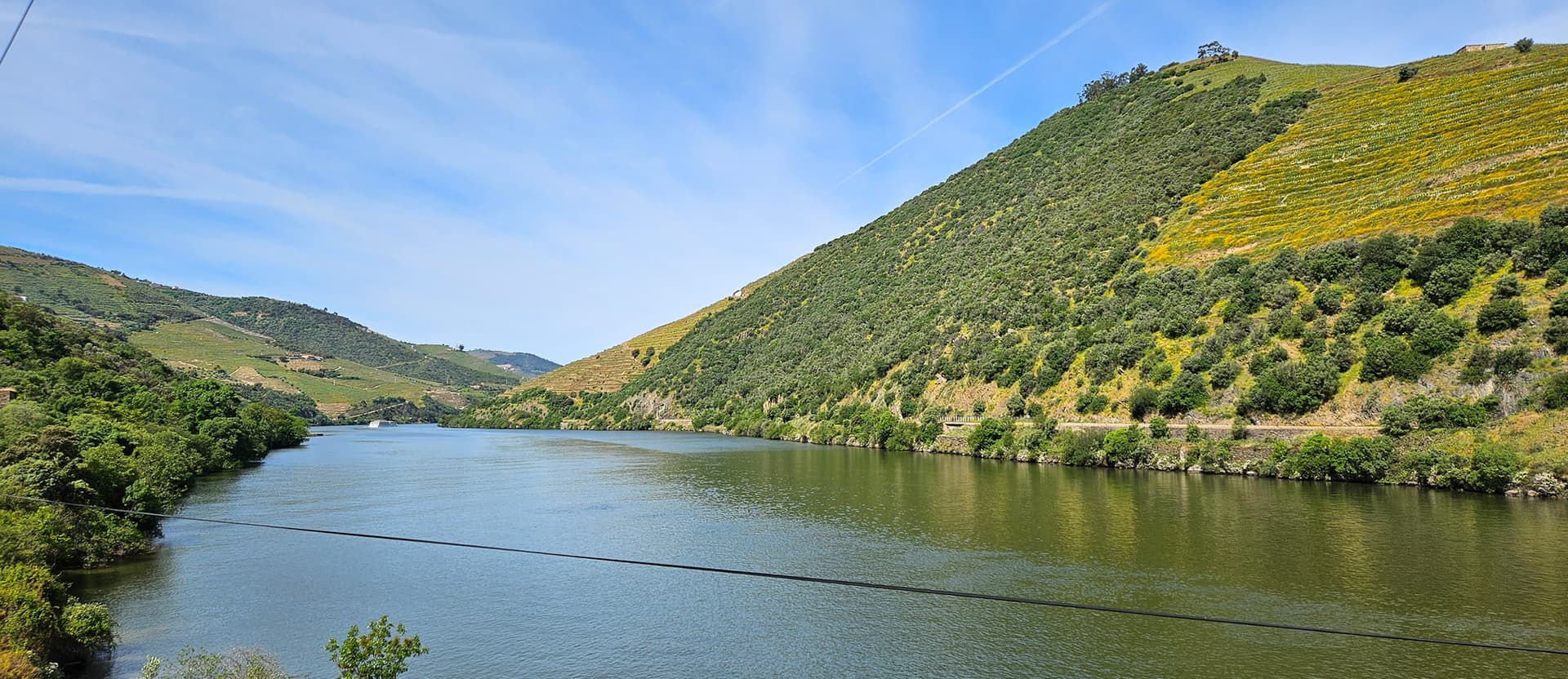

It’s very difficult to capture the steepness and ridiculous elevations you see everywhere, but hopefully these pictures give you some idea.

After a 90-minute drive from Viseu, we finally arrived at the town of Pinhão, located on the bank of Douro. However, we didn’t stop there, as Quinta do Noval is situated a few kilometers north from Pinhão. And also a few hundred meters up - the winery is actually located an impressive 250 m (+800 ft) above the Pinhão river, a tributary of Douro.
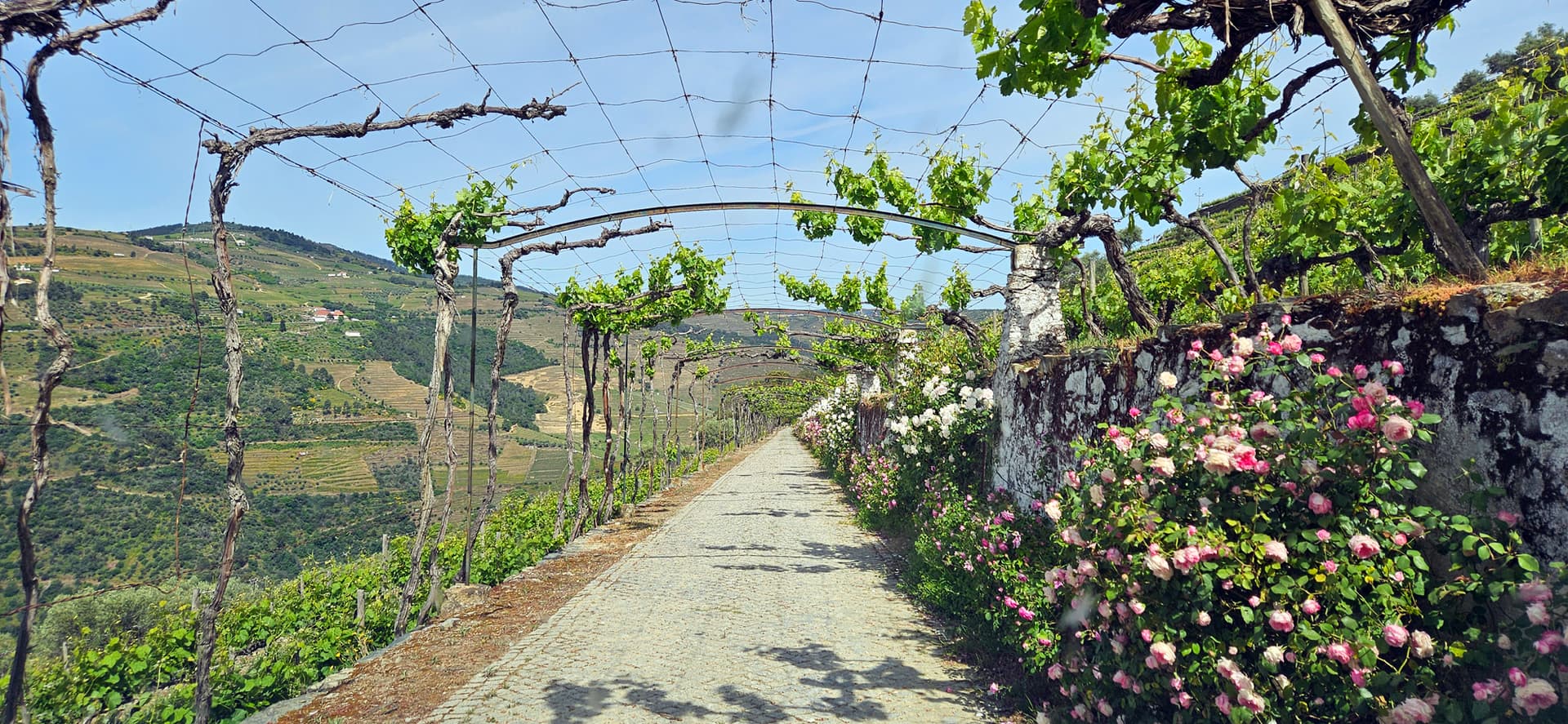

Arriving to the winery from the southern side, we were greeted not just by magnificent views, but also by a beautiful pergola tunnel and roses.


And I have to admit, Quinta do Noval might just be the winery with the most stunning views in the world - probably a few select wineries in Santorini might be the only real challengers!
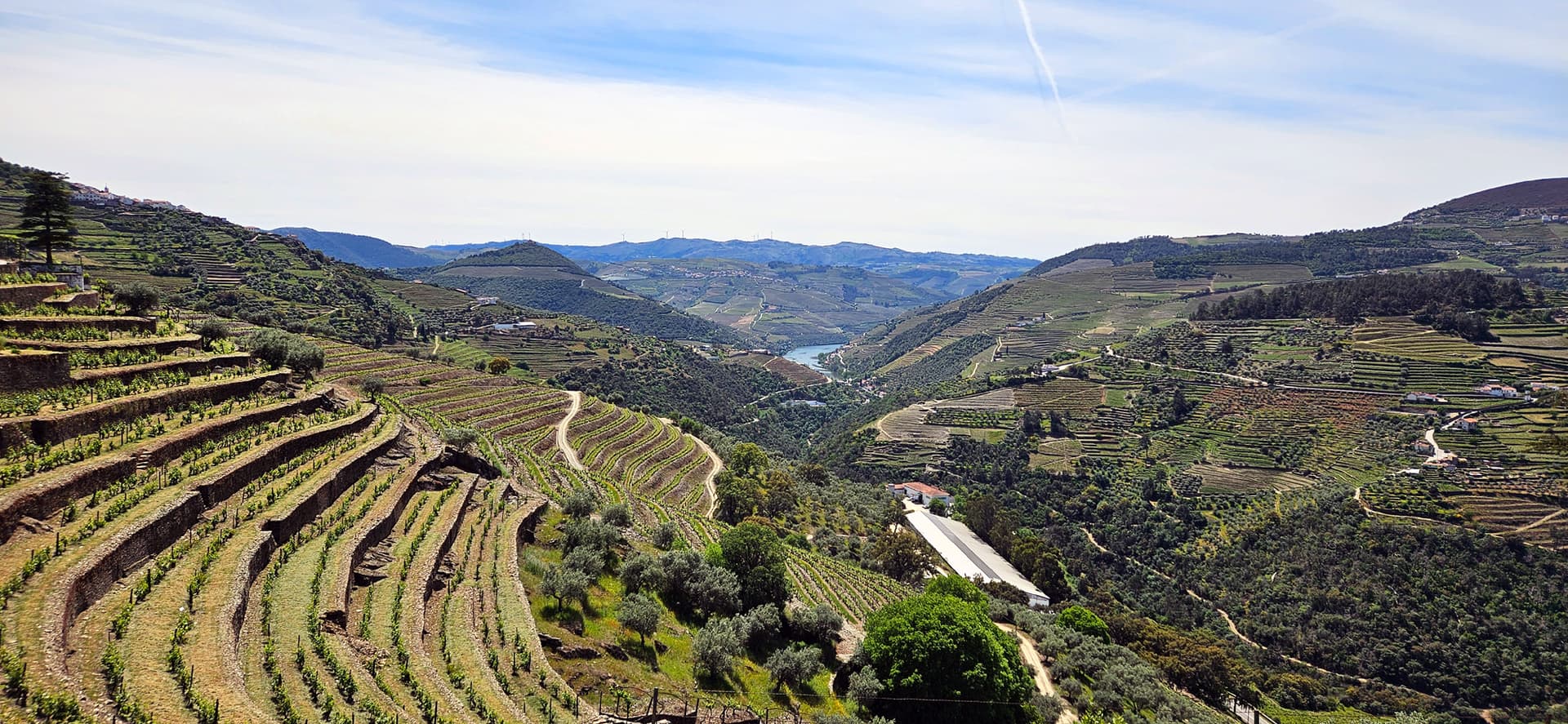

How many wineries can boast views like this? (From here you can see the bend in Douro (which flows behind those hills from left to right) in which the Pinhão river (flowing from the lower right corner) joins it.)
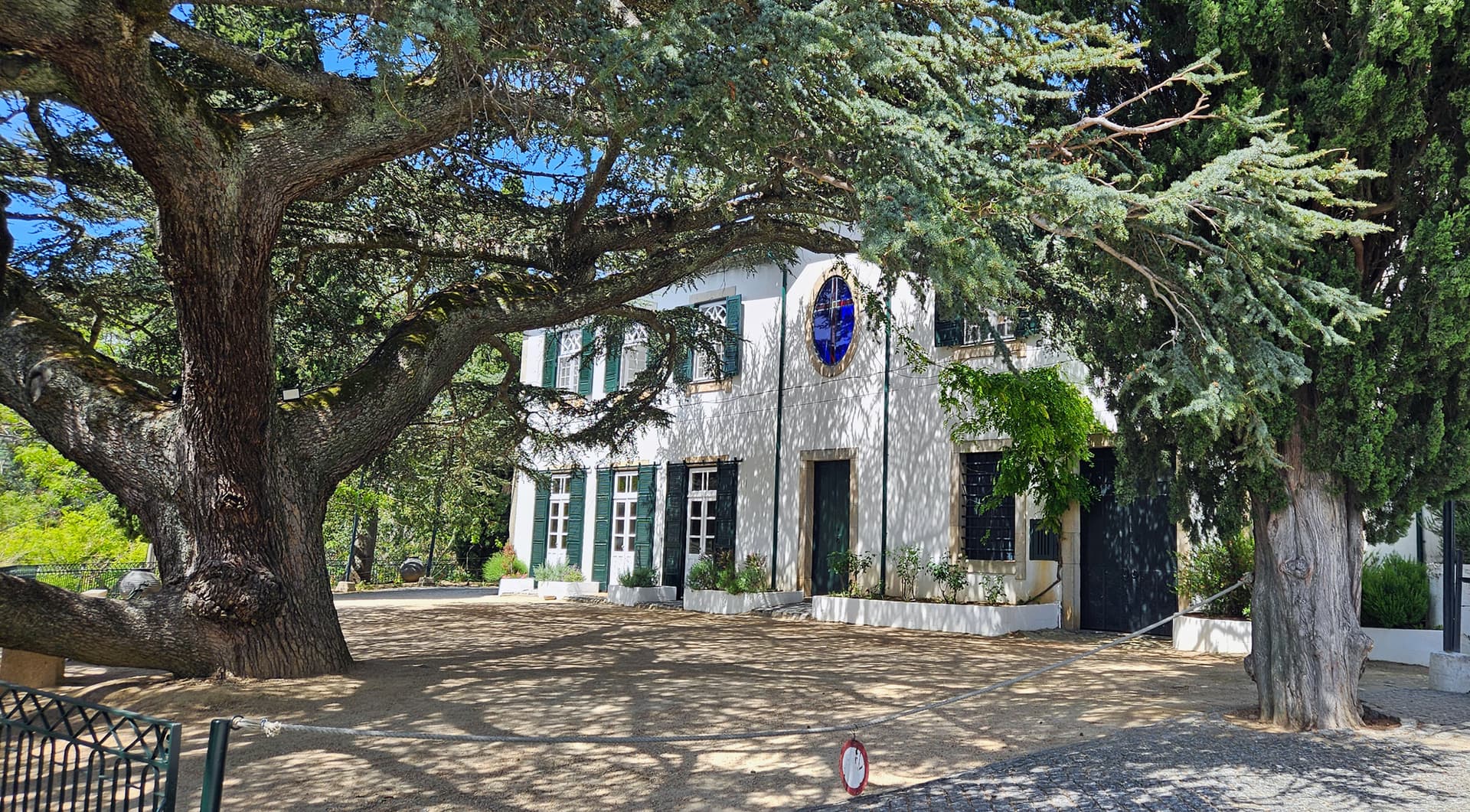

After driving the narrow pergola road to the winery, we were welcomed by our guide Joana Ferreira, who would normally work as the Noval shop manager in Pinhão, but was today waiting for us under the huge old cedar tree growing right in front of the winery building and its chapel (naturally you have your own chapel at the winery!).
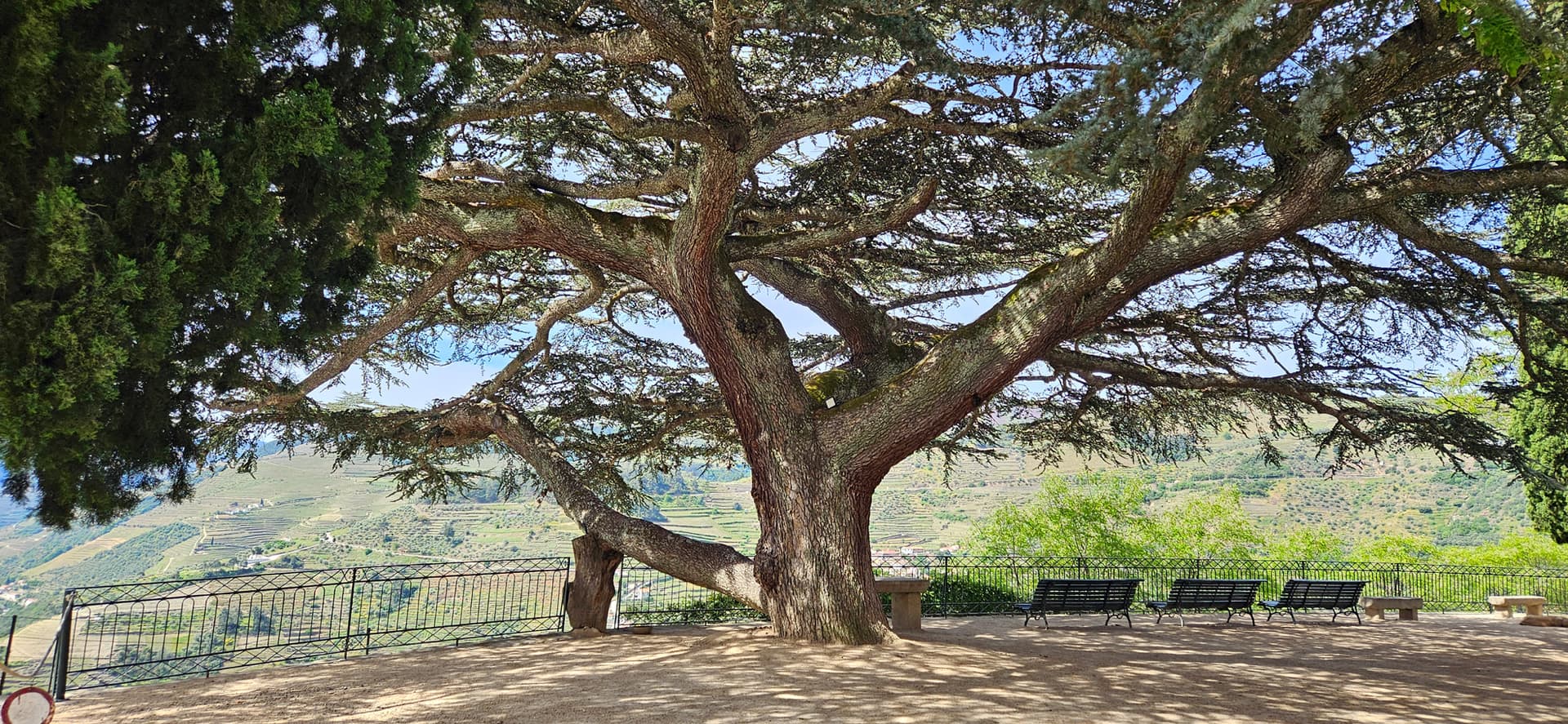

This huge cedar grows in front of the winery (and gives the name to the Cedro range of Noval wines).

This is partially what Joana explained to us during the visit and partially what I knew beforehand from different sources:

  • Noval is not only one of the greatest Port shippers, but it is also one of the oldest existing producers of Port, having been in operation since 1715 - for more than three full centuries! They own 192 hectares (480 acres) of vineyards, all graded as A class. Formerly the planted vineyard size was around 145 hectares, but it grew into its current size after the purchase of the neighboring Quinta do Passadouro in 2019. The production typically comes only from estate vineyards, but they might also purchase fruit when the situation calls for it. The vineyard altitudes range from the river bench level (100 m asl) all the way to the top of the hills (500 m asl).

  • In addition to the vineyards, Noval has also approximately 30 hectares (75 acres) of olive trees, from which they produce olive oil.

  • Due to the 1927 entreposto, a Salazar regulation which mandated that all exports of Port wine had to originate from a specified part in Vila Nova de Gaia, Quinta do Noval had their own lodge in Vila Nova de Gaia as well. However, this regulation was lifted when Portugal joined the EU and exports could be shipped from Douro as well, which meant several producers moved their entire operation back to Douro. Quinta do Noval was the first major shipper to age, blend, bottle and store their wines in Douro - since the late 1990’s all Noval operations have been run from their current location, north of Pinhão.

  • Quinta do Noval is considered to have been in a rut during the 1970’s and 1980’s; the quality of winemaking had started to deteriorate and the vineyards were allowed to run down. However, things started to return back to their former glory once the French insurance group AXA purchased Quinta do Noval in 1993. Under the new ownership the vineyards have been tended back to good health and the winemaking has been brought to modern day without modernizing too much of the production - winemaking at Quinta do Noval is still very traditional compared to many of their peers.

  • One of the noticeable changes in the vineyards was a change from old interplanted vineyards to varietal plantings: with interplanted vineyards there could be too much variation, some early-ripening varieties reaching complete ripeness a full month before the late-ripening varieties. Varieties considered lesser varieties in Port production were removed and replaced with varieties considered to be of higher quality: mainly Touriga Nacional and Tinta Roriz, but also with Touriga Franca, Sousão, Tinta Barroca and Tinto Cão. This way the varieties could be picked at optimum ripeness and it was easier to control the flow of incoming grapes at the winery.

While we were gazing at the vineyards I asked Joana if we could see the famous Nacional vineyard from where we were standing. She said that we couldn’t, but we could go and see the vineyards - it is located right behind the winery building!


Lo and behold - here it really was! Arguably the most famous single vineyard in Douro was just round the corner (and several dozen steps up)! Also take note: almost all the vineyard posts here in Douro aren’t wood, but long spars of schist!

I must admit: appearance-wise Nacional isn’t particularly impressive - it looked just like any other vineyard we could see and the tiny metal label that said NACIONAL was the only thing that told us there was something special here.
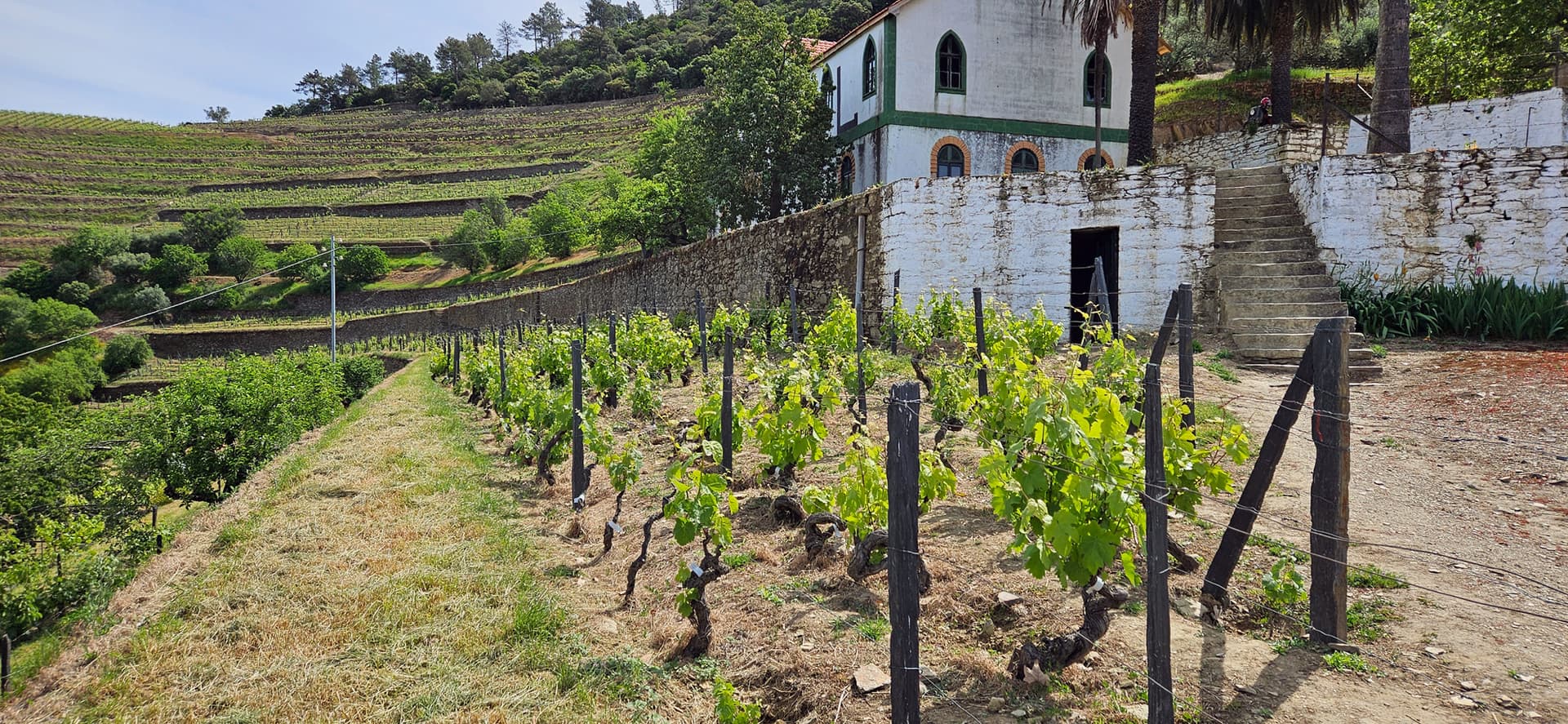

Joana told us that the Nacional vineyard extended some way after the bend in the terrace and consisted of this and the neighboring terrace above the one on which we were standing. Although I’ve seen the vineyard occasionally described as 2-hectare (5-acre) or even 2,4-hectare (6-acre) parcel of pre-phylloxeric vines, Joana told us that the size is about 1,6 to 1,7 hectares (4 to 4,2 acres) consisting of just 6000 vines. Furthermore, the wines are not pre-phylloxeric - only ungrafted. For reasons unknown, this parcel that was originally planted in 1925 to ungrafted vines, was never attacked by the phylloxera. Joana explained that the soil in the parcel is no different from any of the surrounding parcels and nothing has been done to protect the vineyard - for unexplained reasons, it just remains louse-free.
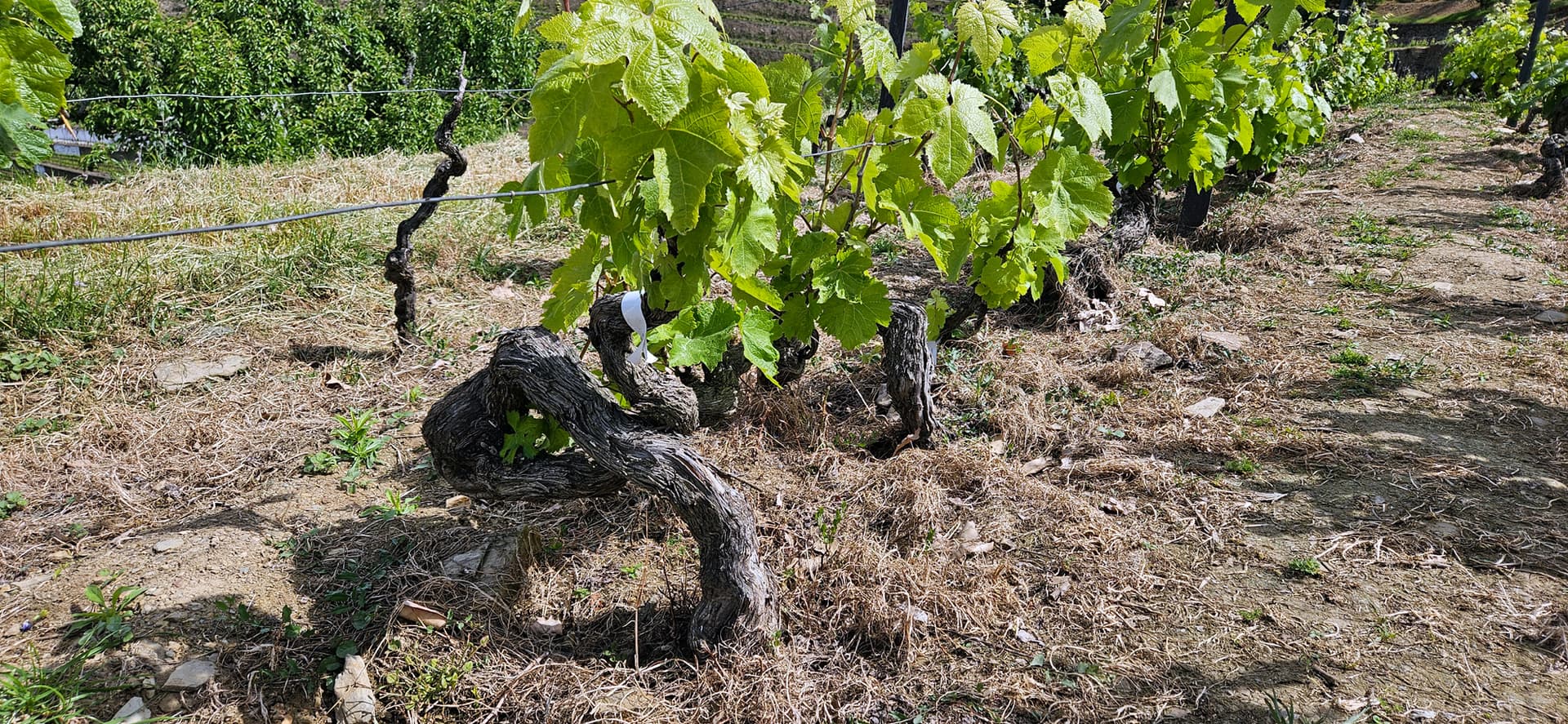

Furthermore, the vineyard isn’t pre-phylloxeric (which would mean the vineyard was planted before the arrival of phylloxera in the late 19th century). Although several very old vines remain, new vines are planted (ungrafted) whenever an old vine dies, and the average vine age is about 40 years. The name Nacional comes from the fact that the vineyard is planted to local varieties that grow on their own roots - not grafted to “international” rootstocks.

Joana told us that Nacional behaves very differently from the other Noval vineyards. In some vintages the overall quality in the estate vineyards might be lacking, yet Nacional could be singing. Or vice versa: some vintages might be simply perfect and the quality is excellent everywhere, yet Nacional would produce fruit of only middling quality. What really surprised me was that Nacional is never blended with any other wines. As Nacional is often a very unique expression of Noval vineyards, it is always vinified AND BOTTLED separately! This means that Nacional is produced in every vintage - but it is released only in vintages that the winery considers to be of high enough quality. In vintages in which Nacional is not considered to be up to par, it is not released, but instead kept at the winery for special occasions.
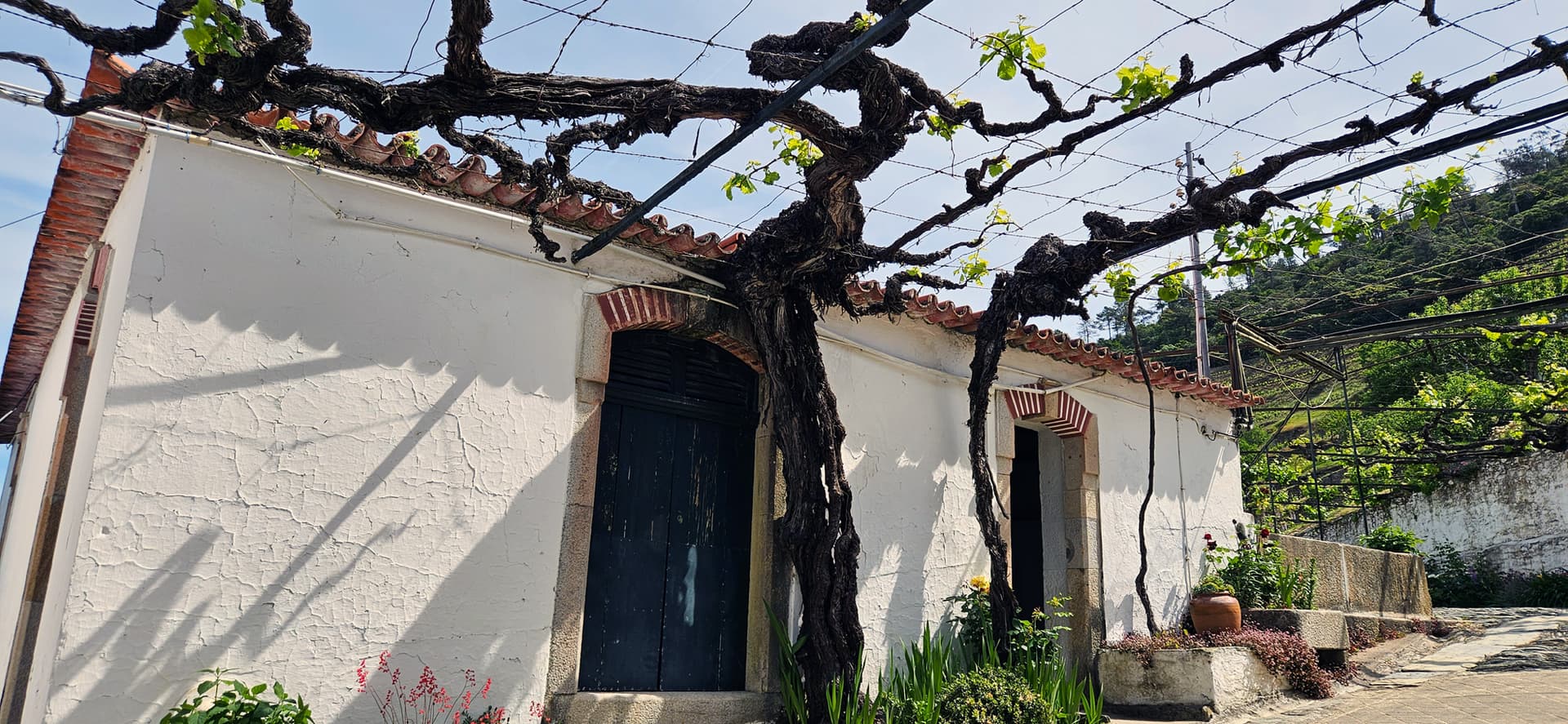

After we had wondered the Nacional vineyard for a good few moments, we went to see the winery. We passed under these pergolas and Joana told us that they are among some of the oldest vines in the Noval vineyards. She also told that they are not only for the looks - come the harvest time, all the pergolas are harvested as well!
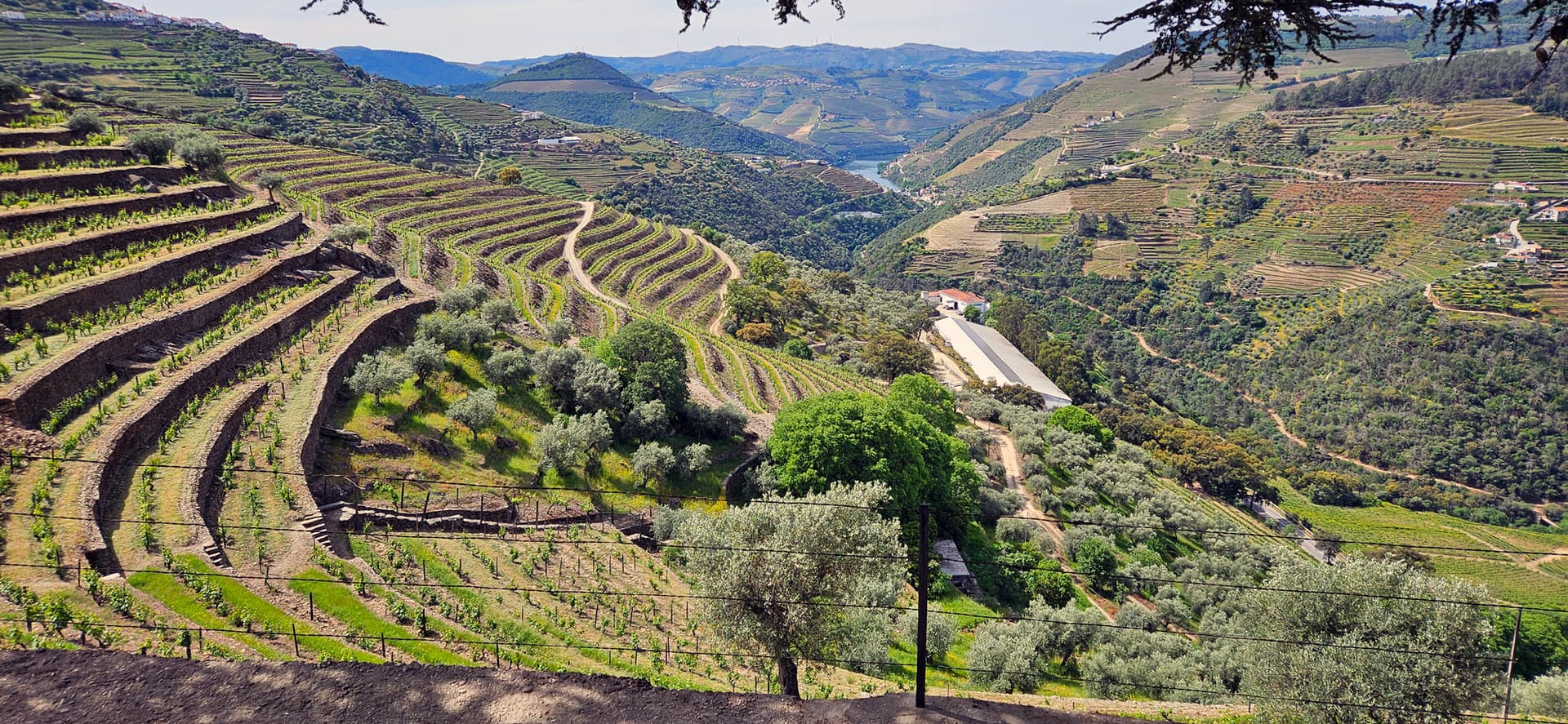

Joana explained that only Port wines were made at this winery. The dry table wines - which make up about 30% of the total production at Quinta do Noval - were vinified at that new facility lower in the valley, below the main Quinta do Noval winery.
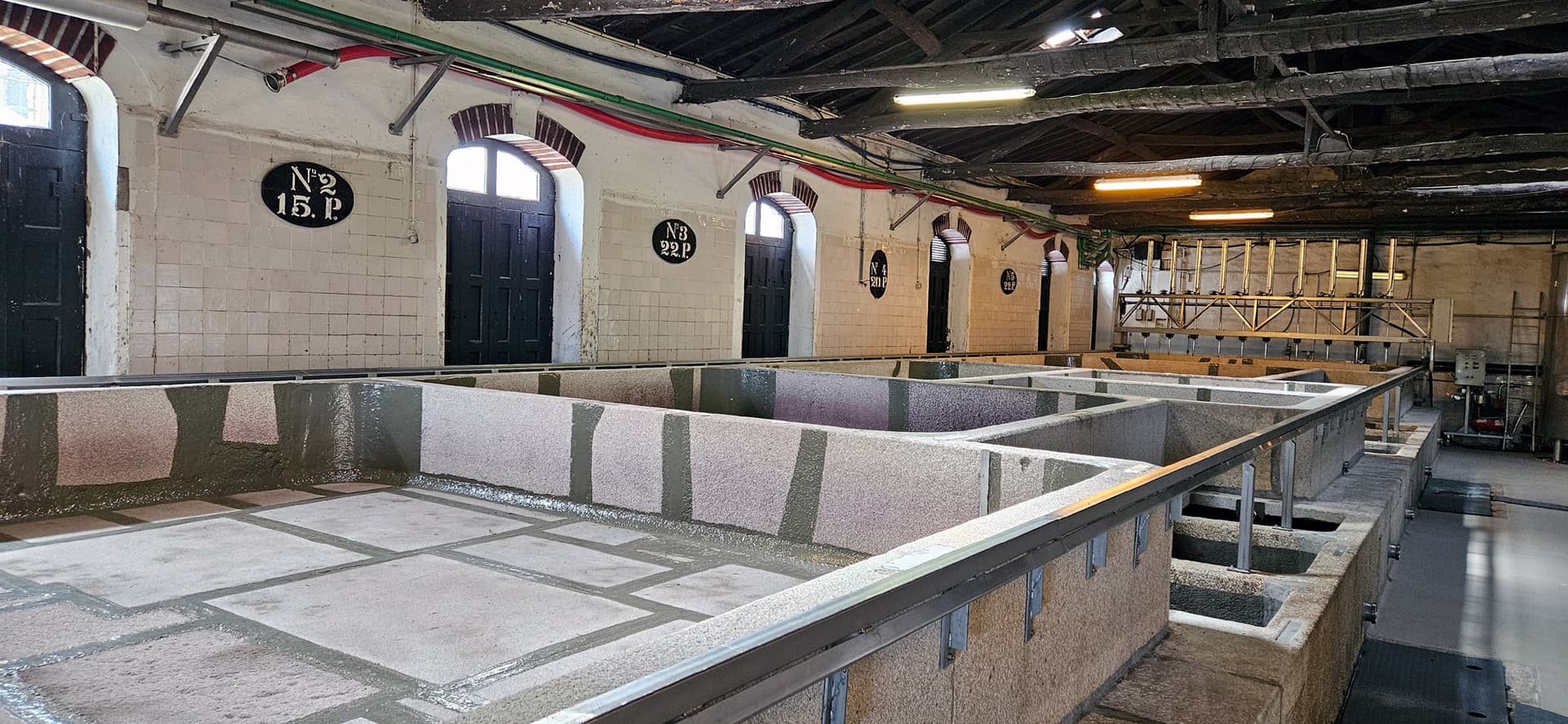

The winemaking is still pretty traditional at Quinta do Noval: the sorted grapes arriving at the winery are moved into granite lagares (which are naturally scrubbed thoroughly clean right before the harvest). In place of the traditional, large lagares, Quinta do Noval now uses these smaller lagares which are much better for vinifying the wines parcel by parcel and variety by variety. Once the grapes are in lagares, they are foot-trodden in the traditional way over the course of several hours during the night.


This automatic robo-treader can be employed when the wines call for additional extraction.


The crushed must starts to ferment spontaneously (typically aided by the temperature boost from the people stomping the grapes), after which the fermenting must is monitored closely. When the wine has fermented enough (ie. the amount of sugar in the must is about 90-100 g/l), the wine is drained into these vats which are partly filled with aguardente. The level of alcohol in the blend of must and distillate reaches 19-21% ABV, arresting the fermentation. Then the wine is moved either into stainless steel or concrete tanks, balseiros (huge oak vats), toneis (large oak casks) or pipes (smaller oak barrels) that are normally of 640 liters at Quinta do Noval. The wines deemed suitable for making Tawny or Colheita go into pipes, all the other wines go into larger casks or tanks.

Joana told us that treading the grapes is normally a rather tiring task: it really takes hours and hours, and you need to raise your feet quite high in the sticky must when you’re treading in order to crush all the fruit completely. Furthermore, the grape must is an incredibly potent dye: typically your legs are deeply colored for weeks after the harvest!
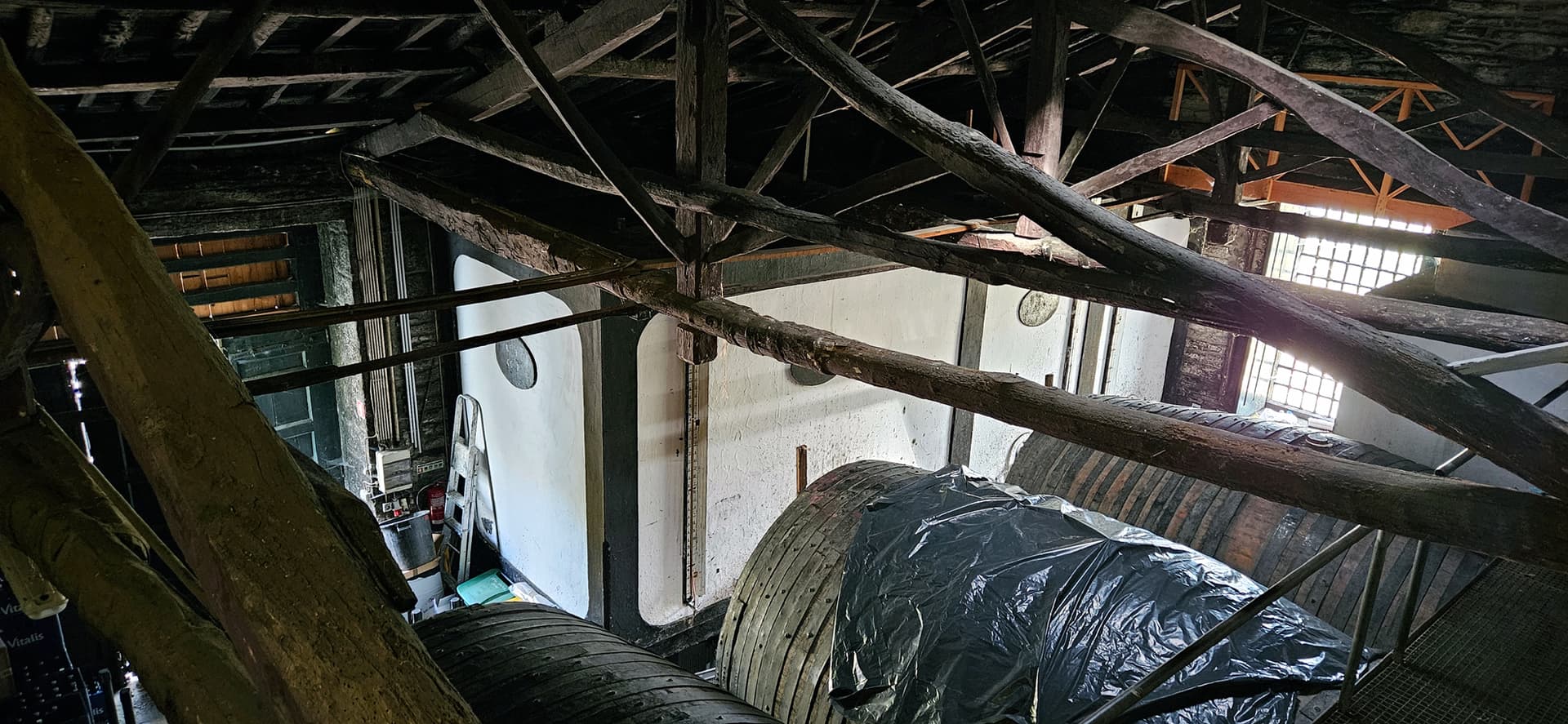

Some concrete tanks and toneis in the cellar.


Some more toneis

Another interesting fact was that as all the Vintage Ports made at Quinta do Noval are made exclusively from the estate’s own vineyards surrounding the property, Quinta do Noval is the only producer whose Vintage Port is also a Single-Quinta Vintage Port*! This means that unlike other Port shippers, Quinta do Noval can release a Vintage Port in every single vintage - instead of producing a Vintage Port only in exceptional vintages, Noval opts to make a rigorous selection and the quality of the vintage dictates how much wine is produced: in lesser vintages the production can be tiny and in great vintages a larger amount of Vintage Port gets produced. When there’s enough of excepional-quality fruit, Noval makes a more affordable version of their Vintage Port; Silval - a sort of baby version of their VP. They’ve also made another Single-Quinta Vintage Port - Quinta do Marco - a few times in their history. However, to my understanding, 1999 is the most recent vintage of this bottling.

*To those who don’t know what this distinction means: normally Port shippers make Vintage Port by blending only the very best fruit from all their vineyards and these wines are released only in declared vintages. However, these so-called Single-Quinta Vintage Ports can be made in any vintage the producer wants to and they are made exclusively from the estate-owned vineyards surrounding the Quinta, or “farm”. These wines are labeled with the Quinta name and as they are normally made in un-declared vintages, they are typically somewhat lesser wines that are still Vintage Ports, but made for earlier consumption and priced at more affordable prices than the “true” Vintage Ports. However, Quinta do Noval Vintage Port is a noticeable exception to this rule.

After we had toured the winery, it was time to taste some of the Quinta do Noval wines!
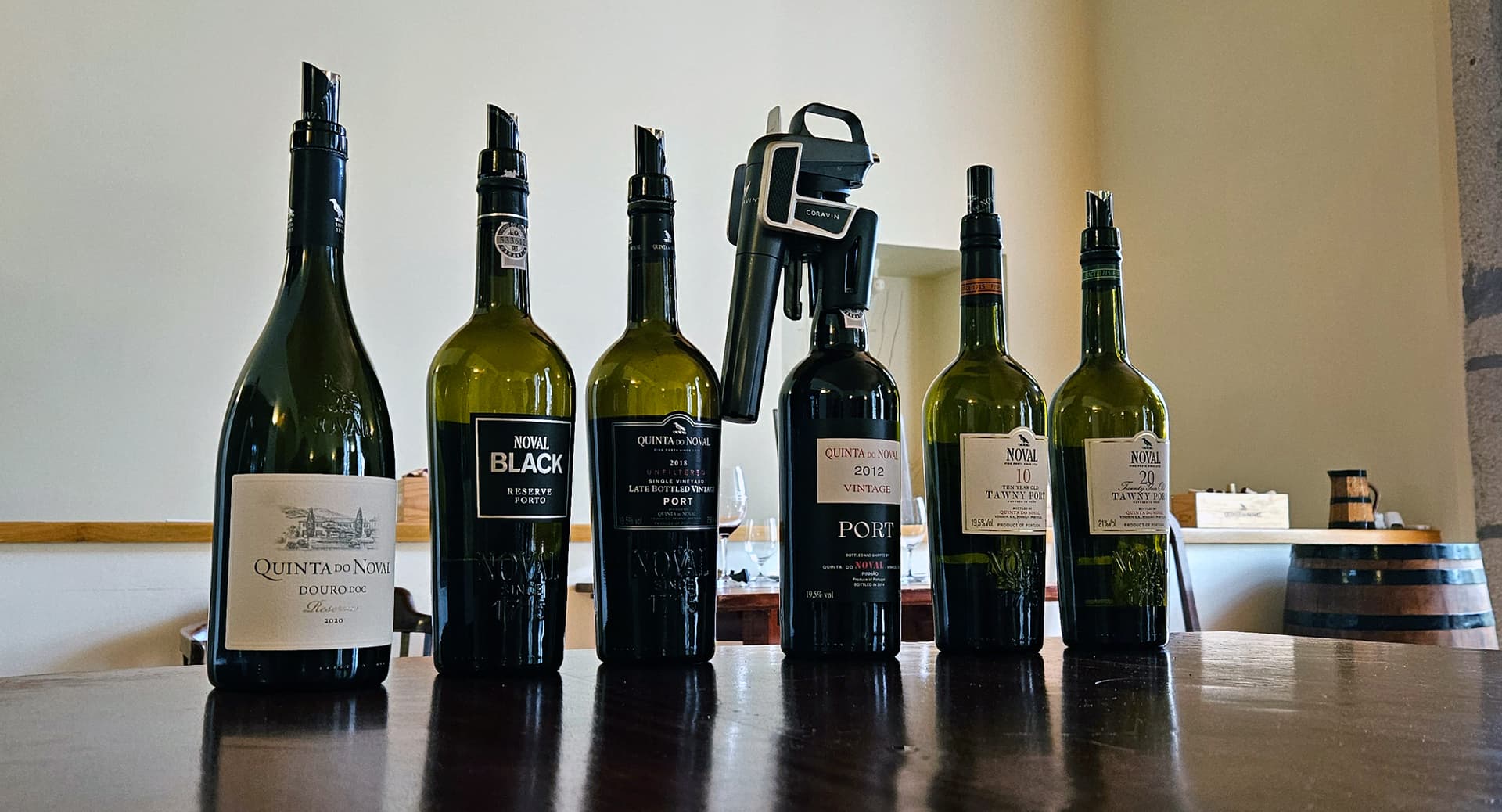

We tasted through one Noval table wine and a selection of their Port wines - unfortunately no bottles of Nacional were opened for our group! :sweat_smile:

  • 2020 Quinta do Noval Douro Reserva - Portugal, Douro (24.4.2024)
    The flagship dry red in the Quinta do Noval range. Made exclusively from the best grapes of the vintage. According to the tech sheet, the wine is a blend of Touriga Nacional (60%) and a field blend from the old vineyards, but at the winery we were told the wine is today mostly a blend of Touriga Nacional and Touriga Franca with a small portion of field blend from the old vineyards. Fermented spontaneously in stainless steel vats, macerated with the skins for 8 days, aged for 12 months in 225-liter French oak barriques (40% new, 60% 2nd use). 15,5% alcohol, 1 g/l residual sugar, 5,7 g/l acidity and pH 3,55.

    Dense, inky-opaque blackish-red color with a youthful blueish hue. The nose feels powerful, expressive and dark-toned with vibrant aromas of ripe bilberries, some plummy tones, a little bit of toasty oak spice, light stony mineral notes, hints of coffee and vanilla and a touch of alcohol. The wine feels dense, concentrated and quite robust on the palate with a full body and intense, dry flavors of ripe dark fruits and extracted wood spice, some bittersweet notes of dark chocolate, a little bit of boysenberry, light peppery tones, juicy hints of dark plums and fresh blueberries and a touch of toasty mocha oak. The overall feel is pretty tightly-knit with the rather high acidity and moderately grippy tannins. The finish is long, rather grippy and somewhat hot with a dry, robust aftertaste of ripe dark fruits and sweet toasty oak spice, some blueberry tones, a little bit of extracted woody bitterness, light juicy notes of boysenberries and dark plums, hints of peppery tones, cloves and exotic spice and touch of stony minerality. The high alcohol makes the wine end on a somewhat hot note.

    A very bold, robust and still way too young Douro red that is mere a baby now. The oaky tones are still very much to the fore, showing very little integration, making the overall feel still somewhat clumsy. This is definitely a powerhouse you need to age - it is not meant for immediate consumption. Of course you CAN drink it right away - the wine isn't shut down or undrinkably tough at the moment - it just feels like the wine is still miles away from its apogee and you're missing a ton of its potential if opened now. However, I'm worried about the high alcohol here - the wine felt rather hot at the moment, and I doubt this will change with any amount of cellaring. Although this wine will get much better with additional aging, it feels like a wine that performs much better in cooler vintages when the level of alcohol might remain at a more reasonable level. Feels a bit pricey at 55,50€, but most likely this will change as the wine ages and evolves.
    (90 points)

  • NV Quinta do Noval Porto Noval Black - Portugal, Douro, Porto (24.4.2024)
    This bottling, introduced in 2010, is step up from the Quinta do Noval Fine Ruby. A blend of Touriga Nacional, Touriga Franca, Tinta Roriz, Tinto Cão and Sousão, a part of which coming from the Noval vineyards, the remainder coming from A-rated vineyards in Douro. A part of the wine is vinified with foot-treading in the traditional lagares, the remainder in stainless steel vats with pump-overs. The wine is blended from multiple vintages that have been aged in stainless steel tanks and the average age of the blend is today approximately 6 years. 19,5% alcohol.

    Dense blackish color with faint reddish and purplish highlights. The brooding nose feels surprisingly savory and earthy with light aromas of blueberries, some dark plummy tones, a little bit of savory spices, light boozy notes of alcohol and a hint of aguardente. The wine feels sweet, somewhat fruity and a bit savory on the palate with a full body and brooding flavors of blueberries, some plummy tones, a little bit of ripe boysenberry, light earthy tones, a hint of savory spices and a touch of raw cacao. The wine is medium in acidity with ripe, somewhat grippy medium tannins. The finish is warm, sweet and somewhat grippy with a medium-long aftertaste of blueberries, some plummy tones, a little bit of boysenberry, light earthy tones, a hint of savory spices and a touch of cacao nibs.

    A surprisingly serious and relatively savory Ruby Reserve with a somewhat dull and earthy nose. Fortunately the wine seemed more expressive and fruity on the palate. However, we were explained that this was supposed to be a less fruity and more savory expression of Ruby Port: the entry-level Fine Ruby is a wine to be served on its own, whereas this Black - with its less sweet, more savory tones - was a wine that would go better with dark chocolate or Port cocktails. Understandable. Although an enjoyably serious effort for a Ruby Reserve, I wasn't particularly enamored by this wine - at least when tasted on its own. Maybe I just need to see how it performs in a cocktail! Perhaps a tad pricey for the quality at 19,95€.
    (87 points)

  • 2018 Quinta do Noval Porto Late Bottled Vintage Unfiltered - Portugal, Douro, Porto (24.4.2024)
    A blend of Touriga Nacional, Touriga Francesa, Tinta Roriz, Tinto Cão and Sousão sourced from the Quinta do Noval vineyards in Pinhão. Vinified exactly like the Noval Vintage Port - treading by foot in granite lagares, arresting the fermentation at 19,5% ABV by fortification and moving the wine to age in large oak casks - but when the Vintage Ports are bottled after 18-24 months of aging, the wines destined for this LBV are left to age for another three years. This wine was bottled unfiltered (unlike most LBVs) in October 2023, at the age of five years. 19,5% alcohol, 90g/l residual sugar, 4,7 g/l acidity and pH 3,54.

    Dense, fully opaque blackish-red color. The nose feels fragrant, somewhat floral and slightly earthy with aromas of ripe blackberries and dark plums, some perfumed violet tones, a little bit of licorice root and a boozy hint of aguardente. The wine feels sweet, nuanced and quite youthful on the palate with a full body and intense flavors of dark berries and blueberry jam, some raisiny and pruney tones, a little bit of dried dates, light sweet notes of ripe black cherries, a hint of peppery spice and a touch of juicy boysenberry. The wine is high in acidity with quite firm and pretty grippy tannins and the high alcohol lends some obvious heat to the palate. The finish is long, hot and grippy with an intense aftertaste of boysenberries and blueberry jam, some cherry marmalade tones, a little bit of raisiny dark fruit, light peppery tones, a floral hint of violets and a touch of gravelly earth.

    Quinta do Noval's Unfiltered LBV is consistently one of the absolutely best LBVs out there and this vintage is not an exception to this rule. Impressive structure, wonderful intensity of fruit and surprising sense of freshness, given the sweetness and the volume of the wine. The nose is maybe a bit understated and less fruity than I expected, but on the palate the wine performs exactly as anticipated. The overall feel is still quite young, pretty stern and rather tightly-knit, which means that this wine isn't really ready to drink now - even if the idea of LBV is to give an opportunity to drink LBV while the VPs are still aging! This really isn't an LBV, but more like a wine between an LBV and a Vintage Port. I'd recommend to let this wine age for at least a handful of years more, because these unfiltered LBVs are some of the few LBVs that can actually evolve and improve with age. Outstanding value at 23,50€.
    (92 points)

  • 2012 Quinta do Noval Porto Vintage - Portugal, Douro, Porto (24.4.2024)
    Mainly a blend of Touriga Nacional, Touriga Franca and Tinto Cão; all fruit sourced from the Noval estate vineyards in Pinhão. The fruit is trodden by foot in granite lagares, then the fermentation is arrested at 19,5% ABV by fortification and the wine is moved to age in large oak casks. This wine was bottled unfiltered in 2014, at the age of approximately two years. Lot L4192. 19,5% alcohol, 89 g/l residual sugar, 4,6 g/l acidity and pH 3,78.

    Dense, completely opaque blackish-red color. The nose feels youthful, fragrant and very dark-toned with aromas of bilberries and some black cherries, light floral tones of violets and elderflowers, a little bit of savory meaty character, a hint of licorice root and a touch of dusty old wood. The wine feels clean, sweet and youthful on the palate with a medium-to-moderately full body and rich, intense flavors of blueberries and boysenberries, some wizened black cherries, a little bit of stony minerality, light floral notes of violets, a hint of sun-baked dusty earth and a touch of savory spices. The tannins feel ample yet relatively ripe and friendly, lending good firmness to the texture without making the wine feel tough or aggressively tannic. The structure relies more on the acidity, which feels surprisingly high for a Vintage Port. The finish is rich, sweet yet savory and moderately grippy with a long, intense aftertaste of blueberries, some cherry marmalade, light floral notes of violets and elderflowers, a little bit of savory spice, a juicy hint of succulent dark plum and a savory touch of meaty character.

    A wonderfully fresh and still remarkably youthful Vintage Port that feels relatively light and delicate for the style, emphasizing more freshness and vibrancy of fruit than muscular power and concentration. Tasting this after the 2018 Noval Unfiltered LBV, I felt this VP showed less body, structure and fruit in comparison. While neither wine didn't seem like a wine that is yet ready, I felt that this VP was slightly more approachable now, due to its somewhat lighter overall feel and less assertive tannins. However, even if this wine might be more accessible now, I also feel that this wine still holds much more potential for the future: while this VP might be less impressive now, I have no doubts it will age wonderfully for many more years, most likely ending up being a better wine with enough cellaring. The 2012 vintage might never be a stellar year for Vintage Ports, this Noval VP is still a delicious example of VP combining fruit and intensity with freshness and elegance. Not particularly affordable at 172,60€ from the winery, but still very fine stuff all the same.
    (91 points)

  • NV Quinta do Noval Porto 10 Year Old Tawny - Portugal, Douro, Porto (24.4.2024)
    A blend of Touriga Nacional, Touriga Francesa, Tinto Cão, Sousão and Tinta Roriz from different vineyards in Douro. The wine is blended from different vintages that have been aging in old oak pipes, resulting in a blend with an average age of 10 years. The wine was bottled in 2023. 19,5% alcohol.

    Medium-deep cherry-red color with an oxidative maroon hue. Although the wine is a Tawny Port, the nose is still pretty red-toned with aromas of wizened cherries, some cooked strawberry tones ,a little bit of pruney dark fruit, light boozy notes of aguardente, a nutty hint of oxidation and a touch of ripe red plum. The wine feels sweet, soft and mellow on the palate with a full body and rich, somewhat evolved flavors of wizened cherries and prunes, some oxidative nutty tones, a little bit of cooked strawberry, light boozy notes of aguardente, a hint of Bassett's black wine gum and a touch of molasses. The overall feel is a bit round and ponderous as the wine is only medium in acidity and there isn't really any tannic grip to lend firmness to the palate. The finish is rich, sweet and rather long with a slightly sticky aftertaste of wizened black cherries and cooked strawberries, some pruney tones, a little bit of ripe red plum, light oxidative notes of chopped nuts, a hint of molasses and a touch of boozy aguardente. The high alcohol makes the wine end on a rather warm note.

    I love Tawny Ports, but usually they have to be at least 20 years old before they offer anything of real interest. This was a pleasant effort, but still way too red-toned in character for my preference - instead of showing that nutty caramel goodness I look for in Tawny Ports, this was more about tired red fruit flavors and prunes. Furthermore, the overall feel was rather soft and a bit flabby, wanting in freshness and structure. Although the Noval wines are fantastic in the higher tiers of quality, to me, this 10 yo Tawny isn't a big step up in quality from regular non-age designated Tawny Ports. Priced somewhat according to its quality at 27,50€.
    (88 points)

  • NV Quinta do Noval Porto 20 Year Old Tawny - Portugal, Douro, Porto (24.4.2024)
    A blend of Touriga Nacional, Touriga Francesa, Tinto Cão, Sousão and Tinta Roriz from different vineyards in Douro. The wine is blended from different vintages that have been aging in old oak pipes, resulting in a blend with an average age of 20 years. The wine was bottled in 2023. 21% alcohol.

    Luminous, medium-deep amber color with a faint reddish hue. The nose feels sweet, expressive and complex with rich aromas of dried figs, some caramel tones, a little bit of oxidative nuttiness, light fragrant nuances of arrack, dried-fruit hints of prunes and Sultana raisins and a touch of orange marmalade. The wine feels sweet, nuanced and complex on the palate with a full body and rich flavors of syrupy molasses and orange marmalade, some dusty old wood tones, a little bit of nutty rancio, light dried-fruit notes of Sultana raisins and prunes, a hint of dried fig and a touch of exotic spices. The wine is moderately high in acidity with a tiniest bit of tannic grip adding to the sense of firmness. The finish is rich, long and wonderfully nuanced with a sweet aftertaste of brown sugar and molasses, some oxidative notes of nutty rancio, a little bit of caramel, light dusty old wood tones, dried-fruit hints of Sultana raisins and dried figs and a touch of arrack.

    A beautiful, delicious 20 yo Tawny with good sense of concentration, freshness and complexity. This wine seems somewhat weightier and more intense compared to my previous taste of the wine (11½ years ago!) - I guess higher temperatures in Douro might've something to do with this? All in all, a lovely and delicious effort. However, the price is getting a bit out of hand - 11 years ago this wine was 45€, but this time 86,50€. I understand the prices go up with time, but almost double the price in a span of time where other wines of similar quality have gone up only 5-10€? Even if I love this wine, that's a bit too steep for me.
    (92 points)

All in all, the wines - especially at the higher-tier range - are simply wonderful. Unsurprisingly, all the wines (apart from the Tawnies) were just super young and in dire need of additional aging; at this point you can only get a glimpse of their potential, not the full extent of their greatness. However, I was still surprised how remarkably well their “lowly” Unfiltered LBV performed next to the VP! I’ve always loved the Noval Unfiltered LBV, but now, tasting it as a part of their range, I could see how it is in a class of its own when it comes to LBVs! I’m sure the 2012 VP will surpass it in due time, but for more immediate consumption, that LBV offers some exceptional bang for the buck!

When we asked if we needed to go to the Noval shop in Pinhão to buy these wines, but we were told that there was a cellar door shop also at the property, to which we were guided after we had tasted the wines.
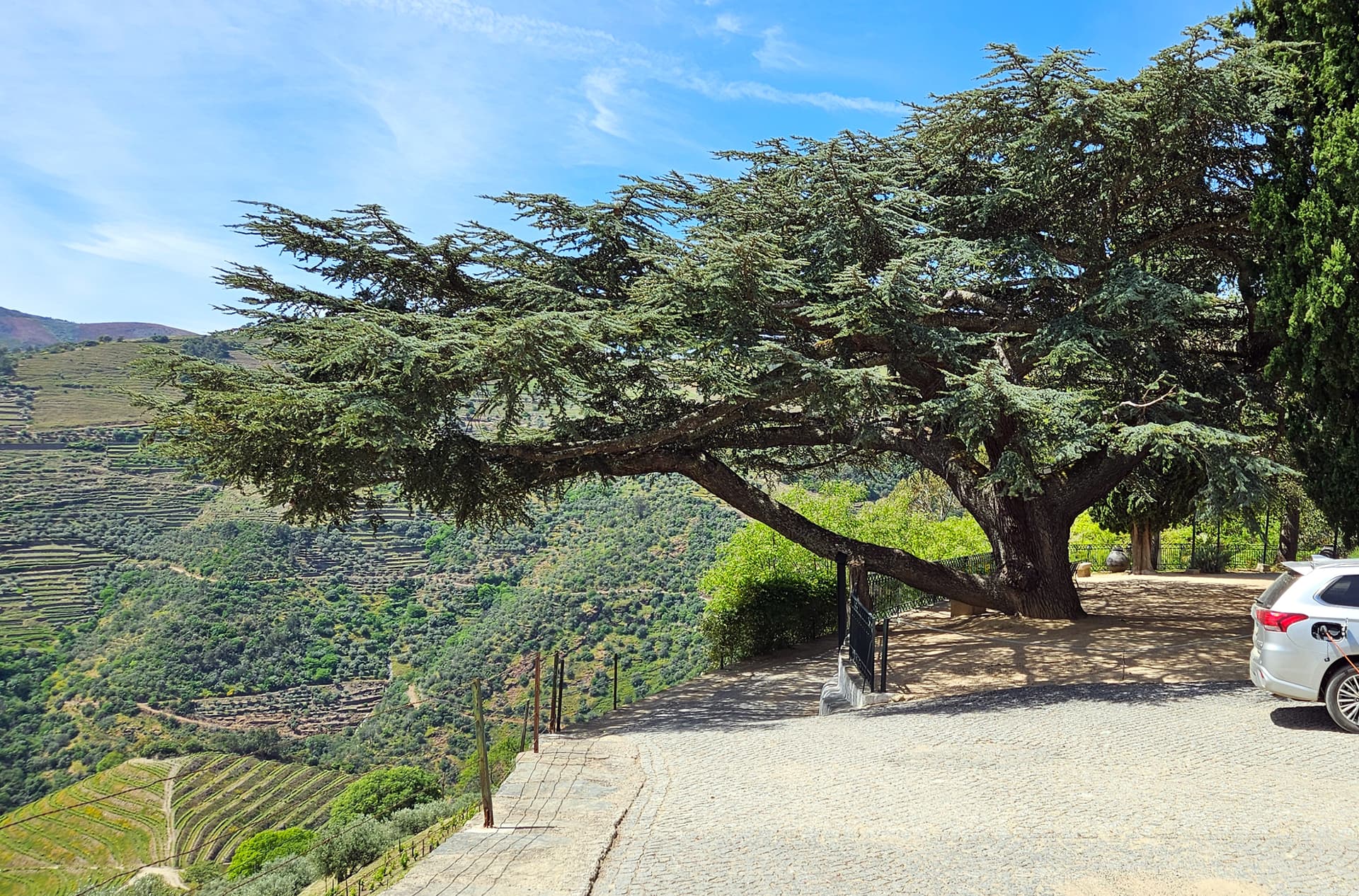

After we had made our purchases, we thanked for the absolutely fantastic visit and left the winery - this time via the “front” road (which is that tiny dirt road going under that famous cedar tree).
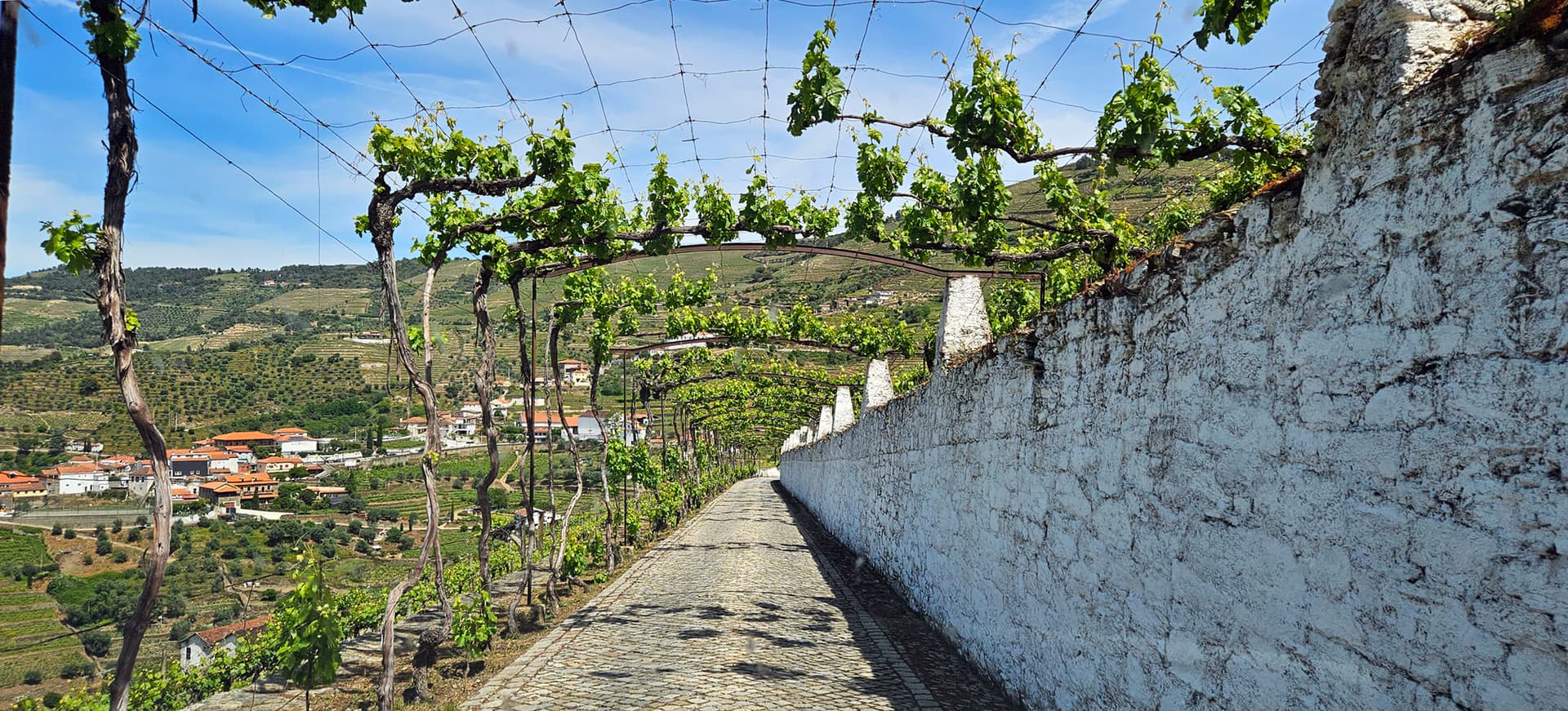

Exiting Quinta do Noval - of the dozens of Noval terraces, this one with the white wall is the one that ends either at the winery or the major road that passes the Noval estate. A handy guide, considering how vast the estate is!
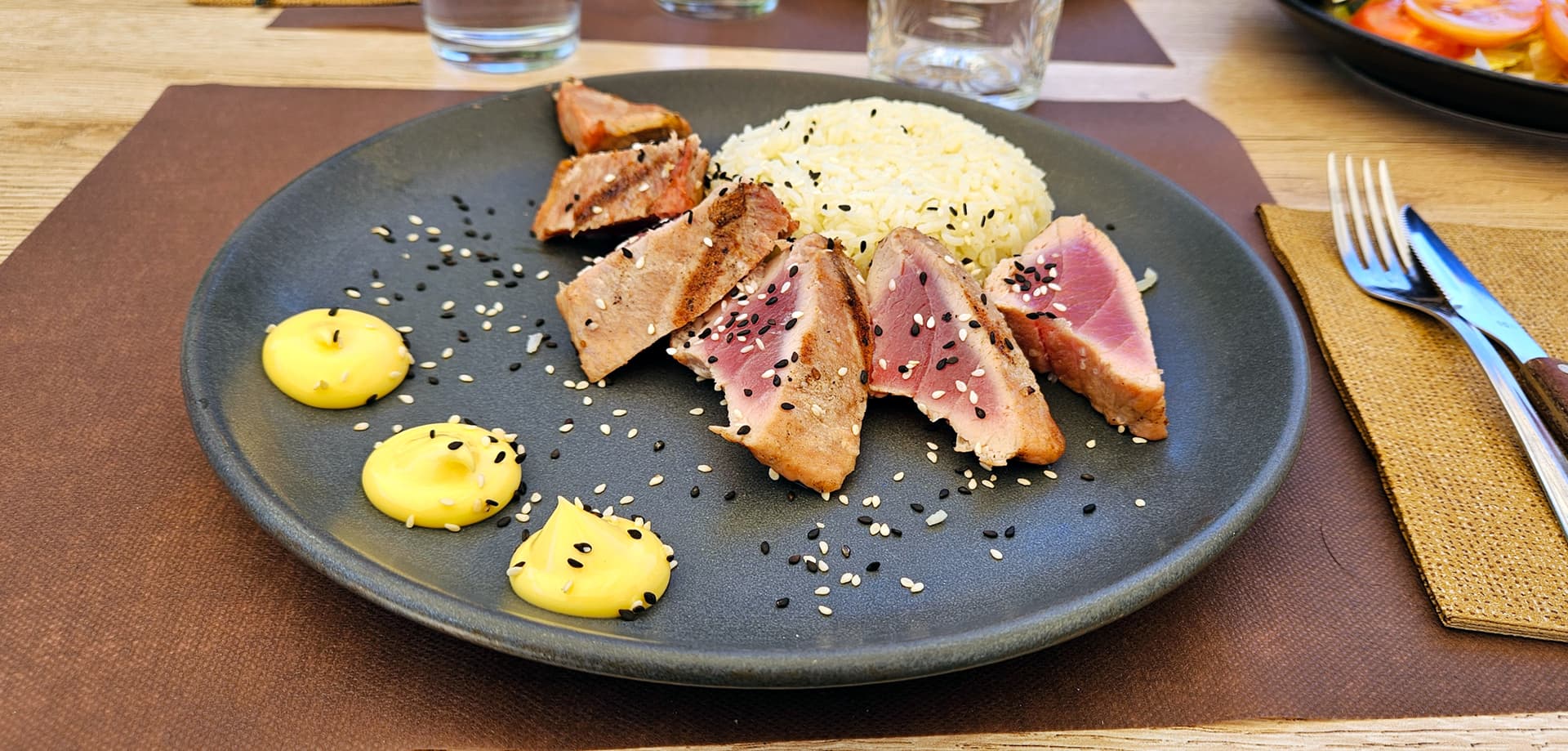

Before we continued to our next visit, we stopped for a lunch at Veladouro, in Pinhão. I went for a delicious grilled tuna.


15 Likes

Day 4 continues! This one’s going to be a bit longer piece due to all the details and whatnot. Sorry not sorry.


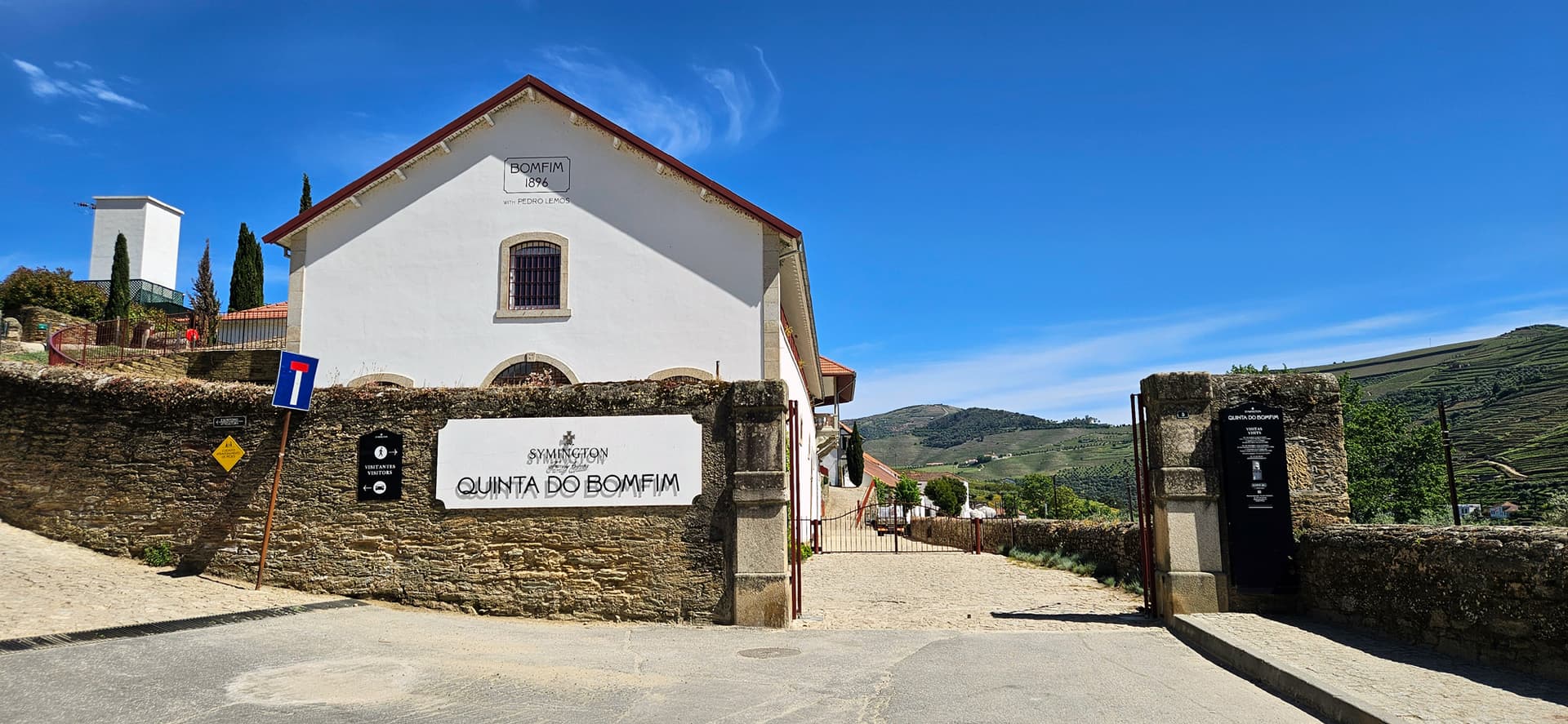
After our lunch we did what probably all wine enthusiasts (and probably also half of the tourists) do when visiting Pinhão: we went to Quinta do Bomfim, located just a three-minute drive away, on the edge of the already rather tiny Pinhão town center.


I was lucky enough to meet Nuno Silva - market manager at Symington Family Estates - at an importer catalogue tasting earlier this year. He was there representing Dow’s wines and when I told him I both loved the peppery Dow’s style and was going to visit Portugal this spring, he gave me his business card and told us to contact him so we could visit Quinta do Bomfim.

So that’s exactly what we did! Mr. Silva arranged for us a private tour around Quinta do Bomfim, which was really a wonderful opportunity, since all of us were already quite familiar with Port wine to begin with! After all, it can be pretty arduous to be on those regular touristic winery tours and hear all the same stories and basic-level info, whereas we loved to hear both all the specific technical details - that might be beyond the scope of basic tourist interest and/or understanding - and the minutiae that make this particular producer different from all the others in the region!


So, in essence, Quinta do Bomfim is the Dow’s headquarters in Pinhão, and Dow’s is a brand of Port wine owned by the Symington Family Estates. The whole history is quite long and pretty complex - at least if compared to an average winery history! I’ll try to make it somewhat short yet still understandable.

In some sense the history of Dow’s begins in 1798, when a Portuguese Port merchant, Bruno da Silva, founded a Port business in London. This company became Silva & Cosens in 1862, when Frederick William Cosens entered the company that was by then run by da Silva’s son, John da Silva. In 1877, James R. Dow merged his own Port company with Silva & Cosens - and since Dow’s had already built an impressive reputation for their great Vintage Ports, they chose to rename the company as Dow’s.
Symington’s history, on the other hand, began in 1882, when 19-year old Glaswegian Andrew James Symington arrived in Portugal. He began working as an accountant at Graham’s - originally a textile company - as the Symington and Graham families already knew each other from Scotland; but soon afterwards founded his own Port company bearing his own name. In 1905 Symington also became a partner in Warre’s Port - the first and oldest established Port house.

In 1912 George A. Warre - now the main shareholder in the Dow’s company decided to return to London and asked his business partner AJ Symington to manage the Dow’s vineyards in Douro and the stock and lodge in Vila Nova de Gaia. This partnership continued until 1961, when the Symington family acquired complete ownership of Dow’s.


Quinta do Bomfim is a very old property which George Warre acquired and repurposed as a winery for Dow’s in 1896; AJ Symington used the property as his Douro family home from 1912 onwards. Today it covers a bit over 100 hectares (250 acres) of land, of which about 86 hectares (215 acres) is under vine. It was modernized with autovinification equipment in 1964 and a new, modern vinification facility was added in 2015.


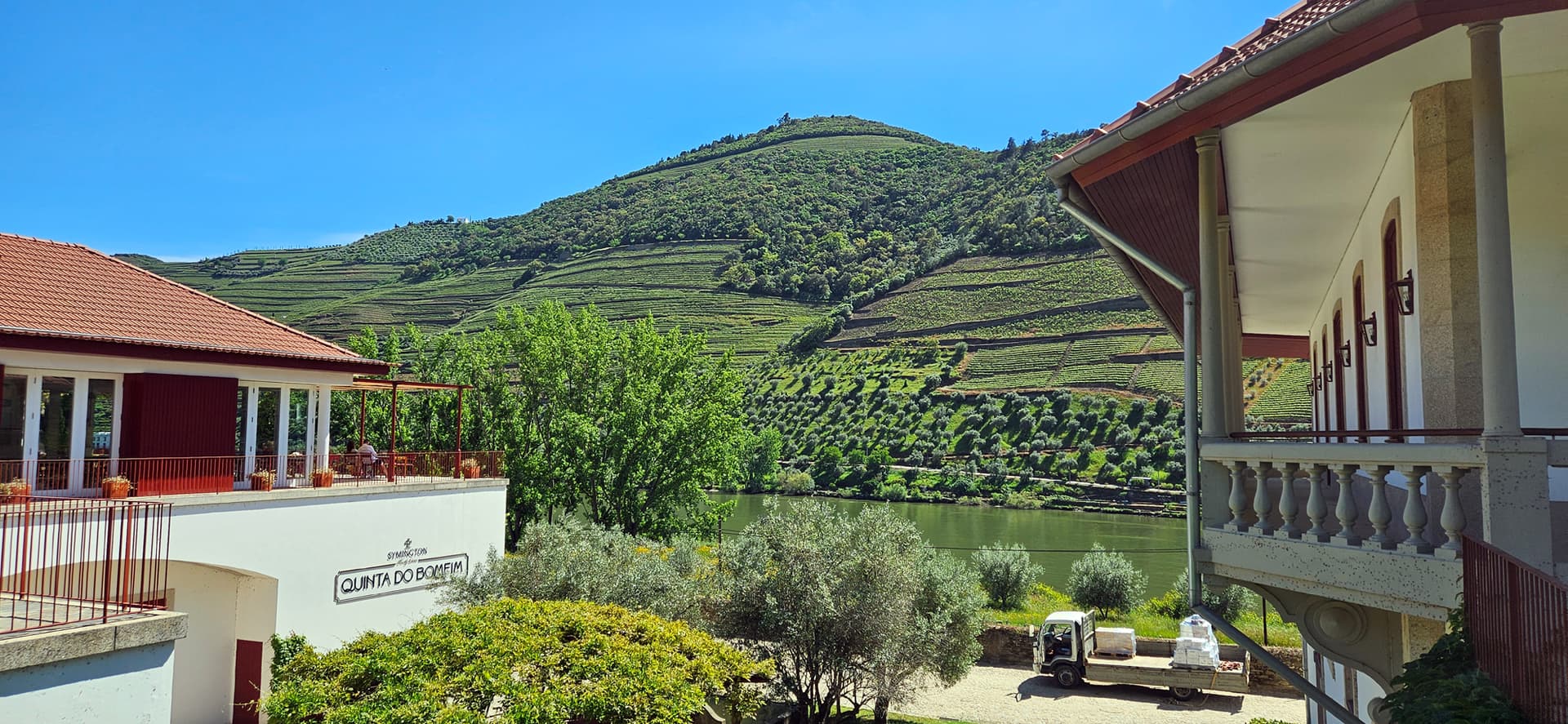
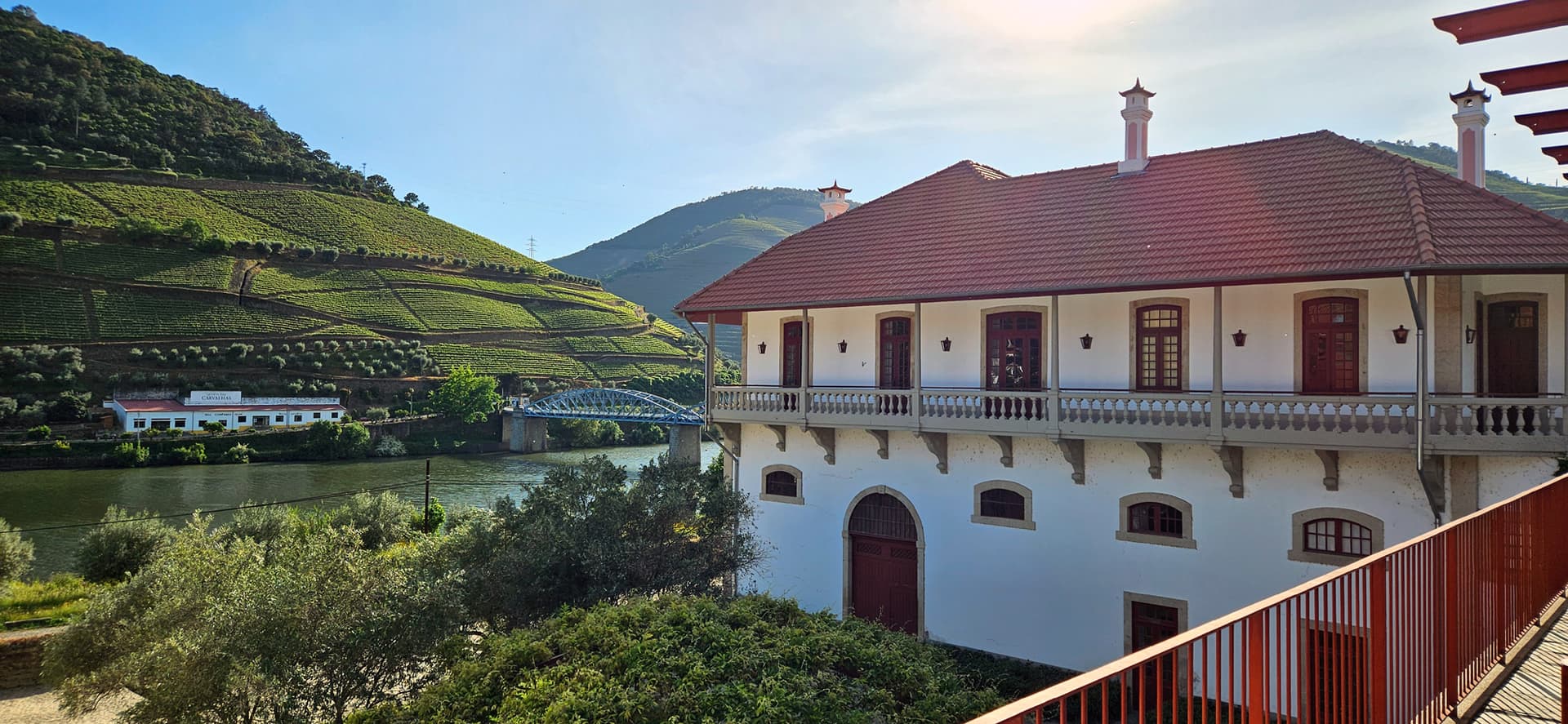
The winery is located immediately next to the terraced vineyards.

As is typical with large Port shippers, the Dow’s wines are not made with fruit sourced from just a single quinta. Over the years the Symington family has acquired numerous other quintas, which all supply fruit for their main brands. When I asked during our visit if there are some vineyards or quintas that produce fruit that is used just for “bulk production” of the Symington Ports, I was told that all the Symington quintas are profiled so that their fruit fits the profile of their corresponding brands, meaning that eg. the quintas that supply fruit to Dow’s, do so exclusively. You don’t see fruit from one quinta going to Warre’s in one year and to Dow’s the next year. Although they are under the same ownership, they still operate as separate entities.


Naturally Quinta do Bomfim produces the backbone of the most esteemed Dow’s wine, Vintage Port. However, Quinta da Senhora da Ribeira, which is located in the remote and hot Douro Superior - and opposite to another Symington estate, Quinta do Vesúvio - is another important source of Dow’s fruit. George Warre acquired Quinta da Senhora da Ribeira in 1890, ie. around the same time as Quinta do Bomfim. The other quintas supplying fruit to Dow’s are Quinta do Cabeço, Quinta da Cerdeira and Quinta do Santinho, which all located next to Quinta da Senhora da Ribeira.


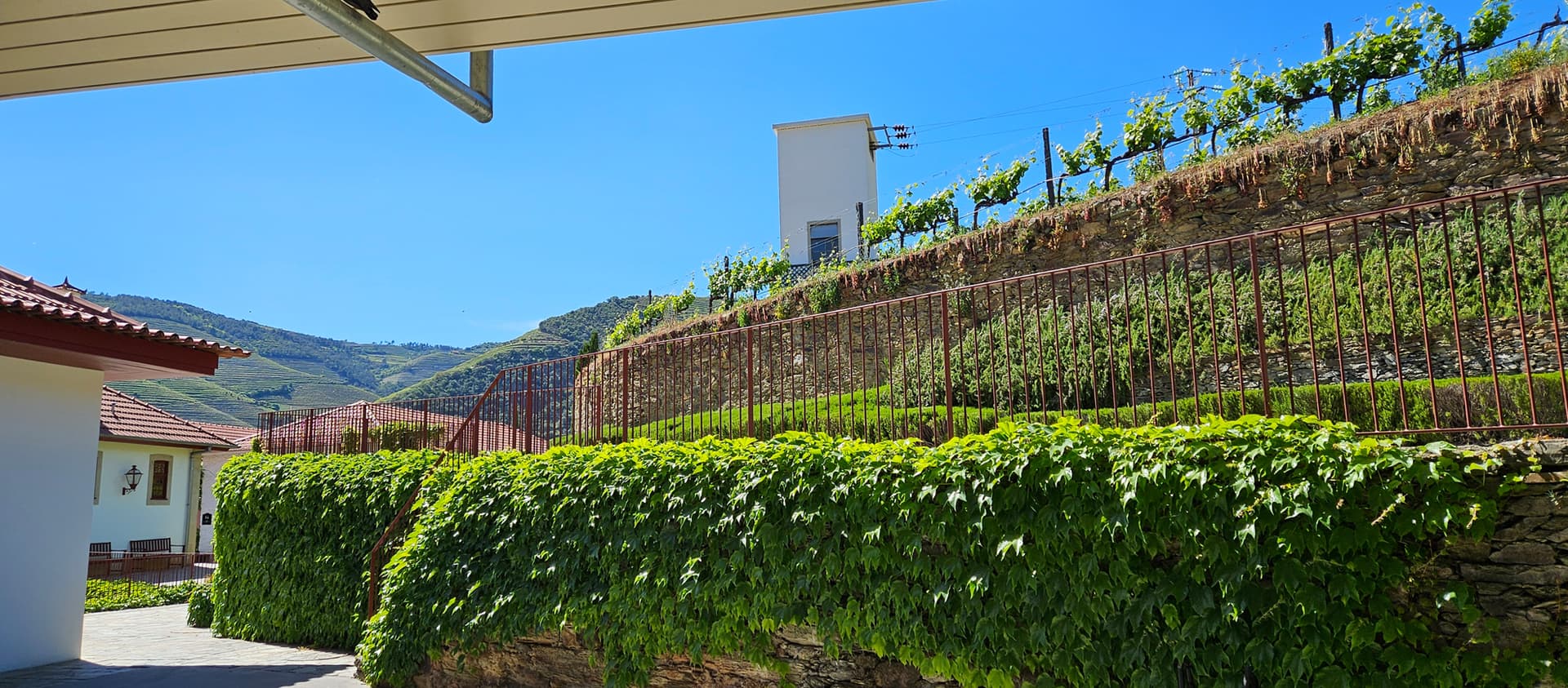
Again, the winery poles here are not made of wood, but schist.

Although Symington Family Estates own a whopping 26 different quintas in Douro today, covering a massive 2255 hectares (5600 acres) - of which 1024 hectares (2560 acres) is under vine, spread over 1300 different parcels - they still produce only a relatively small amount of Port brands / wineries. The key brands are Graham’s, Dow’s, Warre’s and Cockburn’s, but they produce also wines like Quinta do Vesúvio and Quinta do Ataíde. Typically Graham’s and Dow’s are stylistically described as the polar opposites: Graham’s ports are slightly sweeter, fruitier and more luscious than your typical Ports - their fruit flavor profile is definitely sweet and the wines might be slightly lower in acidity and higher in residual sugar; Dow’s ports are typically from the drier end of the spectrum, often showing a bit less residual sugar than Ports typically do with a slightly more austere and somewhat more peppery overall fruit profile. Cockburn’s, Warre’s and Quinta do Vesúvio are somewhere in-between, Warre’s profile being that of a fresh, lighter and more perfumed Port, whereas Quinta do Vesúvio is distinguished by not only their very old-school style, including traditional, non-machinized lagares in which the grapes are foot-trodden, but also their more granitic terroir.


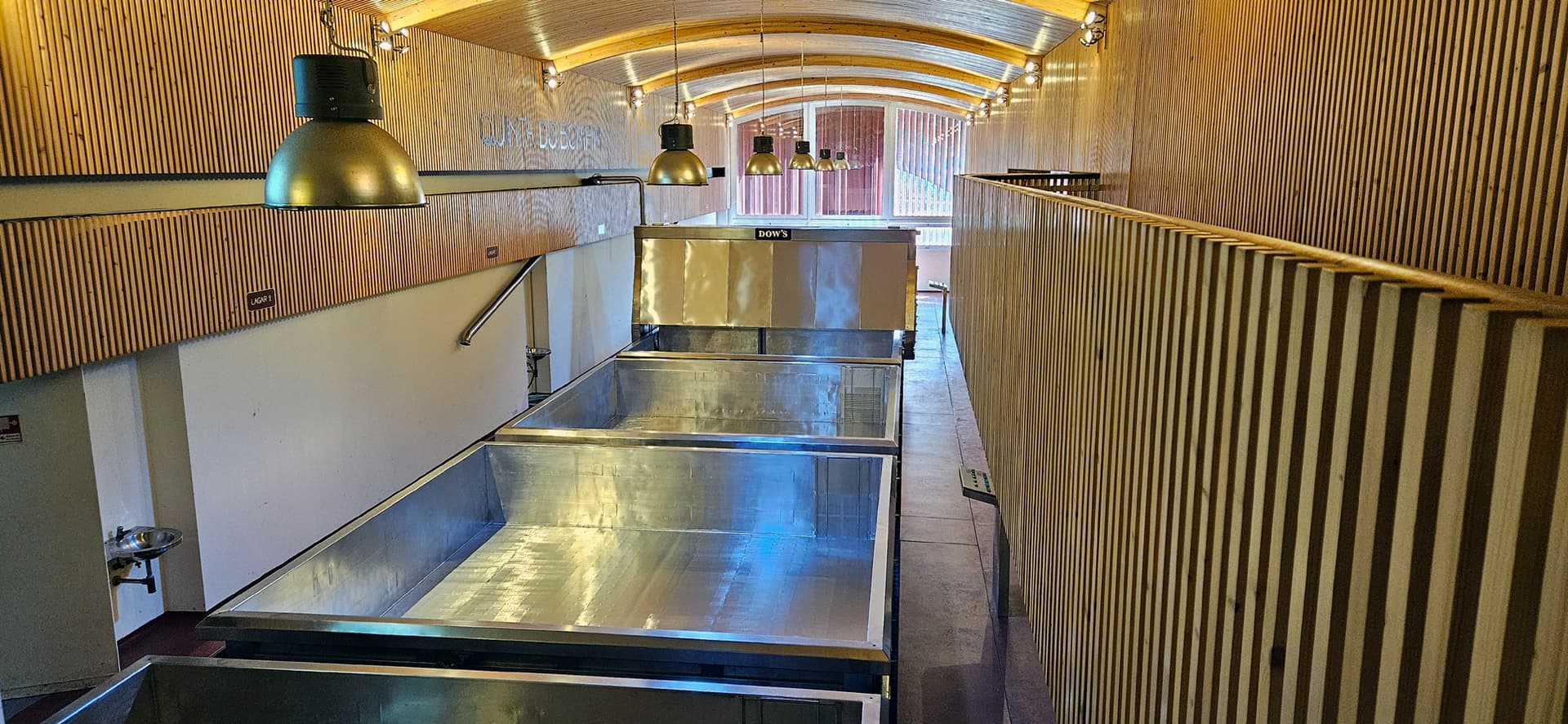
The stainless steel lagares and the robo-treader.

The Dow’s wines are made in a very modern manner in Quinta do Bomfim: the fruit gets destemmed, then moved into stainless steel lagares, in which the fruit gets crushed under robotic treaders that imitate the foot-treading process. Typically the wines are fermented spontaneously, and only if there are any problems with the fermentation, they might inoculate with the yeasts.

When the fermentation has been going on for 2-4 days and the level of sugar in the must has reached the level of approximately 95 g/l, the fermentation is halted by fortification. First the wine is left undisturbed for a few hours so that the pomace rises to the top, then the partly fermented must is drained off the lagar from a valve at the bottom into a vat with some aguardente. Traditionally the ratio is 115 liters of 77% aguardente to 435 liters of must, so that the resulting amount of wine can fill one 500-liter pipe. However, this ratio can differ from the producer to producer.


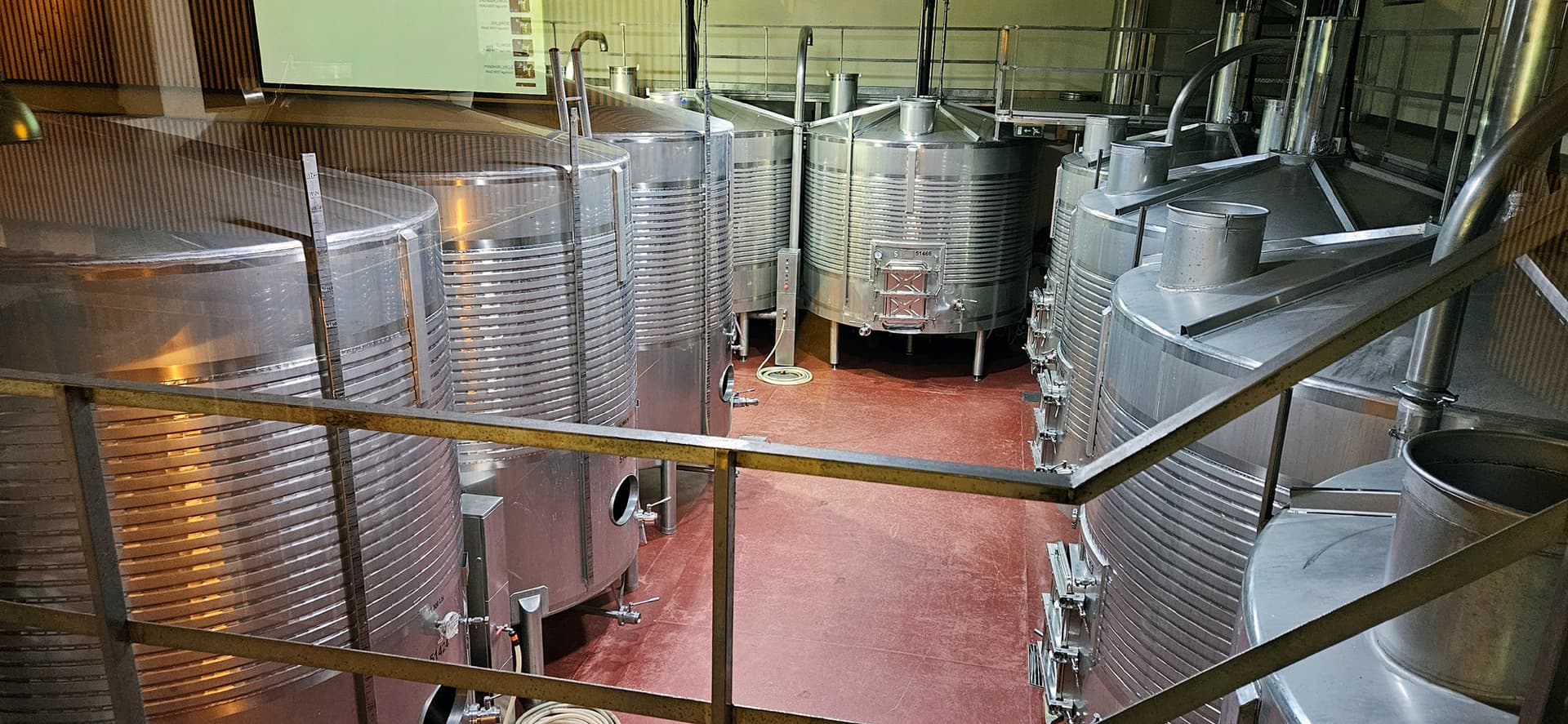
Stainless steel tanks at Bomfim.

It was interesting to learn that after the vinification, the grape pomace that is left over in the lagares is sent to distilleries so it can be distilled into aguardente. By law, no Port shipper is allowed to distill their own aguardente (and conversely no distillery can make any Port wine). This system can be a bit confusing: usually the producers supplying the pomace can get a discount for the next year’s batch of aguardente from the distillery. However, as Instituto do Vinhos do Porto (IVP) monitors the distilleries as well, the annually select which distilleries are the aguardente suppliers for the next year’s Port harvest. This means that the Port shippers are allowed to purchase spirits only from these distilleries and it’s possible that the distillery to which a winery sent their pomace might not be allowed to sell their aguardente to the Port shippers for the next vintage!


Pipes for aging Tawny Port.

Anyways, after the wines are fortified, they are moved into the aging lodges on the quinta’s premises. Those lots that seem to be fit for making Tawny Port are moved into smaller oak pipes. Those that are deemed suitable for making Ruby Ports (ranging anywhere from simple Ruby Port to Vintage Port) are moved into larger toneis, balseiros, huge concrete tanks or stainless steel tanks. We were told that the concrete tanks help to retain not just the brightness of fruit, but also acidity and tannic structure - the wines lose a bit more structure while aging in oak vessels.


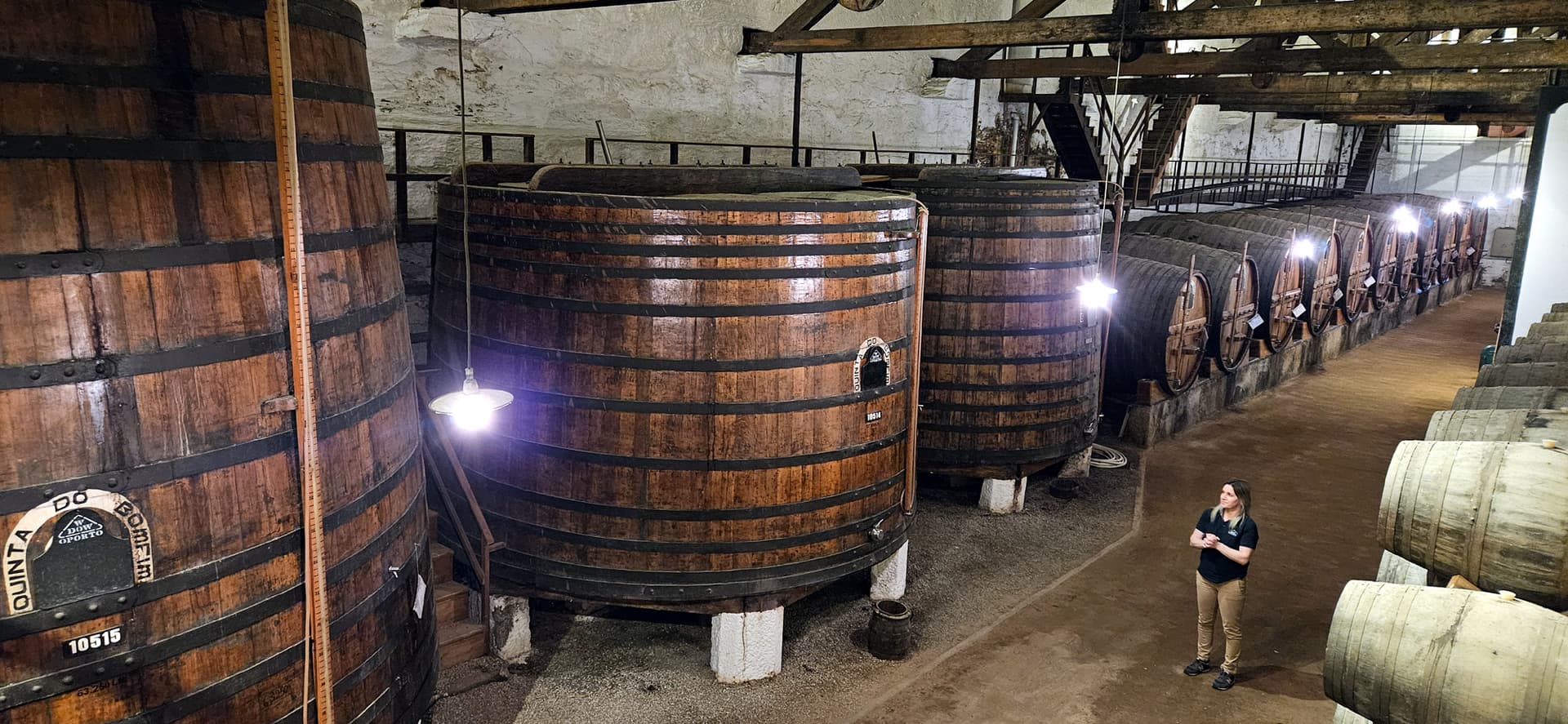
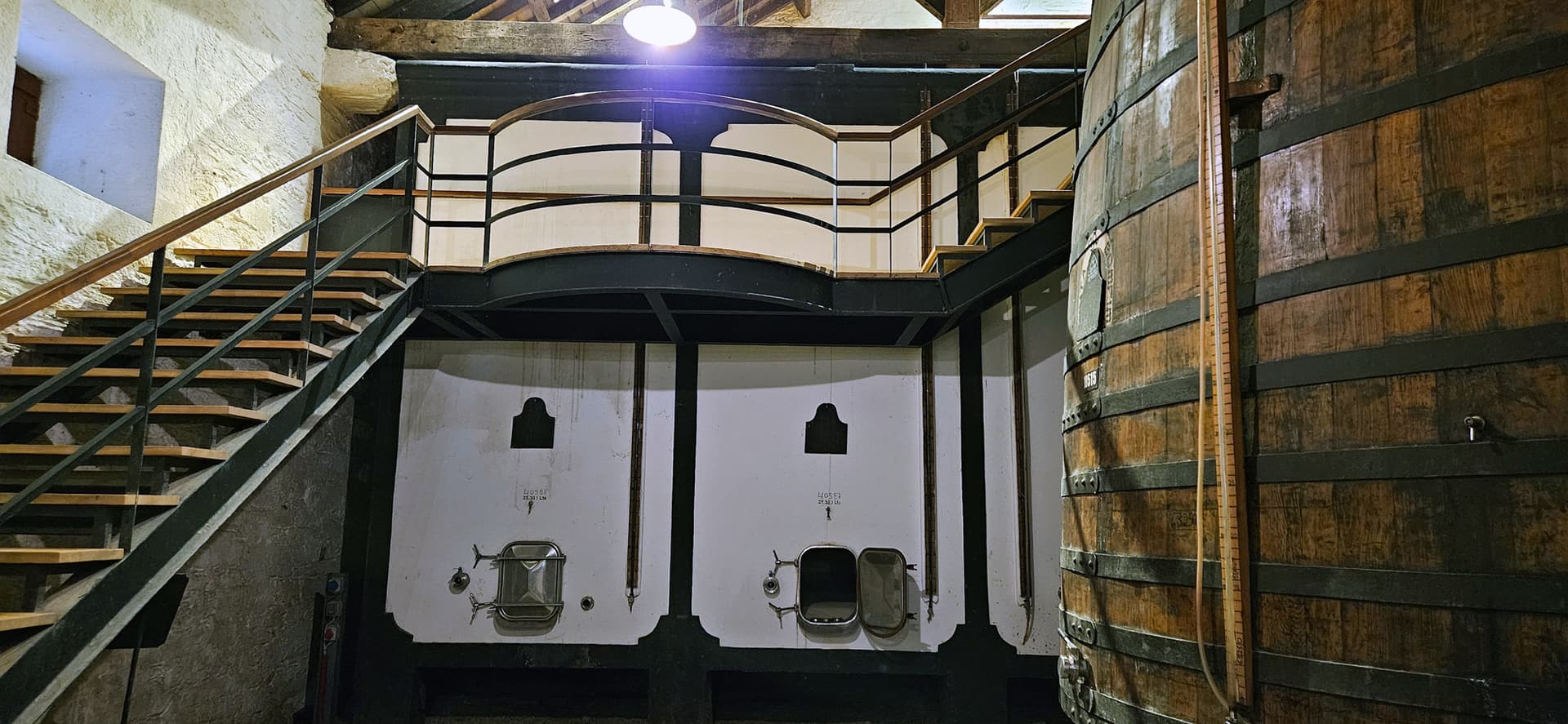
The lodge in which the wines stay over winter. Balseiros and toneis on the left, pipes and concrete tanks on the right. That gargantuan balseiro on the left holds 63,250 liters of wine.

The wines are aged in the Quinta do Bomfim lodge only for a few months: the colder winter months induce a natural cold stabilization of the wines and in the spring the naturally clarified wines are moved to the Dow’s lodge in Vila Nova de Gaia. The key reason for this is that there is much more evaporation (4% annually) in the dry, hot Douro valley compared to the cooler, more humid Atlantic climate of Vila Nova de Gaia (1% annually). By aging the wines in Vila Nova de Gaia, the shippers can retain better freshness of fruit in the wines, whereas aging the wines in Douro would produce sweeter, more concentrated wines. And, of course, bottle a bit more wine as less wine is lost due to the evaporation.


Some more concrete tanks next to the humongous balseiro

After the wines have been aging for one year and four months, if a shipper thinks they have an exceptional wine in sufficient quantity to make a Vintage Port, they can submit a wine to be tasted and approved by the IVP panel. While other Port wines can be made without a special permit, a shipper is required to have a permit if they want to declare a vintage, ie. to bottle a Vintage Port. If they do not want to (for a multitude of reasons), the wine can be blended into Ruby, Reserve or Crusted Ports; bottled as a Late Bottled Vintage Port; moved into smaller casks so that it becomes a Tawny Port with age; or, if all the fruit is sourced from a single quinta, bottled as a Single Quinta Vintage Port. We were told that IVP might reject a request to declare a vintage, but such a thing has never happened at Dow’s - they know to submit only wines of such quality that there is no doubt the wine will pass with ease.

If an approval is given, a vintage can be declared, meaning that a Vintage Port can be bottled unfiltered at the age of 1½ to 2 years and then left to age for as long as the shipper deems necessary. Vintage Ports might hit the market relatively soon after the declaration, whereas the (typically) less expensive Single Quinta Vintage Ports might be released many, many years later.

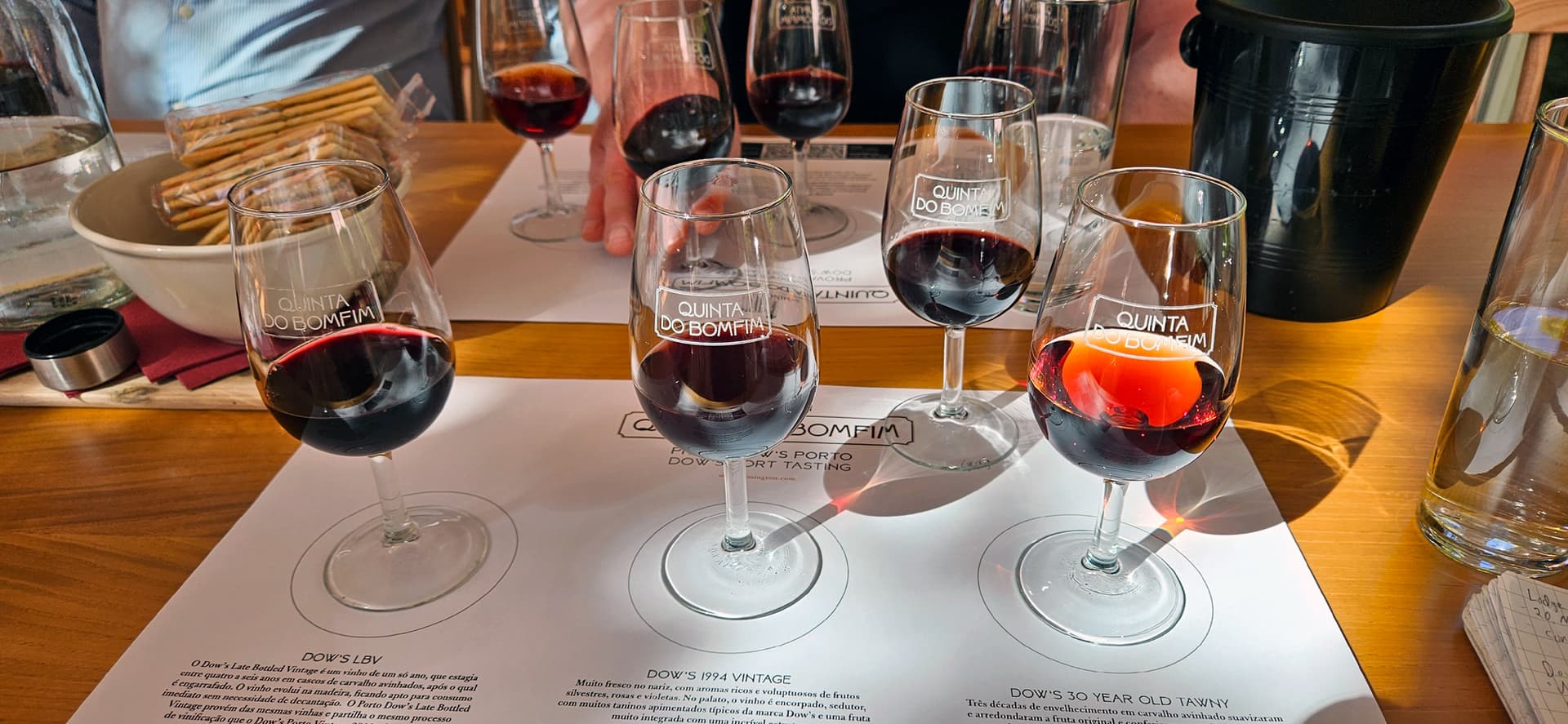
After we had walked through the impressive quinta and heard all kinds of interesting details on both the winery and making Port wine, we had a small tasting to conclude our visit. Not soon after we had quickly nosed and sampled the wines we came to the conclusion that the first wine - the LBV - must’ve been corked. Dow’s LBV was the wine that had originally made me notice the producer some 10-15 years ago, and this was just a dull, mute, slightly dusty shadow of that wine. We asked for a replacement and quickly received glasses with a wine that seemed perfectly sound!

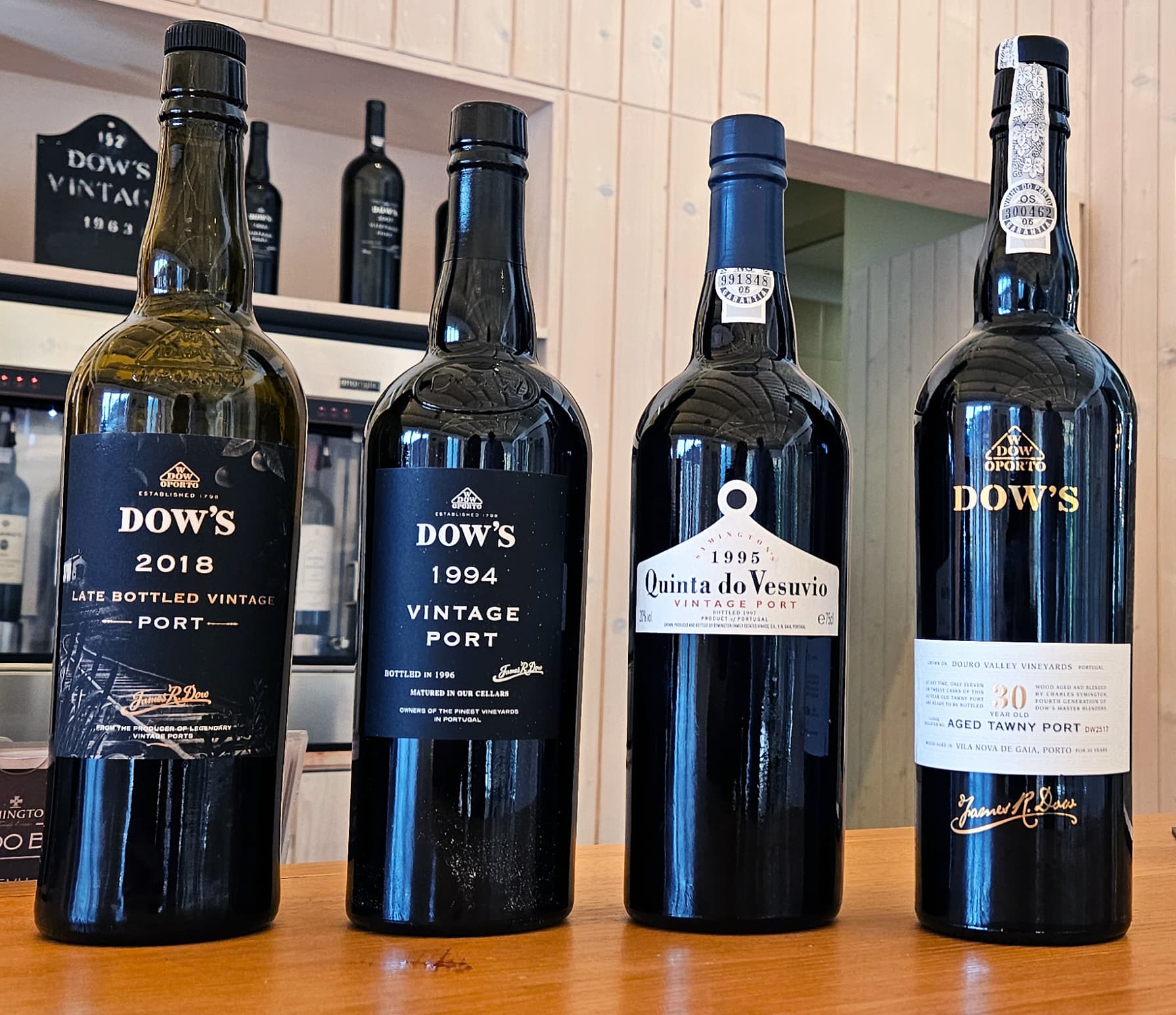
  • 2018 Dow Porto Late Bottled Vintage - Portugal, Douro, Porto (24.4.2024)
    A blend of Touriga Franca, Touriga Nacional, Sousão, Tinta Barroca and Tinta Roriz from the estate vineyards at Quinta do Bomfim and Quinta da Senhora Ribeira. Vinified like Dow's Vintage Port, ie. in stainless steel lagares with automated grape treaders. The fermentation is halted at around 100 g/l residual sugar by the addition of aguardente. Aged in oak vats for five years, bottled filtered. 20% alcohol, 98 g/l residual sugar, 4,8 g/l acidity and pH 3,55.

    Youthful, deep, slightly translucent cherry-red color with a dark purplish hue. The nose feels sweet, vibrant and quite youthful with juicy, dark-toned aromas of ripe bilberries and boysenberries, some black cherries, a little bit of peppery spice, light dark plum tones, sweet hints of strawberry juice and raspberry jelly, a spirituous touch of aguardente and a whiff of dusty old wood. The wine feels youthful, fresh and slightly hot on the palate with a full body and intense, sweet flavors of blueberries and plum juice, some boysenberry jam, a little bit of peppery spice, light spirituous notes of aguardente, a hint of gravelly minerality and a touch of black tea. The overall feel is enjoyably firm and muscular, thanks to the rather high acidity and moderately grippy tannins. The finish is long, warm and juicy with moderately grippy tannins and a somewhat sweet aftertaste of boysenberry jam, some peppery spice, light gravelly mineral tones, a little bit of succulent dark plum, a hint of cherry marmalade and a touch of black tea. The wine ends on a rather sweet, somewhat grippy and quite warm note.

    This LBV is consistently one of the best in its genre. It might not be an unfiltered LBV meant to be aged, but it still packs enough fruit intensity, structure and concentration to be a wine that can not just keep but actually evolve for at least some years. Furthermore, the combination of Dow's slightly less sweet and more peppery overall style and good sense of structure make this feel surprisingly fresh and serious for a Port wine of such modest standing. Definitely my go-to LBVs and excellent value at just 16€.
    (90 points)

  • 1994 Dow Porto Vintage - Portugal, Douro, Porto (24.4.2024)
    This is a re-release of this legendary vintage from the Symington stock that has been aging in the Vila Nova de Gaia lodge. Made with fruit sourced from the two Dow estates, Quinta do Bomfim in Cima Corgo and Quinta de Senhora da Ribeira in Douro Superior, both which are planted to high percentage of Touriga Franca and Touriga Nacional. There is also a not insignificant amount of Tinta Barroca, along with some Tinta Roriz and a smaller amount of local interplanted varieties. Bottled unfined and unfiltered in 1996, after 18 months of aging in traditional 535-liter oak pipes. 20% alcohol, 92 g/l residual sugar, 4,8 g/l acidity and pH 3,61.

    Evolved, slightly hazy reddish-maroon color. The nose feels sweet, fine-tuned and very attractive with evolved aromas of raisins and prunes, some pipe tobacco, light autumnal notes of leafy undergrowth, a little bit of minty lift, sweet hints of ripe black cherries ad boysenberries, a touch of dried bilberries and a whiff of smoke. The wine feels broad, silky and rather sweet on the palate with a full body and rich yet savory flavors of blueberries and wizened black cherries, some pruney tones, a little bit of gravelly minerality, light peppery notes along with savory, earthy spices, hints of tobacco and dried flowers and a touch of dried figs. Despite its age, the wine still retains great sense of structure, due to its relatively high acidity and ample tannins that feel ripe and silky, yet retain quite a bit of grip and firmness. The finish is long, complex and moderately grippy with a sweet-yet-savory aftertaste of wizened blueberries and black cherries, some evolved meaty tones, a little bit of peppery spice, light boysenberry tones, a hint of tobacco and a touch of dried fig.

    A fantastic, complex and still wonderfully vibrant Vintage Port that is starting to show some age, yet is not quite at its plateau of maturity. Tasting this side-by-side with the sweeter, more mellow 1995 Quinta do Vesuvio VP, the drier, peppery and somewhat more angular house style of Dow's became very obvious. This is a harmonious, beautifully matured and rather structure-driven Vintage Port that is in a wonderful spot right now, but I can see this wine aging, evolving and improving for at least a few decades more. An outstanding wine already now, but expect the score to inch even further up as the wine ages. This re-release is not a particularly affordable wine at 170€, but at least you get a wine with perfect provenance at that price!
    (94 points)

  • 1995 Quinta do Vesuvio Porto Vintage - Portugal, Douro, Porto (24.4.2024)
    Made with fruit sourced from the Vesúvio estate vineyards in Douro Superior, near the Spanish border. The fruit is trodden by foot in granite lagares, then the fermentation is arrested at 20% ABV by fortification and the wine is moved to age in large oak casks. 20% alcohol, 102 g/l residual sugar and 4,8 g/l acidity.

    Deep, moderately opaque blackish-red color with an evolved maroon hue. The nose feels wonderfully fragrant, floral and lifted with nuanced aromas of minty greenness and Sichuan pepper, some juicy bilberries, a little bit of wizened dark plum, light figgy tones, a spirituous hint of aguardente, a touch of raisiny fruit and a whiff of cigar box. The wine feels sweet, mellow and silky on the palate with a full body and complex, evolved flavors of raisins and dried dates, some minty green tones, a little bit of pruney dark fruit, light savory notes of autumnal leaves, a hint of dried black cherry and a touch of juicy blueberries. The moderately high acidity lends good sense of balance to the wine, but the structure relies more on the firmness from the silky medium-plus tannins that slowly pile up on the gums. The finish is rich, long and quite sweet with an intense yet mellow aftertaste of raisiny dark fruit, some prunes and dried dates, a little bit of extracted bitterness, light autumnal notes of damp leaves, a hint of ripe black cherry and a touch of cooked strawberry.

    A beautiful, harmonious and quite fascinating Vintage Port that stood in stark contrast to the slightly drier and noticeably more angular 1994 Dow's Vintage Port. While the Dow's VP seemed to emphasize the more savory and peppery tones, the emphasis on this Vesuvio was on somewhat sweeter dried-fruit flavors and a more mellow, silky overall feel. However, what really caught my attention was the wonderfully fragrant, slightly green-toned and herby elements that gave the wine's aromas a wholly new dimension. Our preference for the wines was pretty divided - although I found this 1995 Vesuvio a very wonderful Vintage Port, I still preferred the slightly leaner and drier style of Dow's more. However, some said the silkier, sweeter and more fruit-driven style of this Vesuvio was much more to their liking. This re-release is maybe not particularly affordable at 130€, but at least you get a wine with perfect provenance at that price!
    (93 points)

  • NV Dow Porto 30 Year Old Tawny - Portugal, Douro, Porto (24.4.2024)
    A blend of oxidatively aged Port wines, some of which have been aging in smaller pipes resulting in more evaporation, concentration and evolution; others in large balseiros ie. oak vats, in which the wine evolve very slowly and retain their freshness. The final blend is composed of different vintages resulting in an average age of 30 years. 20% alcohol.

    Deep, moderately translucent and pretty dark amber color with a luminous coppery core. The sweet nose feels quite captivating with complex aromas of maple syrup and arrack, some wizened figs, a little bit of oxidative nuttiness, light fragrant notes of dried flowers and dusty wood, a hint of cherry marmalade, a touch of burnt sugar and a faint whiff of vanilla custard. The wine feels sweet, oily and viscous on the palate with a full body and intense flavors of maple syrup and caramel, some sweet notes of dried figs and apricots, a little bit of exotic spices, light peppery tones, a fragrant hint of dried flowers and a touch of arrack. Although wine is pretty rich and concentrated and the mouthfeel is somewhat sticky, the wine retains enough acidity to keep the overall feel surprisingly fresh and precise. The intensely flavored finish is complex, concentrated and slightly sticky with a persistent, sweet-yet-savory aftertaste of maple syrup and caramel, some oxidative notes of caramel and straw, a little bit of peppery spice, light fragrant nuances of arrack and vanilla, dried-fruit hints of dried figs and apricots and a touch of honey.

    A beautiful, harmonious and wonderfully complex Tawny Port with lots of everything. Although the wine is quite rich, sweet and concentrated, it still retains remarkable sense of freshness and poise. Also, typical of Dow, the wine feels slightly drier and more peppery than your typical 30-yo Tawny. Absolutely gorgeous stuff. Not the cheapest wine out there at 115€ but boy is this great stuff.
    (95 points)

After we had finished our wines, we proceeded to buy some vinous souvenirs from the Bomfim shop and finally started our long 2-hour drive from Pinhão to Porto.

10 Likes

If I recall correctly, almost all the port producers are owned by an array of English-ancestry families, dating back to the days when England was the biggest, and virtually only importer of the stuff (perhaps with the exception of Niepoort). Interesting history in that segment.

Almost all, with the exception of the one founded by a Dutch family? Oh you. :grinning:

It’s true that historically England has been the most important market for Port wine, which explains why there are so many Port houses that can trace their origins to England or Scotland.

However, I’m pretty sure some great Portuguese Port shippers like Fonseca or Ferreira wouldn’t be particularly happy to hear claims like these. :sweat_smile:

OK, bad wording on my behalf. ‘A lot of’ was the intention.

If I recall correctly their Port trade association was so dominated by Sandeman, Graham, Cockburn, Taylor, Dow, Gilberts etc that it became like a British gentlemans club away from home. Today I think many brands are still owned by the Symington and the Robertson families etc.

It’s true that the British had a huge impact on the Port wine landscape and some of the oldest surviving Port companies - eg. Croft’s, Warre’s - were founded by British, not Portuguese people.

However, there are also several Portuguese shippers that were in Portuguese hands well into 20th century, until they were sold to British - or multinational - companies (like that above Fonseca, which was acquired by Taylor’s in 1948). Even if they are today owned by British families or companies, I wouldn’t really consider them British shippers per se; if these Port shippers were in Portuguese hands during and after the heyday of Port wine, I’d say they are of Portuguese heritage, no matter their ownership today. For example Fonseca is generally regarded as a Portuguese Port shipper, even if it is owned by Taylor’s today.

Conversely, you could say that the Symington Family Estates is a Portuguese group. Even if AJ Symington came from Scotland, the Symington family has lived in and operated from Portugal for multiple generations. To my understanding, they consider themselves completely Portuguese, not Britons.

There are numerous Portuguese small shippers of Port, but it’s true that today the large brands are by and large not in Portuguese hands. I’m not sure, but possibly Ferreira is the only large house that has always been in Portuguese hands, throughout its history.

2 Likes

That is some head-scratching cellar door pricing on the Noval VP.

Great pics of the Douro valley! It remains the most naturally beautiful destination I’ve ever visited.

Photographs really don’t do it justice.

1 Like

I was honestly pretty much stunned by the Vintage Port pricing at all the Port producers. We were planning on buying some VPs as souvenirs, but in the end we didn’t buy a single VP - apart from a few reasonably priced Single Quinta Vintage Ports.

In wineries outside Douro the prices were very reasonable, whereas in Douro they seemed to have some tourist extra in all the prices. Didn’t really make much sense to buy a wine at those prices when one could order a solid VP from a good vintage at half the price from an internet shop. It’s always nice if the wine comes from straight from the winery cellar so you can trust the provenance, but if the wine is just 10-15 years old, I’m not willing to pay 100% extra just for that.

1 Like

It’s big business wine tourism in Douro. Lots of private vans, river cruises, packaged meal/winery deals, weddings, corporate events, etc for wine newbies that happen to be on vacation in Porto. They’re purchasing bottles as one time souvenirs.

I’m not a port drinker but I even looked up the CT price on a few. LOL

1 Like

I’d heard that was the case, and IIRC also reflected in Portuguese wine shop pricing, such that it’s invariably cheaper to buy back at home, then when in the country. With table wines very much the reverse, with some super value in Portugal.

Tangentially connected to this, a friend in the wine business saw many an aspiring trader / collector, who would go heavy on Port with a view to reaping the financial rewards of cellaring, only to realise over time that prices never escalated at a speed that was worth the effort.

1 Like

I guess this might have to do with Instituto dos Vinhos do Porto’s beneficio system that dictates the quotas how much Port wine one vineyard can produce.

By having numerous restrictions and limitations on the Port production, the system keeps the Port wine prices at artificially high levels since the Port shippers aren’t free to produce as much wine as they might want to. If they produce one style, it’s off from the total quota, ie. from the other wines.

This is one of the reasons why many Port shippers have much larger estates than what is their planted acreage - if they’d plant more vineyards, they wouldn’t be able to produce any more Port wine. The only way to do this is to find other producers who don’t need or want to produce as much Port wine and who are willing to sell their beneficios. Large producers can spend millions of euros for extra beneficios.

This also means that there is a lot of surplus grapes. Producers who produce more grapes than their beneficio quota allows them to turn into Port wine sell those grapes. However, as there is already a ton of surplus grapes in the market, they are often sold at very low prices - it’s not uncommon to see these grapes sold at lower prices per kilo than how much it costs to produce them.

This, of course, results in quite modest prices of Douro reds. However, if the table wines are not produced from estate grapes - which are typically farmed with a table wine, not a Port wine in mind - but just purchased surplus grapes, the quality isn’t particularly high, either. Hence there are some very inexpensive dry Douro reds available in Portugal, but typically those are wines that are rarely exported - and for a good reason.

It’s crazy that this system has remained pretty much unchanged since 1947. No wonder many Port shippers - including several very large names - are actively fighting against it. While it might help in keeping the Port quality high by imposing strict limitations and restrictions on the production - and in the process aids to keep the wine prices at an artificially high level - there are many downsides to this system. For example the region is riddled with abandoned vineyards only due to the beneficio system - it doesn’t make sense to produce fruit from a vineyard if you have to sell the grapes below the production cost, so it’s much easier to just abandon the vineyard completely. The beneficio system really seems to prevent Douro from reaching its full potential.

3 Likes

Sogevinus is another large Portuguese Port firm controlling the Kopke, Calem, Barros, and Burmester brands.

2 Likes

Now’s the turn for the conclusion of Day 4!

After we left Dow’s / Quinta do Bomfim, we exited Pinhão. However, even if there is a direct road from Pinhão to Porto, the part of the road closest to Pinhão is still nothing more than a tiny, winding village road and it took us quite some time to reach a proper highway.

The good side to this was that we had ample opportunities to stop at different miradouros (places for sightseeing) to marvel at the beautiful landscapes we were leaving behind.


Some old terraced vineyards a short distance away from Pinhão.


The road from Pinhão to Porto starts pretty small.


The town of Pinhão, seen from above & north. The smaller Pinhão river joins the Douro river as it passes that bridge there.


Pinhão and the only selfie I took on our trip.


And that bunch of white buildings there, in the middle of the picture, right across the Pinhão river valley, is Quinta do Noval (and their table wine winery on the lower right).

We had a reserved a table at restaurant Gruta, but at this point we realized we’d never be there in time, so we contacted the restaurant and told that we’d be a bit late. Everything was fine.

The trip from Pinhão to Porto proceeded with no problems. Two hours of driving, one pit stop at a gas station, then directly to the hotel. The only big problem was the check-in - there were only two customers before us in the reception, but we still had to wait for some 25 minutes before we finally managed to check in. Once we had our keys to our rooms we had about 5 minutes left before we were supposed to be at the restaurant so we called yet again that we had run into some unexpected delays and asked if the kitchen was still open for another 30 minutes. They gave us 15.

So basically we had no time whatsoever to freshen up - we just threw our baggage into our rooms, ordered a ride from Bolt and went to the restaurant as fast as we could. We basically walked in exactly 15 minutes after we had called them. Phew!


So, Gruta is a nice little restaurant in Porto with a good emphasis on seafood. We ordered our dishes plus a sparkling wine for an appetizer, a Vinho Verde to go with the entrée and a Douro white to go with the main course.

  • 2016 Hehn & Meirelles Távora-Varosa Família Hehn Método Clássico Bruto Reserva - Portugal, Beiras, Távora-Varosa (24.4.2024)
    A blend of Cerceal, Malvasia Fina and Touriga Nacional. Aged sur lattes for approximately six years, disgorged in November 2022. 12% alcohol.

    Pale yellow color. Quite rich and expressive nose with aromas of juicy yellow fruits, some floral tones, a little bit of fresh apricot and light nuances of aromatic herbs. The wine feels dry, mineral and somewhat lean on the palate with a medium body and quite modest fruit. There are flavors of incisive steely minerality, some leesy tones, a little bit of zesty citrus fruit and a hint of apple bitterness. The mousse feels harmonious, smooth and creamy and the acidity comes across as brisk and zippy. The wine does pick up some richness with air, but still remains rather understated until the end. The finish is dry, crisp and lively with a clean, bright aftertaste of steely minerality, some tart citrus fruit tones, a little bit of sharp Granny Smith apple, light crunchy notes of white currants and a hint of leesy yeast.

    A nice, refreshing and palate-cleansing bubbly. The wine does show great sense of freshness and the nose feels quite attractive, but on the palate is a bit of a let-down: the wine is lacking in depth and flavor. This feels like a young, nervous Blanc de Blancs Champagne that is all about acidity and minerality, not really about fruit. I wonder if the wine picks up some depth and complexity with additional aging? Maybe a bit pricey for the quality at 28€ in a restaurant.
    (87 points)

  • 2022 Quinta de Paços Alvarinho Vinho Verde Casa do Capitão-mor Monção e Melgaço - Portugal, Minho, Vinho Verde (24.4.2024)
    An Alvarinho from Monção. The fruit is destemmed and about 20% of the fruit is left to macerate in the must for 6 hours before the fermentation. Aged for 9 months in stainless steel, bottled early in the summer. 13% alcohol.

    Youthful herby green appearance. The nose feels very youthful and primary with aromas of ripe pear and pear drops, some juicy Fuji apple tones, a little bit of cantaloupe, light tropical fruit tones and a primary hint of exotic fruit candies. The wine feels youthful, dry and very slightly oily on the palate with a moderately full body and quite primary flavors of steely minerality, some candied primary fruit notes of pear drops, a little bit of cantaloupe, light mineral notes of wet rocks, a hint of apple peel bitterness and a touch of fresh herby character. The acidity feels moderately high - enough to make the wine firm and balanced, even if it isn't that crisp or precise. The finish is ripe, youthful and juicy with moderately long flavors of ripe pear and pear drops, some apple peel bitterness, a little bit of cantaloupe, light sweet notes of juicy yellow stone fruits and a hint of chalk dust.

    A nice, balanced and quite fresh Alvarinho that feels maybe a bit too round, exotic and primary for its own good. I think this has good potential to become something interesting, but at the moment the wine is just way too primary; I'm not really a fan of the pear drop primary flavors - and this wine is, at the moment, all about them. Most likely the wine will lose those after another year or two; hopefully this will be much better and more balanced by then. Priced according to its quality at 22€ in a restaurant.
    (88 points)

  • 2020 Quinta Vale D. Maria Douro Branco Vinha de Martim - Portugal, Douro (24.4.2024)
    Made with a field blend sourced from a very old (80 yo), interplanted vineyard. All fruit is destemmed and then left to settle in temperature-controlled 2,500-liter stainless steel tanks. Racked into new 500-liter French oak casks, in which the wine is fermented and aged for 9 months. 13% alcohol, less than 2 g/l residual sugar, 5,8 g/l acidity and pH 3,34.

    Lemon-yellow color with a youthful greenish hue. The nose feels somewhat sweet-toned and a bit toasty with aromas of ripe yellow fruits, some toasty oak tones, light creamy nuances, a little bit of exotic fruits, a hint of honeyed richness, a touch of mango and a whiff of nutty wood. The wine feels dry, broad and slightly viscous on the palate with full body and intense flavors of nutty wood, some creamy tones, a little bit of fresh Golden Delicious apple, light mineral notes of chalk dust, a hint of honeydew melon and a touch of savory spice. Despite the flavor intensity, the fruit department feels somewhat underwhelming compared to the mineral and woody nuances. Fortunately the wine is quite fresh, firm and precise - with a heavier overall feel the wine might come across as pretty dull and ponderous. The finish is long, dry and a bit restrained with flavors of saline minerality, some creamy and woody notes of oak spice, a little bit of savory umami, light mineral notes of chalk dust, a hint of tart Granny Smith apple and a nutty touch of slivered almonds.

    A pleasant, fine-tuned and pretty refreshing single-vineyard Douro white that feels surprisingly understated in the fruit department. The wine isn't particularly oaky, but the woody notes dominate the wine quite noticeably due to the rather underwhelming fruit flavors, making the wine feel a bit unbalanced. The overall feel is that of a pleasant and enjoyably intense yet still not perfectly harmonious white wine. I guess it's possible the wine is just too young for its own good and it only calls for some additional aging before the woodier tones integrate better with the fresh yet somewhat light fruit. This was a nice effort with food, but it always came across as somewhat clumsy and lackluster on its own. Feels somewhat pricey for its quality at 88€ in a restaurant.
    (89 points)

While the wines went pretty nicely with the dishes, I think none of them was particularly interesting on its own. The excellent food was the winner tonight!


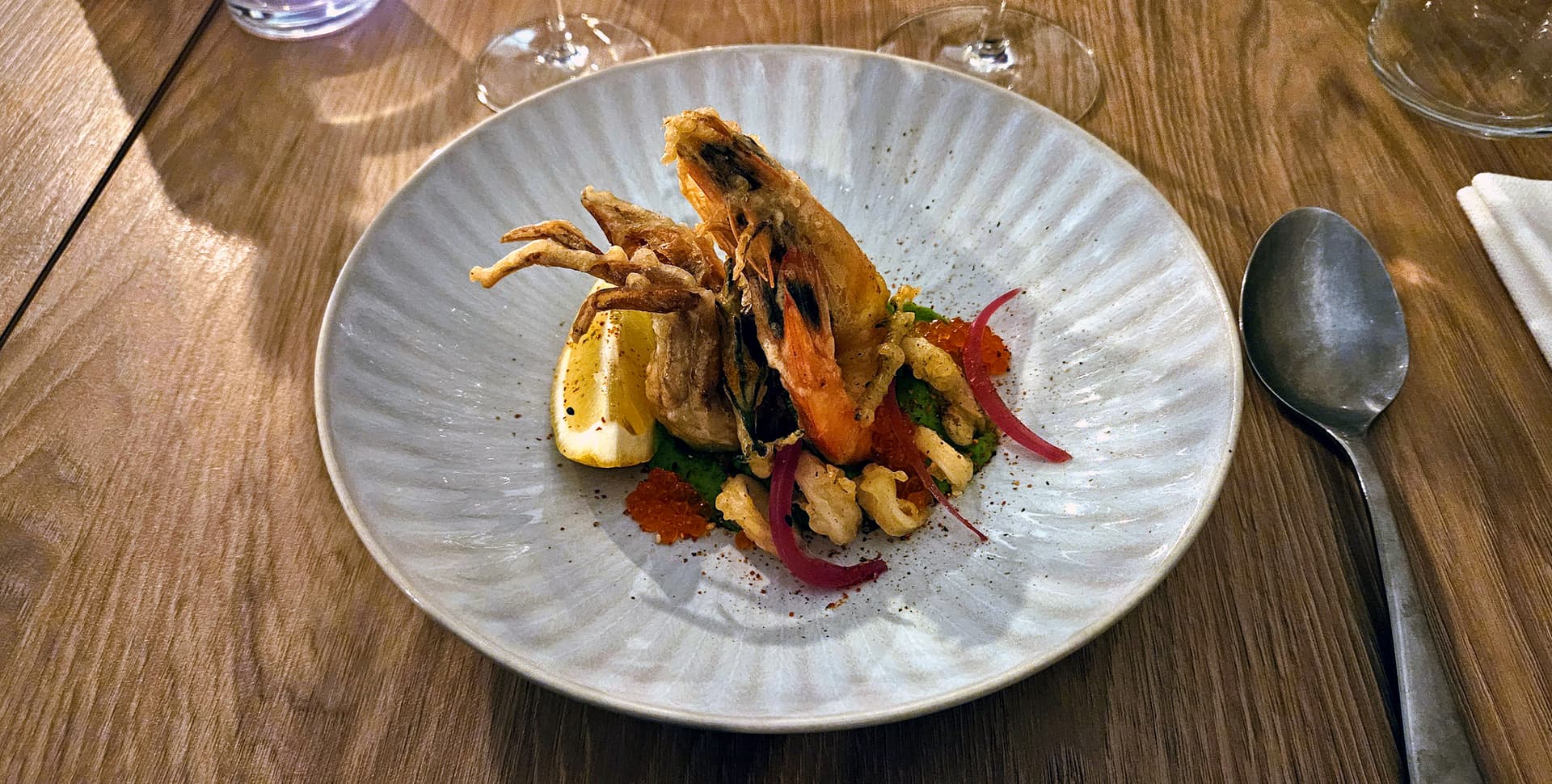
Fritto di mare


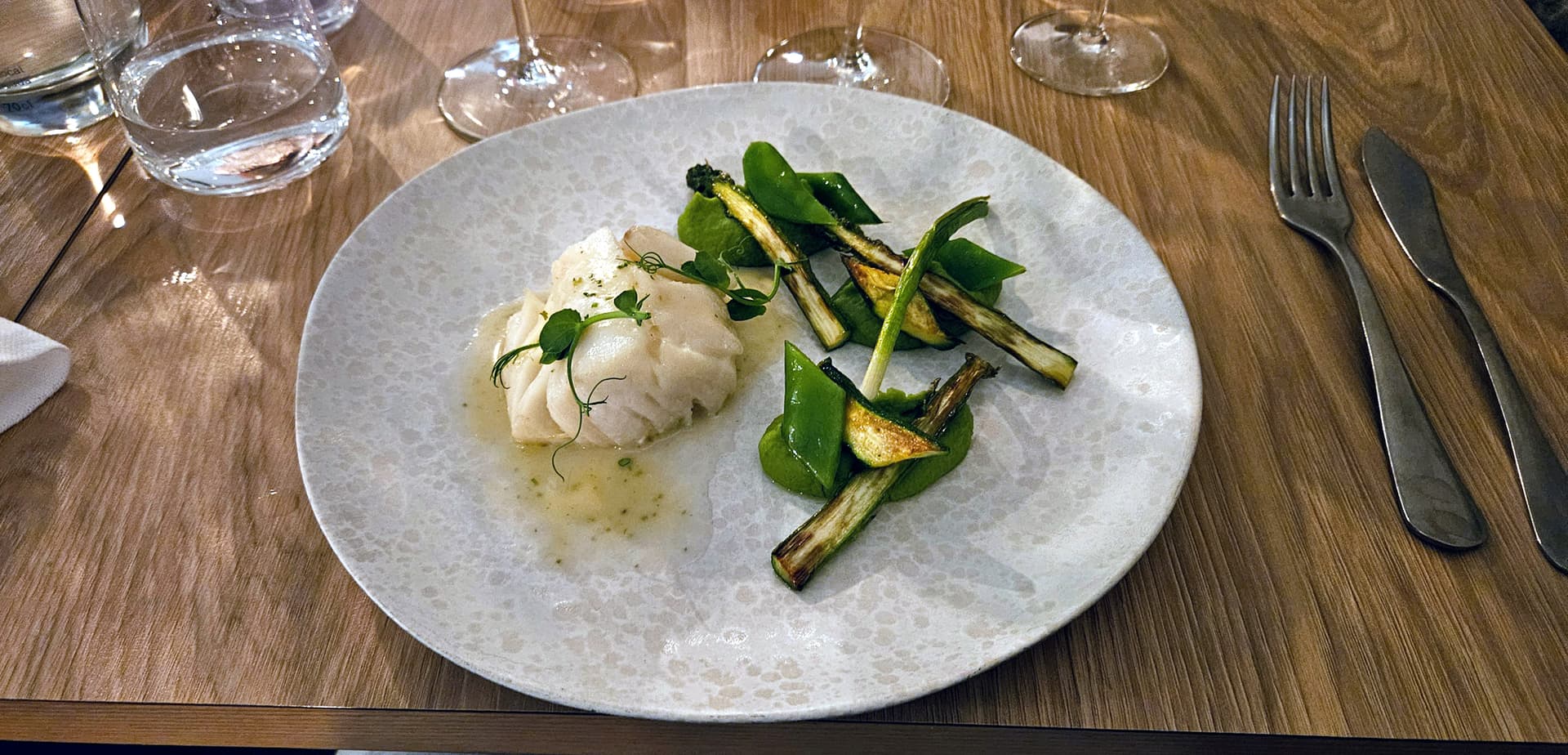
Bacalhau fresco

After the dinner we thought we could still go to a bar to grab a glass or two, so we checked out for some alternatives nearby and headed out. There were quite many people outside on the streets and we deduced that it must be because the following day (Thursday) would be a national holiday, the Carnation Revolution memorial day.

However, we were a bit surprised when we saw a street cordoned off with lots of polices everywhere. We didn’t really have any idea what was going on, so we decided to head in a different direction. However, it wasn’t more than a minute or two after that and BOOM! There was a huge explosion right behind us!

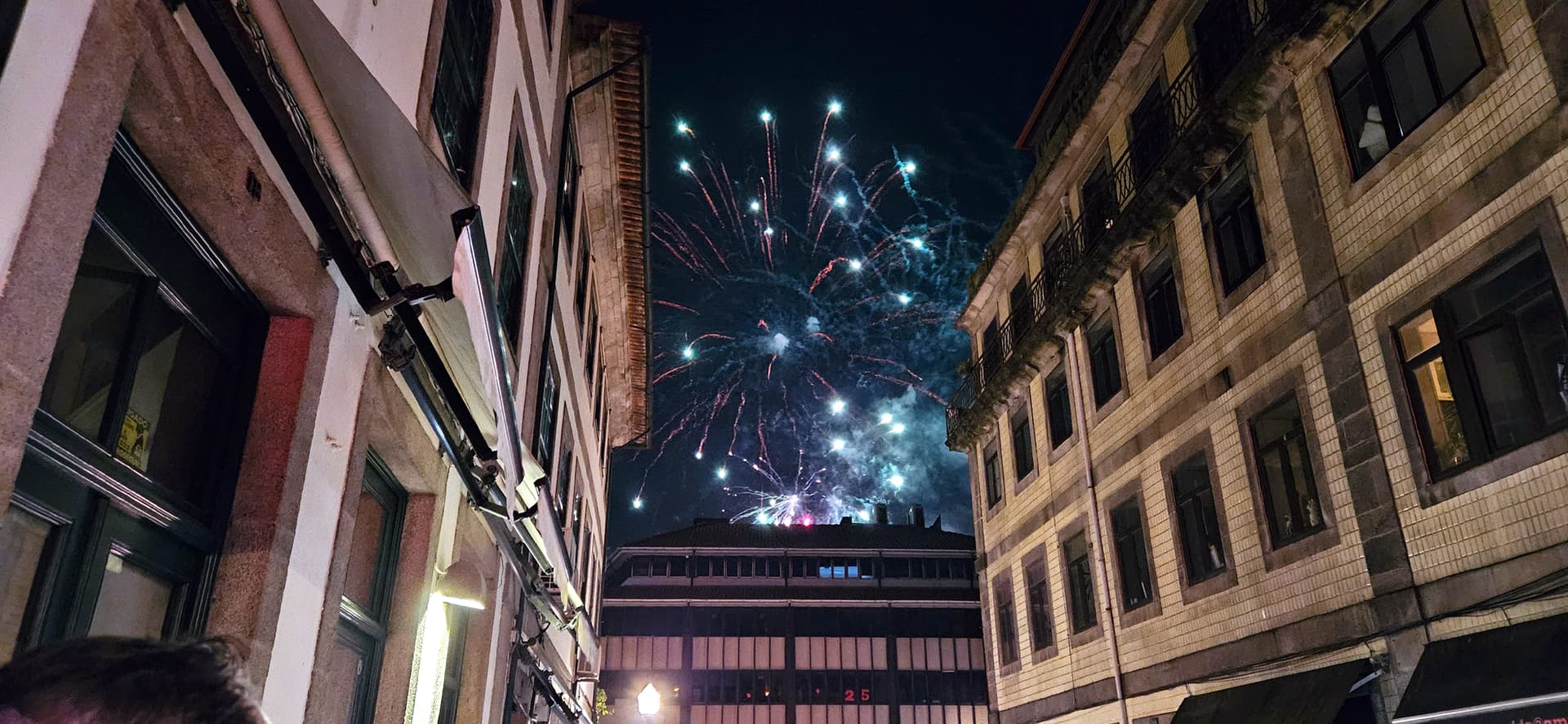
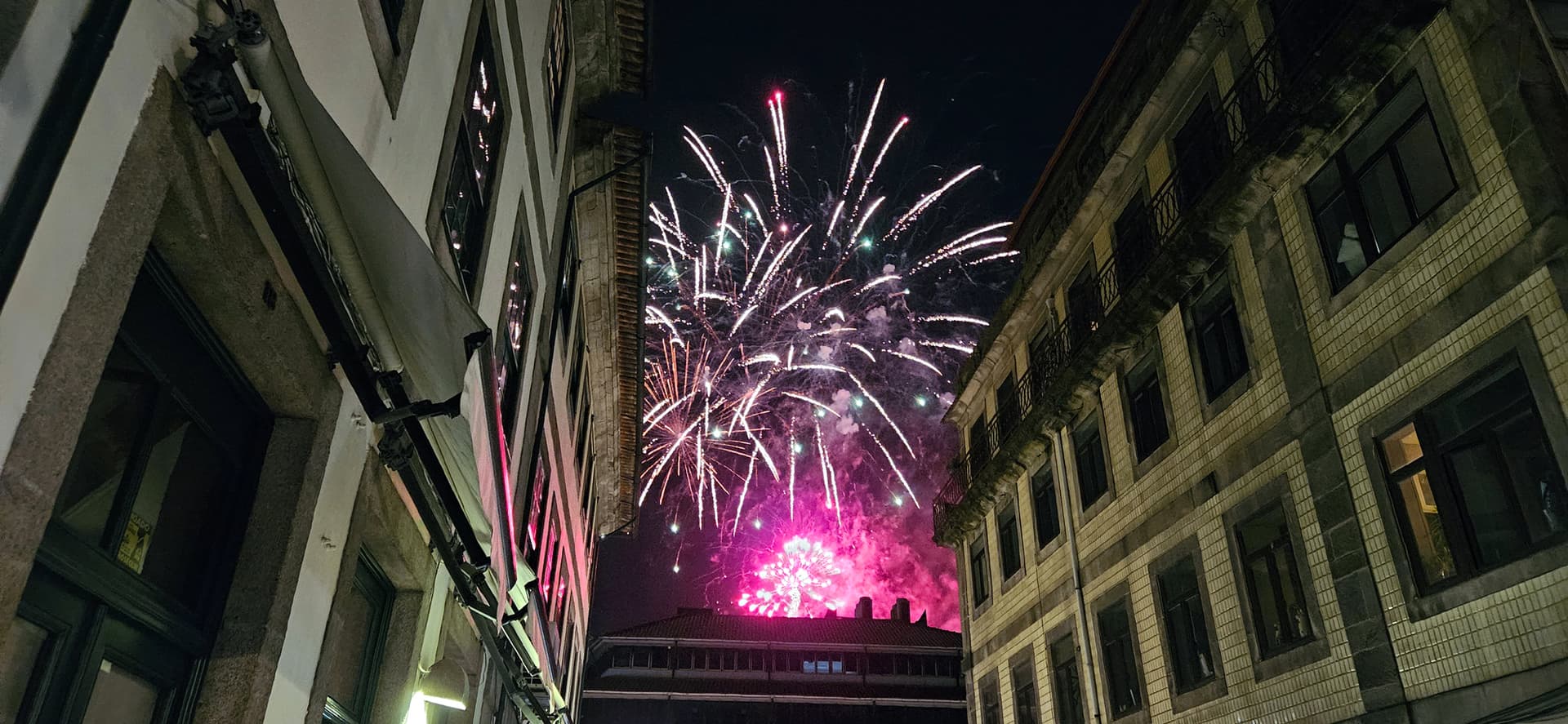
Because - as we now realized - it was exactly midnight, and the place that was cordoned off was where they were firing a huge fireworks display.

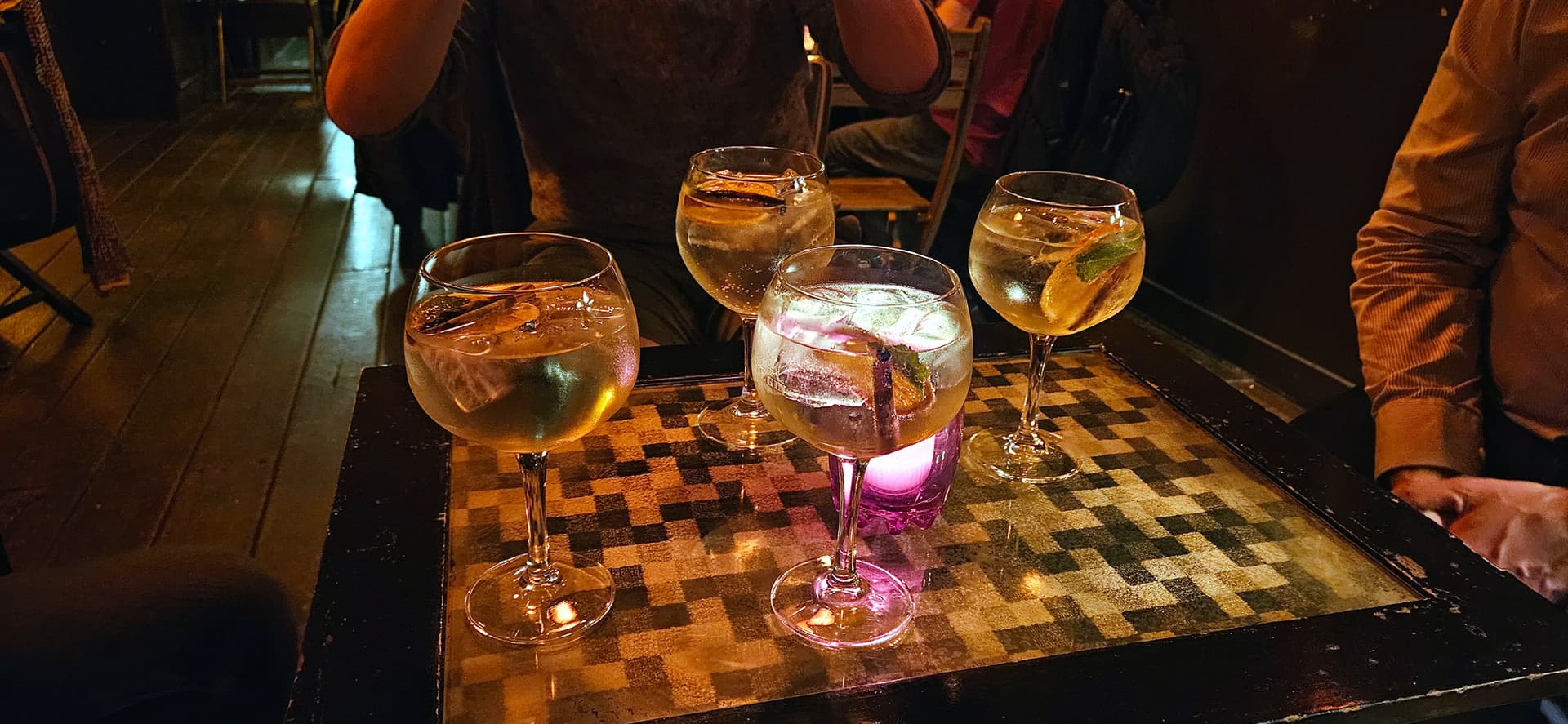
After the bombardment had ended, we headed to just a random nearby bar for glasses of beer.


…and somewhat sizeable portions of Port & tonic.

That’s it for day number four, folks!

12 Likes

You were there for the 50th anniversary of the Revolution, which was evidently signalled by the fireworks! The first radio message to be broadcasted to the rebellious troops, Paulo de Carvalho’s song “E Depois do Adeus” (Portugal’s entry for the Eurovision song contest that year) went on air five minutes before 11 pm on April 24th. The confirmation signal, José Afonso’s “Grândola Vila Morena”, which has really become the symbol and icon of the Revolution, was broadcast shortly after midnight (it was scheduled for midnight sharp, but there was a slight delay which led to some initial despair among the insurrectionists). “Grândola” was the signal that let everyone know things had reached a point of no return - the military operations would be going forward, come what may. The plan, crafted and directed by Major Otelo Saraiva de Carvalho, was brilliant: the last government of Portugal’s near 48 year long dictatorship had surrendered by 6 pm, without a single drop of blood.

5 Likes

Thanks for the posts Otto. Very well done! I especially appreciate the pictures.

Hey Tomas, I’ve been watching a show called “Conta me como foi” on RTP to help me brush up om my Portuguese before I go to Lisbon in a couple of weeks. It is a great way to learn about pre-revolution Portugal… PIDE, Paulo de Carvalho, José Afonso, Salazar, Marcelo Caetano… fascinating history.

2 Likes

i really enjoyed my meal at gruta last year! great seafood, however i opted for beer as i did not see anything too special in the wine department :sweat_smile:

Actually in that bar, from which the last photo was, a group of young people just suddenly stood up, formed a ring and sang their hearts out to the tune of that song.

Although I’m pretty sure the same thing must’ve happened in many other places throughout Portugal. :sweat_smile:

1 Like

Day 5


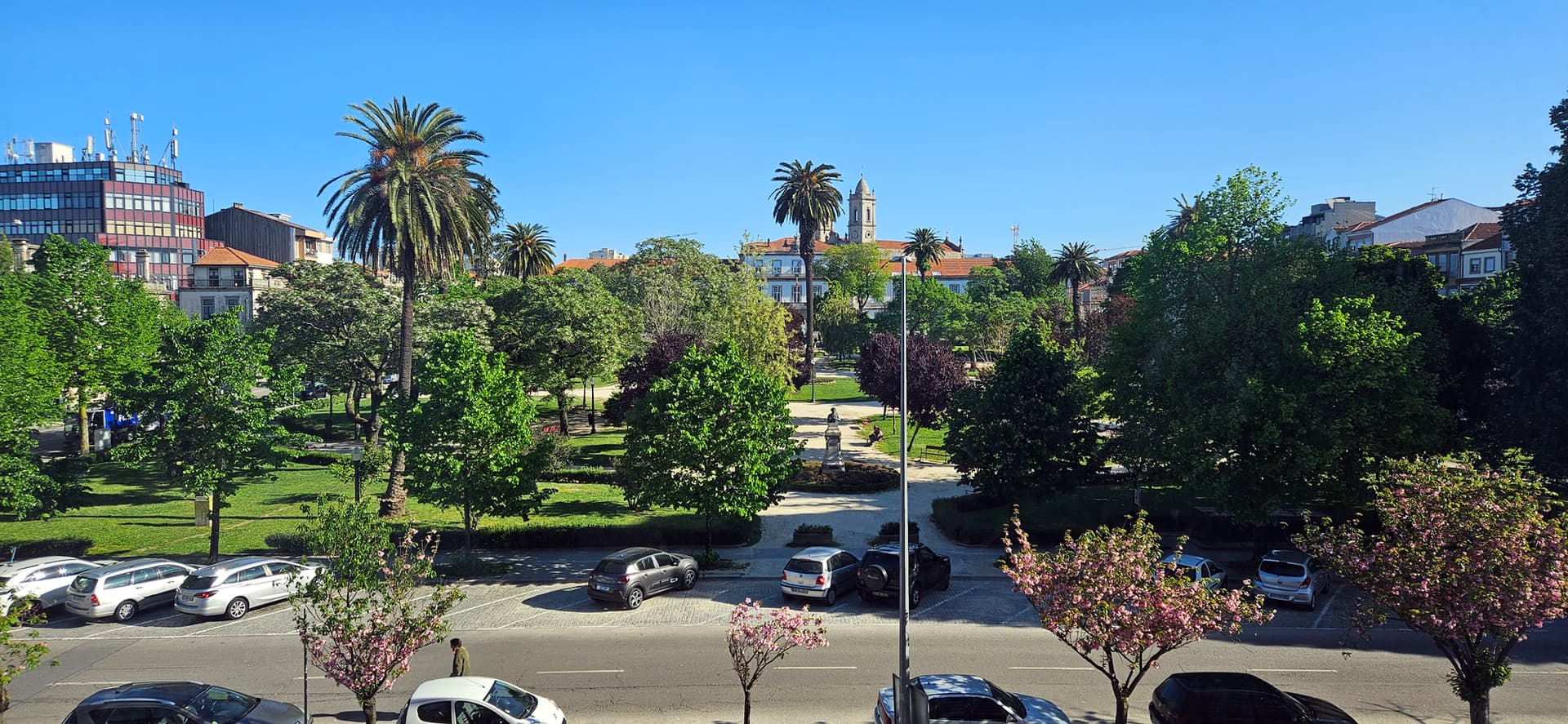
Waking up in Porto - here’s the view from the hotel room!

After we left our hotel in Porto, we ordered a Bolt to take us across the river to the Vila Nova de Gaia side. We had reserved a tour around the Graham’s lodge at noon, but instead of going directly there, we jumped off at the iconic Ponte Luís I and walked through Gaia to Graham’s lodge - just to get the lay of the land.


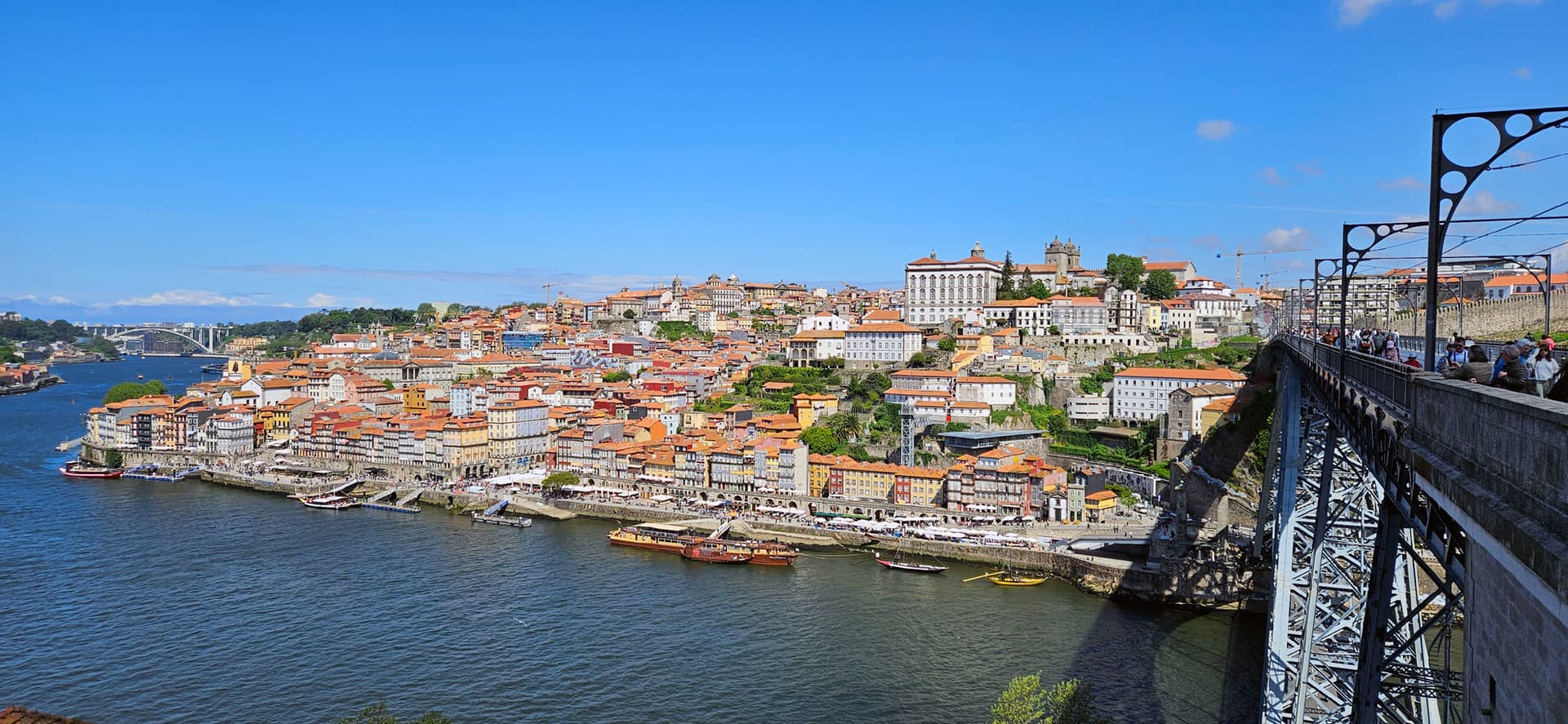
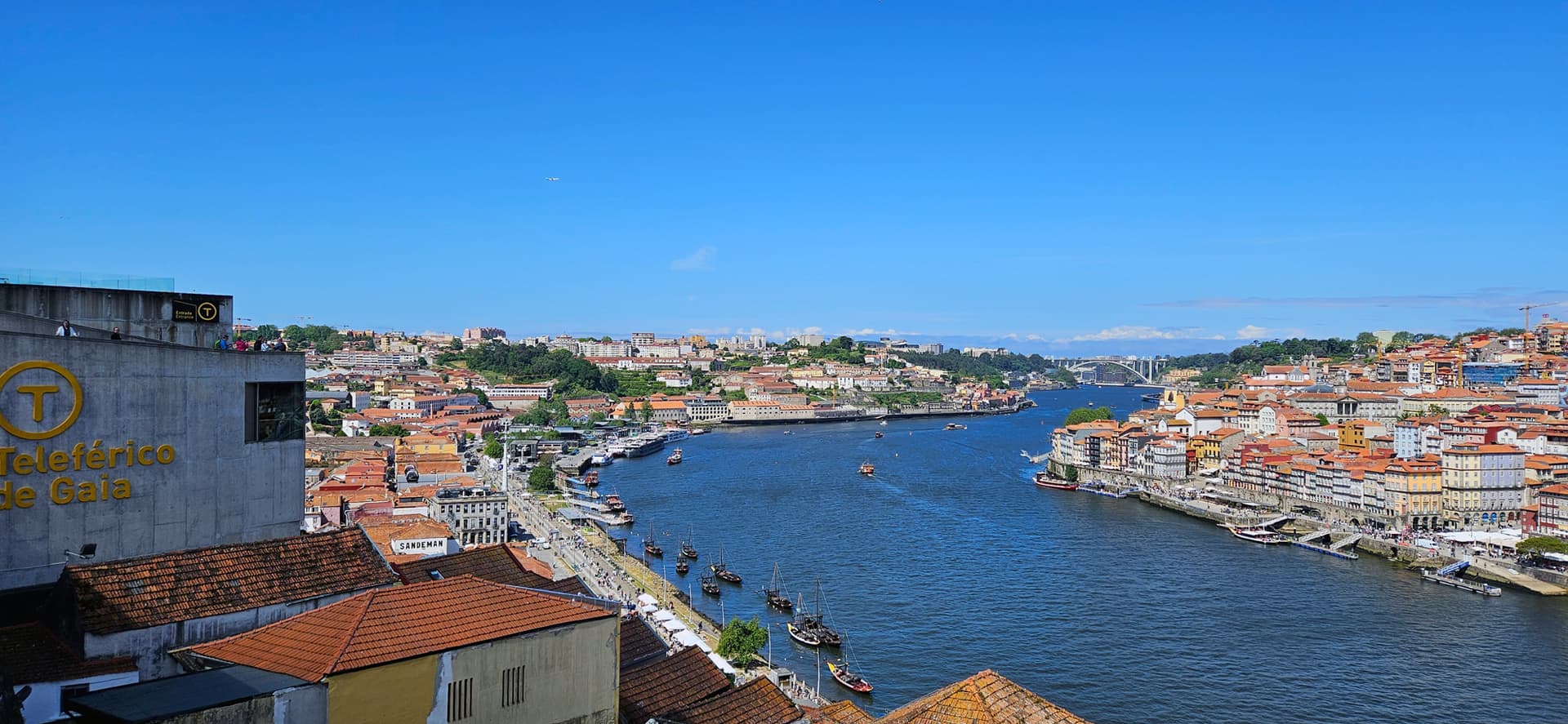
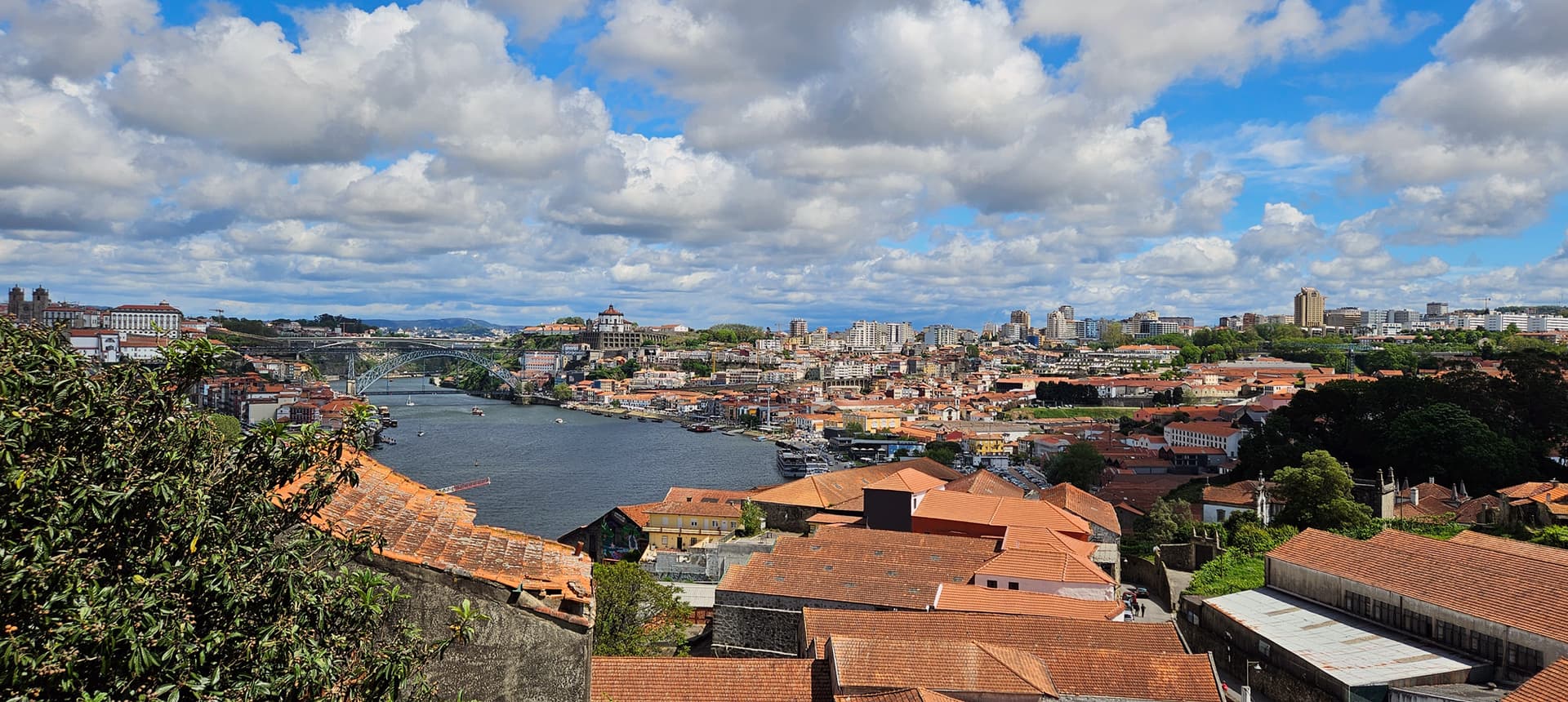
Porto, from Ponte Luís I.


Vila Nova de Gaia, from Ponte Luís I - you can see the Graham’s lodge in the middle of the picture, right below that lonely wispy cloud.

W & J Graham’s is part of the Symington Family Estates, of which I talked in length in my post on our visit to Dow’s / Quinta do Bomfim. I’m not going to repeat myself here, ie. I’m not going to tell you again the full history of Symington’s.

However, as Graham’s has been a distinct Port shipper for a long time, I think it doesn’t hurt to go through some of their history here.


Originally Graham’s was originally a textile company set up by William Graham in Glasgow in 1784, which slowly developed into a textile and dry goods exporting company. In 1804 they opened an office in Porto and in 1820 Graham’s son John Graham accepted 27 pipes of Port wine in payment of an outstanding debt from a customer who had run out of cash and could not settle the debt otherwise. Although the father William was not particularly happy about the barrels that were shipped to Glasgow, the wines ultimately sold out in no time, marking a turning point in the company; they started to devote more time, energy and money into sourcing good quality Port wine from Portugal and in a few decades the Graham’s family name was synonymous with good-quality Port.

Finally in the 1880’s, the Graham’s family founded W & J Graham’s, a new company that would focus exclusively in Port production. In 1890 they both acquired a large farm, Quinta dos Malvedos, in Douro (which was now easily accessible from Porto, as a railroad from Porto to the wine region of Douro had been built only a few years earlier, in 1887), and built a large warehouse (loja, “lodge”) in Vila Nova de Gaia for aging and stocking their wine. Having the lodge in Gaia was not only because it was easier to ship wines from the port at the mouth of Douro to England and Scotland, but also because the evaporation rate of wines that were aging in barrels was much higher in the hot, dry climate of Douro than in the cooler, more humid maritime climate of Gaia / Porto.

For several decades Graham’s was one of the most notable Port shippers. However, by the 1960’s, the company was in dire straits and the Graham’s family put it out for sale. Finally, in 1970, the descendants of Andrew James Symington - who had briefly worked as an accountant at Graham’s Cotton Mill in Portugal - purchased the Graham’s brand. However, they really did buy only the brand - Quinta dos Malvedos remained in the Graham’s family as the Symingtons decided against buying it. Only more than a decade later, in 1981, the Symingtons also purchased the run-down quinta, turning it into the Graham’s headquarters with extensive renovations and replanting of the vineyards.

(It’s also worth mentioning that the Graham’s family is still in Port business - today they run the Churchill’s Port - formerly Churchill Graham - founded in 1981. They have their own lodge only a stone’s throw away from the Graham’s lodge.)

Even though Dow’s has been in the Symington family ownership for ages, today Graham’s is probably the biggest Symington brand of Port. It has always been made in a style that is an almost polar opposite to the stern, peppery, relatively dry and somewhat austere style of Dow’s - the Graham’s Ports are typically very rich, opulent and hedonistic with lots of emphasis on fruit and sweetness.


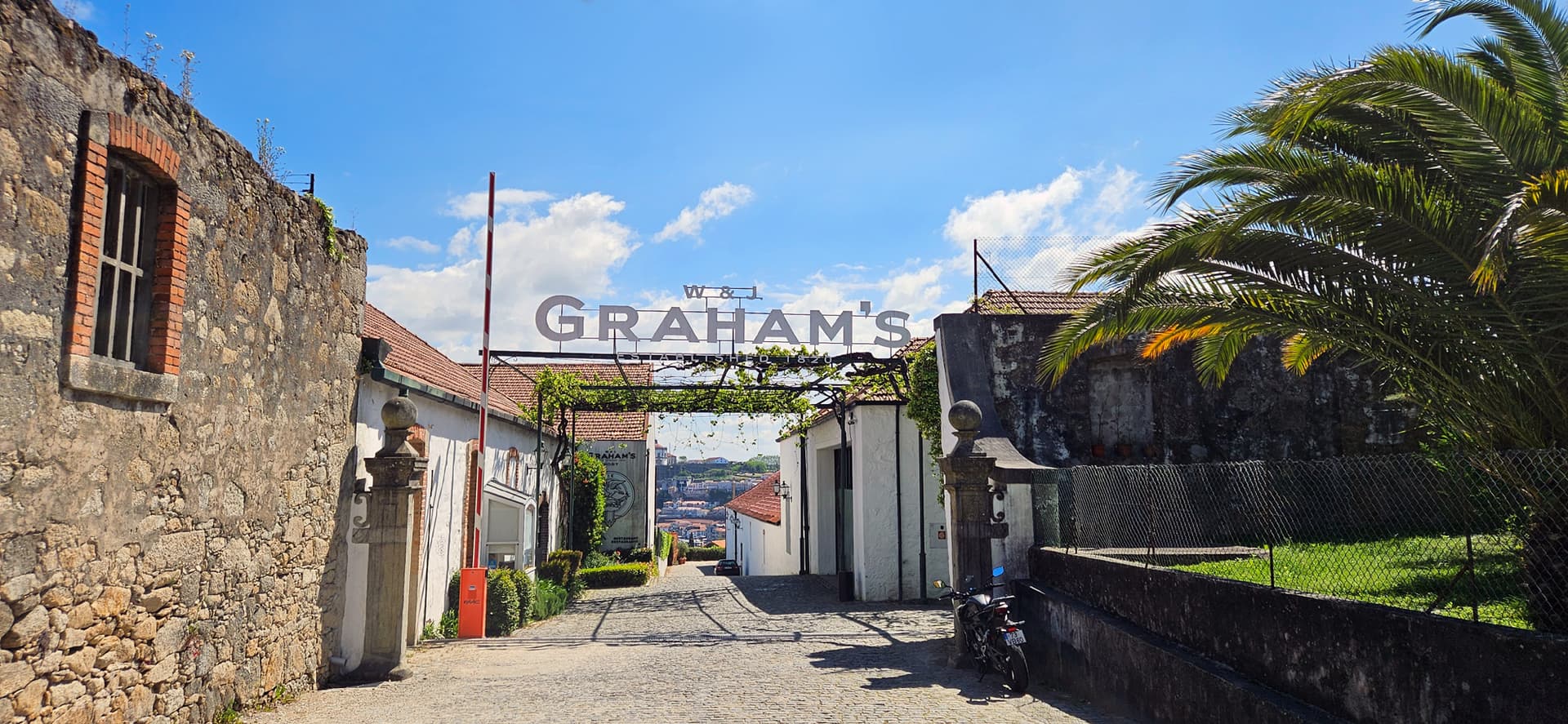
The Graham’s lodge (known as The 1890 Lodge, pictured above), which is located high above the mouth of the Douro river in Vila Nova de Gaia, is the main Graham’s tourist attraction in Portugal - I’ve understood Quinta dos Malvedos is not open to the public. The lodge is a huge complex that houses an incredible 7 million liters of wine in its cellars, which are passive, ie. the temperature is naturally cool. Typically the air is sufficiently humid there, but there is sandy soil between the oak barrels and vats, and in drier months they can control the humidity just by pouring water on the sand.


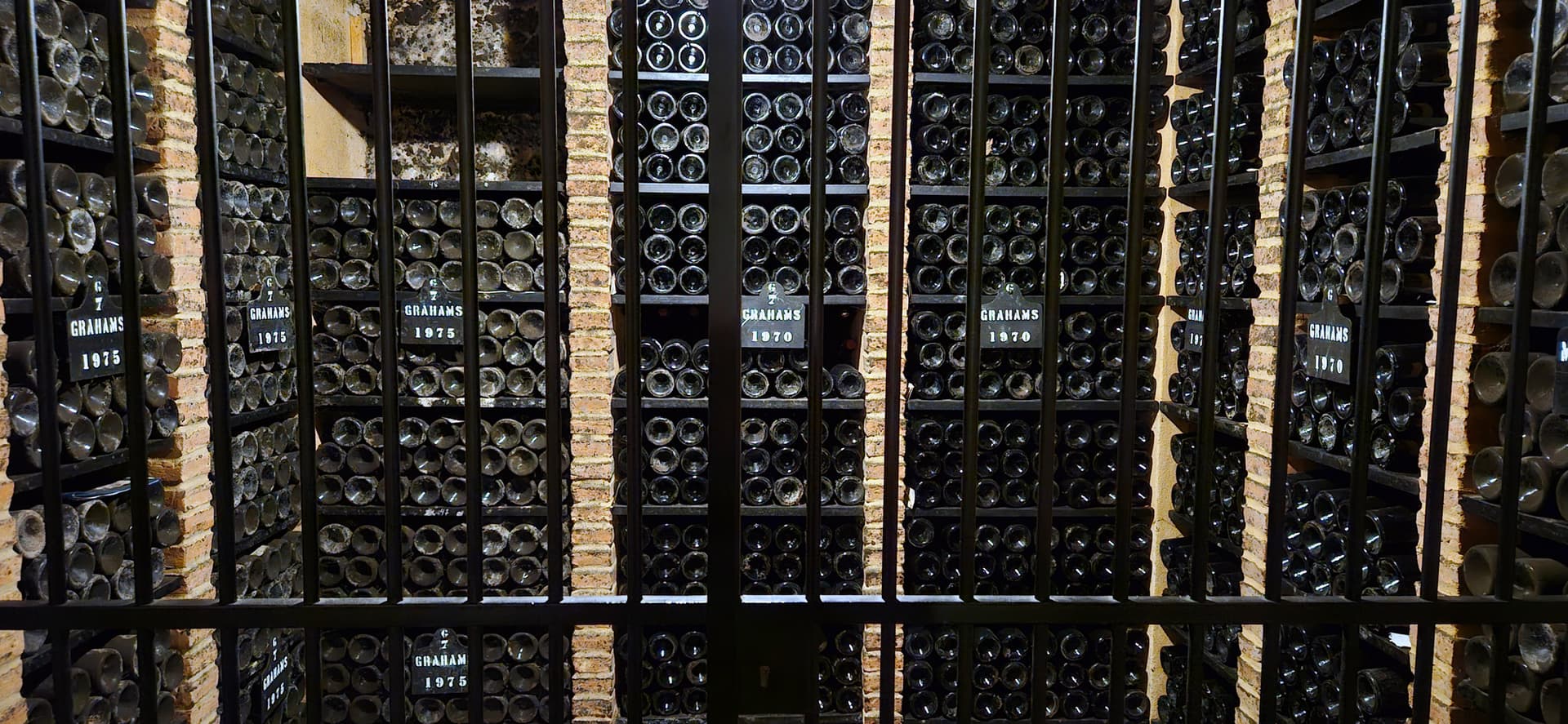
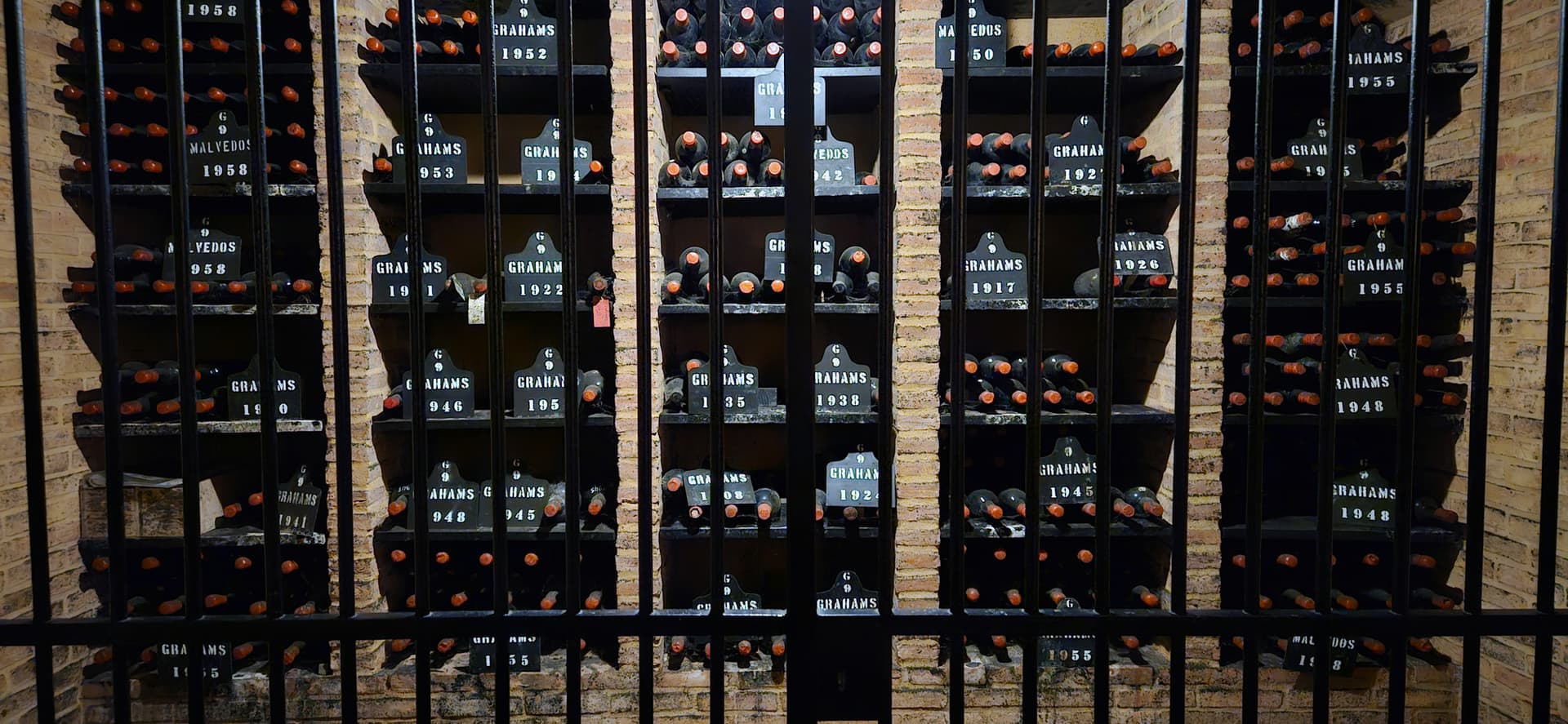
Of these 7 million liters of wine, about 4 million liters is in oak vessels and 3 million liters is in bottles - the oldest of which are kept safely behind bars.


The barrels and vats are very old at the lodge. It’s impossible to say what would be the actual average age of the oak barrels and vats, because Graham’s is one of the very few producers that still employ in-house coopers to keep their oak vessels in good shape - this means that an ancient vat might be reconditioned (making it effectively a sort of new vat) or an old oak, leaking barrel might be taken apart but its staves might be re-used in a new barrel. However, the rough estimate they told us that the average oak age was probably in the ballpark of 60-70 years old.

Today five quintas supply fruit for the Graham’s brand. Quinta dos Malvedos forms naturally the backbone of the Graham’s range. The other three are Quinta do Tua (built in 1834, acquired from Cockburn’s in 2006, located near Malvedos in Douro Superior), Quinta da Vila Velha (a family estate owned jointly by James and Rupert Symington), Quinta do Vale de Malhadas (another family estated owned jointly by Paul and Dominic Symington and their cousin, Rupert) and Quinta das Lages (a quinta in the Rio Torto valley that is on a long-term lease from the owners and which supplies the organically farmed grapes to the Graham’s brand).

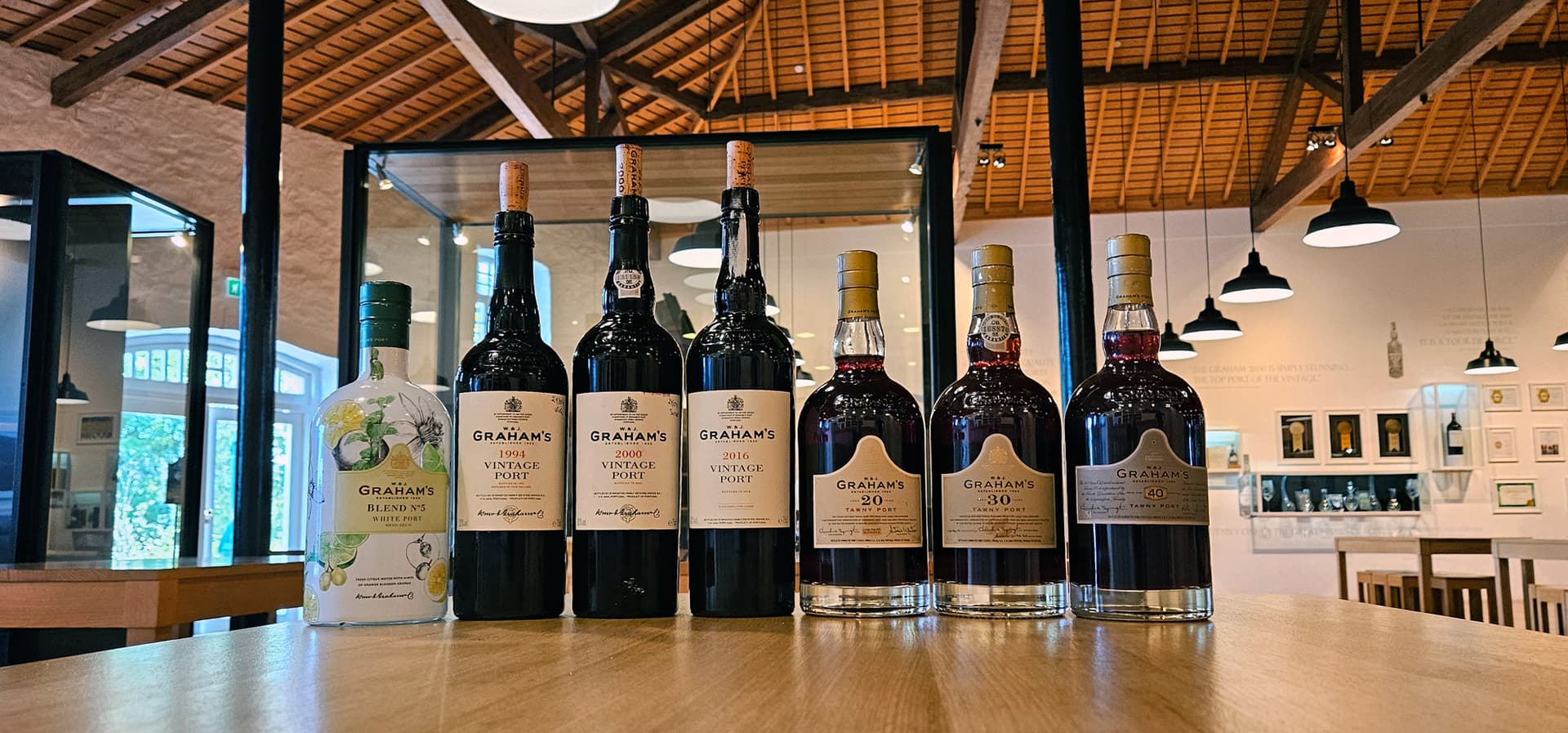
Symington doesn’t produce any dry Douro table wines under the Graham’s brand, only Port wines. The range is quite extensive, ranging from multiple entry-level Ports (Rubies, Tawnies, White Ports and modern iterations that go under the name “Blend”) to LBVs and Reserve Ports, to age-designated Tawnies, Colheitas and finally Vintage Ports. Usually Port shippers are more famed either for their Vintages or their Tawnies and typically Graham’s is considered to be an excellent producer of impressive Vintage Ports. However, I was happy to taste through some of their tawnies as well - the better ones are definitely not wines to be overlooked!

The Graham’s wines are made entirely with destemmed fruit, vinified in modern robotic lagares - installed at Quinta dos Malvedos in 2000 - and after they are fortified, they are moved to age in large oak tonéis at the quinta. The wines age and cold-stabilize naturally during the winter and come spring, the wines are shipped to the lodge in Vila Nova de Gaia. Here the wines are moved to age in pipes, tonéis, balseiros, concrete tanks or stainless steel tanks, according to both the wine’s potential and the expected market demand. I was surprised to hear that today a larger proportion of Graham’s Vintage Port is actually aged in stainless steel tanks in order to preserve as much of the fruit and the structure as possible!

Apart from the super-exclusive premium Ne Oublie 1882 Tawny Port, the flagship wine of the Graham’s brand is a Single-Quinta Port. However, it’s not marketed as such: although the wine comes from just two exceptional parcels - Port Arthur and Vinha dos Cardenhos - at Quinta dos Malvedos, the label does not bear the Malvedos name, but instead only the name Stone Terraces. After all, that name tells exactly what these ancient, centenarian vineyards are! This is a premium Vintage Port that is obviously challenging the more household names of Quinta do Noval Nacional and Taylor’s Vargellas Vinha Velha.


In the past, in non-declared vintages, Graham’s also produced a Vintage Port that went by the name “Malvedos” (some of which you can see here). However, unlike today, this wasn’t a Single-Quinta Vintage Port, but just a Vintage Port that was made with fruit sourced from multiple quintas yet wasn’t labelled under the esteemed Graham’s Vintage Port name. Only when Graham’s changed the wine’s name from “Malvedos” to “Quinta dos Malvedos” did the wine really became a true SQVP. Today Quinta dos Malvedos is a Vintage Port made exclusively with the best fruit from Quinta dos Malvedos in vintages when the Graham’s Vintage Port is not declared.

After we had been told the history of the winery and showed the impressively extensive barrel rooms and bottle cellars of the lodge, we were guided to the private tasting room. There we had our pre-ordered tasting sets (which we paid for ourselves) waiting for us, but as a nice little bonus, we got to taste also the new Graham’s Blend No. 5 White Port gratis!

  • NV Graham Porto Blend No 5. Meio-Seco - Portugal, Douro, Porto (25.4.2024)
    A new, modern take on white Port: unlike traditional white Ports, which are made more or less like red Ports (macerated with the skins in lagares and aged in oak vats), this blend of Moscatel Galego and Malvasia Fina is made with free-run juice that is fortified with a neutral spirit, aged in stainless steel tanks and bottled in winter, only three months after the harvest. The wine is designed to be a fresh and fruity alternative for the port in Port & tonic cocktails. 19% alcohol, 60-65 g/l residual sugar.

    Youthful, pale and almost completely colorless whitish-green appearance. The nose feels very youthful and primary with striking Sauvignon Blanc-like aromas of green currants and currant leaves, some passion fruit, light perfumed and musky floral tones, a little bit of lemon marmalade, a herby hint of grassy greenness and a touch of white peach. The wine feels youthful and quite round yet still surprisingly fresh on the palate with a full body and sweet flavors of floral Muscat character, some apple jam, light primary notes of grapey fruit, a little bit of ripe white peach, a hint of Sultana raisin and a touch of mango. The medium-to-moderately high acidity keeps the wine in balance. The finish is rich, round and medium-long with a sweet aftertaste of white peach, some lemon marmalade, light primary notes of sweet grapey fruit, a little bit of floral Muscat character, exotic fruit hints of mango and passion fruit and a touch of currant leaves.

    A fun, easy and quite tasty white Port unlike any other white Port I've tasted. At first the wine felt like a sweet, beefed-up Sauvignon Blanc, but once those musky Muscat notes kicked in and fleshed those vaguely vegetal notes, this turned out to be a pretty nice effort. Not a particularly serious wine - but I guess it's obvious from the bottle's appearance alone. Although the wine's main function is to be blended with tonic water, I think this could be a terrific sipper with an ice or two, enjoyed poolside. While not a spectacular wine in any way, this is a great re-interpretation of white Port in itself!
    (88 points)

  • 1994 Graham Porto Vintage - Portugal, Douro, Porto (25.4.2024)
    The wine is a blend of traditional Port varieties (mainly Touriga Nacional, Touriga Franca, Tinta Barroca, Tinta Roriz and Tinta Amarela) harvested from the two renowned Symington Quintas: Quinta dos Malvedos in Cima Corgo; and Quinta das Lages in Rio Torto valley. Bottled unfiltered in 1996. 20% alcohol, 105 g/l residual sugar, 4,8 g/l acidity and pH 3,56.

    Very slightly hazy and somewhat translucent plummy-red color with an evolved maroon hue. The nose feels sweet, complex and slightly raisiny with attractive aromas of dried figs and dark raisins, some lifted minty or eucalyptus tones, a little bit of spirituous aguardente character, light nuances of blueberries and blackberry liqueur, a hint of wizened black cherry and a touch of roasted nuts. The wine feels sweet, mellow and nuanced on the palate with a full body and rich flavors of dark raisiny fruits, some cherry marmalade, light notes of dried figs, a little bit of blueberry jam, developed hints of roasted exotic spices and nuts and a touch of stewed strawberry. The structure relies more on the moderately high acidity than on the gentle, silky and quite resolved tannins. The finish is rich, long and slightly grippy with a sweet, intensely-flavored aftertaste of cherry marmalade and stewed strawberry, some raisiny tones, a little bit of minty green lift, light nutty nuances, a hint of evolved nuttiness and a touch of eucalyptus oil. The high alcohol makes the wine end on a moderately warm note.

    A lovely, harmonious and very suave Vintage Port that is in a beautiful phase right now. Maybe a tad less impressive than the superb 1997 vintage I tasted a few years ago (and the somewhat more sinewy 1994 Dow's VP tasted only the day before this 1994 VP!) but we're talking about very fine details now. I prefer my VP's either with good sense of structure, or with enough tertiary complexity so that they are slowly turning into Colheitas. To me, this 1994 VP had started to lose its structure, turning into this suave, gentle old gentleman - yet retaining enough fruit to be easily identifiable as a Vintage Port. I feel this wine still has lots to give once it reaches its final tertiary phase, but that is going to take at least another decade of aging. You need to be patient with this vintage. This re-release might not be a particularly affordable wine at 170€ from the winery, but at least you get a wine with perfect provenance at that price.
    (93 points)

  • 2000 Graham Porto Vintage - Portugal, Douro, Porto (25.4.2024)
    The wine is a blend of traditional Port varieties (mainly Touriga Nacional, Touriga Franca, Tinta Barroca, Tinta Roriz and Tinta Amarela) harvested from the five Symington quintas in the Douro Valley: Quinta dos Malvedos, Quinta do Tua, Quinta das Lages, Quinta da Vila Velha and Quinta do Vale de Malhadas. Bottled unfiltered in 2002. 20% alcohol, 110 g/l residual sugar and 4,58 g/l acidity.

    Dark yet still moderately translucent black cherry color. The nose feels sweet, brooding and slightly perfumed with dark-toned aromas of ripe black cherries and blackberry jam, some fragrant minty and floral tones, a little bit of dark chocolate, light dried-fruit notes of dried figs and raisins, a hint of exotic spices, a touch of coffee and a whiff of blueberry liqueur. The wine feels rich, balanced and - true to the Graham's style - quite sweet on the palate with a full body and intense flavors of overripe bilberries and boysenberry jam, some cool, fragrant minty tones, a little bit of bittersweet dark chocolate, light stewed strawberry tones, dried-fruit hints of raisins and dried figs and a touch of dark-roast coffee. Not only is the wine moderately high in acidity, but also pretty stern and chewy with its ample and still moderately grippy tannins that make the wine feel pretty robust and muscular. The finish is sweet, quite warm and moderately grippy with a long, powerful aftertaste of cherry marmalade, some blueberry liqueur and boysenberry jam tones, a little bit of minty greenness, light notes of ripe strawberries, a hint of dried figs and a touch of coffee. The wine ends on a warming, grippy note.

    I had tasted this wine some 11 years ago and back then I thought the wine wasn't as tightly-knit as many Graham's VPs are and maybe not among the most long-lived vintages. Well, now - having tasted this wine next to Graham's 1994 and 2016 VPs, I must admit that age has done some things to this wine! It seems that the wine must've come softer, sweeter and fruitier in its youth and now, after age has polished away some of the fruit and sweetness, the wine comes across as surprisingly muscular and structure-driven for a Graham's. Yes, the wine retains that richness and marmaladey sweetness of the house style, but the overall feel is still surprisingly firm and serious for such a rich wine. Ten years ago I wrote how one should wait until the wine is 20-25 yo before popping it open. Now, at 23½ years of age, the wine still seems surprisingly youthful and obviously on an upward trajectory - the other people in the tasting even said that this vintage wasn't particularly enjoyable compared to the more accessible 1994 and 2016! However, I was sold - and I admit that I was wrong with my initial, decade-old tasting note - this is turning out to be a very fantastic and long-lived vintage of Graham's Vintage Port after all! Superb stuff that really benefits from additional cellaring - expect the score to go up as the wine ages. This winery re-release may be a bit on the pricey side at 140€, but at least you get a wine with impeccable provenance straight from the Graham's lodge!
    (94 points)

  • 2016 Graham Porto Vintage - Portugal, Douro, Porto (25.4.2024)
    The wine is a blend of traditional Port varieties (mainly Touriga Nacional, Touriga Franca, Tinta Barroca, Tinta Roriz and Tinta Amarela) harvested from the four renowned Symington Quintas: Quinta dos Malvedos (41%), Quinta da Tua (25%) and Quinta da Vila Velha (16%) in Cima Corgo; and Quinta do Vale de Malhadas (18%) in Douro Superior. Bottled unfiltered in May 2018. 20% alcohol, 115 g/l residual sugar, and 4,49 g/l acidity.

    Deep, intensely colored and rather opaque blackish-red color with a blueish hue. The nose is just explosively fruity bursting with aromas of blueberries, some purplish primary fruit tones, a little bit of ripe cherry, light fragrant floral and eucalyptus tones, a hint of blackcurrant jam, a touch of savory spices and a spirituous touch of aguardente. The wine feels rich, intensely flavored and noticeably sweet on the palate with a full body and still remarkably youthful flavors of boysenberries and blueberry jam, some floral tones, a little bit of peppery spice, light black cherry tones, primary hints of raspberry jellies and candied strawberry and a boozy touch of aguardente. The overall feel is medium-to-moderately high in acidity with ample yet quite ripe and mellow tannins that contribute more to the texture than to the structure of the wine. The finish is rich, long and intense with a quite gentle tannic grip and a sweet aftertaste of boysenberries and black cherry marmalade, some blueberry jam tones, a little bit of soft dark plum, light boozy notes of aguardente, lifted hints of violets and eucalyptus and a touch of savory spices.

    A very lush, rich and fruit-driven Vintage Port that is still super young and at times even primary in character. The wine is - as one can expect from a Graham's VP - quite sweet and luscious in fruit, often veering towards jammy, yet kept together with the acidity and tannins. However, I was surprised how soft and accessible the wine was: the borderline jammy fruit flavors really jump at you, the acidity feels a bit modest for a wine this sweet and the tannins are very mellow and gentle for such a young wine. I was honestly expecting the wine to be a lot more muscular and grippy. Most likely the wine will continue to evolve and improve for several decades, but I must admit that the overall style is a bit too rich and soft for my preference. Considering how 2016 was supposed to be a vintage of freshness and elegance, but I really don't see it here; this feels more like a Port from a quite hot vintage. I can understand Graham's is aiming for a sweeter flavor profile, but I think that with this modest acidity the wine might've felt more balanced with slightly less residual sugar. Feels quite pricey for the quality at 90€.
    (91 points)

  • NV Graham Porto 20 Year Old Tawny - Portugal, Douro, Porto (25.4.2024)
    A blend of oxidatively aged Port wines which have been aging mainly in smaller oak pipes. The final blend is composed of different vintages resulting in an average age of 20 years. 20% alcohol, 118 g/l residual sugar and 4,7 g/l acidity.

    Luminous, translucent and quite reddish coppery color. The nose feels rich and syrupy-sweet with layered, somewhat red-toned aromas of dried dates and cherry marmalade, some oxidative nutty tones, a little bit of dark raisiny fruit, light spirituous notes of aguardente, a hint of ripe strawberry, a touch of burnt sugar and a whiff of caramel. The wine feels sweet, rich and juicy with complex flavors of dried figs and ripe strawberries, some raisiny tones, a little bit of dried date, light caramel nuances, a hint of nutty oxidation and a touch of red prunes. The wine is moderately high in acidity with a slightest touch of tannic tug on the gums. The high alcohol lends some warmth to the palate. The finish is juicy, sweet and slightly warm with a long aftertaste of dried dates and stewed strawberries, some raisiny tones, a little bit of nutty oxidation, light caramel nuances, a hint of orange marmalade and a touch of maple syrup.

    A rich, juicy and tasty Tawny Port with good sense of depth and complexity but also quite a bit of sweetness. The overall feel is quite mellow and very approachable; the rather pronounced sweetness makes this feel a bit of a crowdpleaser for a 20 yo Tawny. While undeniably an enjoyable effort with good, balancing acidity, I still prefer my 20 yo Tawnies a bit drier and less sweet - the high residual sugar seems to slightly muddle the details, only accentuating the already sweet dried-fruit flavors even further. A good and thoroughly pleasurable wine, but not my favorite 20 yo Tawny. Priced more or less according to its quality at 44€.
    (90 points)

  • NV Graham Porto 30 Year Old Tawny - Portugal, Douro, Porto (25.4.2024)
    A blend of oxidatively aged Port wines which have been aging mainly in smaller oak pipes. The final blend is composed of different vintages resulting in an average age of 30 years. 20% alcohol, 120 g/l residual sugar and 5,6 g/l acidity.

    Translucent, moderately deep syrupy-brown color - is less deep as the 20 yo Tawny and lacking its faint red-toned hue. The nose feels concentrated and quite intensely aromatic with complex and wonderfully intense aromas of syrupy molasses, some dried dates, light wizened dark berry notes, a little bit of roasted hazelnuts, a hint of butterscotch, a touch of caramel and a whiff of bitter orange rind. The wine feels sweet, round and moderately viscous on the palate with a full body and rich, intense flavors of syrupy molasses, some dried dates, light caramel tones, a little bit of butterscotch, a hint of oxidative nuttiness and a touch of dried black cherries. There are no perceptible tannins, but the medium acidity manages to keep the wine pretty nicely in balance. The finish is long, sweet and succulent with an intense aftertaste of cooked strawberries, some dried dates, light nutty notes of oxidation, a little bit of wizened black cherries, hints of toffee and buttersctoch and a touch of syrupy molasses.

    A wonderfully rich, complex and intensely flavored 30 Tawny that is always a pleasure. The pronounced richness and sweetness typical of the Graham's style often feels a bit excessive in their 10 and 20 yo Tawnies, but to me, it matches the flavor intensity and complexity pretty well at this level - making this wine stand quite noticeably above the Graham's 20 yo Tawny. Not the most complex or otherwise exceptional Tawny out there, but a fine and impressive wine all the same. Perhaps betting a bit expensive for the quality at 115€, but not excessively so.
    (93 points)

  • NV Graham Porto 40 Year Old Tawny - Portugal, Douro, Porto (25.4.2024)
    A blend of oxidatively aged Port wines which have been aging mainly in smaller oak pipes. The final blend is composed of different vintages resulting in an average age of 40 years. 20% alcohol, 114 g/l residual sugar and 5,0 g/l acidity.

    Relatively pale and fully translucent nutty brown color. The nose feels very concentrated, rich and rather hot with bold, intense aromas of caramel and toffee, some fragrant notes of arrack, a little bit of dried flowers, light dried-fruit notes of Sultana raisins and dried dates, a hint of exotic spices, a boozy touch of aguardente and a whiff of roasted hazelnuts. Tons of things going on here. The wine feels concentrated, hot and oxidative on the palate with a full body, somewhat viscous texture and very intense, sweet and tertiary flavors of caramel and nutty rancio, some arrack tones, a little bit of dried flowers, light stony mineral notes, a hint of exotic spices and a touch of fudge. The high alcohol comes through quite a bit, as a sort of counterpoint to the heavy, oily viscosity. The acidity comes across as somewhat high and concentrated, lending a lovely streak of freshness to the wine. The finish is juicy, sweet and concentrated with a very persistent aftertaste of oxidative nutty tones and caramel, some dried-fruit notes of red prunes and Sultana raisins, a little bit of dried flowers, light lifted nuances of citrus zest, a hint of burnt sugar bitterness and a touch of dried dates.

    An absolutely beautiful Tawny Port that is all about concentration, depth and complexity. Although I'm more of a Vintage Port guy, this was still among one of the best Port Wines we tasted on our trip to Portugal. It was fun to taste this next to the Graham's 20 and 30 yo Tawnies - with each jump in style, the color and appearance seemed to get lighter, yet the wines became heavier, more concentrated and more intensely flavored. With this much concentration and sweetness, this is not a graceful wine in any way - just a huge smack of Tawny greatness across your face. An absolute banger. Not a particularly affordable wine at 165€, but arguably delivers for the money.
    (96 points)

The prices at the lodge’s wine shop were a bit too steep for our preference, so we just headed out after the tasting without doing any vinous purchases.


The views from the lodge over Vila Nova de Gaia and Porto aren’t too shabby. You can also see the Luís I bridge from which we walked to the lodge!


There was also this one awesome little fella right across the Graham’s lodge, checking out every single person coming or going.

After going through all those Port wines, we decided we needed a lunch before our next visit. Probably something fresh, nothing too heavy?


Francesinha it is.

9 Likes

Ha! Francesinha That’s great.

If you actually want a light snack there’s a casual pintxos place with a nice vibe on the other side near the bridge. And make sure to take in the nightlife on the Rue Flores, great people watching and a good way to work off the meal.

As you probably know, most of the food on the water is not the best, move a few alleyways and streets off the main drag and it’s much better.

Tiny wine bar with a great view