It must be hard work, assessing constantly all the Madeiras they have aging there, trying to figure out if the wine is finally ready or if it is going to get better with a few more years - or decades - or a century of aging. 
1 Like
Day 3
Our day kicked off with a healthy breakfast at the Curia palace hotel. This time there were a lot more people around in the Belle Époque dining hall - we obviously weren’t the only guests at the hotel, after all!
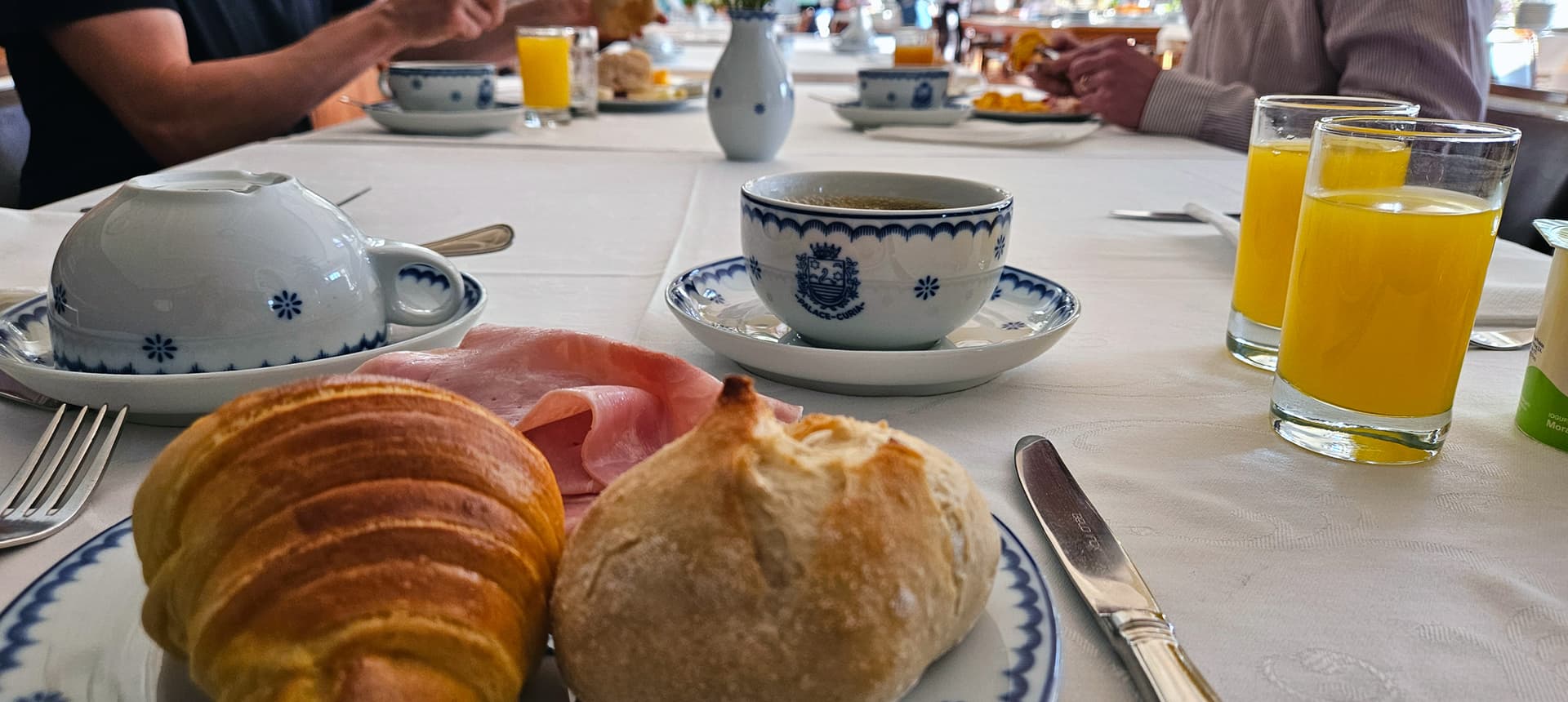
While we were having our breakfast, we tried asking the staff for the older vintages of Buçaco wines, but they only fetched the lady from the reception, who politely told us that only the most recent vintages were for sale, and we could buy them from the reception. Oh well, at least it wasn’t for the lack of trying!

Light at the end of the tunnel: us leaving for the new adventures (and to buy some Buçaco wines).
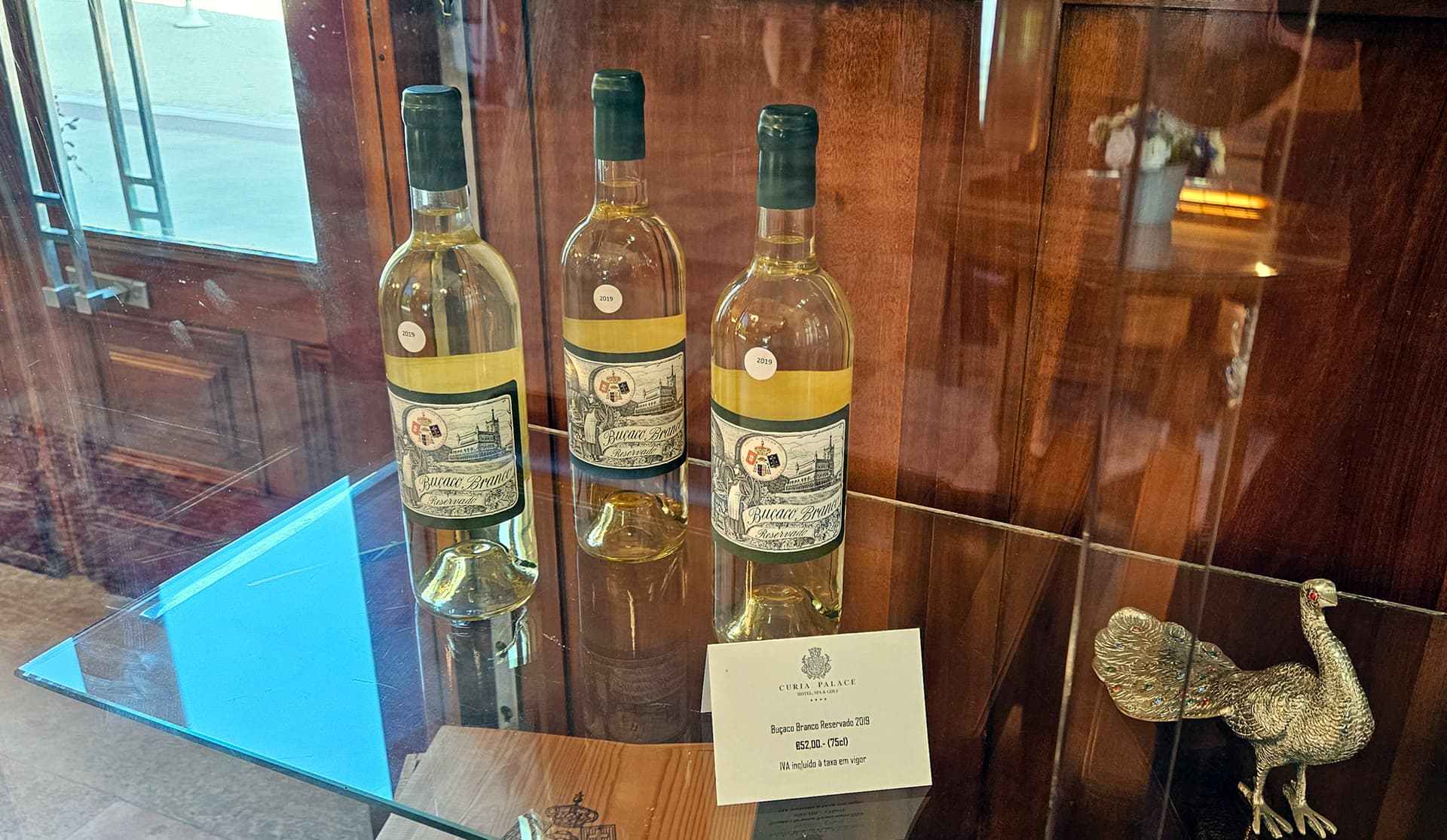
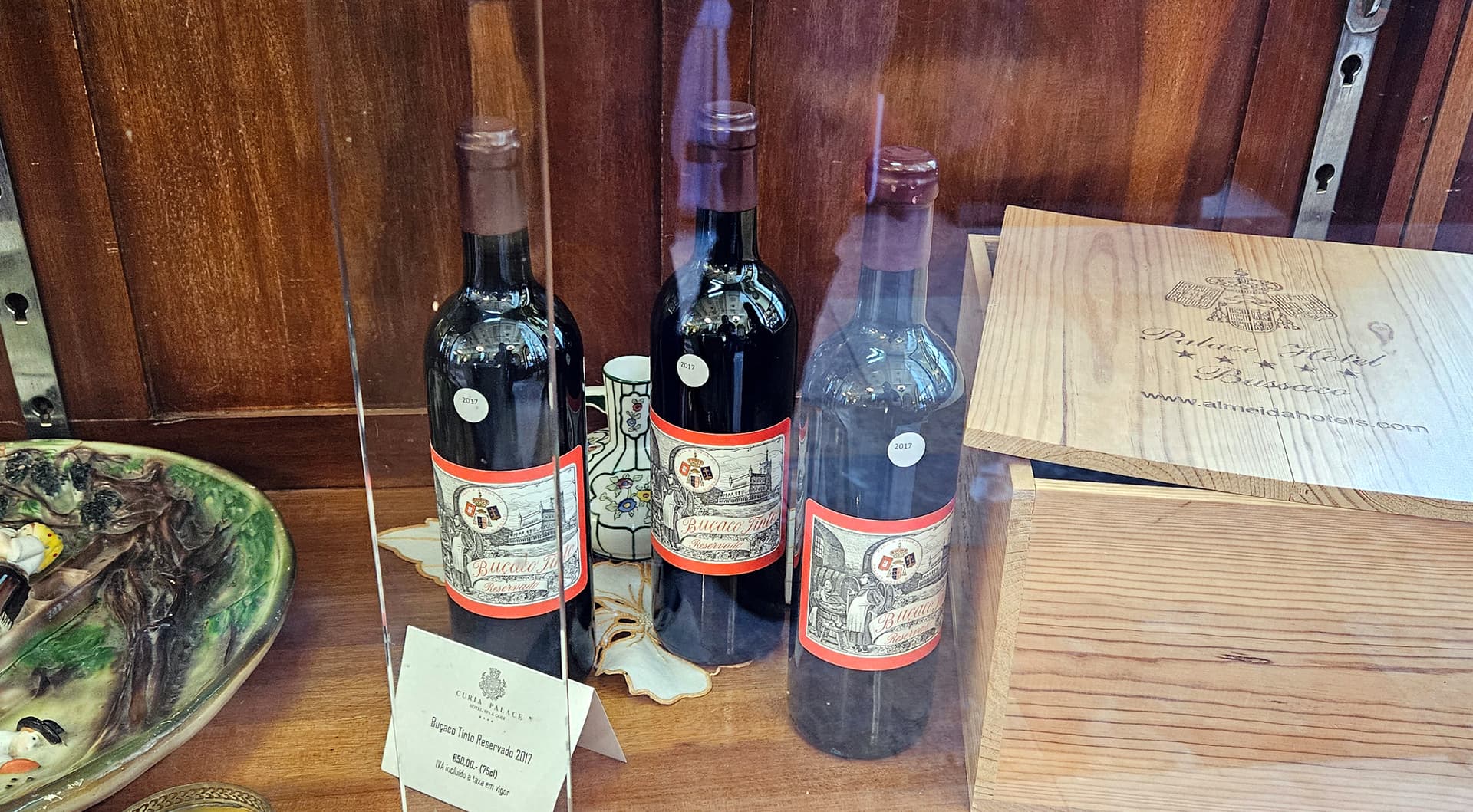
Here’s what they had at the reception. Fortunately these were not the only remaining bottles available for purchase, because we bought a lot more than these!
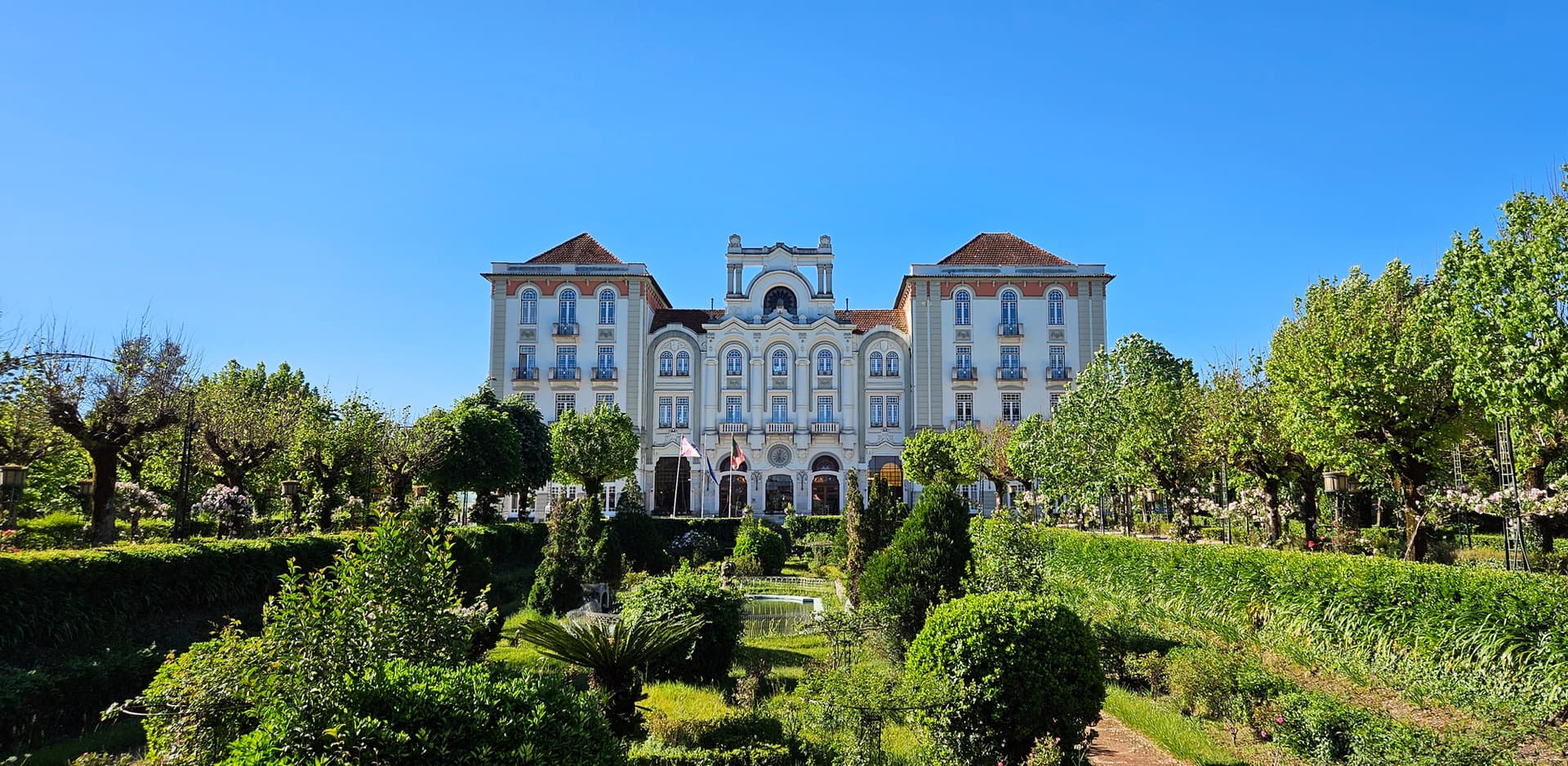
The final view of the Curia palace hotel before our departure.
For our third day, our plan was to leave the Atlantic Bairrada behind and travel further inland, to Dão.
Dão is often described as the “Burgundy of Portugal”, contrasting it to the “Bordeaux of Portugal” that is Douro, north of Dão. This is not to mean that Dão wines would taste like Burgundy, but because usually the wines are lighter in body, higher in acidity and a lot more delicate in style compared to the burlier, beefier and more muscular dry wines of Douro.
Bairrada and Dão might be neighboring wine regions, but are markedly different in character. Bairrada, closer to the Atlantic, is more humid, and relatively flat in geography. Dão, further inland, is noticeably drier and its summers are warmer - especially on the lower-lying (150 m / 500 ft asl) vineyards. However, most of the wine region of Dão is located quite high, on the Beirão plateau, making most of the vineyards sit at the altitudes of 400 to 500 m (1300-1650 ft) asl, resulting in a relatively cool climate and quite noticeable diurnal temperature variation. The highest-altitude vineyards are located on the hillsides of the mountains surrounding the region, even up to 800 m (2600 ft) asl. Furthermore, contrasting to the clayey soil of Bairrada, the plateau and the mountains of Dão are granitic - a well-draining, nutrient-poor type of soil - which further contributes to the high acidity and vibrant, almost floral quality of the wines.
However, even if the Dão terroir is quite optimal for making high-quality wines, only a few decades ago the wines from here were anything but! Due to the strict laws of the Salazar regime, the wines from Dão were typically clumsy, rustic and over-extracted, often marred with faults from oxidation or poor winery hygiene. The restrictive wine laws were lifted only in 1989 and slowly Dão started its slow struggle to the top. Today most of the wines from this region are a far cry of the clunky wines of the past, but the recognition is still quite a bit behind from the more famous regions of Douro, Vinho Verde or Alentejo. As Dão is definitely one of the most dynamic and interesting wine regions of Portugal, it is only natural I wanted to see the place with my own eyes and include it in our itinerary!
So, from the Curia palace hotel, we had a 90-minute drive ahead of us. The distance from Bairrada to Dão was much smaller than yesterday’s drive from Lisbon to Bairrada, but also much slower: the road from Lisbon to Bairrada was a multi-line highway, whereas the roads between Bairrada and Dão were small, meandering and occasionally in a rather patchy shape. Driving towards Dão, we could also notice how we were slowly climbing from the sea level to higher altitudes - even though the roads went up and down all the time, we saw more up than downhills!
Our first stop of the day was at the Álvaro Castro winery in the village of Pinhanços. I was pretty stoked about this opportunity, since I’ve been a fan of the Castro wines for most of my wine-drinking history (they were some of the first Portuguese wines I tasted) - and getting a visit at the Castro winery is definitely not a given.
Having arrived at Pinhanços, we drove a few teeny tiny streets and arrived at a large but conspicuously inconspicuous stone gate, which seemed to be where Google Maps told the winery was located at. I called my contact at the winery and was promptly told that even if the gate (purposefully) doesn’t say anything, we are now at the right place and we should just drive in until we’re at the winery.
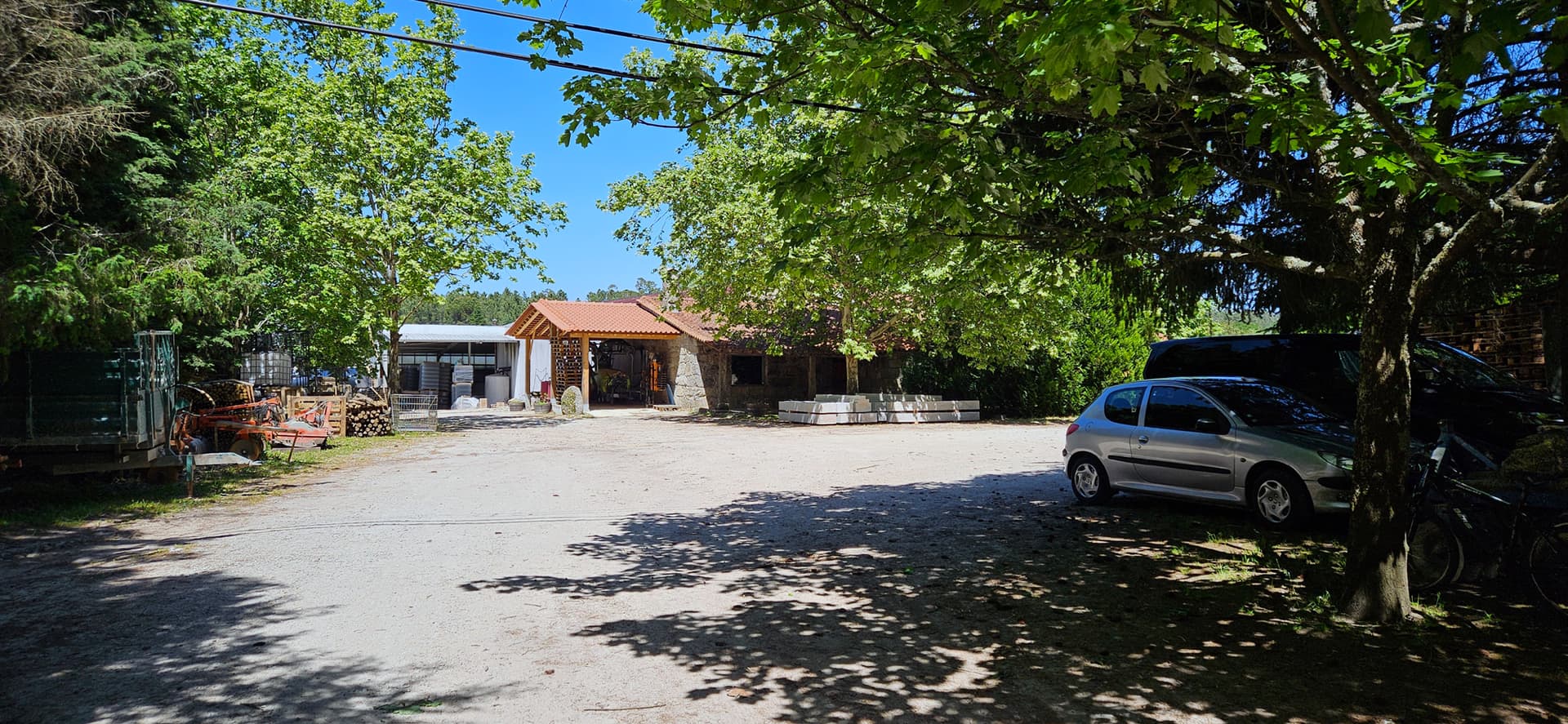
So finally we had arrived! We were welcomed by Aydogan Cift, a terrific, laid-back Dutch fella who had married into the family and had now been working at the winery for four years - ie. since the Covid pandemic started and he moved with his family to Portugal.
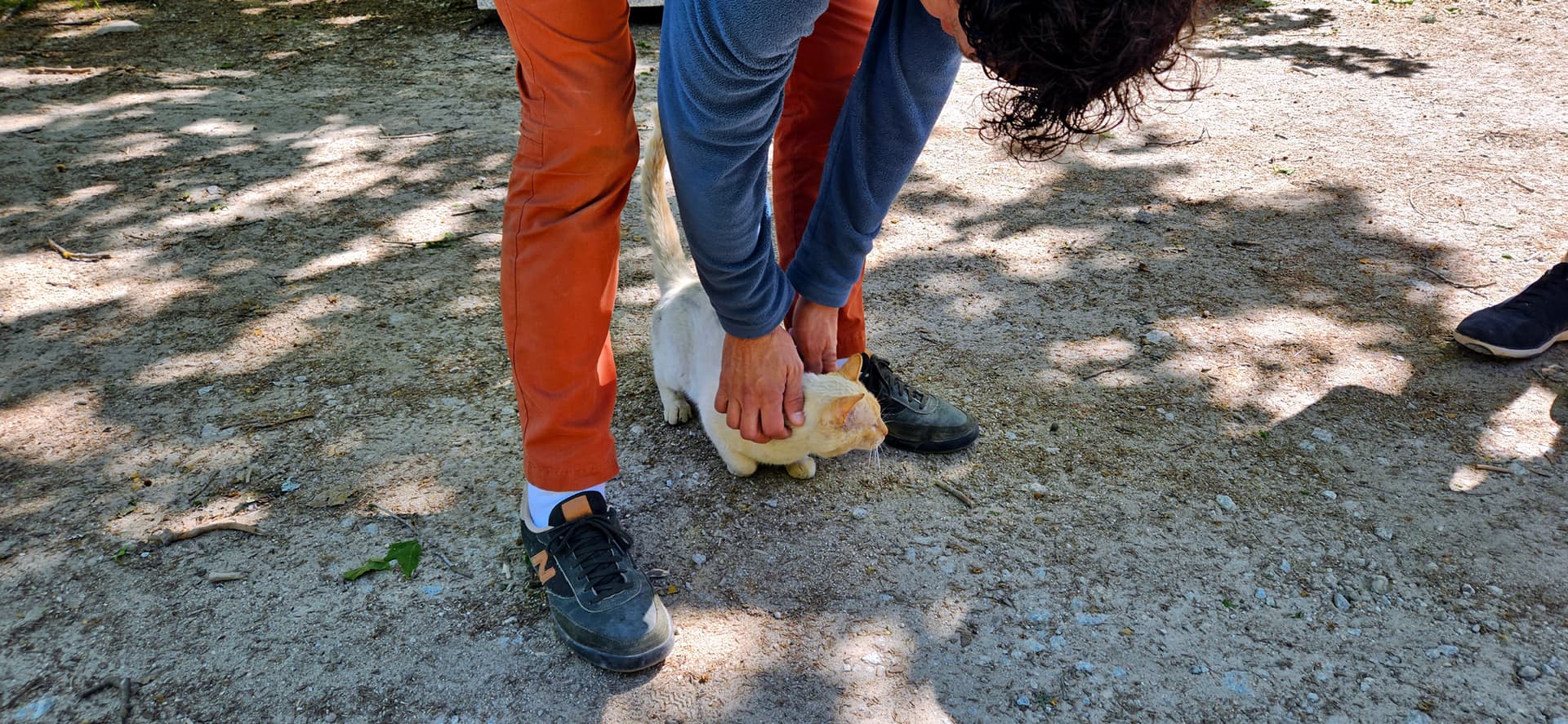
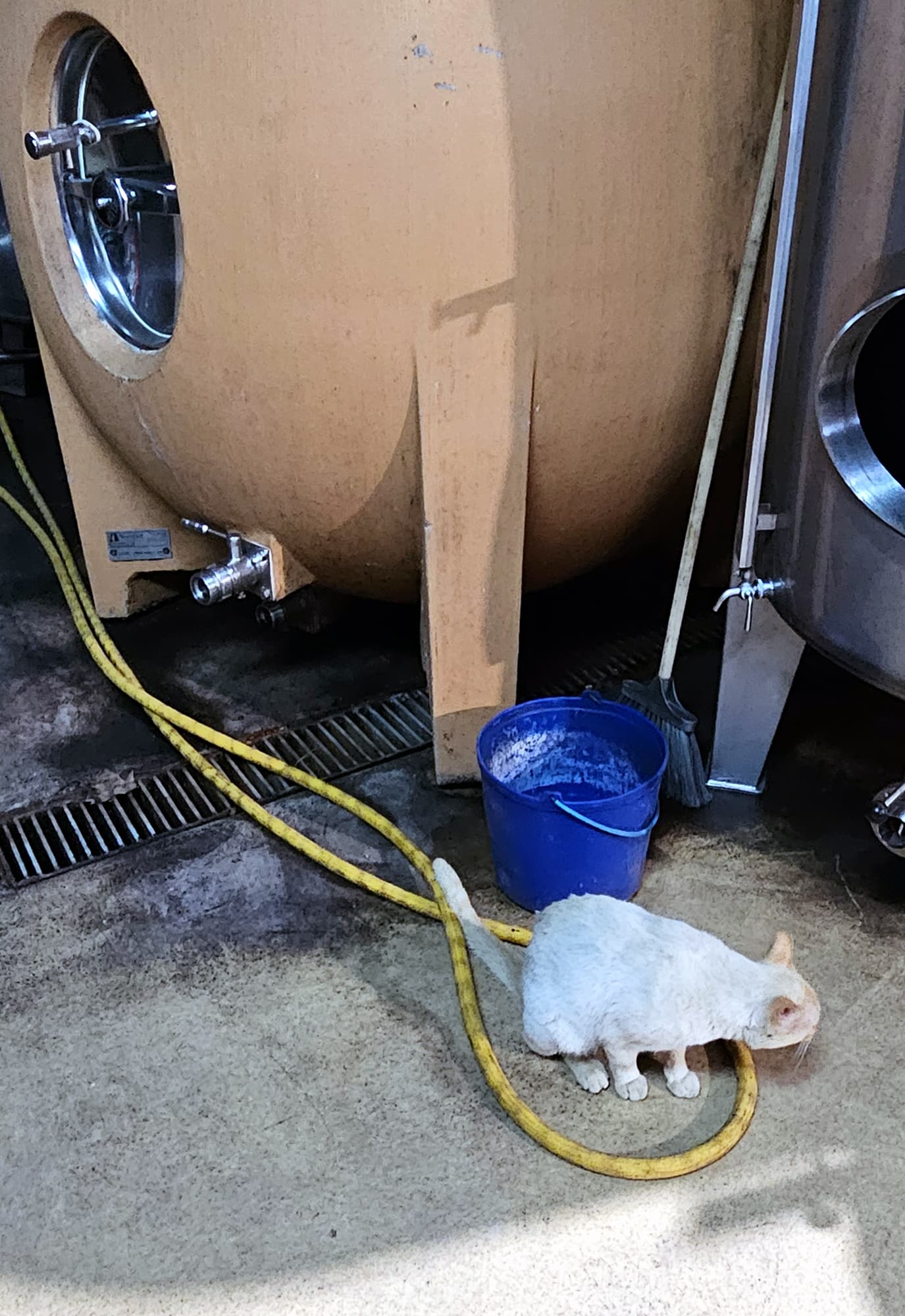
We also had another guide showing us the winery: the winery cat (here with Aydogan)! I’m not sure if we ever heard his name, but I couldn’t help but chuckle how this little companion either followed us around wherever we went, or when we went someplace, he was already there waiting for us!
So, the Álvaro Castro domaine comprises of two almost neighboring estates (Quinta da Pellada and Quinta de Saes) along with an extra vineyard (Outeiro, or “hill”) right next to them. The history of the winery as we know it began in 1980, when Álvaro Castro, a civil engineer, inherited Quinta da Pellada, a historic family estate dating back to the early 1500’s, surrounded by old vineyards. Soon afterwards Castro acquired the nearby Quinta de Saes estate along with its vineyards with plans on re-establishing the family tradition of winemaking - a tradition that had been broken for one generation.
Immediately when the “collectivization” ended in Dão in 1989 and small producers could make their own wines, Castro released his first commercial vintage. All the way from the beginning the Castro style has been markedly different from the Dão wines of yesteryear: the aim has always been to make wines with good sense of freshness, poise and purity. The extraction is kept very modest, the levels of alcohol are low and correspondingly the acidities are high. Since then, Castro has experimented a lot, coming up with tons of new labels and making different kinds of blends and styles of wine over the years. The first noticeable change came in 2001, when Castro’s daughter, Maria Castro, a trained oenologist, joined the winery, making it a father-daughter joint venture.
Typically many view the Quinta da Pellada vineyards as Castro’s “Grand Crus”, Quinta de Saes vineyards as “Premier Crus” and the Outeiro vineyards closer to a “village level” - and the wines from the different vineyards are priced as such. Although all the wines are made in a more or less identical fashion, the wines from the old vineyards of Quinta da Pellada command higher prices compared to the others.
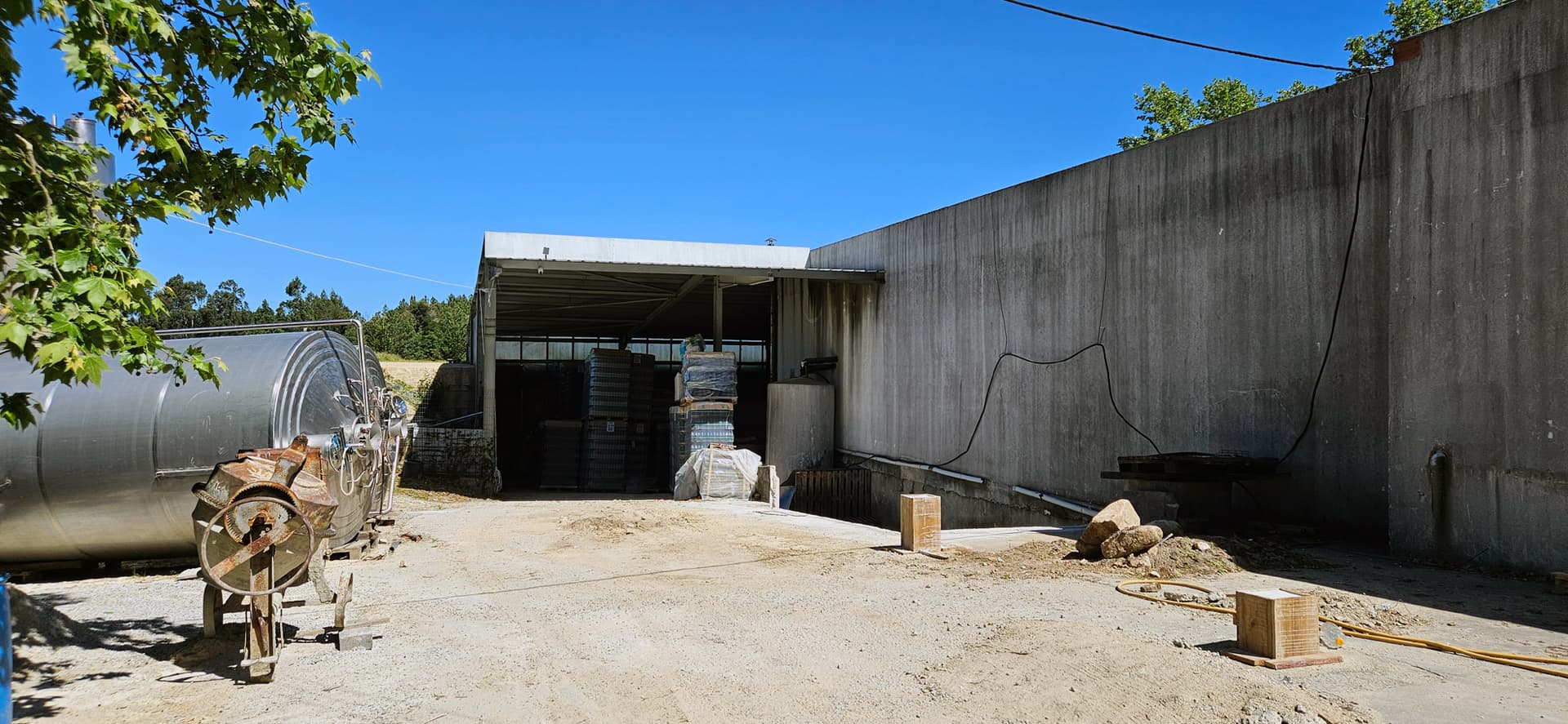
The entrance to the winery building, where the grapes are brought for processing.
Aydogan took us to the winery telling how the wines are made: all the fruit is destemmed and then fermented spontaneously in open-top stainless steel vats, small lagares or oak. The whites are crushed and pressed in gentle presses which can be as gentle as exerting just 0.2 bar of pressure, whereas red grapes are left to macerate with the skins. Typically the red wines macerate with the skins only for the duration of the primary fermentation, ie. about 5-7 days - although some wines can be kept on the skins for longer. As for white wines, MLF is not blocked or encouraged - if it happens, it happens. Typically earlier-harvested grapes lower in sugar and higher in acidity go through MLF with a higher probability.
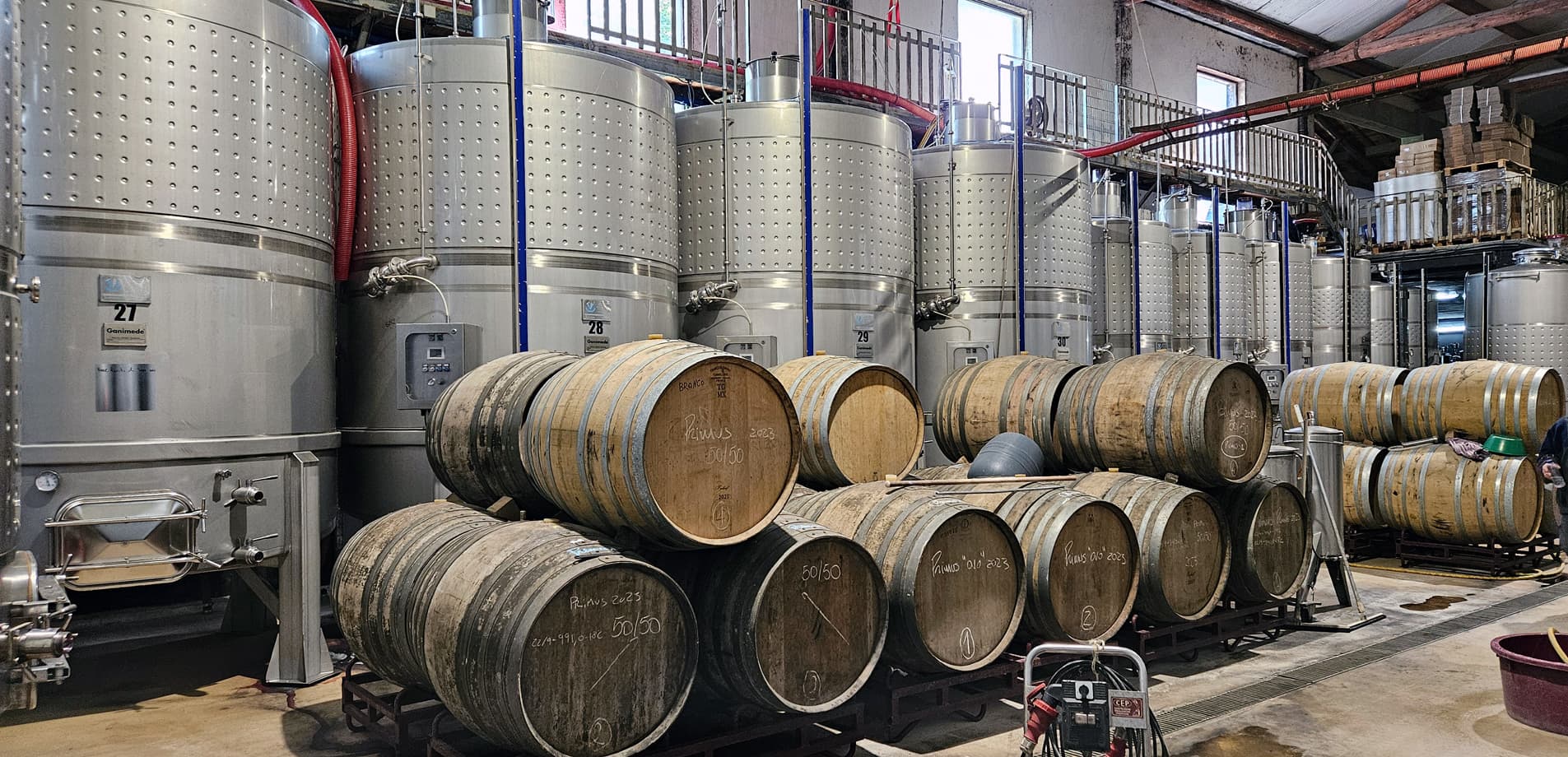
Stainless steel tanks and oak barrels - the bottling line and labeling happen on the second floor, seen top-right.
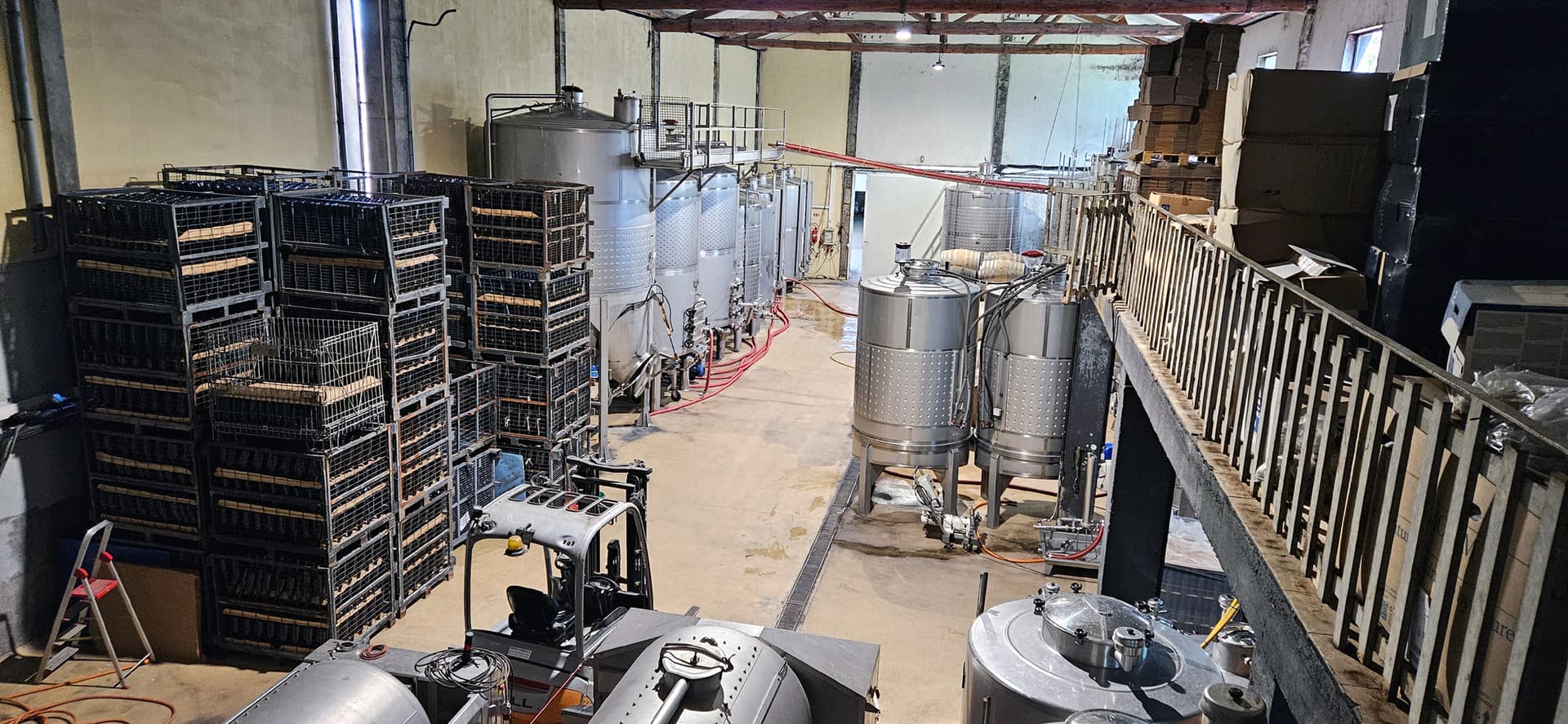
The same room, seen from the second floor.
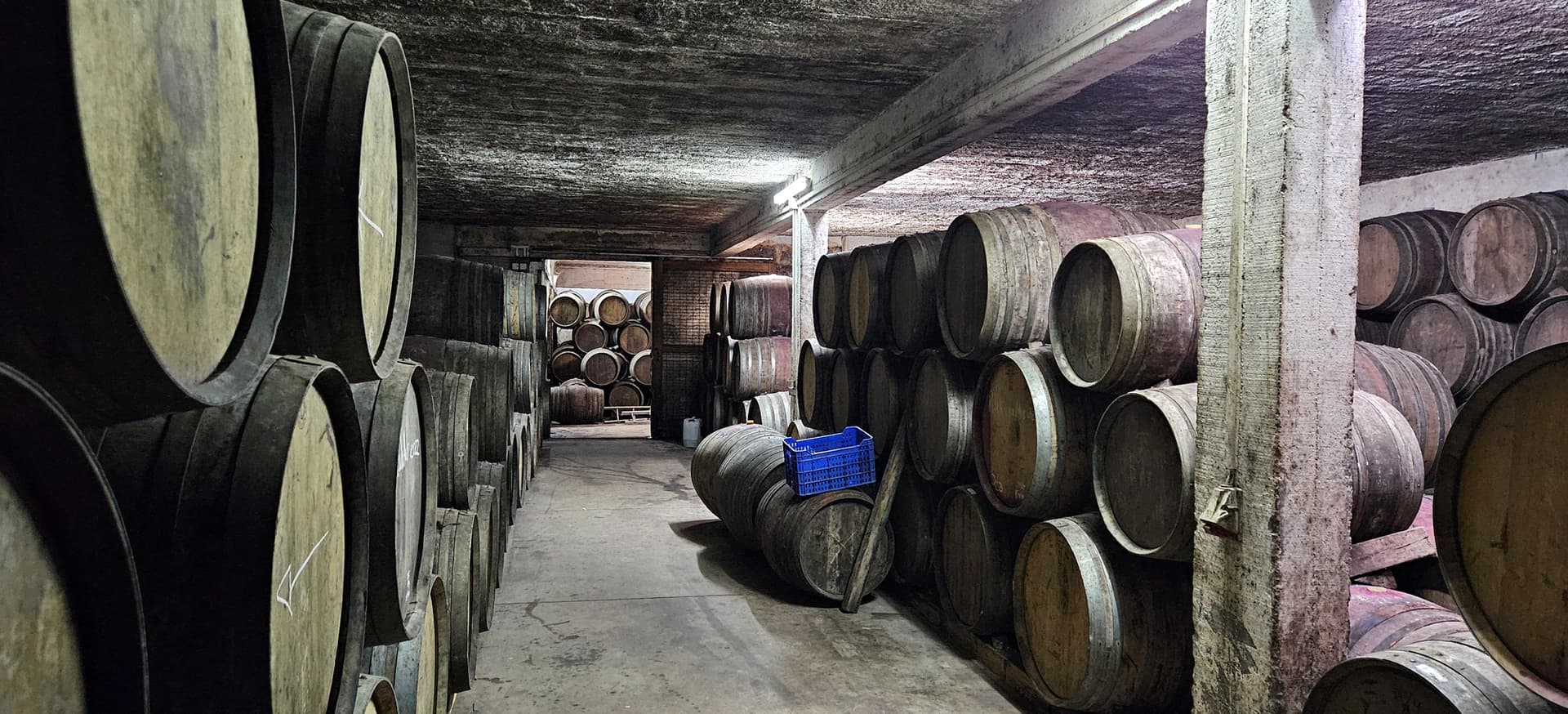
Most of the wines are aged in oak barrels - and virtually all barrels at the winery are old.
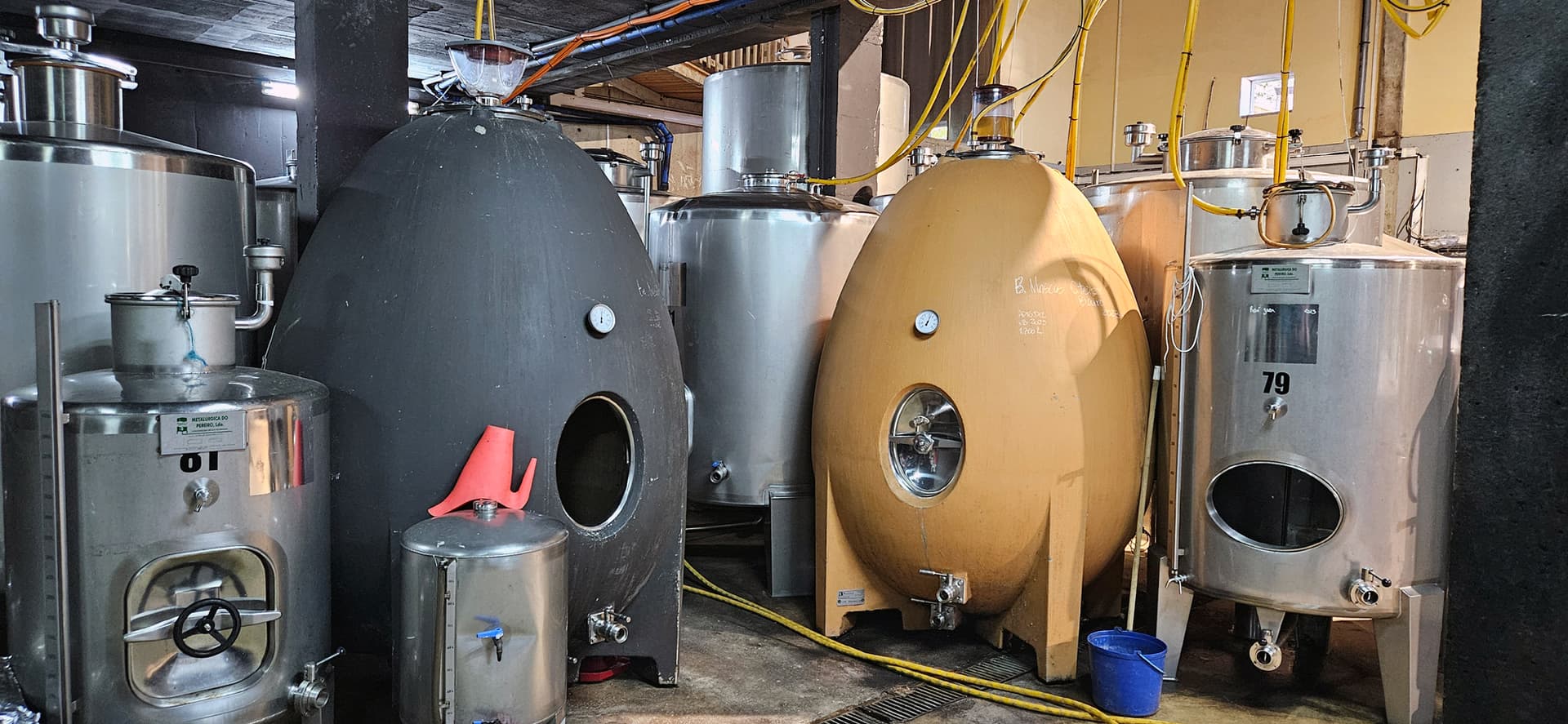
They do have some Nomblot concrete eggs for fermentation and aging. They have also experimented with Portuguese earthenware vessels, but they started cracking and leaking, which is why they were taken out of use.
Here’s our enthusiastic guide once again!
Aydogan told us that all the vineyards were located in the immediate vicinity of winery. All the sites were only a five-minute drive away, which is quite essential in making quality wine: the grapes arrive at the winery and are processed almost immediately after they are harvested!
Just to drive the point home, Aydogan picked up some glasses, a bunch of wines and asked us to hop up in the Jeep parked outside the winery - we’d be going to see Quinta da Pellada! It really was less than five minutes away.
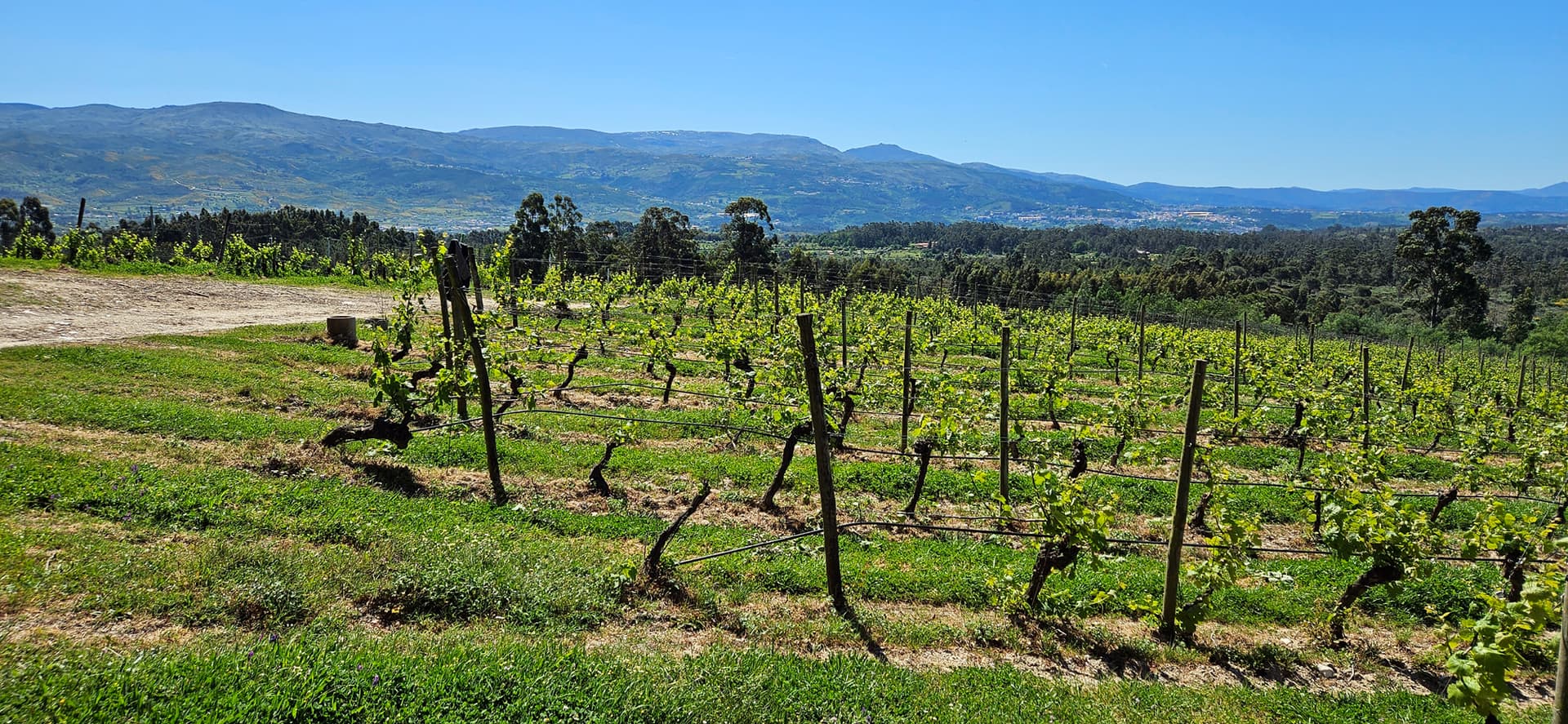
Some old vineyards (Jaen, maybe?) near the Quinta da Pellada estate building; the impressive Serra da Estrela mountains - which lend their name to this beautiful sub-region of Dão and are 1993 m / 6539 ft at their highest point - and the town of Seia in the background.
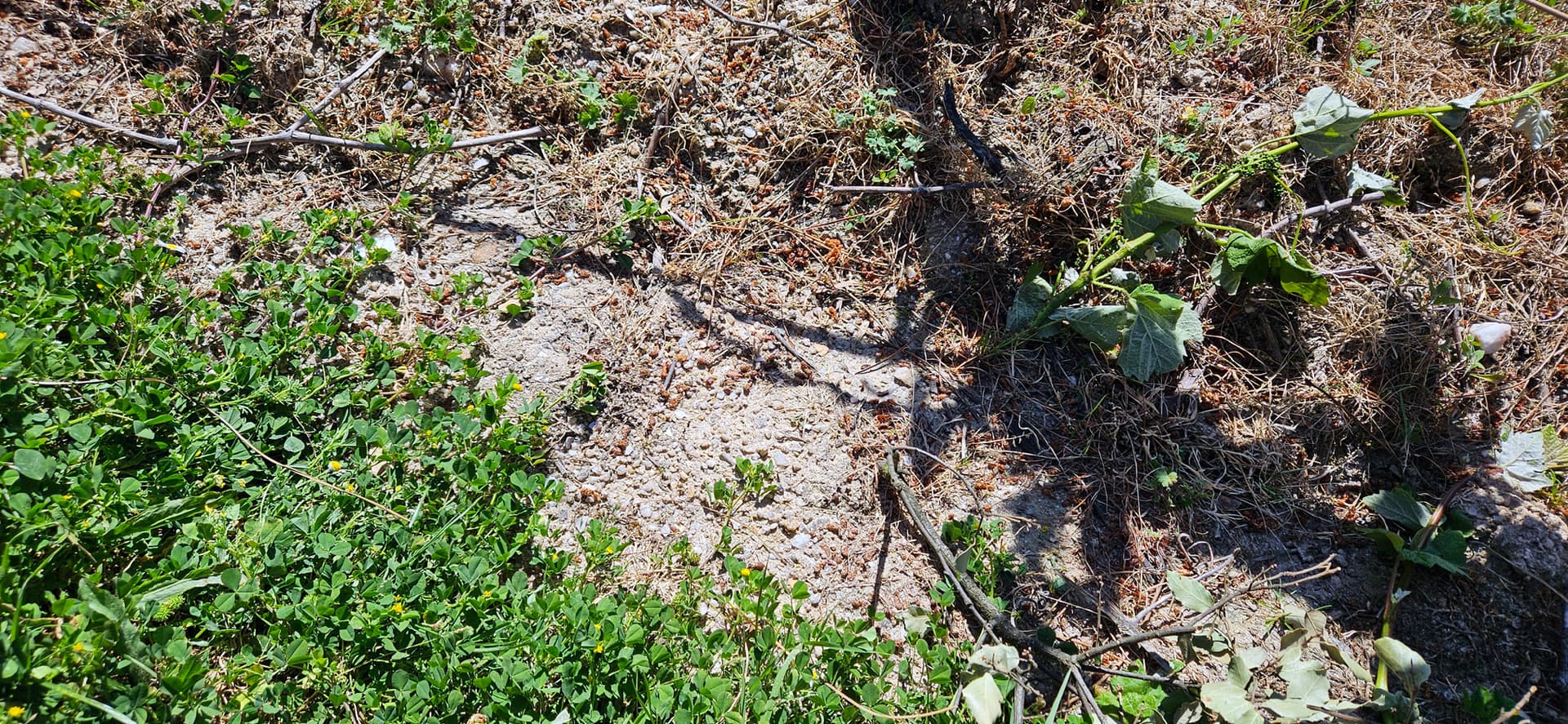
Unfortunately you can’t see it from this picture, but while walking in the vineyards, I noticed how the soil twinkled continuously in the sunlight - Aydogan told us how there’s a lot of glassy, durable quartz in the porous granite, so the soil is full of these tiny crystal shards amidst the decomposed granite.
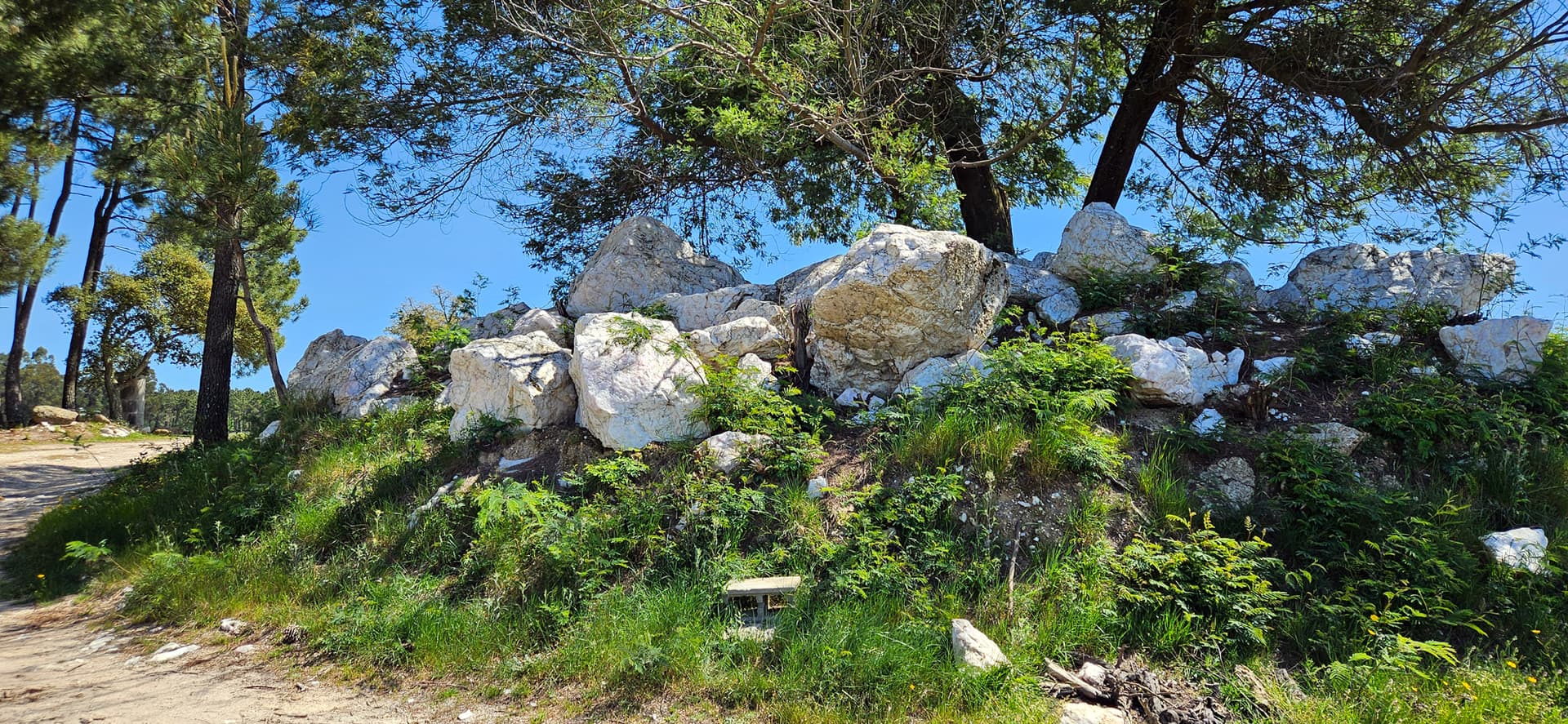
It would’ve been quite difficult to miss these natural quartz stones!
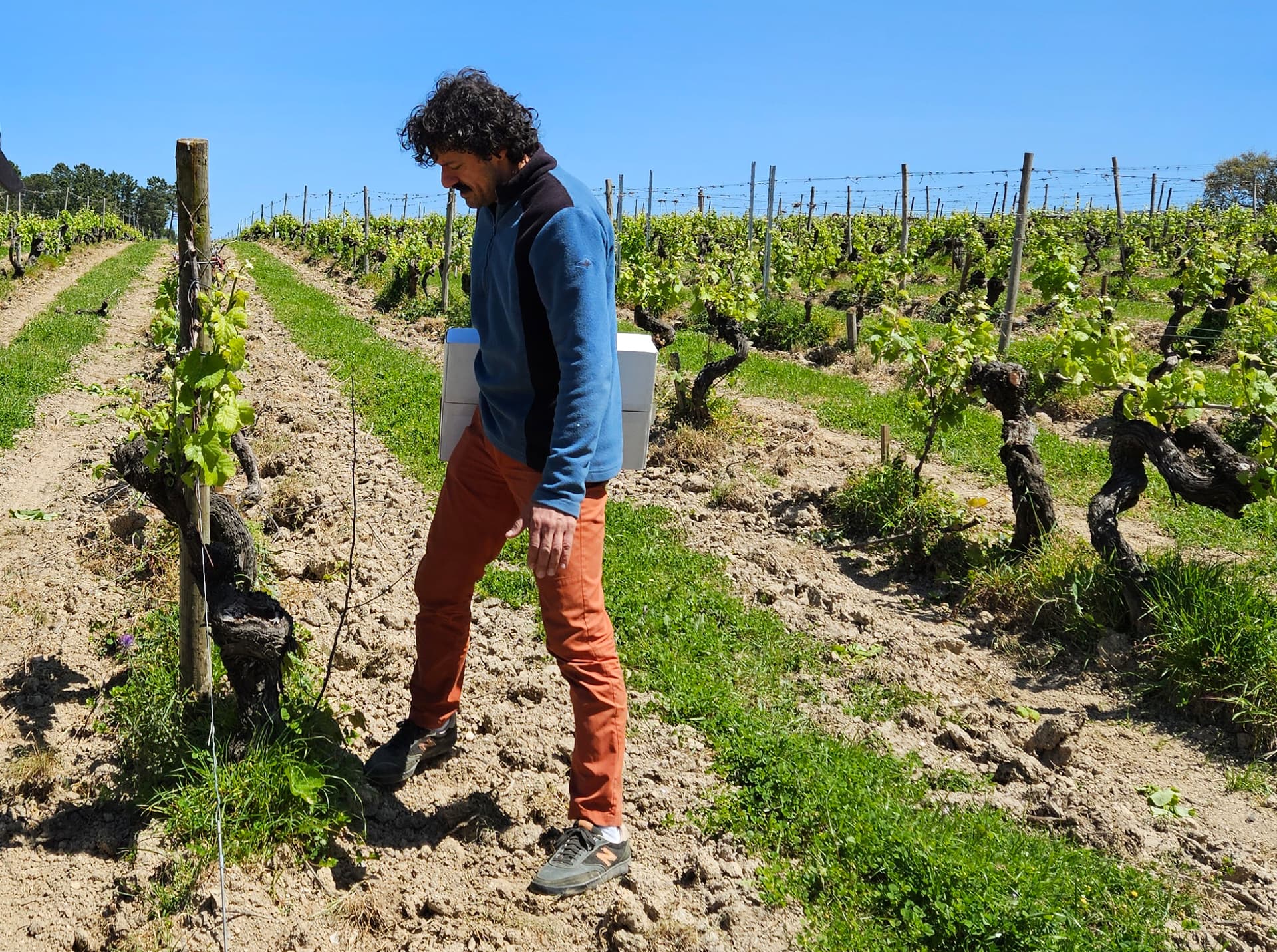
Aydogan showing us the old Casa vineyard, interplanted with dozens of local varieties, located right next to the old Quinta da Pellada building.
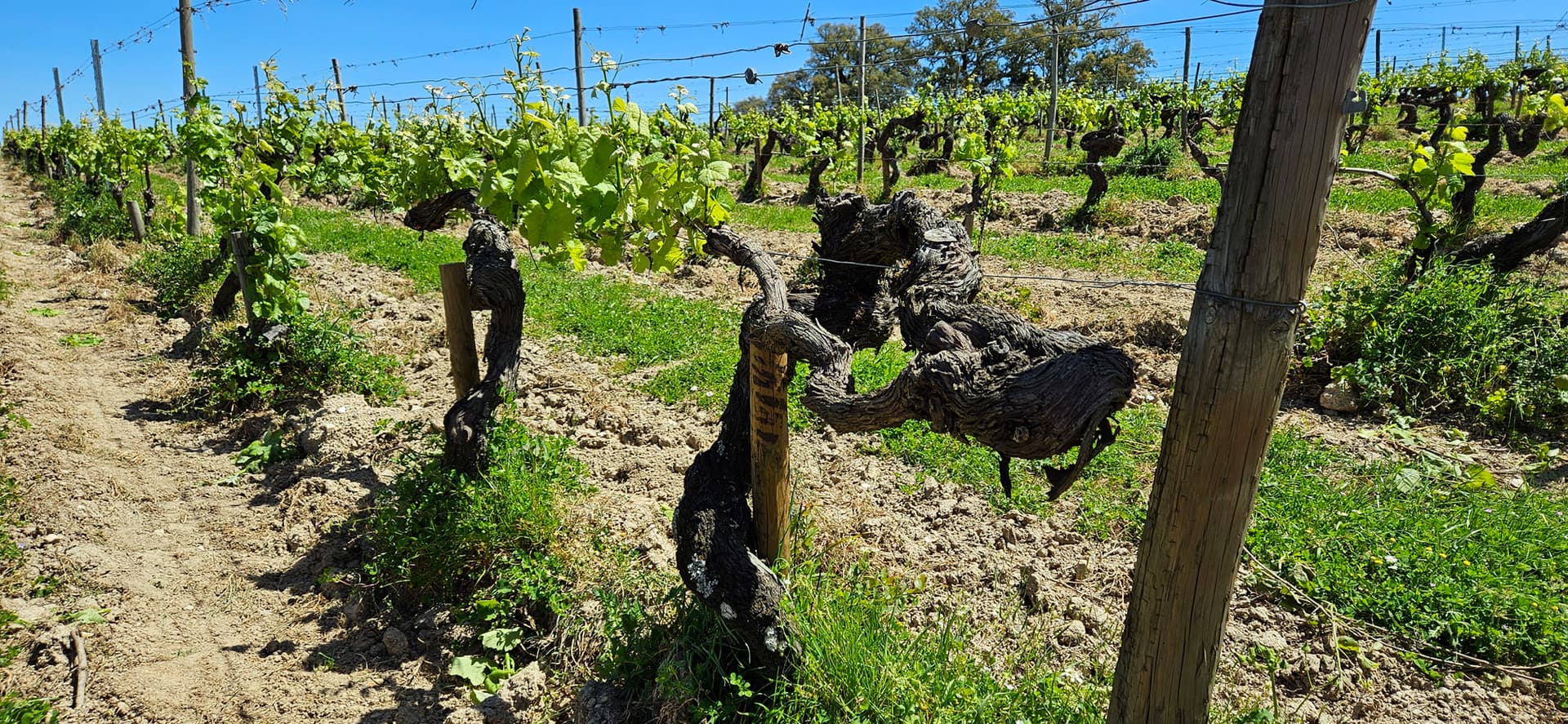
Aydogan told us that when this vineyard was planted - in the 1950’s - people didn’t really know (or care) much about vine training or trellising, so the old vines could grow whichever way they wanted…
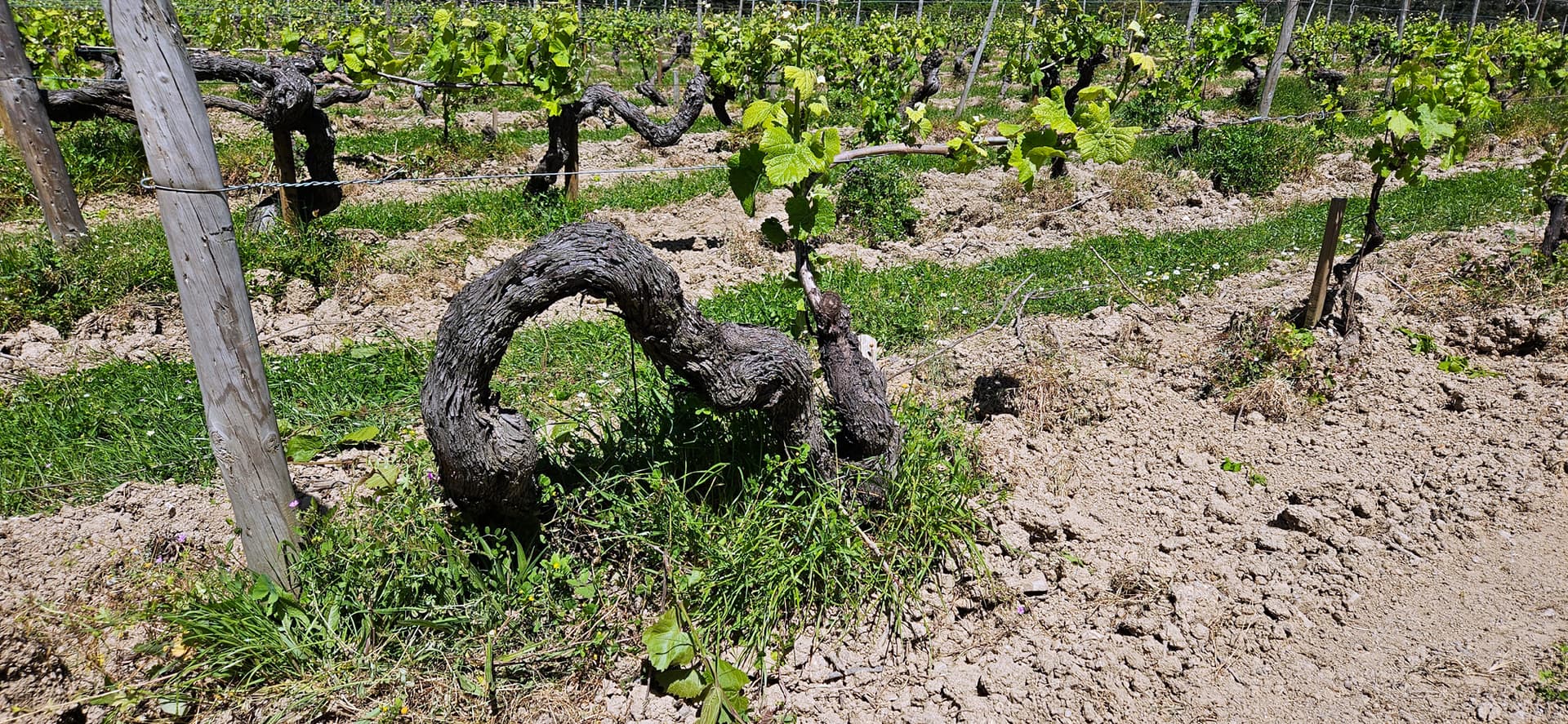
…and with some gnarly old vines this was really obvious.
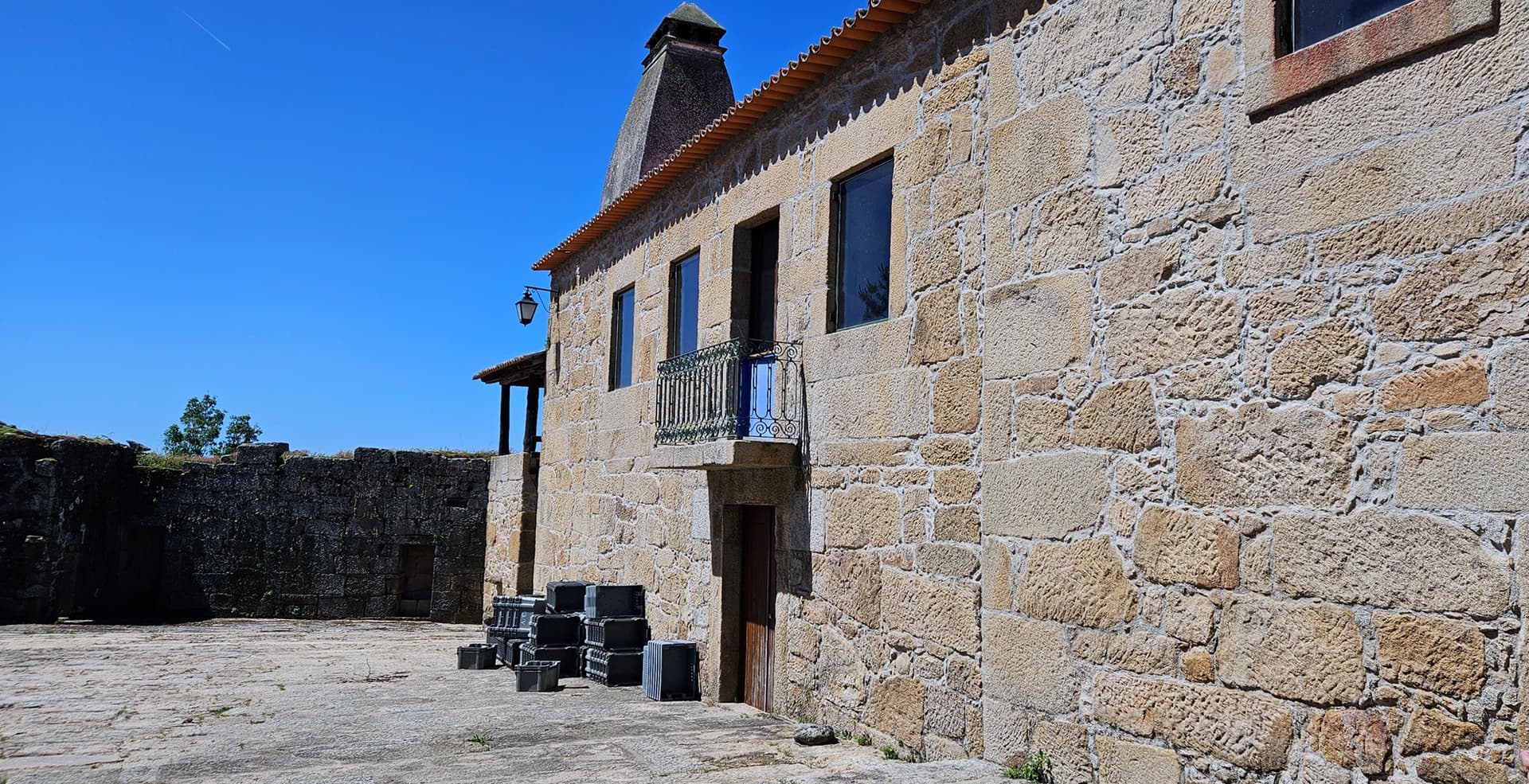
Then we went to see the actual old farm building of Quinta da Pellada. Most parts of these buildings are more than a century old, but that stone wall in the back is more than four centuries old!
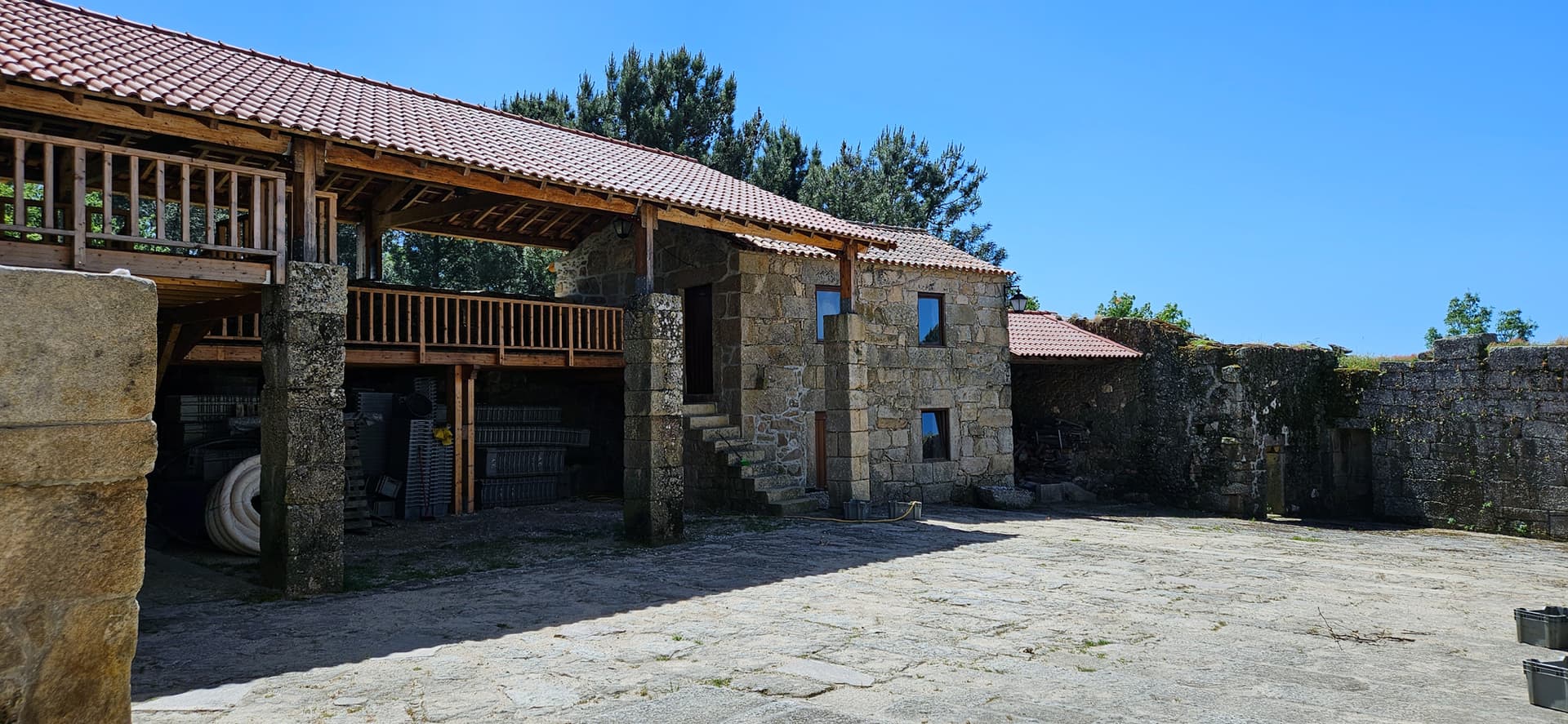
Nobody lives in these buildings permanently anymore, but they are still used for winemaking.
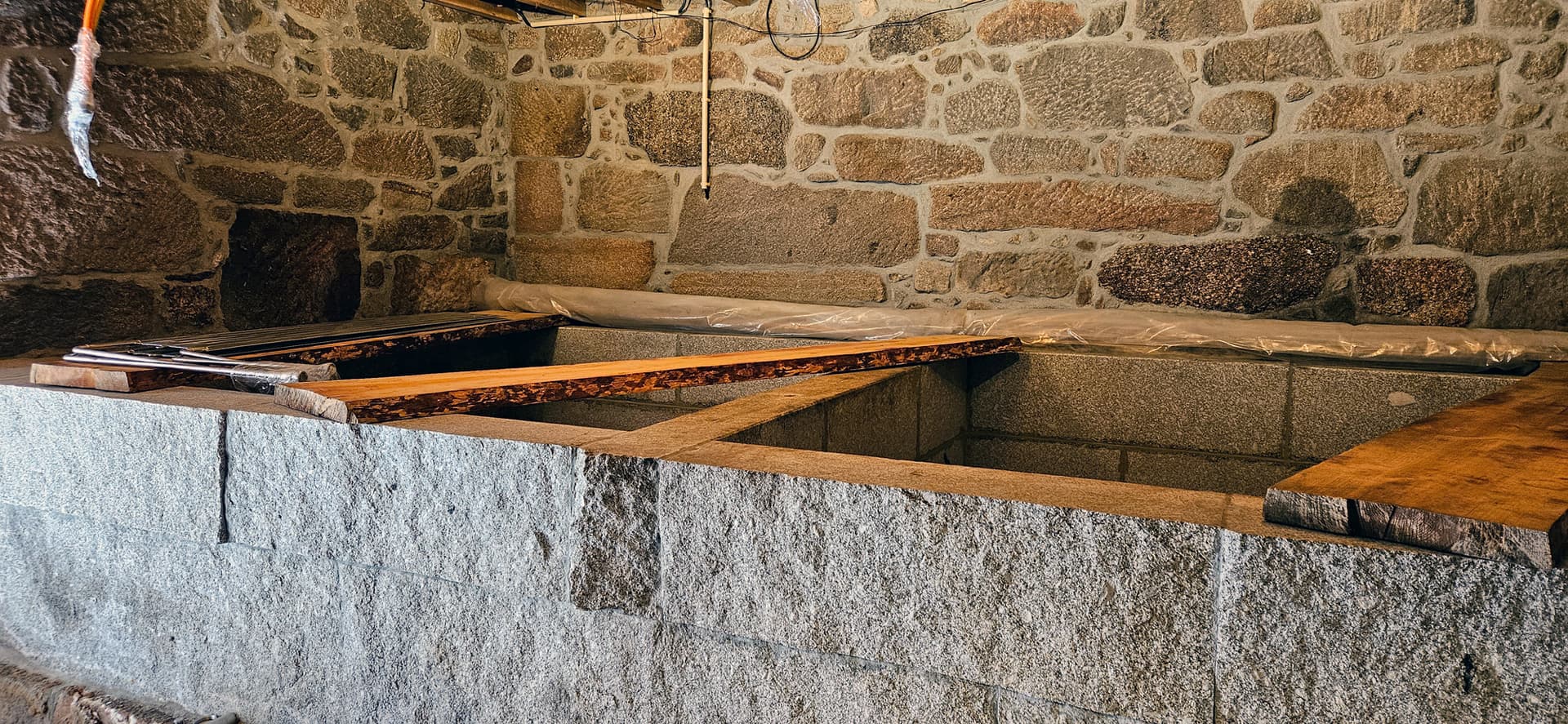
For example one building had these granite lagares (three in total; one across the small room) that are used for the flagship red Carrocel (“carousel”); the wine gets its name due to the pumpover configuration of the room, in which wine from lagar a is pumped over the wine in lagar b, which, in turn, is pumped over the wine in lagar c, and that gets pumped back over the wine in lagar a. The wine goes around in a carousel!
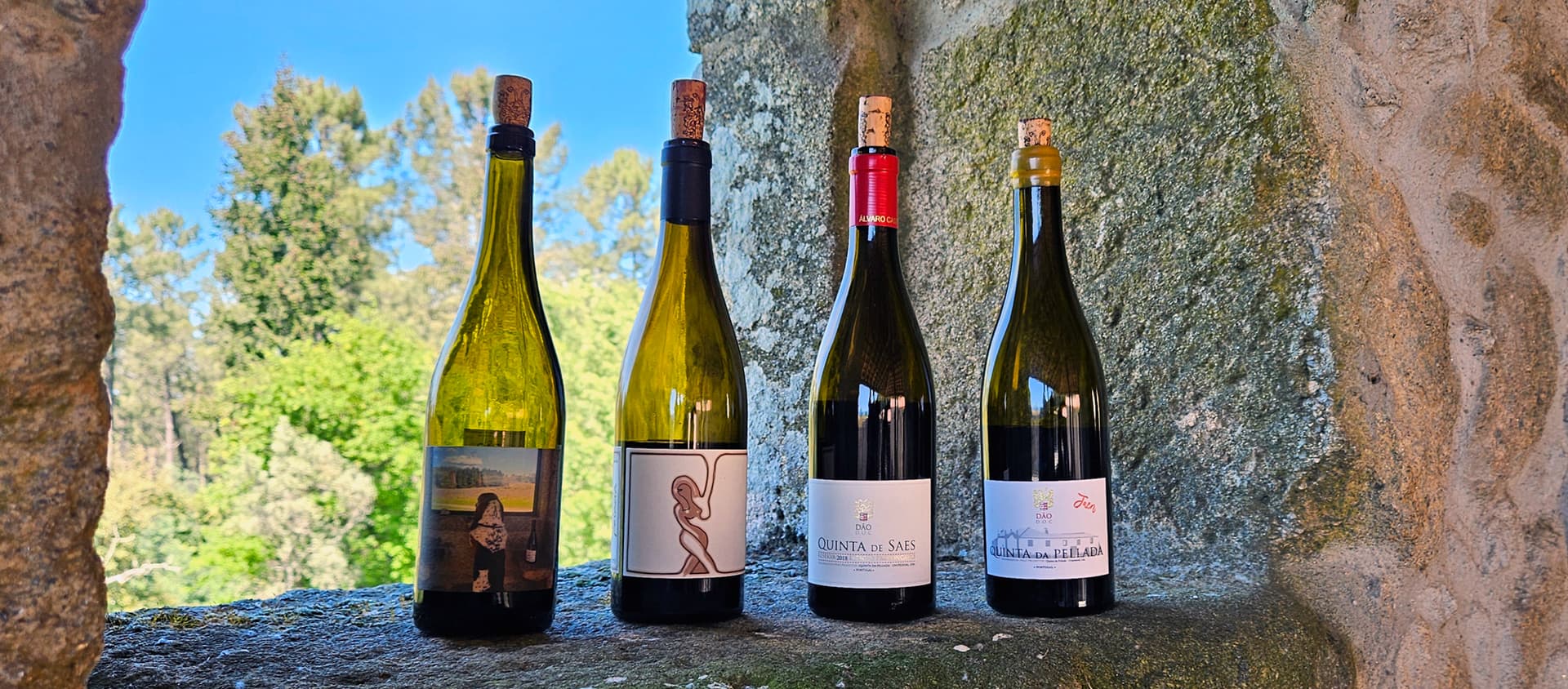
Then we sat down and tasted some wines. These were wines or true finesse and restraint - they aren’t always super expressive, intensely flavored or impressively structured. However, just like Burgundy, they are wines of wonderful freshness, elegance and purity of fruit. I can imagine this kind of style isn’t everyone’s cup of tea, but I enjoyed these wines immensely!
- 2018 Quinta de Saes Dão Tobias - Portugal, Beiras, Dão (23.4.2024)
A field blend from the organically farmed Quinta de Saes vineyards planted on granitic soil, mainly Touriga Nacional, Jaen (Mencía), Alfrocheiro and Tinta Roriz (Tempranillo). Vinified without any SO2, bottled unfined and unfiltered. 13% alcohol.
Youthful, translucent blood-red color. The nose feels both fragrant and slightly reductive at first, but the slightly stuffy notes of reduction clear off quite quickly, revealing aromas of dark forest fruits, some red plums and crunchy hints of crowberries underneath. The wine feels juicy, clean and just a tiny bit sauvage on the palate with a medium body and vibrant flavors of cherries, some ripe bilberries, light tart notes of lingonberries, a little bit of sour cherry bitterness and a hint of wild strawberry. The structure relies almost completely on the rather high acidity as the tannins feel rather supple and gentle. The finish is lively, fresh and crunchy with a tiny bit of tannic grip and a dry aftertaste of tart lingonberries, some sour cherry bitterness, a little bit of fresh red plum, light darker-toned nuances of bilberries and a sweet hint of wild strawberry.
A juicy, clean and very berry-driven little natural wine that combines its nuanced, fruit-forward overall character and vibrant acidity with remarkable ease. Not a particularly complex or challenging wine, this is a lovely little weekday red that drinks effortlessly both on its own and with lighter dishes. Very smashable stuff that benefits from slightly cooler serving temperature. Doesn't feel like the wine is meant for aging, but that shouldn't be a problem with the wine's drink-me-now overall character. Superb value at 8€.
(88 points) - 2018 Quinta da Pellada Dão Pelada Mulher Nua - Portugal, Beiras, Dão (23.4.2024)
A special cuvée made only in exceptional vintages - this is only the second time this cuvée has been made after the debut vintage 2003. The organically farmed fruit is mainly sourced from the very old, interplanted (48 different grape varieties have been identified) vineyards Alta and Meio, which were planted in the 1950's at Quinta da Pellada (70%), backed up with an addition of Touriga Nacional from parcel 5 (30%). Fermented spontaneously in stainless steel vats, aged for 36 months in three 400-liter oak casks of 2nd and 3rd use. 13,2% alcohol, 6,0 g/l acidity, pH 3,72 and total SO2 60 mg/l.
Deep, slightly translucent dark cherry color. The nose feels fragrant and quite fascinating with rather idiosyncratic aromas of fresh bilberries, some ripe boysenberry tones, light cool notes of minty greenness, a little bit of perfumed floral character, a hint of cassis cough drops and a touch of fresh Bing cherry. So many things going on here! The wine is clean, juicy and vibrant on the palate with a medium body and characterful flavors of brambly black raspberries, some floral notes of violets and elderflowers, light minty green nuances, a little bit of fresh cherry, a hint of cassis and a touch of blueberry juice. The wine structure relies mostly on the high acidity, while the ripe medium tannins bring some welcome firmness to the mouthfeel. The finish is ripe, long and gently grippy with a long aftertaste of juicy dark berries, some minty green nuances, a little bit of crème de cassis, light floral nuances, a hint of stony minerality and a touch of brambly raspberry.
A wonderfully fresh, vibrant and very characterful Dão red that does show some ripeness, yet at the same time comes across as wonderfully bright, precise and light on its feet! The aromatics here are quite unique and something I haven't picked up in any other Dão reds - a real testament to the depth and character of the old interplanted vineyards of this region! The wine is so nuanced and fine-tuned, it's very hard to pick up any obvious, pronounced characteristics - the aromas and flavors are intermingling with each other so wonderfully that the wine seems like every sniff and taste manages to offer something new. Captivating stuff. Solid value at 35€.
(93 points) - 2018 Quinta de Saes Dão Reserva Estagio Prolongado - Portugal, Beiras, Dão (23.4.2024)
A field blend of more than 20 different varieties sourced from vineyards up to 45 yo (70%) along with a blend of Alfrocheiro and Touriga Nacional (30%), all planted on granitic soils at the elevation of 500 m asl at Quinta de Saes. Fermented spontaneously and macerated with the skins in small stainless steel lagares for the primary fermentation (ie. approximately a week), then racked into Alliers oak barrels of 2nd use. Aged for 24 months in oak, bottled unfined and unfiltered. 13,1% alcohol, 5,8 g/l acidity, pH 3,7 and 58 mg/l total SO2.
Slightly translucent cherry-red color. The nose feels fragrant, clean and slightly floral with attractive aromas of black raspberries, some sweeter cherry juice tones, a little bit of strawberry, light perfumed nuances of violets, a darker-toned hint of ripe bilberry and a touch of earth. The wine feels firm, crunchy and very juicy on the palate with a medium body and intense flavors of fresh forest fruits, some juicy notes of blueberries, a little bit of tart lingonberry, light ferrous notes of blood, a hint of stony minerality and a brambly touch of raspberry. The wine is impressively structured with its high acidity and moderately grippy medium-plus tannins. The finish is long, dry and somewhat grippy with a fresh, juicy aftertaste of cherries and brambly raspberries, some wild strawberries, light darker-toned notes of blueberries and bilberries, a little bit of blood, a floral hint of violets and a touch of gravelly earth.
A wonderfully fresh, firm and precise Dão red with lots of nuances, depth and great sense of structure. Usually Quinta da Pellada wines are described as the "Grand Crus of Dão" and Quinta de Saes wines as "Premier Crus of Dão", but tasting this next to the 2018 Quinta da Pellada field blend, Pelada (Mulher Nua), I find it very hard to put one wine above the other. Pelada shows more depth, nuance and complexity, while this Saes Reserva red shows more intensity and sense of structure. If anything, I'd say Pelada is wonderful already now and fully approachable, whereas this wine might actually call for some additional aging. At the moment it is a great food wine with hearty dishes, but it can be pretty stern on its own. However, that's exactly the way I like my wines! A delicious, sophisticated effort - outrageous value at just 12,50€. Highly recommended.
(93 points) - 2016 Quinta da Pellada Jaen Dão - Portugal, Beiras, Dão (23.4.2024)
100% Jaen (aka. Mencía) from the old (60 yo), organically farmed vineyards at Quinta da Pellada. Fermented spontaneously and macerated with the skins in small lagares for 18 days, then racked into old Alliers oak barrels. Aged for 14 months. Bottled unfined and unfiltered. 13,1% alcohol, 5,78 g/l acidity, pH 3,79 and 57 mg/l total SO2.
Moderately translucent and still surprisingly youthful cherry red color. The nose feels open and expressive with vibrant aromas of strawberries and raspberries, some juicy cherry tones, a little bit of fresh red plum, light perfumed notes of dried flowers, a hint of damson and a touch of sun-baked earth. The wine feels lively, nuanced and crunchy on the palate with a medium body and bright flavors of fresh red plums, some floral notes of violets and dried flowers, a little bit of ripe blueberry and damson, light gravelly mineral tones, a ferrous hint of blood and a savory touch of meaty umami. The wine feels fresh and balanced with its high acidity and ripe medium tannins that slowly pile up on the gums. The finish is clean, juicy and gently grippy with a long, dry aftertaste of cherries and wild strawberries, some brambly raspberry tones, a little bit of gravelly minerality, light crunchy notes of fresh red plums and damsons, a floral hint of violets and a touch of blueberry.
A very fresh, fruity and attractive Jaen that really underlines the comparison between Dão and Burgundy. Sure, the wine tastes like Mencía (Jaen), not Pinot Noir, but the overall style is so much closer to Burgundy than to the burlier and more solar Mencías of Bierzo across the border. The winemaking here is deft and elegant: the emphasis is obviously on freshness and high acidity, yet the wine feels perfectly ripe and vibrant with its fruit - not picked one bit too early or too late. The tannins are not clunky or rustic, but instead well-manicured, lending just enough firmness and bite to the palate without sticking out. What surprised me, though, was how remarkably youthful the wine was - at eight years of age, the wine shows very little if any sense of age! Maybe with additional aging the wine will evolve from this fruit-forward stage to a more savory and earthy direction with more emphasis on tertiary complexity? However, seeing how wonderfully the wine is drinking at the moment, no further aging is necessary. A good purchase at 25€.
(92 points)
While tasting the wines Aydogan also told us how Álvaro Castro really doesn’t like the idea of tourists visiting the winery. Aydogan has tried to push the winery to be a bit more open to the public - thanks to him they now have a website and you can actually locate them on Google Maps! - but they still are pretty selective who they take in. Regular tourists who just happen to be in the region and are looking for a nice place to taste some wines by just popping at the winery door are not going to be let in. When other wineries might have even several visits per day, Álvaro Castro is content if they have one visit every week or two - and not any more.
When we were returning back to the winery from Quinta da Pellada, Álvaro actually called Aydogan and asked him what he was doing. When Aydogan told that he is showing these Finnish visitors around, Álvaro told him to get rid of the tourists and get back to work! 
Well, we still kept Aydogan busy a tiny bit longer as we bought some wines to go with us before we were on our way to our next visit. Fortunately we had some cash with us, as they really don’t even have a cellar door shop at the winery! Some of the wines we bought Aydogan actually had to fetch from the bottling room and hand-label them himself as they didn’t have any on-hand stock available for on-premise sales!
So, all in all, what a start for the day! Terrific people, gorgeous old vineyards, magnificent views and absolutely fantastic wines! Even if Álvaro Castro might not like the idea, this was really a place I’d love to return to!
13 Likes
What a great travelogue - you really are in the wrong job Otto! Marvellous stories - just goes to show that wherever one is, when visiting wineries - or restaurants with a winemaker present (!), if you show how passionate you are, they will always make a special effort.
This may have been discussed further up, but could you do a sidebar and tell us how you obtained all of your appointments? I’m assuming it was a combination of direct booking, email request, @Tomas_Costa magic, and getting lucky?
Dude! I’ve been trying to visit Pellada for sometime. I’ll be in the Dao in June and have an email out to them, but haven’t heard back. I doubt I’ll be able to get in. Yes, Crasto is infamous for not welcoming visitors. I have met his daughter once, but I’m sure she doesn’t remember me. They have a couple of very small, old, mixed planting vineyards they lease, Muleta and D’ente Douro, I’ve been keen to try.
1 Like
I know! I really wish I could work with wine! And thanks!
This is what I trust as well. The biggest conundrum is how to convey your endless passion and interest on wine when you’re contacting the winery for the first time. It’s easy to show one’s passion once you’re there, but it’s much more difficult to communicate that you’re the real deal through one email message.
Didn’t make a direct booking at any place. If a place had an oenotourism program with a system for direct bookings - it wasn’t our kind of place (well, apart from the lodges at Vila Nova de Gaia). Otherwise, yes, a combination of email requests and Tomás Costa magic. Two places were through Tomás (or via his father) and the rest of the places went with old-fashioned email. Or - in the case of the Curia palace hotel and Buçaco wines - sheer luck!
1 Like
Next time you should try using the WB calling card. It has worked for me several times in Bordeaux. Tell them that you will write a piece on them - and in your case you could try enclosing a link to one of your travelogues. It’s free publicity for them and the quality of your work is such that they would be really silly not to use it!

1 Like
With some emails I actually mentioned that I’m going to publish online reports and some instagram pictures after our trip, so that card is already in use! Perhaps it has been enough to open doors to some places.
1 Like
Day number three continues!
After our visit to Álvaro Castro’s winery, we had fairly little time before our next winery visit - and at this point we were getting hungry! We asked Aydogan if there was any place nearby where we could eat and he told us that there was a decent local restaurant just a stone’s throw away.
We thanked, packed our purchases into our van and drove to our future lunch place…
…which was naturally closed on Tuesdays. And it was Tuesday now. Oh well. We resorted to our plan B, which was driving to a nearby supermarket and buying some bread rolls, charcuterie, cheese, bananas and drinkable yogurt. Lunch of the champions!
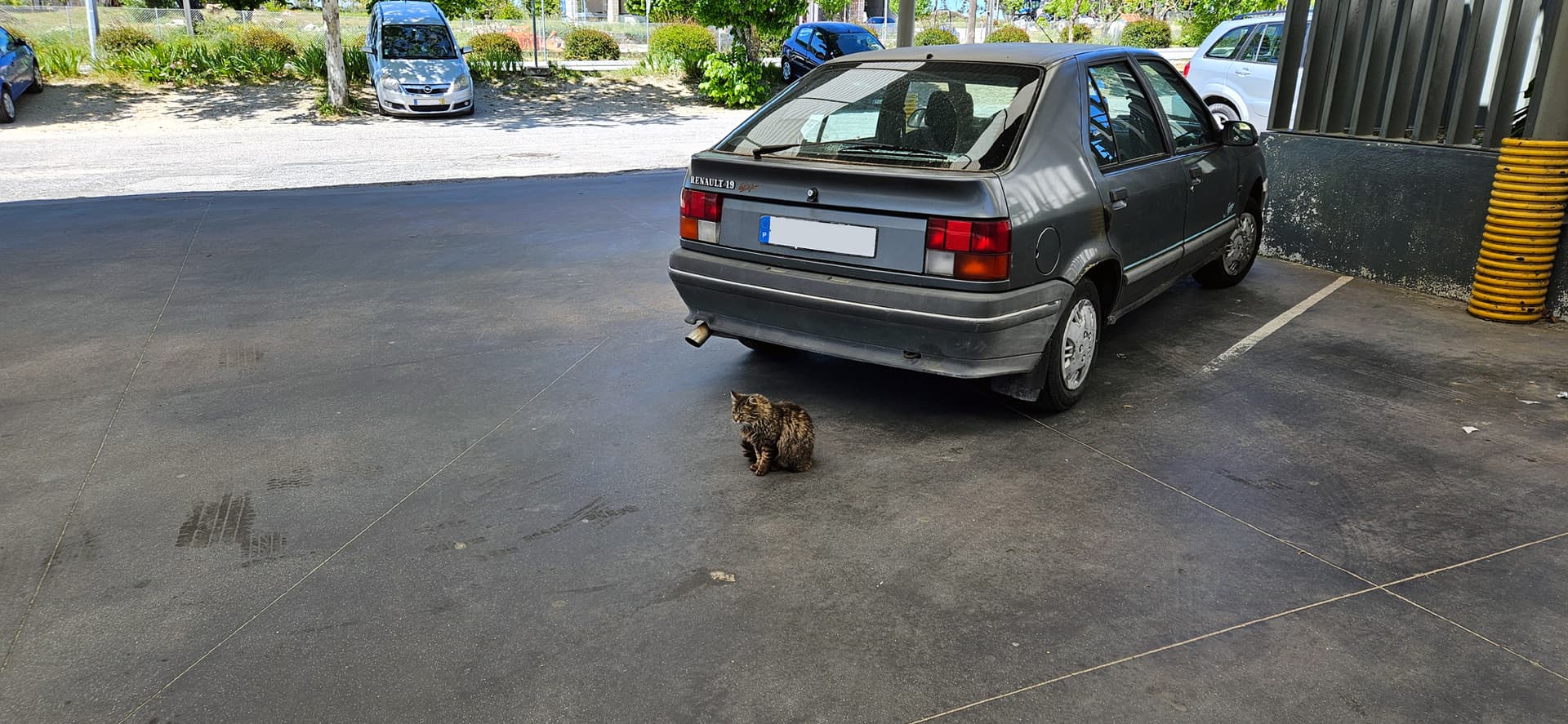
This tiny fella joined us while we were having our lunch at the supermarket parking lot.
By the way, I didn’t mention it earlier, but already at the vineyards of Quinta da Pellada I noticed one thing: even though the weather here was at least as sunny as it was in Bairrada, the temperatures were still much cooler! I guess during the summer things can turn around, as the Dão summers are continental and can get quite hot, while the Atlantic ocean keeps the temperatures in Bairrada more temperate. However, now, in April, you could really feel how the elevation of 400-500 meters (1300-1650 feet) above the sea level really made a difference!
Anyways, after our quick ad hoc lunch we continued our journey. Our next stop was Textura Wines, which was about 15 minutes’ drive away. I messaged Marcelo Villela de Araujo, the winery owner, that we were on our way and he replied that he unfortunately wasn’t present at the winery himself, but there were people expecting us in any case.
Textura Wines was another one of @Tomas_Costa’s suggestions - and through him (or his father) we secured a visit there. This was by far the youngest producer we visited: the former investment manager Marcelo Villela quit his day job in Brazil in 2015 and founded the Textura Wines winery on the imposing mountainside of Serra da Estrela’s mountain range, right on the edge of the protected area of Serra da Estrela natural park.

When he decided to build his own winery, Marcelo Villela purchased a century-old textile factory, located on the outskirts of the village of São Paio, and 22 hectares (55 acres) of vineyards in the Dão sub-regions of Serra da Estrela and Castendo. From the beginning the main focus was to make clean and classically styled wines with as minimal-interventionist style as possible. The purchased vineyards began conversion to organics and the textile factory was thoroughly renovated and repurposed into a modern, state-of-the-art winery.
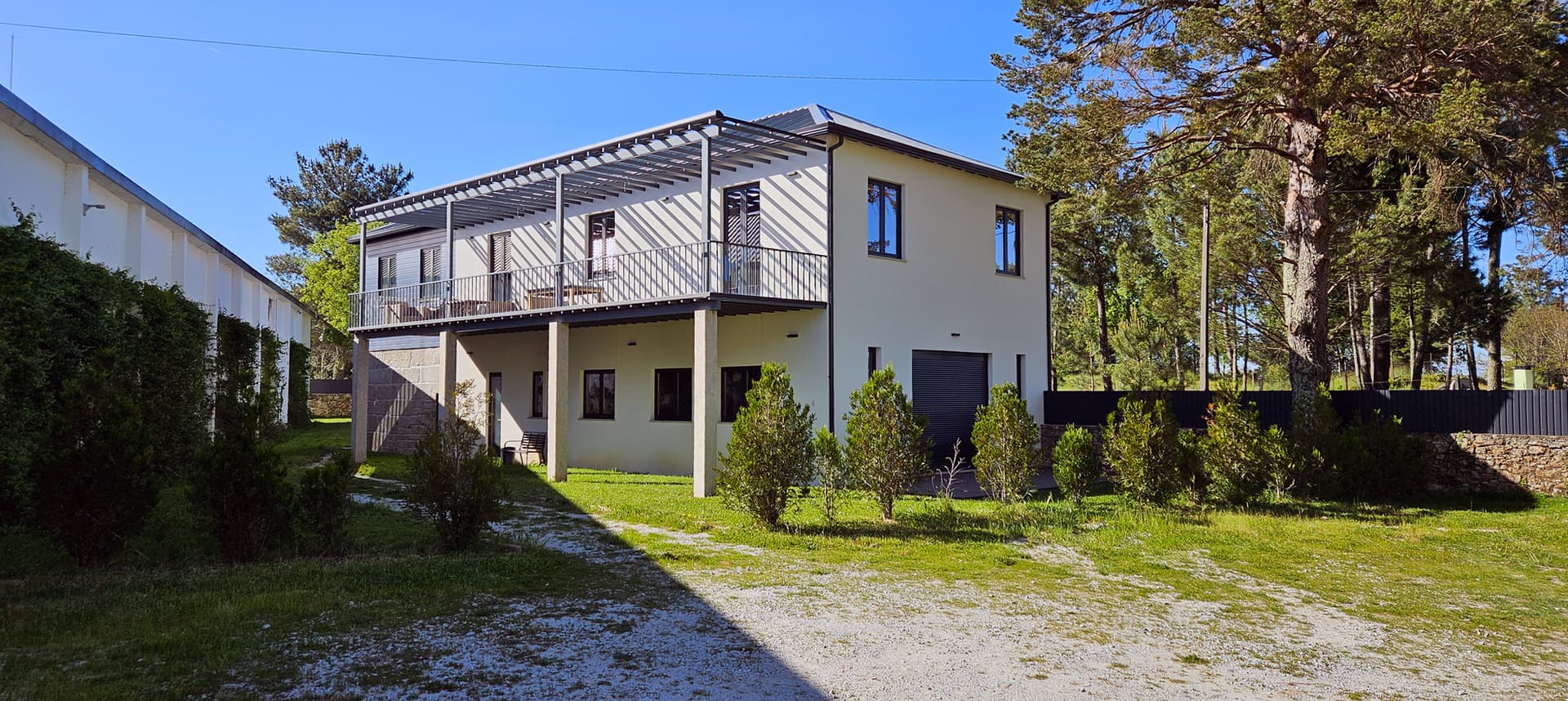
Since then they’ve built a tasting room / conference hall / wine tourism center and also a building that can be used as lodgings for any temporary workers.
However, when we arrived at the winery, it seemed that we weren’t expected after all! We were pretty much on time (well, probably 5-10 minutes late), but there didn’t seem to be anybody around! We first just hanged around in the front yard and checked our surroundings for some minutes, but still nothing! We went around knocking on doors and trying if they were open, yet nobody came!
Only about 10 minutes later a person came - he seemed pretty surprised to see us there - and let us into the tasting room. He explained that he was preparing a tasting for a Portuguese group that was arriving in half an hour or so. However, when we asked if there was somebody who could show us the winery, he told that he’s almost ready and then we could go around and see the place. However, he said that he could not present the wines since he was going to be busy with the other group that was coming, but we said that this was perfectly fine - we were experienced tasters, so we didn’t need much guidance as long as somebody just poured us the wines!
Then we went to see the winery! After having seen many older wineries on our trip, you could immediately see that this was place something entirely different! Everything was new, shiny and obviously built with a no-expense-spared mentality!
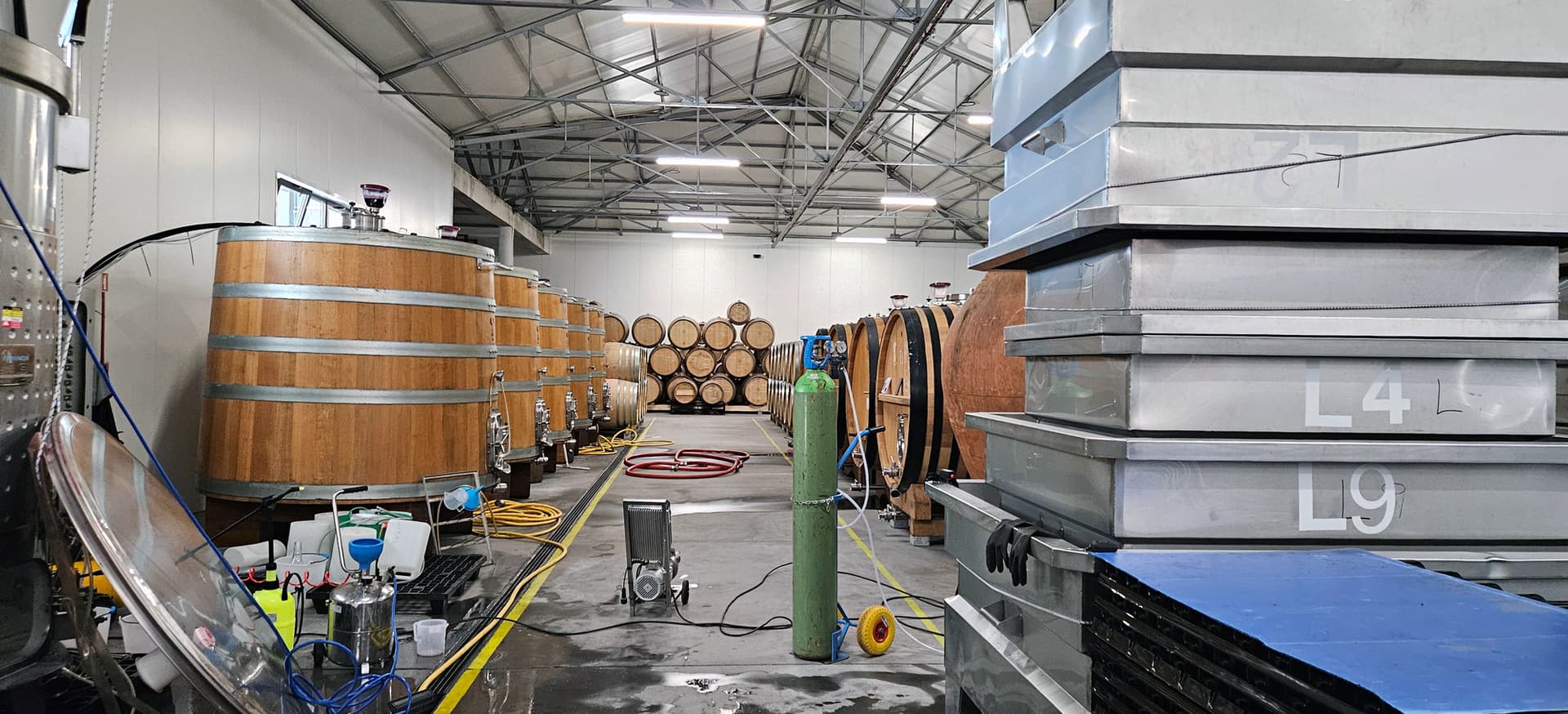
Foudres on the left, toneis on the right, 500-liter demi-muids and some smaller barriques in the back. Lots of space everywhere!
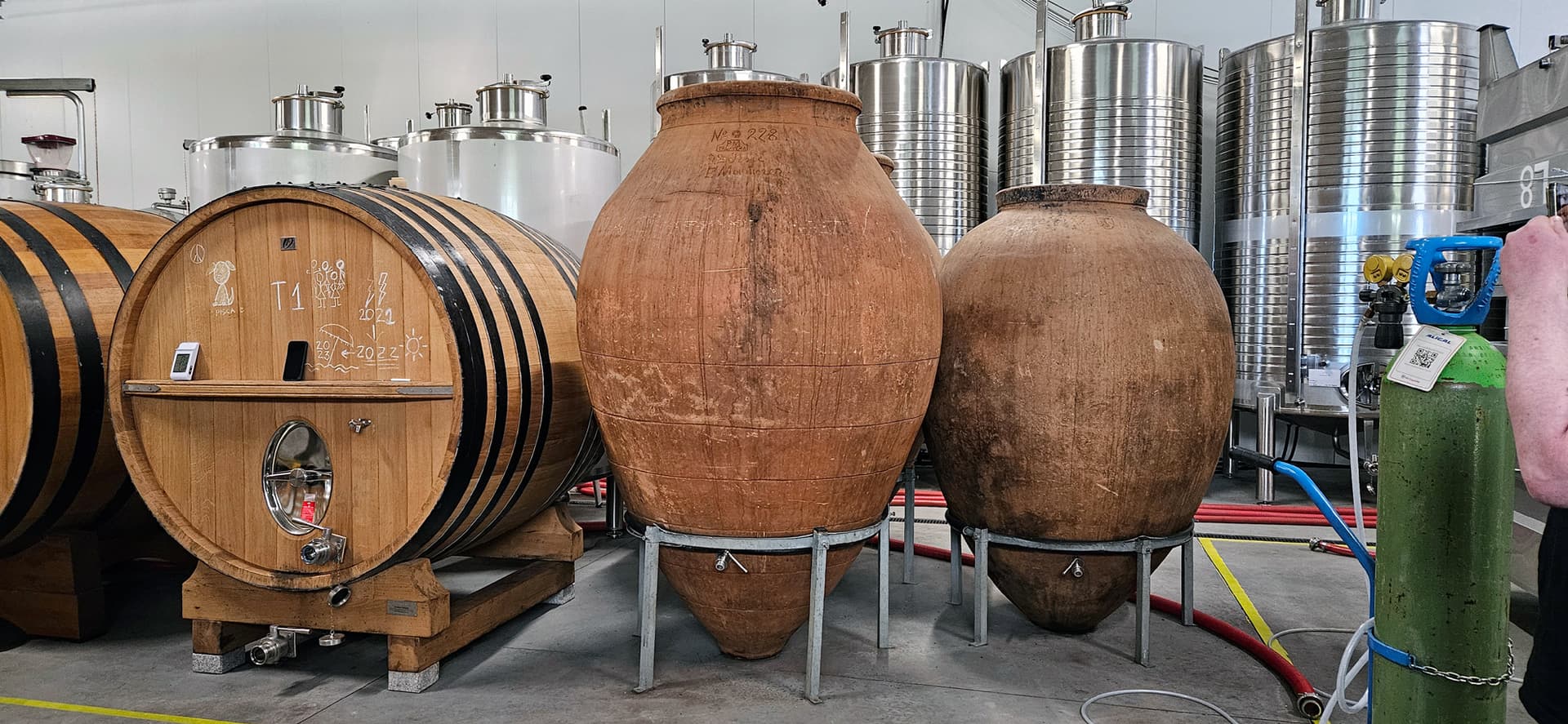
They had a few neat terracotta vessels, too!
We were explained that currently the estate covers approximately 40 hectares (100 acres) of land, of which 28 (70 acres) hectares are under vine; 22 hectares (55 acres) for red varieties and 6 hectares (15 acres) for white varieties. All vineyards have been certified organic since 2023. Furthermore, they also rent twice as much vineyards, so this is obviously not a tiny operation!
They emphasized the eco-friendly side of the winery quite much, so it really seems to be of great importance to them! Not only were the vineyards farmed organically, but the winery strives for carbon neutrality by using renewable energy, reusing and recycling everything and composting organic waste.
The primary consulting winemaker hired for the winery has been Luís Seabra (formerly of Niepoort), but they have also a resident winemaker, Mariana Salvador, who was there during our visit (cleaning a stainless steel vat) and to whom we were introduced during our tour around the winery.
The first commercial Textura Wines vintage was 2018, so there are not that many wines to go around yet - especially when the annual production of the top-range stuff is pretty minimal, typically not more than just a few thousand bottles per label.
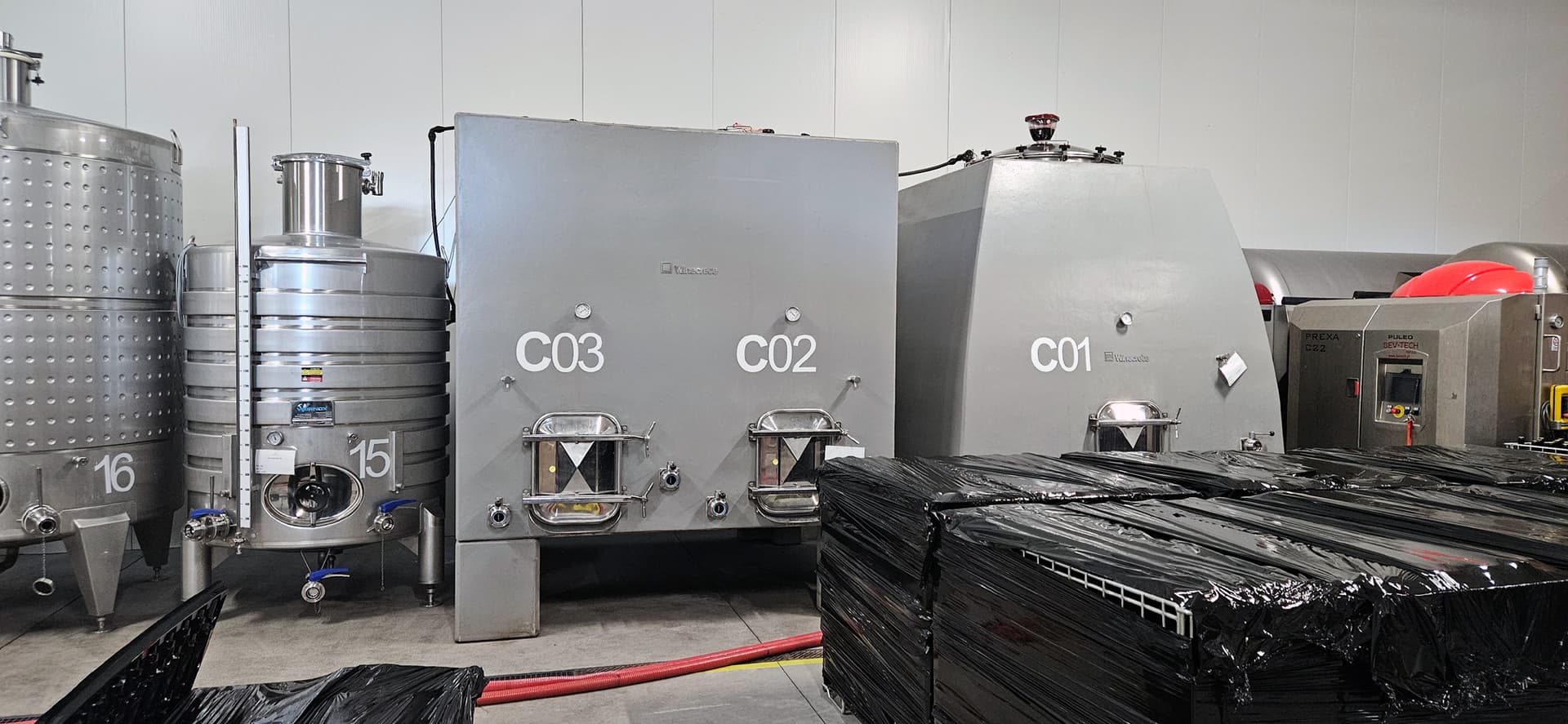
Some concrete fermentors.
We were explained that the estate vineyards were located in two sub-regions of Dão: Serra da Estrela (in the nearby village of Vila Nova de Tazem, pretty near to Álvaro Castro’s winery) and Castendo (in the village of Penalva do Castelo, about 40 km / 25 miles away). They also told that it would’ve been impossible to plant any vineyards next to the winery, because it is situated right next to the protected natural park of Serra da Estrela!
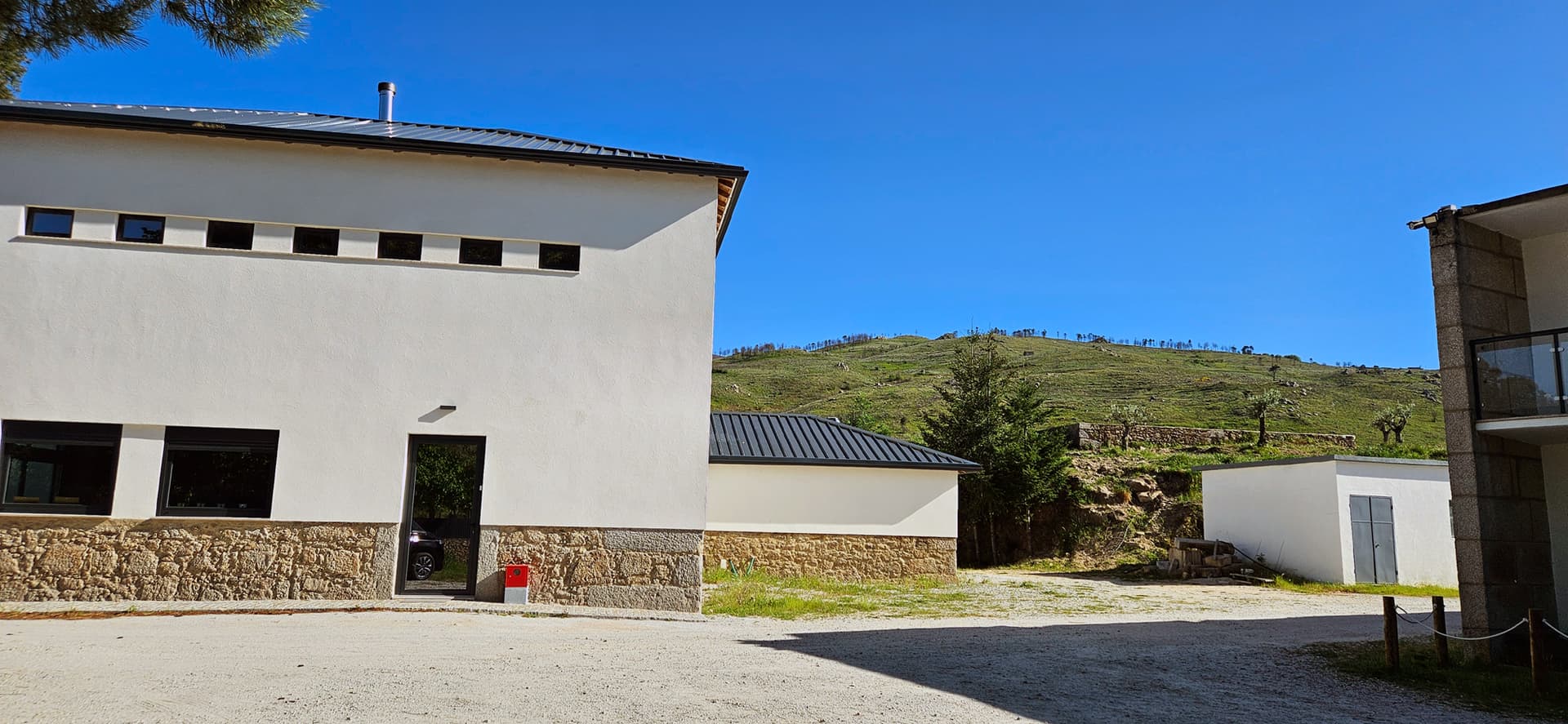
The winery was located on the mountainside and the impressive Serra da Estrela mountains loomed over the winery.
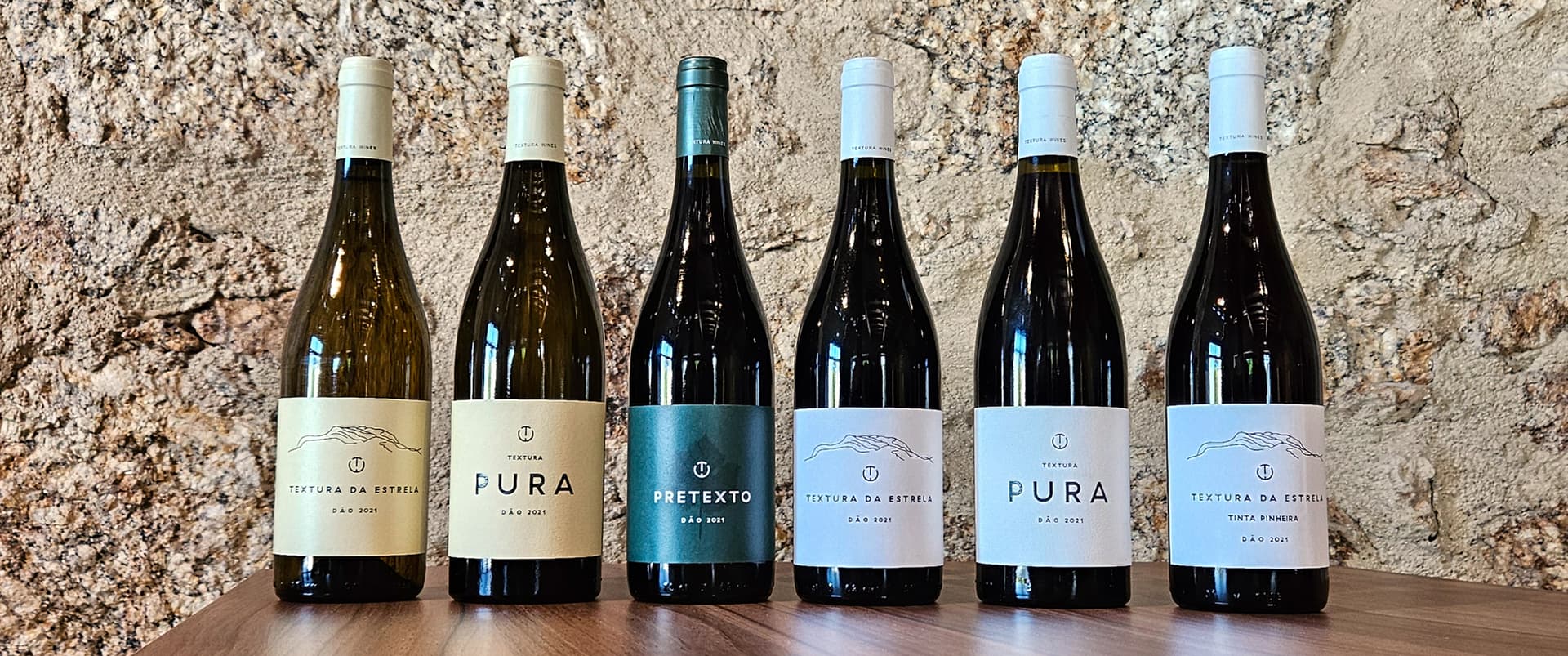
Then we proceeded to the tasting room to taste the wines - the Pura range was mighty impressive (obviously made to appeal to any Burg-heads), but I also enjoyed the delicate Tinta Pinheira a lot.
At this point the Portuguese group arrived at the winery, but the Textura people had managed to arrange so that the winemaker Mariana Salvador could introduce the wines to us instead. This was great news, since she was so knowledgeable about everything (well, I guess you have to be, as a winemaker) and we could ask her about everything possible relating to the wines and winemaking. For example it was interesting to hear how she preferred working with the local varieties instead of Tinta Roriz (aka. Tempranillo) - especially tannin management with the variety was pretty difficult.
While tasting the wines, we talked about the different grape varieties and how differently they perform (for example how Tempranillo seems to make more interesting wines in Spain, whereas many other varieties seem to make more characterful wines on the Portuguese side of the border). She also said how she really enjoyed working with Tinta Pinheira (aka. Rufete), a delicate and often a bit finicky variety that might struggle to ripen in certain climates. When she told how they make a varietal Tinta Pinheira, we asked if we could taste that one too, to which she agreed!
In addition to these wines that we tasted, Textura Wines produce a few other wines, including a rosé and three premium single-vineyard wines: Constructo (a 50-50 blend of Alfrocheiro and Touriga Nacional from Penalva do Castelo); Vinha Negrosa (a 50-50 blend of Alfrocheiro and Jaen from Vila Nova de Tazem); and D. Áurea (100% high-altitude Bastardo from Serra da Estrela).
- 2021 Textura Wines Dão Textura da Estrela - Portugal, Beiras, Dão (23.4.2024)
A blend of organically farmed Encruzado (60%), Bical (35%) and Cerceal Branco (15%) from 25 to 60 yo estate vineyards (average age 40 yo) grown on granitic soils at the altitude of 500 m asl in Vila Nova de Tazem. All fruit destemmed, crushed and gently pressed. Fermented spontaneously and aged for 11 months in used 500-liter demi-muids and a 2500-liter tonel. Bottled in November 2022. 12,5% alcohol, 2,1 g/l residual sugar, 5,36 g/l acidity, 0,56 g/l VA, pH 3,40 and 86 mg/l total SO2. Total production 10,800 bottles and 206 magnums.
Deep, intense yellow-green color. The nose is fresh, youthful and tangy with aromas of salty sea air and zesty citrus fruits, some fragrant herby tones, a little bit of creamy oak, light green banana tones and a hint of freshly picked red apple. The wine feels broad, textural and a bit oily on the palate with flavors of sweet yellow fruits, some creamy oak tones, a little bit of leesy richness, light mineral notes of wet rocks, a hint of chopped herbs and a touch of plantain. The moderately high acidity keeps the wine nicely in balance, although I'd prefer a bit more zip. The finish is long and layered with a nuanced aftertaste of leesy richness and creamy oak, some ripe yellow fruits, light herby notes, a little bit of saline minerality, a hint of sweet greengage and a touch of pineapple.
A nice, balanced and classically styled Dão white with wonderfully vibrant fruit, good sense of minerality and very judicious use of oak that only lends some creamy tones to the flavors - not any obvious woody or toasty flavors. The wine is thoroughly enjoyable, but maybe a bit too round and sweet-toned for my preference - although the amount of residual sugar here is very low, it still does show a bit, accentuating the tropical fruit flavors a bit more than need be. With only a bit more acidity the balance and freshness could've been on point. However, now the wine falls a bit short - this is a thoroughly pleasant and enjoyable effort, but still it leaves a bit lukewarm impression on me. Priced somewhat according to its quality at 21€.
(88 points) - 2021 Textura Wines Dão Pura Branco - Portugal, Beiras, Dão (23.4.2024)
All the fruit is sourced from a single, interplanted 55-yo vineyard in Vila Nova de Tazem, located at the altitude of 600 m asl in the Serra da Estrela sub-region of Dão. It is a field blend of Encruzado, Bical, Dona Branca (Síria), Rabo de Ovelha and others, all harvested and vinified together. The fruit is destemmed, crushed and pressed, but only free-run juice is used for this wine. Fermented spontaneously and aged for 11 months in used 500-liter oak barrels. Bottled in March 2023. 12,5% alcohol, 1,4 g/l residual sugar, 5,2 g/l acidity, 0,52 g/l VA, pH 3,34 and 69 mg/l total SO2. Total production 4700 bottles and 206 magnums.
Intense yellow-green color. The nose feels clean, fragrant and somewhat Burgundian with quite intense aromas of fresh red apples, some smoky mineral tones, a little bit of struck match, light pineapple tones, a hint of honeyed richness, a touch of creamy oak and a woody whiff of old oak spice. Thew wine feels dry, firm and rather textural on the palate with a quite full body and intense, clean flavors of fresh yellow fruits, some crunchy pineapple tones, a little bit of leesy creaminess, light reductive notes of gunpowder smoke, a hint of savory wood spice and a touch of greengage. Despite the rich texture and ample fruit, the moderately high acidity gives good sense of balance and freshness to the wine. The finish is long, fresh and vibrant with a rather intense aftertaste of saline minerality, some creamy oak tones, a little bit of fresh pineapple, light leesy tones, a hint of ripe greengage and a touch of savory wood spice.
This was a pretty serious and impressive wine, definitely built to impress Burgundy palates! Although the wine isn't particularly brisk or crunchy and the acidity feels a tad lower than what you'd find in a white Burgundy, the overall feel was nonetheless very similar - just with Portuguese overtones! The wine shows great sense of balance, lovely minerality, impressive fruit intensity (probably all thanks to the old-vine fruit) and just the right amount of that smoky reduction. A very complete wine that is very enjoyable right now, but will most likely continue to evolve and improve with additional age. Even if this and the mid-tier Textura da Estrela Branco are more or less the same wine, with the only difference of Pura being a single-vineyard wine, the difference between these two wines was striking: Pura was just noticeably drier, more intense and more structured in comparison to the somewhat softer, sweeter and more ho-hum Textura da Estrela! Solid value at 36€.
(93 points) - 2021 Textura Wines Dão Pretexto - Portugal, Beiras, Dão (23.4.2024)
Made with organically farmed fruit sourced from vineyards located in different regions of Dão, including both estate fruit and purchased fruit. A blend of Alfrocheiro, Jaen, Tinta Roriz and Touriga Nacional. 70% destemmed, 30% in whole bunches. Fermented in stainless steel, aged for 11 months 5000-liter French oak vats and smaller barrels. 12,5% alcohol. Annual production approximately 25,000 bottles.
Youthful cherry red color with a faint blueish hue. The nose feels surprisingly a bit vegetal with aromas of crunchy crowberries, some blueberry tones, a little bit of mulchy greenness, light stony mineral notes and a hint of wild strawberry. The wine is dry, a bit lean and slightly green-toned on the palate with a medium body and flavors of brambly raspberries, some fresh bilberries, a little bit of leafy greenness, light crunchy notes of redcurrants, a hint of stony minerality and a touch of something mulchy. The wine is high in acidity with light but also somewhat angular and slightly green tannins. The finish is dry, somewhat austere and a bit vegetal with a medium-long aftertaste of crunchy crowberries, some redcurrants, a little bit of fresh blueberry, light leafy notes, a hint of wild strawberry and a touch of mulchy greenness.
This was a bit odd and weirdly vegetal, coming across as somewhat unbalanced and rather underwhelming. Not quite up to par with the other Textura wines. I wonder if this was a challenging vintage for the red varieties? Feels rather expensive for the quality at 14€.
(77 points) - 2021 Textura Wines Dão Textura da Estrela - Portugal, Beiras, Dão (23.4.2024)
A blend of Alfrocheiro, Jaen and Touriga Nacional sourced from three organically farmed 25 to 60 yo vineyards in Vila Nova de Tazem, in the Serra da Estrela sub-region of Dão. The fruit is partly destemmed, fermented spontaneously and macerated for 30 days in French oak vats. Aged for 15 months in French oak vats and smaller barrels. 12,5% alcohol. Annual production approximately 10,000 bottles.
Moderately dark cherry-red color with a faint purplish hue. The nose feels ripe and juicy with dark-toned aromas of bilberries, some fresh dark plums, a little bit of cherry, light floral notes of violets, a hint of exotic spices and a woody touch of oak. The wine feels youthful, fresh and still quite primary with a medium body and intense flavors of brambly raspberries, some crunchy redcurrant tones, a little bit of red cherry, light candied notes of strawberry jelly, a hint of ripe blueberry and a touch of floral lift. The structure relies more on the bright, high acidity, but the ripe medium tannins bring some welcome firmness to the mouthfeel. The finish is ripe, youthful and fruit-driven with a moderately long aftertaste of bilberries and blueberries, some brambly notes of black raspberries, a little bit of crunchy redcurrant, light bitter nuances of sour cherries, a hint of savory wood and a touch of stony minerality.
An enjoyably fresh, clean and vibrant Dão red. Great sense of brightness and intensity here. The youthful, slightly candied primary fruit flavors make the overall feel maybe a bit anonymous, but as the wine shows such great balance between the intense fruit and structured high acidity, I have no doubts this wine will continue to evolve effortlessly, shedding those primary fruit flavors with age. Thoroughly enjoyable stuff, priced according to its quality at 21€.
(90 points) - 2021 Textura Wines Dão Pura Tinto - Portugal, Beiras, Dão (23.4.2024)
All the fruit is sourced from a single, interplanted 55-yo vineyard in Vila Nova de Tazem, located at the altitude of 600 m asl in the Serra da Estrela sub-region of Dão. It is a field blend of Alfrocheiro, Baga, Bastardo, Castelão, Jaen, Tinta Pinheira, Tinto Cão, Trincadeira and others, all harvested and vinified together. About half of the fruit is destemmed. Fermented spontaneously and macerated with the skins for 30 days. Aged for 16 months in a foudre. 13% alcohol. Annual production is approximately 4000 bottles.
Youthful and somewhat translucent cherry red color - of the three Textura reds (Pretexto, Textura da Estrela and Pura), this is the lightest in color. The nose feels juicy and nuanced with expressive, youthful aromas of dark plums and ripe cherries, some brambly blackberry tones, a little bit of earth, light strawberry nuances, a hint of ripe black raspberry, a floral touch of violets and a whiff of inky character. The wine feels fresh, clean and lively with a medium body and intense flavors of crunchy redcurrants and brambly raspberries, some inky tones, a little bit of savory salinity, light ferrous notes of blood, a hint of stony minerality and a sweeter touch of candied primary fruit. The wine shows great sense of freshness and structure with its high acidity and moderately grippy tannins. The finish is fresh, lively and somewhat grippy with a long, intense aftertaste of crunchy redcurrants, some brambly notes of raspberries, a little bit of saline minerality, light earthy notes, darker-toned hints of dark plums and blackberries and a ferrous touch of blood.
An impressive, sophisticated and harmonious Dão red that is a step up from the Textura da Estrela level. Although the tannic structure here seems a bit more pronounced and grippy, the wine doesn't otherwise feel like it is a bigger, "beefed up" version of Textura da Estrela. No, when it comes to the body or the sense of weight or extraction, it feels this is on par with Textura da Estrela - the jump in quality comes from the sense of finesse and amount of nuances here; from the somewhat increased intensity in flavors; slightly brighter and more focused acidity. All kinds of small things that add up to a much more rewarding and impressive wine. Sort of similar jump as you go from a 1er Cru Burgundy to a Grand Cru. I might prefer the white version of Pura over this red version, but they both are darn fine wines with lots of upside. Priced according to its quality at 39€.
(92 points) - 2021 Textura Wines Tinta Pinheira Dão Textura da Estrela - Portugal, Beiras, Dão (23.4.2024)
100% Tinta Pinheira aka. Rufete from a 35-yo vineyard planted on granitic soils at the altitude of 450 m asl. 70% destemmed, 30% in whole bunches. Vinified in lagares, macerated for the duration of primary fermentation. Pressed into old 225-liter barriques, aged in oak for 16 months. Bottled unfined and unfiltered in March 2023. 12% alcohol, 0,6 g/l residual sugar, 5,48 g/l acidity, 0,76 g/l VA, pH 3,67 and 72 mg/l total SO2. Total production 1378 bottles.
Strikingly pale, completely translucent ruby-red color. The nose feels fresh, characterful and subtly herbaceous with aromas of brambly raspberries, some tomato stalk notes, a little bit of peppery spice, light herby notes of oregano along with faint piney tunes, a hint of crunchy cranberry, a touch of smoky reduction and a whiff of rowanberry juice. The wine feels youthful, fresh and delicate on the palate with bright, vibrant flavors of brambly raspberries, some smoky notes of reduction, a little bit of crunchy cranberry and rowanberry, light stony mineral notes, a hint of salinity and a touch of piney greenness. The high acidity lends the wine good sense of freshness and energy, whereas the light tannins come across as very supple and mellow. The finish is juicy, dry and gently grippy with a moderately long aftertaste of crunchy cranberries and brambly raspberries, some peppery notes along with a little bit of savory spice, light herby tones, a hint of saline minerality and a touch of wild strawberry.
A wonderfully fresh, light and delicate Dão red that more reminiscent of, say, Poulsard or a Savoie red than anything you'd associate with Portuguese reds. The wine is not built to be a big or impressive, but with its wonderfully vibrant, berry-driven fruit flavors and vaguely green-toned herby nuances that go so well with its high acidity, this is just eminently smashable stuff! A very deftly crafted and elegant red from the lighter end of the spectrum. Priced according to its quality at 28€.
(91 points)
After we had tasted the wines, we purchased a handful of wines for each of us (including a three-vintage mini-vertical of Pura Branco that we are going to try out at some point in the future), thanked for the great visit and started our journey towards our place for the night, located in Viseu - the capital of Dão - which was about an hour’s drive away.
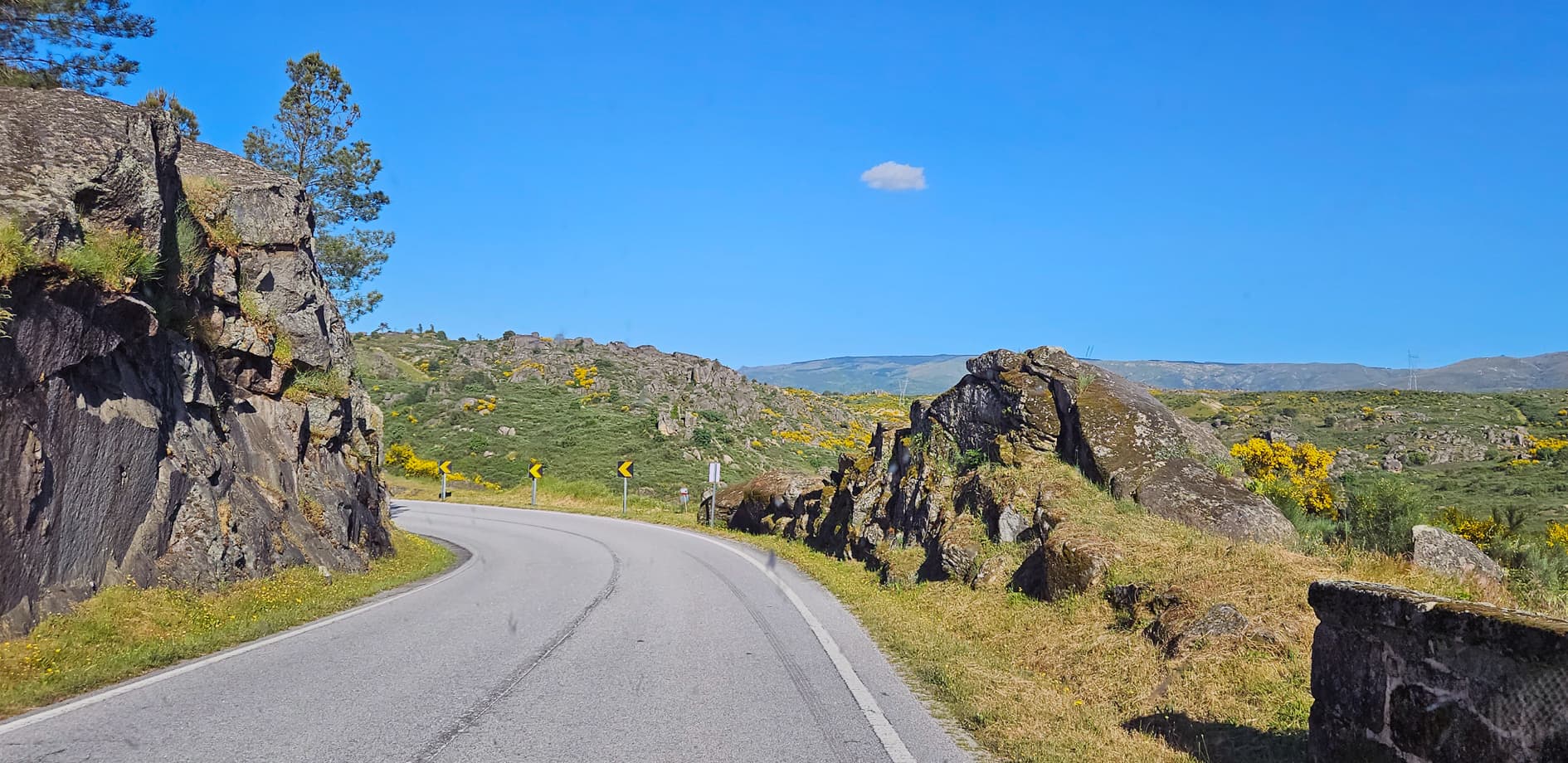
Driving towards Viseu. Unfortunately, at this point, as you can clearly see, the weather turned cloudy.
9 Likes

More great travelwinologue. Thanks!
Funny, when I saw the Castro pictures, I thought, that looks just like where my wife I were when we visited Textura last fall. And then the Textura update!
Really enjoyed our time there and glad you enjoyed yourself. We headed east over the mountains to Covilha after. Beautiful countryside.
1 Like
Viseu is a very fun town.
Unfortunately we didn’t have much time to explore! We arrived pretty late and had to leave early next morning for Douro.
Otto, you’ll be pleased to know that your travelogue is showing up on my Google feed…

Nimbocumulus!
Out of interest, what source you use for the reference prices? Quick look at the shops I usually use the prices are quite a bit higher
The prices quoted by Otto are consistent with those offered at the winery. They are pretty much the same prices offered at the retail level here in Portugal as well.
1 Like
 Did not expect this to happen! I wonder how long it’ll take before completely random non-WB people start finding this thread?
I trust your expertise in matters like these!
Scott is correct. These prices you’ve seen in this travelogue are those that were offered to us at the wineries.
For future reference: the prices I have in my tasting notes are always the price at which the wine was either purchased, or at which it was available at the time (if notes are from winery visits, importer’s catalogue tasting events, etc). This might produce some weird results if a wine was purchased, say, ten years ago and has seen noticeable increases in its price over the last years, but still - that is the actual price at which the wine has been purchased. I never use any reference sources or try to come up with an average price. If I don’t know the price of the wine at the time of tasting, I just omit the price part from my TN completely.
1 Like
This is just a quick update on how our day in Dão came to its conclusion.
After our visit to Textura Wines we headed to the city of Viseu. Instead of a hotel, we had booked a three-story apartment for us, so we had to pick up some breakfast groceries on the way.
Back in January, when I was checking out the places in which we could stay, I more or less randomly ended up selecting this place only because on the city map it seemed to be situated more or less in the center of the city - something which is always useful when you arrive late and want to find a decent restaurant nearby. However, what I didn’t account for, was that OF COURSE every big city in southern Europe has an old town in the center - and naturally our place was smack in the middle of Viseu old town! Not that I minded - the old town was simply beautiful and it was really a joy staying there!
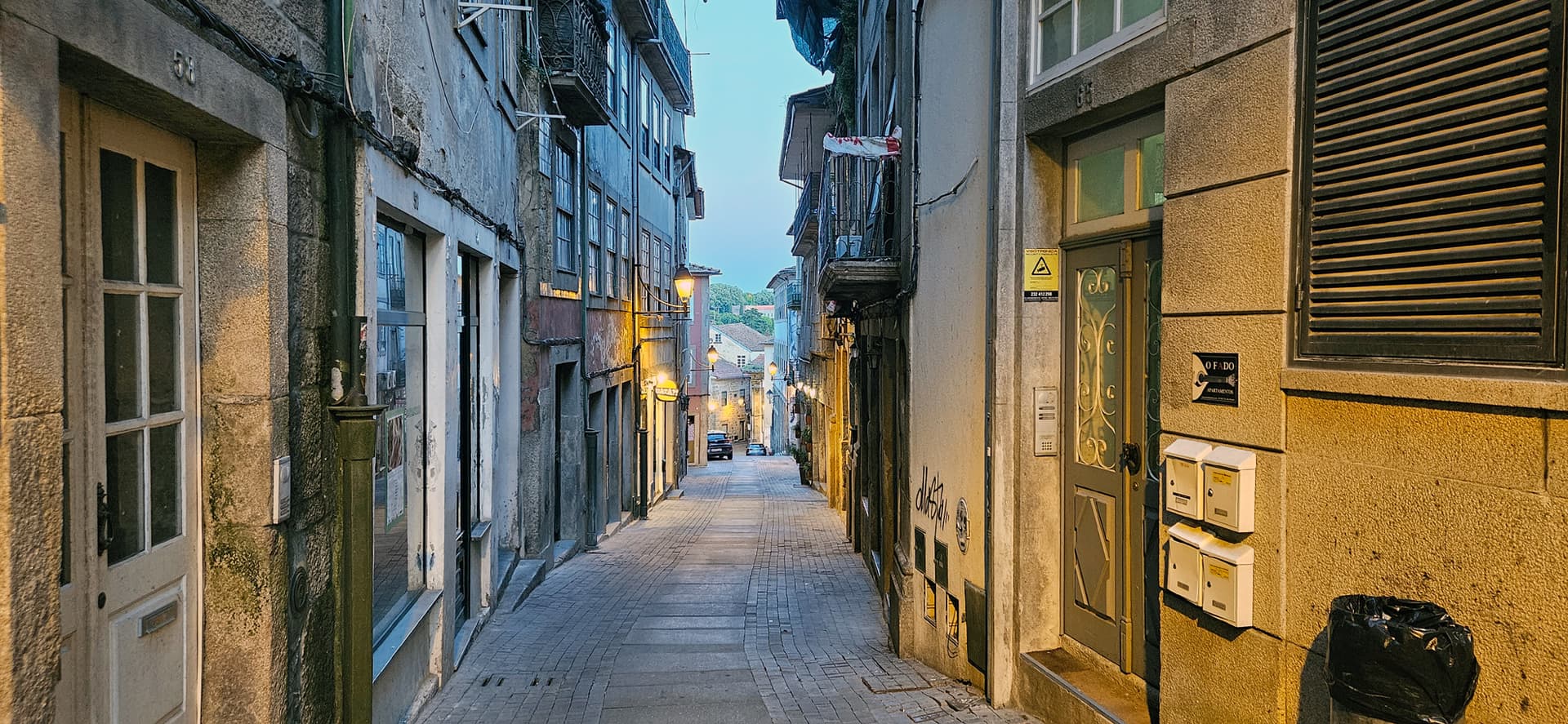
However, Driver wasn’t particularly thrilled when we realized we had to navigate narrow streets (that were going constantly up and down, often at ridiculously steep angles) with our relatively sizeable van!
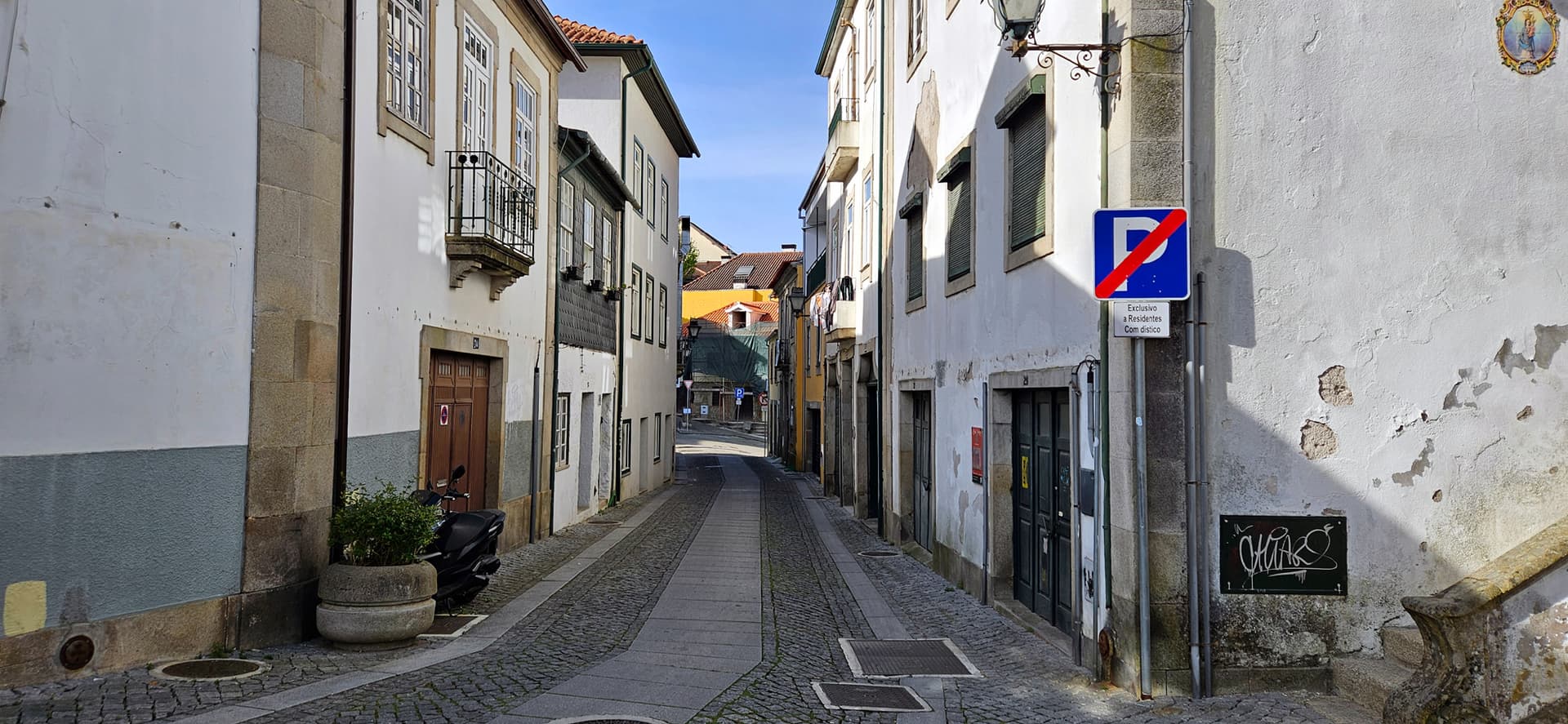
This was our home street for one day - our apartment was that three-storey building on the left.
After we had settled down in our apartment, we had some snacks we had bought from the grocery store (cheese, charcuterie, olives) and tried out the Quinta da Pellada Encruzado which Aydogan had given to us at the end of our visit at the winery.
- 2022 Quinta da Pellada Encruzado Dão Late Release - Portugal, Beiras, Dão (23.4.2024)
100% Encruzado from a 45-yo vineyard planted at the altitude of 550 m asl. The fruit is destemmed, crushed and left to macerate with the skins for a little while for additional aromatic complexity. Fermented spontaneously and aged for 18 months in 5 years old French oak demi-muids ranging from 500 to 600 liters in size. 13% alcohol.
Youthful pale green color. The nose feels youthful with aromas of sweet Golden Delicious apple, some cantaloupe, light primary notes of ripe pear and pear drops, a little bit of creamy oak and a hint of greengage. The wine feels ripe, firm and slightly viscous on the palate with a medium body and flavors of ripe greengage and pear, some stony mineral tones, a little bit of leesy richness, light creamy oak tones, a hint of crunchy red apple and a primary touch of pear drops. The high acidity lends good sense of balance and structure to the wine. The finish is ripe, fresh and youthful with a moderately long aftertaste of juicy pear, some cantaloupe, light leesy notes, a little bit of spicy red apple, a hint of creamy oak and a touch of stony minerality.
A nice, fresh and balanced Encruzado that is still super youthful and rather primary in nature. The overall harmony is pretty much on point and the high acidity lends good sense of structure to the wine, but I'm not really a big fan of those estery fermentation aromas and flavors that lend an anonymous, somewhat candied feel to the wine with the notes of pear drops. However, I'm sure those qualities will disappear with further aging - after all, this is a freshly bottled vintage, so it's no surprise the wine is still super youthful and primary. I'd let this wine age for at least a few years more, just to let the wine to develop some additional complexity and get rid of those primary fruit flavors. Priced according to its quality at 22€.
(89 points)
After we had rested a bit at our apartment, we were starting to get quite hungry - after all, we hadn’t had a proper lunch on that day, just a quick snack lunch at the grocery store parking lot! - so we headed out to see if there were any of those decent restaurants in the neighborhood.

The Viseu cathedral, originally constructed in the 12th century, was right behind our apartment.
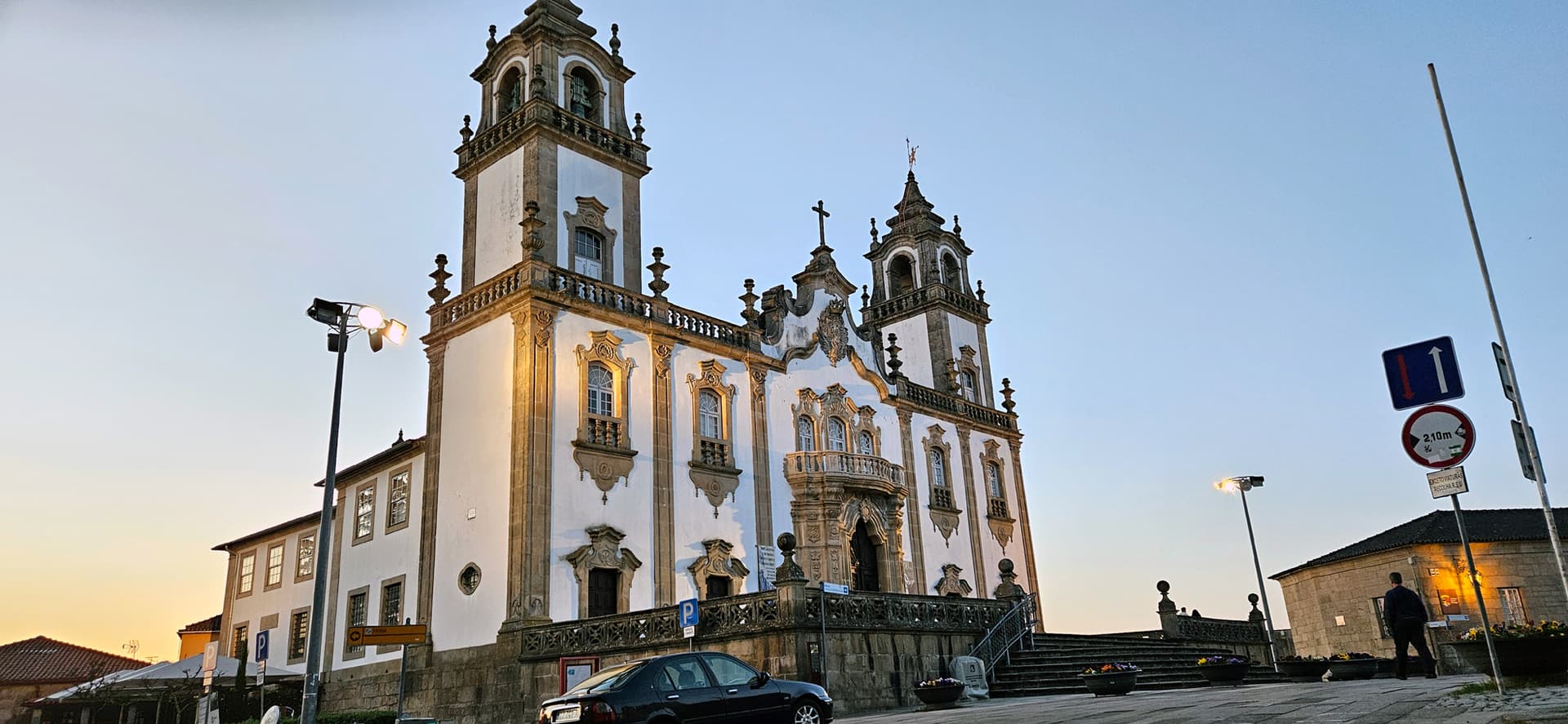
So was the impressive church of Santa Casa da Misericórdia, standing opposite to the cathedral.
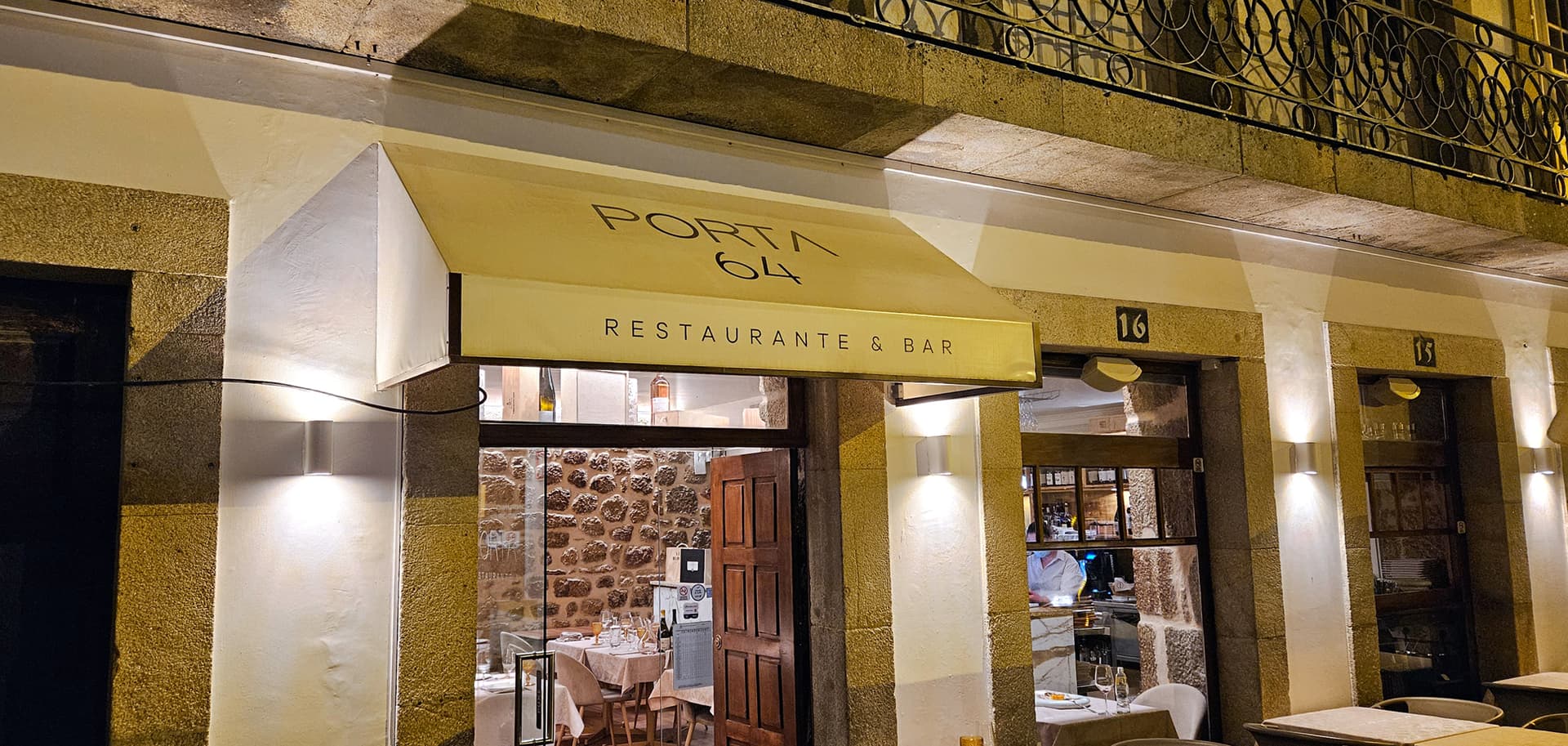
We checked a few nearby restaurants, finally deciding to go with Porta 64 - it seemed like a promising place with enough room for us four weary travellers.
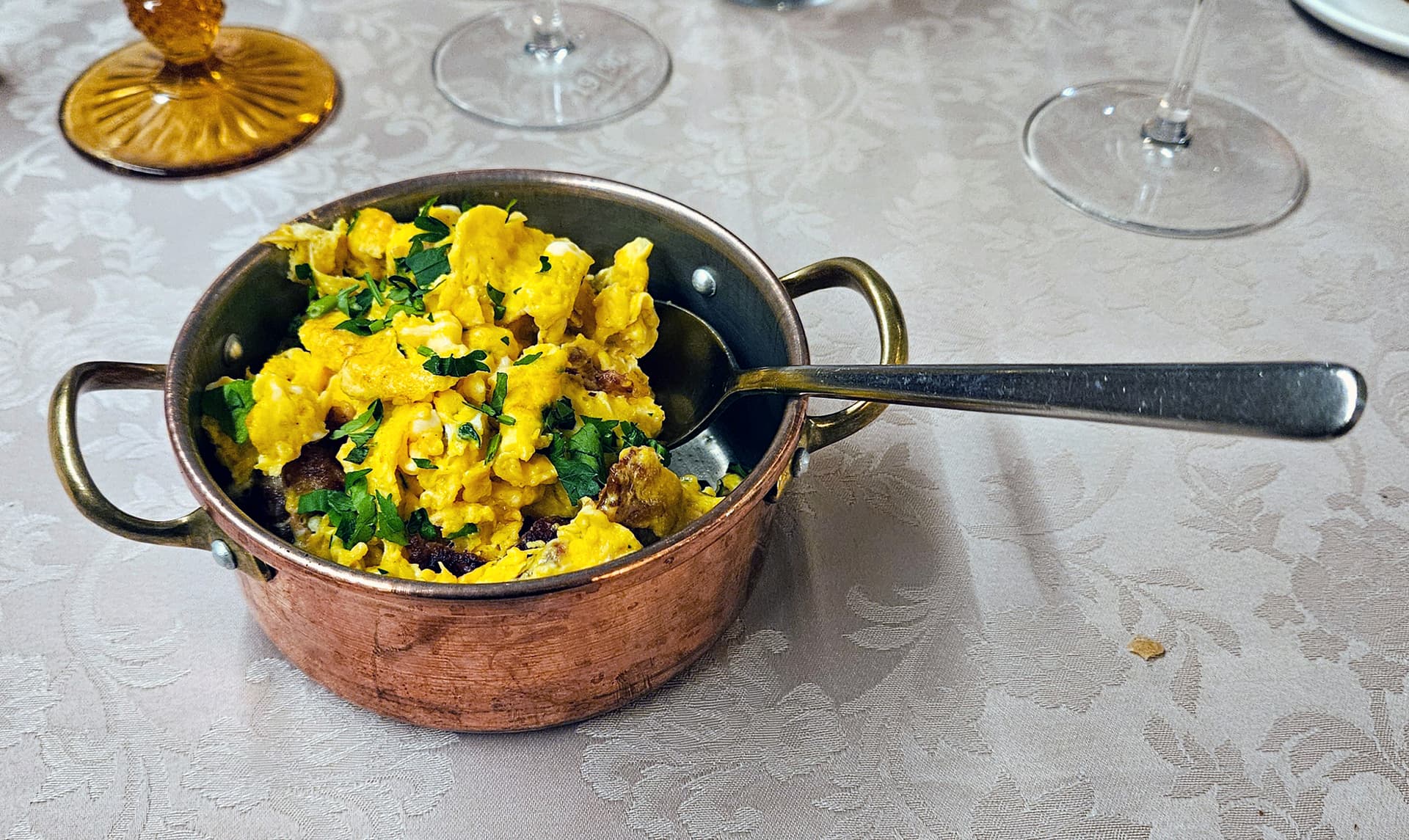
As the entrée, I had an ovos mexidos com alheira (scrambled eggs with Portuguese sausage). This dish was simple yet so unbelievably delicious. I could’ve happily had a bigger portion of this as the main course!
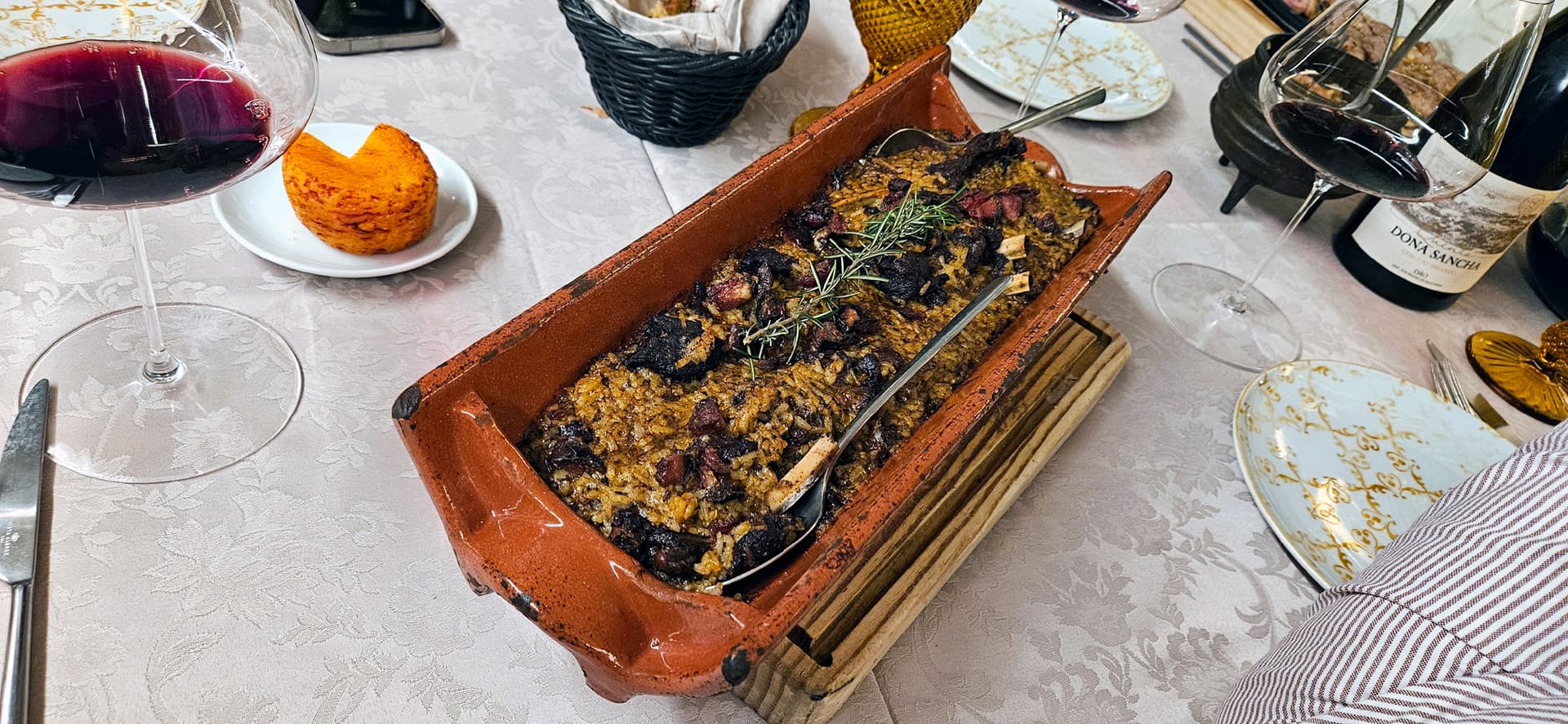
However, the main course was no joke either, as I and another member from our group shared a two-person portion of arroz de javali no forno (oven-baked wild boar and rice); this was local specialty was an absolute banger of a dish! The two-person portion was pretty sizeable as well, because as hungry as we were, we actually couldn’t finish the whole pot - even if we really wanted to!
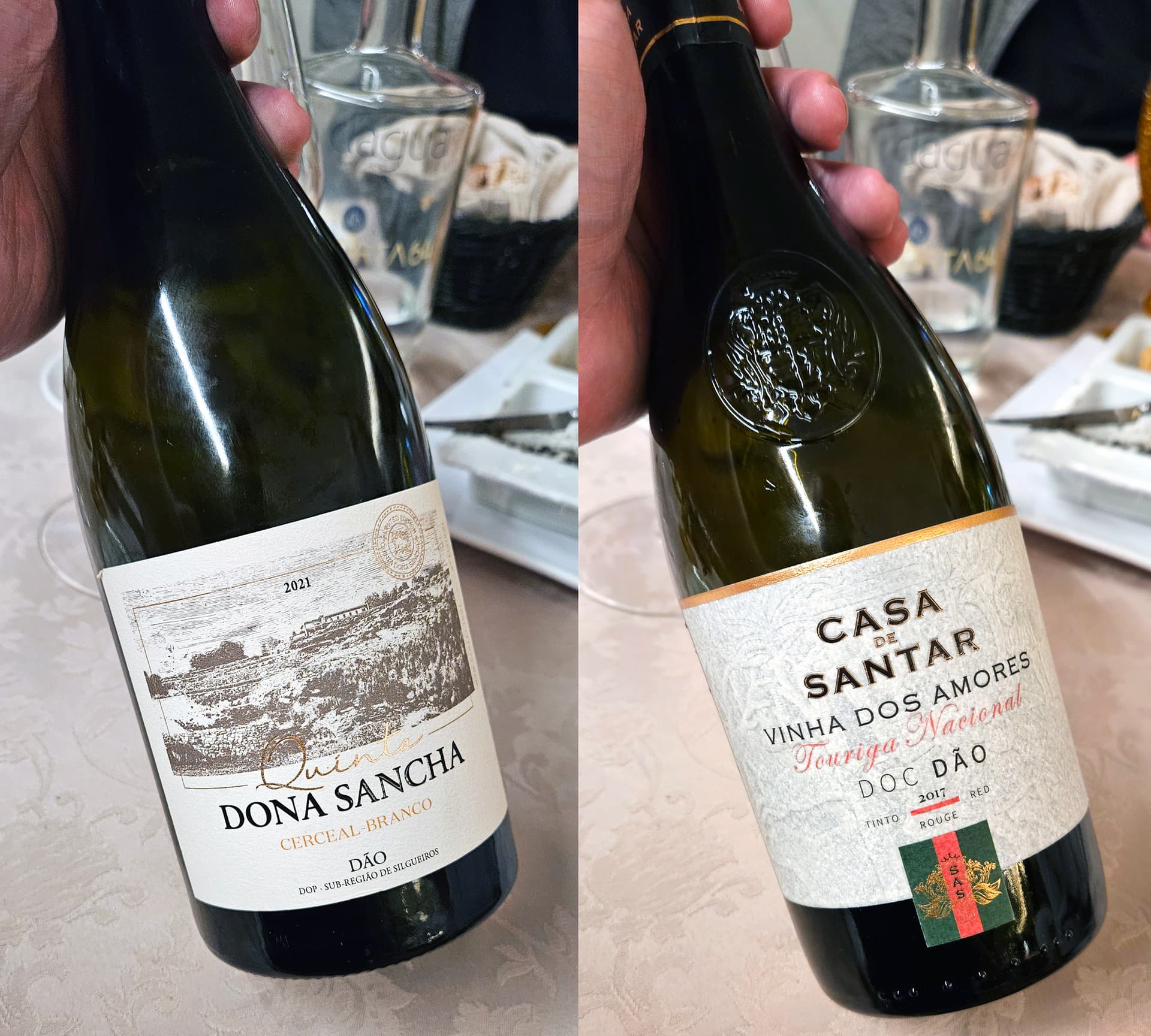
We also had two local wines with the food.
- 2021 Quinta Dona Sancha Cerceal Branco - Portugal, Beiras, Dão (23.4.2024)
100% Cerceal Branco from a 36-yo vineyard planted on granitic soils at the altitude of 290 m asl in the sub-region of Silgueiros. Fermented and aged for 6 months in stainless steel tanks (50%) and 500-liter demi-muids (50%). 13% alcohol, 0,8 g/l residual sugar, 6,5 g/l acidity and pH 3,15. Bottle #1555 of total 3841 bottles.
Pale lemon yellow. Clean, but somewhat restrained nose with aromas of fresh yellow fruits, some appley tones, a little bit of hay, light leesy nuances, hints of wool and sawdusty untoasted oak and a touch of creaminess. The wine feels fresh, firm and lively on the palate with a medium body and somewhat neutral flavors of ripe red apples, some fresh white peach, light saline mineral tones, a little bit of hay and a leesy hint of creaminess. Brisk, structured acidity. The finish is crisp, dry and lively with a zippy aftertaste of lemony citrus fruits and saline minerality, some sharp Granny Smith apple tones, a little bit of hay, light leesy tones, a floral hint of apple blossom and a touch of wool.
A fresh, sophisticated and enjoyably lively little white. Not particularly big on character and it's difficult to assess whether the wine will improve much with age, but at least it was a terrific food wine and a lovely palate-cleanser. Good stuff - although I felt the wine was wanting a bit in depth and character. Priced somewhat according to its quality at 48,50€ for a bottle in a restaurant.
(88 points) - 2017 Casa de Santar Touriga Nacional Dão Vinha dos Amores - Portugal, Beiras, Dão (23.4.2024)
100% Touriga Nacional from Vinha dos Amores, a vineyard in Alto dos Amores, Vila de Santar. Fully destemmed, aged for 18 months in French oak barriques. 14% alcohol.
Rather opaque black cherry color with a still somewhat youthful purplish hue. The nose feels sweet, ripe and dark-toned with sunny aromas of juicy dark fruits, some blueberry tones, a little bit of licorice root, light woody notes of oak, a hint of fresh red plum, a touch of earth and a whiff of alcohol. The wine feels ripe, quite dense and somewhat sweet-toned on the palate with a full body and vibrant flavors of dark plums, some bilberry tones, a little bit of licorice root, light woody notes of savory oak spice, a sweeter hint of toasty mocha oak and a touch of elderberry juice. The wine feels pretty structured and muscular with its moderately high acidity and rather grippy tannins. The finish is ripe, rather grippy and moderately warm with a long, juicy aftertaste of bilberries and dark plums, some soft black cherries, a little bit of licorice root, light woody notes of savory oak spice, a hint of earth and a touch of toasty oak spice.
A pleasant and balanced Dão red from the weightier, more darker-toned end of the spectrum. The style here was definitely more ripe than with any other Dão red we tasted on our trip to Portugal; stylistically this wine was somewhere between your typical, fresh Dão and a burlier, more darker-toned Touriga Nacional from Douro. Fortunately the wine packed enough freshness, acidity and tannins to pull everything off with ease. Although the wine wasn't particularly evolved now, at the age of 6½ years, it didn't feel young, either. Most likely the wine will continue to age effortlessly for years more, hopefully losing some of those toasty oaky tones in the process. A nice and enjoyable effort, although nothing too memorable. Priced according to its quality at 48€ for a bottle in a restaurant.
(90 points)
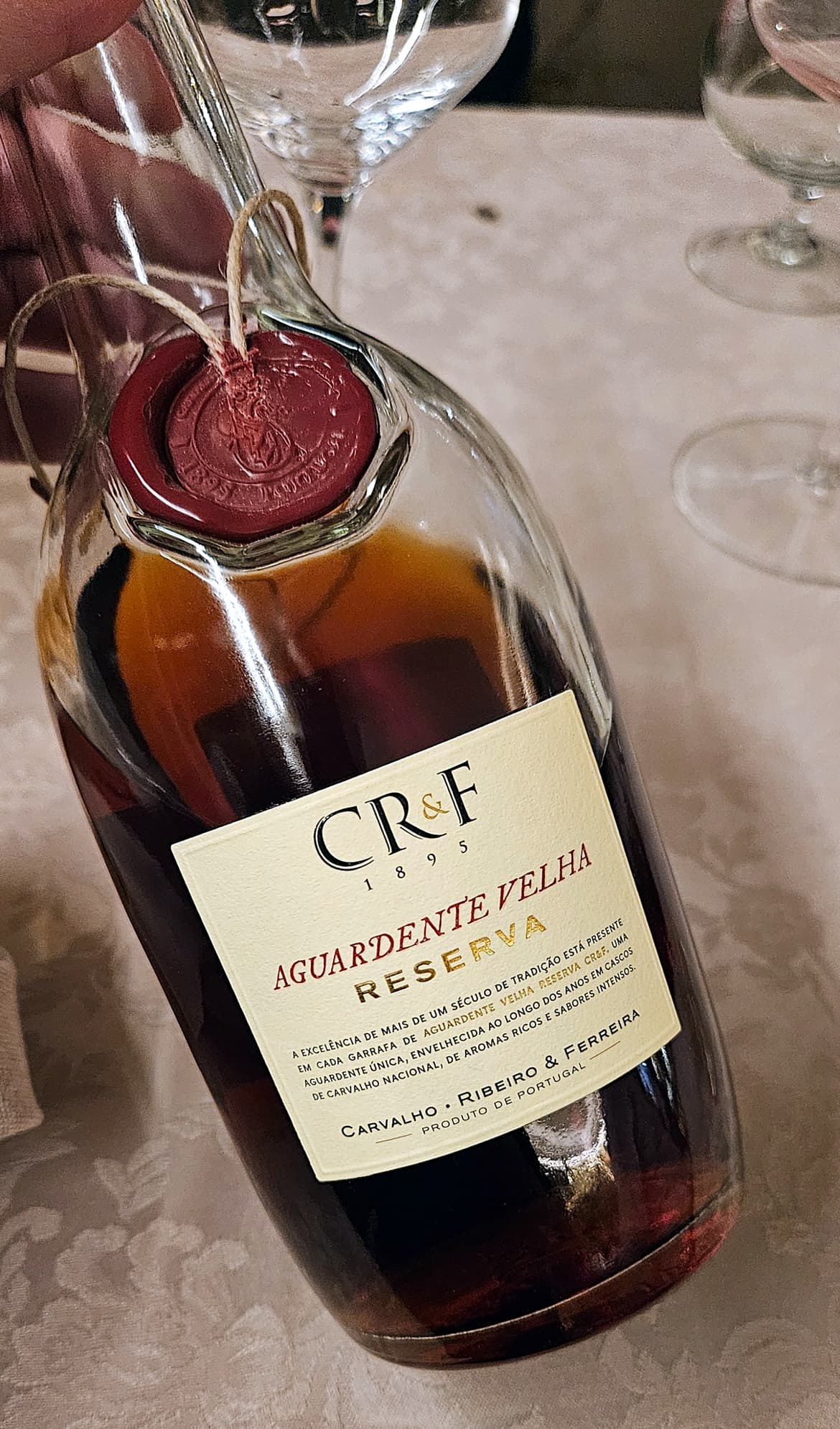
After such a heavy dinner a glass of fine aguardente was mandatory to aid in digestion!
At this point everybody was ready to call it a day, so we just returned to our apartment to get some well-deserved sleep!
11 Likes