Sounds phenomenal!
The 2019 Lagrange is a very good wine from a very good vintage. I guess it is not the best moment to taste 2019 Bordeaux right now. When I had this wine from bottle in Zurich at a UGCB event in 2022 I was impressed. As I was with most of the offered St. Julien.
Sure, but for people no longer in their teens or early 20s, I think the cringing is less about the morning palate and more about what happens the rest of the day!
Not something I want to do often, but yes, when visiting wineries, a fresh morning start can begin a nice day.
Surely he is doing a lot of spitting.
That’s a given. But it only reduces the alcohol intake. Doesn’t block it completely.
This indeed.
But this too, as well.
However, I usually have no problems whatsoever if I spit the whole day - while it doesn’t block alcohol intake completely, it keeps it to a very reasonable level that doesn’t accumulate much or at all during the day.
We might have different definitions of ‘reasonable’.
I can do a day of wine tastings with spitting, and certainly remain functional. But it’s still not a ‘normal’ day and I wouldn’t want to do it too often.
My initial point was more about regular life. Because a day of wine tastings is essentially a holiday for me. But doing a morning wine tasting during regular life often makes me cringe, because it impacts my work/other activities/obligations later in afternoon and evening.
Yeah, sure, this Decanter tasting event definitely wasn’t exactly regular life, because I was 2000 km away from home and rather rarely I do whole-day tastings - when I go to tastings, they are only on evenings.
And no, I haven’t really had morning tastings since my ITB days - apart from the trips to wine regions, where we have producer visits from the morning to the evening. However, I haven’t seen any impact to my activities or obligations later in the afternoon or evening whenever I had morning tastings when I was ITB. They were just business as usual.
1 Like
Fun read. I have a daughter who lives in London; Huntsworth on Kensington Church St is my favorite wine shop. French-leaning but plenty of selection and although it’s a smallish shop, the owner knows his wines and can recommend something for any palate or dish.
1 Like
After the 2012 Champagne tasting me and my friend headed to the special Cellar Collection tasting room. However, when trying to enter the room, we were told that the tasting wouldn’t be accessible for another hour or so, so we returned back to the “regular” tasting event to spend some time there.
I was planning on checking out some Bordeaux next, but since all the Bordeaux stands of any interest were packed with people, and getting just one glass to sample was nigh impossible, I decided to taste something else instead while waiting for the stands to clear up a bit. There was a Louis Jadot stand nearby, so I asked for a sample of 1er Cru Meursault.

- 2021 Louis Jadot Meursault 1er Cru Charmes Domaine Louis Jadot - France, Burgundy, Côte de Beaune, Meursault 1er Cru (8.11.2025)
100% Chardonnay from estate-owned parcels in 1er Cru Meursault-Charmes. Fermented and aged in oak barrels (approximately 1/3 new) for 15 months. 13,5% alcohol.
Pale, youthful yellow-green color. The nose feels attractive, slightly sweet and a bit restrained with nuanced aromas of struck match, some spicy wood tones, a little bit of grilled pineapple, light lemony citrus notes, a hint of ripe red apple and a touch of creamy oak. The wine feels dry, airy and pretty crunchy yet still surprisingly broad on the palate with a full body and layered flavors of zesty citrus fruits and flint smoke, some grilled pineapple tones, a little bit of toasty oak spice, light stony and saline mineral notes, a hint of buttery oak and a touch of fresh peach. The overall feel is not big or powerful but rather nuanced, maybe slightly understated and still exuding sense of finesse. The high acidity keeps the overall feel fresh, balanced and enjoyably focused. The finish is long, dry and richly-textured with a nuanced aftertaste of creamy oak, some grilled pineapple tones, a little bit of saline minerality, light woody tones, a hint of roasted nuts and a touch of spicy red apple.
A youthful, nuanced and wonderfully elegant 1er Cru Meursault showing lots of promise. At the moment the wine is eminently attractive, but perhaps a bit restrained as well. I feel this will be a beautiful and harmonious white Burg after another 7-10 years of aging - and most likely it will at least hold for a lot longer after that. Recommended.
(93 points)
Having sampled the Burg, I saw one of the Bordeaux stands was finally empty of audience, so I quickly moved myself there and went through a mini-vertical of Château Grand Corbin-Despagne.
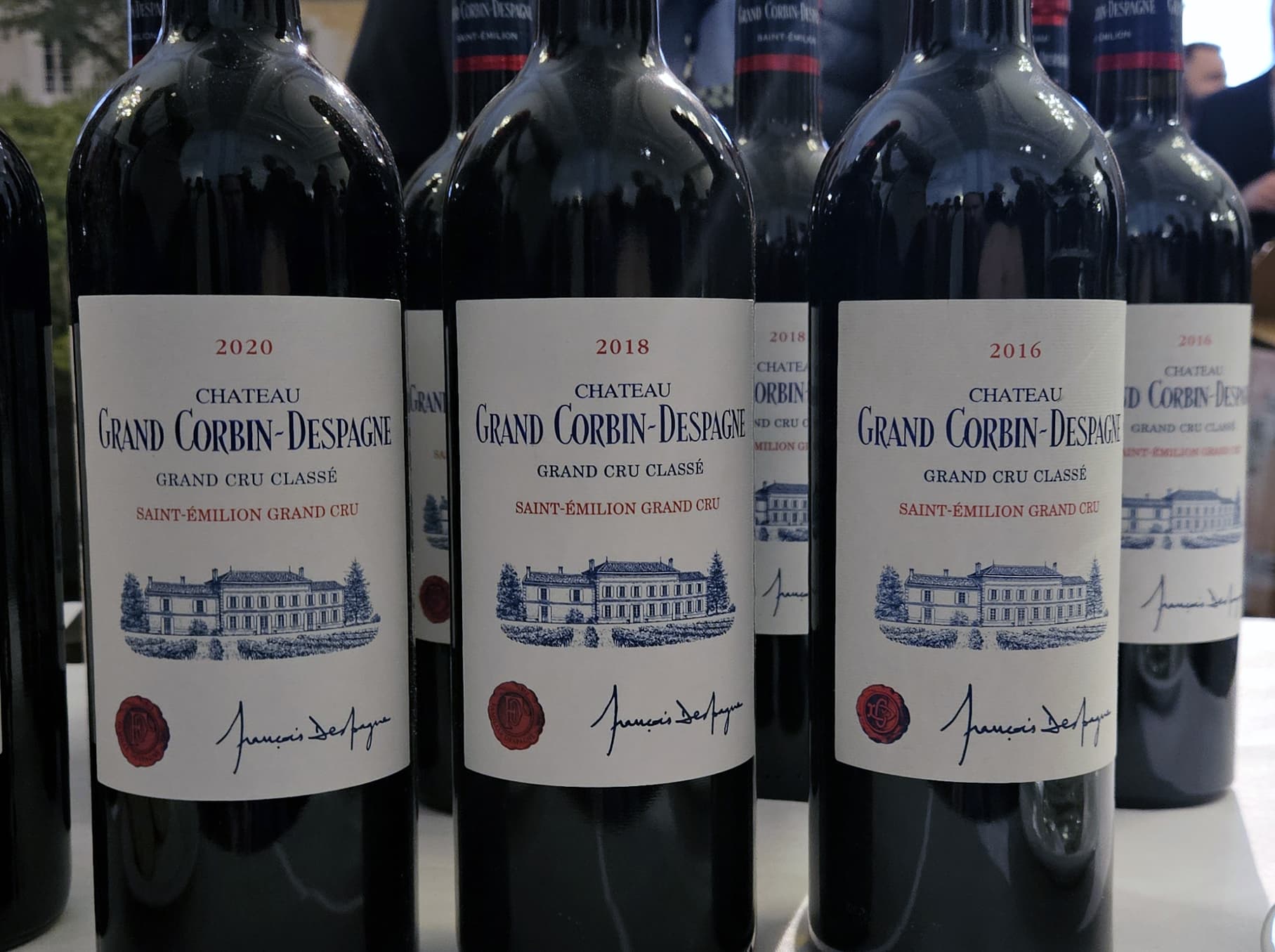
- 2020 Château Grand Corbin-Despagne - France, Bordeaux, Libournais, St. Émilion Grand Cru (8.11.2025)
A blend of organically farmed Merlot (75%), Cabernet Franc (24%) and Cabernet Sauvignon (1%), harvested between 10th and 21st of September. Aged in French oak barriques (50% new, 50% once used) for approximately 20 months. 15% alcohol, acidity 4,8 g/l and pH 3,68. Total production approximately 105,000 bottles.
Dense, youthful and fully opaque blackish-red color with a slightly blue hue. The nose feels dark-toned, brooding and somewhat toasty with youthful aromas of juicy dark plums, some licorice, light cherry tones, a little bit of sweet oak spice and a hint of tobacco. The wine feels ripe, dense and pretty chewy on the palate with a full body and quite dry flavors of juicy dark plums and ripe dark berries, some toasty mocha oak tones, a little bit of sweet baking spices, light woody notes of pencil shavings, a hint of licorice root and a touch of tobacco. The overall feel is quite firm and muscular, thanks to the rather high acidity and moderately grippy tannins. The high alcohol lends some noticeable heat to the palate. The finish is juicy, long and moderately grippy with a rich, dark-toned aftertaste of juicy dark plums and licorice, some tobacco, light blackcurrant tones, a little bit of savory wood spice, oaky hints of coffee and chocolatey toast and a touch of fresh cherry. The high alcohol makes the wine end on a somewhat mouth-warming note.
A pretty serious and rather ripe Saint-Émilion that shows quite a bit of bold fruit and toasty oak influence, but also good sense of firmness and balance. At the moment the wine feels too big and oaky for my preference, but despite the ripeness and high alcohol, the wine performs a lot better than what I anticipated from a 2020 St-Ém. Although the sense of warmth from the high alcohol does distract a bit and the oak still feels rather in-your-face, the wine isn't as sweetly-fruited or soft in structure as I feared it would be. Although this was by far my least favorite vintage of the three wines I tasted (2020, 2018 and 2016), I still felt the wine showed some promise. While nothing too impressive at the moment, I feel the wine could perform a lot better after another 8-12 years of aging. Let this wait.
(88 points) - 2018 Château Grand Corbin-Despagne - France, Bordeaux, Libournais, St. Émilion Grand Cru (8.11.2025)
A blend of organically farmed Merlot (75%), Cabernet Franc (24%) and Cabernet Sauvignon (1%), harvested between 19th of September and early October. Aged in French oak barriques (50% new, 40% once used, 10% twice used) for approximately 20 months. 14,5% alcohol. Total production approximately 80,000 bottles.
Quite dense and slightly translucent blackish-red color. The nose feels dark-toned and savory with aromas of licorice root and fresh dark fruits, some woody notes of pencil shavings, a little bit of ripe blackcurrant, light gravelly mineral notes, a sweeter hint of toasty mocha oak and a touch of juicy red plum. The wine feels dense, dry and chewy on the palate with a full body and quite intense flavors of dark fruits, some licorice, light toasty mocha oak notes, a little bit of fresh blueberry, a hint of ripe blackcurrant and a touch of sweet oak spice. The overall feel is pretty tough and stern with the rather high acidity and ample grippy tannins. The finish is chewy, tannic and somewhat warm with a long, dark-toned aftertaste of juicy blackcurrants and black cherries, some toasty oak notes, a little bit of tobacco, light blueberry tones, a little bit of peppery spice and a hint of savory wood.
A still very young and tightly-knit powerhouse of a St-Émilion where the toasty oak notes are still pretty much to the fore. However, with its impressive sense of structure and intense flavors, the wine shows great promise and aging potential. There's no denying that the wine shows quite a bit of ripeness, too, but as the overall feel is surprisingly dry and structure-driven, I don't mind. This is pretty modern Bordeaux in the grand scheme of things, but a well-made and pretty impressive effort at that.
(91 points) - 2016 Château Grand Corbin-Despagne - France, Bordeaux, Libournais, St. Émilion Grand Cru (8.11.2025)
A blend of organically farmed Merlot (75%), Cabernet Franc (24%) and Cabernet Sauvignon (1%), harvested between 29th of September and 14th of October. Aged in French oak barriques (50% new, 40% once used and 10% twice used) for approximately 20 months. 14% alcohol. Total production approximately 95,000 bottles.
Brooding, dense and fully opaque blackish-red color that doesn't look young nor particularly aged. The nose feels fresh, youthful and vibrant with quite intense aromas of dark forest fruits, some ripe blackcurrant tones, a little bit of graphite dust, light dark plummy tones, hints of toasty oak and sweet smoke and a woody touch of pencil shavings. The wine feels dry, chewy and quite open-knit on the palate with a full body and focused flavors of ripe blackcurrants and fresh bilberries, some sweet cherry tones, a little bit of licorice, light toasty mocha oak nuances, a hint of gravelly minerality and a woody touch of savory oak spice. The overall feel is pretty firmly structured with the high acidity and the ample, grippy tannins - yet the wine doesn't come across as tough or aggressive but instead surprisingly silky. The finish is long, juicy and grippy with a dry, intensely-flavored aftertaste of ripe dark forest fruits, some licorice root tones, a little bit of toasty oak spice, light cherry notes, a hint of ripe blackcurrant and a touch of earth.
True to the 2016 vintage, this was the driest and most structured of the three vintages of GCD I tasted (2020, 2018 and 2016) - but even then, the wine was surprisingly silky and open-knit at the moment! Sure, the wine was still very youthful for its 9 years of age, showing no aged qualities whatsoever, but I guess there was some sense of resolution as the wine seemed a bit more approachable after the burly 2018 vintage - even if it showed more ripeness, and this 2016 vintage seemed a bit more structured in comparison! As a whole, I found the 2016 not only the most accessible of the three vintages at the moment, but also perhaps the most classically styled - in the context of modern Saint-Émilion, that is - with probably the most potential for future aging. This is pretty nice right now, but I'm pretty sure the wine will continue to evolve and improve for another decade or two. Drink now or whenever. Recommended.
(92 points)
5 Likes
After the Grand Corbin-Despagnes, I moved on to the next table, going through a few Pomerols and finally an older vintage of LLC.
The LLC left a bit lukewarm impression (probably due to the less-than-stellar vintage) but the Pomerols were surprisingly good! I was especially surprised how well the single 2015 vintage performed, as I’ve never been a big fan of this warm, solar vintage in Bordeaux. All in all, lots of promise in this trio.
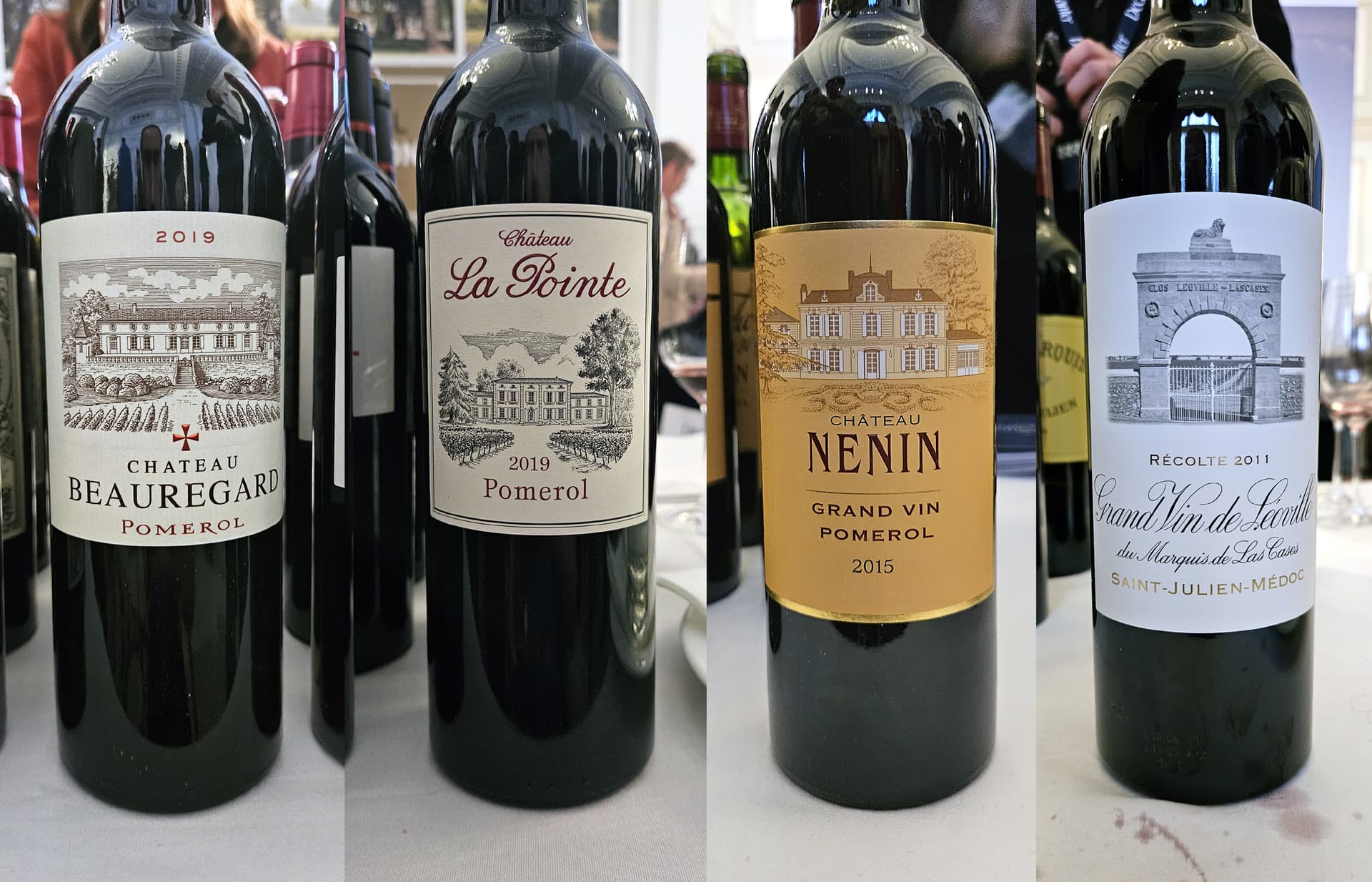
- 2019 Château Beauregard - France, Bordeaux, Libournais, Pomerol (8.11.2025)
A blend of organically farmed Merlot (70%) and Cabernet Franc (30%). Aged for 18 months in French oak barriques (approximately 50% new) and terracotta vessels. 14,5% alcohol.
Youthful, almost fully opaque - but not that dense or extracted - black cherry color. The nose feels clean, dark-toned and a bit toasty with aromas of ripe dark forest fruits, some fresh cherry tones, a little bit of minty greenness, light peppery nuances, oaky hints of woody spice and toasty mocha character, a touch of plummy Merlot fruit and a whiff of licorice. The wine feels youthful, ripe and somewhat sweet-toned on the palate with a quite full body and intense flavors of dark plummy fruit and black cherry, some toasty oak spice, a little bit of coffee, light minty herbal nuances, a hint of pipe tobacco and a touch of gravelly minerality. The overall feel is pretty stern and structure-driven with the high acidity and quite ample and rather grippy tannins. The finish is long, dark-toned and grippy with a nuanced aftertaste of sweet black cherries, some toasty oak spice, a little bit of minty herbal character, light licorice tones, a hint of pipe tobacco and a touch of plummy fruit.
Still a very youthful and thus moderately toasty Pomerol, but one that also shows good sense of balance, freshness and fruit intensity. I'm not the biggest fan of young contemporary Bordeaux, which is why I feel the wine is still quite a bit too oaky and somewhat all over the place, but at least the wine shows great promise with its vibrant fruit and equally impressive, still quite tightly-knit structure. I have a hunch this wine might make wonderful old bones, but I'm pretty sure the wine needs to wait sideways for another 15-20 years first.
(93 points) - 2019 Château La Pointe - France, Bordeaux, Libournais, Pomerol (8.11.2025)
A blend of Merlot (76%) and Cabernet Franc (24%). 14,5% alcohol. Total production 64,000 bottles.
Youthful, slightly translucent black cherry color. The nose feels quite fruity yet still somewhat understated and a bit earthy with savory aromas of cherries, some dark plums, light woody notes of savory oak spice, a little bit of ripe blackcurrant, a hint of forest floor and a touch of licorice root. The wine feels surprisingly fresh, lively and sinewy on the palate with a medium body and harmonious flavors of tart red plums, some fresh blackcurrant tones, a little bit of licorice, light woody notes, a hint of gravelly earth and a sweeter touch of ripe bilberries and blueberries. The structure relies mostly on the high acidity, but the firm yet fine-grained medium tannins add nicely to the sense of balance and structure. The finish is juicy, savory and moderately grippy with a long aftertaste of fresh dark fruits, some ripe blackcurrant tones, a little bit of red plummy fruit, light gravelly earth notes, a woody hint of pencil shavings and a sweeter touch of toasty oak spice.
A surprisingly fresh and sophisticated effort for a young Pomerol - the wine is definitely on the fruity side, but not that much on the sweet, plush Merlot fruit. Instead the wine comes across as pretty fresh and crunchy with the woody nuances remaining in the background with enjoyable sense of restraint. Although accessible already now in its youth, I'd say the wine really could benefit from some additional tertiary complexity and will get better at least over the next 5-10 years. Maybe not the wine for the really long game, but ageable at least over medium-long term. Maybe not a grand vin that will blow your socks of, this was still a positive surprise for a young Bordeaux. Recommended.
(92 points) - 2015 Château Nenin - France, Bordeaux, Libournais, Pomerol (8.11.2025)
A blend of Merlot (67%) and Cabernet Franc (33%) harvested between September 17th and October 5th. Aged in oak barriques (approximately 1/3 new) for 18 months. 14,3% alcohol, 4,95 g/l acidity and pH 3,72.
Deep and rather opaque blackish-red color that doesn't look young nor old. The nose feels dark-toned and savory with aromas of sweet dark fruits, some licorice, light woody tones, a little bit of fresh black cherry, a sweeter hint of toasty mocha oak, a faint touch of blackcurrants and a whiff of espresso. The wine feels extracted, concentrated and chewy - yet, surprisingly, not particularly heavy - on the palate with a quite full body and intense flavors of savory dark fruits and licorice, some toasty oak tones, a little bit of fresh blackcurrant, light sweeter notes of ripe black raspberries and juicy cherries, a hint of allspice and a touch of crunchy red plum. The overall feel is pretty stern and tightly-knit, mainly thanks to the ample, assertive and relatively unresolved tannins, although the medium-to-moderately high acidity does add to the sense of firmness. The finish is dark-toned, juicy and tannic with a long aftertaste of plummy red fruit, some black cherry tones, a little bit of savory wood spice, light licorice notes, a hint of sweet, toasty oak and a touch of ripe blackcurrant.
For the most part, 2015 Bordeaux wines haven't really been up to my alley, as many of them have been too ripe and ponderous in style. Well, the ripeness does show here to some degree - the wine is pretty high in ABV whereas the acidity isn't. Even then, the wine is surprisingly fresh and serious for a Merlot-heavy warm-vintage Bordeaux! The fruit profile comes across as pretty dry and savory - ie. not soft and sweet - and the ample yet not aggressive tannins make up for the lack of zip from the somewhat modest (yet not too low) acidity. Even at ten years of age, the wine still comes across as pretty stern and brooding, making me think this wine could really age for another ten years in the cellar and be all the better for it. A pretty impressive effort for a 2015, highly recommended.
(93 points) - 2011 Château Léoville Las Cases - France, Bordeaux, Médoc, St. Julien (8.11.2025)
A blend of Cabernet Sauvignon (76%), Cabernet Franc (12%) and Merlot (12%) harvested between September 13th and 28th. Aged in oak barriques (approximately 80% new) for 18 months. 13,3% alcohol, 6,05 g/l acidity and pH 3,49.
Slightly translucent blackish-red color with a somewhat evolved plummy hue. The nose feels savory, somewhat evolved and a bit meaty with aromas of sweet dark fruits, some wizened blackcurrant tones, a little bit of dried fig, light nuances of toasty oak spice, a hint of minty green lift and a touch of pipe tobacco. The wine feels ripe, open-knit and pretty savory on the palate with a medium-to-moderately full body and dry flavors of crunchy redcurrants, some ferrous and salty notes of blood, a little bit of ripe dark fruit and sweet black cherry, light woody nuances of pencil shavings, a hint of gravelly earth and a touch of toasty mocha oak. The structure relies quite evenly on the fresh, surprisingly high acidity and a bit resolved yet still somewhat grippy medium tannins. The finish is ripe yet dry with moderate tannic grip and a long aftertaste of juicy blackcurrants and cherries, some crunchy notes of tart dark plums, a little bit of gravelly minerality, light woody notes of savory oak spice, a toasty hint of sweeter mocha oak and a touch of tobacco.
A pleasant and balanced but not particularly impressive Bordeaux. The wine has obviously some age under its belt as the tannins are slowly starting to resolve and the flavors have evolved some savory and meaty aspects. However, the overall feel is still somewhat toasty and the wood still has quite a bit of integration to go before the wine starts to really come together. Maybe lacking a bit in depth and finesse now, but might make fine old bones with enough age - at least the wine still shows potential for development and improvement despite its somewhat evolved qualities.
(91 points)
4 Likes
Funny little anecdote, I travel with a proper calibrated breathalyzer, and after attending a pretty big tasting with 50+ wines mostly spitting, I would have been legal to drive after it.
The amount of alcohol you absorb is miniscule.
2 Likes
Great stuff as usual. I like the objectivity - one doesn’t need to taste blind to keep an open mind.
LLC 2011 has come down in price at auction but still sells for around 120€, which is cheap for an LLC but expensive for the wine you describe so well (checking the price this morning, I was amazed to see that there are people willing to pay 100€ for a 2013!). I’ve done it myself with mediocre 1st Growth vintages and learnt my lesson well, so I don’t get the logic of spending that sort of money just for the label.
Interesting too that despite high ABV levels that would put me off completely, the Pomerols tasted fresh rather than gloopy. As for the Nenin, the combination of 2015 and 14.3% ABV sounds awful…and yet.
I’m not sure if “minefield” is the right word for 2015 on the whole, but it is certainly a bottle by bottle vintage. I think it is a vintage with one foot in the past and one in the future - so some 09-style wines and some that announce the sea change that began with 2016. I had two modest Crus Bourgeois 15s last night, Fonréaud and Larose-Trintaudon, both of which I really enjoyed…and both of which I rated the same as that LLC 2011 for ten times less.
1 Like
I don’t know where you looked but it is well to remember that Winesearcher lists the prices at which wines haven’t sold!
Good point for Wine Searcher - I looked on iDealwine: 100€ is the price people have been paying on a regular basis over the last two years, with occasional 20 to 30€ spikes. Bonkers!
1 Like
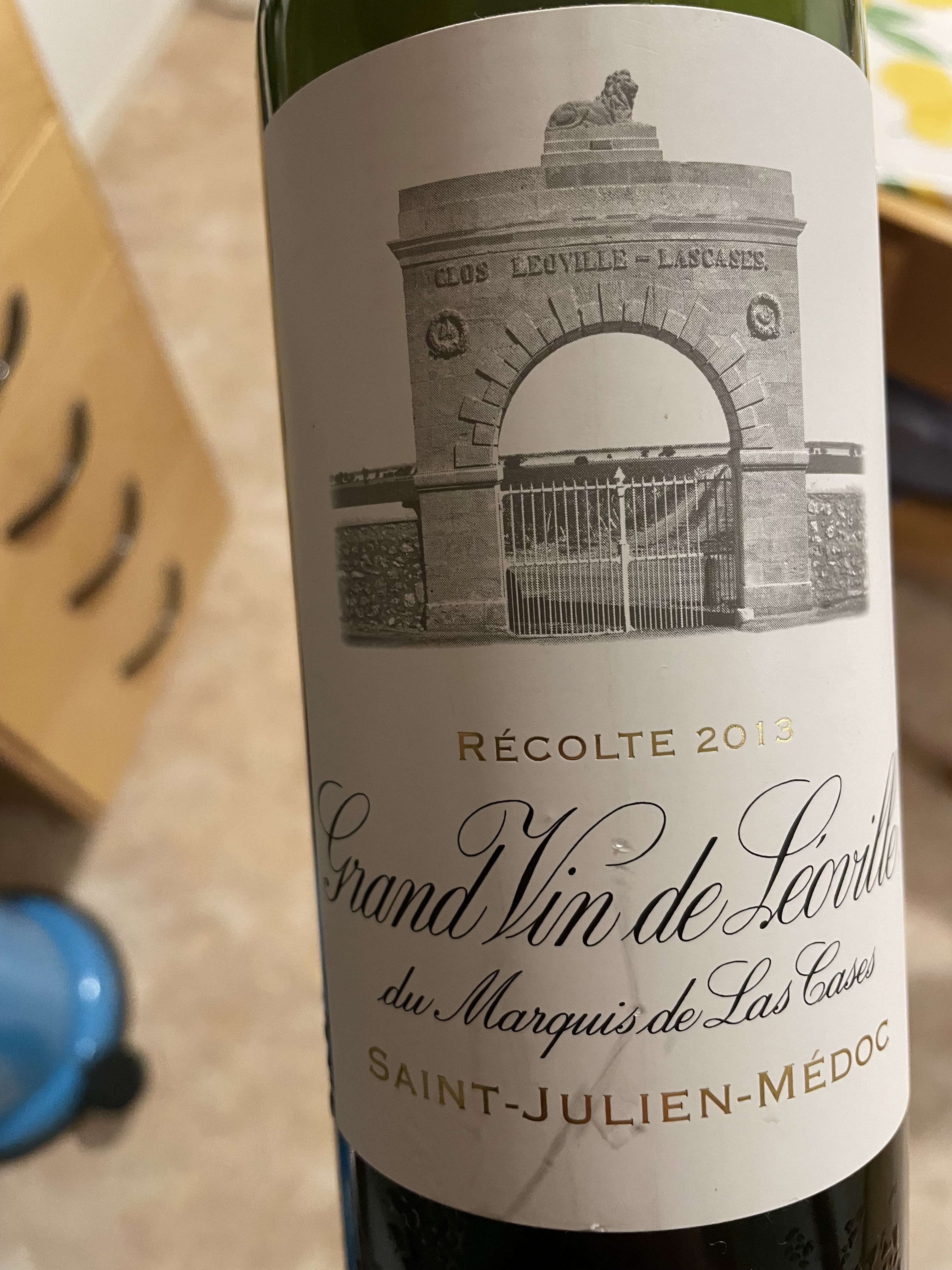
Whoops! Have you tried it?!
Yes, 2-3 years ago, when I still cared a bit for Bordeaux. My first and last (and final) time with this label. Not as bad as its reputation, but hollow and lacking interest …
1 Like
That’s pretty much every 2013 out there.
Ouch, I’m sorry.