This is most excellent. As I’m more than likely moving to London in the near future, I’m basking in the wine shop recommendations and of course all the galavanting. Keep em coming.
1 Like
Well, Todd tried! He posted several times both about the event and that I was going to be there. 
This would’ve been amazing! Let’s see how long it takes for me to visit London again - hopefully a bit less than the previous +35 years…
We checked these spots, too. Handfords had a pretty nice selection of good wines, but the prices were still a bit on the steep side, and I didn’t manage to find anything I could find at more reasonable prices from the EU webshops. Jeroboams on Walton Street was pretty small and nothing in the selection caught my eye.
The thing is, it just makes sense to buy most of the wines from the online shops in the EU as the prices are often considerably lower - even with the delivery costs and all. However, the selection of American, Australian and South African wines, Sherries, older Vintage Ports and Madeiras can be pretty miserable in the online shops, whereas the UK is probably the best place to source these wines in Europe. However, none of the shops we checked out had much of these - or when they did, the prices were way too above what I was comfortable with!
1 Like
That’s pretty much all I buy in the UK, throw in a few English wines.
Spanish sites can be ok for Sherries and Madeira, but you know this.
1 Like
Indeed, although Madeira sections are pretty minuscule in Spanish sites. Portuguese online shops tend to be much better.
However, I’ve seen that Portuguese shops can have quite high prices for older Madeira and Vintage Port today, whereas these wines can occasionally be quite reasonably priced in the UK.
1 Like
Sorry. Totally missed those Todd posts! Message me directly next time.
1 Like
Yup, nobody listens to me, sigh…
I was hoping to find Otto on this but, alas
Sorry, managed to avoid all the cameras!
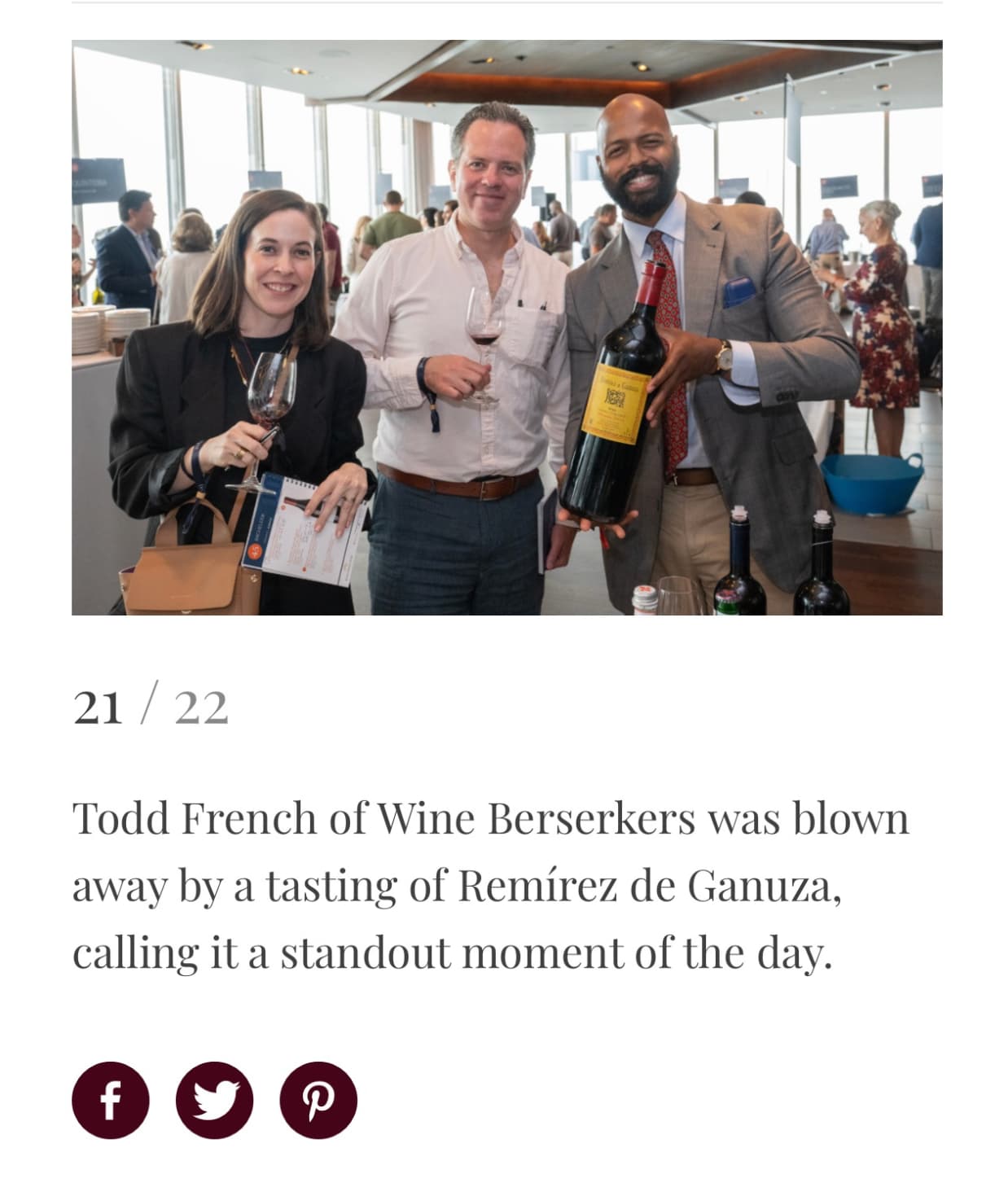
Well, that’s better than being tagged incorrectly as Decanter did with this pic, supposedly of me but not even close
10 Likes
Everyone knows you don’t have a beard. Sheesh.
3 Likes
From the Chinese wines I went to check out the Abbott Claim desk. I had not heard of them before, so I really didn’t know what to expect. Fortunately the wines turned out to be pretty darn fine - easily among some of the best wines we tasted in the event! The wines were fresh releases, so still way too young and not maybe showing their best yet, but they were nevertheless very lovely and promising wines in all respect; so balanced, savory and enjoyably acid-driven. More or less like Burgundy with Oregon fruit!
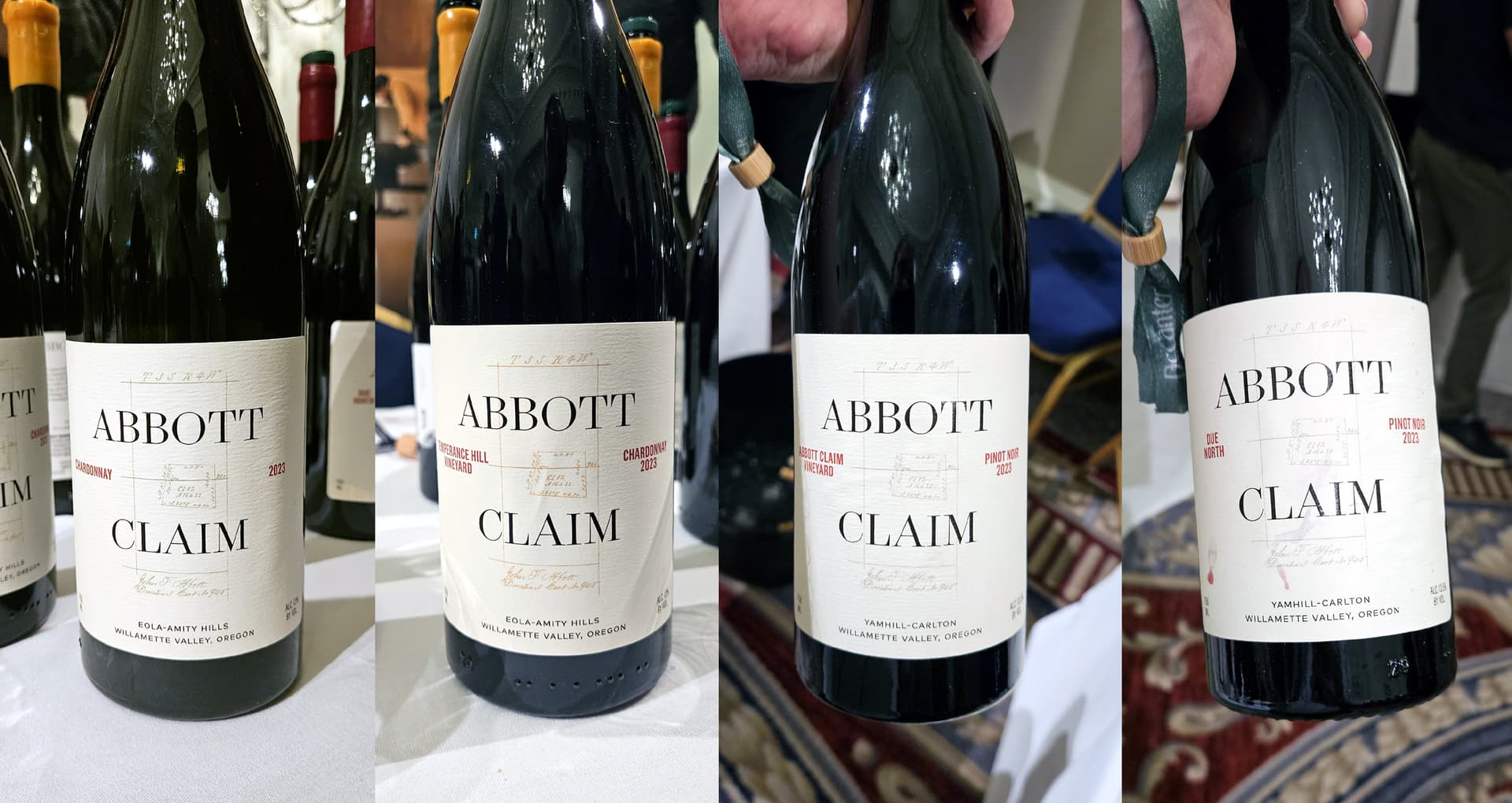
- 2023 Abbott Claim Chardonnay Eola - Amity Hills - USA, Oregon, Willamette Valley, Eola - Amity Hills (7.11.2025)
100% Chardonnay from multiple vineyards in Eola-Amity Hills; Temperance Hill, X Omni, Orchard House. Fermented spontaneously, aged on the lees in oak barrels (40% new) for 12 months, then racked into stainless steel tanks and aged for another 7 months. 13% alcohol.
Youthful, pale lime-green color. The nose feels fresh but also quite pungent with a rather reductive nose of matchstick smoke, some zesty citrus notes, a little bit of toasted wood spice, light smoky notes of struck flint, a hint of Granny Smith apple and a touch of mineral spice. The wine feels dry and vibrant on the palate with a moderately full body and bright flavors of lemony citrus fruits, some reductive notes of flint smoke, light woody nuances, a little bit of popcorn, a hint of spicy red apple and a touch of saline minerality. The moderately high acidity lends good sense of freshness and balance to the wine. The finish is dry and juicy with a long aftertaste of crunchy appley fruit, some savory wood spice, a little bit of reductive smoke, light saline mineral notes, a hint of popcorn and a touch of zesty citrus fruit.
A fresh, vibrant and tasty Chardonnay. Maybe a woodsy, but not excessively so - the oaky tones feel still pretty judicious, and I can imagine they will continue to integrate with the fruit as the wine ages. At the moment the wine is still a bit awkward, but it shows good promise. A very serious effort with good potential of developing into something quite Burgundian with further aging. Nice stuff.
(91 points) - 2023 Abbott Claim Chardonnay Temperance Hill Vineyard - USA, Oregon, Willamette Valley, Eola - Amity Hills (7.11.2025)
100% Chardonnay from the Temperance Hill vineyard in Eola-Amity Hills. Fermented spontaneously, aged on the lees in oak barrels (75% new) for 12 months, then racked into stainless steel tanks and aged for another 7 months. 13% alcohol.
Youthful, pale lime-green color. The nose feels somewhat smoky and reductive with fresh, vibrant and slightly concentrated aromas of ripe Fuji apple, some smoky gunpowder notes of reduction, a little bit of concentrated white fruit, light zesty citrus notes, a hint of nutty wood and a touch of toasty oak spice. The wine feels fresh, focused and somewhat concentrated on the palate with a moderately full body and quite intense flavors of lemony citrus fruits, some nutty wood spice, light creamy oak tones, a little bit of tangy salinity, a smoky hint of struck match and a touch of buttery diacetyl. The high acidity lends good sense of freshness, structure and precision to the wine. The finish is long, crisp and focused with a dry, intensely-flavored aftertaste of crunchy red apple, some nutty oak tones, a little bit of tangy salinity, light buttery nuances, a hint of ripe citrus fruits and a touch of smoky reduction.
A very fresh, poised and promising single-vineyard Chardonnay. Even if the wine sees more new oak than the regular Abbott Claim Chardonnay, this wine didn't really feel any oakier compared to the 2023 Chardonnay - I guess the more pronounced intensity and sense of concentration in the fruit department keeps the oaky tones quite well at bay. All in all, if the 2023 Chardonnay was good, this 2023 Temperance Hill Chardonnay is even better. Both the wines are still very youthful and maybe still a bit awkward, but they show great sense of freshness, structure and Burgundian finesse. This wine seems to require some time, but I have no doubts it will perform beautifully at approximately 10 years of age, and beyond. Expect the score to go up as the wine ages. Recommended.
(92 points) - 2023 Abbott Claim Pinot Noir Abbott Claim Vineyard - USA, Oregon, Willamette Valley, Yamhill-Carlton (7.11.2025)
100% Pinot Noir from the Abbott Claim vineyard in Yamhill-Carlton. Approximately 70% of the fruit was destemmed, 30% vinified in whole bunches. Fermented spontaneously. Aged on the lees in oak barrels (50% new) for 18 months. Bottled unfined and unfiltered. 13,5% alcohol.
Youthful, quite translucent ruby-red color with a subtly blueish hue. The nose feels fragrant and attractive with aromas of ripe black raspberries, some spicy Pinosity, a little bit of woody oak spice, light sweeter notes of juicy black cherries, a hint of loose tobacco, a touch of earth and a floral whiff of perfumed whole bunch character. The wine feels clean, silky and quite harmonious on the palate with a medium body and vibrant but also somewhat ripe flavors of black cherries, some toasty oak spice, light brambly notes of black raspberries, a little bit of woody oak character, a hint of spicy Pinosity and a floral touch of violets. The overall feel is balanced with the moderately high acidity and supple yet firm medium tannins. The finish is juicy, savory and gently grip with a moderately long and somewhat meaty aftertaste of red plums and brambly raspberries, some juicy black cherry tones, a little bit of savory wood spice, light floral notes of violets, a hint of spicy Pinosity and a sweeter touch of toasty oak.
A tasty and harmonious Oregon Pinot. I guess the wine could show a bit more zip and pep - and maybe a tad less new oak character. However, the overall feel is very balanced with the quality of fruit shining through quite effectively. Seeing how the wine is still so very young, I can imagine the wine is still only coming together and not really showing its best. There's great sense of vibrancy and class, but the wine needs at least a handful of years more to become fully composed - the pieces seem to be there, but still finding their places. I liked the wine and it shows good promise, so expect the score to go up as the wine ages. Nice stuff.
(91 points) - 2023 Abbott Claim Pinot Noir Due North - USA, Oregon, Willamette Valley, Yamhill-Carlton (7.11.2025)
100% Pinot Noir from a cooler, north-facing parcel in the Abbott Claim vineyard, planted in 2001. Fully destemmed. Fermented spontaneously. Aged on the lees in oak barrels (70% new) for 18 months. Bottled unfined and unfiltered. 13,5% alcohol.
Youthful, quite translucent ruby-red color with a subtly purplish hue. The expressive nose feels fresh and beautifully vibrant with quite intense aromas of brambly raspberries and black cherries, some spicy Pinosity, light woody and slightly toasty oak notes, a little bit of earth, floral hints of violets and a touch of cranberry juice. The wine feels juicy, silky in texture and slightly sweetly-fruited with a medium body and intense, slightly sweetly-fruited flavors of sweet black raspberries and juicy cherries, some ripe cranberry tones, a little bit of spicy Pinosity, light savory notes of meaty umami, oaky hints of savory wood spice and sweeter toasty character and a touch of stony minerality. The wine is high in acidity with ripe, somewhat grippy medium tannins. The finish is long, harmonious and gently grippy with an attractive, red-toned aftertaste of ripe raspberries and fresh cherries, some crunchy cranberry tones, a little bit of spicy Pinosity, light woody notes of savory oak, a floral hint of violets and a darker-toned touch of toasty oak spice.
A wonderfully serious, harmonious and nuanced Pinot Noir with good sense of freshness and flavor intensity. The oak still shows a little bit - although much less than one might expect from a wine that sees 70% new oak! - but that isn't a big surprise, considering how the wine is only quite recently bottled and still so super youthful. The overall feel is very promising with a somewhat ripe yet still very savory and spicy flavor profile, making the wine feel like a Burgundy made with Oregon fruit. Very serious and delicious stuff, and a quite noticeable leap in quality from the entry-level Abbott Claim Vineyard Pinot Noir. A lovely wine now, but is going to get even better with further aging. Highly recommended.
(93 points)
4 Likes
Wait. The guy in the middle is not you?
I used to call you friend…
1 Like
I saw you with the same woman at a coldplay concert
10 Likes
Next up: some Greek wines!
I actually didn’t taste these all at once - I just checked out some Biblia Chora whites and that Gerovassiliou first, then came later for the Alpha Estate wine, and finally returned to the stand the next day to taste that Goumenissa. However, I think it makes more sense to post them here at one go as they were all Greek wines and from neighboring stands at the event!
I must admit I’ve never been a fan of Alpha Estate. I’ve always felt the wines come across as too modern and polished, and not particularly Greek but instead quite anonymous. However, I taste these wines every now and then, just to see if anything has changed since my last taste. Unfortunately, after this wine, my stance remains unchanged.
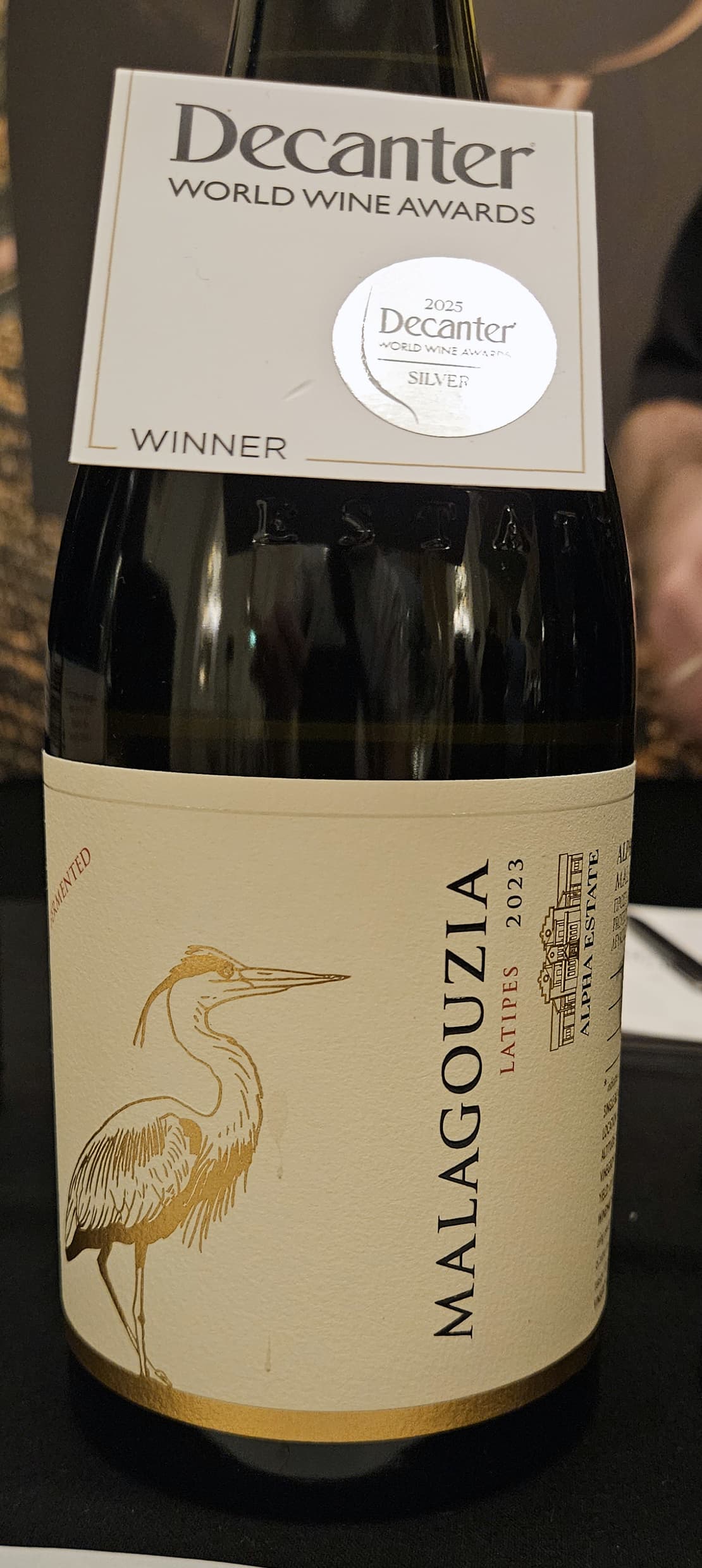
- 2023 Alpha Estate Malagouzia Latipes - Greece, Macedonia, Florina (7.11.2025)
100% Malagousia from the 1,7-hectare Latipes parcel, planted in 2007. First the grapes are destemmed, crushed and cold-soaked; then fermented spontaneously in new oak barrels and old 7500-liter oak vat. Aged for 9 months in oak. 12,7% alcohol, 1,8 g/l residual sugar, 6,24 g/l acidity and pH 3,31.
Pale and rather neutral whitish-green color. The nose feels remarkably Sauvignon Blanc-like with aromas of passion fruit and currant leaves, some notes of lemongrass, a little bit of appley fruit, light green grassy tones, a mineral hint of wet rocks and a touch of grapefruit. No obvious oaky tones. The wine feels dry, crunchy and quite Sauvignon Blanc-like on the palate with a medium body and dry flavors of passion fruit, some zesty citrus tones, a little bit of stony minerality, light grassy notes, a hint of salinity and a touch of lemongrass. The quite high acidity lends a good deal of freshness, zip and energy to the wine. The finish linear and rather Sauvignon Blanc-like with a medium-long aftertaste of grassy greenness and currant leaves, some passion fruit, light crunchy greencurrant tones, a little bit of grapefruit and a hint of stony minerality.
I honestly would've believed without any hesitation that this is a Sauvignon Blanc, if someone would've told me so. Some Alpha Estate Malagousias I've tasted before have been similarly Sauvignon-esque, so I guess that's just a thing. And I'm not the biggest fan of that herbal-leafy-yet-tropical style of Sauvignon Blanc, so I'm not particularly enamored by this wine, either. Surprisingly enough, it doesn't really show any obvious oaky qualities, so that's a plus. And I like the fresh acidity here, so the wine is not without any redeeming qualities. I guess this is a nice, well-made weekday white if you are a fan of brisk Sauvignon Blancs and looking for something new and interesting - but nothing too different!
(85 points)
Then the Biblia Chora stand. Pretty good stuff here. Surprisingly, many of the wines were very Sauvignon Blanc-like - even when there was no Sauvignon Blanc in the blend. I’m quite confused by this: is there something in the viticulture or winemaking that makes the wines taste almost identical to Sauvignon Blanc? I’d imagine it’s commercial yeasts, but I was told that these wines were fermented spontaneously, so I don’t know.
Anyways, my favorite was the only red wine I tasted (there were a few more, but had to skip them due to time constraints); it wasn’t by Biblia Chora, but by “micro-estate” Titos - a small 4,5-hectare family estate that Biblia Chora acquired in 2018. This Goumenissa was a fine wine and probably will speak especially to any Nebbiolo fans.
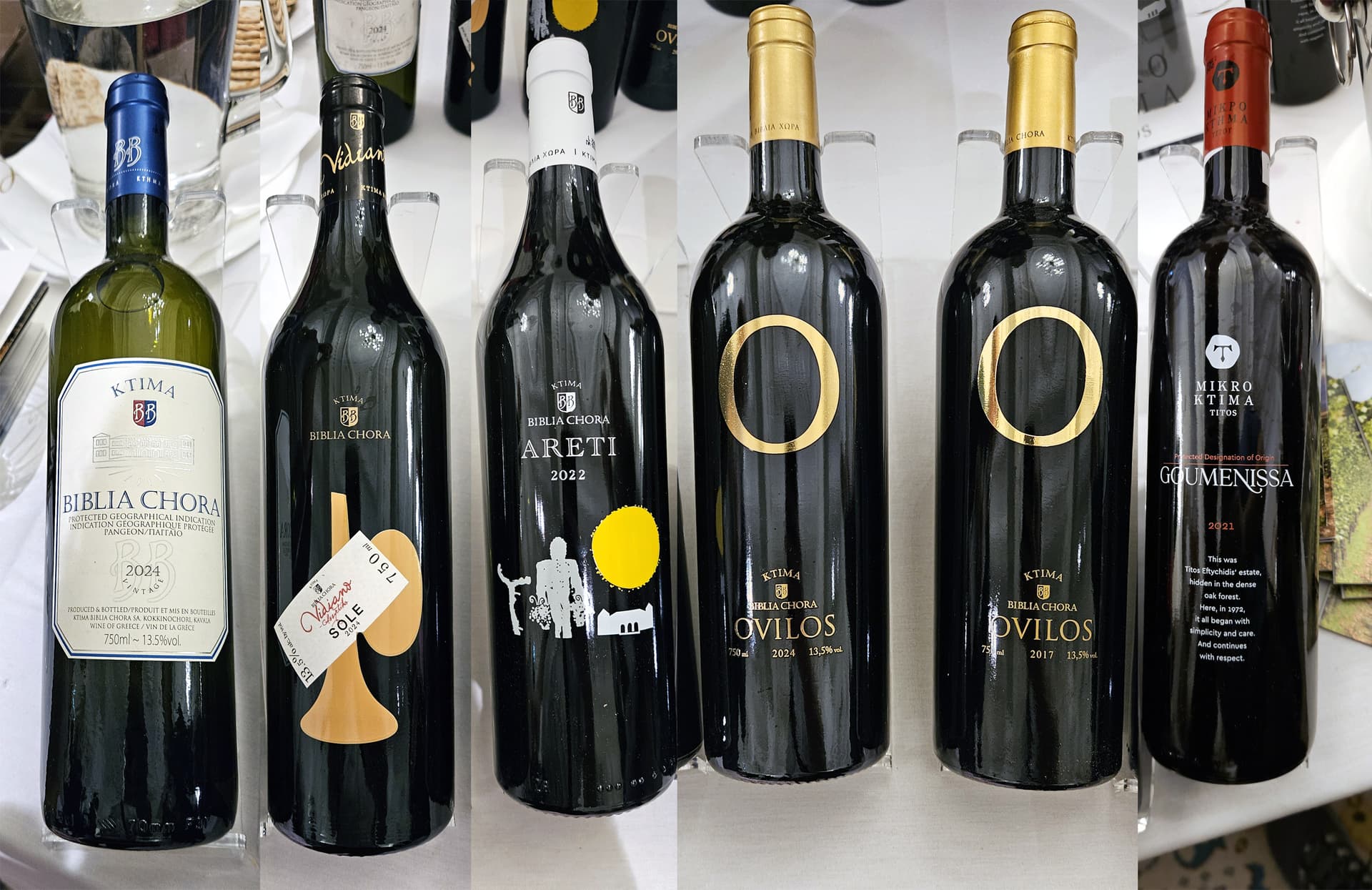
- 2024 Biblia Chora Sauvignon Blanc/Assyrtiko - Greece, Macedonia, Pangeon (7.11.2025)
A blend of Sauvignon Blanc (60%) and Assyrtiko (40%). Fermented and aged for a few months in stainless steel tanks. 13,5% alcohol.
Youthful, pale and rather neutral whitish-green color. The expressive nose feels very Sauvignon Blanc-driven with heady aromas of passion fruit and ripe green currants, some herbal notes of currant leaves and crushed nettle leaves, light exotic fruit notes of mango and a hint of lemon zest. The wine feels dry, crisp and lively on the palate with a rather light body and tropical yet zippy flavors of passion fruit, some zesty citrus fruits, a little bit of crushed nettle leaves, light ripe green currant notes, a hint of grassy greenness and a touch of tangy salinity. I must say that the combination of exotic fruits, herby greenness and citrus notes makes me think of a juicy, freshly bottled NEIPA! The brisk acidity makes the overall feel firm and fresh. The finish is crisp, long and lively with a crunchy aftertaste of passion fruit, some crushed nettles, a little bit of papaya, light vegetal notes of currant leaves, a hint of ripe lemony citrus fruit and a mineral touch of tangy salinity.
A nice, crisp and lively little Sauvignon Blanc where the Ayssrtiko component boosts a little bit of those zesty lemon tones and saline mineral nuances. Although I am not the biggest fan of Sauvignon Blanc, this was still a thoroughly enjoyable little weekday sipper. A simple yet enjoyably brisk and nuanced effort for that will probably speak to the fans of Sauvignon Blanc. Nice.
(88 points) - 2024 Biblia Chora Vidiano Sole - Greece, Macedonia, Pangeon (7.11.2025)
A blend of Vidiano (92%) and Assyrtiko (8%). Fermented and aged for 4 months in stainless steel tanks. 13,5% alcohol.
Pale greenish color with a subtle yellow hue. The nose feels ripe and yellow-toned with a moderately sweet-toned aromas of cantaloupe, some banana tones, a little bit of leesy creaminess and a candied hint of primary fruit. The wine feels broad, firm and lively with a moderately full body and ripe flavors of juicy yellow fruits, some banana tones, a little bit of saline minerality, light cantaloupe nuances, a hint of mineral spice and a sweeter touch of candied primary fruit. The high acidity lends good sense of structure and freshness to the wine. The finish is crisp, long and lively with a somewhat ripe yet still enjoyably fresh aftertaste of zesty citrus fruits, some saline mineral notes, a little bit of juicy white fruit, light cantaloupe tones and a hint of banana.
A nice, tasty and harmonious Greek white. Maybe still a bit too primary with the candied fermentation flavors, but nevertheless showing good sense of balance and freshness. Although the wine doesn't feel like it is built for the long haul, I can imagine the wine would benefit from another year or two of additional aging. A pleasant effort showing that Vidiano can show potential outside its home island of Crete.
(90 points) - 2022 Biblia Chora Areti White - Greece, Macedonia, Pangeon (7.11.2025)
100% Assyrtiko. Fermented and aged for 4 months in stainless steel tanks. 13,5% alcohol.
Pale-to-medium-deep yellow-green color. The nose feels fragrant and maybe more fruity than how your typical Santorini Assyrtiko would feel with rich aromas of cantaloupe, some leesy creaminess, a little bit of peachy stone fruit, light floral notes of apple blossom and lemon verbena, a hint of stony minerality and a touch of sweeter white fruit. The wine feels dry, crisp and balanced on the palate with a medium body and bright flavors of tart lemony citrus fruit, some crunchy apple notes, a little bit of fresh white fruit, light stony mineral notes and a hint of nectarine. The rather high acidity makes the wine feel fresh and balanced with good sense of firmness. The finish is crisp and lively with a long, dry aftertaste of lemony citrus fruits, some sharp Granny Smith apple notes, a little bit of crunchy white fruit, light stony minerality, a hint of leesy creaminess and a touch of salinity.
A very nice, refreshing and palate-cleansing Assyrtiko. Too often mainland Assyrtikos come across as thin and underwhelming - mere shadows of their Santorini counterparts. While this wine might come across as somewhat lightweight, less concentrated - and, most of all, less saline - than Santorini Assyrtikos, this wine still comes across as a very harmonious and enjoyable white wine in its own right. The wine lacks the intense lemony quality, the elevated ripeness and the rather full body typical of a Santorini Assyrtiko, but it instead comes across as more fragrant and floral in the nose, while exhibiting a somewhat sweeter, less citrusy fruit profile with notes of stone fruits and cantaloupe. An interesting and enjoyable take on this variety typically associated almost exclusively with Santorini.
(91 points) - 2024 Biblia Chora Ovilos White - Greece, Macedonia, Pangeon (7.11.2025)
A blend of Assyrtiko (50%) and Sémillon (50%). Fermented and aged in oak barrels (25-30% new, 70-75% used for 1-3 times) for 5 months. 13,5% alcohol.
Pale, youthful yellow-green color. The nose feels quite tropical and somewhat Sauvignon Blanc-like with aromas of fresh pineapple, some spicy wood notes, a little bit of passion fruit, light citrus notes of ripe Meyer lemons, a hint of blackcurrant leaves and a touch of creamy oak. The wine feels firm, youthful and lively on the palate with a full body and dry yet tropical flavors of passion fruit, some saline mineral notes, a little bit of savory oak spice, light notes of currant leaves, a hint of creamy oak and a touch of fresh pineapple. The high acidity lends great freshness and sense of energy to the wine. The finish is long, firm and lively on the palate with a youthful, dry aftertaste of passion fruit and fresh pineapple, some grassy green notes, a little bit of savory wood spice, light lemony citrus notes, a hint of creamy oak and a touch of currant leaves.
I was surprised how Sauvignon Blanc-driven the wine was, especially when it had no Sauvignon Blanc in the blend! However, with the subtly oaky nuances and the sense of breadth that has come from barrel aging the wine came across as somewhat Bordeaux Blanc-like. So in essence, the wine doesn't feel particularly Greek in style, but that doesn't make it a bad wine. The overall feel is a bit too young and Sauvignon-esque to my liking, but the wine does show some potential for aging, so maybe it will turn into something more interesting with further aging.
(89 points) - 2017 Biblia Chora Ovilos White - Greece, Macedonia, Pangeon (7.11.2025)
A blend of Assyrtiko (50%) and Sémillon (50%). Fermented and aged in oak barrels (25-30% new, 70-75% used for 1-3 times) for 5 months. 13,5% alcohol.
Pale-to-medium-deep yellow-green color with a burnished golden core. The nose feels slightly evolved and somewhat sweet-toned with layered aromas of passion fruit, some creamy oak tones, a little bit of pineapple, light floral notes of orange blossom, a hint of savory wood spice, a touch of fresh apricot and a green-toned whiff of currant leaves. The wine feels silky, harmonious and slightly evolved on the palate with a full body and nuanced flavors of sweet exotic fruits, some floral notes of orange blossom, light saline mineral notes, a little bit of savory oak spice, hints of spicy red apple and fresh pineapple and a hint of leesy creaminess. The high acidity lends good sense of freshness and structure to the wine. The finish is long, dry and crunchy with a rather acid-driven aftertaste of crunchy red apple, some saline mineral tones, light exotic fruit notes of passion fruit and pineapple, a little bit of savory oak spice, a hint of rhubarb and a touch of ripe gooseberry.
A harmonious and pleasantly evolved vintage of white Ovilos. The wine still shows some Sauvignon Blanc notes - which is quite weird, seeing how there is no Sauvignon Blanc in the blend - but not nearly as much as the younger vintages. The overall feel in not particularly Greek as the wine feels stylistically closer to, say, a Bordeaux Blanc, but there is good sense of finesse, harmony and depth of flavor. Although the wine doesn't come across as young anymore, I feel the wine is still on an upward trajectory and will continue to evolve and improve with further aging. A fine and thoroughly enjoyable effort.
(91 points) - 2021 Mikro Ktima Titos Goumenissa - Greece, Macedonia, Goumenissa (8.11.2025)
A blend of organically farmed Xinomavro (80%) and Negoska (20%). Aged in mostly old French oak barrels for 12 months. 13% alcohol.
Translucent ruby-red color with a slightly evolved pomegranate hue. The nose feels fragrant and characterful with aromas of ripe blackcurrants, some tomato stalk notes, light earthy tones, a little bit of perfumed floral character, a brambly hint of raspberries and a faint touch of farmhouse funk. The wine feels firm yet open-knit and ripe yet savory on the palate with a medium body and quite characterful flavors of brambly raspberries and ripe cherries, some cassis notes, a little bit of licorice root, light inky tones, a hint of tomato stalk and a touch of pipe tobacco. The overall feel is quite solar, but the taste is fully dry and the combination of high acidity and rather prominent, grippy tannins make the wine feel very structure-driven. The finish is dry and grippy with a long, nuanced aftertaste of pipe tobacco and sour cherry bitterness, some cassis notes, a little bit of licorice root, light nuances of tomato stalk, a hint of saline minerality and a touch of crunchy redcurrant.
A fine, sophisticated and enjoyably structure-driven Greek red with good emphasis on the Xinomavro aromatics, supported by the more fragrant and somewhat currant-driven Negoska characteristics. Although not a particularly rustic wine, the wine still doesn't come across as too modern or polished - there is some lovely roughness around the edges that keeps the wine enjoyably characterful and interesting. While not primary anymore, the overall feel is still pretty young and I can imagine this wine will continue to evolve and improve for a good handful of years more. Good stuff, recommended.
(92 points)
Finally, I checked out one white from the Gerovassiliou table. I wish I had more time (or was a faster taster, or both) since there were lots of interesting wines at this table! Anyways, this was a curious one - the label said Viognier, but I never would’ve identified it as such. If anything, it was a dead ringer for a dry Muscat white. A good wine all the same!
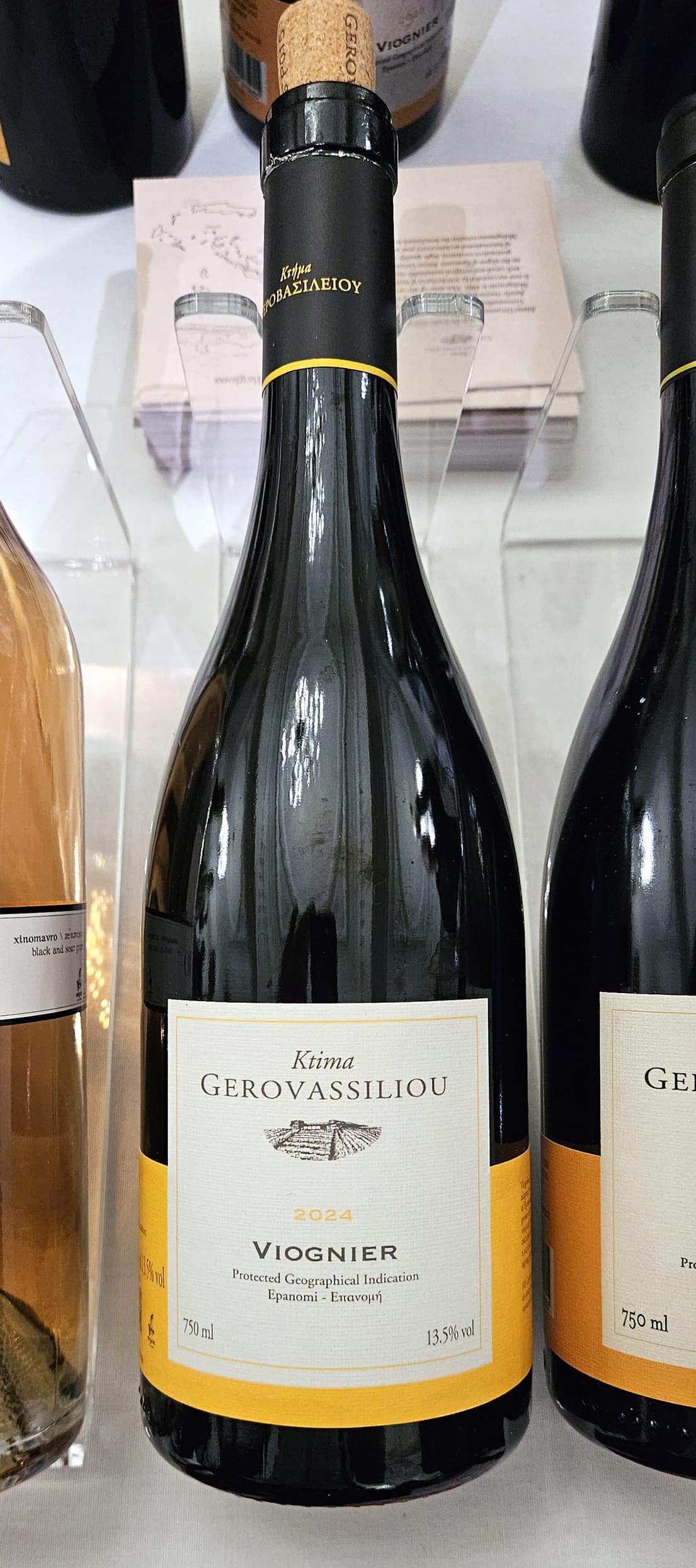
- 2024 Domaine Gerovassiliou Viognier - Greece, Macedonia, Epanomi (7.11.2025)
100% Viognier. Fermented and aged in oak barrels (20% new, 80% used) for 5 months. 13,5% alcohol.
Pale and rather neutral whitish-green color. The perfumed nose feels very expressive and surprisingly Muscat-like with heady aromas of musky floral tones, some grapey fruit, a little bit of ripe nectarine, light crunchy notes of fresh orange and a hint of lavender. The wine feels surprisingly firm and lovely for a Viognier with very little or any of the oily texture typical of the variety, despite the moderately full body. There are youthful flavors of sweet grapey fruit, some crunchy nectarine, a little bit of stony minerality, light primary notes of pear drops, a perfumed hint of floral spice and a touch of zesty citrus fruits. Rather atypical for the variety, the wine is high in acidity with good sense of energy and structure. The finish fresh and lively with a youthful, moderately long aftertaste of grapey fruit, some primary notes of pear drops, a little bit of lavender, light peachy nuances, a hint of Muscat-y floral spice and a touch of creaminess.
An enjoyably fresh, bright and sophisticated Viognier that both smells and drinks more like a dry Muscat. Honestly, if this wine would've been served blind to me, I never would've identified it as a Viognier; it is just too fresh and acid-driven for the variety with an atypically floral, rather Muscat-y bouquet. Despite its somewhat unorthodox overall feel, this is still an enjoyable and balanced white wine. Probably best suited for situations that call for a dry Muscat white. (90 points)
4 Likes
Great interesting writes ups as always Otto - thank you.
Funny you should mention this - I always wanted to like their Xinomavro VV, the 2-3 vintages I have tried impressed me a lot less than thought and hoped it would. Wasn’t sure if it was due to where I bought the wines (a Greek food wholesaler) but recall a bottle that completely faded by day two.
The 10 Cases remains one of my favourite spots for pre/post opera dining in London.
Just down the street from Shrine to the Vine is the relocated Honey & Co., which I recommend.
1 Like
New PFP?
Before I moved on to sample red wines, I thought it would be appropriate to freshen up the palate with some bubbles.
Henri Giraud is a Champagne house located in Aÿ, Vallée de la Marne. The Maison has been in the same family for 13 generations, its history dating back to the 17th century, making it one of the oldest extant Champagne houses. In the 1990’s Giraud re-introduced fermenting and aging their wines in oak barrels to their winemaking practices and today the wines see no stainless steel tanks at any point.
The emphasis is on Pinot Noir, although they farm also a little bit of Chardonnay, complementing some of their blends. The oak barrels are made with oak sourced from the Argonne forest, located between the Lorraine and Champagne regions. Most cuvées see only old oak barrels that have been used for several years, but the top cuvées are aged in partially new barrels.
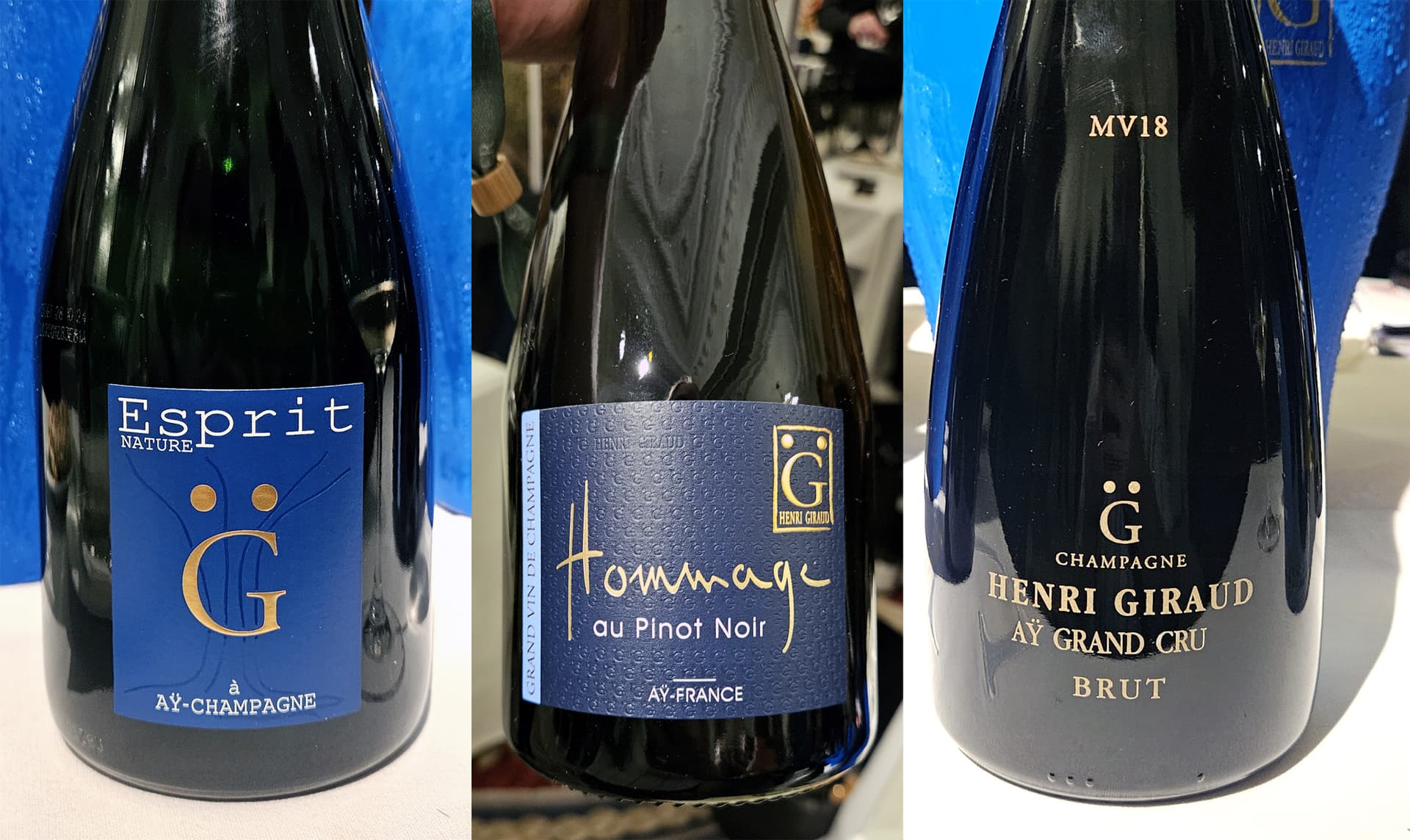
- NV Henri Giraud Champagne Esprit Nature - France, Champagne (7.11.2025)
A blend of Pinot Noir (80%) and Chardonnay (20%), assembled from the 2023 vintage (2/3) and reserve wines from a perpetual reserve that has been kept since 1990 (1/3). All the wines have been fermented and aged in old oak barrels. The name "Nature" doesn't mean that this is Brut Nature, but instead that the wine is vinified with minimal SO2. 12% alcohol, 5 g/l dosage.
Pale lemon-yellow color. The nose feels savory and relatively toasty with aromas of ripe Golden Delicious apple, some saline notes of oceanic air, a little bit of leesy autolysis, light nutty notes of roasted almonds, a hint of zesty citrus fruit and a touch of stony minerality. The wine feels dry, savory and balanced on the palate with a medium body and layered flavors of ripe lemony citrus fruits, some Granny Smith apple tones, a little bit of leesy autolysis, light nutty notes of almond, toasty hints of bread and brioche and a touch of stony minerality. The mousse feels quite voluminous but silky and gentle, whereas the high acidity brings good sense of zip and verve to the overall feel. The finish is rich, crisp and nuanced with a dry, intensely-flavored aftertaste of ripe lemony citrus fruits, some savory autolytic notes of leesy creaminess and slivered almonds, a little bit of crunchy red apple, light toasty notes of bread and nuttiness and a hint of tangy salinity.
A surprisingly nuanced and toasty effort for an entry-level cuvée - especially one so young. You can really taste the relatively high proportion of reserve wines here! As the wine shows quite a bit of that developed complexity, it feels like it doesn't really call for any additional aging, but instead it is ready to go right out of the gate. I guess the wine can be aged and evolved some more, but with its very low SO2 content, I guess the wine isn't meant to be aged similarly to the higher-end Giraud cuvées. A lovely and well-crafted entry-level NV that combines youthful, zippy fruit with more evolved complexity.
(91 points) - NV Henri Giraud Champagne Hommage au Pinot Noir Aÿ - France, Champagne (7.11.2025)
100% Pinot Noir, assembled from the 2020 vintage (60%) and reserve wines from a perpetual reserve that has been kept since 1990 (40%). All the wines have been fermented and aged for 11 months in old oak barrels, followed by 6 months in enameled tanks. Aged sur lattes for a minimum of 36 months. 12% alcohol, 5-6 g/l dosage.
Pale yellow-green color. The nose feels savory and dark-toned, more toasty than fruity with aromas of roasted nuts, some stony mineral notes, a little bit of autolytic brioche and leesy creaminess, light crunchy notes of red apples, a hint of woody spice and a touch of vague red-toned fruit. The wine feels broad, ripe and juicy on the palate with a medium-to-moderately full body and dry flavors of ripe Fuji apple, some leesy creaminess, light crunchy notes of fresh white peach, a little bit of saline minerality, an oxidative hint of nutty complexity and a touch of vanilla custard. The mousse feels silky, vivacious and persistent, and while the moderately high acidity feels a bit modest for a Champagne, it still is more than sufficient to keep the overall feel fresh, balanced and quite structured. The finish is ripe, juicy and lively with a long aftertaste of sweet white fruit, some salinity, a little bit of stony minerality, light nutty and toasty autolytic notes, a hint of spicy red apple and a creamy touch of vanilla custard.
A nuanced, rich and tasty Champagne with lovely sense of breadth and quite a bit of toasty qualities. The overall feel might not be that brisk and precise as the wine is more about autolytic complexity and the rich texture that comes from the oak aging - however, the wine never once comes across as big, heavy or clumsy. A fine and thoroughly enjoyable Blanc de Noirs that is perfectly drinkable already now, but most likely will continue to evolve and improve for a good number of years more. Recommended.
(93 points) - NV Henri Giraud Champagne Grand Cru Fût de Chêne MV18 - France, Champagne, Champagne Grand Cru (7.11.2025)
A blend of Pinot Noir (80%) and Chardonnay (20%) from Grand Cru vineyards in Aÿ. Fermented and aged in oak barrels (partly new) for 12 months, then the cuvée is assembled from the base wine (70% from the 2018 vintage) and reserve wines from a perpetual reserve that has been kept since 1990 (30%). Aged sur lattes for 5-6 years. 12% alcohol and dosage 5-6 g/l.
Medium-deep yellow-green color. The nose feels expressive with layered aromas of ripe Golden Delicious apple and creamy oak, some sweet wood spice, light leesy notes of autolysis, a little bit of oxidative nuttiness, a hint of almond paste and a touch of vanilla custard. The wine feels dry and focused on the palate with a full body and complex flavors of ripe citrus fruits and saline minerality, some creamy oak tones, a little bit of oxidative nuttiness, light leesy notes of autolysis, a sweet-toned hint of toasty oak and a woody touch of savory oak spice. The mousse feels quite sparse, mellow and gentle. The overall feel is firm, fresh and structured due to the high acidity. The finish is firm, dry and acid-driven with a long, intensely-flavored aftertaste of creamy oak and nutty wood spice, some saline mineral notes, a little bit of sweet Fuji apple, light leesy and toasty autolytic notes, a hint of juicy white fruit and a touch of vanilla custard.
A nuanced, focused and quite powerful multi-vintage Champagne that combines fresh and quite intense fruit flavors with somewhat pronounced yet not overdone oak tones. Sometimes oak-aged Champagnes can get a bit overdone with the woody tones, but even though the new oak aromas and flavors are definitely there, the wine doesn't come across as excessively oaky in any way. On the contrary, the wine shows wonderful sense of balance and harmony, both structurally and in the taste. While completely enjoyable now, I'd rather let the wine wait for another 8-12 years to let the oaky nuanced integrate even further with the savory autolytic nuances. A rather distinctive Champagne with lots of upside. Highly recommended.
(94 points)
10 Likes
I suppose Domaine de Chevalier - the château behind some of the most acclaimed dry whites of Graves wines out there - needs no introduction, so I’m going to skip those.
These are my notes on the DdC wines I tasted over the two days. On the first day of the event the lower-tier bottlings plus the 2016 vintages of the grand vin - both red and white - were available. I skipped the lower-tier labels and went straight for the grands vins due to time constraints.
On the second day we got to taste the 2015 vintage of the Chevalier Blanc, plus a vertical of the red Chevalier, presented at 10, 20 and 30 years of age - from double magnums, as is appropriate.
As always, Chevalier Blanc was a stunner. Especially the 2016 vintage was simply amazing, but 2015 was not far behind-
The reds were a more mixed lot. The 2016 showed great promise, but was still way too young, whereas the 2015 showed more ripeness and oak than I cared for. The 2005 was an amazing wine and in a beautiful spot right now, whereas the 1995 didn’t live up to my expectations, unfortunately.
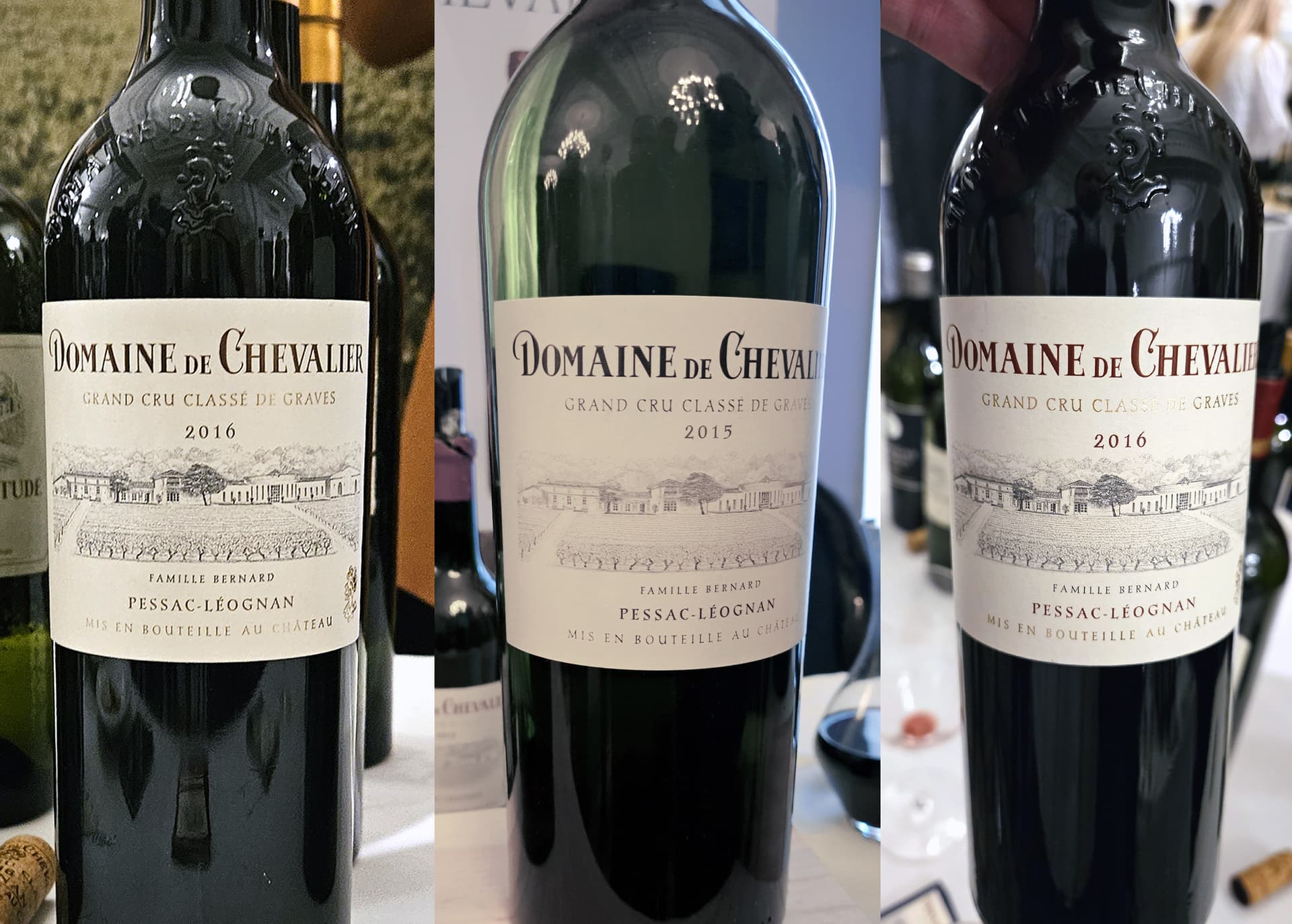
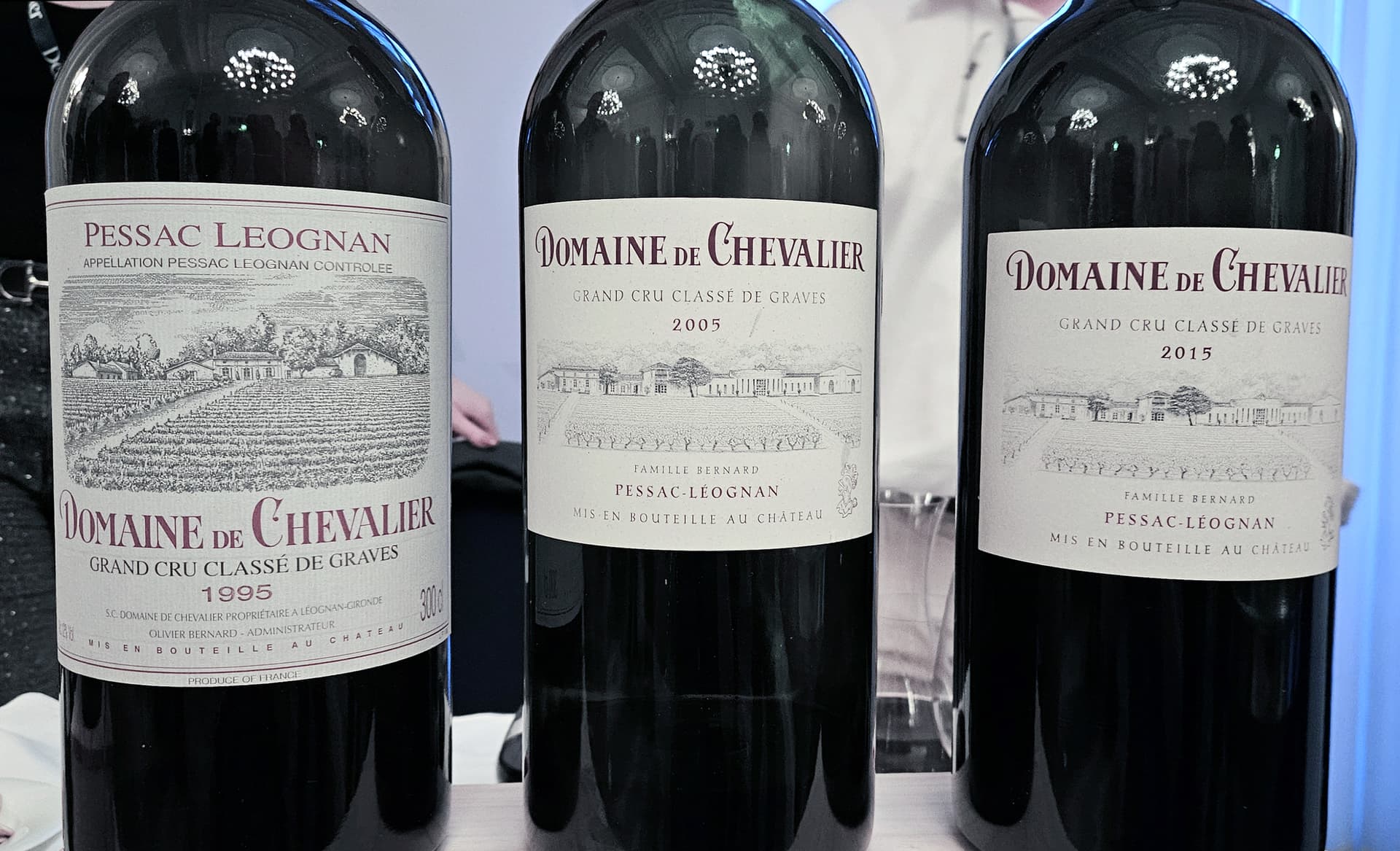
- 2016 Domaine de Chevalier Blanc - France, Bordeaux, Graves, Pessac-Léognan (7.11.2025)
A blend of Sauvignon Blanc (70%) and Sémillon (30%) harvested between 10th and 30th of September. Fermented in stainless steel tanks, concrete tanks and oak fermentors; aged for 16-18 months in oak barriques (1/3 new). Bottled in July 2018. 13,5% alcohol. Total production 18,000 bottles.
Still relatively youthful, medium-deep yellow color with a lime-green hue. The nose feels somewhat Sauvignon Blanc-driven with aromas of ripe gooseberries and crushed nettles, some creamy oak tones, a little bit of savory wood spice, light crunchy notes of fresh pineapple, a sweeter hint of toasty oak and a faint touch of green asparagus. The wine feels rich and a bit oily yet not heavy but wonderfully firm and harmonious on the palate with a full body and youthful and quite complex flavors of passion fruit and crunchy Golden Delicious apple, some toasty oak tones, a little bit of creamy oak, light sweeter notes of pineapple and honeyed richness, a hint of saline minerality and a touch of savory wood spice. The high acidity lends good sense of freshness, structure and intensity to the wine. The finish is firm, long and complex with an intense aftertaste of ripe gooseberries and Golden Delicious apples, some woody ntoes of savory oak spice, light saline mineral notes, a little bit of tart passion fruit, hints of buttery richness and creamy oak and a touch of fresh pineapple.
Usually Domaine de Chevalier whites are so stunning because they develop such wonderful complexity as they age. This wine, however, is still remarkably youthful for its age, which also means that the Sauvignon Blanc notes are still pretty much to the fore and the new oak notes have not fully integrated with the fruit - both which are qualities I'm not usually a fan of. However, this wine is stunning already now, coming across as more impressive than many older bottles of Domaine de Chevalier that I've tasted! Although the wine is still a bit too youthful for my preference, you can still taste that this is an exceptional vintage and a fantastic wine in the making. I'd let the wine age for at least another 7-10 years, but I believe this vintage is really built for the long haul. Superb stuff.
(94 points) - 2015 Domaine de Chevalier Blanc - France, Bordeaux, Graves, Pessac-Léognan (8.11.2025)
A blend of Sauvignon Blanc (70%) and Sémillon (30%) harvested between 7th and 16th of September. Fermented in stainless steel tanks, concrete tanks and oak fermentors; aged for 16-18 months in oak barriques (1/3 new). Bottled in June 2017. 13,5% alcohol. Total production 18,000 bottles.
Quite youthful pale yellow-green color. The nose feels youthful, fragrant and energetic with rather Sauvignon Blanc-driven aromas of ripe gooseberries and juicy yellow fruit, some woody tones, a little bit of passion fruit, light herbal notes of grassy greenness, a hint of fresh apricot, a touch of creamy oak and a whiff of green currants. The wine feels dry, firm and youthful on the palate with a medium-to-moderately full body and concentrated flavors of ripe citrus fruits, some creamy oak tones, a little bit of nutty wood, light passion fruit notes, hints of gooseberries and white currants and a touch of saline minerality. The wine is high in acidity, which lends good sense of freshness and structure to the wine, keeping any overt sense of ripeness at bay. The finish is long, fresh and youthful with an intense aftertaste of passion fruit and ripe lemony citrus fruit notes, some woody tones, a little bit of saline minerality, light stony mineral notes, a hint of nutty wood and a touch of creamy oak.
A rather noticeably ripe but also remarkably fresh and balanced vintage of Chevalier Blanc. While this vintage seemed to show more ripeness and sweeter-toned fruit aromatics compared to the 2016 vintage, the overall feel was not quite as full-bodied in comparison, and the firm acid structured managed to keep the overall feel wonderfully fresh and precise. Although I preferred the 2016 over the 2015 vintage, the difference was pretty marginal - both the vintages were very impressive and mighty promising. They might not be showing their best yet, and with this much unrealized potential, I'm sure this wine will both keep and improve for another decade or two - maybe even more. Highly recommended.
(93 points) - 2016 Domaine de Chevalier - France, Bordeaux, Graves, Pessac-Léognan (7.11.2025)
A blend of Cabernet Sauvignon (55%), Merlot (35%), Cabernet Franc (5%) and Petit Verdot (5%) harvested between 4th and 21st of October. Fermented in stainless steel tanks, concrete tanks and oak fermentors; aged for 16-18 months in oak barriques (1/3 new). Bottled in August 2018. 13,5% alcohol. Total production 100,000 bottles.
Still quite youthful and rather opaque black cherry color. The nose feels fragrant and somewhat sweet-toned with aromas of dark forest fruits, some fresh bilberries, a little bit of ripe cassis, light plummy tones, hints of toasty mocha oak and pencil shavings, a perfumed hint of violets and a whiff of sweet baking spices. The wine feels juicy, balanced and rather ripe on the palate with a rather full body and youthful flavors of black cherries and dark plums, some licorice tones, a little bit of toasty mocha oak, light woody notes of pencil shavings, a hint of cassis and a touch of baking spices. The overall feel is more airy than dense and the combination of moderately high acidity and ripe yet firm medium tannins keep the wine effortlessly in balance. The finish is ripe, juicy and somewhat grippy with a long aftertaste of juicy dark plums, some licorice tones, light woody notes of pencil shavings and toasty oak spice, a little bit of juicy blueberry-driven dark fruit, a hint of cassis and a touch of pipe tobacco.
An attractive, still youthful and quite promising vintage of Chevalier Rouge. Not as impressive as the 2016 Blanc, but still a lovely effort all the same. Even though 2016 has produced some very firm and structure-driven Bordeaux reds, the 2016 iteration of Chevalier is not a concentrated, tightly-knit and intensely-flavored wine, but instead an elegant and harmonious effort with more emphasis on finesse and nuance. The new oak component does still show, but seeing how the wine is still pretty youthful as a whole, I'm quite certain the wine continues to evolve in the right direction for many more years. Probably hitting its optimal drinking window in 8-12 years and the wine will most likely keep for many more years after that. Expect the score to go up as the wine ages. Recommended.
(93 points) - 2015 Domaine de Chevalier - France, Bordeaux, Graves, Pessac-Léognan (8.11.2025)
A blend of Cabernet Sauvignon (55%), Merlot (35%), Cabernet Franc (5%) and Petit Verdot (5%) harvested between 25th of September and 15th of October. Fermented in stainless steel tanks, concrete tanks and oak fermentors; aged for 16-18 months in oak barriques (1/3 new). Bottled in August 2018. 13,5% alcohol. Total production 100,000 bottles. Sampled from a double-magnum bottle.
Quite youthful and moderately opaque blackish-red color. The nose feels fragrant and quite ripe with rather sweet-toned aromas of juicy blackberries and bilberries, some vanilla oak, a little bit of lactic MLF character, light black cherry tones, a woody hint of dusty oak and a touch of allspice and sweet baking spices. The wine feels ripe, juicy and silky on the palate with a rather full body and quite rich flavors of blueberries and sweet dark plums, some cassis tones, a little bit of toasty oak spice, light vanilla nuances, a hint of tobacco and a touch of earth. The moderately high acidity lends some sense of balance to this rather ripe vintage, but most of the firmness comes from the ample, still pretty stern and quite grippy tannins. The finish is richly-fruited, juicy and pretty tannic with a long aftertaste of sweet plummy fruit and ripe blackcurrant, some toasty mocha oak tones, a little bit of fresh bilberry, light black cherry tones, a hint of vanilla and a faint herbaceous touch of roasted bell pepper.
A quite noticeably ripe but also enjoyably firm and muscular vintage of DdC. The oak shows very little sense of integration at this point, still having quite a bit of prominence in the flavor profile, and the solar quality of the vintage feels pretty obvious in the lush and juicy fruit profile. Even then, the wine doesn't come across as heavy, soft or jammy - mainly thanks to the firm structure that keeps the wine quite effortlessly in balance. At the moment I am not the biggest fan of this vintage - the 2016 I tasted yesterday was much more impressive at this point - but as the wine feels still so youthful, I'm quite positive this wine will turn into something much more interesting and rewarding after another 10 years of aging. Unless you like your wines very ripe, quite oaky and noticeably fruit-forward, this is wine mainly for the patient people.
(91 points) - 2005 Domaine de Chevalier - France, Bordeaux, Graves, Pessac-Léognan (8.11.2025)
A blend of Cabernet Sauvignon (55%), Merlot (35%), Petit Verdot (6%) and Cabernet Franc (4%) harvested between 26th of September and 12th of October. Fermented and aged for 16-18 months in oak barriques (1/3 new). 13% alcohol. Total production 100,000 bottles. Sampled from a double-magnum bottle.
Somewhat evolved and slightly translucent blackish-red color. The nose feels fragrant, savory and somewhat evolved with complex aromas of wizened blackcurrants and ripe blueberries, some smoky tones, a little bit of tobacco, light woody notes of pencil shavings, a hint of gravelly earth and a touch of tar. The wine feels silky, juicy and open-knit on the palate with a full body and rather ripe flavors of wizened blackcurrants, some gravelly mineral tones, a little bit of crunchy red plum, light woody notes of toasty oak spice and pencil shavings, bright lingonberry and bilberry hints and a ferrous touch of blood. Despite its rather ripe overall feel, the wine retains remarkably firm structure, thanks to the high acidity and still quite grippy tannins. The dark-toned finish is dry, fresh and rather grippy with a long, intensely-flavored aftertaste of ripe blackcurrants and wizened dark fruits, some gravelly mineral notes, a little bit of crunchy red plum, light woody notes of pencil shavings, a tart hint of lingonberries and a touch of something vaguely smoky.
A rather ripe but also very nuanced, impressively structured and even surprisingly fresh vintage of DdC. I'd love to say the wine is peaking now, but as the wine doesn't show that much tertiary qualities, the structure is still very firm and the fruit department feels so intensely-flavored, I'd say the wine is still on an upward trajectory - and will continue to age and get better for at least a good handful of years more. This wine is in a superb shape at the moment, but there is no hurry whatsoever with it. Drink or keep. A very complete and eminently enjoyable Pessac-Léognan.
(94 points) - 1995 Domaine de Chevalier - France, Bordeaux, Graves, Pessac-Léognan (8.11.2025)
12% alcohol. Sampled from a double-magnum bottle.
Evolved, translucent and rather aged maroon color. The nose feels earthy, somewhat understated and a bit dull and musty with savory aromas of tobacco, some autumnal notes of leafy forest floor, a little bit of dried blackcurrant, light meaty tones, a hint of old leather and a touch of damp wood. The wine feels juicy, evolved and silky with a medium body and a bit tired flavors of tobacco and old leather, some red plum notes, light ferrous notes of blood, a little bit of gravelly earth, herbaceous hints of bell pepper and leafy character and a touch of dried blackcurrants. The wine is high in acidity with still moderately grippy and relatively unresolved tannins. The finish is dry, savory and grippy with a somewhat understated aftertaste of old leather and tobacco, some dried blackcurrants, light leafy tones, a little bit of damp earth, a herbaceous hint of bell pepper and a touch of forest floor.
I normally love old school clarets from the 1990's and beyond, and I expected this wine to be the best from the DdC trio of 2015-2005-1995. However, the wine turned out to be relatively tired and even a tiny bit musty - at some point I even thought the wine was mildly corked, but ultimately it seemed more like the wine was just showing some earthy tertiary nuances (without any obvious oxidative qualities!) that had emerged after the fruit department had mostly faded away. With its still remarkably firm and pretty tightly-knit structure, this wine might've been lovely had it had enough fruit and flavor intensity to back up that structure. Instead the wine came across as pretty firmly-structured but also somewhat understated and a bit hollow. I don't know if the bottle was just a dud, but I hope this particular wine wasn't representative of the vintage, as the bottle came directly from the cellar of the château!
(89 points)
9 Likes