Day 3
As we had our Burgundy headquarters in a motel in Meursault, we didn’t really have any proper breakfast options at hand. Hence we kicked off the day by driving to Beaune and scouting for a place where we could eat something before our first winery visit. Quickly we settled for a tiny place near the city center, next to Place Carnot.
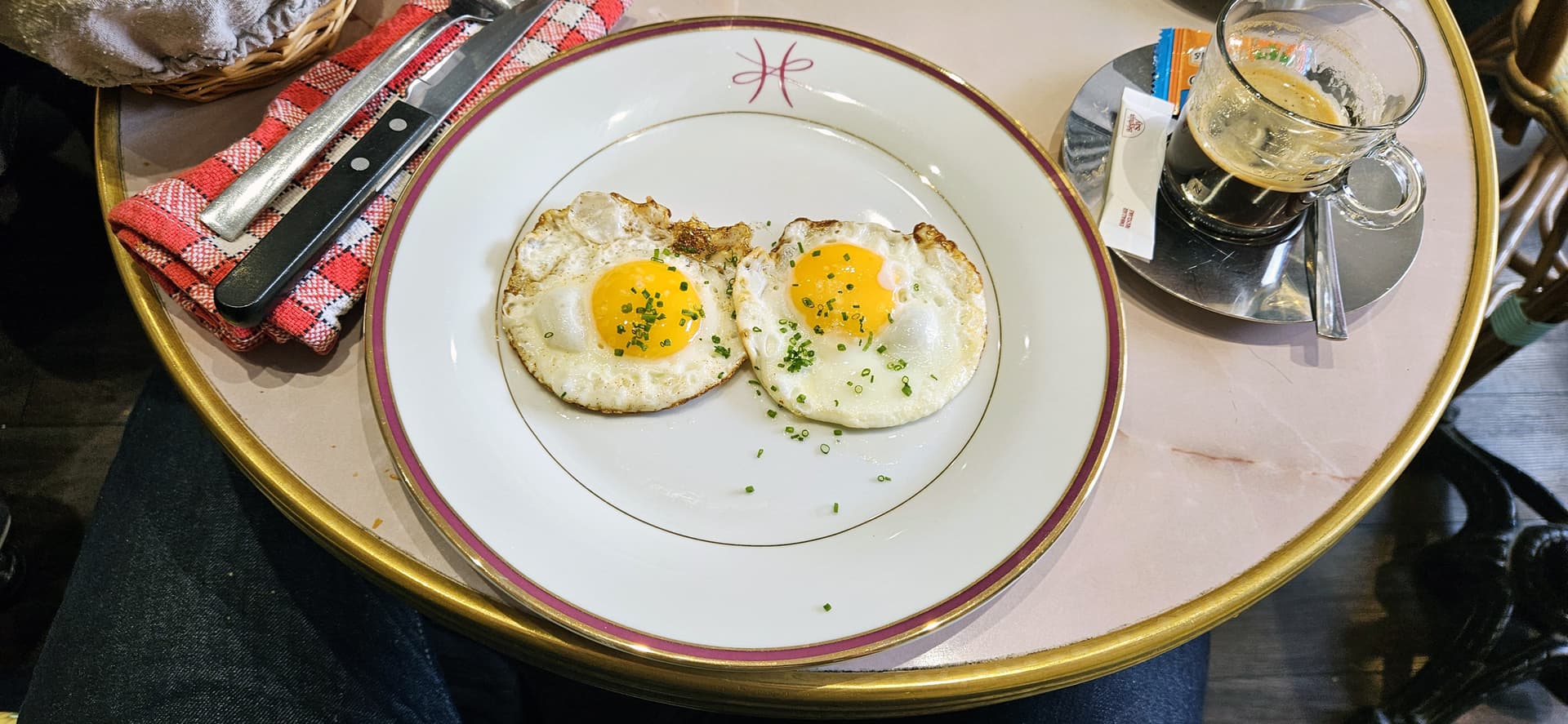
Breakfast of the champions.
After we had finished our breakfast, we backtracked to our van and set off for our first visit of the day in the neighboring hamlet of Savigny-lès-Beaune.
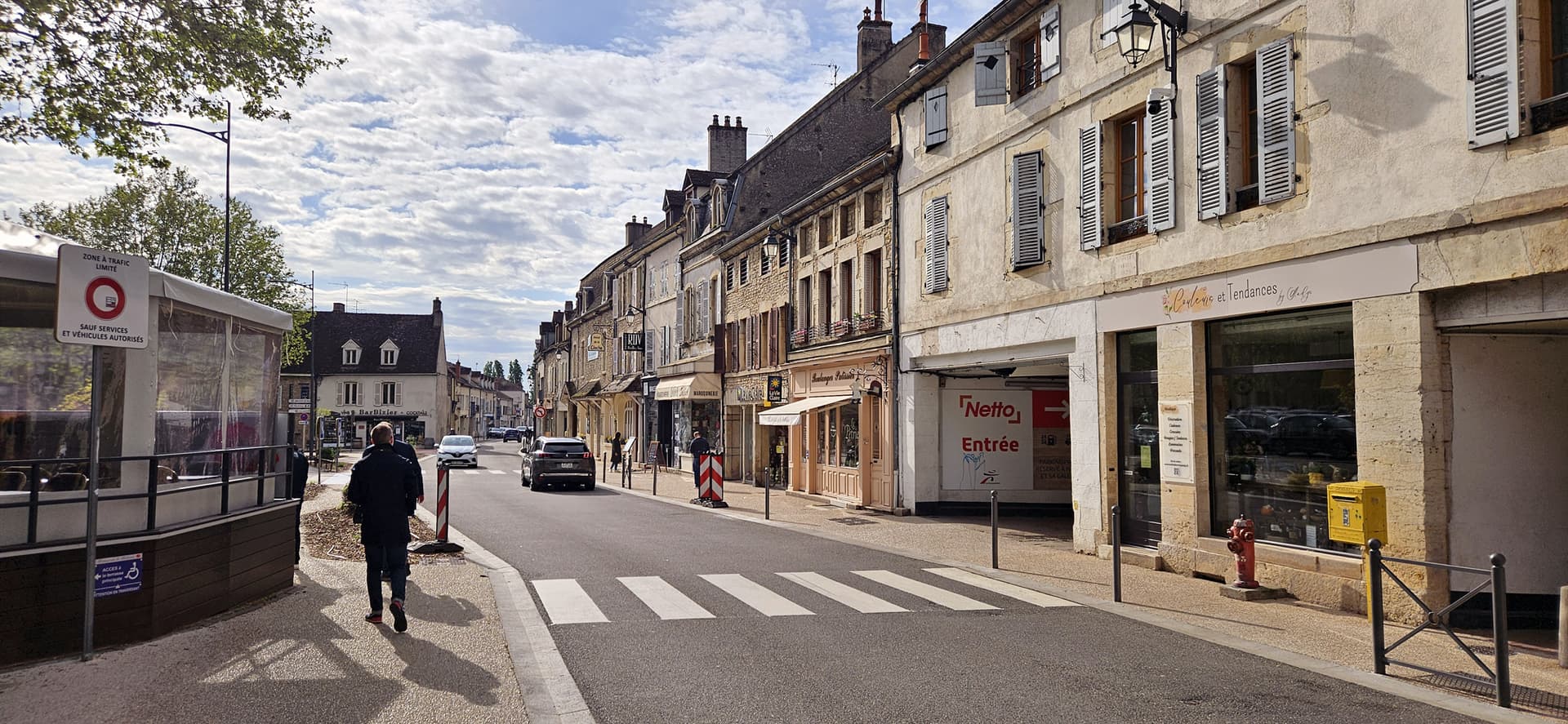
Some Beaune morning vibes.
Our first winery visit was at Chandon de Briailles. Now I don’t know what I was expecting, but what I wasn’t expecting when we arrived at the winery was a stunning old manor and an astounding garden the size of a small part behind it!

The façade of the Chandon de Briailles manor.
As we parked our van in front of the manor, we were first greeted by one of the estate’s dogs - the older, more timid one, who apparently liked to keep their distance from us - and then, a moment later, by Claude de Nicolay of the siblings team running the domaine.
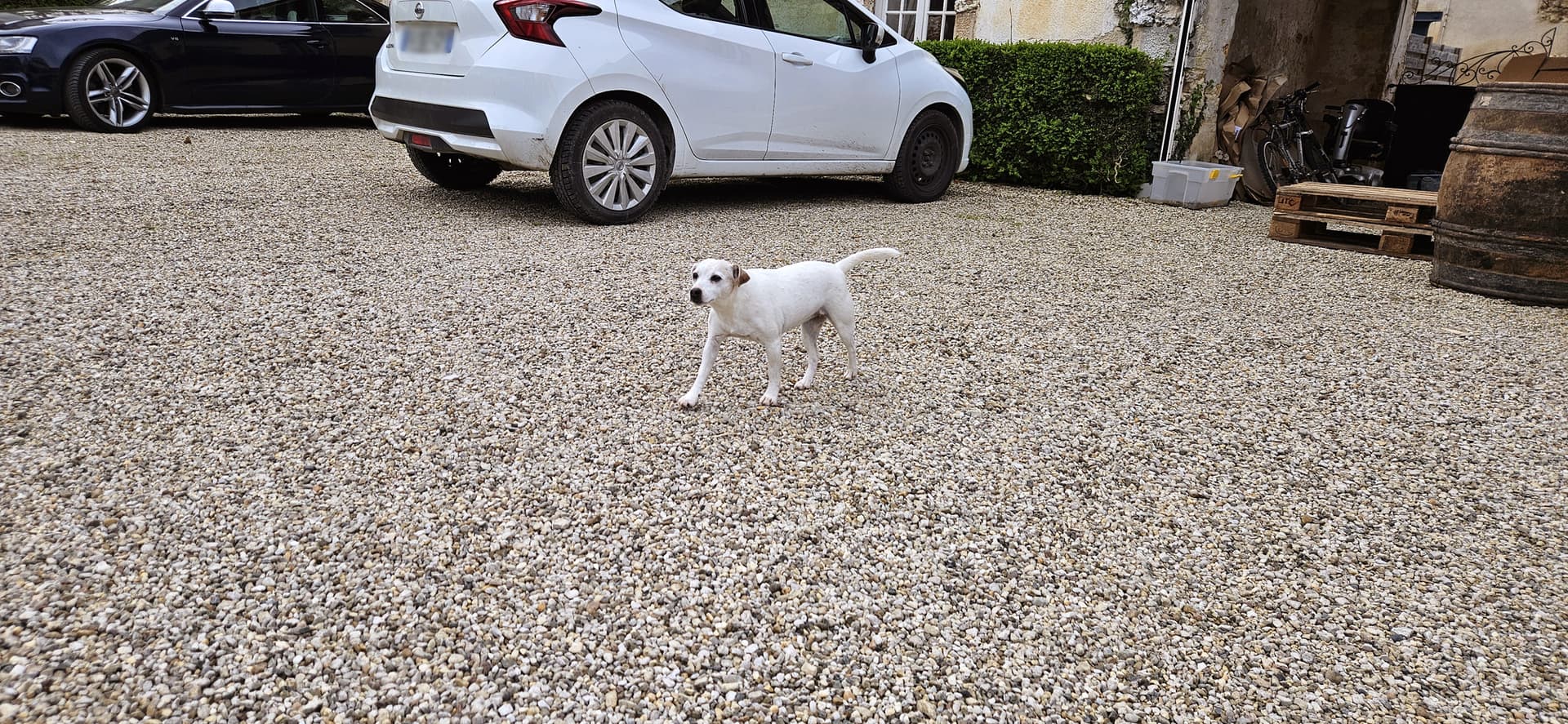
The older doggo checking out the suspicious-looking strangers.
As de Nicolay still had some unfinished business, she encouraged us to take a quick stroll around the garden and she would come and pick us after a moment or two.
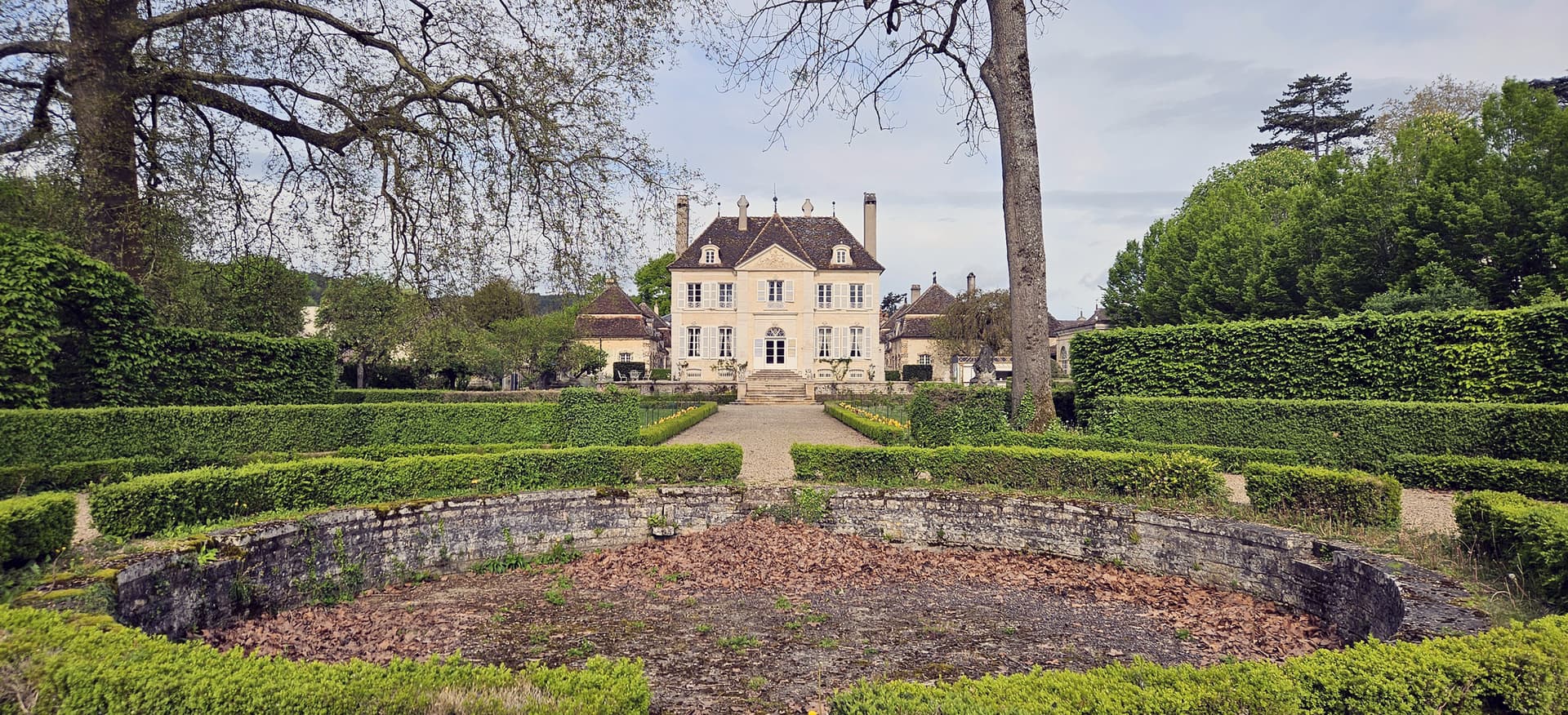
The manor as seen from the garden.
After a nice stroll through the garden, de Nicolay invited us into the winery building, presenting us not only a small selection of the domaine’s reds, but also the rather long history of the estate.
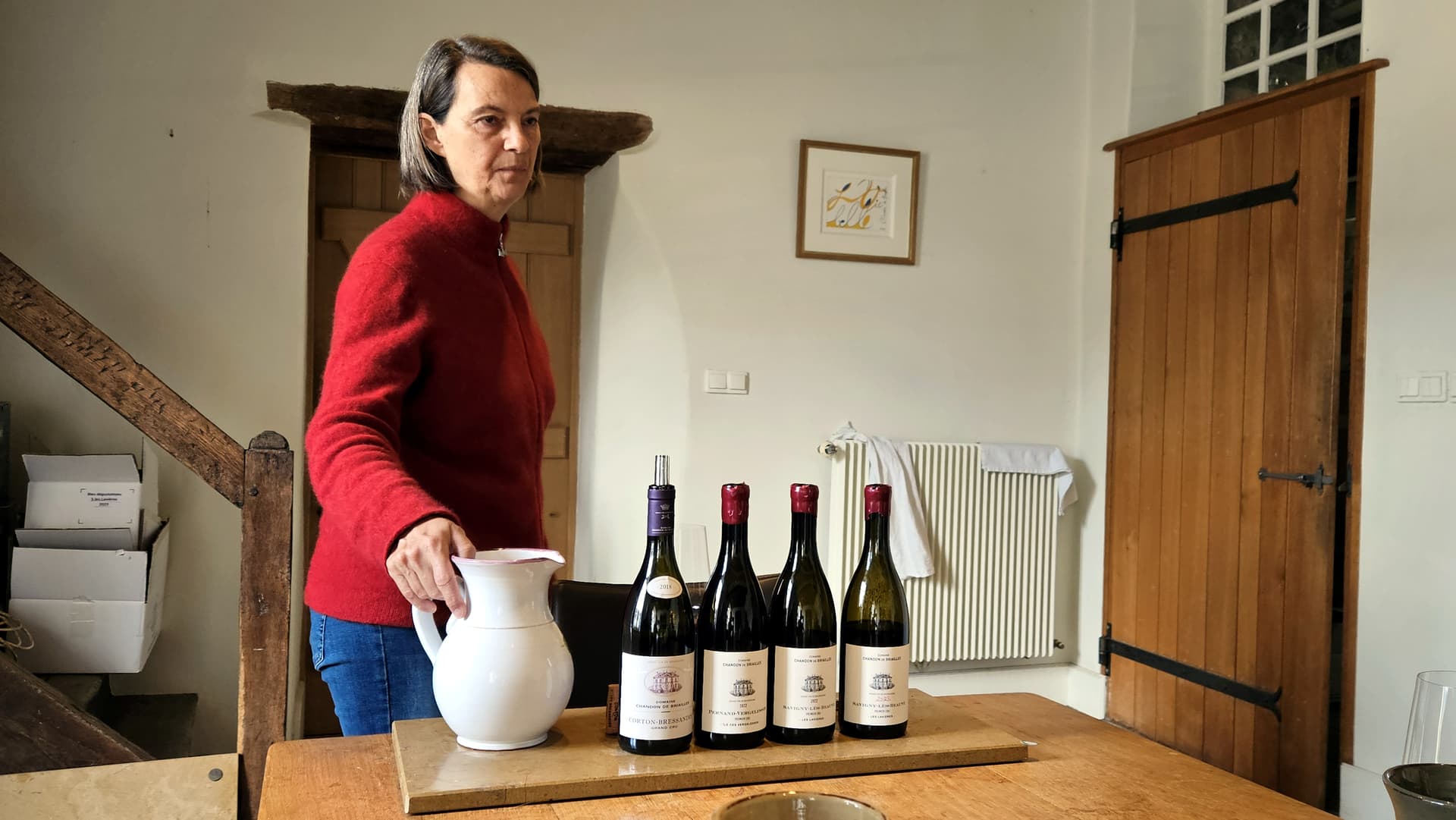
Claude de Nicolay and the wines we tasted.
- The history of the winery is indeed tied to that of the Moët & Chandon: the famous Champagne house was originally founded as Moët et Cie in 1743, but when Remy Moët’s son-in-law, Pierre-Gabriel Chandon de Briailles joined the company as a partner in 1833, the name was changed to Moët et Chandon. The “de Briailles” part was simply dropped out from the name to keep it easy and concise for the customers.
- The impressive manor in Savigny-lès-Beaune dates back to the 17th century and it has been in the family since 1834. It currently belongs to Comte and Comtesse Aymard-Claude de Nicolay - the Comte inherited the property from his grandmother, the Comtesse Chandon de Briailles - and their children, François and Claude de Nicolay, ie. the 7th generation, who operate the winery today.
- The actual winery of the estate is located in one of the auxiliary buildings next to the manor - the oldest cellar parts of this building date back to the 14th century.
- The manor was used as the family countryside house, as the de Nicolays lived in Paris back then. However, realizing how the vineyards of the estate were in very poor shape, Comtesse Aymard-Claude de Nicolay, Nadine, moved from Paris to Savigny-lès-Beaune in 1982 and took over the winery and viticultural operations of their country house.
- Nadine de Nicolay stopped using non-organic pesticides and fungicides in the vineyards and began farming in a sustainable fashion with traditional tools and practices. In the late 1980’s Claude de Nicolay, who had studied viticulture and oenology, joined her mother in running the estate, helping the domaine first convert fully to organic farming and then, under Claude’s guidance, acquiring organic certification in 1998. Claude’s brother François, who had had a wine shop in Paris, joined the family domaine in 2001. Domaine Chandon de Briailles has been run by the sister-brother team since.
- When François joined the family estate, they began experimenting with biodynamics and were quite happy with the results; since 2005 the vineyards have been farmed according to biodynamic principles and the winery acquired Demeter certification in 2011.
- Today Chandon de Briailles farm 14 hectares (33,5 acres) biodynamically in Savigny-lès-Beaune and the neighboring appellations of Pernand-Vergelesses and Aloxe-Corton…
- The wines are fermented spontaneously with indigenous yeasts. Destemming depends on the vintage, but the use of whole bunches has gradually gone up in the last 15-20 years. Today up to 50% of the grapes may be destemmed in cooler vintages, but in warmer vintages, when the rachis ripen fully, the wines can be made entirely with whole bunches.
- The amount of new oak is kept very low; up to 10% of the barrels may be replaced annually and usually only when necessary, meaning that wines today don’t see more than 10% of new oak.
- The wines have not been chaptalized since 2007 and since their conversion to biodynamics the domaine has tried to keep the use of sulfites as low as possible; the wines receive small doses of SO2 if the vintage or vinification calls for it, but often the wines receive only a minimal dose of SO2 upon bottling and they experiment with sans soufre bottlings every year.
- A great majority of their production is red, but they have also small amounts of white grapes - mainly Chardonnay. but they also have a small parcel of Pinot Blanc in 1er Cru Île de Vergelesses, as Nadine de Nicolay wanted to have some white grapes planted in that particular vineyard. These Pinot Blanc grapes are not blended into any of the whites - which would be allowed according to the appellation regulations - but instead vinified like a red wine into a varietal orange wine!
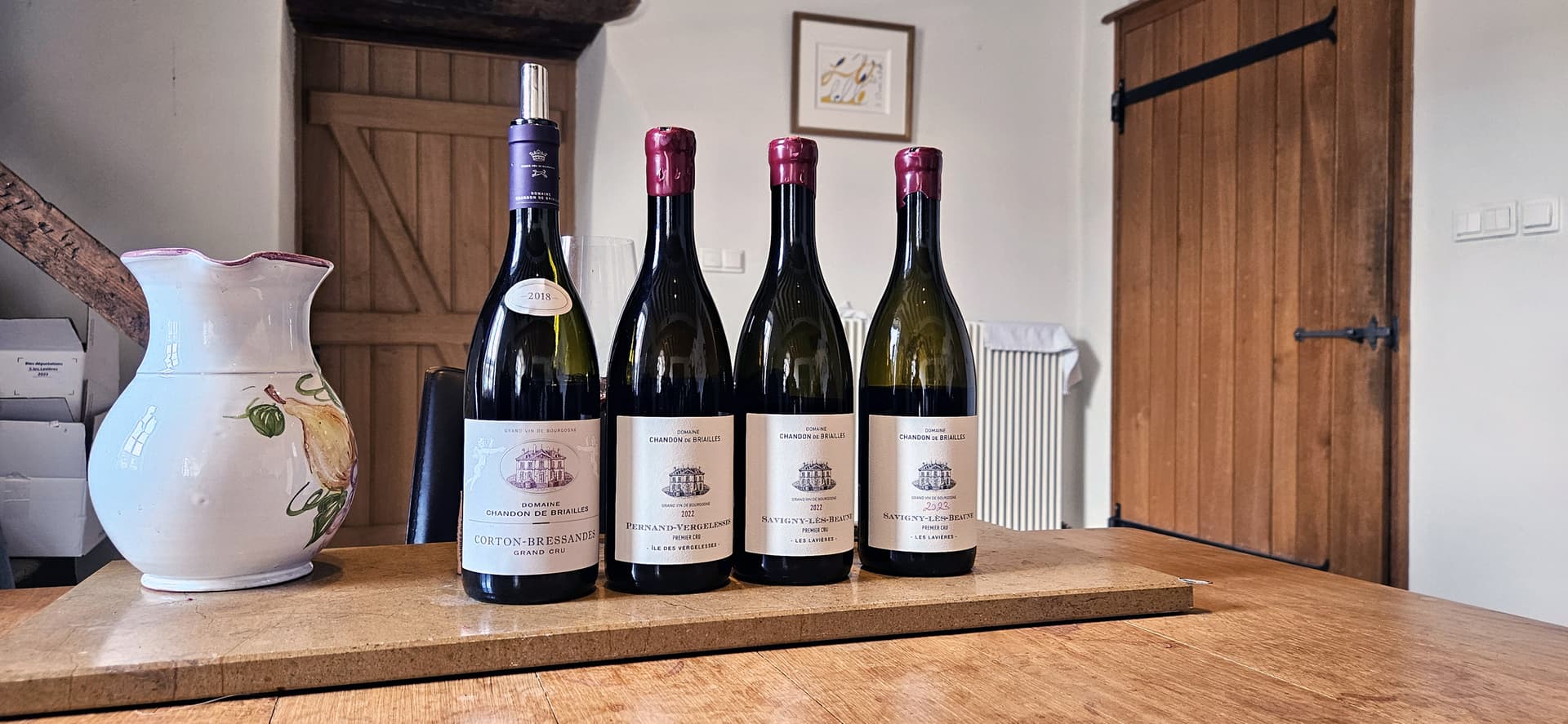
The lineup of the wines tasted.
- 2023 Domaine Chandon de Briailles Savigny-lès-Beaune 1er Cru Les Lavières - France, Burgundy, Côte de Beaune, Savigny-lès-Beaune 1er Cru (23.4.2025)
100% biodynamically farmed Pinot Noir from a 2,6-hectare parcel that was planted in 1956 in 1er Cru Les Lavières. Vinified in whole clusters. Fermented spontaneously, aged in predominantly old oak barrels.
Youthful, translucent yet rather dark ruby color. The nose feels very open, juicy and fruit-driven with quite heady aromas of ripe raspberries and red cherries, some blackberry tones, a little bit of spicy Pinosity, light lifted nuances lending a subtly wild undertone to the bouquet, a hint of blueberry and a perfumed touch of violets. The wine feels juicy and sweetly-fruited yet wonderfully crunchy on the palate with a moderately full body and intense flavors of black cherries, some brambly black raspberry tones, a little bit of sweet blackberry, light stony mineral notes, a floral hint of violets and a touch of sauvage lift. Despite the ripeness and sweet-toned fruit flavors, the wine manages to come across as surprisingly serious and structured with its rather high acidity and rather grippy tannins. The finish is long, rich and quite grippy with an intensely-flavored aftertaste of blackberries, some wild strawberries, a little bit of stony minerality, light crunchy bilberry tones, a hint of earthy Pinosity and a touch of sweet cherries.
A succulent, noticeably ripe and rather sweet-toned yet remarkably firm, serious and intensely-flavored 1er Cru Savigny-lès-Beaune with a wonderfully heady, nuanced nose and impressive depth of flavor on the palate. I usually dislike elevated sense of ripeness in Pinot Noir - and especially in Burgundies - but that is because usually Pinot Noir tends to become soft, jammy and varietally rather atypical when it reaches certain point of ripeness. This wine, however, manages to retain not only the varietal flavors of Pinot Noir, but also wonderful sense of freshness and an impressive structure despite its elevated ripeness. I hope the wine retains its vibrancy and fruit-driven charm as it ages as the wine is so immediately lovable now with its youthful and intensely fruity aromatics and flavors. A terrific wine to be drunk in its youth, but I can imagine it is also capable of evolving and improving with additional age. Recommended.
(92 points) - 2022 Domaine Chandon de Briailles Savigny-lès-Beaune 1er Cru Les Lavières - France, Burgundy, Côte de Beaune, Savigny-lès-Beaune 1er Cru (23.4.2025)
100% biodynamically farmed Pinot Noir from a 2,6-hectare parcel that was planted in 1956 in 1er Cru Les Lavières. Vinified in whole clusters. Fermented spontaneously, aged in predominantly old oak barrels.
Youthful, quite dark and somewhat translucent blackish-red color. The nose feels open and rather ripe yet still pretty dry and fresh with expressive, dark-toned aromas of brambly black raspberries and juicy bilberries, some black cherry tones, a little bit of spicy Pinosity, light floral notes of violets and roses, a hint of blackberry and a touch of earthiness. The wine feels crunchy, dark-toned and - at first - very slightly tingly with a tiniest bit of CO2. The wine is medium-to-moderately full in body with intense flavors of juicy blueberries and brambly blackberries, some floral notes of violets, a little bit of dark plummy fruit, light stony mineral notes, a hint of sweet strawberry and a touch of earthy Pinosity. The combination of high acidity and rather grippy medium-plus tannins make the wine feel pretty stern and structured. The finish is crunchy, long and quite grippy with an intense aftertaste of bilberries and tart lingonberries, some stony mineral tones, light floral notes of violets, a little bit of brambly blackberry and raspberry, a sweeter hint of juicy dark plum and a touch of earthy spice.
This wine felt very similar to the 2023 vintage we tasted at the same time - both the wines seemed to have quite a bit of ripeness, yet still retaining the sense of freshness, structure and - most importantly - their Pinosity remarkably well. However, tasting these side-by-side, I felt the 2023 vintage showed a tiny bit more ripeness, whereas this 2022 was slightly drier in fruit profile and showing a tad higher acidity in comparison. However, curiously, I felt the fruit profile in this 2022 vintage was remarkably dark-toned and even somewhat blueberry-driven for a Pinot Noir, compared to the more red-toned 2023 vintage. Both the wines were really lovely, but as a fan of acidity, tannins and sense of structure in wines, I preferred this vintage over the 2023. A terrific wine by all accounts.
(93 points) - 2022 Domaine Chandon de Briailles Pernand-Vergelesses 1er Cru Ile des Vergelesses - France, Burgundy, Côte de Beaune, Pernand-Vergelesses 1er Cru (23.4.2025)
100% biodynamically farmed Pinot Noir from a 1,23-hectare parcel that was planted in 1954 in 1er Cru Île des Vergelesses. Vinified mostly in whole clusters. Fermented spontaneously, aged in predominantly old oak barrels.
Quite translucent ruby color with a youthful blueish hue. The nose feels quite fruit-driven but also somewhat cool and spicy with aromas of ripe dark berries, some floral violet tones, a little bit of juicy raspberry, light wild strawberry notes, a brambly hint of blackberries, a touch of stemmy spice and a touch of stony minerality. The wine feels silky and suave but also impressively firm on the palate with a medium body and intense flavors of black raspberries and floral notes of violets, some gravelly mineral tones, a little bit of sour cherry bitterness, light wild strawberry notes, a crunchy hint of fresh crowberries and a touch of stemmy spice. The somewhat tightly-knit structure relies on both the rather high acidity and the quite grippy tannins. The finish is silky, dark-toned and rather tannic with a brooding, somewhat reticent aftertaste of dark forest fruits and ripe bilberries, some gravelly mineral tones, a little bit of stemmy spice, light floral notes of violets, a hint of wild strawberries and a touch of brambly black raspberries.
An elegant and fine-tuned but also surprisingly serious and tightly-knit 1er Cru Pernand-Vergelesses that seemed surprisingly stern fellow after the noticeably more open and fruit-driven 2022 Savigny-lès-Beaune 1er Cru Les Lavières. This wine feels super youthful and also quite backward, at the moment coming across as somewhat closed aromatically and very structured on the palate. The wine is not lean or austere in any way, but definitely on the sinewy, structure-driven side of things. Although the two vintages of Les Lavières were very lovely and admittedly more approachable now compared to this bottling, I must admit I enjoyed the brooding style of this île des Vergelesses even more! However, it is obvious that this wine is built for aging and it is still far away from its optimal drinking window. This is a vin de garde that really calls for at least another 7-10 years of aging. A fantastic 1er Cru with lots of upside.
(93 points) - 2018 Domaine Chandon de Briailles Corton-Bressandes - France, Burgundy, Côte de Beaune, Corton Grand Cru (23.4.2025)
100% biodynamically farmed Pinot Noir from 40-yo vines in a 1,45-hectare parcel in Grand Cru Corton-Bressandes. 100% whole cluster vinification. Fermented spontaneously in oak, aged in oak barrels (15% new) for 18 months. 13,5% alcohol.
Quite translucent cherry red color with a youthful inky hue. The nose feels expressive and beautifully perfumed with aromas of strawberries and sweet spices, some meaty tones, light juicy cherry and red plum notes, a little bit of wild strawberry, a hint of stemmy spice and a touch of ripe raspberry. The wine feels silky, harmonious and wonderfully suave on the palate with a medium-to-moderately full body and ripe flavors of strawberries and juicy black cherries, some savory notes of meaty umami, a little bit of stony minerality, light lifted sauvage nuances, a hint of peppery spice and a floral touch of violets. The overall feel is remarkably balanced with the high acidity and supple medium tannins. The finish is ripe, long and silky with a layered aftertaste of juicy raspberries and strawberries, some cherry tones, a little bit of stony minerality, light floral notes of violets, a hint of subtly volatile lift and a touch of crunchy red plum.
A very attractive, nuanced and so silky Grand Cru Corton. The wine is very heady, perfumed and fruit-driven - as seems to be the house style of Chandon de Briailles - but compared to the 1er Crus from 2023 and 2022 that we tasted at the same time, this Grand Cru seemed somewhat more open-knit with less assertive, more resolved tannins. However, what surprised me the most was how remarkably fresh, vibrant and relatively light on its feet this wine was, considering it is from the hot 2018 vintage! Sure, there is some sense of ripeness in the succulent fruit flavors, but very rarely I've seen such wonderful freshness and elegance in a red 2018 Burgundy! I've heard that CdB's wines typically are very high in acidity, which aids them in making successful wines even in hot vintages - but it is one thing to read this kind of stuff and another thing to actually taste and realize that this seems to be true! Unlike the more tannic vintages, this wine doesn't really call for aging to soften down the tannins, but seeing how youthful the wine still is, I can see the wine benefiting from some additional aging. I feel this might not be as long-lived vintage as some cooler and/or more structured vintages of the domaine, but conversely, tasting these wines now, this was the most impressive wine we tasted on our visit to Chandon de Briailles.
(94 points)
After we had tasted the wines, de Nicolay took us see the winery facilities, including the ancient portion of the cellar dating back to the 14th century.
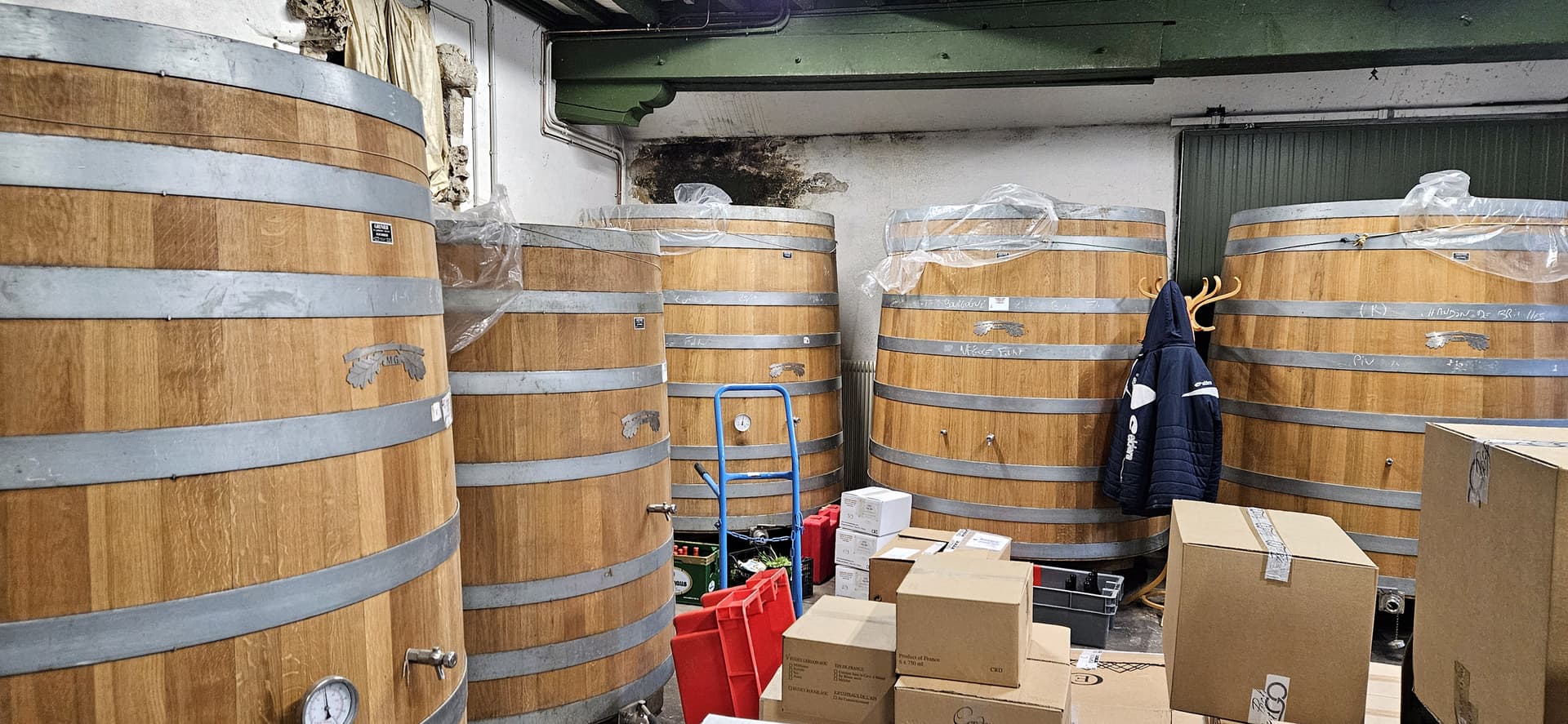
Tronconical fermentation vats in the winery.
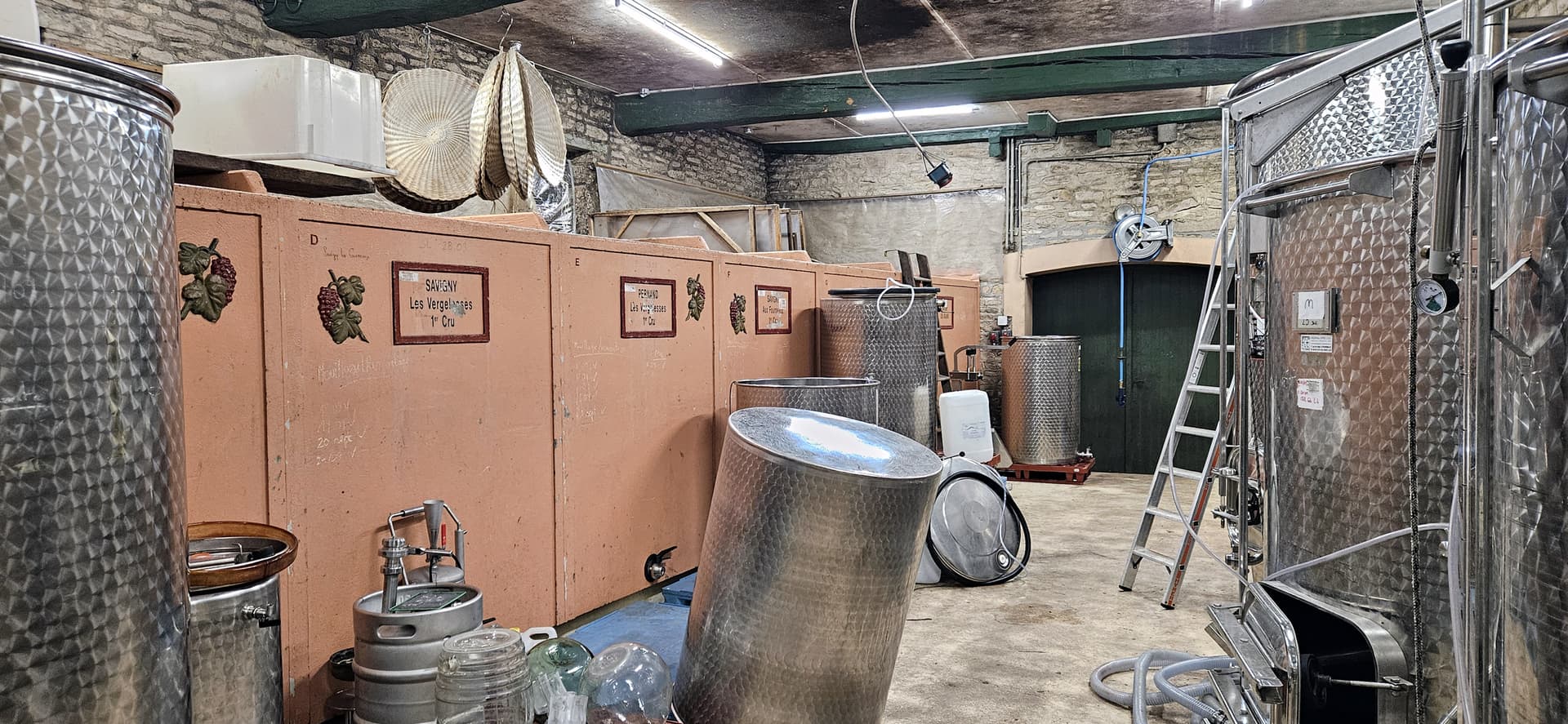
Some concrete and stainless steel tanks.

We were being constantly watched…
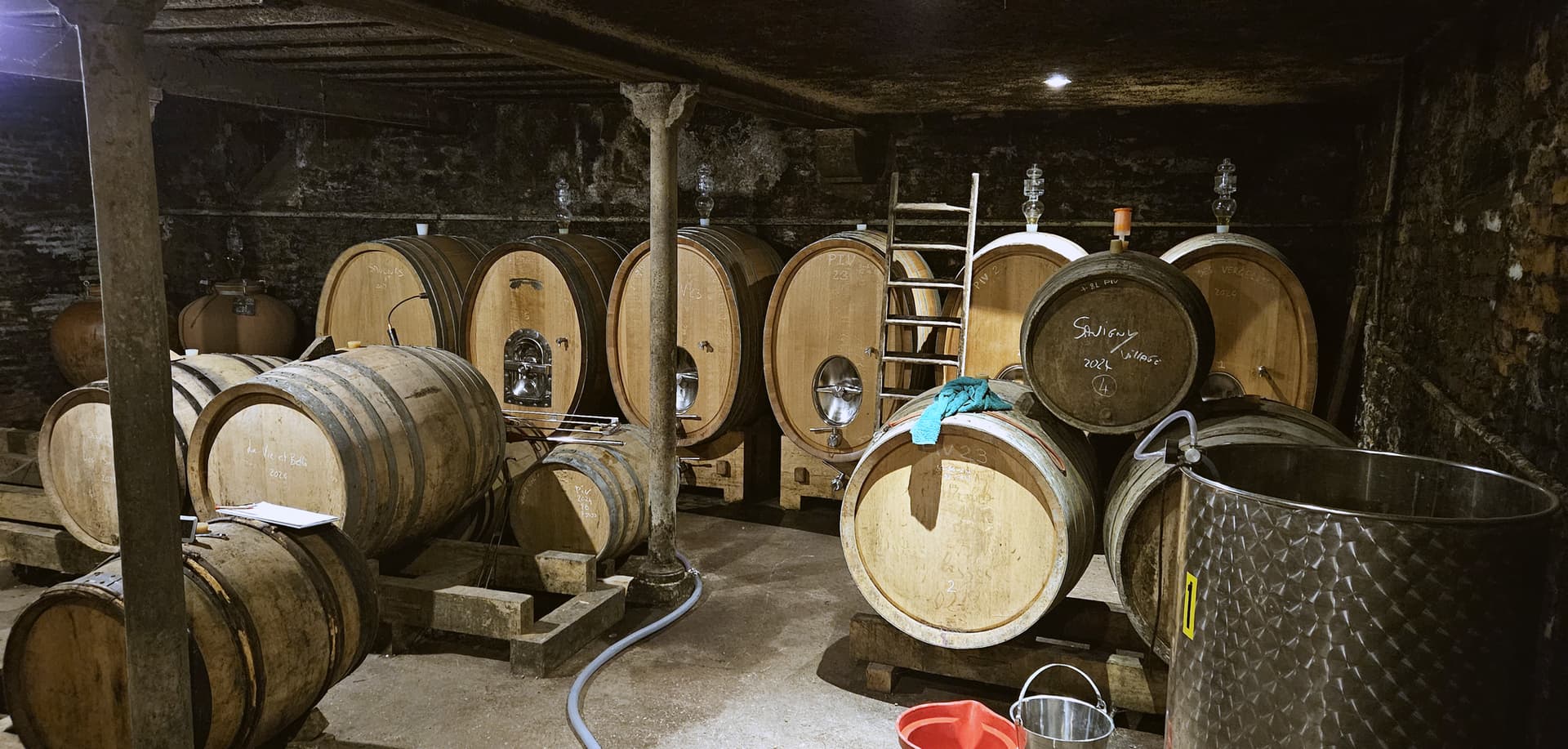
The cold underground cellar beneath the winemaking facilities; we had an opportunity to taste a couple cask samples of the whites from the Stockinger foudres in the back (Savigny-lès-Beaune Les Saucours and 1er Cru Île des Vergelesses, IIRC - sorry, no tasting notes on these two!). You can also see a couple of amphorae in the corner on the left - they are used for the skin-contact Pinot Blanc.
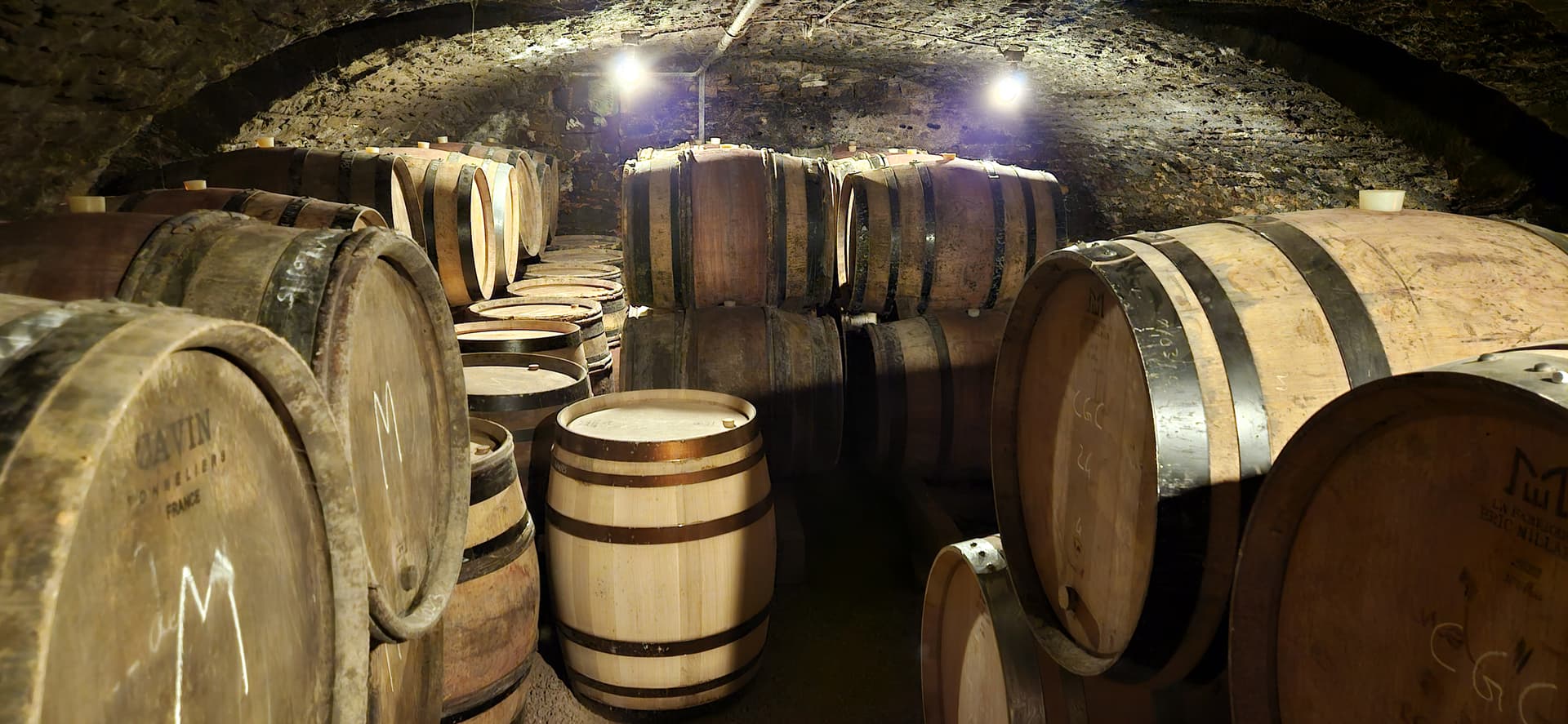
The ancient 14th century part of the cellar seemed to be more or less at its maximum capacity.
After our tour in the cellar we asked if they happened to have anything to sell. We weren’t really expecting to get any, since virtually all the producers in Burgundy have nothing to sell. However, to our great surprise Claude told us that they allocate approximately 5% of their production to on-premise sales so that they actually have something to sell for people who make the effort to visit the winery. She guided us to the estate chapel (I mean, what kind of winery does NOT have their own personal chapel?) to check out the selection.
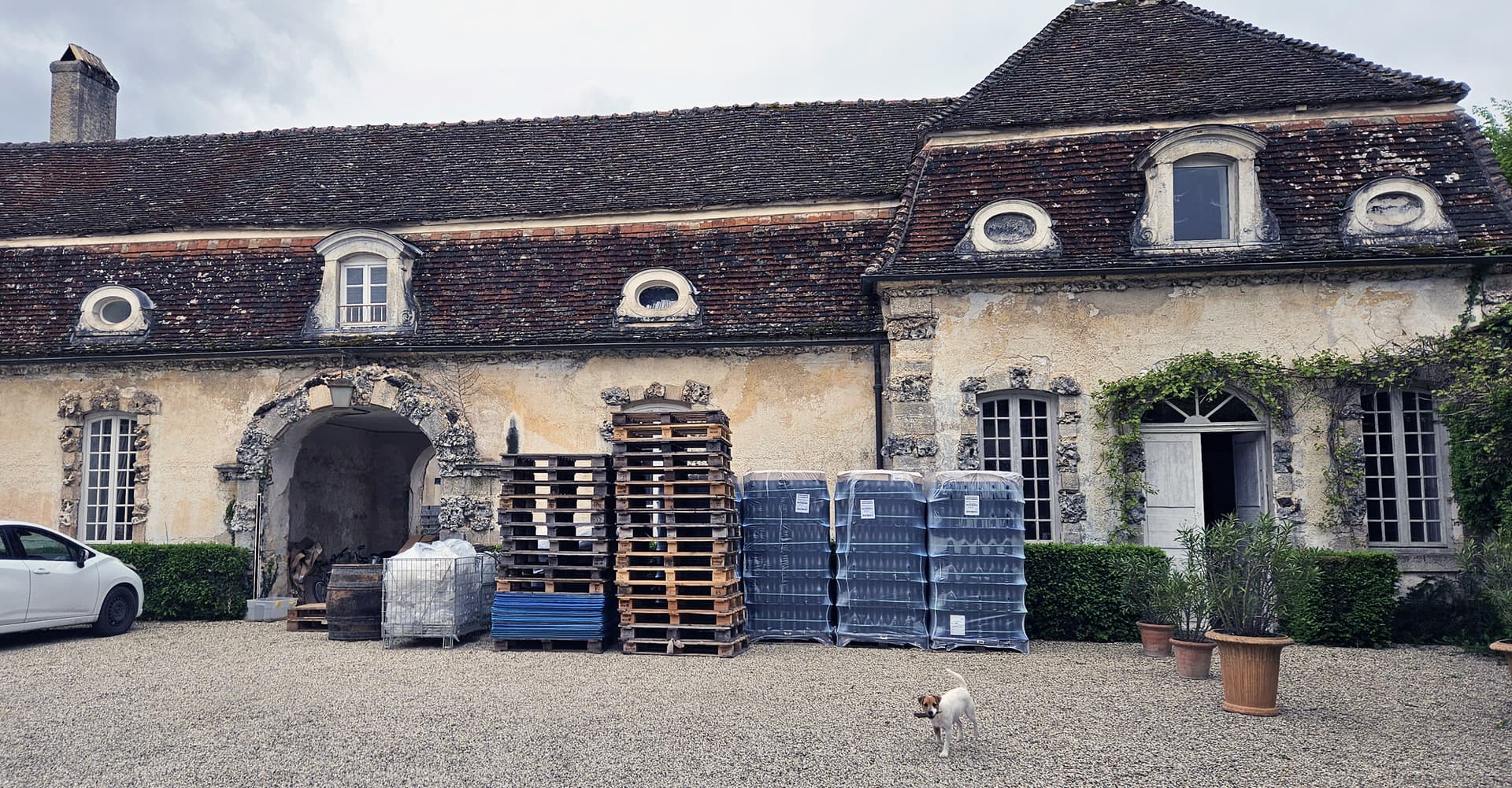
The estate chapel - and the younger, more playful pooch.
While the bottle prices at the domaine were from the higher end of the spectrum, we didn’t really mind one bit; the prices were still reasonable enough so that it didn’t feel anyone was getting gouged, plus they still had an impressive selection of back vintages available as well, going back to at least 6-7 years! You don’t come here for the prices, you come here to get whatever you want - and you can be sure the bottles come nowhere else but the domaine’s own cellars!
After we had made our purchases we thanked Claude for hosting us and then returned back to Beaune. It was time to do some shopping! Mikko had also heard from his pal Xavier (of Domaine Xavier Gérard) that he was coming to Beaune that same day with his cellar hand to do some business. We told him to meet us at Anthocyane - a terrific little spot in the heart of Beaune that Benoît Moreau recommended to us the day before - because we were having a lunch there at 1:30 pm.
However, before or lunch we had some time to check out some wine shops in Beaune. The second shop we came across - Le Comptoir des Tontons - seemed like a regular shop of natty wines at first. However, the more you looked around, the more great domaines you started to recognize among those funky labels. And yeah, sure, it’s entirely possible that the shop had nothing but the greatest domaines in their selection - that much I understood from Pepita, the owner of the shop. However, I admit I tend to be wary when I don’t recognize 75% of the wines in the selection and most of the labels I could see screamed “natty” to me… 
Nevertheless! We did find a great big selection of terrific wines, but as our table reservation at Anthocyane was almost upon us, we asked Pepita if it was okay if we went to eat now and returned to pick up the wines and pay for them after our lunch. Of course it was.
So, off we went to Anthocyane. We met with Xavier Gérard and his cellar hand, had a terrific lunch, ordered a bottle of red Savigny-lès-Beaune and shared it with Xavier, who himself had ordered a bottle of Rully, sharing it with us. While we dined we also arranged a visit at Xavier’s winery for the next day, as we were leaving Burgundy behind the next morning.

Asparagus, a classic entrée that never fails.
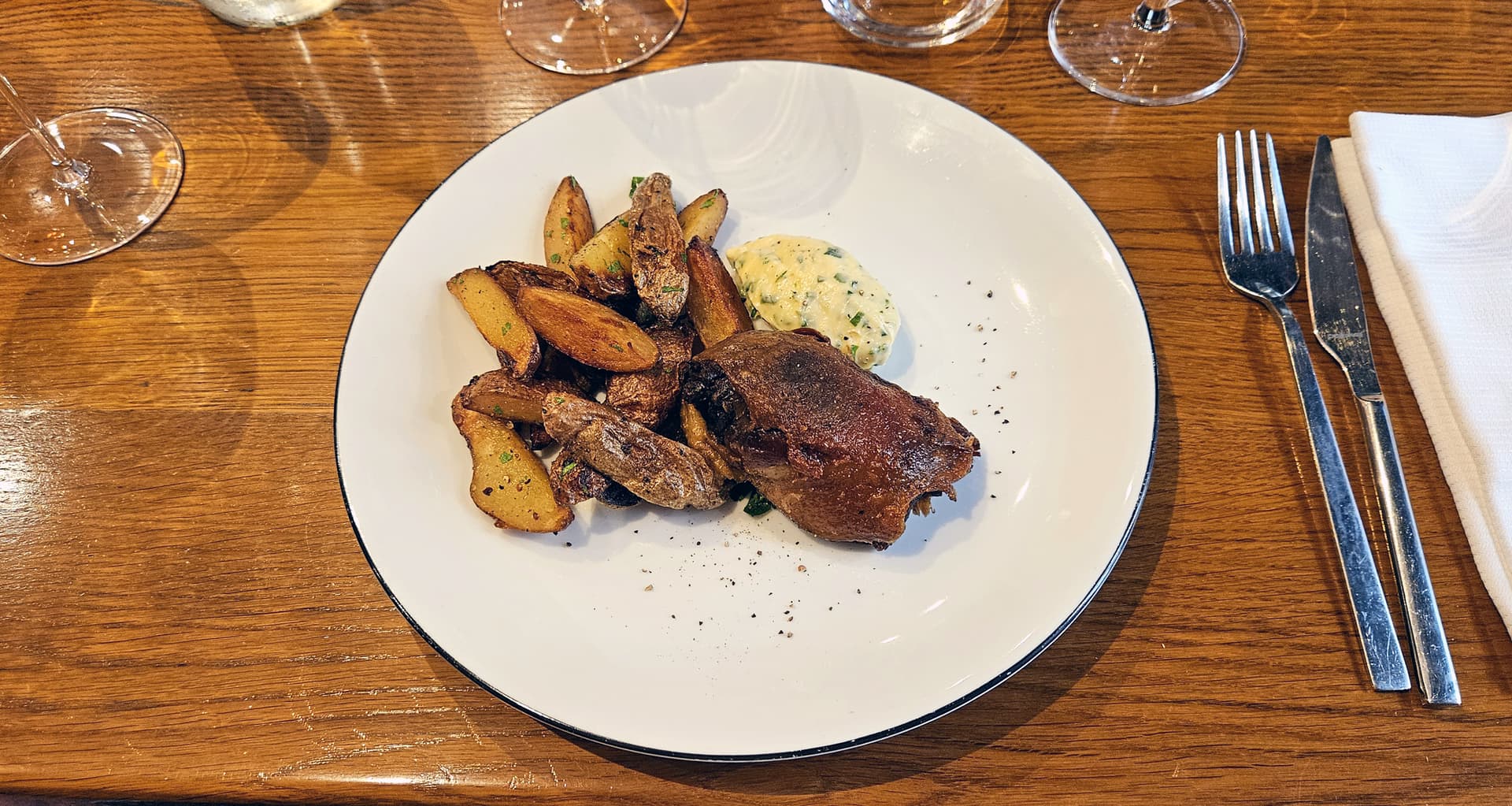
You really can’t go wrong with some duck and fries, either.
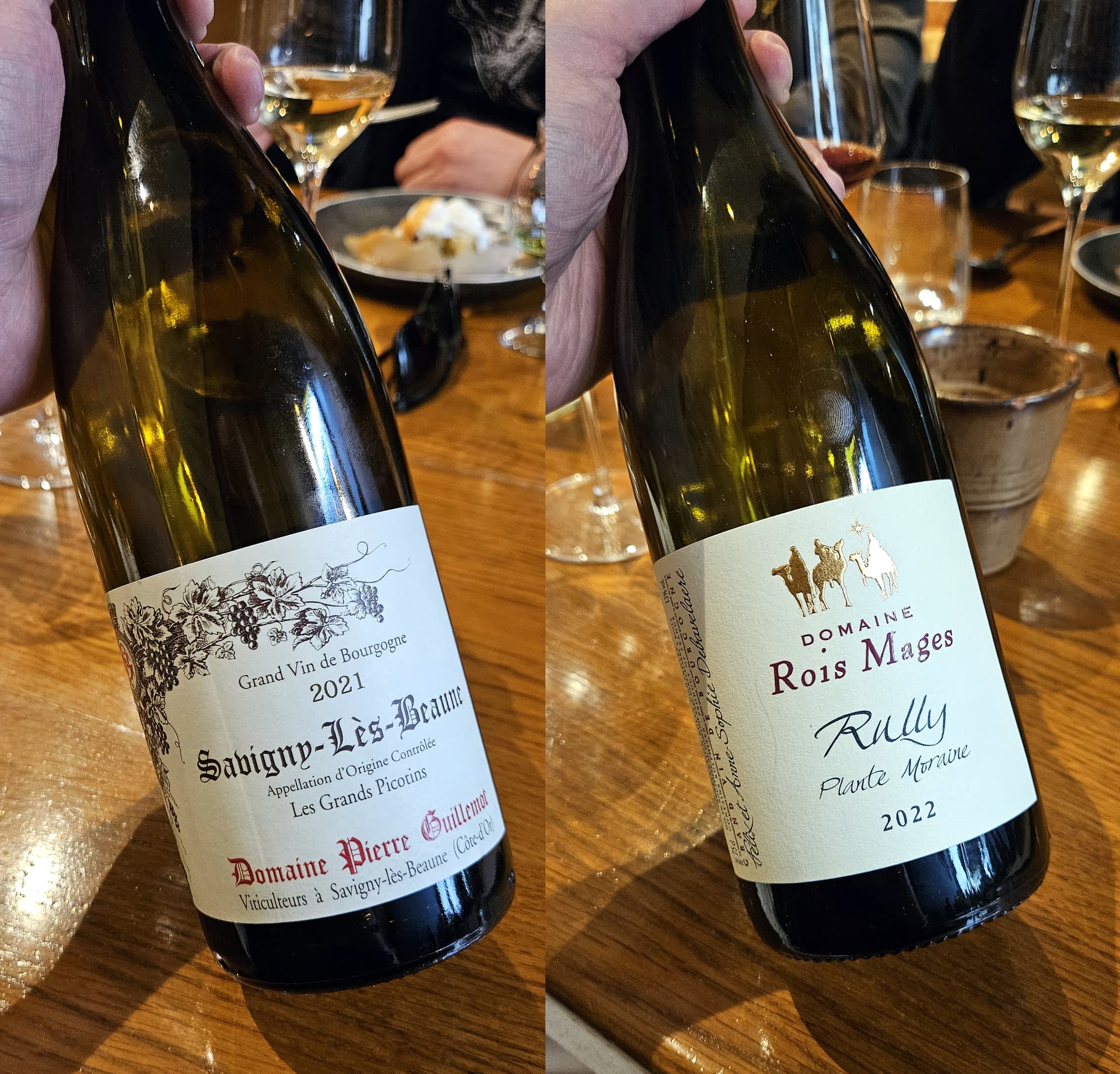
The wines.
- 2021 Domaine Pierre Guillemot Savigny-lès-Beaune Les Grands Picotins - France, Burgundy, Côte de Beaune, Savigny-lès-Beaune (23.4.2025)
100% organically farmed Pinot Noir from lieu-dit Les Grands Picotins in Savigny-lès-Beaune. A rather high proportion of grapes were vinified in whole bunches. Fermented and macerated with the skins for two weeks in oak vats. Aged in mostly old oak barrels for 18 months. 12,5% alcohol.
Luminous, youthful and translucent ruby-red color. The nose feels fragrant, perfumed and expressive with aromas of brambly raspberries, some floral notes of violets, a little bit of fresh red cherry, light crunchy cranberry notes, a hint of lingonberry juice, a touch of spicy Pinosity and a faint whiff of stemmy character. In other words, very much textbook Burgundy Pinot nose. The wine feels delicate, sophisticated and crunchy on the palate with a light-to-medium body with bright flavors of fresh raspberries and tart lingonberries, some fragrant notes of violets and whole bunch spice, a little bit of stony minerality, light peppery notes, a primary sweet-yet-tart hint of cranberry jam and a touch of savory wood spice. The wine is high in acidity with supple and gentle medium-minus tannins. The finish is dry, long and spicy with a youthful aftertaste of crunchy lingonberry and cranberry, some brambly raspberry, a little bit of stony minerality, light floral notes of violets, spicy hints of stemmy character and earthy Pinosity and a touch of sour cherry bitterness.
A very lovely, elegant and delicate Côte de Beaune red. Not a wine with much power or weight, but one that makes up the lack of oomph with its sense of finesse, layered nuances of flavors and very expressive overall nature. Even if the wine isn't big or weighty, nor hasn't got much in the way of tannic structure, the wine packs enough acidity to lend great intensity to the flavors and sense of freshness and structure to the palate. The wine might not be built for the very long haul, but as the wine is still so very youthful and still borderline primary, I can see it not just keeping but also benefiting from at least a handful of years in a cellar. A versatile food wine for lighter fare and a solid choice for the fans of delicate, perfumed Pinot Noir. 67€ in a restaurant.
(92 points) - 2022 Domaine Rois Mages Rully Plante Moraine - France, Burgundy, Côte Chalonnaise, Rully (23.4.2025)
100% Chardonnay from a parcel with approximately 35-yo vines. 13% alcohol.
Pale-to-medium-deep yellow-green color. The nose feels ripe and youthful with aromas of sweet citrus fruits, some juicy Golden Delicious apple, light creamy oak tones, a little bit of fresh nectarine, a hint of honeydew melon and a primary touch of pear. The wine feels clean and quite broad on the palate with a medium-to-moderately full body and youthful flavors of ripe nectarine and Fuji apple, some stony mineral notes, a little bit of fresh white peach, light leesy tones, a zesty hint of citrus fruits and a touch of crunchy cantaloupe. Balanced, moderately high acidity. The finish is juicy, long and quite fruit-driven with sweetly-fruited flavors of white peach and cantaloupe, some leesy creaminess, light stony mineral notes, a little bit of savory wood spice, a hint of ripe citrus fruits and a sweet, primary touch of pear.
A ripe and slightly sweet-toned but also enjoyably fresh and clean white Burg with a nice, balanced acid structure and almost imperceptible oak influence that only adds a little bit of creamy complexity to the flavors without obfuscating anything. Not a wine that will blow your socks off - just a nice, versatile food wine. The wine is perfectly drinkable already now, but seeing how the wine still exhibits some sweet primary fruit flavors, I can see it benefiting from 2-4 years of additional aging. 49€ in a restaurant.
(90 points)
After the lunch we also checked out two other wine shops: Athenaeum (didn’t buy anything); and L’Arche du Vin (bought a Benoît Moreau Saint-Aubin 1er Cru to be shared with the four of us on a later date, and a Chamonard Morgon). After our tiny shopping spree we returned back to Pepita’s at Le Comptoir des Tontons, picked up our wines, and continued on our way to our next appointed visit in Vosne-Romanée.