Oregon Wine Visits, May 2026 – Part 1 (Teutonic)
I’ve posted an edited portion of Part 1 of a report on late May wine visits to Oregon wineries - further parts will be following soon. There’s more detail plus additional photos on the Grape-Nutz.com website:
Oregon Wine Visits, May 2026 – Part 1
Teutonic Wine Company
The first visit on my trip to Oregon wine country was at Teutonic Wine Company, one of about eight urban wineries in Portland. I was accompanied by my friends Jon & Ling from Camas, Washington, and Wes, who was also visiting from the Bay Area. We were welcomed into the tasting room by Colleen Nielsen – she’s officially their Tasting Room Associate but unofficially their Tasting Room Wrangler and Storyteller! In addition to working in the tasting room, she’s also a graphic designer, and she designed the newer Teutonic wine labels as well as labels for other wineries.
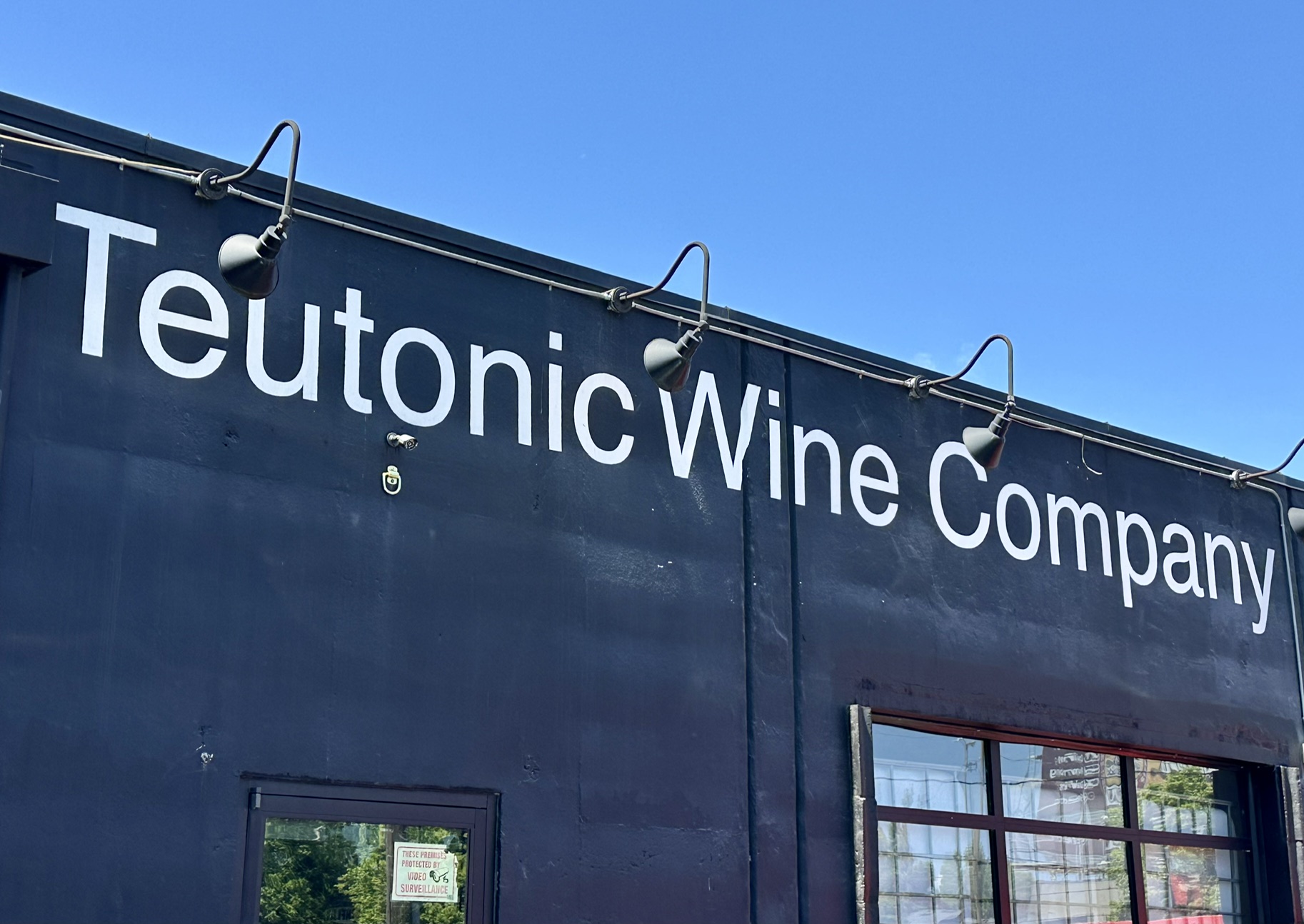
Owned by winemaker Barnaby Tuttle and his wife Olga, Teutonic was established in a series of small steps over a number of years. The name is a tribute to Barnaby’s initial inspiration – the wine region of the Mosel Valley in Germany. Barnaby had been the general manager and wine buyer for a Portland restaurant, and in 2002 a German wine importer brought in 14 Rieslings from the Middle Mosel for him to taste. He was impressed with how different they tasted from one another, and how the soil of each vineyard influenced these differences. He not only bought all 14 Rieslings for the restaurant wine list but resolved to learn how to make wines that expressed their terroir as well as those German wines did.
In 2005 Barnaby and Olga took the next step when were offered the opportunity to plant a vineyard on a friend’s property in Alsea – located southwest of Portland, it’s about 20 miles from the ocean at a spot where cool marine air flows in from the coast. Although the Tuttles had no vineyard experience up until that time, they learned on the fly and on a shoestring budget, helping with friends to plant and farm the new two-acre vineyard, mostly with Pinot Noir along with some Pinot Meunier and Pinot Blanc.
For the next few years, Barnaby experimented at making small quantities of wine for friends, but with the first crop from Alsea Vineyard on the way in 2008, he decided it was time to learn how to make wine at a commercial level. He left the restaurant business and took a job working in the cellar of a winery in Carlton in the Willamette Valley. The Alsea Vineyard wines from that 2008 vintage were the first for Teutonic.
Since that inaugural vintage, Barnaby and Olga have expanded their production to about 5,000 cases per year, with 20-25 different bottlings each vintage. The Teutonic vineyard sources are all organically-farmed (though not all are certified organic) and they prefer to work with older vines at cooler, higher-elevation sites. They also insist that all of the vineyards they work with are dry-farmed, using no irrigation – Teutonic is a member of the Deep Roots Coalition that promotes dry-farming for vineyards. They’ve continued to make wine from Alsea, while also sourcing their fruit from Willamette Valley, Columbia Gorge, other Oregon wine regions, and even California for one particular grape variety.
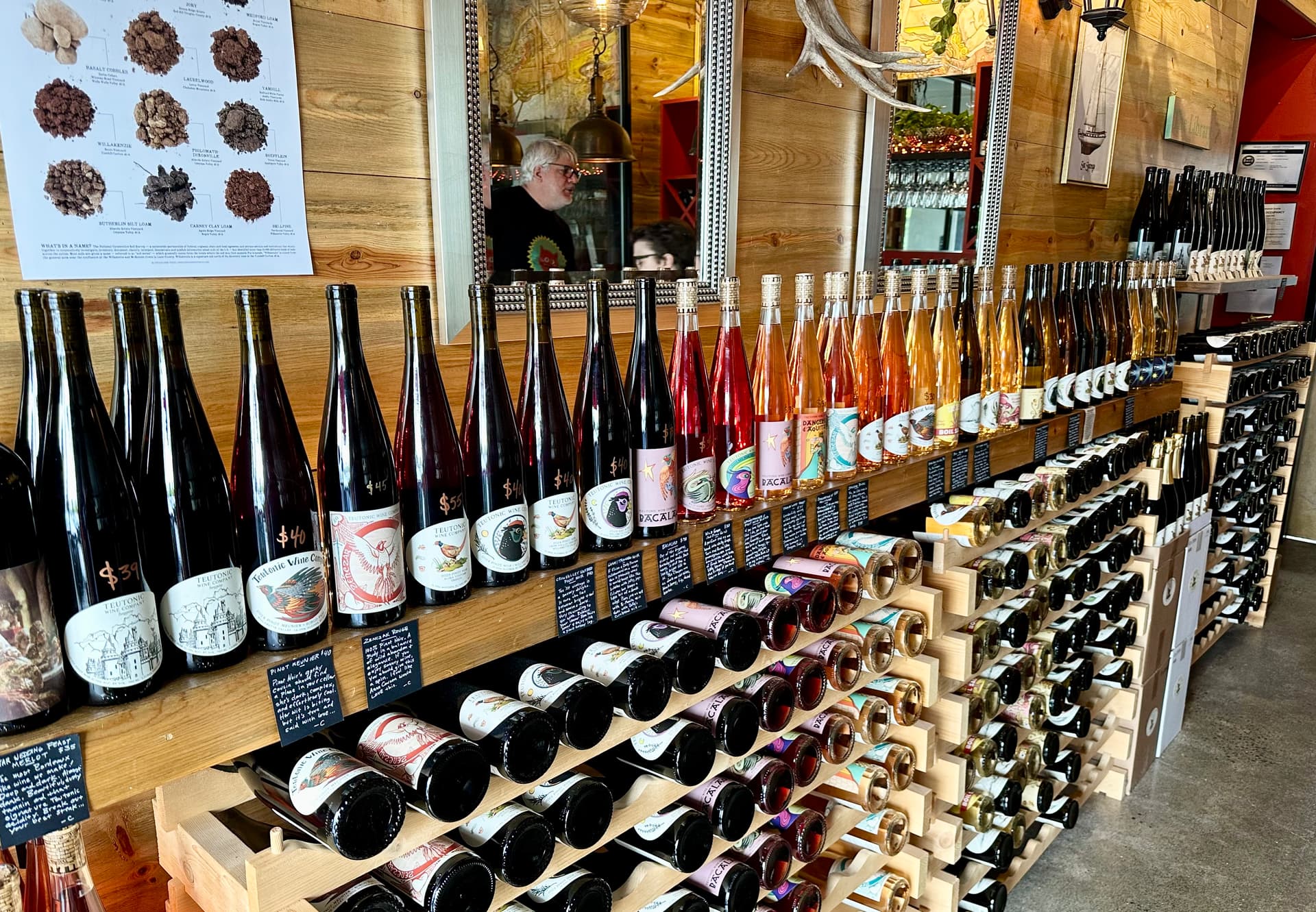
Winemaking at Teutonic is low-intervention, and Barnaby has experimented with less-common – and sometimes highly imaginative – techniques for some wines. All of the fruit they bring in to the winery is fermented with native yeast. White varieties are all fermented and aged in neutral oak, to provide more texture to the finished wines than stainless steel tanks would do. Most reds are fermented in small bins, and also aged entirely in older barrels. The winery’s program for sourcing fruit and making wine explains the motto printed on the back label of the Teutonic wine bottles – “Old & Cold, High & Dry, Wood & Wild.”
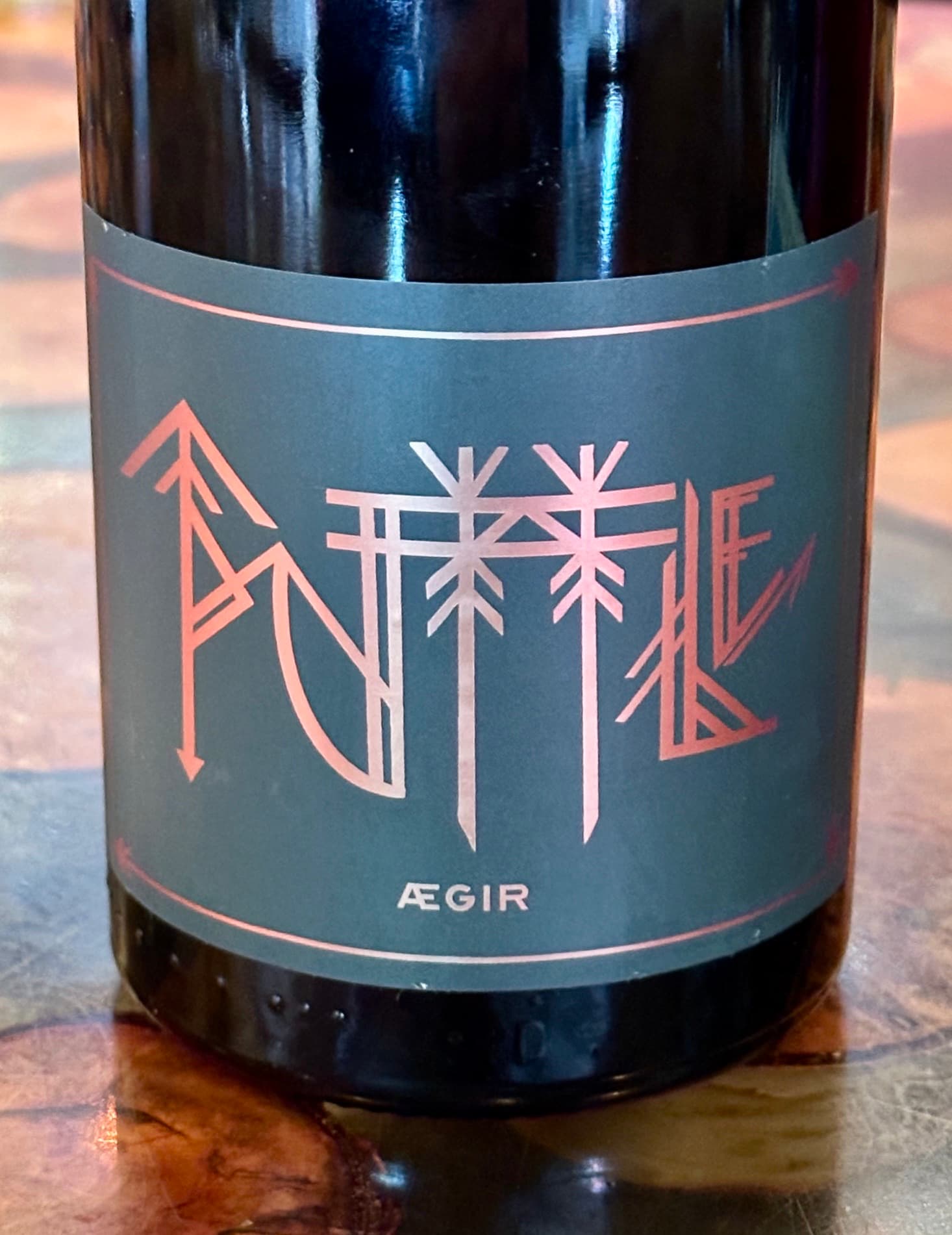
In addition to their Teutonic wines, Barnaby and Olga have recently launched a new wine project, simply called Tuttle. The names of the Tuttle wines reflect the family name’s connection to Norse mythology. The name’s original meaning was “Thor’s Cauldron” – according to the Tuttle wine label, this was “a legendary vessel that brewed an eternal flow of libations.” Tuttle wines that have been bottled and released recently or will be bottled soon include four different Pinot Noirs (“Aegir”, “Fjalltindr”, “Blood Custard”, and “OND”), Pinot Meunier (“Njördr”), Riesling (“Lerwick"), Chardonnay (“The Walrus”), Grüner Veltliner ("Jörd”), and White Pinot Noir (“Sea Custard”).
I spoke with Barnaby by phone a few weeks after my visit to the Teutonic tasting room to get a better feel for the new Tuttle project. He said that the winemaking methods and resulting wines are distinctly different from Teutonic, so it made sense to put the Tuttle wines out under a new label to avoid confusion. Fruit for the Tuttle white wines spends about four days on the skins prior to pressing, and the juice is intentionally oxidized at that stage to help avoid later unwanted oxidation in the wine and to improve stability. They go entirely through malolactic fermentation and are aged in barrel on heavy lees for two years, undergoing bâtonnage during that time. As with the white wines, all of the reds are fermented with native yeast that comes from each vineyard and is maintained by their pied de cuve. Nearly all of the red wines are made with stem inclusion, they receive extended maceration before being pressed, and some have a little new oak influence in their barrel-aging, which is also around two years. Barnaby said that the three keys to the Tuttle wines are “Time, Terroir, Texture.”
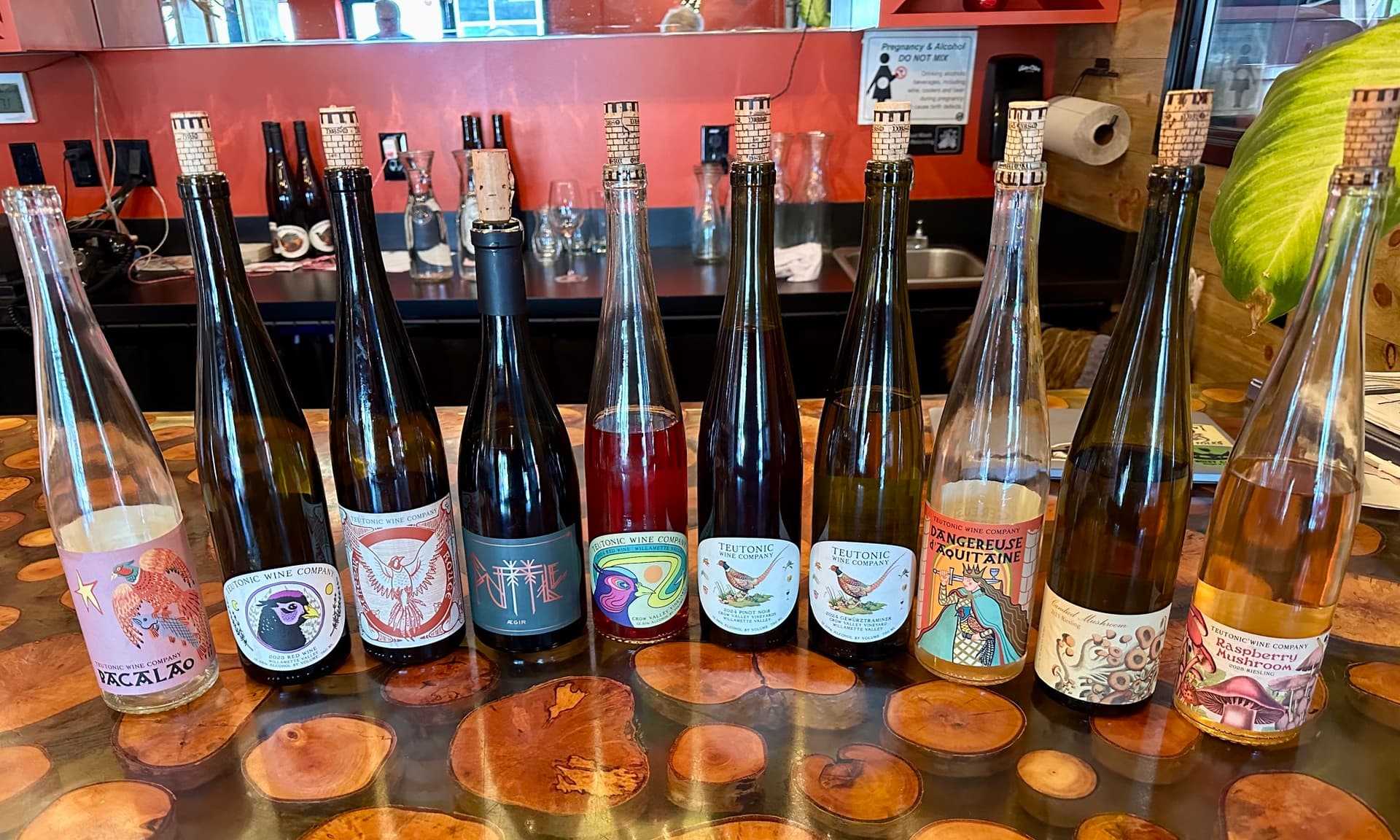
Colleen started our tasting with two Rieslings, the variety that Teutonic is best-known for – but these were both definitely “outside the box” Rieslings! First was the 2025 “Raspberry Mushroom” Columbia Gorge Riesling. The fruit was sourced from Pear Blossom Vineyard, located in the Underwood Mountain region on the Washington side of Columbia Gorge, at an elevation of around 1,200 feet. The winemaking for this bottling was quite distinctive, as the Riesling was pressed along with Pinot Noir skins. The aromas matched the winemaking, displaying floral and citrus character plus bright red fruit undertones, with plenty of juicy acidity. Next was the 2025 “Candied Mushroom” Crow Valley Vineyard Riesling – this came from the southern Willamette Valley near Eugene. Another distinctive wine, this was made intentionally from botrytis-affected fruit, and it was pressed after about five days on the skins. This had the elements you’d expect from Riesling – stone fruit and citrus, floral notes, as well as a distinctive umami quality, with zingy acidity and just a hint of sweetness on the long finish. Teutonic has called this wine the “umami tsunami” and it’s an apt description!

We continued with the 2022 “Dangereuse d’Aquitaine” Columbia Gorge White Merlot. This was also sourced from the volcanic soil of Underwood Mountain in the Columbia Gorge. The juice was pressed almost immediately in a Vin Gris style, so there’s little color to the wine. The name comes from Barnaby’s feeling that the vineyard area reminded him of Aquitaine, and the wine is named for the Duchess of Aquitaine. The wine showed stone fruit and tropical fruit aromas with spice in the background, medium weight with a pleasant finish.
Colleen next poured us the 2024 Crow Valley Vineyard Gewürztraminer, with fruit sourced from vines that are nearly 50 years old. The aromas were classic Gewürztraminer, with lychee, stone fruit, and spice notes, medium bodied with vibrant acidity balanced by a touch of sweetness on the finish. We followed that with the 2024 Crow Valley Vineyard Red Wine – a co-ferment of 85% Gewürztraminer and 15% Pinot Noir, this spent about one month on the skins before being pressed. Surprisingly, I felt that the smaller Pinot component took the lead on the aromatics, featuring bright red fruit and floral notes with the Gewürztraminer lychee component in support, with a medium-light mouthfeel, lively acidity, and a long tasty finish – definitely a fun wine.
Moving along to Pinot Noir, we tasted the Tuttle 2023 “Aegir” Oregon Pinot Noir sourced from Alsea Vineyard. The Tuttle label art features stylized runic letters – a nod to the connection of the Tuttle name with Norse mythology. The back label notes that Aegir was an “old Norse sea god known for brewing and hosting lavish parties” – sounds like a good person to know! This had light color with red fruit, earth, and a savory herbal note, with fine acidity and moderate tannins yet a fresh character on the finish. Colleen also poured us the 2022 “Zenczak Rouge” Zenczak Vineyard Pinot Noir. A newer vineyard source for Teutonic, Zenczak Vineyard is located at a cool Willamette Valley site. The wine had a more earthy and spicy character along with cherry and citruspeel notes with medium weight and plenty of structure.

Another unusual co-ferment, the 2023 Willamette Valley Red Wine is 50% each Trousseau Noir and Gamay from Abbey Road Vineyard near Carlton. With earthy black cherry and spice aromas with savory undertones, and a bit more texture on the palate than the Pinots, it finished with fine tannins. We wrapped up our tasting with the 2022 “Bacalao” California White Tannat, from another red grape variety made like a white wine. The fruit for this came from California, but Teutonic is no longer getting it from this site and they’re on the lookout for an available Oregon source of Tannat. This had aromas of stone fruit and a touch of tropical fruit, with a hint of flowers, a touch of tannin, and a bit of sweetness on the finish.
As mentioned above, the winery produces a large number of bottlings – even more now with the Teutonic wines as well as the new Tuttle wines – and the lineup can change from year to year. In addition to the wines we tasted on this visit, other recent wines have included Silvaner, Traminer, additional Riesling and Gewürztraminer bottlings, Grüner Veltliner, Pinot Gris, Pinot Blanc, Chasselas, Muscat, Viognier, other Rosé and Vin Gris bottlings, additional Pinot Noir bottlings, additional white and red blends, and a sparkling no-dosage Riesling. Nearly all of the wines are single-vineyard bottlings.
Teutonic was the only Oregon winery I stopped at on this trip that I’d been to before, and I enjoyed it just as much if not more than on my previous visit. Colleen was a fantastic host, both knowledgeable and entertaining. Having worked in a number of urban wineries I always appreciate visiting them, and especially when the wines are as good as these were. As I’d found on my earlier visit to Teutonic, I loved the unconventional and imaginative wines – they’re distinctive and very well-made. All of the wines we tasted were delicious and food-friendly, most should be ageable, and they’re well-priced for the quality. My favorites on this visit were the 2025 “Candied Mushroom” Riesling, 2024 Crow Valley Vineyard Red Wine, Tuttle 2024 “Aegir” Pinot Noir, 2023 Willamette Valley Red Wine, and 2022 “Bacalao” White Tannat. If you’re in the Portland area, a visit to Teutonic is highly recommended.